Friday, September 16, 2022
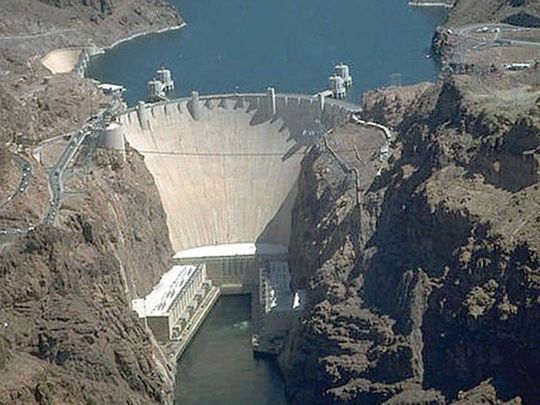
Pakistan Collected $40 Million For Dam, Spent $63 Million On Its Ad: Report
Bilawal Bhutto hopes Pakistan will get off FATF grey list, says “we want to tackle terrorism”
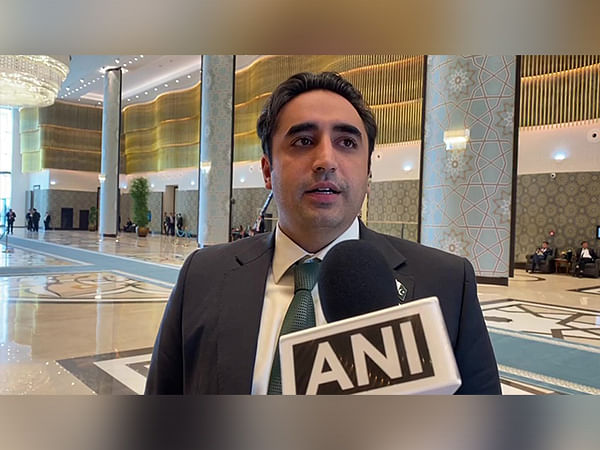
Speaking to ANI, Bilawal Bhutto who is in Samarkand to connection with the Shanghai Cooperation Organisation (SCO) summit, said that Pakistan wants to fight terrorism and extremism and this is a priority not due to FATF listing or the international community but for the people of his country. “We hope that Pakistan will get off the FATF list. We want to tackle terrorism. It is our priority not because of FATF but for the people of Pakistan and also our own resolve,” Bilawal Bhutto Zardari told ANI.Pakistan has been on (Financial Action Task Force (FATF) grey list since 2018. Pakistan’s record on the flow of funds into terrorist activities has been under sustained scrutiny by FATF. Media reports said that Pakistan had sent a letter to Taliban-ruled Afghanistan days ahead of an inspection by the monitors from FATF seeking the arrest of Jaish-e-Mohammed (JeM) chief Masood Azhar Alvi.The FATF-Asia Pacific Group delegation visited Pakistan from August 29 to September 2 to verify the country’s compliance with a 34-point action plan committed with FATF at the highest level. Uzbekistan is the current chair of SCO 2022 whereas India will be the next chair of the SCO. This is the first in-person SCO Summit after the Covid pandemic hit the world. The last in-person SCO Heads of State Summit was held in Bishkek in June 2019. The SCO currently comprises eight Member States (China, India, Kazakhstan, Kyrgyzstan, Russia, Pakistan, Tajikistan and Uzbekistan), four Observer States interested in acceding to full membership (Afghanistan, Belarus, Iran, and Mongolia) and six “Dialogue Partners” (Armenia, Azerbaijan, Cambodia, Nepal, Sri Lanka and Turkey). The Shanghai Five, formed in 1996, became the Shanghai Cooperation Organisation (SCO) in 2001 with the inclusion of Uzbekistan. With India and Pakistan entering the grouping in 2017 and the decision to admit Tehran as a full member in 2021, SCO became one of the largest multilateral organisations, accounting for nearly 30 per cent of the global GDP and 40 per cent of the world’s population.
https://theprint.in/world/bilawal-bhutto-hopes-pakistan-will-get-off-fatf-grey-list-says-we-want-to-tackle-terrorism/1131351/
Thursday, September 15, 2022
The Recent Floods Have Put a New Focus on the Problem of Period Poverty in Pakistan
Many of the more than 8 million women of reproductive age affected by Pakistan’s unprecedented floods have been turning to desperate measures to manage their periods. One woman in the hard-hit province of Balochistan, who called volunteers in distress, reported using tree leaves. “It was heartbreaking,” says Bushra Mahnoor, one of two college students who in July founded Mahwari Justice, a grassroots movement to distribute menstrual products to women in need.
Floods have inundated one-third of Pakistan and displaced more than 33 million people. The waters have also killed more than 1,400 individuals and destroyed hundreds of thousands of houses, as well as bridges and roads. More than 660,000 people are still living in relief camps and makeshift homes.On Monday, Prime Minister Shahbaz Sharif said the country was grappling with food shortages. Relief organizations are rushing aid to affected areas—but supplies of menstrual products are often overlooked. That’s partly because of the stigma around discussing periods in Pakistan, according to Mahnoor.That’s why Mahwari Justice chose such an unapologetic name for itself: Mahwari simply means “periods” in Urdu, Pakistan’s national language. As the flood waters intensified, the group redoubled its efforts to get menstrual products to Pakistani women, knowing that the deluge could lead to a higher incidence of reproductive and urinary tract infections by making safe menstrual practices even harder. So far, Mahwari Justice has delivered 20,000 menstrual kits to those in need and Mahnoor and her co-founder Anum Khalid have been invited to speak about their efforts on the BBC. Along with similar organizations, they have also helped generate a general discussion about the most effective way to help women in flood-stricken areas. “This is something that gets neglected really easily because for a lot of people, and especially for countries like Pakistan—where laws are made by men, when relief work is led by men—there’s no discussion around what a woman needs,” says Sana Lokhandwala, co-founder of HER Pakistan. The group has so far handed out more than 7,000 menstrual kits and partners with volunteers, community mobilizers, activists, and other organizations to distribute additional essentials such as food, shelter, and clothing.
The needs of Pakistan’s rural womenEven before the floods, misconceptions about periods were rife in Pakistan. Dr. Sidra Nausheen, an assistant professor and vice chair of research in obstetrics and gynecology at the Aga Khan University Hospital in Pakistan’s biggest city Karachi, has been working for many years in rural communities to raise awareness about proper menstrual management. She has encountered girls and women who would not take a bath for a week, or avoid drinking hot or cold beverages, for fear it would disrupt their cycle. Some women would be confined to a room until their periods were over. Many girls were not attending school during their periods because of the lack of availability of menstrual products. “Menstrual hygiene is something that in Pakistan especially nobody talks about,” Nausheen tells TIME. In such an atmosphere, inaccurate information can thrive. “Lots of women don’t know what’s happening to their bodies.” When Mahnoor and Khalid first started Mahwari justice, they studied other disaster relief efforts to learn about the most effective ways of supplying menstrual products. They also spoke directly with women in rural areas to find out what items would be most helpful.
Then they came up with three kinds of kits. One contains a pack of sanitary napkins and underwear, the second small towels and underwear, while the third consists of cotton pads. Diagrams accompany the kits, showing the right way to use the products. Different circumstances determine which items are most effective. Lokhandwala, of HER Pakistan, explains that if flood waters haven’t receded, cloth towels may present problems as there is no clean water to wash and dry them. “Cloth pads might work in one community if they are still living in homes and have washing supplies, but might not work in relief camps,” she says.Doctors, relief workers, and public health advocates have long called for Pakistan to remove its luxury tax on menstrual products. “Women don’t feel luxurious during these days,” Khalid says. “Menstrual kits [and] sanitary napkins should be free but the taxes on them are so high people cannot afford it,” says Dr. Alia Haider, a doctor currently working in relief camps. “It’s the responsibility of the state to give us a healthy life—health should be free.” But until menstrual products become affordable, many Pakistani women will have no choice but to rely on private organizations and volunteers for help in managing periods.
From 2019 to 2021, Nausheen and her colleagues from Aga Khan University Hospital conducted fieldwork on menstrual hygiene among women aged 14-49 in Dadu district, Sindh province—an area hit hard by the recent floods. About 40% of the 25,000 women surveyed in Dadu were not using any pads or napkins during their periods but instead would repeatedly change out of and wash their stained clothes. “Many weren’t aware of reusable pads or the availability of pads. They thought it was very expensive and ‘We can’t afford it,’” Nausheen saysNausheen and her team taught the women how to stitch pads from a cheap, absorbent cloth available in the local market. Now, some 90% of the women who took part in the survey are using such pads. Many are also making and selling them—even during the catastrophic floods. Says Khalid of Mahwari Justice: “Periods never stop during any calamity.” https://time.com/6213181/period-poverty-pakistan-menstruation-floods/
Experts slam ‘pittance’ in aid to Pakistan as they find climate crisis played a role in floods
.

By Angela DewanAn analysis of Pakistan’s devastating floods has found “fingerprints” of the human-made climate crisis on the disaster, which killed more than 1,400 people and destroyed so much land and infrastructure it has plunged the South Asian nation into crisis. The analysis, published Thursday by the World Weather Attribution initiative, was unable to quantify exactly how much climate change contributed to the floods — which were caused by several months of heavy rainfall in the region — but some of its models found that the crisis may have increased the intensity of rainfall by up to 50%, when looking specifically at a five-day downpour that hit the provinces of Sindh and Balochistan hard. The analysis also found that the floods were likely a 1-in-100-year event, meaning that there is a 1% chance of similarly heavy rainfall each year. If the world warms by 2 degrees Celsius above pre-industrial temperatures — as it is on course to — short rain bursts like those seen in the five-day period will likely become even more intense. The Earth is already around 1.2 degrees warmer than it was before industrialization.
The scale of the floods and the WWA analysis highlight the enormous financial need to address impacts of the climate crisis. “The kind of assistance that’s coming in right now is a pittance,” Ayesha Siddiqi, a geographer at the University of Cambridge, told journalists at a press conference. “A number of Western economies have argued that they’re suffering their own crises, because of the war in Ukraine and various other issues.” She described the UK’s original assistance of £1.5 million ($1.7 million) as “laughable.” The UK has, however, increased its pledge to £15 million ($17 million) more recently. The geographical area that is now Pakistan was part of the former British colony of India until 1947, when the British partitioned the land into two separate dominions.Fully developed nations bear a far larger historical contribution to climate change than the developing world. Siddiqi said that the funds coming into Pakistan paled in comparison with the assistance sent after deadly floods that hit the country in 2010. “The big global news [in 2010] was all about ‘We must help Pakistan or the Islamists will win,’” she said, explaining that there was a fear in the West at the time that Islamist groups would take advantage of the floods’ aftermath to recruit more members. “And this time around, of course, we don’t have the same geopolitical imperative to help Pakistan, and so the aid has really been a pittance.” Pakistan is responsible for around 0.6% of the world’s greenhouse gas emissions, even though it makes up nearly 2.7% of the global population, according to the European Union’s global emissions database. China is the world’s biggest emitter, at 32.5%, and while the US is second, accounting for 12.6%, it is historically the biggest emitter globally. More than 33 million people in Pakistan have been impacted by the floods, which is more than the population of Australia or the state of Texas. The floods destroyed 1.7 million homes, swept away dozens of bridges and turned verdant farmland into fields of dust. The UN estimates the recovery could cost around $30 billion, which around the same value as the country’s annual exports. What’s to come There were limitations to how much scientists could determine about the role of the climate crisis in the floods because the impacted area has such huge natural variability in rain patterns during monsoon seasons. It’s also a year of La Niña, which typically brings heavier and longer rainfall to Pakistan. The role of climate change in heat waves — which also hit Pakistan and other parts of the Northern Hemisphere this year — is much larger and often clearer to determine in South Asia, the scientists said. A WWA study published in May found that pre-monsoonal heat waves in Pakistan and India were made 30 times more likely by climate change. “Every year the chance of a record-breaking heat wave is higher than the year before,” said Friederike Otto, co-founder of WWA and a climate scientist with the Grantham Institute at Imperial College London. The next heat wave in Pakistan will probably have “quite devastating consequences,” she said. “Because even if everything is done now to invest in reducing vulnerability, that takes time.” She said that while scientists couldn’t determine exactly how much climate change contributed to the floods, it was probably closer to “doubling” their likelihood, as opposed to the 30-fold factor they found with the region’s heat wave. The issue of who should pay for the impacts of the climate crisis, known as “loss and damage,” has long been a sticking point between developing and some developed nations, and is expected to be central to the upcoming COP27 international climate talks in Egypt. “I think it’s absolutely justified to say, ‘We need, finally, some real commitment to addressing loss and damage from climate change,” Otto said. “A lot of what leads to disaster is related to existing vulnerabilities and not to human-caused climate change. But of course, the Global North plays a very large role in that as well, because a lot of these vulnerabilities are from colonialism and so on. So there is a … very huge responsibility for the Global North to finally do something real and not just talk.”
https://www.cnn.com/2022/09/15/asia/pakistan-climate-floods-attribution-intl/index.html
Wednesday, September 14, 2022
Enforced disappearances in Pakistan raise questions over role of secret services: Report
https://theprint.in/world/enforced-disappearances-in-pakistan-raise-questions-over-role-of-secret-services-report/1128843/
#Pakistan - #FloodsInPakistan #FloodsInPakistan2022 - Ignoring the cries of those affected by climate change
https://www.geo.tv/latest/439737-ignoring-the-cries-of-those-affected-by-climate-change
Sunday, September 11, 2022
The trouble with viewing 9/11 and the pandemic through a wartime lens
When we use military metaphors to make sense of domestic tragedies, we blind ourselves to the realities of human suffering.

In the 21 years since Sept. 11, 2001, Americans have relied on wartime tropes to understand the tragedy: “Ground Zero” conjured images of nuclear detonation; the dead were described as “fallen heroes”; the proliferation of American flags served as a visual symbol of unity; we conjured up a “war on terror” in response. We used these tropes to create a sense of solidarity, something we’ve also attempted with less impressive results throughout the coronavirus pandemic. In the last two years, calls for unity and common purpose have centered on the same talk of victory and defeat that permeated 9/11 discourse. Vaccines and therapeutics have been figured as weapons, and viral surges described as covid’s “counterattack.” We’ve been at “war” with a cartoon spiky orb, and we’ve been losing.The way we speak about the pandemic comes straight from the conceptual mold of 9/11 — the last crisis we can remember fondly for the way it brought us all together, if only for a while. Such rhetoric was stunningly effective at convincing the vast majority of Americans at the time that military actions were not only justified but a necessary response to the attacks. That focus, however, left us blind to the extent of the internal damage, including the suffering of those such as sick first responders and civilians. While similar martial metaphors have failed to unite us as successfully throughout the pandemic, they may still serve to obscure pain and loss.
Framing major domestic disasters through the lens of war occludes a role for civilians on the front line, displacing them from our national narratives. In fact, thanks in large part to community advocacy, only recently has the 9/11 commemorative story been modified to include those who are suffering from or have died of 9/11-related illnesses like cancer, respiratory and gastrointestinal illness, and other health issues caused by inhaling toxic dust. Such health problems began emerging in the early days of the World Trade Center cleanup, but they broke into public consciousness only after being championed by comedian Jon Stewart on “The Daily Show” in 2010, nine years after the attacks.
More broadly, recognition for 9/11’s second wave of victims has come after a decades-long struggle to secure care for those who cleaned up the World Trade Center site, and for those who lived, worked and attended school in Lower Manhattan’s toxic air in the aftermath of the towers’ collapse. All were assured by their own government that the air was safe to breathe. (Despite insufficient data, the Environmental Protection Agency announced within a week of the attacks that the air was safe, a claim that was debunked in 2003 in a report by the EPA inspector general.) All saw their concerns roundly ignored by those in power, even as officials invoked 9/11 to justify expensive interventions abroad.But even though the wartime pomp of 9/11 made it harder to see this domestic tragedy unfolding, that same language has been critical for those seeking recognition. First responders had to lean heavily on their Bush-era depiction as the “first soldiers in the war on terror” when they went to Washington seeking care for their post-9/11 health issues. Others for whom that ready-made frame was a poor fit had to adapt their messaging in an almost comical exercise in creative marketing. The more than 300,000 civilians who breathed in the toxic air of Lower Manhattan after the attacks found that the only way to amplify public awareness of their illnesses was to position themselves as different kind of soldiers — troops in the fight to save the economy (a position that played into Rudy Giuliani’s assertion that “the resilience of life in New York City is the ultimate sign of defiance to terrorists”). But while the fantasy of toughing it out in wartime may have helped these patients achieve recognition, it was also what exposed them to danger in the first place. The media at the time highlighted their “brave” return to schools and homes, fulfilling their patriotic duty of “getting back to normal” as quickly as possible, breathing air they were promised was safe.
Today, a similar scenario is playing out in our covid-ravaged communities, and for similar reasons. As in the immediate aftermath of 9/11, our obsession with “getting back to normal” underpins much of the conversation about the pandemic. This fall we’ll be sending our children back to schools that have no covid mitigations in place and repeating the same careless mistakes we made with students after 9/11, potentially imposing a lifetime of illness in service of our desire to believe that our problems are over — or, more troublingly, that we’ve “vanquished” them.It’s this fiction of triumph that’s critical. Wartime metaphors feel good because they tap into our understanding that wars end. Never mind that war has been our reality for the past two decades, no matter how many times we attempt to bookend it into a set of defeats and victories. Indeed, it may be this implicit idea of a terminus that makes the fact of perpetual conflict bearable. Much the same is true for the pandemic, which lingers in ways we find we can endure precisely because our martial metaphors accustom us to thinking we will definitively defeat it. But until we stop using wartime language to describe domestic crises, we’ll be stuck with an unrealistic notion of the future, unable to imagine it as anything other than a return to some golden version of the past where everything was “normal.” That means we won’t be able to meaningfully move forward, let alone confront the lingering traumas and other consequences of the crisis we’re still living through.
We have an opportunity, however, to think outside the war framing and look critically at which experiences and impacts should inform our covid response. The coronavirus pandemic in the United States is a self-inflicted national tragedy whose uneven effects on people make it hard to classify. The fact that it has occurred in an age of intense political polarization and was exacerbated by the incompetence of the nation’s leaders has only made matters worse. Like the story of 9/11, the story of the pandemic is about the struggles of civilians to be taken seriously in the aftermath of government negligence. They are both stories of the failure of institutions and imagination and, frankly, our failure to recognize them as such is tied to our inability to conceive of these events as chronic rather than acute disasters.
We are not living through a war. We cannot fight our way out of a pandemic. Understood in terms of their domestic ramifications, the coronavirus and 9/11 are both public health stories, not war stories. Responding to them properly requires attention to social systems and health infrastructure, neither of which tends to capture the public imagination like victories and heroes do. When we think about chronic problems through a wartime framework, we make them more tolerable, but at the expense of our capacity to solve them. We must stop speaking as if we were all good soldiers and recognize that some human tragedies are just that.
https://www.washingtonpost.com/outlook/2022/09/09/covid-911-anniversary-war-metaphors/
Jill Biden shares memories of Sept. 11 as wife, sister, more
https://apnews.com/article/pennsylvania-jill-biden-congress-government-and-politics-adf38eae4d6395768b096f57218a3f79
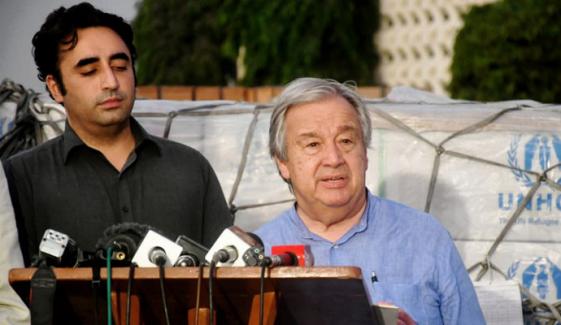
سیلابی تباہی تصور سے زیادہ، گلوبل وارمنگ دوسروں کی غلطی سزا پاکستان بھگت رہا ہے، بحالی میں مدد کی جائے، سیکرٹری جنرل اقوام متحدہ
https://jang.com.pk/news/1134404
Saturday, September 10, 2022
Friday, September 9, 2022
Disaster orthodoxy in Pakistan — floods aren't God's fury, we're the culprits and inaction is our sin

Educational Dividend In Pakistan: Imperatives For Single Curriculum – OpEd
Socialization is the process of inculcating the norms and ideologies of society in individuals. School in this regard is considered as one of the primary and important agents of socialization, where children learn about social expectations and social responsibilities.The present schooling system of Pakistan can be recognized as a class divisions system which is dividing nation at three levels. The education system of Pakistan can be divided into three different tiers. Public sector schools are at the first tier, where medium of instruction is a local language and syllabus is mostly in Urdu language. These schools have a specific curriculum, teaching techniques, co-curricular activities, and evaluation patterns. These schools mostly have poor infrastructure and lack of water, electricity, and other facilities. There is an unbalanced student’s teacher ratio in these schools with small number of teachers and large number of students in classrooms. These schools mostly charge no fee. At the second tier, we have Private English medium schools. The medium of instruction and syllabus in these schools is in English. These schools have mostly good infrastructure with relatively better facilities. These schools have a separate curriculum, teaching techniques, co-curricular activities, and evaluation patterns. The size of students in classrooms of these schools is relatively small with good teacher student ratio. These schools have specified and modern dressing and code of conduct. There is yet another small stratum of schools which encourage co- education schooling. Also, known as elite schools which are linked with foreign education system from curriculum to evaluation. These schools have very high fees which only few percent of the population in the country can afford. Finally, we have Madrasas where there is completely different setup from curriculum to evaluation and certification. The financial needs of Madrasas are mostly fulfilled by the individual charities. The students in Madrasas, mostly belong to very poor families who cannot afford to pay high fees to teach their children in other types of schools. Countering other and defending one’s own religious sect is also an important part of teaching and learning in these Madrasas. Following this, the children coming out of these three different educational systems will have different cultural and social capital in terms of problem solving, knowledge, experiences, exposure and understanding. The elite and private schooling system is inculcating the skills that is greatly contributing towards the personal growth and development of individuals. While the public and Madrasa schooling system stresses on civic oriented and ethical lessons with poor skills for personal development. In addition, this divided education system is creating different value structures. Therefore, it appears that the present education system of the country is divided on an extreme level. It has failed and has not been able to teach citizens to wait on traffic signal for their turn to go. Which shows the lack of understanding on civic responsibilities of the individuals. This education system should have been based both on teaching the required skills to its people and also inculcating the core national values. Although there was a lot of criticism over the single national curriculum and a lot of resistance from private schools and Madrasas, but in my opinion the idea of a single national curriculum is a step in the right direction. The education system of a country is a mean to promote national identity by adopting the core values of the country. Even in the developed countries of the world, through formal and hidden curriculum, skills and societal values are inculcated and reinforced in the children through schooling. Apart from teaching academic curriculum, the school also teaches children about the social roles, rules, expectations, and integration of the society. For example, meeting deadlines, following schedules, fulfilling duties and responsibilities. It is the school and education, which through values and norms, mold the diverse groups of the society into a single shared identity and prepare the citizens for its citizenship roles. A single national curriculum can bring integration, equality, and uniformity among all the students and citizens of the country. This can also provide a level playing field to all the students of the country. This could be one of the leading options to put an end to the dividend and class-based education system of the country. We need to include and advocate our comprehensive core values through a single national curriculum to flourish and move towards national integration and social cohesion. These core values should be guided by the principles of Islam including justice and rule of law where all students can have equal opportunity to higher education and upward social mobility. And the overall social development of the children is in line with local aspirations and evolving international trends. https://www.eurasiareview.com/09092022-educational-dividend-in-pakistan-imperatives-for-single-curriculum-oped/
چیئرمین پاکستان پیپلز پارٹی، وزیرِ خارجہ بلاول بھٹو زرداری سے یو ایس ایڈ کی ایڈمنسٹریٹر سمانتھا پاور کی ملاقات
چیئرمین پاکستان پیپلز پارٹی، وزیرِ خارجہ بلاول بھٹو زرداری سے یو ایس ایڈ
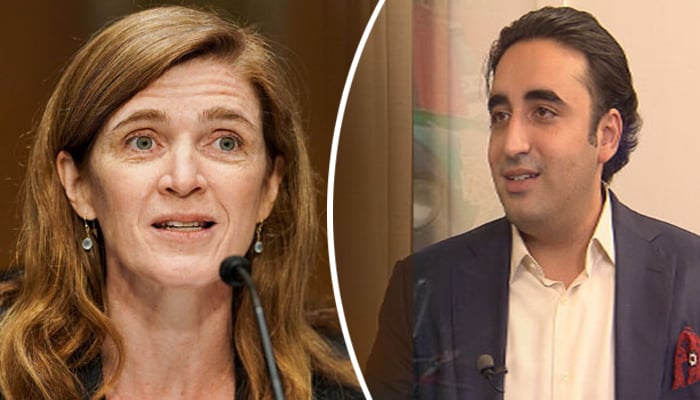
وزیرِ خارجہ بلاول بھٹو زرداری نے یو ایس ایڈ کی ایڈمنسٹریٹر کو سیلاب کی تباہ کاریوں سے آگاہ کیا۔
بلاول بھٹو زرداری نے متاثرینِ سیلاب کے لیے 30 ملین ڈالرز کی امداد پر سمانتھا پاور کا شکریہ ادا کیا۔
وزیرِ خارجہ نے ایڈمنسٹریٹر یو ایس ایڈ سے پاکستان کے لیے عالمی برادری کے وسائل متحرک کرنے کے لیے تعاون کی خواہش کا اظہارکیا ہے۔
ملاقات کے دوران بلاول بھٹو زرداری اور ایڈمنسٹریٹر یو ایس ایڈ سمانتھا پاور نے موسمیاتی تبدیلی سے متعلق گفتگو بھی کی۔
Thursday, September 8, 2022
Pakistan’s Army Is Just as Corrupt as the Politicians It Denounces
Ayesha Siddiqa
While dynasticism and patronage are certainly part of Pakistan’s political structure, the military is not a superior alternative. Pakistan is mired in a serious political and economic crisis. The change of government in April this year, with the removal of Imran Khan from his role as prime minister, has not improved economic confidence. The country’s situation may be marginally better than that of its near-neighbour Sri Lanka, but not hugely so. In fact, the ruling elites in both states are guilty of similar recklessness and myopia. Khan’s ouster was the latest episode in a long saga of intervention by the Pakistani military in the country’s politics. What is novel about the current situation is that the military itself appears to be divided in its attitude toward Khan. This is likely to fuel new cycles of instability in Pakistan. Imran Khan’s fightback Since his ouster, supporters of Khan have caused political chaos, which seems to be rattling both the army leadership and the newly installed coalition government. In July, Khan’s Pakistan Tehreek-e-Insaaf (PTI) movement won a resounding electoral victory in Punjab, the country’s most populous province, where more than half of all Pakistanis live. This comes on the back of rising inflation, a yawning trade and current account deficit, and the difficulty Pakistan’s new government faced in brokering an International Monetary Fund (IMF) deal, before finally reaching an agreement with the fund in mid-July. The IMF has forced Islamabad to withdraw subsidies and increase oil and energy prices, pushing inflation up even further and adding to the financial discomfort of the country’s people. Khan’s PTI capitalised on popular discontent in the Punjab election.Food inflation in Pakistan today is over 15%. The current heat of the moment has made people forget that food insecurity had already started to build up during the four years of PTI rule. During this period, the country was consistently importing wheat, sugar, and cotton. This was the result of poor management and increased smuggling rather than a bad harvest. To make matters worse, a devastating regional heat wave has compounded the long-term problem of power cuts because of Pakistan’s indebtedness to international energy providers. These conditions seem to have eroded the jubilation of Khan’s opponents, the Pakistan Muslim League (Nawaz) (PMLN) and the Pakistan People’s Party (PPP), at replacing him in power. Despite their success in removing Khan through a no-confidence move in parliament, the new government has not emerged as a winner from the political confrontation. Khan continues to dominate the public debate with a populist narrative that depicts him as a figure with clean hands who is fighting a corrupt political elite. Reports are gradually appearing in the press that point towards the PTI leader’s own corruption. However, his support base still considers him a better option than the opposition. This is partly because Khan has laced his narrative with the story of an international conspiracy led by the United States to remove his government.Pakistan’s politically powerful army seems to be unwilling to tackle Khan in the same manner that it dealt with past governments and leaders that had been removed from power. One military regime jailed and later hanged the ousted PPP leader and prime minister Zulfiqar Ali Bhutto in the late 1970s. More recently, the army removed two prominent leaders,Benazir Bhutto and Nawaz Sharif, and sent them into exile. Dissent in the ranks There is no doubt that the army played a major role in Khan’s ouster, even if the opposition parties who have now returned to office claim that the success of the no-confidence motion, later endorsed by Pakistan’s highest court, was their own work. This raises the question: Why is the army’s top brass not dealing with Khan in the traditional fashion by having him imprisoned or exiled? If the current army chief Qamar Javed Bajwa, widely viewed as the most powerful man in the country, has shown signs of weakness in taking on the PTI leader, it is not because his respect for democratic principles is greater than that of his predecessors. Rather, there are divisions within his own fraternity, which is comprised of serving and retired military personnel. The latter may not be part of everyday decision-making for the armed forces, but they play a critical role in maintaining the ethos and power of the institution. The Pakistani state often uses senior officers, particularly generals, as diplomats or in other official positions. Military sources with whom I spoke even suggested that there might be a rebellion of some kind against the army chief if there were any adverse action again Khan. A number of senior officers, including one former head of the Inter-Services Intelligence (ISI), retired lieutenant general Zaheer-ul-Islam, have come out in support of the PTI. This does not mean that there will be a coup initiated by army colonels against the leadership. But this level of internal dissent within the armed forces is already unprecedented. For the first time, the intricate system of reward and punishment that the army command uses to maintain its overall discipline has not functioned effectively, especially when it comes to retired officers. No previous chief has faced the public abuse directed at Bajwa by his own colleagues. It is also unheard of for the army’s top commander to confront hostile questioning from media personnel known to be under the influence of the ISI or the army’s own media arm, the Inter-Service Public Relations (ISPR). In addition, there is a relentless media campaign that describes Khan’s removal from office as a US conspiracy. Those involved in this campaign gently (or sometimes not so gently) point their fingers at Bajwa and accuse him of complicity. The general appears to be struggling to regain ground by using a stick-and-carrot approach to deal with his critics. This has meant depriving at least five (and possibly more) retired officers of their pensions and other perks and privileges. But this has not been enough to pressure other retirees into silence. There are also murmurs of intense discontent among junior officers. In the past, their more senior counterparts primarily worried about the grip of religious extremism in this section of the officer corps, but today they are concerned about losing their loyalty. Sources I spoke with claimed that retired military officers in the United States have already gathered sums of $200-300 per head to support those in Pakistan who have been deprived of their pensions. Preserving the regime In a recent interview, Khan claimed that he had never intended to interfere with the selection of the army’s next chief. But the popular view is that his plan was to retain Lieutenant General Faiz Hameed as ISI head before later promoting him as the service chief. Khan did try to interfere with Hameed’s transfer from the ISI to Corps Command Peshawar by the chief of army staff (COAS), an action that he admitted to in another interview.The opposition suspected Khan of interfering with the COAS selection process, possibly in order to manipulate the country’s next election. Former prime ministers such as Zulfiqar Ali Bhutto and Nawaz Sharif had also adopted this approach, but the army chiefs who they selected later defied them. For its part, the army does not have a problem with being dragged into political maneuvers: what it objects to is politicians targeting its own institutional autonomy. Why should this internal divide have arisen over the sacking of Khan, who is certainly not a more popular figure than Zulfiqar Ali Bhutto was in his own time? Why are the army’s junior cadres restless about his dismissal when they welcomed the removal of politicians like the PPP’s Yousaf Raza Gillani in 2012 or the PMLN’s Nawaz Sharif in 2017? There seems to be more at stake today than in these earlier cases. The political crisis generated by Khan’s rise and fall has certainly made General Bajwa into a controversial and unpopular figure. While the army seeks to maintain its professional image and give the impression that it stands firmly by its chief, its top commanders are worried about the ideological sympathy for Khan among their own officers. The change of government in April does not mean there has been a regime change in Pakistan. The new administration is just as keen to please the military and expand its role in governing the country as its PTI predecessor. Current prime minister Shehbaz Sharif quickly passed a law authorising the ISI to carry out security checks on civil servants before they are recruited and promoted, although his government later reversed this decision. He has even allowed the army to negotiate with the Tehreek-e-Taliban Pakistan (TTP) group, which is known for generating violence inside Pakistan. Khan versus Bajwa Yet the problem for the army command is this. Over the course of many years, a narrative that depicts Pakistan’s traditional political leaders from the PMLN and the PPP as corrupt, unpatriotic figures has won support from a significant part of the military fraternity as well as young voters and the urban middle class. These elements are now averse to seeing the traditional parties return to power. The army leadership may dismiss Khan’s suggestion that the United States conspired with his domestic political opponents to overthrow his government. But this conspiracy theory has gained traction in Pakistan, and any discussion of the role Washington has played in removing various governments around the world tends to give encouragement to Khan’s story. Those who embrace this perspective see the reluctance of Prime Minister Sharif to buy Russian oil at cheaper rates as another example of Pakistan’s subordination to US influence. General Bajwa’s condemnation of the Russian invasion of Ukraine and commitment to improving ties with the United States may reflect his pragmatism, but it does not help improve his image with a domestic audience. In this battle of opposing interests being fought out within the army’s upper echelons, Bajwa looks to be weaker and more compromised by the day, while Khan appears more dangerous and unpredictable. On the back of his recent electoral victory in Punjab, the PTI leader has successfully pushed for his ally Pervaiz Elahi to become the province’s chief minister. Bajwa’s term as army chief expires at the end of November this year. His current difficulties make it less likely that he will be able to secure an extension of his tenure or help one of his favorite generals to replace him. Yet it is still possible that he may succeed in doing so, countering Khan by deploying Pakistan’s higher judiciary, which has been a tool of the army for decades. The PTI has lately come under scrutiny because of accusations that the party received illegal donations from foreign individuals and businesses. The Election Commission of Pakistan (ECP) produced a detailed report stating that Khan had taken money from questionable sources including Arif Naqvi, head of the Abraaj Group, a private equity firm. The British authorities arrested Naqvi in 2019 on the foot of a US extradition warrant. Naqvi is accused of misusing funds provided by donors such as the Bill and Melinda Gates Foundation and could face a sentence of up to 291 years if found guilty in the United States. The army’s self-image The officer corps puts forward a narrative to legitimise their economic ventures and conceal their predatory, kleptocratic behaviour. Their propaganda machine, the ISPR, has become a major media empire with one of the largest radio networks in the country. It finances the production of films and TV programmes, as well as deploying a large squad of social media operators to malign its critics and uphold its reputation. The goal of this publicity is to project an image of the army as the only institution with the will or capacity to protect Pakistan. ISPR-sponsored films and programmes tend to focus on internal enemies, depicting them as co-conspirators of the foreign threats to Pakistan. They present the politicians as feudal landowners who are regressive, repulsive, and crass, in contrast with the military, which is modern, urban, patriotic, and sensitive about minorities and women. Works like Alpha Bravo Charlie (1998), Ehd-e-Wafa (“Promise of Loyalty,” 2019), and Sinf-e-Aahan (“Women of Steel,” 2021) depict the army as an agent of transformation that lifts civilians from their rural background and transforms them into members of a modern, urban, English-speaking middle class who are still respectful and egalitarian in their approach. The ISPR, along with the ISI’s media team, works to silence alternative views and generates propaganda, according to which, the army must spearhead the social and political engineering of state and society in Pakistan. Sources within the army have told me that the origins of this project date back to the time of former army chief Ashfaq Parvez Kayani, who occupied the post between 2007 and 2013. Kayani, who had a reputation as a thinking man, laid the foundations for a sociopolitical transformation that later brought Khan to power. This publicity is supposed to justify the overextended role that the military believes it must play in order to expand its power. As the American political scientist Stephen P. Cohen once put it, “There are armies that guard their nation’s borders, there are those that are concerned with protecting their own position in society, and there are those that defend a cause or an idea. The Pakistan Army does all three.” However, in the process of establishing itself as the only worthwhile national institution, the military has also created challenges for itself. It has raised expectations on the part of the middle class and many of its own supporters that it would eliminate politicians considered to be bad from the political process. The army has presented itself as the champion of middle-class values, in opposition to a dynastic political class that stands for feudal values. Fighting over the pie While dynasticism and patronage are certainly part of Pakistan’s political structure, the military is not a superior alternative. Its generals tend to use institutional power to manipulate national resources so as to lift themselves out of their middle-class background and become part of the elite. They have used anti-corruption rhetoric to justify the removal of several governments, dating back to the 1980s. But the generals themselves, as we have seen, are equally corrupt. The army uses the proclaimed fight against corruption to delegitimise political actors rather than to combat financial mismanagement. Its top echelons initially promoted Khan because of their discomfort with Pakistan’s traditional parties. There was a conscious plan to weaken the traditional two-party system after the end of Musharraf’s rule, as one former intelligence chief has acknowledged. Those who spoke about empowering the middle class and shifting power away from the representatives of dynastic politics used Khan’s personal charisma as a tool to reclaim space from the existing parties. This does not mean that the PTI actually represents middle-class interests; indeed, it is as elite oriented as the other parties. However, the project of vilifying the other political players now appears to have backfired on the current army chief, some of whose own men now view him as a traitor for abandoning the PTI project. The army has begun to pay a price for its power games, as it has become more acceptable for people from across the party spectrum to accuse its commanders of manipulating the political processes – although the parties are still unwilling to publicise the exploitation of national resources by the generals. Ultimately, this is a story of elite capture in which Pakistan’s civil and military leadership are in partnership with each other. There may eventually be a real confrontation between them if the size of the financial pie available for plunder shrinks, obliging the two sides to struggle over who gets a greater share of the spoils. However, Pakistan has not reached that point yet, and until it does, the country is likely to lurch from crisis to crisis.https://thewire.in/south-asia/pakistan-army-corrupt-politicians
Pakistan’s Flood Crisis Could Become a Food Crisis
Pakistan FM Bilawal Bhutto thanks US for $31.1 million humanitarian aid
More than 1,300 people lost their lives in the recent floods.

Wednesday, September 7, 2022
How do we ensure that schools in Pakistan engage the most excluded children in quality education?
We first met Ratnu Kohli in 2019, as he worked in rice fields in Badin, Sindh with his children under the afternoon sun, busy sorting and packing the harvested paddy. Although Ratnu himself studied in school up to class three, none of his eight school-aged children were enrolled. He told us that education was important so his children would not get scammed when selling their crops. Hearing this, we excitedly pointed toward the gleaming, beautiful building of a low-cost private school, standing right across the fields: “Why not enroll your children in this school?” He looked at the school and said, “Children of landowners go to this school.” Ratnu’s concern that the social structures he experienced in his day-to-day life would play out within the school was not put to the test, but the persistence of this fear was a clear sign that the school had not been effective in laying it to rest.
In Pakistan, in addition to rural location, income, religion, caste, and land ownership, factors like gender, spoken language, and a community’s prior exposure to schooling, among others, all play a role in limiting a child’s access to schooling and learning. Countrywide, there is a huge shortfall in meeting the school enrolment needs of 20 million children. Four out of 5 children who are not in schools are from rural areas, and of these, around 60 percent are girls. But being in school alone does not guarantee learning; around half the children who make it to grade 5 cannot read a story (in Pashto, Sindhi, or Urdu) or solve division questions. With multiple and diverse factors affecting a child’s access to schooling and learning, program and policy interventions that fail to meaningfully address the lived realities of the most-excluded children in Pakistan—and their families and communities—are likely to fall short.
I have come to Brookings as a 2022 Echidna Global Scholar to focus on how the Pakistani education system can effectively engage the most excluded children (particularly girls) in quality educational opportunities from the start of the compulsory school-going age (5 years).
As part of The Citizens Foundation (TCF), which operates the largest network of independently run, nonprofit schools in the world, I spent three years understanding the context of older out-of-school children (OOSC) in rural Sindh. To access and visit their communities and families, I relied on women who speak Sindhi fluently and are culturally responsive to the needs of the community. Working with other women helped in accessing all children in the community, especially girls, who are among the most excluded OOSC.
Discussions with men, women, and children in rural communities allowed us to understand their worldviews, aspirations, routines, and responsibilities, as well as the structural challenges they face. These insights became the building blocks for the design of the informal education program at TCF. We piloted the program in 2020 and saw enrollment of children—including older girls ages 10 to 14 from low-income families, socially disadvantaged castes, and minority religions—in the program and observed improvements in learning outcomes for most in a span of just 10 months. Among them were Ratnu’s three older children.
In seeing the genesis of an education program developed in partnership with community members, I identified the need for policies at the provincial level to be informed by communities. I have come to Brookings as a 2022 Echidna Global Scholar to focus on how the Pakistani education system can effectively engage the most excluded children (particularly girls) in quality educational opportunities from the start of the compulsory school-going age (5 years). My aim for this journey is not only to identify contextualized and gender-responsive policies that improve education outcomes for all children, but also to work with policymakers in shaping these responses.
The research that I do at Brookings will continue to focus on Sindh and demonstrate large gaps in enrollment between urban and rural areas, with gender playing a major factor in the deficit. Similar to other provinces in Pakistan, underserved children in Sindh are largely those who have never attended schools and the province struggles with delayed enrollment, which does not peak until around age 9. This is not a good sign for school retention, as evidence suggests that delays in school enrollment increase the probability of school dropout.
While Ratnu’s older children enrolled in TCF’s community-based education program, the recent floods make me wonder when they will be able to resume their education and what support mechanisms they will need to alleviate the impact of flooding and increasing poverty. I also think about the extent to which their life outcomes will change and the relationships schools need to build with parents like Ratnu to ensure children start school on time. With these questions in mind, I have begun my journey with Brookings with the hope of designing an education policy in Sindh that delivers for the most excluded children.