Thursday, July 14, 2022

Video - #DailyShow #TrevorNoah #IfYouDontKnowNowYouKnow The Subminimum Wage Loophole - If You Don’t Know, Now You Know | The Daily

Video Report - What's the way out of Sri Lanka's political crisis?

Video Report - Tapper calls out GOP officials who called rape of 10-year-old a lie

Video Report - #biden #israel #medalofhonor Biden Awarded Israeli Presidential Medal of Honor

Video Report - President Biden Holds News Conference With Israeli Prime Minister | NBC News

Music Video- EK TARAF USKA GHAR EK TARAF MAIKADA PANKAJ UDHAS

Music Video - Superhit Ghazal - Sabko Maloom Hai Main Sharabi Nahin - By Pankaj Udhas

Video Report - عدم اعتماد تحریک کے ہیچھے غیر ملکی سازش کا کوئی ثبوت نہیں، سپریم کورٹ کا فیصلہ بھی آ گیا

Video Report - مارگلہ ھلز فوج کی ملکیت نہیں،سرکاری زمین کی خریدو فروخت نہیں ہو سکتی، ہائی کورٹ کا تفصیلی فیصلہ

Pakistan’s rising debts, decreasing exchange reserves raise concern

Pakistan is in economic turmoil as its foreign debts are rising while foreign exchange reserves are decreasing.The situation raises concern over Pakistan’s economic challenges getting deeper, reported local media.
Pakistan’s external debt servicing rose to USD 10.886 billion in the first three quarters of 2021-22 compared to USD 13.38 billion in the entire FY21.
The situation will create a serious problem for Pakistan as its foreign exchange reserves are fast depleting amid rising external debt servicing, reported Dawn.
The external debt servicing was just USD 1.653 billion in 1QFY22 against USD 3.51 billion in the first quarter of 2020-21.
However, the debt servicing jumped to USD 4.357 billion in 2QFY22 and further to USD 4.875 billion in 3QFY22, reported Dawn.
Pakistan has been facing a serious threat on the external front as the State Bank of Pakistan’s foreign exchange reserves fell to single digits despite a USD 2.3 billion inflow from China late last month.The increasing size of the external debt servicing in each quarter indicates the government has been borrowing dollars at higher commercial rates to meet its foreign debt repayment obligations, reported Dawn.
The economic slowdown is taking a toll on Pakistan’s job market as some sectors reported layoffs.
“Textile and technology sectors have reported job cuts amid the economic slowdown,” Fahad Rauf, Head of Research at Ismail Iqbal Securities, said last week, reported The Express Tribune.
“Some Pakistani exporters have reported cancellation of export orders (by international buyers) in the backdrop of global recession fears.”
The layoffs will result in newcomers finding jobs becoming a tough task in the short to medium term, reported The Express Tribune.The employment rates stand below the required levels due to slower economic growth compared to the 6-7 per cent economic expansion required to accommodate all new job-seekers in the country.The UN had suggested 17 targets for perpetual development which means equal opportunities for every human to make one’s life better, reported local media.Unfortunately, at the international level, no serious measures were taken in this regard. As far as Pakistan is concerned, where poverty is increasing every day such steps are extremely important, reported local media.
It was suggested that Pakistan should save wastage of natural resources so that future generations could also benefit from it.
Similarly moving toward renewable energy is also important to reduce the adverse environmental effects due to pollution.
The government should take immediate actions in this regard to stop increasing crises in the country, reported local media.
https://theprint.in/world/pakistans-rising-debts-decreasing-exchange-reserves-raise-concern/1039551/

Monday, July 11, 2022

Video Report - Macron’s government survives no-confidence vote in parliament • FRANCE 24 English

Video Report - President Biden and Vice President Harris Receive a Briefing on James Webb Space Telescope Images

Video Report - Top Dems rule out 2024 challenge for Biden

Video Report - #Russia #Germany #NordStream Russia cuts off gas to Germany: Will they switch it back on? | DW Business

Is Society Finally Ready for Male Birth Control?

By Stephanie Page and John Amory
Over 40 percent of the six million annual pregnancies in the United States are unplanned, according to the latest data available, and about one in five pregnancies ends in abortion. With the Supreme Court decision overturning Roe v. Wade, and the resulting loss of access to safe abortion care for millions of Americans, it is more critical than ever to prevent unplanned pregnancies. The use of an effective method of contraception is the best way to do so.
As researchers developing male hormonal contraception, we believe that to reduce unplanned pregnancy and the need for abortion, men need to become more engaged in contraception. Men are involved in 100 percent of unintended pregnancies, and most men remain fertile for much of their lives.
Male contraceptives have been in use for hundreds of years. Condoms made from animal intestines were used in Renaissance Europe. Condoms are a useful tool for preventing pregnancy and sexually transmitted infections, despite having significant failure and discontinuation rates over time. Many men and women simply don’t like them. Vasectomies have long been performed in the United States, but they are not always reversible and are therefore appealing only to men with no interest in future fatherhood. Despite these drawbacks, condoms and vasectomy currently account for roughly 21 percent of monthly contraception use in the United States.
While numerous contraceptives for women exist, including implants, pills, intrauterine devices and vaginal rings, a substantial proportion of women do not have a method they can use safely or without significant side effects. For example, the pill may not be recommended for women with a history of blood clots or women over 35 who smoke. Many women experience side effects from contraceptives, such as abnormal bleeding, weight gain, acne and low libido. In addition, even for these imperfect options, access to contraception remains a challenge in many settings. Now that the opportunity to terminate an unplanned pregnancy will be unavailable to many, the United States needs innovative solutions to make a major impact on unplanned pregnancy rates, which have remained relatively stagnant over the past two decades, despite the introduction of more female methods. Novel male contraceptives hold that promise.
Would men use contraceptives if more choices were available? Multinational survey data suggests that 29 to 71 percent of men would use a male hormonal contraceptive. Recent market research from the Male Contraceptive Initiative indicates 82 percent of U.S. men ages 18 to 44 whose partners experienced an unplanned pregnancy in the past are interested in new methods of male contraception, with the majority saying they feel they share contraceptive responsibility with their partner. Importantly, one study found that only 2 percent of women surveyed said they would not trust their partners to use a hormonal male contraceptive. More work is needed to substantiate these survey data with real world experiences from men and to educate men about contraceptive options.Reversible male hormonal contraception has been tested for around 50 years. We know from our and others’ research that these methods work well for most men. Various injections and implants have been tested in over 2,000 couples worldwide, together demonstrating reversibility and around 95 percent effectiveness in preventing pregnancy — rates comparable with the female pill’s and better than condoms’.
The Eunice Kennedy Shriver National Institute of Child Health and Development and the Population Council, together with 15 centers across the globe — including sites in North and South America, Europe and Africa — are conducting a study in over 400 couples of a hormonal contraceptive gel that men apply to their shoulders once a day for 18 to 24 months. As investigators helping to conduct this trial, we know that men are interested and engaged in using these methods. Our male participants often express a desire to continue using the method for contraception after their time in the study ends, and their female partners are often disappointed to return to their previous methods.
Nonhormonal male contraceptives are less well developed but show promise in laboratory testing. A prototype “reversible vasectomy” is being tested in countries like India and the United States. It entails an injected gel that forms a plug to prevent the passage of sperm; the plug can be broken down or degrades to allow for reversal. More long term, scientists are working to develop molecules that prevent sperm swimming or maturation; however, these second-generation male contraceptives are likely more than a decade away.
As clinicians and developers, we are always asked about side effects. A minority of men testing male hormonal contraceptives experience side effects that will be familiar to some women who have used hormonal contraceptives (for example, weight gain, acne and increase or decrease in libido). Nevertheless, men say they are willing to share the burden of side effects with women, and the concept of shared risk has been proposed to reframe the risk analysis in this situation. In this paradigm, men take on the risk of side effects from contraceptive use to protect their partners from the risk of undesirable effects of their contraceptive or unintended pregnancy. With a number of states now further limiting access to safe abortion, the risks for many women of an unplanned pregnancy have risen sharply, furthering the imperative to look at shared risk by a couple when assessing potential contraceptive side effects.
As developers of male contraceptives, the most frequent question we are asked is: What is taking so long? Investment in male contraceptive development has dropped compared with prior decades when large pharmaceutical entities and nongovernmental agencies were investors. Today, the National Institute of Child Health and Development and academia provide the vast majority funding for male contraceptive development; lack of funding slows progress at the innovation and clinical testing stages.Why the loss of engagement? It’s possible that the novelty of male birth control is seen as too risky for profits and that the market is underappreciated for pharmaceutical involvement. Moreover, developers suffer from a lack of regulatory guidance from the Food and Drug Administration on how effective these products must be for market introduction. Consensus recommendations from the research community have been published suggesting metrics for evaluating novel male hormonal contraceptives and establishing effectiveness and safety levels, but whether these will be adopted by regulators is unknown. Greater advocacy is needed to push the field forward and convince funders and the pharmaceutical industry that there is a demand for this technology.
We are not developing male contraceptives to replace female contraceptives. Access to contraception and safe abortion is a fundamental human right for all people and a necessary component of public health. Many men wish to share the burden of contraception with their partners; others want reproductive autonomy. Men are ready, but their contraceptive options are sparse. Education will be important as products come to the market.
Now that the U.S. Supreme Court has issued a decision that will severely limit people’s options when an unplanned pregnancy occurs — a decision that will have a disproportionate impact on poor women — we need, more than ever, to accelerate development of male contraceptive options. Lives are at stake.
https://www.nytimes.com/2022/07/11/opinion/male-contraception.html

Sunday, July 10, 2022

Video Report - Sri Lankans roam presidential palace after Rajapaksa is chased out

Video Report - Elon Musk may be on the hook for $1B to get out of Twitter purchase

Video Report - Chile inflation: Rising food, fuel prices spark public anger

Video Report - President Biden Visits Japan Ambassador After Killing of Former Japanese PM Shinzo Abe

Video Report - No Saudi-Israel Normalization While Biden Visits, but It’s Getting Closer

Pashto Music - اختر دے مبارک شا - Humayun Khan Aw Sumaira Iqbal

Video - سابق چئیرمین نیب جسٹس ر جاوید اقبال کے کرتوت اور آئینی اداروں کی شرمناک خاموشی

Pakistan - China: CPEC resumption


IT appears that a recent counterterrorism breakthrough has greatly helped restore Chinese confidence in Pakistan’s security apparatus and paved the way for the restoration of bilateral ties as well as CPEC-related activities, which had been on ice since late April.
Work has reportedly resumed on the Main Line 1 (ML-1) upgradation project, the largest component of China’s Belt and Road Initiative in Pakistan and the centrepiece of the second phase of CPEC.The importance of what this breakthrough represents cannot be overstated. Beijing — an all-weather friend and one of our strongest allies — had all but pulled the plug on its development activities in Pakistan after a brazen terrorist attack on the grounds of Karachi University left three Chinese teachers dead. It was well known that Beijing had been quite upset for some time at the impunity with which its people were being attacked on Pakistani soil. After the KU attack, it simply suspended all work on the CPEC front till the time those responsible were nabbed and security for its personnel in Pakistan assured.
The gravity of the situation can be judged from the fact that recently army chief Gen Qamar Bajwa himself had to travel to Beijing with guarantees in a bid to win the Chinese over.
It is unclear what the army chief offered to the Chinese authorities, and what terms were set for the future.
The recent busting of a terrorist cell linked to Baloch extremists BLA and BLF, however, has thawed the ice considerably. The operation reportedly came in coordination with a group of Chinese investigators who had arrived here and were working with the Pakistani team tasked with the case.
This unusual arrangement reflects a lack of faith on the Chinese side. It would have been much better had there been more clarity about the role of this team and whether we should expect similar arrangements in the future, as has been rumoured in some quarters. Be that as it may, it appears that Chinese authorities are for now satisfied with the progress made and wish to resume their work. It is now up to our government and security forces to make sure there is no further incident which may imperil goodwill between the two countries again. However, there also needs to be greater transparency in our dealings with Beijing so that there is greater visibility of the progress being made under CPEC and how the project may affect the security of both foreigners working in Pakistan and the Pakistanis living here.
It is irregular for so much to continue to be negotiated behind closed doors while such a major, transformational project is being executed on our soil. Bilateral relations between Pakistan and China are not the exclusive domain of just one branch of the state that terms continue to be negotiated by it at the exclusion of all others.
https://www.dawn.com/news/1699156/cpec-resumption

Pakistan’s $1 Billion Gas Tender Flop to Worsen Energy Crisis

ByStephen Stapczynski
Request for LNG received not a single offer from suppliers.Nation already grappling with blackouts due to fuel shortage.
Pakistan’s energy crisis looks set to drag on for months after another failed attempt by the nation to import gas.
In an unusual development, state-owned Pakistan LNG didn’t receive a single offer in a $1 billion liquefied natural gas purchase tender, according to traders with knowledge of the matter. That illustrates both the extent of the global fuel shortage, and also the reluctance of suppliers to sell to a country in the depths of an economic crisis.It’s the fourth time in roughly a month that Pakistan -- which is already suffering frequent blackouts -- has failed to complete an LNG purchase tender. The relatively poor country is reliant on energy imports, meaning it’s been hit especially hard by soaring prices. Inflation has topped 20%, and the government is negotiating with the International Monetary Fund on a financial rescue package.
Europe’s Plan to Quit Russian Fuel Pushes Pakistan Into Darkness
Already elevated Asian gas prices started rising further over the last few weeks on increasing supply disruptions from Russia to the US. Global LNG flows are being redirected to energy-starved Europe, where utilities are willing to pay more than emerging markets. Thailand and India have also been curbing purchases due to the high prices, but they’re not in as perilous a situation as Pakistan. The world’s fifth-most populous country was looking to buy 10 LNG cargoes from the spot market for delivery from July to September via the tender that closed on Thursday. Pakistan bought almost half of its LNG on the spot market last year, with the rest coming under long-term deals, according to data compiled by BloombergNEF.
Even if Pakistan’s tender had garnered offers from suppliers, the traders said it wasn’t clear that the government would have been able to make any purchases due to the soaring prices.
https://www.bloomberg.com/news/articles/2022-07-07/pakistan-s-1-billion-gas-tender-flop-to-worsen-energy-crisis

ہم نے ملک کو بچانے کیلئے سخت فیصلے کیے، یوسف رضا گیلانی

سابق وزیر اعظم یوسف رضا گیلانی نے کہا ہے کہ  ہم نے ملک کو بچانے کے لیے سخت فیصلے کیے۔
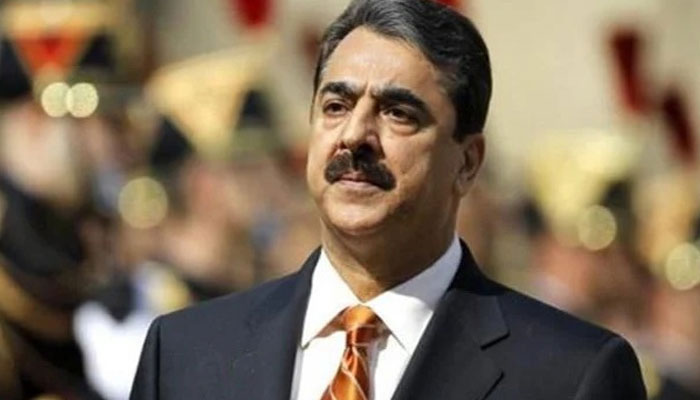


یوسف رضا گیلانی نے درگاہ موسی پاک شہید پر نمازِ عید ادا کی جس کے بعد اُنہوں نے میڈیا سے گفتگو بھی کی۔

 میڈیا سے گفتگو کرتے ہوئے پیپلز پارٹی رہنما یوسف رضا گیلانی نے کہا کہ سابقہ حکومت نے آئی ایم ایف سے معاہدے کیے۔

یوسف رضا گیلانی نے کہا کہ ساری حکومتوں کو مدت سے پہلے ہٹایا گیا۔

اُنہوں نے مزید کہا کہ کسی نے عدلیہ اور فوج کے خلاف بات نہیں کی، اگلے الیکشن کا انتظار کیا۔

https://jang.com.pk/news/1109824 

Saturday, July 9, 2022

Music Video| ویژه برنامه جشن عید - عید قربان

Music Video - MERA BABU CHAIL CHABILA - RUNA LAILA - FILM MANN KI JEET (1972)

Music Video - Koko Korina , Ahmed Rushdi

Music Video - Ahmed Rushdi - O Meri Mehbooba - Nai Laila Naya Majnon - Kamal & Nasima Khan

Music Video - MEHDI HASAN - EID KA DIN HAI - INTIZAR NADEEM SHABNAM

Women And Political Power In Pakistan – OpEd

By Saad Hafiz
Developing countries are increasingly recognising that including women as equal partners in political, economic, and public life is crucial to nation-building. Pakistan has a long way to go as women are under-represented in decision-making positions. Political power remains firmly the domain of men, except for a few elite women with dynastic political backgrounds.
Low political representation, together with entrenched religious and cultural patriarchy and rampant sexism, is the primary cause of the dismal conditions for women in the country. The personal and political emancipation of women is not a national priority. And the uneven distribution of political power, heavily skewed towards men, limits women’s contribution to nation-building. It also leaves women alone to struggle for gender-sensitive legislation and fairer laws and practices. Yet Pakistan needs the active engagement of women as agents of change in politics and society. Women can help to improve abysmal human and economic development statistics. For example, women’s contribution in Pakistan is a mere 24% of GDP (mainly through unpaid household labour), well below competitors, leaving significant room for improvement.
Ultimately, women must have input in the male-dominated political, economic, security, and social decisions that affect the country’s future. While it is hard to contemplate based on existing conditions, women must have actual political clout, leadership roles, and meaningful decision-making power. It is an enormous task because society does not bring women up to be leaders. Women are not prepared or conditioned to challenge a hierarchical system that promotes subservience to men.
We know that the cultural norms that restrict the advancement of women in society in a male-dominated country are multi-faceted and difficult to overcome. But women can increase their political clout through the power of the vote in an electoral democracy like Pakistan.
For instance, female voters can choose political parties that give more representation to women in politics. Their votes should go to political parties that field more female candidates, appoint more female ministers, support women candidates during elections, and expand their social base to fit in more women from rural and poorer backgrounds.
But recent data on the participation of women in the democratic process in Pakistan is not encouraging. A frequent complaint is that women’s votes do not matter: a part of the systemic suppression of women’s political participation. Male family members also prevent a section of rural women from voting in elections.
As a result, despite increasing voter turnouts, women are underrepresented in the halls of political power and have limited access to financial resources. According to IPU data, a global organization of international parliaments, Pakistan ranks 112th for its percentage of women in national parliaments.
Political parties are reluctant to throw their weight behind female candidates who take on men in open seats as they expect them to lose. It is because women lack voter constituencies that take years to build. Hence, political parties mostly pick women indirectly on reserved seats through a gender quota in Parliament. It limits women legislators’ power and influence. Overall, Pakistan is a tough place for women. It is made worse due to state-led anti-feminism. Women face gender discrimination, endemic sexual violence, and harassment. Successive governments have not attempted to remove the structural disparities and inequalities that hinder gender empowerment. Male politicians often make ignorant and offensive statements about women legislators. Government leaders blame the victims for the violence perpetrated on women. Political parties pandering to the religious right find it easier to advocate the policing of women’s bodies, choices, and agency. There is no strategy or commitment to repeal the anti-women Hudood ordinances and anti-minority blasphemy laws.
It is little wonder that Pakistan is ranked third to last on the 2020 Gender Development Index (GDI). And the 6th most dangerous place for women globally, according to a 2021 report by the Women, Peace and Security Index.
Pakistan has been especially slow to include women in political decision-making. And women in leadership positions will remain a sensitive issue. But the country has made progress spurred by women’s growing presence in politics through reserved seats. In addition, the Election Commission of Pakistan has partnered with NGOs in rural areas to increase female voter registration. The next step is to move away from symbolic representation for women to have more female politicians in influential decision-making positions. Securing women’s political, economic, and social rights can go a long way in nation-building and shared prosperity. Nothing less will do.
We know that the structures of repression that marginalize women will not disappear rapidly. Despite the challenges, women and girls must continue their fight against patriarchal forces. Women mostly have to drive the struggle for gender equality in political leadership. https://www.eurasiareview.com/08072022-women-and-political-power-in-pakistan-oped/

Why does Pakistan fear another COVID wave?

Health experts are warning of a new surge ahead of Eid al-Adha celebrations. They say the holiday could fuel a new coronavirus wave as cases in Pakistan are already on the rise.
Experts have warned that another surge in coronavirus cases in Pakistan could overburden the country's already fragile health care system. They expect the wave to be coincident with the Muslim festival of Eid al-Adha, which takes place this weekend.The country's National Command and Operation Center (NCOC), which aims to manage the virus, on Tuesday issued a new set of guidelines amid fears of a new rise in cases, requesting that people use face masks and practice social distancing.
Eid prayers will be organized in open spaces "under stringent COVID protocols," the NCOC said.
According to the data released by the National Institute of Health Islamabad (NIH), Pakistan on Monday recorded 675 new cases and a rate of positive cases from people tested of 4.61%, marking a substantial increase from the past months.
Just a month ago, the positive percentage of tests was just 0.54% with only 79 cases and no deaths.
According to official data, Pakistan has recorded over 1.5 million confirmed cases and more than 30,400 deaths since the start of the pandemic.
Officials call for holiday caution
According to the NIH, 85% of the eligible population have been fully vaccinated against the virus.Federal Health Minister Abdul Qadir Patel, meanwhile, urged people to remain at home during the Eid holidays to curb the spread of the virus.
"The quick transmission is indicating that we have just entered into the sixth wave of this deadly virus," Dr. Qaiser Sajjad, secretary-general of the Pakistan Medical Association, told DW.
"The primary concern is that the asymptomatic people are the dangerous carriers and transmitters," he added.
However, the government believes that the "situation is under control and there is no need to enforce a lockdown in the country," Federal Health Minister Patel said.
Health experts say that there is a lack of awareness of the virus and that people are not taking the situation seriously as millions prepare to attend community prayers at mosques this weekend.
Disregard for precautionary measures
"There is huge mistrust between the government and public on the communication of messages and people not responding to authoritarian messages," Dr. Fareeha Irfan, a public health physician and expert in health policy and management, told DW."Masks were dropped as early as June and July 2020 in public offices. Meetings shown on TV without masks prompted people to ignore the precautions," Irfan added. The rapid increase in cases in Karachi, the largest city, over the last weeks has also alarmed experts and spurred officials to rethink their lockdown strategy.
The positive test rate in Karachi is currently at 21%, with 456 new cases reported on Monday.
Pakistan's aviation regulatory authority recently made masks compulsory during domestic flights in the wake of the recent surge in Karachi.
"There is an urgent need to take precautionary measures and avoid gatherings on this Eid. The testing ratio is quite low, and I fear that the positive rate in Karachi is [actually] around 35%, which could throw the country into a new health crisis," warned Sajjad.
"In this new wave there is a trajectory towards a doubling of cases. It's a strong possibility that we will see an alarming situation and rise in cases if people do not stop being careless," said Irfan.
https://www.dw.com/en/why-does-pakistan-fear-another-covid-wave/a-62381465

Pakistan: Business experts warn of social unrest amid deepening economic crisis

Amid the deepening economic crisis in Pakistan, the business leaders of the country have warned that the country is heading toward social unrest and fear that it is becoming unsafe for foreign investment due to back-to-back government policies that seek to discourage investors.
“We don’t have continuity of economic policies. There have to be separate teams for economic matters and political issues so that policies remain intact; otherwise, it will keep affecting foreign and local investors,” said the former vice president of the Federation of Pakistan Chambers of Commerce and Industry (FPCCI), Saqib Fayaz Magoon, while reacting to the massive hike in the State Bank of Pakistan’s (SBP) policy rate from 7.5 per cent in September 2021 to 15pc in less than 10 months, the Dawn reported.
He explained that industrialists and foreign investors always rely on interest rates and foreign exchange rates before investing.
“If it changes so abruptly and that too quite considerably, then foreign investors will start eluding Pakistan,” the Dawn quoted Magoon as saying.Secondly, he said, banks in Pakistan were reluctant (due to verbal instructions from the SBP) to make payments to businessmen who got supplies on collection base documents on short-term credit.“The banks were making payments on LC-based payments alone. Pakistan witnesses around USD 1 billion in payments under credit-based business due to the credibility of Pakistani businessmen and foreign suppliers,” he said.
According to the Dawn, Magoon while expressing concern over the increasing value of the Dollar said that Foreign investors are looking with worry at this depreciation in the Pakistani rupee because they invest in dollars and get a return in local currency, as the exchange rate is likely to appreciate even further after Eidul Azha, he said.
Hyderabad Chamber of Commerce and Industry (HCCI) president Adeel Siddiqui reiterated Magoon’s statements while expressing concern over the falling crude oil prices and ghee. He was also worried about monetary policy, and poverty issues in the country.“Don’t you remember the government has announced it will provide relief from lower fuel prices in the international market even if it drops by one dollar? Have you seen this relief being passed on to consumers?” he questioned.On the contrary, he claimed that electricity and gas tariffs had been raised, in addition to a fuel price adjustment (FPA) of Rs 7.90 per unit, the Dawn reported.
Notably, Inflation in Pakistan increased to 21.32 per cent in the month of June, the highest in over 13 years, as per local media reports.
Pakistan’s Bureau of Statistics (PBS) stated that in May, the inflation rate as measured by the Consumer Price Index (CPI) was 13.76 per cent.
The inflation increased by 6.34 per cent month-on-month (MoM) and reached 21.32 per cent year-on-year (YoY) in June, the Dawn newspaper reported.
A double-digit inflation rate was witnessed in many sectors. The transportation sector recorded the highest inflation of 62.17 per cent and perishable food items, prices also increases by 36.34 per cent, it added.Meanwhile, the education sector reported single-digit inflation of 9.46 per cent, and the communication sector reported inflation of 1.96 per cent, Dawn reported citing PBS.Motor fuel, liquefied hydrocarbons and electricity charges recorded a 95 per cent increase in year-on-year inflation, as per the data.The PBA had also expressed concern over the potential risks that might affect the growth aspects of the country even if they are expected to remain satisfactory.
It involves the trading partners of the country. In an attempt to counter inflation, the central banks of the country’s trading partners are increasing their interest rates which might cause the recession in these countries, the report said. (ANI)
https://theprint.in/world/pakistan-business-experts-warn-of-social-unrest-amid-deepening-economic-crisis/1032514/

IMF Intends To Ban Pakistan From Seeking More Chinese Loans: Report

 Pakistan is obligated to pay more than PRs. 350 billion power dues to multiple Chinese IPPs operating in the country.

The International Monetary Fund (IMF) intends to ban Pakistan from borrowing more from China, according to reports.

Islamabad's plan to seek PKR 7.9 billion from China for China Pakistan Economic Corridor (CPEC) projects is now likely to hinge upon the IMF recommendations.

Driving Pakistan's economy with the help of external doles is unsustainable and Pakistan desperately needs structural reforms. The IMF has raised objections to Pakistan's loans from China and arbitrarily high payments made to Chinese independent power producers (IPP), suggesting Islamabad renegotiate its energy agreements with Beijing, reported Financial Post.

Pakistan is obligated to pay more than PRs. 350 billion power dues to multiple Chinese IPPs operating in the country. IMF's demand follows Beijing's rejection of modifying the conditions of agreements for projects under the CPEC.

A major part of the budget expenditure PKR 3,950 billion (USD 19.5 billion) - more than 40 pc of the total federal budget expenditure (PKR 9,502 billion; USD 47 billion) is allocated for debt servicing which is 29.1 pc rise over the previous year.

Pakistan's economy is facing a challenging task as the budget for FY 2022-23 has failed to address the key structural issues which are proving as an obstacle to the revival of the country.

The country's economy is already marred with a huge deficit while inflation is getting out of control with an imminent threat of looming default. With the IMF deal hanging in balance, the authorities should have endeavored to take up bold structural reforms, but the budget disappointed, as per the media portal.

Pakistan Finance Minister Miftah Ismail's USD 47 billion federal budget for the ensuing fiscal year has done very little to address the fundamental problems Islamabad's economy faces.

https://www.ndtv.com/world-news/imf-intends-to-ban-pakistan-from-seeking-more-chinese-loans-report-3132581

#Pakistan - Foreign Minister Bilawal Bhutto, LCCI for economic diplomacy

Foreign Minister Bilawal Bhutto Zardari has agreed with the Lahore Chamber of Commerce & Industry that economic diplomacy is direly needed to put the economy back on track.
While talking to the LCCI President Mian Nauman Kabir, Senior Vice President Mian Rehman Aziz Chan, and Vice President Haris Ateeq at an exclusive meeting held recently, the foreign minister said that the country has made remarkable progress as far as the exclusion of Pakistan from Grey List is concerned.
The LCCI office-bearers also offered Fateha for the grandmother of Bilawal Bhutto.
LCCI President Mian Nauman Kabir said that the chambers should be taken on board on trade and economic issues. To give a quantum jump to the external trade, Pakistani trade officers posted abroad will have to work actively and should be in close liaison with the foreign office.
“Our motto should be trading, not aid,” the LCCI office-bearers said and added that if the trade will be increased, the economy of Pakistan will be stronger.
The LCCI office-bearers sought the help of the foreign minister for the restoration of flight operations to Europe and other parts of the world. They also urged the minister to play his role to get market access for Pakistani products. The LCCI office-bearers congratulated Foreign Minister Bilawal Bhutto on his successful trips to China and Iran which would definitely help strengthen Pakistan’s trade and economic ties with these countries.
The Foreign Minister said that his visits were part of high-level exchanges between Pakistan and these countries. He said that his visit to China will contribute to further fortifying the time-tested all-weather strategic cooperative partnership between Pakistan and China, enhance and deepen CPEC-related engagement, and help in identifying new avenues for bilateral cooperation to the benefit of the two countries and peoples.
https://www.brecorder.com/news/40185173

Friday, July 8, 2022

Music Video - Ciara ft. Coast Contra - JUMP

Video Report - #putin #russia #ukraine - Putin implies Russia is only getting started in war with Ukraine

Video Report - The Heat: G20 foreign ministers meeting

Video Report - G20 meeting: Lavrov walks out of talks as West presses Russia on Ukraine

Video Report - Ask A President w/ President Bill Clinton

Video Report - President Bill Clinton on Gun Safety

Video Report - #UkraineWar #Putin #Russia Kherson region plans referendum on joining Russia

Video Report - Biden signs executive order aimed at safeguarding abortion rights

Video Report - Shinzo Abe shooting: Japan shocked after ex-PM dies

The Japan Times Editorial: A despicable attack on Shinzo Abe — and a nation

Japan is a democracy, so the murder of a former prime minister is an attack on us all.

The editorial commentary originally scheduled to fill this space was a cri de coeur to the United States, a plea for it to come to its senses and halt the devastating gun violence that has become a fact of daily life in that country. It is with extraordinary sadness and anger that we instead are forced to substitute this comment decrying the assassination of former Prime Minister Shinzo Abe.

As we write this, there is little that is known about the shooting. It would be irresponsible and reckless to speculate about the motives and reasoning behind the incident. Nevertheless, we can say two things with absolute certainty. First, we offer our deepest condolences to the former prime minister’s family and loved ones. Second, this was an act of terrorism and there is no place for such behavior in Japan. We live in a democracy where disputes and differences are resolved by voting in elections, not with violence.

Abe was attacked Friday morning in Nara on the first stop in a three-prefecture swing to campaign for Liberal Democratic Party candidates in Sunday’s Upper House election. He was shot twice in the chest from behind allegedly by a Nara resident who was seized at the scene and taken into custody. Abe reportedly went into cardiac arrest while being airlifted to a local hospital, where he eventually succumbed to his injuries. We stand with Prime Minister Fumio Kishida who called the shooting “a heinous act … barbaric, malicious, and it cannot be tolerated.”

Thankfully, acts of political violence are rare in Japan. Aum Shinrikyo was the last major terror group to wage war against this country, releasing sarin gas on Tokyo subways in 1995, which killed 13 people, seriously injured 54 others and affected 980 more.
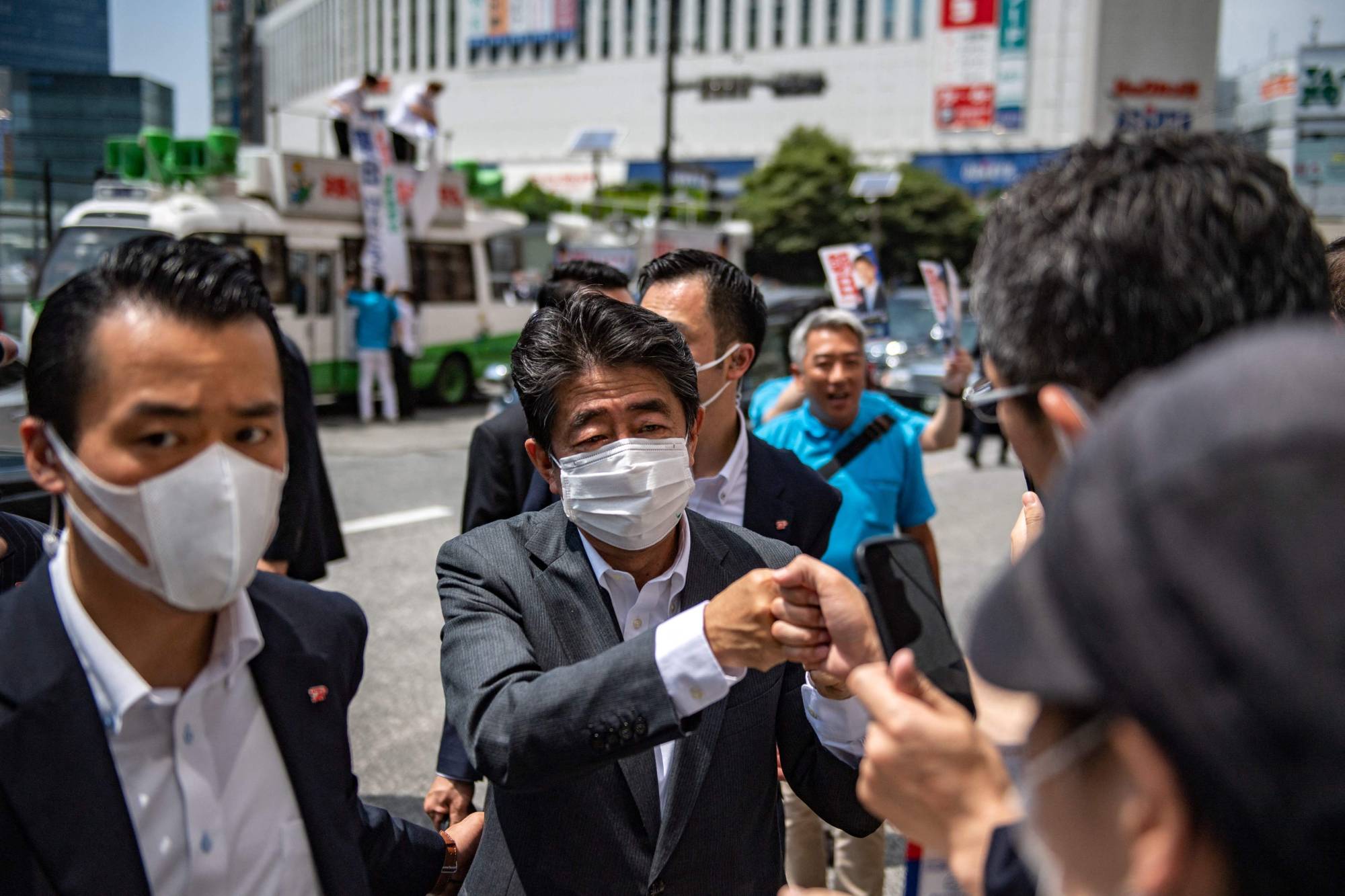
Former Prime Minister Shinzo Abe (center) meets with voters during an election event for Liberal Democratic Party member Kentaro Asahi on June 22 in preparation for the July 10 Upper House election. | AFP-JIJI

The most prominent political assassination in contemporary Japan occurred in 1960 when a rightist attacked the socialist leader Inejiro Asanuma. In 1978, a man attempted to kill then-Prime Minister Masayoshi Ohira, but he only mingled with reporters outside the Prime Minister’s Office and never actually got close to Ohira. In the two latter cases, the weapons were a sword and a knife.

In 1992, Shin Kanemaru, an LDP heavyweight and the deputy prime minister was attacked by a man with a gun, but was not injured. Two years later, a gunman shot at Prime Minister Hosokawa Morihiro, but he too was unharmed. In 2007, Nagasaki mayor Ito Itcho died after a gunman shot him.

Mercifully, guns remain a rarity in Japan. In fact, this country has one of the lowest rates of gun violence in the world. According to a police white paper, there were 21 arrests for the use of firearms in 2020, and 12 of them were gang related. World Health Organization figures show that Japan had just nine firearm-related deaths in 2018, down from 23 the year below. The rate of firearm deaths per 100,000 people is 0.01; for comparison, the U.S. number exceeds four per 100,000.

Much of the credit goes to strict gun control laws, which were, ironically, written by the U.S. Occupation authorities. Those laws have been loosened a little but the culture here remains fundamentally hostile to gun possession. There are reports that the person who attacked Abe may have built his own weapon, which indicates that while existing gun controls work as intended, they may have to be updated to account for new dangers.
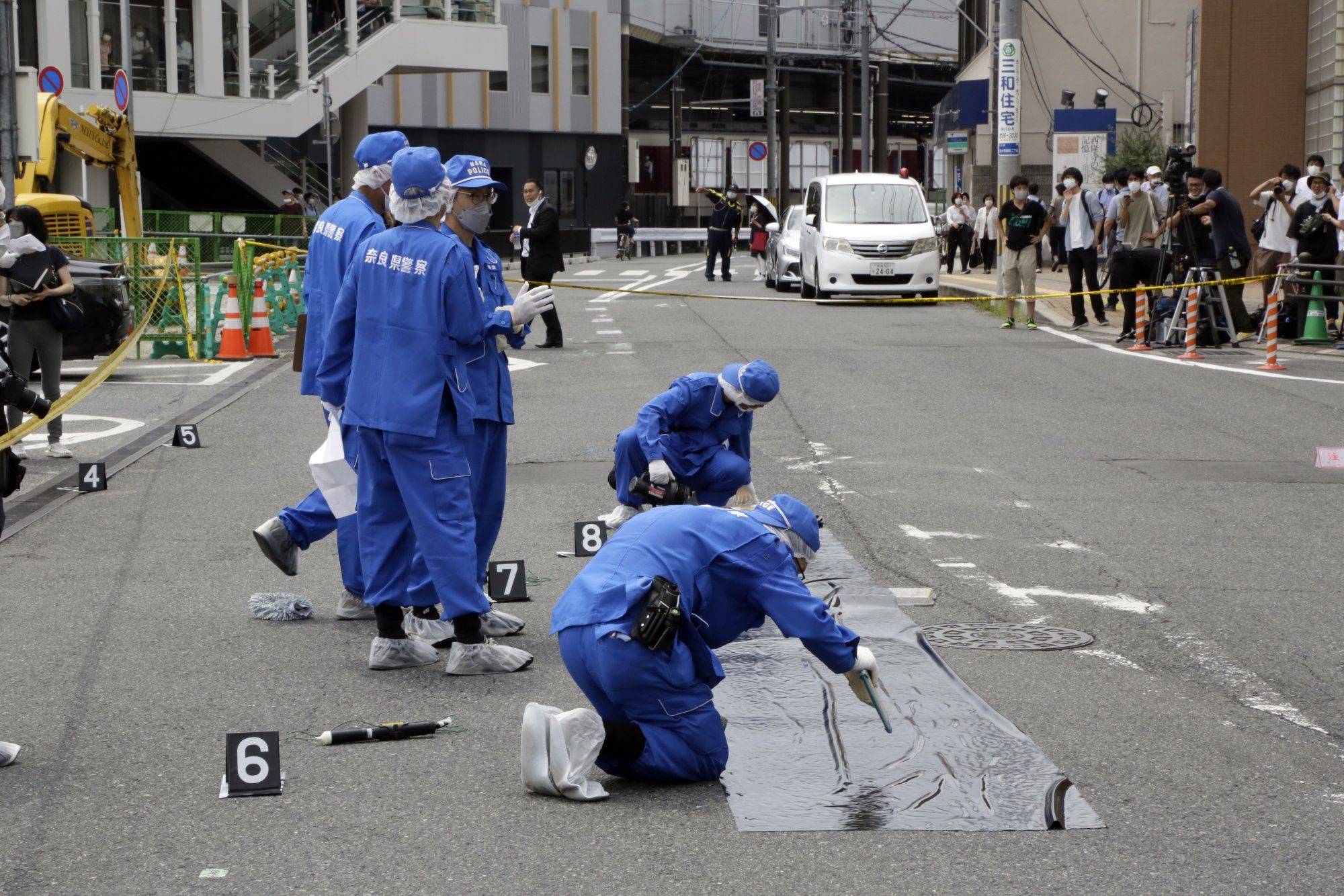
Investigators study the scene where former Prime Minister Shinzo Abe was attacked during a political rally in Nara on Friday.  | BLOOMBERG
Investigators study the scene where former Prime Minister Shinzo Abe was attacked during a political rally in Nara on Friday.
| BLOOMBERG

There is a more fundamental issue at hand: respect for democracy and the absolute imperative to resolve political differences through the ballot box exclusively. Half a world away, another political leader has been removed from power through the political process as he lost the confidence of his party. That is how political change is done.

There is no place for violence in this process. The attempt by any individual or group of individuals to impose their will on the country through violent means is terrorism, pure and simple. That is unacceptable and must be condemned by all — whatever the political stripe or inclination.

Japan is a democracy and it is currently engaged in the purest expression of the democratic pageant and process. The attack on former Prime Minister Abe in Nara on Friday is attack on us all.

As Chief Cabinet Secretary Hirokazu Matsuno said, “Such violence cannot be permitted.” We must join together to condemn this violence, show that it has no place in our lives or our country and reaffirm our commitment to Japanese democracy and the peaceful resolution of political differences.

https://www.japantimes.co.jp/opinion/2022/07/08/editorials/shinzo-abe-assassination/ 

Tuesday, July 5, 2022

Video Report - Vice President Kamala Harris visits site of Highland Park massacre

Video - President Biden Awards the Medal of Honor to Four U.S. Army Soldiers who Fought in the Vietnam War

Video Report - #Coronavirus #Omicron #Portugal - Omicron subvariant drives spike in Portugal's COVID cases — other European countries next?

Video Report - Algeria marks 60 years since end of French colonial rule

Video Report - Ghana struggles to ease rising cost of living

Music Video - Lokan Do Do Yar Banaye - Afshan Zaibi

Video Report - سابق وزیر اعظم عمران خان کا اینکروں اور میڈیا متعلق دوغلہ پن، جھوٹ اور منافقت کا بدصورت امتزاج

#Pakistan - No Mercy for Minorities in Jails

By Sumeera Riaz
Unlike their Muslim counterparts, religious minorities in Pakistani jails struggle to secure remission in sentences through study of holy books.Despite lip-service for equal treatment from nearly all governments, past and present, minorities in Pakistan continue to struggle for their civil rights in all aspects of their lives. The problem is particularly heightened for jail inmates, who suffer the worst form of inequality in violation of clear provisions in the Constitution guaranteeing equal treatment for all.
A recent petition taken up by the Lahore High Court has underlined this issue, pleading that people’s right to a free trial (Article 10A) and to be treated equally before law (Article 25) is being repeatedly violated for minority inmates in prisons across Punjab province. Filed by Kashif Masih, the petition argues that non-Muslim prisoners in various jails across Punjab are being treated discriminatorily, deprived of their right for remission in sentence on the basis of completion of education and memorization of their sacred books like their Muslim counterparts.
Under Rule 215 of the Punjab Prisons Rules, 1978, any convicted prisoner can seek remission in their sentence if they complete formal education and either memorize or finish study of their sacred book—whether it be the Quran for Muslims, Bible for Christians, the Granth Sahib of Sikhism, or Hindu holy books such as the Upanishads, among others. While Muslims often complete their study of the Quran and are granted remission to their sentences, many minorities are unaware that they even have the option, leaving them without any viable avenue to reduce their prison terms.
Sohail Yafat, a Christian who works for a non-governmental organization dedicated to fighting for minorities’ rights, confirmed to Newsweek that most non-Muslim prisoners were unaware they could apply for a reduction in sentences through study of their holy books. A former inmate who served a 10-year jail term in Punjab, he said it was incumbent upon the government to educate prisoners about their rights of remission, as many lacked the resources to educate themselves. Another issue is the lack of institutional support to hear remissions pleas for non-Muslims inmates.
There is no formal mechanism for non-Muslims to apply for remission in sentences, said advocate Shahab Akmal, counsel for petitioner Kashif Masih. “There’s a mechanism and system available in jails that automatically applies to prisoners who complete their education or memorize the holy Quran,” he said. “But there is no similar mechanism available for prisoners from religious minorities,” he added, suggesting clear discrimination against non-Muslim inmates.Attorney General of Pakistan Ashtar Ausaf told Newsweek that while the Constitution guaranteed equal rights for all minorities in Pakistan, problems arose due to “communication gaps” between officials responsible for the enforcement of rights and the citizens whose rights were being violated. “We need to see how many prisoners from religious minorities have applied [for remission] and how many were denied,” he said, adding that the principle of the policy was very clearly enunciated in the Constitution and its progressive implementation needed to be ensured.
According to the Punjab Prisons Department, there are currently 1,188 non-Muslim prisoners, including six women, housed in 34 jails across the province. Of these, 1,168 are Christian, 19 Hindu and 1 Sikh, with 829 currently under-trial; 320 convicted; and 39 condemned prisoners. The majority of prisoners belonging to religious minorities are in jails of Lahore and Rawalpindi.
Speaking with Newsweek on condition of anonymity, a senior official in the Punjab Prisons Department said that the former Pakistan Tehreek-e-Insaf (PTI)-led government had initiated the process of jail reforms in Punjab but had been unable to implement it. “The committee formed to rewrite the Punjab Prisons Rules did its job, but the new reforms could never be implemented due to lack of seriousness from the provincial government’s side,” he said, admitting that prisoners from religious minorities were not given any awareness about their rights.
Prison reforms
Thus far, Sindh is the only province that has successfully implemented reforms to the colonial-era laws that have governed Pakistan’s prisons since the country’s inception. The provincial assembly passed the Sindh Prisons and Corrections Services Act in 2019, replacing the Prisons Act 1894, with an aim at ensuring respectful treatment of all prisoners without any discrimination. Despite this, the province has also yet to grant a single remission in sentence to any religious minorities on the basis of completion of education or study of holy books. Similar to Punjab, Sindh also lacks a mechanism for the religious study of non-Muslims, with the Sindh Prisons Department confirming that there was presently no introductory syllabus available for non-Muslim inmates. However, the Prisons Department said, the Sindh Home Department had been requested to amend Rule No. 787 of the Sindh Prisons and Corrections Services Act, 2019 to allow for remission of sentences for prisoners who complete religious education of their own accord.
The Sindh Prisons Department says there are currently 1,022 non-Muslim prisoners housed in 24 different jails across the province. Of these, 336 are under-trial—184 Christians, 142 Hindus, 10 Sikhs—and 666 are convicted prisoners—21 Christians and 665 Hindus.
The sole province that has ever granted remission in sentence to a non-Muslim on the basis of study of their holy book is Khyber-Pakhtunkhwa. The government of the Muttahida Majlis-e-Amal (2002-2008) implemented prison reforms during its rule, extending remission of sentence to one convicted Sikh prisoner. The province currently only has 13 under-trial non-Muslim prisoners.
Equal rights for all
According to the 2017 Census, Muslims comprise 96.2 percent of Pakistan’s population; Hindus 1.17 percent; Christians 2.06 percent; scheduled castes 0.06 percent; and other minorities 0.06 percent. In a country of over 210 million, these are not small numbers, yet unchecked discrimination persists. Pakistan Ulema Council Chairman Tahir Ashrafi, who has often spoken about the need to ensure equal rights for non-Muslims, told Newsweek this was the first time he was hearing of this particular issue. “If there’s a provision for Muslim prisoners, the same grant should be extended to prisoners from religious minorities,” he stressed, adding that relief should be given to anyone who completes their sacred books during their jail terms. Vowing to raise the issue with the home departments at both the federal and provincial levels, he said the matter should be addressed on urgent basis.
But the road ahead is long and paved with bureaucratic red-tape. Nonetheless, if successfully implemented, this could be the first step toward the fulfillment of a promise 75 years in the making, when Quaid-e-Azam Mohammad Ali Jinnah assured non-Muslims of Pakistan that they were equal citizens of the country, free to practice their faiths without any discrimination.
https://www.newsweekpakistan.com/no-mercy-for-minorities-in-jails/

#Pakistan - Where are the women in Pakistan, their perspective is missing in national policies, laws, and institutions


Dr Zia Ullah Ranjah
Although women comprise 48.54% of the total population in Pakistan, their perspective is missing in national policies, laws, and institutions. Legal rights and opportunities to contribute to national progress are systematically restricted for women, especially on issues that disproportionately harm them – rape, harassment, and domestic violence. To achieve a more balanced approach, we must understand the nuances of a ‘gendered’ perspective and the challenges of promoting gender awareness in Pakistan.
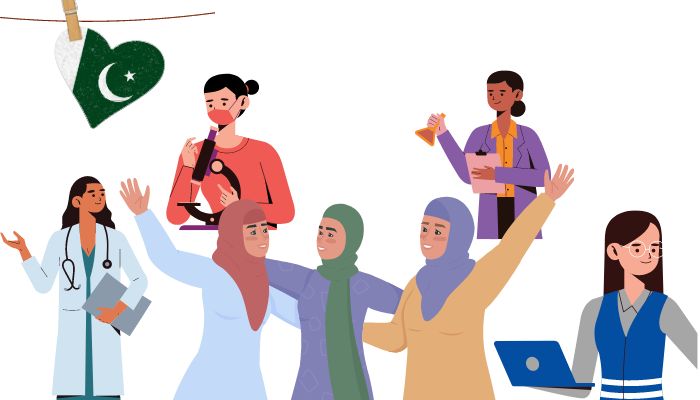
The gender gap in Pakistan is high along with key indicators and aspects of life – health disparity, education disparity, economic disparity, legal disparity, political disparity and cultural disparity. According to the Global Gender Gap Report 2021 published by the World Economic Forum, Pakistan ranked 153rd out of 156 countries on the gender parity index, only above Iraq, Yemen, and Afghanistan. This is alarming. With fewer women in decision-making positions, there is a significant lack of gender perspective. Such a lens is about bringing women’s experiences into decision-making to ensure that laws, policies, rules and regulations have a greater impact in achieving their objectives. A ‘gender-aware’ perspective considers how gender-based discrimination shapes the immediate needs, as well as the long-term interests, of both women and men. In a policy context, such a perspective makes women’s as well as men’s concerns an integral part of the design, implementation, monitoring, and evaluation of policies and programmes in all political, economic and societal spheres, so that women and men benefit equally and gender-based inequalities are not perpetuated.
In Pakistan, there are multiple challenges involving assumptions and mindsets about women. It is generally assumed that women are weak, both physically and intellectually; that women are poor administrators and cannot make effective decisions; that they are temperamental and emotional. In the workplace, men frequently address women as sisters and daughters and fail to recognize them as equal colleagues. How long should we make these assumptions and presumptions about women when there is no scientific basis for them? The solution lies at many levels but educating the mindset, creating more opportunities and reducing stereotypes is a start.
Women are denied equal opportunities in all spheres of life despite our constitution providing for the equality of citizens (Article 25) and Pakistan’s formal legal acceptance of various international conventions. The International Convention on the Elimination of All Forms of Discrimination against Women states that “State parties shall take all appropriate measures to eliminate discrimination against women in the political and public life of the country and, in particular, shall ensure to women, on equal terms with men, the right to participate in the formulation of government policy and the implementation thereof and to hold public office and perform all public functions at all levels of government” (Article 7). Pakistan is also a signatory to the International Conference on Population and Development in Cairo in 1994 as well as the UN Conference on Women in Beijing in 1995. Pakistan has also signed the UN’s Millennium Development Goals and Sustainable Development Goals, which set out gender equality as a key goal. Pakistan, having signed these international instruments, is obliged to promote gender equality.
To do this, three steps are worth highlighting. First, women should be given adequate representation in the legislature, executive, and judiciary so that women’s perspective is reflected in laws, policies, and judicial decisions. Existing quotas in the provincial and federal legislature and government jobs, for example, should change or be supplemented with other policies giving representation to women proportionate to their population in Pakistan. A mere quota does not increase or improve representation. There have to be structural and institutional changes to make equality substantive. Representation of women based on open merit and population would strengthen democracy, promote good governance and improve the quality of justice.
Second, women should have due representation on key bodies, which make decisions regarding the appointment of judges and civil servants and the regulation of corporate entities such as the Judicial Commission of Pakistan as well as statutory bodies like the federal and provincial Public Service Commissions and the Securities and Exchange Commission of Pakistan.
Third, women should have administrative power for example, in terms of dealing with different government departments, postings, and transfers, budgets and accounts etc. Administrative experience would enable women to contribute more effectively to public service and thus national development.
The stories of Benazir Bhutto, General Nigar Johar Khan, and Justice Ayesha Malik show that women can perform as well as men. It is unfortunate how we have allowed just a few women the opportunity to rise to high ranks. But, to make Pakistan stronger, we have to move from the few to the many.It is worth recalling the words of Muhammad Ali Jinnah: “No nation can ever be worthy of its existence that cannot take its women along with the men. No struggle can ever succeed without women participating side by side with men. There are two powers in the world; one is the sword and the other is the pen. There is great competition and rivalry between the two. There is a third power stronger than both, that of the women.”
We often fail to appreciate this third power. How can any law, policy, or decision be effective without including women’s perspectives? Women judges, for example, can help promote a gender-aware perspective by writing gender-sensitive judgments like the Sadaf Aziz case in which the two-finger test and the hymen test in sexual abuse or rape cases were declared unconstitutional, discriminatory, invasive and an infringement on the privacy of a woman to her body, blatant violation of the dignity of a woman, and devoid of any legal, scientific or medical basis.
Men must support women. Taboos and traditions have to give way to innovation and creativity. The ability and merit of women must be recognized not as a concession but as a matter of fundamental right. The government should introduce more gender-responsive policies and initiatives. Both men and women’s perspectives should be appreciated, equally, to produce a balanced gender perspective in Pakistan.
https://www.geo.tv/latest/426157-where-are-the-women

A Christian mechanic in Pakistan gets the death sentence for ‘blasphemy’. He said ‘Jesus is supreme’

REVATHI KRISHNAN
As per National Commission for Justice and Peace data, 776 Muslims, 505 Ahmadis, 229 Christians and 30 Hindus were booked for blasphemy from 1987 to 2018.

More than five years after his arrest, a Christian mechanic booked on the charges of blasphemy was sentenced to death by a Lahore court Monday. Masih has been in jail since 2017 and his case riddled with adjournments. The accused, who has a wife and a daughter, also lost his mother in 2019 while he was behind the bars.

According to reports, in June 2017, Masih got into a dispute with a Muslim customer in Lahore after he repaired the latter’s bike. When Masih asked for payment, the customer did not pay the entire amount and asked for a waiver on grounds that he was a religious devotee. Masih refused the request, saying he believed in Christ. The issue of money led to a heated argument and a crowd gathered, accusing Masih of “disrespecting” the Prophet Muhammad. The mechanic had allegedly said that for Christians, Jesus was supreme. This was enough for his arrest.

Since 2019, the case has witnessed multiple adjournments, rescheduling, judge not showing up, witness failing to turn up and even the complainant’s lawyer not registering their presence.

In 2019, Masih was released on parole to attend his mother’s funeral. After he was arrested, it has been reported that the family fled from Lahore in fear.

On multiple occasions, in different court appearances, Masih can be seen chained and in handcuffs.

This is not the first time a judge in Pakistan has sentenced someone to death under the blasphemy law. In September 2021, a local Lahore court sentenced a school principal to death. The charge against the principal was that she had claimed to be the ‘Prophet of Islam’ in pamphlets she distributed and denied the finality of Prophethood.

In yet another incident in January this year, a 26-year-old woman was sentenced to death for posting ‘blasphemous material’ as her WhatsApp status. She had sent caricatures of Prophet Muhammed.

Pakistan inherited the blasphemy laws after Partition in 1947. However, during General Zia-ul Haq’s regime between 1980 to 1986, a number of clauses were introduced that included a provision to punish blasphemy against Prophet Muhammed and the penalty for this was “death, or imprisonment for life”. It has been used in these cases of death sentences.

The Human Rights Commission of Pakistan (HRCP) has said that Muslims constitute the majority of people booked under the blasphemy laws, followed by the Ahmadi community. According to data by the National Commission for Justice and Peace, 776 Muslims, 505 Ahmadis, 229 Christians and 30 Hindus have been booked under the blasphemy law from 1987 to 2018. 

Mai Baghi Hoon (Jeyay Bhutto)

کل بھی بھٹو زندہ تھا،آج بھی بھٹو زندہ ھے

ملک کی پہلی جمہوری حکومت پر 45 سال قبل شب خون مارا گیا، شیری رحمٰن

 نائب صدر پیپلز پارٹی سینیٹر شیری رحمٰن کا کہنا ہے کہ 45 سال قبل آج کے دن جنرل ضیاء نے پاکستان کی پہلی جمہوری حکومت اور آئین پر شب خون مارا تھا۔

سینیٹر شیری رحمٰن نے 5 جولائی کے حوالے سے اپنے پیغام میں کہا کہ شہید ذوالفقار علی بھٹو،کارکنان اور تمام جمہوریت پسند عوام نے آمریت کا ڈٹ کر مقابلہ کیا۔

انہوں نے کہا کہ شہید ذوالفقار علی بھٹو،کارکنان اور تمام جمہوریت پسند عوام کو سلام پیش کرتی ہوں۔

شیری رحمٰن کا کہنا تھا کہ ضیاء الحق نے 11 سال آئین پاکستان معطل کر کے ملک میں مارشل لاء نافذ کیا، آمریت کے ان 11 سالوں کو ہماری تاریخ کے سیاہ ترین دور کے طور پر یاد رکھا جائے گا۔

پی پی سینیٹر کا کہنا تھا کہ تقسیم،نفرت اور انتہا پسندی کی بنیادیں رکھیں گئیں جن سے پاکستان آج تک نہیں نکل سکا، 45 سال پہلے کے اس آئینی اور جمہوری سانحہ کے اثرات ہمارا آج تک پیچھا کر رہے ہیں۔

شیری رحمٰن کا مزید کہنا تھا کہ شہید بھٹو کی آئینی حکومت پر شب خون نا مارا جاتا تو آج پاکستان کا دنیا میں الگ مقام ہوتا۔

انہوں نے کہا کہ عوامی حکومت کا غیر آئینی طور پر خاتمہ نہ ہوتا تو آج عوام کی تقدیر بدل چکی ہوتی، ہمیں نہیں بھولنا چاہیے کہ پاکستان کی ترقی اور استحکام آئین اور جمہوریت میں ہے۔

https://jang.com.pk/news/1107720

وفاقی وزیر خارجہ و چیئرمین پاکستان پیپلز پارٹی بلاول بھٹو زرداری - 5 جولائی 1977ء قومی تاریخ کا سیاہ ترین دن ہے۔

 وفاقی وزیر خارجہ و چیئرمین پاکستان پیپلز پارٹی بلاول بھٹو زرداری کا کہنا ہے


کہ 5 جولائی 1977ء قومی تاریخ کا سیاہ ترین دن ہے۔

چیئرمین پی پی پی بلاول بھٹو زرداری نے اپنے ایک بیان میں کہا ہے کہ آج کے دن ڈکٹیٹر نے پاکستان کے پہلے منتخب وزیرِاعظم ذوالفقار علی بھٹو کی حکومت کا خاتمہ کیا تھا۔

ان کا کہنا ہے کہ پاکستان جن سیاسی، معاشی، معاشرتی بیماریوں کو جھیل رہا ہے، اس کے تانے بانے ضیاء دور سے ملتے ہیں، ضیاءالحق نے پاکستان کی سیاسی، معاشرتی زندگی میں لسانیت و فرقہ واریت کی سوچ کا زہر گھولا۔

بلاول بھٹو کا کہنا ہے کہ ضیاء الحق نے جمہوریت اور وفاق پرست سیاسی جماعتوں پر زمین تنگ کر دی تھی، شہید بھٹو کو سیاسی منظر سے ہٹانے کے لیے عدالتی قتل کا اسٹیج تیار کیا گیا، ضیاء  نے پیپلز پارٹی کی قیادت اور کارکنوں کو جیلوں میں ڈالا، کوڑے مارے، جلا وطن ہونے پر مجبور کیا۔

انہوں نے کہا کہ پاکستان کے عوام نے ضیاء اور اس کی غاصبانہ حکومت کا ڈٹ کر مقابلہ کیا، پاکستان کے عوام آج تک ڈکٹیٹر ضیاء کی سوچ اور باقیات سے نبرد آزما ہیں۔

بلاول بھٹو نے کہا کہ شہید محترمہ بینظیر بھٹو، بیگم نصرت بھٹو، تحریکِ بحالیٔ جمہوریت کے جیالوں، سیاسی کارکنوں کو سلام پیش کرتا ہوں، تحریکِ بحالیٔ جمہوریت کے دوران عوام نے انتھک جدوجہد کی اور بے مثال قربانیاں دیں۔

وفاقی وزیرِ خارجہ نے یہ بھی کہا ہے کہ پیپلز پارٹی آئین، جمہوریت، پارلیمانی بالادستی کے محافظ کا کردار ادا کرتی رہے گی، یہ قائد اعظم کے نظریے کی علم بردار جماعت ہے۔

واضح رہے کہ آج سے 45 برس قبل 5 جولائی 1977ء  کو سابق وزیرِ اعظم اور پاکستان پیپلز پارٹی کے بانی چیئرمین ذوالفقار علی بھٹو کی جمہوری حکومت کا تختہ اُلٹ دیا گیا تھا۔