Sunday, May 29, 2022

Pashto Music: Ahmad Zahir - Pashto - Oba Derta Rawrom -

Pashto Music - Khyal Mohammad - De khyal pa rokhsarono

Pashto Music - Hamayoun Angar - Janan - همایون انگار - جانان

Persian Musci Video - Alireza Ghaderi - Golpari joon

Ahmad Zahir - Khuda Bowad Yaret

زه خو شرابي يم، زه خو شرابي يم شیخه څه راسره جنګ کړې برخې ازلي دي، کاشکې ما د ځان په رنګ کړې زه خو شرابي يم

Video Report - په پیښور کې د پښتو د نړیوالې ورځې نمانځل

#Pakistan - Reporters, Women Journalists On Ground Coping With Political Polarisation

Video Report - #KhabarSayAagay #NayaDaur Malik Riaz Audio Leak | Why Imran Called Off Dharna | Shehbaz Address | Qazi Faez Isa Letter To CJ

Afghanistan-based TTP poses threat to Pakistan: UNSC report

The United Nations Security Council report has warned that Afghanistan-based Tehrik-e-Taliban Pakistan (TTP) posed a threat to Pakistan.
TTP is focused on a long-term campaign against the Pakistani state with its several thousand fighters in Afghanistan, according to Dawn citing the 13th report of the UNSC Monitoring Team on Afghanistan.
According to the report, TTP constituted the largest component of foreign terrorist fighters in Afghanistan, with their number estimated to be several thousand.
“TTP has arguably benefited the most of all the foreign extremist groups in Afghanistan from the Taliban takeover. It has conducted numerous attacks and operations in Pakistan…” UN report said.The UN Monitoring Team’s earlier report had focused on the global threat posed by Al-Qaeda, and related groups as well as the one before that had also underlined increasing cross-border attacks by TTP from the Afghan soil as a result of the reunification of the terrorist group in Afghanistan.
Earlier, TTP was responsible for the attack on the Army Public School in Peshawar in which over 150 children were killed.
Separately, quoting information provided by a “Member State,” the Monitoring Team report mentioned the presence of defunct Lashkar-e-Tayyiba (LeT) and Jaish-e-Mohammed Jaish-e-Mohammed (JeM) in Afghanistan. According to the publication, these details were not given in its several previous reports.
https://theprint.in/world/afghanistan-based-ttp-poses-threat-to-pakistan-unsc-report/976082/

Chairman PPP and Foreign Minister Bilawal Bhutto Zardari felicitates newly-elected body of the Council of Pakistan Newspapers Editors

 Pakistan People’s Party (PPP) Chairman and Foreign Minister Bilawal Bhutto Zardari has felicitated the newly-elected body of the Council of Pakistan Newspapers Editors (CPNE).

The PPP Chairman extended his best wishes to the new body of the CPNE.
According to a statement issued by Media Cell Bilawal House, the PPP chairman Bilawal Bhutto Zardari in his message felicitated CPNE’s new president Kazim Khan and general secretary Mian Amir Mahmood.
He extended his best wishes to Ayaz Khan on being elected as Senior Vice President, Yousuf Nizami as Deputy Secretary General, Ghulam Nabi Chandio as Finance Secretary, Zubair Mehmood as Information Secretary, Dr Jabbar Khattak as CPNE Sindh Vice President, Maqsood Yousufi as CPNE Sindh Joint Secretary, Haider Amin as Punjab CPNE Vice President, Salman Masood as CPNE Islamabad Vice President, Tahir Farooque as CPNE Khyber-Pakhtunkhwa Vice President, and Arif Baloch as CPNE Balochistan Vice President.
The PPP Chairman also felicitated the CPNE’s standing committee of 44 newly elected members.
He expressed his fervent hope that the role of CPNE towards cementing the democracy and the freedom of press would be commendable as was the history of the CPNE.
The PPP believes in freedom of media and would extend all possible cooperation for ensuring freedom of expression and press in the country and development of dynamic media.

https://www.ppp.org.pk/pr/27189/

Saturday, May 28, 2022

Music Video - Kali - MMM MMM (feat. ATL Jacob)

Video - #Colbert #Comedy - A Simple, If Extremely Difficult Solution: Reduce The Number Of Guns

Video Report - #Cannes 2022 : Andie Macdowell 'You have to love who you are '

Video Report - President Biden Delivers Remarks at the University of Delaware Commencement

A Supreme Court justice’s solution to gun violence: Repeal Second Amendment


By Frederic J. Frommer

Four years ago, when — as now — the nation was reeling from the horror of a mass school shooting, a retired Supreme Court justice suggested a radical solution: getting rid of the Second Amendment.
John Paul Stevens issued the call after 17 people were killed at Marjory Stoneman Douglas High School in Parkland, Fla., in February 2018. The attack prompted hundreds of thousands to demand action the next month to end gun violence at the March for Our Lives. In a March 27, 2018, New York Times op-ed, Stevens praised the protesters and their call for stricter gun control laws. “But the demonstrators should seek more effective and more lasting reform,” he wrote, about a year before his death at 99. “They should demand a repeal of the Second Amendment.”Stevens said the amendment was adopted out of concern that a national standing army might pose a threat to the security of the states. “Today that concern is a relic of the 18th century,” he wrote.
An elementary school massacre spurred tighter gun control in the U.K.
He called repeal a “simple but dramatic action [that] would move Saturday’s marchers closer to their objective than any other possible reform” and would make schoolchildren safer.But Stevens didn’t acknowledge the herculean challenge that his proposal entailed, as there was (and remains) zero chance that gun control advocates would get anywhere close to the two-thirds majority in both houses of Congress and ratification by three-fourths of the states needed for repeal.Stevens’s proposal didn’t generate a lot of momentum, but it did get pushback from some fellow liberals.
“I admire Justice Stevens but his supposedly ‘simple but dramatic’ step of repealing the 2d Am is AWFUL advice,” tweeted Laurence Tribe, a Harvard law professor. “The obstacle to strong gun laws is political, not legal. Urging a politically impossible effort just strengthens opponents of achievable reform.”
Tribe expanded on his argument in a Washington Post op-ed, headlined “The Second Amendment isn’t the problem.” “The NRA’s strongest rallying cry has been: ‘They’re coming for our beloved Second Amendment,’” he wrote. “Enter Stevens, stage left, boldly calling for the amendment’s demise, thereby giving aid and comfort to the gun lobby’s favorite argument.”
In his op-ed, Stevens wrote that repeal was necessary to overturn the Supreme Court’s 2008 District of Columbia v. Heller ruling that Americans had an individual right to bear arms. He was one of four dissenters in that case.
They were killers with powerful guns. The president went after their weapons.
“For over 200 years after the adoption of the Second Amendment, it was uniformly understood as not placing any limit on either federal or state authority to enact gun control legislation,” Stevens wrote in the op-ed.Republican President Gerald Ford nominated Stevens to the court in 1975, at a time when Supreme Court nominations were not as politicized as they are today. Stevens eventually became one of its most liberal members. Although his 2018 proposal didn’t go anywhere, calls for repeal continue today.
A portrait of the late John Paul Stevens in the Great Hall of the U.S. Supreme Court as the former justice's casket rested inside the court building in July 2019. (Manuel Balce Ceneta/AP) “Who will say on this network or any other network in the next few days, ‘It’s time to repeal the Second Amendment?’” liberal filmmaker Michael Moore challenged during a feisty appearance on MSNBC’s “All In With Chris Hayes” this week.
“Look, I support all gun control legislation,” Moore said. “Not sensible gun control. We don’t need the sensible stuff. We need the hardcore stuff that’s going to protect ourselves and our children.”Writing in the New Republic on Thursday, Walter Shapiro, a fellow at the Brennan Center for Justice at NYU School of Law and a lecturer in political science at Yale University, said that “the hard truth is that the core problem is the Second Amendment itself. And America is going to reel from one mass murder to another unless the Second Amendment is repealed or the Supreme Court drastically reduces its scope.”
“As a starting point,” he added, “Democrats should drop the mealy-mouthed formulation, ‘Nobody supports the Second Amendment more than I do, but still. … ’ Claiming fidelity to the Second Amendment has never convinced a single NRA supporter of a candidate’s sincerity, but it has stopped bold thinking about lasting solutions to America’s gun crisis.”
The first U.S. school shooting was in 1853. Its victim was a teacher.
But repeal hasn’t been a mainstream cause. Just last month, President Biden declared, “I support the Second Amendment,” although he said that didn’t mean people could get any gun they wanted. In the wake of this week’s Texas elementary school massacre that killed 19 children and two teachers, the president said the Second Amendment is not absolute, and that common-sense gun control would not “negatively affect” it. Stevens’s op-ed came just a few years after he issued a proposal to amend the Second Amendment, in his book “Six Amendments: How and Why We Should Change the Constitution,” which was excerpted in a 2014 Washington Post opinion piece. Stevens suggested adding five words (in italics below) to the amendment: “A well regulated Militia, being necessary to the security of a free State, the right of the people to keep and bear Arms when serving in the Militia shall not be infringed.”
https://www.washingtonpost.com/history/2022/05/28/supreme-court-stevens-repeal-second-amendment/

Video - کل بھی بھٹو زندہ تھا،آج بھی بھٹو زندہ ھے

Video - Zulfiqar Ali Bhutto Adress To Nation After Indian Nuclear Tests

The Nexus Of Capitalism And Democracy In Pakistan Keeps Getting Stronger, Is There Any Hope For Change?

Zoha Asim Banday Capitalism is a term which represents an economic or political system run by private owners for gaining personal profits and benefits. Once this approach is adopted in a state, it not only affects a specific sector, rather it tends to embed itself in all the sectors of that state.
For example, if we take into account the situation in Pakistan, it is evident how this factor is affecting the education as well as healthcare systems etc. Nowadays, the youth has only been limited to memorizing the bookish information instead of focusing on the actual essence of the discourse. Students have been set on a path of competition for gaining marks rather than embracing the concepts that are being taught to them which might be beneficial for them in the future. The teachers are also not sincere in their jobs as they are getting their paychecks whether they properly teach the students or not. As long as the students keep bringing in good grades resulting in more admissions, they have less regard for how much knowledge they are obtaining.
Another drawback is that ideal states and information about other countries are being promoted more in our curriculum instead of our own, which makes these students completely unaware of the things going on in their state. Similarly, hospitals have also become places of business instead of institutions that provide healthcare. It has become impossible for average people to access even basic healthcare services without a hefty sum of money being demanded from them. If we focus on what kind of capitalism is being followed at the state level in Pakistan, it is evidently crony capitalism. In this type of capitalism, the resources are not spent just for monetary gains but rather on a conglomeration of the elite and the politicians. This means that monetary investments are made in the campaigns of political leaders; as money is a major factor in politics and in return, vocational benefits are acquired e.g. laws and policies being framed in a way that proves beneficial for them.
In its worst state, crony capitalism gives rise to corruption where political entities are given bribes to get benefits. Sadly, our country has gotten far ahead in this stage, many politicians have been charged with corruption and many more are being suspected. Still, no hard and fast rules have been made to deal with this issue once and for all.Pakistan is said to have a democratic form of government. Democracy means that the citizens of the country have the power to elect a politician of their choice to run the state and also question them if things start to go south. However, if the current scenario is observed, the freedom that the citizens are entitled to, is being compromised for the personal gains of politicians and the elite class. Even when crucial decisions are being made concerning the welfare of the citizens, they are not consulted. The people in power sit together in an enclosed room and make all the decisions for them. Therefore, these decisions are seen to be favourable for themselves instead of the people. Everyone in the political race is power-hungry; they have no empathy or even remorse for mistreating their voters. This shows that democracy is far from its true form, it only exists on paper and in certain aspects like elections when votes are being demanded but that is also debatable as usually cases of rigged voting are heard.
Capitalism is said to go hand in hand with the democracy of a state. They are claimed to be two sides of a coin but even though, it plays a necessary role in democracy, political inequality and violation of liberty are also observed consequently.
A well-known example of how capitalism is threatening the democratic ideology, can be the sugar industries and their relations with the politicians of Pakistan. Annually, the government announces support prices for sugar and wheat which help the farmers, so they can obtain these items at lower prices but it is observed that the mill owners are enjoying the perks of this more than those it is meant for. This makes the farmers’ conditions even worse than before by causing a surge in food prices and general price levels. It also contributes to a rise in sugar prices locally in comparison to international prices which leads the government to provide them with subsidies. This shows the conglomeration between sugar mill owners and the political elite of our country. The lower class might shift from 2 meals a day to only 1 but the elite class won’t have to face any difficulties and that’s all they care about.
Despite all this going on in the country, the citizens are yet to raise their voices against these crucial issues and the ones who do are unceremoniously silenced. If this mindset remains in play, it is going to be detrimental to the country in the long run. We are headed towards a dark tunnel from where there is no turning back. Looking at these conditions, it seems like there is no hope for even a light at the end of the tunnel since it will only worsen with time. No one cares about the betterment of the country or its citizens, all they care about is their own pockets, and as long as they are filled, they remain satisfied.
https://en.humsub.com.pk/4014/the-nexus-of-capitalism-and-democracy-in-pakistan-keeps-getting-stronger-is-there-any-hope-for-change/

Opinion: Pakistan’s foreign minister calls for a reset. Washington should hear him out.

By Josh Rogin 


 Pakistan’s new civilian government is already under attack by the forces of recently removed prime minister Imran Khan, who is pushing the conspiracy theory that President Biden somehow orchestrated his ouster. Last week, the country’s new foreign minister came to the United States to explore yet another attempt to repair the U.S.-Pakistan alliance, which might look unsalvageable. Washington should hear him out.
Leaders in both U.S. political parties have largely written off Pakistan. Yet it is a major non-NATO ally, the world’s fifth-most-populous country and a nuclear power situated strategically among China, India, Afghanistan and Iran. After years of mutual distrust between Washington and Islamabad, there are plenty of reasons to be skeptical of the idea that either side is capable — much less willing — to do the hard work of reviving the alliance.
But the basic argument for trying again is sound. And Pakistan’s new foreign minister, the son of two previous Pakistani leaders, believes that both nations can learn from the mistakes of the past. Besides, he told me, letting the alliance further deteriorate makes little sense.
“The way in which this relationship progressed in recent years doesn’t serve the interests of the people of Pakistan, but it also doesn’t serve the interests of the people of America,” Foreign Minister Bilawal Bhutto Zardari told me in an interview. “And I still believe that Pakistan and the United States agree on far more than we disagree on.”
Zardari, only 33 years old, brings with him to the job two giant legacies. His mother, former prime minister Benazir Bhutto, led the Pakistani People’s Party in a fight to wrestle power from the military and intelligence agencies that have controlled Pakistan — mostly from the shadows — since its inception as a modern state. The first woman to lead a democratic, Muslim-majority country, she was assassinated in 2007.
His father, Asif Ali Zardari, was Pakistan’s president from 2008 until 2013. The Bhutto-Zardari family’s archenemy was three-time prime minister Nawaz Sharif. Today, Sharif’s brother Shehbaz Sharif is the new prime minister and Zardari serves in his cabinet.
“It’s like the Trumps and the Clintons being part of a coalition government,” Zardari said.
The main lesson Zardari took from his family’s epic battles with other powerful Pakistani institutions was that change should be pursued slowly and through negotiation, not confrontation.
“Even though I'm young and I'm supposed to be a lot more idealistic and revolutionary, because of our [family’s] experience, I actually believe in evolution over revolution,” Zardari said.
Perhaps this strategy of lowering short-term expectations and focusing on incremental progress could be applied to the U.S.-Pakistan relationship as well. Although Khan’s accusations of U.S. meddling in Pakistan’s politics are ridiculous, they play off an anti-Americanism that has become deeply rooted in parts of the Pakistani polity. Likewise, in Washington, there’s no strong domestic political constituency for improving U.S.-Pakistan ties.But there are reasons to think progress is possible, Zardari said. The main issue of contention, the war in Afghanistan, could now be an area of cooperation following Biden’s troop withdrawal last year. Now, the two countries’ interests there are largely aligned around encouraging the Taliban to behave better and bringing stability to the Afghan people.
“Now we can move beyond that disagreement without having to go back and litigate the past,” Zardari said. “There’s a lot more common ground now and less fog of war.”
Diversifying the relationship beyond military issues might also help, he said. In his meeting with Secretary of State Antony Blinken in New York last week, they discussed moving toward more cooperation on trade, climate change, tech investment and food security. Skeptics in Washington will quickly point out that the ultimate power in Pakistan still seems to reside with the generals and spy chiefs. Many in Washington are rightly critical of Pakistan for failing to condemn China’s human rights abuses and refusing to join Western sanctions against Russia for invading Ukraine.
Don’t expect the Sharif-Zardari government to change those policies anytime soon. But unrealistic expectations on both sides are a big part of why the relationship got so bad in the first place.
“If we're going to let our emotions get in the way of a constructive relationship, then we would both be cutting off our nose to spite our face,” Zardari said. “How do we tackle that? The only answer is engagement.”
Those still not convinced must answer this question: What exactly is the better alternative? If Washington isn’t happy that the Pakistani military has the bulk of power and influence, engaging civilian leaders is a way to balance that out. If the United States doesn’t want Pakistan to go from being a U.S. ally to a Chinese client state, Zardari’s offer of a reset must be embraced, not ignored.
https://www.washingtonpost.com/opinions/2022/05/26/pakistan-foreign-minister-zardari-reset-united-states-democracy/

Foreign Minister Bilawal Bhutto stresses engagement with US for ties reset



 FM says Pakistan and the United States agree far more than they disagree.

Foreign Minister Bilawal Bhutto Zardari has called for a reset of the strained Pakistan-US relations through engagement, saying that he believes the two countries agree on far more than they disagree on.
In an interview with the Washington Post, Foreign Minister Bilawal cited his family’s epic battles with other powerful Pakistani institutions stressing that change should be pursued slowly and through negotiation, not confrontation.
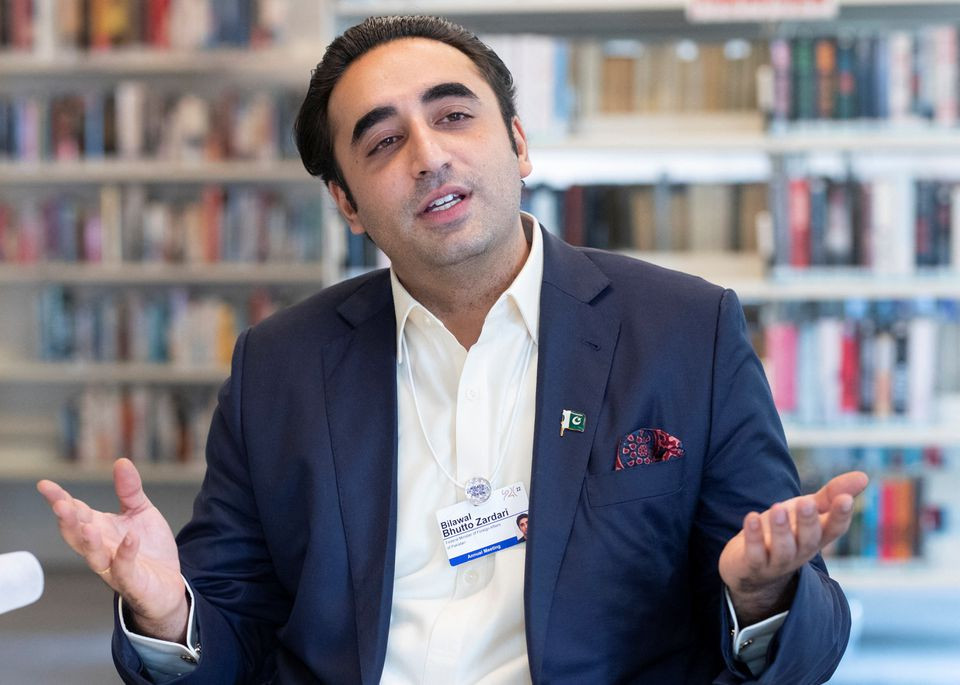
“The way in which this relationship progressed in recent years doesn’t serve the interests of the people of Pakistan, but it also doesn’t serve the interests of the people of America,” he said. “And I still believe that Pakistan and the United States agree on far more than we disagree on,” he added.
”Even though I’m young and I’m supposed to be a lot more idealistic and revolutionary, because of our [family’s] experience, I actually believe in evolution over revolution,” Post correspondent Josh Rogin, quoted him in his write-up about the interview that appeared in the newspaper on Friday.The foreign minister came to New York on May 17 to attend the high-level meetings at the United Nations on food security. On the sidelines of the meeting, he met a number of world leaders, including the US Secretary of State Antony Blinken.Responding to a question, Foreign Minister Bilawal noted that in his meeting with Secretary Blinken in New York, they discussed moving toward more cooperation on trade, climate change, tech investment, and food security.
In the interview, Bilawal, while emphasizing that there was a lot more common ground now and less fog of war, stressed the need for diversifying the Pakistan-US relationship beyond military issues, saying that it might also help. Letting the Pakistan-US alliance further deteriorate makes little sense,” he added.
The foreign minister believed that there were reasons to think that progress was possible. “The main issue of contention, the war in Afghanistan, could now be an area of cooperation after [US President Joe] Biden’s troops withdrawal,” the foreign minister said.
“Now, the two countries’ interests… are largely aligned around encouraging the Taliban to behave better and bringing stability to the Afghan people. Now we can move beyond that disagreement without having to go back and litigate the past,” the foreign minister said.
On May 18, against the backdrop of strained ties between Pakistan and the US, US Secretary of State Antony Blinken met with FM Bilawal Bhutto-Zardari.

Blinken assured the FM that the administration of President Joe Biden was looking forward to working with the new government in Pakistan and discussed “expanding partnership” between the two countries.
This was the first high-level face-to-face contact between Pakistan and the US since the change of government in Islamabad.
https://tribune.com.pk/story/2358572/bilawal-stresses-engagement-with-us-for-ties-reset

Friday, May 27, 2022

Music Video - Noor Jehan - Sanu Nair Wale Pul te bula

Video Report - Minister of State for Foreign Affairs Hina Rabbani Khar speaking on "Afghanistan:The Path Forward".

Video Report - Federal minister shazia Marri expresses her views in National Assembly session | 27 May 2022

Pakistan's Foreign Minister Bilawal Bhutto Zardari backs steps for financial inclusion in Pakistan
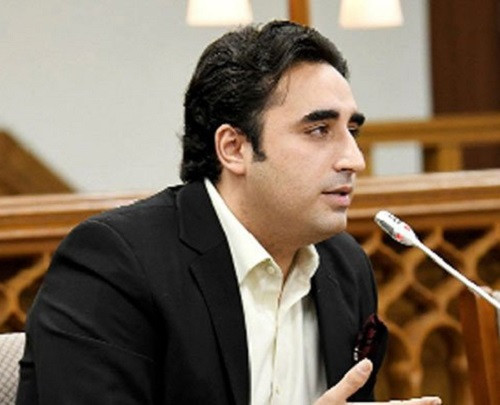
Foreign Minister Bilawal Bhutto Zardari said on Tuesday Pakistan was fully committed to the promotion of financial inclusion in the country and highlighted the initiatives aimed at facilitating women’s participation and integration in the national economy, the Foreign Office said in a press release.

Bilawal, who is in Davos to represent Pakistan at the annual meeting of the World Economic Forum (WEF), met with Queen Maxima of the Netherlands and his counterparts, Bogdan Aurescu of Romania and Pekka Haavisto of Finland on the sidelines of the Davos forum.

In a meeting with Queen Maxima, also the UN Secretary General’s Special Advocate for Inclusive Finance for Development, the foreign minister highlighted that Pakistan’s efforts through the Roshan Digital Account initiative would improve access to the country’s banking services to the overseas Pakistanis.

As part of the National Digital Infrastructure Development Strategy, the foreign minister emphasised, the State Bank of Pakistan (SBP) had successfully operationalised the instant digital micropayments gateway called RAAST. In a separate press release, the foreign said that Bilawal and Romanian Foreign Minister Aurescu discussed bilateral matters including mutual cooperation in the areas of trade and investment, development and education as well as collaboration at multilateral forums.

Foreign Minister Bilawal underscored that Pakistan attached high importance to its relations with Romania, both bilaterally and in the context of the European Union. “The two ministers also discussed regional and international issues of mutual interest,” the press release added.

While talking to his Finnish counterpart, Pekka Haavisto, Bilawal expressed the hope that Finland’s embassy would be reopened in Islamabad, which would help facilitate trade relations as well as promote people-to-people contacts between the two countries.

The Foreign Office said that the two foreign ministers discussed the state of bilateral relations as well as regional and global matters. Bilawal stressed that Pakistan valued Finland as an important bilateral partner as well as a key member of the European Union.

The foreign minister expressed Pakistan’s resolve to further solidify its political and economic relations with Finland. He particularly stressed on the need for enhancing commercial ties and investment cooperation. Both the foreign ministers agreed to work together for promoting bilateral ties.

https://tribune.com.pk/story/2358277/bilawal-backs-steps-for-financial-inclusion-in-pakistan

Foreign Minister Bilawal Bhutto Zardari , Saudi FM discuss ways to enhance bilateral ties
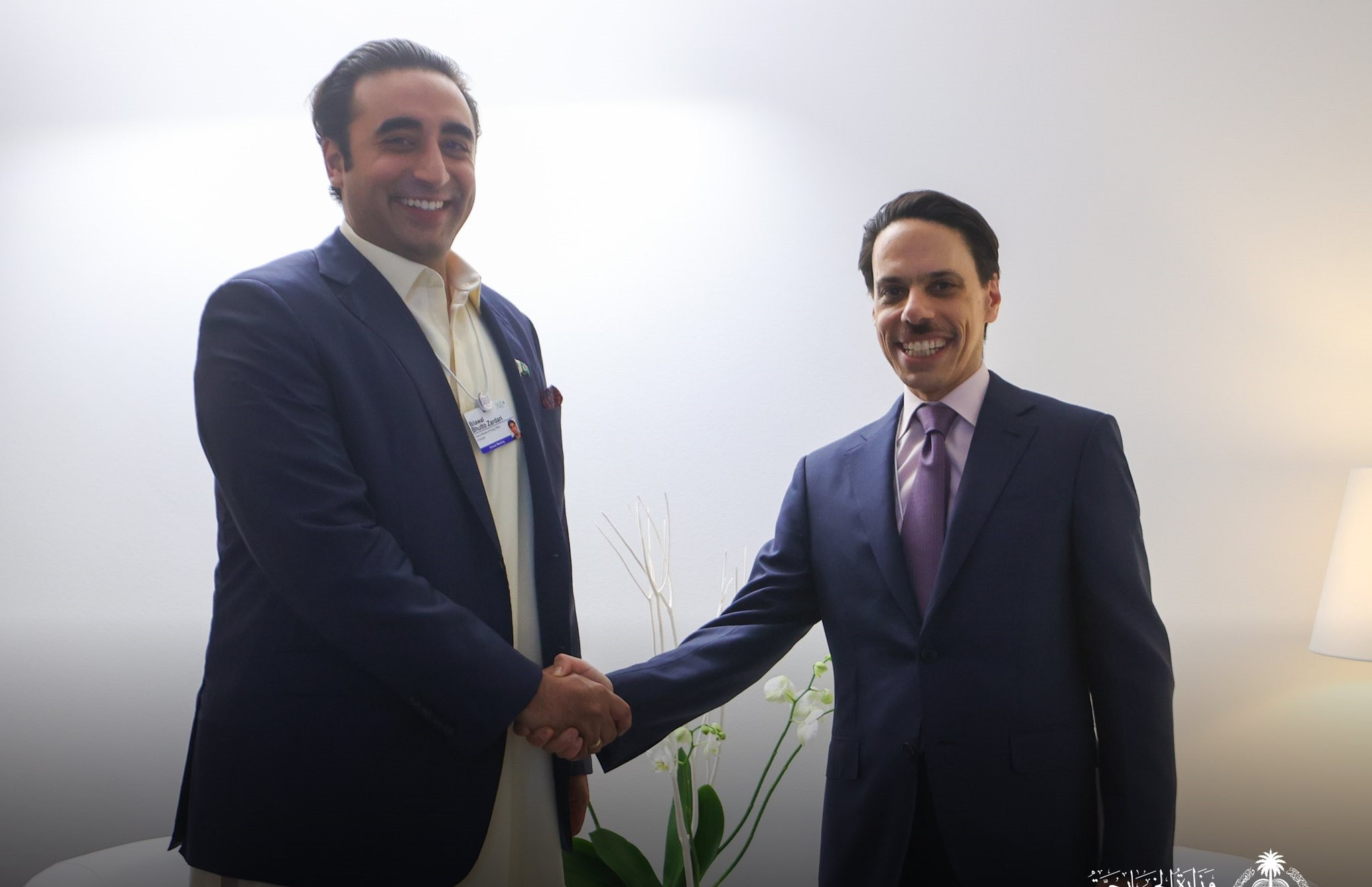
Foreign Minister Bilawal Bhutto Zardari and his Saudi counterpart Prince Faisal bin Farhan Al Saud expressed the resolve on Wednesday to deepen the mutual cooperation in all fields, including economy, trade and investment as well as at multilateral fora.Bilawal also met Gulf Cooperation Council (GCC) Secretary General Dr Nayef Falah Al-Hajraf and reviewed the status of Pakistan’s cooperation with GCC states. Both sides expressed determination to conclude the negotiations on the Pakistan-GCC free trade agreement (FTA) at the earliest.
Minister of State Hina Rabbani Khar and Minister of Climate Change Sherry Rehman were also present during the meeting, held on the sidelines of the World Economic Forum (WEF) in Davos, said a press release issued here by the Foreign Ministry.
During the meeting with Prince Faisal, various aspects of bilateral relations, besides regional and global issues of mutual interest were discussed. The two foreign ministers expressed satisfaction over the excellent bilateral partnership and resolved to strengthen this partnership for mutual benefit. Noting the commonality of views between the two sides on international issues, the two foreign ministers agreed to jointly explore avenues for improving coordination among the developing countries, including through the platform of the Organization of Islamic Cooperation (OIC).
Meanwhile, the foreign minister and the GCC secretary general agreed to explore further avenues for enhancing bilateral trade and economic ties between Pakistan and the GCC. It was also agreed to strengthen institutional linkages, in line with the Joint Action Plan for Strategic Dialogue.
Foreign Minister Bilawal Bhutto Zardari also met with his Austrian counterpart, Alexander Schallenberg. He underscored that Pakistan valued its relations with Austria, both bilaterally as well as a key member of the European Union.
The two foreign ministers discussed the entire spectrum of Pakistan-Austria relations. Bilawal hoped that the two sides would work together for greater collaboration in various sectors including trade and investment, higher education, renewable energy, tourism, and science and technology.
https://tribune.com.pk/story/2358364/bilawal-saudi-fm-discuss-ways-to-enhance-bilateral-ties

Sunday, May 22, 2022

Pakistan badly needs a rudder


WITH economic meltdown around the corner and the dollar over the roof, panic is all around. If successful, Finance Minister Miftah Ismail’s IMF negotiations in Doha may push ahead the day of reckoning by some months. But then what? How long before the house of cards comes crashing down? Decades of overspending and underproduction cannot be undone in a day.

Editorial: Import ban is just a band-aid for Pakistan's economic meltdown and tougher decisions are needed

Each successive government has routinely blamed its predecessor for all that’s gone wrong. Whichever party wins the next elections — if and when held — will surely continue this childish charade. In so passing the buck, Pakistan seeks to avoid recognising that it is the sick man of South Asia. This denial means it will resist seeking the right medicines. Today Pakistan lags behind Bangladesh and India in every indicator of consequence: economy, political stability, and human development.

There are three powerful reasons for our present predicament.

First is militarism. Since 1947, Pakistan has had a war economy. This enabled it to fight four wars, one of which was forced upon it but the other three were of choice. The luxury of choosing to go to war in 1965, and then again in 1999, was made possible by generous military and economic aid provided by the US. But now that Pakistan’s ex-patron has turned niggardly, and our current taller-than-the-Himalayas patron appears unenthusiastic, a forever war with India over Kashmir is unaffordable.

That India’s occupation puts Kashmiris at the mercy of Indian security forces is tragic. This has been the case now for decades. But India’s wrongdoing became an excuse for creating a militarised Pakistani security state that, for selfish institutional reasons, has sought to keep Kashmir on the boil. Little good has resulted but plenty of harm was caused all around, including to Pakistan itself.

To avoid shipwreck, Pakistan will have to deal effectively with militarism, overpopulation, and its skill deficit.

Pakistan suffered self-inflicted wounds by harbouring militants who ultimately turned their guns on their benefactor. Nevertheless, there is a glimmer of hope. The 31-year sentence awarded to Lashkar-e-Taiba supremo Hafiz Saeed is a clear admission that the old policies will not work. High inside the military establishment it has been understood that cross-border jihad must be shelved. Fear of FATF contributed in no small way.

Editorial: Action on FATF plan

More needs to be undone. Does it make sense to make a sick economy sicker by closing down the country for one full day on the fifth of every February? Or have all government employees and school students stand outside their buildings every Friday at noon and observe a five-minute silence (this flopped after the first attempt)? Or rename Kashmir Highway as Srinagar Highway in the vain hope that this will carry triumphant Pakistanis into the heart of Kashmir?

Recipe: Pakistan must let embattled Kashmiris sort out their problems with India while staying strictly within the formal bounds of what we have pledged to do — provide Kashmiris political and diplomatic support, and no more. If regional peace follows then one can be hopeful about civilian supremacy in Pakistan, moderation of defence expenses and, ultimately, some degree of self-sufficiency. Instead of more back-breaking Chinese loans, the way ahead lies through mutually beneficial Pakistan-India trade. If China and India are geopolitical rivals that can trade massively with each other, why cannot Pakistan and India do the same?

Editorial: India trade ties

Second is Pakistan’s uncontrolled population growth. Our cities are bursting at the seams, spilling far into the countryside, and gobbling up agricultural land. Pakistan’s present rate of population increase is enough to create one more Israel every two years. In another 25 years there will be 400 million Pakistani NIC holders.

In his new book Charter of the Economy, economist Hafiz Pasha has considered some impacts. Water availability has decreased by 49 per cent between 1990-1991 and 2020-2021; unemployment has risen from 1.7pc in 1961 to 3.1pc in 1981 to 5.8pc in 2018; availability of agricultural land has decreased from 6.1 acres in 1947 to 0.49 acres per capita of rural population; the quality of life in Karachi stands at 201 out of 231 cities in the world; etc.

Nevertheless, believing that more is better, like old-time Catholics, many Muslim conservatives continue to oppose contraception. Every newborn, they say, comes with a guaranteed rizq (provision) stamped on its forehead. Let’s assume this is correct and food was to drop miraculously from the skies for every Pakistani man, woman and child. Then what?

The law of exponential growth says that Pakistan will run out of physical space in a few decades, and water well before that. As for the amount of human waste generated and where it will go — one does not want to even think about it. And yet, setting aside this horrific future scene, Pakistan abolished the ministry for population planning many years ago.

Third is the rock-bottom quality of Pakistan’s education system. As every employer will tell you, local degrees and certificates are worthless. Producing high-quality professionals requires much more than putting up buildings for universities, colleges and schools. Critical thinking skills make graduates useful and employable. These skills are entirely absent in the Matric, FA/FSc system and only partially developed in high-end O/A level elite private schools. Emphasis on rote memorisation and religious indoctrination has crippled minds and curtailed thinking ability.

The proof stares us in the face. Pakistan has the world’s tenth largest overseas workforce that earns the bulk of its foreign exchange. But only 1pc of migrant workers are classified as highly qualified (engineer, doctor, accountant, computer analyst, pharmacist) and 2pc highly skilled (nurse, teacher, manager). The remaining 97pc belong to different categories ranging from skilled (welder, painter, carpenter, etc) to low-skilled (agriculture workers and labourers). Pakistanis are entirely absent from the world stage of high science and engineering.

Prognosis: dangerous times lie ahead. It’s bad enough to have a ship adrift in bad weather near a rocky shore. More ominously, its quarrelling crew members are trading blows rather than worrying about shipwreck. But the far greater problem is being rudderless. Pakistan’s ultimate goals need fundamental redefinition. Until we recognise the urgent need to combat three deadly monsters — militarism, overpopulation, and skill deficit — any optimism for the longer term is unjustified.


Joint Statement between the People’s Republic of China and the Islamic Republic of Pakistan


  1. At the invitation of State Councilor and Foreign Minister H.E. Wang Yi, H.E. Bilawal Bhutto Zardari visited Guangzhou on 21-22 May 2022 for his first official bilateral visit after taking office as Foreign Minister of Pakistan. The visit coincided with the 71st anniversary of the establishment of diplomatic ties between China and Pakistan.
     
  2. During the visit, State Councilor and Foreign Minister Wang Yi and Foreign Minister Bilawal Bhutto Zardari held in-depth discussions on the entire gamut of bilateral relations as well as regional and international issues of shared interest. The talks were conducted in a warm and friendly atmosphere, in line with the finest tradition of mutual trust and cooperation between the two countries.
     
  3. The two sides agreed that amidst profound regional and international changes, the importance of China-Pakistan strategic relations has assumed even greater significance. As All-Weather Strategic Cooperative Partners, China and Pakistan share ironclad mutual trust and friendship, which is a source of peace, stability, and prosperity for the region and beyond. Both sides reaffirmed their strong support for each other’s core interests and major concerns, and commitment to deepening strategic communication including at the highest political level and practical cooperation, and building an even stronger China-Pakistan Community with a Shared Future in the New Era.
     
  4. The two sides noted with satisfaction the steady growth of economic cooperation between China and Pakistan. In this context, they agreed that China-Pakistan Economic Corridor (CPEC) has effectively improved Pakistan’s infrastructure and boosted its socio-economic development. Both sides expressed firm resolve to synergizing development strategies, pushing forward all CPEC projects in a safe, smooth, and high-quality manner, promoting cooperation in areas such as economy and trade, investment, industry, agriculture, health, and science and technology, contributing to the peoples’ well-being and delivering greater benefits to local communities.
     
  5. Noting with satisfaction the record bilateral trade achieved last year, the two sides agreed to work together to make optimum use of phase-II of CPFTA and work together to diversify their trade ties with deepening cooperation in export-oriented sectors in Pakistan and integrating value chains of the two countries. Both sides also agreed on stronger collaboration in the services sector and skill development in the areas of tourism, education, financial and information technology sectors.
     
  6. The two sides expressed satisfaction at the growing momentum of bilateral defense cooperation and exchanges. They underlined that China-Pakistan defense cooperation was in fact a factor of peace and stability in the region.
     
  7. The two sides termed terrorism as the common enemy of humanity. They once again strongly condemned the Karachi University Confucius Institute terrorist attack. Pakistan reiterated that efforts will be made to speed up investigation, hunt down the culprits, and bring them to justice. Pakistan briefed the Chinese side on its efforts to ensure the safety of all Chinese nationals, projects, and institutions in the country. China appreciated Pakistan’s commitment to the safety and security of Chinese nationals. Pakistan and China will further enhance counter-terrorism and security cooperation. The two sides called on the regional countries and the international community to form synergy and fight terrorism in all its forms and manifestations. The two sides expressed their determination not to allow anyone to damage China-Pakistan iron brotherhood.
     
  8. In the face of multiple traditional and non-traditional global challenges, the two sides agreed on the need for international cooperation and solidarity. They noted that, based on the principles of win-win cooperation and shared benefits, Belt and Road cooperation has become an open and inclusive platform for international cooperation and is widely welcomed as a global public good. The China-proposed Global Development Initiative (GDI) and Global Security Initiative (GSI) are new initiatives to respond to the pressing challenges facing the humanity. Both countries stand ready to work with other countries to focus on the development agenda, tackle security challenges, implement the UN 2030 Agenda for Sustainable Development, and jointly build a community with a shared future for mankind.
     
  9. The two sides discussed the Ukraine situation, noting the necessity of being alert to the negative spillovers of the Ukraine crisis, in particular preventing its impact on developing countries, and called on relevant parties involved in the conflict to resolve differences and disputes through diplomacy and dialogue.
     
  10. The two sides reaffirmed the firm commitment to upholding the UN-centered international system, the international order based on international law, and the basic norms governing international relations underpinned by the purposes and principles of the UN Charter, practicing true multilateralism, and promoting democracy and rule of law in international relations.
     
  11. The two sides underscored that Asia, with its rich history, civilizational heritage and growing economic potential, is playing a leading role for peace, prosperity, and economic development in the region and beyond. The two sides hoped that in the pursuance of these cherished goals, the regional countries would uphold Asian values of mutual respect, equality and win-win cooperation, and build an open and inclusive regional architecture, safeguard peace and stability in the region, and advance common development and prosperity.
     
  12. Both sides reiterated that a peaceful and prosperous South Asia is in the common interest of all parties. Given the challenges faced by the peoples of the region, due to global pandemic, soaring commodity prices, climate change and poverty, it is critical to resolve all outstanding disputes to promote regional cooperation and advance the goals of lasting peace, stability and shared prosperity. Foreign Minister Bilawal Bhutto Zardari briefed the Chinese side about the latest developments in Jammu & Kashmir. The two sides underlined the importance of the peaceful resolution of the dispute based on the UN Charter, relevant Security Council resolutions and bilateral agreements.
     
  13. The two sides discussed the latest developments in Afghanistan. The two sides agreed that peace and stability in Afghanistan was vital for regional development and prosperity. The two sides call upon the Afghan interim government to develop a broad-based and inclusive political structure, adopt moderate and sound internal and external policies, and protect the rights of women and children and ensure that the Afghan soil is not used against any of its neighbors. Both sides call on the international community to help avert humanitarian crisis and earnestly honor the pledges on Afghanistan’s economic reconstruction and future development. Both sides support the continued contribution of the mechanism of coordination and cooperation among Afghanistan’s neighboring countries and expressed readiness to work with all parties to implement the Tunxi Initiative of the Neighboring Countries of Afghanistan on Supporting Economic Reconstruction in and Practical Cooperation with Afghanistan and provide all possible support for the reconstruction and development of Afghanistan. The two sides also reiterated their readiness to extend CPEC to Afghanistan in consultation with the Afghan interim government and to the mutual benefit of all parties.
     
  14. Foreign Minister Bilawal Bhutto Zardari thanked State Councilor and Foreign Minister Wang Yi for the safe and secure return of Pakistani students in a phased manner to China. The two sides also decided to resume direct flight between the two countries carried out by Pakistan airlines at the earliest and subsequently increase directs flights based on the evolving pandemic situation.
     
  15. Foreign Minister Bilawal Bhutto Zardari thanked State Councilor and Foreign Minister Wang Yi for the hospitality extended to him and his delegation in the finest Chinese tradition of hospitality. H.E. Wang Yi accepted his invitation to visit Pakistan for Pakistan-China Strategic Dialogue.

22 May 2022

https://www.ppp.org.pk/pr/27059/

Video - PPP Leaders addressing a press conference in Islamabad

Video - Pak FM Bilawal Bhutto hold talks with his Chinese counterpart Wang Yi

Video - FM Bilawal Bhutto Zardari addresses a Press Conference along with Wang Yi in Guangzhou, China.

Saturday, May 21, 2022

Pashto Music Video - Alia Ansari | Melma

د افغانستان په تعلیمي نظام د مدني فعالې مقدسه احمدزی سره مرکه

Video Report - Foreign Minister of Pakistan Bilawal BhuttoZardari interview with Christiane Amanpour - May 18, 2022

Video - The AP Interview: New Pakistani FM seeks better ties with US
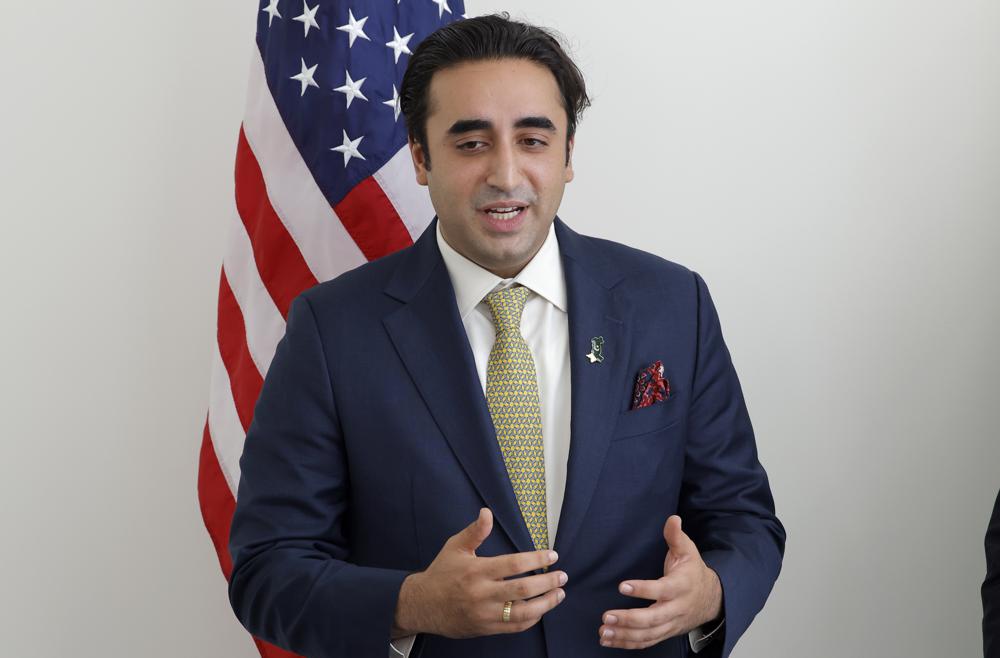
عمران نیازی نے جلسہ میں ایک خاتون کے بارے میں نازیبا زبان استعمال کر کے ثابت کیا ہے کہ عمران نیازی اخلاقیات سے نا آشنا شخص ہے

تحریک انصاف جس جلسہ کو ملتان جلسہ کا نام دے رہی ہے وہ جلسہ ملتان نہیں تھا اس جلسہ میں پورے جنوبی پنجاب سمیت ڈیرہ اسماعیل خان، بھکر، جھنگ، کشمور، گھوٹکی و دیگر شہروں سے لوگوں کو لایا گیا اولیا کرام کی دھرتی میں اولیا کرام کی دربار کے سائے میں کھڑے ہو کر عمران نیازی نے جس قسم کی بدزبانی و باد اخلاقی کا مظاہرہ کیا ہے اس کے بعد شاہ محمود قریشی پاک درباروں کا گدی نشین کہلانے کا حق اخلاقی طور پر کھو چکا ہے نوجوانوں کا اخلاقیات سکھانے اور قوم بنانے کا دعوی کرنے والے عمران نیازی نے جلسہ میں ایک خاتون کے بارے میں نازیبا زبان استعمال کر کے ثابت کیا ہے کہ عمران نیازی اخلاقیات سے نا آشنا شخص ہے ‏عورتوں کی عزت اتارنے والا ریاست مدینہ نہی ریاست یزید کا بانی ہے
 عمران نیازی کا گھٹیا زبان استعمال کرنے کامقصد صرف اور صرف عوام کو آپس میں لڑوانا اور خانہ جنگی کی صورت حال کو فروغ دینا ہے ان خیالات کا اظہار پاکستان پیپلزپارٹی جنوبی پنجاب کے صدر مخدوم سید احمد محمود، سینئر نائب صدر خواجہ رضوان عالم۔ چیف کوآرڈینیٹر جنوبی پنجاب عبدالقادر شاھین، جنرل سیکرٹری نتاشہ دولتانہ۔ سیکرٹری انفارمیشن نوابزادہ افتخار احمد خان۔ سیکرٹری تعلقات عامہ بابو نفیس انصاری، ڈویژنل صدر خالد حنیف لودھی، ڈویژنل جنرل سیکرٹری ڈاکٹر جاوید صدیقی، سٹی صدر ملک نسیم لابر، ضلعی صدر میاں کامران عبداللہ مڑل، ضلعی جنرل سیکرٹری راو ساجد علی، سٹی جنرل سیکرٹری اے ڈی بلوچ، سٹی سیکرٹری انفارمیشن خواجہ عمران، سینئر نائب صدور سٹی میاں منظور قادر قادری، ساجد بلوچ، ڈپٹی سیکرٹری انفارمیشن، وحید الحسن بھٹہ جانباز و دیگر نے مشترکہ بیان میں کیا انہوں نے مزید کہا کہ 90 دن میں سرائیکی صوبہ دینے کا وعدہ کرنے والوں نے 4 سال میں سرائیکی صوبہ نہیں دیا آج شاہ محمود قریشی کو شرم آنی چاہیئے کہ پھر سے جنوبی پنجاب صوبہ کا چورن بیچنے میں لگ گیا ہے لیکن اب یہ بہتر ہے یہ چورن وہ چاٹ لیں کیونکہ جنوبی پنجاب کی عوام کو معلوم ہو چکا ہے کہ تمھارا یہ چورن جعلی ہے اور ہم آج شاہ محمود قریشی کو باور کرو دینا چاہتے ہیں کہ سید یوسف رضا گیلانی پر بات کرتے وقت یہ مت بھولیں کہ سید یوسف رضا گیلانی سرائیکی وسیب کے محسن ہیں اور بنجر ملتان کو انہوں نے خوبصورت شہر بنایا اور سرائیکی صوبہ کی قراداد جو سینیٹ سے پاس ہوئی وہ بھی سید یوسف رضا گیلانی کی کاوشوں سے ہوئی آپ نے سرائیکی صوبہ کا وعدہ لکھ کر پورا نہیں کیا پچاس لاکھ گھر کہہ کر پانچ ھزار نہیں بنائے ۔ایک کروڑ نوکریاں کہہ کر کئی لاکھ بے روزگار کیے اس کے بعد پھر سے نوجوان نسل کو ورغلانے میں عمران خان اور اس کے حواری لگ گئے ہیں لیکن پیپلزپارٹی اب نوجوان نسل کا مستقبل تباہ نہیں ہو نے دے گی ہم نوجوانوں کو یہ شعور دیں گے کہ تبدیلی دراصل تباہی و بربادی کا راستہ ہے

https://www.ppp.org.pk/pr/27054/


Friday, May 20, 2022

Urdu Music - Tahira Syed - Woh Batein Teri Woh Fasane Tere -

Music Video - Lokan Do Do Yar Banaye Afshan Zaibi Tune pk

کل بھی بھٹو زندہ تھا،آج بھی بھٹو زندہ ھے

#PPP Music Video - AYA AYA BILAWAL...

Video - عمران خان کو گرفتار کرلیں گے

The AP Interview: New Pakistani FM seeks better ties with US

Pakistan’s new foreign minister says the United States and his country must move beyond past tensions over Afghanistan and are entering a new engagement after years of strained relations under former Prime Minister Imran Khan.
Bilawal Bhutto Zardari, the 33-year-old son of assassinated former Prime Minister Benazir Bhutto, spoke in an interview with The Associated Press in New York, where he was attending meetings this week on the global food crisis at U.N. headquarters. He has also held talks with top diplomats, including a one-hour discussion with U.S. Secretary of State Antony Blinken.
Bhutto Zardari called the meeting with Blinken “very encouraging and very positive and productive.”
“We believe that Pakistan must continue to engage with the United States at all levels,” he said. “This meeting was indeed an important first step.”
Bhutto Zardari co-chairs one of the two largest parties in Pakistan’s disparate governing coalition, which spans the political spectrum from the left to the radically religious. The coalition removed Khan in a no-confidence vote on April 10. Shahbaz Sharif, the leader of the other major party, replaced Khan as prime minister.
U.S.-Pakistani ties deteriorated under Khan, who as prime minister tapped into anti-American sentiment in Pakistan that has spread ever since the 9/11 terrorist attacks by al-Qaida, and the U.S. war on terror. The 2011 American raid that killed al-Qaida leader Osama bin Laden in Pakistan angered many hard-liners in the country.
Khan accused the Biden administration of colluding with the opposition to oust him, a claim the administration denies.
Afghanistan also raised mistrust between the two countries. Washington felt Islamabad did too little to help ensure peace as the U.S. and NATO withdrew their troops from Afghanistan; Pakistan insists it did all it could to broker peace and blamed the abrupt U.S. pullout. During the final weeks of the American withdrawal, the Taliban overran Kabul in mid-August and seized power.
Bhutto Zardari said the Pakistan-U.S. relationship in the past had been “too colored by the events in Afghanistan, of the geopolitical considerations, and it’s time for us to move beyond that to engage in a far broader, deeper and more meaningful relationship.” Under Khan, Pakistan pushed hard for the world to engage with Afghanistan’s new Taliban rulers, and Bhutto Zardari said his country continues to do so.“Regardless of what we feel about the regime in Afghanistan,” the world can’t abandon the Afghan people and must immediately address the country’s humanitarian crisis and crumbling economy, he said. A total collapse of the Afghan economy would be a disaster for Afghans, Pakistan and the international community, he said, expressing concern that many Afghans would flee the country.
Pakistan is also insisting the Taliban live up to their international commitments that the country not be used for terrorism, that girls and women be able to pursue education, and that they form an inclusive government, he said.
The Taliban, however, have taken a more hard-line turn in recent weeks, imposing new restrictions on women. At the same time, tensions have grown between the Taliban and Pakistan over militants based in Afghanistan carrying out attacks in Pakistan. Bhutto Zardari said the more the humanitarian crisis is alleviated and the economy is saved from collapse, “the more likely we are to succeed in our pursuit for women’s rights and the more likely we are to succeed in our efforts against terrorism.” He said his focus in talks with Blinken was on increasing trade, particularly in agriculture, information technology and energy. He said he is looking forward to working with the U.S. on an initiative to empower women, including women entrepreneurs.
On economic, defense and military coordination, “if we continue to engage, then we can move forward in a more positive direction,” Bhutto Zardari said.
Asked about Khan’s anti-U.S. rhetoric, Bhutto Zardari dismissed the ex-premier’s accusation of American collusion, calling it a “fanciful conspiracy theory based on a big lie” to explain his removal. “I am particularly anti the politics of hate, division and polarization,” the foreign minister said. “If we consistently pursue the politics of `you’re with us or against us,’ whether that’s on an international level or a domestic level, I don’t believe it serves the interests of the people of Pakistan.”
He said he believes Pakistanis understand their country needs to engage with the U.S. and all countries, in order to become democratic and progress economically.
President Joe Biden has strengthened ties with Pakistan’s arch-rival India, but Bhutto Zardari said Pakistan is not “jealous” of their relationship. “We believe the world is big enough for both Pakistan and India,” he said.Biden will meet Indian Prime Minister Narendra Modi and the leaders of Australia and Japan at a summit in Tokyo on May 24 of the so-called Quad, an Indo-Pacific alliance which China sees as an attempt to contain its economic growth and influence.Pakistan has a very close economic and military relationship with neighboring China, where Bhutto Zardari is heading to on Saturday. He told the AP he didn’t think the growing relationship with the U.S. would hurt its ties to Beijing.
Pakistan has abstained on U.N. General Assembly resolutions condemning Russia’s invasion of Ukraine and withdrawal of its troops. Bhutto Zardari said Pakistan used to rely a lot on Ukrainian wheat and fertilizer and has been affected by rising food prices and calls for diplomacy to end the war.
The lives of the Bhutto Zardari family have in many ways reflected their country’s turbulence. Bhutto Zardari took over his mother’s Pakistan People’s Party after she was killed in a suicide bombing in December 2007.The daughter of Pakistan’s first democratically elected prime minister, Zulfikar Ali Bhutto, who led Pakistan in the 1970s and was overthrown and executed by the military, Benazir Bhutto was Pakistan’s first woman premier and twice served as head of government.At the time of her assassination, she was rallying in a third bid for premiership. Bhutto Zardari’s life in politics was also shaped by his father, Asif Ali Zardari, who served as Pakistan’s president from 2008 to 2013. In the interview with the AP, Bhutto Zardari recalled the legacy of his mother and grandfather. He called them “towering figures on the world stage,” and said he feels “the burden of history.”“What motivates and drives me is the pursuit of their unfulfilled mission,” he said. “I hope that we live up to the expectations of the people of Pakistan” who have longed for true democracy and struggled for their economic, political and human rights.
“These are the ideals that we hold dear and we work towards every day,” Bhutto Zardari said.
https://apnews.com/article/afghanistan-politics-bilawal-bhutto-zardari-united-states-44bedf833e4058e2c0e0c23b66ae9796