Saturday, May 7, 2022
#Afghanistan - Taliban Impose Head-to-Toe Coverings for Women
At a three-hour news conference dominated by pronouncements promoting the religious virtues of the burqa, ministry officials and Islamic religious figures dictated a series of escalating punishments — including jail time for male family heads who repeatedly disregarded warnings from government officials regarding women’s attire.If a woman failed to wear the prescribed hijab in public, ministry officials would visit her home and advise the male head of the family to require her to comply, the ministry announcement said. Failure to comply would result in a summons to the ministry, the officials said. If the man still failed to follow the guidelines, he would be jailed for three days. If the jail sentence did not compel adherence, the man would be compelled to appear before a religious court for further punishment, ministry officials said. Male government employees whose wives or daughters fail to cover themselves in public would be subject to suspension or dismissal, the announcement said. And the relatively few women still permitted to hold jobs — such as nurses, doctors and teachers — could be fired if they did not comply with the regulations. “We want our sisters to live with dignity and safety,” said Mohammad Khalid Hanafi, the acting vice and virtue minister. Shir Mohammad, a vice and virtue official, said in a statement that “all dignified Afghan women” should cover themselves from head to toe. “Those women who are not too old or too young must cover their face, except the eyes,” he added. Since the Taliban takeover in August, more women in Kabul appear to have begun wearing burqas. But the majority of women on the streets of the capital have continued to wear less encompassing versions of hijabs, with many covering only their hair and leaving most or all of their faces still visible.Even under the previous, Western-backed government, many women — especially in rural areas and small towns — continued to wear burqas. The history of the garment dates back generations in Afghanistan, and is a product of conservative Afghan culture that long preceded the emergence of the Taliban in the 1990s.At Saturday’s news conference, religious speakers delivered dissertations on the Islamic history of the hijab and its benefits according to Islamic law and practice. The ministry instructed officials across Afghanistan to put up posters in bazaars and other public locations with instructions and images of approved garments for women. In recent months, small posters have appeared in Kabul depicting head-to-toe hijabs, including burqas, as proper public attire for women. On Saturday, ministry officials said the “ruling, importance and benefits of the hijab” should be discussed in mosques and distributed through the news media.In September, the Taliban converted the previous government’s Ministry of Women’s Affairs to the office for the Vice and Virtue ministry. Under the Taliban government of the 1990s, women who failed to wear a burqa in public were often beaten by vice and virtue religious police, who also delivered warnings to male relatives. Also Saturday, a spokesman for an Afghan opposition group that has mounted an insurgency against the Taliban government repeated earlier claims that it had “liberated” three districts in the northern province of Panjshir. Asked whether the National Resistance Front, as the movement calls itself, had seized government district centers, the spokesman replied by text message, “They were besieged in the district offices,” referring to Taliban officials. The Taliban government spokesman, Zabihullah Mujahid, said on Twitter that “no military incident has taken place” in Panjshir or any other nearby areas. National Resistance Front claims “were not true, no one should be worried,” Mr. Mujahid wrote. He added that thousands of Islamic Emirate fighters were in Panjshir and preventing any military advances by the front. The National Resistance Front, or N.R.F., was formed by several leaders or supporters of Afghanistan’s Western-backed government before it collapsed last summer. It is part of a resistance that consists of a smattering of armed fighters spread across the mountains of northern Afghanistan, according to interviews with more than a dozen resistance fighters and leaders. The N.R.F. has an estimated several hundred fighters, many of them low-ranking officers in the former government’s security forces. It is led by Ahmad Massoud, the son of the deceased Northern Alliance leader Ahmad Shah Massoud. Mr. Massoud left Afghanistan after the Taliban seized power and has directed the N.R.F. from abroad.
https://www.nytimes.com/2022/05/07/world/asia/taliban-afghanistan-burqa.html
Anti-Americanism in Pakistan
By Uzair SattarImran Khan’s narrative of conspiracy and regime change is a symptom, not a cause, of anti-American sentiments in Pakistan. The most challenging problem the United States faces in executing its foreign policy goals in Pakistan is anti-Americanism. The ouster of former Prime Minister Imran Khan following a note of no confidence reinvigorates this perennial challenge.Khan is rallying his supporters over a new slogan, “Imported Government Na Manzoor” (translation: rejected), after alleging that the United States spearheaded a conspiracy to remove him from office. His accusation of regime change has been refuted by Pakistan’s National Security Committee (NSC), the country’s highest bipartisan civil-military forum. The NSC stated that a U.S. official’s “undiplomatic language” at a lunch amounted to “blatant interference” but concluded that “there has been no conspiracy.” Yet, in an era where alternative facts are as good as true, this does not matter to Imran Khan or his supporters. His narrative is merely a symptom and not a cause of anti-Americanism in Pakistan. There may be a temptation to dismiss conspiracy claims as resurgences of repeated tropes in Pakistani politics. However, this avoids confronting why Khan can effortlessly tap into anti-American sentiments and dynamics that in turn impact Pakistani politics and its foreign policy. Anti-Americanism sells in Pakistan. A Gallup poll revealed that “only” one-third of Pakistanis (36 percent) believed the foreign conspiracy claim. The same poll, however, showed that more than two-thirds of Pakistanis (72 percent) thought the United States was an enemy rather than a friend of Pakistan. This figure has remained relatively consistent over the past two decades. Two-thirds of Pakistanis today are under 30 and have lived through the strongest waves of anti-Americanism in Pakistan since 1990. The United States and Pakistan have well-known laundry lists of foreign policy grievances. When Pakistan airs these grievances, Washington’s establishment often dismisses them as “familiar tropes.” Whether or not Washington wants to believe these grievances are legitimate, its passivity increases anti-American sentiment in Pakistan. This, in turn, makes it difficult to achieve U.S. foreign policy objectives. While the relationship has been historically predicated on security asks, moving toward non-traditional security collaboration may be the only structural approach to mitigate anti-Americanism in Pakistan. Anti-Americanism in Pakistan Anti-Americanism is not exclusive to Pakistan but takes a unique form in the country. Radical anti-Americanism, anti-capitalism, and poor people-to-people relations are not the major factors. Radical anti-Americanism has erupted in minuscule pockets in Pakistan but remains an anomaly in the 75-year relationship. There is also no mainstream fiscal ideological debate in Pakistan, which keeps Islamabad tied to the Washington Consensus. While new leftist parties have added invaluable dimensions to socioeconomic debate, they still have a long way to go before uprooting centrist groupthink and historic economic alignments.Instead, liberal and sovereign-nationalist critiques remain salient because of the United States’ securitized engagement with Pakistan and its foreign policy goals. Liberal anti-Americanism critiques relate to Washington upholding values for domestic audiences but dismissing them abroad. Sovereign-nationalist critiques concern the impingement of sovereignty – both directly, such as military intervention, and indirectly, through coercive diplomacy. Imran Khan is the latest in a long line of politicians to exploit anti-Americanism for political survival. WikiLeaks revealed that Pakistan’s civilian leadership (some of whom are now back in office) privately supported U.S. drone strikes in Pakistan (2008-2018) but lied about their stance publicly. This created an impression that the United States was playing a double game in Pakistan. In addition to fueling the fire, Khan has added another dimension to the phenomenon. During the initial no-confidence vote, the deputy speaker of Parliament, a Khan loyalist, justified dismissing the vote by declaring all opposition members disloyal under Article 6 of the constitution for allegedly working with the United States. The term “traitor” has provided unending currency in Pakistan. While military officials seem to remain immune, when applied to critical politicians, journalists, and civilians, the “diagnosis” is a cue to begin “self-treatment” through self-censorship. Not doing so can have severe consequences. Today, advocates for maintaining or improving Pakistan-U.S. relations represent a collective group at risk of being sent to “Traitorville,” whose proverbial boundaries expand as Khan’s false narrative gathers steam. This is hampering a meaningful debate in Pakistan about its relationship with all superpowers. Washington’s relative non-engagement with Pakistan’s civilian government and society has not helped either. A Military-Centric Relationship Pakistan and the United States have a state-to-state relationship predicated on two primary issues: war and terrorism. In that context, the United States has directly engaged with the military and not civilian governments to achieve its security objectives. This has undermined Pakistan’s post-colonial democratic institutionalization and represents a structural faultline in the relationship. The United States has taken advantage of indigenous military coups by perpetuating dictatorships that have lasted almost half of Pakistan’s political life. None of the four U.S.-supported dictators would have survived for as long as they did without the United States’ backing. Washington’s modus operandi has not changed following Pakistan’s transition to procedural democracy in 2008. The Pakistan Army’s top brass has been the primary benefactor in this equation, receiving military hardware, technology, and economic support in return for counterterrorism operations and helping fight two wars in Afghanistan. These were wars which the Pakistani people had nothing to do with. Recognizing this nuance is critical for Washington to achieve its foreign policy goals in Pakistan, even if the will to do so remains elusive.Over 220 million Pakistanis, of whom two-thirds are under 30, have lived through the most vociferous waves of anti-Americanism, sparked by the Pressler sanctions (1990-2001) and the War on Terror (2001-?). Pakistanis have had to reconcile Washington’s military-centric engagement with their changed lives. It is unfortunate that Pakistan’s ongoing sacrifices in the War on Terror – 80,000 killed on the street, at weddings, in their houses, in school, at checkpoints, on their way to work, and in places of worship, not to mention economic losses – fall on deaf ears in Washington. By choosing to fixate on the United States’ engagement with the military’s top brass, Washington overlooks the consequences of its approach to Pakistanis’ lived experience. This active choice increases anti-Americanism in Pakistan.I grew up during the War on Terror. Like many Pakistanis, I heard Washington’s calls for Pakistan to “do more” to fight terrorism. This was puzzling to me as a student since most Pakistanis I know were directly or indirectly impacted by terrorism. In just one of many examples, after the school massacre in Peshawar in 2014 – when the Pakistani Taliban killed 132 students and 17 staff members – the government permanently increased security measures across educational institutions, which inadvertently made kindergartens, schools, and colleges a vessel for policing and fear. My schoolmates and I were rigorously searched as we entered our newly erected, prison-length school walls topped with layers of barbed wire. Instead of going to class, we rendezvoused at the school ground for daily morning terror prevention drills. Watching four government-mandated snipers slowly patrolling roof corners as we completed the drill, I thought I had a clear idea of who the enemy was – as I imagine the snipers did too. But when told we weren’t doing enough against terrorism, I began questioning who the enemy might be. Washington’s “do more” ask may have been geared toward Rawalpindi and not even related to the Pakistani Taliban. Still, the public drumming at every seeming opportunity felt like a ploy to humiliate Pakistanis for something they had no control over – and indeed suffered from daily. I felt that empathy was lacking. Tackling Anti-Americanism in Pakistan Imran Khan taps into some of these dynamics as he galvanizes his supporters on trumped-up charges of regime change. On the one hand, he functionalizes simmering sentiments stemming from a lack of historical reckoning. On the other hand, his narrative successfully distracts voters from domestic structural fault lines and veils the factor of his questionable decision-making as a cause for his ousting. Pakistani anti-Americanism structurally stems from a military-first, people-second engagement approach. However, this prism remains less relevant for the future. The United States has placed India’s strategic interests above Pakistan’s because of a newfound common adversary. Washington ignored Pakistan’s decade-long cautionary advice on Afghanistan, which is now home to the worst humanitarian crisis in the world. There is a real chance that the United States will see Pakistan through red-tinted glasses as it gears up for great power competition with China. Instead of fighting these changing dynamics and Pakistan’s changed geostrategic alignments, the Pakistan-U.S. relationship should move away from military-centrism and instead focus on new opportunities to tackle non-traditional security threats, such as climate change and geoeconomics. The COVID-19 pandemic may have also provided a litmus test for this thesis. As of April 28, 2022, the United States had donated the most vaccines to Pakistan through its global distribution program. It is bemusing how few Pakistanis know about this. There is no replacement for on-ground engagement in civil society and public diplomacy. Other countries have demonstrated the benefits of direct engagement after stepping outside embassy walls or hushed military conference rooms. Moving from traditional security to non-traditional security collaboration will also make it more conducive for the United States to meaningfully work with democratic governments instead of direct engagement with the military. It would reflect at least a surface-level appearance that the United States still considers democracy in Pakistan as something worth enabling rather than undermining. Doing so will create space for civilian leaders—who have mics and pulpits that military officials do not—to debate Pakistan’s relationship with all superpowers. Upholding the business-as-normal approach will not only perpetuate anti-Americanism but could give rise to different forms of the phenomenon not substantively seen in Pakistan to date, with dangerous downstream consequences. Engaging with Pakistan’s democratic institutions, changing prisms of cooperation, and reckoning with Pakistanis’ fundamentally altered lived experience after the War on Terror represent perhaps the only opportunities to mitigate anti-Americanism in Pakistan.
https://thediplomat.com/2022/05/anti-americanism-in-pakistan/
EDITORIAL - #Pakistan: ''Playing with Fire in Punjab''
#Pakistan - US Secretary of State Blinken invites Bilawal to attend the ‘Global Food Security’ meeting in US
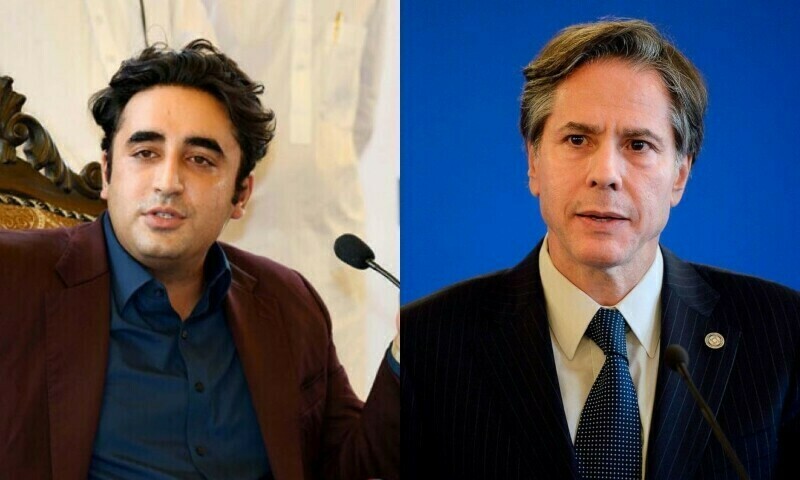
https://dailytimes.com.pk/930769/us-secretary-of-state-blinken-invites-bilawal-to-attend-the-global-food-security-meeting-in-us/
Friday, May 6, 2022
Imran Khan’s Conspiracy Myth: A Debacle – OpEd
https://www.eurasiareview.com/06052022-imran-khans-conspiracy-myth-a-debacle-oped/
Rising Violence by Separatists Adds to Pakistan’s Lethal Instability
But to the separatists, the development projects put Beijing squarely on the side of the exploiters and oppressors, so in recent years, many targets of insurgent violence have been Chinese.In 2018, B.L.A. militants killed four people in an attack on the Chinese consulate in Karachi, and in 2020 the group mounted an assault on the Pakistan Stock Exchange in Karachi, which is 40 percent owned by Chinese investors, killing three people. In both cases, the assailants were also killed. Last August, a B.L.A. suicide bomber killed two children in an attack on Chinese nationals in Gwadar.
Ms. Baluch blew herself up last week near a van transporting Chinese language teachers for the Confucius Institute, a worldwide network of cultural centers financed by the Chinese government. The B.L.A. called the institute a “symbol of Chinese economic, cultural and political expansionism.” Chinese development work must stop, it threatened, “otherwise our future attacks will be even harsher.”Pakistan has long complained that Baluch separatists operated out of hide-outs in Afghanistan, while the former Afghan government often accused the Pakistani intelligence agency, the ISI, of aiding the Taliban. After the Chinese consulate attack in 2018, a suicide bomber killed the B.L.A. commander and several associates — not in Pakistan, but in Kandahar, Afghanistan. Afghan officials blamed the ISI for that bombing.By 2020, the Baluch insurgency had been greatly weakened by years of counterinsurgency operations, rifts among separatist groups, fatigue and government incentives for the militants to lay down their weapons.Pakistani officials hoped that the Taliban takeover last year would end Afghanistan’s use as a haven for Baluch insurgents. After the Gwadar attack, the Taliban detained and expelled a large number of families of separatists, according to Baluch insurgent groups. But the intensity and frequency of attacks started rising sharply last year, demonstrating the militants’ growing sophistication and aggressiveness. The number of terrorist attacks in Baluchistan nearly doubled in 2021 compared to 2020, according to the Pak Institute for Peace Studies, an Islamabad-based think tank, and the pace has kept rising this year. Insurgents have started resorting to suicide attacks, and the April 26 bombing in Karachi showed a new willingness to use women as assailants.In February, B.L.A. militants staged twin assaults on two military posts in Baluchistan. Pakistan’s military said that 20 attackers and nine military personnel were killed. Days earlier, an attack on another military post by a different group, the Baluch Liberation Front, killed 10 soldiers. The major separatist groups’ leadership has shifted in recent years from traditional tribal chieftains living in self-exile in Europe to more militant former student leaders. The groups have also formed an operational alliance to pool resources — one major reason the insurgency has intensified, security experts and officials said. They also link the insurgency’s upswing to its recruitment of youth, mainly students. The heads of two separatist groups formerly led a banned student group, the Baluch Students Organization-Azad, which operates clandestinely and, according to law enforcement officials, is a major source of insurgents. As a student, Ms. Baluch, the suicide bomber, was associated with the group, according to her family. “Exposure of Baluch students studying in the country’s prestigious universities, rising literacy and participation in ethnic politics are some major factors that have deepened awareness of socio-economic and political grievances among the youth,” said Muhammad Amir Rana, director of the Pak Institute for Peace Studies. In the town of Turbat, where Ms. Baluch taught science, a student claimed to have known at least five others who had joined the insurgency during the past two years. “They are mentally prepared to kill themselves for the cause,” said the student, who insisted on anonymity out of fear for his safety. Pakistan’s security agencies have cracked down on educated Baluch youth, forcibly “disappearing” suspected militants, sometimes for years, without trial, according to news reports, student advocates and human rights groups.“These days, law enforcement agencies consider every university student from Baluchistan a potential militant,” said Faisal Nawaz, a student from Panjgur, in Baluchistan, who is studying at the University of Karachi.Separatist attacks have been concentrated in the sparsely populated Makran region of Baluchistan, where residents depend on illegal cross-border trade with Iran in fuel and other commodities. In a desert area that has few job opportunities, smuggling can be a matter of survival. But the official border crossings were closed in March 2021, making the trade harder and worsening the misery of the local population.“If the government set up industries for us, the youth would not be involved in dangerous business,” said Sakhi Dad, 28, who said he took up smuggling after graduating from a university and failing to find other work. In November, a protest movement led by a Gwadar-based cleric, Maulana Hidayatur Rehman, mobilized thousands of people, calling on the government to address the plight of people in Makran. They demanded relaxation of border trade, easing of security checkpoints created to protect Chinese workers at the Gwadar port, and an end to illegal trawling that is devastating the livelihood of local fishermen. The government has responded with vows to improve conditions. On April 23, the new prime minister, Shehbaz Sharif, in a visit to Quetta, the capital of Baluchistan province, cited neglect of the region as a cause of violence, and promised to “raise the issue of forced disappearances with powerful quarters.” Pakistan’s military leadership has broadened its public interactions in Baluchistan, trying to present a friendlier face, particularly in Makran. After the February attacks, the army chief, Gen. Qamar Javed Bajwa, and other military leaders visited Baluchistan to meet political leaders and university students, and asked the local administration to open the border to trade. He also encouraged the youth to join law enforcement agencies. “For the first time, local leaders expressed their grievances and anger openly to the military’s leadership,” said a local political leader who attended the meeting with General Bajwa in Turbat in March. He requested anonymity to speak freely. “But without a political solution to bring an end to the long-running conflict, the insurgency will remain a challenge for Islamabad.” Less than two months after General Bajwa’s visit, Ms. Baluch carried out her suicide attack.
https://www.nytimes.com/2022/05/04/world/asia/pakistan-baluchistan-violence.html
#Pakistan #PPP - Telephone Call between the Foreign Minister Bilawal Bhutto and the U.S. Secretary of State
Foreign Minister Bilawal Bhutto Zardari received a telephone call today from the United States Secretary of State, Antony Blinken.

During the phone call, Secretary Blinken congratulated Foreign Minister Bilawal Bhutto Zardari on the assumption of his Office and expressed the desire to continue strengthening the mutually beneficial Pakistan-U.S. bilateral relationship.
Exchanging views on various aspects of Pakistan-U.S. relations, the Foreign Minister underscored that Pakistan and the United States have a longstanding broad-based relationship. He added that constructive and sustained engagement between the two countries on the basis of mutual respect and mutual interest was vital to promote peace, development, and security in the region and beyond. The Foreign Minister emphasized that Pakistan’s vision was focused on human development, regional connectivity, and a peaceful neighborhood.
Building on the Pakistan-U.S. cooperation in dealing with the Covid pandemic during the last two years, Secretary Blinken invited Pakistan to the Second Global Covid Summit to be held virtually later this month. An invitation was also extended by the Secretary of State for Pakistan’s participation in the Ministerial meeting on Global Food Security to be held in New York on 18 May 2022.
The Foreign Minister and the Secretary of State agreed to remain in contact and enhance engagement on regional and global issues of mutual interest.
https://www.ppp.org.pk/pr/26960/
آرمی چیف کو گورنر کے خط پر رضا ربانی کا ردعمل
سینیٹر رضا ربانی نے کہا ہے کہ آئینی بحران پر گورنر پنجاب کا آرمی چیف کو مبینہ خط پی ٹی آئی کا دُہرا معیار بے نقاب کرتا ہے۔
پاکستان پیپلزپارٹی (پی پی پی) کے سینیٹر رضا ربانی کا کہنا ہے کہ اگر ادارے آئین کے ساتھ کھڑے ہوں تو انہیں تضحیک کا نشانہ بنایا جاتا ہے، خط پی ٹی آئی کے عہدے داروں کے ذریعے آئین کی خلاف ورزی کی دانستہ کڑی کو ظاہر کرتا ہے۔
انہوں نے کہا کہ سپریم کورٹ اور لاہور ہائی کورٹ آئینی ذمے داری ادا کرتے ہوئے آئین کی خلاف ورزی کو روک رہی تھیں، سپریم کورٹ اور لاہور ہائی کورٹ کے خلاف مہم چلائی گئی۔
رضا ربانی کا کہنا تھا کہ سیاسی لڑائی کو قواعد، قانون اور آئین کے دائرے میں رہ کر طے کیا جائے۔
واضح رہے کہ 4 مئی کو گورنر پنجاب عمر سرفراز چیمہ نے آرمی چیف جنرل قمر جاوید باجوہ کو خط لکھ کر پنجاب کی موجودہ صورتحال میں کردار ادا کرنے کی اپیل کی تھی۔
خط میں آرمی چیف سے پنجاب میں آئینی فریم ورک پر عمل درآمد، وفاقی اور صوبائی حکومتوں پر عوامی اعتماد بحال کرنے کے لیے کردار ادا کرنے کی بھی اپیل کی گئی ہے۔
Saturday, April 30, 2022
Address human rights violations seriously: Hina Jilani to Pak Government
https://theprint.in/world/address-human-rights-violations-seriously-hina-jilani-to-pak-government/937845/
EDITORIAL: #Pakistan - Shame -

On International #LabourDay, #PPP Chairman Bilawal Bhutto Zardari links sustainable development to change in toiling workers’ conditions
 Chairman Pakistan People’s Party (PPP) and Pakistan’s Foreign Minister Bilawal Bhutto Zardari has said that the dream of sustainable development in the country will remain unfulfilled unless the conditions of the toiling workers change.
Chairman Bilawal Bhutto Zardari said that the ideology and manifesto of PPP is based on the welfare and progress of the workers. He said that the 1973 constitution piloted by Quaid-e-Awam Shaheed Zulfikar Ali Bhutto guarantees fair wages to the workers, protection of their lives, and equal relationships with the employers, adding that the first-ever Labour Policy introduced by Shaheed Zulfiqar Ali Bhutto in the country is a paradigm for the rights of the workers in Pakistan. “The Benazir Employees Stock Option Scheme (BESOS), the first provincial tripartite labor policy introduced by the Sindh government during 2013-18 tenure, and the provision of land for landless farmers are just a few of the countless other steps taken by the people’s governments”, he pointed out.
PPP Chairman praised the current unity government for raising the minimum wage to Rs 25,000 per month. He said that the failed economic policies of the previously selected regime had severely damaged the national economy, making it difficult for the poor to survive, adding that despite such a difficult situation, the PPP stands in the field to protect the interests of the workers and bring them relief.
Chairman Bilawal Bhutto Zardari has assured all the workers and trade unions of the country that his party, following the ideology of Shaheed Zulfikar Ali Bhutto and the philosophy of Shaheed Mohtarma Benazir Bhutto, will continue to play the role of advocate and protector of Pakistani workers’ rights.
Friday, April 29, 2022
#Pakistan - No conspiracy, but what now?

Turkey tightens visa policy for Pakistan nationals
ریاست مدینہ کے جھوٹے دعویداروں نے مسجد نبوی کی حرمت کو پامال کیا ہے، پاکستان پیپلز پارٹی کے سیکرٹری جنرل سید نیر حسین بخاری
پاکستان پیپلز پارٹی کے سیکرٹری جنرل سید نیر حسین بخاری نے سانحہ مسجد نبوی ص پر شدید دکھ افسوس کا اظہار کرتے ہوئے زمہ داران کی شدید الفاظ میں مزمت کی ہے انہوں نے کہا ہے کہ ماہ مقدس رمضان المبارک میں مسلمان خوشنودی خداوند تعالیٰ کیلئے عمرہ ادائیگی کا فریضہ سر انجام دیتے ہیں افسوس کا مقام ہے کہ ریاست مدینہ کے جھوٹے دعویداروں نے مسجد نبوی کی حرمت کو پامال کیا ہے عبادت کے اعلئ ترین مقام پر عبادت کی بجائے دھینگامشتی اور بدامنی پھیلانے والے مزہب اسلام ہر بد نما دھبہ ہیں نیر بخاری نے مزید کہا ہے کہ حرمت و تقدس کی سرزمین جہاں اونچی آواز میں گفتگو کی ممانعت ہے وہاں شیطانیت کا مظاہرہ کیا گیا جسکی جتنی مزمت کی جائے کم ہے نیر بخاری نے مطالبہ کیا ہے کہ عمران خان حرمت رسول ص سے ناآشناء اپنے پیروکاران کے قابل مزمت اقدام پر مخلوق خدا سے معافی مانگے
https://www.ppp.org.pk/pr/26931/
Thursday, April 28, 2022
#Pakistan - Terrorists cannot sabotage Pak-China friendship - Foreign Minister Bilawal Bhutto
Foreign Minister Bilawal Bhutto and State minister for Foreign Affairs Hina Rabbani Khar on Wednesday visited Chinese Embassy in Islamabad and extended their condolences over loss of lives during terrorist attack on Chinese nationals in Karachi yesterday.

During the meeting, they said that the terrorists cannot sabotage Pak-China friendship.
The Foreign Minister said the relationship between Pakistan and China is based on generations-long loyalty.
He said terrorists nefarious designs cannot sabotage Pak-China friendship and he also recorded his impressions in the guest s book at the Chinese Embassy.
Earlier today, Pakistan Peoples’ Party (PPP) Chairman Bilawal Bhutto-Zardari had taken oath as a federal minister.President of Pakistan ArifAlvi administered the oath to the PPP Chairman.
Prime Minister Shehbaz Sharif witnessed the oath-taking ceremony at the Aiwan-e-Sadr, which was attended by former president Asif Ali Zardari, ex-prime ministers Yousuf Raza Gilani and Raja Pervaiz Ashraf, and a large number of parliamentarians, party workers, and government officials.
The close family members of Bilawal Bhutto including his sister Aseefa Bhutto and maternal auntSanam Bhutto – the sister of former prime minister Benazir Bhutto, also attended the ceremony.
The development comes after Adviser to Prime Minister on Kashmir Affairs and Gilgit-Baltistan Qamar Zaman Kaira said last week his party chairman would take oath within two days.
https://dunyanews.tv/en/World/650443-Terrorists-cannot-sabotage-Pak-China-friendship,-says-Bilawal
Iranian FM felicitates Bilawal for taking oath as foreign minister
Foreign Minister Bilawal Bhutto Zardari on Wednesday received a felicitation call from his Iranian counterpart Hossein Amir-Abdollahian.
They underscored the importance of fraternal ties between the two countries.

Bilawal Bhutto Zardari thanked Iran s support over the Kashmir issue.
"FM B (Bilawal) BhuttoZardari received felicitation call from Iranian FM Amirabdolahian. Underscored imp (importance) of fraternal ties. Thanked for Iran s support on Kashmir & solidarity with Palestine. Iranian FM invited B (Bilawal) Bhutto Zardari to visit Iran who also reciprocated the invitation," Foreign Office Spokesperson said in tweet.
https://dunyanews.tv/en/Pakistan/650460-Iranian-FM-felicitates-Bilawal-for-taking-oath-as-foreign-minister
ملک کو چیئرمین بلاول بھٹو زرداری جیسے وزیر خارجہ کی ضرورت ہے ،عمران خان نے پاکستان کو دنیا میں تنہا کردیا تھا اورچیئرمین بلاول بھٹو زرداری اپنے نانا شہید اور والدہ شہید کی طرح ملک کا وقار بحال کریں گے۔
وفاقی وزیر تخفیف غربت اور سماجی تحفظ اور پاکستان پیپلزپارٹی پارلیمنٹیرینز کی مرکزی اطلاعات سیکرٹری شازیہ عطا مری نے کہا ہے کہ ملک کو

چیئرمین بلاول بھٹو زرداری جیسے وزیر خارجہ کی ضرورت ہے
،عمران خان نے پاکستان کو دنیا میں تنہا کردیا تھا اورچیئرمین بلاول بھٹو زرداری اپنے نانا شہید اور والدہ شہید کی طرح ملک کا وقار بحال کریں گے۔ ان باتوں کا اظہار آج انہوں نے اپنے جاری کردہ بیان میں کیا۔ انہوں نے کہا کہ صدر آصف علی زرداری نے عالمی سطح پر ملک کو باوقار ممالک میں شمار کرایا تھا ،آزاد، خود مختار اور باوقار خارجہ پالیسی ہمارا بنیادی اصول ہے اوردنیا چیئرمین بلاول بھٹو زرداری کوبہترین وزیر خارجہ کی حیثیت سے دیکھے گی۔
انکا مزید کہا کہ موجودہ جمہوری حکومت کو بے شمار مسائل ورثے میں ملے ہیں اور یقین ہے پاکستان تمام مشکلات سے نجات حاصل کرے گابلاول بھٹو زرداری کا وزیر خارجہ بننا دنیا کیلئے بہترین پیغام ہے اوردنیا محترمہ بینظیر بھٹو شہید کیامن اور جمہوریت کیلئے جدوجہد کی قدر کرتی ہے
https://www.ppp.org.pk/pr/26923/
Wednesday, April 27, 2022
تاریخ کے سب سے کم عمر وزیر خارجہ کو مبارک ہو، آصفہ بھٹو
سابق صدر آصف زرداری اور شہید محترمہ بے نظیر بھٹو کی چھوٹی صاحبزادی آصفہ بھٹو نے اپنے بھائی اور چیئرمین پی پی بلاول بھٹو کو وزیر خارجہ بننے پر مبارکباد دی ہے۔
آصفہ بھٹو نے اپنے تصدیق شدہ ٹوئٹر اکاؤنٹ پر بلاول بھٹو زرداری کی حلف برداری کی تقریب کی تصویر شیئر کی جس میں وہ وفاقی وزیر کا حلف اُٹھا رہے ہیں۔
اُنہوں نے اپنے ٹوئٹ میں بلاول بھٹو سے مخاطب ہوتے ہوئے لکھا کہ پاکستان کی تاریخ میں سب سے کم عمر وزیر خارجہ کو مبارک ہو۔
اپنے ٹوئٹ میں آصفہ بھٹو کا کہنا تھا کہ یہ کام مشکل ہے اور پچھلی حکومت نے ہماری بین الاقوامی حیثیت کو ٹھیس پہنچائی ہے لیکن مجھے اس میں کوئی شک نہیں کہ آپ ہمارے ملک، پارٹی اور خاندان کا سر فخر سے بلند کریں گے۔
واضح رہے کہ پاکستان پیپلزپارٹی کے چیئرمین بلاول بھٹو زرداری نے وزیر خارجہ کے عہدے کا حلف اٹھالیا۔
ایوانِ صدر اسلام آباد میں چیئرمین بلاول بھٹو زرداری سے صدر مملکت ڈاکٹر عارف علوی نے حلف لیا۔
صدر عارف علوی اور وزیر اعظم شہباز شریف نے وفاقی وزیر بلاول بھٹو سے حلف برداری کے بعد مصافحہ کیا۔
بلاول بھٹو زرداری کی حلف برداری کی تقریب میں صدر پیپلز پارٹی پارلیمنٹیرین آصف علی زرداری اور آصفہ بھٹو زرداری موجود تھے۔
بلاول کا بطور وفاقی وزیر حلف، نواسے کو نانا والا عہدہ مل گیا
چیئرمین پیپلز پارٹی پارٹی بلاول بھٹو زرداری نے محض 33 برس کی عمر میں پاکستان کے 37 ویں وزیرخارجہ کا حلف اُٹھا لیا اور ملک کے سب سے کم عمر ترین وزیر خارجہ ہونے کا اعزاز بھی اپنے نام کرلیا۔
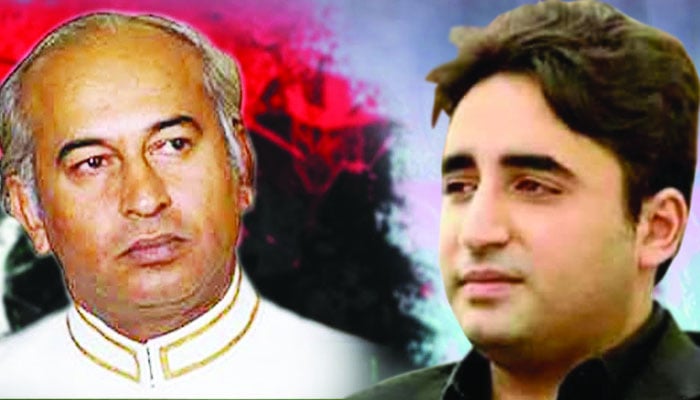
لیکن کیا آپ جانتے ہیں کہ پیپلز پارٹی کے بانی ذوالفقار علی بھٹو بھی اس عہدے پر تین مرتبہ براجمان رہ چکے ہیں اور کئی کارہائے نمایاں انجام دے چکے ہیں۔
اب جب نئی حکومت میں بلاول بھٹو نے وفاقی وزیر کے عہدے کا حلف اٹھایا اس کے ساتھ ہی انہوں نے پاکستان کی سیاسی تاریخ میں ’دوسرے بھٹو‘ کی بطور وزیرخارجہ بننے کی تاریخ رقم کردی۔
کہا جاتا ہے کہ ذوالفقار علی بھٹو سے بہتر وزیر خارجہ ، پاکستان کی تاریخ میں کبھی کوئی دوسرا نہیں رہا اور ان کے کارہائے نمایاں تاریخ کا ایک سنہری باب ہیں۔
ذوالفقار علی بھٹو 24 جنوری 1963ء کو رسمی طور پر ایوب حکومت میں اس عہدہ پر فائز ہوئے لیکن یہ بات بھی دلچسپ ہے کہ اس سے قبل ہی وہ کئی بڑے بڑے خارجی امور سر انجام دے چکے تھے اور پھر بھٹو جیسا دور اندیش رہنما ایوب حکومت کی خارجہ پالیسی میں ریڑھ کی ہڈی کی حیثیت اختیار کرگیا۔
بھٹو ، ایوب حکومت میں صرف ساڑھے تین سال تک یعنی 66-1963 میں باقاعدہ وزیرخارجہ رہے، جنرل ایوب کے بعد 7 دسمبر 1971ء کو جنرل یحییٰ خان کو بھی بھٹو کی ضرورت پڑی تھی، ان نازک حالات میں جب بھارتی فوج ڈھاکہ کے دروازے پر کھڑی تھی۔
ذوالفقار علی بھٹو کی اصل صلاحیتیں اس وقت سامنے آئیں جب دسمبر 1971ء میں وہ صدر بنے، بھٹو پانچ سال سے زائد عرصہ تک ایک مکمل خودمختار وزیرخارجہ تھے جو سربراہ مملکت بھی تھے۔
بلاول بھٹو نے وفاقی وزیر خارجہ کے عہدے کا حلف اٹھالیا
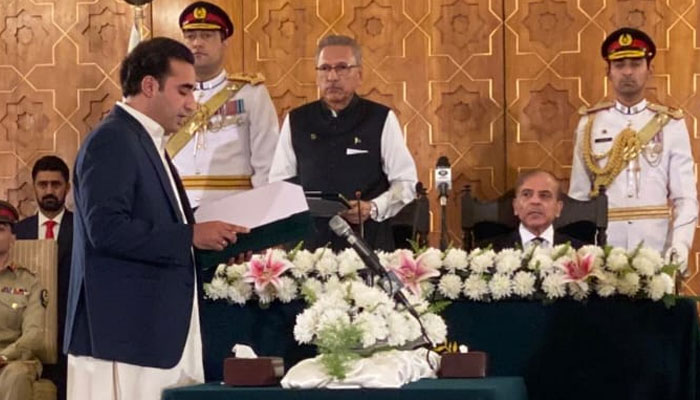
ایوانِ صدر اسلام آباد میں چیئرمین بلاول بھٹو زرداری سے صدر مملکت ڈاکٹر عارف علوی نے حلف لیا۔
صدر عارف علوی اور وزیر اعظم شہباز شریف نے وفاقی وزیر بلاول بھٹو سے حلف برداری کے بعد مصافحہ کیا۔
بلاول بھٹو زرداری کی حلف برداری کی تقریب میں صدر پیپلز پارٹی پارلیمنٹیرین آصف علی زرداری اور آصفہ بھٹو زرداری موجود تھے۔
تقریب حلف برداری میں وزیر داخلہ رانا ثناء اللّٰہ، نوید قمر، شیری رحمٰن، خورشید شاہ، وزیر مملکت خارجہ حنا ربانی کھر اور سلیم مانڈوی نے بھی شرکت کی۔
بلاول بھٹو کی حلف برداری کی تقریب میں شہید محترمہ بے نظیر بھٹو کی بہن محترمہ صنم بھٹو نے بھی خصوصی شرکت کی۔
Sunday, April 24, 2022
Families of disappeared people in Balochistan seek tangible govt intervention
https://theprint.in/world/families-of-disappeared-people-in-balochistan-seek-tangible-govt-intervention/929269/