Tuesday, December 21, 2021
EDITORIAL - #Pakistan - Fight Tehrik-i-Taliban Pakistan now before it’s too late

Nobody had taken responsibility for the suicide attack on a vehicle carrying ANP workers in Bajaur that killed two people till the time of writing, but it bore the fingerprints of TTP, which is clearly trying to make a statement by attacking soft targets as well as security personnel now that the window for peace is closed. Both Islamabad and Rawalpindi would no doubt remember that this is precisely how TTP began its strikes inside Pakistan last time; hitting something every few days till the attacks built a momentum of their own. Therefore, hopefully nobody would need to be reminded just what is at stake and how every moment that the state uses to consider what to do about its enemies makes them stronger and able to plan better.
The few exchanges that did take place in Kandahar and Khost revealed that the TTP high command was somewhat delusional. Not only did it expect the government to release hundreds of its members in custody, but also that it would implement TTP’s obscure reading of our sacred religion, reverse the FATA/KP merger, and promise to behave itself in future just for good measure. But when it was told that the state and constitution of Pakistan were already keeping with the letter and spirit of Islam, only those prisoners who have been through the deradicalisation process would be released, and all this would be possible only when TTP as a whole promised not to cross any more red lines, the whole thing just fell through.
Even if those within the government who thought these peace talks were a smart idea can feel good because they tried to give peace one more chance, the simple truth is that those that opposed these negotiations right from the beginning have been vindicated. And it’s a crying shame that it has taken the loss of innocent lives for that realisation to sink in.
The state must come to the understanding, once and for all, that it will have to end TTP and all it stands for if the people of Pakistan are to live in peace. And the time to do that is now.
https://dailytimes.com.pk/856981/fight-ttp-now-before-its-too-late/
OP-ED: #Pakistan - Nation in Delusion: A Weakening Writ of Law

Many Pakistanis – rather an overwhelming majority of them – were ashamed of what had happened to Piryantha Kumara. We also hanged our head in shame when Governor Salman Taseer was murdered by his security guard, Mashaal was brutally beaten to death within the premises of his University and a Christian couple set ablaze. We were also ashamed of the brutal killing of two young boys in Sialkot a decade or so ago.
We were also ashamed when a talented daughter of this helpless nation with bright prospects as an artist, painter, and calligrapher – Noor Mukadam – was brutally beheaded. We mourned these deaths, loathed the perpetrators of the crimes, simmered with anger, talked of the hydra-headed monstrosities of class hatred, religiosity, and the inhumanity that has poisoned our society, and toxified the mind of our people.
This helpless mourning continued for some time without spurring us into action to stem this madness and receded into the archives of our bitter reminiscences which no one wants to recall. We moved on to battle the new exacting challenges of life with the torturing awareness that all these brutal murders have taken a heavy toll on our nation tarnishing its image labeling it as an unruly crowd of angry, intolerant, and fanatic people, and depicting the land we live in as the most dangerous place.
We have not come to this pass all of a sudden. This class hatred, this religious fanaticism, this inhumanity existed, somewhat rarely, in the lands that constituted the federal structure of the new country. The rule of law, equality before the law, and stable law and order had secured various segments of the society, maintaining inter-faith harmony and equilibrium between sectarian factions. We inherited these secular laws and followed them for some good years keeping in check the religious bigotry.
We have sunk our country into a cesspool of foreign debts. We borrow and feed the elite and VIP culture.
After the overthrow of the legitimate Bhutto Government, General Zia, in a bid to create a constituency for his unlawful rule, began the haphazard Islamisation of laws of the country; sparking the dormant sectarian hostilities. For the recognition of his dictatorship by the West, he plunged the country into the American jihad against the Soviet Union in Afghanistan. He mobilised certain religious factions and their seminaries for the recruitment of mujahidin and channelised the massive US and Saudi funds to them along with Afghan rebel leaders. The genie of religiosity once out of the proverbial bottle rapidly overwhelmed the society in his 11-year rule.
This religious laissez-faire attracted certain Muslim countries to fund and arm the sectarian factions promoting or securing their distinct faith. The violent sectarian demonstrations and bloody clashes have since been mocking the state writ and shaking hollow its very foundations. No subsequent civilian or military government has dared cull or cage this hydra-headed monster. Our state presents the picture of what the European countries looked like during the thirty years of the religious war from 1618-48.
We have a massive young population without proper education and skills and no hope for the future. The aristocracy– feudal and landed gentry, spiritual leaders and their sajadahnashins, civil and military bureaucracy–succeeded in capturing the state power and resources soon after the demise of the founder of the country and designed governing structures and state laws that helped keep intact their power and privileges and impose self-perpetuating apartheid in every sphere of national life -education, healthcare, neighborhood, travel, policing, court and law chambers and jails, jobs, trade; leaving the poor to bear the miseries of poverty and powerlessness, and the indignities slapped on them by the oppressive state laws and officials every day and every moment with simmering anger and hatred.
This anger is manifested in the hatred of the powerless against the powerful; poor against the rich; the worker against the worked for; the rugged against the well-dressed; the pedestrian against the car owner, the labourer against the manufacturer, and vice versa. One feels as if the whole society is sitting on a powder keg and needs a slight spark to explode. What contribution could we expect from the people faced with such social and economic asphyxia in building a healthy society? Their anger and hatred are exploited by clever religious and political demagogues for their ulterior motives.
The state is fighting its own battle of survival in the face of growing competition among its organs and institutions for more power, privilege, and share in-state resources. They owe their creation, powers, and perks to the aristocratic governing structures and state laws and are inherently against any change in the status quo. The governments find themselves helpless without the support of all the institutions of national power to initiate the long-overdue process of social and economic reforms and equitable distribution of state resources, thereby lifting the poor from the current social and economic asphyxia, reducing the powers and perks of the elite and doing away with the curse of VIP culture.
We have sunk our country into a cesspool of foreign debts. We borrow and feed the elite and VIP culture. We borrow and subsidize sick public sector enterprises. We replenish our foreign exchange reserves with remittances of Pakistani workers or dole-outs by friendly states and let our import bill inflate. We gauge our prosperity by the import of luxury vehicles, costly mobile phones, and the consumption of petrol. We ban the production, sale, and consumption of alcohol, but cannot stop the massive smuggling of luxury liquor by aristocrats. We cannot feed our people, and dare to have any population planning. We talk of Madina state but garland fanatic murders.
We are failing collectively to value our independence. We are failing to live within our means as a nation of honour and dignity. We are failing to rid our society of social, economic, and political contradictions and religious and sectarian extremism. We put up with corruption, hoarding, profiteering as the new normal of life, and tolerate many states within the state. Yet, we have a delusion of survivability.
Taliban recruits flood into Afghanistan from neighboring Pakistan as the group works to consolidate control

Pakistan is opening a dangerous Pandora's box with the Taliban
Discourteous remarks about Afghanistan made by Pakistani Prime Minister Imran Khan at the recent Organization for Islamic Cooperation (OIC) meeting were an insult to the Afghan nation reeling from the Taliban takeover. In his remarks, Khan described the non-monolithic Taliban group as a predominately ethnic Pashtun movement, implicitly casting millions of Pashtuns as the Taliban’s adherents. The prime minister, meanwhile, said girls’ education is antithetical to Afghan values and went on to discuss “Islamophobia” in the West — an epiphenomenon supposedly linked to the recent refugee influx, which Khan wants to champion as a savior.
For Pakistani leaders, such calculated tirades are no accident. These recurring talking points are indicative of Pakistan’s long-running designs to create a new, false narrative about post-American Afghanistan. With the Taliban’s victory, Pakistan no longer makes secret what it wants in Afghanistan, a country which Islamabad now treats as an extension of Pakistan.
But perceptions matter. For decades, Pakistan has maintained a particular fascination for engagement with violent Islamist movements. The three Ms – mullahs, military and militants – have effectively hijacked the progressive vision of Pakistan’s founder, Mohammad Ali Jinnah, turning Pakistan into a de facto Islamic state with religion and military poisoning the state apparatus.
In the 1980s, General Zia-ul-Haq, then-military dictator-turned-president, enabled the Islamization of Pakistan’s military, which continues to this day. In fact, jihad, which forms a foundational element of the Pakistan army’s credo (Iman, Taqwa, Jihad fi Sabil Allah or Faith, Piety, Jihad in the path of God) has been a crucial part of state ideology.
Under Khan today, there is a new school of military thinking in which Pakistani leaders are openly reclaiming the state’s Islamic credentials and are unapologetically buttressing Pakistan’s Islamization agenda. Yet, with extremism resurging in the country, there is a visible gap between the deep state’s ambitions and the willingness of millions of local Pakistanis to accept such an imposed identity.
Similarly, inside Afghanistan, Pakistan’s deep state is on an organized march to transform the Taliban into "Talibanism” — a toxic blend of hybrid Deobandi ideology and a customized set of beliefs glued superficially together by Islamic Sharia. As such, Pakistan has constantly validated the Taliban as a vanguard for Afghanistan’s leadership and has weaponized its false Afghan nationalism, patriotism and suicidal jihadism. This ideology has rendered the Taliban a powerful and unmatched brand in which it offers a sense of belonging to unemployable rural Afghans with the ability and license for direct action.
Make no mistake, Afghanistan’s own distasteful historical past, rooted in the continuing competition between cultural religiosity and modernism, provides Pakistan the space and ammunition to exploit. This dangerous contest has often put the country at a clash with itself.
At present, a broad streak of political Islamism permeates Afghan society. Madrassa education is routine in the formative years across rural Afghanistan. Thousands of madrassas remain unregulated, and most operate under accidental mullahs and reactionary Islamic clerics. Worse, there is an unnatural fascination with martyrdom, which requires an enemy. That’s why the Taliban rulers want Islam as the basis of national politics, Afghan identity and legal framework.
As such, they are re-engineering the principles of Afghan nationalism to align with the Taliban’s ideological characteristics, which involves purifying their ranks and developing a national force that can fight and win.
To be sure, it is difficult to determine whether the Taliban will ever be able to run a non-ideological Afghan state. But by casting it as a Pashtun movement, Pakistan risks sparking Pashtun nationalism in more than 40 million Pashtuns who transcend well beyond Afghan borders into Pakistan.
Without a doubt, the Taliban – admired by Pakistani religious leaders, extremist political parties and militant groups – would increasingly exploit such nationalistic tendencies. As such, Pakistani leaders, who maintain their own India-centric nationalism, would selectively encourage the group to geographically limit such exploitation of nationalism to Afghanistan. In this managed chaos, Pakistan will provide political compensation to Taliban rulers for their concessions.
Nonetheless, the continuing phenomenon of whether there can ever be a constitutionally viable non-ideological Afghan state raises serious questions. The Taliban clerics are “originalists” in nature who seem to function under their own constitution, known as dastur, which describes the emirate as a desired state endorsed by the clerical council and the supreme court. To these clerics, the ultimate recognition comes from their own followers and fighters, not outsiders.
For Pakistan, and the Taliban’s pragmatists, this would ultimately create a challenge, who for now appears less concerned about cross-border terrorism and more about an unmanageable Taliban in bed with anti-Pakistani groups.
What’s more, there are internal concerns about radicalization within Pakistan’s own military ranks. For example, in Pakistan’s Punjab province, which provides the top-most recruits to Pakistan's army followed by Pashtuns, there are growing overlaps in recruitment drives between the army and militant groups in the province, such as Lashkar-e-Taiba and Lashkar-e-Jhangvi. Even if the new military recruits are not extremist leaning, they hail from conservative families or areas where extremist groups pervade.
Meanwhile, the income discrepancy between the couple hundred Pakistani general officers and thousands of mid-rank officers is another source of internal tensions. As an established practice, Pakistan’s army provides subsidized housing and other benefits to those at or above the brigadier general level. Not only has it left scores of mid-rank officers, including colonels and majors, dissatisfied, but it has also reportedly raised alarms inside Pakistan’s military about the dangers of the so-called “colonels’ coup.”
With its politically-borne Islamic tendencies, Pakistan appears to be headed in the wrong direction. As the Taliban’s whisperers, Pakistani leaders may have calculated that the Taliban is an expensive enemy, but a cheaper partner. But by invoking Pashtun nationalism, which is rooted in the Taliban’s ideology, Pakistan is opening a dangerous Pandora’s box that would be hard to manage.
Monday, December 20, 2021
Imran Khan defends Taliban on female education. Pakistanis say ‘educate yourself’
While some Pakistanis praised the PM for hosting OIC and for putting “Pakistan first” and “Islam first”, many attacked him for shamming Afghanistan and assuming that “not allowing girls to study” is part of Afghan culture.
A Twitter user called the Pakistan PM “uneducated”, sharing an old image of their mother when the latter was a teacher in Afghanistan’s Kandahar district in 1959. Another user said it was “ridiculously ignorant statement” to make on part of the PM. “Weeks ago, he called Haqqani network a Pashtoon tribe. Can someone please educate him a bit”, read another comment on the micro-blogging site.
Afrasiab Khattak, former Pakistan Senator of the Kohat Division, Khyber-Pakhtunkhwa Province, and a senior leader of the National Democratic Movement (NDM), also slammed Khan, saying his remarks “exposes anti Afghan/Pashtun colonial nature of Talibanization”.
The Pashtun rights activist wrote, “Imran Khan’s OIC speech further exposes the anti-Afghan/Pashtun colonial nature of Talibanization imposed on both sides of the DL-murdering educated/enlightened people and prohibiting girl’s education. The worst type of colonialism, unacceptable to the daughters/sons of the soil”.
“Pakistani Prime Minister Imran Khan’s comments at OIC that not letting girls’ education is part of Afghan culture is the utmost disrespect to Afghanistan and his own forefathers who were Afghans”, wrote another user. There were also those who defended Khan: “Pls do not spread lies and have some shame. Here is what he said…” and shared a clip showing the statement from his speech.Calling the Pakistan PM’s statement ridiculous, a post questioned “…who the hell are you to be talking on behalf of Afghanistan @ImranKhanPTI? Second, girls were getting education in Afghanistan even before Pakistan was born. Educate yourself! #OIC”.https://theprint.in/go-to-pakistan/imran-khan-defends-taliban-on-female-education-pakistanis-say-educate-yourself/784599/
Sunday, December 19, 2021
Democrats Slam Manchin For Saying He Can't Vote For Biden's Build Back Better Plan
“He has continued to move the goalposts, he has never negotiated in good faith,” Rep. Ayanna Pressley (D-Mass.) said of Manchin in an interview on CNN’s “State of the Union.”
White House press secretary Jen Psaki also appeared to question Manchin’s integrity, saying his decision, which he announced on “Fox News Sunday,” is “at odds with his discussions this week with the President, with White House staff, and with his own public utterances.”
“Senator Manchin promised to continue conversations in the days ahead, and to work with us to reach that common ground. If his comments on FOX and written statement indicate an end to that effort, they represent a sudden and inexplicable reversal in his position, and a breach of his commitments,” she said.
Rep. Pramila Jayapal (D-Wash.), the chair of the Congressional Progressive Caucus, similarly accused Manchin of betraying his promise to work with Biden on the environmental, medical and social issues addressed in the bill.
“He routinely touts that he is a man of his word, but he can no longer say that. West Virginians, and the country, see clearly who he is,” she said in a statement.
Manchin declared Sunday that he has “tried everything humanly possible” and cannot support the plan, citing its $1.75 trillion price tag and concerns about the nation transitioning too quickly to clean energy.
Manchin, whose family has a lucrative coal business in his home state, said he doesn’t believe the plan — which would fight climate change, expand Medicare benefits, and lower the cost of prescription drugs and childcare — would be good for West Virginia and said he “can’t vote for it.”
“Manchin’s excuse is bullshit,” a Rep. Ilhan Omar (D-Minn.) tweeted bluntly. “The people of West Virginia would directly benefit from childcare, pre-Medicare expansion, and long term care, just like Minnesotans.”
Sen. Bernie Sanders (I-Vt.), head of the Senate Budget Committee, similarly fired back at Manchin’s apparent resolve, arguing that the plan would in fact do a world of good for West Virginia, considering the economic hardships its residents are facing.
“West Virginia is one of the poorest states in this country. You’ve got elderly people, you’ve got disabled people, who would like to stay home but are forced into nursing homes. He’s going to have to tell the people of West Virginia why he doesn’t want to expand medicare to cover dental, hearing and eyeglasses,” said Sanders, who expressed disappointment in Democrats’ apparent failure to unite in support of working families and against corporate interests.
“I would have hoped that we could have had at least 50 Democrats on board who had the guts to stand up for working families and take on the lobbyists and the powerful special interests,” he said. “Corporate profits are an all-time high. And what some of us are saying, maybe, maybe we will stand up for working families for a change. But, apparently, we don’t have the 50 votes that we need.”
Sanders said he still plans to bring the bill up for a floor vote, which he said would put Manchin in the spotlight while voting against it.
“If he doesn’t have the courage to do the right thing for the working families of West Virginia and America, let him vote no in front of the whole world,” Sanders said.
https://www.huffpost.com/entry/democrats-slam-manchin-build-back-better_n_61bf5856e4b04b42ab60eee5
#Pakistan - Shattering stereotypes - The women of Parachinar have found empowerment through women-owned businesses

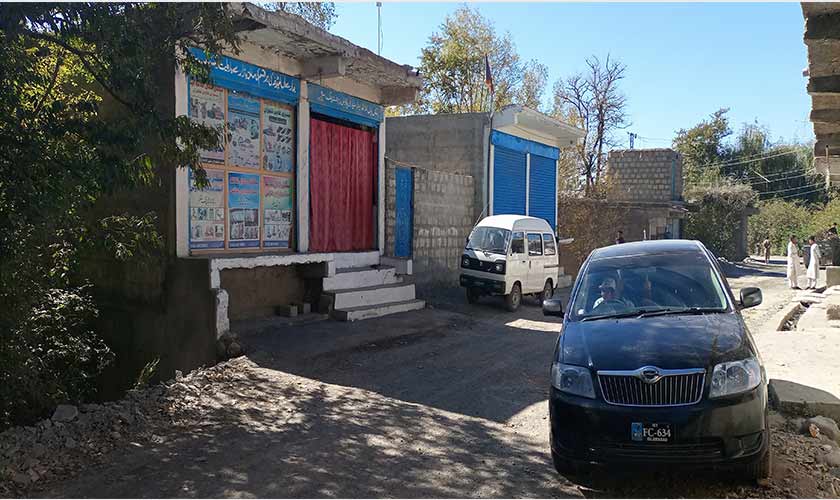
Standing on a roadside, I was waiting for the male interviewee who had established a shop for his sister. Two women opened the door of a black Toyota Fielder and entered a shop, where a red curtain was drawn. The women had come at a shop owned and run by a woman. Shalozan, one of the most populated villages in Upper Kurram, at a distance of 10 kilometres from Parachinar city, is where the men have empowered women. They have helped women establish shops attached to their homes. In the last 20 years, the number of shops run by women has been increasing. The village has at least 13 female-run shops now. The men are of the view that with growing population, awareness and girls’ education, the number of female shops, commonly known as “women shopping centres” will further increase in the Kurram tribal district. Ashiq Hussain, 55, a father of seven daughters in Shalozan, has established a shop for one of his daughters. The shop is attached to their home and has two doors; one opens towards the street, the other into the home. The shop is clean, full of women’s and children’s clothing, bags, shoes, make-up and other items. “We invested three hundred thousand rupees, but in a year-and-a-half the shop has raised well over a million“, he says. Ashiq Hussain never attended school. In the patriarchal setup of Tribal Areas, fathers take pride in having a male heir, but Ashiq is a proud father of daughters. Many people now know him because of his eldest daughter. Shattering stereotypes He has also transformed his stable into a shop. One of his daughters, a college student, who has completed a beauty parlour course in Peshawar, is running the shop, teaching the tricks of the trade to local girls. The father helps the daughter coordinate with vendors in Peshawar, “my wife and I look after the shop while our daughter goes to college in the morning. When she returns, she takes charge,” he says. Some thirty years ago, women did not have much agency, Ashiq remembers. They would need a male member from the family to accompany them even to the local market. “Now, the women of our village have many options. They can now get everything in the village at their doorstep,” he adds. Compared to the other six tribal districts in Khyber Pakhtunkhwa, men in Parachinar are cooperative and encourage women start-ups. These shops have empowered the tribal women who once had few opportunities to grow and find financial stability. “When I was young, we lived in poverty. Men were responsible for feeding entire families. Now, women are supporting men in every field, and the quality of life has improved,” he adds. Rehmat Hussain, established a women’s shopping centre for his wife and sister in Shalozan twenty years ago. Compared to Peshawar and other cities, Parachinar is expensive. “When my family shopped in Peshawar and compared the rates with the local market, we found that Parachinar shopkeepers were selling items at a higher price. My sister came up with the idea of setting up shops run by women in the village. The idea worked. Now they purchase materials for women from Peshawar to sell in the village,” says Rehmat. Rehmat had invested fifty thousand rupees at the start. After 20 years, the women shopping centre is worth five million. “My sister purchases women’s clothing, make-up and other items from Peshawar-based vendors. I support them as help with the logistics,” he says. Running a women’s shop in a tribal district comes with many challenges. “When we buy items in Lahore, where most of the vendors sell locally produced items, we do not face logistical issues. But in Peshawar, a majority of vendors deal in items made in China and Korea, mostly non-custom paid. Due to official restrictions we are then unable to take these to Parachinar,” he adds. The Khyber Karobar Support Programme and Insaf Rozgaar Scheme are two flagship programmes launched by the Khyber Pakhtunkhwa government. The government is encouraging women entrepreneurs in seven tribal districts to apply for loans. In Kurram, under the Insaf Rozgaar Scheme, a total of 31 women have benefitted so far. A majority of women in the area have set up start-ups and small shops at home. A few have opened salons. The Bank of Khyber (BOK) has established a dedicated micro finance department in KP, which is facilitating socio-economic development through increased access to financial services. According to BOK open-source data, it has disbursed Rs 1.3 billion in loans to more than 27,000 borrowers. A majority of the loans are below Rs 50,000 per client. Akhuwat has also established a centre in Parachinar and provides small interest-free loans to local women. Nasir Hussain, a father of three, says, “my wife and other women in the family shop in the village. These women shops facilitate them. Now they can buy anything, and they no longer need to visit city markets for latest trends.” Haji Gulfam Hussain, a former president of the Parachinar Trade Union, says that in Upper Kurram, out of a total of 8,000 shops, 600 are owned and run by women. “We are proud of our women who now work shoulder to shoulder with men. Education has broadened the minds of our men, who now encourage women to work,” he adds.The women of Parachinar have found empowerment through women-owned businesses.
https://www.thenews.com.pk/tns/detail/917819-shattering-stereotypes
کے پی بلدیاتی الیکشن: پیپلز پارٹی نے الیکشن کمیشن کو تحریری شکایت بھیج دی

خیبر پختونخوا کے بلدیاتی الیکشن میں مبینہ دھاندلی سے متعلق پاکستان پیپلز
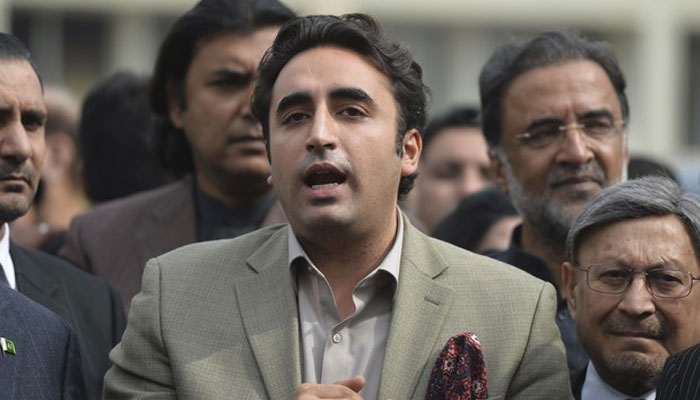
پارٹی (پی پی پی) نے الیکشن کمیشن کو تحریری شکایت بھیج دی۔
پیپلز پارٹی نے اپنی شکایت میں لکھا ہے کہ پشاور کے تقریباً 22 پولنگ اسٹیشنز کے فارم 45 سے پی ٹی آئی امیدوار کے نتائج غائب ہیں اور اس فارم کا صرف پہلا صفحہ جاری کیا گیا ہے۔
پیپلز پارٹی کی جانب سے الزام عائد کیا گیا ہے کہ حکمت عملی کے ساتھ پی ٹی آئی کے امیدوار کو مجموعی ووٹوں کی گنتی میں فائدہ پہنچانے کے لیے فارم 45 کے دوسرے صفحے پر لکھا جائے گا۔
پی پی نے الیکشن کمیشن سے درخواست کی کہ کے پی بلدیاتی الیکشن میں متعلقہ عملے کو پی ٹی آئی امیدوار کے نام کے ساتھ فارم 45 جاری کرنے کی ہدایت کی جائے۔
Former Afghan president Hamid Karzai slams Pakistani 'propaganda' on Afghanistan
Is Pakistan's COVID-19 mortality rate much higher than global data? Here's a report
https://www.wionews.com/south-asia/is-pakistans-covid-19-mortality-rate-much-higher-than-global-data-heres-a-report-438225
#Pakistan - The City-State of Medina and Political Gimmick of the Incumbent Government
By Naseebullah Achakzai“You can fool some of the people all of the time, and all of the people some of the time, but you can not fool all of the people all of the time.” Abraham Lincoln The city-state of Medina – the first welfare state on mother earth was a miracle of the last Prophet Muhammad (PBUH). After the demise of the Holy Prophet, his companion further cemented his legacy. After the martyrdom of Hazrat Ali, the Umayyad Caliph Umar bin Abdul Aziz was, to some extent able to resemble his caliphate on the footprints and rules of the city-state of Medina – since then, no country can acclaim to be as per the rules and regulations of the city-state of Medina. The state was a complete example of socioeconomic justice, protection of human rights, patience, responsibility, piety, austerity, an admirable governing system, meritocracy, was a blow to nepotism, and a place for respect. There was neither a doctrine of necessity nor anyone who was above the law. The incumbent prime minister of Pakistan Mr Imran Khan after assuming power as premier announced that he will run the government in the footprints of the city-state of Medina. It has been three and a half years that the new Pakistan of Imran khan has been in a quagmire and out of track which he wished and promised for. There is no single evidence in the affairs of the city sate of Medina when nepotism had penetrated, where merit had been compromised, or when corrupt people had been given provided a safe passage. Unlike the city-state of Medina, the proponents of new Pakistan are involved in nepotism, by compromising meritocracy and leaving the corrupt unanswered. In the city-state of Medina, no one even could ever think of corruption, but here in New Pakistan, the country has plunged into Corruption. Even though, irregularities of Rs 40 billion have been found in the Corona relief fund. We have witnessed many scandals such as the Medicine scandal, Wheat and Sugar scandal, and the Ring road scandal__ where the right and left of Mr Khan have either fled abroad or have been left unquestioned. On the economic front, Riba was banned in the city-state of Medina. Whereas in the affairs of the new Pakistan, it has prime importance__in both national and international level. Piteously, a loan has been taken from Saudi Arabia at a 4 per cent interest rate for one year. The so-called exaggeration of Imran Khan by naming politicians as corrupt, dacoits, and murderers and saying that he will never make an alliance with them has defaced his hypocritical political aims for the fulfilment of his vested interests. His collation with the PML Q, the MQM, and favouring turncoats for his party are short of the norms of the city-state of Medina. Austerity was another important feature of the city-state of Medina. At current, the salary of the prime minister is around 2 lac whereas the ministers have been living luxurious life at the expense of the people. A separate aeroplane for the prime minister and his journey from prime minister house to Bani Gala does not reflect the austerity as like of the City of Medina. Administratively, the paraphrasing of Hazrat Umar “If a Dog dies on the banks of the River Euphrates, Umar will be responsible for dereliction of duty.” speaks volumes of his calibre as an administrator, and as a representative of the ruled. Dissimilarly, in Naya Pakistan, people are starved. Millions have been trapped in poverty and millions have lost jobs. People are compelled to commit suicide. The government has failed to control price hikes, hoarding, and inflation. There was a separation of personal business and state affairs in the city stare of Medina. The Caliphs used to stop their business activities after assuming the charge. But in Naha Pakistan, the scenario is reversed. The President of the state uses its office for personal business regardless of conflict of interests. The proponent of Naya Pakistan Mr Imran Khan has zipped his lips on a private agreement (between President family private business centre Alvi Dental with Bringing Smile USA worth 25 million dollars) which was signed in Governor house Sindh in the presence of President Dr Arif Alvi The above shortcomings had already penetrated Pakistan before Mr Imran Khan took the oath as prime minister. He should have the foresight that he could not be able to revamp these challenges as per the city-state of Medina. It has been three and a half years in his power, along his ministers are still exaggerating that Pakistan resembles the city-state of Medina. This political gimmick might not work for them any more__as ground realities gesticulate that the policies of the incumbent government are far from the basic rules and regulations of the city-state of Medina.
https://en.humsub.com.pk/3465/the-city-state-of-medina-and-political-gimmick-of-the-incumbent-government/