Saturday, November 13, 2021
THE MAIN DRIVER OF INFLATION IS A MURDEROUS MANIAC IN RIYADH
Saudi Arabia is withholding oil production because Biden won’t meet with Mohammed bin Salman after the murder of Jamal Khashoggi, the president suggested.
SAUDI CROWN PRINCE Mohammed bin Salman is enacting revenge on Democrats in general and President Joe Biden specifically for the party’s increasingly standoffish attitude toward the kingdom — by driving up energy prices and fueling global inflation.
Biden himself seemed to allude to this at a town hall event with CNN last month, during which he attributed high gas prices to a certain “foreign policy initiative” of his, adding, “There’s a lot of Middle Eastern folks who want to talk to me. I’m not sure I’m going to talk to them.”
Biden was making a not-so-veiled reference to his refusal to meet with the crown prince and acknowledge him as Saudi Arabia’s de facto ruler due to his role in the grisly murder of journalist Jamal Khashoggi in October of 2018. The move came after Biden vowed during a debate with President Donald Trump to make MBS, as he’s known, “a pariah” and represented a stark departure from Trump’s warm relations with the desert kingdom and the crown prince.
In 2017, Trump broke with tradition by choosing Riyadh, the capital of Saudi Arabia, for his first foreign visit and soon announced a record arms sale to the kingdom. Later, after Khashoggi, a contributor to the Washington Post, was brutally dismembered in a Turkish consulate, Trump cast doubt on MBS’s involvement, saying, “Maybe he did, maybe he didn’t.” After his own CIA director briefed Congress on MBS’s culpability, Trump reportedly boasted about his efforts to protect the crown prince, saying, “I saved his ass.” Since then, a senior adviser to Trump’s campaign, Tom Barrack, has been indicted for allegedly working as an unregistered agent of the United Arab Emirates — Saudi Arabia’s closest ally.
In June 2018, heading into the midterms, Trump requested that Saudi Arabia and its cartel, the Organization of the Petroleum Exporting Countries, lower energy prices by increasing output, and the kingdom complied. Prices bottomed out in 2020 amid the coronavirus pandemic, and usage sank to record lows. Prices surged once the pandemic waned and the economy reopened, and this August Biden requested that OPEC again increase output.
This time MBS refused, angry at having yet to be granted an audience with Biden and contemptuous of the U.S. pullback from the war in Yemen. As one of his first pieces of business, Biden had ordered the end of American support for Saudi Arabia and the UAE’s war, though caveated it by barring only the backing of “offensive operations.” Saudi Arabia nevertheless received it as a grievous blow.
Ali Shihabi, a Saudi national who is considered a voice for MBS in Washington, made that clear in October, tweeting, “Biden has the phone number of who he will have to call if he wants any favours.”
Shihabi wrote in a statement to The Intercept, “Saudi has put a lot of work into getting a cohesive OPEC+ to work over the past 15 months since the crisis that dropped oil futures below zero so will not break ranks with the consensus or Russia on this. Also the Kingdom resents being blamed for what is essentially a structural problem not of its own making in the US which has hampered its own energy production. Finally, I hear that the price of Thanksgiving Turkeys has doubled in the US so why can oil prices also not inflate?” Shihabi added a winking emoji to the end of his comment.
The American economy is heavily dependent on fossil fuels, and on top of the prices consumers pay directly at the pump and for energy at home, the costs of food and manufactured goods are also heavily susceptible to swings in energy prices.
“Gas prices relate to a foreign policy initiative that is about something that goes beyond the cost of gas,” Biden said at the town hall last month. “And we’re about $3.30 a gallon most places now when it’s up from — it was down in the single digits — I mean single digits, a dollar-plus. And that’s because of the supply being withheld by OPEC. And so there’s a lot of negotiation that is — there’s a lot of Middle Eastern folks who want to talk to me. I’m not sure I’m going to talk to them. But the point is, it’s about gas production.”
Since the town hall, gas prices have risen further, now standing at around $3.40, a seven-year high.
“There’s a possibility to be able to bring it down,” he continued. “[It] depends a little bit on Saudi Arabia and a few other things that are in the offing.”
Biden made similar comments at the G-20 summit in October, saying that Russia, Saudi Arabia, and others were withholding their capacity to produce more. “It has a profound impact on working-class families just to get back and forth to work,” he said.
“The United States, through our own policies, has essentially empowered MBS to impose economic sanctions on us,” a senior Senate aide, who was not authorized to speak on the record, told The Intercept.
MBS’s refusal to bail Biden out by opening the spigot is calculated, said Jon Hoffman, a Middle East analyst who recently penned a critical article on the UAE and Mohammed bin Zayed, the crown prince of UAE capital Abu Dhabi and the country’s de facto ruler, in Foreign Policy. “They definitely know what they’re doing, and those who play innocent and act like this is not a coordinated strategy are either just ignorant or in the pockets of MBS or MBZ,” Hoffman said.
THE POLITICS OF oil, the economy, and foreign policy played out this week as the Biden administration moved ahead with a major arms sale to Saudi Arabia for its war in Yemen while taking heat from a leading Saudi critic, Rep. Ilhan Omar, D-Minn.
The arms sale underscores Biden’s Saudi dilemma, as MBS doesn’t just want the arms — he wants a thank you, without a word of dissent from any Democrat.
Trita Parsi, executive vice president of the Quincy Institute and a critic of Saudi Arabia, said the move by MBS is aimed at boosting Republicans, whom the crown prince sees as a more reliable ally. “As I see it, it is part of a broader Saudi strategy to favor the GOP as MBS calculates that a Republican president will reinvest in the idea of dominating the Middle East militarily, which makes the relationship with Saudi Arabia critical once more,” Parsi said.
Regional political realignments have led many key leaders in the Middle East to favor Republican leadership. Following former Democratic President Barack Obama’s pursuit of the Iran nuclear deal in the face of opposition from Saudi Arabia, the UAE, and Israel, an alliance tightened between the three nations.
Parsi said MBS wants to return to the days when Saudi Arabia was fully immune from any criticism and had U.S. support with no questions asked. ”While Biden has clearly not broken fully with these policies, despite his rhetoric, the Dems — particularly progressives — are adding friction to it and are more hesitant about rehabilitating MBS,” said Parsi. “So for MBS specifically, as well as the Likud [a right-wing Israeli political party] and the leaders in Abu Dhabi, a Republican president and Congress is much preferred. And all three of these states have already shown a significant propensity to interfere in American politics.”
The Saudi intervention in U.S. politics on behalf of the GOP could have profound implications for clean energy policies, as Democrats increasingly have powerful incentives to move away from an oil-based economy that can fall victim to puppeteering by political adversaries. “The answer ultimately is — ultimately meaning the next three or four years — is investing in renewable energy,” Biden said during his town hall, outlining an unrealistically optimistic time frame but describing the direction Democrats plan to go.
Republicans, meanwhile, could have a steady grip on a lever — oil output — that can easily move approval ratings or congressional generic ballots up or down at will. All it takes is looking the other way.
https://theintercept.com/2021/11/11/inflation-saudi-arabia-biden-mbs-oil/
#Pakistan - Punjab first likely battleground if PDM accepts Bilawal’s plan
By Mian Abrar
https://www.blogger.com/blog/post/edit/6906155786122195046/7456535045476332787
With TLP on board and TTP nearly so, PM Imran has scored a century against the ‘bloody liberals’ he hates - No, it wasn’t a surrender

Many call it surrender. But could this be in sly anticipation of TLP joining mainstream politics and becoming PTI’s partner in the next elections? PM Khan’s close ideological affinity with TLP as a Barelvi organisation makes this an open possibility. In April he stressed that “TLP and the government have the same objective but our methods are different”. To underscore his fondness for TLP, weeks ago Khan launched the blasphemy-busting Rehmatulil Alameen Authority (RAA). That TLP protests began from the Rehmatulil Alameen mosque in Lahore is coincidental? Well maybe, maybe not.
Separately: the Afghan Taliban — who flatly refuse to disown TTP — have just brokered a TTP-government ceasefire. Mainstreaming could follow. For this PM Khan could try blaming the army again. He might, however, have a credibility problem because he has never condemned any Taliban atrocity. In September 2013 — at the height of TTP’s suicide attacks against Pakistan’s people, police, and army — Khan as PTI leader insisted the Nawaz government declare a ceasefire and allow TTP to open offices in Pakistan.
A grateful TTP responded by authorising Imran Khan, along with Maulana Abdul Aziz and Maulana Samiul Haq, to negotiate on its behalf. Then, just weeks later, TTP militants played football with the severed heads of 23 captured Frontier Corps soldiers in a macabre, video-recorded football match. The APS massacre followed in December 2014. When newly-wed Imran Khan and his wife Reham Khan visited the school one month later, parents of the murdered children greeted them with ‘go Imran go’ slogans.
With TLP on board and TTP nearly so, PM Khan has scored a century against the ‘bloody liberals’ he hates.
The present: all bluster of banning terror groups has evaporated. So have the usual accusations of TLP and TTP being Indian proxies. PM Khan and his coterie dismiss critics as disgruntled “bloody liberals”. This phrase, a 20-year-old trademark of Khan, has morphed slightly under chief negotiator of the TLP deal, Mufti Muneeb-ur-Rehman, who prefers “bloodthirsty liberals”.
It can’t be clearer: much as Narendra Modi would like India cleansed of Muslims and Christians, Imran Khan wants to do away with Pakistan’s liberal scum, as he calls it. But who are these creatures, how many are there, what do they want, why does our prime minister hate them, and what does victory over liberalism mean for the future of Pakistan?
Count me in as a fleck of liberal scum — anyone upset at terrorist organisations being pampered is one. Our total strength? Sometime ago a popular preacher put the number of khooni liberals at 300; other Pakistanis are good Muslims, he said. But, judging from the present public outrage, the number of bad Muslims could actually be several thousand times greater.
Defining liberal is hard enough, identifying khooni liberals is still harder. But, broadly speaking, liberals endorse personal freedoms and fairness to all, men and women. This large, fractious, and quarrelsome family respects diversity, pluralism and belief in a democracy where the Constitution holds sway. Some liberals are faithfully religious, others are indifferent. Just as hypocrites and crooks among the ultra-religious are plentiful, many liberals are also bad people.
Why Imran Khan angrily blames liberals for all that’s gone wrong in Pakistan is puzzling. This hopelessly fragmented bunch of individuals has zero political representation. Its ‘candle-light mafias’ carry no dandas, firebombs, or submachine guns like the ones with which TLP defended the honour of the Holy Prophet (PBUH). In fact, liberals can barely muster a few dozens to mourn those slain by terrorists or to show solidarity with rape victims.
Khan despises liberals, but why? He has told his story multiple times: his colourful past in the West (he gives no details) owes to him having been seduced by what he calls ‘liberalism’ — until faith finally came to his rescue. Actually his case is typical: many young, virile Pakistani men eventually return from Western countries consumed by guilt and, as atonement, turn ultra-conservative.
Khan’s messianic anti-liberal zeal also owes to his schooling at ultra-elite Aitchison College which, he says, never taught him Iqbal’s poetry. Indeed, he cannot quote Urdu verses of the poet who he declares to be his inspiration. Quite bizarrely, he believes liberals cannot read or appreciate Iqbal. In fact, Khan has difficulty reading Urdu — many noted the stumbling and fumbling during his oath-taking ceremony. To compensate, he recently ordered all official functions be conducted in Urdu.
Yet more galling to Khan is that while sermonising he can quote Quranic verses and hadith only in translation but not in Arabic. And so, Arabic teaching is now compulsory in all Islamabad schools. His ideological project, the Single National Curriculum, is yet another consequence. This radical restructuring of education conjoins all Pakistani regular schools with madressahs, forcing all to use the same textbooks and take the same exams. SNC graduates will be yet friendlier to TLP-TTP type organisations. But these mass-produced ignoramuses will be unemployable in the competitive global economy.
With TLP-TTP on the rise and liberals demolished — and mainstream parties too afraid to be seen as liberal — the consequence of joining state to religion becomes starker by the day. While Pakistan’s non-Muslims will remain useful punching bags, insistence on expelling France’s ambassador suggests TLP has national and global ambitions. As for TTP: a glance at Afghanistan should tell where it wants to take us.
Crucially: TLP and TTP are two violent organisations, one Barelvi and the other Deobandi. At daggers drawn, both have mass followings; that of TTP will skyrocket now that the Taliban rule Afghanistan. Both want a Sharia state but with different versions of Sharia. Which one prevails can only be settled by force and civil war. Imran Khan will have certainly created a Naya Pakistan, albeit not the one he promised.
India Wants to Send Wheat to Ease Afghan Hunger Crisis. Pakistan Has Yet to OK Transit.

By Mujib Mashal
Indian officials say Islamabad is dragging its feet on a request of transit for 50,000 tons of wheat to Afghanistan, where nine million people are on the brink of starvation.Security chiefs from Iran to Russia met on Wednesday in New Delhi to call for “unimpeded” humanitarian assistance for Afghanistan, where millions face starvation as a harsh winter sets in. On Thursday in Islamabad, the Pakistani capital, another set of leaders urged “uninterrupted” aid. Despite agreeing to help Afghanistan, the souring relationship between India and Pakistan is getting in the way of 50,000 tons of Indian wheat reaching Afghanistan, officials say, in the latest sign that regional rivalries that have haunted the fragile country for decades continue to affect even the delivery of lifesaving assistance. Indian officials say Pakistan is dragging its feet on approving their request, made seven weeks ago, to move wheat and medicine through 400 miles of its territory to reach Afghans in need. But Prime Minister Imran Khan of Pakistan, in a meeting on Friday with the Taliban’s foreign minister, said his government would “favorably” consider the Afghan request to allow the Indian wheat. Pakistani officials would not comment on why their response to India was taking so long, or when the transit could be granted. The World Food Program says that only 5 percent of the Afghan population has enough to eat, and that Afghanistan was already short on wheat by 2.5 million tons this year because of drought. Conflict and an economic collapse after the Taliban took over in August have only aggravated the problem. About 23 million people in Afghanistan face acute food insecurity, and nine million are on the brink of starvation, according to the World Food Program, a United Nations agency. “The humanitarian imperative must be separated from political discussions for the sake of the millions of Afghans in desperate need of food and emergency assistance as the harsh winter quickly engulfs the country,” said Mary-Ellen McGroarty, who heads the World Food Program’s operations in Afghanistan. In September, donors pledged more than $1 billion in aid to Afghanistan. But food needs alone require more than $200 million a month, and aid organizations are concerned about a funding shortage in the spring, when the number of people who are affected by hunger is predicted to peak. The wheat donation from India could fulfill 10 percent of the 500,000 tons of wheat the World Food Program requires for the period of January to May. Over the past two decades, as droughts led to repeated grain shortages in Afghanistan, India, which produces a grain surplus, often came to its aid. But relations between Pakistan and India have been consistently tense including over the disputed Kashmir region, and they plunged to a new low in recent years after deadly militant attacks in India were blamed on support from Pakistan. India has recently largely used the Chabahar Port in Iran to send wheat shipments to Afghanistan, a longer and costlier route. It has also turned to compacting wheat into high-protein biscuits to significantly reduce the tonnage. The Taliban’s return to power has further complicated the transit issues. Pakistan, where the Taliban found a haven during their 20-year insurgency, is now in many ways playing gatekeeper for Afghanistan. While many countries in the region had prepared for the possibility that the Taliban would return to power by hedging their bets with the group before the United States withdrew from Afghanistan, India continued to put its weight only behind the Afghan government. The sudden collapse of that government, with the Afghan president fleeing, left India with little leverage in a country where it had invested heavily over the past two decades. Even as India struggles to navigate the reality of the new Taliban-led Afghanistan, it responded to the U.N. agency’s appeal for assistance by preparing 50,000 tons of wheat. On Oct. 7, the Indian government delivered a letter to the Pakistani authorities highlighting the urgency of the matter and requesting help in “expeditiously” granting transit for wheat and medicine to go by road to Afghanistan, a senior Indian official said. Much of India’s grain comes from its north, particularly the state of Punjab, where the border crossing of Wagah is. Afghanistan is just a 400-mile drive across Pakistan from that crossing. In the seven weeks since India made its request for transit, calls for humanitarian assistance to Afghanistan have escalated, including at forums attended by officials from India and Pakistan. On the sidelines of an event last month in Moscow, Indian envoys met with Taliban representatives, and statements by the Taliban suggested that the offer of humanitarian assistance had been discussed. Understand the Taliban Takeover in Afghanistan Who are the Taliban?
Friday, November 12, 2021
An Islamic Emirate in Pakistan: Sooner than later?
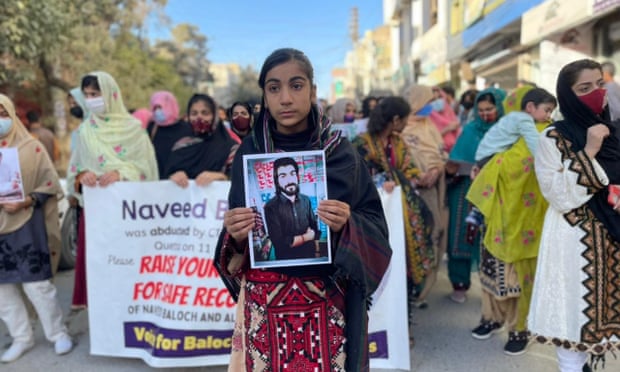
Women lead fight against extrajudicial killing in Pakistan

The wave of abductions amid military crackdown in conservative Balochistan province has mobilized women to protest.
A new national curriculum sparks a backlash in Pakistan
Teachers and parents worry that English-language skills are being replaced by religious content.Few in pakistan would deny that something needs to be done to improve its education system. The country is well behind Bangladesh, India and Iran, and just barely above Afghanistan, in un education rankings. Less than 60% of people over 15 can read and write, having attended school on average for 5.2 years. In Bangladesh, by contrast, the literacy rate is 74%, with 6.2 years of education. The headline figures hide as much as they reveal. In the country’s elite schools, the children of the wealthy study in English for international exams and set their sights on the world’s best universities. At the other end of the spectrum, 23m children are not in school at all, with girls much less likely than boys to be enrolled. Government schools, where available, have a reputation for rote learning. Private schools of varying quality fill the gap. Many poor families send their children to madrasas, which tend to skip subjects like science and maths. Some are vehicles for extremist ideologies. Imran Khan, the prime minister, calls this divide “educational apartheid” and has vowed to get rid of it. Such an aim is admirable, but the tool of choice has come in for criticism from academics, educators and parents. Earlier this year the government began rolling out a single national curriculum (snc) for all schools, including madrasas. This set of minimum standards is meant to improve the quality of teaching and boost the prospects of pupils. But its ambitions are wider still. Among the objectives listed by the education ministry is to increase “social cohesion and national integration”. The new curriculum has so far been rolled out only in primary schools, but already some of its dictates are causing a backlash. The snc has increased the number of subjects, such as general knowledge, which must use textbooks in Urdu or other local languages rather than English. Mr Khan, himself an old boy of Aitchison College, the country’s most prestigious school, makes his case in punchy post-colonial terms. “When you acquire English-medium education, you adopt the entire culture,” he argues, adding that “you become [a] slave to that particular culture.” Yet the resistance to the snc’s imposition of local-language learning is not just an elite phenomenon. There have been reports of schools unwilling to implement it. And there is huge demand for English from parents who see it as a way for their children to stand out in the job market, according to teachers. Mariam Chughtai, the director of the national council drawing up the curriculum, says the aim is not to drop English but to elevate local languages. “When we think ‘multilingual’, we think French, German and English. But when you say bilingual in Urdu and English, the elites look down upon it,” she says. Still, “no one is denying the importance of English. It’s here to stay.” A bigger complaint is that conservatives are using the curriculum to increase religious teaching in schools. Rather than turning madrasas into schools, it will turn schools into madrasas, charge critics. Indeed, the education ministry’s list of “key considerations” in drawing up the curriculum puts the teachings of the Koran at the very top. Non-Muslims need not take classes on Islam, but religious content is seeping into other subjects, such as Urdu-language lessons that include passages on Muslim caliphs. The government argues that there is nothing wrong with teaching religion in a religious country.The third criticism may be the most pertinent. Pakistan’s abysmal learning outcomes are not so much the result of content as of access, says Jasir Shahbaz, an educationalist in Lahore. A new curriculum will do little to fix that. “The issue is not so much what the kids are studying, so much as how many kids are actually studying, or are actually understanding what they are studying,” he says. The battles are likely to intensify as older pupils start the new curriculum next year. Ms Chughtai says it will take time for results to show. But the furore, she says, is because the changes affect even the elite: “Any time you try to bring a major policy change, for the small minority of people for whom even the broken system was working, they are going to get scared.”■
https://www.economist.com/asia/2021/11/11/a-new-national-curriculum-sparks-a-backlash-in-pakistan
Thursday, November 11, 2021
#Pakistan - Making peace with militants

Cut ties with terrorist groups and eliminate them, Pakistan, China, Russia & US tell Taliban
Wednesday, November 10, 2021
حکومت خود ہی پارلیمان کے مشترکا اجلاس سے بھاگ گئی، بلاول بھٹو
پیپلز پارٹی کے چیئرمین بلاول بھٹو زرداری نے کہا ہے کہ حکومت اپنے ہی
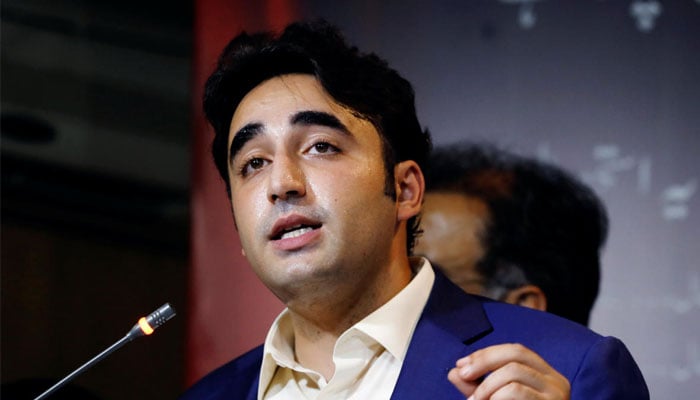
بلائے پارلیمنٹ کے مشترکہ اجلاس سے بھاگ چکی ہے۔
بلاول بھٹو زرداری متحدہ اپوزیشن کے اعزاز میں دیے گئے عشائیے کے بعد میڈیا سے گفتگو میں کہا کہ صدر پاکستان کا مشترکہ اجلاس بلانے کا نوٹیفکیشن آیا، آدھے گھنٹے بعد ہی حکومت کا اپنا بیان آیا کہ اجلاس موخر کررہے ہیں۔
انہوں نے کہا کہ حکومت اپنے ہی بلائے پارلیمنٹ کے مشترکہ اجلاس سے بھاگ چکی، اجلاس مؤخر کرنا صدر مملکت کی بھی ہتک ہے۔
پی پی چیئرمین نے مزید کہا کہ اپوزیشن کا فیصلہ تھا اپنے تمام اراکین کی تعداد یقینی بنائی جائے گی۔
اُن کا کہنا تھا کہ اپوزیشن نے ووٹنگ مشین، یکطرفہ الیکشن ریفارمز پر حکومتی اتحادیوں سے رابطے کا فیصلہ کیا تھا۔
بلاول بھٹو زرداری نے یہ بھی کہا کہ ایک پر ایک نکلنے والے نیب آرڈیننس بدنیتی پر مبنی ہیں۔
انہوں نے کہا کہ اب ہم اپوزیشن اتحادیوں سے تحریک عدم اعتماد پر ساتھ دینےکا نہیں کہہ رہے۔
پی پی چیئرمین نے کہا کہ اپوزیشن سے حکومت کے غیرجمہوری طریقوں اور الیکشن کمیشن کو متنازع بنانے کی حد تک بات کررہے ہیں۔
ان کا کہنا تھا کہ تحریک عدم اعتماد کے معاملے پر آج اپنی رائے پر قائم ہوں، اس پر الگ سے محنت کرنا پڑے گی۔
بلاول بھٹو نے کہا کہ حکومت کی الٹی گنتی شروع ہو چکی ہے، اب عمران خان کا گھبرانے کا وقت آ گیا ہے۔