Saturday, October 9, 2021

Video Report - #Lebanon #FuelShortage #EconomicCrisis All of Lebanon without power due to fuel shortage

Video Report - The challenges facing Germany’s new leader

Video Report - Is higher inflation cause for concern?

Video Report - #China China tackles challenges posed by its ageing population

#China - Chinese President Xi Jinping expounds on what past 110 years have shown to Chinese since 1911 Revolution

Chinese President Xi Jinping on Saturday expounded on what the past 110 years have shown to the Chinese people since the Revolution of 1911 while addressing a meeting marking the 110th anniversary of the historical event.
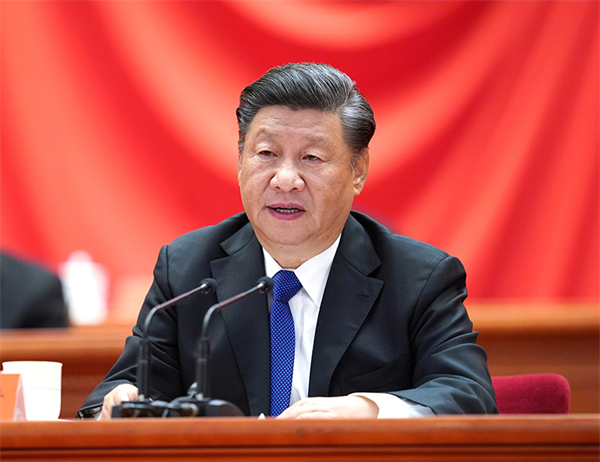

"The past 110 years have shown us that to realize national rejuvenation, the Chinese people must have a strong force to lead us forward, and that force is the Communist Party of China (CPC)," said Xi, also general secretary of the CPC Central Committee and chairman of the Central Military Commission.

Without the Communist Party of China, there would be no new China and no national rejuvenation, he said, stressing efforts in ensuring the Party always firmly stands as the most reliable backbone of the Chinese nation and people.

"The past 110 years have shown us that to realize national rejuvenation, the path we take is of fundamental importance. Socialism with Chinese characteristics has proven to be the only correct path," Xi said.

"We will ensure coordinated implementation of the Five-Sphere Integrated Plan and the Four-Pronged Comprehensive Strategy, deepen reform and opening up across the board, modernize China's system and capacity for governance, and work tirelessly to fulfill the people's aspirations for a better life and realize common prosperity for all," he said.

"The past 110 years have shown us that to realize national rejuvenation, the Chinese people must rely on our own heroic efforts," Xi said.

"Through courage and skill, we will overcome all major risks and challenges that may impede our path to national rejuvenation and resolutely safeguard our national sovereignty, security, and development interests," he added.

"The past 110 years have shown us that to realize national rejuvenation, the Chinese people and nation must stick together through good times and bad and rely on our strong unity to overcome all risks and challenges on the road ahead," Xi noted.

"On the journey ahead, we must fully promote patriotism, foster a strong sense of national dignity and confidence among our people, and strengthen the Chinese nation's sense of community. We must rely closely on the concerted efforts of all the sons and daughters of the Chinese nation, uphold great unity and solidarity, and continue to consolidate and develop the broadest possible patriotic united front," he added.

"The past 110 years have shown us that to realize national rejuvenation, we need not only a stable and united domestic environment but also a peaceful and stable international environment," Xi said.

"Aggression and hegemony are not in the blood of the Chinese people. Our people hope to successfully realize national development, but they also hope to see all peoples of the world leading happy and peaceful lives," he said.

On the journey ahead, China will always fly the flag of peace, development, cooperation, and mutual benefit, strive to promote the building of a human community with a shared future, and endeavor to improve the global governance system, Xi noted.

"We will promote the shared human values of peace, development, fairness, justice, democracy, and freedom, work to strengthen solidarity with the peoples of all other countries, and engage in common efforts to oppose hegemony and power politics," Xi said.

"China will remain a champion of world peace, a contributor to global development, and a defender of the international order, and we will do our very best to make even greater contributions to humanity," he added.

http://en.people.cn/n3/2021/1009/c90000-9904997.html

Pashto Music Video - Adam Khan Durkhanay 1971 : Rasha Rasha Dilruba Dilruba : Hidayatullah & Nasima

Pashto Music Video - Nan Pah De Hujra Ke Khushali

Pandora Papers Unravel Imran Khan’s ‘Anti-Corruption’ Narrative

By Kunwar Khuldune Shahid
The Panama Papers took down Khan’s predecessor. How will his government whether the latest revelations of offshore wealth?
Prime Minister Imran Khan has vowed to investigate the over 700 Pakistanis named in the Pandora Papers, which unveiled the offshore wealth of the global elite last Sunday. The major test of Khan’s pledge will come with regard to any action against his own allies, and indeed retired army generals, named in the leaks.
Despite being a staunch critic of past regimes — whether military regimes or quasi-democratic reigns spearheaded by the Sharif and Bhutto families — the cricketer-turned-philanthropist largely remained an outsider in Pakistani politics until the start of the previous decade. However, it was precisely this reputation as someone not a part of the system, coupled with promises of ridding Pakistan of corrupt political dynasties, that paved the way for Khan’s Pakistan Tehreek-e-Insaf (PTI) to make its first breakthrough, forming the Khyber Pakhtunkhwa provincial government in 2013. Khan’s criticism of the military’s corruption, political engineering, and war crimes simultaneously faded away.

Even as he became a beneficiary of the military’s puppeteering, an unforeseen triumph, described as “God-sent” by Khan himself, came in the shape of the 2016 Panama Papers, the precursor to the Pandora Leaks. The Panama Papers revealed offshore companies linked to the then-Prime Minister Nawaz Sharif’s family, and Khan made investigation into the Panama Leaks his political rallying cry.
In 2017, Sharif was disqualified from office by the Supreme Court on a technicality related to the non-declaration of wages he received from his UAE-based company, following a probe by a joint investigation team (JIT) featuring members of the Inter-Services Intelligence (ISI). With Sharif ousted, the Panama Leaks fast shifted to the backdrop. Khan was brought to power through the 2018 elections the following year.
“It was only one prime minister that was taken down by the Panama Papers. What happened to probes and investigations into the corrupt elite named in those leaks and elsewhere?” said political scientist and former Punjab chief minister Hasan Askari Rizvi, the author of “The Military and Politics in Pakistan: 1947-1997” in an interview with The Diplomat.
“Like other leaders before him, Imran Khan said things in opposition that can never be implemented when in government. Corruption cases against the elite can have ethical and political value, but legally they are difficult to prove,” Rizvi argued.
Instead of launching an all-out campaign against the misappropriation of the elite after coming to power, and addressing the legal challenges that prevent the powerful from being held accountable, Khan was seen echoing the past vitriol against the Sharif and Bhutto families, only now as the prime minister. In fact, after triumphing in the 2018 election owing to the same “electables” of the system that he had rallied against, Khan’s cabinet was brimming over with the very corrupt elite that he had built his political narrative against.
Manzoor Wattoo, among the veteran politicians who joined the PTI in 2018, told The Diplomat that like his predecessors Khan too misused accountability as a tool to target his political opponents, more so than doing anything to challenge the powerful.
“From Nawaz Sharif to Farooq Leghari to now Imran Khan, the so-called accountability has always been one-sided. The army leaders say they have their own system of accountability. The rulers of the country treat it as their kingdom, and hence put themselves above law,” Wattoo said.
A long-pending amendment is in the works to reform the National Accountability Bureau (NAB), which has largely been limited to targeting opposition politicians, even more so under Imran Khan. On Thursday, the two major opposition parties – the Pakistan Muslim League-Nawaz (PML-N) and the Pakistan People’s Party (PPP) – rejected the NAB amendment ordinance, which continues to empower the bureau’s head, in turn directly benefitting the government.
“The government shouldn’t have anything to do with the accountability process. A neutral institution should be empowered; until then political victimization in the garb of corruption would continue,” Wattoo believes.
While the NAB has continued to launch cases against the PML-N and PPP leaderships over the past three years, major misappropriations scandals have sprung up from within Imran Khan’s own government.
Probes into last year’s wheat and sugar crises underlined how cartels created artificial shortages to hike up prices, leading to 76 billion Pakistani rupees ($445 million) worth of profits for sugar mill owners and 5.35 billion rupees ($31 million) worth of irregularities in wheat stocks.
Among those named as the chief beneficiaries of the sugar crisis was the PTI’s Secretary General Jehangir Tareen, a chief funder of the party and orchestrator of “electables” queuing up to join Imran Khan. Other beneficiaries of the sugar scandal included PTI leader Khusro Bakhtiar, the current federal minister for industries and production, and Federal Minister of Water Resources Moonis Elahi, a senior leader of the PTI’s allied Pakistan Muslim League-Quaid (PML-Q) once dubbed by Khan as “Punjab’s biggest dacoits.”
Elahi and Bakhtiar are among prominent PTI leaders and advisors named in the Pandora Papers, which also include current Finance Minister Shaukat Tarin.
“Imran Khan has failed in the parameter that he himself set for the Panama Papers investigation: How will there be a fair investigation [over the Pandora Leaks] if the top positions are being held by those named in the leaks and their allies? Why hasn’t anyone resigned?” asked Member of National Assembly Mohsin Dawar, who has been affiliated with the Pashtun Tahaffuz Movement, and last month launched his National Democratic Movement.
While Khan has been lambasted by his critics for his relentless spree of volte-faces since becoming the prime minister, his continued contradiction of his much advertised position on corruption, the raison d’etre of the PTI, might be a U-turn too many. Khan’s rivals hope it ends up being politically damaging for the Pakistani prime minister.
Even so, while talking to The Diplomat, Dawar maintained that the opposition won’t be able to capitalize on the Pandora Leaks.
“The opposition hasn’t been able to take up the Pandora Papers as they should. Perhaps it is because generals are named in the leaks,” said Dawar, who was among the founders of the opposition alliance Pakistan Democratic Movement before leaving it last year. While politicians’ corruption hogs the limelight, numerous army officers, including a former corps commander and ISI director, have been named in the Pandora Papers. These names, however, aren’t being similarly highlighted by the increasingly military-shackled media. No action was taken in the aftermath of last year’s corruption exposé against Lieutenant General (retired) Asim Bajwa, who continued to serve as the chairperson of the lucrative CPEC Authority.
Using its absolute clout over the country, the Pakistan Army has developed the country’s largest business empire. At least 50 entities affiliated with the military, worth over $20 billion, have been cited in the Senate. But they are believed to be a fraction of the actual worth of the Pakistan Army, which exercises complete control over much of Pakistan’s resources, from farmlands to budget allocations.
The corruption of the Pakistan Army, which continues to be peddled as the “custodian of Pakistan’s ideological frontiers” and a bulwark against corrupt political leaders, is an officially kept secret safeguarded by engineered civilian regimes throughout the country’s history. Imran Khan is only its latest gatekeeper.
Political scientist Ayesha Siddiqa, author of “Military Inc.: Inside Pakistan’s Military Economy,” doesn’t believe the army is going to be held accountable anytime soon. “[But] are the civilian leaders any better? They all extort in different ways. On plunder they will be on the same page, but will publicize the loot of others to protect themselves,” she told The Diplomat.
Siddiqa believes the duplicity on corruption might not be as damaging for Khan as the current state of Pakistan’s economy. With the Pakistani rupee reaching an all-time low against the U.S. dollar, and ominously high inflation, Khan’s vows of accountability and financial uplift are both unraveling before the masses.
“The main damage to Imran Khan will be done by the [economic crisis] and not [the Pandora Papers], as he has been cultivating his image as a good man who is not being allowed to end corruption,” says Siddiqa.
Khan is likely to push the narrative, already being peddled by his backers, that he individually is incorruptible despite the fact that he’s surrounded by figures who aren’t clean. This narrative has also been used in recent times to sell a presidential system as the political solution for Pakistan, nullifying parliamentary democracy and provincial autonomy. It is also reflected in Khan’s jibes directed toward various “mafia,” even now as the prime minister of the country.
If Khan can remain in the military leadership’s good books, he might continue to provide the quasi-democratic front for the power centers, regardless of the form they take. For, following the withdrawal of U.S. troops from Afghanistan, and along with it the trillions worth of American investment, the untouchable military leadership would increasingly rely on domestic resources to run its mega empire.
https://thediplomat.com/2021/10/pandora-papers-unravel-imran-khans-anti-corruption-narrative/

Pakistan PM Khan's conversion comments cause outrage

Kamran Chaudhry
@kamangle Church leaders demand justice for women from religious minorities. Pakistan Prime Minister Imran Khan is facing a growing backlash after he assured clerics that his government will not enact any anti-Islamic law.
During his Sept. 27 meeting with Islamic scholars in Karachi, the PM said government bills addressing domestic violence and forced conversions will not be enacted as they have provisions which are “in direct conflict with the teachings of Islam.”He requested the clerics keep him informed of any such act so that he could intervene in time and ensure that no policy or law which conflicts with Islam is made during his tenure.
Church leaders and rights groups including the Cecil and Iris Chaudhry Foundation, a Lahore-based Catholic NGO, released a statement on Sept. 29 demanding justice for minority women.
“So it is OK for women to be battered and tortured, and it is also OK for underage non-Muslim girls to be forcefully converted to Islam? The prime minister needs to realize that all are not Muslims in Pakistan. The state must protect the rights of religious minorities; effective legislation against forced conversions is pivotal. No two ways about it,” it stated in a Facebook post.
Camillian Father Mushtaq Anjum even described Khan as "a clean-shaven Taliban."
Exploitation of vulnerable minorities shouldn’t be equated with opposition to Islam
“Clearly he is trying to save his Islamic vote bank. Nobody is demanding a law against Islam; our struggle is against pedophiles using religion as their shelter for criminal activities. Exploitation of vulnerable minorities shouldn’t be equated with opposition to Islam,” he told UCA News. Last week the Ministry of Religious Affairs and Interfaith Harmony rejected a bill that proposed regulations on conversions to Islam. A day later, Lahore High Court ruled that mental capacity outweighs age in child religious conversion cases.
Addressing a Sept. 28 press conference in Islamabad, the Peoples' Commission for Minorities’ Rights and Centre for Social Justice (CSJ) expressed utter dismay at the reduction in religious freedom relating to child marriages and forced conversions.
According to the CSJ, the highest incidents of forced conversions (52 percent) were reported in Punjab, followed by 44 percent in Sindh.
Participants in the press conference demanded that the Ministry for Religious Affairs should stand up and be counted for protection of minorities or it will go down in history as one abetting the worst crimes against minorities. “Every individual or group is at liberty to convert or reconvert another by argument or persuasion, but no individual or group should attempt to do so or prevent its being done by force, fraud or other unfair means. Persons under 18 years of age should not be converted unless it be along with their parents or guardians,” said CSJ director Peter Jacob.
https://www.ucanews.com/news/pakistan-pm-khans-conversion-comments-cause-outrage/94353#

It’s up to Imran Khan govt to show us forced conversion is a crime in Pakistan


NAILA INAYAT
When he wasn't PM, Imran Khan used to raise the issue of abduction and forced conversion of Hindu and Christian girls in Pakistan. Now, he appeases the religious Right.
The haunting clip of Reena Kumari Meghwar calling for help from the rooftop of her alleged abductor’s house in Badin district of Sindh province encapsulated the horrors of forced conversions of minority Hindu and Christian girls in Pakistan. In February this year, Reena was allegedly abducted and forcibly converted to Islam by her neighbour Qasim Khaskheli, who then forcibly married her. Reena had reportedly tied Qasim a rakhi in childhood. Reena was rescued by the police in July and sent to her parents on court orders.
A Christian rickshaw driver from Faisalabad, Gulzar Masih, is fighting for the custody of his 13-year-old daughter Chashman, who too was allegedly forcibly converted and married to Muhammad Usman after her abduction. While the police mentioned her age as 17 in the FIR filed by Gulzar, the nikahnama (marriage certificate) claims she is 19. The Lahore High Court, which rejected the father’s petition, said in its order that “Muslim jurists regard mental capacity of a child as of crucial importance” when considering the question of conversion, adding that there is no minimum age for conversion mentioned either in Quran or hadith.
Who should minorities turn to?
Reena and Chashman are not isolated cases. Forced conversion of girls belonging to minority communities has registered a surge in Pakistan in recent years. Countless families still wait for their daughters to return home. But they are seeking justice from a system that is stacked against them. From police to judiciary, everyone looks the other way if the girl is a minor, if she was kidnapped, raped and even if her so-called marriage certificate is forged. There is no justice to be found when faith is used as an excuse to persecute.
The much talked about anti-forced conversion bill that aimed at criminalising the act of forced conversions has now been sacrificed at the altar of religiosity. The draft of the bill, which has been in the works since 2019, was turned down by the ministry of religious affairs which said the bill was against the Shariah law. Religious affairs minister Noor-ul-Haq Qadri was of the view that the clauses of 18-year age bar for conversion, appearance before a judge and a 90-day waiting period in the proposed bill were against Shariah and violate human rights. Twice in Sindh assembly, the anti-forced conversion bill failed to be passed due to mounting pressure from religious groups.
Mian Mitho with the Army Chief


Last month, the Council of Islamic Ideology had invited the infamous Pir of Bharchundi Sharif, Mian Mitho, for a brainstorming session on the bill. 
Mian Mitho with the Taliban Khan
The man seemingly running the conversion factory is called upon to weigh in on how to put an end to his business. What a cruel joke!

Imran Khan’s double talk  

Speaking of cruel jokes, Prime Minister Imran Khan, who till yesterday was of the view that forced religious conversions are actually un-Islamic, now assures Islamic scholars that no new law against Islamic principles would be enacted during his rule. He made this promise reportedly during discussions on bills pertaining to forced religious conversions and domestic violence. Even Tehrik-i-Taliban Pakistan, which termed the anti-forced conversion bill as ‘against Islam’ while rejecting the amnesty offer from Pakistan, would be relieved to hear about this capitulation.
More details of the PM’s interaction with the Ulema were shared by Mufti Tariq Masood who claimed that Imran Khan called such bills a ‘sazish (conspiracy)’ but that there was nothing to worry. Mufti Tariq is the same person who was once baiting his followers to marry three widows/divorcees and that he’ll find them minor virgins as the fourth wife – if he can’t find them a 16-year-old girl, then he would find two 8-year-olds or four 4-year-olds for them.Imran Khan’s U-turn is hardly surprising considering he didn’t vote for the 2006 Women’s Protection Act that amended the oppressive rape and adultery provisions of Ziaul Haq’s Hudood Ordinance. According to Khan, the General Pervez Musharraf (retd) government had passed the bill to “introduce a made-in-Washington Islamic system in the country.” Since Pakistan Tehreek-e-Insaf came to power, the Child Marriage bill that sought to raise the age of marriage for a female child to 18 years was also shot down in cahoots with the Council of Islamic Ideology. While the domestic violence bill despite being passed by the National Assembly didn’t become a law as it was declared un-Islamic and its clauses “contradicting social values” by the Council of Islamic Ideology and religious affairs ministry.
Before assuming office, Imran Khan used to address Hindu and Christian minorities and raise the issue of their abduction and forced conversion, and used to find it absolutely unacceptable that Hindu girls were being abducted daily in Sindh and would promise them equal rights. Now, he is simply proving those were empty promises because every time he gets a chance to do right by the beleaguered minorities, his government runs to appease the religious Right for political brownie points.
Imagine the irony that the biggest crusader of minority rights for the rest of the world doesn’t want to lead those crusades at home.
Forced conversion is a human rights issue. Painting those who demand an end to this rights abuse as ‘foreign agents’ trying to ‘implement Western agenda’ doesn’t whitewash the fact that these conversions continue with impunity in this country. A law that sets a minimum age for conversion and criminalises abduction and coercion is essential and will go a long way in declaring that Pakistan considers forced conversion a crime, unless we have got that wrong.
https://theprint.in/opinion/letter-from-pakistan/its-up-to-imran-khan-govt-to-show-us-forced-conversion-is-a-crime-in-pakistan/747929/

Friday, October 8, 2021

Video - #Colbert #WorldWarC #SajayGupta Dr. Sanjay Gupta On Breakthrough Cases And Vaccine Hesitancy

Video - #Colbert #Comedy #Monologue Diane Keaton And Justin Bieber Are Having A Moment, And Where Is Dan Scavino?

Video Report - #china #taiwan #militarytensions China-Taiwan tensions: Xi Jin Ping playing the long game

Video Report - White House press secretary Psaki holds news conference ( - 10/8)

Video Report - President Biden Delivers Remarks on Restoring Protections for National Monuments

Video Report - Video Report - President Biden Delivers Remarks on the September Jobs Report

Video Report - President Biden Delivers Remarks on the September Jobs Report

Video Report - President Biden delivers remarks on Covid-19 vaccine requirements — 10/7/21

Video Report - 'Danger of losing our democracy': Lemon reacts to Senate committee report

Video Report - Biden won't assert privilege over Trump documents sought by January 6 committee

Video - Signals are blocked in tribal areas and fighters have become active, says Afrasiab Khattak

#Afghanistan - Deadly blast hits #Kunduz mosque during prayers

Pakistan and The Protection of Different Religious Minority Groups – International Peace Day

Muzna Erum
In the 2018 Pakistani election, Imran Khan, the now 22 Prime Minister of Pakistan from the Tehreek-e-Insaf ( PTI) political party, vowed to protect ”the civil, social and religious rights of minorities; their places of worship, property and institutions as laid down in the Constitution.” This was an effort from the Tehreek-e-Insaf (PTI) political party goal, to create the “Naya” (new) Pakistan, providing justice to all, especially the different religious minority groups in Pakistan who live in constant fear from Blasphemy laws, violence, hate speech and discrimination. However, according to several reports in 2019 by non-governmental organizations (NGOs) and watchdogs groups, not only is Pakistan a dangerous place for a great number of their Muslim citizens but increasingly dangerous for different religious minorities making them susceptible to many types of abuses and less support set in place such as legislation for protection. An article by the Diplomat noted that in 2019 although Tehreek-e-Insaf (PTI) political party promised a change, when it comes to truly protecting different religious minorities groups nothing much has actually changed.
Although 96.28 percent of the country consists of individuals who follow the Muslim faith, Pakistan is religiously, ethically, and linguistically diverse. Minority groups make 4% of the population, with Christians making up 1.59%, Hindus 1.60% and different sects of Muslim groups such as the Shia Muslim community making an estimated 20% percent of the Muslim population. Ismail Muslim and Ahmadiyya Muslims make 0.22 %, which has been contested as false as most Ahmadiyya Muslim followers do not publicly identify themselves due to the fear of persecution that the Ahmadiyya community continuously faces.
The Shia Muslims, according to the Pakistani Constitution, are not considered minorities, the Shia community, specifically the Hazar Shia community, has been experiencing the same or even more amount of violence as the other religious minority groups. As Saqib Nisar, the former Chief Justice of Pakistan, has put it the violence the Hazar community faces is “wiping out of an entire generation” of Shia Muslims.
In an email to the Organization of World peace (OWP) from the British Asian Christian Association (BACA) – an organization actively highlighting the ongoing abuse that Christian Pakistani believers face and working to help create legislation to protect Christians – listed out many cases of abuse, including young girls being kidnapped and forced into marriages by Muslims. In fact, Movement and Solidarity, a Muslim NGO, found that 700 Christian women and girls were kidnapped, raped and forced into Islamic marriages every year. But the most common type of abuse that Christians face living in Pakistan is blasphemy laws. Blasphemy laws are also an issue that a lot of different religious minority groups as well as the different Muslim sects face. Christians only make 1.59% of the population yet make up 15% of those accused of blasphemy.
Blasphemy laws have a long history in Pakistan all the way back, from form the British Colonial rule. According to section 295-C of the blasphemy penal code, the code charges anyone who makes derogatory terms against the prophet’s name or Quran. Most religious minority groups are continuously accused of blasphemy without any proof and face mob violence like Mashal Kahn, a student who was killed by a mob at Abdul Wali Khan University Mardan because a peer he knew had alleged he had committed blasphemy without any proof whatsoever. The mob ended up taking “justice” into their own hands, which is very common with many cases of an individual being accused of blasphemy.
In fact, it is noted that many blasphemy cases and individuals accused of blasphemy come from vendettas, personal disputes, and even full discrimination and intolerance. For example, with the case of Yaqub Maish, an 11-year-old girl with several mental conditions who lived in informal slums in a Muslim community as a Christian immigrant who was accused by a Muslim cleric living in the neighbourhood of shredding the Quran. This accusation was proven to be false as the Muslim cleric just wanted to get rid of Christian immigrants in the community. According to reports from the Centre for Social Justice, it was found that 1855 people have been charged with blasphemy in Pakistan, with a significant spike in 2021. The European Parliament, United Nations, and Amnesty International have called out for Pakistan to reform blasphemy laws; however, with the long history of Pakistan’s blasphemy laws and extremist Islamic groups, push back to see any reforms seems impossible.
According to Cornell’s Policy review on Blasphemy laws, Radicalization and Discrimination in Pakistan, the most realistic way to protect minorities from violence and discrimination is not through reforming Blasphemy laws but working towards de-radicalization. As BACA has pointed out “the only way to change the social malaise is to bring up a new generation of Pakistani citizens who have a broader understanding of other faiths, have been taught that the Quran itself does not endorse blasphemy laws and that Muhammed himself had often forgiven perpetrators of a blasphemy”. The popularity of the religious rights of Islamic extremists has prompted blasphemy laws to gain votes to not work towards any type of peace or co-existence with different religious minority groups and has created intolerance.
Muhammad Ali Ilahi on creating de-radicalization from Cornell’s Policy Review points out that to create peaceful coexistence and harmony, there needs to be reform at the most basic level of education – especially for the next generation. The Ministry of education can play a huge role in celebrating diversity and bridging differences in Pakistani history classes, creating less hate. In addition, religious and Muslim clerics with a lot of social power in Pakistan can promote progressive interpretations of Islam to counter the hardline extremist narratives. In fact, it has also been noted that Pakistan’s education plays a significant role in the discrimination that different religious minority groups face. An article by The Diplomat on the Pakistani public education system found that textbooks circulated around public schools to at least 41 million children contained derogatory references when it came to different religious minority groups fostering intolerance and creating radicalization. In an email with BACA on how peace and harmony can be created in Pakistan, BACA also noted the importance of creating a change in education systems stating “a new national curriculum should include the great contribution made by minorities to the development of Pakistan, in the fields of science, law, sports, business, our contribution to war efforts and much more”.International Day of Peace is celebrated on September 21 to cease all hostilities worldwide and promote peace and harmony. It is to ensure each individual of the world, regardless of race, ethnicity, age, gender, and religion lives in the world from fear of abuse and neglect. It is to make sure that there is the protection of people and all communities. It’s an opportunity to reflect on what can be done realistically for change to create peace, harmony, and co-existence. In Pakistan. the 2016 International Peace day was celebrated with 125 guests of Muslims, Christians, and Hindus to declare a day of peace and work towards harmony and co-existence.
https://theowp.org/reports/pakistan-and-the-protection-of-different-religious-minority-groups-international-peace-day/

#JusticeForNoor - The Femicide Case That’s Captivated Pakistan
By Rafia Zakaria
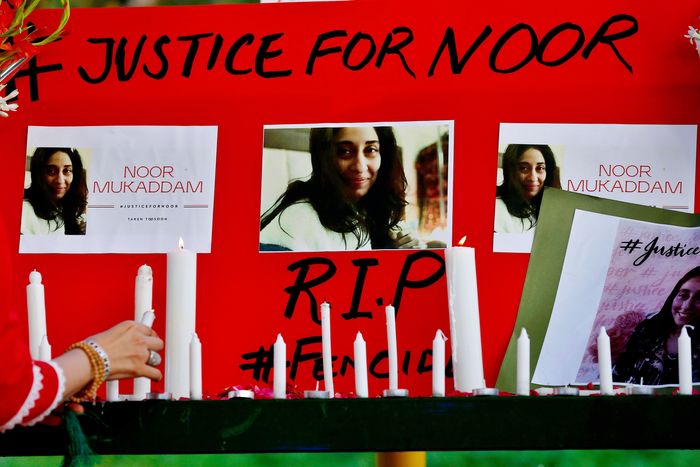
Noor Mukadam was a charismatic and graceful woman, her father Shaukat Mukadam told the crowd. The late September vigil was being held for his 27-year-old daughter who was allegedly beheaded by Zahir Jaffer, an acquaintance of hers and scion of one of Pakistan’s richest families. “My daughter is gone,” Mukadam, a former diplomat and ambassador, told the group gathered before him, “but I want that all the daughters of Pakistan should remain safe.” As he broke into tears, his one demand for the upcoming trial, which was set to begin this week, was that there be justice for Noor.
Noor’s murder took place among an especially horrific spate of crimes against women in Pakistan. It has captured the country’s attention not only because it’s especially gruesome but also because Pakistani women are utterly fed up with rich and powerful men committing crimes against them and getting away with it. Noor’s case has become a rallying point against the hypocrisy of a society where women are present in all sectors of the economy and public life but where there are few places for them to turn to when they face abuse at the hands of men. As Pakistan watches, feminists are wondering: Could this time finally be different?
The murder took place just over two months ago, on July 20. At around dusk, Zahir Jaffer, who had held Noor captive for the past two days, allegedly raped, tortured, and killed her. In the days following the crime, Zahir Jaffer’s parents, who phone records show were in contact with their son and household staff before and after the murder, were also arrested and placed in police custody, as were the household’s guards, cook, and gardener, all of whom were present at the time of the murder at the Jaffers’ sprawling home in the most exclusive enclave in Islamabad.
According to the police investigation and CCTV footage, Noor attempted to escape, but Zahir’s armed security guard did not let her leave. Later that evening, she jumped down from a balcony. This time, it was the gardener who locked the gate and refused to let her run. Zahir Jaffer emerged from the house and dragged her back inside by her hair. She was never seen alive again.
Zahir Jaffer’s multimillionaire parents then tried to orchestrate a cover-up, according to Islamabad police, calling a therapy center where Zahir had once been in treatment and asking them to send a team to their house, allegedly to dispose of Noor’s body. Had a neighbor not called the police, they may have been successful in doing so. Later that day, Shaukat Mukadam was asked to come to their home, where he identified the body and the severed head as Noor’s.
It would appear to be an open-and-shut case, but things are not simple in Pakistan. At the outset, there are laws that favor the powerful. These include ordinances that essentially permit any accused to be “pardoned” by the victim’s family. When the perpetrator is rich and the dead woman is poor, her family faces a lot of pressure to capitulate and grant the pardon. There are also unofficial ways to interfere: Police and even judges of the lower courts are poorly paid and often amenable to bribes. And since there is no jury trial in Pakistan, trial outcomes are decided by the judge alone. Powerful families can buy off witnesses or even pay armed thugs to intimidate or blackmail those refusing to do the bidding of the powerful. Pakistan’s confusing mess of parallel court systems also presents its own morass.
And despite the inordinate amount of violence Pakistani women face, they do not often see their perpetrators punished. The Human Rights Commission of Pakistan recorded 363 honor killings of female victims in 2020, and according to a recent study from Pakistan’s Ministry of Human Rights, about 28 percent of women and girls between the ages of 15 and 49 have suffered violence during their lifetimes. Even when they make it in front of a judge, less than 3 percent of sexual-assault cases result in a conviction. A new bill that would criminalize domestic violence has spent months stalled in Parliament after some members from Islamist parties opposed it.
One reason Noor’s case has been able to evade the usual traps is because of the intense pressure from social media, where the hashtag #JusticeForNoor trends every time there are new developments. And while her case has certainly received more attention because of her upper-class background, it also aligns with growing anti-elitist sentiment in Pakistan; people who are not part of the multimillionaire elite have had it with the impunity with which men (and sometimes women as well) heap abuses on the less powerful. At his first press conference, Shaukat Mukadam alluded to the ruling Pakistan Justice Party, which vowed to hold the country’s corrupt elite class accountable: “The government belongs to the ‘justice’ party, and it should ensure that this justice is actually done.”
Feminists and anti-elitists are now speaking up in any way they can. YouTubers like Mahreen Sibtain and Maria Ali have been providing daily updates on the case, dedicating video segments to everything from how Zahir isn’t allowed to have a toothbrush in his cell to how his mother is spending her time in jail. Ali never once uses Zahir’s actual name, referring to him as “the beast” instead. Her anti-elitism is popular, particularly with middle-class women used to working hard for even the smallest privileges. It may not seem like a nascent feminist revolution, but this push for gender justice is supported by rapid urbanization and a critical mass of women entering the workforce. Increasingly unwilling to accept a dependent status, they are becoming more outspoken in their criticism of men.
But Noor’s killing has yet to be avenged. The trial was scheduled to begin on Wednesday, with the indictment of 12 people in connection with the murder. But before that could happen, lawyers representing Zahir’s parents introduced motions claiming they never received evidence from the prosecution, including the CCTV footage. Another motion alleged that Zahir has been unable to communicate with his lawyer. The start of the trial was delayed to October 14. This is not a good sign, but bringing the wealthy and powerful to task has never been easy anywhere. When it does begin, Pakistan’s women will be watching and waiting to see if the system will work, if there will be justice for Noor Mukadam and thus hope for them.
https://www.thecut.com/2021/10/noor-mukadam-murder-pakistan.html

The past few months have been harrowing for Pakistani women

Dr Nida Kirmani
There appears to have been a surge in violence against women, but in truth it is nothing new. It is just that we are more aware of it now and more women are fighting back.

The last few months have been particularly harrowing for Pakistani women.
From the horrific case of 27-year-old Noor Muqaddam, who was brutally tortured and beheaded in the nation’s capital on July 21, to that of Ayesha Ikram, a TikTok creator, who was harassed and groped on the country’s Independence Day by more than 400 men on the grounds of one of the country’s major national monuments, the Minar-e-Pakistan in Lahore – it feels as if violence against women has reached epidemic proportions.
Many are even calling it a “femicide” to draw attention to the scale of the problem and its systemic nature. But gender-based violence in the country is not new.
According to the 2017-2018 Pakistan Demographic and Health Survey, 28 percent of women aged 15 to 49 had experienced intimate partner violence in their lifetimes. This is a slight decrease from 32 percent of the women reported to have experienced physical violence at the hands of their partners in the 2012-2013 survey. But given that domestic violence is an issue shrouded in secrecy and shame, both sets of figures are likely a gross under-estimation.
One suspects that it feels like there is a surge in violence because cases are getting more attention. Mainstream media is more attuned to the issue, and it is also being highlighted and discussed on social media platforms.
These conversations have created heightened awareness among young women in particular, who are becoming increasingly vocal about their rights. The vast majority of these women belong to the educated, urban middle and upper classes.
This is just the latest in the long history of the struggle against gender-based violence in Pakistan.
In the past, particular cases have drawn national as well international attention, leading to collective action by rights activists.
One such case was that of 28-year-old Samia Sarwar, whose murder was arranged by her family in 1999. She had been seeking a divorce from her violent husband, a decision her family did not support because it would have “dishonoured” the family name.
She was shot dead in the offices of Hina Jilani, a well-respected Supreme Court lawyer and human rights activist. Sarwar had been there for a pre-arranged meeting with her mother to receive the divorce papers.Her murder started a national conversation about honour killings. Women’s rights activists, including Jilani and her sister Asma Jahangir, also a renowned human rights lawyer and activist, highlighted it to advocate for an end to gender-based violence.But there were counter-protests from religious conservatives arguing that Sarwar’s feminist lawyers had no business interfering in a question of “family honour”. To this day, the perpetrators have not been brought to justice.
Another well-documented case is that of Mukhtaran Mai, who was gang-raped in June 2002 by four men in Meerwala village in southern Punjab’s Muzaffargarh district. Mai was raped on the orders of a village council as “punishment” for her younger brother’s alleged illegitimate relationship with a woman from a rival tribe.
And more recently, the murder of 26-year-old Qandeel Baloch by her younger brother in July 2016 for her “intolerable” behaviour, was a turning point for many younger feminists. Baloch was a social media star who was bold and open about her sexuality. Her murder set off a public debate around the question of women’s sexuality and victim-blaming.
While cases such as these make headlines every few years, their frequency seems to have increased during the last five years. There are a few possible reasons for this.
Social media
Female education rates are gradually on the rise in Pakistan, with the rate of female secondary education rising from 28.6 percent in 2011 to 34.2 percent in 2021. There is now a new generation of young educated women who have the awareness and confidence to demand their rights.
Additionally, as technology and social media have become more accessible, news of cases has started to spread more widely and at a much greater speed.
As of this year, almost 27.5 percent of the country’s population has access to the internet, mostly through their mobile phones. While this is much less than the global average of 60.9 percent, it is still significant for a country of 223 million.
Despite the fact that the country only has 2.1 million Twitter users, a relatively low percent, tweets are often featured by media outlets and are used to further discussions.The state has also identified social media as a possible threat to Pakistan’s national image. Fawad Chaudhry, the country’s information minister, recently alleged that Indian and Afghan accounts were “falsely” creating the impression that Pakistan is “unsafe for women”, which he argued is part of an international conspiracy to malign the country.
With social media playing a key role in taking the conversation forward, women also face constant threats and harassment on these channels. Conservative commentators and groups use these to counter the claims of feminists by arguing that Pakistan is indeed one of the safest countries for women – a claim also repeated by the country’s Prime Minister Imran Khan. In June, rights activists condemned Khan’s comment that, “If a woman is wearing very few clothes, it will have an impact on the men, unless they are robots. It’s just common sense.”
He later tried to backtrack on this, stating that only a rapist is responsible for their crime, but this too was couched problematically in a discussion about the need to lower “temptations” in society.
Women’s March
The last four years have also seen the emergence of Aurat March (Women’s March) in major cities across the country on International Women’s Day on March 8.They were first held in 2018 in Karachi, Lahore and Islamabad, with hundreds attending. In 2019, they spread to Multan, Faisalabad, Larkana and Hyderabad, attracting thousands of participants.While most of those who attend are from the urban upper and middle classes, organisers have been working towards making the marches more inclusive; encouraging transgender women to participate and providing transport for working-class women to make it easier for them to attend.
These demonstrations have highlighted gender-based injustices, such as domestic violence, sexual harassment, the undervaluing of women’s paid and unpaid labour, and lack of access to female healthcare. The issue of gender-based violence has consistently been front and centre.
The growth in popularity of these marches can also be attributed, at least in part, to social media, with much of the publicity and conversations before and after the march taking place on various online platforms.
Not part of the conversation
These certainly are all hopeful signs of resistance, however, the vast majority of women in Pakistan are still not part of these conversations and the movement. There is still a long way to go in terms of diversification.For example, all of the high-profile cases mentioned earlier took place in the province of Punjab. Cases of violence against women from lower socioeconomic classes and from provinces other than Punjab, which has historically been the most economically and politically dominant province, rarely garner national attention.
Pakistanis living in the country’s peripheries complain that women’s rights activists rarely take up their issues.
Supporters of the Pashtun Tahaffuz Movement (PTM), which advocates for the rights of Pashtuns, the country’s second-largest ethnic group, highlighted the case of a woman in Khaisor, a village in the former tribal areas of Waziristan. She was allegedly harassed by security forces, with the details of the case surfacing on social media in 2019. This case received very little attention, both from feminist activists and the mainstream media, due to the gap between women in urban centres and those in rural and remote areas.Hence, while social media is helping to amplify the cases of violence against women, it has not been able to bridge the ethnic and class divides that have long existed in the country.
In addition to this, the vast majority of women in Pakistan still do not use social media at all. There is a 65 percent gap in digital access between women and men in Pakistan, the highest such gender gap in the world, and the women who have access by and large belong to the upper and upper-middle class.
Furthermore, as has historically been the case, progress on women’s rights is still frequently blocked by religious conservative groups, which often work in tandem with the state.Most recently, the Domestic Violence Bill – despite being passed by the National Assembly to ensure legal protection and relief for victims – was stalled after an adviser to the prime minister recommended that it be sent to the Council of Islamic Ideology for review.
The victims of domestic violence continue to wait to find out what legal channels are available to them.
The ‘woman card’
Despite the various hurdles that women’s rights activists face, from religious conservatives to the country’s ethnic and economic divisions, there are signs of a wider change in attitudes towards gender-based violence, and not just in the virtual realm.
After the Minar-e-Pakistan incident, for example, hundreds of young women and men descended on the same spot where the Tik Tok star had been harassed a week earlier, in a bid to proclaim women’s right to occupy public spaces.On television talk shows, though largely dominated by male commentators, women journalists are increasingly vocal in their opposition to gender-based violence and are refusing to be silenced by male anchors and conservative commentators.Feminists are also creating alternative forums for discussion. For example, a group of women journalists recently started a channel on Youtube called Aurat Card (Woman Card), a tongue-in-cheek reference to the misogynistic claim that women use their gender to gain “unfair advantages”. The show presents critical views on a range of social and political issues.As a teacher, I have seen a change among university students during the last 10 years, where conversations about harassment are becoming increasingly frequent on campuses. However, with a female tertiary education rate of only 8.3 percent, even these conversations remain confined to a small section of the society, and that too in big urban centres.
So, while violence against women appears to be at a peak and regressive forces are as vocal as ever, there are positive signs that women, particularly those who are young and educated, are becoming more aware and vocal in their resistance.
Calling this a gender revolution may be premature, but a change is certainly taking place. The struggle for equal rights for women still has a long way to go, but the grip of conservative men is gradually being challenged and is loosening, and they have good reason to be scared.
https://www.aljazeera.com/opinions/2021/10/8/violence-against-women-in-pakistan-is-not-new-but-it-must-stop

Thursday, October 7, 2021

Music Video - Abhi Dhoond Hi

#PandoraPapers - Pandora Papers: How will the revelations impact Pakistan's politics?

By Haroon Janjua
Several officials surrounding Prime Minister Imran Khan were named, but experts are skeptical of the possibility of a thorough investigation.
Several people surrounding Pakistani Prime Minister Imran Khan, including ministers and family members, have been named in the Pandora Papers leaks.
The papers, which were shared by the International Consortium of Investigative Journalists (ICIJ), reveal that many of the country's powerful military generals, businessmen and media owners have transferred millions of dollars through offshore companies.
More than 700 prominent Pakistanis were named in the investigation, released on Sunday.
Khan himself, however, was not named in the papers. The prime minister came to power in 2018 after promising to end rampant corruption, and had earlier launched a relentless election campaign based on anti-corruption rhetoric.
Water Resources Minister Moonis Elahi and Finance Minister Shaukat Tarin were among the most prominent names included in the ICIJ report.
The leaks are based on more than 11.9 million secret files disclosed from 14 offshore financial services firms.
Reacting quickly to the leaks, Khan on Sunday said his government would "investigate all our citizens mentioned in the Pandora Papers [and] if any wrongdoing is established we will take appropriate action."
"I call on the international community to treat this grave injustice as similar to the climate change crisis. If unchecked, inequalities between rich & poor states will increase as poverty rises in the latter. This in turn will lead to a flood of economic migration from the poor to the rich states, causing further economic & social instability across the globe," Khan wrote on Twitter.
'Everyone will be thoroughly investigated'
Information and Broadcasting Minister Fawad Chaudhary told DW that "Khan has set up a high-level cell under the Prime Minister's Inspection Commission to investigate the people named in the Pandora Papers. Everyone involved will be thoroughly investigated and necessary action will be taken against the culprits."
He said the National Accountability Bureau, the Federal Board of Revenue and the Federal Investigation Agency would handle the probe. They will also look into the officials' adherence to the law under Article 62(1)(f) of the country's constitution — the article under which former Prime Minister Nawaz Sharif was disqualified by the Supreme Court in July 2017 in the Panama Papers case.
Opposition figures have also called on the Cabinet members and associates to resign and face the investigation.
"We are not seeing the same kind of reaction from Imran Khan as when he was part of the opposition and the Panama Papers came out," Shazia Marri, a lawmaker from the opposition's Pakistan Peoples Party (PPP), told DW. "There was no excitement this time around because some of the names are associated with Khan's Cabinet. Those involved should step down."
Skepticism about impact
Some analysts believe that the revelations brought by the investigation will not create have a substantial impact on the current political order. "I don't think there are major political consequences for Pakistani politics. This is mainly because Khan himself wasn't named in the report, and Khan came out very quickly with an emphatic statement vowing to conduct an investigation," Michael Kugelman, a South Asia expert at the Washington-based Woodrow Wilson Center for Scholars, told DW.
"That said, any revelations of corruption within his party are a big deal, given that its main plank for its entire existence has revolved around anti-corruption," Kugelman said. "There won't be many implications for the present setup unless any concrete action is actually taken. If those from the Cabinet who are named in the Pandora Papers step down until their names are cleared, it will create problems for the government," Mehmal Sarfraz, a political analyst, told DW. Mehreen Zahra Malik, the Pakistan editor of the Saudi Arabia-based newspaper Arab News, echoed those comments. "I don't see any serious implications or threats to the Khan government or Cabinet after the leaks. This is no crisis for the government. Not even close," Malik told DW. "At most, this could give Khan an excuse to get rid of Moonis Elahi. Khan really never liked him, but Elahi is still politically very important for him as a strong electable."
Politicians 'not taking it seriously'
Khan has announced investigations into the massive leaks, which cast negative light on politicians who present themselves as clean.
"Announcing an investigation on Twitter and forming a commission under the government seems only to be a formality. He [Khan] is not known for living up to his previous promises, and his ministers are doing political bashing on Twitter, against other names appearing in the leaks. They are not taking it seriously enough," said opposition lawmaker Marri.
Kugelman believes that Khan will enthusiastically pursue the investigation.
"One can accuse Khan of taking U-turns on policy, but he has been unflinchingly consistent in his stand on corruption," he said. "He will want to ensure that there is a credible investigation of these allegations. It's important for domestic politics in Pakistan, and especially with the next scheduled election less than two years away."
Political analyst Sarfraz believes that few of the people named will see repercussions for the leaks. "Offshore companies, as long as they're declared under the law, are not illegal. Only those who didn't declare them may face some problems," she said. Malik also believes that Khan's government will not take an investigation seriously. "In Pakistan we know that the best way to postpone action or defer an issue is to create the illusion of accountability by announcing a high-level commission. And this isn't the first commission announced by this government," she said.
"Consider the fact that it's just one day after the leaks and already the media has lost interest in the story," she said. "The Panama Papers received sustained media attention in Pakistan, but interest in these leaks already seems to have fizzled out here, unfortunately."
'Kid gloves' for military officers
Investigating the names of retired military officers and their families is going to be a test for Khan, who may have trouble launching a thorough probe against such figures. Kugelman and others believe that the accountability process will not ruffle the feathers of powerful military officials named in the Pandora Papers.
"Given the realities of Pakistani politics, one tends to expect that military officers are more likely than civilian leaders to receive the kid gloves treatment. But Khan could make a big statement by indicating that all Pakistanis identified in this report, whether civilian or military, should be investigated, with no exceptions," Kugelman said.
Malik, however, believes that the chances of an investigation into military officials named are slim. "There will be no investigation against the military officials," she said. "There might be an illusion of inquiry, an illusion of accountability, but nothing will happen."

Opinion | Why Imran Khan should be wary of Lt General Faiz Hamid who is poised be the next Pakistan Army chief

Sushant Sareen
The appointment of ISI chief Lt General Faiz Hameed as a Corps Commander gives him a shot at becoming the Army Chief next year when General Qamar Bajwa’s term ends.
The equivalent of a Cabinet reshuffle in India is the reshuffle of the military top brass in Pakistan. No surprise then that even a routine reshuffle of the top command and staff positions in the Pakistan Army invites so much attention. More than anything else, this is a statement on who calls the shots in each of these two countries. The appointment of ISI chief Lt General Faiz Hameed as a Corps Commander is, therefore, nothing out of the ordinary.
It is a routine transfer and wasn’t entirely unexpected. The only reason why it is inviting so much attention is that this gives Hameed a shot at becoming the Army Chief next year when the current incumbent General Qamar Bajwa’s term ends. Without having commanded a Corps for at least a year, Hameed wouldn’t have been eligible for the top job in Pakistan. But whether or not he gets the job is far from certain.
For one, there is speculation that Bajwa might well seek another extension. While that looks a bit difficult right now, it cannot be entirely ruled out. But assuming Bajwa condescends to retire, Hameed will be number four in the seniority list. That doesn’t mean much because in Pakistan the senior-most three-star general becoming the chief is more of an exception than the rule. The last senior-most Lt General who became chief was Jehangir Karamat. His successor Pervez Musharraf superseded three Lt General’s to become chief. Musharraf’s successor Ashfaq Kayani, his successor Raheel Sharif and even Bajwa superseded senior three-stars to become chief. Going by that record, Hameed is well placed to become chief, assuming Imran Khan is still the prime minister when the time comes to pick Bajwa’s successor just over a year from now.
The fact that Hameed is in the good books of Imran is hardly a secret. But to imagine that because he is a loyalist, or if you will a Youthia (a pejorative term for the cult of Imran’s followers), he will be Imran’s man as chief is a mistake that many prime ministers in Pakistan have made. The thing is that in Pakistan, prime ministers appoint their own boss—the Army chief.
The moment someone becomes chief, he becomes his own man. That is the nature of the job. Every prime minister thinks he is appointing his man as Army chief. Zulfikar Ali Bhutto superseded seven generals to appoint an obsequious Zia-ul-Haq and then got hanged by him.
Nawaz Sharif appointed five of them and had problems with all of them — Asif Nawaz Janjua who died in the saddle before he could get rid of Nawaz Sharif, Abdul Waheed Kakar who forced Nawaz to resign, Jehangir Karamat who was the only gentleman who quit after differences with Nawaz Sharif, Pervez Musharraf who did a coup and imprisoned Nawaz Sharif, Raheel Sharif who had serious tensions but did not depose Nawaz Sharif, and Qamar Bajwa who engineered the judicial coup to get rid of Nawaz Sharif.
The Pakistan Peoples Party [PPP] gave an extension to Kayani who in his second term almost got rid of the government over a cooked-up Memogate scandal. Therefore if Imran thinks he will have a smooth ride with Hameed, he has another thought coming.
Imran would, of course, think that since Hameed was instrumental in his ‘selection’ in the 2018 elections, he will ensure his victory in the 2023 general elections. In 2018, Hameed was Deputy DG ISI in charge of internal security but played the same role in the election that brought Imran into power that in 2002 was played by Major General Ehtesham Zamir who ensured the formation of the Pakistan Muslim League {Q} [PMLQ] government by a single vote.
He intimidated candidates to change loyalties or refuse tickets of Nawaz Sharif’s Pakistan Muslim League {N} [PMLN], forced some candidates to withdraw from the election [remember when the Department of Agriculture became a euphemism for the ISI?], engineered splits in PMLN and other parties and corralled candidates and electives to PTI, created a new front in South Punjab to cut into PMLN votes and then got all these guys to merge their front in PTI. He was instrumental in the rise of the Barelvi extremist party Tehrik-e-Labbaik Pakistan which was supposed to cut into the votes of PMLN, he is accused to have ensured that the election transmission system RTS crashed which made it easy to rig the election results.
The services rendered by Hameed were not his personal decision but that of the Pakistan Army that placed its bets on getting Imran Khan into the saddle. In 2023, the Army might not want Imran back. The experience of the last three years has boomeranged on the Army which is getting all the flak for inflicting a disastrous and utterly incompetent man like Imran Khan on the country. If the public mood is ugly, it is unlikely the Army will risk backing Imran Khan regardless of how much Hameed likes him.
A lot will depend also on whether Bajwa decides to shaft Hameed. Postings and transfers in the Army are the prerogatives of the chief. If Hameed’s tenure as Corps Commander XI Corps (Peshawar) is cut short, it would remove him from the race.
Of course, it is probably a bit far-fetched to think Bajwa would do any such thing especially since the XI Corps is right now probably the most important Corps as it deals with Afghanistan. Hameed’s stint in the ISI during which he would have developed very close contacts with the Taliban, especially the Haqqanis who are the real rulers of Afghanistan, is probably the reason why he was picked for the Peshawar Corps.But this will not be a cakewalk because no one knows how things will play out in Afghanistan and inside Pakistan, what with the spike in terror attacks by the TTP. As the XI Corps Commander, Hameed along with his successor in ISI will be pivotal players in the 'peace negotiations' with some of the Pakistani Taliban. How he handles this will be critical for not just his future but also for Pakistan’s. There will also be the issue of a possible fallout of the meltdown in Afghanistan that will spill over into Pakistan.
The professional side of Hameed will of course be important in determining his future. But his personal side, including his peccadilloes, will also have some bearing on whether or not he becomes chief.
His sexual indiscretions—he is believed to have been shot by his wife who discovered his affair with someone—might well be overlooked by Imran who is himself no spring chicken when it comes to affairs. But Hameed doesn’t enjoy a good reputation within his own military fraternity.
Add to this the fact that just a day earlier the bête noire of the Pakistan Army, Maryam Nawaz Sharif filed a petition in which she has dragged in Hameed, who had been accused by a deposed Islamabad High Court Judge Shaukat Siddiqui of trying to influence him to convict Nawaz Sharif. While no one expects this petition to succeed — it is Pakistan, stupid! Generals don’t suffer adverse verdicts from courts — it nevertheless adds to Hameed’s notoriety.
The thing is that if Hameed stays in the race by the time the successor of Bajwa has to be picked, Imran Khan would be smart to drop him and pick a more non-political general. Hameed has shown himself to be a sort of ambitious and political general who will not hesitate to usurp power if the opportunity presents itself, as it might well if Imran Khan’s popularity continues to plummet or if widespread disturbances break out because the 2023 polls are rigged. In the event, Imran Khan might well end up as a Bhutto and Hameed as a clone of the obsequious but ruthless and cunning Zia-ul-Haq.
https://www.firstpost.com/world/opinion-why-imran-khan-should-be-wary-of-lt-general-faiz-hamid-who-is-poised-be-the-next-pakistan-army-chief-10032931.html

No More Assistance Should Be Given To Pakistan: Former US Advisor

Gen (rtd) H R McMaster, said that the US needs to hold the Pakistan prime minister accountable for some of his comments after the fall of Kabul in August.
Asserting that Pakistan has "had it both ways" for too long, a former US national security advisor during the Trump Administration has advised lawmakers against any fresh aid to Islamabad.Testifying before a powerful Congressional committee on Afghanistan, Gen (rtd) H R McMaster, said that the US needs to hold the Pakistan prime minister accountable for some of his comments after the fall of Kabul in August.
It is also delusional, he said, to think that any of the money that would go to the Taliban or through the Taliban for humanitarian purposes would immediately be used by the Taliban to solidify their power and to become an even greater threat.
"So, we're in a situation where we're facing a really extraordinary dilemma that it's going to be tough for us to mitigate the humanitarian crisis without empowering the Taliban," he said in response to a question.
"I don't think we should give any assistance to Pakistan at all. I think Pakistan has had it both ways for way too long. I think Pakistan should be confronted with its behavior over the years that has actually resulted, I think, in large measure in this outcome," McMaster said.
It was during the Trump Administration that the US had blocked all security assistance to Pakistan. The Biden Administration has not resumed the security aide yet.
"I think we ought to hold Imran Khan responsible for his comments when Kabul fell and he said that the Afghan people have been unshackled. Why should we send a dime to Pakistan under any conditions? I think that they should be confronted with international isolation because of their support for jihadist terrorists, who are threats to humanity, including Haqqani network, the Taliban, and groups like Lashkar-e-Taiba," he said.
Responding to a question from Congressman Scott Perry, during the Congressional hearing convened by the House Foreign Affairs Committee, McMaster said that it is a good idea to remove Pakistan's status as a major non-NATO ally. "I would say the only time I think we have ever laid out a very clear and realistic assessment of South Asia and prioritised the strategy was President Trump's speech in August of 2017. Now, he abandoned it and he doubled down on the flaws of the Obama administration. I don't know how that happened. But I think if you go back to that August 2017 speech, that was the proper approach to Pakistan as well, which called for a suspension of all assistance to Pakistan until Pakistan fundamentally changed its behaviour," McMaster said.
Congressman Bill Keating said Pakistan remains a problem and the US needs to assess it.
"Its long standing activities, by many accounts, have been negative. I think that's putting it mildly. For decades, though, for decades, whether you go back to''96 when the Taliban took control, Pakistan was one of the first to recognise them," he said. "When you go through the change in 2001 in Afghanistan and then the reconstruction of the Taliban starting around 2005, they were there giving assistance, by all accounts, and I believe those accounts are accurate. And indeed, right up into this current change in the government, Pakistan, there were many people that suggested their intelligence was embedded with them," Keating said.
Pakistan's relationship with the Haqqani network is one that is of great concern.
"That may indeed affect our relations with India in that respect. But can you comment on that? I think they have been duplicitous, not just recently, not just in the few months of this administration, but for decades in this with many administrations, Republican and Democratic alike," he said.
Former US Ambassador to Pakistan Ryan Croker acknowledged that Pakistan worked against the US in some very fundamental aspects with their support for the Taliban.
"Earlier, I tried to present their narrative as to why. We were going to walk out, and they did not want to be left with the Taliban as a mortal enemy. They may get that anyway. And as satisfying as it would be to a lot of us, myself included, to do something to punish Pakistan for this, I don't think we have the luxury. They are already worried over the repercussions inside their own country of the Taliban's so-called victory in Afghanistan," he said.
"Now, we can say, 'Yeah. Well, they deserve whatever they get''. But again, a blow-up in Kashmir is going to bring a regional war. So, I think reassessment is always good, but let's reassess with a clear eye on the dangers now that the Taliban takeover of Afghanistan has created throughout the region. We do not need a completely destabilized Pakistani state with nuclear weapons," Croker said. McMaster told the lawmakers that the Taliban was backed by ISI and that's why they recaptured Afghanistan. "The Taliban's differential advantage was the backing by the ISI of other groups. But it was the unscrupulous units who are willing to terrorise. They didn't give up their differential advantage. And so, I don't think it's a mystery at all why they collapsed. And I think it should be unacceptable, to disparage the Afghans who did fight, and over 60,000 of them made the ultimate sacrifice to preserve the freedoms we're now seeing," he said. The Taliban, he said, went around to the Afghan units, and they said, "Hey, here's how this is going to go." With the backing of the Pakistani ISI, intertwined with the Haqqani network and Al-Qaida, what they did is they told those commanders, "Hey, listen. You accommodate with us. We give you the signal, or we kill your family. How does that sound?" he said.
And that's why the Afghan forces collapsed in addition to the withdrawal of US intelligence support, the withdrawal of our airpower, which was the Afghan forces differential advantage, McMaster said.
https://www.ndtv.com/world-news/former-us-national-security-advisor-no-more-assistance-should-be-given-to-pakistan-2566552

Sindh province will play a leading role in safeguarding the rights of the common people – Surendar Valasai, Special Assistant to Chief Minister for Human Rights

A comprehensive Sindh Human Rights Policy will be announced before the end of 2021 as the process of consultation with all the stakeholders, including civil society and government departments was underway in this regard. A delegation of Huqooq-e-Pakistan, a joint venture of the European Union and the Ministry of Human Rights led by Ali Dayan Hassan called on the Special Assistant to Chief Minister for Human Rights Surendar Valasai to discuss the key ingredients of the policy. 

Secretary Human Rights Department Jawed Sibghatullah Mahar and other officials of the department were also present.
Surendar Valasai said that Sindh Human Rights Policy will be a comprehensive document covering all aspects of human rights in the province as per the directives of Party Chairman Bilawal Bhutto Zardari and Chief Minister Murad Ali Shah.
He said that protecting the human rights of every citizen was the responsibility of every state around the world and Sindh province would be providing a leading role in safeguarding the rights of common people by exploring all the tools available with the provincial government.
Huqooq-e-Pakistan has been given a task to extend support to the Sindh Human Rights Department to draft the Human Rights Policy.

https://www.ppp.org.pk/pr/25578/

Wednesday, October 6, 2021

Video Report - 🇪🇹 How could a new region change southern Ethiopia?

Video Report - African economic recovery remains vulnerable: World Bank

Video Report - Fauci on Child Vaccinations, Boosters and Merck Covid Pill

Video - Biden travels to Michigan to promote economic agenda as negotiations continue in Washington

Video - Anderson Cooper: Facebook likes to say it brings people together

سپریم کورٹ احاطے میں دھاندلی، ملازمین کی سوسائٹی کے اجلاس میں ممبران کی شرکت پر پابند

#PandoraPapers #PandoraLeaks #Pakistan - Pandora Papers are more detailed than Panama leaks but will those named be investigated properly? - The Pandora Papers

Zahid Hussain

 @hidhussain


THE Pandora Papers have exposed the shadowy world of sleaze and ill-gotten wealth stashed away in offshore companies by the rich and powerful around the world. Among them are both current and former leaders of various countries. Several hundred Pakistanis including politicians, former military generals, bureaucrats and businessmen are also on the list. They include those who own assets worth hundreds of millions of dollars in various parts of the world.
According to the leaked data, Pakistanis are the fifth largest investors in property in London’s most expensive neighbourhoods. Inevitably, this kind of wealth raises questions about their source of funds. It’s not an issue of legality of offshore companies but of the use of shell companies to cover up secret finances and shady deals. These tax havens are used to park illegal wealth.
It’s not for the first time that such a disclosure about offshore wealth has been made. But the Pandora Papers reveal a far larger repository of information on possibly dubious transactions involving public officials including sitting federal ministers and some other powerful people connected to the government of Prime Minister Imran Khan. More than 700 Pakistanis have been named in the offshore affair. No one, however powerful, should escape accountability.
While the Panama leaks some years ago led to the fall of the third-time prime minister Nawaz Sharif, the latest disclosure has put to test the intentions of the PTI government which came to power on the slogan of ‘anti-corruption’. The prime minister has set up a ‘high-powered cell’, headed by the federal law minister to investigate the matter. The very composition of the cell under a federal minister raises questions about the credibility of the inquiry into charges of suspicious financial transactions against fellow members of the cabinet.There is no indication yet that the federal ministers named in the Pandora Papers will be asked to step down to allow an independent inquiry to take place. Curiously, NAB is to investigate the cases of the federal ministers mentioned in the latest leaks.Given NAB’s dubious reputation there is little hope of an impartial investigation against powerful sitting federal ministers and others closely associated with the government. There is little public faith in the country’s investigative agencies, which are working under the government. One can hardly expect them to bring the rich and powerful to justice. It is often a selective process, targeting people on political grounds.
While the entire investigation in what was described as ‘Panamagate’ was focused on Nawaz Sharif and his family, there has not been any report regarding investigations against 300 other people whose names appeared in those leaks. Some of those names have appeared in the Pandora Papers as well. The latest leaked data on some federal ministers, retired military generals and public officials are much more damning.
Perhaps the most sensational disclosure in the Pandora Papers concerns Moonis Elahi and his family. A member of the PML-Q and a scion of one of the most powerful political families in Punjab, Elahi was inducted into the federal cabinet as a minister a few months ago. According to a report published in the Guardian, and based on the Pandora Papers, Elahi and his family own prime properties in London worth millions of pounds. Elahi reportedly had plans to invest via an offshore company. His source of funds was apparently a £33 million sale of a sugar mill complex in Pakistan.
NAB and other agencies had earlier investigated the Elahi family for corruption. But those inquiries were suspended for ‘political reasons’. The prime minister could not afford to antagonise the PML-Q whose support is critical to the PTI government in Punjab and at the centre.
Political expediency may come in the way of taking any action against the minister and other members of his family despite the evidence. Two other federal ministers Shaukat Tarin and Khusro Bakhtiyar, and Faisal Vawda, a former cabinet minister, also figure in the leaks. Equally sensational revelations in the Pandora Papers concern retired military generals and their family members who acquired properties in London through offshore companies. One of them is retired Lt-Gen Shafaat Ullah Shah, who once served as military secretary to the former military ruler Gen Pervez Musharraf. According to the leaks he bought an apartment in the UK under his wife’s name for £1.2m through an offshore company in 2007 when he was still in service.
He claims that he got the money selling a plot in Lahore. He said in a statement that he bought the property in his wife’s name for tax purposes as he had other properties in Pakistan under his name. He also said he informed the army about the purchase.
But all these explanations leave many questions unanswered. Should a serving senior officer be allowed to acquire property abroad through an offshore account? The property was reportedly transferred by an offshore company owned by a wealthy Indian businessman with alleged links to the underworld giving the whole deal a dubious colour.
It is not enough to say that there is nothing illegal about offshore companies used for buying properties; the real issue is their being used for stashing illegal wealth and for money laundering. There are many other retired military officers and their family members whose names have appeared in the Pandora Papers. It’s imperative to investigate their sources of their wealth. No one, however powerful, should escape accountability.
The Pandora Papers reveal the inner workings of a shadowy financial world of global offshore companies that are used for the most part to hide ill-gotten wealth and to evade taxes. Billions of dollars, which are siphoned off by corrupt public officials, are parked in these shadowy shell companies. Sure some of the offshore assets are declared and used for business purposes. But there is a need for strict accountability of those who hold public office. There is also a need for making the accountability process more effective and impartial. Unfortunately, the PTI government has done nothing to stop the rot beyond its anti-corruption rhetoric.
https://www.dawn.com/news/1650412/the-pandora-papers