Saturday, August 7, 2021
Opinion: Get Vaccinated. Get Masked. It’s the Only Way Out of This.


leaders around the country still have not learned the most important lesson of the past 18 months: It takes quick, decisive action and clear communication to get ahead of this virus. Temporary restrictions now are the only way to avoid more stringent ones down the line. We know that masks work. That vaccines work. That mandates work. To keep schools, restaurants and other businesses and institutions open — and to bring the Delta variant to heel — communities will need to use all of those tools together. To be clear, the Delta surge is poised to be less severe than previous surges in the United States. Thanks to a largely successful vaccination campaign, roughly half the population, including 80 percent of seniors, is fully inoculated against the virus this time around. That means in most places, even accounting for a very small portion of breakthrough infections among vaccinated people, hospitalization rates and death tolls are not likely to be anywhere near as high. But when it comes to the coronavirus, any surge is bad: The longer the virus spreads, the greater its chances of evolving in ways that make it more transmissible, or more deadly, or that render existing vaccines impotent. The surest way to avoid that dreaded outcome is to get as many people vaccinated as quickly as humanly possible. And the fastest way to do that now — after months of concerted effort to persuade the wary and reach the disenfranchised — is with vaccine mandates. Some 93 million people who are eligible for the shots have yet to receive any. Surveys suggest, and experts believe, that a good portion of those holdouts would get vaccinated if they were made to, by their employers or schools, or if it were required for certain activities, like traveling, attending cultural events or dining out. The power of federal officials to issue a national vaccine mandate is questionable at best. (It has never been tested, but most legal scholars say it would not withstand court challenges.) But a 1905 Supreme Court decision made clear that individual states can indeed require people to get vaccinated. State and local officials have made regular use of that power in the century since — among other things, requiring children to get vaccinated against a roster of other diseases to attend public school. They should use that power now to combat the coronavirus pandemic. Officials in every state should make coronavirus vaccination a requirement for participation in a whole roster of social activities, from indoor dining to theatergoing and gym use. They should also require all public employees — including police officers, firefighters and teachers — to be vaccinated against the coronavirus as a condition of employment. Hospitals and long-term care facilities should require all of their employees to be vaccinated as well. (Nursing homes have not yet been required to report vaccination rates for their employees, but by some estimates, those rates hover below 50 percent. The elderly continue to be among those most vulnerable to the virus’s worst effects.) Some entities already have taken steps in this direction. Many universities require proof of vaccination for students to enroll. In California and New York City, hundreds of thousands of government workers must now show proof of vaccination or submit to weekly testing. At least some private companies are also starting to issue employee mandates. But so far, many of the unions that support these workers have resisted mandates, making the work of state officials that much more difficult. In fact, as Joseph G. Allen, the director of the Healthy Buildings program at Harvard University’s T.H. Chan School of Public Health, recently noted in The Washington Post, vaccination rates for many unionized workers are abysmal. In New York City, as recently as late June, they hovered around 40 to 50 percent for police officers, firefighters and corrections officers. That’s not nearly good enough. Average people don’t often have a choice about interacting with these professionals. It’s fair and right for unions to protect their members from unjust policies; workers should be given paid time off to get vaccinated, and should not be penalized if they have cause for a legitimate medical exemption from vaccination. But the virus is not going to wait for those issues to be resolved. Employers and workers need to come to agreements now. Unions are not the only institutions whose support is needed. The Food and Drug Administration can help clear the way for mandates by granting the mRNA vaccines produced by Pfizer and Moderna full approval as quickly as possible. (It is welcome news that the agency is reportedly aiming to accelerate its timetable.) Public health experts agree that the shots are both safe and highly effective, but state leaders and private businesses have been reluctant to mandate them without cover from federal regulators. (It would also help if the F.D.A. had a permanent commissioner; it’s bewildering that President Biden has yet to appoint one, in the middle of a pandemic and more than six months after he took office.) Until vaccination rates increase, masks — and thus, mask mandates — will continue to be necessary. Resistance to this idea is understandable. The mask culture war has been exhausting, the people most likely to abide by mandates are the same ones who need those mandates the least because they are already vaccinated, and in the long run it will be far more important to get people vaccinated than to pester them about face coverings. But public policies should reflect what science has made clear: Masks work. They are cheap and easy to use, and it still makes sense to require them in public indoor spaces, in places where the virus is spreading rapidly. The Centers for Disease Control and Prevention needs to do a much better job of explaining this to the public. Officials there erred not by dropping mask recommendations earlier this year but by implying that the move was permanent. The agency is now scrambling to correct course. Last week the C.D.C. advised vaccinated people to wear masks in public indoor spaces in regions where the virus is surging. But officials were slow to share or explain the data behind this latest change in guidance. There is no good excuse for such communication blunders at this stage. Reversing public health edicts is frustrating — and politically fraught — but it’s also part of good public health practice. Leaders at every level should frame it that way. They should also make clear that no success against this virus will ever be secure until the vast majority of people are fully vaccinated against it. In the pandemic’s early days, the most prescient doctors and scientists described a future in which mask mandates and other restrictions were repeatedly imposed and lifted as the virus waxed and waned. We are living in that future now, and we are likely to be stuck here for a while longer, even if the Delta surge suddenly fades, as it did in Britain. The best way to protect ourselves, and to prevent more surges, is to get vaccinated. But until many more people do just that, we’ll need to keep our masks handy. https://www.nytimes.com/2021/08/05/opinion/coronavirus-mask-vaccine-mandates.html
Pakistan briefly detains journalists over 'scandalous' talk
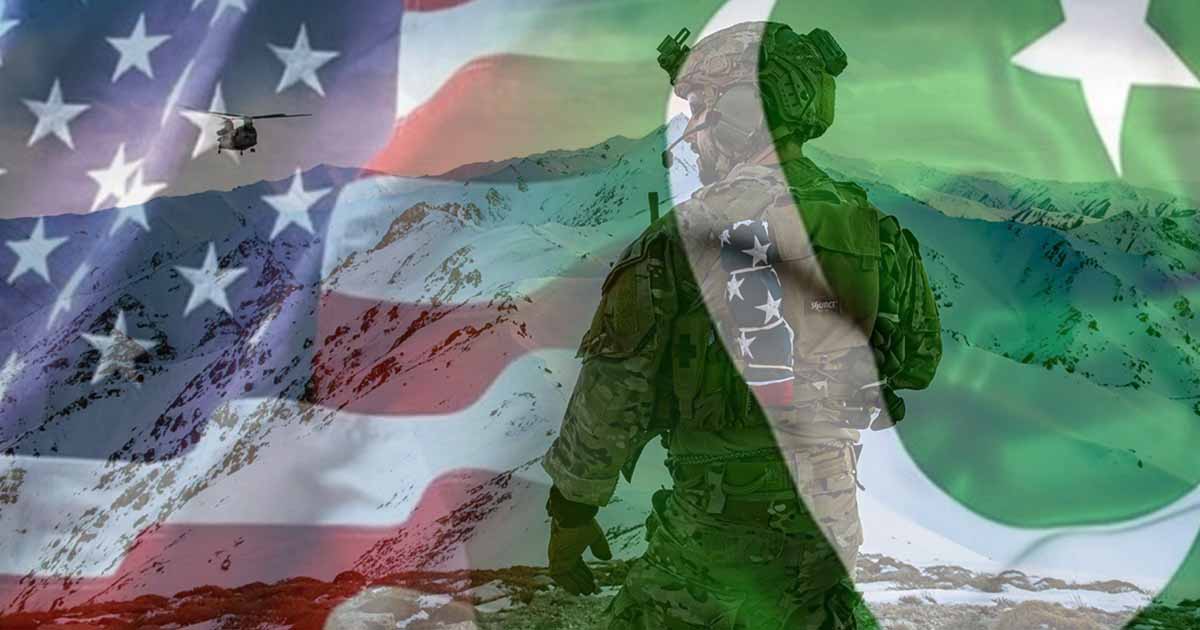
An uneasy limbo for US-Pakistan relations amidst the withdrawal from Afghanistan
https://www.brookings.edu/blog/order-from-chaos/2021/08/06/an-uneasy-limbo-for-us-pakistan-relations-amidst-the-withdrawal-from-afghanistan/
‘Isolated incident’, says Pakistan’s President on Hindu boy forced to chant Allahu Akbar: Here is how his claim is nothing but codswallop
By Jinit Jain

Pakistan sees highest daily coronavirus deaths in fourth wave
- Pakistan reports the highest daily death toll of the fourth coronavirus wave.
- Infections have risen sharply in Pakistan in recent days, with the COVID-19 positivity rate currently at 8.24%.
- The country reports 4,720 fresh cases in the last 24 hours, NCOC data shows.
Pakistan recorded 95 deaths from coronavirus over the last 24 hours, the highest single-day toll during the ongoing fourth wave of the pandemic, National Command and Operation Centre's data showed Saturday morning.
On May 20, Pakistan had registered 131 deaths. With fresh fatalities, the overall death toll reached 23,797.
The country reported 4,720 new infections on Saturday, pushing the total caseload to 1,063,125. The NCOC data showed that 57,233 tests were taken in the last 24 hours to check for COVID-19.
Some 959,491 patients have so far recovered, whereas the number of active cases reached 79,837.
Infections have risen sharply in Pakistan in recent days, with the positivity rate currently at 8.24%.
Earlier this week, the COVID-19 positivity rate went over 9% for the first time in nearly three months. The country last recorded a coronavirus positivity rate of 9.12% on May 10.
Sindh is currently under a lockdown till August 8, while the Punjab and AJK governments, too, have imposed a partial lockdown. Punjab's lockdown covers Lahore, Rawalpindi, Multan and Faisalabad.
Senator Taj Haider of the Pakistan People’s Party has released a book that analyses Census 2017 and all the issues linked to it

Friday, August 6, 2021
Islamabad can no longer ignore the resurgence of the Pakistani Taliban
How Pakistan Could Become Biden’s Worst Enemy

By Michael Hirsh
The United States is banking on Islamabad to broker successful peace talks with the Taliban. That’s not likely to happen.In a gamble pitting hope against history, U.S. President Joe Biden and his team are banking that the resurgent Taliban will agree to a negotiated peace deal in Afghanistan and the militant group’s longtime state sponsor, Pakistan, will press them to share power with the Afghan government. But many experts say such hopes are delusional, and history will likely triumph in the end: Pakistan and the Taliban leadership—which is still headquartered in Pakistan—will continue to have each other’s backs on the battlefield as well as at the negotiating table. In short, Pakistan wants the Taliban to win—or at least is unwilling to do much to prevent this from happening. “Pakistan is supporting the Taliban’s offensive. Without Pakistani logistical support, the Taliban could not undertake the massive nationwide attack it is pursuing,” said Bruce Riedel, who served as a senior advisor on South Asia and the Middle East to four U.S. presidents. “The ISI [Pakistan’s powerful intelligence service] is already pleased it has ejected all the foreign troops from Afghanistan. The goal now is to induce panic in the Afghan government and army.” The Biden team’s argument is that, even with the U.S. withdrawal from Afghanistan, neither the Taliban nor Islamabad desire a repeat of the bloody history that led up to 9/11: Taliban atrocities, sanctions, massive refugee flows, and international isolation for both countries. Taliban leaders and Pakistani officials have said so themselves recently, as has the United States’ lead negotiator, Zalmay Khalilzad. “The Taliban said they do not want to be a pariah state,” Khalilzad said Tuesday at the Aspen Security Forum. “They want to be recognized. They want to receive assistance.” But this rhetorical moderation doesn’t square with the facts on the ground. Despite presenting themselves as diplomats on the world stage since peace talks with the Americans began in 2020, the Taliban are resuming their brutal past practices as they move into major Afghan cities, such as Kandahar (Afghanistan’s second biggest city after Kabul), Lashkar Gah, and Herat. This week, even the U.S. government acknowledged that reality. “In Spin Boldak, Kandahar, the Taliban massacred dozens of civilians in revenge killings,” the U.S. Embassy in Kabul tweeted on Monday. “These murders could constitute war crimes; they must be investigated & those Taliban fighters or commanders responsible held accountable.” Over the past decade or so, Pakistan supported the Taliban even in the face of a U.S.-led, 46-nation coalition backing up the elected Afghan government in Kabul. That policy is less likely to change now, with the U.S. military and NATO leaving and the Afghan government under assault and losing credibility fast. And faced with a hostile, aggressive India under its nationalist prime minister, Narendra Modi, Pakistan is more motivated than ever to support Islamist insurgents in Afghanistan seeking to counterbalance New Delhi’s influence in the region. Islamabad fears a strong Afghan government aligned with India and the West could spell the encirclement of Pakistan. Peace talks, meanwhile, appear to be going nowhere, since neither the Taliban nor Afghan President Ashraf Ghani are willing to negotiate with each other, with each side claiming legitimacy as rightful rulers. In the middle of it all sits Pakistan, which still has significant—if waning—influence with the Taliban, since it harbors many of the group’s leaders and their families. In a series of talks in Washington this week, Pakistani National Security Advisor Moeed Yusuf said he reached a “meeting of minds” with his U.S. counterpart, Jake Sullivan, on the need for a political settlement. “We will not accept a forceful takeover” of Afghanistan, Yusuf asserted. Yet that is what the Taliban intend, some longtime observers say, and Islamabad is not likely to stand in their way. “It’s frankly idiotic to think that this is somehow a softer, gentler Taliban than the one of 2001. If anything this is a harder, harsher Taliban,” said former U.S. ambassador to Afghanistan Ryan Crocker. “After 20 years in the wilderness, the Taliban are finally getting their game back. They’re not interested in talking to anybody unless it’s about terms of surrender for the Afghan government.” The Biden administration appears to believe it can avoid this outcome through negotiation. Sullivan tweeted after his July 29 meeting with Yusuf that the two “discussed the urgent need for a reduction in violence in Afghanistan and a negotiated political settlement to the conflict.” Little else has been said by the Biden administration about its discussions with Islamabad. But U.S. officials did not deny Yusuf’s contention, made in a meeting with reporters on Wednesday, that all Sullivan asked for was Pakistan help “get all these actors in one room to have a sincere conversation,” as Yusuf put it.“The Biden administration seems to have reached the conclusion that Pakistan will not, or cannot, pressure the Taliban,” said Husain Haqqani of the Hudson Institute, a former Pakistani ambassador to Washington. Biden has not even bothered to call Pakistani Prime Minister Imran Khan on the phone. And the evidence is Pakistan continues to engage in the double game it has long played: pleading for an international settlement while quietly backing the Taliban on the ground. “Pakistan is not going to turn its back on the Taliban. Why would it do so now that the Taliban have ‘won’ thanks to Pakistan’s own unrelenting efforts?” said Christine Fair, a political scientist at Georgetown University. “What is the U.S. willing to do now that it wasn’t willing to do when Pakistan’s proxies were murdering our soldiers and civilians and those of our partners in Afghanistan?” Some experts believe Islamabad genuinely would prefer an outcome where the Taliban agree to become part of a coalition government. In the past, the Pakistanis have worked to get the Taliban to the peace table, said James Dobbins, who served as special U.S. representative for Afghanistan and Pakistan. Pakistani civilian officials are also increasingly concerned the Taliban, having been legitimized by U.S. negotiators, are no longer controllable and may even inspire anti-Islamabad militants across the border. “I think there’s no real reason to doubt that their preferred solution is a government that includes the Taliban and so is pro-Pakistan but is sufficiently balanced that it enjoys international legitimacy,” Dobbins said. “But they’re not prepared to strong-arm the Taliban to get this.” Pakistan’s reasons for supporting the Taliban are clear and strategic, dating back to the end of the Cold War, Crocker said. Pakistan and the United States were allied against the Soviet occupation of Afghanistan and helped train the Afghan resistance, which largely consisted of Islamist militants. After the Soviets withdrew in 1989, the United States left as well, leaving the Pakistanis with a civil war on their border. Pakistan felt it had no choice but to support the then-dominant Taliban, which Islamabad eventually came to view as a valued Islamist offset to Indian influence. “After 9/11, we came back, and the Pakistanis said, ‘We’re glad you’re back and money is flowing back in, and we’re happy to work with you against al Qaeda. But if you think we’re going to turn on the Taliban and make them our mortal enemy, you’re crazy,’” Crocker said. “‘At the end of the day, you Americans are going home, and we’re still going to be here. That’s what you guys always do. So you can bet we’re hedging our bets.’” Still, some Pakistani civilian officials fear they may have helped create a monster in the Taliban that will no longer answer to Islamabad and is spreading its extremist ideology back across the border. Perhaps inspired by Taliban gains, attacks inside Pakistan by the Tehrik-i-Taliban Pakistan, an Islamist terrorist group, have increased in recent weeks. The Pakistani military and Inter-Services Intelligence agency have long harbored such hostile Islamist militants in their tribal regions, including the Pakistani Taliban, with which Islamabad maintains a tenuous and sometimes mistrustful relationship, fearing terror acts against Pakistan itself. Mosharraf Zaidi, a Pakistani columnist, said many Pakistani officials have begun to express such fears publicly, and although Pakistan is hardly innocent, Americans tend to overstate the degree of control exercised by the Pakistani military and intelligence service. “Pakistan can’t control its own capital city much less Afghanistan,” he said. Many experts expect a bloody civil war where Afghan moderates, deemed U.S. puppets, are slaughtered wholesale and women and girls are denied the rights they were granted under the U.S. occupation. Already, there is a mass exodus of interpreters and other U.S-allied Afghans seeking special immigrant visas. Beyond that, the Taliban have never really severed their relationship with al Qaeda despite promising to do so, and the terrorist group is likely to find a new harbor in Taliban-controlled parts of Afghanistan. Khan, the prime minister, certainly doesn’t want the bad publicity associated with such an outcome, but he himself has said curtailing India’s threat is paramount in Pakistan’s strategic considerations. Washington has long known of Pakistan’s two-faced behavior, but U.S. reluctance to push Pakistan too hard is rooted in a singular fear: Pakistan is a nuclear-armed state. To isolate Pakistan and identify it as a supporter of terrorism could easily create a nightmare much worse than what happened in the late 1990s, when a Pakistani smuggling network enabled Libya to obtain nuclear weapon designs. Even more frightening to Washington is the prospect that an unstable, isolated Pakistan could fracture, and extremists might get hold of the country’s nuclear weapons. And even U.S. leverage, when used, has proven limited—and is even less effective now that a rising China has increased aid and investment in the face of U.S. hostility toward Beijing; for China, the “economic corridor” with Pakistan is one of the biggest pieces of its massive Belt and Road Initiative. Overall, U.S. military aid to Pakistan decreased by 60 percent between 2010 and August 2017 “without a significant impact on Pakistan’s behavior,” a 2018 Brookings Institution study reported. As a result, both Washington and Islamabad appear to be playing a game of diplomatic pretense. “In a dream world,” Crocker said, “a negotiated settlement would be great, but that isn’t going to happen, so the Pakistanis are safe in saying that’s what they’re pushing for.”
https://foreignpolicy.com/2021/08/06/pakistan-taliban-biden-afghanistan-worst-enemy/
Thursday, August 5, 2021
‘When the blood starts’: Spike in Ahmadi persecution in Pakistan
Attacks and blasphemy cases against Pakistan’s Ahmadi sect spike, driven by the rise of a far-right group and a religious campaigner.When the first bullet whizzed past Sheikh Nasir Ahmad’s ear, he brushed at it, thinking it was a mosquito, out on an unseasonably cool August night in the central Pakistani town of Lalamusa. Before he was able to react, however, two gunmen on a motorcycle pulled up alongside him and shot him four times, hitting his right leg, lower back and the right arm he used to try and shield himself from the hail of bullets.
“You don’t feel anything at that time [when you are shot],” Ahmad told Al Jazeera. “[The bullet] is hot as it leaves the barrel, so it’s when the blood starts that you realise that something has hit you.”Security camera footage of the attack shows Ahmad falling to the ground as the gunmen speed away. He cried out for help, he says, but no one came. “My clothes were completely covered in blood. The blood was soaked through my trousers.”
Ahmad is a member of Pakistan’s 500,000-strong Ahmaddiya community, a religious minority that considers itself Muslim but is barred from referring to themselves as such, and from practising aspects of their faith under Pakistan’s strict blasphemy laws.Police say Ahmad was targeted due to his faith, one of a spate of violent attacks targeting the Ahmadis, their places of worship and even their graves in Pakistan in 2020. The last year has seen a spike in violent attacks against Ahmadis, and a tenfold increase in blasphemy cases lodged against them. Community members and rights groups say the spike has been fuelled by the rise of the far-right Tehreek-e-Labbaik Pakistan (TLP) religious group, and the efforts of a single religious scholar in the eastern city of Lahore, Hassan Muawiya. “There has been an increase in these [attacks], in [legal] cases,” says Amir Mahmood, spokesman for the Ahmadi community. “This [persecution] has increased in the last two or three years, and it is continuing to do so.” ‘He did this just to save us’ In 2020, at least five Ahmadis were killed in targeted attacks by gunmen across Pakistan, while at least seven others were wounded in unsuccessful attacks, according to community data. Since 2017, at least 13 Ahmadis have been killed, and more than 40 wounded, according to the data.
Five months before the attack on Sheikh Nasir Ahmad in Lalamusa, the TLP held a religious gathering attended by hundreds in a park about 100 metres from his home.
The night of that gathering, Ahmad says, his family hid in their home and alerted community leaders that “anything could happen”, as TLP supporters raised slogans calling for “blasphemers” to be put to death.
After the gathering, TLP activity in his small town of roughly 100,000 people increased, he said, with a constant threat to other Ahmadi inhabitants, and many of the regular customers at his plastic furniture store refusing to do business with him. Ahmad survived the attempt on his life, but others have not been as fortunate.In November 2020, a young man attempted to barge his way into an Ahmadi place of worship in the town of Marh Balochan, about 90km (56 miles) west of Lahore. He blindly fired a pistol through the door, before a 31-year-old Ahmadi man, Tahir Mahmood, confronted him and pushed him outside. Tahir was hit by a bullet in his abdomen and he attempted to run down the street, scaring the attacker away. “As Tahir got about 30 or 40 feet away, the attacker was behind him. So I shouted saying ‘Tahir, save yourself, he is behind you!’,” says Tariq Mahmood, 55, Tahir’s father, who was also wounded in the attack. Hearing the father shout, the attacker turned and fired a single shot at Tariq’s forehead, knocking him down. He then caught up to Tahir and shot him dead. “He did this just to save us,” says Tariq, his body heaving as he weeps, of his son’s attempt to distract the attacker. A month before the attack on the Mahmoods, there had been a large TLP gathering in their neighbourhood, they say. “There is a [yearly] conference in October, it is after that that people are more energised [against us],” says Shamim Akhtar, 54, Tahir Mahmood’s mother. “They go from house to house telling people not to go to our store or take anything from us. They extract promises from people, they make people raise their hands in the mosque to promise not to go to our store.” ‘An atmosphere of dread’ Originally founded in the mid-2010s as the Tehreek-e-Labbaik Ya Rasool Allah (TLYRA), the TLP rose to national prominence in 2017 when it held a three-week protest sit-in blocking a main highway in the Pakistani capital, Islamabad, over a minor change in an electoral oath that the group considered to loosen restrictions against Ahmadis.
The group, founded by hardline religious scholar Khadim Hussain Rizvi, succeeded in getting the government to backtrack on the electoral oath change, forcing the resignation of the federal law minister.
Since then, the TLP has held a series of successful countrywide anti-government protests, some of them violent, on the issue of blasphemy, and won more than 2.2 million votes in a 2018 general election.
The rise in prominence of the TLP, rights groups and researchers say, has a direct correlation with an increase in violent attacks, legal cases and hate speech against Ahmadis, who are explicitly considered “apostates” by the group.“Religious freedom has been imperilled in Pakistan for years, but the rise of the TLP sends a clear signal to minority communities that they remain vulnerable to discrimination, harassment or even violence,” says Dinushika Dissanayake, deputy South Asia director at Amnesty International. “It creates an atmosphere of dread, encouraging self-censorship, making it impossible to follow religious rituals without incurring a significant risk.” Rabia Mahmood, an independent human rights researcher who works on the persecution of Pakistani minorities, says the TLP uses Pakistan’s strict blasphemy laws – which prescribe a mandatory death sentence for the offence of insulting Prophet Muhammad, and jail terms for Ahmadis who “pose as a Muslim” – to justify their acts of persecution. “TLP has used the blasphemy law as a key tool of justifying its existence, and accused minorities of insult to Islam, raised hell in neighbourhoods for arrest of blasphemy accused and ensured cases were registered against suspects as a result of their witch-hunts,” she says. Moreover, Mahmood says, attacks against Ahmadis are often preceded by increased TLP activity in the area, or with explicit hate speech campaigns. “The violent attacks on Ahmadis, their properties and [places of worship], show a pattern of pre-attack smear campaigns against members of the community in a specific locality,” she says. “At times, the campaign is against the community generally, and sometimes specific to an individual or a group of residents of a locality.” In at least four cases of attacks on Ahmadis in the last year reviewed by Al Jazeera, there were increased gatherings by the TLP and its affiliates in the area in the months leading to the attack, and in one case the victim, Naeemuddin Khattak, was explicitly the target of a hate speech campaign. In April this year, following a series of violent countrywide protests by the TLP on the issue of “blasphemy” that saw the group abduct several police officers in the eastern city of Lahore, Pakistan’s government banned it as a “terrorist” organisation.
While the ban remains in place, media reports indicate the group is continuing to operate freely in many areas.Pir Ijaz Ashrafi, a prominent Muslim scholar who refers to himself as the “former” central information secretary of the TLP since the ban was imposed, blames the violence on “individuals”, not an organised TLP policy. “Pakistan has a constitution and laws, and the constitution and laws do not give permission for [Ahmadis] to present themselves as Muslims,” he told Al Jazeera at a small mosque in Lahore. “[T]here is no other position on this: the denier of the finality of Prophethood is an apostate, and regarding an apostate Islamic law is clear that there is a duty to kill [them].” The ‘blasphemy’ campaigner Even more precipitous than the rise in violence has been an increase in blasphemy cases against members of the Ahmadi community in Pakistan in 2020. Last year, at least 30 blasphemy cases and 71 other legal cases related to religion were lodged against members of the Ahmadi community, according to community data, representing a tenfold and sixfold increase respectively from the year before.
The increase in legal cases is fuelled, rights activists and community members say, by one man: Hassan Muawiya.Muawiya, 34, is a religious leader in the eastern city of Lahore, the country’s second-largest city, and works closely with the Khatm-e-Nabuwwat Lawyers Forum to pursue cases of alleged blasphemy, particularly against members of the Ahmadi community.
Muawiya’s elder brother, Tahir Ashrafi, is a prominent religious scholar who was appointed by Pakistani Prime Minister Imran Khan as his special representative on religious harmony in October 2020. Muawiya says his work is “not related” to that of his brother, who is also known for his strong anti-Ahmadi stance.“Hassan Muawiya, undoubtedly, is Pakistan’s ‘leading’ anti-Ahmadi campaigner,” says Mahmood, the researcher. “He began the most coordinated well-thought-out offline campaign against this community, under the larger ambit of Khatm-e-Nabuwwat Council. “His tactics use the existing institutional and legal discrimination against Ahmadis to target the community through cases on fabricated charges.” Sitting on a wicker-backed chair in the dappled sunlight of the grounds of the district courts in Lahore, Muawiya insists he is only following the letter of the law, and accuses members of the Ahmadi community of flouting those laws. “If any [Ahmadi] or member of any religion stays within their limits, we have no issue with them,” says Sajid Lashari, Muawiya’s lawyer. “But when you cut my nose, then you can expect me to cut your nose as well.” Muawiya told Al Jazeera that he had been advised by the courts to speak through his lawyer, as he was the complainant or a witness in a number of ongoing blasphemy cases.
Since 2012, Muawiya has been the complainant in at least eight blasphemy cases and associated as a witness or adviser with at least eight others, according to records reviewed by Al Jazeera. Rights activists say the actual number of cases in which Muawiya is associated with the complainant but does not appear on paperwork is far higher.Defence lawyers allege that Muawiya and his group of lawyers use intimidation tactics, and the sensitivity of the issue of blasphemy in Pakistan, to “pressure” judges. “In the court, often [the complainants and their lawyers] have tried to misbehave with me,” said Ali Khan*, a lawyer representing several Ahmadis accused of blasphemy by Muawiya’s group of lawyers in Lahore. “They speak loudly, in an attempt to scare [people] or intimidate, there have been several incidents of this. The silence of judges is basically in support of [the complainants’ behaviour].” Al Jazeera attended hearings for four blasphemy cases at Lahore’s sessions court and high court in July. Hearings in three cases were not held despite being on the schedule. The fourth hearing saw a tense exchange between the complainant’s lawyer and the judge, which saw the defence lawyer accuse the judge of “taking dictation” from the complainants, and the complainant’s lawyer proclaim: “If I had the power … none of these people [gesturing to the defence] would survive!” The judge remained silent, and then granted the complainant’s request for an early next hearing, despite the defence’s objections that it had not yet been provided copies of the evidence against the accused. Khan said such a practice was “common”, and that judges were often under pressure to deliver guilty verdicts or face violence themselves. Since 1990, at least 79 people have been murdered in the name of the blasphemy laws, according to an Al Jazeera tally. Those killed include people accused of blasphemy, their family members, their lawyers and judges who have delivered “not guilty” verdicts. “Overall, the atmosphere has become much worse. You have given them free rein, and sent a message that on the name of [blasphemy], you can do anything. No one will say anything to you,” says Khan.
Ahmadis have seen “blasphemy” cases registered against them for possessing copies of Islam’s holy book, the Quran, for writing Prophet Muhammad’s name on a wedding invitation, and for uttering the Muslim words of faith while in their place of worship.Muawiya says the increased violence is a result of judges coming under “foreign pressure” to deliver acquittals in high-profile blasphemy cases. “[The acquittals] are a question mark on the judiciary, and there is no forum after that,” his lawyer said. “Young people will stop believing in the justice system and then what will they do?” Muawiya denied allegations that his group of lawyers or he personally intimidated judges or sought to prosecute Ahmadis without “fully researching” to establish the veracity of the case.
Calls for justiceFor those who have been attacked in the name of their faith, the cry appears to be similar: for prosecution and conviction of those responsible. Tariq Mahmood, whose son was killed in Marh Balochan, says his family may never be able to return home again. “Until we do not get justice and equality, and if a convict gets full punishment, that’s when someone who wants to commit a murder [of an Ahmadi] will know that they will be hanged,” he says. “But there is no such thing here. So many Ahmadis have been killed, and no one has been punished.” Sheikh Nasir Ahmad, a shopkeeper from Lalamusa who survived the attack on him, says the government needs to take stronger action against groups like the TLP that engage in hate speech and attacks, or face an expansion of violent attacks. “There is saying in Punjabi that when you’re grinding the wheat, the [other products] also end up in the flour sometimes. “So one day, everyone will be in the middle of this.”
https://www.aljazeera.com/news/2021/7/26/ahmadi-persecution-pakistan-blasphemy-islam
Pakistani authorities stood idle, completely failed to protect minorities: India after attacks on Hindu temple
Geeta Mohan

On Wednesday, a mob attacked a Hindu temple in Pakistan's Punjab province and burned down parts of it and damaged its idols. As police failed to control the situation, the Pakistan Rangers were called in.According to news agency PTI, police said the mob attacked the Hindu temple at Bhong city of Rahim Yar Khan district, some 590 km from Lahore, in reaction to alleged desecration of a Muslim seminary. The DPO further said that some 100 Hindu families are living in the area and police have been deployed there to thwart any untoward incident. However, no one has been arrested in this matter so far. "Our first priority is to restore law and order and provide protection to the minority community," Sarfraz said. Speaking to PTI, another police official said the temple has been "damaged badly". "The attackers were carrying sticks, stones and bricks. They smashed the deities while raising religious slogans," he said, adding a part of the temple was burnt down.
Muslim (Sunni fanatics) mob badly damages Hindu temple in central Pakistan
https://www.washingtonpost.com/world/muslim-mob-badly-damages-hindu-temple-in-central-pakistan/2021/08/04/e2667b20-f560-11eb-a636-18cac59a98dc_story.html
Tuesday, August 3, 2021
Saudi Arabia: Authorities ramp up repression after G20 hiatus
Saudi Arabian authorities have brazenly intensified the persecution of human rights defenders and dissidents and stepped up executions over the past six months, following a lull in prosecutions of activists and a sharp decline in the use of the death penalty during Saudi Arabia’s G20 presidency last year, said Amnesty International in a new briefing published today.
Saudi Arabia’s post-G20 crackdown on expression documents how since Saudi Arabia handed over the G20 presidency, authorities have prosecuted, sentenced or ratified sentences of at least 13 people, following grossly unfair trials before the Specialized Criminal Court (SCC). After an 85% fall in recorded executions in 2020 at least 40 people were put to death between January and July 2021 – more than during the whole of 2020.
“As soon as the G20 spotlight on Saudi Arabia faded the authorities resumed their ruthless pursuit of people who dare to express their opinions freely or criticize the government. In one case, the Specialized Criminal Court sentenced a humanitarian worker to an outrageous 20 years in prison for a simple tweet in which he expressed criticism of economic policies,” said Lynn Maalouf, Deputy Director for the Middle East and North Africa at Amnesty International.
“The brief respite in repression coinciding with Saudi Arabia’s hosting of the G20 summit last November indicates that any illusion of reform was simply a PR drive.”
As soon as the G20 spotlight on Saudi Arabia faded the authorities resumed their ruthless pursuit of people who dare to express their opinions freely or criticize the government.
In February 2021, Crown Prince Mohammed bin Salman vowed that Saudi Arabia would adopt new laws and reform existing ones to “bolster the principles of justice, enforce transparency” and “protect human rights”. He outlined plans to address four key laws: a Personal Status Law, Civil Transactions Law, Penal Code for Discretionary Sentences and Law of Evidence. The authorities have yet to publish any information about the impact of these promised reforms.
Yet instead of any progress on human rights, the SCC, Saudi Arabia’s notorious counter-terror court, resumed trials, handing down prison terms after grossly unfair trials. In at least three cases, people who had already finished serving lengthy prison sentences for their peaceful activism were either re-arrested, re-sentenced in new cases or had their sentences increased. In June 2021, one young man from the Shi’a minority was executed following the ratification of a death sentence issued three years earlier based on a grossly unfair trial.
Trials before the SCC are intrinsically unfair, with defendants subjected to flawed procedures that violate both Saudi and international law. In many cases defendants are held incommunicado and in solitary confinement for months at a time and denied access to lawyers. The court routinely condemns defendants to lengthy prison terms and even death sentences, following convictions based on “confessions” extracted through torture.
In April 2021 the SCC sentenced humanitarian worker Abdulrahman al-Sadhan to 20 years in prison followed by a 20-year travel-ban, for expressing satirical views of government policies on Twitter. The charges were based on vague counter-terrorism provisions, some of which criminalize peaceful expression.
In another example of the SCC at work, human rights activist Israa al-Ghomgham was sentenced to eight years in prison and an eight-year travel ban in February 2021, for charges related to her peaceful activism and participation in anti-government protests.
Mohammad al-Rabiah, who was arrested in May 2018 for supporting a campaign for women’s right to drive in Saudi Arabia, was also sentenced in April 2021 by the SCC to six years in prison, followed by a six-year travel ban. The charges against him included: “Seeking to disrupt social cohesion and weaken national unity” and “authoring and publishing a book containing suspicious views.”
Even human rights defenders who were released from detention continue to face judicially imposed travel bans and social media bans. The long-awaited releases of prominent women human rights defenders Loujain al-Hathloul, Nassima al-Sada and Samar Badawi in 2021 were marred by restrictive conditions. These included five-year travel bans, and a risk of re-arrest at any moment as their suspended sentences have not been quashed.
All human rights defenders released after serving prison sentences are forced to sign pledges, which often include bans on public speaking, human rights work or use of social media. These conditions are violations of the rights to freedom of expression, association and peaceful assembly.
During 2020, recorded executions in Saudi Arabia dropped by 85%. Immediately after Saudi Arabia’s presidency of the G20 ended, executions resumed with 9 people executed in December 2020 alone. At least 40 people were executed between January and July 2021 – more than the 27 executed in the whole of 2020. In many cases executions took place following convictions in grossly unfair trials, marred by claims of torture during pre-trial detention leading to forced “confessions” which the prosecution systematically failed to investigate.
In June 2021 Mustafa Darwish, a young Saudi Arabian man from the Shi’a minority, was executed following his conviction by the SCC in 2018 on a string of terror-related offences, following a grossly unfair trial. He told the judge in one trial session: “I was threatened, beaten and tortured into giving a confession… I confessed in fear for my life”.
Saudi Arabia’s plans for limited legislative and human rights reforms mean nothing while executions, unfair trials, and the relentless punishment of human rights defenders, activists and journalists continue
“Saudi Arabia’s plans for limited legislative and human rights reforms mean nothing while executions, unfair trials, and the relentless punishment of human rights defenders, activists and journalists continue. We urge the UN Human Rights Council to establish a monitoring and reporting mechanism on the human rights situation in Saudi Arabia,” said Lynn Maalouf.
“If the Saudi authorities want to show they are serious about respecting human rights, a first step would be to immediately and unconditionally release all human rights defenders detained solely for peacefully exercising their human rights, and ensure their convictions are quashed and all remaining penalties lifted.”
At least 39 individuals are currently behind bars for their activism, human rights work or expression of dissent in Saudi Arabia, according to Amnesty International’s research.