Tuesday, July 27, 2021

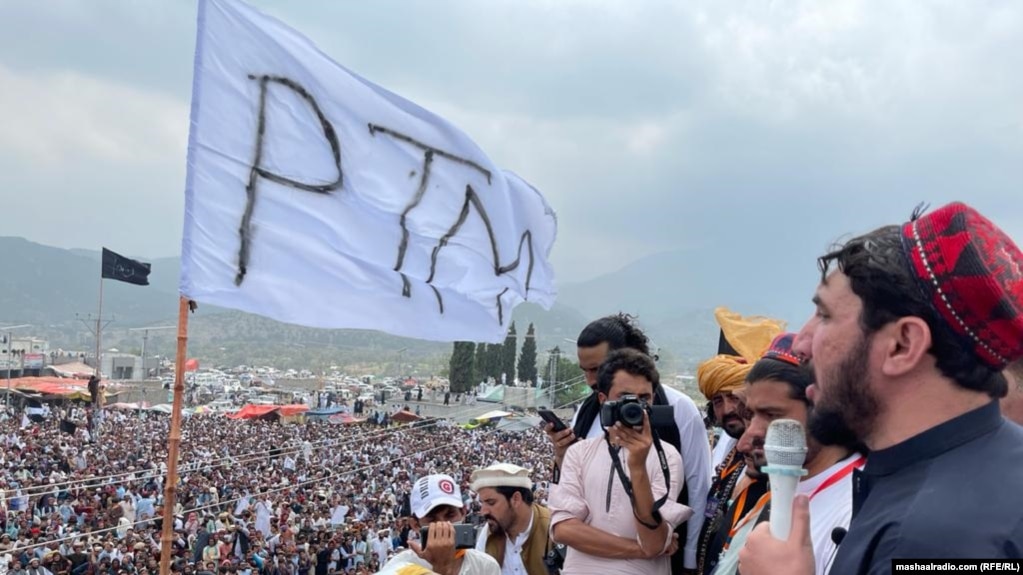
طالبان دې په افغانستان کې د ولس رایې ته احترام وکړي: منظور پښتين


د پښتون ژغورنې غورځنګ مشر منظور پښتين په افغانستان کې په جګړه کې پر ښکېلو طالبانو او نورو بااختياره خواو غږ کړی چې د

افغان ولس رايې ته دې احترام ولري.

د پښتون ژغورنې غورځنګ لخوا د جنوبي وزيرستان په مکين کې نن د جولای په ۲۷مه د افغانستان په امنيتي حالاتو رابلل شوې جلسې ته په وينا کې د غورځنګ مشر منظور پښتين وويل چې جنګ د مسلې حل نه دی او بايد ټولې ستونزې په خبرو هوارې شي.

پښتین وویل، په افغانستان کې اوس سړکونه، پلونه، پوهنتونونه او ښوونځي ودان شوي دي، خلک تعلیم حاصلوي، او یو داسې تیار افغانستان ړنګول پر ټول لر او بر پښتانه یو بوج اچول دي. او هلته چې د خلک یوڅه ژوند راجوړ شوی دی، هغه خرابول دي. دا ورانی دې نه کېږي. بلکې د افغان ولس رایې ته دې درناوی وشي. د افغانستان مخکینی او اوسنی حکومت د ولس په رایه راغلی او راتلونکې حکومت دې هم د ولس په رایه جوړ شي. د ولس د رایې پرته حکومت به په زور جوړول وي او په زوره راغلی حکومت د مسلې حل نه دی او پي ټي اېم په افغانستان کې یوازې د ولس په رایه حکومت مني. ده وویل پر ټولو ښکېلو غاړو ږغ کوي چې د ولس رایې ته دې احترام وشي.

نوموړي د پاکستان له عالمانو او سياستوالانو هم غوښتنه وکړه چې په افغان سوله کې دې خپل رول ولوبوي. پښتین زیاته کړه چې د افغانستان او پاکستان د پښتنو له مشرانو سره به په دغه سيمه کې د امنيت او پرمختګ راوستو په هدف غونډې کوي. هغه د پاکستان پر دولت غږ وکړ چې د پښتنو حقونو ته دې احترام ولري.

د پښتون ژغورنې غورځنګ مشر له حکومته غوښتنه وکړه چې سيمه دې له ماينونو پاکه کړل شي او د جګړو پر مهال دې د ړنګ شوو کورونو مالکانو ته معاوضې ورکړل شي. منظور دا هم وويل چې د وزيرستاني ځوان نقيب مسيد په وژنه تورن پوليس چارواکی راو انوار خلاص ګرځي او د پي ټي اېم مخکښ او د قامي اسمبلۍ غړی علي وزير په جېل کې دی. ده دا غوښتنه هم وکړه چې پوځ دې لادرکه کسان عدالت ته وړاندې کړي.

منظور پښتین خپله وینا د پښتونخوا ملي عوامي پارټۍ د صوبايي مشر عثمان خان کاکړ د مړینې له پېښې پیل کړه او زیاته یې کړه چې هغه تل د خپل ولس او وطن خبره کوله، تل یې د دې علاقې (وزیرستانونه) خبره کوله، تل یې د لر او بر افغان خبره کوله. د ده په وینا چې ''دا ټوله جلسه د عثمان لالا شهادت ته سلام کوي. د ده ژوند ته سلام کوي. منظور پښتین وویل چې دوی (پښتون ژغورنه غورځنګ) د عثمان لالا د مړینې په معامله کې د هغه له کورنۍ او ګوند سره تل ترڅنګ ولاړه ده.''

د مکين نننۍ جلسې ته په وينا کې د پيپلز پارټۍ مخکښ فرحت الله بابر وويل چې په سيمه کې د پښتنو جنګ ته د ورداخلولو لپاره بيا کوششونه روان دي او بايد پښتانه له دې ځان وساتي.

د پي ټي اېم يو بل مخکښ او د قامي اسمبلۍ غړي محسن داوړ بيا جلسې ته په وينا کې وويل چې څومره طالبان دي، که هغه په افغانستان کې دي او که په پاکستان کې، دوی د تشدد له لارې قبضه کول غواړي او د ده په خبره دوی د افغان ولسمشر اشرف غني د جمهوري حکومت ملاتړ کوي. د مشال رېډيو خبريال وايې د جلسې پر وخت نېټ او ټیلیفون سګنلې بند کړل شوې وې او شا او خوا پنځلس زره کسانو د مکين په جلسه کې ګډون وکړ.

https://www.mashaalradio.com/a/31379555.html

EDITORIAL: Delta Variant and Pakistan

With the Delta variant turning out to be a cause of grave concern in Sindh and Gilgit-Baltistan, their provincial governments have taken drastic steps for lockdown measures that may be difficult to absorb for a great number of businesses but remain vital for public safety. While the national positivity average hovers around 6%, the 25% rate in Karachi is unprecedented with hospitals unable to cope the additional burden. Similarly, an approximately 9% rate for Gilgit-Baltistan is equally concerning. Even the district administration in Gwadar recently chose to close down the entire city for the next two weeks. Notably, just 3.2% of Pakistan’s population has been fully vaccinated which substantiates the notion of slow vaccination process. A number of factors are responsible for such a meagre rate including conspiracy theories and general hesitations. A lax attitude on part of sections of the public is also contributing to the staggering rise in number of cases as unvaccinated people are going out and about without realising the consequences. While vaccination does not ensure total immunity, it does help reduce the chances of fatalities despite some rare exceptions. Even SOPs are being ignored in large number of places which the authorities need to be strict about. Reportedly, domestic air travel is being conditioned with full vaccination from next month.
This is a step in the right direction for the greater good of the public which needs to cooperate with state authorities. Though a bit late to the vaccination rollout plan, the arrival of Moderna and Pfizer vaccines is a great sign for international travellers. This would assist them in securing quarantine exemptions in tourism and business-oriented countries.
However, a lot more needs to be done for containing this menace of a pandemic which is here to stay for longer than expected. For this, global efforts need to remain collective and devoid of any political manoeuvrings.
https://dailytimes.com.pk/796394/delta-variant-and-pakistan/

Imran Khan And Taliban: An Impending Disaster – OpEd

By Raza Shahani
When I had touched the consciousness of watching the black-and-white television, I saw the Taliban using heavy weapons against their compatriotsto occupy Soviet-left Afghanistan. While the Taliban were rooting out their opponents with the blitzkrieg speed, the people and state in Pakistan were walking swagger and hubris. Needless to say, Pakistan, along with the Saudi Arabia and the UAE, promptly recognized the Taliban regime and established the diplomatic relations. Similarly, a batch of millions was born in Pakistan during latter half of the 1990s; the period, during which the Taliban were establishing their rule in Afghanistan. Today, those Pakistanis born in mid-90s have reached the age of their mid-20s. This is the prime age for getting on work, job or begin a business to sustain their family and make life going. However, the situation is otherwise.
After capturing Kabul in 1996, the Taliban hosted Al Qaeda, the international terrorist organization. Thus, Al Qaeda began operating from Afghan soil against the US interests in the different countries. Finally, it blew up Twin Towers with striking hijacked plans. The Taliban rejected the US pleas and warnings to dissociate from Al Qaeda and handover its leadership to the US. Forced to bomb the Taliban regime and Al Qaeda, the US demanded Pakistan to join the international coalition against the terrorist organization and its host. In fact, being a weak country, Pakistan couldn’t resist the US demand and joined the coalition forces unwillingly as a frontline state against the Taliban and Al Qaeda. The war dragged on for two decades. As its spillover effect, the war entered the Pakistani territory. The cost of war for Pakistan has been unimaginable – in terms of both men and material. The life of youth was ruined. They were wasted!
In fact, when the war was ending after two decades, the Pakistani youth born in 90s was expecting peace and opportunities here in Pakistan. Yet, again they are seeing the Taliban, weapons, war and no opportunity to undertake the responsibility. However, once again Khan Regime and the system-beneficiary people and institutions are celebrating the Taliban gains in Afghanistan! 

  Ironically, up to entering politics, Khan had spent his life dancing and debouching with wine and women in the clubs, ball parties and on the beaches in the West. His own nearly necked photos and video clips with his so many western girl friends litter the internet. However, Khan perfectly knew that Islam can be easily sold out to the Pakistanis, especially to the Punjabis. He then rightly sensed the tilt of the security establishment towards the Taliban and the like. So, Khan, a playboy, put on the garb of a piety teacher. Besides, Khan assumed the role of the political mouth piece of the Taliban. This was the reason the Taliban had nominated him as the head of their negotiating team to hold dialogue with the Pakistani government. These two factors, peoples’ frustration with the traditional parties and last but not least the help of the establishment helped him come in power. But, Khan brutally failed to deliver. The people again felt cheated.

Nevertheless, Khan succeeded in concealing his governance failure under the cloak of religion. The first thing he did was to purchase Ertugrul, a Turkish drama series. The drama series was based on Jihad and in it was eulogized cutthroat culture! This cutthroat culture enamored, especially the people of the Punjab, who constitute more than 50 percent population of Pakistan. Moreover, the next misleading tact Khan employed was to exaggerate the subject of Islam phobia. Khan’s hyperbole against Islam phobia further captivated the people in the Punjab.
The result was further radicalization of the society to the point of terrorism and rebellion against state. In Baluchistan religious terrorists abducted Hazara Shia coal-mine workers and beheaded them. Besides, a frightening scene was seen in the Punjab, where hundreds of thousands militant-protesters filled the streets of the nearly all cities of the Punjab to coerce the government to oust the French ambassador on the blasphemy caricature charges. The protesters were so radicalized that they killed, brutally beat and paraded cops on the roads. Nearly around a week, the Punjab was hijacked by the zealots. The state then kneeled before the lynching crowds and signed a peace deal with them while promising to bring the issue of ambassador in the parliament.
Thus, with the government of the Taliban in the brethren neighboring Afghanistan connected with the long, rugged and porous border, already hyper-radicalized society would be further radicalized. Pakistan is not a homogenous society. It is divided on the sectarian lines. So, the sectarian violence would be revived. Furthermore, drugs and weapons would inundate the country.
Apart from all aforementioned pearls of the Taliban regime in Afghanistan, the frightening scenario is that the Taliban may encroach upon the Pushton areas of Pakistan, as the Afghan Taliban and the Pakistan Pushton are the same people connected by the blood, language, history, culture and geography. What severs them is the Durand Line drawn by the British during ending part of the 19th century. Then Pakistan army will be fighting the Taliban. This scenario is possible because the ethnicity and religion can mix!
As a consequence of the Taliban in Afghanistan, war, weapons, drugs and violence would deprive the Pakistani youth their future! Again this batch born in the mid-90s would be wasted and ruined!
https://www.eurasiareview.com/26072021-imran-khan-and-taliban-an-impending-disaster-oped/

Pakistan minister Sheikh Rashid Ahmed can ride horses, row boats. But he’s just a meme for many

SIMRIN SIRUR
Interior Minister Sheikh Rashid Ahmed posted pictures and videos of himself relaxing at his mansion called ‘Freedom House.’ Pakistani social media knew what to do next. 

 Imphal: A lot is happening in Pakistan: Covid-19 positivity rates are soaring, a civil war in Afghanistan is threatening to spill over into the country, and the murder of an ex-diplomat’s daughter has caused a nationwide uproar. But what is Pakistan’s Interior Minister Sheikh Rashid Ahmed keeping himself busy with? He is riding horses and rowing boats at his Freedom farmhouse in Rawalpindi. It sent Pakistanis on social media into splits, who called him ‘nalaeq’, ‘donkey’, ‘Ertrugul Ghazi’, and ‘another play boy’. His house? “(Press) Freedom (Slaughter) House.”
Ahmed took time off during Eid and posted pictures and videos of himself relaxing at his mansion, which he calls ‘Freedom House.’
The minister is known for his candour and media savviness, but social media users haven’t taken kindly to this display, and have been trolling him ever since.
A few comments even betray a sense of frustration with Rashid Ahmed’s performance as Interior Minister.
“Please be honest to fix the problems under your ministry this time,” said a user on Facebook under a video of Ahmed paddling in a boat.
Besides the farmhouse, the minister also owns a Lal Haveli in Rawalpindi, which has its own YouTube channel. He appears in comedy shows, where he jokes that the young follow him because he is in “second-hand good condition”. If the host didn’t laugh repeating it, it’s possible to miss the humour there. And before you could dig into his past to uncover some uncomfortable truths, Rashid Ahmed himself would tell you he has been jailed several times, all through his school and college days.
Freedom farmhouse But it’s Rashid’s Freedom House that gets everyone’s goat, especially the Pakistani media. The property is treated by the news channels like a celebrity mansion to be explored. Dunya News once did a special feature on the “undrooni manzar (insides)” of the mansion.
They reveal a “model” house inside the property, which was made for “only” Rs 17 lakh.
The farmhouse’s main attraction, though, according to the channel, is a deep cavern which was designed by none other than Rashid himself. Dreamy stuff.
But this is what they don’t mention: Rashid Ahmed caused huge embarrassment for the Pakistani government when JKLF chief Yasin Malik claimed that this same farmhouse was used to give arms training to Kashmiri separatists, including himself. Apparently, this is why the farmhouse is named ‘Freedom House’. Of course, Ahmed denied the claim. But that’s not all. The Pakistan Muslim League-Nawaz accuses him of having “grabbed” the land.While news channels may have to skip such coverage, social media users aren’t as forgiving, questioning Ahmed from where he acquired all the wealth to build properties.“What business did his father have or does he have? This farmhouse was made of the money stolen from the people and the money given to the Army with the money donated to Italy [sic],” a user commented on Facebook.
Some also wondered how Rashid Ahmed was able to fill the lake with water to paddle around in when Rawalpindi is reeling under a dry spell.
An ‘embarrassing’ minister
Rashid Ahmed has been in politics for a long time, and over the last 35 years, has been in charge of 15 ministries, interior being the latest.
Often a subject of memes, he found his place in one alongside Prime Minister Imran Khan “planting pine trees” — only this time he is riding a horse as Khan is shown digging graves named Economy, Kashmir, CPEC, Rupee, Decency, Merit in Freedom farmhouse.
https://theprint.in/go-to-pakistan/pakistan-minister-sheikh-rashid-ahmed-can-ride-horses-row-boats-but-hes-just-a-meme-for-many/703699/

Why a Taliban victory may not be everything Pakistan wished for

By Scott Peterson
@peterson__scott
In 2017, then-President Donald Trump singled out Pakistan for giving “safe haven to agents of chaos, violence, and terror,” the same groups “that try every single day to kill our people” in Afghanistan.
At the time, it was seen as long-overdue recognition of an open secret: that Pakistan, a U.S. ally, was backing its enemy, the Taliban.
“We have been paying Pakistan billions … at the same time they are housing the very terrorists that we are fighting,” said Mr. Trump. “But that will have to change.”
WHY WE WROTE THIS 

Pakistan’s heavy investment in the Taliban was vital in leading to America’s military defeat in Afghanistan. But is the prospect of a sweeping Taliban victory giving Pakistan second thoughts?

Fast-forward four years, and what has changed instead is that the Taliban are today sweeping across Afghanistan and threatening the U.S.-backed government in Kabul, as U.S. forces withdraw unconditionally.
Pakistan has invested heavily in just such an outcome. Despite consistent denials, Pakistan’s Inter-Services Intelligence (ISI) agency has been instrumental since 2006 in boosting the insurgents with explosives, cash, ideological recruits, and a cross-border safe haven, analysts say.And yet, as the Taliban juggernaut has accelerated its advance and vowed to re-establish a strict Islamic Emirate, signs of concern are emerging in Pakistan about the dangers of an outright Taliban victory over the United States and the government in Kabul.
Key players in Islamabad may be changing their thinking, as they weigh the prospects of a relatively friendly Taliban-led state against the risk of sparking renewed civil war and instability in Afghanistan, a refugee exodus, and an emboldened cadre of Pakistan’s own recently regenerated jihadists. “Pakistan wants the Taliban to take power [as] a culmination of the long-term strategy of bringing the Taliban back,” says Asfandyar Mir, an expert in political violence at Stanford University’s Center for International Security and Cooperation. “But at the same time it is nervous. It certainly appears to have some buyer’s remorse [with] concerns that the Pakistanis are starting to express more and more,” says Mr. Mir, speaking from Islamabad.
Pakistan’s homefront
One Pakistani concern is that the “Taliban’s dependence on them is going down, which has manifested itself in testy, poor behavior in meetings with senior military intelligence officials,” he says, giving Pakistani officials the impression that today’s Taliban are “harder to control” than in the past.
A larger concern for Pakistan is the energizing impact the Taliban’s ascendance is having on Pakistan’s own jihadist insurgents, the Tehreek-e-Taliban Pakistan, or TTP, which has close ties to the Afghan Taliban and has recently regenerated a campaign to overthrow the Pakistani state.
Pakistani intelligence and army chiefs reportedly have briefed Pakistani lawmakers that the Taliban and TTP – which has targeted numerous Pakistani intelligence and military officials – are two sides of the same coin. “Our jihadis will be emboldened. They will say that ‘if America can be beaten, what is the Pakistan army to stand in our way?’” an unnamed senior Pakistani official told The Wall Street Journal of the Taliban advance. “The TTP has really stepped up its violence against Pakistan. They have been hitting various military targets the last 6 to 12 months,” says Mr. Mir. “Pakistan probably underestimated that if you bring the Taliban to power in Afghanistan, that will obviously embolden Islamist insurgents inside the country. Due to the TTP’s stepped-up attacks, that reality is starting to crystallize.” The Taliban now control more than half of Afghanistan’s 400-plus district centers – most of those seized since June – but none of the 34 provincial capitals. The United Nations reported Monday that 5,183 civilians were killed or wounded the first six months of this year – a 47% increase over the same period last year.
The United States, Russia, and China have all pressured Pakistan to convince the Taliban not to advance on Kabul, and to instead find a political solution. In March, all four nations issued a joint statement opposing the “restoration of the Islamic Emirate” – the name the Taliban used for their state when they ruled in the late 1990s, which was recognized then only by Pakistan.
The Taliban immediately rejected the statement as “against all principle and not acceptable.”
Khalilzad’s visit to Islamabad Zalmay Khalilzad, the U.S. envoy for Afghanistan, visited Islamabad July 19 and met with the ISI chief and top officials. Pakistani Prime Minister Imran Khan has said his country, in the past, “made a mistake by choosing between warring parties” in Afghanistan and now has “no favorites.” After meeting Ambassdor Khalilzad, he said instability would cause “serious challenges” for Pakistan.
Just days before, Pakistan had tried and failed to convene a meeting in Islamabad between senior Afghan leaders, including President Ashraf Ghani and former President Hamid Karzai, with top Taliban leaders, to hammer out a power-sharing deal. Pakistan’s national security adviser, Moeed Yusuf, told Indian television Saturday that Pakistan was “obsessively focused” on a political settlement but had “very limited leverage” over the Taliban.
Kabul has complained bitterly for years about Pakistan’s support of the Taliban, and seen few signs of change. Whatever its security concerns, Pakistan has not stopped the Afghan Taliban from using its territory to recruit Pakistani fighters, provide safe haven, or care for wounded fighters.
President Ghani on July 17 said Pakistan had, in the previous month, allowed more than 10,000 “jihadi fighters” to enter Afghanistan.
“Can Taliban convince a single [Afghan] including themselves that they aren’t puppets of Rawalpindi’s GHQ [Pakistani military headquarters]? They are just a kill and destruction squad in the hands of Pakistan,” tweeted Amrullah Saleh, the Afghan first vice president and former spy chief, earlier this month. “Pak has once again opted for a very dangerous and costly adventure,” he said in another tweet. Peace talks as cover
Afghan officials say Pakistan has also abetted the Taliban’s use of intra-Afghan peace talks, which began last September but made little progress, to prepare for continued war.
Back in January, for example, Taliban negotiators were late in returning to the Gulf state of Qatar for talks scheduled to resume on the 5th.
“Where were the Taliban?” Ahmad Shuja Jamal, head of international affairs and regional cooperation on Afghanistan’s National Security Council, asked rhetorically during a webinar this month hosted by the Frontline Club in London. The answer, he said, came a few days later, when videos from Pakistan showed Taliban leaders “parading across a line of suicide bombers of the Taliban” and visiting “wounded Taliban terrorists” treated in Pakistani hospitals. Mr. Jamal accused the Taliban of planting explosive devices manufactured with Pakistani-produced ammonium nitrate “in people’s orchards, in people’s crops, in people’s abandoned homes and pathways into and out of their villages.”
The solution, he said, is for the U.S. and others to “pressure Pakistan, so that they actually do play, finally, a constructive role that only they can play in this equation.”
Pakistan, however, despite stated concern about Afghan Taliban victories, appears to have done little to meaningfully knuckle down.
“There was a big push to mobilize fighters in the last few months, in the [Pakistani] tribal areas and in the Pashtun areas around the south of Afghanistan in Baluchistan,” Carlotta Gall, a New York Times correspondent who covered Afghanistan and Pakistan for more than a decade, said in the webinar.
“We know there are a lot of bodies coming back, including of Pakistanis,” said Ms. Gall, author of “The Wrong Enemy.” The Nangarhar governor’s office tweeted Sunday, for example, that 39 dead Pakistani fighters were sent home the past two weeks. Videos show funerals of fighters in Pakistan, with white Taliban flags held aloft. “It’s a massive, state-organized campaign, and it’s been going on for 20 years,” said Ms. Gall, whose book title invokes Richard Holbrooke, the late U.S. special representative to Afghanistan and Pakistan, who once said, “We may be fighting the wrong enemy in the wrong country.” “Pakistan has never given up on its idea to have a client state in Afghanistan,” she said. “It hasn’t changed. It hasn’t stopped. The Americans knew it all along.”
A colonial power
That has been most clear to Afghans, who have been shocked by the speed and scale of destruction of the current Taliban campaign – and are suspicious of any claimed Pakistani change of heart.“Every Afghan now knows that the name used for these invasions is Taliban, but it’s actually the Pakistani Army in the uniform of the Taliban,” says Orzala Nemat, a Kabul-based analyst.
https://www.csmonitor.com/World/Middle-East/2021/0726/Why-a-Taliban-victory-may-not-be-everything-Pakistan-wished-for
Monday, July 26, 2021

Video - Tribute to President Asif Ali Zardari on his 66th Birthday

How elections happen in Pakistan-occupied Kashmir. Time to take lid off the biggest scam

By TARA KARTHA
@kartha_tara


Thanks to both Imran Khan and Nawaz Sharif governments, the ‘AJK’ legislative assembly is completely toothless. Why have an election at all?

It’s election time in what the Pakistanis like to call ‘Azad Kashmir’ — that thin slice of territory that is meant to showcase Kashmiri ‘independence’. It’s a different issue that it’s not independent at all, and that its legislature has the powers equivalent to a District Magistrate in India. But the pretence is maintained, once every five years, glamorous political leaders descend on Muzaffarabad, give speeches, and disappear, not to be seen again till the next round. It’s all rather delicious irony, given the beating of Pakistani political chests on self-determination in Kashmir.

The Azadi of ‘AJK’ elected bodies 

For the uninitiated, ‘AJK’ is a territory of about 13,000 sq km that was once part of the kingdom of the Maharaja of Kashmir, as is the rest of what we call PoK ( Pakistan-occupied Kashmir), which includes the much larger over 72,000 sq km of Gilgit Baltistan.

A hugely strategic area since British times, Islamabad quietly divided PoK into two through the still secret Karachi Agreement 1949, in complete violation of UN Resolution 47. Essentially, the ‘Azad Kashmir government’ handed over 12 subjects, like defence, foreign policy, and the coordination of all affairs of Gilgit Baltistan to Pakistan. In other words, ‘Azad Kashmir’ found itself a quarter of its former size, without any consultation with its own people. Subsequently, the basics of a presidential, and later a parliamentary system were set up, which meant a president, a prime minister, a legislative assembly etc, all of which sounded fine on paper. In reality, actual power resides with the Prime Minister of Pakistan, who chairs the upper house called the Kashmir Council in Islamabad, which is dominated by establishment cronies. The Council decided on everything from publication of newspapers to the appointment of the auditor general, leaving the legislative assembly with basic day to day running of the state. It does levy taxes, but tax officials are appointed by Islamabad.
In 2018, the outgoing Nawaz Sharif government tried to overturn this state of affairs with the Thirteenth Amendment, which quietly transferred the huge powers of the Council to the legislature and changed the terminology of ‘Interim Constitution’ to just ‘Constitution’. That would have given ‘AJK’ a certain independence. Then, Imran Khan’s government reacted with a hammer that was the Fourteenth Amendment in 2020. It took away even the few powers of the state, and indeed banned the use of the word ‘state’ at all. Among other changes, a new clause allowed any bill passed by the Council to become law, without the assent of the ‘President’ of PoK, completely eroded judicial autonomy, and further restricted political activity. It was virtual annexation, and was opposed ‘in totality’ by the Cabinet of ‘AJK’, but the legislative assembly was reported to have accepted it in December 2020. So, as of now, the ‘AJK’ legislative assembly is completely toothless. And it is to this body that elections are being fought. One wonders why anyone even bothers.
The election game
It is this sad travesty of a democratic institution that is going to elections. The legislative assembly consists of 55 seats, 45 of which are general, and 8 are reserved for women, technocrats and religious scholars. Of the 45, 12 seats are reserved for refugees from Jammu and Kashmir. In the past, most of these seats were usually usurped by the ruling party in Islamabad, because most refugees live in Punjab and Sindh. For instance, Jammu-1constituency’s voters are spread over Punjab, Sindh, and Balochistan provinces in 48 districts. This segment has little interest in local issues, and votes from provincial viewpoints. Another 8,000 families who migrated after 1990 have been settled near Garhi Dupatta by the Pakistan army. These voters are even more eager to please the powers that be.
A large number of seats are therefore already in the hands of Islamabad including some obvious candidates from 32 registered political parties, like the Tehreek-e-Labbaik, which assisted the deep State in defeating Nawaz Sharif in his home state in the 2018 general elections. It is now contesting elections despite being a proscribed organisation, in a typical sleight of hand of the deep State, with its candidates up for all seats including the refugee constituencies. Then are the mainland parties like the Pakistan Peoples Party and Imran Khan’s Pakistan Tehreek-e-Insaf (PTI), which have huge resources, compared to local parties like the Muslim Conference or the Jamaat-e-Islami, who usually opt to be a small minority in a government dominated by the Pakistani parties. Despite this, it seems that Islamabad still likes to make sure it has the seats. Federal Minister Amin Ali Gandapur who presides over the Ministry of Kashmir Affairs and Gilgit Baltistan, was reported to have paid some PKR 500,000 in cash to his party’s political workers in Mirpur, just weeks before elections. The money was ostensibly to repair a link road. Apparently, the exalted minister takes a deep interest in what should have been the job of local government.
As before, it is widely expected that the ruling PTI will swing the elections. Nonetheless, Prime Minister Imran Khan was in election mode, drawing large crowds. His speeches at Bhimber and Mirpur focussed almost entirely on the corruption of Nawaz Sharif, and how his own government had changed Pakistan from a beggar state to prosperity. The first one might be true, but the World Bank would certainly disagree with the second. Being Imran Khan, he could hardly resist a dig at Prime Minister Modi, but the Kashmir issue was largely mentioned only in passing. Party leaders hardly ever talk of Kashmir during elections in PoK. Benazir Bhutto didn’t, neither did Nawaz Sharif. Nor does Imran Khan now. It seems it’s not quite the soul-searing issue that Islamabad would have everyone believe. Essentially, it doesn’t get votes. That for India is the most interesting thing.
Meanwhile, the sitting ‘Prime Minister’ Raja Farooq Haider has accused Imran Khan and his ministers of ‘direct meddling’ in the elections. He should be careful. Last year, he was nearly charged with ‘treason’ against Pakistan, a charge hastily withdrawn as Rawalpindi realised the effect it would have on an apparently ‘Azad’ territory. And so the charade continues. Pakistani leaders will object to the creation of local bodies in Kashmir, the delimitation process, and upcoming elections, even as their legislative body is reduced to nothing at all. That process needs to be shown to Srinagar’s feisty politicians, the public, and the so-called international community. It’s time the lid was taken off the biggest scam of all.
https://theprint.in/opinion/how-elections-happen-in-pakistan-occupied-kashmir-time-to-take-lid-off-the-biggest-scam/702425/

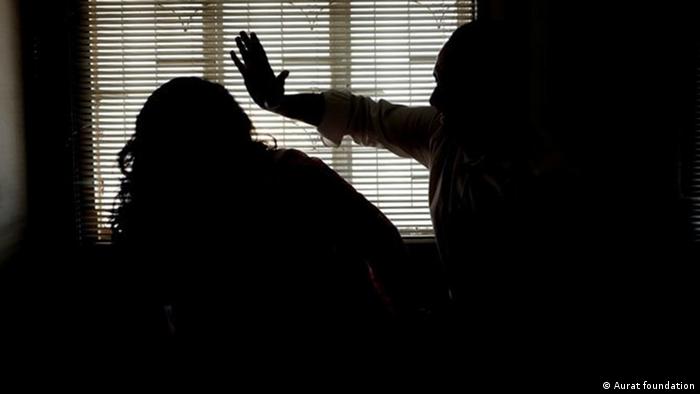
Noor Mukadam's murder exposes toxic misogyny in #Pakistan

A 27-year-old woman was first shot and then slaughtered by a male acquaintance in Islamabad last week. Experts say Noor Mukadam's brutal murder puts a spotlight on toxic misogyny in Pakistani society.

Noor Mukadam, a 27-year-old woman and daughter of Pakistan's former ambassador to South Korea, was brutally killed in Islamabad on July 20. The alleged killer, Zahir Zamir Jaffer, was reportedly her acquaintance. According to police reports, he beheaded Mukadam after shooting her.
Violence against women is widespread in Pakistan, but the recent spate of women killings has shocked the South Asian nation.
On Sunday, a man burned his wife to death in the southern Sindh province, while another man shot dead his wife, his aunt and two underage daughters in Shikarpur city on the same day. A 30-year-old woman who was raped and stabbed on Saturday in Rawalpindi city succumbed to her injuries on Sunday.
On July 18, a woman was tortured to death by her husband in Sindh. Last month, a man killed two women, including his former wife, in the name of "honor" in the northwestern city of Peshawar.
The recent cases have triggered a debate about the state's failure to protect women, the culture of impunity, and the reasons behind society's tendency to curtail women's independence and inflict pain on them. 

Culture of impunity 

Pakistan ranks as the sixth most dangerous country in the world for women and is currently witnessing a rapid rise in cases of sexual crimes and domestic violence.
Rights activists blame a culture of impunity for the recent spike in violence against women.
"A man who stabbed a young female lawyer more than 12 times was recently released by the court. What message does it send to the perpetrators of violence against women?" Yasmin Lehri, a former lawmaker from Balochistan province, told DW.
Mukhtar Mai, a women's rights activist and a 2002 gang rape survivor, shares the same view: "Those who commit violence against women are not afraid of legal consequences," she told DW, adding that for most Pakistani men, beating a woman is not even a form of violence. Pakistani society is still entrenched in feudal and tribal customs, she says.
Other activists also blame society's patriarchal attitudes . "Women are taught to obey men, as they have a superior status in the family," said Mahnaz Rehman, a Lahore-based feminist, adding that when a woman demands her rights, she is often subjected to violence.
Patriarchy and religion
Shazia Khan, a Lahore-based activist, believes that in certain cases, men feel emboldened by religious teachings.
"Islamic clerics interpret religion in a way that it gives the impression that it allows men to beat women. They also support underage marriages and tell women to obey their husbands even if they are violent toward them," she said, adding that these clerics actually encourage men to commit violence against women.
PM Khan's 'victim blaming'
Many rights activists in Pakistan blame Prime Minister Imran Khan's "victim blaming" for the rise in violence against women in the country.
Last month, the conservative premier faced backlash following his comments that appear to put the blame for sexual abuse on women.
"If a woman is wearing very few clothes, it will have an impact on the men, unless they are robots," Khan said during an interview for documentary-news series Axios, aired by US broadcaster HBO. He proceeded to say that this was "common sense."Earlier this year, he made similar remarks during a question and answer briefing with the public, suggesting that the rise in sexual violence in Pakistan was due to the lack of "pardah," the practice of veiling, in the country."PM Khan and his ministers continue to make anti-women remarks that encourage misogyny, and in a way violence against women, in Pakistan," said activist Shazia Khan.
Former lawmaker Yasmin Lehri believes that Khan's government hasn't done anything to protect women. Instead, she said, the government sent a bill to stop torture against women to Islamic clerics, who have stalled it. Conservatives blame 'Western culture'
Just like PM Khan, the country's conservative sections, too, blame the "Western culture" for sexual and physical violence against women.
Samia Raheel Qazi, a former parliamentarian, says the recent incidents of violence involve people who have drifted away from Islamic teachings.
"In Noor Mukadam's case, the alleged perpetrator is a Westernized atheist," she told DW, adding that the weakening of the family system amid an onslaught of Western culture in the country is responsible for these crimes.
Lawmaker Kishwar Zehra agrees. "We need to revive our family values to stop these crimes."
https://www.dw.com/en/noor-mukadams-murder-exposes-toxic-misogyny-in-pakistan/a-58645017

European Parliament to withdraw Pakistan's GSP+ status over abuse of blasphemy laws


Amid abuse of the blasphemy laws and cases widely reported across Pakistan, the European Parliament has moved to withdraw Islamabad's GSP+ status.

Philippe Jeune, writing in EU Political Report said that the European Parliament has criticised Pakistan's controversial blasphemy laws and called for a review of the status quo.

Pakistan is a major beneficiary of the trading opportunities offered by the EU Generalised Scheme of Preferences (GSP).

From January 1, 2014, Pakistan has benefited from generous tariff preferences (mostly zero duties on two-thirds of all product categories) under the so-called GSP+ arrangement aiming to support sustainable development and good governance.

In order to maintain GSP+ status, Pakistan is obliged to ratify and effectively implement 27 core international conventions on human and labour rights, environmental protection and good governance.

On April 24th of this year, in a Joint Motion for a Resolution, supported by all major political groups, MEPs called for an immediate review of Pakistan's eligibility for GSP+ status, and considered appropriate, the withdrawal of that status, said EU Political Report.

Such a move, which apparently enjoys the support of the majority of the house, would be highly damaging for Pakistan's economy: from 2010 to 2020, EU27 imports from Pakistan have almost doubled, with much of the growth coming in the aftermath of the award of GSP+ in 2014, wrote Jeune.

According to figures released by the European Commission, the EU is now Pakistan's second most important trading partner, accounting for 14.3 per cent of Pakistan's total trade in 2020 and absorbing 28 per cent of Pakistan's total exports.

Parliamentarians alleged that the blasphemy laws are used to "incite harassment, violence and murder against those being accused, causing people who are accused of blasphemy have to fear for their lives regardless of the outcome of judicial procedures."

They further stated that "it is widely known that Pakistan's blasphemy laws are often abused by making false accusations that serve the personal interests of the accuser," the report added.

Moreover, EU Today reported that as per a US news agency investigation, sexual harassment, rape and physical abuse by Islamic clerics teaching in madrassas or religious schools throughout the country is a common phenomenon.

It is in these schools - known as Madaris-e-Deeniya in Urdu - that many of the country's poorest, and most vulnerable study.

Whilst the government has promised to modernise the curriculum and make the madrassas more accountable, police say the problem of sexual abuse of children by clerics is pervasive and the scores of reports they have received, none of which have resulted in the conviction of a cleric, are just the tip of the iceberg, reported EU Today.

Religious clerics are a powerful group in Pakistan and are united. Whenever any allegations of abuse are brought against them they join hands to defend each other.

They have often been able to hide the widespread abuse by accusing victims of blasphemy, defamation of Islam, or defamation of the prophet, which carries a mandatory death sentence, reported EU Today.

In such a scenario, the family of any young girl - or boy - alleging sexual abuse by a cleric, faces two options.

To report the offence, knowing that no action will be taken against the cleric, who will invoke Pakistan's draconian and internationally condemned blasphemy laws, and stigmatising the victim for life, or worse: those accused of blasphemy often face the wrath of the mob or they can say and do nothing.

On April 28th, 2021, the European Parliament adopted a joint motion, supported by all major political groups, for a resolution on the blasphemy laws in Pakistan, calling for more comprehensive approaches to address such abuses of the laws as described above in Pakistan, reported EU Today.

The United States Commission on International Religious Freedom has previously called for the elimination of blasphemy laws throughout the world - globally, 84 countries have such laws, although few if any are as far-reaching, draconian, or as open to abuse as those of Pakistan.

Pakistan has the highest rate of enforcement of blasphemy laws, with Iran the second highest. They impose the death penalty for defaming the Prophet Mohammed.

https://in.news.yahoo.com/european-parliament-withdraw-pakistans-gsp-164709614.html

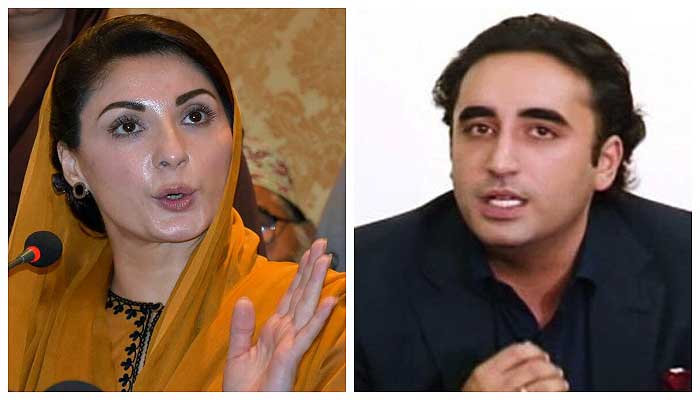
#PTI won through rigging in #Kashmir elections, allege Bilawal Bhutto and Maryam Nawaz


Bilawal Bhutto says despite rigging and violence by the PTI, PPP has emerged as the largest Opposition party in Kashmir. Says Election Commission failed to take action against the PTI.
Maryam Nawaz says she has not accepted the results and will never accept them.

PPP Chairperson Bilawal Bhutto Zardari and PML-N Vice President Maryam Nawaz Monday alleged that the PTI won the Kashmir polls through rigging and rejected the results of the elections held Sunday.

Maryam praised the party workers for "putting up a good fight" despite "violence and rigging by PTI" in the Kashmir elections held Sunday.

According to unofficial results, the PPP has emerged as the largest Opposition party in the AJK Legislative Assembly with 11 seats while PML-N bagged six and two other parties got one each. The PTI won 25 out of 45 seats.

Taking to Twitter, Bilawal Bhutto claimed the election commission had failed to take action against the PTI for violating electoral rules.

"Despite this, PPP emerged as the largest opposition party in AJK with 11 seats, up from 3 seats last time. incredibly proud of PPPAJK for putting up a good fight," the PPP leader tweeted while sharing the list of the party's winning candidates.

'Will not accept results'

Meanwhile, PML-N Vice President Maryam Nawaz tweeted that she has not accepted the results and will never accept them. "I did not accept the 2018 results either or acknowledge this fake government," she added.

She lauded the party workers and voters.

"What response we will come up with for this shameless rigging, is a matter that the party will decide soon, InshaAllah."

In another tweet, she praised the party workers for fighting against all odds in the elections.

"I would like to commend all the voters and workers of PML-N for their courage and bravery. I am very proud of them," she said.

https://www.geo.tv/latest/361662-pti-win-through-rigging-in-kashmir-elections-allege-bilawal-bhutto-and-maryam-nawaz

Friday, July 23, 2021

Video - 07/23/21: Press Briefing by Press Secretary Jen Psaki

Video Report - #Tokyo #Olympics #Games - Athletes' excitement as Tokyo Olympic Games begin •

Video Report - World Heritage Sites: How are they selected? | Inside Story

Video Report - 'You look like an idiot': Don Lemon reacts to Rand Paul's dustup with Fauci

Opinion: Democrats’ defense of voting rights isn’t shameless. But Republicans’ silence is shameful.

 Opinion: By Jonathan Capehart

Can’t believe I’m going to share this story to get into a considered opinion on voting rights, but . . . here goes. Back in the day, when you had to go to a store to rent movies on VHS tapes, a certain hormonal teen approached the counter with four or so G-rated titles. As I handed them to the clerk, I prayed he would make no mention of the racy movie mingled with them.
No such luck. The clerk rattled off each title aloud. And when he hit that smutty film, he not only raised his voice, he turned a one-syllable title into a multi-second public comeuppance. Shamed but undeterred, I took the movie home.This embarrassing episode came to mind after reading John C. Ackerman’s op-ed in The Post entitled “Are our election laws here in Illinois also ‘21st century Jim Crow?’”
No Republican president has won Illinois since 1988, thus defining it as a blue state. Ackerman, a Republican and the county clerk in Tazewell County Ill., uses that status to hammer away at Democratic criticisms of new voter (suppression) laws in Republican-controlled states. He compares and contrasts Illinois’ restrictions on vote-by-mail, third-party ballot collection, ballot drop boxes, and bans on distributing food and water to folks waiting in line to vote to those being rushed through in Georgia, Texas and Florida.
The spirit of John Lewis lives on in the voting rights fight
Most notably, Ackerman took issue with President Biden and other Democrats who call the current cluster of restrictive laws “21st century Jim Crow.” And he especially took offense at the president, in his powerful defense of voting rights last week, asking aloud of Republicans, “Have you no shame?” In response, Ackerman says it is the Democrats “and their media allies” who are shameless.
Nope, not by a long shot.
What Ackerman seems to hope no one will notice is the equivalent of that naughty VHS tape I hoped that clerk would overlook. Leave aside, for the moment, Republican objections to how and when votes are cast and by whom. Focus on this: Ackerman has nary a word to say about the moves by Republican governors and legislatures to rig who gets to count the votes and whether said votes count at all.
The Georgia law strips the independently elected secretary of state of their role as chair of the state’s election board. Instead, the chair will now be elected by the General Assembly, which is controlled by Republicans. This galling change came after Brad Raffensperger, a Republican who declared “the process was fair and accurately counted,” resisted the demands of then-President Donald Trump to “find 11,780 votes.” “To me, this is simple: This is election subversion. It’s the most dangerous threat to voting and the integrity of free and fair elections in our history. Never before have they decided who gets to count — count — what votes count,” Biden correctly assessed in his speech. “Some . . . state legislatures want to make it harder for you to vote. And if you vote, they want to be able to tell you your vote doesn’t count for any reason they make up. They want the ability to reject the final count and ignore the will of the people if their preferred candidate loses.”
On the filibuster, ‘stop being afraid of Mitch McConnell ’cause he’s not afraid of you'
This is the threat that looms large over next year’s midterm elections and the 2024 presidential vote. This is why there is such urgency around passage of the For the People Act, which continues to languish in the evenly divided Senate. And this is why the calls are growing louder for reforming the filibuster to allow passage of that vote-protection bill by a simple majority. But the onus is not just on Democrats or the president to protect the integrity of our elections and, therefore, our republic. It is on local officials like Ackerman.
As Biden said: “We must ask those who represent us at the federal, state, and local levels: Will you deny the will of the people? Will you ignore their voices?” So far, if Ackerman is any barometer, the Republican response is an undeterred and shameful silence.
https://www.washingtonpost.com/opinions/2021/07/22/democrats-defense-voting-rights-isnt-shameless-republicans-silence-is-shameful/

Video - Mai Baghi Hoon (Jeyay Bhutto) | Alamdar Khan

Pakistan stands at 30th number in list of countries with 1 million COVID-19 cases

Coronavirus cases in Pakistan on Friday crossed the 1 million milestones after the country reported 1,425 new infections during the last 24 hours, the National Command and Operation Centre (NCOC) reported on Friday. 25,215 tests were conducted in the last 24 hours and the positivity ratio was below 6%. The current positivity rate stands at 5.65% and the total number of cases are 1,000,034.
The grim milestone was reported exactly two months after Pakistan’s tally of positive cases crossed 900,000. It also makes Pakistan the 30th country in the world to report more than one million cases.
The nationwide death toll from the coronavirus now stands 22,939 after 11 people lost their lives to the disease.
While the number of recovered patients stands at 923,472 and the active cases of the country are 53,623.
https://dailytimes.com.pk/795221/pakistan-stands-at-30th-number/

#JusticeForNoor - Murder of ex-diplomat’s daughter has shaken #Pakistan. Media & money are both being questioned

PIA KRISHNANKUTTY
The brutal murder of 27-year-old Noor Mukadam has sparked fresh debate over the safety of women. Now there are thousands of tweets asking for justice.
Pakistanis are asking what it will take to punish influential criminals in the country. This time they are angry over the brief abduction of an Afghan envoy’s daughter and the murder of a former Pakistani diplomat’s daughter in the span of a few days. Citizens are trending #JusticeForNoor to search for answers that authorities won’t give them.
The grisly murder of 27-year-old Noor Mukadam, daughter of former diplomat Shaukat Mukadam, has sparked fresh debate about the safety of women.
According to reports, Noor Mukadam was shot at and beheaded after a quarrel in a residence in a posh area of Islamabad Tuesday. Allegedly, over a breakup.
The suspect, Zahir Jaffer, whose father is reportedly the CEO of a construction company in Islamabad, was arrested at the crime scene Tuesday.
Questions have been raised over how the Pakistani media reported the incident – revealing more about the victim than the suspect – and Jaffer’s mental health and ‘plan’ to leave for the US.
What happened to Noor

In an FIR, Noor Mukadam’s father stated that his daughter was missing since 19 July and her phone was switched off. She eventually called her parents to tell them she was travelling to Lahore with some friends and would return in a day or two, reported Dawn.
On Tuesday, the ex-diplomat said he received a call from the suspect informing him that his daughter was not with him. That same day, at around 10 pm, Shaukat Mukadam said he received a call from the Kohsar police station about his daughter’s murder.
This was reportedly the third brutal attack on a woman in the country in the past few days.
‘Put him on the Exit Control List’
The situation has become murkier after it was revealed that Jaffer is allegedly a US citizen and had booked a flight to the US on Wednesday — a day after the murder. There has also been speculation that he was fleeing justice and allegations that his family was trying to bribe the police and a judge.
Soon after the news broke of his arrest Tuesday, Twitter was flooded with images of the suspect and his family. The hashtag #JusticeForNoor has garnered thousands of tweets.
Pakistani actor Osman Khalid Butt raised calls for the suspect to be put on Pakistan’s Exit Control List, which prohibits certain individuals from leaving the country.
In a press conference Thursday, Senior Superintendent of Police (Investigation) Ataur Rehman assured people by saying, “Whenever someone’s brutal murder is carried out, we shouldn’t care about the financial position of the culprit even if they are the son of a very influential father.”
There was also social media furore over the alleged cause of the murder.
Meanwhile, the Pakistani model Mawra Hocane asked if Pakistan was a civilized society at all.
Publications like Dawn were also put on the spot for not revealing enough information about the accused and for reporting his name in a certain way.
“Dawn can tell you the name of the victim’s father and the victim’s age but won’t give you any details about the murderer Zahir Jaffer,” wrote one user.
Jaffer’s ‘mental health’ woes
The discussion about the suspect’s mental health cropped up amid rumours that he had a drug abuse problem.
“It seems that Zahir Jaffer had a longstanding drug abuse problem which is why he tried several times but couldn’t finish college & then installed in family business. The parents that didn’t attend to his issues are equally culpable in this heinous murder #JusticeForNoor,” tweeted political commentator Ayesha Siddiqa.
However, others like journalist Hamza Azhar Salam, asked how Jaffer was able to serve at a top post in his family’s business, Ahmed Jaffer and Company, if he was mentally ill.
In the midst of this, the police released a statement Thursday saying Jaffer was “sound and in his senses” when arrested from the murder scene.
https://theprint.in/go-to-pakistan/murder-of-ex-diplomats-daughter-has-shaken-pakistan-media-money-are-both-being-questioned/701558/

جنگ کرنی ہے یا امن؟ فیصلہ کشمیریوں کے حکم پر ہوگا، بلاول بھٹو

چیئرمین پیپلز پارٹی بلاول بھٹو زرداری نے کہا ہے کہ جنگ کرنی ہے یا امن کرنا ہے؟، فیصلہ کشمیریوں کے حکم پر کریں گے۔


باغ آزاد کشمیر میں جلسے سے خطاب میں بلاول بھٹو زرداری نے کہا کہ کشمیری حکم کریں، جنگ کرنی ہے تو ہم ساتھ ہوں گے، کشمیری حکم کریں گے کہ امن کرنا ہے تو ہم امن کریں گے۔

انہوں نے کہا کہ ہم سمجھتے ہیں کشمیر کے فیصلے کشمیری عوام کریں، ہم کسی کی ڈکٹیشن نہیں مانتے، عوام کا حکم مانتے ہیں۔

پی پی چیئرمین نے کہا کہ 25 جولائی آزاد کشمیر کے لئے امتحان ہے، الیکشن شفاف ہوئےتو یہ نشستیں پیپلز پارٹی کی ہوں گی۔

اُن کا کہنا تھا کہ آپ نے ساتھ دیا تو ہم باغ کی قسمت بدل دیں گے، پیپلز پارٹی کا آپ سے تین نسلوں کا رشتہ ہے۔

بلاول بھٹو نے مزید کہا کہ باغ کے جیالوں نے کارساز میں بی بی کا استقبال کرتے ہوئے جام شہادت نوش کیا، کوئی کٹھ پتلی جماعت آپ سے ہمارا تعلق نہیں توڑ سکتی۔

انہوں نے کہا کہ بینظیر بھٹو جب وزیراعظم تھیں تو پوری دنیا پاکستان کی بات سنتی تھی جبکہ آج  کٹھ پتلی بات کرتا ہے تو لوگ مذاق اڑاتے ہیں۔

پی پی چیئرمین نے کہا کہ یہ کٹھ پتلی کشمیر کا ذکر کرتا ہے تو غلطی کرتا ہے، آپ کو عوامی وزیراعظم چاہیے یا کٹھ پتلی وزیراعظم چاہیے؟

اُن کا کہنا تھا کہ پاکستان کا وزیراعظم عمران خان، بھارتی وزیراعظم نریندر مودی کے جیتنےکی دعا کرتا رہا ہے، کسی کٹھ پتلی کو کشمیر کا سودا کرنے کی اجازت نہیں دیں گے۔

بلاول بھٹو نے یہ بھی کہا کہ آزاد کشمیر میں آج تک ن لیگ کی حکومت ہے، انہوں نےآپ کے لئے کیا کیا؟ یہاں کی حکومت نے آپ کو لاوارث چھوڑا، ہم نہیں چھوڑیں گے۔

انہوں نے کہا کہ ایک گندا وزیر کشمیر میں لاؤنچ ہوا ہے، ہم حکومت بنائیں گے تو پہلے دن ہم تنخواہ اور پنشن میں اضافہ کریں گے۔

پی پی چیئرمین نے کہا کہ ذوالفقار علی بھٹو کے بارے میں بات کرنے والے ذرا آئینہ دیکھیں،کلبھوشن کو این آر او دینے والے بھٹو کو غدار کہہ رہے ہیں۔

اُن کا کہنا تھا کہ اگر پاکستان میں جمہوریت ہے تو بھٹو کی وجہ سے ہے، ہمارا وزیراعظم سیاست، عوام اور کشمیر پر سودا کرتا ہے۔

https://jang.com.pk/news/960413 

Video - #BilawalBhutto #PPP PPP Chairman Bilawal Bhutto addresses a rally in Bagh Azad Kashmir [Bilawal Bhutto] | GTV News HD

Wednesday, July 21, 2021

I will NEVER compromise on Kashmir issue, Zulfiqar Ali Bhutto Shaheed

Vote for Teer - #kashmir - Vote for your rights; right to ownership, right to govern and right to employment.

OP-ED: PTI’s naya Pakistan juggling with the old one


 BY Qamar Rafiq

Open your eyes as wide as you can and take note of where you are, why you are, and who you are with? For too long, our politics has been alienated by those who believe that decency, compassion, and honesty are not important ingredients of a recipe. That is why our politics has remained polarised to rust the compass that activates magnets of wisdom and prosperity in a society.
Today, the gap between the status quo and real life has become treacherously visible, and ironically, the faith in politics as a hope for change and a force for good has doomed over the entire country. It is almost eight years since Imran Khan stood at D-Chowk to tell us that he had a “vigorous plan” to fix the loopholes of the economic and social care system and offered multiple reform schemes. And yet we are no closer to any semblance of one. Perhaps, he seems so desperate to steal himself a slice of ecstasy, whereas, the members of his squad are carrying a knife in their pockets, looking for trouble, finding it everywhere, diagnosing incorrectly, and applying the wrong remedies.
To the best of my knowledge, the Pakistan Tehreek-e-Insaf (PTI) leadership seems tired, exhausted, confused, aggravated and much more doubtful as to whether they have a strategy to deliver jobs, good health care, education, and basic utilities of life. Now in 2021, an entire generation of young people have almost no chance of getting jobs whilst gig economy workers are left to moan in grinding poverty. Instead of showing us the way forward, PTI’s inadequate domestic policies have rightly declared a war on overloaded healthcare and outdated education system which has bruised the dream of a welfare state.

  According to UNICEF, Pakistan has the world’s second-highest number of out-of-school children (OOSC) with an estimated 22.8 million children aged 5-16 not attending school. Over 17 million people still have no choice but to drink contaminated water, and more than two out of five people do not have an access to proper toilets.
Similarly, judicial independence, law and order, current account deficit, and energy crisis are the fundamental issues in which the PTI leadership has miserably failed to bring any considerable reform despite making tall claims.Similarly, judicial independence, law and order, current account deficit, and energy crisis are the fundamental issues in which the PTI leadership has miserably failed to bring any considerable reform despite making tall claims.Over the past few years, I have been contacted by many families sharing heartbreaking stories of having their hands tied behind their backs because of cultural wars manufactured by the PTI.
Distressingly, Pakistan’s population as well as its government, whether we like it or not, have became intolerant and just imposing their beliefs on others. Today, Pakistan is amongst the worst countries in the world that is damaging the values of religious freedom, human respect, and media independence. Our ethos of religious freedom, human respect and media independence is chronically welded with the profound sense of insecurity and economic risks. Meanwhile, shifting the blame on previous regimes is typically the all-round card PTI and their trading partners use day and night. This creates an impression of escaping responsibility that has become the recurrent theme of the PTI government.
From the perspective of academic models, the PTI has cynically operated the wind turbines of accountability to put opposition heads under the water. Eventually, Imran Khan and his acolytes’ serial incompetence have failed to integrate the working class into Pakistan’s politics which has increased the disparities between poor and rich in terms of opportunities and status. The last time I checked the road to “Naya Pakistan”, it was not through the yard of injustice, inequality, and inhumanity. What strikes about all this bedtime story is how swiftly many of us perceived the PTI success in the 2018 election as a victory for hope over hate, decency over division, truth over lies and compassion over hatred. Where is any of that in our politics, I wonder?
Perhaps, presently, the leadership of Pakistan seems digressional because below the par politics has discarded the foundations of national unity and integrity that is further plaguing the state organs. The current time needs the government to realign its thoughts and decide the right path for the nation.
The PTI’s delusion can convince Prime Minister Imran Khan’s blind voters that PTI has delivered, but this does not change the fact that his overconfidence has disfranchised poor voters, misdirected foreign policy, disrespected diplomatic norms, and fractured the economy. With all these mounting challenges, oppositional political parties have a duty to expose the neglect of those who lead us rather than cannibalise each other. Although there have been a lot of doom predictions about the life expectancy of the PTI government, it won’t see power again until it recalls the promises at the time of their win. Nevertheless, PTI will be remembered as a comedy serial of magnificent lies for many years. I bet you the time will never heal some of our scars, even after the demagogic play of PTI to rebuild a bridge even where there is no river. If we are lucky enough to emerge from the siesta of hobgoblins fantasy, there will be a great prospect to harness the solidarity and national spirit that we have not seen over the past years, to rebuild our economy and our public services, to bring our communities bond together, and to put honesty, compassion, and integrity back at the heart of our politics.
Certainly, these are the lessons you might want to teach your children that being brave is more important in the first place than having failed to understand politics has no relation to morals. Today, the crucial question with a collective sense of heartbreak remains unanswered that is why is the truth buried for so long? The answer to this million-dollar question can be traced without an algorithm or google search engine. In fact, PTI showed us a “Naya Pakistan” but the old one has not gone away.
https://dailytimes.com.pk/794857/ptis-naya-pakistan-juggling-with-the-old-one/

Free Balochistan Movement forms a New Cabinet

The National Council of Free Balochistan Movement (FBM) chaired by Hyrbyair Marri was held on July 4th, 2021 after the completion of the first term of the central cabinet.


The meeting reviewed the performance of the institutions on the completion of the term of the first cabinet of the Free Balochistan Movement. The names of the heads of the new executive departments were presented to the National Council for approval at the meeting. The National Council questioned them about their qualifications and responsibilities. At the end of the meeting, the National Council headed by the Judicial Committee of the Free Balochistan Movement approved the new cabinet of the Free Balochistan Movement by voting as follows:

1. Jamal Nasir Baloch  for Foreign Affairs Department

2. Beebagr Baloch for International Department of FBM

3. Faiz Muhammad Baloch for Finance Department

4. Haider KB Baloch for Organizational Department External,

5. Nobat Marri for Information Department 

6. Sadiq Raisani Tribal Affairs Department 

The oath taking ceremony of the new cabinet was held on July 18th 2021 under the chairmanship of the party president Hyrbyair Marri and party president administered the oath of new the central cabinet. 

Talking to new cabinet of free Balochistan Movement, Mr. Hyrbyair Marri said that given the past changing geopolitics of our region  we need to further intensify our liberation movement.

https://balochwarna.com/2021/07/21/free-balochistan-movement-forms-a-new-cabinet/

China has much to teach Pakistan, other than how minorities should be handled

PERVEZ HOODBHOY
Whether for good or bad, the Chinese are a plain, hard-headed lot. There are no calls for Ertugrul-like men on horseback to resurrect some ancient kingdom.
When Prime Minister Imran Khan categorically endorsed China’s line on Uighur Muslims he succumbed to political expediency: “Because of our extreme proximity and relationship with China”, he said, “we actually accept the Chinese version.” A savvier politician facing the Chinese media might have tried a little hemming and hawing rather than dispense with truth, human rights and Muslim solidarity. Still, one must not be too harsh on the PM; any country which owes its life to a powerful patron has little leeway.
Much loved by some but feared by others, China today is an economic superpower. Geopolitics changed in 2017 when its GNP shot above that of the US. But what accounts for its phenomenal rise and ferocious progress? Equally, one may ask: why has Pakistan been on external life support from 1947 onward and barely limped along? The difference cries out for an explanation.
Max Weber, the 19th-century German sociologist, would have an answer. Since his pioneering work, social scientists know economic growth goes hand-in-hand with a society’s collective worldview and culture. Through data-driven research, Weber explained why Protestants and Calvinists had far outpaced Catholics in generating wealth and industrialising Europe. He concluded that progress-friendly cultures demand belief in rationality, rule of law, planning, punctuality, deferred gratification, and expectations of reward in this life rather than the next.
Certainly not how minorities should be treated! But there’s much else that China can teach Pakistan.
Were he alive today, how would Weber see China in relation to Pakistan?
First, China’s worldview is — like that of 19th-century Protestants — entirely future-focused and this-worldly. Notwithstanding the pride Chinese people take in their ancient science and civilisation, there is no deep nostalgia and no calls for Ertugrul-like men on horseback to resurrect some ancient kingdom. Whether for good or bad, and whether under Mao’s revolutionary communism or under Xi Jinping’s capitalistic communism, the Chinese are a plain, hard-headed lot.
This attitude sets the tone for education, both in school and university. Knowing that universities are the engines of progress, China is super-careful about who gets admitted. At the level of language, reasoning and math skills, Chinese students are expected to know everything that American students learn — but better. Today’s gaokao — the cheating-free university entrance exam — is a carryover from the rigorous exam system (keju) of ancient China’s civil service.
Reputed to be the toughest in the world, gaokao beats even that for various IITs (Indian Institute of Technology). Unfortunately, educated in a memorisation-heavy culture steeped in religious matters, most Pakistani university professors — including those who are HEC certified and with hundreds of research publications — would not clear Chinese university entrance exams.Second, a reborn Weber would see China clearly defining its national interest with economic advancement being at the very top. As a rationalist-materialist country China aims at becoming the world leader in space exploration, brain science, quantum computers, electric cars, biopharmaceuticals, renewable energy, etc. Five-year plans are followed to the letter; there is no empty chatter or arbitrary wish lists.At the next level of priority is politics. To reunite with Taiwan, China rattles its sabres from time to time. Nevertheless, China-Taiwan economic links are strong. Taiwanese companies have invested about $60 billion in China, and one million Taiwanese people live in China with many running Taiwanese factories. The Chinese political leadership keeps its military in check. There is no history of Kargil-like dead-end adventures and the military stays clear of trade matters. The warrior ethic is firmly subordinated to the capitalist ethic.
In Pakistan’s case, warriors define the national interest. Googling ‘national interest’, I found occurrences in speeches, university theses and in National Defence University publications. All such references were security and India related. In this single-minded approach, Pakistan-India trade remains hostage to Kashmir being resolved on Pakistan’s terms. Nowhere to be found is a plan for where the country hopes to be 20-30 years from now. No one takes the Planning Commission of Pakistan seriously.
Third, Weber would confirm that strong work ethics leads to high labour productivity, the backbone of economic growth. Although he knew only of Protestant-Calvinist workers and capitalists, the qualities of diligence, discipline, responsibility, punctuality and honesty of the skilled industrial workforce extends into the cultures of China, Japan, Vietnam, Korea etc.
In contrast, Pakistan’s labour productivity is appallingly low — less than half of China’s. Many economists and businessmen have pointed out that producing an item in high-wage China is cheaper than in low-wage Pakistan. Poor productivity owes to poor worker skills and general dissatisfaction. Exploitative employers pay minimum wages, ignore principles of fairness and disallow grievance mechanisms. But the ethics of workers are also low. Few take pride in or enjoy work, are diligent, or take initiatives. Like our parliamentarians and professors, most are shirkers who need to be reminded of their duties.
These poor habits start from Pakistani schools where kids are forced to focus on exam techniques and taught just enough to get by. Cheating is tolerated. Some parents — including those who emphasise religious rituals — encourage their children to cheat as a way to get ahead. But, at a still deeper level, quality education for all is impossible given extreme wealth disparities.
In China such disparities had been evened up by Mao’s communism. Although huge excesses happened in the Cultural Revolution, education was universalised and hard work celebrated. China is reaping dividends from its communist past. Pakistan never saw any such evening-up. Leaders of the Pakistan Movement — Jinnah and Allama Iqbal (the post-1930 Iqbal) included — were staunchly anti-communist. Some were big landlords who saw danger in educating their serfs. Education was a low priority in 1947 and remains low.
Curiously, the country that Pakistan’s founders feared and disliked most (after Russia) is now Pakistan’s closest ally. It does bash its Muslims; the evidence is irrefutable. Yet — other than how religious minorities should be handled — China has much to teach Pakistan. Among the most important lessons is creating a skilled workforce, giving dignity to labour, distributing wealth and public resources reasonably, emphasising birth control, and encouraging a mindset oriented to the future rather than the past. If Pakistan wants to break the crutches of foreign dependence, that’s the way to go.
https://theprint.in/opinion/china-has-much-to-teach-pakistan-other-than-how-minorities-should-be-handled/693390/