Saturday, July 10, 2021
OPINION: - The Ascension of Bernie Sanders


https://www.nytimes.com/2021/07/10/opinion/bernie-sanders-interview-maureen-dowd.html
Joe Biden, 20th Century Trustbuster

Antitrust lesson 101: Big government often makes big business bigger.
President Biden has modeled his spending agenda on the Great Society and New Deal. Now he wants to take antitrust policy back to the early 20th century. Or at least that’s how it looks from his executive order on Friday to regulate competition and impose more government control over the private economy. “In the early 1900s, Teddy Roosevelt’s Administration broke up the trusts controlling the economy—Standard Oil, J.P. Morgan’s railroads, and others—giving the little guy a fighting chance,” his summary states. Mr. Biden now wants to use regulation to break up Big Tech, finance, agriculture and healthcare companies, among others. At least two parts of his order are encouraging. He directs Health and Human Services to let hearing aids be sold over the counter, which would offset federal rules that make the devices more expensive than necessary. He also encourages the Federal Trade Commission to ban unnecessary occupational licensing, which is long overdue. These are the government barriers to entry that stymie entrepreneurs, often minorities, in services like hair-braiding or plumbing. These are deregulatory actions, but the rest of his order is about enhancing government power. Courts for more than a century have applied antitrust law based on the “rule of reason.” Scholars and judges across the political spectrum, including Phillip Areeda and Supreme Court Justice Stephen Breyer, have shifted antitrust focus from market concentration to economic analysis and consumer welfare.The new Brandeisians in the Biden Administration led by the National Economic Council’s Tim Wu (godfather of net neutrality) and FTC chair Lina Khan want to replace the rule of reason with the rule of politics. Mr. Biden’s order includes 72 directives that mostly aim to shackle businesses.Consider railroads. Government regulation of railroad rates was among the great failures of the 20th century. It reduced private investment and service and drove many carriers into bankruptcy. Congress abandoned it in 1980, but Mr. Biden wants to revive it. His order summary says there are only seven Class I freight railroads compared to 33 four decades ago. Yet freight prices have dropped 44% since 1981. Mr. Biden wants to force railroads to hand over freight traffic to competitors, which would reduce private investment and shipping efficiencies. He also instructs the Federal Communications Commission to restore the Obama -era “net neutrality” rules that regulated broadband providers like railroads. Investment fell after the FCC imposed net neutrality, then surged after the Trump FCC liberated carriers. Broadband last year cost 20.2% less and was 15.7% faster than in 2015. One reason is fierce competition. Democrats opposed the T-Mobile-Sprint merger in 2018, but it has boosted wireless competition and investment. The tie-up shows how business consolidation can improve consumer welfare. Economies of scale can reduce prices. Size also gives businesses more leverage to negotiate lower prices with suppliers.Prescription drug prices have fallen 2% since 2018 as the Food and Drug Administration has approved more generics and second-line therapies. Competition is working. But Mr. Biden nonetheless orders Health and Human Services to “issue a comprehensive plan within 45 days to combat high prescription drug prices and price gouging.” Translation: Government price controls, which will reduce innovation and investment in new treatments. It’s no coincidence that consolidation has been greatest in the two industries that have experienced the biggest increase in regulation over the last decade—finance since Dodd-Frank and healthcare since ObamaCare. Bigger businesses can more easily absorb regulatory costs. After ObamaCare limited insurer profits, Aetna and Cigna merged with more remunerative pharmaceutical benefit managers. Medicaid expansion and low government reimbursement rates have driven hospitals to consolidate to augment their pricing leverage with insurers. ObamaCare’s “accountable care organizations” gave hospitals an incentive to acquire physician practices. According to the Kaiser Family Foundation, primary-care-practice market concentration in metropolitan areas increased 29% between 2010 and 2016. A bigger government makes big business bigger. Mr. Biden especially has Big Tech in his bull’s eye. His order decrees “greater scrutiny of mergers, especially by dominant internet platforms.” But many tech acquisitions increase competition and benefit consumers. Amazon’s purchase of PillPack drove retail pharmacies to offer free prescription drug shipments. Specific Big Tech behavior, such as Google’s digital ad practices, may deserve antitrust scrutiny. But breaking up companies merely because of their size will take years to litigate with uncertain consequences and could help foreign companies more than consumers. That was the hard-earned antitrust lesson of the 20th century, and it appears Mr. Biden wants to doom us to repeat it.https://www.wsj.com/articles/joe-biden-20th-century-trustbuster-11625869633?mod=trending_now_opn_sf_pos2
Pakistan: Why RSF deems PM Khan a 'press freedom predator'
Pakistan, After Rooting for Afghanistan’s Taliban, Faces a Blowback

By Saeed Shah
Islamabad wants a negotiated agreement, fears that outright Taliban takeover would galvanize Pakistani jihadists.@BBhuttoZardari - کسی بھی پاکستان پیپلز پارٹی کے کارکن کو مریم شریف صاحبہ کیلئے غلط زبان استمعال کرنے کی اجازت نہیں ہو گی -
آج کل مریم شریف صاحبہ کشمیر الیکشن مہم پر ہیں
— Raja Sheryar (@sheryarppp49) July 9, 2021
کسی بھی پاکستان پیپلز پارٹی کے کارکن کو مریم شریف صاحبہ کیلئے غلط زبان استمعال کرنے کی اجازت نہیں ہو گی
مخالف کی خواتین کو نشان بنانا گالم گلوچ کرنا پیپلز پارٹی کی سیاست نہیں @BBhuttoZardari pic.twitter.com/kjbesh4Pnc
Women’s access to family planning and reproductive health services in Sindh have increased in rural and remote areas by an addition of more than 1 million users – Chairman PPP Bilawal Bhutto Zardari

Chairman PPP Bilawal Bhutto Zardari’s message on the occasion of World Population Day
In a statement issued from the Media Cell Bilawal House, on the occasion of World Population Day scheduled to be celebrated worldwide on Sunday, July 11, PPP Chairman felicitated the people of Pakistan on commemorating the World Population Day. The theme of the event this year is, “Rights and Choices are the Answer: Whether baby boom or bust, the solution to shifting fertility rates lies in prioritizing all people’s reproductive health and rights.” Discussing issues relevant to changes in population, Chairman PPP stated, “On one hand, there are countries that witness low fertility rates. In these countries, the older population is more,” he explained. “On the other hand, a large number of developing countries are facing the challenge of high fertility. This means there is a high number of dependent population; adolescents and young people. The result; issues of unemployment, education, and an absence of health services,” he added. Chairman PPP pointed out that Pakistan is one of the countries with a high level of fertility and low use of contraceptives. This results in population growth. “The Census result of 2017 (though disputed) has shown that Pakistan’s population has grown at a higher level of 2.4% per anum with more than 208 million people,” lamented Chairman Bilawal Bhutto Zardari. “One of the major factors is that out of 100 married women of reproductive age, only 34 are using contraception.”He also said that 18 more women in this category intend to use contraceptives but do not have access to them. “Pakistan People’s Party and its government in the Sindh province have reservations on the Census results,” Chairman PPP declared. “However, as far as balancing the population growth is concerned, we have been providing support on fertility and family planning issues on a country level,” he stated. Chairman Bilawal Bhutto Zardari further said that PPP was committed to initiatives like Recommendations of the Council of Common Interest (CCI) i.e., establishing federal and provincial taskforces; ensuring universal access to family planning and reproductive health services; committing finances; introducing legislation; initiating advocacy and communication; inculcating life skill-based education through curriculum and training; ensuring contraceptive commodities security; and support of opinion makers and ulema. “It’s disappointing that the selected Prime Minister has been avoiding chairing the Federal Taskforce on Population, despite the Supreme Court decision on suo moto,” he stated, condemning PM Imran Khan’s lack of interest in controlling the population of Pakistan. “The President of Pakistan chaired all four meetings of the Taskforce,” he continued. “Thus, the Council of Common Interest (CCI) recommendations in terms of resources and implementation have not materialized. Out of the allocation of Rs. 10 Billion of the population fund by the Federal Government, only Rs. 1 Billion could be allocated.” Chairman Bilawal Bhutto Zardari also said that PPP and its government in Sindh are leading from the front on initiatives regarding population growth and maternal and child health. The Chief Minister Sindh, too, chairs a multi-sectoral Sindh Taskforce on population. He added that Sindh was the first province to formulate its flagship Costed Implementation Plan (CIP) on Family Planning in 2015 due to the global FP2020 initiative announced at the London Summit, 2012. The CIP is being implemented and transformed into FP2030 as part of the Sustainable Development Goals (SDGs) and FP2030 global agenda. He further reminded the nation of PPP’s stance to control the population and help women in need by mentioning the Lady Health Worker’s program introduced by Prime Minister Shaheed Mohtarma Benazir Bhutto. This workforce has been refocused on family planning, whereas the health and population departments are functionally integrated after the landmark 18th Constitutional Amendment led by President Asif Ali Zardari. “Sindh has since then, enhanced its allocations more than 8 folds by its Population Welfare Department,” stated Chairman PPP. “Women’s access to family planning and reproductive health services have been increased in rural and remote areas by more than 1 million users thus, doubling the rate of annual women who use contraceptives. Pakistan Demographic and Health Survey shows a four percent increase in FP in Sindh during five years.” Appreciating the Progressive laws such as Reproductive Health Rights Act, 2019, Child Marriage Restraint Act 2013, and the Prohibition of Domestic Violence passed by the Sindh Government, Chairman PPP highlighted that a Marital Counseling Bill is underway. “PPP is committed to the empowerment of women, gender equality, their right to have access to informed choices; and the rights of adolescents and youth,” concluded Chairman Bilawal Bhutto Zardari, assuring the nation that PPP will introduce such reforms in Pakistan when elected. https://www.ppp.org.pk/pr/25249/
Friday, July 9, 2021
Opinion: Mitch McConnell, naked and afraid
On rare occasions, Mitch McConnell can summon the ability to mimic human emotions. Ten days ago, for example, the Senate Republican leader was asked, at a Chamber of Commerce event, to imagine: “You’re stranded on a desert island and you can only have one companion. Your choices are Joe Biden, Barack Obama, Bill Clinton or Jimmy Carter. Who do you choose?By Dana Milbank


McConnell had little hesitation. “Biden and I did four bipartisan deals during the Obama administration. I consider him a personal friend,” he said. “I was the only Republican who went to his son Beau’s funeral. So that would be an easy choice. I think Biden is a first-rate person.” McConnell’s desert-island answer gave me the unfortunate mental image of the two septuagenarians competing together on Discovery’s reality TV show “Naked and Afraid,” in which an unclothed pair are dropped in the wilderness for 21 days with only one survival item apiece. For reasons of good taste, I picture our contestants clothed: marooned Biden wearing Ray-Bans and shirtsleeves and marooned McConnell in pinstriped suit. Biden’s survival item is a cup for boiling water. McConnell’s survival item is a filibuster. Instead of squabbling over campsite placement, they’re bickering about covid relief. That’s just what our two castaways did this week. At an event in his home state, McConnell complained about Biden’s “wildly out of proportion” $2 trillion American Rescue Plan — while in the same breath mentioning what a boon it will be for Kentucky: “Not a single member of my party voted for it,” he said. “I didn’t vote for it. But you’re going to get a lot more money. Cities and counties in Kentucky are getting close to seven or 800 million dollars. If you add up the total amount that’ll come into our state, $4 billion, that’s twice what we sent in last year.” I hate this windfall that will be so awesome for my constituents! McConnell’s struggle for coherence prompted Biden to needle his desert-island pal. “Mitch McConnell loves our programs,” he teased. “He’s bragging about it in Kentucky.” The confusion isn’t limited to covid relief. McConnell takes every opportunity to undermine this “first-rate person” and “personal friend” — both politically and personally. McConnell waited more than five weeks before acknowledging Biden’s victory, allowing Donald Trump and his allies to delegitimize Biden — and the election — in the eyes of tens of millions of Trump supporters. McConnell didn’t speak up because he wanted Republicans to win Senate runoffs in Georgia. “Look, we need the president in Georgia and so we cannot be frontally attacking him right now,” McConnell told the attorney general, according to Jonathan Karl of ABC News. McConnell withheld support for the new Senate’s organizing resolution for weeks, delaying consideration of his friend Biden’s nominees. Asked about Trump’s election lies, McConnell instead attacked his friend. “One hundred percent of my focus is on stopping this new administration,” he said, also tagging friend Biden with the “socialist” moniker. McConnell vowed to fight the covid relief legislation “in every way that we can.” He filibustered bipartisan legislation to create a commission to examine the Jan. 6 insurrection. He filibustered equal-pay legislation requiring employers to show that they don’t discriminate against women. He filibustered voting rights legislation and upended bipartisan talks on legislation to address police brutality. He has so far failed to endorse bipartisan infrastructure legislation, while saying he would wage a “hell of a fight” if Democrats go it alone. And he stands by as his staff portrays Biden as senile. McConnell aides “have taken to describing the White House chief of staff as ‘Prime Minister Klain,’” the Hill reported, attempting “to undercut public perception of Biden as a leader who is totally with it.” With friends like these … McConnell is not a man you’d want in your foxhole — or on your desert island. But his treachery would make for good television. I propose a “Naked and Afraid” spinoff: "In the Swamp.” Episode One: Biden erects a tent. McConnell knocks it down. Biden builds a hut. McConnell burns it down. Biden digs a shelter in the ground. McConnell fills it with scorpions and snakes. Episode Two: The survivalists go fishing. Biden spears a fish. Biden goes foraging for kindling to cook the fish but returns to discover that McConnell has eaten the whole fish raw. McConnell blames Biden for his upset stomach. Episode Three: McConnell introduces Biden to an orangutan he has befriended with blaze-orange fur. The orangutan destroys their camp, eats all their food, contaminates their water supply, then attacks the Discovery camera crew. But McConnell tells Biden he cannot stop the orangutan because there is a Senate runoff in Georgia. Episode Four: Biden “taps out” and calls for a helicopter evacuation. McConnell, chased by the orangutan, clambers aboard, too. The men have survived only three days together. Each ends with a PSR (Primitive Survival Rating) score of zero.
https://www.washingtonpost.com/opinions/2021/07/09/mcconnell-biden-desert-island/
OPINION: THE EDITORIAL BOARD - We’ve Come So Far With Vaccines, America. Now Keep Going.

https://www.nytimes.com/2021/07/03/opinion/covid-vaccine-us-hesitancy.html
پی ٹی آئی اور ن لیگ کی طرح یو ٹرن لینے والے نہیں، بلاول بھٹو
پیپلز پارٹی کے چیئرمین بلاول بھٹو زرداری نے تحریک انصاف اور ن لیگ کو

یوٹرن لینے والی جماعتیں قرار دے دیا۔
آزاد کشمیر میں جلسے سے خطاب میں بلاول بھٹو زرداری نے الیکشن میں مدمقابل حریف جماعتوں پر تنقید کی اور کہا کہ ہم پی ٹی آئی اور ن لیگ کی طرح یو ٹرن لینے والے نہیں ہیں۔
انہوں نے کہاکہ سلیکٹڈ وزیر اعظم لوگوں سے روٹی کپڑا اور مکان چھین رہا ہے، آپ کو کشمیر کو تباہی سے بچانا ہے
پی پی چیئرمین نے مزید کہاکہ کشمیر کے مستقبل کا فیصلہ کشمیری عوام کریں گے، یہی پیپلز پارٹی کا فلسفہ رہا ہے۔
اُن کا کہنا تھا کہ ہم نے پرویز مشرف کو بھگایا اور نواز شریف کا مقابلہ کیا، جیالے اس کٹھ پتلی حکومت کو بھگائیں گے اور کشمیر کا سودا نہیں ہونے دیں گے۔
بلاول بھٹو زرداری نے یہ بھی کہا کہ عوام کےساتھ مل کر نالائق اور نااہل سلیکٹڈ حکومت کا مقابلہ کریں گے، نااہل حکومت کو بھی ایسے بھگائیں گے جیسے سب کو بھگایا ہے۔
انہوں نے کہا کہ کلبھوشن جادھو کو این آر او دینےکےلیے رات کی تاریکی میں آرڈیننس جاری کیا گیا، کیا آپ اس کٹھ پتلی حکومت کو اجازت دیں گے۔
پی پی چیئرمین نے واضح طور پر کہا کہ عمران خان نے کلبھوشن جادھو کو این آر او دینا ہے تو خود ہی دیں، اس معاملے میں پیپلز پارٹی ملوث نہیں ہوگی۔
اُن کا کہنا تھاکہ جو رات میں ایک اور دن میں دوسری بات کرے، ایسا وزیر اعظم ہمیں قبول نہیں، ایسے شخص کو حق نہیں ہونا چاہیےکہ وہ وزیراعظم کی کرسی پر بیٹھے۔
Another Discriminatory Job Advertisement Published in #Pakistan
According to local reports, another discriminatory job advertisement has been documented in Pakistan stating that only Muslims are allowed to hold positions of leadership.
On July 1, the Punjab Public Service Commission published an advertisement regarding 12 vacant positions in different departments. Specifically, the advertisement stated, “According to clause (5) of the Punjab Waqf Properties Ordinance 1979, no person be appointed an officer unless he is a Muslim.”
The discriminatory advertisement singles out Muslims as the only religious identity able to be appointed to positions of leadership at the Punjab Public Service Commission. In effect, this advertisement relegates religious minorities, including Christians, to non-leadership positions and feeds into a biased narrative that say Christians cannot hold positions of leadership over Muslims.
In April and June, International Christian Concern (ICC) documented two other instances in which discriminatory job advertisements were published. In both cases, the advertisements specifically called for the hiring of religious minorities to vacant sanitation positions.
Widespread discrimination often relegates Pakistani Christians to the lowest rungs of society. Discriminatory hiring practices, that see Christians overrepresented in the lowest positions of the workforce, only reinforces the low social status of Pakistani Christians.
In Pakistan, Christians make up between 80% to 90% of the sanitation workforce, including the country’s street sweepers, janitors, and sewer workers. This percentage is an extreme overrepresentation as Pakistani Christians make up less than 2% of the country’s overall population.
https://www.persecution.org/2021/07/07/another-discriminatory-job-advertisement-published-pakistan/
Religious Affairs Minister Makes False Claims of Religious Harmony in Pakistan


The United States Commissions on International Religious Freedom recommended that Pakistan be designated as a Country of Particular Concern (CPC) in their latest report. The Biden Administration should accept this recommendation and continue with the CPC designation for Pakistan, but also implement economic consequences in the form of Global Magnitsky sanctions to encourage behavior change in Pakistan. The United States must lead on religious freedom and hold Pakistan accountable for their atrocious human rights record.
#Pakistan - Imran Khan is waiting for a call from Joe Biden. The phone still hasn’t rung

Thursday, July 8, 2021
Why both the Russians and Americans got nowhere in Afghanistan
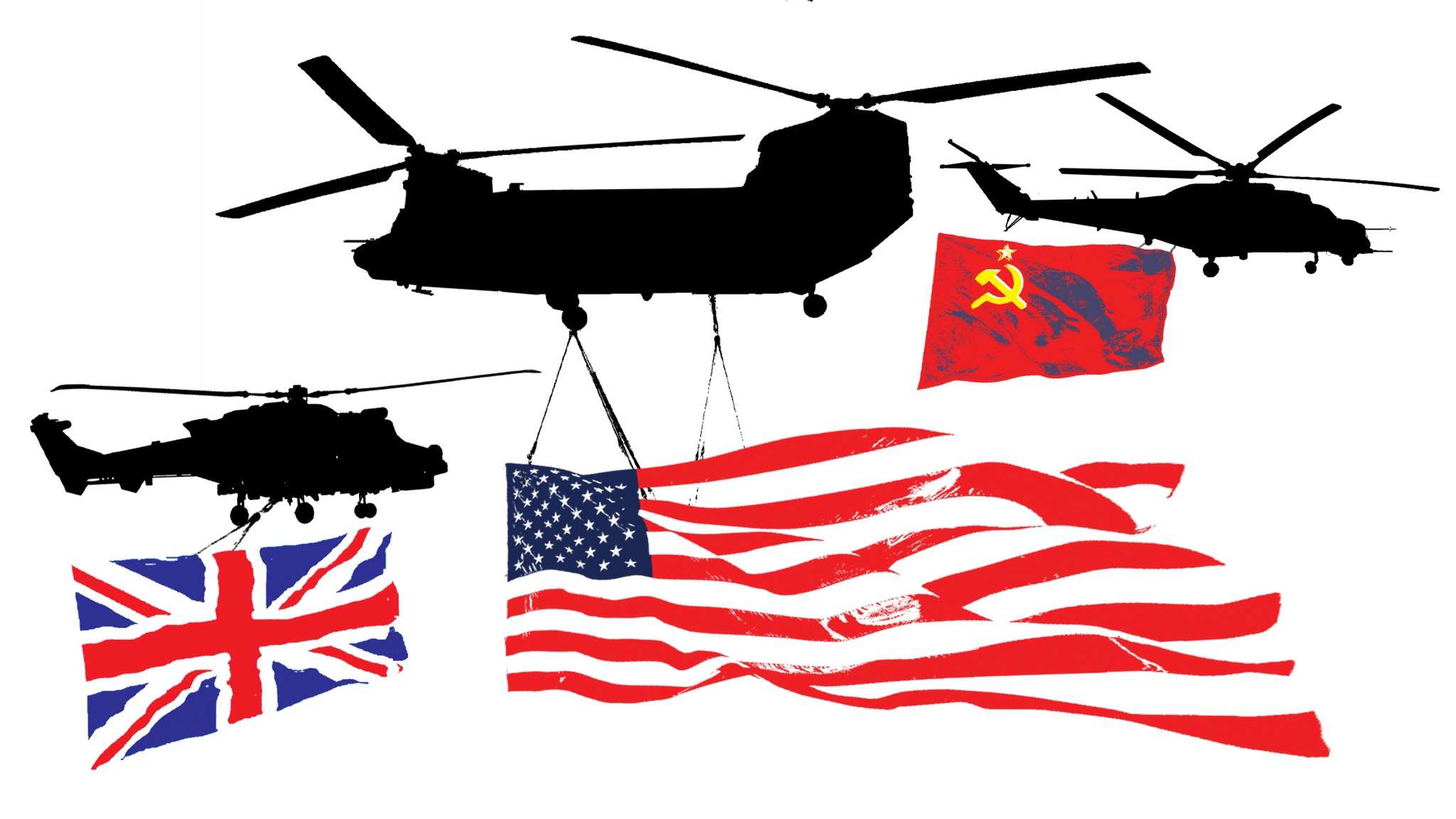
The story of two superpower invasions of Afghanistan is all about the similarities that end up erasing the undeniable differences. As the Soviet Union prepared to leave Afghanistan in 1988, it stepped up economic and military aid to the government of Mohammad Najibullah, even though it knew the requests for more weaponry were often larcenous, based on wildly inflated numbers of Afghan servicemen. Mikhail Gorbachev and his Politburo felt guilty about the withdrawal and wanted to compensate their “Afghan friends,” as official documents of the era referred to Najibullah and his people, for leaving them alone to face the fury of the U.S.-trained, -armed and -funded opposition. Gorbachev was also conscious of a certain dignity issue. “He said several times that we cannot just pull up our pants and make a run for it, like Americans in Vietnam,” his foreign policy adviser Anatoly Chernyaev recalled in 2009. The Soviets took more than three years to leave after the decision was made. As they handed over garrisons and military equipment, the proceedings were elaborate, with the new local owners receiving spruced-up barracks and freshly tested weapons, all signed off on receipts. General Boris Gromov, who presided over the withdrawal, recalled in his 2019 memoir, “The Limited Contingent,” how the Jalalabad garrison left its barracks: The beds were neatly tucked in. Even the bedside floor mats were in the regulation spots, and there were slippers under the lockers. The barracks had all the necessary equipment. Water supply worked without a hitch. As the U.S. pulls out in 2021, it aims to finish the withdrawal mere months after President Joe Biden made the decision to leave. It appears somewhat more concerned than the Soviets about having its weaponry fall into the hands of Afghanistan’s possible new masters, so it’s destroying some equipment. Some of what U.S. troops do leave is, deliberately or not, unusable — for instance, cars and trucks abandoned without keys. Nor does the U.S. appear to believe in elaborate goodbyes, at least if one judges by its unannounced nighttime departure from the Bagram Air Base; the Americans shut off the power (which cut off the water supply) and were gone. And yet the more things seem different, the more they stay the same. The spotless Soviet garrison town in Jalalabad was looted hours after the Russians left, and “all the more or less valuable property — televisions, audio equipment, air conditioners, furniture, even army beds — was sold through the city’s market stalls,” Gromov wrote. The same happened to Bagram minutes after the Americans went — looters went in and grabbed anything they could find of value. The Soviet Union went into Afghanistan to prop up a Communist-led coup as part of an expansionist Cold War strategy. The U.S. did so in an attempt to purge al-Qaeda in the wake of 9/11 — arguably a more honorable justification. The Soviets lost some 15,000 personnel in less than 10 years, the Americans (the Pentagon and private military companies together) fewer than half of that number over twice the time. The USSR achieved nothing by getting into its Afghan war — pouring resources into the conflict’s bottomless pit only quickened the end of the Communist superpower; the Americans, who spent a mind-boggling $2.26 trillion on the war, can live with that, and they did at least manage to break al-Qaeda’s back and kill Osama bin Laden, albeit not in Afghanistan itself. The Pakistan factor But again, it’s hard to focus on these differences when the similarities are even more powerful. In early 1989, according to Gromov, the “opposition” — a catch-all term for various Islamist groups and self-serving warlords — controlled “207 out of 290 districts.” The number of districts is rather fluid in Afghanistan, and it’s being reported that the Taliban now controls about a third of the country’s “421 districts and district centers”; that number keeps growing. So both superpowers knowingly left behind beleaguered governments and a feeling of gloom and doom on the territories these governments still controlled. When the Taliban emerged as a righteous force pledging to end warlords’ internecine fighting and seized control of Kabul in 1996, they hanged Najibullah, by then long out of power; Afghan leaders who cooperated with the U.S. could well face the same fate if they fail to flee. And in both cases, Pakistan played a critical role in thwarting the superpowers’ ambitions of holding back Islamist radicalism. As the former high-ranking Central Intelligence Agency officer Bruce Riedel wrote bluntly for the Brookings Institution earlier this year.The war against the Taliban is impossible to win as long as Pakistan provides sanctuary and safety, training, equipment, and funds for the Taliban. We cannot defeat Pakistan, which is a nuclear-armed state and has the fifth largest population in the world.In 1989, Pakistan was the party that flouted the agreements on Afghan national reconciliation, which served as the basis for the Soviet withdrawal. The Afghan rebels, including fighters who would end up with the Taliban, maintained bases in Pakistan and recruited Afghans in local refugee camps. Weapons and cash also flowed from the neighboring country into the fighting areas, facilitated by the U.S. and its Western allies; like the U.S. today, the Soviet Union was unprepared to take on Pakistan militarily. In other words, no matter what your values, no matter how much time you spend or how many soldiers you lose, no matter whether you’re on the winning or the losing side in geopolitical battles, what you’ll leave behind in Afghanistan is scenes of looting, a weak regime too dependent on your support and unlikely to hold out much longer, tough local fighters who feel vindicated for years of hardship, and gloating Pakistani generals across the border. Another constant: Afghanistan’s flourishing opiate industry, which neither the Soviets nor the Americans could undermine. These enduring circumstances have less to do with the stubborn magic of the place than with the simple fact that, as much as the Soviets of the 1980s and the Americans of this century’s first two decades differ from one another, both stepped into Afghanistan with too little forethought and too much arrogance and confidence — and knew from the start that they couldn’t stay. Both were certain of their superior military might and their superior values. Both found evidence that some locals liked what they brought — each their own brand of secular progressivism — and took that to mean those values could take root. But neither could stick around forever; colonization just isn’t done anymore, and Gorbachev was no more prepared to entertain it than Joe Biden. Afghanistan hasn’t been worth holding on to for either of them, given its hefty human and financial cost. To the Taliban, though, just as to the assorted Afghan rebels before them, their entire purpose and meaning were in staying there forever. The local fighters felt in 1989, and still feel in 2021, that they stand for the country and its way of life. The Taliban can be particularly convincing about it. If you’re not going anywhere no matter what happens, what price you’re forced to pay over how long, you can outlast superpowers. Attachment to a place and a way of life is a powerful constant that, as Afghanistan’s example shows, creates other constants.- Bloomberg
Both Russia and the US stepped into Afghanistan with too little forethought and too much arrogance and confidence — and knew from the start that they couldn’t stay.
https://theprint.in/opinion/why-both-the-russians-and-americans-got-nowhere-in-afghanistan/692259/
Pakistan Should Stop Looking to Leverage the Taliban
Trading its influence over the militants for relief from painful reforms will cost the country’s economy.Pakistan’s founder, Mohammad Ali Jinnah, was convinced his fledgling nation’s most valuable asset was its location. In an interview a month after independence in 1947, Margaret Bourke-White of Life magazine painted a vivid picture of Jinnah’s expectations: “‘Pakistan is the pivot of the world, as we are placed’ — he revolved his long forefinger in bony circles — ‘at the frontier on which the future position of the world revolves.’” In 1947, the world was just entering a cold war. Bourke-White explained that Pakistanis expected the United States to pay handsomely for a strategically located ally’s development — and to fund its military as well. Decades later, tragically little has changed. As the U.S. follows through on President Joe Biden’s ill-considered abandonment of Afghanistan, Pakistani leaders are convinced they can use their leverage over the Taliban to win concessions from the U.S. Seven decades of geopolitical stratagems of this sort have not helped Pakistan, its citizens or its economy. Islamabad shouldn’t expect them to work any better this time. U.S. combat troops will have left Afghanistan by September. That’s also when the International Monetary Fund conducts a much-delayed review of its $6 billion bailout of Pakistan. The IMF wants Pakistan to step up the pace of macroeconomic reforms, particularly in its troubled energy sector. Prime Minister Imran Khan, on the other hand, is very conscious that elections are only two years away. So, the budget his government presented last month didn’t quite meet the IMF’s demands. While the budget did include a few tiny steps towards balancing Pakistan’s books, even those set off a political storm. One — a tax on mobile data usage — was immediately withdrawn. Khan doesn’t want to abandon the Islamist welfare state he promised voters in 2018. He has also pledged that his “new Pakistan” will stand up to the West more. Finance Minister Shaukat Tarin, defending the budget that was supposed to placate the IMF, thus insisted that Khan had “stood his ground” against the lender and, in fact, was expanding the welfare state. The IMF won’t be happy. And if it isn’t, Pakistan’s other big multilateral lenders, particularly the Asian Development Bank, won’t step in to help either. That’s where the U.S. comes in. In that 1947 interview, Jinnah claimed that “the United States needs Pakistan more than Pakistan needs the United States.” Similarly, the Financial Times recently reported that the government hopes that the U.S. need for help in stabilizing Afghanistan after the withdrawal should give Pakistan “some space,” particularly when it comes to the IMF. (Tarin denied the report.) Speaking to the New York Times, Khan claimed he was ready to cooperate with the U.S. and “do everything except use military action against the Taliban.” Yet, as one former Pakistani diplomat has pointed out, it’s hardly helping now. The Taliban’s leaders continue to live safely in Pakistan, even as they slow-walk negotiations with the Afghan government and continue to seize territory. Playing such games has not served Pakistan well. The last time Afghanistan fell to the Taliban, Pakistan had to deal with a flood of refugees and the permanent destabilization of its Pashtun-majority border areas. Worse, the Taliban have incubated and inspired other extremist movements, including in Pakistan itself. Between 2008 and 2016, the Pakistani version of the Taliban struck at will across the country — most horrifically, killing 132 schoolchildren in an army school in Peshawar in December 2014. Geopolitical conditions are also less favorable now. Pakistan’s early leaders prospered from picking the American side in the cold war. But a world increasingly shaped by disputes between the U.S. and China doesn’t look to be as profitable. Khan told the New York Times that what he really wanted was for the U.S. and China to “get on and trade with each other” — perhaps so his government could receive handouts from both. But Beijing isn’t exactly rushing to fill the gaps in Islamabad’s budget. Meanwhile, the U.S. doesn’t trust a Pakistan that it fears will use bailout money to pay bondholders linked to the Chinese state. More importantly, handouts would only perpetuate the boom-bust-and-bailout cycle that’s hampered the Pakistani economy for years now. If Khan really wants his country to prosper, he should focus on the tough structural reforms the IMF is demanding and put the economy on a more sustainable path. He may worry about the political cost. The price of continuing to coddle extremists would be much higher. https://www.bloomberg.com/opinion/articles/2021-07-06/pakistan-shouldn-t-look-to-profit-off-u-s-withdrawal-from-afghanistan
کچھ لوگوں کی روزی روٹی کا سبب اور ذریعہ صرف آصف علی زرداری کی کردار کشی کی مہم چلانا ہے، سابق ڈپٹی چیئرمین سینیٹ سینیٹر سلیم مانڈوی والا
سابق ڈپٹی چیئرمین سینیٹ سینیٹر سلیم مانڈوی والا نے کہا ہے کہ کچھ لوگوں کی روزی روٹی کا سبب اور ذریعہ صرف آصف علی زرداری کی کردار کشی کی مہم چلانا ہے۔ جعلی اکاﺅنٹس کی طوطا کہانی گھڑنے والے سند یافتہ جعلساز ہیں۔ یہ وہی جعلساز ہیں جنہوں نے صدرآصف علی زرداری کی گورنر ہاﺅس لاہور سے گرفتاری کے وقت گورنر ہاﺅس سے 70کروڑ روپے اور سونا برآمد کرنے کا جھوٹا دعویٰ کیا تھا۔ اس طرح آصف علی زرداری کے حوالے سے 33ارب روپے ملنے کا دعویٰ سراسر جھوٹ اور میڈیا ٹرائل کا حربہ ہے۔
سینیٹر سلیم مانڈوی والا نے کہا کہ صدر آصف علی زرداری گذشتہ 33سال سے پیپلزپارٹی کے نشانے پر ہیں۔ کبھی کسی بخاری کی ٹانگ میں بم باندھنے کی طوطا کہانی گھڑی جاتی تھی تو کبھی ان پر منشیات کا جھوٹا مقدمہ داخل کرکے ان کا میڈیا ٹرائل کیا جاتا تھا مگر صدر آصف علی زرداری نے عدالتوں میں ان جھوٹے الزامات کا سامنا کیا اور باعزت بری ہوکر عوام کے سامنے سرخرو ہوتے رہے ہیں۔ سینیٹر مانڈوی والا نے کہا کہ حقیقت یہ ہے کہ صدر آصف علی زرداری 1988ءسے بھٹو دشمنوں کے نشانے پر ہیں۔ سینیٹر مانڈوی والا نے کہا کہ آصف علی زرداری پر جھوٹے الزامات لگانے والے ماضی میں شرمسار ہوتے رہے ہیں اور مستقبل میں بھی شرمندگی ان عناصر کا مقدر ہے۔
https://www.ppp.org.pk/pr/25245/
ہم سب کا ایک نعرہ ہے کہ کشمیر کا سودا نامنظور, چیئرمین پاکستان پیپلزپارٹی بلاو ل بھٹو زرداری
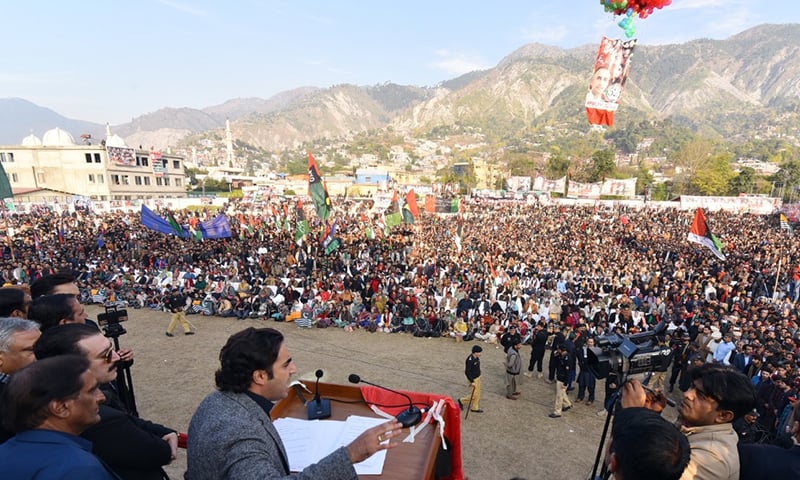
چیئرمین پاکستان پیپلزپارٹی کے بلاو ل بھٹو زرداری نے آزاد کشمیر کے انتخابات کی پارٹی مہم کے سلسلے میں جمعرات کے روز حویلی کے مقام پر ایک عظیم الشان جلسے سے خطاب کیا۔ انہوں نے کہا کہ انہیں اس بات کی نہایت خوشی ہے کہ اسی مقام پر شہید ذوالفقار علی بھٹو نے 1974ءمیں ایک بہت بڑے عوام اجتماع سے خطاب کیا تھا ۔ اس وقت پیپلزپارٹی کے سپاہی اور شہید محترمہ بینظیر بھٹو کے وفادار ساتھی ممتاز راٹھو بھی ان کے ساتھ تھے اور آج ان کے صاحبزادے فیصل راٹھور اپنے والد کے نامکمل مشن کو پورا کرنے کے لئے یہاں موجود ہیں۔
چیئرمین بلاول بھٹو زرداری نے کہا کہ جب تک کشمیری عوام ان کے ساتھ ہیں کوئی بھی پیپلزپارٹی کو ختم نہیں کر سکتا۔ قائد عوام نے ہر محاذ پر کشمیر کاز کے لئے جنگ لڑی۔ ہمارا تین نسلوں کا رشتہ ہے۔ قائد عوام نے عوام کے حقوق کے لئے آواز بلند کی۔ قائد عوام ذوالفقار ہی وہ لیڈر تھے جنہوں نے کشمیر کے لئے ہزار سال لڑنے کا ارادہ ظاہر کیا تھا۔ وہ او آئی سی کے چیئرمین تھے۔ انہوں نے پاکستان کو ایٹمی صلاحیت دی۔ جب وہ سٹرائیک کی کال دیتے تھے تو مقبوضہ اور آزاد کشمیر دونوں میں ہر چیز بند ہو جاتی تھی اور کاروبار زندگی رک جاتا تھا۔ ان کی صاحبزادی محترمہ بینظیر بھٹو نے کہا تھا کہ جہاں کشمیری بھائی بہنوں کا پسینہ گرے گا وہاں اپنا خون گرائیں گے۔
کشمیریوں نے ہمیشہ ان کی حمایت کی اور انہوں نے کشمیری بھائیوں اور بہنوں کو ملازمتیں فراہم کیں۔ یہ بدقسمتی کی بات ہے کہ اس وقت پاکستان میں ایک کٹھ پتلی سلیکٹڈ اور نااہل وزیراعظم ہے۔ جو کشمیر کے تاریخی حملے پر کہتا ہے کہ میں کیا کروں؟ اگر قائد عوام آج ہوتے تو وہ کشمیر کا کیس لے کر اقوام متحدہ جاتے۔ اس کٹھ پتلی کا جواب تو یہ تھا کہ کشمیر ہائی وے کا نام بدل کر سری نگر ہائی وے رکھ دیا ہے اور کشمیر کے نقشے میں اپنے پین سے تبدیلی کر دی ہے۔
عمران خان کشمیروں کی امنگو پر پورا نہیں اترتا۔ ہم سب کا ایک نعرہ ہے کہ کشمیر کا سودا نامنظور۔ ہم دہلی یا اسلام آباد سے ڈکٹیشن نہیں لیں گے بلکہ جو آپ کہیں گے وہ کریں گے۔ قائدعوام کا نعرہ تھا کہ ہمارا نعرہ سب پہ بھاری، رائے شماری، رائے شماری۔ ہمیں ایک ایسا وزیراعظم نہیں چاہیے جو انتخابات کے لئے مودی فتح کی دعا مانگتا ہو اور نہ ہی ایسا وزیراعظم چاہیے جو اپنی شادی کی تقریب کو اپنے گھر کی شادی میں مودی کو مدعو کرے۔ وزیراعظم عمران خان کو جنرل مشرف اور مودی کا پولنگ ایجنٹ تھا۔
پاکستان پیپلزپارٹی ہی وہ واحد پارٹی ہے جو کشمیر کا کوئی سودا نہیں کر سکتی کیونکہ اس کی بنیاد ہی کشمیر کے مسئلے سے پڑی تھی۔ ہم اقوام متحدہ کی قراردادوں پر یقین رکھتے ہیں۔ چیئرمین بلاول بھٹو نے کہا کہ عمران کی تبدیلی کا اصل چہرہ غربت، مہنگائی اور بیروزگاری ہے۔ پیپلزپارٹی نے اپنے دور حکومت میں سرکاری ملازمین کی تنخواہوں میں 120فیصد اضافہ کیا، پنشن میں 100 فیصد اضافہ کیا اور دہشتگردی کے لئے لڑنے والے فوجیوں کی تنخواہوں میں 175فیصد اضافہ کیا۔ اب 25جولائی کو ایک جیالا وزیراعظم منتخب ہوگا اور اس حکومت کا پہلا اقدام تنخواہوں اور پنشنوں میں اضافہ ہوگا۔ پیپلزپارٹی ہمیشہ غریبوں کے لئے کام کرتی ہے اور جس وقت دنیا شدید کساد بازاری کا شکار تھی اس وقت ہماری حکومت نے بی آئی ایس پی شروع کیا۔ یہ حکومت احساس احساس کی رٹ لگائے رکھتی ہے لیکن احساس سوائے بی آئی ایس پی کا نام بدلنے کے اور کچھ نہیں۔
یہ حکومت ہماری پالیسیاں چوری کرتی ہے اور نہ صرف بی آئی ایس پی کو چوری کیا بلکہ ہماری خارجہ پالیسی کو بھی چوری کر دیا۔ عمران خان جھوٹ بولتے ہیں کہ یہ ان کا فیصلہ ہے کہ وہ امریکہ کو فوجی اڈے نہیں دیں گے جبکہ یہ فیصلہ ہماری حکومت کا تھا جسے ہم نے پارلیمان سے منظور کرایا تھا۔ چیئرمین بلاول نے کہا کہ قائد عوام کا نعرہ تھا کہ روٹی، کپڑا اور مکان مانگ رہا ہے ہر انسان لیکن اس کٹھ پتلی حکومت نے غریب عوام سے یہ تینوں چیزیں چھین لی ہیں۔ انہوں نے کہا کہ جب تک کسانوں اور مزدوروں کو خوشحال نہیں بنایا جاتا اور نوجوانوں کو روزگار مہیا نہیں کیا جاتا اس وقت تک ملک ترقی نہیں کر سکتا۔ انہوںنے کہا کہ اس مجمعے کو دیکھتے ہوئے وہ کہہ سکتے ہیں کہ جیالوں نے کٹھ پتلی اور دیگر پارٹیوں کو ہر ا دیا ہے اور فیصل راٹھور اس حلقے سے جیت چکے ہیں۔ انہوں نے کہا کہ فیصل راٹھور اسلام آباد سے کشمیر ایکسپریس وے کو حکومت میں آکر مکمل کرائیں گے اور یہ پیپلزپارٹی کی جانب سے کشمیری عوام کے لئے تحفہ ہوگا۔
چیئرمین بلاول بھٹو زرداری نے کہا کہ وہ شہید ذوالفقار علی بھٹو اور شہید بینظیر بھٹو کے مشن کو مکمل کرنے کے لئے میدان عمل میں موجود ہیں۔ جیالے نہ صرف اس کٹھ پتلی کو بلکہ دیگر پارٹیوں کو کشمیر سے بھگائیں گے۔ میں اس پارٹی کو کہتا ہوں کہ وہ بلی نہ بنے اور بھاگے نہیں بلکہ شیر کی طرح کھڑے ہو کر اس کٹھ پتلی کا مقابلہ کرے۔ انہوں نے کہا کہ پیپلزپارٹی نے ہمیشہ عوام کا ساتھ دیا ہے اور 25تاریخ کو عوام پیپلزپارٹی کو ووٹ دیں گے اور تیر پر ٹھپہ لگائیں گے۔
https://www.ppp.org.pk/pr/25241/
Wednesday, July 7, 2021
Dilip Kumar, Film Star Who Brought Realism to Bollywood, Dies at 98


Mr. Kumar was born Yousuf Khan in Peshawar (then part of British India, now in Pakistan) on Dec. 11, 1922, the fourth of Ayesha and Mohammad Sarwar Khan’s 12 children. His father, a fruit merchant, moved the family to Bombay, now known as Mumbai, and then to Deolali, in west India, where Dilip attended the Barnes School before enrolling in Khalsa College in Bombay.He wanted to play soccer or cricket professionally, but the family’s economic situation forced him to look for work elsewhere. For a time he was an assistant at an army canteen in Poona (now Pune). A chance encounter with a former teacher changed his life. When he said he was looking for a job, the teacher introduced him to the pioneering Indian actress Devika Rani, who, along with Himanshu Rai, had established the Bombay Talkies studio. The idea was to get a job, any job, but Ms. Rani asked if he would consider becoming an actor.Mr. Kumar, who had seen only one film in his life — a war documentary — was flummoxed, but the money persuaded him. Ms. Rani said that taking on a Hindu screen name to obscure his Muslim background would help his career. He became Dilip Kumar.His first film, “Jwar Bhata” (“Ebb and Flow”), released in 1944, was a flop; Baburao Patel, the acerbic critic of Film India, called him “anemic.” But three years later his performance in “Jugnu” (“Firefly”), alongside Noor Jehan, received more favorable attention. By the time “Shaheed” (“Martyr”) was released in 1948, Mr. Patel was singing his praises: “Dilip Kumar steals the picture with his deeply felt and yet natural delineation of the main role.” The hits kept coming, including “Nadiya Ke Paar” (“Across the River”), “Shabnam” (“Dewdrops”) and Mehboob Khan’s “Andaz” (“Style”), in which Mr. Kumar was cast with Mr. Kapoor and the actress Nargis. In 1954, Mr. Kumar won the newly instituted Filmfare Award for best actor for his performance as an alcoholic in the tragic love story “Daag” (“The Stain”). He won seven more Filmfare statuettes for best actor in addition to a lifetime achievement award. Guinness World Records honored him on his 97th birthday for his “matchless contribution” to Indian cinema.

Many of his early films had him chasing unattainable women. The 1950 melodrama “Jogan” (“Nun”) ends with him weeping at his lover’s grave. That same year, he played a Heathcliff-like character in “Arzoo” (“Desire”), one of three variations on “Wuthering Heights” in which he acted. He earned the nickname Tragedy King after appearing in a series of dramas that a psychiatrist later said took a toll on his health. In the 1951 movie “Deedar” (“Sight”), he played a blind man whose eyesight is restored through surgery but who blinds himself again when he realizes that he and the surgeon are in love with the same woman. (To prepare for the role, Mr. Kumar observed a blind beggar at the Bombay Central railway station.) One of Mr. Kumar’s best-known tragedies is Bimal Roy’s “Devdas” (1955), about a man who becomes an alcoholic when his childhood sweetheart deserts him. Mr. Kumar’s love life made news; he had relationships with the actresses Kamini Kaushal, Madhubala (they co-starred in the 1960 blockbuster “Mughal-e-Azam,” about thwarted lovers, long after they broke up) and Saira Banu, whom he married in 1966 when he was 44 and she was 22. In the 1980s, while still married to Ms. Banu, Mr. Kumar married the socialite Asma Rehman in secret. The news quickly came out, and the marriage became a scandal, but Ms. Banu stuck with Mr. Kumar, who ended the second marriage. He is survived by Ms. Banu. Professionally, Mr. Kumar’s record was spotless, with films that have not only been successful but have left a lasting impact. Films like “Naya Daur” (“New Era”) in 1957, “Yahudi” (“The Jews”) in 1958, “Madhumati,” also in 1958, and “Ram Aur Shyam” (“Ram and Shyam”) in 1967 are still remembered. Mr. Kumar found fewer roles in the 1970s, with younger, more agile actors being cast as heroes, and he took a break. He returned in 1981 with a blockbuster, “Kranti” (“Revolution”), which reshaped his screen persona as an older moral center. He had similar roles in star-heavy mega-productions like “Vidhaata” (“The Creator”) in 1982, “Karma” in 1986, Saudagar (“The Merchant”) in 1991 and especially “Shakti,” in which he was cast for the first time opposite the reigning Bollywood superstar Amitabh Bachchan. Mr. Kumar’s last film was “Qila” (“Fort”), released in 1998. By then, a reviewer wrote in India Today, his style felt “more than just outdated, it’s prehistoric,” adding, “Dilip Kumar’s long-drawn-out dialogue delivery is out of sync with the times.” Mr. Kumar received the Padma Bhushan, one of India’s highest civilian awards, in 1991; the Dadasaheb Phalke, India’s highest award for cinematic excellence, in 1994; and the Padma Vibhushan in 2015. From 2000 to 2006, he served as a member of the Rajya Sabha, the upper house of Parliament. But these honors from the Indian government consumed far less newsprint than the decision by the Pakistani government, in 1998, to confer on him its highest civilian honor, the Nishan-e-Imtiaz. Amid heightened religious tensions, Mr. Kumar was branded an anti-national by Hindu politicians who asked him to return the award to Pakistan. He did not. He said in his autobiography that returning it “could have only soured relations further and produced bad vibes between India and Pakistan.” Those words proved that Mr. Kumar was a tactful diplomat off screen. On the screen, his characters would launch into more rebellious rhetoric. In the 1974 period drama “Sagina,” when labeled a traitor, his character responded, “If you’ve drunk your mother’s milk” — meaning, if you’re man enough — “then come get me.” Even in this larger-than-life context, there was a dash of the realism that defined him.
https://www.nytimes.com/2021/07/06/world/asia/dilip-kumar-dead.html