Saturday, July 3, 2021
#China - Xi's article on learning Party history published
 An article by Xi Jinping, general secretary of the Communist Party of China (CPC) Central Committee, on learning the CPC history has been published.
The article by Xi, also Chinese president and chairman of the Central Military Commission, was published Thursday in this year's 13th issue of the Qiushi Journal, a flagship magazine of the CPC Central Committee.
In his article, Xi said learning the history of the Party, including its remarkable achievements, arduous journey, historical experience and fine traditions, would help better understand the capability of the Party and the strengths of socialism with Chinese characteristics, as well as the reason why Marxism works.
The article called on Party members to gain a profound understanding of the historical inevitability of upholding the Party's leadership, strengthen their confidence in the Party's leadership, and unswervingly follow the path of socialism with Chinese characteristics.
The article stressed strengthening faith in Marxism and Communism, belief in socialism with Chinese characteristics, and confidence in realizing the rejuvenation of the Chinese nation.
The article also called on Party members to develop strong moral character, stay loyal to the Party, and unite and lead the people in better implementing the new development philosophy and fostering a new pattern of development, so as to pool strengths for the national rejuvenation.
http://en.people.cn/n3/2021/0703/c90000-9867919.html
'A personality type that feels absolutely no guardrails': How Saudi Arabia's leader charmed Washington while cracking down on opponents

https://news.yahoo.com/a-personality-type-that-feels-absolutely-no-guard-rails-how-saudi-arabias-leader-charmed-washington-while-cracking-down-on-opponents-090017268.html
Opinion: Why Biden and Democrats can take credit for an improving economy

Opinion: by Paul Waldman

And there’s something else at work, something that has become a theme of the Biden presidency. Here’s what he said Friday:
Instead of workers competing with each other for jobs that are scarce, employers are competing with each other to attract workers. That kind of competition in the market doesn’t just give workers more ability to earn higher wages, it also gives them the ability to demand to be treated with dignity and respect in the workplace.
That doesn’t necessarily make everyone happy; a disturbing poll from the progressive firm Data for Progress found 60 percent of Republicans saying higher starting wages for workers are a bad thing because they show that unemployment benefits are too generous.
And to be sure, the American economy has an awfully long way to go before it treats everyone with dignity and respect. But we may at least have made a start.
https://www.washingtonpost.com/opinions/2021/07/02/why-biden-democrats-can-take-credit-an-improving-economy/
Draconian rules - #Pakistan’s Removal of Unlawful Online Content Rules, 2021

#Pakistan - Briefing on National Security And a shot across the bow by US
https://www.pakistantoday.com.pk/2021/07/02/briefing-on-national-security/
US adds Pakistan, along with 14 other countries in list of Child Soldiers Prevention Act

https://theprint.in/world/us-adds-pakistan-along-with-14-other-countries-in-list-of-child-soldiers-prevention-act/689033/
Pakistan’s prime minister embraces China’s policy toward Uyghurs in remarks on Communist Party centenary

By Sammy Westfall
Pakistani Prime Minister Imran Khan offered on Thursday remarks rare for the leader of a large, Muslim majority country, reaffirming his support for Beijing’s policies toward Uyghurs in China’s Xinjiang region. Much of the international community had condemned the mass detention and efforts at forced assimilation of Uyghurs, which the U.S. State Department has described as “genocide.” More than 1 million Uyghurs, a mostly Muslim ethnic minority group, have been sent to what Beijing calls “vocational education and training centers,” but which human rights groups say are detention camps, where extensive abuses have been reported. “Because we have a very strong relationship with China, and because we have a relationship based on trust, so we actually accept the Chinese version,” Khan said in remarks marking the Chinese Communist Party’s centennial celebration. “What they say about the programs in Xinjiang, we accept it.” Since China launched a sweeping crackdown in Xinjiang in 2017, many human rights advocates and world leaders have sounded alarm bells. The issue has gained particular traction in many Muslim-majority countries. But not with Khan. Speaking to Chinese reporters visiting Islamabad for the centenary, Khan said he finds it hypocritical that other human rights issues — such as the conflict in Kashmir between India and China — are not afforded the same attention. Khan’s stance on the Uyghurs stands out amid his advocacy against Islamophobia in the region. An outspoken advocate of discrimination against Muslims, Khan wrote last year a letter addressed to leaders of Muslim countries, urging that they work to “end cycles of violence bred of ignorance and hate.” Pakistan is the world’s second largest Muslim-majority country, after Indonesia. Analysts said the remarks make sense in the context of Pakistan’s relationship with China, on which it depends for political and economic support. “Pakistan just can’t afford to go against China on such a sensitive issue,” said Filippo Boni, a scholar of China-Pakistan relations, “especially at a time when the West is very much focused on the Uyghur issue.” Announced in 2015, one of the most conspicuous elements of the relationship is the China-Pakistan Economic Corridor — a $60 billion set of Chinese infrastructure investment in Pakistan, including a $6.8 billion railway upgrade and new highways, as part of the Belt and Road initiative. Projects are still underway. During the coronavirus pandemic, Pakistan was early to express solidarity with China, and China has sent vaccine doses to Pakistan. In addition to his comments about Uyghurs, Khan praised China’s political system, Al Jazeera reported. “Up until now, we were told that the best way for societies to improve themselves is the Western system of democracy,” he said. But the CPC has brought an “alternative” and “unique model.” Khan has voiced similar views in the past. When pressed by Axios’s Jonathan Swain about his silence on the Uyghurs, Khan said any issues Pakistan has with China are discussed “behind closed doors.”https://www.washingtonpost.com/world/2021/07/02/pakistan-prime-minister-backs-china-on-uyghurs/
Friday, July 2, 2021
Decades of Mental Conditioning Responsible for Anti-Minority Hostility in Pakistan: Speakers

 Speakers at a workshop said policies in the past decades were responsible for the progressive radicalization of society. Decades of mental conditioning through education, ideological indoctrination, and other means have led to faith-based polarization and anti-minority hostility in Pakistan. In the contemporary environment, members of minority religious groups find it hard to live in peace with equal rights and dignity. Even constitutional safeguards and other legal protections have done little to ensure equality of citizenship for all, the speakers added.


Social researcher and author of ‘Radicalization in Pakistan’, Safdar Hussain Sial, said the discrimination against religious minorities is widespread and systematic and includes economic exclusion. The minorities often lack equal access to employment opportunities which is a key factor behind the immense economic disparity across different religious groups in Pakistan.

In certain cases, members of minority communities are denied the critical identity or citizenship documents which, among other things, cut them off from the job market, Sial said.

The anti-minority sentiments are further aggravated by the weaponization of certain laws such as those criminalizing blasphemy or targeting a particular religious group. The blasphemy law has been misused against the non-Muslim and Muslim communities alike, leading to many incidents of mob violence, Safdar Sial said, adding that in such a scenario the role of youth in creating a more tolerant and peaceful society is crucial.
During the workshop, the minority issue was also put into regional perspective by security analyst and director Pak Institute for Peace Studies (PIPS), Muhammad Amir Rana, who revealed that around 65,000 Rohingya Muslims have been living in desperate conditions in Karachi for decades. Stressing the significance of citizenship, Amir Rana said depriving an individual of citizenship is depriving them of fundamental rights and basic social services such as health and education. The Rohingya community continues to languish as stateless people in Pakistan, he added.
 Organized by the Islamabad-based think tank, Pak Institute for Peace Studies, the two-day educational and training workshop was part of the nationwide workshops for the promotion of interfaith harmony among the Pakistani youth. University students from across Balochistan participated in the workshop and exchanged thoughts around the theme of interfaith harmony. The participants were also given quick training ineffective use of social media tools by senior journalist and social media activist, Sabookh Syed. The Pakistani youth can use the power of social media to support peace and harmony, and oppose discrimination against minorities, Syed said.

Former president Asif Ali Zardari admitted to hospital after feeling unwell

Former president Asif Ali Zardari has been admitted to a hospital earlier today (Friday) after his health deteriorated, PPP sources told Geo News.
PPP Co-chairperson Bilawal Bhutto-Zardari has arrived in Karachi from Islamabad while Bakhtawar Bhutto-Zardari and her husband have also reached the city from Dubai to attend to her father.
Last year in October, the PPP leader and former president was admitted to a hospital due to low sugar level.
Bilawal, during his recent address at the National Assembly, had said that Zardari had attended a budget session despite being unwell.
The former president had arrived in Karachi recently from Lahore and Islamabad. In Lahore, he had recently attended a meeting with former Punjab chief minister Pervaiz Elahi.
Severe back pain
Dr Asim Hussain said the former president had undergone a medical check-up at a private hospital during which he had complained of severe back pain.
"An orthopedic surgeon is treating Asif Zardari, and he has undergone necessary medical tests," he said while speaking to Geo News.
https://www.geo.tv/latest/358075-former-president-asif-ali-zardari-admitted-to-hospital-after-feeling-unwell-sources
Bilawal Bhutto targets Imran Khan, says PM made life a living hell for people in the name of 'Naya Pakistan'
PPP Chairman Bilawal Bhutto-Zardari attacked Pakistan PM Imran Khan and said his government has made life a living hell for the masses in the name of "Naya Pakistan."
Zardari made the remark following Imran's budget speech in the National Assembly on Wednesday.
Bilawal was quoted as saying by Geo News that the PM is trying to make a fool out of people because all the measures his government has taken are in favour of the rich instead of the poor.
"The masses do not want to listen to the prime minister delivering a lecture," he was quoted as saying by Geo News. "What sort of hypocrisy is that?"
Bilawal said that the government did not take the Opposition on board when developing the budget, while he also censured the speech delivered by the premier and said that it was "nothing but a mere manipulation of words."
"The prime minister spoke of economic development but he is inviting immigrants to the country," Bilawal said. "The PM makes tall claims about the poor but his actions and policies do not correspond. He's making the rich richer and the poor poorer."
https://www.indiablooms.com/world-details/SA/30145/bilawal-bhutto-targets-imran-khan-says-pm-made-life-a-living-hell-for-people-in-the-name-of-naya-pakistan.html
وزیراعظم عمران خان قوم کے مقابلے میں اپنی انا کو ترجیح دیتے ہیں، بلاول بھٹو
پیپلز پارٹی کے چیئرمین بلاول بھٹو زرداری نے کہا ہے کہ وزیراعظم عمران
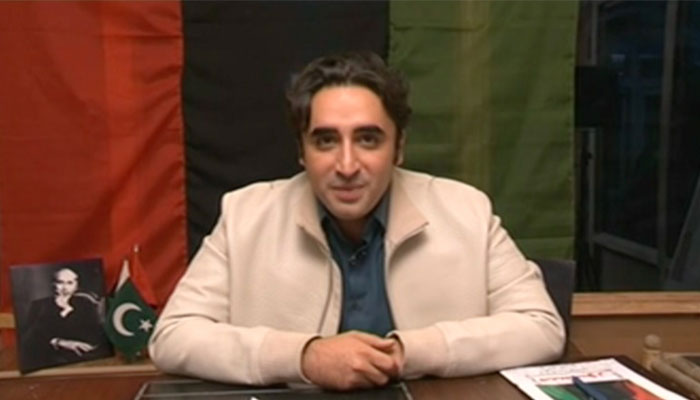
خان قوم کے مقابلے میں اپنی انا کو ترجیح دیتے ہیں۔
کراچی سے جاری بیان میں بلاول بھٹو زرداری نے قومی سلامتی سے متعلق پارلیمانی کمیٹی کی بریفنگ کو اچھا آغاز قرار دیا۔
انہوں نے کہاکہ ہمارا موقف ہے 2012 ءکی قومی سلامتی کمیٹی کی قرارداد پرعمل درآمد ہو۔
پی پی چیئرمین نے مزید کہا کہ پارلیمان کی قومی سلامتی کمیٹی اجلاس سے وزیراعظم ایک مرتبہ پھر غیر حاضر رہے۔
اُن کا کہنا تھاکہ قومی سلامتی کمیٹی اجلاس میں عدم موجودگی ثابت کرتی ہے کہ وزیراعظم عمران خان قوم کے مقابلے میں اپنی انا کو ترجیح دیتے ہیں۔
Thursday, July 1, 2021
Xi rallies Party for "unstoppable" pursuit to national rejuvenation as CPC celebrates centenary


THE EDITORIAL BOARD: U.S. - The Supreme Court Abandons Voting Rights


Germany pulls last troops from Afghanistan, ending nearly 20-year mission

Germany has finished withdrawing its last contingent of around 570 soldiers from Afghanistan as the security situation deteriorates. The move marks the end of a nearly 20-year mission.
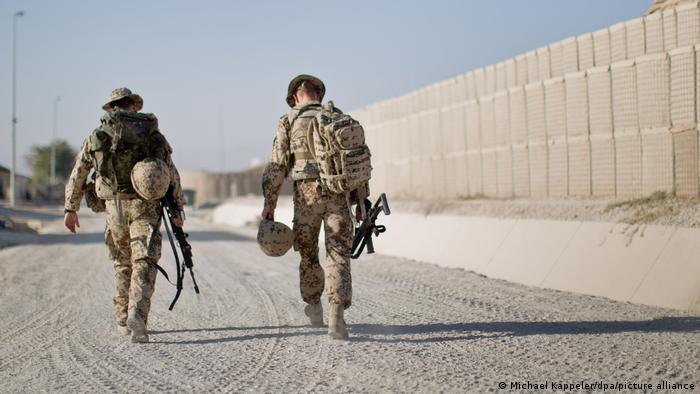
With US troops eyeing their final exit from Afghanistan in September, Germany pulled out all of its remaining troops on Tuesday. Last week, Germany's Defense Ministry said around 570 troops were still deployed.
The last of them have now been flown out of the northern city of Mazar — ending a nearly two decade-long mission. The contingent also included members of the KSK special forces, who were tasked with securing the camp during the move.
German Defense Minister Annegret Kramp-Karrenbauer said the soldiers were "now on their way home."
"This marks the end of a historic chapter – an intense deployment that has challenged and shaped us," she wrote on Twitter.
She thanked the soldiers for fulfilling their duties in Afghanistan "with professionalism and conviction."
Looking back at the mission, the minister pledged to discuss "what was good, what was not good and what we've learned."
Germany's armed forces also confirmed the pullout, saying that "last soldiers have left Afghanistan."
The German military had kept the details on the pullout vague on security grounds. Speaking just hours before the move was officially confirmed, Kramp-Karrenbauer said the withdrawal was happening "in an orderly manner, but also as swiftly as possible." Germany maintained a contingent of around 1,100 troops before starting the drawdown in May.
What happens next?
The four military planes carrying the troops are expected to make a stop in Tbilisi before landing in Germany on Wednesday. Their old camp will be handed to Afghani troops as Germany ends its participation in NATO's "Resolute Support" mission.
After landing in Germany, the soldiers will enter a mandatory two-week quarantine to curb the risk of the highly contagious Delta coronavirus variant. According to Der Spiegel magazine, at least one German soldier was infected with the variant earlier this month.
How long were German troops in Afghanistan?
Germany deployed its forces in the wake of the deadly 9/11 attacks on the US conducted by al-Qaida in 2001. The first troops arrived in Kabul in January 2002.
In the early stages of the mission, German soldiers were told that their deployment was aimed at stabilizing the country rather than fighting the Taliban.
Over 150,000 German soldiers have been stationed in Afghanistan over the years, many of them serving more than once.
By the end of 2020, the Bundeswehr's deployment had cost the German taxpayers around €12.5 billion ($15 billion).
The mission, which lasted for almost 20 years, cost the lives of 59 German soldiers.
It was the longest, most expensive and the bloodiest German deployment since WWII. According to UN data, the Afghanistan conflict claimed the lives of over 39,000 civilians since 2009. While most of them have been killed by the Taliban, international forces also caused civilian causalities, especially through air strikes. The US also lost 2,442 soldiers since the mission started.
What is happening in Afghanistan?
The end of the mission comes as the Taliban in Afghanistan rapidly seize new territory from the US-backed government in Kabul. Taliban forces are also positioning themselves around provincial capitals, prompting fears that they will seize full control once all foreign troops leave. The UN reported a spike in civilian casualties since last September.
The extremist Islamic militants were notably emboldened by the US pledge to finish its Afghanistan withdrawal this year. The administration of Donald Trump had pledged to complete the pullout by May this year. His successor, Joe Biden, changed the target date to September 11 this year, the 20th anniversary of the attacks which prompted the conflict.While meeting with Afghanistan President Ashraf Ghani on Friday, Biden promised a "sustained" partnership between the countries. However, he did not signal any changes to the timetable due to the Taliban offensive. "Afghans are going to have to decide their future," Biden told reporters. https://www.dw.com/en/germany-pulls-last-troops-from-afghanistan-ending-nearly-20-year-mission/a-58097894