Sunday, June 20, 2021
Pentagon pulls missile defense, other systems from Saudi Arabia and other Middle East countries
https://edition.cnn.com/2021/06/18/politics/pentagon-remove-missile-defense-saudi-arabia-middle-east/index.html
From China: EDITORIAL - Delivery of US vaccines to Taiwan a palpable political ploy: Global Times editorial
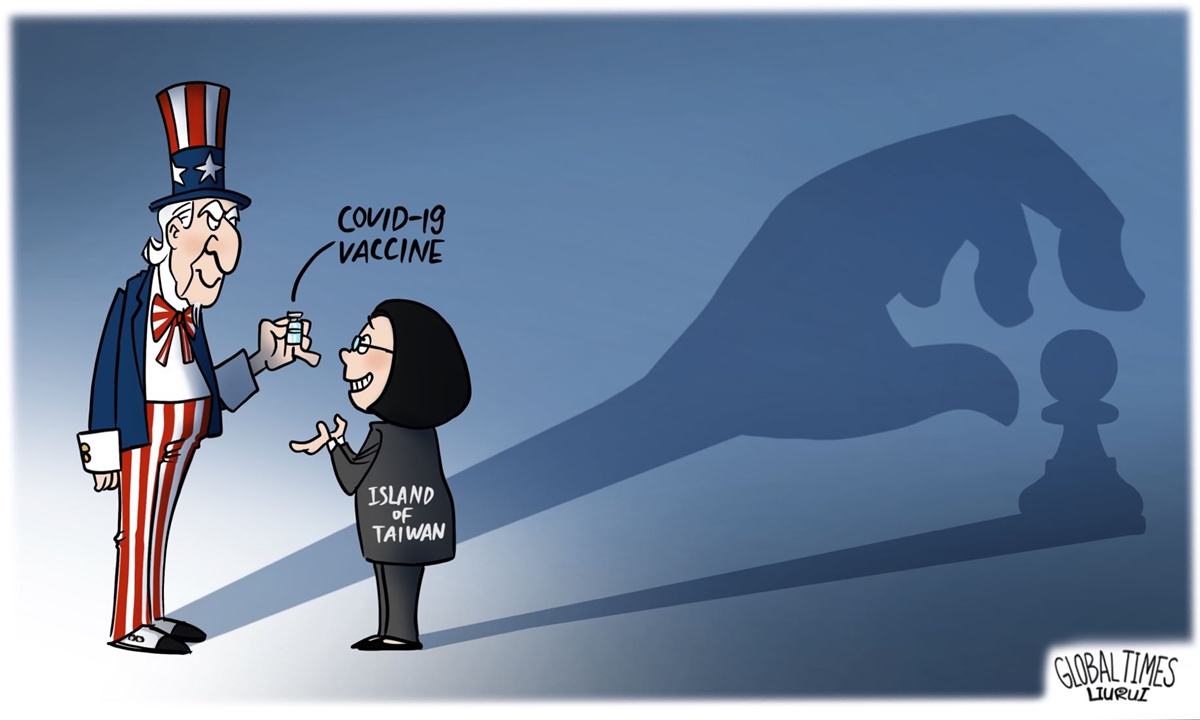
The 2.5 million doses of Moderna COVID-19 vaccine that took off from the US on their way to Taiwan on Saturday have excited the island's authorities - and they are loudly expressing their gratitude. Taiwan Democratic Progressive Party (DPP) authorities said Washington's assistance with vaccines confirmed the "rock-solid friendship between Taiwan and the US." A senior US administration official told Reuters that "[the US is] not allocating these doses, or delivering these doses, based on political or economic conditions," while he said that: "we believe that attempts by [the Chinese mainland] to block purchases, for political purposes, are reprehensible."
Regarding the entry of these anti-epidemic supplies into Taiwan, both the US and Taiwan's statements are blatant political operation. They have given themselves away by conspicuously and hypocritically pretending their innocence.
After this latest COVID-19 outbreak, the DPP authorities' political manipulation is one of the "best" in the world. They not only divided specific anti-epidemic measures into "democratic" and "non-democratic," but added political attributes to the vaccines. They believe the vaccine produced by the mainland cannot be used in Taiwan, nor can German's BioNTech vaccine because Shanghai-based pharmaceutical giant Fosun Pharma has the exclusive rights to sell the BioNTech vaccines in the Chinese mainland, Hong Kong, Macao and Taiwan. The DPP authorities approved only original vaccines from Germany, without the participation of Chinese mainland companies. The mainland has become a symbol that Taiwan authorities must eliminate from vaccines.
Such a politicalized COVID-19 fight has led to bad results. Taiwan's epidemic situation has spread beyond people's expectations. The huge shortage of vaccines has triggered people's strong dissatisfaction. A few AstraZeneca vaccines have allegedly led to the death of dozens of people, causing new anxiety. The DPP authorities have seen their support rate plummet and they are feeling a sense of crisis. Now, the US has offered Taiwan 2.5 million doses of the Moderna shot, which is like a "politically timely windfall" for Taiwan authorities.
Washington has no interest in the island's fight against the epidemic. Brent Christensen, the "director of the American Institute in Taiwan," said on May 26 that he was "confident" Taiwan could control the spike in COVID-19 cases, noting its infection numbers remained "quite low." Now the US finds that the DPP authorities are in deep trouble and that they might "have an accident" if Washington refuses to save them. So the US set aside 2.5 million doses of vaccines to help the DPP authorities with this emergency.
The current DPP authority has the most loyal politicians in the island who follow the US. Their failure to fight the epidemic was spurned by the Taiwan people and will affect the quality of their service to the US' Indo-Pacific strategy and harm the interests of the US. To help Tsai get through at this point would be to solidify the US' influence in Taiwan.
In a series of "thanks" from Tsai on Saturday, it was clear that the authorities of external affairs of the region and its representative office in the US went all out to ensure the 2.5 million doses of Moderna were sent to Taiwan. They could not have inspired the US by humanitarian appeals. The US' humanitarian response to the epidemic has been completely numbed by its own tragedy of 600,000 deaths. Washington thought the epidemic in the island was not a big deal and needed no special help. The only way officials in Taiwan could persuade Washington is to emphasize the political purpose and only political considerations can bring about change.
Politics is both the starting point and the end of the Taiwan authorities' position in the region's fight against the epidemic. Washington joined in midway, and it certainly had no intention of turning Taiwan's COVID-19 fight driven by politics into one driven by humanitarianism. The arrival of the 2.5 million doses of the Moderna vaccine in Taiwan is all well and good, but it is a drop in the ocean for the island's 23 million people. It is hoped that Washington and Taiwan authorities will not take this as a joint play to cajole the people in Taiwan, or as a prelude to promoting Taiwan's "indigenous vaccine."
No region in the world has made the process of obtaining vaccines as dramatic as the island of Taiwan, denying abundant sources of vaccines in one direction while pleading for charity in another. Such a focus on political manipulation by the DPP authorities shows that the political foundations on which Taiwan's system operates are shaking, and they are panicked.
Opinion: The decay of American democracy is real

By Fareed Zakaria
“America is back,” Joe Biden kept repeating on his first trip abroad as president. It’s a fair description of what he accomplished — a restoration of the United States’ role as the country that can set the global agenda, encourage cooperation and deter malign behavior. So, American diplomacy is back — but is America? That’s a more complicated question. The United States’ influence has always been built on a combination of power and purpose. Biden went into this trip with two significant achievements under his belt. First, he ramped up vaccinations so far and so fast that the United States is the first major country to enter a post-pandemic world. Second, he passed a massive relief bill that will ensure that the U.S. economy has a roaring recovery. But prosperity alone is not enough to lead. President Donald Trump presided over a booming economy before the pandemic, yet polls showed that most leading nations neither respected him nor the United States under his leadership. The Biden team has led by focusing on the big issues on which U.S. allies agree: strengthening ties among free countries, combating climate change, deterring Russian aggression in various forms, stepping up to the challenge from China. It was a far cry from the behavior of Trump, who reveled in denigrating NATO and its members. The meeting with Russian President Vladimir Putin was not a “superpower summit,” as some in the media described it. Russia is not a superpower. Its economy doesn’t even crack the top 10 and is in decline on many key measures. But the country, spanning 11 time zones, has one of the world’s largest arsenals of nuclear weapons, a robust military and a United Nations veto. Under Putin, it has been eager to play the role of spoiler on the international stage — annexing territory in Europe for the first time since 1945, engaging in cyberattacks on a massive scale, and pursuing and assassinating dissidents even if they live abroad. Biden handled the meeting with his Russian counterpart with professionalism and skill, prompting Putin to call Biden “a very experienced" statesman and "a balanced, professional man” (in contrast to his recent comments about Trump being a “colorful individual” who made “impulse-based” decisions). Despite Trump’s fawning behavior toward Putin, Putin might recognize that it is better to have a calm and rational U.S. president than a mercurial and unpredictable showman. For its part, Washington’s goal toward Russia should not be ceaseless hostility but rather some kind of stable relationship in which problems can be discussed, negotiated and managed. The biggest news out of the Biden-Putin meeting involves cyberspace. The problem of cyberattacks, cybercrime and ransomware has grown exponentially. And yet governments have appeared either unable or unwilling to do much about it. When North Korea launched a devastating cyberattack on Sony Pictures in 2014 to punish it for a movie satirizing Kim Jong Un, destroying 70 percent of the company’s computers, the U.S. government did little in response. Biden has moved policy in this realm significantly forward, for the first time signaling that the United States would be willing to use its considerable cyber capacities to retaliate against a Russian attack. Biden gave Putin a list of 16 critical systems that should be considered off limits, hinted that the retaliation could take the form of crippling Russia’s oil pipelines, and agreed to have U.S. and Russian experts begin discussing these issues to define some rules of the road. This a policy shift that is likely to last. It was a trip with modest but realistic goals, most of which were achieved. The United States is perceived once more as a constructive force in the world, with an astonishing rebound in its approval ratings across the globe, according to a recent Pew Research Center survey. But the story is not entirely positive. One aspect of the United States’ power remains substantially diminished: its role as a beacon of democracy. Among countries surveyed, 57 percent of people said the United States is no longer the model for democracy it used to be. Young people worldwide are even more skeptical about America’s democratic institutions. In one fundamental way, things look worse now than in prior periods of crisis. After Watergate, many were surprised that the world looked up to the United States for facing and fixing its democratic failures. It was a sign of the country’s capacity to course-correct. But imagine if after that scandal, the Republican Party, instead of condemning Nixon, had embraced him slavishly, insisted that he did absolutely nothing wrong, settled into denial and obstructionism and proposed new laws to endorse Nixon’s most egregious conduct? Imagine if the only people purged by the party had been those who criticized Nixon? The decay of American democracy is real. It’s not a messaging or image problem. Until we can repair that, I’m not sure we can truly say America is back. https://www.washingtonpost.com/opinions/2021/06/17/biden-american-diplomacy-vs-american-reality/Pakistan, Quo Vadis (Where Are You Going)? – Analysis
Gwadar port has been troubled for years. Completion of the port has been repeatedly delayed amid mounting resentment among the ethnic Baloch population of the Pakistan province of Balochistan, one of the country’s least developed regions. Work on a fence around the port halted late last year when local residents protested.
Building the refinery in Karachi would dent Chinese hopes of Gwadar emerging as a competitive hub at the top of the Arabian Sea. Doubts about Gwadar’s future are one reason why landlocked Tajikistan, as well as Afghanistan, are looking at Iranian ports as alternatives.
Saudi Arabia and Pakistan initially agreed on building the refinery in Gwadar in 2019 during a visit by Saudi Crown Prince Mohammed bin Salman. A Saudi-funded feasibility study has since suggested that Gwadar lacks the pipeline and transportation infrastructure to justify a refinery. The refinery would be cut off from Karachi, Pakistan’s oil supply hub.
In a similar vein, Pakistan has been discussing a possible military base in the country from which US forces could support the government in Kabul once the Americans leave Afghanistan in September under an agreement with the Taliban.
Washington and Islamabad appear to be nowhere close to an agreement on the terms that would govern a US military presence in Pakistan but the fact that Pakistan is willing to entertain the notion will not have gone unnoticed in Beijing.
Pakistan borders on China’s troubled province of Xinjiang, home to Turkic Muslims who face a brutal Chinese attempt to squash their religious and ethnic identity.
China fears that Pakistan, one of the few countries to have witnessed protests against the crackdown in the early days of the repression, could be used by Turkic Muslim militants, including fighters that escaped Syria, as a launching pad for attacks on Chinese targets in the South Asian country or in Xinjiang itself.
The notion of Pakistan re-emerging as a breeding ground for militants is likely to gain traction in Beijing as well as Washington as Pakistan implements educational reform that would Islamicize syllabi across the board from primary schools to universities. Critics charge that religion would account for up to 30 per cent of the syllabus.
Islamization of Pakistani education rooted in conservative religious concepts contrasts starkly with moves by countries like Saudi Arabia and the United Arab Emirates to de-emphasize religious education and ensure that it is more pluralistic. The two Gulf states have positioned themselves as proponents of moderate forms of Islam that highlight religious tolerance while supporting autocratic rule.
“Pakistan is an ideological Islamic state and we need religious education. I feel that even now our syllabus is not completely Islamized, and we need to do more Islamization of the syllabus, teaching more religious content for the moral and ideological training of our citizens,” asserted Muhammad Bashir Khan, a member of parliament for Prime Minister Imran Khan’s ruling party.
By implication, Mr. Khan, the parliamentarian, was suggesting that Pakistan was angling for a conservative leadership role in the Muslim world as various forces, including Saudi Arabia, the UAE, Turkey, Iran and Indonesia compete for religious soft power in what amounts to a battle for the soul of Islam.
The educational reform boosts Prime Minister Khan’s effort to be the spokesman for Muslim causes. The prime minister has accused French President Emmanuel Macron of peddling Islamophobia and demanded that Facebook ban expressions of anti-Muslim sentiment.
Critics warn that the curriculum will produce anything but a society that is tolerant and pluralistic.
Said education expert Rubina Saigol: “When the state aligns itself with one sect or a singular interpretation of religion, it opens the doors to sectarian conflict, which can turn violent… There is lip service to the ideas of diversity, inclusion and mutuality but, in reality, an SNC that is gender-biased, sectarian and class-based, will sharpen social differences, undermine minority religions and sects, and violate the principles of federalism.” Ms. Saigol was referring to Prime Minister Khan’s Single National Curriculum project by its initials.
Former Senator Farhatullah Babar warned that “The SNC…opens the door for… (religious) seminary teachers to enter mainstream educational institutions… It is well known that a majority of the education of seminary students is grounded in sectarianism. Imagine the consequences of…seminary teachers trained and educated in sectarian education entering the present educational institutions.”
https://www.eurasiareview.com/20062021-pakistan-quo-vadis-where-are-you-going-analysis/
#Pakistan - Lack of Communication Between Parents and Children
Mullahs are supervising biology books. Imran Khan govt has put #Pakistan in reverse gear

Implementation of the PTI’s Single National Curriculum has started in Islamabad’s schools and for students the human body is to become a dark mystery, darker than ever before. Religious scholars appointed as members of the SNC Committee are supervising the content of schoolbooks in all subjects including science. In the name of Islamic morality they have warned textbook publishers not to print any diagram or sketch in biology textbooks that show human figures “sans clothes”. For the teaching of biology this surpasses existing de facto prohibitions on teaching evolution, the foundational principle of biological sciences. Illustrations are crucial to explain the digestive system (with both entrance and exit points) and human reproduction, as well as the mammary gland. Diagrams, sketches and human skeletal forms cannot be draped. Excluding these from schoolbooks reduces the teaching of biology to a farce. Inhibitions about the human body, of course, have been around for much longer than SNC. It’s just that henceforth there will be still more. I have looked at a few biology textbooks published in past years by the Punjab and Sindh Textbook Boards and could not find meaningful accounts of mammalian organs and processes needed to sustain life on earth. In one book from 1996 I did find a diagrammatised rabbit. But with essential parts fuzzed out, it is difficult to figure out whether it was male or female or the equipment that rabbits need to reproduce themselves. That someone should think an un-fuzzed diagram of this little animal would titillate students or stimulate promiscuous behaviour stumps me. When enforced, clerical interpretations of modesty — translated as sharm-o-haya — cause people to suffer grievously. For example, ex-senator Maulana Gul Naseeb Khan, former provincial secretary of the MMA, roundly condemned diagnostic devices that can look inside women’s bodies because, “We think that men could derive sexual pleasure from women’s bodies while conducting ECG or ultrasound”. Claiming that women would lure men under the pretext of medical procedures, the maulana’s party banned ECG and ultrasound for women by male technicians and doctors when in power in KP. Trained females, however, were not to be found. While sharm-o-haya applies to all, females bear the brunt. Culturally, ‘breast’ is a taboo word and so breast cancer cannot easily be called ‘breast cancer’. This makes early detection hugely difficult and accounts for Pakistan’s rate of breast cancer being the highest in South Asia. Most women feel embarrassed in coming forward; only when the pain becomes unbearable and when the cancer metastasizes does a woman finally confide in someone. By that time it is too late. Ovaries? Thousands of Pakistani women die yearly of ovarian and cervical cancer but ‘ovaries’ and ‘cervix’ are words too delicate to ever mention.With such deep social inhibitions, should women become doctors? This appears an odd question. Presently, about 70 per cent of medical students in Pakistan are female. Our brightest girls get sent to medical college by their parents but mostly to become trophy brides who never practise their profession. Nevertheless, this begs the question: can females become real doctors with their restricted medical knowledge? Would they ever be permitted to study the whole body, including the male anatomy? Or are women doctors only to treat sore throats or become midwives? Over time the clerically supervised PTI school curriculum will magnify body-related taboos. Even today no one in government dares talk openly about population planning or contraceptives except with bated breath and only after looking over their shoulder. Although Pakistan produces as many people as the state of Israel every two years, yet it abolished the ministry for population planning long ago. It was replaced with some obscure, non-functioning organisation in each province. Called the Population Welfare Department, the replacement was named to suit our ‘cultural sensitivities’. The name implicitly suggests welfare for Pakistanis is possible irrespective of how many of us there are. PWD websites have fancy graphics but no content because ways to limit conception would violate sharm-o-haya. How the human species propagates appears to be a dark national secret that must be kept under wraps. Presumably, the morals of Pakistani society will be wrecked if we discover how babies are made. Somehow it’s okay to breed like rabbits but not okay to know how rabbits breed. Denying basic anatomical knowledge keeps minds clean, say our clerics. This could not be more false. Unsated curiosity and sexual repression drove internet pornographic traffic from Pakistan so high that PTA finally blocked porn sites. Until November 2011 internet cafes were principal porn dispensers and these promptly collapsed after the ban, ruining their owners. One hears, however, that paths to proscribed materials have simply shifted elsewhere. Who knows? Sharm-o-haya makes protecting children from sexual predators much more difficult. Sometime ago, the PTI minister for human rights, Dr Shireen Mazari, declared at the launch of the Child Protection Campaign that ‘Pakistan was ranked as the country with the largest numbers of child pornography viewers’. She suggested that campaigns should be launched at the school level to sensitise students to the menace. Mazari is, of course, very correct. Her proposal would work far better at protecting children than having child killers and rapists swing from lamp posts, a popular demand. But such educational campaigns require making children aware of basic biological facts so that they can tell between proper and improper behaviour. How can that possibly square with Imran Khan’s and Shafqat Mehmood’s clerically supervised SNC? The guardians of sharm-o-haya find undraped diagrams shameful. Yet, to protect their own kind, they suppress every scandal that might implicate them. Earlier this week, unchallengeable video evidence emerged of a mufti’s sexual wrongdoing with a madressah lad. While he was stripped of his madressah teaching post after investigation, no cleric suggested Sharia punishment and all religious parties stayed mum. Saudi Arabia and the GCC countries used to be the world’s most stoutly conservative countries while Pakistan was counted among the more open, relaxed ones. This has changed. Presently, Pakistan is not just in reverse gear, it is hell-bent upon moving backward as fast as possible. The kind of mixed-up, confused and ignorant generations PTI’s curriculum changes will produce in times ahead is absolutely terrifying.
Clerics deciding PTI school curriculum will magnify body-related taboos. Pakistan is now on track to overtake Saudi Arabia as most stoutly conservative.

https://theprint.in/opinion/mullahs-are-supervising-biology-books-imran-khan-govt-has-put-pakistan-in-reverse-gear/681165/
سندھ میں فی کس آمدنی میں اضافہ ہوا اور نوزائیدہ بچوں کی اموات ملک بھر میں سب سے کم ہے، چیئرمین پی پی پی بلاول بھٹو زرداری

انہوں نے کہا کہ سندھ میں فی کس آمدنی میں اضافہ ہوا اور نوزائیدہ بچوں کی اموات ملک بھر میں سب سے کم ہے۔ سندھ میں غربت کی کم ہونے کی شرح بھی دوسرے صوبوں سے زیادہ ہے۔
انہوں نے کہا کہ ہم اپنی کامیابیوں پر ڈھول نہیں بجاتے کیونکہ اس وقت ملک بھر میں تاریخی غربت، افراط زر اور بیروزگاری ہے اور جب تک عوام ان مشکلات کا سامنا کر رہے ہیں ہم مطمئن نہیں ہو سکتے۔ ایک اور سوال کا جواب دیتے ہوئے انہوں نے کہا کہ سندھ میں صحت کا شعبہ عوام کو مفت علاج کی سہولت مہیا کرنے کے لئے بہترین کام کر رہا ہے۔ چونکہ ہمیں این ایف سی ایوارڈ کا پورا حصہ نہیں ملتا تو کچھ مشکلات درپیش ہوتی ہیں لیکن اس کے باوجود ہم عوام کے مسائل حل کرنے کی کوششیں کر رہے ہیں۔ انہوں نے کہا کہ اگر ہمیں این ایف سی سے اپنا حق مل جاتا تو ہم اس سے بھی بہتر کارکردگی دکھا سکتے تھے۔
آزاد کشمیر کے انتخابات کے بارے ایک سوال کا جواب دیتے ہوئے چیئرمین پی پی پی نے کہا کہ وفاقی اور آزاد کشمیر کی حکومت کا کردار ان انتخابات کو متنازعہ بنا رہا ہے۔ ہم کہتے ہیں کہ بھارت مقبوضہ کشمیر کے انتخابات میں دخل اندازی کرتا ہے لیکن اب آزاز کشمیر میں حکومتی اقدامات آزاد کشمیر کی حکومت کے لئے برا شگون ہوں گے۔ ایک اور سوال کا جواب دیتے ہوئے بلاول بھٹو نے کہا کہ حکومت کی جانب سے عوام کے لئے مشکلات پیدا کرنے کے خلاف حزب اختلاف متحد ہے۔
Saturday, June 19, 2021
ملالہ کی شادی کی فکر مت کریں، اس نے طالبان کی نہیں سنی آپ کی کیا سنے گی
ہمارے گھروں میں لڑکوں کا مسئلہ کچھ بھی ہو ہمارے پاس حل ایک ہی ہوتا ہے۔ لڑکا امتحان میں فیل ہو گیا ہے، شادی کروا دو، لڑکے کو نوکری نہیں ملتی، شادی کروا دو۔ اب لڑکا چھوٹا موٹا نشہ کرنے لگا ہے، سارا دن باتھ روم سے نہیں نکلتا، بس شادی کروا دو تو ٹھیک ہو جائے گا۔
پتہ نہیں کس حکیم نے ہمیں بتایا ہے کہ دنیا کی ساری بیماریوں کا علاج شادی ہے۔ آپ کے ماں باپ نے بھی شادی کی ہو گی، کبھی انہیں اکیلے اکیلے بٹھا کر پوچھ لیں کہ کیا پایا کیا کھویا۔
اسی طرح شادی کے بارے میں بات ہماری لڑکی ملالہ کر بیٹھی ہے۔ جسے اردو میں کہتے ہیں کہ یہ لڑکی واقعی کسی تعارف کی محتاج نہیں ہے۔ جب چھوٹی تھی اس کے شہر طالبان آئے، انہوں نے کہا کہ لڑکیوں کے سکول بند، لڑکیاں نہیں پڑھیں گی۔ ملالہ نے کہا کہ میں تو پڑھوں گی بھی اور سکول بھی جاؤں گی۔ طالبان نے سکول کی وین روک کر، نام پوچھ کر، سر اور منہ پر گولیاں ماریں۔
بچانے والا مارنے والے سے بڑا ہوتا ہے۔ لڑکی بچ بھی گئی اور ساتھ پڑھاکو کی پڑھاکو رہی۔ اس کے ساتھ ساتھ پوری دنیا میں غریب اور لاوارث لڑکیوں کی تعلیم کے لیے ساری دنیا میں اتنا چندہ جمع کر لیا ہے جتنا ہمارے بڑے بڑے سیٹھوں، مانیوں اور ملک ریاضوں نے کبھی ساری زندگی میں نہیں دیا ہو گا۔
اب ملالہ نے کسی فیشن میگزین کو انٹرویو دیا۔ وہ انٹرویو لینے والے بھی ہمارے بہن بھائی ہی ہوں گے۔ انہوں نے بھی پوچھا کہ بھئی شادی کی سناؤ۔
ملالہ نے جواب دیا کہ مجھے تو سمجھ ہی نہیں آتی کہ یہ شادی اتنی ضروری ہے کیوں۔ جو کوئی پسند ہے تو اس کے ساتھ رہ لو۔
اب ہماری ساری قوم قہر کی گرمی اور کرونا شرونا بھول کر ملالہ کے پیچھے پڑ گئی کہ دیکھو یہ لڑکی کہتی کیا ہے۔ ہمارا مذہب، ہمارا معاشرہ، ہمارا فیملی سسٹم، میاں بیوی کا مقدس رشتہ، یہ سب کچھ جلا کر خاک کر کے ایک پٹ سیاپا پڑ گیا۔
کچھ بچاروں کو تو یہ لگا کہ لڑکی خود آ کر انہیں زنا کی تبلیغ کر رہی ہو۔ زیادہ تر اعتراض کرنے والے میرے جیسے شادی شدہ انکل تھے جو کبھی آپ مل کر بیٹھ جائیں تو ان کے پاس اپنی بیویوں کی بدخوئی کے علاوہ کوئی دوسری بات نہیں ہوتی۔
لیکن ساتھ ساتھ ہمارے ان جوانوں کے خون نے بھی جوش مارا جن کا زندگی میں سب سے بڑا کارنامہ یہ ہوتا ہے کہ ایک مرتبہ انہوں نے باپ کو کنونس کر لیا تھا کہ ہمیں سمارٹ فون لے دو۔ ان لڑکوں نے تیرہ سال کی عمر سے پھوپھی کی بیٹی پر نظر رکھی ہوتی ہے اور زندگی کا عظیم مشن یہ ہوتا ہے کہ لڑکی تھوڑی بڑی ہو جائے تو پھر اس کے ساتھ شادی کریں۔
اب پھوپھی کی لڑکی چاہے بڑی ہو کر مریخ پر جانا چاہیے لیکن ہم نے اسے ڈولی بٹھا کر ہی چھوڑنا ہے۔ شادی کے انتظار میں فارغ بیٹھے سیلفیاں کھینچتے ہیں اور سوشل میڈیا پر جہاں بھی لڑکی نظر آئے اسے لائک اور فرینڈ ریکویسٹیں بھیجتے رہتے ہیں۔ اکثر جواب نہیں آتا اور جب جواب نہیں آتا تو کہتے ہیں کسی کافر کی اولاد۔
اسی طرح انہیں ملالہ کہیں بھی نظر آ جائے تو سارے رولا ڈال دیتے ہیں کہ وٹ شی ڈن فار دا کنٹری، وٹ شی ڈن فار امہ (اس نے ملک کے لیے کیا کیا ہے، اس نے امہ کے لیے کیا کیا ہے )
ان لڑکوں کو یہ بھی یقین ہے کہ اگر کسی لڑکی نے ان کے ساتھ شادی نہ کی تو وہ سنی لیون یا میا خلیفہ بنے گی۔ اب ماں باپ بچارے یہ بھی نہیں پوچھ سکتے کہ یہ دونوں تو تیری پھوپھی کی بیٹیاں نہیں، تو انہیں کہاں ملتا رہا ہے۔
لڑکو میں تمہارا درد سمجھتا ہوں، لیکن تم بھی کوئی عقل کو ہاتھ مارو، سیلفیاں کھینچنی چھوڑ کر دو چار سرچیں مارو گے تو پتہ لگ جائے گا کہ ملالہ اصل میں چاہتی کیا ہے۔ اس نے کام تو زیادہ تر لڑکیوں کی تعلیم کے لیے کیا ہے۔ لیکن لڑکوں کے لیے بھی اس کا سیدھا سیدھا میسج ہے کہ زیادہ پرسنلی نہ لو لیکن بات اس نے صاف کی ہے اور یہ بات میں نے کسی سکول کے باہر بھی لکھی پڑھی تھی کہ جینا ہو گا مرنا ہو گا پپو تجھے پڑھنا ہو گا۔
تو ملالہ کی شادی کی فکر چھوڑو، اگر تمہاری پھوپھی کی لڑکی تمہارے نصیب میں ہے تو مل جائے گی۔ اب امتحان سر پر ہے، لڑکیوں کو سیلفیاں بھیجنا بند کرو، کتابیں کھولو، تیاری کرو، اللہ خیر کرے گا۔
باقی رہی ملالہ، تو اگر اس نے طالبان کی نہیں سنی تو آپ کی کیوں سنے گی۔
https://www.humsub.com.pk/399088/muhammad-hanif-196/
Why Malala’s British Vogue interview put Pakistan in a marriage panic


The comments by the activist, known by her first name, were probably misinterpreted and blown out of proportion. But the battle to change unequal structures of marriage has a longer history within Pakistan, and globally. And the backlash against efforts for equality often portrays them as “Western” and a threat to traditional values. Is it about ‘Malala-hate’? The extreme reaction to Malala’s recent interview — including death threats — is part of a broader pattern of “Malala hate.” Feminist scholars have noted the misogynistic resentment of a young and vocal woman’s success, and how her representation as a symbol of “girl power” in Anglophone media makes her a polarizing figure in Pakistan. However, this particular backlash also comes on the heels of heightened political frenzy around a perceived threat to the stability of marriage in Pakistan. Last month, a lawmaker introduced a bill in the provincial legislature to make marriage “compulsory” by fining parents with unmarried children over the age of 18. The bill didn’t go far, after widespread criticism. In India’s West Bengal state, backing women’s economic interests helped one party score a historic win. Last year, Pakistani Prime Minister Imran Khan expressed concern about rising divorce rates, attributing them to foreign media influence. Even as rates of divorce in South Asia remain the lowest among all regions in the world, they are indeed rising. Who’s afraid of divorce? Politicians generating moral panic about rising divorce rates go beyond Pakistan. In Turkey, rhetoric around family values has become a “trademark” of President Recep Tayyep Erdogan since the Justice and Development Party (AKP) came into power. And it’s not just rhetoric — in 2016, the Turkish Parliament set up a commission on “Protecting the Integrity of Family.” Women’s rights activists in Turkey have highly criticized the recommendations of this commission. Following the release of statistics in 2018 showing an increase in divorce rates in Egypt, the minister for social solidarity assured the public that a “solution [would] be found.” Extensive overhauls to divorce laws in 2000 expanded Egyptian women’s right to a “no-fault divorce.” However, women’s organizations in Egypt say the recently proposed amendments to the country’s personal status law could set women “200 years back.” Rising divorce rates may signal a crisis to be solved — or indicate that more individuals are exiting bad marriages. Research shows that easier access to divorce can save women’s lives. In the United States, female suicide rates declined by 8 to 16 percent and killings of women by partners declined by 10 percent in states that introduced unilateral divorce laws, which allow marriages to end when one person wants out, even if the other does not.Having real options to exit a marriage, even without actually getting a divorce, is important for what happens within a family. Challenging outdated conceptions of the family as a single unit, feminist economists look at the different preferences and levels of “bargaining power” individuals have within the family. A key factor that determines how much bargaining power an individual has within a marriage is how easily they can exit it. So while politicians worry about restoring the stability of marriage, it’s being able to opt out of marriage more easily that may, in fact, increase women’s bargaining power and make heterosexual marriages more gender-equal. Marriage, divorce and women’s bargaining power in Pakistan Pakistani law allows Muslim women to file for unilateral no-fault divorce. In fact, courts in Pakistan recognized this right in 1959, well ahead of the United States in the 1970s; couples in Britain still do not have it. Practically speaking, divorced women face a number of barriers in Pakistan. Backlash to Malala’s comments illustrate the social censure women who question marriage may face. Divorce also leaves women economically vulnerable — Pakistan does not have legal provisions for alimony payments or the division of matrimonial property. When divorce is an option, women’s bargaining power in a family also depends on labor market opportunities. Living a life outside marriage depends on a woman’s ability to earn an independent income. In Pakistan, only 23 percent of women are in the labor force. The status quo of economic dependence on men’s incomes makes delaying marriage, or choosing singlehood or divorce, economically unviable for most Pakistani women. Women’s low bargaining power within marriages manifests in high rates of domestic violence, low involvement in decisions about their own health and the use of household finances, and highly unequal divisions of household labor. In my own work in Pakistan, I find that married women even hesitate to voice political preferences that may be distinct from the views of their spouse. Given these factors, it’s not surprising that some Pakistani women might question what they see as an essentially disempowering and unequal institution. The backlash distorts women’s demands Painting Pakistani women’s resistance to the legal, economic and social status quo as “Western,” and in conflict with traditional or religious values, is not new. The Pakistani prime minister has also attributed local feminist activism to “cultural differences,” which the government plans to eliminate through introducing a unified national school curriculum. But as gender scholars have noted, this binary “traditional vs. Western” or “religious vs. secular” framework is more than a tool Pakistani politicians use to undermine Pakistani women’s demands and dodge accountability. It is also reinforced in donor-funded development initiatives and in academic scholarship about Muslim women. In any case, women in Pakistan are getting married later in life than they used to. As gender gaps in education close, we may expect more change: In 2018, women who continued their education beyond high school married 6.2 years later than women without an education. Malala’s own views aside, it’s quite possible that her work advocating for girls’ education will lead to more young women taking decisions and asking questions that some Pakistanis may find threatening.
https://www.washingtonpost.com/politics/2021/06/17/why-malalas-vogue-uk-interview-put-pakistan-marriage-panic/
Friday, June 18, 2021
International Community Remains Quiet on Kidnappings Of Religious Minority girls in Pakistan

As students at a private school in Northern Waziristan protested the recent kidnapping of a minor girl, the international community remains largely silent on the growing number of abductions in Pakistan.
While a few cases, like Huma Younus’, have gained some international attention, many more go unnoticed by the international community. Some reports indicate that religious minority girls are targeted in nearly 1,000 kidnapping attempts every year.
Such cases often involve three stages: first, the girl is kidnapped, then she is forcefully converted to Islam at a local mosque, and finally, she is forced to marry her kidnapper or another individual. The situation became severe enough that Pakistan established a parliamentary committee to hold hearings and investigate the problem. The committee held a few hearings but has yet to produce anything of substance.
The international community has not raised enough pressure around this issue, allowing Pakistani leadership to escape accountability in their lack of response and the climate of impunity enjoyed by the perpetrators of these vicious crimes. Kidnappers often provide falsified paperwork indicating that the girl is of age and documentation “proving” her willing conversion to Islam. Local community leaders often support kidnappers.
Although human trafficking generally receives much international attention, world leaders pay virtually no attention to religious minority girls being kidnapped in Pakistan.
Religious minorities make up a small percentage of Pakistan’s population but are the constant targets of religiously motivated attacks, abuse, and other forms of discrimination. Kidnappings, forced conversions, and forced marriages are just a few ways that members of the majority Muslim community abuse religious minorities.
“International Christian Concern continues to monitor these kidnapping cases and is growing increasingly concerned about their impact on the Christian community in Pakistan,” said Matias Perttula, ICC’s Director of Advocacy. “The international community can and must do more to pressure Pakistan’s leadership to prosecute the perpetrators of these heinous crimes.”
https://www.persecution.org/2021/06/14/international-community-remains-quiet-kidnappings-pakistan/
Christians accuse Pakistani lawmakers of blasphemy, lawmakers of blasphemy for throwing copies of budget documents inscribed with the name of Prophet Muhammad
Documents inscribed with Prophet Muhammad's name are thrown around the National Assembly in violent scenes.Christian and Muslim activists in Pakistan have joined forces in accusing lawmakers of blasphemy for throwing copies of budget documents inscribed with the name of Prophet Muhammad. Chaos ensued in the National Assembly on June 15 when the leader of the opposition started his speech on the recently presented budget. Punches were thrown, budget documents lobbed from the treasury benches to the opposition and vice versa, and abuse exchanged on the floor of the assembly. Several politicians were injured.

Tariq Asad, an Islamabad-based lawyer, filed a blasphemy complaint the next day at a police station against the opposition and treasury members.
“The first page of the budget book is inscribed with Durood Shareef [a salutation for Prophet Muhammad] and Bismillah [in the name of God]. It ends with the name of Prophet Muhammad. The criminals of the National Assembly have intentionally desecrated the holy statements by throwing this book. It has hurt the religious sentiments of millions of Muslims in Pakistan,” Asad said.
Many members of minority communities in Pakistan have been charged under Section 295-B of the blasphemy law, which stipulates that defiling a copy of the Quran is punishable by life imprisonment.
Had this been done by a minority parliamentarian, the outrage from Muslim parliamentarians along with the public would have been unimaginable
In April, two Christian nurses were detained by police after being accused of tearing a sticker inscribed with Durood Shareef from the cupboard of a hospital in Faisalabad, Punjab province
Christian netizens have shared images of the budget documents.
“Throwing budget books at each other which start with the name of Almighty Allah isn't blasphemy but if Christians unknowingly and in ignorance throw newspaper pages bearing the name of Allah, it is blasphemy," stated a post on Christians in Pakistan, a Facebook group.
“Had this been done by a minority parliamentarian, the outrage from Muslim parliamentarians along with the public would have been unimaginable. If disrespecting the name of our Allah and Hazrat Muhammad come under blasphemy, then charge these parliamentarians with the same clause under which minorities would have been charged.”
Christian Lives Matter, another group, shared a similar post.
“If a Christian nurse of Faisalabad is accused of blasphemy for tearing a poster, then all in the National Assembly should be accused under [Section] 295 for trampling copies inscribed with Quranic verses,” it stated.
https://www.ucanews.com/news/christians-accuse-pakistani-lawmakers-of-blasphemy/92939#