Monday, May 24, 2021
Israel should take note: the weight of opinion is turning against it
Thanks in part to a global focus more intense than on any other conflict, western attitudes to the Middle East may be shifting.It’s not over, because it’s never over. But there is at least the hope of a pause. After less than a fortnight in which nearly 250 people have been killed, both Hamas and Israel agreed late on Thursday to hold their fire, each crafting a victory story to tell the world and themselves. For Hamas, the narrative is simple enough. Despite being caged in a tiny terrain, and with a fraction of their foe’s resources, they managed to surprise the enemy and strike at its civilian heart. They unleashed a torrent of missiles, more sophisticated than before, some of them breaching Israel’s Iron Dome defence system and landing not only on Israel’s peripheral towns but also its central city of Tel Aviv. It can claim, ahead of its Fatah rivals in the West Bank, to be the guardian of the Muslim holy places in Jerusalem. What’s more, it watched with satisfaction as a hole was ripped in Israel’s social fabric, with the country’s Jewish and Arab citizens attacking each other on streets they once shared. For Israel, the generals are briefing that Operation Guardian of the Walls degraded Hamas’s military capacity, that most of those it killed were Hamas fighters, and that more has been done in the last 10 days than the equivalent offensives of 2009, 2012 and 2014 combined. But they’re not fooling anyone. Israel knows that it has endured a strategic disaster, the “most failed and pointless border war” in its history, according to Haaretz’s editor, Aluf Benn. It did not see the Hamas attack coming and its vulnerability under fire will have been noted by Hezbollah to the north, which holds a much more powerful arsenal than Hamas’s, and by Hezbollah’s patron in Tehran.Still, the bigger failings predate and go beyond this latest eruption. Israel told itself all was quiet on the Gaza front. More than that, it thought it had stilled the Palestinian issue altogether, convinced that its “Abraham accords” with Gulf states and others had made the Palestinians all but irrelevant. It has now seen the folly of that delusion.Which points to the other strategic danger for Israel. It could yet prove ephemeral; the international attention span is short, people might soon scroll on to the next big thing. But plenty of credible observers wonder if a turning point was reached this last fortnight in the way the Israel/Palestine conflict is seen around the world and especially in the west. For a loud and influential segment of opinion, it is being reframed not as a national conflict of competing claims, but as a straightforward matter of racial justice. Note the placards at last weekend’s demonstration in London: Palestine Can’t Breathe and Palestinian Lives Matter.Framed that way, #FreePalestine could be on its way to joining #MeToo or #BlackLivesMatter as an issue that a global generation regards as of paramount importance, championed not just by politicians but by the leading lights of popular culture, from footballers to singers to fashion influencers with millions of followers. The intercommunal clashes between Jews and Arabs inside Israel reinforce that reading, with incidents of police brutality or discrimination in the criminal justice system that seem to map neatly on to the BLM template. Those with a strong connection to Israel scratch their heads at this, wondering why, of all the appalling things going on in the world, this is the one that cuts through – bringing huge crowds on to the streets of European capitals, filling up social media timelines. They note that people who have barely stirred at the detention of a million Uyghur Muslims in China; who have not so much as “liked” a tweet about the tens of thousands of Rohingya Muslims murdered by Myanmar; who rarely get agitated by the 200,000 civilians butchered by the Assad regime in Syria or by the 130,000 killed in Saudi Arabia’s war on Yemen; and who might be wholly unaware of the 52,000 estimated to have been killed in the Ethiopian-Tigray conflict since November, have nevertheless been filled with fury by events in Gaza. Much of the explanation is that Israel/Palestine is simply more visible, with media coverage on a scale unmatched by any of those other catastrophes. When 6,700 Rohingya Muslims were killed in a single month, the major broadcasters did not fly out their presenters to anchor coverage on the spot or nearby. There are no hourly updates of the death toll in Ethiopia, and few interviews with or photographs of the grieving relatives of Yemen. A former Associated Press reporter in Jerusalem has written that he was one of more than 40 staff journalists covering Israel/Palestine, which was then “significantly more news staff than the AP had in China, Russia, or India, or in all of the 50 countries of sub-Saharan Africa combined”. The effect, he wrote, is to signal to readers that Israel/Palestine is “the most important story on Earth” – and, by implication, that the wrongdoing there is worse than anything else on the planet. You could fill many doctoral dissertations asking what explains this intensity of focus. It can’t be the number of deaths, because many, many more have been killed in those other places. It can’t be the fact that Israel is a favoured western ally; so is Saudi Arabia. Perhaps it’s simply that the Israeli occupation has now endured for 54 years, though Turkey, a Nato member, has waged a war on the Kurds nearly as long. In a way, the search for an explanation is secondary. More important are the consequences. Jewish communities know they have to brace themselves every time violence erupts: this latest episode brought a sixfold increase in reports of antisemitic incidents in the UK, according to the Community Security Trust. Of course, most pro-Palestinian campaigners stress they have no grievance against diaspora Jews. But the fervour stirred up by this conflict can get so hot, it is not always easy to control. As for Israel, for its leaders to complain about the scrutiny they get is, as the old line has it, like a sailor complaining about the sea. Instead, they need to adjust to the fact that they could soon face a new strategic reality in which the politics of their closest ally, the US, is changing especially. No less striking than Alexandria Ocasio-Cortez branding Israel an “apartheid state” was this week’s move by longtime pro-Israel Democrats in Congress to delay the transfer of an arms package to Israel. At the moment, it’s easy to dismiss this as a passing fad – to note that even if Capitol Hill might be shifting, plenty of continental European politicians are heading in the opposite direction, becoming more, not less, sympathetic to Israel. But Israel should read the warning signs. Those of us who have long condemned the occupation always argued that if Israel did not do the right thing and end it, it would eventually be branded a pariah state. If the last two weeks are anything to go by, that day is getting closer.
https://www.theguardian.com/commentisfree/2021/may/21/israel-opinion-western-attitudes-middle-east?CMP=Share_iOSApp_Other
Middle East peacemaking - How Joe Biden Can Win a Nobel Peace Prize

By THOMAS L. FRIEDMAN
Leon Trotsky once supposedly observed, “You may not be interested in war, but war is interested in you.” To President Biden I’d say today, “You may not be interested in Middle East peacemaking, but Middle East peacemaking is interested in you.”Can Pakistan Remain Immune If Afghanistan Descends Into Chaos? – Analysis
By Shraddha Nand Bhatnagar
Pakistan, which shares a 2,640 km land border with Afghanistan, has undoubtedly much to gain from a peaceful Afghanistan. However, as foreign troops depart, the persistent failure of Afghan parties to strike a lasting peace deal could pose multiple challenges for Pakistan and its security interests. At this moment, it needs to make careful choices to preserve the intended goals it always sought to achieve through sustaining what many saw as a proxy conflict in Afghanistan.
It is no secret that jihadi Islamist groups operating inside Pakistan share an ideological and working relationship with the Afghan Taliban. The Tehreek-e-Taliban Pakistan (TTP), commonly knowns as the Pakistan Taliban, has always shown its allegiance to the Afghan Taliban. The emboldened prospect of the Afghan Taliban will likely act as a booster for these groups in Pakistan.
“The Taliban’s war next door is easily taken up by radical groups, like the TTP, on this side,” Sherry Rahman, a Pakistani senator and the president of the Jinnah Institute, said in a commentary published by the institute. “Pakistan must anticipate the spillover of violence from Afghanistan and consider the humanitarian aspects of war next door,” she added.
The recent spate of high-profile attacks by the TTP bears the signature of what the future might be holding for the Pakistani state.
Violence resurgence
The resurgence of sectarian violence — as recently witnessed in Afghanistan in the form of attacks against Shia Hazaras– also remains a dangerous possibilityity in Pakistan. For many years, major cities in Pakistan faced attacks, suicide bombings, and violence on sectarian lines.
Earlier in the 90s, Afghan refugees flooded Pakistan when the country descended into the civil war. Today, despite most of its border already fenced, Pakistan could not easily rule a future influx of Afghan refugees. If only the Taliban genuinely agree to the idea of power-sharing and sign a peace deal, this crisis can be averted.
Najummuddin Shaikh, former Pakistan foreign secretary, commented, “Pakistan must complete the fencing of its border, ask the Taliban leaders to move into Afghanistan to negotiate with other Afghan parties and to the extent possible insulate itself from the chaos that is bound to engulf Afghanistan.”
A future Taliban victory in Kabul can’t be taken for granted, said Pakistan’s former foreign secretary Riyaj Mohammad Khan.
Pakistan’s dilemma
Also, food supply chains– the most crucial link that integrates the economies of the two neighbors– might be disrupted if the instability in Afghanistan continues to grow. That could further adversely affect businesses in Pakistan.
Pakistan, therefore, must explore opportunities and ways to support the Afghan people, Sherry Rahman, a former Pakistan ambassador to the US and a former federal information minister, suggested, adding it should in fact increase aid assistance to support their interests.
So far in the peace process, Pakistan has played a significant role– by delivering the Taliban to the negotiation table. However, the world expects more from it, for example, using its historical influence over the Taliban to force them to a political deal.
“There are signals from the US that the blame will lie on Pakistan’s doorstep if the end results in Afghanistan is not achieved according to the script written in Washington,” Jalil Abbas Jilani, former foreign secretary of Pakistan, commented.
War inevitable
Most recently, Afghan President Ashraf Ghani, in an interview with German magazine Der Spiegel, said Washington “now plays only a minor role” and the “question of peace or hostility is now in Pakistan hands”.
However, some experts also question Pakistan’s supposed ability to influence the Taliban’s decisions. The argument is the insurgent group today is a lot more diplomatically acceptable to the world powers as a political group than what it used to be a decade earlier. The group has also expanded its outreach and tactical understanding among regional countries.
As former top diplomat Shaikh puts it bluntly, “The Taliban will have a war on their hands,” especially over control of spoils from the opium cultivation, Afghanistan’s main cash crop, and “because 31 percent of the population (the Tajiks Hazaras and Shias, Uzbeks) will not accept Taliban domination nor will the Pukhtuns opposed to the Taliban.
“None have a shortage of the sort of arms this sort of strife will require”, Shaikh declared.
Overall, whatever sway Islamabad holds over the Taliban, Pakistan realizes it must weigh its options with considerable circumspection to at least mitigate blowback effects in case Afghanistan descends into a civil war. And that is what is weighing on the minds of Pakistani policymakers and strategic analysts.
https://www.eurasiareview.com/23052021-can-pakistan-remain-immune-if-afghanistan-descends-into-chaos-analysis/
Pakistan’s Private Vaccine Sales Highlight Rich-Poor Divide

An inoculation push, plagued with limited supplies and red tape, makes doses available to those who can pay for them. In a country with a struggling economy, most can’t.The coronavirus was ripping through Pakistan, and Muhammad Nasir Chaudhry was worried. Long lines and tight supplies plagued the government’s free vaccine campaign. Newspapers were filled with reports of well-connected people jumping the line for a free dose. Then Mr. Chaudhry, a 35-year-old government consultant, discovered he could pay to leapfrog the long lines himself. He registered to take two doses of the Russian-made Sputnik V vaccine for about $80 from a private hospital. That’s a lot of money in a country where the average worker makes about $110 per month, but Mr. Chaudhry was ready to make the commitment. Critics have assailed such private sales in Pakistan and around the world, saying that they make inoculations available only to the wealthy. But in Pakistan, like elsewhere, tight supplies have stymied those efforts. The private hospitals are out of supplies, and Mr. Chaudhry still hasn’t been vaccinated. “I am willing to pay double the price for the vaccine, but I don’t want to wait on and on,” Mr. Chaudhry said. Access to the coronavirus vaccine has thrown a stark light on global inequality. The United States and other rich countries have bought up most of the world’s vaccine supplies to protect their own people, leaving millions of doses stockpiled and in some places unused. Less developed countries scramble over what’s left.To speed up vaccinations, some countries have allowed doses to be sold privately. But those campaigns have been troubled by supply issues and by complaints that they simply reflect the global disparities.
“The Pakistani example is a microcosm of what has gone wrong with the global response — where wealth alone has primarily shaped who gets access,” Zain Rizvi, an expert on medicine access at Public Citizen, a Washington, D.C., advocacy group, said in an email. “Ending the pandemic will require the global community to do much more than just that.”India sells vaccines to private hospitals, though they are scrambling to find supplies now that the pandemic there is so serious. Kenya authorized private sales, then blocked them over fears that counterfeit vaccines would be sold. In the United States, some well-connected companies, like Bloomberg, have secured doses for employees.
Indonesia on Tuesday allowed companies to purchase vaccines from the government to inoculate employees and family members free of charge. The only vaccine approved for that program so far is one made by Sinopharm.Pakistan says the private program could make more free shots available to low-income people. By purchasing doses of the Russian-made Sputnik 5 vaccine, the country’s wealthy wouldn’t need to get the free doses, which are made by Sinopharm of China. Some people would prefer to get inoculated at a private hospital because they are widely believed to be comparatively better organized and more efficient than overwhelmed government facilities. Pakistan’s need is growing. The country of nearly 220 million people is reporting more than 2,500 new infections a day, but its low rate of testing suggests many more cases remain undetected. The government has toughened restrictions and limited public gatherings.
But the government’s vaccination campaign has been slow. It has started giving doses to people over 40 this month. Younger people may need to wait several months.Tight global supplies are to blame, said Chaudhry Fawad Hussain, Pakistan’s information minister. In addition to the Sputnik and Sinopharm vaccines, Pakistan earlier this month received 1.3 million doses of the AstraZeneca vaccine from Covax, the international body that promotes vaccinations, and is due to get 3.5 million doses of the Sinovac vaccine from China by the end of May. Private sales set off a fiery debate in a country where the economy has stalled from the pandemic and from longstanding issues like a lack of foreign investment and heavy government debt. Critics say the decision will deepen the divisions within the country, where a large section of the society lives under the poverty line.“The government did not think about the suffering of the poor while allowing the importers to sell the vaccine,” said Dr. Mirza Ali Azhar, a leader of the Pakistan Medical Association, the nationwide medical professional body. “Such discriminatory policies will increase the sense of deprivation among the poor young people, especially those with weak immune systems.” Mr. Chaudhry, the information minister, played down the pricing issue, saying that private vaccines could not cater to the public need anyway. The initiative has run into another problem: Hospitals can’t find vaccines to buy. Demand has been strong. The government sets a ceiling on prices but has been locked in a dispute with private importers over how much that should be. In April, in the city of Karachi, long lines formed when two private hospitals began selling the Sputnik V vaccine to walk-ins. Private hospitals in Islamabad, the capital, and Lahore faced a similar rush of people and ran short within days. Hospitals in the major cities have now stopped taking walk-ins, and online registration has also been put on hold. Sputnik V isn’t the only vaccine that the government allows to be sold privately. A one-dose shot made by CanSino Biologics of China is priced at around $28. Demand has been weaker because of greater public confidence in the Russian vaccine. Still, supplies sold out quickly after the CanSino doses went on sale last month. The government has said another 13.2 million doses will arrive in June. AGP Limited, a private pharmaceutical company that has imported 50,000 doses of Sputnik, is urging patience. “Sputnik V received an overwhelming response in Pakistan with thousands of people being vaccinated in just a few days and an even higher number of registrations confirmed in hospitals across Pakistan,” said Umair Mukhtar, a senior official of AGP Limited. He said the company has placed large orders for more.The government price dispute could delay further expansion. The drug regulatory authority wants Sputnik V to be sold at a lower price. AGP won an interim court order on April 1 to sell the vaccine until a final price is fixed.For those who can afford the doses, frustration is growing. Junaid Jahangir, an Islamabad-based lawyer, said several of his friends got private inoculations. He registered with a private lab for Sputnik V but got a text message later saying that the vaccination drive was on hold. “I am being denied a fair chance to fight this virus if I end up getting infected,” Mr. Jahangir said. “The demand is there, and I don’t see what could possibly be the reason behind the inefficiency in supply.” Some of the people who paid for private doses justified their decision by citing media reports that some well-connected people were jumping the line to get free, public doses. In May, at least 18 low-level health care workers were suspended by the authorities in Lahore for vaccinating people out of turn after taking bribes.
Iffat Omar, an actor and talk show host, apologized publicly in April for jumping ahead of the line to get the vaccine. “I am sorry,” she said on Twitter. “I am ashamed. I apologise from the bottom of my heart. I will repent.”
Fiza Batool Gilani, an entrepreneur and the daughter of Yusuf Raza Gilani, the former prime minister, said she knows of several young people who jumped the queue and got the free government vaccine in recent weeks.
“I was myself offered out of turn, free vaccine, but I declined as I wanted to avail the private vaccine,” said Ms. Gilani. Wealthy people should pay for their doses, she said, adding that her family would pay for CanSino shots for its household staff.
Many people, like Tehmina Sadaf, don’t have that option.Ms. Sadaf, 35, lives along with her husband and a 7-year-old son in a working-class neighborhood on the outskirts of Islamabad. Her husband is a cleric at a mosque. She gives Quran lessons to young children. She said the pandemic had negatively impacted the family’s income of around $128 per month. “After paying the house rent and electricity bill, we are not left with much,” she said.She had her doubts about the public vaccine, “but the price of the private vaccine is very high,” she said. “It should have been lower so that poor people like us can also afford it. https://www.nytimes.com/2021/05/22/world/asia/pakistan-private-vaccines.html
Imran Khan trying to cover up economic disaster with lies: Bilawal

https://dunyanews.tv/en/Pakistan/602911-Imran-Khan-trying-to-cover-up-economic-disaster-with-lies-Bilawal
Bilawal announces PPP candidates for AJK elections

PPP Chairman Bilawal Bhutto Zardari Monday unveiled his party candidates for the upcoming Azad Jammu & Kashmir General Elections 2021.
The candidates that will contest the AJK elections on a PPP ticket are as follows:
| Constituency | Candidate |
| LA-1 (Mirpur-I) | Muhammad Afsar Shahid |
| LA-2 (Mirpur-II) | Chaudhry Abdul Majeed |
| LA-3 (Mirpur-III) | Chaudhry Muhammad Ashraf |
| LA-5 (Bhimbher-I) | Chaudhry Pervaiz Ashraf |
| LA-7 (Bhimbher-III) | Anees Ahmed Kashmiri |
| LA-8 (Kotli-I) | Muhammad Aftab Anjum |
| LA-9 (Kotli-II) | Javed Iqbal Budhanvi |
| LA-11 (Kotli-IV) | Sardar Muhammad Bashir Pehalwan |
| LA-13 (Kotli-VI) | Muhammad Waleed Inqalabi |
| LA-14 (Bagh-I) | Raja Khawar Qayyum Advocate |
| LA-15 (Bagh-II) | Sardar Zia Ul Qamar |
| LA-16 (Bagh-III) | Sardar Qamar Zaman |
| LA-17 (Bagh-IV) | Faisal Mumtaz Rathore |
| LA-18 (Sudhnoti & Poonch-I) | Sardar Amjad Yousif Khan |
| LA-19 (Sudhnoti & Poonch-II) | Sardar Saud Bin Sadiq |
| LA-23 (Sudhnoti & Poonch-VI) | Sardar Muhammad Raees Khan |
| LA-24 (Sudhnoti & Poonch-VII) | Sardar Inayat Ullah Arif |
| LA-27 (Muzaffarabad-I) | Sardar Muhammad Javed Ayub |
| LA-28 (Muzaffarabad-II) | Syed Bazil Ali Naqvi |
| LA-29 (Muzaffarabad-III) | Sardar Mubarak Haider |
| LA-30 (Muzaffarabad-IV) | Mubashir Munir Awan |
| LA-31 (Muzaffarabad-V) | Chaudhry Latif Akbar |
| LA-32 (Muzaffarabad-VI) | Sahibzada Muhammad Ishfaq Zaffar |
| LA-33 (Muzaffarabad-VII) | Sahibzada Muhammad Imtiaz Zaffar |
| LA-35 (Jammu-II) | Muhammad Iqbal Mujaddadi |
| LA-36 (Jammu-III) | Chaudhry Shoukat Wazir Ali |
| LA-39 (Jammu-VI) | Chaudhry Fakhar Zaman Gulpera |
| LA-40 (Kashmir Valley-I) | Amir Abdul Ghaffar Lone |
| LA-42 (Kashmir Valley-III) | Hafeez Ahmed Butt |
| LA-43 (Kashmir Valley-IV) | Azhar Gillani |
| LA-44 (Kashmir Valley-V) | Rashid Salam Butt |
The candidate list was issued after last week's PPP Parliamentary Board of AJK completed consultations regarding the elections and submitted a report to the PPP chairman.
The meeting of the board was held at the Zardari House, Islamabad, and was chaired by Faryal Talpur, central president of the PPP Women's Wing, and other senior leaders.
The general elections in AJK are due to take place in June or July this year. However, the exact date for the polls is yet to be announced by the region's election commission.
https://www.geo.tv/latest/351706-bilawal-announces-ppp-candidates-for-ajk-elections
وزیراعظم صاحب، مرغیوں، انڈوں، بھینسوں اور کٹوں کی مارکیٹنگ سے ملکی معیشت بہتر نہیں ہوسکتی، چیئرمین پاکستان پیپلزپارٹی بلاول بھٹو زرداری

پاکستان پیپلزپارٹی کے چیئرمین بلاول بھٹو زرداری نے کہا ہے کہ عمران خان کی حکومت نے فی کس آمدنی زیادہ دکھانے کیلئے پرانی مردم شماری کے اعدادوشمار کا استعمال کیا، مسلسل جھوٹ اور غلط بیانی سے عمران خان معاشی تباہی پر پردہ ڈالنے کی کوشش کررہے ہیں، میڈیا سیل بلاول ہاؤس سے جاری اپنے ایک بیان میں چیئرمین بلاول بھٹو زرداری کا کہنا تھا کہ وزیراعظم صاحب، مرغیوں، انڈوں، بھینسوں اور کٹوں کی مارکیٹنگ سے ملکی معیشت بہتر نہیں ہوسکتی،
عمران خان نے 90 روز میں ملکی معیشت ٹھیک کرنے کا کہا تھا، آج ایک ہزار 11واں دن ہے، ملکی معیشت کب ٹھیک ہوگی؟ انہوں نے کہا کہ عمران خان نے عوام سے آج تک جتنے وعدے اور دعوے کئے، کسی ایک کو بھی پورا نہ کرسکے، ایک زرعی ملک کے صرف غذائی اجناس کے درآمدی بل میں 53 فیصد تک کا اضافہ حکومتی معاشی کارکردگی پر ایک طمانچہ ہے، انہوں نے یہ بھی کہا کہ عمران خان کی ایمان داری کا جھوٹا تاثر قائم کیا گیا، حقیقت یہ ہے کہ پی ٹی آئی کی اشرافیہ ملک کو دونوں ہاتھوں سے لوٹ رہی ہے، ملک میں جب تک عمران خان جیسے تجربے ہوتے رہیں گے، پاکستان ترقی نہیں کرسکتا، چیئرمین پی پی پی نے مطالبہ کیا کہ عمران خان مہنگائی کے سونامی کی تباہی کے شکار عوام کے سامنے سرنڈر کرکے جھوٹے دعوے کرنے پر معافی مانگیں
https://www.ppp.org.pk/pr/24888/
Sunday, May 23, 2021
عمران خان اپنے محسن ڈکٹیٹر پرویزمشرف کے دور میں ہونے والی 50 فیصد شرح غربت کے ہدف کے تعاقب میں ملک کو تباہی کی جانب لے جارہے ہیں، چیئرمین پی پی پی بلاول بھٹو زرداری

کراچی/اسلام آباد(—–) پاکستان پیپلزپارٹی کے چیئرمین بلاول بھٹو زرداری نے عمران خان کو ملکی تاریخ کا سب سے بڑا معاشی مجرم قرار دیتے ہوئے کہا کہ جب پوری دنیا میں معاشی بحران آیا تھا، اس وقت بھی ملکی معیشت کا اتنا برا حال نہیں تھا کہ جتنا اکیلے عمران خان نے کردیا، میڈیا سیل بلاول ہاؤس سے جاری اپنے ایک بیان میں چیئرمین پی پی پی بلاول بھٹو زرداری کا کہنا تھا کہ عمران خان اپنے محسن ڈکٹیٹر پرویزمشرف کے دور میں ہونے والی 50 فیصد شرح غربت کے ہدف کے تعاقب میں ملک کو تباہی کی جانب لے جارہے ہیں اور اگر عمران خان کے بڑھتے قدموں کو نہ روکا گیا تو وہ گھر گھر معاشی بدحالی کی ایسی آگ لگادیں گے کہ جسے دہائیوں میں بجھایا نہ جاسکے گا،
انہوں نے کہا کہ اپنے پیچھے معاشی بربادی کی داستانیں چھوڑ کر عمران خان شوکت عزیز اور پرویزمشرف کی طرح ملک سے باہر چلے جائیں گے اور ہم ایسا نہیں ہونے دیں گے، عمران خان کو اپنے معاشی جرائم پر ایک عام آدمی سے معافی مانگنا ہوگی، انہوں نے یہ بھی کہا کہ بیرون ملک سے سخت شرائط پر بھاری قرضے وصول کرکے عمران خان کی کابینہ کرپشن میں ملکی خزانے کا پیسہ اڑارہی ہے، عمران خان کا جرم صرف مہنگائی کرنا نہیں بلکہ مہنگائی کرنے والی مافیا کی سرپرستی کرنا بھی ہے، چیئرمین پی پی پی بلاول بھٹو زرداری کا کہنا تھا کہ دوسروں پر الزامات لگانے والے عمران خان اپنے گریبان میں جھانکیں، پاکستان کے عوام عمران خان کے معاشی جرائم پر انہیں کبھی معاف نہیں کریں گے۔
https://www.ppp.org.pk/pr/24865/
The only viable option for Pakistan is for the Prime Minister to resign – says Chairman PPP Bilawal Bhutto Zardari.

https://www.ppp.org.pk/pr/24867/
Saturday, May 22, 2021
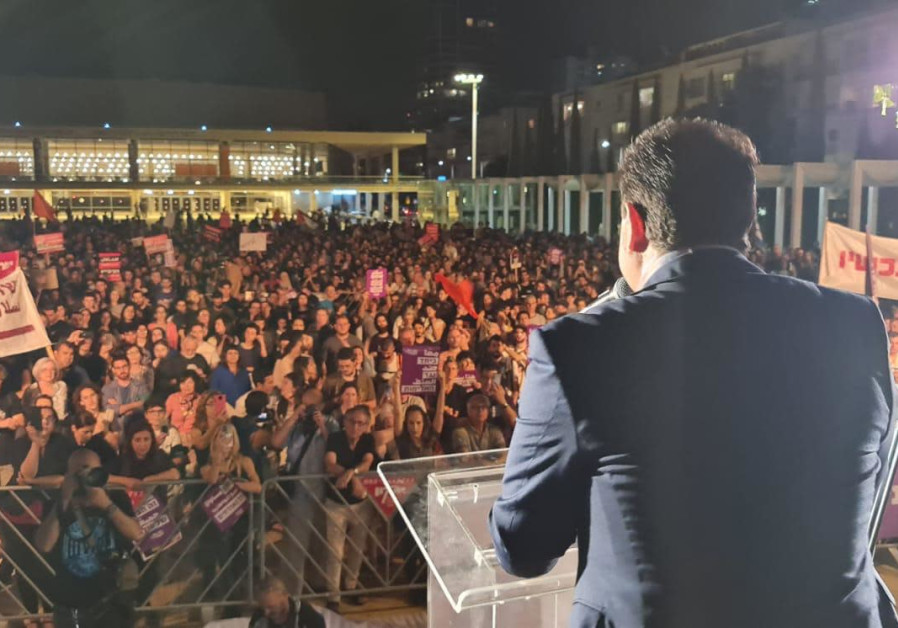
Thousands of Jews and Arabs march in Tel Aviv for peace, coexistence

Protesters voiced support for the recent ceasefire between Israel and Hamas and called on the government to take immediate action to reach peace with the Palestinians.
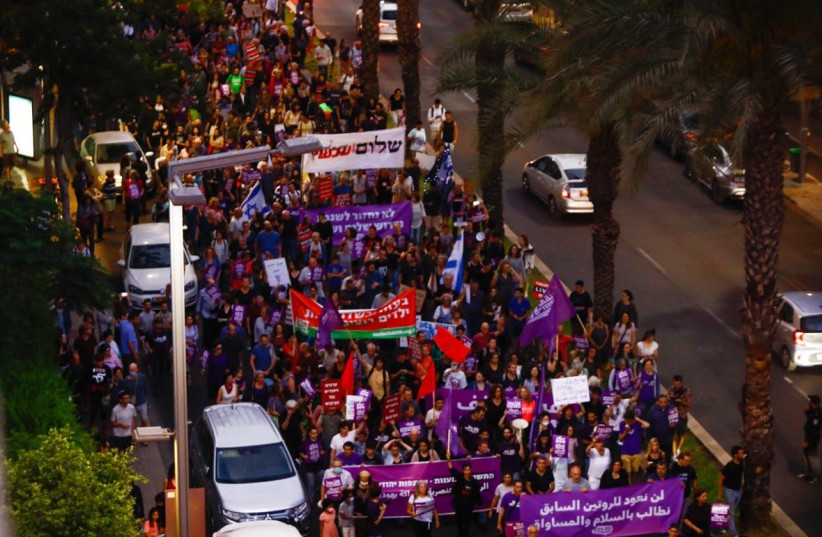
"These past few days have shown us how life in this country can look like - a nightmare," Zandberg added. "We don't want to start waiting for the next war, but to change direction toward peace - to live together in true partnership."A similar protest took place last Saturday at Habima Square, which was one of several protests attended by Jews and Arabs across the country that called for peace and for coexistence amid the nationwide riots and the military operation in Gaza. Jews and Arabs gathered daily during Operation Guardians of the Walls on bridges and intersections along the country and protested against the ongoing violence. Also on Saturday, hundreds gathered outside the Prime Minister's Residence in Jerusalem, calling on Prime Minster Benjamin Netanyahu to resign and blaming him for the escalation in Gaza and claiming that he deliberately extended the operation for no reason but personal interest. Earlier Saturday, about 200 people marched along the streets of the mixed city of Jaffa, voicing support for coexistence between Arabs and Jews while visiting small local businesses.
https://www.jpost.com/israel-news/thousands-of-jews-and-arabs-march-in-tel-aviv-for-peace-coexistence-668852
#Israel-#Palestine: A new generation says 'enough is enough'
BY Azzam Tamimi
Anger and frustration have been deepened by a decade that saw Arab governments in the region relegate the Palestinian cause to the margins of their politics.

This is not the first war between Gaza and the Zionist regime occupying Palestine. It is the fourth major confrontation in less than 13 years - but this one is different.
Firstly, it was Hamas that initiated the battle in retaliation for Israel’s desecration of al-Aqsa Mosque and the attempt to forcibly remove Palestinian families from their homes in Jerusalem’s Sheikh Jarrah neighbourhood, to be replaced by Jewish settlers.
Secondly, the confrontation coincided with an unprecedented show of unity and solidarity across the occupied West Bank, ’48 Palestine and the diaspora. All were brought together by flagrant Israeli provocations over what Muslims around the world consider to be their third-holiest place of worship on earth.
This generation was born into a completely different reality. Very little territory was left for any meaningful Palestinian state
Thirdly, an entirely new generation of young men and women is at the forefront, challenging an increasingly fanatical Jewish society and extreme right-wing Israeli government. This generation is under no illusions about the occupation. Most of its members were born well after the Oslo Accords, which were supposed to lead to a Palestinian state in the West Bank and Gaza.
Instead, this generation was born into a completely different reality. Very little territory was left for any meaningful Palestinian state. Since 1967, and more actively since 1993, Israel has confiscated more land, built more settlements, expanded existing ones, and demolished more Palestinian houses. The new generation did not have a state waiting for them, but rather a Palestinian Authority, the main outcome of Oslo, which colludes with Israel in oppressing Palestinians.
Normalisation with Israel
The disappointment, bitterness, anger and frustration felt by this new generation have been deepened by a decade that saw Arab governments in the region relegate the Palestinian cause to the margins of their politics. This culminated with the decision by several Arab states to normalise relations with Israel, despite the latter’s push to annex more land and declare Israel a Jewish supremacist state.
The standoff at al-Aqsa Mosque and Sheikh Jarrah was the straw that broke the camel’s back. Under Prime Minister Benjamin Netanyahu, Israel has been shifting to the extreme right of the political spectrum, giving increasing power to the Religious Zionist camp, which believes that Palestine was promised to them by God and they are thus entitled to dispossess Palestinians. They are particularly focused on al-Aqsa Mosque, which they believe will ultimately become the site of a third temple.
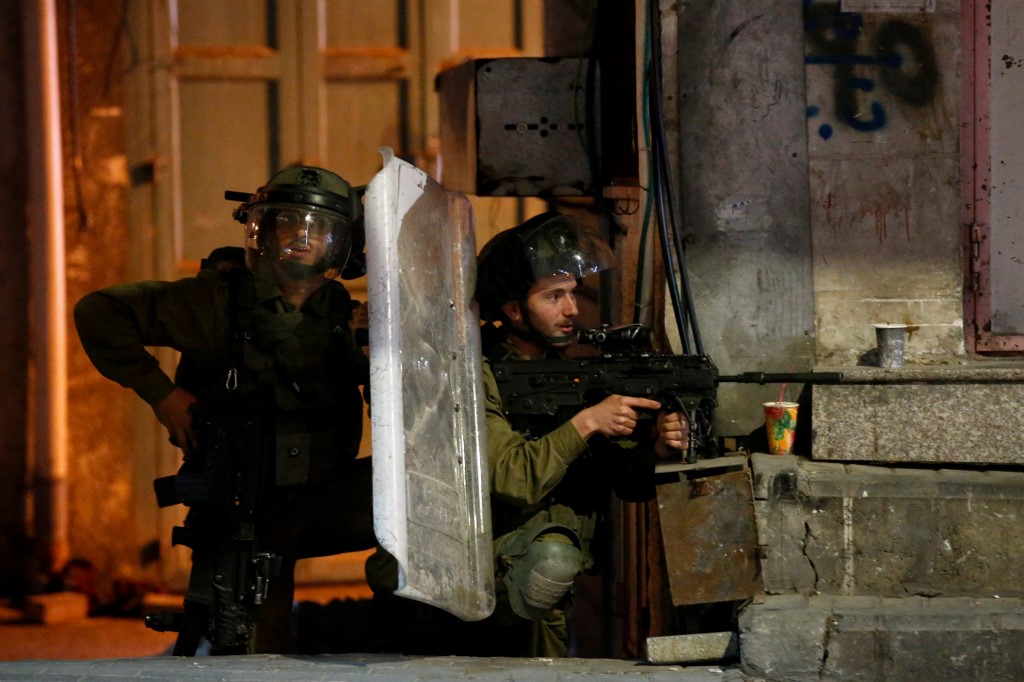
To prepare the landscape for such an eventuality, they have claimed ownership of Palestinian homes near the mosque, including in Sheikh Jarrah, and used Israel’s apartheid court system to legalise evictions. Acting with impunity and protected by Israeli security forces, the Jewish extremists organise provocative marches within Jerusalem, and at times storm al-Aqsa Mosque complex.
The latest flareup came as settlers organised a big rally to celebrate the anniversary of the occupation of East Jerusalem in 1967. During the holy month of Ramadan, Israeli police and settlers intimidated and harassed Muslim worshippers, including through the implementation of measures to restrict access to the mosque by Palestinians from the occupied West Bank.
As provocations and tensions escalated, worshippers, most of whom happened to be members of the new generation of Palestinians, stood up to police, ultimately leading to the removal of barriers from the Damascus Gate plaza.
Profound grievances
As tensions simmered, Hamas warned Israel against continuing its attacks against worshippers and the desecration of the mosque. It gave Israel until 6pm on 10 May to stand down, promising it would otherwise come to the aid of Palestinians in Jerusalem - and the rockets began firing right on schedule.
As the battle rages on, more than 200 Palestinians have now been killed, including more than 60 children. Substantial destruction has been inflicted upon Gaza, with Israel destroying residential homes on top of their inhabitants, apparently aiming to turn the population of Gaza against Hamas and other resistance factions. Instead, Palestinians in Gaza have grown increasingly emboldened, despite the enormous pain and loss. Meanwhile, southern and central Israeli towns have been paralysed by the constant barrage of missiles from Gaza.
As in previous wars, regional and international players have been trying to broker a ceasefire. But what complicates matters for Israel is the broad participation in this popular uprising of Palestinians from across the country, including ’48 communities. Palestinians citizens of Israel, treated as second-class citizens in a vicious apartheid regime, have their own profound grievances. The facade of Arab-Jewish harmony in “mixed” towns and cities, such as Lod, Jaffa and Haifa, has been shattered beyond repair.
By allying itself with Jewish fanatics who want all Palestinians expelled from their “promised land”, the current Israeli political class has succeeded like never before in turning the political conflict between Palestinians and Israelis into a religious war. But do Zionists really believe they can win, when they are up against more than 1.8 billion Muslims worldwide?
https://www.middleeasteye.net/opinion/israel-palestine-new-generation-says-enough