Tuesday, May 11, 2021
COVID: What's behind Pakistan's low vaccination rate?
Experts have said that negative publicity combined with a shortage of vaccines are keeping people from getting inoculated. The country has vaccinated just 0.8% of its total population.
As other South Asian countries roll out their vaccine programs, critics have said that Pakistan's vaccination drive is moving along at a much slower rate.
As of May 6, Pakistan had vaccinated 3.32 million people, or just 0.8% of its population of 216 million. The percentage of vaccinations per 100 people also stands at just 1.53%, against the global average of 16.44%.
Both the federal and provincial governments have set up hundreds of vaccination centers. However, experts say that a combination of limited vaccine availability and widespread hesitancy due to negative publicity have contributed to the low number of inoculations relative to the population.
More than 860,000 infections have been reported in the country since the start of the pandemic, while nearly 19,000 people have died.
Vaccination 'could take a decade'
Dr. Abdul Ghafoor Shoro of the Pakistan Medical Association believes it could take up to a decade to inoculate every citizen if the country continues its vaccination drive at the current pace. Even health care workers are still waiting to be vaccinated, Shoro told DW. Citizens, he added, have also expressed some hesitancy due to propaganda against the vaccine.
Meanwhile, the Brazilian, South African and UK variants could quickly plunge the country into a deeper health crisis, he said.
Dr. Ashraf Nizami, a Lahore-based medical expert, said that the government did not do enough to counter the negative media that is attracting the attention of millions on social media. Both Nizami and Shoro believe that rumors about side effects of the vaccines, especially regarding the AstraZeneca inoculation, are contributing to widespread hesitancy.
Muhammad Iqbal Khan Afridi, a parliamentarian from the ruling Tehreek-e-Insaf party, echoed those beliefs. Out of 35 family members, he said he was the only one to get the vaccination so far. Afridi added that influential clerics are also using mosques to spread negative messages about the vaccine.
A number of prominent clerics and personalities, including a famous defense analyst, have voiced vehement opposition to the vaccine, coming up with conspiracy theories and calling on citizens not to get vaccinated.
Such messages are not new in the South Asian country, where clerics and extremists have openly opposed the polio vaccine, keeping Pakistan on the list of just a few nations where the disease still exists. Several attacks against those issuing polio vaccines have also been reported in previous years.
Low availability, difficult registration
Dr. Abdur Rashid of the Drugs Regulatory Authority of Pakistan believes that the slow rollout is primarily due to a shortage of available vaccines. "Countries all over the world are scrambling to get vaccines. We were lucky to have China provide us with more than 1.5 million. We are trying to get vaccines from wherever we can," Rashid told DW.
On the condition of anonymity, a senior government official also blamed the slow pace on the shortage of vaccines. "We are trying to get as many vaccines as possible and might get 18.7 million doses by June," he told DW.
Sindh province's health minister, Dr. Azra Fazal Pechuho, said that the registration system is also partially to blame for the pace. "The portal launched by the federal government is slow, so people find it difficult to register. However, the Sindh government is asking people to just walk into their nearest vaccine centers if they are of eligible age," Pechuho told DW.
Others, however, contest the claim that the vaccination rate is too slow. Dr. Ikram Ullah Khan, an official from the northwestern city of Peshawar, told DW that around 65,000 out of 75,000 total health care workers have been vaccinated in the city.
The rest would be inoculated soon, he said, adding that the province has already vaccinated more than 450,000 people and plans to give shots to over 10 million people by December this year.
Pechuho believes that the heart-wrenching scenes of relatives and loved ones dying in India have also made a deep impact on people's impression of the vaccine in Pakistan, and have encouraged more people to register.
Vaccine registration on the rise
On May 4, Asad Umar, Pakistan's federal minister of planning, development and special initiatives, announced that more than 164,000 people had been vaccinated in a single day, and around 200,000 people the following day. Additionally, he said, the pace of registration had also picked up.
Meanwhile in Sindh, authorities have launched a center that could be used to vaccinate 30,000 people a day. "We are setting up more such centers and will ask people over the age of 18 to just walk in," Pechuho told DW. "A mobile service is also vaccinating those who are bedridden and people with disabilities."
Additionally, the government of Punjab, Pakistan's most populous province, is setting up new centers to offer the vaccine to around 80,000 people per day.
Rashid believes that Pakistan will solve its vaccination issue. "We are seeking cooperation with China, which has agreed to get vaccines filled and packaged in Pakistan," he said, adding that the Drugs Regulatory Authority is allowing another Chinese company to carry out clinical trials of a different vaccine which would consist of three doses.
"With all of this, we will not have a supply problem and will have enough vaccines to vaccinate all Pakistanis," he said.
دورہ سعودی عرب سے وزیراعظم نے زکوۃ اور فطرے کی مد میں چاولوں کے 19 ہزار تھیلوں کو حاصل کرنے کے علاوہ کیا کامیابی حاصل کی؟ چیئرمین بلاول بھٹو زرداری
کراچی/اسلام آباد(—–) پاکستان پیپلزپارٹی کے چیئرمین بلاول بھٹو زرداری نے عمران خان پر سخت تنقید کرتے ہوئے وزیراعظم کو عوام دشمن قرار دے دیا، میڈیا سیل بلاول ہاؤس سے جاری اپنے ایک بیان میں چیئرمین پی پی پی بلاول بھٹو زرداری نے سلیکٹڈ وزیراعظم سے سوال کرتے ہوئے دریافت کیا کہ دورہ سعودی عرب سے عمران خان نے زکوۃ اور فطرے کی مد میں چاولوں کے 19 ہزار تھیلوں کو حاصل کرنے کے علاوہ کیا کامیابی حاصل کی؟
انہوں نے مطالبہ کیا کہ وزیراعظم کے دورہ سعودی عرب کے اخراجات کا زکوۃ کی مد میں حاصل ہونے والے چاولوں کے تھیلوں کی قیمت سے موازنہ کیا جائے، اس موقع پر پی پی پی چیئرمین نے دعا کرتے ہوئے کہا کہ عمران خان کی 22 سالہ جدوجہد اگر ایک ایٹمی ملک کو سعودی بادشاہ کے زکوۃ کے چاول کے لائق بنانا کیلئے تھی تو خدا کسی کو ایسی جدوجہد کی توفیق نہ دے،
انہوں نے یہ بھی کہا کہ مرغی 400 روپے کلو سے زائد کرکے عمرے کے لئے سعودی عرب جانے والے عمران خان سے عوام حساب لیں گے، اس موقع پر چیئرمین پاکستان پیپلزپارٹی بلاول بھٹو زرداری نے عمران خان کو مخاطب کرتے ہوئے کہا کہ وزیراعظم صاحب! نوٹس لینے اور انکوائری رپورٹوں کے جھانسے دے کر مہنگائی پر قابو پانے کے آپ کے دعوے بے نقاب ہوچکے ہیں، نتھیا گلی میں عید کی چھٹیاں منانے والے وزیراعظم کو علم ہی نہیں کہ وہ ملک کے گلی کوچوں میں تبدیلی کے سونامی سے قیامت برپا کرچکے ہیں، انہوں نے سوال اٹھایا کہ تنخواہ دار تو کچھ گزارا کرسکتے ہیں مگر عمران خان نے لاک ڈاؤن کے دوران عید میں دیہاڑی دار مزدوروں کے گزارے کیلئے کیا پالیسی بنائی ہے؟ چیئرمین پی پی پی کا کہنا تھا کہ عمران خان غریبوں پر رحم کریں، صرف ایک سال میں بیکری اشیا کی قیمتوں میں 19 فیصد اضافہ ہوچکا ہے، پی ٹی آئی حکومت کے پاس ذخیرہ اندوزوں کو قابو کرنے کیلئے کوئی پالیسی ہی نہیں ہے کہ مزید مہنگائی سے تدارک کیلئے سرکاری قیمتوں کے ہی نفاذ کو یقینی بناسکے-
Imran Khan’s 25-year struggle made Pakistan a beggars’ land, says PPP Chairman Bilawal Bhutto Zardari
Chairman Pakistan People’s Party Bilawal Bhutto Zardari has said that the enemy of the people of Pakistan is nobody else than the incumbent Prime Minister Imran Ahmed Khan Niazi.
In a statement issued from the Media Cell Bilawal House, he said that the selected PM achieved nothing except 19,000 bags of rice in charity from Saudi Arabia in the form of Fitra and Zakat. “The price of rice bags got in charity is comparatively cheaper then the expenses accrued on the tour to the kingdom by Imran Khan along with a couple of dozen of friends and ministers,” he added.
The PPP Chairman said that the nation has finally found that puppet Prime Minister’s 25-year long struggle was to render nuclear power, Pakistan, a beggar country and hence it is prayed that such a shameful struggle would have not existed. “The entire struggle was for just 19,000 bags of rice in charity,” he lamented.
While addressing the PM Imran Ahmed Khan Niazi, the Chairman Bilawal Bhutto Zardari said that the selected PM has fully been exposed in his deceptive actions on controlling the price-hike and taking notes on it. “Illegitimate Prime Minister who is enjoying his Eid vacations in Nathia Galli barely knows how his Tsunami has wreaked havoc on the masses,” he added.
He questioned the PM as to what he has so far done for the daily-wagers who can’t make a living during complete lockdown as compared to those salaried classes of people that might cop up with the existing situation at least.
The PPP Chairman deplored the PM’s indifference and asked him to have mercy on the poor. The sheer 19 percent hike in the prices of bakery products has been recorded. “Unfortunately, the incumbent PTI-led Federal government does not have the capability or policy for controlling the hoardings and profiteering and hence the Federal government should at least enforce the government rates of commodities in letter and spirit,” he concluded.
https://www.ppp.org.pk/pr/24787/
Monday, May 10, 2021
#Republicans Are Still Waging War on Workers
https://www.nytimes.com/2021/05/10/opinion/jobs-unemployment-benefits-republicans.html?action=click&module=Opinion&pgtype=Homepage
#Pakistan - If OIC diplomats spoke to Imran Khan freely on blasphemy, here’s what they’d say: Hoodbhoy
PM Imran Khan asked OIC envoys to convince the West that blasphemy against the Prophet hurts the world’s Muslims. This failure is causing endless trouble in Pakistan.
#Pakistan - The PTI government must leave office – says Central Information Secretary of PPPP, Shazia Atta Marri
Central Information Secretary of Pakistan Peoples Party Parliamentarians and Member National Assembly Shazia Atta Marri has said that Imran Niazi has lost ethical and legal grounds to retain premiership and he must leave his office and go back to home . She added that like incompetent PM Imran Niazi his cabinet ministers are also making confusing statements. She further said that Imran Khan is such a Prime Minister who does not care that people are miserable and facing starvation, committing suicide due to high rise in inflation then it is useless for him to sit in the office of the Prime Minister.
Shazia Marri said that federal government borrowed 3 billion dollars loan from Saudi Arabia and repaid to Saudi Arabia by seeking debt from China, in this regard, matter was not brought for discussion in the Parliament. This she expressed while talking to media persons during her Press conference held at Media Cell Bilawal House hereon today. On this occasion, PPP General Secretary Sindh Waqar Mahdi, PPP leader Abdul Qadir Mandhokel, MNA Shahida Rehmani, Taimor Mehar and others were also present. Shazia Marri said that poverty has been increased by 30% due to incompetent government’s bad policies and about 85 million people are living their lives below the poverty line.
She added that federal government was cheating overseas Pakistanis and and no any parliamentary committee was also formed on issues of overseas Pakistanis. While talking about NAB letter to Sindh government in which details of rural areas officers were sought who are posted in urban areas, she said that NAB letter is shameful act on which Sindh government had already refused NAB and it was based on prejudice. She maintained that poor policies of the federal government are in front of everyone. Imran Niazi does not talk about public issues and their solutions. She added that NCOC has strictly directed for compliance of SOPs in wake of third wave of covid-19 in the country and other side, PM Imran Niazi has planed to spend his Eid holidays in Nathia gali. She added that KP government has lifted the ban on all recreational places which is a blatant violation of the NCOC’s Corona related SOPs and highly condemable act.
She said that IRSA has been theft 2,000 cusecs of water from Sindh Province’s due share at Tunsa Panjnand which is may cause scarcity of water in the province. She added that PPP condemns this bad act of IRSA. Shazia Marri said that innocent Kashmiris are facing the cruelity of indian aggression while the policy of the government on Kashmir is not clear.
She further said that Kashmir cause has been severely damaged due to poor and weak foreign policy of Imran Niazi’s government. She concluded that PTI-led government should take a strong stand in the United Nations to end Israeli barbarism. “PPP condemns Israel’s attack on Al-Aqsa Mosque during prayers”, she added.
https://www.ppp.org.pk/pr/24782/
Imran Khan has extensive experience in soliciting alms and donations, but countries do not, can not, and should not run on donations, says Chairman PPP

Chairman Pakistan Peoples Party, Bilawal Bhutto Zardari, has asked the Prime Minister to explain to the public why his government was compelled to repay Saudi Arabia’s USD 3 billion loan, and what it is going to cost the nation for taking a commercial loan from China to clear the Saudi soft loan. The PPP Chairman said that Imran Khan had promised to break Pakistan free from the debt trap, but since coming to power he has buried Pakistan under loans, taking the begging bowl everywhere he goes. “He (Imran Khan) has extensive experience in soliciting alms and donations, but countries do not, can not, and should not run on donations,” he stated.The PPP Chairman said that the life of the common man in Pakistan had become unbearable due to the poor economic policies of Imran Khan’s regime. With the per capita debt now at Rs175,000, every Pakistani is paying the price for Imran’s Khans incompetence.Common people would continue to suffer unprecedented inflation, poverty, and unemployment if the federal governments pushes Pakistan further into debt and compounds it with their corruption and mismanagement. “Every person in Pakistan is paying a terrible price for the tsunami of Imran Khan’s transformation,” he added. Bilawal Bhutto Zardari said that due to the circular debt crises, the government has been unable to keep its financial commitments to our international partners, putting projects such as CPEC at risk.“The hesitation of the Chinese government in releasing the committed USD 6 billion funds for the ML-1 railway track, is in fact an expression of distrust in the PTI regime,” he said, adding that Chinese companies investing in Pakistan have also apprised the Chinese government of their distrust of the PTI government. The PPP Chairman further said that the puppet Prime Minister had created a climate where foreign investors and governments had become reluctant to invest in Pakistan and engage with the federal government.
https://www.ppp.org.pk/pr/24777/
Sunday, May 9, 2021
Victory day belongs to the Russian people: Westerners must realize it celebrates destroying the Nazis, not honoring Stalin’s USSR
By Paul Robinson, a professor at the University of Ottawa. He writes about Russian and Soviet history, military history, and military ethics, and is author of the Irrussianality blog

These celebrations are often portrayed in the West as an effort to rehabilitate the USSR and its wartime leader, Joseph Stalin. In reality though, Moscow is far from eager to rewrite history, and most Russians are more than capable of commemorating the Soviet victory without endorsing Stalinism.
However, as preparations for the anniversary got underway, the Georgian strongman has again been making news. Just a week ago, in the Caucasian town of Dagestanskiye Ogni, a bust in honor of Stalin was erected. Unlike much of his legacy, it was short lived, and local authorities ordered its removal only four days after it was unveiled.

That historical debate has decidedly political consequences. Attempts to portray the Red Army not as a liberating force but as a brutal occupier serve as a means of pushing modern Russia out of European politics. Russian celebrations of the victory over Germany are portrayed as an endorsement of Stalinist oppression, and therefore as a sign of Russia’s malign character and its supposed ambitions to reassert Moscow’s control from the Baltic to the Black Sea.
In response to this growing campaign, the Russian State Duma began considering legislation last week which, if passed, will forbid people living in the country from comparing the USSR to Nazi Germany. This follows an amendment to the constitution last year stating that, “diminishing of the significance of the people’s achievement in defending the Fatherland is not permitted. Any pronouncement which smears the achievement of our citizens is unconstitutional.”
To opponents of the Kremlin, such acts are proof that the Russian state refuses to accept the crimes committed by the Soviet Union during WWII, such as the massacre of Polish officers at Katyn. This in turn is taken as evidence that Moscow has still not turned its back on Stalinism and its bloody methods.
Add to this the occasional efforts of modern-day Russian communists to put up statues to Stalin, and the result is an accusation that the country is working to legitimize its own government by invoking the memory of the USSR’s most famous leader.
For instance, when communists in the Siberian city of Novosibirsk erected a monument to the former Soviet premier in 2019, the Western press responded with a series of articles claiming that the state itself was attempting to “rehabilitate” Stalin. The Washington Post, for instance, published an article claiming that President Vladimir Putin “attempts to position himself” as “Stalin-lite… the Russian president is actively rehabilitating the Soviet dictator’s record, working to paint him as a strong leader who save the world from fascism. The goal is to bolster Putin’s own ‘strongman’ leadership style [sic] in the eyes of ordinary Russians.”
In a similar article, the Guardian declared that “Putin’s rise to power came accompanied by a new version of patriotism relying on ‘heroic’ and ‘bright’ aspects of the Soviet past. An image of Stalin as a strong leader who had ensured victory in the second world war and led a Soviet superpower re-emerged.”
It concluded that, “in Russia, it is obvious to many of us that our country’s return to democracy will be impossible as long as we fail to condemn Stalin and the system he created.”
The reality is rather different. While there is some admiration for the Georgian revolutionary in Russia on account of his wartime leadership, people are also acutely conscious of the negative aspects of his rule. Furthermore, initiatives to “rehabilitate” Stalin come not from the state, but from ordinary citizens, and Moscow’s response has been far from warm.
We can see this in recent efforts of groups to erect statues to the former leader. In Novosibirsk, communists were unable to obtain permission to erect a statue of Stalin in a public place. In the end, the mayor gave permission only on the condition that it be put up on private land. In Dagestan, as we have already seen, the local government took a new installation down after just four days. Clearly, the authorities do not view such initiatives very positively.
Nor do those same officials attempt to play down the negative side of Stalin’s rule. The “Concept of State Policy on the Immortalization of the Memory of Victims,” confirmed by the Russian government in August 2015, stipulated that, “attempts to justify the repressions by the particular circumstances of the time or generally to deny them as a fact of our history are not permissible.”
In July 2019, the Permanent Commission on Historical Memory of the Council of the President of the Russian Federation issued a statement saying that its members did not “call for the establishment of statues to Stalin on private plots of land to be banned.” However, it noted, “civil servants of all levels must know that it is impermissible to allow state or municipal land or buildings to be used for this purpose. Such acts not only contradict morality and respect for our deceased, innocently suffering predecessors, but also contradict official state policy.”
As for Putin himself, he made his position clear when he attended the opening in October 2017 of the ‘Wall of Grief’, a monument in Moscow dedicated to the victims of communist repression. This is not even the only state-backed monument to this purpose. Others include the Sretensky Monastery, devoted to the ‘new martyrs’ (i.e. Christians killed by the communists), and the Butovo Shooting Range Memorial, located on the site of what was an NKVD execution ground during Stalin’s Great Terror.
In short, the idea that the Russian state is working to rehabilitate Stalin is far from true. Equally false is the idea that commemorating the Soviet victory in WWII is tantamount to celebrating communist repression. By the same token, when Britons celebrate their country’s role in that war, they’re not condoning the crimes of the British Empire. And when they praise Winston Churchill for his wartime leadership, they’re equally not endorsing the more questionable aspects of his personal character and past.
Similarly, Russians are capable of separating the good from the bad in their shared history. Victory over fascism in 1945 came at enormous cost, but was also a huge national achievement. Millions of Russians will choose to mark the anniversary this Sunday, and so they should. Victory Day is theirs, not Stalin’s.
https://www.rt.com/russia/523304-victory-day-stalin-crimes/
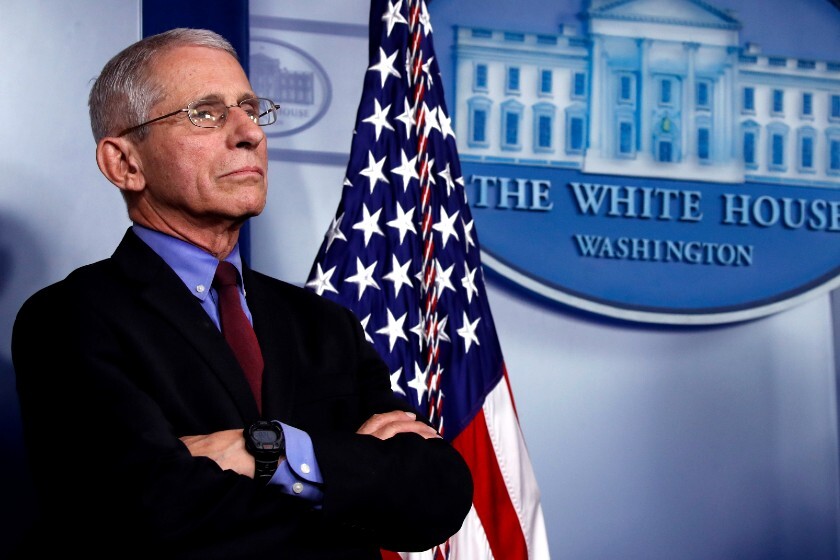
Dr. Anthony Fauci: ‘There’s No Doubt’ #COVID19 Deaths Have Been Undercounted In U.S.
By Nina Golgowski
A recent study counted 905,000 coronavirus deaths in the U.S., nearly double the amount recorded by federal health officials.
https://www.huffpost.com/entry/fauci-undercounted-covid-deaths_n_6097f441e4b05bee44cb6c43
#Pakistan - 'Truth has prevailed': Bilawal Bhutto congratulates PPP on NA-249 victory
- After recount, we have expanded our lead to 900 plus votes, says Bilawal.
- False accusations have been exposed, says PPP chairperson
- "People of Karachi have rejected selected and placed their hopes in PPP," says Bilawal.

The party had much to celebrate for, as its candidate was declared the victor by the Election Commission of Pakistan (ECP) with an even wider margin after votes were counted once again on the Opposition's insistence.
"Congratulations to workers of Pakistan Peoples Party on winning NA249 Karachi. After recount we’ve expanded our lead to over 900+ votes. False accusations have been exposed, the truth has prevailed," tweeted the PPP chairperson.
Bilawal took a shot at the government as well, saying that Karachiites "have rejected selected & placed their hopes in PPP".
Mandokhail emerges victor by wider margin after recount
After a recount of votes polled across all 276 stations, Mandokhail got 15,656 votes, whereas PML-N candidate Miftah Ismail secured 14,747,. This means that the PPP candidate was ahead of the second-placed Mistah Ismail by a margin of 909 votes.
When the unofficial by-poll results were first announced, Mandokhail won with 16,156 votes, whereas Ismail came in second with 15,473, resulting in a difference of 683 votes.
The low margin of votes had prompted Ismail to petition the ECP to hold a recount. The ECP, accepting Ismail's application for a hearing, issued a stay order, withholding the results of the by-poll.
NA-249 by-poll: PML-N, PTI and others reject PPP's victory
On May 4, following a hearing, the ECP had ordered a recount on May 6, which was boycotted by all parties except for the PPP.
The vote recount hit a snag when candidates objected to unsealed bags that were brought for a recount and came out of the District Returning Officer's office in protest.
The PTI had gone so far as to file a petition with the ECP seeking annulment of the by-election in NA-249 due to alleged rigging.
However, ECP officials decreed that "the recount process will be completed as per the order”.
https://www.geo.tv/latest/349462-truth-has-prevailed-bilawal-bhutto-congratulates-ppp-on-na-249-victory
Former President Asif Ali Zardari demands UN to take notice of massacre of Palestinians

In a statement, President Zardari said that the judicial assassination of Shaheed Zulfikar Ali Bhutto affected the unity of Muslims. Shaheed Mohtarma Benazir Bhutto was the advocate of the Palestinian people. She raised voice against the exploitation of Muslims at the United Nations.
President Zardari said that after the PPP government, the government of Pakistan did not pay attention to the issues regarding foreign affairs. Imran Khan is putting blame of his incompetency on Pakistani diplomats. The UN should take notice of massacre of Palestinians and Kashmiris, Asif Zardari demanded.
https://www.ppp.org.pk/pr/24772/
#Pakistan #MothersDay - Bilawal Bhutto remembers late Benazir Bhutto on Mother's Day
On a special day, people across the globe paid tributes to their mothers for their contribution in helping them achieve success at the highest level, Pakistan People’s Party Chairman Bilawal Bhutto also shared throwback photos with his mother.
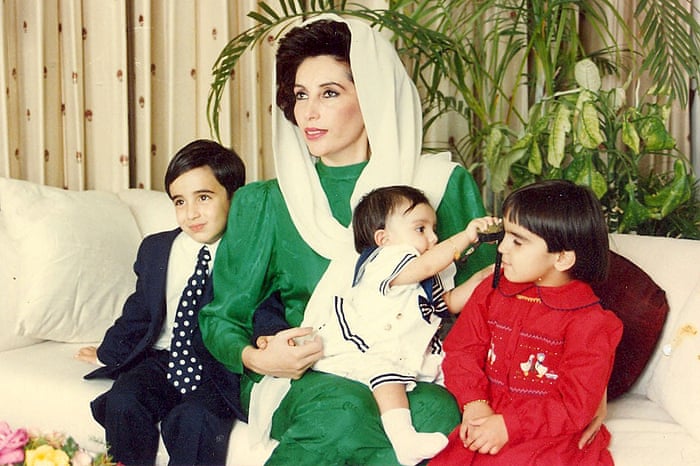
The young Bhutto shared a post with four pictures along with late mother and both his sisters to mark the day. ‘Your Heaven lies under the feet of your mother’. Happy Mother’s Day to all mothers everywhere, he captioned the post.
Earlier, the 32-year-old remembered his mother at the nikkah ceremony of sister Bakhtawar Bhutto. Felt like our mother was watching over us in this moment of joy. Wishing them both all the best for their new life together, he wrote in a social media post.
Let it be known that International Mother’s Day was first celebrated in 1870 by human rights activist and poet Julia Ward in memory of her mother. Following the event, many countries, including Pakistan, celebrate Mother’s Day on the second Sunday of May every year.
https://en.dailypakistan.com.pk/09-May-2021/bilawal-bhutto-remembers-late-benazir-bhutto-on-mother-s-day
Saturday, May 8, 2021
Elizabeth Warren: President Biden Is ‘Meeting The Moment’

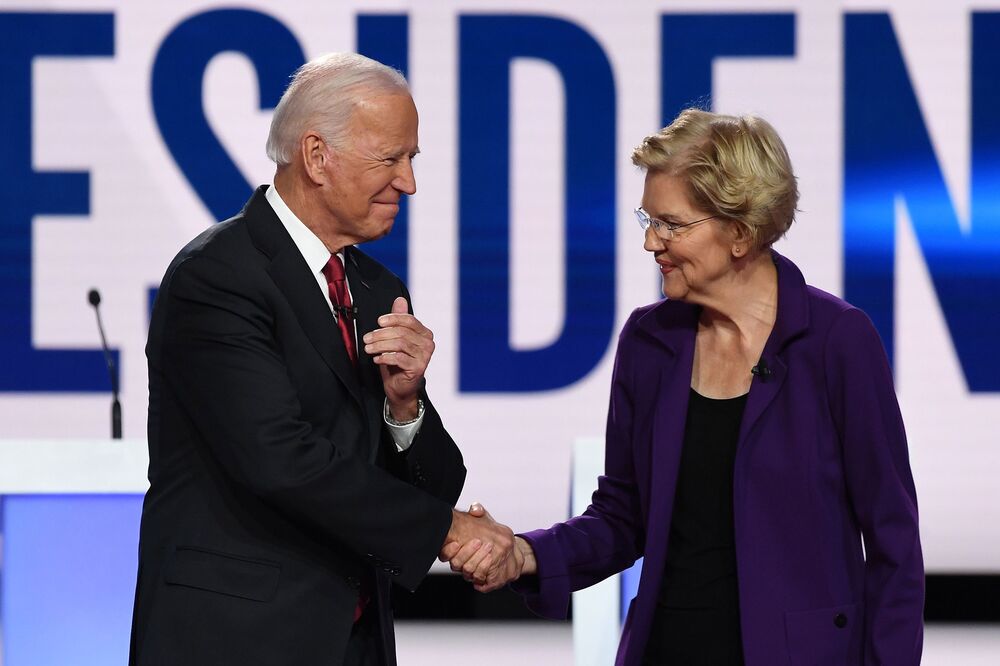
The senator from Massachusetts said she plans to continue pressing the president to do more on child care and other issues. A few days before Sen. Elizabeth Warren dropped out of the race for the 2020 Democratic presidential nomination, she said that rival Joe Biden was “so eager to cut deals with Mitch McConnell and the Republicans that he’ll trade good ideas for bad ones.” More than a year later, following a coronavirus pandemic that transformed now-President Biden’s governing agenda, the senator from Massachusetts is pleasantly surprised. “He’s meeting the moment,” Warren said in an interview with HuffPost to promote her new book, “Persist.” “The door for making change has opened, just like it opened in the Great Depression, just like it opened in 2008, 2009, when we got Dodd-Frank and the [Consumer Financial Protection Bureau]. It’s not open all the way. It’s only open a little bit. “There’s no guarantee we will make big structural change, but the opportunity to do it is right in front of us,” she added, making a reference to her presidential campaign slogan. Warren was also pleased with Biden’s approach to dealing with the Republican Party, noting he was willing to pass the $1.9 trillion American Rescue Plan without any Republican support in Congress. “There are not very many people who ... tore up their $1,400 checks because they said, ‘Oh, it had to come through reconciliation without a single vote in Washington, D.C., from the Republicans,’” Warren said. “I think what Joe Biden is recognizing and making clear through his actions: He’s happy to do things bipartisan with the elected officials in Washington, but he is not going to fail to do what this nation needs just because Mitch McConnell folds his arms and says no.” Warren also dodged on applying some of her traditional critiques of the American political system to Biden’s administration. Mere minutes after denouncing the influence of “dark money” on the political system, she begged off a question about whether an outside group supporting Biden’s agenda, Building Back Together, should reveal its donors. “I don’t know the details about this,” she said. Still, Warren says there is room for Biden to be more aggressive. She noted the funding for his plans for universal child care and pre-kindergarten ― about $425 billion in the American Families Plan ― paled in comparison to what she had pushed during the 2020 primary. “Look, I’m just telling you I’ve done the numbers. It’s going to take about $700 billion to do high-quality available child care universal all across this country,” she said. “But the point is, we’re rowing in the same direction, and that’s what matters here. Am I going to keep pushing for more? You bet I am. I’m going to be pushing for a solution that is as big as the problem.”
https://www.huffpost.com/entry/elizabeth-warren-president-biden-meeting-the-moment_n_6095647ee4b0f73e530d1888
Treacherous Triangle: Afghanistan, India, and Pakistan After US Withdrawal

By Umair Jamal
After the last American soldier departs Afghanistan in September, India and Pakistan will be left with some very difficult, unsavory, choices. U.S. troops in Afghanistan have begun packing gear after President Joe Biden announced last month that all American troops will leave Afghanistan by September 2021, after a nearly two-decade-long military presence in the country. Defending his decision to withdraw all American troops from Afghanistan, Biden said, “With the terror threat now in many places, keeping thousands of troops grounded and concentrated in just one country and across the billions [of dollars spent] each year makes little sense to me and to our leaders.” “I am now the fourth American president to preside over an American troop presence in Afghanistan. Two Republicans. Two Democrats,” he added. “I will not pass this responsibility to a fifth.” Biden called on regional countries, particularly Pakistan, to do more to support Afghanistan. The international community, including the U.S., has often accused Pakistan of supporting militant groups in Afghanistan, including the Afghan Taliban, which have to some extent undermined Washington’s war efforts. In 2018, then U.S. President Donald Trump tweeted that Washington had “foolishly given Pakistan more than $33 billion in aid over the last 15 years,” but Islamabad had, in return, given “safe haven to the terrorists we hunt in Afghanistan, with little help.” In another speech laying out his Afghan policy, Trump singled out Pakistan, saying that the U.S. “cannot be silent about Pakistan’s safe havens for terrorist organizations.” Fearing the possibility of punitive action from the U.S. and seeing the international community’s attempt to engage the Afghan Taliban as a win for its own Afghanistan policy, Pakistan has been supporting the United States’ peace talks with the Taliban. Trump started negotiations with the Taliban in 2018, aimed at ending the 18-year-long war in Afghanistan. An agreement known as the Doha Accord was signed in early 2020 between the U.S. and Taliban that proposed a roadmap for the withdrawal of international troops from Afghanistan within 14 months and paved a way for the start of intra-Afghan negotiations. Pakistan played an important role in pushing the Taliban to sign the agreement with the U.S. “Their [Pakistan’s] support has been very important in directing the Taliban to come to negotiations and their continued support is going to be very important as we go to this difficult period of deciding [if] the Taliban [is] actually serious about this and [that] they are going to live up to their commitments,” General Kenneth McKenzie, head of U.S. Central Command told a U.S. Senate panel last year. Pakistan shares a treacherous, 2,670-kilometer border with Afghanistan. The mountainous border region has long served as a safe haven for many militant groups including the Afghan Taliban. The group ruled Afghanistan from 1996 to 2001 and offered sanctuaries to al-Qaeda. Since the early 1990s, Pakistan has supported the Taliban in Afghanistan in an attempt to push its regional security interests. Pakistan was one of the few countries that established diplomatic relations when the Taliban’s government came to power in Kabul. While the U.S. invasion of Afghanistan in 2001 may have forced the Taliban out of power, the group has fought to expel international troops from Afghanistan in a bid to return to power, something that Pakistan has always wanted and supported despite international backlash. For decades, Pakistan has supported militant groups in Afghanistan rather than elected governments. This policy choice has created an image problem for Pakistan in Afghanistan and elsewhere, making Pakistan part of the problem rather than a solution. Arguably, U.S. forces’ withdrawal from Afghanistan offers Pakistan an opportunity to reorient its international image by playing a key role in encouraging regional cooperation to ensure stability in Afghanistan. The development offers Pakistan an opening to demonstrate to the international community that the country has made a clean break from its previous pattern of supporting militant groups in Afghanistan. “Pakistan will have to build trust with all Afghan ethnicities and political forces, rather than just being seen as ‘Taliban supporters’ or by many Afghans as ‘Taliban sponsors’,” Hassan Abbas, the author of “The Taliban Revival: Violence and Extremism on the Pakistan-Afghanistan Frontier,” told The Diplomat. Since the beginning of the peace talks three years ago, Pakistan has earned a good reputation by playing an effective role as a mediator. However, this effort on Islamabad’s part may have also exposed the limits of the country’s influence on the group. Pakistan reportedly told the Taliban recently that the group may lose its support if it doesn’t show flexibility in the ongoing peace process. “Enough is enough” were the words reportedly used by the Pakistani leadership to convey its displeasure to the Taliban. That said, Pakistan’s role in the Afghan peace process may largely become irrelevant if the anticipated volatility in Afghanistan becomes a bigger security headache for the country. Analysts warn that the U.S. troop withdrawal all but ensures heightened instability in Afghanistan – with potentially troubling security implications for Pakistan itself. “Increased instability in Afghanistan will produce spillover effects – increases in refugee flows, a more robust drug trade, the heightened risk of cross-border terrorism – that Pakistan won’t want,” Michael Kugelman, an analyst with the Wilson Center in Washington, D.C, told The Diplomat. “Another major concern for Pakistan would be that Taliban advances – and especially a Taliban takeover in Afghanistan – could galvanize Islamist terrorists in Pakistan, including an already-resurgent Pakistani Taliban. These would be very problematic scenarios for Islamabad.” Echoing Kugelman’s views, Abbas said that “any civil war in Afghanistan [following the U.S. withdrawal] will be terrible for Pakistan in terms of instability in Pakistan’s tribal belt and an opportunity for various militant groups to use war-torn areas for their activities and hiding.” Meanwhile, concerns have continued to mount about the ability of Afghan forces to hold the Taliban at bay without U.S. forces present in the country. A classified U.S. intelligence agencies assessment prepared during Trump’s time in the White House warned that Afghanistan could be taken over by the Taliban within two to three years if the U.S. leaves Afghanistan without ensuring a power-sharing deal among the warring factions in Afghanistan. If this happens and the peace process falls, Pakistan will be forced to return to its decades-old policy of supporting the Taliban. For decades, one of Pakistan’s key goals in Afghanistan has been to keep India at bay with the help of militant groups like the Afghan Taliban and the Haqqani Network. It should not come as a surprise that Pakistan has continued its support for the Taliban despite the fact that the country has paid a heavy price economically, combated militancy on its own soil, and earned bad will abroad. Islamabad should be expected to double down on its policy of supporting militant groups if the country sees other players doing the same. “Islamabad’s role in a post-withdrawal Afghanistan will depend on the status of the peace process. So long as the peace process is still happening, Pakistan will do what it can to support it – because it has a strong interest in the peace process leading to a political settlement, and because unending war could have undesirable spillover effects in Pakistan,” said Kugelman. “If the peace process collapses, Pakistan – and other regional actors – would fall back on the empowerment of proxies. Islamabad would scale up support to the Taliban to give it an upper hand against rival groups supported by the likes of India and Iran,” he added. This scenario directly threatens India’s political, security, and economic interests in Afghanistan and elsewhere. It is about time that India reorient its policies in Afghanistan, particularly its relationship with the Taliban in the wake of the U.S. forces’ withdrawal if the country wants to safeguard its interests. India has long supported the government in Kabul while distancing itself from the Taliban. From the 2001 Bonn conference, which paved the way for the formation of an interim government following the collapse of the Taliban regime up to the present day, India has continued a consistent policy of engaging with successive Afghan governments. In the 1990s, New Delhi supported the Northern Alliance against the Pakistan-supported Taliban and has continuously opposed the return of the Taliban to power in any form. The U.S. withdrawal, however, is guaranteed to make the Taliban stronger – either by giving it the upper hand in negotiations with Kabul, by giving it a major battlefield advantage, or both. The changing dynamics in Afghanistan indicate that New Delhi may be considering opening talks with the Taliban. Addressing the intra-Afghan talks last year, India’s External Affairs Minister S. Jaishankar reiterated his country’s support for an “Afghan-led, Afghan-owned, and Afghan-controlled” peace process and refrained from offering any view on the Taliban’s participation. Perhaps Washington would also like India to follow this policy approach given that the group is poised to return to power in one form or another, and India’s engagement with the Taliban can ultimately serve the United States’ interests as well. Last year, Zalmay Khalilzad, U.S. special envoy for Afghanistan reconciliation, called on India to engage with the Afghan Taliban and “directly discuss its concerns related to terrorism,” adding that Washington wants New Delhi to “take on a more active role in the Afghan peace process.” Meanwhile India maintains categorically that it will not support a Taliban government in Kabul, as was clear from a May 4 joint EU-India press statement on Afghanistan. While the Indian government is likely to be concerned about the rise in violence and the likelihood of pro-Pakistan Taliban’s return to Kabul, the country is yet to decide on the issue of engaging the Taliban. “The Indian government is likely concerned about what the withdrawal of American troops means for the political future of Afghanistan given Pakistan’s close relationship with the Afghan Taliban. A takeover by the Afghan Taliban, and Afghanistan hosting terrorist groups on its soil – especially India-focused jihadists – are India’s top concerns,” said Amira Jadoon, a professor at the United States Military Academy at West Point. However, she said there is an opportunity for India here as well. “There is evidence that Pakistani influence on the Afghan Taliban has waned over the years, as the Afghan Taliban have sought new patrons, diversified their sources of support, and gained territorial control,” Jadoon said. “If intra-Afghan talks are successful in setting up a power-sharing arrangement, then India’s relationship with the Afghan government can provide it with an opportunity to redefine its political and diplomatic engagement with Afghanistan,” added Jadoon. It is possible that the Afghan Taliban will welcome rapprochement with India for three reasons. First, India’s engagement with the Taliban offers the group greater political and diplomatic legitimacy; second, it further diversifies its international linkages; and third, it fosters the organization’s independence and makes it less reliant on Pakistan’s support or demands. “Establishing ties with Afghanistan’s most powerful non-state actor could put New Delhi in a better position to convey and negotiate its goals and interests in Afghanistan,” said Abbas. That said, New Delhi has a long road ahead of it. Pakistan will likely oppose and undermine any Indian engagement with the Afghan Taliban. Amidst this highly volatile and uncertain situation, the possibility of a proxy war between India and Pakistan in Afghanistan is very much possible. “All this said, if the peace process collapses after the U.S. withdrawal, India may find itself having to fall back on old policies by backing anti-Taliban units, such as the Northern Alliance,” said Kugelman. “So there’s a good chance that Afghanistan could once again become an India-Pakistan proxy battleground. And the stepped-up violence entailed by this would mean that the Afghan people, as always, pay the biggest price,” he added. Echoing Kugelman’s views, Abbas notes that India “is naturally worried given its strong relations with the prevailing political elite in Kabul. India has invested in Afghan reconstruction in a big way and will not be willing to allow it to be discarded.” “It will put up a fight in support of its friends leading to prospects of an intense India-Pakistan proxy war in Afghanistan,” he added. “That will be a terrible outcome, especially for Afghans.”https://thediplomat.com/2021/05/treacherous-triangle-afghanistan-india-and-pakistan-after-us-withdrawal/