Wednesday, May 5, 2021
One Major Side Effect of Eating Too Much Salt, New Study Says
A lot of you were recently surprised to learn about the toxic fat that's more harmful than cholesterol. In other news on unexpected nutrition dangers, a study has just discovered that the amount of salt you eat could make you more vulnerable to illness from bacteria (like this deadly food poisoning from pasta) and viruses (like COVID-19).
A newly published study in the journal Circulation sought to deepen understanding that scientists gained from a study in 2015. In that previous study, the research team discovered that elevated amounts of sodium in the blood affected how a certain type of white blood cell prepares to react when it senses an unhealthy cell. But even at the conclusion of that study, says Dr. Sabrina Geisberger of the Berlin Institute for Medical Systems Biology (BIMSB), the scientists "still didn't know what was happening in the cells."
PTI regime is busy enriching Imran Khan’s cronies in the cartels and mafia through engineered inflation at the cost of lives and well-being of millions of Pakistanis.
Chairman Pakistan Peoples Party Bilawal Bhutto Zardari has said that the PTI regime was busy enriching Prime Minister Imran Khan’s cronies in the cartels and mafias through engineered inflation at the cost of lives and wellbeing of millions of Pakistanis.
In a statement, the PPP Chairman said that living for low-income families has become unbearable and that it was criminal to allow landlords to increase rents at a time when so many of our fellow countrymen were dealing with skyrocketing inflation and unemployment in the country. He added that the government had abdicated its responsibility by not freezing rents while a majority of the country was reeling from the combined pressures of inflation and COVID-19.
He said that Imran Khan’s enmity towards the people has reached an all-time high and that the common man has no where to turn to for relief. “Food items alone have seen at least a 15.9 percent price increase in the country. In Imran Khans “Madina Ki Riasat”, fruit prices have seen an increase of 25.2% during the holy month of Ramazan depriving the average citizen of even the simple pleasures of something as ubiquitous as fruit chaat in this month,” he added.
Bilawal Bhutto Zardari said that the sharp rise in tomato prices by up to 67%, and the Prime Ministers complete apathy to the plight of the people is proof that Imran Khan is the ringleader of this inflation mafia and his crony capitalist friends are minting money by raising prices.
He said that on the other hand the PPP’s Sindh government had issued Benazir Mazdoor Card as a support system for some of the most effected segments of society to ease their burden during the days of runaway inflation in the country. In the first phase, the Benazir Mazdoor Card has been issued to 600,000 registered industrial workers in Sindh. “It will make life easier for millions of families in the days to come as next phases will see these benefits extended to unregistered industrial workers, agricultural workers, domestic labour, and we hope to eventually cover all labourers in Sindh. Medical grants, educational grants for labourers children, marriage grants, scholarships, and other benefits will also be provided through the Benazir Mazdoor Card, easing the burden on blue collar workers throughout the province during these immensely trying financial times,” he pointed out.
Bilawal Bhutto Zardari termed the Benazir Mazdoor Card as an important milestone and added that any worker to suffer disablity in a workplace accident would be given a gratuity and lifelong pension, and God forbid in the case of a worker’s death those benefits would transfer to their spouse. “In case of serious illness, the workers registered with Sindh Employees Social Security Institution (SESSI) will be treated in private hospitals,” he added.
He announced that when PPP comes to power in the Federation this program would be rolled out to the rest of the country so labourers across Pakistan would be registered for the Benazir Mazdoor Card and benefit from this revolutionary program. “PPP is the Party of the working class of the country. We were, are, and always will be fighting for the interests of the people and the labour class. No worker will be left unsupported and alone,” he said
Bilawal Bhutto Zardari also reiterated his commitment to ending the anti-people measures adopted by this government and said that when elected to federal government he would ensure that the people of Pakistan weren’t left at the hands of the capitalist mafias and cartels that bleed the people dry while they get away by ingratiating themselves to Imran Khan.
https://www.ppp.org.pk/
#Pakistan - NA-249 by-poll - Last call for #PTI

https://dailytimes.com.pk/751345/last-call-for-pti/
Editorial: Firdous Ashiq Awan had absolutely no right to publicly denigrate and demean a govt officer - Unreasonable behaviour


DR Firdous Ashiq Awan should have known better. As adviser to the chief minister of Punjab, she carries the weight and authority of the government on her shoulders. This official gravitas, mandated to her through the office she holds, demands an exhibition of grace, decorum, and above all, restraint. Sadly, Dr Awan showed neither when she unleashed her anger on an assistant commissioner accompanying her to a market in Sialkot. In a fit of rage caught on tape, Dr Awan reprimanded the official, a woman, in a most severe tone for what she termed a dereliction of duty. This she did in full view of the cameras and the accompanying retinue of people. The officer preferred to walk away from this tirade rather than engage the enraged adviser. The subsequent outrage in the media, and a strong protest by the chief secretary, forced Chief Minister Usman Buzdar to summon his adviser for an explanation. After the meeting, Dr Awan held a press conference and defended her actions. If she was repentant, she did an admirable job of disguising it. Whatever the merits of the case in this situation, Dr Awan had absolutely no right to publicly denigrate and demean an officer of the government. Decorum and decency demanded that she express her displeasure in private, and if needed, report the assistant commissioner to her superiors. By humiliating the officer publicly, Dr Awan undermined her authority as a member of the district administration and also violated her dignity as a citizen of Pakistan. This has sent a very bad signal to the bureaucracy which in any case is under pressure as a result of the PTI government’s attitude. If the chief minister takes no action, he would be seen as condoning his adviser’s tirade. This will further demoralise the bureaucracy at a time when the government needs it to work with full diligence. Mr Buzdar should therefore reprimand Dr Awan for her coarse behaviour and make sure she tenders a public apology.
#Pakistan - Human rights 2020
THE human rights situation in Pakistan, almost predictably bleak every year, was deeply impacted in 2020 by an unprecedented factor — the Covid-19 pandemic. While the contagion has affected all segments of society, it has exacerbated existing socioeconomic inequalities. No ‘great equaliser’, this global crisis has dealt a cruel blow to already disadvantaged sections of society. The recently launched annual report of the Human Rights Commission of Pakistan takes into account the ways in which the pandemic led to many of the gains in health and education of the previous decades being rolled back as the economy tanked and people — especially factory workers and private employees — lost their jobs. People suffering from health conditions other than Covid-19 found it difficult to access medical help; and tens of millions of children missed both polio and routine immunisations last year.
The nationwide lockdown in March 2020, though necessary, led to widespread misery among daily-wage labourers and the poorest households. However, the HRCP report notes that the government’s provision of monetary relief through the Ehsaas and BISP programmes mitigated its effects for a number of people. The closure of schools and the extremely patchy switchover to online education left a vast swathe of children unable to continue classes due to absent or unreliable internet coverage. This loss of an entire school year will have long-term consequences for literacy levels, especially where girls’ education is concerned. Meanwhile, the pandemic — with ‘work from home’ directives and curtailed freedom of movement — also threw together victims and perpetrators of domestic violence and sexual abuse in close proximity for extended periods of time, leading to a spike in these crimes. Crammed into overcrowded prisons that are ripe for the spread of disease, prisoners got no relief from the highest court in the land that stayed high court orders to release some of them on a conditional and temporary basis. At least, far fewer convicts were awarded the death penalty last year — down to 177 from 158 in 2019 — and no execution was carried out. In major respects, Pakistan continues to run counter to international conventions. Enforced disappearances remained a blot on this country’s reputation, and the government appeared no closer to criminalising the act of ‘disappearing’ people. In fact, two major national human rights institutions have been without chairpersons since 2019, which raises questions about the centre’s commitment to protecting citizens’ rights. The picture is not a heartening one.
It is shocking that the damning EU resolution caught the govt by surprise - Time to wake up

IN an unprecedented move last week, the European Parliament took Pakistan to task over human rights violations, growing religious intolerance and shrinking freedom of expression in the country. A resolution was adopted which called for an immediate review of Pakistan’s eligibility for GSP-Plus status. The withdrawal of the concession could deal a serious blow to our exports to the European Union.
It may not be the first time that questions have been raised about our dismal human rights record by the international community, but the latest EU parliamentary resolution is much more damning and consequential. The criticism not only reflects our failure to counter rising religious intolerance and bigotry, but also exposes a diplomatic debacle. It is shocking that the foreign ministry could not see it coming and the resolution caught the government by surprise. The anti-France protests by the religiously motivated TLP and the resolution presented by the government in parliament on the question of whether or not to expel the French ambassador — as per the demand of the group — seems to have been the trigger for such a strong response by the EU Parliament. Indeed, some other factors too contributed to this toughened stance by the members of the European community. The increasing number of incidents of misuse of the blasphemy law, particularly targeting members of minority religious groups, has long drawn criticism at home and abroad. Some latest cases have raised further concerns. Diminishing democratic freedoms in the country has also been a cause of worry. It was shocking to see the complete diplomatic paralysis as the resolution was moved in the EU Parliament. Unfortunately, successive governments here have failed to address these concerns. But the present government with its tendency to encourage religiosity has added fuel to extremism. Its virtual surrender last November to an extremist group and its apparent acceptance of all its demands including the expulsion of the French ambassador has come back to haunt the PTI government. The government has belatedly announced that it would address EU concerns. But it’s not clear whether it has any strategy to deal with the issues raised in the resolution. It’s not just a matter of satisfying the international community; it is in the country’s own interest to fight extremism and curb human rights violations. Unfortunately, we only wake up to these challenges when there is external pressure. Should we have waited for the EU resolution to initiate steps that the cabinet has reportedly decided to take in order to address issues related to human rights and freedom of expression? The overwhelming support for the resolution by members of all major European nations also raises questions about our foreign policy imperatives. Like its failure on the domestic front, the PTI government has not much to show for its performance on the external policy front. It was shocking to see the complete diplomatic paralysis as the damning resolution was moved in the EU Parliament. Was there any effort made to explain our position to its members? In fact, relations with Europe have never been a priority for the current government. Support for the resolution reflects the cavalier way in which we conduct our diplomacy with one of the world’s most important economic blocs. Europe is vital to us not only because it is our largest trading partner but also because of its position in global politics. In terms of foreign policy, after Brexit, there was a need to develop better relations with France and Germany, the two most powerful European countries.Tuesday, May 4, 2021
Is national education emergency a need of the hour?
Muhammad Murtaza NoorIt is unfortunate that rather than increasing the education budget, it has been decreased and due to this, universities and Higher Education Institutions (HEIs)have suffered the most. Certainly, it should be the first and foremost responsibility of the governments, education ministry and the concerned authorities, like the Higher Education Commission (HEC), to examine existing problems and come up with the best possible solutions At the same time, it is the responsibility of academia to give their feedback and recommendations to the education ministry so that education standards can be uplifted. A close review of HEC’s budget for the last five years reveals that it remained stagnant at Rs.63.183 billion in 2017-18, Rs.65.020 billion in 2018-19, Rs.64.100 billion in 2019-20 and the same allocation of Rs.64.100 billion in 2020-21. This budget seems quite insufficient to meet the requirements of the 138 public sector universities in the country. That is why, during the last few years, we have witnessed chaos and unrest among the universities due to strikes by the faculty members and staff due to the non-payment of salaries and pensions. Concerning the involvement of academia in suggesting policy recommendations to the government, a live webinar on the topic titled, “Budget 2021-22: Needs & Expectations of Higher Education Sector” recently held in which Vice-Chancellors of different universities participated. While addressing the webinar, Prof. Dr. Atta-ur-Rahman strongly recommended an increase in allocation to education by federal and the provincial governments by at least 0.5% of the GDP annually until it reaches 5.0% of GDP over the next 5 years. He said that 33% should go to higher education and the rest 67% be spent on schools, colleges, and technical education. Prof. Rahman also suggested that at least 5% of all colleges should be converted to high-level technical colleges with foreign collaboration to ensure high-quality skilled workers. He also emphasised that 5,000 students should be sent on scholarships for PhD to top 200 universities abroad annually to pursue emerging technologies. He further added that major national programs for technology parks, promotion of innovation, entrepreneurship, funding for knowledge economy taskforce projects in emerging areas of industrial and agricultural importance and promotion of high tech manufacturing of value-added exports through appropriate policies and incentives. Also, he was of the view that the Tenure Track System (TTS) of appointment of faculty members in universities should be revised to attract top foreign faculty to Pakistan. He recommended the expansion of the matric-tech program in schools across Pakistan to provide technical training at the matric level. The Vice-Chancellor of Quaid-i-Azam University, Dr. Muhammad Ali Shah, suggested the allocation of 150 billion rupees in the new budget as a recurring budget to overcome a years-long deficit and financial problems being faced by Pakistani universities. Other speakers recommended allocating 5% of GDP for education, involvement of stakeholders and end-users across Pakistan in the policy formulation process, equal opportunities of scholarships, research grants and faculty training both for the public and private sectors, one window facility for issuance of NOC and the accreditation of academic programs in order to avoid unnecessary delays, and the establishment of a contributory fund for payment of pensions and encouraging the role of the private sector in the higher education sector. They also vowed to undertake collaborative efforts in order to overcome challenges being faced by the higher education sector. In the end, Prof Dr. Atta-ur-Rahman assured that these important recommendations made by the stakeholders would be communicated to the concerned quarters. Simultaneously, issues being faced by the Tenure Track System (TTS) faculty are also great headaches as well. Resolving the TTS promotion and salary issues, special bailout package for the universities which are unable even in paying salaries & pensions and allocating special budget for the universities with student hostels are some of the issues that must be tackled immediately. In summing up the whole discussion, it is quite clear that the Federal and Provincial Governments have to consider education as their top priority and, as it is obvious that due to a rapid increase in population and the youth bulge, it is high time to give due importance to improve standards as well as provide quality education to every citizen of Pakistan. For this, let’s join hands together and move forward collectively for making the future of our contemporary as well as future generations of the country brighter. https://nation.com.pk/03-May-2021/is-national-education-emergency-a-need-of-the-hour
Pakistani journalists' group vows to fight for press freedom
By MUNIR AHMEDThe media is facing growing censorship, attacks and harassment in Pakistan that are threatening freedom of the press, a committee of journalists said Monday. The government said there are no curbs on journalists in the country. But Pakistan has long been a dangerous place for journalists. There were 148 documented attacks or violations against journalists in Pakistan from May 2020 to April 2021 - an increase over previous years, according to The Dawn, the country's English-language newspaper. It said these incidents included six murders, seven attempted assassinations, five kidnappings, 25 arrests or detentions of journalists, 15 assaults and 27 legal cases registered against journalists. In an editorial marking World Press Freedom Day, the paper said the space for journalists in Pakistan was shrinking, and "a media in chains cannot hold the powerful to account and serve public interest as it is meant to do". Pakistan has long been a deadly place for journalists. In 2020, it ranked ninth on the Committee to Protect Journalists' annual Global Impunity Index, which assesses countries where journalists are murdered regularly and their killers go free. According to the CPJ, Bangladesh, Russia and India are ahead of Pakistan. Although the Pakistan government says it supports freedom of speech, rights activists often accuse Pakistan's military and its agencies of harassing and attacking journalists. On Monday, President of Pakistan Federal Union of Journalists Shahzada Zulfiqar and Secretary-General Nasir Zaidi said freedom of the press is their hallmark and they "will not surrender this cause at any cost." They said journalists were also facing cuts in pay and thousands had become jobless. Mazhar Abbas, who often reports for Pakistan's independent Geo Television, told The Associated Press that curbs on media and attacks on journalists increased in recent years. So far, he said, it's not known whether the state has punished those linked to the abduction or harassment of journalists. He said the country's media regulatory body issued more than 12,000 notices to media people, newspapers, and news channels. Abbas said media in Pakistan was facing censorship for which the state uses different tactics, including telling media through the media regulatory body what can be reported and what cannot be reported. News channels are taken off air by the media regulatory body if press advice is not complied with, he said. However, Fawad Chaudhry, Pakistan's information minister, said in a statement that Pakistan's government regards the freedom of the press as a "fundamental, democratic and constitutional right." He did not address the allegations by the leaders of the journalists' association. https://www.startribune.com/pakistani-journalists-group-vows-to-fight-for-press-freedom/600052922/
Chairman PPP Bilawal Bhutto Zardari slams the selected PTI government on the record rate of inflation in the country.

Chairman Pakistan Peoples Party Bilawal Bhutto Zardari has slammed the selected PTI government on the record rate of inflation in the country, warning the puppet Prime Minister that monthly inflation rate had gone through the roof at 11.1 percent. In a statement, the PPP Chairman pointed out that while the annual rate had reached 14.1 percent, according to the WPI, the inflation rate had reached 16.6 percent while according to the SPI, the inflation rate in the country has reached 21.3 percent. Bilawal Bhutto Zardari said that Imran Khans government had unleashed a maelstrom of inflation and to add insult to injury there seems to be no intent to decrease inflation and ease the burden on the working classes. ‘How can a country survive economically when its imports sugar and flour while producing wheat and sugarcane in abundance?’, he questioned. He said that the bare dastarkhwans of the poor in the holy month of Ramazan were quite telling of Imran Khan’s incompetence at best, and indifference at worst. “People have been squeezed dry trying to survive this unbearable inflation under the selected government, whilst Imran Khans regime is adamant in not listening to anything but sycophantic praise for the puppet Prime Minister,” he added. Bilawal Bhutto Zardari said that the Sindh government was trying to heal the wounds of inequality of the poor by issuing Benazir Mazdoor Card in these days of spiraling inflation. “History will bear witness that when Imran Khan was wreaking havoc through increasing inflation, poverty and unemployment, the PPP was employing innovative ideas to provide relief to common man through the limited resources available to it,” he added. PPP Chairman pledged that the PPP would form government in the Federation , it would issue Benazir Mazdoor Cards to labourers and workers across the country. “The puppet Prime Minister cannot handle the increase in prices of staples such potato, onion and tomato, while the cost of oil, ghee, sugar, flour, pulses, fruits, vegetables and meat have also skyrocketed. Name a single commodity, which has not registered an unprecedented increase in price during this selected government,” he concluded. https://www.ppp.org.pk/
Monday, May 3, 2021
Opinion: #WorldPressFreedomDay2021 - Journalists are never truly free in Pakistan
After all, if seekers of truth are killed, who will seek their truth?
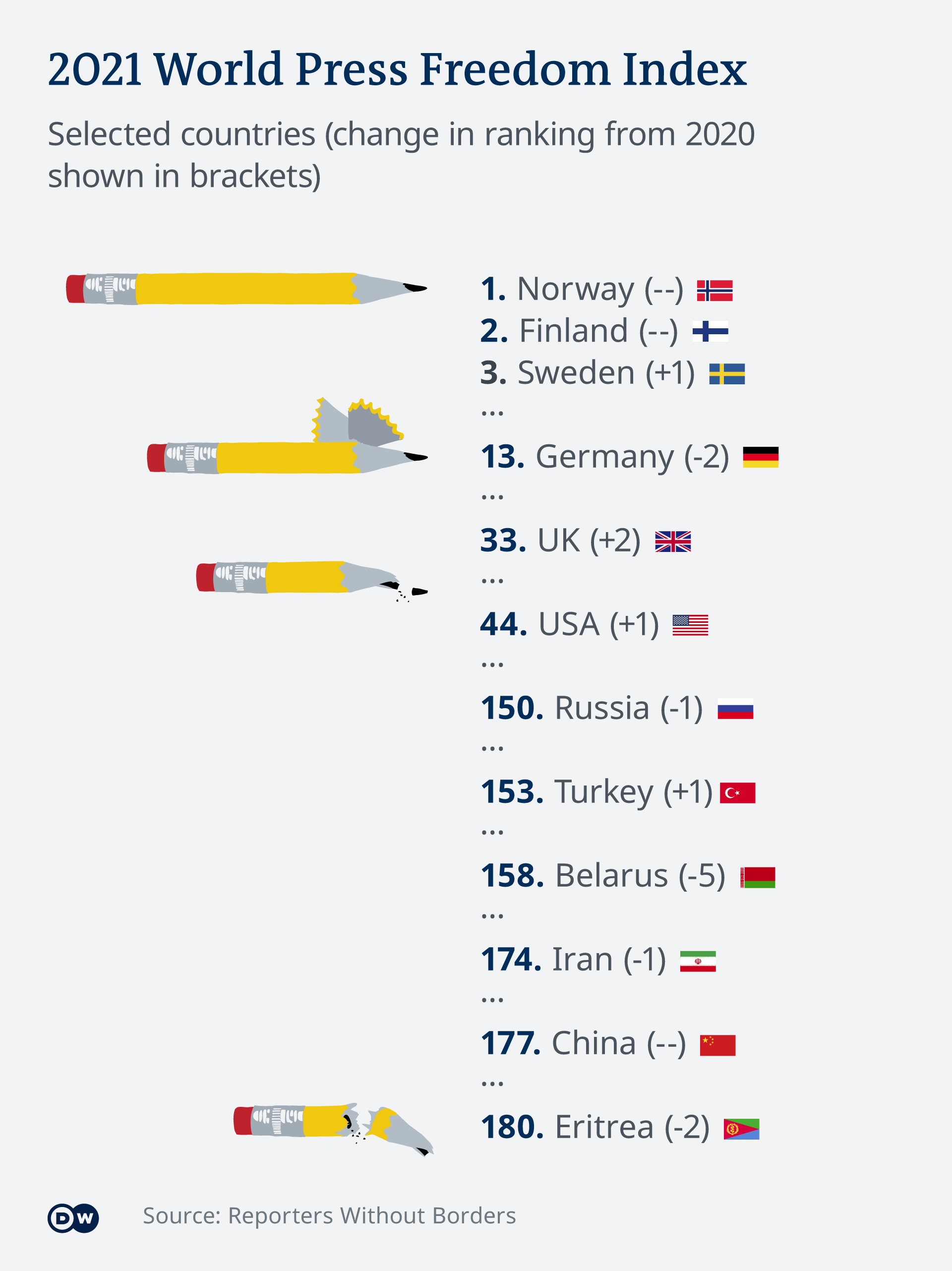
Pushing the boundaries
There is freedom to report on acceptable, prescribed topics without addressing taboos or challenging the status quo.
But this freedom is gendered. I think this had a role to play in why I chose this career. To see if I can push beyond the lines drawn in the profession.
I first realized this when I interviewed a politician for a story that tied him to a crime. He did not give me much, but I felt a sense of achievement holding this powerful man somewhat accountable with my probing.
I was quite satisfied when the article was published. Not everyone was. My parents questioned my choice of topic and interviewee. "Be careful," they said, "We don't want you to work on topics like this, it could be dangerous. These politicians are no joke."
I was furious. The quotes from the politician were put in verbatim, the story was fact checked, I did not have anything to worry about.
It dawned on me later: it does not take much for a journalist in Pakistan to garner the wrong kind of attention and eventually land in danger.
Censored and replaced
A second realization came soon after. A female colleague and I had penned a piece about the trial of an untouchable business tycoon in Pakistan.
Minutes after it was published, I was summoned by the editor-in-chief and warned that such stories should not carry a woman's byline. If the tycoon pressed charges for the story — which he often did — the author would have to be answerable. "Of course, sir," I said, "that's part of the job. I firmly believe that we have nothing to fear as long as we are delivering impartial information."
"No," he said, "I would not allow my daughter if she were in your place to pursue this story," he completed. "I am not your daughter, sir, I am working here as a professional," I stressed respectfully.
The next day's paper carried a truncated version of the article with a male colleague's name. Our names had been erased.
Journalists in Pakistan are free to pitch certain stories, get unfettered access to political parties and candidates, but never free enough to question the military. Never free enough to address topics like marital rape, never free enough to pitch the creative, imaginative, and innovative stories we have here.
Journalists in Pakistan are free enough until their chains pull them back. And I broke mine.
https://www.dw.com/en/opinion-journalists-are-never-truly-free-in-pakistan/a-57391021
#WorldPressFreedomDay - Action should be taken against lack of press freedom in Pak
Editorial: #PressFreedom #WorldPressFreedomDay - Imran Khan govt's claim of Pak press being free is a 'bald-faced lie' - Dawn.com
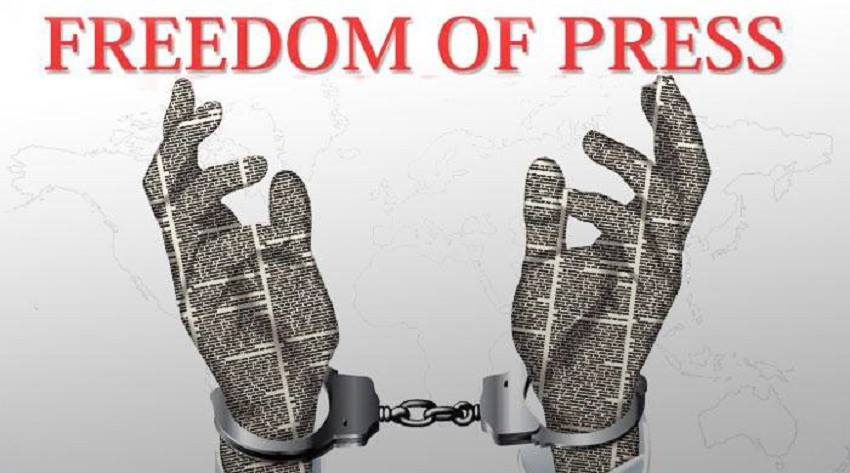
TODAY is World Press Freedom Day: for Pakistan’s beleaguered journalist community, it is a reminder of how the space for them is steadily shrinking. But this grim reality should also be of concern to those who understand the critical importance of a free press in a democracy. A media in chains cannot hold the powerful to account and serve public interest as it is meant to do. Indeed, the very quality of a democracy can be gauged by the state of its press. In its latest report, the International Federation of Journalists has ranked Pakistan the fifth most dangerous country in the world for mediapersons. During the period between 1990 and 2020, no less than 138 journalists lost their lives here for reasons connected to their work. Freedom Network Pakistan documented at least 148 attacks or violations against journalists across the country from May 3, 2020, till April 20, 2021. These include six murders, seven attempted assassinations, five kidnappings, 25 arrests or detentions, 15 assaults and 27 legal cases registered against journalists. And state authorities, responsible for protecting constitutional rights, emerged as the biggest threat to media practitioners — perceived as the perpetrators in a whopping 46pc of the documented cases. Certainly, journalists’ safety appears to be very low on the government’s list of priorities. The human rights ministry had drafted the Protection of Journalists and Media Professionals Bill over a year ago. To its credit, this was a comprehensive piece of proposed legislation that managed to take into account many of the problems confronting the media and provided workable solutions. For instance, it suggested dealing with the critical issue of impunity by setting up a seven-member committee to be headed by a former Supreme Court judge, which would have wide-ranging powers of investigation and redressal. Just as it appeared that the government had woken up to its duty towards the media, the cabinet decided to club the draft with another bill prepared by the information ministry and, for that purpose, send it to the law ministry — where it has been languishing ever since. Then SAPM on information Firdous Ashiq Awan had said that while more time was needed, “the process is in the final stage and we will try to speed it up”. The cabinet’s inexplicable decision conveniently placed an urgently needed piece of legislation on the back-burner, leaving media professionals to fend for themselves. Meanwhile, threats from known and ‘unknown’ state elements continue to be hurled at journalists; news editors are coerced into censoring ‘undesirable’ information or giving stories a certain slant; media outlets are threatened with financial ruin if they refuse to toe the line. In the midst of this, for government functionaries to insist that the press in Pakistan is free, as they are wont to do sometimes, is no less than a bald-faced lie. https://www.blogger.com/blog/post/edit/6906155786122195046/4514775503563320472
#PressFreedom - Press freedoms chained in Pakistan: Bilawal Bhutto-Zardari

#Pakistan - Benazir Mazdoor Card is a revolutionary step by the Sindh government, Chairman #PPP

Sunday, May 2, 2021
OPINION: #JournalismIsNotACrime - The crisis in Pakistani media
WALEED TARIQ@WaleedTariq89 'Media outlets should...strive to resolve the question of financial stability – on their own' Dozens of independent news platforms have started operations in Pakistan following a crisis in the media industry. At least 7,500 journalists and associated media workers have lost their jobs since Imran Khan led Pakistan Tehreek-e-Insaf (PTI) to power in 2018, while more than two dozen publications have closed since then, according to the Pakistan Federal Union of Journalists. But how did it all unfold, and who is at fault? And how are the outlets faring now? I joined the Daily Times, once a top newspaper in Karachi, Pakistan, in 2013. It was my first job after graduation. Before being offered work, I was informed that there would often be a delay in salary by at least two weeks. As time passed, the delay would sometimes last up to five weeks. Staffers often protested, but they would be given assurances that the payments would be made as soon as their advertisement dues were cleared. I worked at the paper for seven months, and it still owes me two months' salary. I moved then to The Express Tribune, where I was paid relatively on time. This was when Pakistan was migrating its content online, and there was a shift toward new media. But in late 2018, we saw mass retrenchments in the industry, with many staffers, mostly reporters, being shown the door. The primary reason for the mass layoffs was said to be a slash in government advertising, which was a key source of income for newspapers.Critics say the government led by Imran Khan reduced the advertising budget to control dissenting voices on the behest of the country’s powerful military. The government denies, this but there have been abductions, and cases have been lodged against activists and journalists who disagree with its policies. Meanwhile, those who support its narrative are termed “brave and bold.” Over 100 satellite TV licenses have been issued since 2002, while nearly 350 Urdu, English, and regional language daily, weekly, and monthly publications are listed with the All Pakistan Newspapers Society (APNS). Unlike online media, a large chunk of Pakistani print media’s earnings comes from government advertisements. And this dependence has been exploited by successive governments. Although the distribution of state advertising is supposed to be based on the status and circulation of each publication, it is often influenced by favoritism and connections. Even owners of “dummy” newspapers, with no actual readership, receive government advertising contracts. When the PTI came into power, it tried to break the status quo in media as well: it held back payments for advertisements that had already been run (said to be over 5 billion rupees for both print and electronic media), and stopped much of government advertisements, saying it would devise a new “transparent” advertising policy. The volume of advertisements released by the federal government has since decreased by over 50%, according to the APNS. They were now limited, an official of a newspaper association told me, to the budget one department has. This deprived newspapers of a critical part of their revenue. They lost business, started laying off staffers, introduced pay cuts, and stalled payments. Many of them had to shut down. What's next? Amid pressure from media rights organizations, the government says it is making the payments, is putting in efforts to ensure transparency and merit in the release of government advertisements, and wants the media fraternity to weed out non-professionals from its ranks. In 2019, Information Minister Fawad Chaudhry told me that Pakistan’s media was facing a “technological” rather than “economic” crisis, and that the government could not support it anymore. Notwithstanding its anti-media policies and a push for censorship, the government might be right for once. While it needs to end its arbitrary approach toward media advertising, media outlets should also strive to resolve the question of financial stability – on their own. To cope with unemployment and censorship, many journalists have started their own news ventures. During research, I found a number of new Pakistani news websites (both English and Urdu), but most of them have unappealing design, there is no About Us section, their stories are poorly written and edited, photos are not sourced, and many still rely on Gmail and Hotmail for email. But some publications have started exploring new revenue models, including donor funding and reader subscriptions – something that is taking shape worldwide. The Current, a digital news portal, recently won a grant from Google News. It started out as a video platform – short and candid interviews with celebrities and politicians – attracted an audience, and is now managing a lifestyle and entertainment web portal as well. Similarly, Pakistan Today’s Profit, a weekly business magazine, has enforced a paywall on its premium content, and is offering print + digital subscriptions for as low as $3.25 a month. Foreign media groups such as the Saudi Research and Marketing Group, which owns Urdu News, Independent Urdu, and Arab News, have also entered the Pakistani market. Regardless of the "foreign agenda," the new outlets have contributed to credible reporting – and jobs. Many journalists have even started their own YouTube channels in a bid to dodge censorship and monetize. Given the circumstances, there is a greater need for the training and capacity building of journalists such that they can sustain themselves and make an impact – while continuing to speak truth to power https://www..com/vrappleroices/ispeak/opinion-the-crisis-in-pakistani-mediacc
Pakistani Watchdog Reports ‘Dramatic’ Worsening Of Media Environment
A Pakistani watchdog says a “dramatic escalation” in the intimidation and harassment of the media in the South Asian country over the past year is “squeezing the space” of freedom of expression and limiting access to information.
In its annual report on the state of Pakistan’s press freedom issued on April 30, Freedom Network recorded 148 cases of “attacks and violations” against outlets, journalists, and other media workers between May 2020 and April 2021 -- an increase of more than 40 percent compared to the previous.
These cases included the killing of six journalists due to their journalistic work, seven assassination attempts, five kidnappings, 25 arrests or detentions, 15 physical assaults, and 27 legal cases registered against media workers.
“The increase in attacks on media and its practioners in Pakistan points to a collective failure of the government and the state of Pakistan to honor its commitment to uphold peoples’ right to speak without fear,” Freedom Network Executive Director Iqbal Khattak said in a statement.
Noting that a record number of legal cases were filed against journalists during the period under review -- 27 -- Khattak said Pakistani laws must protect journalists instead of being used to “silence” them.
The state and civil servants have “shockingly” emerged as “the principal threat actor wielding the biggest stick to browbeat the media into submission and growing silence,” according to the report.
Attacks against journalists are taking place across Pakistan, but the federal capital, Islamabad, emerged as the “riskiest and most dangerous” place for journalists with 34 percent of the recorded violations -- 51 out of total 148 cases.
The report comes ahead of World Press Freedom Day on May 3.
https://gandhara.rferl.org/a/pakistani-watchdog-reports-dramatic-worsening-of-media-environment/31231476.html
Press freedoms in Pakistan have been chained through threats, intimidation, and pressure tactics by the PTI regime, Chairman PPP

Chairman Pakistan Peoples Party Bilawal Bhutto Zardari has said that press freedoms in Pakistan have been chained through threats, intimidation, and pressure tactics by the PTI regime, calling for lifting the declared and undeclared curbs imposed on the media.In his message on World Press Freedom Day being observed tomorrow, the PPP Chairman said that the Imran Khan-led PTI regime has gagged the media to hide its illegitimacy, incompetency and sheer failures in every sector. Several independent journalists and anchorpersons have been forcibly taken off TV screens by, leading them to take to social media to express their independent analysis and opinions, he added.
Bilawal Bhutto Zardari pointed out that PPP has been at the forefront of championing press freedom in Pakistan and former Prime Minister Shaheed Mohtarma Benazir Bhutto had abolished the draconian press laws imposed by Zia’s dictatorial regime.
He said that the suppression of free media in Pakistan is a great disservice to the nation and will only serve to add fuel to flames of the legitimate anger and frustration of the people. Freedom of the press, he added, was a pivotal part of a vibrant society and democracy, giving voice to the people to be heard. Therefore, all censorship, including the imposed self-censorship through latent threats should be undone and the media should be allowed to play its role as an independent watchdog, he demanded.
He expressed concern that during the PTI regime, Pakistan had dropped to 145 out of 180 countries in the Press Freedom Index, an annual ranking of countries published by Reporters Without Borders (RWB), an international non-governmental organization dedicated to safeguarding the right to freedom of information.
The PPP Chairman endorsed the United Nation’s 2021 World Press Freedom Day theme “Information as a Public Good” and called for an end to the era of sponsored media trials of Opposition political leaders in Pakistan.
Bilawal Bhutto Zardari pledged that PPP would continue to fight against curbs on a free media and that the Party would live up to its history of standing shoulder to shoulder with the journalist community, and that the PPP would not rest until the press in Pakistan becomes truly independent and free, as it would in any true democratic country.
PPP welcomes election commission’s decision on a recount in NA-249

Saturday, May 1, 2021
Joe Biden Is Electrifying America Like F.D.R.


The New Deal was imperfect and left out too many African-Americans and Native Americans, but it was still transformative.Here in my hometown, Yamhill, the New Deal was an engine of opportunity. A few farmers had rigged generators on streams, but Roosevelt’s rural electrification brought almost everyone onto the grid and output soared. Jobs programs preserved the social fabric and built trails that I hike on every year. The G.I. Bill of Rights gave local families a shot at education and homeownership. Roosevelt’s Public Works Administration provided $27,415 in 1935 (the equivalent of $530,000 today) to help build a high school in Yamhill. That provided jobs for 90 people on the relief rolls, and it created the school that I attended and that remains in use today. In short, the New Deal invested in the potential and productivity of my little town — and of much of the nation. The returns were extraordinary. These kinds of investments in physical infrastructure (interstate highways) and human capital (state universities and community colleges) continued under Democratic and Republican presidents alike. They made America a stronger nation and a better one. Yet beginning in the 1970s, America took a wrong turn. We slowed new investments in health and education and embraced a harsh narrative that people just need to lift themselves up by their bootstraps. We gutted labor unions, embraced inequality and shrugged as working-class America disintegrated. Average weekly wages for America’s production workers were actually lower in December 2020 ($860) than they had been, after adjusting for inflation, in December 1972 ($902 in today’s money). What does that mean in human terms? I’ve written about how one-quarter of the people on my old No. 6 school bus died of drugs, alcohol or suicide — “deaths of despair.” That number needs to be updated: The toll has risen to about one-third. We allocated large sums of taxpayer dollars to incarcerate my friends and their children. Biden proposes something more humane and effective — investing in children, families and infrastructure in ways that echo Roosevelt’s initiatives. The most important thread of Biden’s program is his plan to use child allowances to cut America’s child poverty in half. Biden’s main misstep is that he would end the program in 2025 instead of making it permanent; Congress should fix that. The highest return on investment in America today isn’t in private equity but in early childhood initiatives for disadvantaged kids of all races. That includes home visitations, lead reduction, pre-K and child care. Roosevelt started a day care program during World War II to make it easier for parents to participate in the war economy. It was a huge success, looking after perhaps half a million children, but it was allowed to lapse after the war ended. Biden’s proposal for day care would be a lifeline for young children who might be neglected. Aside from the wartime model, we have another in the U.S.: The military operates a high-quality on-base day care system, because that supports service members in performing their jobs. Then there are Biden’s proposed investments in broadband; that’s today’s version of rural electrification. Likewise, free community college would enable young people to gain technical skills and earn more money, strengthening working-class families. Some Americans worry about the cost of Biden’s program. That’s a fair concern. Yet this is not an expense but an investment: Our ability to compete with China will depend less on our military budget, our spy satellites or our intellectual property protections than on our high school and college graduation rates. A country cannot succeed when so many of its people are failing. As many Americans have criminal records as college degrees. A baby born in Washington, D.C., has a shorter life expectancy (78 years) than a baby born in Beijing (82 years). Newborns in 10 counties in Mississippi have a shorter life expectancy than newborns in Bangladesh. Rather than continue with Herbert Hoover-style complacency, let’s acknowledge our “grave internal disorder” and summon a doctor. The question today, as in the 1930s, is not whether we can afford to make ambitious investments in our people. It’s whether we can afford not to.