Tuesday, April 27, 2021
Regrouping of militants is Pakistan’s biggest worry: US general
Pakistan - PTI government’s attempt to blackmail, intimidate and harass an honourable judge of the SC has failed
https://www.ppp.org.pk/pr/24692/
Friday, April 16, 2021
#Pakistan - No accountability and hungry masses

#Pakistan - Another ex-PPP man assigned task to fix economy

By Rizwan ShehzadPrime Minister Imran Khan on Friday appointed former PPP senator Shaukat Tarin as the country’s new finance minister in yet another cabinet reshuffle during the third year of the PTI-led government. Tarin, the second former PPP lawmaker picked as the finance minister, has replaced PTI’s recently appointed finance minister Hammad Azhar, who has now been given the portfolio of energy. Before Hammad’s short stint, PPP’s ex-financial czar Abdul Hafeez Shaikh served as the finance minister before being unceremoniously sacked in last month – that too when the prime minister had claimed the economy was on course to recovery. Though the premier has often blamed the previous governments – especially PPP and PML-N’s rule between 2008 and 2018 – for country’s economic crisis, it is surprising to see that he has chosen former lawmakers of the opposition party as rescuers. Both Tarin and Shaikh have served in the government of PPP’s ex-prime minister Yousuf Raza Gilani between 2009 and 2011. Since April 2019, when PTI stalwart Asad Umar was shown the door, frequent reshuffles have taken place against a backdrop of declining popularity of the ruling party because people have been expressing their disapproval with the government’s economic policies since it came to power in 2018. In other major changes, the prime minister has swapped the portfolios of science and information ministries between Fawad Chaudhry and Shibli Faraz. Fawad has been appointed the government’s spokesperson for the second time. Shibli, who served as the information minister before his term as a senator ended in March, has been given the portfolio of the science and technology ministry. In addition, PM Imran has appointed Khusro Bakhtiar the industries and production minister.His portfolio of economic affairs has been handed over to former energy minister Omar Ayub.Apart from Shibli and Hammad, all others have served in different capacities with the PPP, the PML-N and the PML-Q in the past.Though PM Imran has been envisaging a cabinet reshuffle before the Senate elections, no new faces from PTI have so far been given a chance to sit in the cabinet.Earlier, Shibli had told The Express Tribune that “three to four new people are expected to be given state-minister level portfolios”. “Lawmakers in the National Assembly are likely to be given a chance,” he added. Shibli and a couple of other ministers, who wished not to be named, had revealed that the premier was unhappy with the performance of several key ministers and decided that only those who could deliver would stay in the cabinet. Party sources said that performance and delivery were the only things that the premier was interested in as he felt exhausted after hearing excuses after excuses and inordinate delays in the completion of projects for one reason or another for a long time. Among other things, the recent reshuffle is a result of growing frustration within the party circles as the premier believes that the ministers must start delivering without coming up with excuses anymore. The premier had this realisation, the sources said, and made it clear that it was time to deliver. Party insiders have long been saying that the premier frequently chairs meetings of spokespersons and issues directions to defend government policies at all the forums. They also acknowledged that the narrative of simply blaming the previous governments was not yielding the desired results anymore in and outside parliament and it was time to back up the claims earlier made through performance. Since 2018 when the PTI came to power, the PM has reshuffled the cabinet on a number of occasions. Last time, he tweaked the cabinet was in December last year when he had elevated his finance adviser Dr Abdul Hafeez Shaikh to the status of a full-fledged finance minister and brought high-profile political ally Sheikh Rashid Ahmed to the interior ministry’s helm. PM Imran had picked Azam Khan Swati, who was serving as the minister of counter-narcotics, to replace Rashid as the railways minister. Rashid’s predecessor at the interior ministry, Brig (retd) Ijaz Ahmed Shah, was given the narcotics control ministry, vacated by Swati. Earlier, PM Imran had carried out a reshuffle of ministers in cabinet positions in April 2020, appointing Makhdoom Khusro Bakhtiar as the economic affairs minister after taking back charge of the national food security ministry from him two days after his name emerged as a major beneficiary in an investigation report into the sugar crisis. In the major cabinet at that time, Syed Fakhar Imam was made the national food security minister, Hammad the industries minister and Swati was handed over the portfolio of the narcotics control ministry. The premier had accepted the resignation of MQM-P’s Khalid Maqbool Siddiqui as the information technology and telecommunication minister, replacing him with fellow party man Aminul Haq . Among other changes, Babar Awan was appointed the PM’s adviser on parliamentary affairs. In April 2019, PTI stalwart Umar was sacked from the post of the finance minister. Earlier, Shaikh was named the adviser on finance, state minister for interior Shehryar Afridi was made the states and frontier regions (Safron) minister and Brig (retd) Ijaz Ahmed Shah was appointed the interior minister. Ghulam Sarwar Khan, who previously was the petroleum minister, was handed over the portfolio of the aviation ministry.
https://tribune.com.pk/story/2295141/another-ex-ppp-man-assigned-task-to-fix-economy
#Pakistan - Violent extremism


#Pakistan - The fault in our textbooks - Do our textbooks teach what really happened?


#Pakistan - PM makes announcements but doesn't fulfill promises: Murtaza Wahab
Pakistan Peoples Party (PPP) spokesperson Murtaza Wahab Friday said Prime Minister Imran Khan only makes announcements but does not fulfill his promises as the previous projects are still pending.
The PPP spokesperson held a news conference and said Imran Khan’s interest in Sindh develops every year in Ramzan. He said the premier comes in the holy month, takes donations for Shaukat Khanum Hospital and leaves. A similar process will be repeated today, he asserted.
Murtaza Wahab also criticized the federal government for not observing the coronavirus standard operating procedures (SOPs). He said the incumbent regime should vaccinate the entire population if it wants to continue holding such gatherings.
https://dunyanews.tv/en/Pakistan/597568-PM-makes-announcements-doesnt-fulfill-promises-Murtaza-Wahab
Thursday, April 15, 2021
How the U.S. Plans to Fight From Afar After Troops Exit Afghanistan

US Government Sanctions Crypto Addresses Linked to Russian Election Fraud Scheme
Nikhilesh De
The U.S. Treasury Department is sanctioning a Pakistan-based organization it claims was paid in digital currencies to create false identities for members of the Internet Research Agency (IRA), a Russian organization accused of election interference and other cyberattacks.
Part of a sweeping set of actions taken by the U.S. government to address alleged Russian government interference in its elections on Thursday, the Treasury Department announced it would identify digital currency addresses used by Second Eye Solution (SES), otherwise known as Forwarderz, which allegedly received some $2.5 million across nearly 27,000 transactions between 2013 and March 2021.
“As part of today’s listing of SES on OFAC’s Specially Designated Nationals and Blocked Persons List (SDN List), OFAC is also identifying digital currency addresses used by SES to fulfill customer orders in order to help assist financial institutions, and their third-party identity verification services, in identifying customers on their platforms who have purchased fraudulent identity documents,” Treasury’s press release said.
Related: Coinbase Listing Brought Attention To Crypto, Says Tezos's Kathleen Breitman
Following the publication of this article, the Office of Foreign Assets Control (OFAC) published a list of addresses and entities accused of participating in the scheme. Addresses include bitcoin, bitcoin cash, litecoin, ether, zcash, dash and verge, with 28 total addresses on the list.
In addition to SES, addresses are tied to the Association for Free Research and International Cooperation (linked to Russian national Yevgeniy Prigozhin, the alleged financier of the IRA) and Southfront, which is tied to the Russian Federal Security Service.
The U.S. has accused Russian government officials of meddling with its election before, and Thursday’s actions formally include allegations that the Russian Foreign Intelligence Service was behind the massive SolarWinds cyberattack.
An executive order signed by President Joe Biden also mentions cryptocurrencies as a tool that may be used to bypass U.S. sanctions. The executive order states that any individual who uses “deceptive or structured transactions or dealings to circumvent any United States sanctions, including through the use of digital currencies or assets or the use of physical assets” should be blocked from transacting with or being paid by any U.S. person (meaning U.S. citizens or individuals residing on U.S. soil).
The U.S. has sanctioned crypto addresses on a handful of occasions before, including previously adding digital currency addresses and individuals accused of interfering with U.S. elections on behalf of the Russian government.
Other additions to the Specially Designated Nationals (SDN) list include alleged drug traffickers and money launderers tied to cyberattacks.
https://finance.yahoo.com/news/us-government-sanctions-crypto-addresses-130658070.html
Pakistan protests: Why the Islamist TLP party is now a major political force

Pakistani authorities have decided to outlaw the hard-line Tehreek-e-Labiak Pakistan (TLP) party. The group opposes the publication of cartoons depicting the Prophet Muhammad in France, and also the French response reaffirming the right to "blasphemy" after schoolteacher Samuel Paty was beheaded near Paris last October after showing caricatures of the prophet of Islam to his class. The TLP has demanded that the government expel the French ambassador and endorse a boycott of French products. TLP activists have also demanded the release of Saad Rizvi, the 26-year-old leader of the group. Violent TLP protests have wreaked havoc in the Muslim-majority country, with Islamist supporters and police clashing in major cities. At least two police officers have been killed and over 100 injured in these clashes. Prime Minister Imran Khan's government is being heavily criticized for mishandling the protests and not acting swiftly against violent protesters. On Thursday, the French Embassy in Pakistan advised all French nationals and companies to temporarily leave the country, following the anti-French protests. "Due to the serious threats to French interests in Pakistan, French nationals and French companies are advised to temporarily leave the country," the embassy said in an email to its citizens.Violent anti-French protests have paralyzed Pakistan for the past few days. The architect of these demonstrations is the Tehreek-e-Labiak Pakistan party, which is now a force to be reckoned with in Pakistani politics.
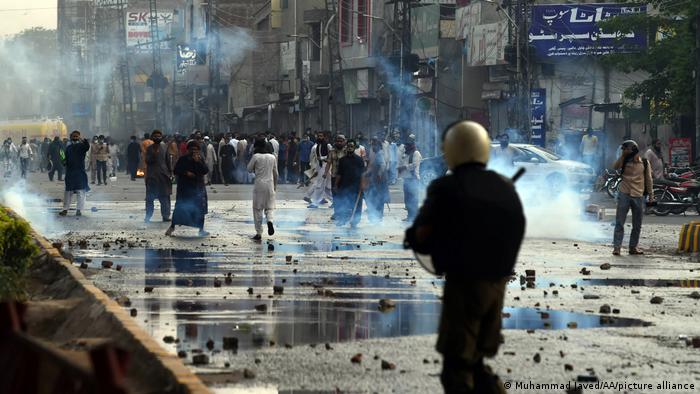
Husain Haqqani, a former Pakistani ambassador to the US, believes the TLP is playing politics over the Muhammad cartoons. "France is a major financial donor to Pakistan and the demand to expel its ambassador over alleged blasphemy is just a gimmick," Haqqani, who is the director for South and Central Asia at the Washington-based Hudson Institute, told DW.
"If Pakistan starts expelling ambassadors of all countries where someone commits what these hard-liners see as blasphemy then Islamabad will have diplomatic relations with very few countries," he said.
Anti-blasphemy politics
TLP is a largely Barelvi (a sect in Islam) party, founded in 2015 by Khadim Hussain Rizvi, a firebrand cleric who died in November 2020. The core ideology of this party revolves around the "finality of Prophet Muhammad" and the protection of Pakistan's blasphemy laws.
"The group represents a powerful Sunni sect and its mission is to protect the honor of the prophet. The TLP is now a formidable political force in Pakistan," Raza Rumi, a Pakistani political analyst, told DW.
Blasphemy is a contentious issue in Pakistan, where anyone deemed to have insulted Islam or the Prophet Muhammad can face the death penalty under the country's blasphemy laws.
Rights activists say the laws are often employed in cases that have little to do with blasphemy and are used to settle petty disputes and personal vendettas. Christians, Hindus and Ahmadis — a minority Islamic sect — are often victimized as a result.
In November 2018, the TLP called off nation-crippling protests after striking a deal with the government on the legal future of Asia Bibi, a Christian woman acquitted of blasphemy. TLP supporters held three days of sit-ins and demonstrations after the Supreme Court of Pakistan overturned Bibi's blasphemy conviction, ending her eight years on death row.
"The TLP's main motivation revolves around aggressively defending Pakistan's blasphemy laws. That has long been its bread and butter. Linked to this focus on the blasphemy laws is the group's bigoted views toward religious minorities, the very groups that suffer the most from these laws," Michael Kugelman, a South Asia expert at the Washington-based Woodrow Wilson Center for Scholars, told DW.
How popular is the TLP?
"Unfortunately, given that the blasphemy laws are fiercely defended by a critical mass of Pakistanis, the TLP has been able to attract substantial constituencies of support. This is not only through street power, but also through respectable performances in elections, which is unusual for an Islamic political party in Pakistan," Kugelman added.
In the 2018 election, the party bagged 2.2 million votes, mostly from the Punjab province, and won two provincial seats in the Sindh Assembly. The TLP emerged as the third-largest party in Punjab, behind Khan's Pakistan Tehreek-e-Insaf (PTI) party and Former Prime Minister Nawaz Sharif's Pakistan Muslim League (PML-N).
Some analysts believe that rising unemployment, growing inflation and illiteracy are also some of the factors behind a surge in TLP's popularity. With many people unhappy with Khan's economic performance — and with mainstream political parties in general — an increasing number of voters are looking toward Islamist parties for a remedy.
"TLP's popularity is linked to wealth and income disparities in the country. Its supporters are not only madrassa students but even common youngsters who have gained nothing from the country's political and economic system," Rumi said, adding that the government needs to create economic opportunities for the youth to sway them away from hard-line religious groups.
But former Pakistani ambassador Haqqani downplayed the talk about TLP's popularity. "It is just one of many Islamist groups that has become a threat to Pakistan's stability," he said.
Kugelman agrees. "The TLP may have substantial support, but not enough to challenge the ruling PTI or its main rival, the PML-N. There have been fears that the TLP could siphon off votes from other parties, but not on a level of scale that it could impact the electoral performance of the major parties in a big way. That said, the electoral performance of the TLP shouldn't be shrugged off. It has done significantly better than most other religious political parties."
But analyst Rumi said the TLP has gained much public support in a short period of time. "If it continues to mobilize people, it could gain more ground."
Will the state change its 'pro-Islamist' policy?
Observers say that if the TLP threat goes unchallenged, it will increase Pakistan's international isolation. Haqqani said the country's establishment, the military, has "historically used Islamist groups to strengthen Pakistan's anti-India narrative."
"Prime Minister Imran Khan, who harbors Islamist sentiments himself, needs to tell Pakistanis to have a realistic world view," he said.
But analysts say that banning TLP won't solve the problem of increasing religious extremism in Pakistan.
"Pakistan has done the right thing by banning the TLP, but that's only the first of many necessary steps. Many extremist groups have been banned in Pakistan, and they tend to reappear under new names," said Kugelman.
"To achieve true success in removing the TLP threat, Islamabad needs to not only ban it but also build narratives and messaging on a state level that aim to condemn and delegitimize the TLP and its ideologies. The party enjoys substantial support, and so simply banning it won't make it go away," he added.
https://www.dw.com/en/pakistan-protests-why-the-islamist-tlp-party-is-now-a-major-political-force/a-57214719
Amid Border Crisis, U.S. Government Strikes at Pakistani Smuggler of 'National Security Risk' Migrants
By Todd Bensman
As a mass-migration wave overwhelms the southern border, the Department of Justice and Department of the Treasury have brought hammers down on a Pakistan-based human smuggling organization that continues to illegally ferry foreign nationals “who pose a threat to national security” through the Americas to the U.S. southern border.
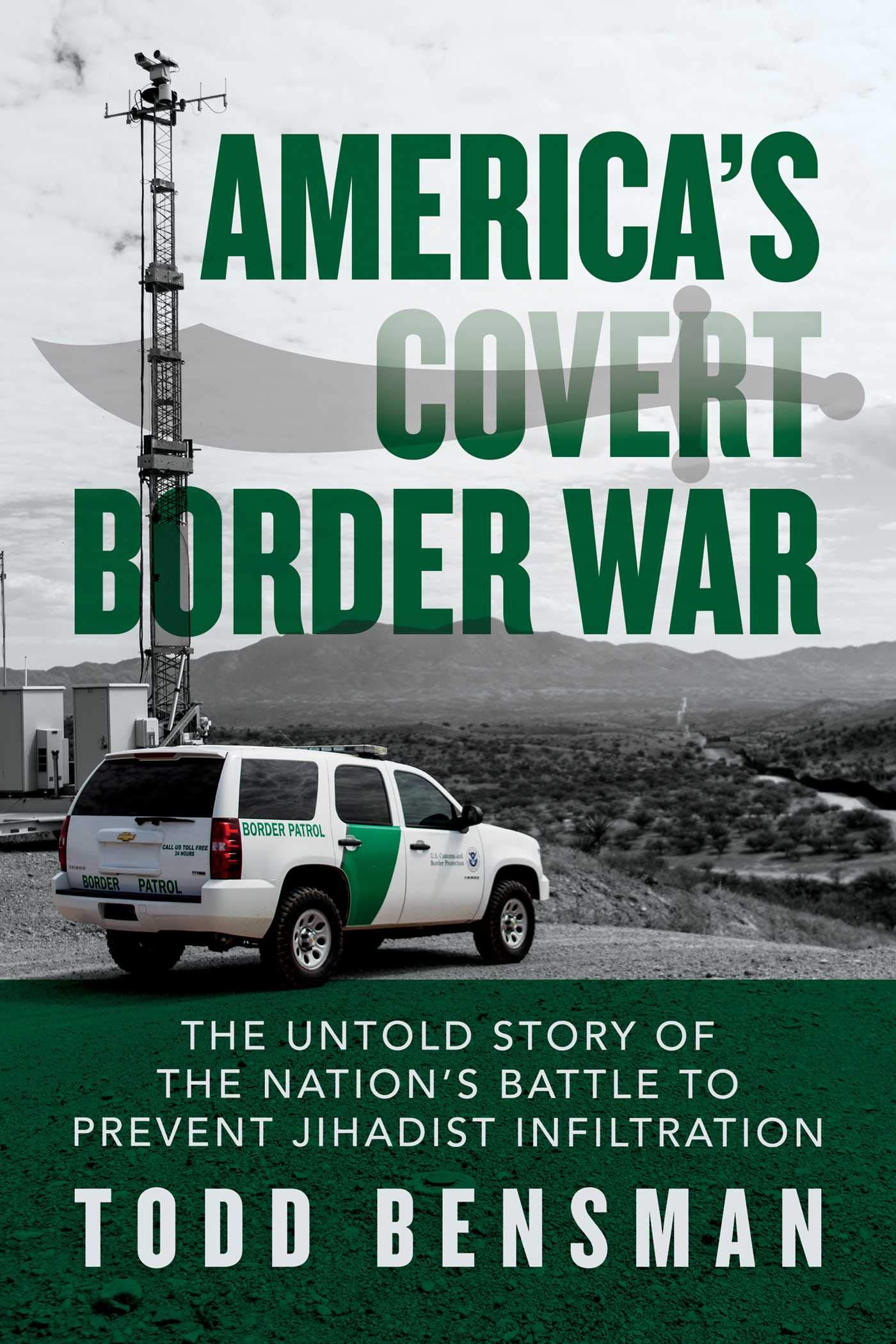
The recent government enforcement moves against the Abid Ali Khan human smuggling network represent the latest salvo in an ongoing U.S. homeland security effort to combat jihadist border infiltration (the subject of my book America’s Covert Border War). The actions against Khan also come just days after U.S. Customs and Border Protection announced two separate California apprehensions of Yemeni migrants who were already on the FBI’s terrorist watch list, one of whom also was on the No Fly list, and underscore terrorism threats perhaps exacerbated by the ongoing mass-migration crisis.
A federal indictment filed April 7 after a lengthy Miami-based ICE Homeland Security Investigations probe alleges that, since at least 2015, Abid Ali Khan has operated his network from Nowshera, Pakistan, which is known as a troubled center of violent Islamic militancy. He has often transported Afghans and Pakistanis disguised as foreign nationals of other countries.
The Khan network allegedly still smuggles aspiring illegal U.S. border entrants (whom homeland security categorizes as “special interest aliens”, or SIAs) from Afghanistan and Pakistan to Brazil by air, then overland through Central America and Mexico for an average of $20,000 per person.
Neither Khan nor the key subordinates in his far-flung smuggling network apparently have been arrested. So in a rare secondary move to “help stop Khan and his network from allegedly continuing to smuggle persons to the United States”, the Treasury Department’s Office of Foreign Assets Control (OFAC) designated Khan and three others in his network, one Afghan and two other Pakistanis, as a Transnational Criminal Organization. The designation opens the door for U.S. government operations to disrupt Khan’s finances and isolate him and his subordinates from most financial dealings. But OFAC designations are rarely, if ever, used against SIA smuggling networks like this, which stands as an indication of the danger with which U.S. homeland security views the Khan network at this early stage of the border crisis.
The involved U.S. agencies did not say where Khan or his alleged co-conspirators are today. But the U.S. actions reportedly prompted Pakistan to hunt down and question Khan in his native Pakistan. He has insisted he is not involved in smuggling, that someone based in Mexico had appropriated his name, and that he planned to march down to the local U.S. embassy with a lawyer and demand answers for why he is accused.
A National Security Threat at the U.S. Southern Border During a Mass Migration Crisis
Rarely does the U.S. homeland security establishment publicly acknowledge when suspected terrorists are smuggled over the border, although America’s Covert Border War provides extensive detail about many who have.
In a surprise departure from that tradition, however, on April 5 U.S. Customs and Border Protection issued a fairly detailed press release acknowledging the separate January and March apprehensions of two Yemenis who were already on the FBI’s terrorism watch list when they were apprehended near Calexico, Calif. CBP removed the document the next day after many on social media began citing it as evidence of a national security threat inherent in the current border crisis. CBP told CIS it had not gone through proper “review”, but did not disavow its accuracy. (An intelligence community source with direct knowledge of the cases told CIS the release was accurate.)
Announcements of U.S. government action against the Khan organization came only a day later, going largely unreported by U.S. media or, this time, even on social media. Federal officials characterized the Khan smuggling organization as a live, continuing national security threat to the United States at the southern border, albeit without the specificity of the deleted CBP press release about the Yemenis. Treasury department officials did not respond to a CIS emailed inquiry by publication time.
But Miami Homeland Security Investigations Special Agent in Charge Anthony Salisbury did note in one of the releases that the Khan network transported “people with nefarious motivations” into the United States. And while Salisbury did not elaborate, he reiterated that his Miami team was committed to prosecuting individuals like Khan who “pose a threat to national security”.
Likewise, Acting Assistant Attorney General Nicholas L. McQuaid of the Justice Department’s Criminal Division, noted in the same Treasury Department statement that the government moves sought to prosecute Khan and smugglers like him “who seek to profit from ... jeopardizing our national security.”
Asylum Fraud and Threats to U.S. National Security Vetting Processes
Along with the question of how many “people with nefarious motivations” Khan smuggled over the southern border is the important question of how they are able to obtain legal permission to remain once they cross. That is typically done through the U.S. asylum system, as almost all special interest aliens who enter illegally and are apprehended then claim the benefit.
As I detail extensively in the first and fourth chapters of America’s Covert Border War, SIA smugglers and Islamic terrorists who illegally entered European Union nations abused an asylum system that was structurally incapable of detecting their frauds and deceits, especially during the 2014-2018 mass-migration crisis that beset Europe. As many as 150 Islamic terrorists who illegally entered the EU over its external common land and marine borders went on to conduct terror attacks throughout Europe or were caught plotting them.
But SIA smugglers and Islamic terrorists also have exploited the highly similar U.S. asylum system’s inability to verify even the identities and stories of strangers who show up at the border with no identification or bogus passports. Like the one in Europe, the U.S. asylum process is built to give asylum claimants the benefit of the doubt and not to detect fraud or terrorism associations.
SIA smugglers often provide their clients with fake persecution stories carefully designed to get them through the initial screening processes and inside the United States with legal status that can last for many years, as I report in the book.
In line with these findings, the government alleges that the Khan organization’s counterfeit identity documents and altered stolen passports “significantly impair appropriate immigration vetting processes”, and “undermine[] the credibility of the US asylum system, damaging public confidence in the vetting process.”
Elevated Dangers During a Mass Migration Crisis
Hundreds of Pakistanis have crossed the southern border in recent years, and they are among the top 10 SIA nationalities that do so. CBP encounter statistics obtained through a CIS Freedom of Information Act request, reflecting both those who cross at established ports of entry and between them, show that 1,653 Pakistanis were encountered between 2008 and 2019. Some 175 were caught at the southern border in 2019 crossing through the brush.
Federal intelligence and law enforcement officers typically try to interview all Pakistani border-crossers to vet them for basic identity and terrorism. Officers will check pocket litter and dump cell phones and check databases looking for evidence of terrorism associations or deceit.
But the process is imperfect and vulnerable to deceit and asylum-process time constraints even in the best of times.
At issue now is that the vetting process in place for SIAs is at risk of becoming sidetracked and swamped to incapacitation during the mass migration crisis now underway. The process of learning who illegal immigrants from Pakistan and Afghanistan really are, a challenge even under ideal circumstances, enters a red zone when detention centers are overrun, Border Patrol agents are distracted by processing children, and asylum officers are hopelessly backlogged with the largely ineligible asylum claims of economic migrants from Central America.
As Europe’s catastrophe shows, those same factors can combine to become a perfect terrible storm here in the United States. These government moves against Khan hedge against that growing probability.
https://cis.org/Book/Americas-Covert-Border-War
The IMF Is Using the Debt Crisis to Hollow Out Pakistan’s Sovereignty
BY AMMAR ALI JAN
Imran Khan's government came to power in 2018 promising to reorient Pakistan's economy toward the needs of the population. But faced with a debt crisis it soon dropped its reformist agenda — and now, the International Monetary Fund is pressuring it to place its State Bank permanently beyond democratic control.As the COVID-19 crisis continues to wreak havoc, at the end of March UN Secretary General António Guterres called for “decisive action” to avert the developing world’s deepening debt crisis. He warned that the previous debt obligations of poor countries were fast maturing, threatening to prolong the economic crisis. African governments alone owe $23.4 billion in repayments to financial institutions this year, notwithstanding current pressures — signaling the scale of the economic burden imposed on poor nations across the globe. The kind of future in store for the developing world can be gauged by the sweeping financial reforms being imposed by the global financial technocracy in Pakistan. A poor country struggling to meet the basic needs of its people, under the pressure of the pandemic its creditors are now being forced into a financial arrangement that will erode any semblance of democratic control over the country’s economy.
IMF StrangleholdImran Khan’s Pakistan Tehreek-e-Insaf (PTI) government came to power in August 2018 promising to break the “begging bowl” of the International Monetary Fund and reorient the economy toward meeting the development needs of the public. However, a mounting balance-of-payments crisis inherited from the previous government, as well as economic mismanagement in the first few months under the new administration, forced the country back to the IMF in April 2019. Pakistan signed a punishing deal the following month, which demanded massive austerity, including cuts to social and development spending, in exchange for a loan of $6 billion over three years. Finance minister Asad Umar, who had been vocal in his criticisms of the IMF in the past, was forced to resign, and replaced by Hafeez Shaikh. Upon his appointment, Shaikh was widely viewed as a representative of the international financial technocracy in Pakistan. Under the military dictatorship of General Musharraf, he had worked as Sindh province’s finance and planning minister, and was later appointed federal minister for privatization. He also served as finance minister under the Pakistan People’s Party government (2008–2013), overseeing the implementation of a tough IMF program, which was heavily criticized at the time by Imran Khan for its negative impact on ordinary Pakistanis. Shaikh was working at the World Bank in 2019, before he made his spectacular return to office as Khan’s finance minister. To further ensure that Pakistan’s economic policy obeyed the diktats of international financial institutions, the former IMF country representative in Egypt, Raza Baqir, was appointed governor of the State Bank of Pakistan. It was clear that both the manifesto of the ruling party and the aspirations of the people had been torpedoed to hand over key decision-making to bureaucrats nurtured by the global financial oligarchy. The measures introduced by the new economic team soon led to an unprecedented contraction in the economy. Pakistan’s GDP growth rate plummeting to -0.4 percent, the first time it had fallen below negative in seven decades. The devaluation of Pakistani currency created massive inflation, rising from 3.93 percent in 2018 to 10.74 percent by 2020. The program also imposed austerity measures such as a whopping 40 percent budget cut to higher education, while plans to privatize the health sector were also set in motion last year. Under IMF pressure, Pakistan was forced to reduce subsidies on utilities as well as to cancel the yearly increments of wages for public sector employees. This structural adjustment program was not implemented without resistance. Indeed, the result over the last two years has been an unprecedented rise in labor and student militancy. For example, in November 2019 student mobilizations in dozens of cities shook Pakistan, as thousands of students denounced the rising costs of education as well as rampant sexual harassment on campuses. Similarly, government employees staged two large sit-ins in the capital Islamabad (in October and December 2020), while teachers also staged countrywide protests against job insecurity in December 2020. More dramatically, a farmers’ alliance staged a tractor march to Punjab’s provincial capital of Lahore, highlighting the breadth and depth of the discontent boiling up across the country. Having already limited its own capacity to intervene in financial matters, in line with the IMF conditions, the government responded to these demonstrations with brute force. Organizers of the student movement were charged with sedition, and the government suffocated the peaceful protests of teachers and government employees in clouds of tear gas. The most horrific incident occurred at the farmers’ protest, where the police used water mixed with chemicals against the demonstration, leading to the tragic death of farmer leader Ashfaq Langrial. The repression highlighted a new normal in which decisions imposed by technocrats would not only be rubber-stamped by elected governments but would also have the violent backing of the coercive state machine. A Financial Coup Pakistan’s economy, much like in the rest of the world, has been ravaged by the COVID-19 pandemic. Millions of people were forced out of work when the government imposed a lockdown in March 2020 due to mushrooming cases of the virus. A recent report by the Mahbub ul Haq Center shows that unemployment rose by 34 percent, while mean income fell by a massive 42 percent. By November 2020, three million workers still had not regained employment, whereas the average income remained 5.5 percent below its pre-lockdown level. The sustained unemployment and rising inflation were emblematic of the struggles faced by ordinary people across the country. However, some of the most deleterious effects of the crisis were mitigated by the intervention of the government, which issued a relief package of 430 billion rupees (roughly $2.78 billion) as part of the Temporary Economic Refinance Facility (TERF) provided by the State Bank at government instigation. The package was used to inject liquidity into the economy and boost industry. A similar package was announced to offer partial relief to workers rendered jobless after the lockdown — highlighting the importance of public spending during a crisis. However, today the IMF is pushing Pakistan’s government to make its State Bank “independent” of democratic politics through an act in Parliament. Termed the State Bank Amendment Bill, the proposed legislation purportedly aims to protect the bank from “political interference” in order to ensure that the country can service debt and maintain price stability at manageable levels. Yet, the bill entails the complete erasure of the country’s economic sovereignty — with potential disastrous consequences for working families in Pakistan. The bill stipulates that the government will no longer be able to acquire facilities such as TERF or borrow money from the State Bank to support local banks, placing serious constraints on the state’s capacity for public investment. As a result, the government will be forced to seek loans from commercial banks at higher interest rates to pay its pending bills, compounding rather than resolving Pakistan’s debt problem in the long term. Furthermore, the bill sets price and financial stability as its primary and secondary objectives respectively — pushing development to a “tertiary” objective. So, while countries in the developed world are pushing “stimulus” packages to jump-start the economy, Pakistan will face increasing constraints in shaping its monetary policy to facilitate badly needed investment for providing essential services and jobs to citizens. In a country where over a million young people enter the job market each year, a prolonged recession threatens not only economic stability but social breakdown. Despite the prevailing crisis, the government has announced its plans for an unprecedented hike in power tariffs of Rs. 5.65 per unit. Starting in July, the move will hit ordinary consumers with a 36 percent electricity price increase and aims to squeeze an extra Rs. 884 billion ($58 billion) this year in order to generate revenue for repaying foreign loans, revealing the extractive nature of the IMF’s prescriptions. Removing decision-making from even notional democratic control, the bill will stop the government from appointing its own representative to the bank’s board of governors and prevents Pakistan’s legal institutions from holding board members accountable for their actions. This blatant disregard for public or juridical scrutiny is supplemented by the directive in the bill that stipulates that the bank will have the responsibility of servicing the country’s foreign debt “without reserve to the government” (i.e., without being answerable to the elected government). If the bank does not possess enough resources to meet the country’s debt obligations, it will “request” the government to transfer funds “within a period not exceeding 30 calendar days.” These amendments thus reflect yet another clear case of a Third World country being forced to abdicate its responsibility toward the public, conform to the dogmas of neoliberal orthodoxy, and reorient its priorities to meet the impossible demands of predatory creditors. It’s About Democracy While the bill is still pending approval in Pakistan’s parliament, the prime minister dismissed Hafeez Shaikh as finance minister on March 29 due to growing concerns over inflation — creating more ambiguity over the country’s economic direction. The growing financial chaos is emblematic of the dire future confronting debt-stricken nations across the world. These crippling financial constraints suggest that, while the United States is imagining a “return to normal” by the end of the summer, most poor countries will continue to face a burgeoning health crisis for years to come. In Pakistan, less than even 1 percent of the population has been vaccinated, while the slow pace of the vaccination drive has opened up a private market for vaccines at the exorbitant rate of Rs. 12,000 (roughly $80 per person). This is especially damaging in a country whose public health infrastructure was crumbling even before the pandemic arrived. According to the World Health Organization, 40 percent of deaths in Pakistan owe to waterborne diseases such as typhoid and hepatitis, while dengue fever and malaria remain common. A recent article in the New York Times noted the rapid spread of HIV among children in the Sindh province of Pakistan, making the country an emerging hot spot for the disease. Sindh is ruled by the federal government’s opposition, the Pakistan People’s Party, whose mismanagement has exacerbated the crisis. This indicates that the social crisis has deepened to the extent that it can no longer be associated with a single party, but has to be viewed as general decay afflicting the entire system. The rising movements against austerity in Pakistan offer the best hope for building a viable political project against the stranglehold of international financial institutions and their local collaborators. Yet, the fight for popular sovereignty in the Global South is incomplete without solidarity from the Global North. This is especially urgent since we know that each time global capitalism “overcomes” its crisis at the center, it does so at the expense of an exacerbation of the crisis on the peripheries. Moreover, even apart from the emerging vaccine apartheid, the further accumulation of debt poses the greatest challenge to stability in the developing world. The destabilization of poor countries eventually creates a boomerang effect, fueling right-wing movements that scapegoat immigrants fleeing economic hardship to pit them against struggling workers in the metropolitan centers. Yet, the creditors in New York and London exploiting the labor of workers in the Global North are the same ones aiming to reap returns from further exploitation of the Global South. This is why we need a transnational alliance of debtors and progressive forces resisting the dismantling of democratic institutions and creating an alternative development agenda for the post–COVID-19 world. Ending Third World Debt and cooperating on global public health are the points of convergence for a new internationalism that can exorcise the ghosts of imperialism and regenerate our broken world.
https://www.jacobinmag.com/2021/04/pakistan-debt-sovereignty-covid-economic-crisis