Wednesday, March 24, 2021

Music Video - Mehdi Hassan - Kyun Humse Khafa Ho Gaye Ae Jaan-E-Tamanna

Video Report - Maryam Gets Bail | Gillani's Petition Rejected | PML-PPP Ceasefire | Punjab admin. collapsing?

#Pakistan - Vaccine policy Transparency international highlights important concerns


Pakistan’s Covid-19 vaccine rollout is hardly at par with regional countries’ vaccination programmes that have been ramped up, both in terms of procurement and administration of doses. There are now other concerns with how the vaccination drive is progressing, particularly with regards to how there is ample room for corruption and profiteering. This was highlighted in a letter to Prime Minister Imran Khan by Transparency International Pakistan (TIP) Chairperson retired Justice Nasira Iqbal, in which she drew attention to how Pakistan is one of the first few countries in the world to allow the private sector to import the vaccine.
Elsewhere in the world the inoculation effort against the coronavirus is being led by the government, free of cost for citizens. Although federal and provincial governments in Pakistan are vaccinating older sections of the population for free, the existence of private markets creates an opportunity for those free shots to be sold for profit, shots that are meant for higher risk individuals rather than those willing to pay to jump the queue. Another alarming development that has only recently come to light is that of pricing. The Russian Sputnik-V vaccine for example will cost Rs 8449 for two doses and China’s Conividecia at Rs 422 per injection. Both vaccines are being imported by private pharmaceutical companies and there has reportedly been quite a tussle between them and the Drug Regulatory Authority of Pakistan (DRAP) over how much the former can sell them for.
It seems the DRAP has left a lot on the table during negotiations considering how the global price set for a single dose of Sputnik-V is $10, making the complete vaccination as very affordable $20. At the prevalent exchange rate this comes to around Rs 3000, which means someone is making more than 160 percent on each person fully inoculated.
A single dose of Sputnik-V is costing less than INR734 across the border in India, the TIP letter notes. Taking into consideration the Indian Rupee is double in value to Pakistan Rupee; a single dose should not cost more than Rs1500-2000 in Pakistan. Clearly there is something wrong with the price mechanism at play here and the relevant authorities need to investigate and bring about a correction to make the price more rational.

Supremacy of constitution only way to move forward: Bilawal Bhutto

 Pakistan Peoples Party (PPP) Chairman Bilawal Bhutto Zardari said in his message on the Pakistan Day that the supremacy of the constitution is the only way to move forward.


Bilawal Bhutto said Pakistan was founded for a democratic society based on justice and equality. The country is facing economic, political and social crises as the teachings of Quaid-e-Azam Muhammad Ali Jinnah and his companions have been forgotten, he added.

The PPP chairman stressed that every institution must work within its constitutional limits and mandate so that the purpose of the Pakistan Resolution and independence could be achieved. PPP is working to fulfill the Quaid’s vision, he remarked.

It is pertinent here to mention that the 81st Pakistan Day is being celebrated today with simplicity in wake of spike in coronavirus cases and with the pledge to fight the disease as it spreads across the country.

Pakistan Day holds a significant place in the history of the country. Pakistan Day is celebrated each year on March 23 to mark the passage of the Lahore Resolution that led to the creation of a separate homeland for the Muslims of South Asia in 1947.

The historic resolution, known as the Pakistan Resolution, was approved on March 23, 1940.

Special dua ceremonies were held at the mosques after Fajr prayers for eradication of coronavirus from the country and also seeking solidarity, integrity and prosperity of the country. The day dawned with a 31-gun salute in the federal capital and a 21-gun salute in the provincial capitals.

All kind of public gatherings to mark the Pakistan Day, including the showpiece military parade, have been postponed as precautionary measures.

The Inter Services Public Relations (ISPR) announced that the Pakistan Day parade has been postponed due to bad weather forecast for two days and will now be held on March 25. 

#Pakistan - #PPP pays tribute to 'mother of democracy' Begum Nusrat Bhutto

Khalid Hameed Farooqi
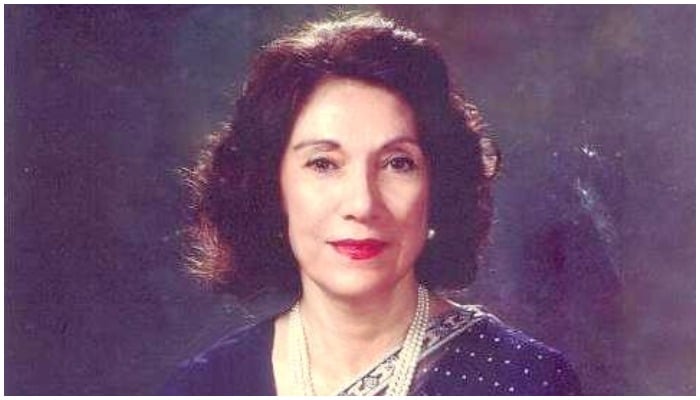
PPP-International Conferences and Seminars Forum (ICSF), in collaboration with the PPP Gulf-Middle East, organised a grand online seminar to celebrate Begum Nusrat Bhutto's 92nd birthday. The seminar was attended by Mohtarma Sanam Bhutto, daughter of Shaheed Zulfiqar Ali Bhutto, and Victoria Schofield, a long-time friend of Shaheed Benazir Bhutto, along with other senior PPP leaders and activists.
The seminar was hosted by senior party leader and human rights activist, Saifullah Saify and PPP-ICSF chief organiser Syed Tahir Abbas Bukhari. Thousands of Bhutto's lovers from all over the world watched the conference live on social media and paid homage to Begum Nusrat Bhutto in their comments.
The seminar was presided over by PPP Gulf-Middle East President Mian Munir Hans, while the special guests included senior journalist and intellectual Mujahid Barelvi and in-charge PPP Research and Co-ordination Cell Bilawal House Karachi, Lal Bakhsh Bhutto.
Leaders from all over Pakistan, Sindh, Punjab, Balochistan, Khyber Pakhtunkhwa, and Azad Kashmir, Gilgit-Baltistan, including people from more than 23 countries, participated in the online seminar which lasted for more than four hours. They expressed their views on the struggle and the long story of not bowing to the tyranny of past dictators.
During the programme, the eyes of many, including Sanam Bhutto and other participants, were filled with tears while talking about Begum Nusrat Bhutto. President of the seminar Mian Munir Hans highlighted the sacrifices of Begum Bhutto during her stay in Dubai till her last breath.
Senior journalist Mujahid Barelvi said that those who remember Begum Sahiba's struggle deserve a tribute. "The only way to remember Begum Sahiba's sacrifices for democracy is to hold constant ceremonies in her memory at every level," he said. Lal Bakhsh Bhutto, in-charge PPP Research and Co-ordination Cell, Bilawal House, Karachi, said that Shaheed Bhutto's mission must be fulfilled to pay homage to the Mother of Democracy.Victoria Schofield, a long time friend of Shaheed Benazir Bhutto, shared her memories with Sanam Bhutto and paid rich tributes to Begum Nusrat Bhutto.
In his address, PPP Central Punjab General Secretary Chaudhry Manzoor said that the sacrifices of Begum Nusrat Bhutto could not be ignored in the history of Pakistan.
"Without remembering Begum Sahiba’s sacrifices Pakistan's history is incomplete," said Manzoor.
PPP KP President Humayun Khan said in his address that his relationship with Begum Bhutto was like that of a mother and son.
"She loved all party workers like her children," he said and reiterated the commitment to continue the sacrifices and struggle till the completion of the mission of Shaheed Bhutto under the leadership of Chairman Bilawal Bhutto Zardari. Paying homage to Begum Nusrat Bhutto, PPP Balochistan President Haji Ali Madad Jattak said: "We are proud to belong to a party led by brave leaders. Chairman Bilawal Bhutto and Co-Chairman Asif Zardari are leading the nation who will spare no sacrifice in getting Pakistan out of crisis.
Afzaal Hussain Inqalabi read out a special message from Wajid Shamsul Hassan, former High Commissioner of Pakistan to the UK and special adviser to Shaheed Mohtarma Benazir Bhutto. On the occasion, the eyes of all the participants including Sanam Bhutto were filled with tears and everyone present at the ceremony was saddened by the memory of the Bhutto family.
Senior party leader and intellectual Dr Zarar Yousuf read his special article on Begum Nusrat Bhutto. Former Special Assistant Chief Minister Sindh and in-charge People's Secretariat Sindh, Farid Ansari, referring to his mother Begum Nargis Ansari's long association with Begum Bhutto, said that whether anyone remembers Begum Nusrat Bhutto or not, "we will always remember her and history as well."
"Her name will be written in the history book with golden words," he said, adding that the "Bhutto family is not something to be forgotten."
Anwar Zeb, in-charge of the PPP KP Study Circle, said that Begum Nusrat Bhutto kept the party alive at the time when Shaheed Bhutto was in prison and, even after his martyrdom, continued to fight for the rights of the people in the streets and courts. Other speakers and participants who paid homage to Begum Nusrat Bhutto included senior journalist Khalid Hameed Farooqi, Senior leader PPP Belgium and Europe Malik Muhammad Ajmal, PPP Germany President Syed Zahid Abbas, PPP Research and Coordination Cell Bilawal House Sub Office Central Punjab Saadat Hussain Shah, Sanaullah Jattak, President of People's Youth Balochistan, Seemi Asad, General Secretary of PPP US, Syed Muzahir Bukhari, former Chief of PPPICF.
Members including Athar Sharif, Sardar Arshad, Shazia Tahmas, Sohail Khawar, Khurram Kiyani, Inam Qadri, Kuldeep Singh, Malik Akhlaq, Shehzad Khan, Raja Azam Advocate, Asghar Shahid, Ashraf Chughtai, Dr Ziaullah, Bilal Ali, Syed Aizaz Shah and others.
At the end of the event, Begum Nusrat Bhutto's birthday cake cutting ceremony took place at the residence of President PPP Gulf-Middle East Mian Munir Hans.
Accompanied by Mian Munir Hans, Vice-President Nisar Khattak, Secretary Information Zulfiqar Ali Mughal, Deputy Secretary General Irfan Qamar Gondal, Secretary Information Women Wing Najma Jilani, Deputy Secretary Women Wing Najma Shah and Senior Vice President Dubai Shafiqur Rehman Siddiqui cut the birthday cake.
Finally, Chief Organiser Syed Tahir Abbas Bukhari thanked all the participants, forum members, and party leaders for making the event a success.
https://www.geo.tv/latest/341409-ppp-pays-tribute-to-mother-of-democracy-begum-nusrat-bhutto

Monday, March 22, 2021

Video Report - The Israeli Election – 5 Things to Know

Video Report - Will Israel's fourth election produce a clear winner?

Video Report - Trump Left Biden With 'Challenging' Situation at U.S.-Mexico Border: Harris

Video Report - Harris Tours Vaccine Site in Jacksonville to Tout $1.9 Trillion Covid Stimulus

Video Report - Psychologist explains how our brains have changed during the coronavirus pandemic

Video -ذوالفقار علی بھٹو کا لیاقت باغ راولپنڈی میں لاکھوں جیالوں سے خطاب 1973

Music Video - Dilan Teer Bija - #جمہوری_تھے_جمہوری_ہیں

Video Report - Joint press conference of Chairman PPP Bilawal Bhutto Zardari and Ameer JI Siraj ul Haq in LHR

Video Report -#NayaDaur - Bilawal's Strong Statement On Maryam #جمہوری_تھے_جمہوری_ہیں

#جمہوری_تھے_جمہوری_ہیں - PPP does not have it in its genes to compromise, Chairman PPP Bilawal Bhutto Zardari

 Chairman Pakistan Peoples Party Bilawal Bhutto Zardari called on Jamaat-e-Islami chief Siraj ul Haq in Lahore. Both the leaders discussed the political situation in the country.


Syed Yousuf Raza Gillani, Raja Pervaiz Ashraf, Nayyar Hussain Bukhari, Qamar Zaman Kaira, Syed Hassan Murtaza, Faisal Karim Kundi, Sardar Salim Haider and Saeed Ghani accompanied the Chairman PPP.
After the meeting, Bilawal Bhutto Zardari talking to the media said that according to the democratic traditions, the opposition leader in the Senate should be from the party that has the majority. Chairman Bilawal responding to a question said that the PPP does not have it in its genes to compromise and be selected because we have always believed in a fair competition.
The manner, with which Maryam Nawaz Sharif has been called by the NAB, makes it obvious that the institution itself is inviting criticism. Responding another question he said that any statement by Maryam Nawaz will be addressed by my vice president.
Chairman PPP said that it is the responsibility of the politicians to ensure that political parties look for common ground on issues such as that of electoral reforms, accountability and Kashmir. The PPP and the JI have the similar stance on these issues. We are organic political parties. However, there are political parties in the country that use foul language. We have been resisting and condemning rigging in elections and it should be stopped.
Chairman Bilawal responding to the questions by the journalists said that the economic crisis is the biggest challenge that the country is facing, and that he had made an effort to engage all parties while forming the PDM. Nawaz Sharif’s demand of there being the same standard of accountability for everyone including generals has been made today, while we have been demanding the same for the past three generations. NAB, as an institution should not be used for carrying out personal vendetta. In both the National and Punjab assemblies, the situation is extremely favorable to no-confidence movements. A tough time should be given to the government from inside and outside the Parliament.
Bilawal Bhutto Zardari said that he will hold a separate press conference on PDM if needed, and that we want to create hurdles for the government by reaching a common ground with JI as well as other opposition political parties. 

https://www.ppp.org.pk/pr/24509/

Sunday, March 21, 2021

Music Video - #BillyJoel #WeDidntStartTheFire #Rock Billy Joel - We Didn't Start the Fire

Video Report - CNN Fareed Zakaria GPS 3 21 2021 - China, Russia, Pandemic

Video Report - President Biden says he will visit southern border "at some point"

Video report - Rallies, vigils continue across US to show support for Asian-Americans in wake of spa shootings

Opinion: On Covid Relief, Democrats Deserve a Victory Lap


By The Editorial Board March 10, 2021
A giant aid package is what the country badly needed and what voters wanted.
President Biden made it clear that he wanted to move fast and go big to deliver emergency aid to a nation reeling from the coronavirus pandemic. On Friday, he will realize this goal with the signing of the American Rescue Plan, a sweeping, $1.9 trillion aid package aimed at rescuing the nation from its pandemic slump.
This is an early and impressive political win for Mr. Biden: He pushed for a $1.9 trillion deal, and he got an approximately $1.9 trillion deal that largely follows the contours he proposed. Better still, the bill passed and will be signed before the expiration of the current enhanced unemployment aid on Sunday.
Far more important, this is a big win for the American public — especially those of modest economic means. The legislation has the potential to cut poverty by a third and reduce child poverty by more than half, according to an analysis by Columbia University’s Center on Poverty and Social Policy. Black and Hispanic Americans are expected to see the largest benefit. It is being characterized by fans and critics as among the most expansive and progressive legislative achievements in decades.
The package is ambitious. Directly tackling the pressing public health challenges, it provides billions for coronavirus tracing, testing and vaccination efforts.
It also includes another round of cash relief: People earning up to $75,000 a year will receive $1,400, plus an additional $1,400 for every dependent they claim on their taxes. Enhanced unemployment benefits of $300 will extend through Labor Day. The earned-income tax credit will be expanded. There is money for child care facilities, schools, transit systems and restaurants. There is rental and mortgage assistance, debt relief for minority farmers and funding for small-business loans.
One of the plan’s most notable measures is an expansion of the child tax credit. Parents up to a certain income level will receive $3,600 for each child younger than 6 and $3,000 for those ages 6 to 17. The credit is structured so that even those who don’t pay income taxes can receive the benefit as a cash refund. The program is set to expire after one year, but supporters hope it will prove popular enough that it can be made permanent, effectively establishing a guaranteed base income for parents.
The new law also provides for a two-year expansion of subsidies for purchasing health insurance under the Affordable Care Act, which fulfills another of Mr. Biden’s key campaign promises. The list goes on and on.
Not everyone is a fan of the plan. Not a single Republican in either chamber voted for it despite its broad public support. Republicans have denounced it as too expensive and too unfocused. They also complain that Democrats shut them out of the legislative process — that, for all of his big talk about bipartisanship, Mr. Biden barreled ahead with only the support of his own congressional team.
The legislating was messy, as these things tend to be, with clashes both within and between the parties. Moderate Democrats demanded concessions from progressives, and Republicans sought to make the entire process as protracted and painful as possible.
Senator Ron Johnson, the Wisconsin Republican, demanded that the 628-page bill be read aloud on the floor. Senate Republicans en masse turned the consideration of amendments into a marathon exercise in political theater that went straight through Friday night and into midday Saturday. As the bill made its final pass through the House on Wednesday morning, Republicans there indulged in even more foot-dragging. So much for cross-party comity.
The Biden administration is betting that most Americans care less — if at all — about process than about product. It’s not a perfect bill. There will be bloat and inefficiencies. But the president’s unshakable position — backed by recent history — was that it was better to go too big than too small. No one on his team wanted to repeat the mistakes of the 2009 economic stimulus, now widely seen as having been too meager.
Mr. Biden learned another lesson from 2009: It is not enough to give Americans a win. You need to trumpet that win from the rooftops. So he is embarking on a combination victory tour and marketing blitz, aimed at driving home how the recovery plan will improve individuals’ lives — and the nation as a whole. He has scheduled a prime-time address, the first of his presidency, for Thursday evening. Soon, he will be hitting the road to sell the plan, as will the first lady and the vice president, among others. Friendly super PACs are planning related PR campaigns, and Mr. Biden has urged congressional Democrats to “continue to speak up and speak out” about it.
Big legislative wins are rare. Democrats have earned a victory lap for doing just what voters sent them to Washington to do.
https://www.nytimes.com/2021/03/10/opinion/biden-covid-bill-stimulus.html

Pakistan’s Counter-Terrorism Department using new pressure tactics against families of disappeared Baloch

 Since the coldblooded murder of five Baloch youth in a staged encounter by the CTD (Counter-Terrorism Department) of Pakistani forces, more Baloch families have complained that the department has been using pressure tactics to coerce them into changing their statements and withdrawing their cases.

Several families of disappeared Baloch complained that the Intelligence Agencies and CTD called them and threaten them to withdraw the cases of the disappearance of their loved ones.

According to Hani Baloch, who has been searching for her abducted fiancé Mohammed Naseem Baloch for the past several months, first, People called families of disappeared Baloch on withheld numbers and threaten them to stop perusing the cases of their loved ones. Now the state forces are attacking them.

Hani Baloch another with her fiancé Mohammad Naseem was abducted from Karachi. She was later released but her fiancé is still in the custody of Pakistani forces. She has been struggling for Naseem Baloch’s recovery like other family members. The Pakistan forces instead of recovering and releasing her fiancé are pressurising her to withdraw the case and stop looking for him.  

Recently on March 11 2021, Hani Baloch had an accident in Karachi and as a result, she sustained injuries on her face but remained safe.

Hani Baloch argues that the state (Pakistan) was pressuring her to withdraw the case of her fiancé Naseem Baloch but she refused. ‘Now the state is trying to kill her.’

It may be recalled that recently, another Baloch social and human rights activist Hooran Baloch also received threatening phone calls from the intelligence agencies.

She had made it clear that if anything happened to her the state would be held responsible.

Meanwhile, the family of abducted Rashid Hussain Baloch has also reported similar pressure tactics by the CTD of state forces.

The family in a statement claimed that they were summoned by Airport Police Station on Monday, March 15, ‘locked up in a room and threatened’ to signs a misleading statement about the disappearance of Rashid Baloch and in case of refusal to sign their loved ones will be harmed.  

The family of Rashid Hussain was asked to sign a pre-written statement by the Counter-Terrorism Department on behalf of Mr Hussain’s mother which read that he has not been forcibly disappeared by UAE intelligence agencies but he was sent back by the company that had employed him to Dalbandin Balochistan.

It was also written in CTD’s false statement that Rashid Hussain had gone missing from Dalbandin and not in Karachi.  

It is pertinent to note that Rashid Hussian was arrested by UAE intelligence agencies on the 26th of December 2018 and was handed over to Pakistan after six months of illegal confinement in UAE.

Pakistan media at that time quoting Pakistani officials had confirmed Hussian’s arrested in UAE and his extradition to Pakistan.

https://balochwarna.com/2021/03/18/pakistans-counter-terrorism-department-using-new-pressure-tactics-against-families-of-disappeared-baloch/

#Pakistan - #Balochistan - Education of Hundred Thousand Children at Stake

By Yahya Reki -Shabbir Rakhshani
Rukhsana Bibi is a part of the educational system in the remote village of Tehsil Jhao. Where 142 girls and boys are also linked up and girls are in majority. The children are going to this school for education which foundation laid by their teacher Rukhsana! She is the first women teacher appointed from her village and performing her duties in the education department for the last 5 years. That’s why the girls got confident whom elders were afraid to send them to school. This educational system can wrap its board any time when Rukhsana will be compelled to leave school. Causes exist which had been also addressed. Instead of performing her duty, Rukhsana is deprived of salary for 7 last months. She was appointed as “Junior Vernacular Teacher” (JVT) in 2015, due to the “Global Partnership for Education” project. Government has to continue the maintenance and administration of said schools. Schools were handed over to the Balochistan government as to the contract/Deal. They extended the contract of Teachers and paid salaries for 2 years but the case of regularization and salaries of teachers is hanged since July 2018. It had been gone through cold storage after sent to the Chief Minister of Balochistan twice. This situation has not only created financial hurdles for Rukhsana but also affected her 2 brothers’ educational system who be dependent on their sister’s monthly salary.
1493 teachers of the “Global Partnership for Education” (GPE) project along with Rukhsana facing the same situation. They came to the provincial capital in December 2020 and staged a protest camp in front of Quetta Press Club. They sat down in front of the Balochistan Assembly during the session on December 30, 2020. Almas Qadir is also one of these protestors who traveled from Naal to Quetta to communicate to the authorities. Almas spent many days in protest camp along with her 4 months child. She is telling “whenever our issue was not resolved for a long time we compelled for the procession. We were not paid salaries for a couple of months but we haven’t closed schools because children are ours but need to run the house”.
Global teachers have started a sit-in on 28th December 2020 led by Fazal Ilyas. His wife was also there in affected teachers. He was arrested on the first day of agitation and shifted to “Bijli Ghar Thana” along with his 2 friends and then released. He is telling “Provincial Minister for Education Sardar Yar Muhammad Rind and Deputy Speaker Balochistan Assembly Babar Musakhail came to their camp in the evening and assured to draft summary and forward it to CM Balochistan to resolve the matter and if not, they will be separated from the government. And they postponed protest”.
The protest was continued for 10 days where women teachers and other family members were present along with children. The government has formed a committee that has to make recommendations on the matter and report CM Balochistan. however, the committee has died without any progress. Last information summary has been moved to Chief Secretary Balochistan Table.
World Bank in collaboration with European Union, has initiated the GPE project in 2015-16. Pakistan is in these countries which were agreed on it. The main purpose of this education was to introduce a gender-free education system among countries and deliver it from village to village. 709 new schools were made in Balochistan under the network of this project. Due to the contract, 95 government Middle and 20 High schools were mentioned in the said project. It was the main objective to pay salaries to the teachers as well establish schools on modern lines. The ratio of girl’s education improved in front of boys due to this project. Due to the report provided by the GPE project when these schools were shifted to the government 25, 404 boys and 65, 578 girls were enrolled in 709 primary schools.
The government of Balochistan has announced 9, 433 vacancies through National Testing Service (NTS) to fulfill the lack of teachers in education. But not completing the pattern of NTS candidates was not succeed which deprived the educational system in Balochistan. on the other side, the silence of the government could increase in the educational crisis. The government should think about it because this crisis will affect the education of lac children. https://balochistanvoices.com/2021/03/education-of-hundred-thousand-children-at-stake/

#Pakistan - What students think


PAKISTANI universities are not contributing enough in the areas of research and development or to the knowledge-based economy. The reasons are not difficult to comprehend. For one, the environment of educational campuses is not conducive to intellectual pursuit, and in the lecture halls critical discourse is virtually considered a sin. The problem is that state and society demand too much from our education system that is purposeless.
Prime Minister Imran Khan’s words amounted to nothing more than wishful thinking as he addressed a seminar of the National Security Division recently, saying that universities can contribute to developing a national security paradigm in Pakistan. The prime minister is well aware of the state of higher education in Pakistan and has himself established an educational institute in the hopes of generating graduates. He must be aware of the state of academic affairs and the level of intellectual capacity in our universities. It would have been better had he recommended building up the dwindling intellectual capacity at our universities as critical to the country’s national security priorities. Pakistan ranked 98th in 2020 on the Good Country Index, which measures the contributions of nations to humanitarian well-being. On the same index, Pakistan’s score in ‘science & technology’ was 91, which cannot be termed satisfactory even by South Asian standards.
This is not only about public-sector universities; private educational institutes are also producing graduates of the same quality even if their attire is different and their communication skills better. After all, their thinking pattern is hardly dissimilar. At the other end, madressahs have their own sets of problems in terms of education, research and critical discourse.
Private universities have become money-minting enterprises and they adopt all possible marketing tactics to attract students of privileged classes. For them, knowledge production is not a priority. They promote an apolitical atmosphere on campus that includes not only a complete ban on political activities but also encourages certain political and social narratives, which suit the security establishment. When a university in Lahore expelled two students for a proposal followed by hugging on campus, it reflected a mindset that was concerned more about its ‘reputation’ and the prospects of attracting business rather than ensuring freedom for its students.
The state desires to control the thoughts of its citizens.
The state desires to have control over the thinking process of its citizens to instil in them a submissive attitude. Power elites deem politics, especially dissent, a negative trait for the youth and prefer ‘depoliticised’ individuals who don’t question their power and might. With this goal in their sights, they do not bother much about how the controlled environment at the campuses kills creativity and intellectual capacity. Recent interaction with educated youth in Punjab, Sindh and KP made it clear that the absence of critical discourse and an apolitical atmosphere on campuses are not only creating anxiety and insecurity among the youth regarding their future but also inculcating in them a sense of victimhood. The youth have ambitions for their careers but they don’t have a plan and are not prepared for life’s challenges ahead. This uncertainty leads to visions of a nightmarish future, and most of them blame their teachers and the poor quality of education they receive for this. In particular, they are not satisfied with the scholarship and expertise of their teachers. Many youths complained that their teachers hardly update their own knowledge of the subjects they teach and also discourage students from asking questions or voicing criticism inside the classroom.
The youth are developing a narrow worldview, one which is mostly based on skewed and irrational narratives they absorb from the social and mainstream media. The proportion of those who train their minds to think critically is very low. In the absence of any critical or interactive educational practice, the sense of victimhood is only enhanced — something that lends itself to believing in conspiracy theories. State-led propaganda and constant glorification of the past only makes matters worse and leads them further away from the path of critical thinking. Indeed, our leadership itself has often been seen to encourage ‘self-pity’ through promoting dramas that are based on fictional depictions of historical characters. The youth blame the ruling elites of the Muslim world including Pakistan for the loss of Muslim glory.
A number of students from the tribal districts of KP and Balochistan have a bitter opinion about the establishment and religious groups and parties. The reasons are understandable, as they have suffered the consequences of extensive conflicts in their regions. A good number of educated youths have moderate views about religion and don’t agree with the agendas of radical groups, but faith still shapes their worldview. For them, religion is an issue of identity and they believe that the Muslims are suffering because of their ignorance and that glory can be achieved through practising a moderate version of Islam. Alternative views are missing on campuses and among many students there is a craving for perspectives which can broaden their horizons. However, those who are inclined towards radicalism and extremist groups have power and their links with like-minded teachers help them to control the narrative. Nobody can challenge or disagree with them. The radical segments think of themselves as the custodians of Pakistan’s ideology and identify with establishment narratives. Not content with their current strategy, they have more radical ambitions for achieving ‘glory’ and for defeating the ‘enemies’ of the Muslim world. This is a frightening scenario as it indicates that human resource for extremist and militant groups is still available on our campuses.
An aptitude for or interest in research is sorely lacking in the teachers and students in universities. This is quite evident as the research publications of many private and public universities simply don’t qualify to be presented at academic fora. The prime minister’s wish for our universities to contribute towards developing a national security paradigm is nothing less than asking for the moon.
https://www.dawn.com/news/1613746/what-students-think

#Pakistan - The challenge of “learning poverty”

Dr Lubna Naz
The government should invest in devising strategies that can prevent dropouts before students reach high school.
In Pakistan, school-age children make up 30-34 percent of the population. Amongst the 65 million school-age children, 22.8 million are out of school (OOSC). The high number of OOSC pose numerous challenges, ranging from weakening of the economy to making social cohesion fragile.
According to a World Bank research in 2020, learning losses may contribute up to $67-155 billion losses to Pakistan’s economy. The unschooled children are more likely to join the unskilled labour-pool, implying an increase in unemployment.
A majority of OOSC belong to the poor and vulnerable communities, i.e, migrants, daily wage labourers and beggars, which furthers economic inequality and social stratification.The pool of out-of-school children (OOSC) includes children who have never enrolled in a school and those who have attended school but left before completing high school. Educationists have studied the causes and consequences of the phenomenon and proposed a raft of measures to remedy the situation.The most noticeable causes of poor schooling outcomes are extreme poverty, early marriages, unemployment of adult working family members, and parents’ disinterest in education. The reforms have aimed at increasing school enrolment through informal education, flexible school timing, provision of stipends and school meals.
The prime focus of current policies seems to be children who have never attended school. They include full-time workers at workshops, domestic help and beggars.
In education sector planning, little attention has been given to address retention and school dropout issues. According to the Annual Status of Education Report-Pakistan (ASER 2019), 26 percent of the children aged 11-16 in a rural region dropped out before completing school, while 16 percent in the same age group never attended school.
The report shows higher dropout rates among girls (9 percent) than boys (7 percent). A greater number of girl dropouts can have severe implications for the economy, for instance, lower female labour-force participation, early-age-marriages and higher fertility rates.
Academic researchers should ponder on why children leave school before completion and if they leave mainly due to school-related factors, would any effort to bring them back in school be successful unless schooling system is overhauled? Pakistan has a highly polarised schooling system, including government schools, elite private school, low-cost private schools, seminary schools or madrassas, and NGO-run schools. The ASER 2019 showed that 2.1 percent children were enrolled in madrassa, and 20.6 percent in private schools. Only 0.5 percent children were found in other schools.
More than three-fourth of school-age children are enrolled in government schools. Therefore, the need is to assess the government school preparedness in improving retention rates. School readiness depends on a host of factors, including school physical infrastructure, structured school activities, parents’ engagement, community-school linkages and learning methods.
After the 18th Constitutional Amendment, the curriculum, policy, syllabus, planning, and the standard of education fall under the domain of provincial governments. According to Wilson Report 2016, provincial governments spend 17-28 percent of their budget on education. Interestingly, the amount spent on education by provinces far exceeds the UNESCO-recommended 15 percent of budget spending on education by the countries. Despite significant provincial budgetary allocations, the dilapidated conditions of public sector schools raise concerns about the effectiveness of the utilisation of education budget. According to ASER 2019, only 56 percent of schools have electricity connections, 61 percent have safe drinking water, and 59 percent have toilet facility in rural government schools.
There is a need is to consolidate primary, middle, and high schools to maximize the benefits of existing infrastructure and provide catalytic funds to support implementation of early childhood care and education reforms in provinces.

 These figures do not shed light on the quality of basic facilities available in government schools. Most schools in rural areas frequently experience an interruption in water supply and long power outages. Furthermore, as per ASER 2019, there are noticeable regional disparities in school infrastructure. Schools (primary, middle and high) in Balochistan, for example, have 3-5 rooms, 25-59 percent schools have electricity, and only 4 percent an internet connection, while in rural Punjab government schools have 5-12 rooms on average, 95-98 percent of schools have safe drinking water, and 12-63 percent have an internet connection.
The irony is that most high schools have better infrastructure as compared to primary and middle schools. The need is to consolidate the primary, middle, and high schools to maximise the benefits of existing infrastructure and provide catalytic funds to support implementation of early childhood care and education reforms in provinces, particularly in disadvantaged areas. This will help improve the retention rate of children at school, especially for girl students who drop out after primary school for lack of access to a middle school in their village.
The teacher absenteeism, under-qualified teachers, and surplus non-teaching staff are common in government schools. According to the Wilson Centre report 2016, 70-80 percent of provincial education budget is spent on teachers’ salaries. When teachers do not show up (20 percent in the Punjab and 30 percent in Khyber Pakhtunkhwa), these expenditures represent inefficient utilisation. In consequence of recently initiated early childhood care and education reforms (ECCE), the Punjab and the KPK have strengthened monitoring mechanisms for public schools through assistant education officers (AEOs) stationed at the district level. Further, the learning data is being collected through a monitoring application based on MELQO, developed by the Punjab Information Technology Board (PITB) and Programme Monitoring, and Implementation Unit (PMIU).
The constant monitoring and installation of biometric system have improved teachers’ attendance in public sector schools. Sindh and Balochistan need to invest in workforce training, district-level delivery, and governance structures to avert the deepening learning crises. In both provinces, as per ASER 2019, school dropout ranges between 30 and-51 percent among children aged 11-16. The current schooling system relies on the traditional method (knowledge-based-abilities) of teaching, which, unfortunately, fails to inculcate employable skills among students. Moreover, the overstructured school system lays stress on completing a pre-defined syllabus without instilling the knack for exploration, and assessments are generally based on reproducing the material memorised by the students, usually without any understanding. According to the World Bank Report 2019, 74 percent of children in Pakistan are unable to read and understand a simple text by age 10. The children who do not learn at primary school fail to deal with the curriculum as they progress to higher levels. These children either leave school before completing education or accomplish eight or 10 years of schooling without basic knowledge and skills, whether they be formal skills (reading and writing), cognitive skills, technical skills, reasoning or critical thinking.
The World Bank has coined the term “learning poverty” to refer to this problem. Compared to Pakistan, several countries like Vietnam, Cambodia and Bangladesh have almost eliminated learning poverty at the same level of economic development. Pakistan needs policies specific to acquired skills, job market placement and learning outcomes, rather than a focus on inputs like curricula, school hours and funding.
There are currently many social protection programmes, such as Waseela-i-Taleem, to improve enrolment of the children of low-income families, particularly girls. These demand-side interventions are useful to address the affordability-related constraints. However, it is the school quality that determines the retention rate and learning outcomes of children. The government needs to invest in devising strategies that can prevent dropouts before students reach high school and set up early warning systems to detect students who are more likely to drop out. The academicians need to investigate types of school dropout and pathways to dropping out and suggest doable measures to avert learning crises in Pakistan.
School attainment should not be taken only to promote productivity, and subsequently output or income. Education has social value. In this respect, it is an end in itself rather than a means for achieving other ends.
https://www.thenews.com.pk/tns/detail/807250-the-challenge-of-learning-poverty

#Pakistan #PPP stakes claim to the slot of opposition leader in Senate, Raja Pervaiz Ashraf

Former Prime Minister and Senior Vice President of PDM Raja Pervez Ashraf has expressed the hope that the issue of the leader of the opposition in the Senate will be settled amicably with consensus among the combined opposition parties in accordance with the established democratic norms and traditions.
He said this while commenting on reports that PML-N had nominated its candidate for the slot of opposition leader in the Senate and that it was asking other parties in the opposition PDM to endorse its candidate for the same.
He said that with 21 senators in the upper house the PPP was the single largest opposition party in the Senate. The PPP believed that in accordance with democratic traditions the slot of opposition leader in the Senate should go to it, he said.
Raja Pervez Said that the two other most important parliamentary positions namely the opposition leader in the National Assembly and chairman of the public accounts committee both were held by the PML-N. It would be only right and proper that the third important parliamentary position namely the leader of the opposition in the senate was given to the largest opposition party in the upper house instead of the party which already held the other two important parliamentary positions.
He said that he was also a member of the Committee formed by the sarbarahi ijlas of PDM to propose opposition names for the slots of Chairman, Deputy Chairman and Opposition leader in Senate. He said that he had agreed that the three Senate slots be distributed among the three largest opposition parties in PDM by proposing candidate of PPP for Chairman, of JUI for DeputyChairman and PML-N for the Opposition leader. However after manipulation in the said election and denial of the Chairmanship to Mr. Gillani by wrongly rejecting 7 votes cast in his favor the situation had completely changed.
Raja Pervez Ashraf said that after election to the office of Chairman Senate the situation with regard to the available slots in the upper house and its distribution among various opposition parties had completely changed. The stance of the PPP with regard to the opposition leader was based on democratic principles, equity and fair play, he said.
https://www.ppp.org.pk/pr/24496/

Saturday, March 20, 2021

#Turkey #Erdogan #DomesticViolence Turkey pulls out of treaty criminalizing violence against women

#COVID19 #coronavirus UK police scuffle with anti-lockdown protesters as thousands march in Germany, Austria

Video - The White House - President Joe Biden - A Weekly Conversation: On the Line With Jocelyn

Exasperated Don Lemon Has A Damning Question For Republicans



By Lee Moran
The GOP and its base “are still under the spell of a disgraced, twice-impeached, one-term president,” lamented the CNN anchor.

Don Lemon on Friday demanded to know, “What is wrong with the right?”

The “CNN Tonight” anchor questioned why Republicans would spend their week railing against so-called “cancel culture” as the country reeled from the “brutal” killing of eight people at massage parlors in the Atlanta area. Six of the victims were women of Asian descent.

Lemon also hammered the 14 House Republicans who this week voted against a measure condemning the military coup in Myanmar, highlighting that the Burmese army alleged mass voter fraud — a claim not unlike former President Donald Trump’s lie that the 2020 election was stolen from him.

The GOP and its base “are still under the spell of a disgraced, twice-impeached, one-term president,” suggested Lemon. “This is about truth, or maybe I should say this is about a lie. Because if people were acting on the truth, then there would be no need for an insurrection.”

“While America is reckoning with the hate that he left us with, that is what is going on,” he said.

Opinion: What the 2020s Need: Sex and Romance at the Movies


 By Ross Douthat

We’ll know we’re actually escaping stagnation when the cinema of desire returns.

A slight giddiness is overtaking prognosticators as the pandemic nears its end. Economics writers, normally a cautious bunch, are speculating about how a Biden boom might really be different — bigger, longer, its fruits more widely shared — than the limping recoveries we’ve seen recently. Tech and science watchers are talking about the 2020s as an age of breakthroughs, a long-awaited acceleration.
But what about culture? If stagnation in the economy has been matched by sterility in social and artistic pursuits (it has), what would signify cultural acceleration or escape?
Here’s one possibility: We’ll know we’re actually entering a new era when sex and romance make a comeback at the movies.
Note that I said sex and romance. Traditionally these were somewhat separable movie-industry commodities. Eras famous for turbulence and libertinism (Hollywood before the Hays Code, the post-sexual revolution 1970s and 1980s) were more likely to sell sex, while in eras of conservatism or restoration the romantic comedy and the marriage plot prevailed. The two peaks of the “rom-com” were the 1940s and the 1950s and then the 1990s and early 2000s, when even sex comedies passed from being proudly depraved to (in the Judd Apatow era) almost wholesome.
But in the last 15 years the “sex movie” and the romantic comedy have both declined or disappeared. This means that if you’re a proud anti-puritan who misses nudity or “adult themes” in your movies or an old-fashioned filmgoer who swoons for true love triumphing over all impediments, you can reasonably complain that Hollywood isn’t telling your kind of stories anymore. In the modern blockbuster, as the film writer R.S. Benedict put it recently: “Everyone is beautiful. And yet, no one is horny.” Movie stars have never been so ripped and chiseled and godlike; they have to be, if they aspire to play a Marvel or DC superhero. But unlike the old Olympians, these gods rarely seem to have the hots for one another, and their movies mostly exist within the parameters of early adolescence, with little adult smoldering permitted. (Adam Driver did his best to break this mold in the recent “Star Wars” movies, but in vain.)
It isn’t just the adult rom-com that’s waned. Watching “Raya and the Last Dragon” with my kids last week, I realized that it was the fourth animated Disney movie in a row — following “Onward,” “Frozen II” and “Moana” — without a central love story. (“Frozen II” technically has a marriage-proposal story carried over from its predecessor, but it’s completely vestigial.)
A lot of different forces have marginalized movie sex and romance. The blockbuster industry has been bad for all kinds of adult movies, because it’s assumed that superhero fight scenes travel better internationally than more complex and culturally specific plots. Some of the audience for sexually themed stories — the people who used to line up for “Basic Instinct” or, more pretentiously, for sexy art-house fare — has migrated to cable and streaming services; some of that appetite has been sated and deadened by online porn.
The decline of the love story has led to a few creative innovations. Hits like the original “Frozen” and HBO’s “Big Little Lies,” for instance, successfully centered female relationships in narratives — the fairy tale, the soap opera — that traditionally foreground romance or sex instead.
Still, in general there’s a cultural void where romance used to be. And it doesn’t seem coincidental that this void opened at a time when the sexes are struggling to pair off — with fewer marriages, fewer relationships, less sex.
Courtship structures, formal in the old days and casual in the 1990s, were always useful to the romantic comedy. But lately even the casual structures have collapsed, with a Darwinian ecosystem of online dating (much less charming in reality than on “You’ve Got Mail”) supplanting older, more cinematic alternatives.
Ideological trends have also made it more challenging to portray happy relations between the sexes. The dramatic material of traditional romance is male and female distinctiveness, different forms of la différence. But these differences sit uncomfortably with the current progressive emphasis on the interchangeability of the sexes — which may be why the recent cable hits with the most sex or romance have been set in historical and fantasy landscapes, from “Game of Thrones” to “Outlander,” where certain problematics can be forgiven (to a point) as essential to the setting.
Just consider the contrast between Netflix’s “Bridgerton,” a multiracial bodice-ripper set in an alternative but safely-past-tense 19th century, and the best picture nominee “Promising Young Woman,” set in a present-day dating landscape so bleak that it makes you want to cancel heterosexuality itself.
But maybe the popularity of “Bridgerton” is a foretaste of a very different 2020s. Maybe it’s a sign that an age of libertinism lies just around the corner. Or maybe the show’s particular concern with married sex is a signpost on the path to a new traditionalism.
Either way, everyone should be rooting for the cinema of desire. For artistic reasons, yes — but also for the sake of the continuation of the human race.
https://www.nytimes.com/2021/03/20/opinion/sunday/sex-romance-movies.html?action=click&module=Opinion&pgtype=Homepage

#Pakistan - #COVID19 - Mahira Khan, Iqra Aziz and others ask for help in curtailing spread of Covid




Pakistani celebrities are coming forth to stress on the significance of social distancing and wearing protective gear as the nation battles the third wave of the coronavirus.
The Ministry of National Health Services issued a video message by acclaimed stars, Mahira Khan, Adeel Hussain, Bilal Abbas and Iqra Aziz who are pushing fans to build up the safety measures to curtail the spread of the virus.
“Let’s defeat corona together,” said the Humsafar actor in the video posted on Twitter.
“Let us vow to use face masks and sanitize our hands regularly,” Hussain and Abbas tell fans.
“Maintain a six feet distance with each other and avoid going to crowded places,” urges Aziz.
In the last 24 hours, the country lost 42 people to the deadly virus, taking the nationwide death tally to 13,799. So far, 579,760 have recovered from the coronavirus after testing positive.
The surge in the positivity cases has alarm bells ringing in the country, as a day earlier Pakistan positivity rate stood close to 8%.
https://www.thenews.com.pk/latest/807210-mahira-khan-iqra-aziz-and-others-ask-for-help-in-curtailing-spread-of-covid.

#Pakistan - Underage brides in Chitral

 

By Adnan Ali
Chitral was the biggest district in Khyber-Pakhtunkhwa in terms of area before its division into two units: Upper and Lower Chitral though the division is yet to be crystallised. It frequently remains in the news and social media because of its tourist attractions like the Shandur festival, Terich Mir peak, and Kalash Valleys to name a few. These are positive and attractive features which every Chitrali takes pride in and will boastfully talk about. But hidden under the lure of beautiful landscape and mighty mountains, there lie troubling social evils that are gracefully brushed under a rug and hence do not become part of public discourse.
The unsettling news of Maulana Salahuddin Ayubi, an MNA from Balochistan, marrying an underage girl from Chitral was in the news and social media this past month. This might not be the only case of underage marriage from the district, but the involvement of a member of the National Assembly has garnered traction to the case. The incident is a blatant disregard for the Child Marriage Restraint Act from the legislator, and legislators flaunting laws is not healthy for the sanctity of the laws. The incident brings two white elephants to the fore: underage marriage issues in Chitral and a clash of traditions and Islamic learnings with modern laws, especially on marriage.
A newspaper recently published an article on Chitrali girls marrying outsiders and it quoted, “In Chitral, girls are sold like cattle”. It is a bit of an exaggeration, but it is a widely accepted notion among the Pakhtuns of Dir and Peshawar. This is not true. 

The underlying reason behind this gross misunderstanding is that outsiders do not understand the traditional nuances related to the institution of marriage in the district. Traditionally, when both parties agree to a marriage, the bride’s father puts certain demands in front of the groom’s family, unlike marriages in mainland Pakistan where the groom’s family puts their demands in front of the bride’s family. Historically, the bride’s family would ask for animals, money, and a good single or double bore gun. The gun is kept as a souvenir and memory of the marriage, but the animals and money are used in the arrangements of the ceremony by otherwise financially-limited families. This tradition of the girl’s father asking for animals and money before the marriage to make arrangements for the marriage is misconstrued as the buying price for the girl by outsiders. This indifference to the local customs by outsiders puts a bad name to a tradition that has been a quintessential part of nuptial ceremonies in the valley.
Often old and rich outsiders visit the valley and pay a certain amount and take in brides of their likings. As a Chitrali, I often get in arguments with outsiders about the misconstrued tradition and the utter disregard for the tradition from outsiders. I am certain every Chitrali has debated this issue among friends, and with prospective grooms looking for a new bride in the valley. Once I was travelling to Chitral and a Pakhtun driver told me he was looking for a second bride in Chitral and he has saved up some money for it too. I tried to reason with him regarding the customs and traditions, but he did not understand a thing. Other Chitralis are in denial and contend that nothing of this sort happens.
Recently, the Tahafuz Haqooq-e-Chitral Movement (THCM) called it organised trafficking under the guise of marriage. This is no less than trafficking because a majority of the families in these transactions are poor and they are often handicapped when anything happens to their daughters. Once married, these girls face a lot of problems and sometimes end up dead as well. Some of these girls are also forced into prostitution by their so-called husbands. UNICEF’s report also highlights these issues in KP especially in the district of Chitral and tribal areas.

The Child Marriage Restraint Act of 1929 is still in place with some modifications, which limits the marriage age for girls to 16 years and boys to 18 years. After the 18th Amendment to the constitution, all these laws are now the responsibility of the provinces. KP still has to enact an updated law. The Council of Islamic Ideology, a legal body which advises the government and the parliament on Islamic issues, ruled that laws regulating minimum marrying age are against Islamic injunctions and children could get married if they attained puberty. Child marriages issues in Chitral are attributed to a lot of different factors. Misconstrued tradition, poverty, lack of awareness, and lack of law enforcement are a few reasons which keep the shameful raft of child marriages afloat. 

Most of the time, these ceremonies are held in private spheres and fake or forged Nikahnamas are crafted to fool people and on other occasions a nikkah ceremony is carried out under a guardian which makes it hard to crosscheck the age of the girl. 

 As we move forward, the issue of child marriages must be acknowledged as a problem at all levels. On a personal level, underage girls undergo physical and mental trauma. As a society, we do not give equal opportunities to girls and in Chitral, boys are still preferred to girls like the rest of Pakistan. Although Chitral leads in KP in terms of the literacy rate, but for equality of opportunities for girls, we still have to walk miles. Education and community awareness will help discourage the practice in the district. Expectations are high from the newly elected female senator from Chitral, Falak Naz Chitrali to work for female rights and space in the district.
https://nation.com.pk/19-Mar-2021/underage-brides-in-chitral

EDITORIAL - #Pakistan - PDM’s future


That cracks that appeared in the Pakistan Democratic Movement (PDM) when Pakistan People’s Party (PPP) refused to play along with other opposition parties when the matter of en masse resignations from assemblies came up apparently run deep. That much has been confirmed by the collective decision of Pakistan Muslim League-Nawaz (PML-N) leader Nawaz Sharif and Jamiat Ulema I Islam-Fazal (JUI-F) chief Maulana Fazlur Rahman to move ahead even if PPP choses to disengage itself from the alliance. The maulana’s bitterness was visible when he spoke to the press after being blind sighted by PPP the other day, as we walked away without taking any questions from reporters, precisely because he saw no purpose in dragging the movement along without the resignations to give it the potency that it needs if it is really going to have even an outside chance of sending the government packing.
But it remains to be seen what the other members of the alliance, minus PPP, can really hope to achieve once the cleavage widens even further. Fazal and Nawaz’s surprise is difficult to understand because there were signs from the very beginning that PPP would resist handing in any resignations. Why on earth would it jeopardise its government in Sindh for an initiative that has had very few, if any, chances of success since it took off? That is why former president Asif Zardari has always preferred to engineer whatever change the opposition wants to bring from within the august houses of parliament. And the other parties played along for a while, at least till the Zimni elections and the Senate poll turned out to their liking.
But now, when push has clearly come to shove, the maulana, who officially heads the PDM, feels that it would not be possible to build any more momentum without the resignations. And that is where what little everybody in the opposition had in common, to the point that they were willing to come out on the streets and actually march on the capital, has dissipated. Now the likelihood of the long march has diminished considerably. But, at the risk of repetition, that does not mean that the government can breathe easy just yet. Its biggest threat comes not from a disunited and disgruntled opposition but from the unhappiness of the people. And till prices are high and the economy is struggling, no manner of disunity within PDM will give the government too much to celebrate.
https://dailytimes.com.pk/736284/pdms-future/

Hindu journalist shot dead in Pakistan’s Sindh province

Ajay Lalvani, a reporter with a private channel and an Urdu language newspaper died, after he sustained bullet injuries in stomach, arm and knee. A 31-year-old Hindu journalist in Pakistan has been shot dead by some unidentified assailants while getting a haircut at a barber shop in the country’s Sindh province, the police said on Saturday.
Ajay Lalvani, a reporter with a private Royal News TV channel and an Urdu language newspaper Daily Puchano, died on Thursday after he sustained bullet injuries in stomach, arm and knee. He was sitting at a barber shop in Sukkur city when assailants on two bikes and a car drove by and opened fire. Lalvani was rushed to a nearby hospital where he died.His father Dileep Kumar said that the family did not have any enmity, dismissing the police’s claim of the murder being the result of a personal enmity, according to The News International. Condemning the killing, Hindu member of Pakistan’s National Assembly (MNA) Lal Chand Malhi said that it is a “matter of great concern”.
“Strongly condemn D killing of yet another journalist Ajay Kumar at Saleh Pat, Sindh. It is a matter of great concern that media persons are increasingly feeling unsafe in Sindh. Offered condolence to the heirs of the victim. Police should (go) beyond forming comtes. [sic],” he said on Twitter.
A group of journalists, holding the police responsible for the incident, protested against Lalvani’s killing and carried out a march, claiming that it was a targeted killing.
Lalvani’s body was cremated amidst tension in Sukkur city which remained shut on the second consecutive day, the police said.
Journalists, many of whom from Karachi, Khairpur, Shikarpur, Larkana, Sukkur and other towns, participated in the last rites along with Lalvani’s relatives, friends and members of the minority Hindu community, Dawn newspaper reported.
The police said that they were investigating the motive of crime, and if it was linked with the victim’s professional responsibilities.
Pakistan ranks ninth on the Committee to Protect Journalists’ annual Global Impunity Index, which assesses countries where journalists are murdered regularly and their killers go free. Meanwhile, New York-based Committee to Protect Journalists (CPJ), an American independent non-profit organisation, urged authorities in Sindh province to “must immediately launch a credible investigation” and apprehend those responsible for the killing.
Hindus form the biggest minority community in Pakistan. According to official estimates, 75 lakh Hindus live in Pakistan. However, according to the community, over 90 lakh Hindus are living in the country.
The majority of Pakistan’s Hindu population is settled in Sindh province where they share culture, traditions and language with Muslim residents.
https://www.thehindu.com/news/international/hindu-journalist-shot-dead-in-pakistans-sindh-province/article34117032.ece

شاہد خاقان نے این اے 249 ضمنی الیکشن پر بلاول بھٹو سے حمایت مانگ لی

سابق وزیراعظم اور مسلم لیگ (ن) کے سینئر رہنما شاہد خاقان عباسی نے پیپلز
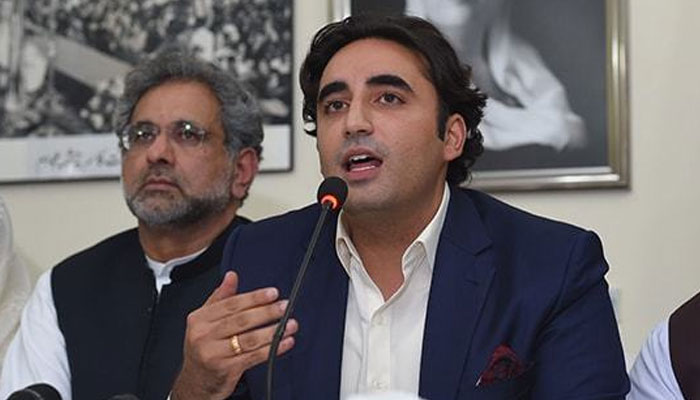

پارٹی کے چیئرمین بلاول بھٹو زرداری سے کراچی میں ملاقات کی ہے۔

بلاول ہاؤس کراچی میں ہونے والی ملاقات میں شاہد خاقان عباسی نے بلاول بھٹو سے این اے 249 کے ضمنی انتخاب کے حوالے سے تبادلہ خیال کیا۔

ملاقات کے دوران پیپلز پارٹی کی سینیٹر شیری رحمٰن، نوید قمر اور این اے 249 میں ن لیگ کے امیدوار مفتاح اسماعیل بھی موجود تھے۔

اس دوران شاہد خاقان عباسی نے پی پی چیئرمین سے این اے 249 میں مسلم لیگ (ن) کے امیدوار کے لیے حمایت مانگ لی۔

بلاول بھٹو زرداری نے سابق وزیراعظم کو جواب دیا کہ میں پارٹی سے مشاورت کے بعد آپ کو اس حوالے سے آگاہ کروں گا۔

https://jang.com.pk/news/900466 

Friday, March 19, 2021

Video Report - CNN's Amara Walker gets emotional after Biden speech

Video Report - #AtlantaSpaShootings #PresidentBiden Atlanta spa shootings: "Racism is real in America" say President Biden, VP Harris

Video Report - Pres. Biden addresses violence against Asian Americans

Video Report - President Biden visits Atlanta after spa shooting rampage

Video - President Biden and Vice President Harris Visit the Centers for Disease Control and Prevention

Music Video - #nowruz #norooz #PersianNewYear - بهار و نوروز با ترانه های شاد و خاطره انگیز

Persian Music Video - Sameera Nasiry - "Rokhsar e Ziba"

Persian Music - گوگوش - من آمدم

#nowruz #norooz #persiannewyear Nowruz. Spring is here. Bahar Amade Ast "بهار آمده است. نوروز‎"

Mahdieh Mohammadkhani - "Nowruz Khosh Amad" - نوروز خوش آمد | مهديه محمدخانى

ہماری یونیورسٹیاں جہاں محبت کرنا منع ہے

تحریم عظیم 

وہ معاشرہ جہاں انسانوں کی پیدائش کا مقصد بس شادی کرنا اور بچے پیدا کرنا ہے وہاں ایک جوڑے کا شادی کی طرف اٹھایا


جانے والا پہلا قدم معاشرتی اصولوں کے خلاف قرار پایا۔

کہتے ہیں یونیورسٹی میں انسان جو اسباق سیکھتا ہے وہ کسی دوسری جگہ سے نہیں سیکھ سکتا۔ سکول اور کالج کا ماحول الگ ہوتا ہے اور یونیورسٹی کا الگ۔ سکولوں اور کالجوں میں سختی زیادہ ہوتی ہے جبکہ یونیورسٹیوں میں قدرے آزاد ماحول ہوتا ہے۔

ہمارے ہاں تو خیر لفظ آزادی کا مطلب بھی غلط لیا جاتا ہے۔ اسی لیے آگے بڑھنے سے پہلے واضح کرتے چلیں کہ یہاں آزادی سے ہماری مراد سوچنے، سمجھنے، پرکھنے اور فیصلہ کرنے کی آزادی ہے۔ ایسی آزادی ہمیں ملے بھی تو ہم اسے واپس کر دیتے ہیں کہ یہ ہمارے کس کام کی، تب ہی ہمارے ہاں یونیورسٹیوں کو وہ درجہ حاصل نہیں جو باقی دنیا میں انہیں حاصل ہے۔
ان یونیورسٹیوں میں طلبہ کو سوچنے کی اور سوال کرنے کی آزادی دی جاتی ہے۔ پروفیسر ہٹلر نہیں بلکہ ان کے دوست یا کولیگ بن کر انہیں پڑھاتے ہیں۔ طلبہ تعلیم کے علاوہ دیگر سرگرمیوں میں بھی پوری شرکت کرتے ہیں۔ انہیں آپس میں بات چیت کرنے اور اپنی مرضی سے میل جول بڑھانے کی بھی آزادی دی جاتی ہے۔ یونیورسٹیوں میں پڑھنے والے طلبہ بالغ ہوتے ہیں، اپنا اچھا برا جانتے ہیں، نہیں بھی جانتے تو غلطیاں کر کے اور ان سے سبق سیکھ کر جان جاتے ہیں۔
ایسا ہماری یونیورسٹیوں کے علاوہ دنیا کی ہر یونیورسٹی میں ہوتا ہے۔ ہماری یونیورسٹیوں کے اپنے ہی اصول ہیں۔ یہ یونیورسٹیاں بنائی تو درس و تدریس کے لیے گئی ہیں پر وہاں اس کے علاوہ باقی ہر کام ہوتا ہے۔ ملک کی تمام بڑی جامعات میں بظاہر امن کا درس دیتی جماعتیں موجود ہیں جن کا واحد مقصد ادارے میں طلبہ کو ہراساں کرنا اور اس کے نتیجے میں پیدا ہونے والی صورتحال سے لطف اٹھانا ہوتا ہے۔

ہمارا دل پاکستان کی یونیورسٹیوں سے بیچلر ڈگری کے دوران ہی اٹھ گیا تھا۔ صبح جلدی اٹھو، گھر کے کام نبٹاؤ، تیار ہو، یونیورسٹی پہنچو بس یہ جاننے کے لیے کہ طلبہ کی دو انتہا پسند تنظیمیں آپس میں  بھڑ چکی ہیں اس لیے کوئی کلاس نہیں ہو گی۔ جس دن تنظیموں کا امن قائم ہوتا اس دن پروفیسر کو کوئی ضروری کام پڑ جاتا اور بس یونہی سمسٹر گزر جاتا۔
رہی سہی کسر مشال خان کے قتل نے نکال دی۔ اس بھیانک قتل کی ویڈیوز آج بھی انٹرنیٹ پر موجود ہیں۔ اس کے بے جان جسم پر جس طرح تشدد کیا جا رہا تھا اسے دیکھنے کے بعد کون جیتا جاگتا انسان جس کے دل میں ابھی بھی انسانیت باقی ہو، اس یونیورسٹی میں قدم بھی رکھ سکتا ہے؟

ایسے میں جب خبر آئی کہ لاہور کی ایک جامعہ میں ایک لڑکی نے گھٹنے کے بل جھک کر اپنے محبوب کو پرپوز کیا ہے تو ہم حیران ہوئے بغیر نہ رہ سکے۔ اس کی زندگی کا اتنا خاص لمحہ اور اس نے اس کے لیے اپنی جامعہ کا انتخاب کیا؟ کیوں؟


اس جوڑے کی ہمت اور اپنی جامعہ کو اتنا خاص سمجھنے پر اسے سلام۔ پر اب دیکھ لیں اس جامعہ نے اس کے ساتھ کیا سلوک کیا۔ جامعہ کے منتظمین کو لگا کہ جوڑے نے اپنے اس قدم سے جامعہ کے اصولوں کی خلاف ورزی کی ہے، اس لیے انہوں نے جوڑے کو یونیورسٹی سے نکال دیا اور اس کے وہاں اور اس کی دیگر شاخوں میں آنے پر پابندی عائد کر دی۔
یعنی وہ معاشرہ جہاں انسانوں کی پیدائش کا مقصد بس شادی کرنا اور بچے پیدا کرنا ہے وہاں ایک جوڑے کا شادی کی طرف اٹھایا جانے والا پہلا قدم معاشرتی اصولوں کے خلاف قرار پایا۔ واہ!
ہماری محبت کرنے والوں سے کہنا چاہتے ہیں کہ یہ معاشرہ آپ کی محبت کا دشمن ہے۔ اپنی محبت کے واسطے اسے اور اس سے حاصل ہونے والے لمحات کو اپنے اور اپنے پیاروں کی حد تک رکھیں، جس معاشرے میں رہتے ہوئے آپ نے محبت کی ہے، وہاں محبت کرنا منع ہے۔ یہاں محبت کو حلال اور حرام کے پیرائے میں دیکھا جاتا ہے۔ جس محبت کو آپ اپنے لیے جائز سمجھ رہے ہیں، وہ اس معاشرے کے نزدیک ناجائز ہے۔ جو محبت آپ ناجائز سمجھتے ہیں وہ ان کے لیے جائز ہے۔
آپ کا وہ لمحہ جو کسی پرائیویٹ جگہ پر آپ کی رہتی عمر کے لیے ایک یادگار بن سکتا تھا، اب اس معاشرے کی انتہا پسندی اور منافقت کی بھینٹ چڑھ چکا ہے۔
اس معاشرے میں محبت سے زیادہ نفرت کو بڑھاوا دیا جاتا ہے۔ اول تو یہاں کسی مخلص انسان کا ملنا ہی اپنے آپ میں ایک معجزہ ہے، پھر اس کو پا لینا اور اس کے ساتھ ویسی ہی زندگی بسر کر پانا جیسی اس کے ملنے سے پہلے سوچی ہو، اس سے بڑا معجزہ ہوتا ہے۔
ہمیں محبت کے ان لمحوں کے جانے کا افسوس ہے۔ یونیورسٹی انتظامیہ نے جو فیصلہ لیا وہ تو متوقع تھا۔  ہمارے ہاں نہ لوگوں کے دل اتنے بڑے ہیں، نہ عہدوں میں اتنی جرات ہے کہ معاشرے کے عائد ان نام نہاد اصولوں کو توڑ سکیں۔ یہاں زور زبردستی کا قانون چلتا ہے اور اسی کی عزت کی جاتی ہے۔
کچھ لوگوں کا کہنا ہے کہ جوڑے کے اس قدم سے معاشرے میں موجود انتہا پسندی کو ایک ضرب لگی ہے۔ ہماری ادنیٰ سی رائے میں اس سے کہیں کاری ضرب ان کی محبت اور زندگی کو پڑی ہے۔ جو لمحے ان کی زندگی کے یادگار ہونے چاہیے تھے، اب وہ پریشانی میں گزر رہے ہیں۔ لوگوں کا کیا جاتا ہے، ان کے ہاتھوں میں ان کے سمارٹ فون ہیں جس پر وہ کسی کو بھی کچھ بھی کہہ سکتے ہیں، یہ سوچے بغیر کہ اس کا اس انسان پر کیا اثر پڑے گا۔
ہو سکتا ہے کچھ سالوں بعد یہ جوڑا اس مشکل کو یاد کر کے ہنس رہا ہو۔ ایسا بھی ہو سکتا ہے کہ اس صورت حال سے پیدا ہونے والا ٹراما پوری زندگی ان کے ساتھ رہے۔ ہونے کو تو کچھ بھی ہو سکتا ہے تو بہتر نہیں تھا کہ اپنی محبت دوسروں کے ساتھ بانٹنے کی بجائے خود تک رکھی جاتی اور خود کو اس مصیبت میں پڑنے سے بچایا جاتا؟

تبدیلی ایک سست رفتار عمل ہے۔ یہ ایک دن یا ایک مہینے یا ایک سال میں نہیں آتی۔ ہاں اس دوران مسلسل چوٹ ضرور پڑتی رہنی چاہئیے تاکہ تبدیلی آتی محسوس ہوتی رہے، ہاں یہ یاد رکھیں کہ وہ چوٹ اتنی کاری نہ ہو کہ الٹا خود کو ہی نقصان ہو جائے۔ باقی امید پر دنیا قائم ہے۔ ہم نہیں تو ہمارے بعد یا ان کے بعد آنے والے اس ملک میں محبت کا جشن منائیں گے۔ ہماری زندگی میں ایسا ہونا پردے کے پیچھے ہی ممکن ہے۔

https://www.independenturdu.com/