Monday, February 8, 2021

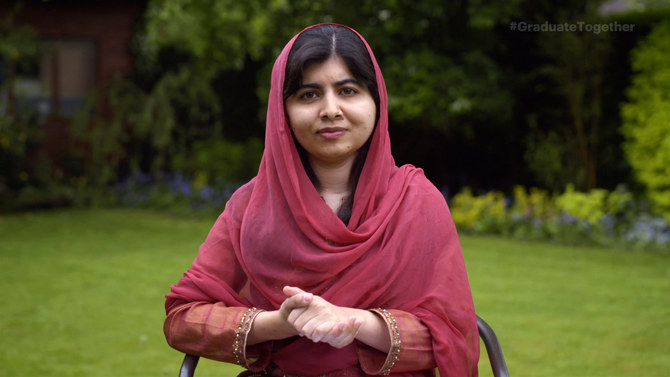
Malala Yousafzai calls for more support for girls in education in literature festival speech

Pakistani activist Malala Yousafzai has always been a staunch advocate for womens’ right to education. The activist, who has been campaigning for equal schooling opportunities since the age of 11, was ambushed and shot by the Taliban in 2012 while on her way home.

Fortunately, she survived and did not falter in her mission to promote access to education. Yousafzai has since traveled the world to give inspirational speeches, written a best-selling book and become the youngest person to win a Nobel Peace Prize at just 17.

She has continued to use her influence to enact change via the non-profit Malala Fund, that advocates for girls’ education through helping build schools in rural areas, offering programs to advance secondary education and providing school supplies for those who need them most.

The activist, 23, took the opportunity to speak at the 2021 Emirates Airline Festival of Literature over the weekend to discuss why we should prioritize the right to education and to highlight the current issues making it difficult for females around the world to attend school.

Speaking virtually, the Oxford University graduate said: “Every girl should have the right to complete 12 years of education.”

She also touched on the effects that the ongoing coronavirus disease (COVID-19) pandemic has had on schooling.

“Millions of girls are being taken out of schools, which is a serious cause of concern,” Yousafzai said.


“I really hope that governments, teachers, civil society and education activists are giving their full attention to this, ensuring that girls are learning from home, at this time,” she said.
Citing research from the Malala Fund, Yousafzai revealed that it is estimated that 20 million more girls will be dropping out of school for issues like “girls being pushed into forced marriages or having to become the financial supporters of their families and added responsibilities, leaving no time for their education.”
She added: “There is a gender disparity when we look at how COVID-19 has impacted education, not only while the pandemic is ongoing but also once it is over and many children start returning to school. Several girls might be held back for these reasons and will not be able to return to school.”
Yousafzai pointed out that the Malala Fund has initiated a series of initiatives to make sure girls can continue learning during the pandemic and return to school as soon as it is safe. “One of the activists that we support in Nigeria started radio lessons during the pandemic, to keep children engaged in education and learn from home. In Pakistan, the activists have worked on coming up with mobile apps and providing educational lessons through national television,” said the Nobel Peace Prize laureate.
She concluded her empowering speech by stating that while “there are millions of more girls who are at risk of losing their education, the Malala Fund will continue to work hard and ensure that as many girls are able to return to school once this is over.”
https://www.arabnews.com/node/1805766/lifestyle

A grim year for Pakistan's persecuted religious minorities

Kamran Chaudhry
Human Rights Watch accuses government of failing to provide adequate protection or hold perpetrators to account.
Rights activists in Pakistan have endorsed the findings of a leading advocacy group that reported a grim situation for religious minorities last year.Attacks by Islamist militants targeting law enforcement officials and religious minorities killed dozens of people in 2020, according to the recently released World Report 2021 of Human Rights Watch (HRW).
“Women, religious minorities and transgender people continued to face violence, discrimination and persecution, with authorities often failing to provide adequate protection or hold perpetrators to account,” the report states.
“The Pakistani government did not amend or repeal blasphemy law provisions that have provided a pretext for violence against religious minorities and have left them vulnerable to arbitrary arrest and prosecution. The death penalty is mandatory for blasphemy, and 40 people remained on death row as of late 2020. “Child marriage remains a serious problem in Pakistan, with 21 percent of girls marrying before age 18 and 3 percent marrying before 15. Women from religious minority communities remain particularly vulnerable to forced marriage. The government has done little to stop such forced marriages.”
Saroop Ijaz, senior counsel for HRW’s Asia Division, accused Pakistan’s government of a direct violation of human rights.
“We saw a continuation of the negative trends of attacks on minorities and civil society as well as shackles on freedom of expression since 2018. The challenges became acute last year. There was an increase in attacks on non-Muslims and a failure to stem them,” he said in a recent talk show.
According to I.A. Rehman, spokesperson for the Human Rights Commission of Pakistan, 15,000 Pakistani journalists became jobless last year.
“This is extraordinary. This government is bent upon violence. It is sadistic. For the first time in history, castration was in Pakistan’s Penal Code. This is inhuman,” he said.
President Arif Alvi last month approved the Anti-Rape Ordinance 2020 that sanctions chemical castration for convicted rapists.
Speaking to UCA News, Cecil Chaudhry, executive director of the National Commission of Justice and Peace, agreed that 2020 saw a rise in incidents of forced conversions and marriages, hate speech against religious and sectarian minorities, and killings in the name of religion.According to Washington-based International Christian Concern, 24 Christians are imprisoned in Pakistan on blasphemy charges and face 21 different cases at various stages.
On Dec. 30, hundreds of villagers led by local clerics stormed Krishna Dwara temple in Karak district of Khyber Pakhtunkhwa province and set it on fire. The mob also attacked an under-construction house allegedly occupied by a Hindu man. According to reports, clerics made provocative speeches against the alleged expansion of the Hindu temple, leading to the attack.
This year got off to a bad start when 11 Shia Hazara miners were killed in a brutal attack claimed by Islamic State gunmen in Balochistan province on Jan. 3.
The miners from the persecuted Muslim minority were kidnapped near a coal mine in Mach close to Pakistan's border with Afghanistan.
https://www.ucanews.com/news/a-grim-year-for-pakistans-persecuted-religious-minorities/91029#

Has corruption increased in Pakistan?

Rustam Shah Mohmand
Govt must realise that in face of such a terrible picture chances for foreign investment would remain hopelessly low.
In its report on the state of corruption in Pakistan, Transparency International (TI) has ranked Pakistan at 124 out of 180 countries. In other words, the country has lost four more points or corruption has significantly increased in the last two years during Imran Khan’s tenure.
The country has also scored less than last year in two categories: Rule of Law Index and Varieties of Democracy due to which Pakistan’s score in CPI 2020 has reduced by one.
The report of the highly respected organisation is a damning indictment of a government that has made elimination of corruption the centrepiece of its policy. Never before in Pakistan’s history has a government so vociferously made elimination of corruption its top priority. As soon as the report was published, the ministers rushed to rebuke the contents of the report alleging that the statistics on the basis of which the report was prepared related to the periods of previous governments — wholly ridiculous assertions that no one would accept.
Despite tall claims of rooting out the menace of corruption, why has there been an upward spike in graft in the last two years?
TI has however acknowledged that the National Accountability Bureau has, according to its claims, recovered Rs363 billion since 2018 from those found to have been involved in corruption. Additionally, the Public Accounts Committee also claims to have recovered Rs300 billion. But TI has noted that despite these successes, corruption registered a spike. What could be the reasons for this?
The reasons are not difficult to ascertain. Firstly, there has been an overdue emphasis on rhetoric with very little attention to a whole complex picture of eradication of corruption. The task would involve identifying the reasons, examining systems closely, introducing reforms where needed, institutionalising the system of accountability, removing existing deficiencies in the systems, dealing with inequalities, etc. These are fundamental issues that require to be incorporated into the governance system in order to make them transparent. The government regrettably has not been able to pay attention to the whole issue in its true perspective. Speeches — no holds barred — do not provide remedies or solutions. The evil of corruption is rooted in the psyche of many and cannot be dealt with by making statements alone.
The other reason is that the government at the top is obsessed with punishing its political rivals — mainly those in the PML-N and to an extent, in the PPP. This being the priority, all other echelons of bureaucracy feel comfortable because they are not on the government’s radar. This is the time to engage quietly in receiving graft as the government is awfully preoccupied with just a few politicians. Eradication of corruption cannot be pursued in a climate of political vendetta. An expediency-driven approach that is premised on punishing political opponents cannot help in creating the right ambience for dealing with malpractices.
Dealing with corruption would require an even-handed approach. Sparing some and targeting others would create suspicions and destroy the notion of fair accountability. Chasing those who pose a political challenge would taint the whole process, and shatter people’s confidence in the ability of the government to cleanse the system. That is what is happening in Pakistan. The report has brought to light the not so visible factors that have contributed to an increase in the extent and level of corruption in the country.
The report that places Pakistan lower than other countries in the region, like Afghanistan, should not be dismissed on bogus grounds. It should awaken the leadership to take stock of the grim reality of the ever-rising menace of corruption and motivate the government to chalk out a comprehensive short- and long-term plan to combat the evil. The government must realise that in the face of such a terrible picture the chances for foreign investment would remain hopelessly low. What to speak of foreign investment, even Pakistani investors would be tempted to seek other avenues for their capital to be invested.
https://tribune.com.pk/story/2282390/has-corruption-increased-in-pakistan

Awaiting justice: Daniel Pearl’s gruesome murder still haunts US-Pakistan ties

Waqar Gillani
The Supreme Court of Pakistan’s order to release Ahmad Omar Saeed Sheikh, the main accused in the Daniel Pearl abduction and murder case, threatens to mar the ties between Pakistan and the new US administration.
On January 28, the apex court dismissed appeals filed against Sindh High Court’s earlier decision to overturn Sheikh’s murder conviction.
On April 2 last year, the SHC had overturned Sheikh’s conviction in Pearl’s murder case. However, the court had upheld his conviction on the lesser charge of abetting the kidnapping, for which he was sentenced to seven years in prison. The Sindh government and Pearl’s parents, Ruth and Judea Pearl, had then filed an appeal in the SC against the acquittal.
Pearl’s wife, parents and the US government have strongly reacted to the judgment. US authorities have expressed deep concern and outrage, demanding that Pakistan ensure justice in the case and sought Sheikh’s custody for a fresh trial in the US if one is not possible in Pakistan.
A day after the SC verdict, US Secretary of State Antony J Blinken telephoned Foreign Minister Shah Mahmood Qureshi. “Secretary Blinken and Foreign Minister Qureshi discussed how to ensure accountability for the prime accused, Ahmed Omar Saeed Sheikh, and others responsible for the kidnapping and murder of American journalist Daniel Pearl,” a State Department statement later stated. The secretary reiterated US concern about the Supreme Court ruling and potential release of these prisoners.
Following Sheikh’s acquittal order, a separate bench of the SC hearing the matter of his continuous detention, ordered authorities to free him from the jail and keep him at a rest house giving a residential environment and allowing his family to stay with him till the disposal of the case pertaining to his post-acquittal detention by the state. “This is not dark ages; we cannot allow such malafide detentions without proper evidence.”
Pearl had been working on a story on militancy in January 2002 when, according to the prosecution, Sheikh trapped and abducted him. A video circulated later showed his gruesome beheading. His remains were later found on the outskirts of Karachi in May 2002.
An anti-terrorism court, deciding the case within three months, awarded death sentence to Sheikh and life imprisonment to three others. Appeals against the judgment were moved before Sindh High Court. After a period of 17 years, the Sindh High Court, in April 2020, decided the appeal. It acquitted three of the convicts and approved the sentence of Omar Sheikh only in the matter of abduction (a sentence of up to eight years that he had already completed).
The SHC exonerated all of them of murder charges for lack of proof. The Sindh government then appealed against the SHC judgment and asked for an enhancement in the punishment of Sheikh and against acquittal of the other three. Sheikh sought a clean acquittal as there was no proof against him. He argued that the evidence presented against them before the trial court was “flawed, fabricated, and contradictory.”
The SC, after an unusually long hearing, not only maintained the acquittal of three accused but also exonerated Omar Sheikh of abduction charges. Two judges of the three-member SC bench, acquitted Sheikh of abduction charges “by extending the benefit of doubt to him.” The SC ordered that he and the other three - Fahad Nasim Ahmed, Syed Salman Saqib and Shaikh Muhammad Adil – be released from the jail ‘forthwith.”
The third judge of the bench also acquitted Sheikh of the murder charge but enhanced his sentence for abduction to life imprisonment (practically a period of 12 years that he has also completed in jail).
The Sindh government has now filed a review petition against the SC judgment.
On April 2, 2020, the Sindh High Court overturned Sheikh’s conviction in the Pearl murder case. However, the court upheld his conviction on the lesser charge of abetting the kidnapping, for which he was sentenced to seven years in prison. The Sindh government and Pearl’s parents then filed an appeal in the SC. The judgment points out that the evidence relied on for the conviction and sentencing was circumstantial, flawed and contradictory. Some of the key persons involved in this case including Fazle Karim, Atta-ur-Rehman alias Naeem Bukhari (a leader of the sectarian outfit Lashkar-i-Jhangvi who later joined the ranks of the Taliban) and Saud Memon, were never made part of the case. Some legal experts say that this would have called for fresh investigations amid a strong pressure from the US to ensure justice. Fazle Karim, according to some media reports, was identifiable in the video of Pearl’s killing. The murder weapon was recovered from a compound “owned by Memon”.
In 2019, in a letter written from jail to the SHC, Sheikh had urged the court to investigate Naeem Bukhari, who, according to him, was the key person in abduction and killing of Pearl. Sheikh had claimed that he was made a “scapegoat” and had only a minor role in the plot. Bukhari was in state custody at that time. According to Sheikh’s counsel, the letter was never officially acknowledged and never delivered to the SHC. Another flaw in the process was that the accused was taken into custody on February 4, 2002, but his formal arrest was shown a week later.
Sheikh, a British-born dual national, has had a checkered past. While studying in London School of Economics in 1992, he quit in the middle of his degree and went to Bosnia to help Muslims. He never went back and allegedly developed links with the militant group Harkatul Mujahideen (HuM).
He went to India in 1994 where he was arrested for his alleged involvement in the abduction of a group of foreign tourists. Six years later, he was released in exchange for the passengers of a hijacked Indian airliner.
His family acknowledges his sympathy for his coreligionists in Bosnia. However, they have denied his links to militant groups, and insist that they would go to any lengths to prove him innocent and secure his release.
Such acquittals in terrorism cases are not unprecedented. In the past, courts have acquitted many people accused of suicide attacks and bomb blasts on account of poor prosecution and lack of evidence. This case is different in that the victim in this case is an American citizen. Pearl’s abduction has been described as one of the earliest violent responses of the Al Qaeda-linked Pakistani militant groups to the American invasion of Afghanistan. Sheikh’s release may cause serious and deep concerns for Washington and severe challenges for Islamabad as the authorities are running out of options to keep Sheikh behind bars.
“It is a very difficult case for the state/government to prove. The accused get relief over lack of evidence, faulty investigation and poor prosecution all the time. The courts are independent and if they acquit Sheikh, we will have no other but choice to accept their final order,” a senior federal government official told The News on Sunday. In legal terms, he says, the prosecution case was a very weak one.
Pakistan may detain Sheikh on other charges but not for a long time. The scope of the review petition is very narrow. Pakistan may also bring some reforms in its criminal justice system in future to ensure that people involved in heinous crime do not escape justice but those would not have retrospective effect. The real question for the government now appears to be: how to satisfy the US government in this case if Islamabad loses the review in the top court. A key Al Qaeda member, Khalid Sheikh Muhammad, who was handed over to the United States, earlier, also confessed to his role in killing Pearl.
Even after the passage of two decades, the case continues to resonate in the US-Pakistan diplomatic relations.
https://www.thenews.com.pk/tns/detail/785516-awaiting-justice
Pakistan: Why is the military taking over civilian posts? Is Khan returning the favor?


Experts say that under Prime Minister Imran Khan's government, the Pakistani military is increasingly encroaching on the civilian sphere, with many generals now heading administrative and executive institutions.
The number of military officials leading civilian institutions has dramatically increased since Prime Minister Imran Khan came to power in 2018.
The recent appointment of Brigadier (retired) Bilal Saeedullah Khan as director general of the National Database and Registration Authority (NADRA) has sparked uproar in the country. On Thursday, the Islamabad High Court issued notices to the Interior Ministry and NADRA regarding Khan's appointment.
In the past two years, several other military officials have grabbed important government positions, which have traditionally been under the civilian domain.
In 2019, General Asim Saleem Bajwa was appointed as the chairman of the China-Pakistan Economic Corridor (CPEC) Authority. Air Marshal Arshad Malik has been serving as the chief executive of the state-run Pakistan International Airlines since April 2019. Major General Amer Nadeem was appointed the chairman of SUPARCO, the national space agency, in 2018.
Even diplomatic positions, which have largely been held by civilians since Pakistan's independence from British rule in 1947, have been taken over by the generals. In January, Khan's government appointed General Bilal Akbar to the post of Pakistan's Saudi Arabia envoy.
"Besides the mission in Riyadh going back to a general, ambassadors in Brunei, Jordan, Syria, Sri Lanka, Ukraine, the Maldives, Nigeria and Libya are retired armed forces officers," wrote Pakistan's Dawn newspaper.
Is Khan returning the favor?
Opposition parties criticize Khan for being a "puppet" of the army. Liberal analysts in the South Asian country say that the powerful military rigged the 2018 general election to bring Khan's Pakistan Tehreek-e-Insaf (PTI) party to power, a claim both the military and Khan deny.
Critics say the military enjoys a free hand under Khan's government, and that it is consolidating the power that it somewhat lost under Khan's predecessor, Nawaz Sharif.
Khan, they allege, is returning the favor to the military by allowing generals a bigger role in the country's governance, foreign policy and economy.
"Imran Khan is the civilian face of a military state," Tauseef Ahmed Khan, a Karachi-based political analyst, told DW, adding that Khan is just trying to appease the military establishment to stay in power.
The analyst says that these military appointments are creating resentment and frustration among civilian bureaucrats, who see their progress being hindered by the army.
The military, which has collectively ruled Pakistan for half of the time since its independence, has always had an upper hand in the country's affairs, but prior to Khan's ascent to power its role was largely limited to defense and foreign policy affairs. Tauseef Ahmed Khan says it is the first time in the country's history that the generals are encroaching on civilian areas with such ferocity.
"They are now either heading civilian institutions or holding key posts there. It seems to me that the military is now trying to control the country's domestic policies too," Khan said. The analyst said that the generals do not favor the country's two major opposition parties – the Pakistan People's Party and the Pakistan Muslim League Nawaz – because they, to an extent, tried to resist the army's increasing dominance in civilian affairs. Other experts deny this claim, pointing to several military appointments under previous governments also. They, however, admit that the number of these appointments has increased manifold in the past two years.

Corruption and incompetence: reality and perception
Prime Minister Khan justifies the military appointments, saying they are being done on merit. There is a widespread perception in the country that politicians and civilian bureaucracy are incompetent and corrupt, whereas the military is efficient and well-organized.
Many politicians and civilian bureaucrats are currently facing corruption charges, which are being probed by the country's National Accountability Bureau.
"Army officers manage state-run institutions in an efficient way. The Water and Power Development Authority is headed by a military official and has accomplished many important tasks, including construction of dams and several energy projects," Amjad Shoaib, a retired military general and defense analyst, told DW.
Shoaib rejected the criticism of military appointments as an "anti-army propaganda."
"Nawaz Sharif's party is behind this nefarious propaganda, which is aimed at defaming the army. It is a dangerous trend to blame the military for the country's problems. It must stop," he added.Politicians, on the other hand, say the incompetence perception is part of the military propaganda. They also say that the military considers itself above the law and is not answerable to anyone."When we summon civilian bureaucrats, they show up and pay heed to our recommendations. When we call upon the military officials, who are heading civilian departments, they don't care to respond," Usman Kakar, an opposition lawmaker, told DW.Kakar also says that military-run institutions see more malpractices than the civilian ones. "The department responsible for dealing with the coronavirus pandemic told us that it spent rupees 2.5 million (€13,000, $16,000) on a single COVID patient. When we called the military officials working in that department to come to our parliamentary committee and explain why such a huge amount was spent, they didn't care to respond," Kakar alleged.
https://www.dw.com/en/pakistan-why-is-the-military-taking-over-civilian-posts/a-56473442

Saturday, February 6, 2021

Video Report - Alcohol deaths Spike in UK — COVID restrictions to blame?

Video Report - UK sees spike in alcohol-linked deaths amid pandemic

How to rebrand a country after the COVID-19 pandemic | Euronews Debates

Video - #Italy #Poverty Italy poverty: Rising number of people seeking assistance

Video Report - Trump's ex-communications director has advice ahead of trial

Video - Kal Bhi Bhutto Zinda Tha Aaj Bhi Bhutto Zinda Hai..

Video - Sethi Sey Sawal | Media Freedom: Qazi’s Referendum | 6 February 2021

Video Report - Senior Journalist Hamid Mir Sensational Speech In Karachi |

US, Amnesty call for release of Ismail, father of activist Gulalai who fled Pakistan in 2019


 By UNNATI SHARMA

Gulalai Ismail, who is in exile in US, alleges evidence is being fabricated against her father Mohammed, a retired Urdu professor facing terror financing charges in Pakistan.

The US government and international agencies have called for the release of Mohammad Ismail, the father of a prominent Pakistani human rights activist who is in exile, after he was remanded to police custody in a sedition and terror financing case in Pakistan.

On Thursday, the US State Department and the human rights NGO Amnesty International sought the release of professor Ismail after his daughter Gulalai Ismail, who fled to the US from Pakistan in 2019, expressed fears over his life and highlighted the targeted harassment of her family.

 In a tweet, the activist alleged her village home in Swabi Marghuz was raided and fabricated papers/receipts were implanted in the files of her home.

While the State Department said it is monitoring allegations of harassment against the Ismail family, and urged Pakistan to uphold due process and the rule of law, Amnesty called for all charges against Ismail to be dropped unconditionally.
The move came a day after an anti-terrorism court in Peshawar rejected the bail plea of Ismail and sent him to custody for three more days. He had been arrested by the Counter-Terrorism Department (CTD) on 2 February.
Who are professor Ismail and his daughter Gulalai?
Mohammad Ismail (66) is a retired professor of Urdu, who is also a social activist and a member of Pakistan NGOs Forum.
Ismail’s daughter Gulalai (35) is a noted social activist who has been a vocal advocate for human rights since she was 16. As a teenager, she founded an NGO called Aware Girls to educate young girls about their rights in the province of Khyber Pakhtunkhwa in north-west Pakistan.

She became a state target after she prepared a report on women who had allegedly been victims of sexual abuse during a Pakistan Army crackdown near the border with Afghanistan.

She had six cases registered against her in Pakistan’s courts for “anti-state activities”, and was banned from leaving the country. However, she fled to the US in 2019 after months of hiding.

Following Gulalai’s escape, her parents have been on a state list for alleged terror financing activities.

In July 2019, her parents, professor Ismail and mother Uzlifat Ismail, were booked in a case under the anti-terrorism laws of Pakistan, accused of taking money from India for distribution among terrorist organisations in Pakistan. However, a year later, the case was  dismissed by a Peshawar anti-terrorism court judge over lack of evidence.

But weeks later, additional charges were filed against Gulalai’s parents for facilitating an attack on a Peshawar church in 2013 and a 2015 attack on a Shia mosque in Peshawar, which they denied.

On 24 October 2019, the professor was also abducted by a group of unidentified men as he was leaving the Peshawar High Court after a hearing. The men were later identified as members of the Federal Investigation Agency’s Cyber Crime Wing in Peshawar.

What human rights organisations say

The Human Rights Commission of Pakistan, an independent monitoring group, in a statement said the case against professor Ismail and the “interminable cycle of ludicrous charges, arrests and court dates are nothing more than heavy-handed tactics targeting his daughter — a respected rights activist”.

London-based international NGO Peace Direct also urged the Pakistani authorities to protect Gulalai’s family members still in Pakistan from any forms of harassment and intimidation.

Ismail had tested positive for Covid-19, which his family says has weakened his health significantly, exacerbating the risk to his well being if he is sent to jail.

Video - Chairman #PPP Bilawal Bhutto Zardari addresses press conference at Zardari House, ISB

Friday, February 5, 2021

Music Video - Sad Orchestral Music - One Man's Grief | Dark Operatic

Video Report - Russia defiant over Navalny, Myanmar coup, Italy calls on Draghi, Marjorie Taylor Greene punished

Video - #Navalny #Merkel Germany’s Merkel condemns ‘unjustified’ expulsion of diplomats during summit with France’s Macron

Video - #HumanRights Why are human rights defenders being targeted?

Video - #Biden promises additional $1400 relief checks: Entire economy speech

Music Video - Arabic And Urdu Mix (Jani o Jani).flv

Video - PDM's March On Islamabad, And The Shrinking Space On 'One Page' | With Talat Hussain

Video - Maryam Nawaz Speech In PDM Powr Show | 5 February 2021

Video - Chairman PPP Bilawal Bhutto Zardari addresses the massive public gathering of PDM in Azad Kashmir

Chairman Bilawal Bhutto Zardari strongly condemns the blasts on Kashmir Solidarity Day rally in Quetta

 Chairman Pakistan Peoples Party Bilawal Bhutto Zardari has strongly condemned blasts in Kashmir Solidarity Day rallies in Quetta and Sibbi and termed the tormentors as stooges of Butcher of Gujarat Narendra Modi.

In a statement, the PPP Chairman demanded that the authorities take every action to find the terrorists involved in blood-shed of innocent people and bring them to justice.

Bilawal Bhutto Zardari expressed sympathies with the families of victims who were martyred and injured in the terror blasts in two cities. “I understand the pain of losing dear ones in terrorist attacks,” he said and prayed for early recovery of the wounded.

https://www.ppp.org.pk/pr/24354/

Thursday, February 4, 2021

Music Video - Ava Max - Naked

Video Report - #SouthKorea South Korea's 'hidden' migrant workers

Video Report - #Myanmar #AungSanSuuKyi #CoupDetat Myanmar coup: Death knell for democracy? | To the Point

Video Report - #Moderna #Covid #vaccine French labs to start producing Moderna, Pfizer Covid-19 vaccines

Video Report - #JoeBiden - Biden announces major US foreign policy shifts

Music Video - Mughal-e-Azam - Pyar Kiya To Darna Kya

Video Report - Senator Sherry Rehman expresses her views in Senate | 04 February 2021

Video Report - Senator Raza Rabbani expresses his view in Senate | 04 February 2021

Video Report - Former PM Raja Parvaiz Ashraf expresses his views in the NA| 04 February 2021

Opinion: Mariane Pearl: My husband’s killer could go free in Pakistan. Despite the injustice, I still have hope.

Opinion by Mariane Pearl
Almost two decades ago, the people of Pakistan sent me messages expressing sadness and anger at the murder of my husband, Daniel Pearl, in their beloved country. Danny was 38 years old and the Wall Street Journal’s bureau chief for South Asia. “I am a Muslim and this, my friend, is not Islam,” one wrote. My favorite message read: “Your husband had a great smile . . . a happy mixture of Pope John Paul and Dean Martin.”

On Jan. 23, 2002, we had just arrived in Karachi, an intricate puzzle of a city. In recent years, it had metastasized into a hub of blind hatred and violent militancy. Danny was in search of a radical Muslim cleric who had led a man to try to blow up a flight from Paris to Miami. In these last few days, Danny’s schedule had been hectic. He was exhausted and increasingly worried about what he was finding, but he dressed with his usual understated elegance and headed out. It was to be his last interview before we were to fly to Dubai for a break. Three hours later, I just knew by intuition that Danny had been kidnapped. Soon after, the name came up: A man named Ahmed Omar Saeed Sheikh abducted him with the intention of murdering him. I never saw Danny again.
Last week, the Supreme Court of Pakistan ruled that Saeed and the accomplices responsible for this crime should be released from prison and absolved of any wrongdoing. The High Court of Sindh, where Saeed was held, argued that the men should only have been charged with kidnapping, which carries a prison sentence of seven years, not murder.
Over the years, I have come to distrust man’s ability to handle power. I have learned that so-called justice systems often have nothing to do with justice.Long before last week’s decision, Danny’s murder had been disappearing in the dirty corridors of international politics and decades-long conflicts. The geopolitical tug of war over terrorism made it so that my infinitely complex, wholesome Danny boy was reduced to just “the American,” or “the journalist” or “the Westerner.”
Danny and I were from very different backgrounds. Danny was of Jewish and Polish origin, and my background was a bit French, a bit Cuban and a bit Dutch, with a Chinese grandfather added to the mix. I was pregnant, and we were very much in love. We were going to have a son; Danny wanted to name him Adam, as a wish for humanity to come together.
What united us was journalism. I was then freelancing for French media and reported from Peshawar, Islamabad and Karachi. As journalists, Danny and I learned what ordinary Pakistani citizens were up against. We saw up close how much damage a corrupt leader can inflict. We learned it was so easy for extremists to lead people into conflict and misery, by offering desperate people nothing to eat but hateful rhetoric. During the months that Danny and I spent in Pakistan, we met as many people as we could, to try to resist simplistic narratives about the people in Pakistan.
The morning after Danny disappeared, I did not know whom to trust. Our rented house was full of police and shady agents. I looked for someone who could help me find Danny. I chose a man standing apart from everybody else, quietly chain-smoking amid the chaos.
I went to him. “I need someone I can trust,” I told him. He was the chief of the antiterrorism unit in the city. He gave me an order: to stay quiet. I nicknamed him “Captain.” Once everyone in the house was gone, he said: “I am going to give everything I have to bring your Danny home.” From then on, he did just that, ordering raids throughout the city. I never had to tell him Danny was innocent. He knew. I never had to persuade him to work with a victim’s family, a woman and a journalist. He didn’t care.Five weeks later, we learned Danny was dead. Everyone’s pain was thick. But I could not cry. I didn’t believe it. During my five-week search for Danny in Karachi, the Pakistani police reported at least 11 killings of Shiite Muslims in the city. There were so many of us losing loved ones to the violence in Pakistan.
Captain’s wife brought me spicy food for the baby, saying it would be good for our unborn son. “Stop being so nice,” I said. “How am I ever going to hate you guys?” We both laughed, letting the humor pierce through the walls and give us a breath of fresh air.
And this is what gives me hope in the face of so much injustice. I don’t hate Pakistan or its people, even after Danny’s murder and last week’s unjust decision. Over the years, when my heart feels as though it will bleed, I keep the messages of love, support and outrage close to me. As for Captain, he is Adam’s godfather.
I am convinced that true justice will never come from above. Wherever I go, I look for the Captains and their wives. I have seen how abuse and corruption rip apart the lives of a family or a community. The justice I have come to believe in lies in the power of humanism.
https://www.washingtonpost.com/opinions/2021/02/03/daniel-pearl-murder-pakistan-mariane-pearl/

Wednesday, February 3, 2021

Music Video - Billy Joel - We Didn't Start the Fire

Video Report - 🇺🇸 Can the US confront its domestic terror threat?

Video Report - Everyone In The Republican Party ‘Lives In Fear Of What It’s Become’ | Deadline | MSNBC

Video Report - House GOP holds critical meeting weighing fate of Marjorie Taylor Greene

Democracy or the white supremacist mob: which side is the Republican party on?


By Richard Wolffe

At Trump’s impeachment trial, Republicans have one more chance to turn their backs on the extremists. Will they take it?

In 2001, nine days after terrorists attacked the United States and its federal government, a Republican president stood before Congress with the overwhelming support of a terrified nation, as he presented a stark choice to the world.


“Every nation in every region now has a decision to make: either you are with us, or you are with the terrorists,” said George W Bush to loud applause in September 2001. “From this day forward, any nation that continues to harbor or support terrorism will be regarded by the United States as a hostile regime.”
Thus was born the post-9/11 era, which survived for the best part of two decades, costing trillions of dollars and tens of thousands of lives, and realigning American diplomacy and politics in stark terms.
Republicans fought and won two elections on the basis that they were strong and unequivocal in defending the nation, while Democrats were weak flip-floppers who tried to have it both ways.
Today Washington is staring at something like a new dawn – the start of the post-Trump era – and Republicans don’t know which side of the war they’re on. Are they with the United States or with the insurrectionists?
The early answers are catastrophically weak in a world where the threats are not distant or abstract. This is not a risk posed to American officials halfway around the world, or a potential threat that might one day materialize in a foreign capital.
This is a clear and present danger for the very members of Congress who must now decide between protecting their own careers or protecting the lives of the people working down the hall. With the second impeachment trial of Donald J Trump starting next week, there’s no escaping the moment of decision for at least 50 Republican senators: are you with the United States or not?
In every single other working environment, this would not be a hard choice. Given the chance to save your own job or save the lives of your co-workers – even the ones you dislike – the vast majority of decent people would save lives.
Just listen to the first-hand accounts of representatives Alexandria Ocasio-Cortez and Katie Porter. Ocasio-Cortez gave a chilling account of hiding in her office bathroom to save her life as insurrectionists stormed the Capitol last month.
There’s no question that she, like many others, feared for her life. Porter recalled her friend desperately seeking refuge in her office. She gave Ocasio-Cortez a pair of sneakers in case they needed to run for their lives.
The mortal threat was not confined to high-profile Democrats. Mike Pence, the most toady of Trump loyalists, was hiding from the mob with his family, while terrorists chanted about hanging him. If anyone needed confirmation of their murderous intent, there was a makeshift gallows outside the Capitol. It is long past time to admit the blindingly obvious: the Republican party has been hijacked by fascist extremists. It is now a far-right organization in league with neo-Nazis who have made it painfully clear they want to overthrow democracy and seize power, using violence if necessary.
Every decision the so-called leaders make at this point defines which side they are on: the United States as we know it, or the white supremacist mob.
In these few weeks since the mob trashed the Capitol, leading to five deaths, Republican leaders have bathed themselves less in glory than in the sewage of fascism. Given a choice between the conservative Liz Cheney and the fascist Marjorie Taylor Greene, House Republicans have shunned the former and hugged the latter. It’s Cheney whose position as part of the Republican leadership is under threat, while Greene is only coming under pressure from Democrats – who for some reason find themselves alone in feeling horrified by Greene’s advocacy for the execution of Democrats and white supremacy in general. Republican leaders now find themselves in a prisoner’s dilemma of their own making. Both Mitch McConnell in the US Senate and Kevin McCarthy in the House of Representatives could escape the worst public punishment if they act together to take back their own party. Instead, they are ratting on each other.
McConnell said in a statement on Monday that Greene posed an existential threat to the party. “Loony lies and conspiracy theories are cancer for the Republican party and our country,” he said, while also supporting Cheney’s leadership.
Technically this is McCarthy’s mess to clean up, in the House rather than the Senate. But McCarthy can’t bring himself to say something in public about the QAnon cultist Greene, or what she represents.
Instead he traveled to Florida at the weekend to kiss the ring of the man who really stands at the center of this threat to our democracy: one Donald J Trump, who is supposedly a Greene fan, according to Greene herself. There may be rational short-term reasons why McConnell and McCarthy have parted ways on this fascist thing.
McConnell just lost control of the Senate because it’s challenging to win statewide contests – even in conservative places like Georgia – when you’re trying to overthrow democracy at the same time. McCarthy, meanwhile, deludes himself that he can get closer to power because House districts are so gerrymandered that Republicans are only threatened by the cannibalizing power of the mob. But in reality, there is no choice. This isn’t about loony lies or conspiracy theories, as McConnell suggests. It’s not about Republican primaries or Trump’s disapproval, as McCarthy fears.
The choice in front of Republicans is whether they support democracy or not; whether they want to live and work in fear of the mob, or not. QAnon may be loony but its goals are to murder elected officials, and its supporters include heavily armed insurrectionists. The 1930s fascists were also unhinged and proved themselves deadly serious about mass murder.
Next week Republicans in Washington have one more chance to turn their backs on fascism. They could reject the laughable claims from Trump’s lawyers that he was merely exercising his free speech rights by telling his mob to march on Congress and fight like hell. Apparently such conduct does not constitute incitement to riot, because the word “incitement” has lost all relationship to reality. Nobody expects Republican senators to vote in enough numbers to convict Trump of the obvious charges that played out on television. Nobody expects enough of them to reject the violent overthrow of the democracy that put them in the Senate.
They represent, to use Bush’s language, a hostile regime inside the nation’s capital. Until Republicans split with the insurrectionists – by ejecting them from their party or forming their own – democracy itself is unsafe.
https://www.theguardian.com/commentisfree/2021/feb/03/democracy-white-supremacist-mob-republican-party

Pashto Music Video - Pekhawar kho Pekhawar de kana

PDM was formed for the ouster of illegitimate and incompetent selected PTI regime

 Pakistan Peoples Party MPA and Spokesman Bilawal House, Surendar Valasai has said that PDM was formed for the ouster of illegitimate and incompetent selected PTI regime, which has proved itself as a deadly termite for the country’s economy and politics.

In a statement issued here, the spokesman said that a puppet regime played on the rhythms of anti-corruption narrative only to be called by the world’s anti-corruption watchdog as the most corrupt government in Pakistan’s history. “So-called campaign by NAB has been exposed as a brutal and naked weapon against the Opposition leaders who are being dragged from one lock-up and court to other,” he said.
Surendar Valasai said that national debt is piling up Rs13.10 billion per day since the PTI government was imposed upon the people of Pakistan while during PPP government it was just 4.40 billion per day. He said inflation has gone through the roof of every household in Pakistan but the Prime Minister Imran Khan keeps throwing more inflation bombs by increasing petroleum price every fortnight. On the other hand. National growth rate has fallen into a negative category and unemployment surged. Under the puppet regime 20 million more people have been pushed below the poverty line registering an unprecedented increase of 26 per cent within 29 months, he added.
PPP MPA further said that Imran Khan has also turned out to be the worst enemy of the agriculture sector, which is the backbone of the economy. Farmers have been squeezed through anti-agriculture policies and they were forced to throw away their hardly-produced crops.
Bilawal House spokesman said that PDM public meeting in Hyderabad on February 9 will prove to be massive no confidence in the PTI regime and there was great enthusiasm in the PPP and other PDM partners’ workers.
He said that selected Prime Minister should resign to save himself from further disgrace and the country from nosediving economic and political conditions as Pakistan cannot sustain anymore the illegal, incompetent and illegitimate PTI government.


کراچی (3 فروری 2021) پاکستان پیپلز پارٹی کے رکنِ سندھ اسمبلی و ترجمانِ بلاول ہاؤس سریندر ولاسائی نے کہا ہے کہ پی ٹی آئی کی ناجائز و نالائق سلیکٹڈ حکومت کو ہٹانے کے لیئے پی ڈی ایم بنایا گیا تھا، جس حکومت نے خود یہ ثابت کیا ہے کہ وہ ملک کی معیشت و سیاست کے لئے ایک دیمک ہے۔ اپنے جاری کردہ بیان میں بلاول ہاوَس کے ترجمان نے کہا ہے کہ کرپشن ختم کرنے والے بیانیئے کی دُھن پر ناچنے والی کٹھ پتلی حکومت کو دنیا کے معروف اینٹی کرپشن ادارے نے پاکستان کی تاریخ کی سب سے بڑی بدعنوان حکومت قرار دے دیا ہے۔ انہوں نے کہا کہ نیب کی نام نہاد مہم اپوزیشن کے خلاف جابرانہ و کھلے ہتھیار کے طور پر بے نقاب ہو چکی ہے، اور خاص طور پر ان رہنماؤں کے خلاف جنہیں ایک لاک اپ اور عدالت سے دوسری کی جانب گھسیٹا جاتا رہا ہے۔ سریندر ولاسائی نے کہا کہ جب سے پی ٹی آئی حکومت کو پاکستان کی عوام پر مسلط کیا گیا ہے تب سے ملک پر قرضوں میں روزانہ 13.10 ارب روپے کا اضافہ ہو رہا ہے، جبکہ پاکستان پیپلز پارٹی کی حکومت کے دوران یہ شرح صرف 4.40 ارب تھی۔ انہوں نے کہا کہ مہنگائی نے پاکستان کے ہر گھر کو بُری طرح متاثر کیا ہے، لیکن وزیراعظم عمران خان ہر پندرہویں روز پئٹرولیم مصنوعات کی قیمتیں بڑھا کر عوام پر مہنگائی کے بم گراتا رہتا ہے۔ دوسری جانب قومی شرح نمو منفی ہو چکی ہے، اور بے روزگاری میں بہت اضافہ ہوا ہے۔ انہوں نے مزید کہا کہ کٹھ پتلی حکومت کے تحت 20 ملین مزید لوگوں کو خطہ غربت سے نیچے زندگی گزارنے کی جانب دھکیل دیا گیا ہے، ایسے افراد کی تعداد میں گذشتہ 29 ماہ کے دوران 26 فیصد کا غیر معمولی اضافہ ہوا ہے۔ پی پی پی رکنِ سندھ اسمبلی نے کہا کہ عمران خان زراعت کے شعبے کا بھی بدترین دشمن ثابت ہوا ہے، جو کہ معیشت کی ریڑھ کی ہڈی کی حیثیت رکھتا ہے۔ زراعت دشمن پالیسیوں کے ذریعے کاشتکاروں کو نچوڑا جا رہا ہے اور وہ بڑی محنت سے پیداہ کردہ فصلوں کو پھینک دینے پر مجبور ہوگئے ہیں۔ بلاول ہاؤس کے ترجمان نے کہا کہ رواں ماہ حیدرآباد میں پی ڈی ایم کا عظیم الشان جلسہ عام پی ٹی آئی حکومت خلاف واضح عدم اعتماد ثابت ہوگا اور پاکستان پیپلز پارٹی و پی ڈی ایم میں شامل دیگر جماعتوں کے کارکنان میں زبردست جوش و خروش پایا جاتا ہے۔ انہوں نے کہا کہ سلیکٹڈ وزیر اعظم کو فوراً مستعفی ہو جانا چاہئے تاکہ وہ خود کو مزید بدنامی اور ملک کو سیاسی و معاشی انتشار سے بچ جائے، کیونکہ پاکستان غیرقانونی، نالائق اور ناجائز حکومت کا مزید متحمل نہیں ہو سکتا
https://www.ppp.org.pk/pr/24339/

#HappyBirthdayAseefaBZ #HappyBirthdayAseefaBiBi - Aseefa Bhutto Zardari Thanks Everyone For Birthday Wishes

 Aseefa Bhutto Zardari, the youngest daughter of Muslim world’s first female Prime Minister Shaheed Mohtarma Benazir Bhutto, has turned 28 years old today.

Born on February 9 1993 to Benazir Bhutto and Asif Ali Zardari, Aseefa is the youngest of Benazir’s three children.

A strong exponent of social rights, She holds a degree of Masters in Global Health attained from the University College London. Aseefa Bhutto Zardari is also currently serving as the UN Ambassador for polio eradication.

Her dynamic personality has swept the admirers, as she exhibited exceptional leadership qualities in her first political appearance at the Multan rally of the Pakistan Democratic Movement (PDM) last month.

In her speech, Aseefa called on the crowd to remember her mother’s sacrifices for democracy and urged them to support her brother Bilawal Bhutto in his fight for true democracy in the country.

Aseefa Bhutto, on the occasion of her 29th birthday, took to Twitter to express gratitude to everyone who wished her.

Chairman Pakistan Peoples Party Bilawal Bhutto Zardari also wished Happy Birthday to his sister.

#HappyBirthdayAseefaBZ #HappyBirthdayAseefaBiBi - Twitter wishes Asifa Bhutto a happy 28th birthday

 Twitter wishes Asifa Bhutto a happy 28th birthday

Its the 28th birthday of Asifa Bhutto Zardari today (Wednesday). She is the youngest daughter of former prime minister Benazir Bhutto and former president Asif Ali Zardari.

Twitter was flooded with happy birthday messages for Asifa with ‘#HappyBirthdayAseefaBZ’ trending top on Twitter Wednesday morning.

PPP, too, wished Asifa on her birthday.

Here are some of the birthday messages for Asifa.

Asifa is currently the Ambassador for Polio Free Pakistan.

https://www.geo.tv/latest/333104-twitter-wishes-asifa-bhutto-a-happy-28th-birthday

#HappyBirthdayAseefaBZ - The youngest Bhutto turns 28

 The youngest of Bhutto-Zardari clan's entry into the world of politics promoted young blood into the political globe of Pakistan. Aseefa Bhutto Zardari is a Pakistani health activist, who is currently serving as the UN Ambassador for polio eradication.


The youngest daughter of Benazir Bhutto, the former Prime Minister of Pakistan and Asif Ali Zardari, former president of Pakistan turns 28 today. 

Her dynamic personality has swept the admirers, as she exhibited exceptional leadership qualities in her first political appearance at the Multan rally of the Pakistan Democratic Movement (PDM) last month.

Wishing good fortune for her years ahead, Twitter was flooded with love for the youngest Bhutto as ‘#HappyBirthdayAseefaBZ’ was top trending this morning.

Her elder sister Bakhtawar wished her little one in true sister fashion by posting throwbacks on her Instagram:

Born on 3rd Feb 1993 in London, currently, she is residing in Karachi with her family.

On the educational front, she holds a degree of Masters in Global Health, attained from the 'University College London.' 

#HappyBirthdayBakhtawarBZ trends on Twitter as ...01:42 PM | 25 Jan, 2021

The daughter of the legendary politician Benazir Bhutto and ex-president Asif Ali Zardari, Bakhtawar Bhutto-Zardari has ...

https://en.dailypakistan.com.pk/03-Feb-2021/happy-birthday-aseefa-bhutto-zardari-the-youngest-bhutto-turns-28