Thursday, January 28, 2021
Maryam, Bilawal to address PDM’s Hyderabad rally on Feb 9
In a renewed campaign against the federal government, the opposition alliance Pakistan Democratic Movement (PDM) on Wednesday announced a ‘power show’ in Hyderabad on Feb 9 where key leaders including Maryam Nawaz, Bilawal Bhutto-Zardari and Maulana Fazlur Rahman would address the rally.

The decision came at the PDM-Sindh meeting, which was chaired by Pakistan Peoples Party-Sindh president Nisar Khuhro who claimed that the upcoming rally would brush aside all rumours regarding division in the PDM.
“All key leaders would be there [Feb 9 rally] including Bilawal Bhutto, Maryam Nawaz and Maulana Fazlur Rahman,” he said in a statement issued after the meeting. “The PDM is intact and it is the Pakistan Tehreek-i-Insaf government which is facing challenges within the party and spreading rumours only for face-saving.”
https://www.dawn.com/news/1604003/maryam-bilawal-to-address-pdms-hyderabad-rally-on-feb-9
#Pakistan #PPP - Dreams have turned into nightmares in this illegitimate and corrupt government, Senator Mustafa Nawaz Khokhar
Wednesday, January 27, 2021
How Pakistan lost $6 billion on a gold mine
By FM SHAKIL
Pakistan’s US and France based real estate assets are at risk of confiscation as a United Kingdom court moves to enforce an arbitration tribunal decree that fined it US$5.9 billion for retracting a 28-year old gold exploration contract with foreign mining companies. This month, a British Virgin Islands’ court-ordered to establish a value on the Roosevelt Hotel in New York and the Scribe Hotel in Paris as part of an attachment process of the properties owned by Pakistan International Airlines Investment Ltd (PIAIL), a state-run company officially registered in the British Virgin Islands.In July 2019, the International Center for Settlement of Investment Disputes (ICSID), a World Bank-run arbitration tribunal, hit Pakistan with a $5.9 billion fine for revoking in 2011 a gold-cum-mineral exploration license held by Tethyan Copper Company (TCC), a joint venture of Barrick Gold Corporation of Australia and Antofagasta PLC of Chile. TCC had sought damages worth $8.5 billion for the premature termination of the Chagai Hills Exploration Joint Venture Agreement, a contract originally signed between Pakistan’s Balochistan provincial government and Australian mining company Broken Hill Property (BHP) in 1993 for rights to the Reko Diq mine. BHP later sold its stake to TCC, which administered the gold and minerals mines from 2008 to the time legal proceeding started against the termination of the agreement. Known for its huge gold and copper reserves, Reko Diq mine is estimated to have the world’s fifth-largest gold deposit. Situated in a small desert area of Chagai in northwestern Balochistan, the mine is close to the border of Iran and Afghanistan. Its annual production is estimated at 200,000 tons of copper and 250,000 ounces of gold derived from 600,000 tons of concentrate. The TCC’s assessment estimates the annual profit from the mines at about $1.14 billion for copper and $2.5 billion for gold, totaling $3.64 billion annually. The TCC’s calculation puts the total profit over the 55-year life of the mine at $200 billion, which is much less than independent estimates which put the figure as high as $500 billion. When TCC approached Pakistan’s High Court In November 2019 to enforce the tribunal’s award, Pakistani authorities sprang into action to get a stay on the whopping fine, which represented nearly 2% of Pakistan’s gross domestic product (GDP) at the time.“The government will pursue the proceedings initiated by the company in any jurisdiction and the government reaffirms its commitment to protecting national assets wherever they may be located,” a communique issued from the attorney general’s office said.The tribunal, during proceedings on the dispute between Pakistan and TCC, decided the case in favor of the Australian company, imposing a $4.08 billion penalty and $1.87 billion interest fine on Pakistan. The full details of the case are yet to be released by the tribunal.TCC’s website reveals that the Reko Diq Mining Project in Pakistan’s restive province of Balochistan had initiated to build and operate a world-class copper and gold open-pit mine at a cost of about $3.3 billion. The 1998 agreement with Pakistan had mandated the company to mine the Reko Diq’s gold and minerals deposits throughout the 55-year life of the reserves. However, the project hit a snag in November 2011 when the Balochistan mining authority revoked TCC’s mining rights on the grounds that the company had secured the contract in a “non-transparent” manner. The government claimed that experts had found the TCC’s feasibility report unsatisfactory, alleging that it did not contain any details about the actual processing of mined precious metals. The government, TCC claimed, was obliged to manage and finance the processing refinery for the mined metals, which the company had not budgeted for the purpose. By that time, the company had already invested some $220 million in Reko Diq’s mine. The Australian mining company first sought arbitration against the mining authorities’ decision in 2012. The World Bank arbitration tribunal decided the case against Pakistan in 2017, with the multi-billion dollar fine imposed subsequently in 2019. Local Pakistan courts see the situation differently. The Supreme Court of Pakistan, in January 2013, declared the Chagai Hills Exploration Joint Venture Agreement void because it was ruled to conflict with the country’s laws. A three-member bench of the apex court, headed by then chief justice Iftikhar Muhammad Chaudhry, annulled the agreement. Months after Justice Iftikhar’s ruling, his son Dr Arsalan Iftikhar was made the vice chairman of the Board of Investment of Balochistan (BIB). Arsalan, who was a medical practitioner, was tasked with luring investment to the Reko Diq project. Syed Naveed Qamar, a Pakistan Peoples’ Party’s senior parliamentarian and a member of the Public Accounts Committee (PAC), told Asia Times, “we believe there is nothing wrong with the contracts or its execution, but the problem started when the judiciary stepped in and the Supreme Court declared the agreements void.” Ironically, the government’s accountability and investigation agencies, which miss no opportunity to move against political opponents, opted against investigating what some saw as one of the shadiest deals in Pakistan’s history. Analysts and observers claim that “vested interests” within the political and military hierarchy have managed to hide who was truly responsible for the colossal national loss caused by the tribunal decision. Qamar said that the parliament sensed as early as January 2018 that Pakistan was likely to be hit by a huge fine in the Reko Diq mining case, due to the mishandling of successive Balochistan provincial governments. The PAC, he said, had questioned the authority of provincial governments in allowing changes to the ownership of the Australian company, notwithstanding that the original Chagai Hills Joint Venture Exploration Agreement did not have such a provision. He said that the secretary of mines of Balochistan, while briefing the PAC in 2018, had informed that the ICSID proceedings were in a “quantum stage” while several reports and financial models indicated that a ruling on the damages was imminent. “When we approached the relevant ministries for details of the Riko Diq and other such cases, where arbitration tribunals issued awards against Pakistan, the authorities did not come up with a convincing response and tried to evade the information,” he maintained. Qamar said that the PAC had sought to identify the individuals and institutions responsible for the losses based on poor or compromised decision-making. For now, the Pakistani state will shoulder the huge cost, including through possible asset seizures abroad. https://asiatimes.com/2021/01/how-pakistan-lost-6-billion-on-a-gold-mine/World Bank tribunal decision in favor of foreign miners could see seizure of Pakistan state property assets in US and France

#Balochistan: Where Even The Dead Are ‘Abducted’ – OpEd
By Nilesh KunwarThe news of Pakistani authorities taking away mortal remains of a deceased Balochi lady dissident living in self-exile abroad that had been brought back to her native place for burial may scandalise many, but not the people of Balochistan. Growing up seeing how innocent people who are brazenly abducted by Pakistani security forces either disappearing for good or resurfacing as battered corpses dumped by roadsides or buried in unmarked graves has inured them to tragedies of all sorts. So, being persecuted by the state and abandoned by the international community, for Balochis, there’s nothing unusual about the corpse of one of their own being ‘abducted’ by Pakistan’s security forces! The ‘abducted’ corpse was that of Karima Baloch and this incident is the latest manifestation of Pakistan’s institutionalised persecution of Balochis. Resident of Tump in Kech district of Balochistan, 37-year-old Karmia was a vocal critic of Pakistani army’s repulsive “abduct, kill and dump” policy in Balochistan. Though a peaceful campaigner, she was forced into self-exile in 2015, after authorities filed fabricated terrorism charges against her. After moving to Canada, Karima continued her campaign against the brutal and illegal methods being used by Pakistani security forces to intimidate Balochis. Karima’s death aroused suspicions for more than one reason. Firstly, though she had drowned, there was no reason for this strong-willed activist to have committed suicide; nor was she so immature as to indulge in any puerile act of bravado that could result in accidental drowning. Secondly, by tweeting that it was “aware of heightened community and media interest surrounding a missing person [Karima Baloch] investigation,” Toronto Police Service has unwittingly admitted that there were reasonable grounds to suspect foul play-because if it was an accidental death or suicide, there wouldn’t have been any “heightened community and media interest” in this case. However, Toronto Police arriving at the conclusion that it was “a non-criminal death” and that “no foul play is suspected” within just a few hours of Karima’s dead body being discovered, clearly indicates an inexplicable haste to ‘close’ the case. Moreover, since “non-criminal” death perse implies that “no foul play is suspected,” where was the need for Toronto Police to take the trouble of repeating the obvious? Karima’s name being included in BBC’s 2016 list of ‘100 most inspirational women’ clearly indicates that her voice against Pakistan army’s oppression in Balochistan resonated across the globe. To make matters even more embarrassing for both Islamabad and Rawalpindi, Karima had in 2016, sent a message to Pakistani establishment’s latest bete noire Indian Prime Minister Narendra Modi saying, “We appeal to you that as our brother, you speak about the genocide and war crimes in Baloch on international forums and become the voice of the sisters of Baloch. We will fight this on our own, we just want you to become the voice of our struggle.” So, one doesn’t have to be Sherlock Holmes to deduce that those being pilloried by Karima would like her voice to be silenced. Ottawa would have certainly been aware of her increased vulnerability, especially after the dead body of another Balochi dissident journalist named Sajid Hussain living in self-exile in Sweden was fished out of a canal in March 2020, but surprisingly, no security was provided to Karima. So, could the overplay of words by Toronto Police to emphatically rule out foul play in Karima’s death be indicative of an attempt at concealing Ottawa’s humungous failure to protect the life of a dissident, who after fleeing her homeland to escape political persecution and possible extermination, was sanguine that she would be safe in Canada? Changing tracks, let’s for the sake of discussion accept verdict of Toronto Police that there was no foul play in Karima’s death. So, if it was really a case of a suicide or an accident, then what explains the edgy behaviour of Pakistani authorities in not allowing relatives of Karima to receive her mortal remains at Karachi airport? Why was her body initially taken away in an ambulance duly escorted by Pakistan army vehicles and thereafter returned to her relatives hours later? Lastly, if there was really no involvement of Pakistan’s deep state in her death, then why was curfew imposed in her home town and mobile services snapped for the duration of her funeral? The case of Sajid Hussain and Karima Baloch have many similarities. Firstly, both victims were vocal critics of ongoing extra judicial killings and human rights violations by Pakistani security forces in Balochistan. Secondly, both were falsely framed on terrorism related charges, forcing them to flee Balochistan and seek asylum abroad. Thirdly, while in self-imposed exile, both continued exposing Pakistan army’s excesses in Balochistan. Fourthly, both refused to be cowed down by threats and ended up dying by drowning [?]. Fifthly, both ‘drowned’ when they were alone and what’s even more surprising is that there were no eyewitnesses! Lastly [and most importantly], while the police categorically ruled out foul play in both cases, it failed to give any convincing reasons to substantiate the suicide or accident theories! So, if either or both the deceased had decided to commit suicide, then why did they take the trouble to go into the countryside to end their lives? Next, if both were unfortunate victims of an accident, then what explains Sajid going picnicking to a canal when he had gone to Upsala for picking up keys of his new apartment in which he was due to shift shortly alongwith his wife? Similarly, how could Karima ‘accidentally’ drown in waist-deep water and that too at a place she regularly frequented, especially as this spot has security railings to prevent any accidental fall into the water? Too many questions remain unanswered, but thanks to Toronto Police having determined that Karima Baloch’s death was “non-criminal” and that “no foul play is suspected,” one can sleep blissfully without suffering pangs of a guilt-ridden conscience. https://www.eurasiareview.com/26012021-balochistan-where-even-the-dead-are-abducted-oped/
Chairman PPP Bilawal Bhutto Zardari expresses gratitude to those who sent congratulatory messages on the wedding ceremony of his sister Bakhtawar Bhutto Zardari

PPP Chairman expressed regret over the situation and said that he could not invite many dignitaries to the wedding due to SOPs of coronavirus. He further said that wedding receptions will be held in Islamabad, Lahore and Larkana also in which more dignitaries, friends and PPP family members will be invited to share the joys of the auspicious occasion.
’بختاور کو مہندی کا ڈیزائن اتنا پسند آیا کہ پہلے ٹپ دی اور بعد میں بل‘

امر گرُڑو
سابق وزیراعظم بے نظیر بھٹو اور سابق صدر آصف زرداری کی صاحبزادی کی رسم حنا سے قبل ان کے ہاتھوں پر مہندی لگانے والی آرٹسٹ ام کلثوم نے بتایا کہ یہ ڈیزائن بنانے میں انہیں پانچ گھنٹے لگے۔
اکستان کی سابق وزیراعظم بے نظیر بھٹو اور پاکستان پیپلز پارٹی کے موجودہ شریک چیئرمین آصف علی زرداری کی بڑی صاحبزادی بختاور بھٹو زرداری کی رسم حنا کے لیے انہیں مہندی لگانے والی آرٹسٹ کا کہنا ہے کہ بختاور کو ان کی لگائی ہوئی مہندی اتنی پسند آئی کہ پہلے انہیں ٹپ دی اور پھر بل ادا کیا۔
بختاور بھٹو زرداری کی شادی کی تقریبات کا آغاز ہوگیا ہے اور اس سلسلے میں رسم حنا بدھ (27 جنوری) کو ہے۔ بختاور کو مہندی لگانے کے لیے آرٹسٹ ام کلثوم حذیفہ لاٹھی کا انتخاب کیا گیا۔
انڈپینڈنٹ اردو سے گفتگو میں ام کلثوم نے بتایا: ’یہ ڈیزائن میں نے پہلے سے نہ تو سوچا تھا اور نہ ہی بنایا تھا۔ جب میں وہاں پہنچی تو بختاور نے کہا کہ ڈیزائن بے شک جیسا بھی ہو لیکن اس میں اجرک کے ڈیزائن کا کچھ حصہ ضرور ہو تو میں نے یہی سوچ کر یہ ڈیزائن بنایا، جس کے درمیان میں اجرک کا کچھ ڈیزائن بھی ہے۔‘
ام کلثوم نے مزید بتایا کہ مہندی کا یہ ڈیزائن بنانے میں انہیں پانچ گھنٹے لگے۔ ’ہم نے منگل کی شام کو تین بجے ڈیزائن بنانا شروع کیا اور رات کو نو بجے تک مکمل ہوا۔‘
انہوں نے مزید بتایا: ’جب میں نے بختاور کے ہاتھوں پر مہندی مکمل کی تو وہ بہت خوش ہوئیں اور انہوں نے اپنے پرس میں سے پیسے نکال کر پہلے مجھے ٹپ دی اور بعد میں بل ادا کیا۔‘
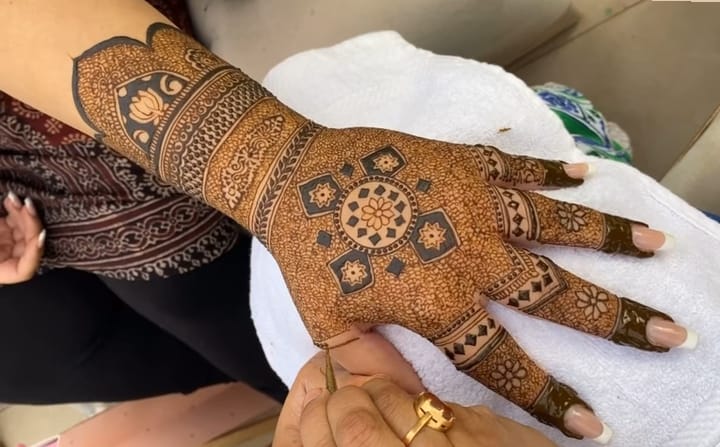
ایک سوال کے جواب میں ام کلثوم نے بتایا کہ انہوں نے بختاور بھٹو سے مہندی کے اتنے ہی پیسے لیے جو وہ کسی بھی دوسرے کسٹمر سے لیتی ہیں۔
’ان کے ہاتھوں پر مہندی کا ڈیزائن بناتے ہوئے مجھے فخر ہو رہا تھا کہ میں اتنی بڑی شخصیت کو مہندی لگا رہی ہوں۔ بختاور اتنی بڑی شخصیت ہونے کے باوجود اعلیٰ ظرف ہیں۔‘
ایک سوال پر کہ مہندی لگاتے ہوئے وہ کیا سوچ رہی تھیں؟ ام کلثوم نے بتایا: ’میں اس وقت کچھ بھی نہیں سوچ رہی تھی۔ میری پوری توجہ ڈیزائن پر تھی کہ کہیں وہ خراب نہ ہوجائے۔
ڈیزائن میں کنول کا پھول بنانے سے متعلق سوال پر انہوں نے بتایا: ’اس کا کوئی خاص مطلب نہیں، بس مجھے لگا کہ ڈیزائن میں یہ ہونا چاہیے تو بنا دیا۔‘
جب ان سے پوچھا گیا کہ ان کے پاس بختاور بھٹو کے مہندی ڈیزائن کی تصاویر ہیں تو انہوں نے کہا: ’سیکیورٹی کے باعث میرا فون بلاول ہاؤس کے گیٹ پر ہی رکھ دیا گیا تھا، اس لیے تصاویر نہیں لے سکی۔ بختاور نے خود تصاویر لی تھیں اور وہ بعد میں مجھے بھیجیں گی۔‘
واضح رہے کہ گذشتہ برس 27 نومبر کو بختاور بھٹو کی منگنی پاکستانی نژاد دبئی کے صنعت کار محمود چوہدری سے بلاول ہاؤس کراچی میں ہوئی تھی۔ منگنی کے فوری بعد ہی ان کی شادی کے کارڈز بھی سوشل میدیا پر سامنے آگئے تھے۔
بختاور بھٹو زرداری کو یہ اعزاز بھی حاصل ہے کہ وہ وزارت عظمیٰ کے عہدے پر براجمان کسی خاتون وزیراعظم کے ہاں پیدا ہونے والی دنیا کی پہلی بچی تھیں۔
https://www.independenturdu.com/node/58466
افسوس، بہت سے معززین کو شادی کی دعوت نہ دے سکے، بلاول بھٹو
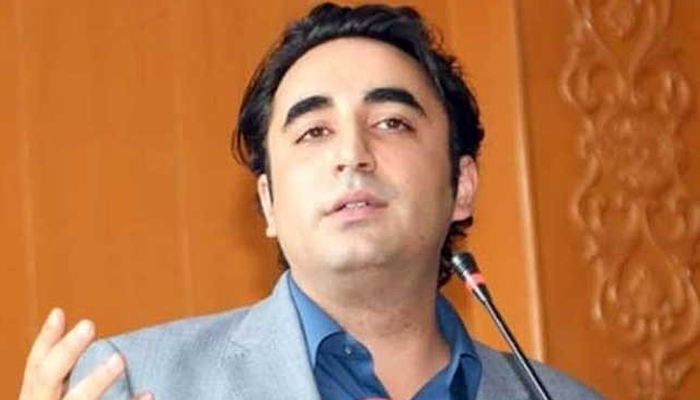
بلاول بھٹو زرداری نے اپنی بہن بختاور بھٹو زرداری کی شادی کے باعث سیاسی سرگرمیاں معطل کر رکھی ہیں۔
انہوں نے سماجی رابطے کی ویب سائٹ پر جاری بیان میں بختاور بھٹو کی شادی پر مختلف طبقات کی طرف سے مبارک باد دیے جانے پر تشکر کا اظہار کیا اور ساتھ ہی وضاحت بھی پیش کی۔
پی پی چیئرمین نے کہا کہ کورونا وائرس کے پیش نظر شادی کی مختلف تقریبات میں بہت کم مہمانوں کو مدعو کیا ہے۔
اُن کا کہنا تھاکہ مجھے افسوس ہے کورونا ایس او پیز کے سبب بہت سے معزز افراد کو شادی میں شرکت کی دعوت نہیں دے سکے ہیں۔
بلاول بھٹو زرداری نے مزید کہاکہ بختاور بھٹو زرداری کی شادی کے بعد اسلام آباد، لاہور اور لاڑکانہ میں تقریبات کا انعقاد کیا جائے گا۔
انہوں نے یہ بھی کہا کہ دیگر شہروں میں ہونے والی شادی کی تقریبات میں معززین، دوستوں اور پی پی فیملی کے افراد شریک ہوسکیں گے۔
گزشتہ روز اپوزیشن اتحاد کے چیئرمین فضل الرحمٰن نے بختاور بھٹو زرداری کی شادی سے متعلق سوال پر بتایا تھا کہ آصف زرداری صاحب نے مجھے بیٹی کی شادی میں مدعو نہیں کیا ہے۔
https://jang.com.pk/news/877749
Tuesday, January 26, 2021
Pakistani General as Riyadh envoy brings Middle East policy under army. Eyes on Israel

Notwithstanding Pakistan’s strategic ties with Beijing, it does not want to be entirely in China’s camp.
It was in August 2018 that Pakistan’s Foreign Minister, Shah Mahmood Qureshi, banged his fist on the table to announce that, henceforth, the country’s foreign policy will be made at the Foreign Office. He intended to post career diplomats in foreign missions not just as an expression of control but also to encourage them. In early 2018, even the Inter-Services Intelligence, or the ISI, had discovered through a study of the Foreign Office that diplomats were demotivated because of political appointments in the department, especially at higher ranks. However, within two years, the foreign minister had to reverse his policy experiment — there are now quite a few retired military officers serving as Pakistani ambassadors in the capitals of the world. A career diplomat in Riyadh was recently shown the door even before the end of his term and replaced with a retired three-star, Lt General Bilal Akbar.
While the change denotes issues with a hybrid regime, it also indicates GHQ Rawalpindi’s urgency in bringing the country’s Middle East policy under its control. More importantly, it is about managing relations with the US via the Middle East. There are critical matters that Rawalpindi needs to communicate privately with both Washington and Riyadh — recognition of Israel being one of them. This could possibly be one of the reasons why Lt General Akbar — an officer who owes his promotion to the position of a three-star in December 2016 to General Qamar Javed Bajwa, and hence, the Pakistan Army chief’s man — was sent to Saudi Arabia. Though the rumour mill in Pakistan does not consider the posting beyond an issue of appeasing an aggrieved General, it is claimed that Akbar was a contender for the army chief’s position in 2020 but was moved out of the way to ensure Bajwa’s extension. Currently, he is being dispatched as a confidant to take care of the Pakistan-Saudi bilateral relationship. Even if there was any grievance in Akbar’s mind, for now, it has been well taken care of. The military’s own socio-cultural system tied with punishments and rewards is beneficial to any chief.
Despite the fact that ties between Saudi Arabia and Pakistan seem to have nosedived in the past year-and-a-half, the bilateral relations are not a thing of the past, nor has the strategic significance reduced. Notwithstanding that both the Saudi Crown Prince and Prime Minister Imran Khan have vented out their sharp disagreement, Mohammed bin Salman (MbS) and General Qamar Javed Bajwa have remained engaged.
Pakistan: Minorities under Imran Khan Govt
By AYJAZ WANI

Equal citizens… From the time Imran Khan took the office of the Prime Minister, he had persistently claimed that minorities in Pakistan are equal citizens and were under state protection in many of his tweets and interviews. However, much of his words have remained mere lip-service. Like his predecessors, Imran Khan too seems to have caved in to pressure from the Islamists. In 2018, soon after Imran Khan became the PM, he was forced to revoke his decision to remove a globally renowned scholar from his Economic Advisory Council (EAC). A Princeton University professor and economist Atif Mian of prosecuted Ahmadi religious community was chosen to be a part of the 18-member EAC. Just hours after the announcement, Islamists, Tehreek-i-Labbaik Pakistan (TLP) and other opposition parties objected to his faith and started a vilification campaign against him. Such was the hateful campaign against Atif Mian that Imran Khan’s PTI government revoked his appointment within days. The government initially tried to defend the decision when Information Minister Fawad Chaudury said, “Pakistan belongs as much to minorities as it does to the majority… we will not bow to extremists”. Ironically, the minister continued to insist that the government wants to work with all sections of society, including Islamists, even after Atif’s ouster. Govt toothless. The government has historically remained toothless when it came to Islamists. Following the bomb blasts of 2013 at the PeshawarAll-Saints Church, the then Chief Justice of Supreme Court asked the government to set up the National Commission for Minorities (NCM). The NCM was eventually launched in 2020 with six official and 12 non-official members, including the chairman for a term of three years. Among the 12 members, three memberships each were reserved for Hindus and Christians, two each for Sikhs and Muslims and one each for Parsi and Kalash communities. The NCM has largely remained ineffective and often been criticised by human rights activists. Most of the religious minorities and their homes, religious places continue to be targeted by Islamists under the pretext of the infamous blasphemy laws. Forced conversions, hate speech and discrimination remain unchecked. Instead of taking stock of the worsening situation of its own minorities, the NCM has been used by the PTI government to discuss the minority rights and discrimination faced by religious minorities across the border. Since its establishment, the NCM has come to be seen as merely a political gimmick of the government rather than doing any good for the minorities at home. Over the years, the laws and rights of the minorities have seen a gradual shift from neutrality to blatant discrimination. In 2016, the Sindh government tried to outlaw forced conversions and marriages but failed because of the criticism and opposition from religious parties. A revised version of the bill was introduced in 2019 but was again withdrawn following protests from Islamists. In March 2019, 2,000 Hindu minority members held protests, demanding justice for two sisters, Reena and Raveena. The Hindus claimed that the two sisters were forcefully converted and married. But the Islamabad High Court ruled out conversion. Between 2013 and 2019, 156 forced conversions have reportedly taken place. Pakistan is a signatory to the Universal Declaration of Human Rights that includes the right to freedom of religion. Still, the government has failed to comply with these international obligations and protect the minority non-Muslim women from exploitation.
https://www.orfonline.org/expert-speak/pakistan-minorities-under-imran-khan-govt/
Each year, 1,000 Pakistani girls forcibly converted to Islam

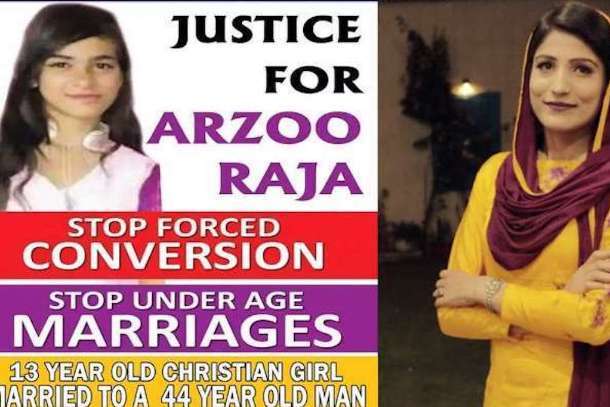
By KATHY GANNONNeha loved the hymns that filled her church with music. But she lost the chance to sing them last year when, at the age of 14, she was forcibly converted from Christianity to Islam and married to a 45-year-old man with children twice her age. She tells her story in a voice so low it occasionally fades away. She all but disappears as she wraps a blue scarf tightly around her face and head. Neha’s husband is in jail now facing charges of rape for the underage marriage, but she is in hiding, afraid after security guards confiscated a pistol from his brother in court. “He brought the gun to shoot me,” said Neha, whose last name The Associated Press is not using for her safety. Neha is one of nearly 1,000 girls from religious minorities who are forced to convert to Islam in Pakistan each year, largely to pave the way for marriages that are under the legal age and non-consensual. Human rights activists say the practice has accelerated during lockdowns against the coronavirus, when girls are out of school and more visible, bride traffickers are more active on the Internet and families are more in debt. The U.S. State Department this month declared Pakistan “a country of particular concern” for violations of religious freedoms — a designation the Pakistani government rejects. The declaration was based in part on an appraisal by the U.S. Commission on International Religious Freedom that underage girls in the minority Hindu, Christian, and Sikh communities were “kidnapped for forced conversion to Islam… forcibly married and subjected to rape.” While most of the converted girls are impoverished Hindus from southern Sindh province, two new cases involving Christians, including Neha’s, have roiled the country in recent months. The girls generally are kidnapped by complicit acquaintances and relatives or men looking for brides. Sometimes they are taken by powerful landlords as payment for outstanding debts by their farmhand parents, and police often look the other way. Once converted, the girls are quickly married off, often to older men or to their abductors, according to the independent Human Rights Commission of Pakistan. Forced conversions thrive unchecked on a money-making web that involves Islamic clerics who solemnize the marriages, magistrates who legalize the unions and corrupt local police who aid the culprits by refusing to investigate or sabotaging investigations, say child protection activists. One activist, Jibran Nasir, called the network a “mafia” that preys on non-Muslim girls because they are the most vulnerable and the easiest targets “for older men with pedophilia urges.” The goal is to secure virginal brides rather than to seek new converts to Islam. Minorities make up just 3.6 percent of Pakistan’s 220 million people and often are the target of discrimination. Those who report forced conversions, for example, can be targeted with charges of blasphemy. In the feudal Kashmore region of southern Sindh province, 13-year-old Sonia Kumari was kidnapped, and a day later police told her parents she had converted from Hinduism to Islam. Her mother pleaded for her return in a video widely viewed on the internet: “For the sake of God, the Quran, whatever you believe, please return my daughter, she was forcibly taken from our home.”But a Hindu activist, who didn’t want to be identified for fear of repercussions from powerful landlords, said she received a letter that the family was forced to write. The letter claimed the 13-year-old had willingly converted and wed a 36-year-old who was already married with two children. The parents have given up. Arzoo Raja was 13 when she disappeared from her home in central Karachi. The Christian girl’s parents reported her missing and pleaded with police to find her. Two days later, officers reported back that she had been converted to Islam and was married to their 40-year-old Muslim neighbor. In Sindh province, the age of consent for marriage is 18 years old. Arzoo’s marriage certificate said she was 19. The cleric who performed Arzoo’s marriage, Qasi Ahmed Mufti Jaan Raheemi, was later implicated in at least three other underage marriages. Despite facing an outstanding arrest warrant for solemnizing Arzoo’s marriage, he continued his practice in his ramshackle office above a wholesale rice market in downtown Karachi. When an Associated Press reporter arrived at his office, Raheemi fled down a side stair, according to a fellow cleric, Mullah Kaifat Ullah, one of a half-dozen clerics who also performs marriages in the complex. He said another cleric is already in jail for marrying children. While Ullah said he only marries girls 18 and above, he argued that “under Islamic law a girl’s wedding at the age of 14 or 15 is fine.” Arzoo’s mother, Rita Raja, said police ignored the family’s appeals until one day she was videotaped outside the court sobbing and pleading for her daughter to be returned. The video went viral, creating a social media storm in Pakistan and prompting the authorities to step in. “For 10 days, the parents were languishing between the police station and government authorities and different political parties,” Nasir, the activist, said. “They were not being given any time… until it went viral. That is the real unfortunate thing over here.” Authorities have stepped in and arrested Arzoo’s husband, but her mother said her daughter still refuses to come home. Raja said she is afraid of her husband’s family. The girl who loved hymns, Neha, said she was tricked into the marriage by a favorite aunt, who told Neha to accompany her to the hospital to see her sick son. Her aunt, Sandas Baloch, had converted to Islam years before and lived with her husband in the same apartment building as Neha’s family. “All Mama asked when we left was ’when will you be back?’” remembered Neha. Instead of going to the hospital, she was taken to the home of her aunt’s in-laws and told she would marry her aunt’s 45-year-old brother-in-law. “I told her I can’t, I am too young and I don’t want to. He is old,” Neha said. “She slapped me and locked me up in a room.” Neha told of being taken before two men, one who was to be her husband and the other who recorded her marriage. They said she was 19. She said she was too frightened to speak because her aunt threatened to harm her two-year-old brother if she refused to marry. She learned of her conversion only when she was told to sign the marriage certificate with her new name — Fatima. For a week she was locked in one room. Her new husband came to her on the first night. Tears stained her blue scarf as she remembered it: “I screamed and cried all night. I have images in my mind I can’t scratch out,” said Neha. “I hate him.” His elder daughter brought her food each day, and Neha begged for help to escape. Although the woman was frightened of her father, she relented a week after the marriage, bringing the underage bride a burqa — the all-covering garment worn by some Muslim women — and 500 rupees (about $3). Neha fled. But when she arrived home, Neha found her family had turned against her. “I went home and I cried to my Mama about my aunt, what she said and the threats. But she didn’t want me anymore,” said Neha. Her parents feared what her new husband might do to them, Neha said. Further, the prospects of marriage for a girl in conservative Pakistan who has been raped or married before are slim, and human rights activists say they often are seen as a burden. Neha’s family, including her aunt, all refused to talk to the AP. Her husband’s lawyer, Mohammad Saleem, insisted that she married and converted voluntarily. Neha found protection at a Christian church in Karachi, living on the compound with the pastor’s family, who say the girl still wakes screaming in the night. She hopes to go back to school one day but is still distraught. “At the beginning my nightmares were every night, but now it is just sometimes when I remember and inside I am shaking,” she said. “Before I wanted to be a lawyer, but now I don’t know what I will do. Even my mama doesn’t want me now.” https://apnews.com/article/karachi-pakistan-coronavirus-pandemic-christianity-marriage-2d335f305278348540db41b593a9a2a9
Monday, January 25, 2021
Group: Pakistani Baloch dissident buried amid high security
ABDUL SATTAR
A Pakistani dissident and civil rights activist who died in exile in Canada last month was returned to Pakistan and laid to rest in her home village in southwestern Baluchistan province under tight security, activists said Monday.

Only immediate family members of 37-year-old Karima Baloch were allowed to attend her funeral Sunday in the village of Tump in Baluchistan.
Her supporters claim that Pakistani troops had sealed off the village and prevented them from attending her burial. Her remains were brought to Pakistan from Canada earlier Sunday.
Baloch’s body was found Dec. 22 near Toronto’s downtown waterfront, a place that she liked and often visited, a day after she was reported missing. Toronto police have not treated her death as suspicious though there were allegations by her supporters that she was killed.
A fierce critic of Pakistani spy agencies that are often accused of abducting activists in Baluchistan and elsewhere in Pakistan, Baloch was granted asylum in Canada in 2016. Her death has raised suspicions among rights activists, who on Monday denounced authorities for holding the funeral in near secrecy.
“It is appalling to see how Karima Baloch’s dead body was treated," said Mohsin Dawar, a lawmaker from Pakistan's former tribal regions who campaigns for Pashtun minority right but like Baloch, has also criticized Pakistani spy agencies.
“It is not difficult to understand how this will deepen the divide and fuel separatism," he tweeted. "Is this the strategy to deal with the Baloch insurgency, to sprinkle salt on the wounds of Baloch?"
There was no immediate comment from the government, but a video that surfaced on social media shows soldiers turning back several mourners who are heard in the footage saying they wanted to pay their last respects to Baloch.
Angered over the situation, a Baloch nationalist group — the Baloch Solidarity Committee — issued a call for a daylong strike and complete shutdown in Baluchistan on Monday. Its statement said Pakistani troops spirited Baloch's coffin away on its arrival from Canada and foiled a move by her supporters to hold her funeral in Karachi, instead taking her remains to her home village.
Later on Sunday, hundreds of Baluch activists rallied in Karachi, denouncing the government for not allowing that Baloch's funeral be held in the city.
They chanted antigovernment slogans and demanded justice for Baloch, who they say was a “voice of the Baloch people” that was “silenced.” The activists insisted she did not die a natural death though they offered no evidence to support their allegation.
Baluchistan has for years been the scene of a low-level insurgency by small separatist groups and nationalists who complain of discrimination and demand a fairer share of their province’s resources and wealth.
Although there are also militant groups in Baluchistan that stage attacks on soldiers, separatists also often attack troops in the province, prompting authorities to detain suspects. Human rights activists often blame security forces of illegally holding people. Such detainees are usually not charged and do not appear in court, which draws protests from their families and rights activists.
https://news.yahoo.com/group-pakistani-baloch-dissident-buried-075614724.html
#Balochistan: Pakistani forces forcibly escorted Karima Baloch’s body to her hometown
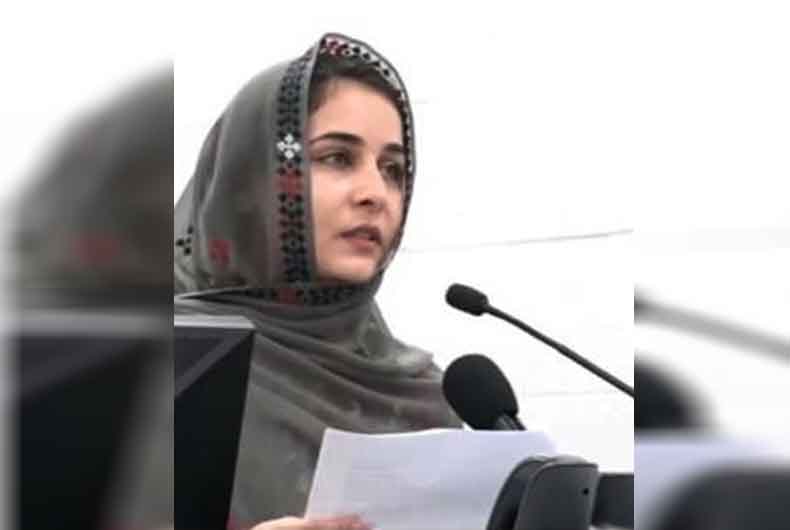
The coffin of Karima Baloch was brought from Canada to Karachi on Sunday morning where hundreds of people had gathered to receive her corpse. The Pakistani forces, however, took the body into their custody and refused to hand it over to her family and supporters.
According to family sources, the body was later taken to Balochistan via a different route to her hometown Tump, Balochistan. She will be laid to rest tomorrow afternoon in Tump. People from different areas of Balochistan gather in her hometown to attend the funeral prayer.
The Pakistan military and local authorities laid a siege around Tump blocking all the entries to the town and shut down the communication system in most areas of Ketch district.
It is to be remembered that Karima Baloch disappeared from her home December last year and a day later her dead body was found n a lake in Toronto, Canada. Her family says Karima Baloch was allegedly murdered, but the Toronto police said they found no evidence of any ‘foul play’.
Her husband and brother expressed dissatisfaction about the police initial report and demanded a thorough investigation. Karima’s dead body was finally released from Canadian police custody and flown to Karachi on Sunday morning. The Canadian authorities have not made public any further details about her disappearance and subsequent death.
On Sunday her corpse was taken to district Kech by road escorted by several military vehicles and more troops joined them after they crossed Vindar Balochistan.
Despite heavy military presence and blockage by Pakistani forces cluster of Karima Baloch supporters including women and children gathered on roadsides and pay their last respect to her as the ambulance carrying her dead body passed through.
Mobile service of entire Kech region has reportedly been disconnected and Tump town has been put under a military siege.
The dead body of Banuk Karima Baloch was in the custody of Pakistan forces at the time of filing this report and according to Sameer Mehrab, brother of Karima Baloch, he has no contact with his family due communication system blackout. He said he was not aware of his family’s whereabouts.
CALL FOR SHUTTER DOWN STRIKE
The Baloch Solidarity Committee (BSC) in a statement called for a shutter down strike today January 25, across Balochistan and appealed the business community and transport administration to support their protest by voluntarily shutting their businesses.
The spokesperson of the BSC said that as soon as the dead body Karima Baloch reached Karachi on the morning of January 24, a large contingent of forces took the body into their custody and put it in an ambulance without the consent of the family members
“The state did not allow Banuk Karima Baloch’s funeral prayers and last rites to be performed in Karachi in violation of all human values, while the general public, who had been waiting for hours, were not given a chance to pay their last respects,” the statement read.
The BSC statement also confirmed all previous report that the Pakistani state forces shut down the communication networks in all areas of Kech Balochistan.
The BSC also said that general public who had gathered at various places along the route for last a glimpse of Karima Baloch were forcibly removed and a curfew was imposed in Tump the hometown of Karima Baloch, and all routes to Tump were blocked.
According to BSC statement, Banuk Karima Baloch has the status of a national leader and she is viewed with great devotion in Balochistan. Preventing the general public from paying their last respects to Karima and not allowing funeral prayers is tantamount to violating all human, religious and national values.
https://balochwarna.com/2021/01/24/balochistan-pakistani-forces-forcibly-escorted-karima-balochs-body-to-her-hometown/
It's Bakhtawar's wedding week - Here comes the bride and weeklong wedding festivities. — these are all the festivities planned starting tomorrow
Around 300 guests are expected at the baraat function on Jan 30 due to Covid-19.

Bakhtawar Bhutto-Zardari, who was engaged to the son of a US-based businessman in November 2020, is set to tie the knot with him later this month.
Weeklong functions have been planned for the wedding of the daughter of former prime minister Benazir Bhutto and former president Asif Ali Zardari.According to PPP sources and spokesperson, Bakhtawar's nikah with her fiancé Mahmood Chaudhry would be held on January 29 and the function of baraat would take place the next day (Jan 30).
“Before these two functions, a milad will be organised on Jan 24 and a mehndi ceremony will take place on 27th,” said a source privy to the details of the ceremonies.
Meanwhile, a brief statement issued by Bilawal House said that some 300 guests were expected at the main function — baraat — on Jan 30 considering the arrangements under the standard operating procedures due to Covid-19 precautions.
The spokesman for Bilawal House also confirmed that all functions would be held in Karachi.
In a simple November 2020 engagement ceremony, the couple exchanged rings amid celebratory shouts and claps from the guests, who included a few senior politicians, PPP leaders, business giants, real estate tycoons, prominent lawyers, some legislators and close relatives at Bilawal House.
PPP Chairperson Bilawal Bhutto-Zardari, who was in self-isolation after testing positive for Covid-19 that time, had joined the engagement ceremony through video link.
There was plenty of conjecture surrounding Bakhtawar's engagement dress and when she uploaded her engagement portrait with her fiancé, under a glorious pink bougainvillea tree, fashion aficionados were quickly able to discern that her tea pink outfit, with an ornately embroidered shawl draped over it, was the work of designer Nida Azwer.
While we wait to see what else the bride will wear this week, you can read all about the quintessential Nida Azwer custom-made design here.
https://images.dawn.com/news/1186441
#Pakistan #PPP - Bakhtawar Bhutto humbled by ‘overwhelming birthday love’
Former PPP chairperson and slain ex-prime minister, Benazir Bhutto's daughter Bakhtawar Bhutto Zardari on Monday said she was “humbled” by all the “overwhelming birthday love” for her 31st birthday.
Taking to Twitter, she thanked her fans and followers for wishing her, joking that she was 30 years old since 2020 didn't count.
Sunday, January 24, 2021
#Fauci on What Working for Trump Was Really Like

From denialism to death threats, Dr. Anthony S. Fauci describes a fraught year as an adviser to President Donald J. Trump on the Covid-19 pandemic.

For almost 40 years, Dr. Anthony S. Fauci has held two jobs. As director of the National Institute of Allergy and Infectious Diseases, he has run one of the country’s premier research institutions. But he has also been an adviser to seven presidents, from Ronald Reagan to, now, Joseph R. Biden Jr., called upon whenever a health crisis looms to brief the administration, address the World Health Organization, testify before Congress or meet with the news media. For Dr. Fauci, 80, the past year has stood out like no other. As the coronavirus ravaged the country, Dr. Fauci’s calm counsel and commitment to hard facts endeared him to millions of Americans. But he also became a villain to millions of others. Trump supporters chanted “Fire Fauci,” and the president mused openly about doing so. He was accused of inventing the virus and of being part of a secret cabal with Bill Gates and George Soros to profit from vaccines. His family received death threats. On Jan. 21, appearing in his first press briefing under the Biden administration, Dr. Fauci described the “liberating feeling” of once again being able to “get up here and talk about what you know — what the evidence, what the science is — and know that’s it, let the science speak.” In an hourlong conversation with The New York Times over the weekend, Dr. Fauci described some of the difficulties, and the toll, of working with President Donald J. Trump. (This interview has been condensed and edited for clarity.) When did you first realize things were going wrong between you and President Trump? It coincided very much with the rapid escalation of cases in the northeastern part of the country, particularly the New York metropolitan area. I would try to express the gravity of the situation, and the response of the president was always leaning toward, “Well, it’s not that bad, right?” And I would say, “Yes, it is that bad.” It was almost a reflex response, trying to coax you to minimize it. Not saying, “I want you to minimize it,” but, “Oh, really, was it that bad?” And the other thing that made me really concerned was, it was clear that he was getting input from people who were calling him up, I don’t know who, people he knew from business, saying, “Hey, I heard about this drug, isn’t it great?” or, “Boy, this convalescent plasma is really phenomenal.” And I would try to, you know, calmly explain that you find out if something works by doing an appropriate clinical trial; you get the information, you give it a peer review. And he’d say, “Oh, no, no, no, no, no, no, no, this stuff really works.” He would take just as seriously their opinion — based on no data, just anecdote — that something might really be important. It wasn’t just hydroxychloroquine, it was a variety of alternative-medicine-type approaches. It was always, “A guy called me up, a friend of mine from blah, blah, blah.” That’s when my anxiety started to escalate. Did you have any problems with him in the first three years of his presidency? No, he barely knew who I was. The first time I met him was in September 2019, when they asked me to come down to the White House, bring my white coat and stand there as he signed an executive order regarding something about influenza. Then, starting in January, February of 2020, it was an intense involvement going down to the White House very, very frequently.There was a point last February when things changed. Alex Azar was running the White House Coronavirus Task Force, and then suddenly Mike Pence was, and President Trump was at the podium taking the questions and arguing with reporters. What happened? To be totally honest with you, I don’t know. We were having, you know, the standard kind of scientifically based, public-health-based meetings. Then I started getting anxious that this was not going in the right direction — the anecdotally driven situations, the minimization, the president surrounding himself with people saying things that didn’t make any scientific sense. We would say things like: “This is an outbreak. Infectious diseases run their own course unless one does something to intervene.” And then he would get up and start talking about, “It’s going to go away, it’s magical, it’s going to disappear.” That’s when it became clear to me: I’m not going to proactively go out and volunteer my contradiction of what the president said. But he would say something that clearly was not correct, and then a reporter would say, “Well, let’s hear from Dr. Fauci.” I would have to get up and say, “No, I’m sorry, I do not think that is the case.” It isn’t like I took any pleasure in contradicting the president of the United States. I have a great deal of respect for the office. But I made a decision that I just had to. Otherwise I would be compromising my own integrity, and be giving a false message to the world. If I didn’t speak up, it would be almost tacit approval that what he was saying was OK. That’s when I started to get into some trouble. The people around him, his inner circle, were quite upset that I would dare publicly contradict the president. That’s when we started getting into things I felt were unfortunate and somewhat nefarious — namely, allowing Peter Navarro to write an editorial in USA Today saying I’m wrong on most of the things I say. Or to have the White House press office send out a detailed list of things I said that turned out to be not true — all of which were nonsense because they were all true. The very press office that was making decisions as to whether I can go on a TV show or talk to you. Were you ever taken to the woodshed? Did anyone say, “Stop disagreeing with the president”? It wasn’t that. After a TV interview or a story in a major newspaper, someone senior, like Mark Meadows, would call me up expressing concern that I was going out of my way to contradict the president. Did Peter Navarro or Dr. Scott Atlas, another adviser to the president, or anybody else confront you directly? Oh, no. Peter Navarro, for some strange reason, had a thing about me. He came in one day, and he had a whole list of reprints that were completely nonsense. And he says, “How dare you say that hydroxychloroquine doesn’t work? I have 25 papers here that says it works!” That’s when we had a little bit of sharp words in the Situation Room. After that, I said I didn’t want to be bothered with him. I don’t like to be confronting people. After he wrote that editorial, the papers wanted me to lash back at him. I didn’t want to do that. Did Mr. Trump himself ever yell at you or say, “What are you doing contradicting me?” There were a couple of times where I would make a statement that was a pessimistic viewpoint about what direction we were going, and the president would call me up and say, “Hey, why aren’t you more positive? You’ve got to take a positive attitude. Why are you so negativistic? Be more positive.” Did he say why? People were dying. Someone he knew died early on. No. I didn’t get into the whys or anything. He would get on the phone and express disappointment in me that I was not being more positive. He didn’t say, “This is killing the stock market” or “This is killing my chances for re-election”? No, he didn’t do that kind of specificity. He just expressed disappointment. When did the death threats start? Wow. Many, many months ago. In the spring. Hold on — just bear with me. [He consults someone who answers “March 28.”] So there — you got it from the head of my Secret Service detail. That’s when I got protection, so maybe two weeks prior to that. It was the harassment of my wife, and particularly my children, that upset me more than anything else. They knew where my kids work, where they live. The threats would come directly to my children’s phones, directly to my children’s homes. How the hell did whoever these assholes were get that information? And there was chatter on the internet, people talking to each other, threatening, saying, “Hey, we got to get rid of this guy. What are we going to do about him? He’s hurting the president’s chances.” You know, that kind of right-wing craziness. Were you ever shot at or confronted? No, but one day I got a letter in the mail, I opened it up and a puff of powder came all over my face and my chest. That was very, very disturbing to me and my wife because it was in my office. So I just looked at it all over me and said, “What do I do?” The security detail was there, and they’re very experienced in that. They said, “Don’t move, stay in the room.” And they got the hazmat people. So they came, they sprayed me down and all that. Yeah. It was a benign nothing. But it was frightening. My wife and my children were more disturbed than I was. I looked at it somewhat fatalistically. It had to be one of three things: A hoax. Or anthrax, which meant I’d have to go on Cipro for a month. Or if it was ricin, I was dead, so bye-bye. Was Mr. Trump told? I have no idea. Did you alert anyone around him? As in, “Hey, you’re going to get me killed?” No, no. I didn’t. Who was I going to tell? What good would it be to tell anyone? Also, it was under F.B.I. investigation, and they don’t like you to talk about it. Did anyone close to Mr. Trump ever say, “We were wrong, you were right”? No. No. Even after he got so sick that he had to be flown to Walter Reed hospital? No. Did the president ever ask you for medical advice? No. When he was in Walter Reed and he was getting monoclonal antibodies, he said, “Tony, this really just made a big difference. I feel much, much better. This is really good stuff.” I didn’t want to burst his bubble, but I said, “Well, no, this is an N equals 1. You may have been starting to feel better anyway.” [In scientific literature, an experiment with just one subject is described as “n = 1.”] And he said, “Oh, no, no no, absolutely not. This stuff is really good. It just completely turned me around.” So I figured the better part of valor would be not to argue with him. Was nobody else advising him: “Hey, maybe we ought to pay attention to the science?” Jared Kushner? Mike Pence? There could have been, behind closed doors, but to my knowledge there was not. There was one time — we were in the Oval Office sitting in the chairs around the Resolute Desk. We had this interesting relationship, kind of a New York City camaraderie thing where we kind of liked each other in the sense of “Hey, two guys from New York.” And he was holding forth on some particular intervention, and saying something that clearly was not based on any data or evidence. There were a bunch of people there, and he turned to me and said, “Well, Tony, what do you think?” And I said, you know, I think that’s not true at all because I don’t see any evidence to make you think that that’s the case. And he said, “Oh, well,” and then went on to something else. Then I heard through the grapevine that there were people in the White House who got really surprised, if not offended, that I would dare contradict what the president said in front of everybody. And I was, “Well, he asked me my opinion. What do you want me to say?” But no confrontation? No, he was fine. To his credit, he didn’t get upset at all. Later he joked with crowds about firing you. How did that make you feel? I thought he wasn’t going to do it. I think that’s the way he is. People said, “Oh, weren’t you horrified that the next day you were going to get a call?” I didn’t think at all that he was going to fire me. It was just, you know, Donald Trump being Donald Trump. But then he brought in Scott Atlas and in effect made him your replacement. Well, Scott Atlas was less a replacement for me than a pushing out of Debbie Birx. My day job is that I’m the director of N.I.A.I.D. I would go to the White House, sometimes every day during the intense period, but I was considered an outside person. This is a subtlety that people need to understand. I tried to approach him and say, “Let’s sit down and talk because we obviously have some differences.” His attitude was that he intensively reviews the literature, we may have differences, but he thinks he’s correct. I thought, “OK, fine, I’m not going to invest a lot of time trying to convert this person,” and I just went my own way. But Debbie Birx had to live with this person in the White House every day, so it was much more of a painful situation for her. Did you ever think about quitting? Never. Never. Nope. Weren’t you concerned that you would be blamed for the failures if you didn’t resign? When people just see you standing up there, they sometimes think you’re being complicit in the distortions emanating from the stage. But I felt that if I stepped down, that would leave a void. Someone’s got to not be afraid to speak out the truth. They would try to play down real problems and have a little happy talk about how things are OK. And I would always say, “Wait a minute, hold it folks, this is serious business.” So there was a joke — a friendly joke, you know — that I was the skunk at the picnic. Did your wife ever suggest that you quit?
She brought up that I might want to consider it. She’s an incredibly wise person, knows me better than anybody else in the world, obviously. She said, “Do you want to have a conversation to balance the pros and the cons of what it would accomplish?” And after a conversation, she ultimately agreed with me. I always felt that if I did walk away, the skunk at the picnic would no longer be at the picnic. Even if I wasn’t very effective in changing everybody’s minds, the idea that they knew that nonsense could not be spouted without my pushing back on it, I felt was important. I think in the big picture, I felt it would be better for the country and better for the cause for me to stay, as opposed to walk away. What are you going to do now? Four more years with President Biden? I don’t know. Right now I’m not thinking about how many more years. You know, my whole life professionally has been fighting pandemics, from the very early years of H.I.V., influenza, Ebola, Zika or what have you. This is what I do. We are living through a historic pandemic, the likes of which we haven’t seen in 102 years. I think what I bring to the table is something that’s very much value-added. I want to keep doing it until I see us crushing this outbreak, so that people can get back to normality. And even after then, I’ve left some unfinished business. There’s still H.I.V., to which I’ve devoted the overwhelming proportion of my professional life. I want to continue the work that we’re doing on influenza, on H.I.V., on malaria and tuberculosis. As I said, this is what I do. Let me ask: Do you think Donald Trump cost the country tens or hundreds of thousands of lives? I can’t comment on that. People always ask that and … making the direct connection that way, it becomes very damning. I just want to stay away from that. Sorry. https://www.nytimes.com/2021/01/24/health/fauci-trump-covid.html?action=click&module=Spotlight&pgtype=Homepage