Thursday, January 7, 2021
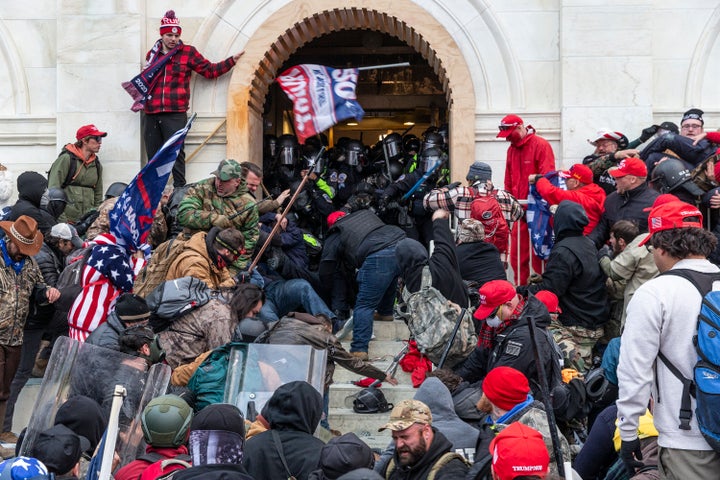
Biden decries Trump mob: 'Don't call them protesters. They were domestic terrorists'
USA Today Editorial Board Calls For Trump To Be Removed With 25th Amendment
In Pakistan everything has become expensive but people’s blood is cheaper, Chairman PPP Bilawal Bhutto Zardari

The PPP Chairman said that there has been a lot of injustice with the Hazara community, of which more than two thousand people have been martyred, but not a single one has received justice. “How is it fair that you are a laborer, a student, or a traveler, then you are killed by looking at your identity card,” he said.
Bilawal Bhutto Zardari said that he appealed to the state to give justice to the most patriotic people of the country. “I am not demanding justice for Shaheed Zulfikar Ali Bhutto or Shaheed Mohtarma Benazir Bhutto. I demand justice for the poor workers.
The PPP Chairman said that the state had promised that the National Action Plan (NAP) would be implemented, adding that the state had promised to the children of APS that terrorism would be completely eradicated from the country. “But sadly, the backbone of terrorism has not yet been broken. We don’t want to hear that this is a foreign conspiracy and it is behind it. If such foreign conspiracy succeeds, it is your failure,” he added. “Unless the state assures the citizens that their lives are safe, the security of the country and the federation will remain in jeopardy,” he warned.
Former Prime Minister Yousuf Raza Gilani, Sindh Chief Minister Murad Ali Shah, PPP Balochistan leaders Ali Maddad Jattak, Iqbal Shah and others accompanied the Party Chairman.
Wednesday, January 6, 2021
Tuesday, January 5, 2021
Trump is trying to thwart democracy itself. But the problem is deeper than one man

David Daley
Republicans have carefully cultivated rot in the voting system. It didn’t start with Trump and it won’t end after he leaves.D
emocracy rots slowly. Sometimes its decay is perfectly legal, helped along by legislatures and embraced by the courts. It happens when elected officials deliberately tilt the game to their own advantage.
Republicans drew themselves similarly friendly maps for Congress and state legislatures in Texas, Ohio and Florida. Then these gerrymandered legislatures – with the blessing of a US supreme court that has gutted the 1965 Voting Rights Act – have tried to make it harder for Democrats and minorities to cast their ballots, by using surgically targeted voter ID bills, shuttering voting precincts, or eliminating days of early voting.Then, when large majorities of citizens, from both parties, come together to make voting fairer for everyone, these legislatures often run right over them. When Floridians, for example, overwhelmingly voted to restore voting rights to former felons in a 2018 constitutional amendment backed by almost two-thirds of voters, it was hailed as the largest expansion of the franchise since the passage of the voting rights act. An estimated 1.4 million citizens who served their time won back their voice in civic affairs. In any functioning representative democracy, that resounding vote should have been the last word. However, this is Florida where, in 2011, Republicans ignored a state constitutional amendment that banned partisan gerrymandering and locked themselves into such advantageous districts that the will of the people hardly matters at all. And so the Florida legislature not only replaced the voters’ judgement with its own, but turned the amendment on its head. If voters sought to end restrictions designed after the civil war to limit black voting power, the legislature substituted another reminder of those days: a poll tax. Republican legislators insisted that formerly incarcerated people pay all fines and fees related to their sentence – often amounting to hundreds of thousands of dollars – before reinfranchisement. As suppressors of the vote well know, poll taxes are extraordinarily effective. Last fall, ProPublica, the Miami Herald and the Tampa Bay Times cross-referenced the voting rolls with a list of those released from prison over the past 23 years, and found just over 31,000 of those 1.4 million former inmates had been able to register to vote. Trump carried this perennial swing state by just 370,000 votes. This is the time bomb that threatens American democracy. The threat only grows more urgent. Republicans’ gerrymandering strategy, known as Redmap, was executed in 2010. The supreme court undid the voting rights act in the Shelby county case in 2013. These efforts came long before Trump descended a Trump Tower escalator and announced his campaign. They may even grow more virulent after Trump leaves, as 2024 presidential hopefuls such as Josh Hawley, the senator from Missouri, decide that doubling down on “fraud” claims is the best path to claiming the Trump vote, and as red state legislatures use those false fraud assertions to justify new voting restrictions. These efforts are already underway. In Pennsylvania, the new legislature hasn’t even been sworn in yet – but lawmakers are already seeking co-sponsors for a restrictive new voter ID bill, as well as a repeal of no-excuse absentee voting that was expanded due to Covid-19. And that’s not the only chicanery. In 2018, the Pennsylvania state supreme court struck down a congressional map so gerrymandered that Republicans consistently won 13 of the state’s 18 US House seats even when they won fewer statewide votes. Now, on the verge of the next redistricting cycle, Republicans’ gerrymandered state legislative majorities are looking to take revenge – by gerrymandering the courts, essentially creating judicial districts that can then be gerrymandered by the already gerrymandered legislature. Minority rule begets more minority rule. Texas, already one of the most restrictive states in the nation for voting, is readying a raft of new measures. In Georgia, Republican senators have indicated their support for an end to drop boxes as well as no-excuse absentee voting. A movement is also underway to require voter ID for mail-in voting. Many Republicans, meanwhile, frustrated that Georgia’s Republican secretary of state, Brad Raffensperger, has stood up for the integrity of Biden’s win of the state, have sought to make his position one appointed by the legislature rather than elected by the people. The practice of state legislatures ignoring the will of their own voters is not limited to Florida. Several states worked to make it harder for voters to reform their government via direct democracy. Others brazenly undid the citizens’ efforts and ignored their will. In Missouri, where more than 60% of voters voted for an independent redistricting amendment, Republican lawmakers pushed, and won, a 2020 amendment that masqueraded as campaign finance reform but actually unwound the redistricting effort. Utah’s Republican legislature also worked to undermine an advisory commission that voters enacted in that conservative state in 2018. The conservative political establishments in Arkansas and North Dakota used the courts to knock qualified initiatives off the 2020 ballot that would have opened up the closed primaries that make it easier for them to maintain power. Arizona’s independent redistricting commission remains, but Republicans there stacked the appellate court personnel commission, which vets applications and selects the five finalists for its nonpartisan chair. Their selections include a lobbyist and a gun store owner whose shop hosted a Trump rally and a shooting event for the president last fall. So, yes, Trump will leave the White House in less than three weeks. Democracy teetered but held. Some Republicans played important roles in making that happen, and their bravery should be noted. But Trump did not unleash this anti-democratic fever inside the Republican party. It’s worth noting that two of the other people on that brazen audio obtained by the Post were veteran Republican election lawyer Cleta Mitchell – heard teaching Republican state legislators how to gerrymander and duck legal discovery in leaked audio from a 2019 Alec conference – and Mark Meadows, the Trump chief of staff who first won office – running as a birther who would send Obama “back to Kenya” – from one of those gerrymandered congressional districts in 2012. Trump was created, in part, by the preceding years of gerrymandering and voter suppression that put the most extreme voices in control. They’re not going anywhere. They remain in power. They have not been chastened. There will be a next time. Our democracy may not be so lucky.
https://www.theguardian.com/commentisfree/2021/jan/05/trump-is-trying-to-thwart-democracy-itself-but-the-problem-is-deeper-than-one-man
Opinion: Can Only Republicans Legitimately Win Elections?

By Jamelle Bouie
Trump and many of the G.O.P.’s leaders seem to think so, with ominous consequences for the future.Of the many stories to tell about American politics since the end of the Cold War, one of growing significance is how the Republican Party came to believe in its singular legitimacy as a political actor. Whether it’s a hangover from the heady days of the Reagan revolution (when conservatives could claim ideological hegemony) or something downstream of America’s reactionary traditions, it’s a belief that now dominates conservative politics and has placed much of the Republican Party in opposition to republican government itself. It’s a story of escalation, from the relentless obstruction of the Gingrich era to the effort to impeach Bill Clinton to the attempt to nullify the presidency of Barack Obama and on to the struggle, however doomed, to keep Joe Biden from ever sitting in the White House as president. It also goes beyond national politics. In 2016, after a Democrat, Roy Cooper, defeated the Republican incumbent Pat McCrory for the governorship of North Carolina, the state’s Republican legislature promptly stripped the office of power and authority. Wisconsin Republicans did the same in 2018 after Tony Evers unseated Scott Walker in his bid for a third term. And Michigan Republicans took similar steps against another Democrat, Gretchen Whitmer, after her successful race for the governor’s mansion. Considered in the context of a 30-year assault on the legitimacy of Democratic leaders and Democratic constituencies (of which Republican-led voter suppression is an important part), the present attempt to disrupt and derail the certification of electoral votes is but the next step, in which Republicans say, outright, that a Democrat has no right to hold power and try to make that reality. The next Democrat to win the White House — whether it’s Biden getting re-elected or someone else winning for the first time — will almost certainly face the same flood of accusations, challenges and lawsuits, on the same false grounds of “fraud.” It’s worth emphasizing the bad faith and dishonesty on display here. At least 140 House Republicans say that they will vote against counting certain electoral votes on Wednesday. Among them are newly seated lawmakers in Georgia and Pennsylvania, two states whose votes are in contention. But the logic of their objection applies to them as well as Biden. If his state victories are potentially illegitimate, then so are theirs. Or take the charge, from Ted Cruz and 10 other Senate Republicans, that multiple key swing states changed (or even violated) their election laws in contravention of the Constitution. If it’s true for those cases, then it’s also true of Texas, where Gov. Greg Abbott, a Republican, unilaterally expanded voting, however meagerly. And yet there’s no drive to cancel those results. The issue for Republicans is not election integrity, it’s the fact that Democratic votes count at all. That said, not every Republican has joined the president’s crusade against self-government. Senator Tom Cotton of Arkansas shares the presidential ambitions of Cruz and Josh Hawley and others who want to disrupt the electoral vote count. But where they see opportunity, he sees blowback. Here he is in a statement released by his office: If Congress purported to overturn the results of the Electoral College, it would not only exceed that power, but also establish unwise precedents. First, Congress would take away the power to choose the president from the people, which would essentially end presidential elections and place that power in the hands of whichever party controls Congress. Second, Congress would imperil the Electoral College, which gives small states like Arkansas a voice in presidential elections. Democrats could achieve their longstanding goal of eliminating the Electoral College in effect by refusing to count electoral votes in the future for a Republican president-elect. So do seven of his Republican colleagues in the House, who similarly argue that this stunt will undermine the Republican Party’s ability to win presidential elections: From a purely partisan perspective, Republican presidential candidates have won the national popular vote only once in the last 32 years. They have therefore depended on the Electoral College for nearly all presidential victories in the last generation. If we perpetuate the notion that Congress may disregard certified electoral votes — based solely on its own assessment that one or more states mishandled the presidential election — we will be delegitimizing the very system that led Donald Trump to victory in 2016, and that could provide the only path to victory in 2024. But even as they stand against the effort to challenge the results, these Republicans affirm the baseless idea that there was fraud and abuse in the election. Cotton says he “shares the concerns of many Arkansans about irregularities in the presidential election,” while the House lawmakers say that they “are outraged at the significant abuses in our election system resulting from the reckless adoption of mail-in ballots and the lack of safeguards maintained to guarantee that only legitimate votes are cast and counted.” Even as they criticize an attempted power grab, they echo the idea that one side has legitimate voters and the other does not. It’s hard to say how anyone can shatter this belief in the Republican Party’s singular right to govern. The most we can do, in this moment, is rebuke the attempt to overturn the election in as strong a manner as possible. If President Trump broke the law with his phone call to Brad Raffensperger, the secretary of state of Georgia — in which he pressured Raffensperger to “find” votes on his behalf — then Trump should be pursued like any other citizen who attempted to subvert an election. He should be impeached as well, even if there’s only two weeks left in his term, and the lawmakers who support him should be censured and condemned. There’s no guarantee that all this will hurt the Republican Party at the ballot box. But I think we’re past that. The question now is whether the events of the past two months will stand as precedent, a guide for those who might emulate Trump. The door to overturning a presidential election is open. The rules — or at least a tortured, politically motivated reading of the rules — make it possible. Moreover, it is a simple reality of political systems that what can happen eventually will happen. It may not be in four years, it may not be in eight, but if the Republican Party continues along this path, it will run this play again. And there’s nothing to say it can’t work.
https://www.nytimes.com/2021/01/05/opinion/trump-georgia-senate-elections.html
#USElections - Trump Says Pence Can Overturn His Loss in Congress. That’s Not How It Works.

By Michael S. SchmidtThe vice president plays a crucial but largely ceremonial role in formalizing the election results in Congress. Here’s how the election tally actually works. President Trump on Tuesday escalated his efforts to force Vice President Mike Pence to overturn President-elect Joseph R. Biden Jr.’s victory, falsely asserting that Mr. Pence had the power to unilaterally throw out electoral votes on Wednesday when Congress meets to certify the election results. But there is nothing in the Constitution or the law that explicitly gives a vice president that power, and aides close to Mr. Pence, who concede that he is facing a politically perilous moment, are convinced he will follow the normal procedures and confirm Mr. Biden’s election. Still, most agree that Wednesday promises to be a long and confusing day on Capitol Hill — and a potentially agonizing one for Mr. Pence — as Mr. Trump’s Republican allies move to challenge Mr. Biden’s victory and force at least three votes on the matter, all expected to fail. The proceeding will test what had long been considered little more than a paperwork exercise in American democracy: the official count by Congress of electoral votes. The vice president’s role is to be the master of ceremonies rather than arbiter of the outcome, declaring the winner based on who has the most electoral votes. But despite Mr. Trump’s clear loss to Mr. Biden, the president and a group of loyalist House and Senate Republicans are plotting to upend the process by objecting to the certification of several states. Lacking the votes to prevail, Mr. Trump is now pressuring Mr. Pence to take matters into his own hands to delay the vote tabulation or alter it in Mr. Trump’s favor. “The Vice President has the power to reject fraudulently chosen electors,” the president tweeted on Tuesday. That’s not how it works. Pence has a basic, if unappealing, job: Count the votes. Three weeks ago, the Electoral College formally cast its votes for president, affirming Mr. Biden’s victory. But under the Constitution, there is one more step before the result is final: the certification by Congress of the electoral votes, to be conducted by the president of the Senate. That is the vice president. “The president of the Senate shall, in the presence of the Senate and House of Representatives, open all the certificates, and the votes shall then be counted,” according to the 12th Amendment. Envelopes with the certified votes from the Electoral College are brought in two mahogany boxes to the Capitol, and the vice president presides over a joint session in which the certificates are examined to determine they are authentic, with clear instructions for declaring a winner. “The person having the greatest number of votes shall be the president,” the amendment goes on, unless there is a tie or nobody has secured a majority, in which case the House decides. The job has occasionally been unpleasant for vice presidents. In 1961, the state of Hawaii sent two slates of electors and the vice president, Richard M. Nixon, who had just lost the election to John F. Kennedy, moved to count the Democratic electors, which expanded his own margin of defeat. Forty years later, Al Gore was in a similar spot, burdened with overruling objections from his fellow Democrats and declaring the victory of George W. Bush — and his own defeat — after a drawn-out Florida recount that was ended by the Supreme Court. And in 2017, Mr. Biden, then the vice president, had to reject a Democratic challenge to Mr. Trump’s victory. But no matter how distasteful it is, J. Michael Luttig, a former judge for the United States Court of Appeals and leading conservative legal scholar, said that Mr. Pence had no choice but to simply count the votes. “No president and no vice president would — or should — consider either event as a test of political loyalty,” Mr. Luttig said. “And if either did, he would have to understand that political loyalty must yield to constitutional obligation.” Members of Congress can object, though their bids this time are expected to fail. Under the Electoral Count Act of 1887, which was passed after the contested election of 1876 in which several states sent rival sets of electors, it is up to Congress to settle any disputes about state certifications. If at least one member of the House and Senate raise an objection about a state’s results, it must be considered, immediately halting the joint session so members can return to their respective chambers and debate the challenge for up to two hours. Then a vote — decided by a simple majority — is held to determine whether to throw out that state’s results. That has not occurred since the Reconstruction Era, and with Democrats controlling the House and many Senate Republicans opposed, it will almost certainly fail. Still, Republicans plan to force at least three such votes, perhaps more. Representative Mo Brooks of Alabama has said he will move to contest the results from as many as six states; three Republican senators — Josh Hawley of Missouri, Ted Cruz of Texas and Kelly Loeffler of Georgia — plan to back at least one of those. Dozens of House members and 11 senators have said they plan to vote against certifying Mr. Biden’s victory. Given that Mr. Trump and his supporters have contested the results in several states that Mr. Biden won — including Arizona, Georgia, Michigan, Nevada, Pennsylvania and Wisconsin — there could be as much as 12 hours of debate on Wednesday, and a half-dozen votes. Trump wants Pence to unilaterally disqualify votes for Biden. House Republicans, with support from Mr. Trump, have argued in court that Mr. Pence has the right to move unilaterally to eliminate electoral votes from any state that he chooses. But a federal judge appointed by Mr. Trump on Friday tossed out a lawsuit the Republicans brought to force the vice president to do so. “The only responsibility and power of the vice president under the Constitution is to faithfully count the Electoral College votes as they have been cast,” Mr. Luttig said. “The Constitution does not empower the vice president to alter in any way the votes that have been cast, either by rejecting certain votes or otherwise.” Despite no evidence of widespread voter fraud, Mr. Trump and his Republican allies in Congress have claimed that the results from battleground states that voted for Mr. Biden must be invalidated. “I hope Mike Pence comes through for us, I have to tell you,” Mr. Trump said at a rally in Georgia on Monday night for two Republican incumbents who face runoff elections on Tuesday that will determine which party controls the Senate. “Of course, if he doesn’t come through, I won’t like him as much.” If Mr. Pence were to throw out enough votes for Mr. Biden, it could prevent both candidates from reaching the threshold of 270 votes needed to secure an Electoral College victory. At that point, under the Constitution, each state’s delegation in the House would receive one vote. This could favor Mr. Trump, as 26 states have majority-Republican delegations. If Pence were to give Trump what he wants, the country would truly be in uncharted territory. Aides to Mr. Pence insist he will not do what Mr. Trump is asking. But congressional Democrats and Mr. Biden’s transition team are taking no chances and are preparing for a range of outcomes, including possible legal action, if Mr. Pence goes off script. The problem, Democrats concede, is that there is little precedent because no vice president has ever tried to use his position to overturn an election. The law in this area is untested and has never been litigated in court. But legal experts said the fallout could be highly damaging to the country. “The prospect of the vice president and members of Congress trying to overturn the will of the people rather than duly counting governor-certified votes would be unconstitutional and calamitous,” said a longtime Washington lawyer, Alan Raul, adding that it would set an “exceptionally dangerous precedent.” “If the sedition caucus in the House and Senate goes forward with their utterly unprecedented attack on the 2020 election, abetted by the vice president, it would torque our democracy for years to come,” he said.
https://www.nytimes.com/2021/01/05/us/politics/pence-trump-election.html?action=click&module=Spotlight&pgtype=Homepage
#HappyBirthdaySZAB - Zulfikar Ali Bhutto!!!! - (January 5, 1928-April 4, 1979)
By M Waqar

January 5, we celebrate birthday of Z A Bhutto, a leader, politician, revolutionary, who after his execution in Pakistan on April 4, 1979, still lives on in the hearts and minds of millions of Pakistanis, and the party that he founded still possesses the largest permanent voting bank in Pakistan.
The possibility of the secular, democratic Pakistan that he had in mind, like Pakistan 's founder, Jinnah has earned ZAB the title of Quaid-i-Awam . Z. A. Bhutto has still more charisma than any politician in Pakistan. Mr Bhutto was inducted into office as the President of Pakistan in 1971 and was removed in 1977, both events took place around midnight; one in the wake of a war and the other in the shadow of a civil war. In between he gave the country what even his sympathizers and admirers would concede was a 'strong' government, he mobilized his country's first mass-based political party around a socialist ideology and highly independent foreign policy. Pakistan's modernizer Zulfikar Ali Bhutto left deep footprints in the sands of history.
To his lasting credit remains the 1973 Constitution of the country, the Shimla Accord of 1972 which brought the longest peace between India and Pakistan, the social reforms to build an egalitarian society, the non-aligned foreign policy, the nuclear programme and the building of the social, economic and military infrastructure of the country. He was a thinker, author and orator. He was deliberate, discreet, and competent; honest, upright and keeper of his covenants. He was a friend of the poor, downtrodden and oppressed. Fearless in his beliefs he refused to bow before any man or power other than the Almighty. His courage was such that he preferred to face death for his beliefs and embraced martyrdom. He had profound faith in freedom and the liberation of humanity. Under his government, Pakistan gave overt and covert support to the African nations than under apartheid and minority rule. He rejected fanaticism. He gave pride to the poor.

Z A Bhutto is the first person in Pakistan who has given voice to the common people. Z. A. Bhutto remains alive in hearts of millions of Pakistanis. It was a miracle that in less than half a decade a defeated nation had become a significant entity in the comity of nations. Pakistan had friends all around the globe from Africa to the far corner of Asia and from Europe to South America. We were regarded as a nation which had proved itself. Pakistani manpower was exported in the Middle East and the statesmanship of Shaheed Zulfikar Ali Bhutto had started bearing fruit. Under Z A Bhutto's rule, a new vision of Pakistan was born. Within a few years of the defeat in 1971, Pakistan began to see itself not as some beleaguered non-entity in South Asia, as the Indian establishment was prone to see it, but as a strategically located middle-sized power straddling the two worlds of South and West Asia, uniquely poised to take advantage of a host of geopolitical possibilities and enjoying widespread support among the Islamic states. He is one of the few Pakistani leaders that energized the nation and gave it a sense of optimism. Z A Bhutto, saw the future of Pakistan.
Like Jinnah he outwitted Indira Gandhi at Shimla and formed alliances with various world leaders, from Sadaat, to Boumediene to Qaddafi to Faisal. Pakistan survives today because of those alliances that enabled him to build the Nuclear bomb. Zulfikar Ali Bhutto understood the geo-political realities of the region. Zulfikar Ali Bhutto has earned a place in the pantheon of leaders from the Third World who earned everlasting fame in the struggle against colonialism and imperialism. He had the privilege of interacting with many of those leaders who played a great role in the epic struggle for national independence in the 20th century, including Mao Tse Tung, Ahmed Soekarno, Chou-en Lai, Gamal Abdel Nasser and Salvador Allende. During the period between the end of the Second World War and the end of the Cold War, the world was divided into two blocs: The Capitalist West and the Socialist East. All these leaders aspired to aspects of a socialist pattern of economy. Bhutto shared their faith in a leading role for the public sector as an instrument of self-reliance. Bhutto's foundation of the PPP was a setback for the reactionary forces in a country long dominated by the Right. The slogan of "Food, Shelter and Clothing" shifted the focus of Pakistan politics from theological to economic issues. Zulfikar Ali Bhutto had the courage of his conviction to decide to lay down his life rather than compromise or seek appeasement.

There was a sense of purpose and direction in the country in pursuit of peace and prosperity. The economic growth rate increased and money poured in from expatriates who got the universal right to passport. The Muslim countries donated roughly $500 million annually to Pakistan, freeing it of international financial institutions. The people got jobs and opportunities. Women of the country were emancipated entering the police force, Foreign, Civil Service and subordinate judiciary for the first time in the country's history. There is a story that the American President John F. Kennedy was much impressed with the then Foreign Minister Zulfikar Ali Bhutto. When they met, Kennedy walked with him in the Rose Garden and said, "Bhutto, if you were an American, you would be in my Cabinet". To which Zulfikar Ali Bhutto smilingly replied, "No, Mr. President. If I were an American, you would be in my cabinet". Z A Bhutto, was highly skilled negotiator and an international statesman, he secured the agreement between USSR and Pakistan, he signed an agreement with China on demarcation of the Sino-Pak boundary. When he became President, Pakistan had innumerable problems, but he was not a man to be cowed down by knotty problems, he was in fact, a dynamo of inexhaustible and boundless creative energy, he was born to solve problems , he had to tackle the problems of shattered country by a methodical system of fixing priorities. Bhutto the adroit politician and statesman tackled the difficult problems of his country one by one with devotion, determination and patriotic zeal and solved them successfully. Since his assumption of power this great man of vision and destiny, equipped with resolute will, extraordinary intelligence and seething patriotic zeal fought successfully against the landlords, capitalists, industrialists, religious fanatics, corrupt bureaucrats, saboteurs, foreign intriguers and spies, he stood like a rock against all odds and achieved national unity, he worked hard for the emancipation of the exploited working class and illiterate masses. His cruel and barbaric murder by military despots caused revulsion across the globe, Z A Bhutto dedicated his life to remove the sorrows from the hearts of the poor and the oppressed, to remove the tears from the children of his poor nation. He lived consciously to make history and to leave a legacy in the form of the development of his nation, his fight was a fight against the policies of IMF, which serve to perpetuate the backwardness of the developing nations.

Bhutto is rightfully credited with saving Pakistan at this dark moment in its history, as French President Giscard d'Estaing said, "he was the man who incarnated Pakistan at a dramatic hour of its history. Tolstoy in the last volume of his War and Peace expressed that history is a movement of ideas in which political leaders play a minor role. Sometimes the movement of ideas is indeed rapid. Yet, at times, the movement of ideas is slower than the melting of the glaciers. The movement of ideas is facilitated in a vibrant political and democratic culture, which gives room for dissent and disagreement. In dictatorial societies, history remains static in a cold freeze. And so it was in Pakistan before Quaid-i-Awam. He was the one who converted that static and decayed dictatorial polity into a vibrant and dynamic democratic society; the cost of which he paid with his own life. He who gave his blood, and the blood of his sons and daughter,

Long Live Bhuttoism….
Monday, January 4, 2021
Trump’s Call Leaves Allies Fearful for American Democracy

https://www.nytimes.com/2021/01/04/world/europe/brad-raffensperger-trump-call.html
Opinion: Why Congress Should Impeach Trump Again

The emergence of an audio recording of President Trump pressuring the Georgia secretary of state to overturn the results of the election is a harrowing moment in the history of our democracy. And though the number of his days in office is dwindling, the only appropriate response is to impeach Mr. Trump. Again. Whether he acknowledges it or not, President Trump is leaving the White House on Jan. 20 — but right now, there is nothing stopping him from running in 2024. That is a terrifying prospect, because the way he has conducted himself over the past two months, wielding the power of the presidency to try to steal another term in office, has threatened one of our republic’s most essential traditions: the peaceful transfer of power. Fortunately, our founders anticipated we would face a moment like this, which is one reason Article I, Section 3 of the Constitution entrusts Congress with the power not only to remove a president but also to prevent him or her from ever holding elected office again. Mr. Trump’s conduct over the past two months has left our legislators with no choice but to use it. That impeachment inquiry would take time, far more than Mr. Trump has left in office. But it would be well worth it. Since the election was called in favor of President-elect Joe Biden, Mr. Trump has been relentlessly fomenting doubts about its legitimacy — even as many federal and state courts, including ones whose judges were appointed by Mr. Trump himself, have ruled against his claims. He has reportedly inquired about the idea of enlisting the help of the military to keep him in power. Most recently, on the phone with Brad Raffensperger, Georgia’s secretary of state, he said, “I just want to find 11,780 votes, which is one more than we have.” He added: “We won this state,” even though he didn’t. In a democracy, you don’t find votes. You count them. Most strikingly, Mr. Trump threatened the Georgia officials with criminal prosecution if they didn’t comply, saying leaving the vote counts intact would be a “big risk.” This kind of threat may sound familiar, because an eerily similar abuse of power led to Mr. Trump’s impeachment just over a year ago. Senator Susan Collins of Maine explained her vote to acquit him by saying she thought he had learned “a pretty big lesson.” Clearly, Mr. Trump learned a different lesson — that he was above the law. It’s just as William Davie from North Carolina, discussing the position of the presidency at the Constitutional Convention in Philadelphia, predicted: A president who viewed himself to be unimpeachable, he said in 1787, would “spare no efforts or means whatever to get himself re-elected.” It’s time for Congress, once and for all, to put an end to this. No one wants to put the country through the turmoil of another impeachment. But we also can’t afford to look the other way — for several reasons. For one, we must establish a precedent that a president who tries to cheat his way to re-election will be held accountable. Sure, this attempt may not have succeeded, but a failed coup should itself be alarming enough. And who is to say there won’t be a closer election in the future, with a more competent authoritarian candidate — whose party also has control of the House of Representatives? We need to make sure that Congress has ensured that candidates cannot strong-arm their way into re-election. We also need to set a precedent that a lame duck president can still be held accountable. If an incumbent, say, threatened to nuke Iran unless the Electoral College sided with him, we would want to have a mechanism by which we could remove him from office. In our Constitution, impeachment is that mechanism, but it is worthless if we never use it. And last, we cannot risk Mr. Trump’s becoming president again — or for that matter, even running again with a chance of winning. This isn’t a point about ideology; it’s a reflection of the fact that our system may not be able to withstand this lawless man returning to the highest office in the land. Emboldened by our failure to hold him accountable for abusing his power in his first term, who knows what he would do in a nonconsecutive second term? The damage to our institutions from his first four years in office will take generations to undo. Our democracy might not be able to handle another four.Senator Mitch McConnell, the majority leader, was able to protect Mr. Trump the last time — no doubt because he was afraid of what a truly rigorous trial might show. But he may no longer be able to do so. For one thing, Mr. Trump will soon lack the power of the presidency to dole out favors and punish his enemies. For another, the Senate composition will be different. Already, Democrats have flipped seats in Arizona and Colorado. Republicans who voted to acquit him, like Pat Toomey of Pennsylvania, have shown signs they are finally willing to stand up to him. And Georgians will go to the polls to decide who will represent them in the Senate. Mr. Trump’s preferred senators, Kelly Loeffler and David Perdue, would no doubt try to block an inquiry into his misdeeds. But if these senators lose their seats, a full and robust inquiry in the Senate could be the result, with Chuck Schumer as majority leader. In 2008, a young member of the Judiciary Committee said, “The business of high crimes and misdemeanors goes to the question of whether or not the person serving as president of the United States put their own interests, their personal interests, ahead of public service.” That congressman’s name was Mike Pence — and he was exactly right. We need to convict President Trump and make sure he can never call the White House home again. https://www.nytimes.com/2021/01/04/opinion/trump-georgia-impeach.htmlAnd this time, he should be convicted. The country cannot risk his becoming president again.

#Pakistan #PPP - Zulfikar Ali Bhutto stands as the tallest icon and pioneer of struggle for democracy and equal rights in the country

Former Prime Minister Shaheed Zulfikar Ali Bhutto stands as the tallest icon and pioneer of struggle for democracy and equal rights in the country, said Chairman Pakistan Peoples Party Bilawal Bhutto Zardari paying a glowing tribute.In his message on the eve of 93rd birthday anniversary of Shaheed Zulfikar Ali Bhutto, the PPP Chairman said that Shaheed Bhutto picked up the shattered pieces of Pakistan following Dhakka fall and inspired a politically demoralised population by rejuvenating the dream of the founders of the nation. “Through his political wisdom and sagacity, Shaheed Zulfikar Ali Bhutto not only had 90,000 Prisoners of War (PoWs) freed and thousands of square kilometers occupied by the enemy vacated, he also laid foundations of nuclear power to safeguard the country from repetition of such debacles in future,” he added.Bilawal Bhutto Zardari said that no patriotic Pakistani can forget the plans and efforts to strengthen the economy of the country launching macro and micro level industrialisations, education institutions, a unanimous Constitution, lifting up the poor and political empowerment of every segment of the society. “What he did in a half century life for the country is unmatched in the post-Quaid-e-Azam Pakistan for which he was murdered through judiciary by the enemies of the country and its democratic order,” he added. He reiterated that PPP would follow the foot-steps of Shaheed Zulfikar Ali Bhutto and Shaheed Mohtarma Benazir Bhutto and carry forward their struggle till their mission if achieved despite threats, hurdles, victimisations and highhandedness by the remnants of Dictator Zia and their henchmen.
https://www.ppp.org.pk/pr/24254/
#HappyBirthdaySZAB #Pakistan #PPP - The vision of Z A Bhutto

OP-ED: #HappyBirthdaySZAB #Pakistan #PPP - I wish Shaheed Bhutto were alive today


Manufacturers have ensured its cost to be accessible to the reach the pockets of the most poor. According to experts Oxford’s vaccine can be stored at fridge temperature, Moderna requires storage at -20o C; Pfizer at an Arctic -78o C. The comparative cost of the doses is debatable. According to a report estimated cost is $39 for two doses for the Pfizer vaccine, $50 for two doses of Moderna, and a low $3 a dose for the Oxford. The Oxford loaves-and-fishes miracle might be made possible through Covax, a global initiative that hopes to distribute about 2bn doses to 92 low- and middle-income countries at a maximum cost of $3 a dose. On the other hand, what was once an iron curtain, Putin’s Russia has developed its own Gam-COVID-Vac (Sputnik-V) vaccine. As against oft repeated promises of providing vaccine to its poor people free of cost, Russian President Vladimir Putin has ordered a massive ‘voluntary’ free vaccination programme against COVID-19. It is another thing that the Russians are finding it hard to have volunteers for its massive vaccination programme. It faces much similar opposition from its clergy as we in Pakistan have been facing in the execution of polio immunisation programme.
Despite the fact that the masses appreciated Generic Scheme as a major healthcare reform, it became a sordid victim of the conspiracy by the international pharmaceutical conglomerate and greedy Pakistani bureaucracy
As compared to others our Chinese friends have been pursuing a parallel programme. China has been concentrating on two state-sponsored vaccines – Sinovac and Sinopharm. Although they have not been tested to the nth degree, these Chinese vaccines, like Covid-19 itself, have been exported already to other countries, hopefully with less lethal consequences. In Pakistan Imran Khan’s approach is much more quixotic. On the other hand PDM being a larger mulla created platform is busy what is at best be described as bullshitting distractions. While the PTI government under IK is busy bemoaning financial bankruptcy having no money for its dilapidated medicare – with greater emphasis on Covid-19 prevention rather than its cure. Having established his own ShaukatKhanum Memorial Cancer Hospital IK seems to have accomplished his life longambition, while leaving rest of healthcare to privatised social distancing, leaving it to the masses to self-restraint while allowing free for all in larger social gatherings such as weddings etc.