M WAQAR..... "A man's ethical behavior should be based effectually on sympathy, education, and social ties; no religious basis is necessary.Man would indeed be in a poor way if he had to be restrained by fear of punishment and hope of reward after death." --Albert Einstein !!! NEWS,ARTICLES,EDITORIALS,MUSIC... Ze chi pe mayeen yum da agha pukhtunistan de.....(Liberal,Progressive,Secular World.)''Secularism is not against religion; it is the message of humanity.'' تل ده وی پثتونستآن
Saturday, November 7, 2020
#JoeBidenKamalaHarris2020 - - ‘A Big And Special Moment’: The World Celebrates Joe Biden’s Win
“It’s time to get back to building bridges, not walls,” London Mayor Sadiq Khan tweeted.President-elect Joe Biden’s projected victory on Saturday drew cheers ― and sighs of relief ― from an international community exhausted by four years of President Donald Trump’s bullying, incoherent, transactional and largely ineffective approach to foreign policy. As fireworks went off and people cheered in the streets in London, the city’s mayor, Sadiq Khan, called the win “well-deserved” on Twitter. “It’s time to get back to building bridges, not walls,” Khan wrote. Scottish First Minister Nicola Sturgeon praised future Vice President Kamala Harris’ historic ascendance: “The first woman in the White House ― and the first woman of colour too. This is a big and special moment.” Elisa Ferreira, the top European Union official from Portugal, declared that she was listening to Nina Simone’s classic “Feeling Good.” And more diplomatically, high-ranking foreign leaders welcomed the prospect of a very different kind of U.S. partner. “Congratulations, Joe Biden and Kamala Harris,” Canadian Prime Minister Justin Trudeau tweeted. “Our two countries are close friends, partners, and allies. We share a relationship that’s unique on the world stage. I’m really looking forward to working together and building on that with you both.” America’s image abroad plummeted under Trump. A Pew Research Center survey released in September showed that the percentage of people in several countries who viewed the U.S. favorably had reached its lowest point in Pew’s nearly 20 years of asking foreigners their opinion of the U.S. In Britain, France, Germany, Japan, Canada and Australia ― all longtime allies ― only a minority of people saw the U.S. positively. Trump’s catastrophic approach to the coronavirus pandemic, which continued to kill hundreds of Americans daily as most other nations slashed their infection and fatality rates, further hurt the perception of the U.S. For many international observers, the top concern was ultimately not whether Biden would defeat Trump, but whether democracy in America remained alive and well after a long election season during which Trump attacked the integrity of the voting process and repeatedly suggested he did not want all ballots to be counted. Trump’s dishonest, premature claim of victory on Wednesday morning won almost no support abroad, as international officials instead expressed faith in U.S. institutions and their respect for the voters’ choice. Of course, Biden’s projected victory doesn’t mean Trump will stand down. His campaign has filed suit in multiple swing states and is arguing that various vote counts are illegitimate. Still, the numbers in Biden’s favor allowed most onlookers in other nations to largely relax. While decision-makers in international capitals know they won’t agree with Biden on everything, many are simply relieved to know that soon they need no longer live in fear of a sudden flip-flop by Trump on a crucial issue like U.S. troop deployments or of Trump’s personal animus toward his counterparts guiding U.S. strategy, as it did in his handling of German Chancellor Angela Merkel and Trudeau. The president-elect’s expertise on foreign policy, drawn from his time as vice president and as chairman of the Senate Foreign Relations Committee, is also appealing to such officials, who believe he will be better equipped to understand complicated issues that Trump often minimized or misrepresented and less likely than the incumbent to fall for conspiracy theories or lies from adversaries. And they welcome Biden’s promises to strengthen U.S. relationships with historic allies and ensure American policies better reflect the country’s stated commitment to human rights and democratic principles. Some political figures and citizens in nations that benefited under Trump signaled their disappointment before Biden’s victory. Ayoob Kara, a former minister in the hard-right government of Israeli Prime Minister Benjamin Netanyahu, criticized American Jews, the clear majority of whom voted for Biden as they have for Democrats for years, despite Republican attempts to smear the other party as anti-Semitic. “I was expectings [sic] they will support President Trump who is the best American president for the State of Israel has had,” Kara tweeted on Thursday. “The ‘betrayal’ of longtime American Jews.” In the United Arab Emirates, an autocratic state that has grown close to the White House and recently secured a long-sought major arms deal, prominent Twitter user Hassan Sajwani retweeted a commentator alleging that the U.S. election had been rigged and another Twitter user attacking the platform for its warnings about Trump’s dishonest tweets. And in Hungary, the far-right Volner Party announced that it would organize a protest in front of the U.S. Embassy in Budapest to challenge “possible electoral fraud in the U.S. presidential election” and demonstrate “solidarity with Donald Trump.” Those reactions were the exception to the general rule, however. “Welcome back America!” Paris Mayor Anne Hidalgo tweeted on Saturday, noting that the win comes around the five-year anniversary of the sweeping international climate agreement signed in her city that Trump officially pulled the U.S. out of just days ago. Biden has promised to rejoin the deal immediately ― and to do even more to confront the climate crisis.
https://www.huffpost.com/entry/biden-win-international-reaction_n_5fa4856dc5b6f21920d96e52
#JoeBidenKamalaHarris2020 - Joe Biden Wins Historic 2020 Presidential Election, Vanquishing Donald Trump
By Amanda Terkel
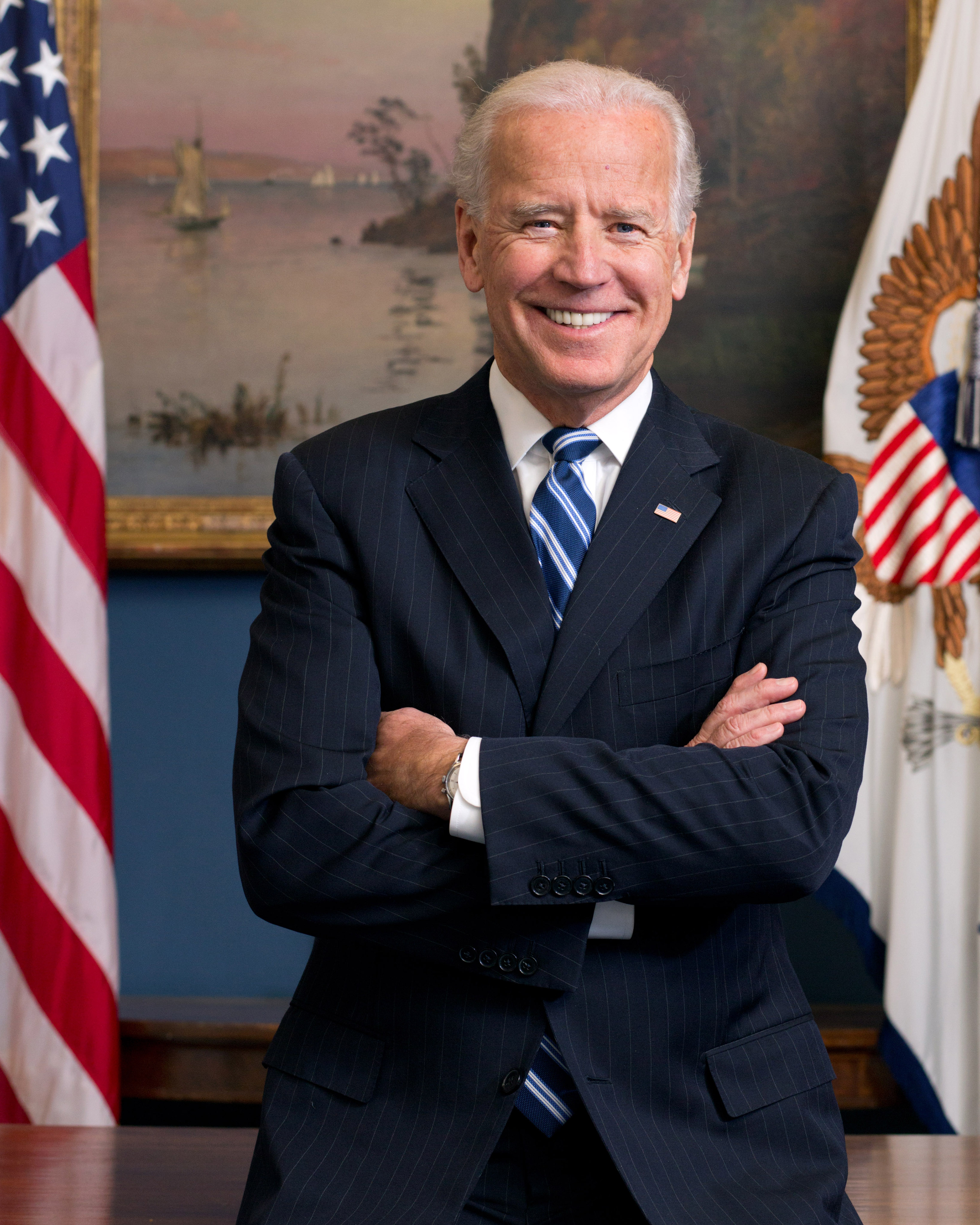
With a victory in Pennsylvania, Joe Biden secured his win over Donald Trump, the first U.S. president to lose reelection in 28 years. Joe Biden is projected to become the next president of the United States after an election that was historic, messy, chaotic and uncertain. Sen. Kamala Harris (D-Calif.) will be with him as vice president, the first woman, Black person and Asian American to ever hold the position. The decisive call came in Pennsylvania, which gave Biden the necessary electoral votes to clinch the presidency. Biden was projected to win Nevada shortly thereafter. He could further pad his Electoral College victory in Arizona, where he leads, and Georgia, where he narrowly leads and faces a recount. (President Donald Trump has a more comfortable lead in North Carolina.) Biden already flipped two other states that Trump won in 2016: Michigan and Wisconsin, reclaiming Democrats’ Rust Belt “blue wall.”The former vice president also decisively won the popular vote, receiving the most votes in American history and besting Trump by more than 4 million.In a statement, Biden said he is “honored and humbled by the trust the American people have placed” in him and Harris. “In the face of unprecedented obstacles, a record number of Americans voted. Proving once again, that democracy beats deep in the heart of America,” he continued, saying, “It’s time for America to unite. And to heal.” In a speech on Friday, Biden pointed to his large vote lead and claimed a broad “mandate for action” on the coronavirus, the economy, climate change and systemic racism. Trump quickly released a statement on Saturday saying the election “is far from over.” “Joe Biden has not been certified as the winner of any states, let alone any of the highly contested states headed for mandatory recounts, or states where our campaign has valid and legitimate legal challenges that could determine the ultimate victor,” he said. Trump found out about his loss while at the golf course, where he spent much of his presidency. It came on the same day that the White House was dealing with a new coronavirus outbreak among the administration. Chief of staff Mark Meadows is among those infected. For months, Trump had been laying the groundwork to reject the election results if they didn’t go his way. He not only tried to undermine mail-in voting but claimed that if the winner wasn’t declared on election night, the results would be suspect ― even though some state rules allow mail-in ballots to be received after Election Day. And sure enough, Trump did exactly as he said he would. “Frankly, we did win this election,” Trump said Wednesday shortly after 2 a.m. Eastern, while millions of ballots had yet to be counted, a number of key swing states were still in limbo and no news organization had yet to project a winner. He also tweeted that Democrats were trying to “STEAL the Election” and wrote, “Votes cannot be cast after the Polls are closed!” (No votes were cast after the polls closed.) On Thursday, he held a lie-filled news conference in which he baselessly claimed that there was vote fraud, without providing any evidence. Defeating an incumbent president is difficult and rare. It hasn’t happened in nearly 30 years. It’s only the fourth time it’s happened in the past 100 years. Biden did it during a pandemic against a president with a devoted following who is willing to lie and cheat. Biden also amassed more than 70 million votes, the most a presidential candidate has ever received in a U.S. election. Yet the Electoral College meant that the nation was obsessing over the latest batches of votes in places like Arizona and Georgia to see who would be declared the winner ― even as Biden was leading Trump by about 4 million votes nationwide. Democrats expected the election to be a referendum on Trump’s handling of the coronavirus. Biden and the party kept their message squarely on the virus and health care, while Trump tried to divert attention to crime, Sen. Cory Booker (D-N.J.), China and Biden’s son Hunter. There’s no doubt that the coronavirus hurt the reelection prospects of the president, who wanted to run on the health of the economy under his watch. Without the pandemic, arguably, Trump may have won. Early exit polls show that more voters said the pandemic was the most important issue facing the country. Those voters went for Biden, while people who cited the economy and jobs went for Trump. Defeating Trump was an incredible achievement for Democrats and will have significant consequences. Trump used his presidential powers to separate migrant children from their parents, enrich his family and encourage far-right conspiracy theorists. He mocked American troops who died in war, made racist comments and tried to use the Justice Department as his own personal enforcement agency to go after his political enemies. He was also only the third president in U.S. history to be impeached by the House. His toxic brand of racism, sexism and fear-based politics propelled him into the White House in 2016. But it wasn’t enough this time. He was no longer an outsider who could come into Washington and shake up a tired old establishment. Instead, the nation chose Biden, a man who embodies the political establishment. He spent 36 years as a senator from Delaware and eight years as vice president. He will be 78 when he is inaugurated in January, the oldest president in history. Biden ran on character. He showed qualities that Trump didn’t seem to possess: kindness, empathy, a history of overcoming adversity, experience, caution and an aversion to drama.And many voters ― many of whom had to vote by mail because they’re still waiting out the raging coronavirus pandemic ― decided that was exactly the person they were ready for this time. Turnout was massive, the highest in 200 years. At first, Trump tried to pretend the coronavirus wasn’t a problem. He said it wasn’t all that worse than the common flu and predicted it would be gone by April. At the Republican National Convention, Trump and his allies portrayed the crisis as largely over, defeated by the valiant president. Even after Trump himself was hit with a positive coronavirus diagnosis ― a perhaps inevitable conclusion to his refusal to wear masks and his insistence on holding large in-person gatherings ― he and his administration continued on course, using the experience to claim that the illness wasn’t all that bad. “Don’t be afraid of Covid. Don’t let it dominate your life,” Trump tweeted on Oct. 5, after more than 200,000 Americans had died from it. Biden took a far different approach. He kept his focus squarely on the coronavirus pandemic. He wore masks, cautioned the public to listen to scientists and stopped large in-person rallies and events. His campaign even stopped door-knocking for most of the campaign, restarting it only at the very end. And he showed empathy for people who had struggled with the virus. Biden is a politician who wears his heart on his sleeve. He’s had little choice. A month after being elected to the Senate for the first time in 1972, he lost his wife and daughter in a car crash. In 2015, his son Beau ― the attorney general of Delaware ― died from brain cancer. Those struggles helped people relate to him. And he responded in kind to people who shared their stories of loss with him. The Democratic Party aggressively encouraged voters to cast ballots by mail to avoid potentially long, dangerous lines during the pandemic. Trump, meanwhile, engaged in fearmongering about voting by mail, insisting the election results wouldn’t be legitimate and falsely claiming the method is ripe for fraud and abuse. That rhetoric was a problem, and the Republican Party worked to clean up his mess by sending out mailers and robocalls insisting to people that voting by mail was safe ― even doctoring Trump’s own tweets to make it seem like the president agreed. Still, it was not the decisive blow that Democrats hoped for. The election revealed larger trends and problems that have nothing to do with Biden that the party will be dealing with for years. “Yes, Trump is horrible, but it’s never been all about about Trump,” said a Democratic Senate strategist. “And now because of events, it’s just that much more obvious. There’s the Supreme Court and not having the Senate and everything they’ve done to rig democracy.” “We got what we needed, which is to end the Trump presidency,” a House Democratic lawmaker told HuffPost. “We didn’t get what we wanted.” Even though Biden won, the polls, once again, underestimated support and turnout for Trump. The president made inroads with Latinos, and he actually performed better this year than he did in 2016 in counties with high coronavirus rates. Trump also won the majority of votes in states with the highest death rates from the disease, including Florida and Texas, although many of those areas are more conservative and more likely to shun the mask-wearing and social distancing that Trump has also mocked. Significantly, Biden’s success didn’t translate down the ballot. Democratic hopes of picking up a robust majority in the Senate melted away, and Democrats appear set to lose ground in the House. A surge of grassroots donations in Senate races like South Carolina, Kentucky and Texas weren’t enough to overcome Republican dominance in those states. And Republicans who were considered sitting ducks for Democratic wins ― like Susan Collins in Maine ― won reelection. “It was a bad night,” Sen. Sherrod Brown (D-Ohio) said on MSNBC Wednesday, adding that Democrats “need to sharpen our message.” And the larger picture looks tough for Democrats. The election results underscored that the Senate grants disproportionate power to rural Americans ― who are far more likely to be old, white and conservative than other voters — and basically ensures that the Democratic Party won’t pursue the demands of its left flank. Democrats also failed to cut into GOP control of state legislatures ahead of redistricting next year. The challenges facing Biden are enormous. He has a steadily growing pandemic and an economy suffering from the fallout, an emboldened racial justice movement that wants to see reform, climate change, a hollowed-out civil service and a fractured country. His policies will no doubt be challenged in the courts, where they will ultimately come up against a U.S. Supreme Court with a 6-3 conservative majority. And he will have to get as much as done as he can without the robust Senate majority for which he had no doubt hoped. Control of the chamber is still up in the air. If it stays in Republican hands, Biden will be the first president since George H.W. Bush who will take office without his party controlling Congress. “If Democrats don’t win the Senate, governing in the Biden era will make the post-Tea Party years of the Obama Administration seem idyllic in comparison,” a senior Senate Democratic aide predicted. Trump will not be disappearing. His campaign has filed last-ditch lawsuits challenging the results in Arizona, Georgia, Michigan, Nevada and Pennsylvania. And he’s still the dominant force in the Republican Party with no obvious successor, aside from his own son. For now, however, he is what he has always feared the most: a loser.https://www.huffpost.com/entry/joe-biden-wins-presidential-election-2020_n_5f9c6a95c5b6f4683cee8c33
Friday, November 6, 2020
#ElectionResults2020 - #Biden Takes Lead In #Pennsylvania, #Georgia
Democratic Party candidate Joe Biden has gained razor thin leads over President Donald Trump in Georgia and Pennsylvania, as vote counting continues Friday.
The Trump campaign continues to dispute the results, however, saying in a statement Friday the “this election is not over,” and claiming the president will ultimately win after expected recounts in close state races. The Trump campaign has also filed legal challenges over unsubstantiated allegations of vote fraud and irregularities.
Biden currently leads in the popular vote as well as the Electoral College count, 253-214, with a majority of 270 needed to claim the presidency for a four-year term.
Biden has moved ahead of Trump in both Georgia and Pennsylvania on the strength of mail-in ballots that were cast in reliably Democratic areas such as the cities of Atlanta and Philadelphia.
In Pennsylvania, Biden overtook Trump by 5,587 votes Friday morning, and in Georgia, he now has a 1,097-vote lead. Both margins were expected to increase as additional ballots continue to be counted.
Biden would be the first Democrat to win Georgia since Bill Clinton in 1992.
In the U.S. Electoral College system, the popular vote winner in each state — with two exceptions, Maine and Nebraska — receives all of that state’s electoral votes, which are allocated on the basis of population.
Meanwhile President Trump, without evidence, Thursday accused Democrats of engineering massive fraud and irregularities to prevent him from winning reelection as president.
“This is a case where they are trying to steal an election, they’re trying to rig an election, and we can’t let that happen,” said Trump during a news conference.
In contrast, Biden earlier in the day urged patience while states tabulate the record number of votes, more than 150 million, cast in this year’s election.
“Each ballot must be counted. And that’s what we’re going to see going through now. And that’s how it should be. Democracy sometimes is messy,” Biden said during a briefing.
Counting under way
If Biden holds his vote leads in Arizona, with its 11 electors, and Nevada with six, he will reach the 270 Electoral College majority and become the country’s 46th president at his inauguration in January, no matter the outcome in Georgia and Pennsylvania.
Trump needs to hold all the states he has been leading in and pick up either Nevada or Arizona, in each of which Biden is currently leading.
The Biden campaign had urged supporters to vote by mail to stay safe during the coronavirus pandemic, while Trump has, without evidence, denounced mail-in voting as fraudulent and a scam.
Trump cited the disproportionate number of late votes being won by Biden as possible vote interference by what he called the corrupt voting apparatus of states with Democratic governors.
“We were winning in all the key locations by a lot, actually, and then our numbers started miraculously getting whittled away in secret,” Trump said on Thursday.
Twenty electoral votes are at stake in Pennsylvania. Trump has more comfortable leads in two other states that have not yet been called: Alaska and North Carolina.
Biden leads the national popular vote 73.5 million to 69.5 million, but it is the Electoral College that will determine the winner after a contentious, months-long campaign.
On Twitter, Trump demanded that the vote count be stopped. But if the vote count were frozen in its late Thursday morning state, Trump would lose, becoming the third U.S. president in the last four decades to lose reelection after a single term.
Lawsuits
Trump on Thursday also cited irregularities, such as state officials barring his campaign from observing the vote count, called mail-in voting a “corrupt system” that lacks “any verification measures,” and said he expects contested election litigation to end up in the Supreme Court.
The vote count across the U.S. has been slowed by the vast number of mail-in ballots — about two-thirds of the more than 101 million ballots cast before Tuesday’s official Election Day — and which are taking longer to count. Many people who voted by mail said they wanted to avoid long lines at polling stations on Tuesday and coming face to face with others amid the country’s unchecked coronavirus pandemic.
Biden’s campaign urged voting by mail, and the result is that his vote count has swelled in numerous states as those ballots are tallied. Trump mostly urged Election Day in-person voting by Republicans, claiming without evidence that mail-in voting would lead to an election rigged against him. Those ballots were generally counted earlier.
Trump’s lawyers also called for a recount in the Midwestern state of Wisconsin, where Biden was projected the winner of the state’s 10 electors on Wednesday. They contended that there were irregularities at some voting stations.
Trump claimed victory in the early hours of Wednesday, but Biden has stopped short of saying he has won.
“I’m not here to declare that we’ve won,” Biden said Wednesday. “But I am here to report that when the count is finished, we believe we will be the winners.”
https://www.eurasiareview.com/06112020-biden-takes-lead-in-pennsylvania-georgia/
#ElectionResults2020 - Opinion: Is America Becoming a Failed State?
Thursday, November 5, 2020
#ElectionResults2020 - Muslim and Arab Voters May Have Secured Biden’s Michigan Win
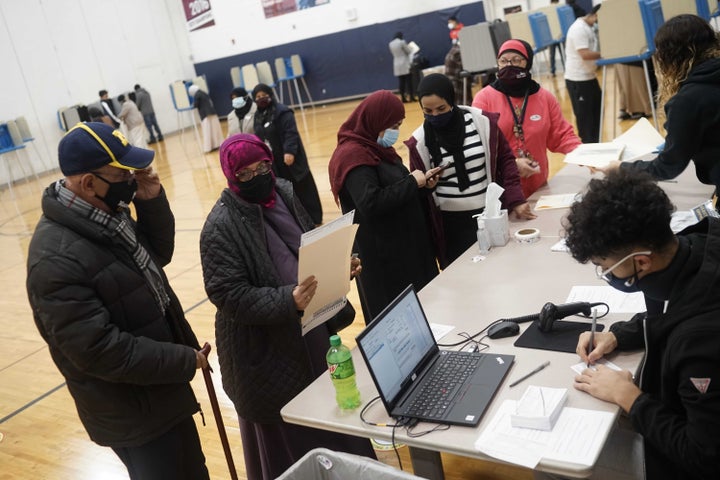
Biden beat Trump by roughly 150,000 votes in Michigan, where Hillary Clinton lost by just 11,000 votes in 2016.Arab and Muslim communities likely substantially contributed to Democratic presidential nominee Joe Biden’s victory in Michigan, according to local activists and organizers. Emgage Action, a Muslim civic advocacy organization that endorsed Biden, said that approximately 81,000 Muslim Americans cast early and absentee votes in the state. (The exact number of votes cast by Muslim Americans in Michigan is not yet known.) Biden beat President Donald Trump by roughly 150,000 votes in Michigan, where Hillary Clinton lost by just 11,000 votes in 2016. Muslim American groups and activists focused on rallying voters before Election Day — setting up phone banks and virtual town halls aimed at maximizing turnout, especially in battleground states. Those efforts, they said, paid off and Michigan is an example of that. “Where would the Democrats be without those 81,000 Muslims?” said Nada Al-Hanooti, executive director of Emgage’s Michigan chapter. She said her organization had been working every day since August to register a record number of Muslims as part of their nationwide Million Muslim Votes campaign, and added that Biden’s victory in Michigan could not have happened without the Muslim and Arab vote. “Muslims showed up for Biden today and we’re going to expect him to show up for us come January,” she said. Although it is difficult to say for sure, the Arab and Muslim vote in the state appears to have had a significant impact. More than 270,000 Muslim Americans live in Michigan, making up nearly 2.75% of the state’s population. More than one-third of residents in Dearborn, a suburb of Detroit, identify as Arab-American or Muslim or both. Biden defeated Trump in Wayne County, which includes Detroit and Dearborn and is the most populous county in the state. Nationwide, Muslim American voters turned out in huge numbers this election, which is in line with patterns across all demographics. Preliminary projections from The Washington Post predict that turnout in 2020 was the highest percentage it’s been since 1900, and the highest number of voters ever. Emgage estimates that over 800,000 Muslim Americans voted nationally, while the Council on American-Islamic Relations (CAIR), the nation’s largest Muslim civil rights and advocacy organization, puts that number at roughly 1 million. According to its own survey, CAIR estimates that 69% of Muslim voters backed Biden. (An NPR poll conducted in the days leading up to and on Election Day found that 64% of Muslim Americans voted for Biden and 35% of voted for Trump.) In 2016, Muslim and Arab voters were credited with Sen. Bernie Sanders (I-Vt.)’s primary win over Clinton. And while Biden wasn’t the first choice for many Arab and Muslim residents in the Dearborn area, many strongly opposed Trump due to his anti-Muslim, anti-immigrant policies and rhetoric. “Just based on all the efforts, I think we really hit the message home that this election is unlike any other election, and it’s a critical matter of life and death to get out the vote this time and I think the community responded really well,” said Sarah Alaoui, a Ph.D. candidate at John Hopkins School of Advanced International Studies and a volunteer with Arab Americans for Biden, a grassroots coalition working to elect Biden. Alaoui believes that Arab Americans’ huge turnout can be attributed to the Biden campaign’s direct engagement with the community; that it spoke to voters in Arabic; and that it reached out to both Arab Muslims and Christians, which showed that it was able to identify and speak to the diversity of the Arab community. Organizers also said endorsements from Sanders and Wayne County’s own Rep. Rashida Tlaib (D-Mich.) helped galvanized Arab and Muslim voters in the state as well. The results mirror early polling and initial exit polling that suggested that high turnout from Arab and Muslim segments of the state assisted Biden’s win. Despite their small numbers overall ― Muslims make up just 1% of the U.S. population ― there are significant concentrations of Muslim Americans in key presidential swing states, including Michigan. Michigan is not only home to a populous and diverse Muslim community, it also has one of the largest mosques in North America, whose congregation can trace its history back 100 years. The state is also the birthplace of the Nation of Islam, a Black political and religious movement founded by Wallace Fard Muhammad in 1930. Youssef Chouhoud, an assistant professor of political science at Christoper Newport University in Virigina, said both Democrats and Republicans often overlooked Muslim and Arab voters due to their comparatively small population size and historic lack of civic engagement nationwide. But that’s changing. Although it is difficult to nail down exact numbers, he is confident that a larger trend is at play. “These numbers are very inexact but what is indisputable is that there has been a much larger turnout in the Arab American community and in the Muslim American community this year than we’ve seen in any previous presidential cycle,” said Chouhoud. “I only see that growing.” Nationwide, more than 66% of Muslims identify as Democrats, according to a 2018 Pew Research poll. Chouhoud said that it is crucial for Democrats to seize this opportunity to invest in Arab and Muslim voters. “It is to the benefit of the Democratic Party to nurture that support and not simply take it for granted. Michigan is going to remain a pivotal state in presidential contests moving forward. So if the Democratic Party is wise, they will nurture their support and not simply ignore it,” add Chouhoud. The work is also far from over for activists; Al-Hanooti said her job isn’t done. Getting out the vote was just the first step to ensure that Arabs and Muslims’ concerns are addressed outside of campaign season. “Regardless, we know we won right now and we feel good, but we’re still rolling up our sleeves and getting to work,” she said. “No one person is going to save the world. So we still have so much work to do.” https://www.huffpost.com/entry/muslim-voters-michigan-biden-trump-2020_n_5fa41369c5b6f1e97fe77a1f
#ElectionResults2020 - Let the Votes Be Counted Please, don’t listen to the president.
Count all the votes.
This shouldn’t be a remotely controversial proposition in a representative democracy. A complete and accurate count is the only way to determine the will of the people who cast ballots. During even typical election years, the process can take days. It takes longer in the highest-turnout election in generations — and that’s before factoring in a pandemic that has driven tens of millions of Americans to vote by mail and has made it far harder to carry out even basic tasks, like vote counting, that involve many people being in enclosed spaces for extended periods. A president who cared about upholding American democracy would do all he could to drive this point home with the public. He would set the example by reassuring the people that the nation’s time-honored electoral system is working as it always has — state by state, county by county, precinct by precinct. President Trump, as usual, is doing the opposite. As growing vote totals in several key battleground states favored Joe Biden, Mr. Trump began casting doubt on the veracity of the counts. Shortly after midnight, the president said falsely on Twitter that the election was being stolen. A few hours later, in a rambling, middle-of-the-night speech from the East Room of the White House, Mr. Trump accused “a very sad group of people” of trying to “disenfranchise” those who had voted for him. He threatened to force the election into the Supreme Court. “We want all voting to stop,” he said. “We don’t want them to find any ballots at four o’clock in the morning and add them to the list. OK?” “This is a fraud on the American public,” Mr. Trump continued. “This is an embarrassment to our country. We were getting ready to win this election. Frankly, we did win this election.” The speech was one of the lowest, most disgraceful moments in an administration filled to the brim with strong competition. It was also self-contradicting. In the same breath that he cast suspicion on counts in states that appeared to be turning against him, he welcomed more counting in states where his totals looked like they were growing. On Wednesday morning, Mr. Trump was at it again, compounding the damage with rageful, misleading tweets. “Last night I was leading, often solidly, in many key States, in almost all instances Democrat run & controlled. Then, one by one, they started to magically disappear as surprise ballot dumps were counted. VERY STRANGE, and the ‘pollsters’ got it completely & historically wrong!” he wrote in a tweet that Twitter flagged, along with several others he has sent, for containing “misleading” content. Mr. Trump is right that the polls were off — by a lot, in some key states. But none of this is “very strange.” Neither candidate won the election on Tuesday night. That determination won’t be made by the candidates’ wishes or the media projections. It will be made by the voters and the workers who count their ballots. States aren’t even required to certify their count until Dec. 8. In the meantime, there are no “surprise ballot dumps” that make votes “magically disappear.” It’s normal for vote totals to change, especially in the hours and days after polls close. When one or the other candidate pulls ahead, it’s not “flipping” the result, because there is no result yet to flip. The irony is that the count could have proceeded more quickly in several battleground states, like Michigan, Wisconsin and Pennsylvania, had Republican lawmakers there followed their counterparts in many other states and allowed for mail ballots to be opened and processed before Election Day. But despite repeated pleas for them to do so, they refused. Now Mr. Trump and his Republican allies are using that refusal to claim that votes are being counted too late. It’s as though they defunded the Fire Department and then got mad when their house burned down. On Wednesday, the Trump campaign announced it would seek a recount in Wisconsin, where Joe Biden leads by a little more than 20,000 votes, or less than 1 percent. That is Mr. Trump’s right, although he will have to pay $3 million out of pocket for it, and statewide recounts only change the margin, on average, by fewer than 300 votes. If anyone has reason to be upset, it is the hundreds of thousands of voters around the country whose mail-in ballots were never delivered to election offices. On Tuesday, a federal judge in Washington ordered the Postal Service to search 12 postal processing facilities in 15 states for any remaining undelivered ballots, which were generally cast overwhelmingly in favor of Democratic candidates. The Postal Service ignored the order, saying it would continue on its own inspection schedule. It is understandable that Americans want to know quickly and clearly the outcome of the presidential election. But that doesn’t change the fact that it takes time to count 150 million votes. Across the country, election workers and administrators are committed to doing their job and are working long hours to ensure that every ballot is counted. No matter how much the nation has come to expect this sort of behavior from Mr. Trump, he always manages to exceed expectations. That doesn’t make it better. To the contrary, it is extremely dangerous. Mr. Trump has for years fanned the flames of rage among his supporters and flooded American society with disinformation. On Wednesday, Mr. Trump tweeted, “They are finding Biden votes all over the place — in Pennsylvania, Wisconsin, and Michigan. So bad for our Country!” Yes, Mr. President. That’s what happens when you count the ballots. It’s up to the rest of us, and especially you, to stay calm and let the electoral process play out as it does every four years. In the end, both parties will have won some and lost some. That’s not fraud. It’s democracy. https://www.nytimes.com/2020/11/04/opinion/vote-count-election-2020.htmlWednesday, November 4, 2020
#Election2020 - Trump's call to halt vote counts is his most brazen swipe at democracy yet
#Election2020 Deep-seated divisions in US contradict democratic values
#Election2020 - 'Authoritarian': Trump condemned for falsely claiming election victory
#Elections2020 - Opinion 2020 Should Be the Last Time We Vote Like This - Turnout was inspiring, but our voting system is badly flawed.
By Farhad Manjoo
Now that the ballots have been cast and we wait to see whose will be counted and whose will be ignored, can we please take a moment to acknowledge what a huge mess this whole thing has been? I don’t mean the big things — the absurd twists in the ugly, never-ending, pandemic-blurred, possibly world-ending presidential election of 2020. No, I’m referring to the smallest, most particular act of this saga: the way we voted. The process of registering your democratic preference, the citizen’s core duty in a democracy. Can we take a moment to acknowledge how terribly inefficient, inaccessible, unfair and just plain backward this process remains in the United States? When all the tallying is done, up to an estimated 160 million Americans will have voted this year — a turnout of about 67 percent of eligible voters. That would be a modern record, and given that it occurred as the coronavirus raged, the casting and counting of all those votes should be regarded as an achievement for the United States’ election system. But that’s not a very high bar, and the biggest problem about how America conducts its elections is that we have been too tolerant, for too long, of a bar set way too low. High turnout notwithstanding, the glaring lesson of this year’s election is that we cannot go on this way. From the endless lines to the pre-election legal wrangling to the president’s constant effort to undermine the process, every ballot cast this year was a leap of faith: Would it get there in time? Would it get there at all? Would they try to toss it out because you voted from a car? Would they throw it out because you signed your name carelessly? Would judges be called upon to alter the mail-in deadline after the election had already begun? Would you ever be able to find the one dropbox in your sprawling county? And, after all that, would anyone believe the count, anyway? All of this uncertainty is unworthy of the world’s “oldest democracy.” American elections are broken, and because the legitimacy of the entire political system rests upon our votes, their brokenness mars every other part of our democracy. Fixing how we vote isn’t a mystery. Experts have recommended several specific measures that could greatly expand the franchise, including federal measures to make registration easier, expand early voting and ensure we have adequate resources at polling locations to prevent long lines.The difficulty is, instead, political. For decades, limiting who gets to vote has been a key strategy of the Republican Party — though usually people on the right have not been quite so proud of this fact. This year, as has happened often with Donald Trump, subtext became text. In the weeks before Election Day, Trump all but boasted about the role that voter intimidation and suppression would play in his campaign. “We’re watching you, Philadelphia,” Trump warned in Pennsylvania last week, suggesting something untoward going on with the vote in a city highly unfavorable to his candidacy. “We’re watching at the highest level.” If Democrats win the presidency and the Senate, undoing the Republican bet on disenfranchisement ought to be among their highest priorities. One reason voting remains so onerous is that we rarely think about it except close to Election Day. The further out we get from the vote, the less urgency there is to fix things. But nothing else in a democracy works if voting doesn’t work. So, please, let’s fix voting first. None of the problems we saw this year were new; inaccessibility, confusion, bureaucratic hoop-jumping and outright intimidation have long been hallmarks of American elections. Though politicians speak dreamily of the importance of voting, the United States badly lags other democracies on many measures of electoral success; in many countries, a turnout rate of about two-thirds wouldn’t rank as particularly extraordinary. Voting in this country is also highly unequal. Compared with turnout among whites, turnout among people of color is often lower. It’s hard to argue this isn’t by design, a result of decades of deliberate disenfranchisement and the perpetuation, still, of voter suppression efforts aimed at people of color. But the best way to appreciate the shortcomings in how we vote isn’t by looking at other countries. Instead, compare the act of voting to other modern services. Set against so many less important transactions in American life — ordering a complicated coffee from a national chain, or finding the best sushi place in a town you’ve never visited before — the simple act of casting a ballot is laughably antiquated. Across much of the country, registering to vote is a labyrinth. In most states, if you haven’t remembered to register by Election Day, you’re too late. Not that you’d necessarily know about it. In between elections, it’s become common for states to “purge” voter rolls of people deemed ineligible, a process that many voters only learn about when they show up at the polls and are denied the chance to vote. The system is also fragmented and underfunded, and it suffers from misaligned incentives. In many countries, elections are administered by nonpartisan agencies that set rules for the entire nation. In the United States, elections are often run by elected officials — Republican or Democratic secretaries of state, for instance — and rules about who gets to vote and how they do so differ from state to state. Because states and the federal government do not sufficiently fund the voting system, it is often unable to meet anything more than ordinary demand. In the last few weeks, Americans in many cities have waited hours for the chance to vote, which is both inspiring and a really terrible comment on the state of our democracy. As Amanda Mull noted recently in The Atlantic, in 2020 the act of voting was elevated to that most sacrosanct place in American society — it became feel-good marketing for brands. This year it felt as if just about every brand in America turned giddy about the democratic process. Retailers and fashion designers and restaurant chains couldn’t stop reminding us to “Vote!” But the embrace of voting as a way to project corporate virtue only highlights how little the government has done to promote this supposedly precious democratic act. “As long as America’s leaders decline to make the system-wide changes that would help more people vote, corporations with something to sell will seep into the void,” Mull wrote. She’s right, and it’s terrible. Voting shouldn’t be this difficult or this uncertain. We know what needs to be done to improve the process. And we shouldn’t wait until another election to get it done.