Tuesday, May 5, 2020
#PTMWorldWideProtests - Thousands rally against fatal attack on Pashtun leader in NW

Thousands of residents of Pakistan's former tribal districts in the northwest defied a government ban on gatherings meant to contain the spread of the coronavirus to rally Tuesday against a recent attack on their top leader.
Most of the protesters were not wearing face masks and did not adhere to social distancing guidelines when they gathered in Wana, a town in the former Taliban stronghold of South Waziristan that borders Afghanistan.
Rallygoers demanded the arrest of the assailants who wounded Arif Wazir in his hometown of Wana last week. Wazir, who died in a hospital over the weekend, was a top leader of the Pashtun Protection Movement, which has emerged as a force among the country's Pashtun minority in recent years.
Similar rallies were held in the nearby North Waziristan district and elsewhere.
Wazir was a vocal critic of the army. His group contends the military is waging a campaign of intimidation as it battles Islamist militants in the rugged border region. The military and the government deny the charge.
Pakistan on Tuesday reported another spike in deaths from the coronavirus with 28 new fatalities in the past 24 hours.
So far, 514 Pakistanis have died from the illness caused by the virus and most of the deaths were reported in the northwestern Khyber Pakhtunkhwa province, where 194 people have died from the virus, which has infected more than 21,000.
Killing of 4 dissidents in a week shows #Covid has not slowed down Pakistani ‘deep state’

SRIJAN SHUKLA
Activists living abroad allege that Pakistani 'deep state' is using the cover of the Covid-19 pandemic to act on dissidents.
The relatively unnoticed killing of four leaders of the Baloch and Pashtun movements have rocked the Pakistani activist and dissident community in the country and abroad.
Arif Wazir, a senior leader of the Pashtun Tahaffuz Movement, was shot several times outside his home in Wana in Southern Waziristan Friday. On the same day, Sajid Hussain — an exiled dissident and editor of Balochistan Times — was found dead next to the Fyris river in Sweden after he went missing in March. Two other student activists Ihsan Baloch and Shahdad Baloch were also killed in Balochistan over the past week.
Wazir succumbed to his injuries Saturday.
All of this has happened while debt-ridden Pakistan has been grappling with the coronavirus pandemic that is rapidly engulfing the country.
Some critics of the military-intelligence establishment say that the “deep state” — a reference to the all-powerful military-intelligence consensus — has used the cover of the pandemic to kill dissidents and activists since the world is focussed on Covid-19. However, others see these killings as part of the broader problem of exclusion and intolerance in the Pakistani state.
“All these deaths or if you call them, murders, compress into a matter of days the coordinates of all spatio-temporal oppression embedded in exclusionist idea of a country with no ethnic diversity. Their deaths are sobering reminders of the hard path that the struggle for an alternative future is,” wrote Hurmat Ali Shah of the Ryerson University, who researches Pashtun socio-cultural issues.
A suppression of free press in Pakistan over the past year has ensured that these killings received no real coverage in mainstream media, and all collective anger and sorrow was manifested on social media.
“Arif Wazir’s murder is a reminder of the days when hundreds of our elders were martyred. Back then these games had no consequences for Establishment. But now v (we) know the power of unity & protest. This is a long struggle & our martyrs only solidify our resolve #StateKilledArifWazir,” tweeted Mohsin Dawar, one of the two members of the national assembly from the Pashtun Tahafuz Movement (PTM).
Deep state acting under the shadow of Covid’
Given that these killings are occurring at almost the same time, critics allege that the Pakistani deep state is using the Covid-19 crisis to eliminate the leadership of both the Baloch and Pashtun movements.
“Arif Wazir and Sajid Hussain are both victims of state action but without the state being visible. That is how the military operates in Pakistan — in shadows, without leaving footprints,” Taha Siddiqui, exiled Pakistani journalist and founder of Safenewsrooms, told ThePrint.
The PTM is a peaceful people’s movement that has been demanding rights for the country’s Pashtun population for the past year and a half. Its anti-army and anti-terrorism stances are what have made PTM a target of the Pakistani military establishment, often leading to its leaders being detained and arrested. Meanwhile, the members of Baloch movement have for long been termed as enemies of the state by the Pakistani Army.
“It is very clear given the profiles of the people that they were enemies of the Pakistani state … at least that’s how the deep state perceives them to be,” said Sushant Sareen, senior fellow at Observer Research Foundation and an expert on Pakistan and its terrorism groups.
Wazir was a prominent PTM leader and is the 18th member in his family to have been killed in Waziristan by terrorist groups operating in the region. His cousin Ali Wazir is the second member of the national assembly from the PTM. The Wazir clan has been staunch proponents of Pashtun rights and has fought with local terrorist groups such as the Pakistani Taliban — often resulting in loss of lives.
“Usually these kind of murders lead to first a statement and then an investigation. But when it came to murders in the family of Ali Wazir, there was never a statement made, no investigation was launched, and we have never seen an outcome,” said Xenia Rasul, of Cambridge University.
While there is a history of killings when it comes to the family of Wazir, the mysterious death of Sajid Hussain in a foreign land appears more murky.
“A death of a Pakistani dissident in Sweden would have created a lot of global uproar under ordinary times. But Covid definitely offers you a cover. It gives you the camouflage to take out someone in a foreign land that is not really possible in ordinary times,” said Sareen.
Pakistan’s overseas dissidents live in fear
Hussain’s death coupled with a few more recent events has led to the overseas Pakistani dissident and exiled community increasingly fear for lives.
“The death of an exiled journalist Sajid Hussain in Europe after he mysteriously went missing for 2 months is alarming. Just like me, he left Pakistan because of threats from the army,” said Siddiqui, who is currently living in France.
Hussain apparently went missing in an area populated with Pakistanis who have links to the Pakistan embassy and the drug cartel there, according to a report in Nyazamana.
This, according to Sareen, points to a new trend in how Pakistani authorities are potentially using diaspora assets to harass and intimidate Pakistani dissidents living overseas.
Over the past few months, there have been other instances of Pakistani dissidents being targeted overseas. In February, a Pakistani dissident blogger was attacked outside his home in The Netherlands.
“In the past, Pakistan Army officials, including the former military dictator General Musharraf in a recent interview, have suggested killing dissidents abroad and it seems like they are now putting that plan in action. This is following the Saudi, Chinese, Turkish and Russian playbook,” remarked Siddiqui.
#CoronaInPakistan - #Pakistan becomes 29th country with 500 Covid-19 deaths

Ikram Junaidi
While around 1,000 cases and over 20 deaths have been reported daily in the country during the last five days, in global ranking Pakistan has been ranked 24th in terms of most number of cases and has become 29th country in which over 500 deaths have been reported due to the novel coronavirus (Covid-19).
Moreover in Asia, Pakistan has been ranked sixth in terms of most number of cases and eighth in terms of most number of deaths.
According to data available on the website of the Ministry of National Health Services, the countries in which most number of deaths have been reported are: the United States with around 70,000 deaths, Italy over 29,000, United Kingdom over 28,000, Spain 25,000 and India more than 1,500 deaths.
On the other hand the neighbouring countries China and Iran, which were initially at topmost ranks respectively in terms of number of cases, have now been dropped to double digit ranks.
Situation to start improving next month, hopes official
Executive Director of the National Institute of Health (NIH) Maj Gen Prof Dr Aamer Ikram told Dawn that things would start improving for Pakistan next month.
He said according to different models, the total number of cases in Pakistan could go up to 150,000 but hoped that the number of cases would remain less than 100,000 by May 30.
“The curves in top nine countries, including Italy and Spain, have started straightening. Brazil and Russia are going to become new hubs of coronavirus. Curve will start flattening in Pakistan after May 30,” he said.
Prof Ikram said that he was hoping that surge in the number of cases would slow due to increase in temperature but a sudden spell of rain helped the virus to spread.
“However still the situation is under control and we believe that Pakistan will be able to pass through difficult time without a major damage,” he hoped.
Microbiologist Prof Dr Javed Usman, while talking to Dawn, said that the virus got destroyed at 56 degree Celsius which was not possible to attain in the human body as human cells were destroyed at over 42 degree Celsius. Moreover temperature inside buildings usually remained at 30s degree Celsius, he said.
“However it is a fact the behaviour of the virus is not as aggressive in the subcontinent as it is in the US and Italy. As the virus is made of RNA (ribonucleic acid) it has 100 times more tendency to change or mutate itself. That is why it is most difficult to invent vaccines for RNA viruses such as HIV and hepatitis C viruses,” he said.
However, an expert working at the NIH, requesting not to be quoted, differed with the opinion that the virus would be controlled in Pakistan after May 30.
“Though it is being claimed that the first phase of the virus spread has completed in Pakistan, I believe that escalation of the first wave has just started due to which we are getting around 1,000 cases and over 20 deaths on daily basis. It shows that the month of May will be problematic,” he said. “On the other hand the government is going to relax restrictions on public movement and our masses are not responsible. It will further increase the problems for the health sector, which may collapse,” he feared.
#Pakistan - #CoronaInPakistan - Imran will be responsible if #coronavirus situation worsens: Kaira

Pakistan People’s Party (PPP) Central Punjab President Qamar Zaman Kaira on Tuesday has

While addressing a press conference after the PPP Lahore Division (Rural) video-link meeting in the PPP Punjab Secretariat, flanked by general secretary Chaudhary Manzoor Ahmed, and Information Secretary Syed Hassan Murtaza and other leaders, Kaira said that nowadays there is a debate lack of national consensus on coronavirus crises, and it was the responsibility of the federal government to establish the national consensus, and not the opposition’s job, in which it failed miserably.
“At the onset of the coronavirus, Bilawal Bhutto has offered full cooperation to the government to create a national consensus, but the federal government did not respond positively,” he said.
“The PPP leader said that war with corona is only possible through mutual cooperation and consensus if the situation worsens across the country, the prime minister and his cabinet would be responsible,” he warned.
“The Sindh government consulted with all to deal with the crisis,” he added.
“The Punjab government which is already suffering from financial difficulties has not been able to meet its target in collecting taxes, and its development, health, education and welfare budgets have been cut.,” he said.
“The federal government did not give a single rupee to Sindh for the corona crisis, in fact, it did not extend help to Punjab against the pandemic,” he added.
“Nothing was provided to the doctors who are front line soldiers in the war against corona,” he said.
“The Sindh government had proposed a complete lockdown in the first 15 days, and all the provinces of the country followed the steps of the Sindh government,” he recalled.The PPP Central Punjab president noted that there is always room for amendments in the constitution for improvement but no compromise will be made on the fundamental human rights and the financial and administrative powers of the provinces.He demanded the federal government should release the entire share under the NFC so the provinces, including Punjab, can deal with the coronavirus in a better way.He alleged that the government had announced a package of Rs1,240 billion, but not a single penny delivered yet while quoting figures the PPP leader reminded that we had sought an explanation in this regard but did not get any reply.“Punjab had to receive Rs1,601 billion but got Rs1,046 billion, the remaining is a shortfall, Punjab had a target of 284 in terms of taxes but 154 billion was collected, 693 billion was a debt which has reached 943 billion rupees, Rs63 billion are to be paid in interest, budgets of various departments in Punjab have been cut,” he said.
Qamar Zaman Kaira said that now the 18th Amendment is itself constitution, main forum of the 18th amendment is the parliament. The government has left the 18th Amendment to hide its incompetence from the coronavirus.
While criticising Imran Khan’s policies, Qamar Zaman Kaira warned that with this mindset and practice, corona cannot be dealt with. He maintained that the federal and Punjab government has failed to provide a national response to the coronavirus crisis.
The government is making matters controversial rather than developing national consensus.
“The government has started a debate on the 18th amendment to hide its incompetence from the coronavirus,” he alleged.
#Pakistan - #CoronaInPakistan - Bilawal blasts PTI govt for not supporting provinces amid #coronavirus crisis
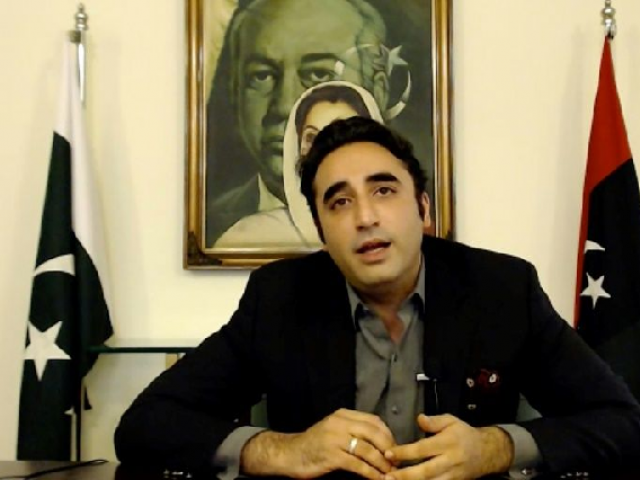
Addressing the People’s Doctors Forum at his residence in Karachi on Tuesday, Bilawal said he has been demanding the relief package for all the provinces not only for Sindh “but instead of helping, the federal government is creating obstacles in our way”.
The PTI government’s response to the Covid-19, he said, has not only made Covid-19 induced lockdown less effective “but further spread the coronavirus in the country”.In a bid to create difficulties for the Sindh government, the PPP leader said Sindh Governor Imran Ismail, who is a federal government’s representative, is not signing relief package ordinance proposed by the provincial government.The relief package includes job and salary protection for the people of the province, rebates on utility bills, relief in school fees and rebates on house rent,” he added.Bilawal also announced to give a special package to the frontline doctors “bravely fighting” the Covid-19 pandemic similar to the one given to the soldiers fighting against terrorism.He announced the package after third doctor, Furqanul Haq, succumbed to the deadly virus reportedly due to the unavailability of ventilators in Karachi.
However, Sindh health department officials, denied the reports of shortage of ventilators after initiating an inquiry into the matter.
Earlier in the day, Sindh Chief Minister Murad Ali Shah said the province’s health authorities carried out 2,250 tests and 307 were positive during the last 24 hours, bringing the total number of Covid-19 cases to over 8,000.
He also said 237 of the 307 cases were from Karachi. The chief minister confirmed 11 new deaths in Sindh, which took the provincial death toll to 148.Currently, the nationwide tally of Covid-19 patients have surpassed 22,000 mark. with 8,133 cases in Punjab 3,499 in Khyber-Pakhtunkhwa, 1,495 in Balochistan, 386 in Gilgit-Baltistan, 464 in Islamabad and 71 in Azad Jammu and Kashmir.
https://tribune.com.pk/story/2214845/3-bilawal-blasts-pti-govt-not-supporting-provinces-amid-coronavirus-crisis/
کورونا سے لڑنے والے ڈاکٹرز قومی ہیرو ہیں، بلاول - #CoronaInPakistan
پاکستان پیپلزپارٹی کے چیئرمین بلاول بھٹو زرداری نے کہا ہے کہ کورونا جیسی وباء سے لڑنے والے ڈاکٹرز ہمارے قومی ہیرو ہیں، جو اس جنگ میں بہت بہادری کے ساتھ لڑ رہے ہیں۔ میں نے سندھ حکومت کو ہدایت کی ہے کہ جس طرح دہشتگردی کے خلاف لڑنے والے بہادر سپاہیوں کے لئے پیکیج دیا گیا تھا، اسی طرز کا خصوصی پیکیج ان کو بھی دیا جائے، جس کا اعلان جلد کردیا جائے گا۔
ان خیالات کا اظہار انہوں نے بلاول ہاؤس کراچی میں ملک بھر سے پیپلز ڈاکٹرز فورم کے رہنماؤں سے خطاب کرتے ہوئے کیا۔
ویڈیو لنک کے ذریعے ہونے والے اجلاس میں ڈاکٹر کریم خواجہ، پنجاب کے صدر ڈاکٹرخیام حفیظ، ڈاکٹر جاوید اقبال، ڈاکٹر ارسلان دیوان، سندھ کے صدر ڈاکٹر رزاق شیخ، ڈاکٹر یار علی جمالی، کے پی کے صدر ڈاکٹر نثار احمد خان، ڈاکٹر داؤد اقبال، ڈاکٹر عاشق حسین شاہ اور افضل ابڑو کے علاوہ دیگر نےشرکت کی۔
اجلاس سے خطاب کرتے ہوئے چیئرمین پی پی پی بلاول بھٹو زرداری کا کہنا تھا کہ وفاقی حکومت کے اکنامک بیل آؤٹ پیکیج نہ آنے سے لاک ڈاؤن میں نرمی ہوئی اور وباء پھیلی۔
انہوں نے کہا کہ پوری دنیا میں وفاقی حکومتوں نے ریلیف پیکیج دیئے ہیں، ہماری وفاقی حکومت نے شہید بے نظیر اِنکم سپورٹ پروگرام کے علاوہ کچھ نہیں دیا ہے، ہم صرف سندھ کو نہیں بلکہ تمام صوبوں کو ریلیف پیکیج دینے کی بات کرتے ہیں۔
چیئرمین بلاول بھٹو زرداری کا یہ بھی کہنا تھا کہ مدد کرنے کے بجائے ہماری راہ میں رکاوٹیں کھڑی کی جارہی ہیں، سندھ میں وفاق کے نمائندہ، سندھ حکومت کے عوام کو دیئے گئے ریلیف پیکیج آرڈیننس پر دستخط ہی نہیں کررہے ہیں۔
انہوں نے کہا کہ اس پیکیج کے تحت صوبے کے عوام کو ملازمتوں اور تنخواہوں کا تحفظ، یوٹیلٹی بلز میں چھوٹ، اسکول فیسوں کی مد میں ریلیف اور گھروں کے کرائے میں چھوٹ شامل ہے، جبکہ سندھ حکومت اس آرڈیننس کے ذریعے تمام صوبائی ٹیکسز میں بھی صوبے کے عوام کو ریلیف دینا چاہتی ہے۔
چیئرمین بلاول بھٹو زرداری نے کہا کہ ہم بھی چاہتے ہیں کہ لاک ڈاؤن ختم ہو، مگر اس سے پہلے ہمیں لوگوں کی جان کے تحفظ کو یقینی بنانا ہوگا۔ ٹیسٹ کٹس وافر مقدار میں صوبوں کو دینا ہوں گی اور اسپتالوں میں سہولتوں میں بھی اضافہ کرنا ہوگا۔
طبی سہولتوں پر بات کرتے ہوئے چیئرمین پاکستان پیپلز پارٹی کا کہنا تھا کہ وفاقی حکومت کے پی کے میں بھی کچھ نہیں کررہی، جہاں کے عوام نے انہیں مینڈیٹ دیا، ہم کہتے ہیں صرف سندھ ہی نہیں وفاق تمام صوبوں کی مدد کرے، اس وقت صوبوں کو اس کی ضرورت ہے۔
بلاول بھٹو زرداری کا کہنا تھا کہ وفاق اور تمام صوبوں کو اس بات کا ادراک ہونا چاہیے کہ سندھ کے بروقت اقدامات نے اس وباء کو پھیلنے نہیں دیا۔ انہوں نے پیپلز ڈاکٹرز فورم کو ہدایت کی کہ وہ عوام کو کورونا جیسی وباء سے محفوظ رہنے اور حفاظتی اقدامات سے آگاہ کرنے کی عوامی مہم کو مزید تیز کریں۔
اس سے قبل اجلاس میں پارٹی چیئرمین کو ملک میں طبی سہولیات کے بارے میں بتایا گیا، کے پی کے سے ڈاکٹر داؤد اقبال کا کہنا تھا کہ اس وقت سب سے زیادہ اموات کے پی کے میں ہوئی ہیں اور سب سے زیادہ ڈاکٹرز بھی وہیں پر متاثر ہوئے ہیں۔
جس کی وجہ پی پی ای (ڈاکٹرز اور طبی عملے کی حفاظت کی اشیا) کی عدم فراہمی ہے، کورونا سے لڑتے ہوئے جن ڈاکٹرز نے جان کا نذرانہ دیا، کے پی کے حکومت کے کسی بھی نمائندے نے ان کی فیملی سے رابطہ نہیں کیا، جس سے ڈاکٹرز، نرسز اور پیرا میڈیکل اسٹاف کا مورال بری طرح سے متاثر ہوا ہے، کے پی کے میں ٹیسٹ کی سہولیات بھی بہت کم ہیں۔
پنجاب سے ڈاکٹر ارسلان دیوان نے چیئرمین بلاول بھٹو زرداری کو بتایا کہ پنجاب کے ایکسپو سینٹر میں قائم کورونا سینٹر میں آکسیجن تک کی سہولت موجود نہیں ہے، پانی کی عدم دستیابی پر بھی مریض احتجاج کررہے ہیں۔
#CoronaInPakistan - Sindh to announce special package for doctors like soldiers fighting against terrorism, Chairman #PPP

PPP Chairmain expressed these views while addressing the People’s Doctors Forum office-bearers at Bilawal House Karachi through video link.
PDF President Dr Karim Khawaja, Punjab President Dr Khayyam Hafeez, Dr Javed Iqbal and Dr Arsalan Dewan, Sindh President Dr Razzaq Sheikh Dr Yar Ali Jamali, KP President Dr Nisar Ahmad Khan and Dr Dawood Iqbal, Dr Ashiq Hussain Shah and Afzal Abro and others participated.
Bilawal Bhutto Zardari said that the non-arrival of the federal government’s economic bailout package reduced the effectiveness of the lockdown and further spread the COVID-19 outbreak.
He said that the federal governments all over the world have given such relief packages but ours has given nothing except continuing the Benazir Income Support Program funding started by PPP, he slammed.
PPP Chairman said he has been talking about giving relief package not only to Sindh but to all the provinces alike but instead of helping, federal government is placing obstacles in our way.
Bilawal Bhutto Zardari said that the federal representative – Governor – Sindh is not even signing the relief package ordinance given to the people by the Sindh government as an attempt to create hinderance. The package includes job and salary protection for the people of the province, rebates on utility bills, relief in school fees and rebates on house rent. Sindh government wants to give relief to the people of the province in all provincial taxes through this ordinance, he added.
He further said that we also want the lockdown to end but before that we have to ensure the safety of people’s lives and urged that abundant test kits will have to be given to the provinces and facilities in hospitals will also have to be increased to cope with the situation.
On medical facilities, he said that the federal government is not doing anything even in the Khyber-Pakhtunkhwa where the people had given them a mandate. We say that not only Sindh but the federation should help all the provinces as they need it, he added.
PPP Chairmain said that the federation and all the provinces should realise that timely measures taken by Sindh did not allow the COVID-19 outbreak epidemic to worsen.
Bilawal Bhutto Zardari directed the People’s Doctors Forum (PDF) to intensify the public campaign to keep the people safe from pandemics like COVID19 and to make them aware of safety measures.
Earlier, in the meeting, the Party Chairman was briefed about the medical facilities in the country.
Dr Dawood Iqbal from KPK said that at that time most of the deaths from COVID19 occurred in KPK and most of the doctors were also affected due to lack of safety equipment. No representative of the KPK government who lost his life while fighting COVID19 has yet contacted the bereaved family, which has severely affected the morale of doctors, nurses and paramedical staff. Test facilities are also very limited in KPK, he informed.
Dr Arsalan Dewan from Punjab told the PPP Chairmain that the Center for COVID19 set up at the Expo Center in Punjab did not even have oxygen facilities and patients are protesting against the unavailability of potable water.
https://www.ppp.org.pk/2020/05/05/sindh-to-announce-special-package-for-doctors-like-soldiers-fighting-against-terrorism-chairman-ppp/
Monday, May 4, 2020
#CoronaInPakistan #coronavirusinpakistan - 105 passengers repatriated from UAE to Pakistan test positive for Covid-19

Tahir Naseer
At least 105 Pakistanis who were flown to Islamabad from the United Arab Emirates on a repatriation flight have tested positive for the coronavirus, Rawalpindi Deputy Commissioner retired Capt Anwarul Haq said on Monday.
The development, along with a rise in positive cases among passengers returning from other Gulf countries, has caused concern among officials and Special Assistant to Prime Minister on National Security Dr Moeed Yusuf said the matter has been taken up with UAE authorities.The 105 passengers were among 209 nationals who were brought home on an Etihad Airways flight from Abu Dhabi on April 28, according to the government's Covid-19 portal. The travelers were initially moved to the quarantine facility at the Fatima Jinnah Women University.
However, the 105 people who tested positive were eventually shifted to the Rawalpindi Institute of Urology (RIU) while 79 others who tested negative were allowed to go home with directions to self-isolate, Haq told DawnNewsTV.
He said the tests of 27 passengers were being conducted again to verify their status.
The government has been running a repatriation operation through the Pakistan International Airlines (PIA) and other airlines to bring home Pakistanis stranded in other countries.
The development comes days after 190 passengers who were brought to Karachi through special flights from Dubai, Sharjah and Colombo tested positive for the virus.
Out of the 190, 92 belonged to Sindh, 56 to Punjab, 24 to Khyber Pakhtunkhwa and 18 to Balochistan, according to Sindh Chief Minister Murad Ali Shah.
Also, Dawn reported last week that a total of 259 passengers who were among the 3,554 Pakistanis who came back to Punjab by 22 special flights from various countries during the last two weeks tested positive for the coronavirus.More than 760 passengers, who returned from the UAE, Qatar, New York and Colombo on April 28 and April 29, had been quarantined to complete their incubation period before undergoing the testing process.
After exploiting these poor low-paid workers, the UAE is sending them back to Pakistan to bear the health burden.
Issue taken up with UAE
Speaking on Geo News programme Aaj Shahzeb Khanzada Kay Saath, SAPM Yusuf said that after the government had opened airports for some flights on April 4, it was decided that the number of passengers being repatriated will be increased gradually to see if the country's health facilities can handle the new cases.
He said approximately 15,000-16,000 Pakistanis have so far been brought home and on certain flights, a "majority" of the passengers tested positive for Covid-19.
According to Yusuf, this was seen predominantly on flights coming from the UAE which carried labourers who often live in cramped and unhygienic conditions in the Gulf country.
"We have now formally taken this up with the UAE government," he said, noting that if arriving passengers continue to test positive, the provinces' health capacity will come under pressure and the government will have to reduce the number of people being repatriated.
He said the government wants to bring home a maximum number of people but in a "safe manner".
Citing data and health experts, he said it was wrong to assume that all the passengers get infected after travelling in an airplane, adding that many of them are positive prior to travelling but often don't show any symptoms.
Answering a question, he said other countries are often not willing to spend PCR Covid-19 tests on passengers travelling to Pakistan and often reserve them for their own citizens. They are ready to conduct other types of tests of the passengers but those aren't considered accurate by Pakistan health experts, Yusuf added.
He said although several thousand Pakistani workers in the Gulf countries are returning home because they have been laid off, many others have been suspended or given paid or unpaid leaves.
However, he acknowledged that all of these workers are among Pakistanis who send remittances home and therefore "a lot of work is being done and we are talking to other countries to save the jobs of as many labourers as possible".
Sewer Cleaners Wanted in Pakistan: Only Christians Need Apply.

In Pakistan, descendants of lower-caste Hindus who converted to Christianity centuries ago still find themselves marginalized, relegated to dirty jobs, and grim fates.
Before Jamshed Eric plunges deep below Karachi’s streets to clean out clogged sewers with his bare hands, he says a little prayer to Jesus to keep him safe.The work is grueling, and he wears no mask or gloves to protect him from the stinking sludge and toxic plumes of gas that lurk deep underground.“It is a difficult job,” Mr. Eric said. “In the gutter, I am often surrounded by swarms of cockroaches.” After a long day, the stench of his work lingers even at home, a constant reminder of his place in life. “When I raise my hand to my mouth to eat, it smells of sewage,” he said.
A recent spate of deaths among Christian sewer cleaners in Pakistan underscores how the caste discrimination that once governed the Indian subcontinent’s Hindus lingers, no matter the religion.Like thousands of other lower-caste Hindus, Mr. Eric’s ancestors converted to Christianity centuries ago, hoping to escape a cycle of discrimination that ruled over every aspect of their lives: what wells of water they could drink from, what jobs they could hold. Manual sewer cleaners, known as sweepers, are at the bottom of that hierarchy, the most untouchable of the untouchable Hindu castes.
But when the Indian subcontinent broke up in 1947 and Pakistan was formed as a homeland for the region’s Muslims, a new, informal system of discrimination formed. In Pakistan, Muslims sit at the top of the hierarchy. And as one of Pakistan’s small Christian minority, Mr. Eric has now been forced into the same work his Hindu ancestors had tried to avoid through religious conversion. Although India has outlawed caste-based discrimination with mixed success, in Pakistan it is almost encouraged by the state. In July, the Pakistani military placed newspaper advertisements for sewer sweepers with the caveat that only Christians should apply. After activists protested, the religious requirement was removed.
But municipalities across Pakistan rely on Christian sweepers like Mr. Eric. In the sprawling port city of Karachi, sweepers keep the sewer system flowing, using their bare hands to unclog crumbling drainpipes of feces, plastic bags and hazardous hospital refuse, part of the 1,750 million liters of waste the city’s 20 million residents produce daily.
On a recent day Mr. Eric, 40, had been hired to clean three sewers for $6.
Mr. Eric sends his son to school far from the crowded and segregated neighborhood the city’s sewer cleaners live in, hoping to free him of the discrimination that forced him into this work. Back home, the neighborhood lacks safe drinking water and schools. Swarms of mosquitoes, piles of garbage and overflowing gutters are the area’s only abundance.
While most sweepers like Mr. Eric are illiterate, his generation has been more determined to push their children to attend school to break the cycle of discrimination, just as their ancestors tried to do when they converted. But the children still find themselves discriminated against, forced to adopt the profession of their fathers.Mary James Gill, a former parliamentarian who runs the Sweepers are Superheroes advocacy group, has lobbied for years to pressure the government to formally ban manual sewage cleaning work. But most of the sweepers are illiterate and unorganized, she said, making it easy for the authorities to pressure them to accept the jobs as their only means of income.While Christians make up only 1.6 percent of Pakistan’s population of some 200 million, according to a 1998 government census, rights groups believe they fill about 80 percent of the sweeper jobs. Lower-caste Hindus mostly fill the rest of the slots.When Karachi’s municipality tried to recruit Muslims to unclog gutters, they refused to get down into the sewers, instead sweeping the streets. The job was left to Christians like Mr. Eric, known derogatorily as “choora,” or dirty.
They spend hours inside the city’s sewers. Almost all of them develop skin and respiratory problems because of constant contact with human waste and toxic fumes. And for some, the job has been lethal. “I have seen death from very near,” said Michael Sadiq, legs trembling as he thought about his two-decade career as a sweeper.
Last August, Mr. Sadiq and his relatives, Rafiq Murad and Riaz Masih, sweepers for Karachi’s municipality, were relaxing on their only day off when they were interrupted by a call from their supervisor, ordering them to snap to it.Mr. Murad was the first to step into a gutter 18 feet deep with a rope tied around his waist. As he cleaned the detritus, a flood of putrid black water carrying sand, stones, sludge and a swarm of gases swept him away.Mr. Sadiq scrambled into the sewer to save his cousin but was overwhelmed by the toxic mix and fainted. Mr. Masih followed to help his cousins, but the fumes asphyxiated him, his lifeless body swept away without a struggle. While Mr. Sadiq and Mr. Murad were saved, Mr. Masih was buried so deep, an excavator worked for four hours to extract his dead body from the stinking sludge it was buried under.
“This work has become so dangerous that I need to find a way out,” Mr. Sadiq said. But he, like the rest of the sweepers, is a poor and illiterate Christian, and no other jobs are open to him, he lamented. Two months after Mr. Masih died, two more sewer cleaners died on the job a few miles away. Another sweeper died at the beginning of this month.
Doctors often refuse to treat the sweepers, who are seen as unclean and untouchable.
Officially, Pakistan denies the existence of caste-based practices in the country. But across the country, the discrimination persists.
One form of abuse commonly meted out on Pakistan’s religious minorities has been to accuse them of blasphemy, a crime that is punishable by death in the country, and that at times has been used to settle personal disputes.
In one infamous case in 2010, Asia Bibi, a Christian woman, was sentenced to death, accused of blaspheming Islam. It later emerged that her Muslim colleagues had ordered her to fetch water as they harvested berries on a hot day. When she drank from the communal cup, they accused her of polluting it and an argument ensued.The case was eventually thrown out for lack of evidence, after Ms. Bibi spent eight years on death row and her family was forced into hiding by the death threats they received.Pakistan has taken a few steps to protect and empower some minorities, but the efforts have failed to help much. A bill was passed in 2009 to reserve 5 percent of all government jobs for non-Muslims. But over a decade later, that goal has not been reached, officials say.
Mr. Eric feels it is only a matter of time before he dies on the job. But he hopes his son can excel in school and shake off the discrimination that has plagued the family for generations.
“After hearing of the deaths in the gutters, I think about what will happen to my family if I die,” Mr. Eric said. “But Jesus Christ will take care of them.”
“I don’t care about my life as long as I can provide my family with a decent living.”
https://www.nytimes.com/2020/05/04/world/asia/pakistan-christians-sweepers.html
#bilawalfightsagainstcorona #bilawalbhuttoleadsnation - Imran khan lives in cuckoo’s land, Palwasha Khan

Deputy Secretary Information Pakistan Peoples Party, Palwasha Khan in a reaction to Imran Khan’s address to his ‘Tigers’ has said that they should get him checked by a psychiatrist because he says that the lockdown has created issues.
Palwasha Khan said that the Covid-19 is taking human lives including our doctors and paramedical staff but the Prime Minister is displaying anger towards the lockdown. When Sindh imposed lockdown, at the time, Imran Khan and his tigers had incited people against lockdown in Sindh and the governor and PTI’s federal minister openly violated SOPs. If from the very beginning, the lockdown had been imposed all over Pakistan, we would have succeeded in defeating Covid-19.
Palwasha Khan said that the economy of the country was in a dire state even before Covid-19 had reached Pakistan. One million people had lost their jobs and thousands of newspaper workers had been laid off. Palwasha Khan said that the incompetent prime minister lives in cuckoo’s land and says that a smart lockdown will be imposed if Covid-19 spreads further.
پاکستان پیپلز پارٹی کی مرکزی ڈپٹی سیکریٹری اطلاعات پلوشہ خان نے عمران خان کے ٹائیگرز سے خطاب پر ردعمل کا اظہار کرتے ہوئے پی ٹی آئی والوں کو مشورہ دیا ہے کہ عمران خان کا نفسیاتی علاج کرائیں۔ پلوشہ خان نے کہا کہ کورونا وباءانسانی جانیں نگل رہا ہے، ڈاکٹرز اور پیرا میڈیکل اسٹاف کورونا وباءسے جنگ لڑتے ہوئے اپنی زندگیوں کی بازی ہار رہے ہیں مگر وزیراعظم لاک ڈاﺅن پر برس رہے ہیں۔ انہوں نے کہا کہ سندھ میں سخت لاک ڈاﺅن بھی کیا گیا تو وزیراعظم کو اس کے ٹائیگرلوگوں کو لاک ڈاﺅن کے خلاف اکساتے رہے۔ گورنر سندھ اور پی ٹی آئی وفاقی وزراءسرعام ایس او پیز کو توڑتے رہے یہی وجہ ہے کہ پورے ملک میں کورونا تیزی سے پھیل رہا ہے۔ پلوشہ خان نے کہا کہ حالت یہ ہے کہ آزاد کشمیر سے بھی زیادہ اسلام آباد میں کورونا کیسز ظاہر ہوئے ہیں۔
اگر چیئرمین پیپلزپارٹی بلاول بھٹو زرداری اور ملک بھر کے ڈاکٹرز کی تجاویز کے مطابق سخت لاک ڈاﺅن پر عمل کیا جاتا تو آج پاکستان میں کورونا کو شکست ہو چکی ہوتی۔ پلوشہ خان نے کہا کہ عمران خان کو غریبوں کی فکر صرف مگرمچھ کے آنسو ہیں کیونکہ جب کورونا نہیں تھا تب بھی موجودہ حکومت کے دوران 10 لاکھ افراد بیروزگار ہو چکے تھے۔ اخباری صنعت سے تعلق رکھنے والے ہزاروں افراد فاقہ کشی کا شکار ہو چکے تھے۔
انہوں نے سوال کیا کہ امریکہ، اٹلی اور چین سمیت تمام ترقی یافتہ ممالک کی حکومتیں بیوقوف تھیں کہ انہوں نے لاک ڈاﺅن کے ذریعے کورونا کو شکست دی۔ پلوشہ خان نے کہا کہ نالائق وزیراعظم کا یہ کہنا کہ اگر وباءتیزی سے پھیلی تو سمارٹ لاک ڈاﺅن کیا جائے گا۔ انہوں نے کہا کہ لگتا ہے کہ عمران خان کسی اور دنیا میں رہ رہے ہیںجو احمقوں کی جنت ہے۔
#coronavirusinpakistan - Chairman PPP Bilawal Bhutto Zardari warns about increasing COVID-19 related deaths in Pakistan

PPP Chairman was talking to a delegation led by Chief Minister Murad Ali Shah comprising Health Minister Dr Azra Pehchuho, Dr Abdul Bari Khan CEO of Indus Hospital and Dr Faisal. PPP Chairman was briefed about the coordinated steps taken by Sindh government in its continuous fight against coronavirus.
Bilawal Bhutto Zardari said that timely action of Sindh government generated a series of activities in the country to mount steps against the contagious disease. He pointed out that world was admiring Sindh government’s efforts to protect its citizens but PTI’s Federal government was fighting Sindh government instead of coronavirus.
https://www.ppp.org.pk/2020/05/03/chairman-ppp-bilawal-bhutto-zardari-warns-about-increasing-covid-19-related-deaths-in-pakistan/
Sunday, May 3, 2020
#Pakistan - Changes In 18th Amendment An Attack On Provincial Autonomy
Imran Khan’s attempts to change the 18th amendment should be considered as attacks on the federation of Pakistan, argues Umair Solangi.
Pakistan is going through a very tough period under the Coronavirus outbreak. The pandemic is spreading at an alarming speed due to the federal government’s incapability. Talking about changes in the 18th amendment at such a critical time is both hilarious and worrying. Instead of going for a complete lockdown, forming a coherent policy on dealing with the coronavirus, and coordinating with the provinces, the federal government is thinking about taking their autonomy away. Some people think that the government has created an issue out of the 18th amendment at this time only to divert the attention from the forensic report of the sugar and wheat crises that was due to be released on April 25. One thing is clear. The attempt on the 18th amendment is more likely to cause the downfall of the Imran Khan government, which is barely surviving with its razor-thin majority.
At a time when the Sindh government is performing far better than the other provinces and the federal government, even the mention of the 18th amendment proves that Imran Khan is panicking under pressure because it is the 18th amendment which allows the Sindh government the freedom in decision-making. When Imran Khan was unable to take a clear line, Bilawal Bhutto came forward and proved himself a national leader. Sindh took the lead and the other provinces followed.But instead of cooperating with the provincial government, federal ministers are busy conspiring against the Sindh government. It seems that each minister has been given the task to do propaganda against the Sindh government daily. PTI leaders in Sindh can be heard in an alleged audio clip viral on social media telling their local supporters to film the women of their families complaining about the corruption in ration-distribution.
Haleem Adil Sheikh has played the worst role in this case. I’d say that if Sheikh is sincere with the people of Sindh, he’d be speaking up against the proposals of changes in the 18th amendment and the NFC Award.
It is also a test for Sindhi nationalist leaders and the GDA. Whoever sides with those trying to change the 18th amendment will be considered an enemy of the people of Sindh. Imran Khan should focus on eliminating Corona rather than doing away with the 18th amendment. The nation will stand behind him. But it is sad to see him still indulging in divisive politics at such a critical moment. He is trying to divide the nation at a time when it needs unity the most. His attempts to change the 18th amendment should be considered as attacks on the federation.
https://nayadaur.tv/2020/05/changes-in-18th-amendment-an-attack-on-provincial-autonomy/
Pakistan: Imran Khan's government is 'muffling critical voices'

In an interview with DW, Harris Khalique, secretary-general of the Human Rights Commission of Pakistan, said that PM Imran Khan's government is undermining the supremacy of parliament and democratic norms.
DW: Local and international media organizations are critical of Prime Minister Imran Khan's government's handling of the media and the freedom of the press situation in Pakistan. What is the Human Rights Commission of Pakistan's take on it?
Harris Khalique: Pakistan witnessed censorship and curbing of the freedom of expression during military dictatorships. However, such restrictions have never been experienced under a political government that claims to be democratically elected. Even if there are questions around the manipulation of the 2018 general elections, the current government can still be seen as a product of a continuous electoral process that was restored in 2008.
We believe that the muffling of critical voices and systematic suppression of political dissent under the incumbent government is incomparable with any elected government in the past.
How is the incumbent government muzzling the freedom of the press in Pakistan, and how is it different from the tactics used by previous administrations?
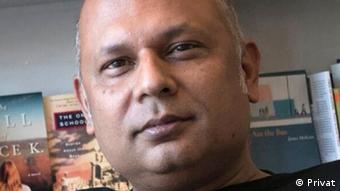
Harris Khalique is the secretary-general of the Human Rights Commission of Pakistan
The current dispensation is not only constraining independent journalists, columnists and writers, it has also put a financial squeeze on media houses by various means. That has resulted in a number of publications going out of print and a large number of media professionals losing their jobs.
Interviews of opposition leaders are taken off air in the middle of the broadcasts, anchors on news channels are asked to comply with the official narrative, and op-ed writers are regularly censored. There have been multiple attempts to regulate social media with a view to eliminate any difference of opinion.
Are media owners also responsible for the plight of journalists in Pakistan?
There are two types of media owners in Pakistan. Those who fall in the first category are traditional media houses run by journalist-cum-owners. They have tried to put up with the pressure as much as they could.
The other category is large businesses that entered into media and journalism considering it a lucrative industry, which brings influence and political clout. Those belonging to the second category have been more ruthless when dealing with journalists. However, even those falling into the first category have placed their material interests before ethical journalism. Therefore, professional journalists and those who work in their supporting professions are the worst hit in this situation.
Sajid Hussain Baloch's death in Sweden has raised questions about the safety of Pakistani journalists abroad. Reporters Without Borders claims that Baloch's death is related to his work as a journalist. Do you agree?
The Human Rights Commission of Pakistan (HRCP) is deeply alarmed by the incident. There is certainly a possibility that Hussain lost his life due to his journalistic work focusing on Balochistan because the Pakistani state has dealt aggressively with those challenging its Balochistan policy. However, since Hussain was found dead in Sweden it is hard to make any conclusive remarks at this juncture until the time Swedish authorities complete their investigation into the matter.
HRCP has raised alarm about the threats to democracy in the country in its 2019 annual report. What are the major threats to democracy in Pakistan and how can its civil society deal with them?
There are a number of events that have taken place, and speeches made by those in power, which proved that Khan's government undermines the supremacy of parliament, ridicules democratic norms and questions provincial autonomy.
Pakistan cannot be at peace with itself without federalism and democracy and will never prosper without encouraging equal citizenship irrespective of class, faith or ethnicity. There is an inherent desire among the ruling elites – civil and military alike – to centralize power and to get rid of the 18th constitutional amendment that has empowered federating units, the provinces.
Both civil and political societies in Pakistan have a responsibility to safeguard the constitution, democracy, federalism, and supremacy of parliament by resisting any actions that will be detrimental to the country's integrity and security.
Pakistan's Fight Against Coronavirus Threatens Its Drive To Eradicate Polio

Pakistan’s long battle to eradicate the crippling poliovirus has been thwarted by militant attacks, radical Islamic clerics, and anti-vaccination propaganda.
But the South Asian nation of 220 million people is facing a new hurdle: the coronavirus pandemic.
Pakistani authorities have halted a nationwide door-to-door polio vaccination drive to stop the spread of the coronavirus -- with polio workers and resources being redeployed to tackle the pandemic.
Pakistan has registered more than 19,100 coronavirus cases and 440 deaths as of May 3, according to official numbers.
But the real number of infections is believed to be much higher, as little testing has been completed.
The government originally imposed restrictions on the movement of people and enforced social-distancing measures but have since eased them. Pakistani health officials warn that the suspension of the polio-eradication campaign will prevent tens of millions of children from being vaccinated and fuel a resurgence of the disease. With the disappearance of wild polio cases in Nigeria in recent years, Pakistan and neighboring Afghanistan are currently the only countries in the world where new polio cases are discovered.
Polio Cases Will 'Definitely Increase'
The coronavirus crisis led Pakistani authorities to stop a nationwide immunization drive scheduled for April that was intended to vaccinate some 40 million children.The campaign was seen as crucial after Pakistan recorded 147 polio cases in 2019, a sharp rise from a record low figure of 22 cases in 2017. So far this year, authorities have recorded 41 cases.The majority of the cases of polio -- a childhood virus that leads to deformed limbs, paralysis, and even death -- were recorded in the northwestern province of Khyber Pakhtunkhwa. “The number of polio cases will definitely increase because we were in the middle of an anti-polio campaign when the coronavirus outbreak halted everything,” said Abdul Basit, the provincial coordinator for the National Emergency Operation Center in Khyber Pakhtunkhwa.“It happened in the past and it will happen again that when children are not getting immunization, the number of cases goes up,” he said, adding that he expected it would be months before the campaign could resume.
“But right now our whole setup is engaged in efforts against the coronavirus outbreak,” he said.
Nadeem Jan, a public health specialist with Khyber Pakhtunkhwa's government, said the polio campaign must restart as soon as it is safe to do so.
“The current number of cases we have is much more compared to previous years,” he said. “We fear that this number will go up as the polio drive is halted due to the coronavirus situation.”
Jan said all polio-eradication programs have been suspended until May 31.
“We don't see a chance for an effective countrywide anti-polio campaign until June,” he said. “A wide-ranging campaign is urgently needed.”
Change Of Duties
Pakistan employed tens of thousands of health workers who went door-to-door to administer anti-polio drops and educate communities that were reluctant to immunize their children.
Now, those same workers are helping a national effort to stem the spread of the coronavirus.
“My duty has now been changed to tracking coronavirus cases,” said Shakeel Khan, 33, a polio worker in the northwestern Khyber tribal district. “We are monitoring people to see if they show symptoms of the coronavirus,” he said. “We monitor who comes into the district. We are meeting local mullahs and tribal elders to advise them about physical distancing and how they can reduce the chances of being infected.”
But Pakistan’s redeployment of health workers to fight the coronavirus could come at a cost.
Ten polio cases have been recorded since the coronavirus outbreak in March, said Khan.
“Polio cases have already increased since the coronavirus outbreak,” he said. “It will keep increasing in the next two to three months if the polio campaign does not restart.”
Long Struggle
The coronavirus is only the latest obstacle keeping Pakistan from eliminating polio.
Khyber Pakhtunkhwa is a poor and religiously conservative region that was once a stronghold of militant groups like Al-Qaeda and the Pakistani Taliban.Many residents of the province, which lies along the porous border with Afghanistan, have been suspicious of the polio vaccine, with conservative Islamic clerics and militants claiming it is a Western conspiracy to harm or sterilize children.In April 2019, a vaccination drive in the province was thwarted after a mass panic was created by rumors of children fainting or vomiting after they were immunized.As the rumors spread, thousands of panicked parents rushed their children to hospitals in the provincial capital, Peshawar, forcing the health facilities to declare emergencies. The rumors turned out to be wildly exaggerated.Public-health studies in Pakistan have shown that maternal illiteracy and low parental knowledge about vaccines -- together with poverty and rural residency -- are the factors that most commonly influence whether parents vaccinate their children against the polio virus.anti-vaccination propaganda has also been fueled by a distrust of Western governments who fund vaccine programs, including after the CIA reportedly staged a fake hepatitis-vaccination campaign in 2011 to confirm the location of Al-Qaeda leader Osama bin Laden -- living in the Pakistani garrison town of Abbottabad -- where he was killed by U.S. SEALs.
Since then, some clerics have even issued fatwas saying that children who become paralyzed or die from polio are "martyrs" because they refused to be tricked by a "Western conspiracy."Pakistani militants have also propagandized that Western-made vaccines contain pig fat or alcohol, which are both forbidden in Islam.Militants in Pakistan have kidnapped, beaten, and assassinated dozens of vaccinators or their armed police escorts in recent years in a bid to stop local anti-polio campaigns.
Subscribe to:
Posts (Atom)