Monday, May 4, 2020
#CoronaInPakistan #coronavirusinpakistan - 105 passengers repatriated from UAE to Pakistan test positive for Covid-19

Tahir Naseer
At least 105 Pakistanis who were flown to Islamabad from the United Arab Emirates on a repatriation flight have tested positive for the coronavirus, Rawalpindi Deputy Commissioner retired Capt Anwarul Haq said on Monday.
The development, along with a rise in positive cases among passengers returning from other Gulf countries, has caused concern among officials and Special Assistant to Prime Minister on National Security Dr Moeed Yusuf said the matter has been taken up with UAE authorities.The 105 passengers were among 209 nationals who were brought home on an Etihad Airways flight from Abu Dhabi on April 28, according to the government's Covid-19 portal. The travelers were initially moved to the quarantine facility at the Fatima Jinnah Women University.
However, the 105 people who tested positive were eventually shifted to the Rawalpindi Institute of Urology (RIU) while 79 others who tested negative were allowed to go home with directions to self-isolate, Haq told DawnNewsTV.
He said the tests of 27 passengers were being conducted again to verify their status.
The government has been running a repatriation operation through the Pakistan International Airlines (PIA) and other airlines to bring home Pakistanis stranded in other countries.
The development comes days after 190 passengers who were brought to Karachi through special flights from Dubai, Sharjah and Colombo tested positive for the virus.
Out of the 190, 92 belonged to Sindh, 56 to Punjab, 24 to Khyber Pakhtunkhwa and 18 to Balochistan, according to Sindh Chief Minister Murad Ali Shah.
Also, Dawn reported last week that a total of 259 passengers who were among the 3,554 Pakistanis who came back to Punjab by 22 special flights from various countries during the last two weeks tested positive for the coronavirus.More than 760 passengers, who returned from the UAE, Qatar, New York and Colombo on April 28 and April 29, had been quarantined to complete their incubation period before undergoing the testing process.
After exploiting these poor low-paid workers, the UAE is sending them back to Pakistan to bear the health burden.
Issue taken up with UAE
Speaking on Geo News programme Aaj Shahzeb Khanzada Kay Saath, SAPM Yusuf said that after the government had opened airports for some flights on April 4, it was decided that the number of passengers being repatriated will be increased gradually to see if the country's health facilities can handle the new cases.
He said approximately 15,000-16,000 Pakistanis have so far been brought home and on certain flights, a "majority" of the passengers tested positive for Covid-19.
According to Yusuf, this was seen predominantly on flights coming from the UAE which carried labourers who often live in cramped and unhygienic conditions in the Gulf country.
"We have now formally taken this up with the UAE government," he said, noting that if arriving passengers continue to test positive, the provinces' health capacity will come under pressure and the government will have to reduce the number of people being repatriated.
He said the government wants to bring home a maximum number of people but in a "safe manner".
Citing data and health experts, he said it was wrong to assume that all the passengers get infected after travelling in an airplane, adding that many of them are positive prior to travelling but often don't show any symptoms.
Answering a question, he said other countries are often not willing to spend PCR Covid-19 tests on passengers travelling to Pakistan and often reserve them for their own citizens. They are ready to conduct other types of tests of the passengers but those aren't considered accurate by Pakistan health experts, Yusuf added.
He said although several thousand Pakistani workers in the Gulf countries are returning home because they have been laid off, many others have been suspended or given paid or unpaid leaves.
However, he acknowledged that all of these workers are among Pakistanis who send remittances home and therefore "a lot of work is being done and we are talking to other countries to save the jobs of as many labourers as possible".
Sewer Cleaners Wanted in Pakistan: Only Christians Need Apply.

In Pakistan, descendants of lower-caste Hindus who converted to Christianity centuries ago still find themselves marginalized, relegated to dirty jobs, and grim fates.
Before Jamshed Eric plunges deep below Karachi’s streets to clean out clogged sewers with his bare hands, he says a little prayer to Jesus to keep him safe.The work is grueling, and he wears no mask or gloves to protect him from the stinking sludge and toxic plumes of gas that lurk deep underground.“It is a difficult job,” Mr. Eric said. “In the gutter, I am often surrounded by swarms of cockroaches.” After a long day, the stench of his work lingers even at home, a constant reminder of his place in life. “When I raise my hand to my mouth to eat, it smells of sewage,” he said.
A recent spate of deaths among Christian sewer cleaners in Pakistan underscores how the caste discrimination that once governed the Indian subcontinent’s Hindus lingers, no matter the religion.Like thousands of other lower-caste Hindus, Mr. Eric’s ancestors converted to Christianity centuries ago, hoping to escape a cycle of discrimination that ruled over every aspect of their lives: what wells of water they could drink from, what jobs they could hold. Manual sewer cleaners, known as sweepers, are at the bottom of that hierarchy, the most untouchable of the untouchable Hindu castes.
But when the Indian subcontinent broke up in 1947 and Pakistan was formed as a homeland for the region’s Muslims, a new, informal system of discrimination formed. In Pakistan, Muslims sit at the top of the hierarchy. And as one of Pakistan’s small Christian minority, Mr. Eric has now been forced into the same work his Hindu ancestors had tried to avoid through religious conversion. Although India has outlawed caste-based discrimination with mixed success, in Pakistan it is almost encouraged by the state. In July, the Pakistani military placed newspaper advertisements for sewer sweepers with the caveat that only Christians should apply. After activists protested, the religious requirement was removed.
But municipalities across Pakistan rely on Christian sweepers like Mr. Eric. In the sprawling port city of Karachi, sweepers keep the sewer system flowing, using their bare hands to unclog crumbling drainpipes of feces, plastic bags and hazardous hospital refuse, part of the 1,750 million liters of waste the city’s 20 million residents produce daily.
On a recent day Mr. Eric, 40, had been hired to clean three sewers for $6.
Mr. Eric sends his son to school far from the crowded and segregated neighborhood the city’s sewer cleaners live in, hoping to free him of the discrimination that forced him into this work. Back home, the neighborhood lacks safe drinking water and schools. Swarms of mosquitoes, piles of garbage and overflowing gutters are the area’s only abundance.
While most sweepers like Mr. Eric are illiterate, his generation has been more determined to push their children to attend school to break the cycle of discrimination, just as their ancestors tried to do when they converted. But the children still find themselves discriminated against, forced to adopt the profession of their fathers.Mary James Gill, a former parliamentarian who runs the Sweepers are Superheroes advocacy group, has lobbied for years to pressure the government to formally ban manual sewage cleaning work. But most of the sweepers are illiterate and unorganized, she said, making it easy for the authorities to pressure them to accept the jobs as their only means of income.While Christians make up only 1.6 percent of Pakistan’s population of some 200 million, according to a 1998 government census, rights groups believe they fill about 80 percent of the sweeper jobs. Lower-caste Hindus mostly fill the rest of the slots.When Karachi’s municipality tried to recruit Muslims to unclog gutters, they refused to get down into the sewers, instead sweeping the streets. The job was left to Christians like Mr. Eric, known derogatorily as “choora,” or dirty.
They spend hours inside the city’s sewers. Almost all of them develop skin and respiratory problems because of constant contact with human waste and toxic fumes. And for some, the job has been lethal. “I have seen death from very near,” said Michael Sadiq, legs trembling as he thought about his two-decade career as a sweeper.
Last August, Mr. Sadiq and his relatives, Rafiq Murad and Riaz Masih, sweepers for Karachi’s municipality, were relaxing on their only day off when they were interrupted by a call from their supervisor, ordering them to snap to it.Mr. Murad was the first to step into a gutter 18 feet deep with a rope tied around his waist. As he cleaned the detritus, a flood of putrid black water carrying sand, stones, sludge and a swarm of gases swept him away.Mr. Sadiq scrambled into the sewer to save his cousin but was overwhelmed by the toxic mix and fainted. Mr. Masih followed to help his cousins, but the fumes asphyxiated him, his lifeless body swept away without a struggle. While Mr. Sadiq and Mr. Murad were saved, Mr. Masih was buried so deep, an excavator worked for four hours to extract his dead body from the stinking sludge it was buried under.
“This work has become so dangerous that I need to find a way out,” Mr. Sadiq said. But he, like the rest of the sweepers, is a poor and illiterate Christian, and no other jobs are open to him, he lamented. Two months after Mr. Masih died, two more sewer cleaners died on the job a few miles away. Another sweeper died at the beginning of this month.
Doctors often refuse to treat the sweepers, who are seen as unclean and untouchable.
Officially, Pakistan denies the existence of caste-based practices in the country. But across the country, the discrimination persists.
One form of abuse commonly meted out on Pakistan’s religious minorities has been to accuse them of blasphemy, a crime that is punishable by death in the country, and that at times has been used to settle personal disputes.
In one infamous case in 2010, Asia Bibi, a Christian woman, was sentenced to death, accused of blaspheming Islam. It later emerged that her Muslim colleagues had ordered her to fetch water as they harvested berries on a hot day. When she drank from the communal cup, they accused her of polluting it and an argument ensued.The case was eventually thrown out for lack of evidence, after Ms. Bibi spent eight years on death row and her family was forced into hiding by the death threats they received.Pakistan has taken a few steps to protect and empower some minorities, but the efforts have failed to help much. A bill was passed in 2009 to reserve 5 percent of all government jobs for non-Muslims. But over a decade later, that goal has not been reached, officials say.
Mr. Eric feels it is only a matter of time before he dies on the job. But he hopes his son can excel in school and shake off the discrimination that has plagued the family for generations.
“After hearing of the deaths in the gutters, I think about what will happen to my family if I die,” Mr. Eric said. “But Jesus Christ will take care of them.”
“I don’t care about my life as long as I can provide my family with a decent living.”
https://www.nytimes.com/2020/05/04/world/asia/pakistan-christians-sweepers.html
#bilawalfightsagainstcorona #bilawalbhuttoleadsnation - Imran khan lives in cuckoo’s land, Palwasha Khan

Deputy Secretary Information Pakistan Peoples Party, Palwasha Khan in a reaction to Imran Khan’s address to his ‘Tigers’ has said that they should get him checked by a psychiatrist because he says that the lockdown has created issues.
Palwasha Khan said that the Covid-19 is taking human lives including our doctors and paramedical staff but the Prime Minister is displaying anger towards the lockdown. When Sindh imposed lockdown, at the time, Imran Khan and his tigers had incited people against lockdown in Sindh and the governor and PTI’s federal minister openly violated SOPs. If from the very beginning, the lockdown had been imposed all over Pakistan, we would have succeeded in defeating Covid-19.
Palwasha Khan said that the economy of the country was in a dire state even before Covid-19 had reached Pakistan. One million people had lost their jobs and thousands of newspaper workers had been laid off. Palwasha Khan said that the incompetent prime minister lives in cuckoo’s land and says that a smart lockdown will be imposed if Covid-19 spreads further.
پاکستان پیپلز پارٹی کی مرکزی ڈپٹی سیکریٹری اطلاعات پلوشہ خان نے عمران خان کے ٹائیگرز سے خطاب پر ردعمل کا اظہار کرتے ہوئے پی ٹی آئی والوں کو مشورہ دیا ہے کہ عمران خان کا نفسیاتی علاج کرائیں۔ پلوشہ خان نے کہا کہ کورونا وباءانسانی جانیں نگل رہا ہے، ڈاکٹرز اور پیرا میڈیکل اسٹاف کورونا وباءسے جنگ لڑتے ہوئے اپنی زندگیوں کی بازی ہار رہے ہیں مگر وزیراعظم لاک ڈاﺅن پر برس رہے ہیں۔ انہوں نے کہا کہ سندھ میں سخت لاک ڈاﺅن بھی کیا گیا تو وزیراعظم کو اس کے ٹائیگرلوگوں کو لاک ڈاﺅن کے خلاف اکساتے رہے۔ گورنر سندھ اور پی ٹی آئی وفاقی وزراءسرعام ایس او پیز کو توڑتے رہے یہی وجہ ہے کہ پورے ملک میں کورونا تیزی سے پھیل رہا ہے۔ پلوشہ خان نے کہا کہ حالت یہ ہے کہ آزاد کشمیر سے بھی زیادہ اسلام آباد میں کورونا کیسز ظاہر ہوئے ہیں۔
اگر چیئرمین پیپلزپارٹی بلاول بھٹو زرداری اور ملک بھر کے ڈاکٹرز کی تجاویز کے مطابق سخت لاک ڈاﺅن پر عمل کیا جاتا تو آج پاکستان میں کورونا کو شکست ہو چکی ہوتی۔ پلوشہ خان نے کہا کہ عمران خان کو غریبوں کی فکر صرف مگرمچھ کے آنسو ہیں کیونکہ جب کورونا نہیں تھا تب بھی موجودہ حکومت کے دوران 10 لاکھ افراد بیروزگار ہو چکے تھے۔ اخباری صنعت سے تعلق رکھنے والے ہزاروں افراد فاقہ کشی کا شکار ہو چکے تھے۔
انہوں نے سوال کیا کہ امریکہ، اٹلی اور چین سمیت تمام ترقی یافتہ ممالک کی حکومتیں بیوقوف تھیں کہ انہوں نے لاک ڈاﺅن کے ذریعے کورونا کو شکست دی۔ پلوشہ خان نے کہا کہ نالائق وزیراعظم کا یہ کہنا کہ اگر وباءتیزی سے پھیلی تو سمارٹ لاک ڈاﺅن کیا جائے گا۔ انہوں نے کہا کہ لگتا ہے کہ عمران خان کسی اور دنیا میں رہ رہے ہیںجو احمقوں کی جنت ہے۔
#coronavirusinpakistan - Chairman PPP Bilawal Bhutto Zardari warns about increasing COVID-19 related deaths in Pakistan

PPP Chairman was talking to a delegation led by Chief Minister Murad Ali Shah comprising Health Minister Dr Azra Pehchuho, Dr Abdul Bari Khan CEO of Indus Hospital and Dr Faisal. PPP Chairman was briefed about the coordinated steps taken by Sindh government in its continuous fight against coronavirus.
Bilawal Bhutto Zardari said that timely action of Sindh government generated a series of activities in the country to mount steps against the contagious disease. He pointed out that world was admiring Sindh government’s efforts to protect its citizens but PTI’s Federal government was fighting Sindh government instead of coronavirus.
https://www.ppp.org.pk/2020/05/03/chairman-ppp-bilawal-bhutto-zardari-warns-about-increasing-covid-19-related-deaths-in-pakistan/
Sunday, May 3, 2020
#Pakistan - Changes In 18th Amendment An Attack On Provincial Autonomy
Imran Khan’s attempts to change the 18th amendment should be considered as attacks on the federation of Pakistan, argues Umair Solangi.
Pakistan is going through a very tough period under the Coronavirus outbreak. The pandemic is spreading at an alarming speed due to the federal government’s incapability. Talking about changes in the 18th amendment at such a critical time is both hilarious and worrying. Instead of going for a complete lockdown, forming a coherent policy on dealing with the coronavirus, and coordinating with the provinces, the federal government is thinking about taking their autonomy away. Some people think that the government has created an issue out of the 18th amendment at this time only to divert the attention from the forensic report of the sugar and wheat crises that was due to be released on April 25. One thing is clear. The attempt on the 18th amendment is more likely to cause the downfall of the Imran Khan government, which is barely surviving with its razor-thin majority.
At a time when the Sindh government is performing far better than the other provinces and the federal government, even the mention of the 18th amendment proves that Imran Khan is panicking under pressure because it is the 18th amendment which allows the Sindh government the freedom in decision-making. When Imran Khan was unable to take a clear line, Bilawal Bhutto came forward and proved himself a national leader. Sindh took the lead and the other provinces followed.But instead of cooperating with the provincial government, federal ministers are busy conspiring against the Sindh government. It seems that each minister has been given the task to do propaganda against the Sindh government daily. PTI leaders in Sindh can be heard in an alleged audio clip viral on social media telling their local supporters to film the women of their families complaining about the corruption in ration-distribution.
Haleem Adil Sheikh has played the worst role in this case. I’d say that if Sheikh is sincere with the people of Sindh, he’d be speaking up against the proposals of changes in the 18th amendment and the NFC Award.
It is also a test for Sindhi nationalist leaders and the GDA. Whoever sides with those trying to change the 18th amendment will be considered an enemy of the people of Sindh. Imran Khan should focus on eliminating Corona rather than doing away with the 18th amendment. The nation will stand behind him. But it is sad to see him still indulging in divisive politics at such a critical moment. He is trying to divide the nation at a time when it needs unity the most. His attempts to change the 18th amendment should be considered as attacks on the federation.
https://nayadaur.tv/2020/05/changes-in-18th-amendment-an-attack-on-provincial-autonomy/
Pakistan: Imran Khan's government is 'muffling critical voices'

In an interview with DW, Harris Khalique, secretary-general of the Human Rights Commission of Pakistan, said that PM Imran Khan's government is undermining the supremacy of parliament and democratic norms.
DW: Local and international media organizations are critical of Prime Minister Imran Khan's government's handling of the media and the freedom of the press situation in Pakistan. What is the Human Rights Commission of Pakistan's take on it?
Harris Khalique: Pakistan witnessed censorship and curbing of the freedom of expression during military dictatorships. However, such restrictions have never been experienced under a political government that claims to be democratically elected. Even if there are questions around the manipulation of the 2018 general elections, the current government can still be seen as a product of a continuous electoral process that was restored in 2008.
We believe that the muffling of critical voices and systematic suppression of political dissent under the incumbent government is incomparable with any elected government in the past.
How is the incumbent government muzzling the freedom of the press in Pakistan, and how is it different from the tactics used by previous administrations?
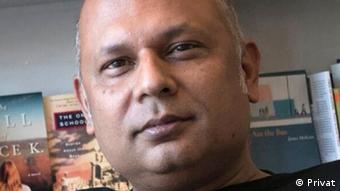
Harris Khalique is the secretary-general of the Human Rights Commission of Pakistan
The current dispensation is not only constraining independent journalists, columnists and writers, it has also put a financial squeeze on media houses by various means. That has resulted in a number of publications going out of print and a large number of media professionals losing their jobs.
Interviews of opposition leaders are taken off air in the middle of the broadcasts, anchors on news channels are asked to comply with the official narrative, and op-ed writers are regularly censored. There have been multiple attempts to regulate social media with a view to eliminate any difference of opinion.
Are media owners also responsible for the plight of journalists in Pakistan?
There are two types of media owners in Pakistan. Those who fall in the first category are traditional media houses run by journalist-cum-owners. They have tried to put up with the pressure as much as they could.
The other category is large businesses that entered into media and journalism considering it a lucrative industry, which brings influence and political clout. Those belonging to the second category have been more ruthless when dealing with journalists. However, even those falling into the first category have placed their material interests before ethical journalism. Therefore, professional journalists and those who work in their supporting professions are the worst hit in this situation.
Sajid Hussain Baloch's death in Sweden has raised questions about the safety of Pakistani journalists abroad. Reporters Without Borders claims that Baloch's death is related to his work as a journalist. Do you agree?
The Human Rights Commission of Pakistan (HRCP) is deeply alarmed by the incident. There is certainly a possibility that Hussain lost his life due to his journalistic work focusing on Balochistan because the Pakistani state has dealt aggressively with those challenging its Balochistan policy. However, since Hussain was found dead in Sweden it is hard to make any conclusive remarks at this juncture until the time Swedish authorities complete their investigation into the matter.
HRCP has raised alarm about the threats to democracy in the country in its 2019 annual report. What are the major threats to democracy in Pakistan and how can its civil society deal with them?
There are a number of events that have taken place, and speeches made by those in power, which proved that Khan's government undermines the supremacy of parliament, ridicules democratic norms and questions provincial autonomy.
Pakistan cannot be at peace with itself without federalism and democracy and will never prosper without encouraging equal citizenship irrespective of class, faith or ethnicity. There is an inherent desire among the ruling elites – civil and military alike – to centralize power and to get rid of the 18th constitutional amendment that has empowered federating units, the provinces.
Both civil and political societies in Pakistan have a responsibility to safeguard the constitution, democracy, federalism, and supremacy of parliament by resisting any actions that will be detrimental to the country's integrity and security.
Pakistan's Fight Against Coronavirus Threatens Its Drive To Eradicate Polio

Pakistan’s long battle to eradicate the crippling poliovirus has been thwarted by militant attacks, radical Islamic clerics, and anti-vaccination propaganda.
But the South Asian nation of 220 million people is facing a new hurdle: the coronavirus pandemic.
Pakistani authorities have halted a nationwide door-to-door polio vaccination drive to stop the spread of the coronavirus -- with polio workers and resources being redeployed to tackle the pandemic.
Pakistan has registered more than 19,100 coronavirus cases and 440 deaths as of May 3, according to official numbers.
But the real number of infections is believed to be much higher, as little testing has been completed.
The government originally imposed restrictions on the movement of people and enforced social-distancing measures but have since eased them. Pakistani health officials warn that the suspension of the polio-eradication campaign will prevent tens of millions of children from being vaccinated and fuel a resurgence of the disease. With the disappearance of wild polio cases in Nigeria in recent years, Pakistan and neighboring Afghanistan are currently the only countries in the world where new polio cases are discovered.
Polio Cases Will 'Definitely Increase'
The coronavirus crisis led Pakistani authorities to stop a nationwide immunization drive scheduled for April that was intended to vaccinate some 40 million children.The campaign was seen as crucial after Pakistan recorded 147 polio cases in 2019, a sharp rise from a record low figure of 22 cases in 2017. So far this year, authorities have recorded 41 cases.The majority of the cases of polio -- a childhood virus that leads to deformed limbs, paralysis, and even death -- were recorded in the northwestern province of Khyber Pakhtunkhwa. “The number of polio cases will definitely increase because we were in the middle of an anti-polio campaign when the coronavirus outbreak halted everything,” said Abdul Basit, the provincial coordinator for the National Emergency Operation Center in Khyber Pakhtunkhwa.“It happened in the past and it will happen again that when children are not getting immunization, the number of cases goes up,” he said, adding that he expected it would be months before the campaign could resume.
“But right now our whole setup is engaged in efforts against the coronavirus outbreak,” he said.
Nadeem Jan, a public health specialist with Khyber Pakhtunkhwa's government, said the polio campaign must restart as soon as it is safe to do so.
“The current number of cases we have is much more compared to previous years,” he said. “We fear that this number will go up as the polio drive is halted due to the coronavirus situation.”
Jan said all polio-eradication programs have been suspended until May 31.
“We don't see a chance for an effective countrywide anti-polio campaign until June,” he said. “A wide-ranging campaign is urgently needed.”
Change Of Duties
Pakistan employed tens of thousands of health workers who went door-to-door to administer anti-polio drops and educate communities that were reluctant to immunize their children.
Now, those same workers are helping a national effort to stem the spread of the coronavirus.
“My duty has now been changed to tracking coronavirus cases,” said Shakeel Khan, 33, a polio worker in the northwestern Khyber tribal district. “We are monitoring people to see if they show symptoms of the coronavirus,” he said. “We monitor who comes into the district. We are meeting local mullahs and tribal elders to advise them about physical distancing and how they can reduce the chances of being infected.”
But Pakistan’s redeployment of health workers to fight the coronavirus could come at a cost.
Ten polio cases have been recorded since the coronavirus outbreak in March, said Khan.
“Polio cases have already increased since the coronavirus outbreak,” he said. “It will keep increasing in the next two to three months if the polio campaign does not restart.”
Long Struggle
The coronavirus is only the latest obstacle keeping Pakistan from eliminating polio.
Khyber Pakhtunkhwa is a poor and religiously conservative region that was once a stronghold of militant groups like Al-Qaeda and the Pakistani Taliban.Many residents of the province, which lies along the porous border with Afghanistan, have been suspicious of the polio vaccine, with conservative Islamic clerics and militants claiming it is a Western conspiracy to harm or sterilize children.In April 2019, a vaccination drive in the province was thwarted after a mass panic was created by rumors of children fainting or vomiting after they were immunized.As the rumors spread, thousands of panicked parents rushed their children to hospitals in the provincial capital, Peshawar, forcing the health facilities to declare emergencies. The rumors turned out to be wildly exaggerated.Public-health studies in Pakistan have shown that maternal illiteracy and low parental knowledge about vaccines -- together with poverty and rural residency -- are the factors that most commonly influence whether parents vaccinate their children against the polio virus.anti-vaccination propaganda has also been fueled by a distrust of Western governments who fund vaccine programs, including after the CIA reportedly staged a fake hepatitis-vaccination campaign in 2011 to confirm the location of Al-Qaeda leader Osama bin Laden -- living in the Pakistani garrison town of Abbottabad -- where he was killed by U.S. SEALs.
Since then, some clerics have even issued fatwas saying that children who become paralyzed or die from polio are "martyrs" because they refused to be tricked by a "Western conspiracy."Pakistani militants have also propagandized that Western-made vaccines contain pig fat or alcohol, which are both forbidden in Islam.Militants in Pakistan have kidnapped, beaten, and assassinated dozens of vaccinators or their armed police escorts in recent years in a bid to stop local anti-polio campaigns.
How Pakistan’s Terrible COVID-19 Response Forced Doctors Onto a Hunger Strike
BY AMMAR ALI JAN
Pakistani authorities made a bad start to the coronavirus response, using the crisis to push through an IMF agenda of hospital privatization. Faced with protests by health professionals, the government immediately opted for repression — showing that it considers health care for the masses mere unnecessary spending.
On March 10, hundreds of health workers protesting in the province of Punjab were confronted by baton-wielding cops, ready to use force against the assembled crowds. Organized under the banner of the Grand Health Alliance (GHA), the protest in the city of Lahore called upon the government to halt plans to privatize the health sector and introduce US-style private insurance. As scuffles broke out between protesters and police, the government offered to negotiate with the GHA — momentarily diffusing the tense standoff.
In order to avoid an imminent bankruptcy, in May 2019 the Pakistani government signed a deal with the International Monetary Fund (IMF) that stipulated harsh austerity and cuts to social spending, including the health sector. As a result, the government formulated the MTI Act 2019 in August last year to carry out the privatization of the health sector but was unable to implement it due to a severe backlash from the medical community.
In early March 2020, as health workers were busy preparing for COVID-19, the government abruptly presented the bill in the provincial legislature of Punjab. This led to another round of protests from medical workers who felt the government was using a global emergency to push through its own narrow agenda. COVID-19 had been part of the global discourse for two months and was already devastating Italy — but the only discussion on health care in Pakistan was whether the government should follow the IMF’s punitive orders to privatize the sector.
Pakistan has signed deals with the IMF over a dozen times before, on each occasion demanding that the government administer austerity, impose cuts to social spending, and make Pakistan “investment-friendly” for global capital. This has meant privatizing public entities, marketizing the transport and housing sectors, and cutting funding for health and education. Soon after the most recent deal was signed with the IMF, the government announced a 40 percent cut to funds for higher education, revealing its complete subservience to the interests of global finance. This, even as Pakistan’s oversized military budget is seldom questioned, since it has provided a crucial service to imperialist interests in the region during the Cold War and the “war on terror.” The result of this imbalance is that the capacity of the state to meet the basic requirements of its citizenry continues to be eroded, while the use of militarized violence to manage dissenting voices is on the rise.
The stranglehold of international financial institutions on the country’s economy is a central feature of the context for the Pakistani state’s woeful under-preparation when cases of COVID-19 began emerging. There continues to be a shortage of personal protective equipment (PPE), an issue raised by leaders of the GHA in mid-March but ignored by the government and the media. But things began to change on March 22, when news broke that Dr Usama Riaz, a twenty-six-year-old physician from Gilgit-Baltistan, was in an intensive care unit, having contracted the virus after working with coronavirus patients without adequate equipment. The next morning, Dr Riaz passed away, becoming the most high-profile victim of the coronavirus in Pakistan at the time.
The news of his death amplified the concerns of health workers still working with inadequate protection despite multiple government promises of PPE. Tensions flared up again in the Western city of Quetta, where the Young Doctors Association announced a protest on April 7 to demand PPE for health workers. In an incredible turn of events, the police baton-charged the protesters, arresting fifty doctors for allegedly inciting the public against the government. The government was attacking its frontline workers in the midst of a pandemic — showing that the state is more afraid of organized collective action from below than of the deadly virus threatening society.
A few days after the incident in Quetta, a nurse working with COVID-19 patients died in the city of Gujrat. The government’s refusal to test her for the virus led to condemnation from the GHA, alleging that the government was suppressing the news to avoid embarrassment and avoid having to pay compensation to the victim’s family. When the government responded to these allegations and denied the widely acknowledged shortage of PPE, the leadership of the GHA announced a hunger strike camp at the health secretariat in the provincial capital of Lahore on April 16.
The hunger strike lasted for a week and a half, yet the government maintained a confrontational stance toward the doctors and claimed a lack of resources. The hunger strike ended with the arrival of the Islamic month of Ramadan as health workers and government officials entered a new round of negotiations. The protest camp finally ended on May 1 as the GHA reached an agreement with the Punjab government. The government agreed to investigate the death of the nurse in Gujrat, while it was agreed that a team of GHA officials will be formed to ensure that each health worker is able to acquire PPE. In a country where less than one percent of the workforce is unionized, the victory of health workers is now a symbol of workers’ power — and a model for successful mobilization in the midst of a lockdown.
Class War From Above
The standoff reflects a much larger crisis of neoliberal capitalism in Pakistan, whereby an increasing number of people are becoming redundant from capital’s point of view. And the clumsy manner in which the government announced a lockdown — offering no adequate protection for workers, or indeed any program for wealth distribution — has created a humanitarian crisis. A number of export-driven companies in the garment industry, manufacturing for European and US brands, illegally fired their workers during the pandemic. For example, Nishat Apparel, owned by Mian Mansha, arguably the richest man in Pakistan, dismissed nine hundred workers at the onset of the lockdown — claiming the company did not have enough resources to take care of its workers.
Whether it is health workers, factory labor, or daily wagers, the lockdown has pushed the entire working class toward a logic of disposability. On the one hand, this growing precariat no longer has enough resources to pay rent or acquire food or other basic necessities of life. On the other hand, the government is unable or unwilling to provide any significant welfare, with the existing health infrastructure unraveling rapidly in the midst of the crisis. A large section of the population is being forced to pick between hunger and disease — a morbid choice at odds with basic human dignity.
The government’s refusal to move toward any semblance of wealth redistribution shows that, despite the chaos in society, structures of power and political economy remain immobile in Pakistan. In fact, Prime Minister Imran Khan announced a Rs. 100 billion ($600 million) relief package for the construction industry to “reopen the economy,” while his health minister continues to claim that there are not enough funds to provide PPE to all the doctors. The class war is now openly taking a fatal turn.
Militarized Control
Currently, Pakistan has more than twelve thousand confirmed cases of COVID-19, and the number is expected to rise dramatically over May — putting further strain on an already decrepit health care system. As the government refuses to take measures in wealth distribution, there are signs that society will be placed under further militarized control. A number of elite areas are already cordoning themselves off from poorer sections of society, placing heavily guarded check posts near working-class neighborhoods because of their fear of increased social strife. The deepening of the existing spatial apartheid due to COVID-19 fits into a longer process of marginalization justified in the name of hygiene. In Lahore, the first urban check posts were built by the British at the Mian Mir Cantonment in the nineteenth century to keep locals away from British officers, who considered the former to be vectors of dangerous diseases. The nexus of hygiene, militarization, and apartheid then have a long history in South Asia — once again coming into sharp relief during the current crisis.
Moreover, the transformation of workers into surplus populations and the blurring of lines between health work and self-harm has produced an immense crisis of reproduction. With so many bodies exposed to hunger or disease, it is understandable that health is becoming a pivotal node of resistance against the onslaught of neoliberal capitalism globally. In fact, the Lahore protest camp has already become the center for activists including laid-off workers, feminists, teachers, journalists, and leftist students who have expressed solidarity with health workers.
Moreover, trade unions and grassroots organizations are raising funds to buy PPE for health workers and food rations for the unemployed, filling the void left by the government’s spectacular abdication of responsibility. At a recent press conference, Dr Salman Haseeb, leader of the Grand Health Alliance, paid glowing tributes to left-wing activists and trade unionists who supported health workers at a time when the government had declared war on its own frontline warriors. “All marginalized groups must work together in these difficult times,” he asserted, adding, “We are fighting for life under the dark shadow of death. We will win if we fight together.”
Such encounters between disparate sectors of the working population offer us hope for a new kind of politics. They show that a world shaped by manufactured scarcities and policed by authoritarian states can be replaced by one rooted in solidarity and democracy. These acts of defiance in poorer countries such as Pakistan must be linked with progressive and anti-imperialist movements in the Global North to build a global campaign against the parasitic hold of international financial institutions and for the universal right to health care. The current crisis teaches us that this necessary alliance must be forged soon, as humanity is running out of time.
#Coronavirus: Pakistan records highest single-day spike with over 1,900 new infections
Pakistan registered its highest single-day increase in the coronavirus cases with 1,952 new infections and the death toll in the country jumped to 432 with 47 fatalities recorded in the last 24 hours.
Pakistan on Saturday registered its highest single-day increase in the coronavirus cases with 1,952 new infections, taking the total number of Covid-19 patients to 18,770, officials said.
The death toll due to the viral infection jumped to 432 with 47 fatalities recorded in the last 24 hours, the Ministry of National Health Services said.
As many as 4,715 patients have been recovered, it said.
A record number of 1,952 Covid-19 cases were registered in the last 24 hours, the ministry said.
Officials, however, said the spike in the Covid-19 cases is not surprising as it is due to the increase in the coronavirus tests.As many as 193,859 tests have been conducted so far, including 9,164 in the last 24 hours, they said.A 26-year-old female doctor died from the coronavirus at Rawalpindi's Holy Family hospital. The hospital's medical superintendent said that the young doctor had complained about mild flu and cough symptoms on April 20 which the doctors declared as "normal fever".When her condition worsened after four days, she was brought to the hospital. She was put on a ventilator but died on April 30.
Meanwhile, Special Assistant on Health Dr Zafar Mirza told reporters that Pakistan is increasing its testing capacity.
He said the coronavirus is still under control in the country and the death rate due to the disease is also lower.
"Pakistan's death rate is still less than the projected numbers and secondly when we see the worldwide situation, it is far less than that. If you take care of yourself, it is guaranteed that you and your family will stay safe," he said. Of the total 18,770 cases, Punjab registered the highest number of 6,854 followed by Sindh at 7,102, Khyber-Pakhtunkhwa 2,907, Balochistan 1,136, Islamabad 365, Gilgit-Baltistan 340 and Pakistan-occupied Kashmir (PoK) at 66, the health ministry said. Prime Minister Imran Khan on Saturday launched the second phase of the cash program for those who lost their jobs due to the pandemic. Khan said he is personally monitoring the distribution of the corona relief fund to ensure transparency "So far Rs 81 billion have been distributed to people...I am personally monitoring this process," he said, launching the second phase of the Ehsaas cash scheme. The first phase was launched last month. A fund of Rs 144 billion has been set aside for the scheme.
Minister for Industries Hammad Azhar told media that as part of the measures initiated for businesses facing the heat of the pandemic, the government will pay three-month electricity bills for firms whose consumption is between five and 70KW per month.
Some of the other measures include reducing the interest rate and "unprecedented tax incentives for the construction sector".
The government would also bring an interest-free loan scheme for small businesses, Azhar said.
Meanwhile, Special Assistant on National Security Moeed Yusuf has said that some influential people coming from abroad were escaping the mandatory testing and quarantine procedures.
"We want all Pakistanis to return as soon as possible but in a safe manner. We cannot have them coming back and infecting their loved ones, which is why we cannot give any exemption to anyone for coronavirus testing," he said.
Yusuf said the repatriation process of Pakistanis from abroad is slow because the country's "quarantine facilities can take 7,500 to 8,000 people at a time". Another reason, he said, is that most airports and flights across the globe are not functioning.
https://www.indiatoday.in/world/story/coronavirus-pandemic-pakistan-highest-single-day-spike-new-infections-1673826-2020-05-03
Saturday, May 2, 2020
Pashtun leader Arif Wazir dies in Pakistan after gun attack, ISI using COVID-19 as garb to silence criticism against country
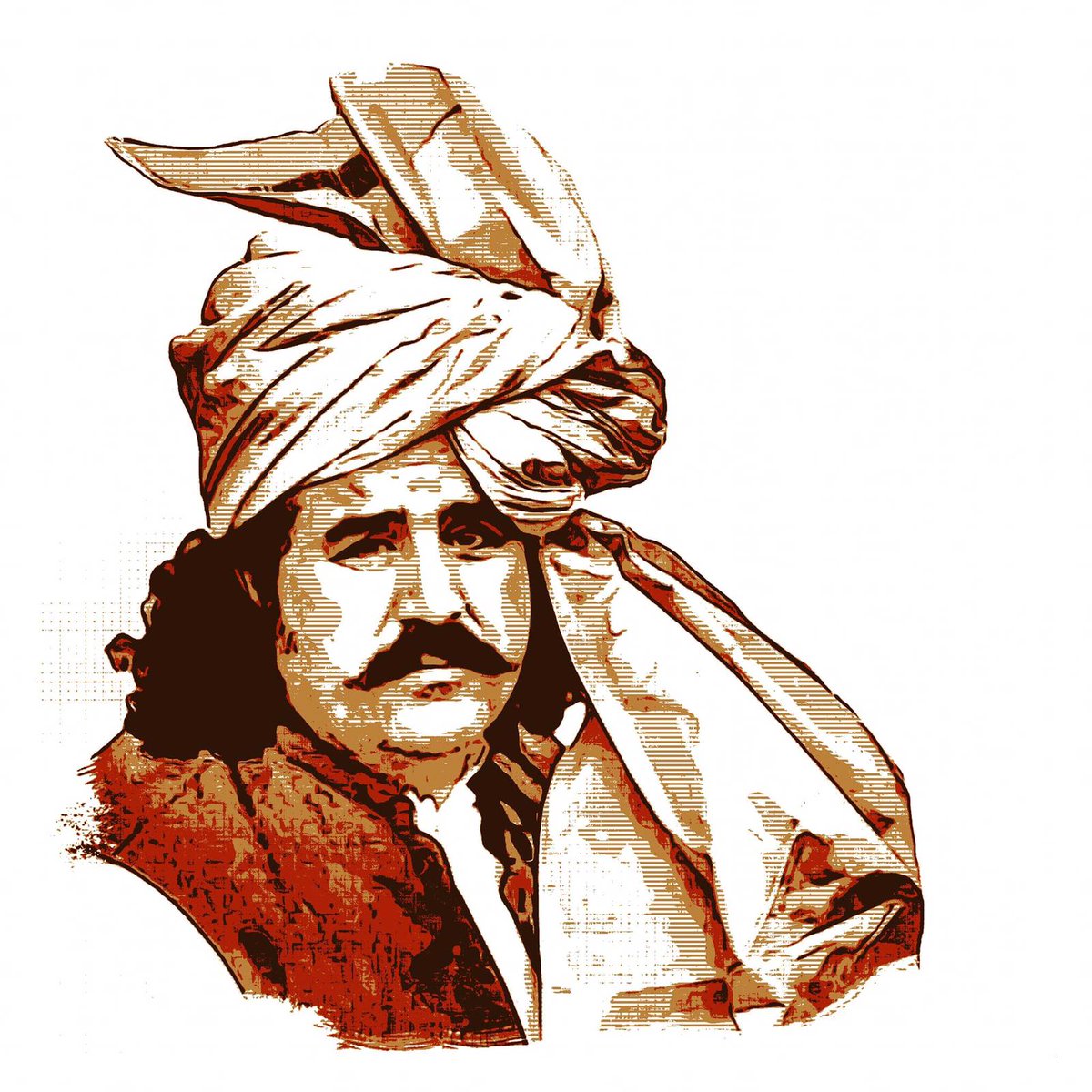
Arif Wazir, a leader of the Pashtun Tahaffuz Movement (PTM) in Pakistan, died on Saturday in an Islamabad hospital after being attacked by unidentified gunmen outside his home in Wana of Waziristan.
The attack comes after Pakistani Police arrested Arif Wazir on April 17 for an alleged anti-Pakistan speech during his recent visit to Afghanistan. He was released on bail three days ago. Mohsin Dawar, a member of Pakistan's Parliament and member of the PTM, accused “state-sponsored terrorists” of carrying out the attack.
Rights group Amnesty International in a statement said that the Pakistani authorities must carry out an independent and effective investigation into the attack on Wazir on May 1, adding that the suspected perpetrators must be held accountable.
PTM has campaigned for civil rights for Pashtuns, the country's largest ethnic minority, since 2018 and held many rallies recently against the involvement of Pakistan Army for killing of thousands of Pashtun civilians and forced millions more to abandon their homes. The PTM has insisted on an end to the practice of extrajudicial killings and unlawful detentions of Pashtun people.
‘‘It is with the heavy heart I report that our comrade Arif Wazir has succumbed to his injuries. Wazir’s father and brother were killed by terrorists years ago. Our struggle against their masters will continue," said Mohin Dawar, a member of Pakistan’s parliament.
Pakistan based journalist and Balooch origin Sajid Hussain living in Sweden in exile has been found dead in Uppsala about 60 kilometres from Stockholm, Sweden. His body was found on April 23 in the Fyris river outside Uppsala city. A Balochi by origin, Hussain was working as a part-time professor in Uppsala when he went missing since the first week of March.
His sudden disappearance is raised many questions as many believed that at a time when the world needs attention to deal with the coronavirus COVID-19, the Pakistani Army and Pakistan's Intelligence agency Inter-Services Intelligence (ISI) is busy in silencing critics of Pakistan.
Hussain fled to Sweden in 2012 when Pakistan agencies started to search his residence and questioned his family members after his report highlighting human right abuses in the Balochistan by Pakistan Army. Hussain first moved to Gulf countries then after some time he finally settled in Sweden.
‘‘When a new wave of the “kill and dump policy” came about, and the issue of enforced disappearances once again engulfed Pakistan’s restive province of Balochistan, Hussain had to flee the country in 2012. For many years after that, he lived like a nomad, a refugee, spending some time in one country and then moving to another. It was not an easy decision, leaving behind his friends and family back home – his wife, 9-year-old daughter, and 5-year-old son, whom he loved dearly," says Shah Meer Balooch in an article written in The Diplomat.
Sajid Hussain is not alone. There has been a spate of attacks of Pakistani journalists and activists known for criticizing Pakistan. A Pakistani blogger Ahmad Waqas was assaulted by two men outside his home in Rotterdam in Europe in February.
Criticism of the Pak Army and ISI is not allowed in Pakistan and unprecedented crackdown at press has forced many to seek refugee abroad.
The Human Rights Commission of Pakistan (HRCP) latest report observed that Pakistan’s human rights record in 2019 is ‘greatly worrisome and ongoing global pandemic was likely to cast a long shadow on prospects for human rights. HRCP in his report also noted of police extortion, refusal to register first information reports (FIR), and custodial torture emerged in all provinces.A report of USA Freedom Network on Press freedom reveals that since 2000 a total of 133 Pakistani journalists have been killed. The legal proceedings in all the 33 incidents of journalists’ killings that took place from 2013 to 2019 have been documented and the finding is 100 per cent impunity for the killers, zero per cent justice for the 33 murdered journalists.
A Pakistani-British journalist Gul Bukhari known for a critic of Pakistani Army was abducted in June 2018 from Lahore and held for several hours by Pakistani Army. Later they denied their involvement in the abduction of Bukhari. She was asked to appear before authorities for questioning. She left Pakistan and now has settled in the United Kingdom.
Pakistan has become one of the world's most dangerous countries for journalists. In the past few years, dozens of prominent journalists have been forced to left their organization or they are not allowed to write articles against the Pakistani Army.
https://zeenews.india.com/world/pashtun-leader-arif-wazir-dies-in-pakistan-after-gun-attack-isi-using-covid-19-as-garb-to-silence-criticism-against-country-2280661.html
وفاقی حکومت میڈیا کو دبانے سے باز آ جائے، چیئرمین پاکستان پیپلز پارٹی بلاول بھٹو زرداری

حکومت میں آنے کے بعد سابق وزیراعظم شہید محترمہ بینظیر بھٹو کی جانب سے اٹھائے گئے اولین اقدامات میں سے ایک ان تمام آمرانہ کالے قوانین کا خاتمہ کرنا تھا، جو صحافت پر قدغنیں لگانے کی خاطر بنائے گئے تھے۔ پی پی پی چیئرمین نے کہا کہ تحریک انصاف کی حکومت پہلے ہی دن سے میڈیا کی آزادی پر حملے کر رہی ہے۔ اس کے ناقدین کے ٹی وی شوز زبردستی بند کردیئے گئے جبکہ دیگر کو نکال دیا گیا۔ جن پر ریاست مہربان ہے، ان کو اپوزیشن کی جانب سے عوام کی خدمت کے لیئے اٹھائے گئے کام و کاوشوں کی برائی کرنے کے لیئے پروپیگنڈہ کے ہتھیاروں کے طور پر استعمال کیا جا رہا ہے۔ بلاول بھٹو زرداری نے اس عزم کا اعادہ کیا کہ پاکستان پیپلز پارٹی صحافی برادری کے ساتھ مل کر صحافت کی آزادی، صحافی برادری کے تحفظ اور ان کے پیشے کے تقدس کے لیئے جدوجہد جاری رکھے گی۔
https://www.ppp.org.pk/2020/05/02/hukumat-media-ko-dabany-sy-baz-aa-jayne/
Report gives Pakistan failing grade on human rights
By KATHY GANNON
 An annual human rights report released this week gives Pakistan a failing grade, charging that too little is being done to protect the country’s most vulnerable, including women and children.
An annual human rights report released this week gives Pakistan a failing grade, charging that too little is being done to protect the country’s most vulnerable, including women and children.
The 264-page report by the Independent Pakistan Human Rights Commission laid out a litany of human rights failings. They include unabated honor killings, forced conversions of minority Hindu under-age girls and continued use of a blasphemy law that carries the death penalty to intimidate and settle scores.
In December, Pakistan was ranked 151st out of 153 by the World Economic Forum on the Global Gender Gap Index.
“Despite the legislation enacted to protect and promote women’s rights in recent years, violence against women has escalated,” the report released Thursday said.
It also criticizes increased restrictions on media freedom and criticism of state institutions and a growing number of cases of sexual and physical abuse of children.
There was no immediate comment from the government.
Pakistan has been slow to enact laws to protect the country’s most vulnerable and even where laws are in place they are often not enforced by police. Law enforcement agencies in Pakistan are often corrupt or refuse to take the word of a woman over a man in Pakistan’s deeply male-dominated society. In April, a powerful cleric who has the ear of the prime minister blamed the global coronavirus pandemic on women who dress immodestly.
Social media outrage greeted cleric Tariq Jameel after he blamed women, particularly young women who “choose the path of indecency and ... vulgarity,” for the coronavirus pandemic. His charges were made during a live TV fundraising drive to feed Pakistan’s poorest hurt by a weeks-long lock-down to stem the virus’s spread. Jameel also shamed girls for dancing and wearing “skimpy clothing.”
Jameel, who did not rescind his remarks, later said he was addressing the failings of the “collective” society.
Pakistan on Friday recorded 16,817 positive cases of COVID-19, the illness caused by the new coronavirus, with 385 deaths. Pakistan also recorded its largest single day hike in positive cases with 990 new infections. However, Pakistan has also increased its testing to around 8,000 per day, considerably less than the 20,000 daily target the government has promised. “The weakest segments of society remained invisible, unheard, neglected, and undermined when it came to the real priorities of the state — be it children who were malnourished, subjected to hazardous labor, sexually abused, physically tortured and murdered; or women who continued to face violence and discrimination at home, at the workplace and in public spaces,” the report said.
“Pakistan continued to bear a dismal human rights record in terms of complying with the constitutional guarantees to its own citizens and the international obligations to which it is a state party,” it said.
The government’s own National Commission on Human Rights has been without a chairperson and six of its seven members for nearly a year.
Requests for country visits by U.N. special investigators on a number of issues are still pending. Those include extrajudicial killings and freedom of religion and the promotion and protection of human rights while countering terrorism.
https://apnews.com/420015590f0d778843f80b5cc7e5c7be
#COVID-19 Fans Religious Discrimination in Pakistan - Embrace Islam to Receive Aid

By Jaffer Abbas Mirza
Referring to COVID-19 as “the Shia virus.” Denying aid to Christians and Hindus. These are only a few examples of faith-based discrimination in Pakistan.
One would expect a global crisis to unite the whole of humanity, but examples of discrimination around the world amid the COVID-19 pandemic are sadly numerous. In Pakistan, even during a global pandemic, discrimination on the basis of religion continues. From referring to the virus as “the Shia virus” to requiring Christians to recite the kalima to receive aid to denying ration bags to the Hindu community in Lyari after seeing their national identity cards (CNIC) — these are only a few examples of faith-based discrimination in Pakistan, where so far more than 14,000 confirmed cases of COVID-19 have been reported and over 300 deaths.
When a society is already divided along religious and ethnic lines, ingrained prejudices come into play during times of trouble. Religious discrimination is not new to Pakistan, but it is saddening to see that even during a crisis of global scale, marginalized religious groups continue to be discriminated against. Instead of focusing all their efforts on fighting this virus as a nation, some in Pakistan continue to exhibit their hatred for religious minorities on social media. For example, on April 13 two anti-minority hashtags were top trends on Pakistani Twitter. The first one, #ردِ_قادیانیت_ایمانی_فریضہ (meaning “religious obligation to reject Ahmadiyya belief”), targeted the Ahmadiyya community and called their faith “heretic.” The second was #گستاخوں_کوپھانسی_دو (hang blasphemers), which particularly demanded the hanging of Shia singer Zamin Ali. He had written a devotional poem in which he criticized the enemies of Ali ibn Abi Talib, whom Shia Muslims view as the successor to the Prophet Muhammad.
The point of this article is not to establish here that these discriminatory events are occurring widely and frequently, nor to say that there are not any positive cases of interfaith relations. The foremost purpose is to acknowledge these incidents, so the grievances and traumatic experiences of Pakistan’s religious minorities do not go unheard. More importantly, the purpose is to show that even during the outbreak, some are unable to control their inner prejudice against the religious “other.”
“It’s not for Hindus”
On March 28 in Lyari, one of Karachi’s densely populated areas located in the south of the city, members of the Hindu community were denied ration bags. Saylani Welfare Trust (SWT), one of the leading welfare organizations, had installed a camp in Lyari. Vishal Anand, founder and chairman of the Hindu Youth Council, related to The Diplomat: “When they saw our CNIC [identity cards], they refused to give the ration bags, saying it’s not for Hindus.”
SWT did not respond to a request for comment. However, one of their representatives was seen on social media outrightly denying the such an incident event and saying it is not the organization’s policy to discriminate people based on their religion.
Knowing SWT’s work, it is true they do not discriminate; the group offers food to thousands of people of mixed faiths. But the issue here is not an organizational policy per se; people on the ground could have acted completely opposite to the organization’s vision and ideology.
Cecil Shane Chaudhry, executive director of the National Commission for Justice and Peace (NCJP), said that “even though Saylani Welfare Trust denied this happening but it was verified from other sources that the volunteers giving out the aid can have such a mindset and tend to make such discriminations.”
Instead of calling an inquiry or sympathizing with the oppressed minority, Saylani decided to counter complaints in different ways. A Hindu activist, on the condition of anonymity, told The Diplomat that “someone from the Saylani contacted me and asked me to put a post on social media in Saylani’s favor.” This may explain why videos from some members of the Hindu community in favor of the organisation started appearing. Also, the next day after the incident, SWT distributed ration bags among the Hindu community and made videos, which were uploaded on social media later.
There is one important point to make here. One Indian news agency reported that Hindus were denied food rations in Rehri Ghoth. This news was refuted by another reporter; similarly, people I spoke to for this report are also unaware of the incident. The Lyari incident is separate and should not be confused with reports from Rehri Ghoth.
Embrace Islam to Receive Aid
In another incident involving the same organization, Christians were denied food rations. A video circulating on Facebook shows a Muslim man, named Adnan, informing a news reporter that Christians have been barred from receiving food in Karachi’s Korangi area. According to a report, a cleric named Abid Qadri, who ostensibly heads SWT’s operation in Korangi, instructed workers to give rations to Muslims only. In another video, a Christian woman confirmed that an organization, which she didn’t name, refused to give food to Christians until they recite the kalima, a declaration of Islamic faith.
Chaudhry confirmed that “there have been reports of such incidents taking place where minorities, specifically Christians and Hindus, are facing discrimination. At most places where relief is being provided by private foundations and trusts or religious welfare organizations, they often do not give relief to non-Muslims, stating that this fund is from zakat [charitable donations as a religious duty in Islam] so thus only Muslims qualify for it.”
A similar incident occurred in Sandha village in Kasur district of Punjab where an estimated 100 Christian families were denied food due to their religious identity. Later, however, a Muslim man arranged to distribute food among the community.
There seems to be a pattern in which some religious figures are enforcing their prejudiced views on welfare organizations. For example, a cleric, Sheikh Abdul Haleem Hamid, instructed volunteers that the food rations were only for Muslims. Naumana Suleman, the Pakistan programs lead for Minority Rights Group International, said that “the food was organized by the local mosque through announcements to help poor people in need, but later the ration was distributed to the Muslims only.”
There are some cases that have not yet been reported on. Chaudhry apprised that in some food distributions drive in the Mian Mir area of Lahore, there were boards that discouraged non-Muslims from coming to receive the rations. “When relief was being given, there was a notice up at the camp stating that non-Muslim should refrain from coming here for aid, as this is for the Muslims.” Unfortunately, the person who reported the notice, which was later removed, was afraid to take a picture of the notice among the crowded.An important factor that helps to explain the discrimination against the religious minorities during a relief drive is the rising presence of religious hardliners or intolerant groups in philanthropic organizations like SWT, which are often religious-based but operationally pluralistic. Both in Karachi and Kasur, one common element of discrimination was the dominant role of local religious clerics who influenced volunteers and differentiated on the religious grounds.
Meanwhile, Pakistan’s Hazara Shias were the first victims to be directly discriminated against and targeted by the officials. On March 12, the inspector general (IG) of police in Balochistan issued a notification in which he put people belonging to the Hazara community on leave. On March 13, the Water and Sanitation Authority (WASA), a public department, issued a similar notification in which Hazaras living in Marriabad and Hazara Town, two majority areas for the Shia-majority ethinc group, were categorically asked to stay in their areas. On March 25, the chief secretary of Balochistan, the highest executive position in the province, held a press conference in which he announced that Hazara areas will be secluded from the rest of Quetta city, province’s capital. The reasoning was that Shia-majority Iran was a hotspot for COVID-19 at the time, therefore Shia-majority Hazaras must be quarantined.
I have written elsewhere about this issue, but there were some cases of discrimination that were not even reported. For example, in public institutions like the Civil Hospital and the State Bank of Pakistan, employees belonging to the Hazara community were unofficially asked not to come to the office.
Muhammad Aman, an activist and writer from the Hazara community, explained why Hazaras were singled out: simply put, it’s easy to blame them. “They are like the punching bags for the authorities, someone whom [authorities] can put the blame on when something goes wrong.” Sajjad Changezi, a prominent activist and academic from Quetta, see more than sectarian prejudice at play. He also pointed out the issue of misplaced officers, who come mostly from Punjab and have “an inherent disadvantage in understanding the cultural and political realities of Balochistan.” He wondered, “if officers are struggling to understand Balochistan, how can we expect them to understand Shia Hazara, a minority within a minority with whom they are least likely to have normal interactions?”
Hazaras were treated as if their community is solely to blame for the spread of COVID-19. Interestingly, Hazaras constituted only a tiny proportion of returnees from Iran. Besides, not every returnee from Iran, such as non-Hazara businessmen and tourists, was quarantined. Both Changezi and Aman agreed that underlying marginalization and hatred for the community played a key role against the racial profiling of the Hazaras.The racial profiling of Hazaras followed a targeted campaign against the wider Shia community. Two government ministers, Zulfikar Bukhari and Ali Zaidi, both Shias, were singled out and blamed for the spread of the virus in Pakistan. A coordinated campaign on Twitter was trending between April 1 and 2 where people such as Ahmad Ludhyanvi, chairman of Ahle Sunnat Wal Jamaat, an anti-Shia organization, were calling COVID-19 the “Shia virus.”What these continuing trends suggest that the hatred for minorities has become entrenched. Some find cursing and targeting minorities more important than contemplating the devastation Pakistan is likely to face due to the virus.
Will the Stigma Pass With the Virus?
A question needs to be answered. Will these incidents do lasting damage to aggravate the plight of these religious minority groups, such as the Hazaras, who were publicly vilified well before the crisis? One optimistic view is that the long-term effects will not be as bad as a few foresee, due to several underlying factors. For example, Changezi argued that “a big proportion of Balochistan’s Sunni ethnic groups [the Baloch and Pashtun tribes] do not subscribe to sectarian extremist ideologies in practice.”
But some have raised concerns that COVID-19 might have a lasting impact for the Hazara community. Particularly, when the situation will normalizes and Hazaras resume their work in different sectors, they may still bear the brunt of the effects of racial profiling. Aman fears that “they will be seen as aliens because everyone will think that they were the ones who brought COVID-19 to the province. The discrimination and prejudice will continue for years to come.”
https://thediplomat.com/2020/04/covid-19-fans-religious-discrimination-in-pakistan/
“I became a pariah.” Coronavirus victims’ data is leaked on social media in Pakistan
BY RAMSHA JAHANGIR
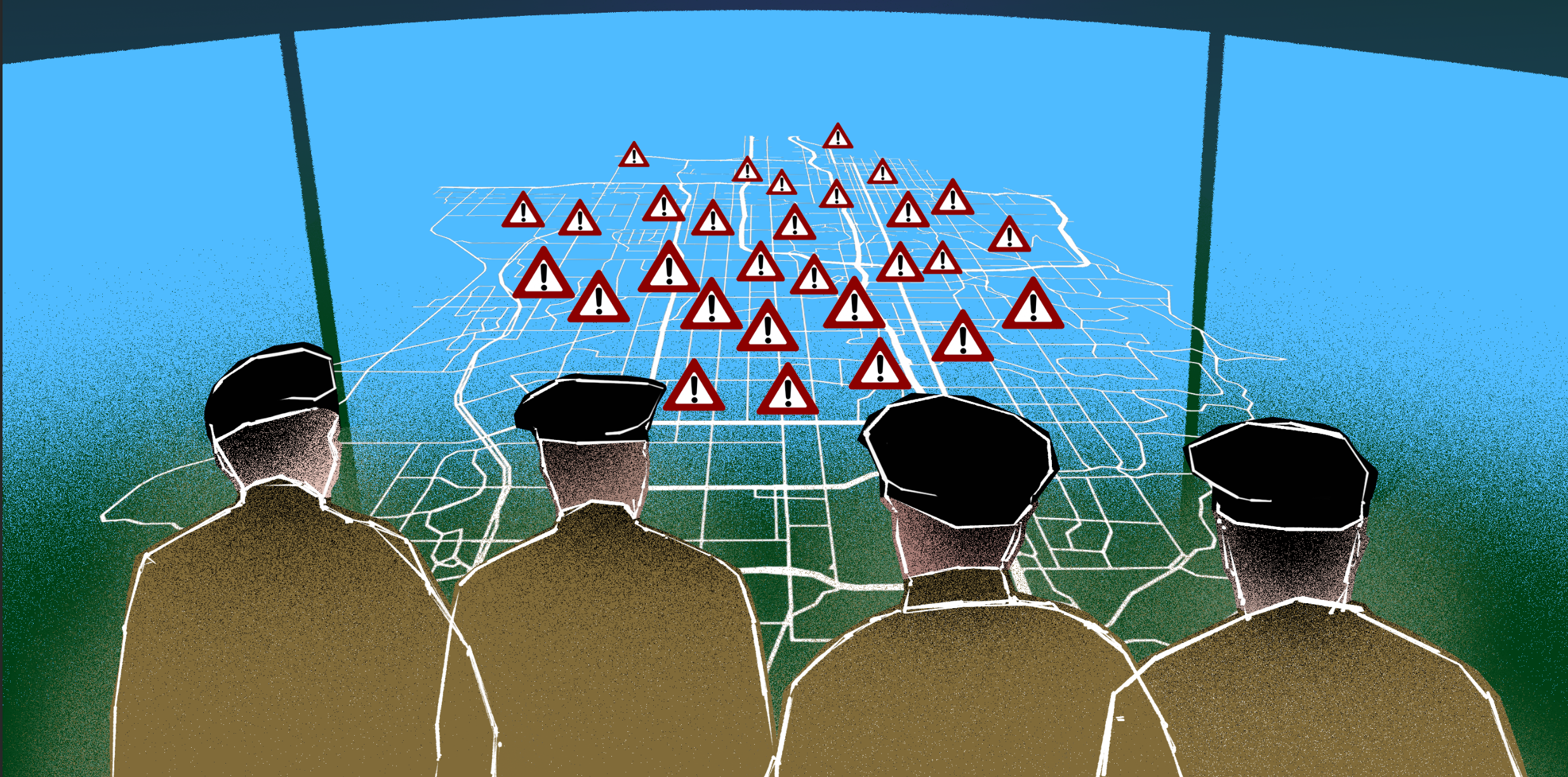
Yahyah Jaffery eventually recovered and wrote a newspaper column about his experience. “My photo was all over social media and I became a pariah,” he said. Over the next few days, the pattern was repeated with dozens of other patients.
In the months since, medical staff infected with Covid-19 have also had their personal details published online. According to a health department spokesperson, 20 doctors have been targeted in Sindh province alone.The leaks indicate the challenges in maintaining privacy and protecting public data in an under-resourced country that has reported nearly 15,000 cases of coronavirus and at least 32 deaths since early March. Pakistan is now confirming close to 1,000 new Covid-19 cases a day; experts say the numbers reflect the small group of people being tested each day, about 8,000.To contain the spread of the virus among 220 million citizens, many of whom have access to only threadbare medical assistance, the government has looked to mass data collection and contact tracing to gather information on those infected with Covid-19.Last week, Prime Minister Imran Khan announced that the government was using a tracking system originally developed by the country’s powerful security apparatus to combat terrorism. “The Inter-Services Intelligence (ISI) has given us a great system for track and trace,” he said on a live TV telethon. “It was originally used against terrorism, but now it is has come in useful against coronavirus.”
Contact tracing has been a central plank of coronavirus strategy for governments around the world, including Italy and Germany. However, alarms have been raised in Pakistan, where a lack of transparency and digital privacy standards risks undermining how the public is protected.
While Pakistan currently has no data protection laws, the Ministry of Information Technology & Telecommunication announced a call for consultation on a draft bill earlier this month.To lead the tracing and quarantine strategy, the government has established a new data hub at the Covid-19 national command center in Islamabad. The center will collect information from the ISI’s tracking system and share details about coronavirus cases with Pakistan’s four provincial governments, information technology institutions, and civil and military organizations. While specific details of how the tracking system functions remain unclear, the country’s national telecommunications regulator, Pakistan Telecom Authority (PTA), has confirmed that it is assisting the government by using cell tower tracking to locate the mobile phones of infected individuals and send text messages advising them to self-isolate. According to PTA, around 560,000 at-risk people have been sent “CoronaAlert” text messages to date. In Pakistan, licensed telecom providers such as cell phone companies are required to provide customer data to government agencies for national security purposes or when directed by PTA.
The text message initiative was launched in March by the prime minister’s Digital Pakistan unit, which is led by Tania Aidrus, a former head of Google’s Next Billion Users team, which makes products with emerging markets in mind.
In an interview, Aidrus said the authorities were using “multiple data points” for contact tracing. “The aim is to expand home testing and assessment in Pakistan. Hundreds of thousands people have used the various chatbots we have launched with the help of Facebook’s Messenger and WhatsApp to raise awareness and allow self-assessment.”
Aidrus also said the authorities are trying to find family information about Covid-19 patients by working with the National Database and Registration Authority (Nadra), the citizen biometric data center with personal information of all 220 million Pakistani nationals.
Nadra has been subject to several major digital breaches in the past, including one incident in 2018 which saw the private data of individuals hacked and sold on Facebook and WhatsApp. Digital rights groups have called for more secure protection of the private data of Pakistani citizens. In a 2018 report on Nadra, Pakistan’s Digital Rights Foundation stated “The potential for misuse or problematic leaks here is substantial and is only exacerbated by the lack of data protection legislation in the country.”
While acknowledging the lack of data protection policies in Pakistan, Aidrus said she was “incredibly confident” about the responsible use of any public data collected during the current crisis.
However, privacy advocates warn that many countries using technology to limit the spread of Covid-19 are failing to provide adequate transparency.
“The scale and sophistication of surveillance technologies being rolled out in response to Covid-19 around the world could fundamentally threaten human rights in the future,” said Samuel Woodhams, who is tracking global Covid-19 surveillance measures for the website Top10VPN. “Health authorities and governments should ensure they implement these initiatives with transparency, adequate sunset clauses and provide scope for public and political scrutiny. In countries that do not have well-defined personal privacy and human rights legislation, these concerns are considerably more acute.”
Subscribe to:
Posts (Atom)