Thursday, April 16, 2020
More lifesaving ventilators are available. Hospitals can’t afford them.
By Christopher Rowland
Hospitals are holding back from ordering more medical ventilators because of the high cost for what may be only a short-term spike in demand from the coronavirus epidemic, supply chain experts and health researchers say, intensifying an anticipated shortage of lifesaving equipment for patients who become critically ill.Health industry experts cite cost and uncertainty as disincentives to stocking up, leaving a potential life-and-death gap in treatment options for patients in the coronavirus outbreak.

The lack of ventilators — and growing calls for a more aggressive government role to fill the gap — was a subject of tense exchanges this week between President Trump and state officials. The issue also revealed a disconnect between different parts of the health-care industry, with the main hospital association disputing the accounts about the adequacy of supply of the lifesaving equipment. Mechanical ventilators, which help patients breathe or breathe for them, are considered critical to the nation’s effort to contain the worst effects of the pandemic and avoid a crisis like the one Italy is facing. Depending on how bad the coronavirus pandemic gets in the United States, individual cities could come up thousands of ventilators short as patients flood hospitals, researchers say.
“It’s a challenge for states, local governments and hospital administrators to allocate tens of millions of dollars to something when they don’t know if they need it or not," said Chris Kiple, chief executive of Ventec Life Systems, a small ventilator manufacturer in Washington state. “But if they don’t do it, they are going to be caught flat-footed, and facilities are going to be faced with not enough ventilators to meet demand."
Ventilator manufacturers could achieve, within a few months, a significant boost in production from about 50,000 units a year currently, said Julie Letwat, a health-care lawyer with McGuireWoods in Chicago who is monitoring the industry. Orders have not flooded in, she said, because most hospitals can’t afford to increase inventory of expensive equipment for what could turn out to be a short-term event.
“The risk is that they’ll never be used, and hospitals can’t eat the cost," she said. “Most hospitals in this country are not profitable."
Ventilators range from $25,000 for a basic model to $50,000 for a machine used in the most advanced intensive care units. Buying them also requires additional large investments in staff and training. Letwat said federal government investment would be the surest way to boost supply. Governors and local health authorities worry about an insufficient supply of ventilators and have been calling on the Trump administration to move aggressively to solve the problem. The president indicated Wednesday he has a plan to boost ventilator supplies but did not provide specifics. “We are ordering thousands and thousands of ventilators and they are complex,” Trump said at a White House press briefing. Other governments have rushed to stock up on ventilators. The United Kingdom has asked Rolls-Royce Holdings, which makes jet engines, and other heavy manufacturers to make ventilators. Germany ordered 10,000 ventilators with Dragerwerk AG, which Dow Jones said was the company’s largest order ever.
In the United States, Trump told state officials on a conference call that states and local governments should procure their own equipment. “Respirators, ventilators, all of the equipment — try getting it yourselves,” Trump told the governors, according to the New York Times, which first reported the call.
The Trump administration has barely begun to release up to 13,000 older ventilator models cached around the country in the federal Strategic National Stockpile, saying state officials have not requested them. On Tuesday, the Defense Department said it will contribute an additional 2,000 ventilators to the effort.
U.S. health system is showing why it’s not ready for a coronavirus pandemic
Maryland Gov. Larry Hogan (R), chairman of the National Governors Association, said leaders nationwide are scrambling to secure ventilators to prepare hospitals for a surge of coronavirus patients, but there are not enough available.
“There is a problem with supplies and ventilators,” Hogan said Monday. “There’s not enough supplies. The states don’t have enough. The federal government doesn’t have enough. They’re not getting distributed fast enough. And that’s a problem for all of us.”
Hospital officials do not know how many patients will need ventilator care in the United States or whether the system will be overwhelmed. They say they are in a race against the spread of the virus, hoping measures to keep people in their homes will reduce the size of the short-term spike in those seeking care.
Nancy Foster, vice president for quality and patient safety policy at the American Hospital Association, said hospitals are canceling elective surgeries to try to free up ventilators. “Knowing exactly what is enough is hard at the moment,” said Foster, whose organization was one of three that asked Congress for more resources in a letter Monday.Foster also said hospitals are preparing to move ventilators to hot spots of infection within multi-hospital systems and planning to bring older models back into use.
“We do have the capacity in an emergency to turn the switch on a lot of different things. We could change in a very short time,” said Brahim Ardolic, executive director of Staten Island University Hospital, which is part of a 22-hospital chain.
Surge in coronavirus patients threatens to swamp U.S. hospitals
Foster said she has not heard any American Hospital Association member hospital say it was not purchasing ventilators because of cost. “They want to be fully prepared to serve the needs of their community and to do so intelligently,” she said.Hospitals meanwhile are scrambling to buy as much personal protective equipment as they can for medical staff before the coming wave of infection, including disposable protective masks called N95 respirators, which are in short supply nationwide.On the front lines of one of the nation’s earliest outbreaks, J. Randall Curtis, a doctor in Seattle, has treated six coronavirus patients in the intensive care unit at Harborview Medical Center, three of them requiring ventilators (including one who died). He cited as unique in those patients’ care both the intense focus on infection control and also the heavy use of personal protective equipment for medical staff.The team managed the patients with the state-of-the-art ventilators, and he said more are available.
“Right now, we are mobilizing additional staff and cordoning off ICUs to take care of these patients, canceling surgeries, but we’re not exceeding capacity,” he said.
Nationally, the gap between demand and supply of ventilators could run into the tens of thousands, according to estimates. An analysis by the Society for Critical Care Medicine, citing figures developed for the American Hospital Association, said U.S. hospitals have 62,000 full-featured ventilators for advanced intensive care units with nearly 100,000 more with lesser capabilities. Contrast supply with potential demand: More than 900,000 patients may need ventilator care during the coronavirus pandemic, the analysis concluded.Keeping backup ventilators is impractical for most hospitals because of the need to service and maintain them and train additional staff during rare events when they are needed, said Lewis Kaplan, a trauma surgeon at the University of Pennsylvania and president of the Society of Critical Care Medicine.“It’s like taking military planes out of your boneyard,” he said. “There can be a variety of economic disincentives to be prepared for the worst thing that can happen."
Not all patients would be sick at once, so the shortfall may not be as dire as it may seem, Kaplan added. And many coronavirus patients can be adequately treated with older models of ventilators or less invasive modes of respiratory help, he said.
Medtronic, GE Healthcare, Becton Dickinson and Philips are among the largest producers of ventilators for the global market. Several large manufacturers said they are increasing manufacturing of medical supplies, including ventilators, but would not provide specific numbers.
“We are taking steps to increase our manufacturing capacity and output of equipment that is important in the diagnosis and treatment of covid-19 patients,” a spokeswoman for GE Healthcare said in a statement. Competition for supply could become an issue. With Europe’s governments placing massive orders, manufacturers also could face delays in obtaining spare parts because of supply-chain disruptions.
“A lot of these components for these ventilators are coming from other countries overseas, and some of the parts they need are creating a little bit of a backlog,” said Timothy R. Myers, chief business officer for the American Association for Respiratory Care, which represents health-care workers who specialize in ventilator treatment. Anthony S. Fauci, director of the National Institute of Allergy and Infectious Diseases, confirmed Sunday the federal government’s emergency stockpile of medical supplies contains nearly 13,000 ventilators. To access those, hospitals are required to ask their state and local governments, which then ask the federal government to release supplies.
Secretary of Health and Human Services Alex Azar said Sunday at a news briefing at the White House that the government has barely heard from states about tapping the stockpile.
“We have received, so far, only, I think, one request for just several ventilators,” he said. In contrast to Fauci’s disclosure that the stockpile contains nearly 13,000, Azar said the number was not disclosed for national security reasons. Pressed by Sen. Patty Murray (D-Wash.) at a congressional hearing this month about the adequacy of supplies, Azar suggested a key reason for passage of an $8.3 billion emergency spending bill was to procure more equipment, including ventilators and personal protective equipment for health-care workers. Foster, of the American Hospital Association, said requests to obtain ventilators from the Strategic National Stockpile have not begun because the location of potential shortfalls is not yet known.
“It is a wait-until-it’s-needed situation,” she said. “We don’t know which communities are going to be hard hit at any given time."
https://www.washingtonpost.com/health/2020/03/18/ventilator-shortage-hospital-icu-coronavirus/
#Pakistan - Out of control clerics

- Appeasement will make this the norm
This past Friday was the third consecutive week that Maulana Abdul Aziz, the illegal occupant and self-proclaimed khateeb of Islamabad’s Lal Masjid, invited and encouraged worshippers to pray standing close to each other in usual formation. But these are exceptional times with a highly contagious virus on the prowl looking for such gatherings to spread even more rapidly than it already is. Aziz is not your typical firebrand cleric and is constantly locking horns with law enforcement and intelligence agencies; ISI headquarters happen to be a stone’s throw from the infamous Lal Masjid, his stronghold. When he isn’t spewing hate through the loudspeaker, he is creating mischief in other ways. And why wouldn’t he? Since the Lal Masjid operation during the Musharraf years that he escaped disguised in a burqa, he has not faced the sort of restrictive sentencing that he deserves. Aziz has been charged for his latest transgressions as he was the week before as well. The charges include anti-state speech and violation of a ban on collective prayer, but his FIR remains sealed and no action can be taken until it is unsealed. This is in stark contrast to an incident in Karachi on the same day where a female police SHO, attempting to restrict a large gathering at a local mosque, was beaten up by a mob and pelted with stones. An FIR has been registered against the mosque’s management and others.
Religious sensitivities in Pakistan tend to take precedence over public safety. The most recent example of this is the TLP’s countrywide violent protests after the Supreme Court ordered the release of Aasia Bibi, who spent close to a decade behind bars under trumped-up blasphemy charges. The writ of the state was as absent back then as it is right now. But there wasn’t an ongoing global pandemic then, there is one now, and it is killing people on a daily basis. Appeasement of the actions of ignorant yet influential individuals, such as Maulana Aziz, will encourage more of his kind to do the same, leading indirectly to deaths. Most of Punjab’s over 2000 coronavirus cases include either attendees of the Tableeghi Jamaat in Lahore or pilgrims returning from Iran. These were avoidable cases, now they are the core cause of contagion in the province. It is criminal to allow out-of-control clerics to do as they please. Strict action must be taken, otherwise it will become the norm.
Amid COVID-19, a Governance Crisis Looms in Pakistan

Pakistan faces a likely ruling class reshuffle in due time—once the COVID–19 crisis clears.
Pakistan’s capital is rampant with speculation that the current government of Prime Minister Imran Khan is going to fall in the coming months. There are reasons to believe that these predictions may come true in the medium to long run. However, this is not likely to happen in the coming weeks or months.
From running a successful election campaign to putting together a government, the ruling Pakistan Tehreek-e-Insaaf (PTI) party’s leadership has had the unconditional support of a number of powerful institutions in the country, particularly the security establishment. Khan has been given space and autonomy to make decisions to revamp the country’s governance in a way that no other civilian prime minister in Pakistan’s history was able to do. Despite this, it’s not a secret anymore that Khan’s government has only complicated Pakistan’s economic and governance woes over the last 18 months.
Khan has taken the space afforded to him and turned it into a war machine against his political foes. Over the last year and a half, a vast number of political workers who have dared to question Khan’s governing performance have been put behind bars. Khan has used institutional support from various quarters to crush political opposition in the country.
However, this has had direct costs for the Pakistani parliament’s ability to function and deliver through an active legislative process. A number of observers describe the PTI’s legislative performance as “dismal and insufficient in taking the parliamentary process forward.” Khan, who promised to return respect to the parliament, has “attended only six out of 34 National Assembly sittings.” It’s not a surprise that Khan’s government passed more presidential ordinances than bills during its first year in power.
One of the key hindrances in this respect is Khan’s disregard and contempt for the political opposition. Last month, Khan refused to attend a parliamentary leaders meeting to discuss measures to tackle the COVID-19 outbreak in Pakistan. Besides, the delayed appointments of the Election Commission of Pakistan (ECP) members, belated legislation over the issue of military courts, the chief of army staff’s (COAS) extension matter, and other issues related to the parliament’s work are just some examples of where the prime minister has failed to provide leadership.
Moreover, beyond legislative hiccups, the current government’s interventions to improve the economy remain among its biggest failures. Arguably, several institutional stakeholders bought into Khan’s bluster about putting together an efficient team to deliver on the economic end. Unfortunately, even after 18 months in power, Khan is yet to find a team that can materialize his election promises. According to the latest report from the State Bank of Pakistan, the country’s entire debt has “has risen to Rs. 33.4 trillion” ($200 billion approximately). Even more appalling is the SBP’s forecast that the incumbent government is on track to “double the public debt by the end of its term in 2023.”
Complicating this issue is the incumbent government’s chaotic approach to dealing with the serious COVID-19 pandemic. So far, Khan has neither formed a clear and consistent strategy at the national level nor acted decisively in close coordination with the provinces to deal with the pandemic. All provinces in Pakistan are following different approaches and looking towards the federal government for leadership.
On Monday, Sindh province’s chief minister, Murad Ali Shah, said that the “lockdown has not been effective in curbing the spread of the coronavirus due to mixed signals from the federal government.” Last week, Baluchistan’s provincial government arrested doctors for protesting against the unavailability of personal protective equipment (PPE) in hospitals. In response to the civilian government’s fiasco, the Pakistan Army in a statement said that “emergency supplies of medical equipment, including PPE (Personal Protective Equipment) are being dispatched to Quetta” and promised that “doctors will get the equipment they need.”
The federal government’s lack of will to lay down a clear national strategy has created rifts among the central and provincial governments. Khan’s ministers have been accusing the provinces of not handling the crisis aptly while the provinces blame the federal government for not cooperating or supporting them adequately. Maleeha Lodhi, Pakistan’s former ambassador to the United Nations (UN), has recommended that Khan’s policy decisions should be “guided by the evolving medical science on the pandemic by giving a lead role to medical specialists who understand this, not generalist bureaucrats.”
The widespread confusion has brought pressure on the government from quarters that should stay away from matters of governance. Last week, the Supreme Court’s top judge criticized Khan by saying, “The government is just calling in meetings whereas no work is being done on the ground.” He further noted that “the public has been left at the mercy of God.” On Monday, the court ordered the federal government to remove the special assistant to the prime minister on health, Zafar Mirza, from his post for not taking sufficient measures to contain the COVID-19 pandemic.
On the political front, opposition parties have found an opening that may not have been available to them for a year. After Khan’s recent dismissal of some of his ministers who were involved in a corruption scandal, the PTI stands more divided than it was ever before. There are reports of forward blocks being formed within the PTI to undermine the federal government. Last week, two senior leaders of the Pakistan Muslim League Nawaz (PML-N), the main opposition party, met with the Punjab Assembly Speaker Chaudhry Pervaiz Elahi, Khan’s ally and coalition partner. This should have “sounded alarm bells within the PTI which is already experiencing fissures in its fold.” Going forward, a coalition of the PML-N and PML-Q to end PTI’s rule in Punjab cannot be ruled out.
Above everything, there is growing distress within key institutions when it comes to Khan’s ability to govern effectively. Pakistan’s policymaking circles should be thinking about the post-Khan era as economic and governance risks grow countrywide. Arguably, the working of the parliament is something that could be bypassed by institutions that matter, but when it comes to the economy, only limited missteps will be tolerated. In Khan’s case, the leeway for mistakes may have already passed.
However, the important question is what happens next? Contrary to all predictions of Khan’s government going down in a matter of weeks, nothing is expected to change in the coming weeks or months. This is due to two reasons.
First, Pakistan is in the midst of a national crisis and the last thing anyone wants to do is to send the government packing, which could start another crisis. Second, it is unclear which party or leader can fill the void if Khan’s government collapses.
The available options of leaders and parties don’t inspire confidence, and there are no candidates that have not been tried before by institutions that make the final call in Pakistan. Hypothetically, if someone can step-in in the midst of a looming economic and political crisis, it has to be the PML-N. However, the party’s leadership remains at loggerheads with several national institutions, including critically the security establishment. At this point, it’s unclear how the issues that have divided both actors for decades can be resolved now. Certainly, the national security establishment wouldn’t want to build another alliance with the PML-N on a weak footing. It’s not something that either side would want at this point.
These prevailing circumstances may buy some time for Khan. However, it’s only a matter of time before his house is dislodged. From here onward, opposition parties, the PTI’s disgruntled allies, existing fissures within the party’s ranks, and growing concerns within key institutions will only continue to make Khan’s job at the top difficult.
When the COVID-19 crisis is over, expect a major reshuffle in ruling circles.
وزیر اعلی سندھ کا کل دن 12سے 3بجے تک سخت لاک ڈاؤن کا اعلان

وزیر اعلیٰ سندھ سید مراد علی شاہ نے کل دن 12 سے 3 بجے تک سخت لاک ڈاؤن کا اعلان کیا ہے، وزیراعلیٰ سندھ کی درخواست پر علماء نے مکمل تعاون کی یقین دہانی کرادی۔
مفتی منیب الرحمان نے کہا ہے علماء اور عوام تعاون کریں تاکہ کل کوئی ناخوشگوار واقعہ نا ہو۔
ترجمان وزیر اعلیٰ کا کہنا ہے کہ وزیر اعلیٰ سندھ سے علما کرام نے ملاقات کی ہے۔
ترجمان وزیراعلیٰ سندھ کے مطابق مفتی منیب الرحمٰن کی زیر قیادت علمائے کرام کے وفد وزیراعلیٰ سندھ سید مراد علی شاہ سے ملاقات کی۔
وفد کے اراکین میں، مفتی عابد مبارک، مفتی رفیع رحمٰن، مفتی عابد سعید، عبدالوحید، ڈاکٹر عبدالباری، ڈاکٹر عدیل، ڈاکٹر سعید اور دیگر شامل تھے۔
وزیر اعلیٰ سندھ کی معاونت وزیر مذہبی امور ناصر شاہ اور وزیر تعلیم سعید غنی نے کی۔
وزیراعلیٰ سندھ نے کوروناوائرس پر قابو پانے کے لئے غیر مشروط تعاون پر علمائے کرام کا شکریہ ادا کیا۔
انہوں نے کہا کہ میں چاہتا ہوں کہ آپ جمعہ کے دن 12 بجے سے سہ پہر 3 بجے تک مکمل لاک ڈاؤن کرنے کے لئے ہماری مدد کریں۔
علماء کرام نے کہا کہ وہ کورونا وائرس کی جاری صورتحال سے آگاہ ہیں، لہٰذا انہوں نے حکومت کی حمایت کی ہے اور آئندہ بھی حکومت کے ساتھ تعاون کریں گے۔
وزیر اعلیٰ سندھ سید مراد علی شاہ اور مفتی منیب الرحمن نے ملاقات کے پیغامات لوگوں پر تعاون کرنے کے لیے زور دیا۔
مفتی منیب الرحمان کا کہنا تھا کہ آئمہ کرام اور عوام سے کہتا ہوں کہ وہ حسب معمول تعاون کریں، تاکہ کل کا دن خوشگوار گزرے اور کوئی ناخوشگوار واقعہ نا ہو۔
وزیر اعلیٰ سندھ سید مراد علی شاہ نے آئی جی پولیس مشتاق مہر کو ہدایت کی کہ وہ جمعہ کے دن دوپہر 12 بجے سے سہ پہر 3 بجے تک مکمل لاک ڈاؤن کو یقینی بنانے کے لیے تمام تر ضروری انتظامات کریں۔
کراچی میں کورونا سے بڑے پیمانے پر اموات کی خبریں غلط نکلیں
کراچی میں کورونا وائرس سے بڑے پیمانے پر اموات کی خبر غلط نکلی، شہر قائد میں ایک خاتون کے علاوہ کوئی بھی شخص کورونا وائرس کی وجہ سے ہلاک نہیں ہوا۔
واضح رہے کہ یہ افواہیں گردش کر رہی تھیں کہ شہر قائد میں 15 مارچ سے 13 اپریل تک ہونے والی 759 اموات کورونا وائرس کی وجہ سے ہوئی ہیں۔
تاہم جیو نیوز کی ایک تحقیقاتی رپورٹ میں یہ بات سامنے آئی ہے کہ یہ تمام اموات کورونا کی وجہ سے نہیں ہوئیں بلکہ ان کی وجہ موت کچھ اور ہے۔
جیو نیوز نے ایدھی ہومز میں غسل دی گئی میتوں کے لواحقین سے رابطہ کرلیا، جن میں یہ پتہ لگا ہے کہ 31 مارچ کو انتقال کر جانے والی خاتون کے علاوہ کسی کی وجہ موت کورونا نہیں تھی۔
ایدھی ہومز میں 15 مارچ سے 31 مارچ تک 371 میتوں کو غسل دیا گیا جن میں 249 مرد اور 121خواتین تھیں۔
ان تمام متوفی افراد کے لواحقین کا کہنا ہے کہ ان کے پیارے پہلے سے ہی کسی نہ کسی عارضے میں مبتلا تھے۔
مذکورہ لواحقین کے پاس مرنے والوں کے ڈیتھ سرٹیفکیٹ بھی موجود ہیں جن میں واضح طور پر ان کی موت کی وجہ لکھا ہوا ہے۔
لواحقین کے مطابق ان میں سے اکثر افراد کا انتقال دل کا دورہ یا فالج کے اٹیک سے ہوا۔
کچھ لوگ کینسر، جگر اور گردے کی بیماریوں کے باعث انتقال کرگئے جبکہ ان میں ایک شخص ایسا ہے جو گلے میں چھالیہ پھنس جانے کی وجہ سے انتقال کر گیا تھا۔
تحقیقاتی رپورٹ کے مطابق 15 مارچ سے 31 مارچ تک غسل دی گئی میتوں میں اکثر کی عمر 50 سال سے زیادہ تھی جبکہ 358 افراد کی عمر 41 سے 88 سال کے درمیان تھی۔
دوسری جانب یکم اپریل سے 13 اپریل تک ایدھی کے 3 سرد خانوں میں 388 میتیں لائی گئیں جن میں سب سے زیادہ میتین ایدھی ہوم سہراب گوٹھ میں لائی گئیں۔
ان 13 دنوں میں 25 میتیں موسیٰ لین کے سرد خانے میں لائی گئیں، کورنگی سینٹر میں 64 میتیں لائی گئیں۔
رواں ماہ شہر میں ان 13 دنوں میں مرنے والوں میں 212 مرد اور 176 خواتین تھیں۔
Wednesday, April 15, 2020
#COVID19 - A visual history of pandemics
- Even in the modern era, outbreaks are nearly constant, though not every outbreak reaches pandemic level as the coronavirus has.
- This visualization outlines some of history’s most deadly pandemics, from the Antonine Plague to COVID-19.

Image: Visual Capitalist
The History of Pandemics
Pan·dem·ic /panˈdemik/ (of a disease) prevalent over a whole country or the world.
As humans have spread across the world, so have infectious diseases. Even in this modern era, outbreaks are nearly constant, though not every outbreak reaches pandemic level as the Novel Coronavirus (COVID-19) has.
Today’s visualization outlines some of history’s most deadly pandemics, from the Antonine Plague to the current COVID-19 event.
A Timeline of Historical Pandemics
Disease and illnesses have plagued humanity since the earliest days, our mortal flaw. However, it was not until the marked shift to agrarian communities that the scale and spread of these diseases increased dramatically.
Widespread trade created new opportunities for human and animal interactions that sped up such epidemics. Malaria, tuberculosis, leprosy, influenza, smallpox, and others first appeared during these early years.
The more civilized humans became – with larger cities, more exotic trade routes, and increased contact with different populations of people, animals, and ecosystems – the more likely pandemics would occur.
Here are some of the major pandemics that have occurred over time:

Note: Many of the death toll numbers listed above are best estimates based on available research. Some, such as the Plague of Justinian, are subject to debate based on new evidence.
Despite the persistence of disease and pandemics throughout history, there’s one consistent trend over time – a gradual reduction in the death rate. Healthcare improvements and understanding the factors that incubate pandemics have been powerful tools in mitigating their impact.
Wrath of the Gods
In many ancient societies, people believed that spirits and gods inflicted disease and destruction upon those that deserved their wrath. This unscientific perception often led to disastrous responses that resulted in the deaths of thousands, if not millions.
In the case of Justinian’s plague, the Byzantine historian Procopius of Caesarea traced the origins of the plague (the Yersinia pestis bacteria) to China and northeast India, via land and sea trade routes to Egypt where it entered the Byzantine Empire through Mediterranean ports.
Despite his apparent knowledge of the role geography and trade played in this spread, Procopius laid blame for the outbreak on the Emperor Justinian, declaring him to be either a devil, or invoking God’s punishment for his evil ways. Some historians found that this event could have dashed Emperor Justinian’s efforts to reunite the Western and Eastern remnants of the Roman Empire, and marked the beginning of the Dark Ages.
Luckily, humanity’s understanding of the causes of disease has improved, and this is resulting in a drastic improvement in the response to modern pandemics, albeit slow and incomplete.
Importing Disease
The practice of quarantine began during the 14th century, in an effort to protect coastal cities from plague epidemics. Cautious port authorities required ships arriving in Venice from infected ports to sit at anchor for 40 days before landing — the origin of the word quarantine from the Italian “quaranta giorni”, or 40 days.
One of the first instances of relying on geography and statistical analysis was in mid-19th century London, during a cholera outbreak. In 1854, Dr. John Snow came to the conclusion that cholera was spreading via tainted water and decided to display neighborhood mortality data directly on a map. This method revealed a cluster of cases around a specific pump from which people were drawing their water from.
While the interactions created through trade and urban life play a pivotal role, it is also the virulent nature of particular diseases that indicate the trajectory of a pandemic.
Tracking Infectiousness
Scientists use a basic measure to track the infectiousness of a disease called the reproduction number — also known as R0 or “R naught.” This number tells us how many susceptible people, on average, each sick person will in turn infect.

Measles tops the list, being the most contagious with a R0 range of 12-18. This means a single person can infect, on average, 12 to 18 people in an unvaccinated population.
While measles may be the most virulent, vaccination efforts and herd immunity can curb its spread. The more people are immune to a disease, the less likely it is to proliferate, making vaccinations critical to prevent the resurgence of known and treatable diseases.
It’s hard to calculate and forecast the true impact of COVID-19, as the outbreak is still ongoing and researchers are still learning about this new form of coronavirus.
Urbanization and the Spread of Disease
We arrive at where we began, with rising global connections and interactions as a driving force behind pandemics. From small hunting and gathering tribes to the metropolis, humanity’s reliance on one another has also sparked opportunities for disease to spread.
Urbanization in the developing world is bringing more and more rural residents into denser neighborhoods, while population increases are putting greater pressure on the environment. At the same time, passenger air traffic nearly doubled in the past decade. These macro trends are having a profound impact on the spread of infectious disease.
As organizations and governments around the world ask for citizens to practice social distancing to help reduce the rate of infection, the digital world is allowing people to maintain connections and commerce like never before.
Editor’s Note: The COVID-19 pandemic is in its early stages and it is obviously impossible to predict its future impact. This post and infographic are meant to provide historical context, and we will continue to update it as time goes on to maintain its accuracy.
خیبر پختونخوا میں کرونا وائرس سے شرح اموات زیادہ اور ریکوری کم کیوں ہے؟

حکومتی اعدادوشمار کا جائزہ لینے پر یہ بات سامنے آتی ہے کہ صوبے کے کل 865 کیسز میں شرح صحت یابی 21 فیصد اور شرح اموات 4 فیصد ہے۔ ہلاکتوں کی یہ تعداد پورے ملک میں سب سے زیادہ ہے۔
پاکستان میں کرونا (کورونا) وائرس سے متاثرہ افراد کی مجموعی تعداد میں تیزی سے اضافہ ہو رہا ہے، تاہم اگر تمام صوبوں کا الگ الگ جائزہ لیا جائے تو معلوم ہوتا ہے کہ شرح اموات اور شرح صحت یابی (ریکوری) کچھ صوبوں میں نمایاں طور پر کم یا زیادہ ہے۔
یہ وجوہات جاننے سے پہلے ضروری ہے کہ ہر صوبے میں شرح اموات اور صحت یابی کا تفصیل کے ساتھ مطالعہ کیا جائے۔
کووڈ 19 کے حوالے سے اعداد و شمار دینے والی حکومتی ویب سائٹ کے مطابق صوبہ پنجاب کے مجموعی کیسز کی تعداد 2945 ہے جس میں شرح
صحت یابی 17 فیصد اور شرح اموات ایک فیصد ہے۔
دوسری جانب صوبہ سندھ میں کرونا وائرس سے متاثرہ افراد کی کُل تعداد 1518 ہے، جس میں شرح صحت یابی 28 فیصد اور شرح اموات دو فیصد ہے۔ یعنی اس صوبے میں صحت یاب ہونے والے مریضوں کی شرح پنجاب سے زیادہ ہے، جب کہ شرح اموات بھی پنجاب کی نسبت زیادہ ہے۔
بلوچستان میں اب تک رپورٹ ہونے والے کیسز کی تعداد 240 ہے، جس میں شرح صحت یابی 57 فیصد اور شرح اموات ایک فیصد ہے، جو کہ صوبہ سندھ اور صوبہ پنجاب کی نسبت بہت زیادہ ہے۔
اسی طرح صوبہ خیبر پختونخوا کا جائزہ لیا جائے تو معلوم ہوتا ہے کہ کل 865 کیسز میں شرح صحت یابی 21 فیصد اور شرح اموات 4 فیصد ہے۔
اگر اس تناسب کا پاکستان کے دیگر صوبوں کے ساتھ موازنہ کیا جائے تو خیبرپختونخوا میں اموات کی شرح کافی زیادہ ہے۔
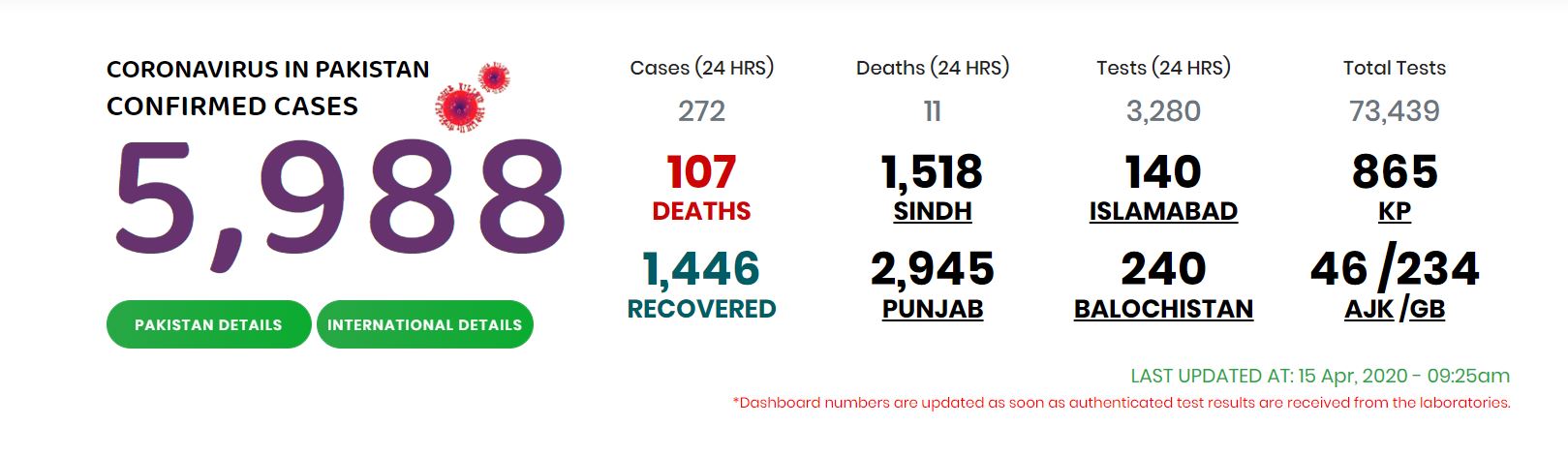
(سکرین گریب)
خیبر پختونخوا میں کرونا وائرس سے صحت یابی کی شرح کم ہونے اور اموات کی تعداد زیادہ ہونے کی وجوہات جاننے کے لیے انڈپینڈنٹ اردو نے وزیر صحت تیمور جھگڑا سے رابطہ کرنے کی متعدد مرتبہ کوشش کی لیکن انہوں نے جواب نہیں دیا۔
وزیر صحت تیمور جھگڑا سے کیے گئے سوالات یہ ہیں:
1۔ خیبر پختونخوا میں باقی صوبوں کی نسبت کرونا وائرس سے زیادہ اموات اور کم شرح صحت یابی کی وجہ کیا ہے؟
2۔ کہیں ایسا تو نہیں ہے کہ اس صوبے میں متاثرہ افراد کی تعداد درحقیقت زیادہ ہے لیکن ٹیسٹ کم ہو رہے ہیں؟
3۔ کیا خیبر پختونخوا میں وائرس سٹرین کی جانچ پڑتال کی گئی ہے، تاکہ معلوم ہو سکے کہ کہیں یہ وائرس کی وہ قسم تو نہیں، جو زیادہ مہلک ہے؟
4۔ خیبرپختونخوا میں کرونا ٹیسٹ کی روزانہ کی استعداد صرف 500 تک ہے جبکہ سندھ اور پنجاب میں روزانہ دو سے چار ہزار تک ٹیسٹ ہورہے ہیں۔ یہ تعداد کیوں بڑھائی نہیں گئی؟
5۔ صوبے میں اس وائرس سے اب تک 38 اموات واقع ہو چکی ہیں، کیا پبلک ہیلتھ اور دیگر متعلقہ اداروں کو مختلف عوامل، مشاہدوں اور تجزیوں سے اس وائرس کا رویہ معلوم کرنے کے لیے ریسرچ سٹڈیز کے احکامات جاری کیے گئے ہیں؟
طبی ماہرین کیا کہتے ہیں؟
خیبر میڈیکل انسٹی ٹیوٹ کے پبلک ہیلتھ ڈیپارٹمنٹ کے ڈین پروفیسر ضیا الدین نے انڈپینڈنٹ اردو سے گفتگو میں یہ اعتراف کیا کہ ابھی تک حکومت کی جانب سے ان کے ڈیپارٹمنٹ کو کرونا وائرس سے متعلق سوالات و مشاہدات پر ریسرچ کرنے کے لیے کسی قسم کے احکامات نہیں ملے ہیں۔
تاہم ڈاکٹر ضیا نے بتایا کہ انہوں نے خود ہی پہل کرتے ہوئے ہسپتالوں کی مدد سے کرونا وائرس کے حوالے سے مختلف زاویوں پر ریسرچ کرنی شروع کر دی ہے۔
واضح رہے کہ پبلک ہیلتھ ڈیپارٹمنٹ کا کام ریسرچ اور مشاہدہ کرکے ریسرچ سٹڈیز تیار کرنا ہوتا ہے، جو کسی بھی مسئلے سے نمٹنے کے لیے انتہائی ضروری ہوتی ہیں۔
ڈاکٹر ضیا نے خیبر پختونخوا میں شرح اموات زیادہ اور صحت یابی کی شرح میں کمی کی وجوہات کچھ یہ بیان کیں۔
پہلی وجہ
خیبر پختونخوا میں جن علاقوں میں کرونا وائرس کے مثبت کیسز سامنے آئے وہاں زیادہ سے زیادہ ٹیسٹ ہونے چاہیے تھے، لیکن ایسا نہیں ہوا۔
بقول ان کے: 'اس کا اندازہ آپ خیبر پختونخوا کے کل کیسز سے لگا سکتے ہیں۔ مثال کے طور پر اگر 10 ہزار کیسز ہوتے تو اس میں 38 اموات اتنی زیادہ نہ ہوتیں۔'
دوسری وجہ
دور دراز علاقوں کے رہائشی ٹیسٹ کی سہولت نزدیک نہ ہونے کے باعث یا تو تاخیر سے جاتے ہیں یا پھر جاتے ہی نہیں۔
تیسری وجہ
لیبارٹریز کی بہت کمی ہے۔ ابھی تک صرف خیبر میڈیکل یونیورسٹی پورے صوبے کا کام سنبھال رہی ہے۔
چوتھی وجہ
ڈاکٹر ضیا سے جب پوچھا گیا کہ کہیں ایسا تو نہیں کہ خیبر پختونخوا کے وائرس سٹرین اور دوسرے صوبوں کے وائرس سٹرین میں فرق ہو تو انہوں نے بتایا کہ ایسا نہیں ہے۔ 'وائرس کے طریقہ واردات سے پتہ چل رہا ہے کہ یہ ایک ہی وائرس سٹرین ہے۔'
تاہم وہ اس بات کا کوئی تسلی بخش جواب نہ دے سکے کہ یہ محض ایک اندازہ ہے اور اس پر ابھی تک کوئی عملی تحقیق نہیں ہوئی ہے۔
پانچویں وجہ
ڈاکٹر ضیا سمجھتے ہیں کہ حکومت اور ہیلتھ ڈیپارٹمنٹ کا کام یہ تھا کہ قرنطینہ مراکز کی بجائے فیلڈ ہسپتال قائم کیے جاتے۔
اس کی وضاحت کرتے ہوئے انہوں نے بتایا کہ ’80 سے 85 فیصد مریض مائلڈ یا موڈریٹ علامات کا شکار ہوتے ہیں۔ ان کا علاج فیلڈ ہسپتالوں میں ہوتا تو صرف شدید بیمار مریضوں کو ہسپتال کے آئی سی یو میں رکھا جاتا۔لیکن اس وقت صرف قرنطینہ مراکز ہیں جہاں سب کو ایک ساتھ رکھا جاتا ہے، نتیجتاً سب میں وائرس پھیلنے کا خطرہ ہوتا ہے۔'
گلگت بلتستان میں شرح صحت یابی زیادہ اور شرح اموات کم کیوں؟
گلگت بلتستان میں اس وقت کرونا وائرس سے صحت یابی کی شرح تمام ملک سے زیادہ یعنی 74 فیصد اور شرح اموات ایک فیصد ہے۔ آج بھی گلگت بلتستان میں 20 افراد صحت یاب ہو چکے ہیں۔ یہاں کرونا کے مجموعی کیسز 234 ہیں۔
اس کی وجوہات جاننے کے لیے دیامیر کے ڈسٹرکٹ ہیلتھ آفیسر ڈاکٹر صلاح الدین سے رابطہ کیا گیا تو انہوں نے بتایا کہ گلگت بلتستان کو جانے والی تمام سڑکوں کے انٹری پوائنٹس پر سکریننگ کے عملے کی ڈیوٹی لگا دی گئی ہے۔
انہوں نے بتایا: 'ان پوائنٹس پر تین گاڑیاں بھی کھڑی ہوتی ہیں۔ جوں ہی کسی کا درجہ حرارت زیادہ یا علامات مشکوک ہوں، اسے فوراً وہاں سے قرنطینہ مرکز لے جایا جاتا ہے۔ پورے گلگت بلتستان سے ٹیسٹ گلگت کی لیبارٹری میں جارہے ہیں اور 24 گھنٹے میں نتائج آ جاتے ہیں۔'
ڈاکٹر صلاح الدین نے بتایا کہ ان کے پاس روزانہ 30 سے 40 ٹیسٹس کرنے کی صلاحیت ہے۔
ساتھ ہی انہوں نے بتایا کہ 'ابھی تک اس بات کا تعین نہیں کیا جاسکا کہ گلگت بلتستان میں شرح صحت یابی زیادہ اور شرح اموات کم کیوں ہے۔ ہوسکتا ہے کہ اس کی وجہ اچھی آب وہوا ہو یا پھر پہاڑی علاقے کے لوگوں کی قوت مدافعت بہتر ہو۔'
ایک نئی امریکی طبی تحقیق نے سوال اٹھایا ہے کہ کیا کرونا وائرس کی وجہ سے پھیپھڑے تھک کر نظام خون پر اثرانداز ہوتے ہیں یا پھر خون میں سرخ خلیات جسم میں آکسیجن پہنچانے میں ناکام ہوجاتے ہیں؟ کیونکہ کرونا وائرس کی دیگر علامات میں سب سے بڑا مسئلہ سانس لینے میں دشواری کا ہوتا ہے۔
چونکہ پہاڑی علاقوں کے لوگوں کی اکثریت میں سرخ خلیات زیادہ ہوتے ہیں لہذا خیال کیا جا رہا ہے کہ اسی وجہ سے وہاں صحت یابی کی شرح بھی زیادہ ہو۔
Special flight brings VIPs back to Pakistan from London, 400 citizens remain stranded in UK

UNNATI SHARMA

After the VIPs were accommodated in the special flight, the remaining seats were kept empty to maintain social distancing, says a Geo News report.
A Pakistan International Airlines (PIA) flight has brought back nearly 150 ‘dignitaries’, including three family members of a Pakistani minister, from London to Islamabad even as 400 other citizens still remain stranded in the UK with no means to come home amid the coronavirus pandemic.
According to a Geo News report, the special PIA flight was arranged on 9 April to bring back the stranded VIP members. After the VIPs were accommodated in the aircraft, says the report, the remaining seats were kept empty to maintain social distancing.
“All the plugs were pulled out and special arrangements were made for that flight to take passengers from the Heathrow Airport in London to Islamabad Airport in Pakistan because family members of a minister and some other dignitaries wanted to leave London on an urgent basis,” Geo News reported, quoting sources.
The national carrier has since not flown back with any other passenger stranded in the UK. But there have been many ferry flights to Pakistan from London after 9 April to bring back people who are allegedly well-connected.
A spokesman of the Pakistan High Commission confirmed that it had passed lists of stranded passengers to the PIA and only those names were added who were recommended by Pakistan’s Ministry of Foreign Affairs and the PIA head office.
Short-term travellers, vulnerable people stranded
Pakistan had closed its airspace on 21 March due to increasing threat of the coronavirus pandemic. The country’s civil aviation authorities planned to close the airspace till 4 April but flight operations have remain terminated since.
According to the report quoted above, many Pakistanis stranded in Britain were short-term travellers, including elderly and the sick, whose flights got cancelled due to airspace closure.
The Pakistani government has been criticised for flying empty planes back to the country when one single aircraft could have been enough to accommodate all stranded citizens.
’لاک ڈاؤن نرم نہیں مزید سخت ہوا ہے‘ - وزیراعلیٰ سندھ مراد علی شاہ
وزیراعلیٰ سندھ مراد علی شاہ نے کہا ہے کہ لاک ڈاؤن نرم نہیں
 مزید سخت ہوا ہے جو مستثنیٰ ہیں ان کے لیے بھی قواعد وضوابط سختی سے فالو کرنا ہوں گے۔

بدھ کو کراچی میں پریس کانفرنس سے خطاب کرتے ہوئے ان کا کہنا تھا کہ ’نیک نیتی سے کام کر رہے ہیں بے جا غلطیاں پکڑنے سے اجتناب کیا جائے، معاف کیا جائے۔‘
مراد علی شاہ کا مزید کہنا تھا وزیراعظم سے ملاقاتوں میں جو تجاویز دیں ان کو مانا گیا جس پر ان کا شکرگزار ہوں۔
انہوں نے کہا کہ کسی چھوٹی سی بات پر کل پرسوں سے طوفان بدتمیزی جاری ہے۔
’ہم کہتے ہیں، غلطیاں ہوئی ہیں، غلطیاں ہوں گی لیکن کچھ نہ کرنے کی غلطی ہم نہیں کریں گے۔‘
سندھ حکومت کی کارکردگی کے حوالے سے ان کا کہنا تھا کہ اس بارے میں جلد سپریم کورٹ میں اپنا جواب داخل کرائیں گے۔
’شاید ہم چیف جسٹس کو پوری طرح سے اپنا نقطہ نظر سمجھا نہیں سکے، تحریری طور پر جواب میں قائل کریں گے۔‘
مراد علی شاہ نے لاک ڈاؤن میں نرمی کے حوالے سے کہا کہ سیکٹر کے بجائے جغرافیے پر توجہ دی جائے زیادہ بہتر ہو گا۔
’جو علاقہ وائرس سے پاک ہو، اس کو دوسروں سے بچا کر بے شک کھول دیں، اسی طرح دوسرے علاقے بھی کھولے جا سکتے ہیں بشرطیکہ ان کو محفوظ رکھا جا سکے۔‘
ان کا کہنا تھا کہ کبھی 12 ارب اور کبھی آٹھ ارب روپے کے خرچ کے حوالے سے الزامات لگائے جاتے ہیں۔
’ہم نے کیا کیا ہے میرے بھائی، ایک ایک پیسے کا ریکارڈ موجود ہے، جو آڈٹ کرنا چاہے اسے دیا جا سکتا ہے۔‘
انہوں نے کہا کہ وہ لوگ جو پریشان ہیں کہ ہمارا نام کیوں نہیں آ رہا، ہر جگہ کیوں لوگ محترمہ کا نام لے رہے ہیں
’ایسے لوگوں کا کوئی علاج نہیں، ان کو کچھ نہیں دکھائیں گے، گھومتے رہیں۔‘ انہوں نے کہا کہ یہ ایمرجنسی کا وقت ہے چھوٹی چھوٹی باتوں پر لڑنے کا نہیں۔
ان کا مزید کہنا تھا کہ اس وقت ہماری سب سے پہلی ترجیح انسانوں بچانا ہونا چاہیے۔
’کسی کو جانوں سے کھیلنے نہیں دیں گے، یہ وقت بھی گزر جائے گا، باقی چیزیں پھر کر لیں، ہاتھ جوڑ رہا ہوں، اس وقت معاف کر دو۔‘
ان کا عوام کو مخاطب کرتے ہوئے کہا رمضان آ رہا ہے، دو ہفتے مزید اپنے گھروں پر رہیں، دنیاوی چیزوں کو بھول جائیں، اللہ کی طرف رجوع کریں۔
مراد علی شاہ نے کل علما کی جانب سے ہونے والی پریس کانفرنس کا حوالہ دیتے ہوئے کہا ہمیں ان کا احترام ہے، دو وزرا ان سے مل کر معاملات کو دیکھیں گے۔
ان کا کہنا تھا کہ وزیراعظم سے گزارش کی تھی کہ تیرہ اپریل کو اعلان نہ کریں جسے انہوں نے تسلیم کی۔
’میٹنگ میں آٹو موبائل انڈسٹری کھولنے کی بات بھی ہوئی تھی جس کی ہم نے مخالفت کی اور اسے چھوڑ دیا گیا۔‘
انہوں نے صوبے میں کورونا وائرس کے حوالے سے اعدادوشمار بتاتے ہوئے کہا کہ عالمی ادارہ صحت کی جانب سے کہا گیا ہے کہ اس وقت صرف سندھ ہی اس کے معیار کی پیروی کر رہا ہے۔
ان کا کہنا تھا کہ جو کنسٹرکشن سائٹس اور فیکٹریاں کھولی جائیں گی ان کے لیے قواعدوضوابط وضع کیے گئے ہیں ان پر سختی سے عملدرامد یقینی بنایا جائے گا۔
’جو کوئی بھی گھر بنائے یا بڑی عمارت، اسے پہلے انتظامیہ سے اجازت لینا ہو گی اور ایس او پیز کے مطابق کام کرنا ہو گا‘
انہوں نے ایک بار پھر یاد دلایا کہ اب لاک ڈاؤن مزید سخت ہو گا کیونکہ یہ نہیں کہا جا سکتا کہ آنے والے دنوں میں بیماری کیا صورت اختیار کرتی ہے۔
انہوں نے کہا کہ اگر کسی کا خیال ہے کہ ہمارے ہاں کورونا کم ہے تو وہ غلط ہے۔
’پاکستان میں کیسز کی شرح کم و بیش دنیا کے برابر ہی ہے تاہم ہمارے ہاں اب تک کم ٹیسٹ ہوئے ہیں‘
ان کا کہنا تھا کہ ڈبل سواری پر پابندی ہو گی، لوگ مرض سے لڑنے میں حکومت کا ساتھ دیں۔
Subscribe to:
Posts (Atom)