Monday, March 16, 2020
In Pakistan, criticism grows dangerous as dissent stifled
By KATHY GANNON
In Pakistan, being a dissident or even raising a critical voice is a dangerous business.
Being a dissident — or even raising a critical voice — in Pakistan is growing more dangerous, regardless of whether the target is political parties, the judiciary or the powerful military and security agencies.
Intimidation of dissidents has increased on multiple fronts, rights workers and journalists say. A number of rights activists have been arrested and charged with sedition. Protesters have been jailed, including a member of parliament. Newspapers and journalists have faced violence, harassment and warnings from security officials not to cover anything that might show the military in a harsh light.
Rights groups say the civilian government of Prime Minister Imran Khan, elected in 2018, has failed to protect freedom of speech, imposing legislation to restrict online media, even dictating who can appear on television talk shows, while at the same time ceding authority for curbing freedom of speech to the powerful military.
“In recent years, the space for dissent in Pakistan has shrunk to the point of suffocation,” warned Omar Warriach, Amnesty International’s Deputy South Asia director.
“The Pakistani military has demonstrated that it can still call the shots without directly being in power. … Taking part in a peaceful protest can now lead to arrest and charges of sedition. Many activists have been forced into exile, fearing for their safety. What was once a lively media landscape has narrowed to exclude critical voices,” he said.
Pakistan’s government has denied allegations it’s stifling free speech. It said it was simply cutting spending when it recently pulled all its advertising from two prominent media houses, Dawn and Jang, that frequently criticize the military’s involvement in civilian affairs. Khan’s government has also criticized the previous administration for using public money on advertising to promote itself.
Government advertising is one of the leading sources of revenue for newspapers and media houses in Pakistan and is often used to squeeze critical media.In a March 2 statement, Steven Butler, the Asia program director for the Committee to Protect Journalists, said the government was using advertising “as a cudgel to punish and reward news outlets based on their editorial stance in this way,” and demanded the practice stop.Butler was denied entry into Pakistan last year despite holding a valid visa. The government has remained silent on the move, but Pakistani officials say that particular decision was taken without the prime minister’s knowledge. The officials spoke on condition of anonymity because they were not authorized to speak to the media. Khan was elected in July 2018, amid widespread criticism from international rights groups and political opponents that the country’s powerful military and intelligence aided his campaign. The military was widely accused of intimidating the media and campaigning against Khan’s strongest opponent, the Pakistan Muslim League, whose leader Nawaz Sharif had fallen out with the army after openly accusing it of supporting militants.
At a recent meeting with international journalists, Khan’s adviser on communication, Firdous Ashiq Awan justified action against those who would attack the military, even charging them with sedition, saying the country’s military was sacrosanct according to the constitution.
One journalist, Aziz Memon, disappeared this month on the way to his work at a small newspaper in Pakistan’s southern Sindh province. He was found dead just hours later. A few months earlier, Memon tweeted that he had been threatened by local police and a prominent political party over his reporting.
The Brussels-based International Federation of Journalists this week called for the arrest of Memon’s killers and strongly criticized a police report that said he died of “natural causes.” An autopsy report later listed his death as strangulation.
“The post-mortem report proves beyond a doubt that Aziz was brutally murdered,” the federation statement said. “We reiterate our demand that the authorities take urgent action to arrest the killers and those who ordered his killing.”
In other cases, intelligence agencies have reportedly forced newspaper sellers into not delivering papers to certain areas and warned television anchors against interviewing certain politicians.
The military’s public relations wing, known as the Inter-Services Public Relations, has repeatedly denied interfering in television programming or disrupting newspaper distribution, although it has justified muzzling news of a dissident ethnic Pashtun movement called the Pashtun Tahafuz (Protection) Movement, or PTM, claiming it impacts national security, without explaining exactly how.
Authorities have often targeted the PTM, which has accused the army of using the decades-long war on terror to profile, intimidate, harass and arrest ethnic Pashtuns, who dominate Pakistan’s northwestern regions bordering Afghanistan.
In late January, a protest of barely 100 people — small by Pakistani standards — took place outside the National Press Club in the capital Islamabad to protest the arrest of a young PTM leader. The protesters had begun to disperse when police arrived, grabbing protesters and throwing them into waiting trucks.
Among the men and women rounded up was Mohsin Dawar, a member of parliament from Pakistan’s North Waziristan border region. “I said I would go with them. I wasn’t resisting, but still they grabbed me, kicked me and punched me,” he said in an interview following his release. In all, 29 people were arrested, all of them ordered released in early February by the Islamabad High Court, which reprimanded police for charging many of them with sedition, without reason.
Rights groups have also criticized the liberal use of Pakistan’s sedition and anti-terrorism act.
Gulalai Ismail, a rights activist, was charged under the anti-terrorism act after she criticized army actions in the border regions, including a report that complained of military harassment of women and girls, a charge the army has denied.
Ismail has fled to the United States, but her elderly parents continue to be harassed. Her father was jailed for two weeks and her mother, Uzlifat Ismail, was added to a list of individuals unable to leave Pakistan on charges of hiding her daughter.Ismail’s father, professor Mohammad Ismail, said intelligence agents and police have raided his home in Islamabad six times without a court order. His domestic employees have been harassed and he appears regularly in court fighting charges of anti-state activities related to his support for his daughter.Harris Khalique, head of the independent Human Rights Commission of Pakistan, said that while previous civilian governments have at times stood up to the military to protect rights, the current prime minister has failed to do so.“The current political government is more responsible for what is happening in terms of freedom of speech, freedom of expression, freedom of association and assembly than any one particular institution, whether it be the military or the bureaucracy,” said Khalique. “At the at the end of the day they got elected to run this country, if they are ceding their space, they are equally responsible, if not more. “
https://www.columbian.com/news/2020/mar/15/in-pakistan-criticism-grows-dangerous-as-dissent-stifled/
#Pakistan - More controversy: Khyber-Pakhtunkhwa universities face the threat of harassment

The higher education institutions in Khyber-Pakhtunkhwa have a brand new battle on their hands. Already mired in controversy, it turns out that cases of harassment are now adding to their long list of troubles.
“So far, we have received 70 complaints. Out of that 50 are from academic institutions,” claimed Khyber-Pakhtu¬nkhwa (K-P) Ombudsperson Rukhshanda Naz.
Female students, Naz said, had no idea how and where to file complaints. “We need to launch awareness campaigns to inform female students about the process of filing complaints,” the ombudsperson said. Harassment cases, according to experts, are severely underreported in male-dominated societies like K-P. “Victims are discouraged from reporting incidents of harassment,” said one expert speaking on the condition of anonymity. To address the issue, that appears to be haunting universities in the province, the ombudsperson urged universities and departments to form committees to investigate such cases.
While harassment cases have rocked Gomal University, officials at the University of Peshawar claimed only eight cases surfaced in the past three years. “Since 2017, we have only received eight complaints at the University of Peshawar. None of them are against the faculty,” claimed Dr. Abdur Rauf, who heads the harassment committee at the university.
Already irked over the financial crisis that confronts universities across the province, Governor Shah Farman fired a stern warning to academic institutions over the rising harassment cases.
Facing a series of overlapping crises, Gomal University in Dera Ismail Khan was the first academic institution that came under fire for several harassment cases. In response, the governor sacked four employees of the university.
“I have warned universities to improve their affairs, or face serious consequences,” cautioned Governor Farman, who also serves as the chancellor. “Universities should have a zero-tolerance policy when dealing with harassment cases,” the governor added.
In a pickle
Mired in a severe financial crisis, universities across the provinces are struggling to make ends meet. So far, Gomel University, Malakand University, Bacha Khan University, and University of Engineering and Technology, have requested the government for a financial bailout.
The University of Peshawar, one of the oldest academic institutions in the country, faces a financial shortfall of Rs. 300million. Commenting on the financial crunch, Vice-Chancellor Professor Muhammad Asif Khan said the federal government announced Rs.20billion for universities in K-P. However, he said, the university has not received its share. With 2,800 employees, an ever growing force of retired staff, and a 50% cut in the education sector budget, the university is finding it increasingly difficult to make ends meet. Similarly, the University of Agriculture appears to be in a financial fix. “We don’t have the funds to pay our pensioners. The university needs Rs400 million,” said Director Finance Professor Dr Zulfiqar.
#Pakistan - Khyber-Pakhtunkhwa reports first 15 cases of #coronavirus
Khyber-Pakhtunkhwa (K-P) reported its first 15 cases of novel coronavirus on Monday, bringing the totoal number of COVID-19 cases in Pakistan to 136.
“Just received news that 15 of 19 individuals received in KP from Taftan have tested positive for Corona Virus. These are the first positive cases in KP,” said provincial Health Minister Taimur Khan Jhagra in a tweet from his official handle.
“They are being well looked after in quarantine in an isolated facility in DI Khan. More details soon,” he added.
Earlier in the day, the the K-P government rubbished rumours of Pakistan’s first novel coronavirus death in Peshawar.
Speaking to The Express Tribune, K-P Health Minister Taimur Khan Jhagra clarified that a suspected patient had passed away while authorities awaited results. “His blood tested negative for COVID-19.”
Jhagra had addressed the rumours in a tweet, saying that a patient had passed away in Hayatabad Medical Complex in Peshawar. “He was a suspected case. He was dealt with as per protocols. His test results are awaited. We will keep everyone posted.”
In the wake of a surge in coronavirus cases across the country, the Khyber Pakhtunkhwa government had closed educational institutions till April 5 and suspended wedding activities around the province.
The provincial government has released Rs0.5 billion in emergency funds to procure essential equipment to tackle the outbreak of the contagious disease in the province. This is in addition to the Rs100 million which the provincial government had released on March 3.
Sindh confirms 41 new coronavirus cases, national tally at 94
Pakistan’s total confirmed cases
Pakistan’s tally hit 136 with Sindh and K-P confirming 68 and 15 new cases respectively among the pilgrims placed in isolation wards after finishing 14-day incubation period at the quarantined tent city in Taftan.
A day earlier, 20 were cases were confirmed by the authorities with Punjab reporting its first confirmed patient. Sindh confirmed 18 new cases while Islamabad reported one.
As of now, there are 103 confirmed cases in Sindh, 15 in K-P, 10 in Balochistan, three in Gilgit Baltistan, four in Islamabad and one in Punjab.
Pakistan has also reported at least two locally transmitted cases.
Action plan
On Friday, Prime Minister Imran Khan chaired a meeting of the National Security Committee (NSC) to cobble a unified approach to contain the outbreak. It was decided to hold daily National Coordination Committee for COVID-19 meetings to review the situation. The huddle was attended by Chief of Army Staff (COAS) Gen Qamar Javed Bajwa and Inter-Services Intelligence (ISI) Director General Lt-Gen Faiz Hameed provincial chief ministers, top advisors and cabinet members.It was decided to close borders with Iran and Afghanistan, allow only three airports – Karachi, Islamabad and Lahore – to operate international flights in limited numbers while other airports will see domestic flights, and ban public gatherings.The National Disaster Management Authority (NDMA) has been tasked to coordinate with provincial governments and lead the fight against novel coronavirus. It was also decided to close all educational institutions until April 5.
The Pakistan Day parade on March 23 has also been cancelled.
https://tribune.com.pk/story/2177277/1-k-p-govt-rubbishes-report-covid-19-death-peshawar/
میں نے زہریلی مردانگی کو اشتعال دلایا | ماروی سرمد
پاکستانی فیمینسٹ یا حقوق نسواں کی علمبردار ماروی سرمد نے ڈی ڈبلیو کے ساتھ گفتگو میں کہا ہے کہ ایک ٹی وی پروگرام میں ڈرامہ نگار خلیل الرحمان قمر نے ان کے ساتھ جو بدکلامی کی، وہ دراصل اس قدامت پسند معاشرے میں طاقت کے بگڑے ہوئے توازن کی نشانی ہے۔
اپنی اس دلیل کی وضاحت میں ماروی نے ایک مثال دیتے ہوئے کہا کہ جب ایک دوسرے ٹی وی پروگرام میں خلیل الرحمان قمر کا مقابلہ مشہور ٹی وی اینکر عامر لیاقت حسین ہوا، تو خلیل خاموش رہے جبکہ لیاقت حسین نے انہیں کڑی تنقید کا نشانہ بناتے ہوئے’سماج دشمن‘ تک بھی کہہ ڈالا۔ انہوں نے کہا کہ اس سے معلوم ہوتا ہے کہ یہ سب ‘پاور رلیشن‘ کی وجہ سی ہی ہوتا ہے۔
ماروی کے بقول خلیل الرحمان قمر دراصل خاتون کو کمتر سمجھتے ہیں اور وہ یہ قبول نہیں کر سکتے کہ خاتون جھکنے سے انکار کر دے۔ ماروی کا مزید کہنا تھا کہ وہ ایک طویل عرصے سے اس کا شکار بن رہی ہیں، ”جب میں اپنا مؤقف پیش کرتے ہوئے مرادنگی اور پدرشاہی نظام کو چیلنج کرتی ہوں تو مردوں کو خوف لاحق ہو جاتا ہے۔‘‘
ایک سوال کے جواب میں ماروی نے واضح کیا کہ ‘پاور ریلشن‘ کی وجہ سے صرف خواتین ہی متاثر نہیں ہوتیں بلکہ ایسے مرد بھی اس کی زد میں آتے ہیں، جو کمزور ہوتے ہیں۔ اس کی مثال دیتے ہوئے انہوں نے کہا کہ عامر لیاقت حسین کے سامنے تو خلیل الرحمان قمر خاموش رہے لیکن جب ایک جونیئر اینکر پرسن نے انٹرویو کے دوران ان سے سوال کیا تو خلیل نے اس کے ساتھ بھی بدتمیزی کی۔
ماروی سرمد پاکستانی ملٹری اسٹیبلشمنٹ اور انتہائی دائیں بازو کے مذہبی نظریات کی کھلی ناقد ہیں۔ وہ کہتی ہیں کہ یہی وجہ ہے کہ اس معاشرے میں انہیں وہ حیثیت نہیں مل سکی، جو عامر لیاقت حسین جیسی شخصیات کو حاصل ہے۔
اپنے کھلے اظہار خیال کی وجہ سے ماروی سرمد کو پاکستان میں ایک متنازعہ شخصیت قرار دیا جاتا ہے۔ کئی قدامت پسند حلقوں کی طرف سے انہیں شدید تنقید کا نشانہ بنایا جاتا ہے اور الزام عائد کیا جاتا ہے کہ وہ مغربی اقدار کو متعارف کرواتے ہوئے پاکستانی کے روایتی خاندانی نظام کو برباد کرنا چاہتی ہیں۔
ان الزامات کے جواب میں ماروی نے کہا کہ دراصل وہ صرف ‘زہریلی مردانگی کو اشتعال دلاتی ہیں‘۔ انہوں نے کہا، ”یوں میں صنفی موضوعات کو سامنے لاتی ہوں اور ایک بحث شروع کرنے کی کوشش کرتی ہوں۔‘‘
ماروی سرمد کے بقول ‘میرا جسم، میری مرضی‘ کا نعرہ دراصل پاکستان کی تمام خواتین کا مسئلہ ہے۔ انہوں نے کہا، ”جب کسی خاتون کو عزت کے نام پر قتل کیا جاتا ہے تو اس کے جسم کو نشانہ بنایا جاتا ہے، جب کسی خاتون کی زبردستی شادی کی جاتی ہے تو اس کے جسم اور پسند پر سمجھوتہ کیا جاتا ہے اور جب کسی کسی خاتون کو گھریلو تشدد کا نشانہ بنایا جاتا ہے تو اس کے جسم پر ہی ضربیں لگائی جاتی ہیں۔‘‘
ایک سوال کے جواب میں ماروی نے کہا کہ پاکستان میں خواتین کے حقوق کی تحریک زور پکڑ رہی ہے اور خواتین کو متنازعہ ہو جانے کے خوف کا شکار نہیں ہونا چاہیے کیونکہ متنازعہ ہوئے بغیر ‘سٹیٹس کو‘ کو چیلنج نہیں کیا جا سکتا۔
اس سوال کے جواب میں کہ ان پر ‘لبرل انتہا پسند‘ ہونے کا الزام لگایا جاتا ہے، ماروی کا کہنا تھا، ”دراصل دو الفاظ پر مبنی یہ ترکیب ہی درست ہے کیونکہ لبرازم درس دیتا ہے کہ براشت کا مظاہرہ کیا جائے اور تمام نظریات کے حامل افراد کا احترام کیا جائے۔ اس لیے لبرل کبھی بھی انتہا پسند نہیں ہو سکتا۔ یہ الزام وہ عائد کرتے ہیں، جن کے نزدیک سیاسی و معاشی شعبہ جات میں خواتین کی شمولیت کی خواہش دراصل نتہاپسندانہ
اپنی اس دلیل کی وضاحت میں ماروی نے ایک مثال دیتے ہوئے کہا کہ جب ایک دوسرے ٹی وی پروگرام میں خلیل الرحمان قمر کا مقابلہ مشہور ٹی وی اینکر عامر لیاقت حسین ہوا، تو خلیل خاموش رہے جبکہ لیاقت حسین نے انہیں کڑی تنقید کا نشانہ بناتے ہوئے’سماج دشمن‘ تک بھی کہہ ڈالا۔ انہوں نے کہا کہ اس سے معلوم ہوتا ہے کہ یہ سب ‘پاور رلیشن‘ کی وجہ سی ہی ہوتا ہے۔
ماروی کے بقول خلیل الرحمان قمر دراصل خاتون کو کمتر سمجھتے ہیں اور وہ یہ قبول نہیں کر سکتے کہ خاتون جھکنے سے انکار کر دے۔ ماروی کا مزید کہنا تھا کہ وہ ایک طویل عرصے سے اس کا شکار بن رہی ہیں، ”جب میں اپنا مؤقف پیش کرتے ہوئے مرادنگی اور پدرشاہی نظام کو چیلنج کرتی ہوں تو مردوں کو خوف لاحق ہو جاتا ہے۔‘‘
ایک سوال کے جواب میں ماروی نے واضح کیا کہ ‘پاور ریلشن‘ کی وجہ سے صرف خواتین ہی متاثر نہیں ہوتیں بلکہ ایسے مرد بھی اس کی زد میں آتے ہیں، جو کمزور ہوتے ہیں۔ اس کی مثال دیتے ہوئے انہوں نے کہا کہ عامر لیاقت حسین کے سامنے تو خلیل الرحمان قمر خاموش رہے لیکن جب ایک جونیئر اینکر پرسن نے انٹرویو کے دوران ان سے سوال کیا تو خلیل نے اس کے ساتھ بھی بدتمیزی کی۔
ماروی سرمد پاکستانی ملٹری اسٹیبلشمنٹ اور انتہائی دائیں بازو کے مذہبی نظریات کی کھلی ناقد ہیں۔ وہ کہتی ہیں کہ یہی وجہ ہے کہ اس معاشرے میں انہیں وہ حیثیت نہیں مل سکی، جو عامر لیاقت حسین جیسی شخصیات کو حاصل ہے۔
اپنے کھلے اظہار خیال کی وجہ سے ماروی سرمد کو پاکستان میں ایک متنازعہ شخصیت قرار دیا جاتا ہے۔ کئی قدامت پسند حلقوں کی طرف سے انہیں شدید تنقید کا نشانہ بنایا جاتا ہے اور الزام عائد کیا جاتا ہے کہ وہ مغربی اقدار کو متعارف کرواتے ہوئے پاکستانی کے روایتی خاندانی نظام کو برباد کرنا چاہتی ہیں۔
ان الزامات کے جواب میں ماروی نے کہا کہ دراصل وہ صرف ‘زہریلی مردانگی کو اشتعال دلاتی ہیں‘۔ انہوں نے کہا، ”یوں میں صنفی موضوعات کو سامنے لاتی ہوں اور ایک بحث شروع کرنے کی کوشش کرتی ہوں۔‘‘
ماروی سرمد کے بقول ‘میرا جسم، میری مرضی‘ کا نعرہ دراصل پاکستان کی تمام خواتین کا مسئلہ ہے۔ انہوں نے کہا، ”جب کسی خاتون کو عزت کے نام پر قتل کیا جاتا ہے تو اس کے جسم کو نشانہ بنایا جاتا ہے، جب کسی خاتون کی زبردستی شادی کی جاتی ہے تو اس کے جسم اور پسند پر سمجھوتہ کیا جاتا ہے اور جب کسی کسی خاتون کو گھریلو تشدد کا نشانہ بنایا جاتا ہے تو اس کے جسم پر ہی ضربیں لگائی جاتی ہیں۔‘‘
ایک سوال کے جواب میں ماروی نے کہا کہ پاکستان میں خواتین کے حقوق کی تحریک زور پکڑ رہی ہے اور خواتین کو متنازعہ ہو جانے کے خوف کا شکار نہیں ہونا چاہیے کیونکہ متنازعہ ہوئے بغیر ‘سٹیٹس کو‘ کو چیلنج نہیں کیا جا سکتا۔
اس سوال کے جواب میں کہ ان پر ‘لبرل انتہا پسند‘ ہونے کا الزام لگایا جاتا ہے، ماروی کا کہنا تھا، ”دراصل دو الفاظ پر مبنی یہ ترکیب ہی درست ہے کیونکہ لبرازم درس دیتا ہے کہ براشت کا مظاہرہ کیا جائے اور تمام نظریات کے حامل افراد کا احترام کیا جائے۔ اس لیے لبرل کبھی بھی انتہا پسند نہیں ہو سکتا۔ یہ الزام وہ عائد کرتے ہیں، جن کے نزدیک سیاسی و معاشی شعبہ جات میں خواتین کی شمولیت کی خواہش دراصل نتہاپسندانہ
مطالبات ہیں۔ یہ الزام وہ عائد کرتے ہیں، جن سمجھتے ہیں کہ برابری کے مطالبات ہی انتہا پسندی ہیں‘‘۔
Sunday, March 15, 2020
قوم کی کورونا وبا کے خلاف پی پی کی سندھ حکومت کے اقدامات کی تعریف۔
 پی پی کے نوجوان چیئرمین بلاول بھٹو کی سربراہی میں سندھ حکومت نے صوبے میں کورونا وائرس کے خلاف جنگ میں ایک زبردست مثال قائم کی ہے۔ حکومت سندھ نے ملک میں کسی بھی قسم کی ہنگامی حالت کے لئے ہیلتھ ٹاسک فورس تشکیل دی ہے جس میں این کوڈ 19 سے متعلق ہے۔
وزیراعلیٰ سندھ سید مراد علی شاہ صوبے میں کورونا وائرس پر قابو پانے کے لئے ضروری اقدامات کی نگرانی اور ہدایت کرنے میں پیش پیش ہیں اور سرگرم ہیں۔ وزیراعلیٰ سندھ نے سمجھداری سے قدم اٹھاتے ہوئے مئی 2020 تک تمام تعلیمی اداروں کو صوبہ بھر میں بند رکھنے کا اعلان کیا تاکہ وبا کے پھیلاؤ کو روکنے کے اقدامات اٹھائے جائیں۔
اپنے حالیہ پریس کانفرنس میں، حکومت سندھ کے ترجمان بیرسٹر مرتضیٰ وھاب نے بتایا کہ ایران کے ساتھ تفتان بارڈر کے راستے کل 853 زائرین ایران سے واپس پاکستان آئے تھے۔ ان زائرین میں سے 288 اسکریننگ کرنے کے بعد سکھر پہنچایا گیا ہے۔ تاہم ، دیگر عازمین کو سرحد پر ہی ٹھہرایا جاتا ہے اور ان کی قرنطین کی مدت پوری کرنے کے بعد ، انہیں بھی صوبے میں داخلے کی اجازت ہوگی۔
حکومت سندھ نے قرنطین مرکز قائم کیا ہے جس کی گنجائش 1024 فلیٹ سے زیادہ ہے۔ اس مرکز میں ایک وقت میں 2148 افراد کو ٹھرائے جانے کی گنجائش ہے۔ اس کے علاوہ حکومت نے کورونا وائرس سے متاثرہ مریضوں کے لئے دو عمارتیں مختص کیں۔
حکومت سندھ نے چانڈکا میڈیکل کالج ، غلام محمد مہر میڈیکل کالج سکھر ، گمبٹ انسٹیٹیوٹ آف میڈیکل سائنسز خیرپور ، اور جیکب آباد انسٹی ٹیوٹ آف میڈیکل سائنس میں کامیابی سے قرنطین سنٹرز قائم کیے ہیں۔ یہ مراکز تمام ضروری سازوسامان اور ادویات سے پوری طرح لیس ہیں۔
https://samachar.pk
#AuratMarch2020 - Behind Pakistani Feminists’ Fight for Rights


International Women’s Day in Pakistan this year was disrupted by religious and moral policing by hardliner Islamic groups. On March 8, Pakistani women took to the streets in the country’s largest-ever women’s day demonstration. Feminists and members of civil society — including both urban and rural populations — boisterously chanted slogans against sexual harassment and domestic violence and called for bodily rights, equal wages, and safer public spaces.
In Islamabad, clerics from Lal Masjid (Red Mosque), which appears to be the vanguard of radical Islam, disrupted the march. The mosque also contains a seminary for women characterized by its Taliban-style moral policing. The hardliners hurled stones and shoes at the protestors, a show of condemnation of their demands for equality. Across the road, women from Islamist groups executed a military-style demonstration in protest to the slogans.
Preceding the march, a slogan stating “mera jism, meri marzi” (“my body, my choice”) was the subject of heated debate over its seemingly un-Islamic character. Conservatives on mainstream and social media disregarded the demand as “promiscuous” and launched a smear campaign. One of Pakistan’s leading religious groups, the Jamiat Ulema-e-Islam (F), initiated an organized effort to forcibly stop a march in Sukkur — a city in southern Pakistan notorious for forced conversions, child marriages, and honor killings. Party stalwart Maulana Fazlur Rehman, during his speech, said that his workers will not tolerate the march and its “vulgar slogans in the name of freedom.”
Here is what this resistance suggests: Pakistani women are fighting not just the country’s patriarchal mindset, but also deep-rooted religious extremism. Over the last few decades and as a result of the Afghan war, politicization and Islamization have remained hand-in-glove. But the roots long pre-date the conflict.
Back in 1953, a series of threats were made against the Ahmadiyya sect, a community of marginalized Muslims declared apostates by the Pakistani state. The clergy also demanded the removal of Zafrullah Khan, a Pakistani diplomat and jurist, from public office over his association with the sect. Later, under the rule of former military dictator and President Zia-ul-Haq in 1973, the Pakistani Constitution restricted the freedom of religion for the Ahmadiyya. Its followers were then punishable by a prison sentence if they claimed to be Muslims.
Former President General Ayub Khan’s era saw the promulgation of the Muslim Family Laws Ordinance 1961, which empowered women especially in areas of divorce and marriage. The new laws discouraged polygyny and required a man to seek consent from his first wife if he wanted to remarry. However, Khan soon retracted those rights and caved to religious orthodoxy in order to extend his control over power. With pressure ramping up from extremists, Jamaat-i-Islami, an Islamist political movement, sought to abolish the country’s family planning program. Signs of deepening intolerance emerged when Khan and Fatima Jinnah, the sister of Pakistan’s founder popularly referred to as the “Mother of the Nation,” stood in conflict over claims that she had diverted from Pakistan’s ideology. The propaganda continued as Islamic hardliners debarred women from holding position as the head of the state, further injecting patriarchy into the political fabric. (The laws were amended in the years after, however, and the country became familiar with a female head of the state when Benazir Bhutto became prime minister in 1988.)
Fast forward to the Soviet-Afghan face-off. Islamabad proved to be Washington’s ally. Pakistan’s Inter-Services Intelligence (ISI) helped train troops to resist the Soviets. Fanatics, in the process, engineered the glorification of jihad to prepare thousands of mujahideen who participated against the Soviet.
Come 9/11, Washington and Islamabad joined hands, again. This led to a gradual influx of militants across the porous Afghanistan-Pakistan border and, in turn, may have fueled extremism. Nearly 20 years later, while matters between the United States and the Taliban may be settling, hardline splinter groups continue to impose Islamic morality in Pakistan. Jamia Hafsa, an Islamic university for women located next to the Lal Masjid headquarters, stays concerted in its efforts to keep the spirit of radical Islam alive, making young burka-clad girls and women party to the cause.
As vigilante groups openly defied the state, the Pakistani government in 2014 launched several military offensives to eliminate proscribed outfits including Tehreek-i-Taliban Pakistan (TTP), a group that claimed to be an off-shoot of the Afghan Taliban, and Jaish-e-Muhammad, a banned outfit then known as pioneer of suicide bombings in the region.
Ethnic and religious polarization has resulted in religious terrorism, sectarian clashes between Shia and Sunni Muslims and attacks on minorities’ places of worship. Nonetheless, the March 8 ruckus appears to be a watershed moment as it challenged the male-dominant political elite and the entrenched religious ideology. Despite the threats lurking, Pakistani women dared to protest. Those who stand in opposition are religious fanatics but also surprisingly come from educated segments of society and include both men and women. The battle for women’s rights will not be won without defeating the hardline religious mindset, too.
US-Taliban deal: How Pakistan's 'Islamist support' finally paid off
Following the US-Taliban deal, Pakistan has re-emerged as a key player in the Afghan peace process. Experts said that Islamabad's alleged policy of backing Taliban factions gives it influence in intra-Afghan talks.
Pakistan's support for the Taliban goes back to the early 1990s when the militant group emerged from the ashes of the long Afghanistan war in the 1980s and the subsequent civil war following the exit of Soviet troops.
Many experts say that Pakistan's military establishment was instrumental in the Taliban's earliest battlefield successes and their eventual capture of Kabul in 1996. Pakistan was also one of the few countries in the world that swiftly recognized the Taliban's hardline regime in Afghanistan.
Experts say that there are several strategic reasons behind Islamabad's support for the Islamist group. Prior to the Taliban's emergence from the Islamic seminaries in northwestern Pakistan, and the Pashtun-speaking areas of Afghanistan, Islamabad had supported several groups to protect its interests in Kabul.
But other regional countries, including Russia and India, were also vying for control in Afghanistan. This regional tug-of-war over Afghanistan resulted in a deadly civil war that killed thousands of people.
Since the partition of British-India in 1947, Pakistan has always been wary of "unfriendly" regimes in Kabul. It started backing Islamist groups in Afghanistan against pro-communist parties and pro-India politicians, which culminated in a full-blown "jihad" in the 1980s with support from the United States.
Following the September 11, 2001 terrorist attacks, Pakistan was forced to put the brakes on supporting Islamist militants in Afghanistan.Under pressure from Washington, then Pakistani military dictator Pervez Musharraf joined the US-led war on terror against Al-Qaida and the Taliban, and backed the US invasion of Afghanistan to topple the Taliban regime.
Doha deal 'victory' for Pakistan
From the 2001 US invasion of Afghanistan to the recent signing of the US-Taliban agreement in Doha, western governments have blamed Islamabad for its alleged support to some factions of the Taliban and other Islamist groups.
The US urged Pakistan to "do more" against the Taliban to stop militant attacks on foreign troops stationed in Afghanistan. Security analysts say Pakistan acted "selectively" against the Taliban, knowing that the group could be used as a "bargaining chip" at a later stage in the Afghan war.
Experts say that the landmark Doha deal is a huge victory for Islamabad, as the Taliban, the militant group that Pakistan has always favored, is once again back in the driving seat.
"With Pakistan's support, the Taliban are stronger than ever — economically, militarily, politically, and also in their international standing. Pakistan obviously hopes that it can benefit from the remarkable re-emergence of the Taliban in Afghanistan," Siegfried O. Wolf, director of research at the Brussels-based South Asia Democratic Forum (SADF), told DW.
What is Pakistan's influence moving forward?
It is not surprising that Pakistan hailed the historic deal between the US and the Taliban in Doha on Saturday.
"The Pakistani military establishment assured Washington that they used their influence to make sure that the Pakistani Taliban would force the Afghan Taliban to agree to stop attacks on American forces in Afghanistan," said Ali K. Chishti, a Pakistani security analyst who is familiar with Islamabad's role in the peace process, told DW, adding that US President Donald Trump used his good ties with Pakistani Prime Minister Imran Khan to get the job done.
Coronavirus threatens Afghanistan, Pakistan

Islamabad has closed official border crossings while Kabul has suspended all travel to the Islamic republic, which has reported 19 deaths and a total of 139 infections – making it one of the hardest hit countries outside the virus epicenter China.
But experts fear the measures could prove ineffective with thousands of people – refugees fleeing violence, Shiite pilgrims, smugglers and migrants looking for work – likely crossing the long, poorly patrolled frontiers every day.
The virus has spread to more than 30 countries, killing over 2,700 and infecting 80,000, mostly in China. But new outbreaks in Europe, the Middle East and in Asia have fanned fears of the contagion taking hold in poor nations which lack the healthcare infrastructure to cope.
Pakistan announced Wednesday its first two cases of the virus. Officials said one of the infected individuals was a 22-year-old Karachi male who had acquired the virus in Iran. While they did not confirm where the second case was reported, local media placed it in Islamabad.
Afghanistan meanwhile announced Monday its first virus infection involving a patient who had recently been in Iran where millions of Afghans live.
Afghan television and radio broadcasts have begun advising people on how to prevent transmission of the virus, while residents have rushed to buy face masks – straining supplies and sparking a tenfold increase in the cost of a single mask at some pharmacies in the capital Kabul.
“We are worried, we don’t have a proper functioning health system and the borders are open. All we can do is take some preventive measures and pray to God to help us,” said Ihsanul Haq, a government employee.
Afghanistan’s healthcare system is in tatters after more than four decades of war, with the few available hospitals focused mainly on basic care and trauma. They lack the expertise to deal with infectious diseases.
“It could be a disaster if the virus really spreads all over the country. There aren’t that many health centers,” said Wali, a Kabul-based physician, who specializes in viral infectious diseases.
“The government is doing what they can to contain the spread of the virus. But it is very difficult.”
Adding to the challenge of limiting the spread of the virus is the Afghan tradition of greeting family and friends with handshakes, hugs and kisses.
A largely illiterate population also makes it difficult to educate people about ways to stop the transmission.
“People are illiterate, you can’t get the message through to them,” Wali said.
‘Unprepared’
Across the border in Pakistan there are growing fears over how the country would deal with a potential outbreak.
Islamabad has a history of failing to contain infectious diseases such as polio, tuberculosis and hepatitis.
Adding to the challenge, hundreds of thousands of quack doctors are thought to be working across the country and scandals involving the use of dirty needles in healthcare settings have eroded public trust in the system.
Some Pakistani students trapped in the Chinese city of Wuhan – where the virus was first detected in December – told AFP recently they were nervous about returning to their country if authorities were to evacuate them.
“We are worried about how the authorities are going to treat us when we go back to Pakistan – some students who went back told us the officials treated them very badly,” Ruqia Shaikh said.
While Pakistan has closed land borders with Iran, it has maintained air travel to and from China – increasingly a source of trade and commerce for the country.
“There is a limited concept of prevention, unfortunately. I fear it’s not well prepared at all for any health emergency,” Pakistani public health expert Arshad Altaf said.
Pakistan this week moved quickly to quarantine at least 270 people near the Iranian border after a group of pilgrims returned and briefly mixed with other residents.
That came hours after Pakistan sealed off its frontier with Iran in southwestern Balochistan province, which remains vulnerable to a public health emergency.
Decades of fighting a separatist insurgency and militant violence, along with neglect from the central government, have left the impoverished area with little infrastructure.
Ziaullah Langove, Balochistan’s home minister, said there were nearly 10,000 Pakistanis still in Iran, mostly students and pilgrims that Iranian officials were planning to send back in small groups.
At the Taftan border crossing long queues of trucks waited in hope of being allowed into Iran, as residents and officials donned surgical masks.
“There is no information sharing whatsoever,” said resident Khuda Baksh, chiding officials for failing to keep locals informed about the situation.
“There is fear and panic among the public, our business and lives are at risk.”
Is coronavirus a biological weapon?
Dr. Rafi Amir-Ud-Din

Coronavirus disease (COVID-19) is an outbreak of respiratory illness caused by a novel (new) coronavirus. It is now an officially declared global pandemic. According to the latest reports, there are 125,048 confirmed cases of COVID-19.
By Thursday, 4,613 deaths had been reported. Only in the preceding 24 hours, 321 deaths had been reported. China has borne the brunt of the COVID-19. China has 80,981 confirmed cases of COVID-19 and 3173 deaths. Outside of China, 44,067 cases had been confirmed, and 1,440 deaths reported.
Pakistan’s tally of the virus had reached 21, which included a secondary contact case. The secondary contact case means that the victim had no travel history, and he must have contracted the virus from one of the people who travelled to Pakistan from another country. Officially, COVID-19 has spread to 117 countries/territories/ areas of the world.
COVID-19 cuts through income barriers and has hit the unlikeliest of places and individuals. The wife of Canada’s prime minister has tested positive for the virus. The Italian chief of army staff has tested positive. An adviser to Iran’s Supreme Leader has died of COVID-19. Among other notables, Tom Hanks and his wife, Rita Wilson, have tested positive for the virus. German Chancellor Angela Merkel has given a stark warning that up to 70 percent of the country’s population could contract the coronavirus. Stock markets around the world have since seen an unprecedented meltdown.
A lot of explanations have been advanced regarding the source of the coronavirus. Understandably, public-health officials want to pin down the virus’s source so that they can prevent new outbreaks. A lot of conspiracy theories are also making the rounds. The question essentially boils down to one point: was COVID-19 developed in a laboratory, and is it being used as a biological weapon to contain the formidable Chinese economic hegemony?
A related question is whether the virus was made in the laboratory purposefully, or did the virus made in the laboratory accidentally escape the laboratory. The lab-escape theory is so far the more widely accepted conspiracy theory. It had been circulating on social media for weeks, and gained considerable visibility following a New York Post article in late February.
Steven Mosher, a social scientist, summarises why he believes COVID-19 may have been accidentally spread by China’s National Biosafety Laboratory at the Wuhan Institute of Virology, where researchers have studied bat coronaviruses. Mosher says that the lab is less than 10 miles away from the seafood market where a clustre of COVID-19 cases was first discovered.
Mosher believes that the said lab is located in the Institute of Virology in Wuhan, where the dangerous pathogens were purportedly kept and looked at as potential bioweapons. There were reports that in the 2003 SARS outbreak, the SARS-CoV virus escaped from virology labs in China. He says Chinese virologist and bioweapons expert Major General Chen Wei’s visit to the Wuhan Institute of Virology with military scientists in January was an exercise in damage control.
In the past, these viruses have spread through wild bats that infect another type of animal —an intermediate host — that then spreads it to humans. SARS-CoV, for example, was transmitted from bats to civets to humans, while camels were an intermediate host in MERS, according to Quanta.
But there is a lot of scholarly evidence to suggest that coronavirus was not manufactured in the laboratory. Even if the exact source of the disease is not known yet, the virus originally came from wildlife.
An analysis of SARS-CoV-2 by scientists at the Wuhan Institute of Virology suggests that the virus’s genome is 96 percent similar to a coronavirus found in bats. Transmission from an animal, with no lab experiment or genetic manipulation involved, fits best with what scientists know about how other coronaviruses have made the jump to humans.In the past, these viruses have spread through wild bats that infect another type of animal—an intermediate host—that then spreads it to humans. SARS-CoV, for example, was transmitted from bats to civets to humans, while camels were an intermediate host in MERS, according to Quanta.The civet version of SARS-CoV was 99.8 percent similar to the one found in humans—much more closely related than the bat and human varieties of SARS-CoV-2—so researchers believe the new coronavirus also infected another type of animal on its way from bats to humans. But they have not found a candidate so far, according to Nature.
However, some other scientists have narrowed down their focus on the potential suspect from which humans may have contracted the virus. One explanation is that virus may have originated with horseshoe bats in China and then spread to other animals, possibly, ant-eating pangolin which was subsequently eaten by people. The ability of the virus to move across animal hosts is a characteristic feature of coronaviruses, according to Paul McCray.
It is the genetic similarities between the coronavirus found in humans and that found in the pangolins, which make scientists suspect that humans may have got the virus from the pangolins. The researchers said they had found a coronavirus in smuggled pangolins that was a 99 percent genetic match to the virus circulating in people.
Does it mean that bat-pangolin-human is the authentic link? Unfortunately, this is not the case. Scientists claim that although the animal is still a contender, the mystery is far from solved. Dozens of people infected early in the current outbreak worked in a live-animal market in the Chinese city of Wuhan. Still, tests of coronavirus samples found at the market have yet to identify a source.
In addition to the claim that a naturally evolved virus escaped from a lab by mistake, some conspiracy theories have posited that coronavirus was genetically engineered. Researchers throughout the world, including in the US and China, have conducted research involving the creation of experimentally engineered hybrid coronaviruses.
But there is no evidence that coronavirus was genetically engineered, as claimed in a study on the genomic analysis of the new virus. Even if the new coronavirus does have some genetic differences to other known viruses due to mutations, there’s no evidence that this is the result of a human experiment. It is claimed that if the virus were engineered, scientists would expect to see additional genetic material in its genome, which actually is not the case. So, the difference between coronavirus and other known viruses may just be a coincidence, rather than the result of human activity.
In a nutshell, the odds are heavily in favor of the theory that coronavirus jumped from the animals to humans. The most compelling reason to believe that coronavirus is not human-made is that the recent coronavirus closely resembles two other viruses that triggered outbreaks in recent decades, SARS-CoV and MERS-CoV. All three viruses seem to have originated in bats.
In short, the characteristics of new coronavirus fall in line with the current understanding that coronaviruses make the jump from animals to people. As there is no known remedy for coronavirus, the focus needs to be on following the best practices.
https://www.thenews.com.pk/tns/detail/629091-is-coronavirus-a-biological-weapon
Saturday, March 14, 2020
#Pakistan - Media mogul’s arrest
THE arrest of Jang Group owner Mir Shakilur Rehman by NAB has once again highlighted the anti-graft watchdog’s high-handedness and propensity to target critics.
In a move that bears all the telltale signs of a witch-hunt, the bureau called Mr Rahman to appear before it and then proceeded to arrest him for allegedly acquiring land through illegal means.
The probe relates to property of almost seven acres that Mr Rahman is said to have acquired 34 years ago during the tenure of the then Punjab chief minister Nawaz Sharif.
According to NAB, since Mr Rahman could not satisfactorily answer its questions, an arrest warrant was served on him and he was detained in the bureau’s lockup.
That the bureau decided to investigate a three-decade old matter at this time would be baffling had its modus operandi not been clearly established.Time and again, NAB has been accused of political victimisation and of pursuing cases against those critical of the incumbent government or the bureau.It is no secret that NAB has targeted opposition politicians by initiating probes, arresting them and then holding them in custody for extended periods — remands which have often ended in bail when courts found no reasonable justification to support the prolonged detention of suspects.
The Jang Group’s revelation that NAB officials have threatened the closure of its channels and asked its journalists to ‘slow down’ or stop stories may offer some explanation as to why NAB felt compelled to suddenly take up this case which for all these years did not appear to be on the anti-graft body’s radar.
If there is to be an investigation, it must be conducted in a professional, equitable manner and on the basis of sound evidence.
The bureau has earned a reputation for arbitrarily arresting people and exerting pressure on them despite their cooperation with investigators.
In fact, it is this very notion of ‘arrest first, investigate later’ that the Islamabad High Court criticised when it chastised NAB in the cases of Ahsan Iqbal and Shahid Khaqan Abbasi for failing to produce compelling reasons to arrest individuals.
In a separate case, the court remarked that NAB appeared to be more interested in arresting individuals than investigating them. Mr Rahman’s arrest, as in so many other NAB cases, smacks of deliberate harassment.
This case comes across as a way of silencing a free media that is exercising its rise to criticise the flawed accountability exercise.
https://www.dawn.com/news/1540801/media-moguls-arrest#comments
#Pakistan: Release Media Group Editor - HRW
Pakistani authorities should release from custody an editor who may be facing charges as a form of political harassment, Human Rights Watch said today.
On March 12, 2020, Mir Shakilur Rehman, the editor-in-chief of the Jang group, the largest media group in Pakistan, was arrested in Lahore by the National Accountability Bureau (NAB), an anti-corruption watchdog, on charges relating to a 34-year-old property transaction. The NAB had summoned Rehman to their offices to give a statement. Jang Group alleges that in the past 18 months, the NAB has sent more than a dozen threatening letters to its reporters, editors, and producers for critical reporting of the NAB.
“The space for dissent in Pakistan is shrinking fast, and anyone who criticizes government actions can become a target,” said Brad Adams, Asia director at Human Rights Watch. “Detaining Mir Shakilur Rehman is just the latest case of harassment against Pakistan’s beleaguered media.”
The United Nations Human Rights Committee, the international expert body that monitors state compliance with the International Covenant on Civil and Political Rights, has stated that “pretrial detention should be an exception and as short as possible.” Pretrial detention should not be used as a form of punishment.
Pakistan’s media operates in a climate of fear, Human Rights Watch said. Media outlets are under pressure from authorities not to criticize the government. In July 2019, the Pakistan Electronic Media Regulatory Authority (PEMRA) blocked three television news channels – Capital TV, 24 News HD, and Abbtakk News Network – after they broadcast speeches by opposition leaders. The Pakistan Broadcasters Association, a private industry association, contended that the channels were taken off air without giving them a reason or a hearing.
In some cases, regulatory agencies have blocked cable operators from broadcasting networks that aired critical programs. GEO TV, a private television channel that is part of Jang Group, was temporarily forced off the air and audience access was restricted as punishment for editorials criticizing the government. In July 2019, the Media Regulatory Authority terminated a live interview with opposition leader and former President Asif Ali Zardari on GEO TV, shortly after it began.
In October, Steven Butler, the Asia coordinator for the New York-based Committee to Protect Journalists, was denied entry into Pakistan even though he had a valid visa.
Human Rights Watch has received credible reports of intimidation, harassment, and surveillance by government officials against various nongovernmental organizations and their staff. The government uses the Policy for Regulation of INGOs (International Nongovernmental Organizations) to impede the registration and functioning of international humanitarian and human rights organizations.
The NAB has been widely criticized for being used for political purposes. In March 2020, the chief justice of the Islamabad High Court ruled the NAB had made arbitrary use of its arrest powers. In February, the Supreme Court Bar Association and the Pakistan Bar Council, the top elected bodies of lawyers in the country, “strongly condemned” the summons issued to opposition leader Bilawal Bhutto, calling it an “act of personal victimization.”
“The Pakistan government is failing in its international legal obligation to ensure an environment permitting free expression and dissent,” Adams said. “The authorities should take all measures necessary to stop the intimidation and harassment of the media and dissenting voices.”
#Pakistan - Freedom of press in the age of Imran Khan
Mazhar Abbas
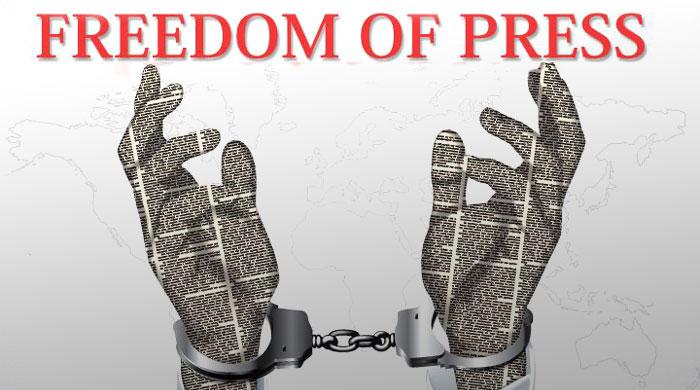
The present administration of Pakistan Tehreek-e-Insaf (PTI), led by Prime Minister Imran Khan, is the third consecutive elected government to come to power, as a result of national polls.
For a political party that was bolstered by the media, in its early days, one would have expected it to further push for the freedom of press. But, it hasn’t.
The arrest of Mir Shakil ur Rehman, the editor-in-chief of Pakistan's largest media group Jang and GEO, by the anti-graft body, the National Accountability Bureau, should not be seen in isolation. There was a pattern on display in the last 20 months, since the PTI came to power, to vilify journalists, especially those associated with the Jang group.
If Prime Minister Imran Khan ever believed in the freedom of press, he has now taken a U-turn.
International media watchdogs, the Committee to Protect Journalists, Reporters Without Borders, the Human Rights Commission of Pakistan, and others have strongly condemned the attempt to silence independent press in the country.
Since the past few years, journalists in Pakistan have been facing a relentless onslaught. The attack has been on social media and on the ground. Television and print reporters would at times find notices from the Federal Investigation Agency (FIA) or gag orders from the Pakistan Electronic Media Regulatory Authority (PEMRA). Now, the NAB has also joined the bandwagon, to please the premier.In January, while in Davos, the prime minister told a gathered audience that he does not read the newspapers or watch evening TV shows. “I am used to the criticism,” he added, “but the last one and half years I’ve been hammered in the media.”
Now, it seems, the prime minister doesn’t want anyone in the country to read or watch the news.
Not too long back, the same Khan waxed lyrical about the press and even credited it for bringing him to his current position, as prime minister. Once, he even promised to abolish the ministry of information and to make PTV and Radio Pakistan autonomous bodies which would run on the BBC pattern. Khan also went as far as to suggest that Pakistan have an independent advertising policy.
But when he came to power, he forgot his promises. His political party targeted even those talk show heads and reporters who once stood up for Khan.
Mir Shakil ur Rehman was arrested this week in a case that dates back to 1986. That the NAB had to dig out papers of an over 30-year-old property shows that the government was struggling to bring any other case against the editor. Imran Khan had once accused Rehman of being involved in acquiring foreign funds through wrongful means. But as fate has it, Khan’s own party is facing those charges in a case taken up by the Election Commission of Pakistan.
Even before Imran Khan and the PTI made it to office, Geo and Jang reporters were being targeted by him and his political party. In 2014, while covering Khan’s 100-day rally, Geo reporters and cameramen were physically attacked and its DSNG’s trashed by supporters of the PTI.
After winning the election, the PTI-led government first stopped state advertisements of two leading media houses, DAWN and Geo/Jang. Both, Khan’s government believes, are critical of his policies. As a result the two organisations faced a massive financial crisis and had to lay off staff and delay salaries.
Meanwhile, bloggers and journalists were being arrested or harassed in contrived cases by the FIA, under a draconic 2016 electronic crimes act. None of the charges could hold up in a Pakistani court.
Furthermore, hashtag and social media campaigns are routinely launched against TV anchors and reporters by Twitter users who claim to be supporters of the PTI.More recently, the ruling party also proposed to merge PEMRA and the Press Council under a new body, the Pakistan Media Regulatory Authority, to give it overarching powers. The idea was later dropped.Last month, the prime minister and his media team formulated social media rules, without consulting the stakeholders. The rules had to be yanked, after a public outrage and after international social media companies warned that they would have to reevaluate their plans to work in the country.
And when nothing else worked, the PTI took the route often traveled by military dictators: use PEMRA to shut down news channels.
Some media house were left with no other choice but to convince strong dissenting voices to stop writing their widely-read articles, for fear of upsetting the men in power.
Due to the lack of options, many out-of-job journalists have turned to social media and YouTube to make their voice heard.
Once I asked the former director general FIA Bashir Memon why his organisation only targets journalists, rights activists and bloggers critical of government policies, he said: “Under the Prevention of Electronic Crimes Act, 2016, whenever we [the FIA] receives a complaint from the ministry of interior, we have to comply immediately.”Journalists in Pakistan have struggled for a long time and come a long way. In the last 72 years, reporters were flogged, convicted and jailed. The rights, they fought to achieve, are in danger of being rolled back.Imran Khan and his political party’s vitriol could result in violence against journalists. Reporters and editors, Mr. Khan, are citizens of this country. They too deserve protection and safety from their government.
As for the media, the only option left is to unite and fight a united battle for freedom of press. Because, it maybe us today, it could be you tomorrow.
What the sanitisation of Haqqanis means for Pakistan-US relations

By Fahd Humayun
For many in Pakistan, no other group better exemplifies the US's long history of playing sides to suit its own ends.On February 20, days before the signing of a landmark deal between the US and the Taliban in Qatar's capital, Doha, American "paper of record" The New York Times published an opinion editorial by Haqqani Network leader Sirajuddin Haqqani. Haqqani, who is also the deputy leader of the Taliban, was labelled a "specially designated global terrorist" by the US in 2008. The State Department is still offering a reward of up to $5m for information directly leading to his arrest.
The timing of the piece was not a coincidence - it appeared as the US was readying a partial truce with the Taliban that could set in motion a potential end to America's longest war.
The newspaper's decision to publish the article, provocatively titled "What We, the Taliban, Want," jolted not only ordinary readers and US foreign policy hawks, but also Washington's biggest detractors abroad. As the criticism mounted, The Times' opinion editors issued a statement to try and justify their decision to give a platform to Haqqani.
"Our mission at Times Opinion is to tackle big ideas from a range of newsworthy viewpoints," they stated. "We've actively solicited voices from all sides of the Afghanistan conflict, the government, the Taliban and from citizens. Sirajuddin Haqqani is the second in command of the Taliban at a time when its negotiators are hammering out an agreement with American officials in Doha that could result in American troops leaving Afghanistan. That makes his perspective relevant at this particular moment."
What the Times did not mention, however, was the extent to which the Haqqani question has prickled the relationship between the US and Pakistan - a major non-NATO ally historically accused by many in Washington of not doing enough to facilitate American objectives in neighbouring Afghanistan.
Back in 2011, following an attack on the US embassy in Kabul believed to be perpetrated by the Haqqanis, the then chairman of the Joint Chiefs of Staff, Mike Mullen, called the network a "veritable arm" of Pakistan's Inter-Services Intelligence (ISI), ratcheting up pressure on Pakistan to eliminate the network and paving the way for more American drone strikes in the country.
Mullen's assertion caused widespread anger and disappointment in Pakistan. In the years that followed, consecutive civilian governments in Pakistan maintained that the infrastructure supporting the network had shifted to Afghanistan and that scapegoating Pakistan for American failures in an interminable war next door was disingenuous and unjust.
For many in Pakistan, no other political group better exemplifies America's long history of playing sides to suit its own strategic objectives. Few American diplomats today care to recount that the Haqqanis started as Washington's closest allies in Afghanistan; that the network's founder Jalaluddin Haqqani was a CIA darling kept flush with money and weaponry, including shoulder-fired Stinger missiles that would ultimately down Soviet aircraft. Fewer still have any compunction over the diplomatic arm-twisting meted out to Pakistan, including the cutting off of vital Coalition Support Fund aid, for allegedly not doing enough to combat the group.
As the US continued to pressure Pakistan for not doing enough to curtail the Haqqani Network's activities in Afghanistan, the grievances against Washington's regional policies started to pile up in in the country. Many in Pakistan came to believe that the US was scapegoating Islamabad to camouflage the deeper contradictions in its military strategy against the Taliban. And they had ample reason to hold this view. In 2015, for example, the US and the Haqqanis came face-to-face during the ill-fated "Murree talks" between the Taliban and the Afghan government. Conveniently, the US raised no objections to the Haqqanis being in the meeting.
For the past decade and a half, the Pakistan-US relationship has been bedevilled by a host of structural difficulties; chief among them an American tendency to use progress on the Afghan battlefield as a barometer for the costs to be imposed on Pakistan for failing to "do more". All that time, the Haqqani Network had been the primary subject of countless rancorous conversations between successive US administrations and Pakistani governments, even as US drone strikes claimed the lives of Pakistani civilians, and Pakistan argued that expecting it to do the heavy lifting to suit US objectives was unrealistic.
This is why many in Pakistan today find the slick public rehabilitation of Sirajuddin Haqqani to be a distasteful reminder of how easily the US has managed this past decade to burden Pakistan with the costs of non-compliance, while staging a war on Pakistan's front-lines when it suited them, and locating the bilateral relationship in apathetic conditionalities that ignored Pakistan's own strategic concerns.
Going forward, peace in Afghanistan and gains made in recent years including on rights and the status of Afghanistan's women are far from guaranteed. Days after the US-Taliban peace agreement in Doha, a suicide attack on a ceremony in Kabul killed at least 29 people, injuring dozens more. While the attack was claimed by the Islamic State of Iraq and the Levant (ISIL, also known as ISIS), it aptly demonstrated the extent to which spoilers litter the Afghan battlefield.
The worry in Islamabad is that the US, in its rush to reach a deal in light of domestic compulsions at home, may be guided by short-term intent rather than a long-term strategy, and will consequently short-change on brokering regional stability.
For instance, whether the US can achieve its counterterrorism objectives with a reduced military footprint is an unanswered question. It is almost certain that Taliban commanders now view the signing of a peace deal with the Americans as a resounding validation of a 19-year-long struggle to end an illegal foreign occupation. This is already proving to have major implications for the intra-Afghan negotiations, which are shrouded by a deepening and fractious power struggle in Kabul.
Following an election recount and a delay of nearly five months, both Ashraf Ghani and Abdullah Abdullah declared themselves president at rival inauguration ceremonies. Pakistan's concern is that political insolvency in Kabul will trigger further regional instability and potentially a war of attrition, after the US's exit from the country. US envoy Zalmay Khalilzad is, meanwhile, trying to work out a power-sharing arrangement between the two camps.
As for Pakistan-US relations, the big question is whether a future strategic equilibrium can emerge from the mistrust engendered by years of fraught, at times toxic conversations, including on the Haqqani Network. There is a keen desire in Islamabad for a broader, stronger relationship with the US, and there are signs that under President Trump and Prime Minister Imran Khan, this might be possible.
On his recent visit to India, President Trump took a softer line on Pakistan, reflecting the hard work that both sides have put into resuscitating the relationship from its worst days. Indeed, Washington's listing of the separatist Balochistan Liberation Army as a terrorist group and the recent targeting of Pakistani Taliban commanders in eastern Afghanistan speaks to a gradually changing equation - one that, for once, optimises both parties' strategic interests.
For Pakistanis, that alone is a welcome shift, even if an official public apology for taking the flak for the Haqqanis, takes time.
Subscribe to:
Posts (Atom)