Friday, March 6, 2020
Pakistan's intelligence service may end up the real winner in the Afghan peace deal, at least for now
Sean D. Naylor
On the surface, one winner in the peace deal the United States signed with the Taliban on Saturday is Afghanistan’s neighbor Pakistan, which has been a longtime supporter of the Islamist group that may now be in a position to regain at least a share of power in the Afghan government. But the deal also poses long-term risks to Pakistan, whose intelligence service has spent years empowering militants that may no longer be under its control, according to analysts and former military officials.
From its formation in 1994 through its 1996 seizure of power in Kabul, the Taliban’s battlefield successes owed much to the help of the Pakistani military’s Inter-Services Intelligence agency, known as the ISI. The peace agreement, a clear victory for the Taliban, is in some ways a culmination of the ISI’s longtime support for the militant group.
“The Pakistani military intelligence, I’m sure they’re relieved, because they wanted this kind of an outcome,” said Hassan Abbas, a professor at National Defense University (NDU) in Washington, D.C., and a former Pakistani official. If the Taliban enter into some form of power-sharing agreement with the current Kabul government, that would mean “Pakistan will be able to push back on Indian interests in Afghanistan,” added Abbas, who authored the 2014 book “The Taliban Revival.” For Pakistan, he said, the Taliban represent “a tool to confront India.”
The agreement commits the United States to almost immediately begin reducing its military force in Afghanistan from about 12,000 troops to 8,600 by July 13, and then to completely withdraw from the country within 14 months, subject to the Taliban fulfilling its part of the deal by refraining from attacking U.S. and allied forces and by preventing others from doing so.
The deal also requires the Taliban to begin negotiations with the Afghan government on March 10. Those talks might result in a power-sharing deal that gives the Taliban, which is dominated by ethnic Pashtuns, a significant role in a coalition government in Kabul. But if the Taliban and the government of Ashraf Ghani fail to reach an agreement, which seems increasingly likely, the U.S. military withdrawal will only serve to enhance the Taliban’s battlefield position.
Either option would likely be acceptable to Pakistan, which has traditionally sought a compliant, Pashtun-dominated government in Kabul. However, a stronger Taliban will likely embolden other regional militant groups that are not under Pakistan’s control.
Islamabad’s support for the Taliban, as well as for jihadi groups targeted at India, has already led to the emergence of other rogue Islamist militant groups such as the Tehrik-i-Taliban, sometimes known as the Pakistani Taliban, which have taken aim at the Pakistani state itself.
Pakistan’s security services “have paid through the nose because they knew that [because of] the policy of supporting the Afghan Taliban, they had to allow these other Taliban types to function in Pakistan, and all of those have created havoc in Pakistan,” Abbas said.
The ISI must now face the potential consequences of its decision to continue supporting the Taliban in the years following the attacks of Sept. 11, 2001.
Although Pakistan has always denied it, most analysts accept that, following a brief pause after the United States (helped by the Tajik- and Uzbek-dominated Northern Alliance) drove the Taliban from power in late 2001, the ISI revived its relationship with the group it had nurtured since the mid-1990s. The rationale for the ISI’s actions remained the same: Pakistan has traditionally regarded Afghanistan as “strategic depth” in the case of a war with its fierce rival India, and for that reason wants a government in Kabul it can control.
Irrespective of whether the peace talks end with the Taliban gaining a role in government, or simply improving their military position by virtue of the U.S. withdrawal, Pakistan, and in particular the ISI, may therefore welcome the latest turn of events.
“Regardless of the outcome, I think this puts Pakistan — including the ISI — closer, either politically or militarily, to getting more influence in Kabul, which is what they wanted,” said Seth Jones, director of the Transnational Threats Project at the Center for Strategic and International Studies.
Retired Army Col. Tom Lynch of NDU’s Institute for National Strategic Studies said the U.S. military withdrawal without defeating the Taliban gives Pakistan an “I told you so” moment, because it has proved Pakistan’s argument to the United States, which Lynch summarized as “You can’t succeed in Afghanistan independent of us, because we manage, if not actually control, the militant framework in that country.”
But Lynch, who also agreed that Pakistan’s policy has led to attacks on its own government, described any victory the ISI might claim from the peace deal as “Pyrrhic.”
A return to power for the Afghan Taliban would reenergize the very Islamist groups that have created so much trouble in Pakistan, according to Abbas. “An empowered Afghan Taliban are automatically going to empower, inspire [and] motivate the Pakistani Taliban,” he said. “Any smart strategist in Pakistan at this moment should be quite worried.”
Pakistan finds itself in this situation because since the attacks of Sept. 11, 2001, the ISI has walked an extraordinary diplomatic tightrope, supporting the Taliban as they were killing Americans in Afghanistan, while simultaneously helping the United States conduct counterterrorism operations against al-Qaida in Pakistan and elsewhere. The Taliban were responsible for the vast majority of the almost 1,900 American troops killed in action in Afghanistan.
“Pakistan, particularly ISI, has successfully run a not-so-covert covert action program for almost the last two decades to provide assistance and sanctuary to the Taliban,” said Jones. “It’s actually an amazing feat, to allow sanctuary and provide assistance to the same group that is killing American soldiers, and to keep diplomatic relations” with the United States.
The most important assistance the ISI provided the Taliban, according to Jones, was to allow their leaders to base themselves in Quetta, home of the Pakistani military’s command and staff college, while permitting the Haqqani Network, a particularly dangerous self-contained group allied to the Taliban, to base itself in Pakistan’s Federally Administered Tribal Areas along the Afghan border. “For anybody who’s studied the successes or failures of insurgencies, having an external sanctuary for your leaders directly next door to a border that [your enemy] can’t control … is a huge upside,” Jones said.
While military officials have no doubt that Pakistani intelligence supported the Taliban, there’s disagreement about the types of support the ISI did — and did not — give the Taliban.
“There was obviously a tolerance of Taliban and Haqqani Network headquarters on Pakistani soil,” retired Gen. David Petraeus, who commanded U.S. forces in Afghanistan from 2010 to 2011, told Yahoo News. However, he added, “it was difficult to precisely confirm what was provided in terms of funding or weapons.”
The catalyst for the ISI’s decision to continue its support of the Taliban appears to have been the Pakistani government’s realization around 2004 that the U.S. government was developing increasingly close ties to India, which had begun to invest in Afghanistan, according to Abbas. From that point, “Pakistani military intelligence revived or expanded their support for the Afghan Taliban,” he said.
This support took the form of small arms and ammunition, intelligence and money, according to analysts. But the ISI made sure to limit the lethality of the Taliban’s arsenal. “They manage very carefully the things that they do not want in the hands of the Afghan Taliban or anybody else out there,” said Lynch, a former military assistant to the U.S. ambassador to Afghanistan. In particular, the ISI worked hard to prevent the Taliban from getting shoulder-held antiaircraft and antitank weapons, he said.
But unlike the support it provided to the Taliban during the 1990s, in the post-Sept. 11 era the ISI did not make a habit of sending military advisers into Afghanistan with the Taliban. “Absolutely not,” Lynch said. “They would not take that risk.”
In general, the ISI adopted more of a hands-off approach to the Taliban’s war against the U.S. and coalition forces, according to Lynch. The Pakistanis gave the militants strategic guidance, using the ISI’s vast network of “cutouts” (mostly ISI alumni and contractors), “but ISI would not have been engaged or involved in planning Taliban military operations,” he said.
However, Lynch and Abbas agree that, in the case of the Haqqani Network, a militant group that is now part of the Taliban, the ISI exercised a much tighter degree of control, particularly when it came to attacks against Indian targets in Afghanistan.
“Where I know personally the ISI would be intimately involved would be in specifying timing, targeting and effects desired against Indian targets,” Lynch said. “The Haqqanis have always been the favorite guided missile of the ISI.”
Despite the support that most senior U.S. officials realized, or strongly suspected, the ISI was giving to the Taliban, for almost 10 years those officials refrained from publicly castigating the Pakistani government, even as U.S. casualties in Afghanistan continued to mount. A major factor behind this reticence was the invaluable help the ISI was providing the United States in stopping terrorist plots by al-Qaida.
Indeed, the reason the U.S. government has tolerated the ISI’s support for the Taliban is that Pakistan was simultaneously assisting the United States with counterterrorism, according to Lynch. “The head of the ISI helped us capture and/or kill some of the most notorious terrorists and intercept some of the most diabolical plots that we have seen hatched by international terrorists in the last 20 years,” he said, pointing to the ISI’s role in foiling plots to blow up the Brooklyn Bridge in 2003 and the Baltimore tunnels in 2005, and the capture of senior al-Qaida figure Younis al-Mauritani in 2011.
“There have been at least, to my knowledge, six to eight documented major intercepts, disruptions and defeats of international terrorists that we owe to the … ISI, and that’s the tip of the iceberg,” Lynch said. “That’s why our intelligence community has been so adamant for so long that we not just throw away that relationship in frustration over the fact that there are these three degrees of separation [between the ISI and] how our forces have died in Afghanistan.”
As a result, the United States entered into what Lynch termed “a Faustian bargain” with the ISI, maintaining a relationship with it and refusing for many years to publicize its role as a supporter of the Taliban, in order to benefit from its help countering al-Qaida and similar international terrorist groups. Lynch likened this dilemma to the “dirty hands decision” an FBI agent must make when he’s running a mob informant who is providing valuable intelligence, even though the informant himself might be a murderer.
The United States made the right decision, Lynch said, adding that he lost three close friends killed by the Taliban. “It still sticks in my craw,” he said. “But I understand the strategic dynamic in what we were trying to do there. Because we weren’t going to go to war with a country of 180 million people with nuclear weapons.”
The Pakistanis also understood this, according to Lynch. “They’ve always had us by the short hairs,” he said. “Because they’re so intimately intertwined with those jihadi networks that they knew stuff that we needed to know.”
It would be a mistake to assume that the current crop of senior Taliban leaders are beholden to Pakistan, according to Abbas. As an example, he cited Mullah Abdul Ghani Baradar, the former deputy Taliban commander who languished for more than eight years in a Pakistani jail before being released at the United States’ request in 2018. He soon became the militants’ lead negotiator in Qatar, where the peace deal was signed.
Leaders like Baradar “are skeptical about Pakistan,” despite the ISI’s long-standing support of the Taliban, Abbas said. “They will play their own cards very, very carefully.”
#AuratMarch2020 - ’عورت مارچ پر ثابت ہوگیا، پی ٹی آئی جماعت اسلامی کا جدید نمونہ ہے‘
پاکستان پیپلزپارٹی (پی پی پی) کے چیئرمین بلاول بھٹو زرداری کے ترجمان سینیٹر مصطفیٰ نواز کھوکر نے کہا ہے کہ عورت مارچ کے معاملے پر ثابت ہو گیا کہ پاکستان تحریک انصاف (پی ٹی آئی) جماعت اسلامی کا جدید نمونہ ہے۔
مصطفیٰ نواز کھوکھر کا اپنے بیان میں کہنا تھا کہ عورت مارچ کے معاملے پر (ن) لیگ اورپی ٹی آئی ایک صفحے پر آگئیں، تحریک انصاف کھل کر خواتین کے حقوق کے خلاف کھڑی ہوگئی ہے جبکہ عورت مارچ پر (ن) لیگ کی خاموشی رجعت پسندانہ سوچ کی عکاس ہے۔
انہوں نے کہا کہ عمران خان کو توپہلے دن ہی گُڈ لکنگ جماعت اسلامی کا خطاب ملا تھا، عورت مارچ پر ثابت ہو گیا کہ پی ٹی آئی جماعت اسلامی کا جدید نمونہ ہے، جو لوگ پی ٹی آئی کو ترقی پسند جماعت سمجھے تھے، وہ مایوس ہوگئے ہیں۔
مصطفیٰ نواز کھوکھر کا کہنا ہے کہ بلاول بھٹو وہ واحد قومی لیڈر ہیں جو خواتین کے حقوق کے لیے ڈٹ کر کھڑے ہیں، حکمران مُلائیت پروان چڑھا رہے ہیں جس کا مذہب سے کوئی تعلق نہیں۔
انہوں نے کہا کہ سندھ حکومت عورت مارچ کا مکمل تحفظ فراہم کرے گی۔
خیال رہے کہ گزشتہ دنوں نجی ٹی وی شو کے دوران معروف ڈرامہ نگار خلیل الرحمان قمر اور سماجی کارکن ماروی سرمد کے درمیان ہونے والی تکرار کے بعد عالمی یوم خواتین کے موقع پر ہونے والا عورت مارچ زیر بحث ہے۔
اسلام آباد ہائی کورٹ نے عورت مارچ کو رکوانے کیلئے دائر درخواست ناقابل سماعت قرار دے کر مسترد کردی ہے۔ ہائی کورٹ کے چیف جسٹس، جسٹس اطہر من اللہ کی جانب سے جاری فیصلے میں کہا گیا ہے کہ خواتین کے عالمی دن کے موقع پر عورت مارچ کا اعلان کیا گیا، توقع ہے کہ عورت مارچ کے شرکاء شائستگی برقرار رکھتے ہوئے آئینی حق استعمال کریں گے۔
#Pakistan #AuratMarch2020 - Imran Khan hates feminism because he wants women to just make gol rotis & have gori skin

MAHWASH AJAZ
Pub - 18 June 2018
His comment comes at a time when the feminist movement in Pakistan has been gathering a lot of steam, and also ridicule from right-wing factions of society.
Imran Khan is no stranger to controversial media interviews. From labeling liberals “bloodthirsty” to calling international cricket players coming for Pakistan Super League T20 “relu kattay (hoi polloi of the cricket world)”, his utterances are fodder for the next news cycle.
Now, Khan saab has decided to target a subsection of the so-called “bloodthirsty liberals”: The feminists.
In a recent interview to a news channel, Khan said, “Feminism, which is from the West, has degraded motherhood.”
Many female journalists, such as myself, took to Twitter to respond to his diatribe against feminists. The army of trolls that is often associated with his party Pakistan Tehreek-e-Insaf (PTI), rose to his defence, calling us dastardly feminists with a ‘Western agenda’ and insisting that feminism does indeed ruin the motherhood experience.
As an example, they cited how children were neglected if a mother was at work, while conveniently ignoring the fact that children do grow beyond the age of four, attend school and eventually become independent human beings. For them, all we evil feminists want to do is cause earthquakes by wearing jeans and raise ill-behaved children because we want to put our degree to the use it was meant for.
Evil feminists such as myself have been speaking out against honour killing and sexual harassment and female infanticide. Also, let’s not get into how feminists support women’s right to breastfeed their children without fearing stigma, and the belief that men should be better fathers rather than distant or absentee individuals that have no impact on a child’s well-being.
Let’s just speak about how Khan’s comment comes at a time when the feminism movement in Pakistan has been gathering a lot of steam, as well as ridicule from society’s right-wing factions.
Recently, a popular slogan, ‘Khana khud garam kar lo’, at the ‘Aurat march’ for women’s rights inspired memes, social media fights and a television Eid film. Many actors and actresses in Pakistan openly denounce the word feminist and it has become more of an insult than a quality to admire. Most of these people, like Khan, have done little to research the term and its history before giving their uninformed opinions.
If you believe that women deserve equal rights as men, if they deserve equal opportunities as men, if they should not be killed in the name of honour, if they should not be abused, attacked by acid or be shot for refusing a proposal, or stabbed 27 times in broad daylight, or sexually harassed — you’re a feminist.
It is tempting to respond to Khan’s statement with many below-the-belt statements. But more important is to note just how flawed Khan’s barely 10-word statement about feminism is.
The question is whether Khan thinks mothers are degraded by ‘Western’ feminism even though it is the rights movement in the West that has given women the right to an education in universities, the right to vote, to campaign for maternity leave, to speak up against sexual harassment, and to fight for equal pay.
It is also pertinent to note that it is the same feminism that allows many women to argue that his current wife, the veiled Bushra Maneka, is not to be targeted for her attire, simply because it is her choice. Respecting a woman’s choice is exactly what the “Western concept of feminism” has been teaching women.
Or does Khan genuinely believe that women who work are somehow lesser mortals than those who stay at home and choose to bring up their children full-time? And for many women, especially in our part of the world, this is not a choice but a pattern of social norms where they are disenfranchised to the point that they do not have enough education or freedom to study and work. Many women stay at home and rear children because that is what they have been reared to do. That is how they have been told to shape their ambitions: To make a gol roti and to have perfect gori skin.
Does Khan not realise the struggle of the average desi woman, whether it is in the fields sifting wheat, or in the corporate jungle, fighting to be paid fairly? Or maybe he discounts it, the struggle of the millions of women who have been trying to balance work and home, not because they like having a million balls in the air, trying to meet deadlines and clean the kid’s diapers, but because patriarchy has not made it conducive for a woman to choose easily between a career and a home. The culprit is not feminism here, Mr Khan. The culprit is patriarchy.
Khan’s ill-informed flippant statements are important and critical in the grand scheme of General Election 2018. He has followers, voters, sympathisers and apologists who take his word as reference points for future discourse.
Khan’s party is said to be fighting tooth and nail to defeat the PML(N), which won the last election. While the PTI’s voter base consists of an urban, educated, well-informed cross section of society, his rant against feminists may find a curious resonance with the deep-seated mullahesque mindset that is most challenging for many women in Pakistan.
The former cricketer also represents the classic stereotype of a man hating feminism despite having had multiple marriages, romantic liaisons and a circus after circus attached to his divorces and weddings.
Such experiences would have prevented a woman from fighting in the political sphere unscathed. Her marriages, her romantic linkups and her divorces would have been used against her as a statement of how immoral she truly is, and how she should be sitting at home praying for a good man to marry her instead of contesting the election. Khan benefits from this system, a patriarchal code that allows men to get away with a whole lot more than it allows us women.
Is it a small wonder, then, that he hates feminists?
For Pakistani men, Aurat March is the real coronavirus

NAILA INAYAT

Women marching with placards, using slogans like 'mera jism meri marzi' are not 'good women’. And how dare they oppose maulanas and misogynists, Pakistan's real feminists?

Women marching in open holding placards, demanding fundamental rights, starting a conversation around difficult issues are ‘not good women’ because good women don’t complain no matter what. The measure of how much freedom women can have is dictated by others in Pakistan.
Now, when the expectation from her is to not even speak up, how can she march? And still, she and others like her march in March, calling it the Aurat March. Just the mere mention of these two words – Aurat March – sends its opponents in a tizzy. Aurat March is the coronavirus for those opposing it and they warn everyone to stay away from this saazish (conspiracy) of the Western lobby.
The March scare
This year there were demands to ban the Aurat March because one triggered petitioner saw it as “against the norms of Islam”, saying its hidden agenda was to “spread anarchy, vulgarity and hatred”. And, of course, it is also promoting anti-state activities. The Lahore High Court thought otherwise and ruled that the march can’t be stopped “under the law and Constitution” of Pakistan. So, the march will go on.
But that didn’t stop the notorious Lal Masjid extremists from threatening the artists and vandalising in police presence a mural of two women painted by Aurat March organisers in Islamabad. Two ‘uncovered’ women in a mural were ‘fahashi (pornographic)’ enough to be ruined with black paint. Earlier, a mural painted with public service messages and images of women icons in Lahore was also destroyed. Adding to the disdain towards Aurat March was Jamiat Ulema-e-Islam (F) leader Maulana Fazlur Rehman, who said his party would not allow vulgarity and obscenity in the name of human rights because Quran and Sunnah don’t allow that. He urged his workers to stop the march by force.
We can assume that most people who oppose Aurat March are not even aware of the charter of demands that the movement has put forth. All it asks for is equality and fundamental rights for women – but then who cares about all that when a few placards is all it takes to go red.
Women want rights over their bodies. How dare they?
Continuing from last year is a feminist slogan of Mera Jism Meri Marzi – my body, my choice. Simply put, it means that a woman’s body is not to be abused. The slogan highlights rape, marital rape, sexual assault and the violence based around women’s bodies. As opposed to the societal diktat that a woman’s body is ownership of the man. But many find it offensive. If it were mera jism, apki marzi (my body, your choice), all those offended would happily fall in line.
The abhorrent commentary around Mera Jism Meri Marzi just goes to show that men’s obsession with women’s bodies is here to stay. The issue is not with the slogan but with the patriarchal mindset that questions women’s right to say no.
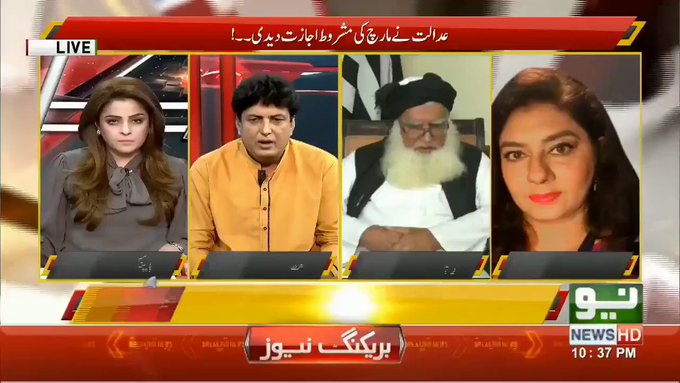
Television screenwriter Khaliur Rehman Qamar said on a talkshow how even the mention of this phrase boils his blood, to which journalist Marvi Sirmed repeated “Mera Jism Meri Marzi” and Qamar abused her saying “Tera jism hai kya, bibi? Thookta nahin hai koi aapke jism par” and then he went on with the profanities. The female anchor sitting next to Qamar didn’t have it in her to throw him out of the studio. Interestingly, the co-panellist maulana didn’t get offended much when Qamar called Marvi a “bitch”; he kept asking everyone to let Qamar complete his answer. By the way, Qamar calls himself a feminist who stands for women’s rights. Yes, maulanas and misogynists are the real feminists in Pakistan.
This is the man who preaches morality and mannerism to women participating #AuratMarch. Just see the true face of anti #AuratMarch crowd. twitter.com/AsifViews/stat…

3,605 people are talking about this
The TV showdown on Aurat March placards isn’t new, though. We all remember Orya Maqbool Jan spiralling over “Dick pics apnay pass rakho” placard used by participants during 2019 Aurat March. The placard was an ‘abuse’ of his fundamental rights, he said. Apparently, sending dick photos to women was a fundamental right that the marchers were trying to take away from men like Orya Maqbool Jan. Other placards on not taxing sanitary pads, not throwing acid on women, asking to stop equating women with lollipops, iPads, juice boxes, demanding that daughters be given inheritance rights, and reclaiming public spaces have stayed with many.
The reactions that Aurat March receives every year in Pakistan would make for comic relief if the issues concerning the women weren’t as real and required urgent action. Women reclaiming lost public spaces every 8 March is a positive movement that we should all get behind.
Thursday, March 5, 2020
Saudi Arabia: Specialized Criminal Court a political tool to muzzle critical voices
A new report published by Amnesty International today exposes how despite all their rhetoric of reforms, the Saudi authorities are using the Specialized Criminal Court (SCC) as a weapon to systematically silence dissent. Alongside the report, the organisation is also launching a campaign calling for the immediate and unconditional release of all human rights defenders detained for their peaceful expression.
In the report titled “Muzzling critical voices: Politicized trials before Saudi Arabia’s Specialized Criminal Court” the organization documents the chilling impact of the SCC’s prosecutions of human rights defenders, writers, economists, journalists, religious clerics, reformists and political activists, including of Saudi Arabia’s Shi’a Muslim minority who have suffered grossly unfair trials before the SCC and received harsh sentences, including the death penalty, under vague counter-terror and anti-cybercrime laws.
The Saudi Arabian government exploits the SCC to create a false aura of legality around its abuse of the counter-terror law to silence its critics.
Extensive examination of court documents, government statements and national legislation, as well as interviews with activists, lawyers and individuals close to the cases documented were included in the report. Amnesty International wrote to the Saudi authorities on 12 December 2019 and received one response from the official Human Rights Commission summarizing relevant laws and procedures but failing to directly address the cases raised in the report.
“The Saudi Arabian government exploits the SCC to create a false aura of legality around its abuse of the counter-terror law to silence its critics. Every stage of the SCC’s judicial process is tainted with human rights abuses, from the denial of access to a lawyer, to incommunicado detention, to convictions based solely on so-called ‘confessions’ extracted through torture,” said Heba Morayef, Amnesty International’s Middle East and North Africa Regional Director.
“Our research gives lie to the shiny new reformist image Saudi Arabia is trying to cultivate, exposing how the government uses a court like the SCC in the ruthless suppression of those who are courageous enough to voice opposition, defend human rights or call for meaningful reforms.”
The government’s rhetoric about reforms, which increased after the appointment of Crown Prince Mohammed bin Salman, stands in stark contrast to the reality of the human rights situation in the country. At the same time as they brought in a set of positive women’s rights reforms, the authorities unleashed an intense crackdown on some of the highest profile women human rights defenders who had for years fought for those reforms as well as other citizens promoting change.
very stage of the SCC’s judicial process is tainted with human rights abuses, from the denial of access to a lawyer, to incommunicado detention, to convictions based solely on so-called ‘confessions’ extracted through torture
The SCC was established in October 2008 to try individuals accused of terror-related crimes. Since 2011, it has been systematically used to prosecute individuals on vague charges which often equate peaceful political activities with terrorism-related crimes. The counter-terror law, which has overly broad and vague definitions of “terrorism” and of a “terrorist crime”, contains provisions which criminalize peaceful expression of views.
Amnesty International’s report documents the cases of 95 individuals, mostly men, who were tried, sentenced or remain on trial before the SCC between 2011 and 2019. The trials of at least 11 individuals detained for their peaceful expression and association continue before the SCC until this day. Some 52 are now serving lengthy prison sentences of between five and 30 years.
Several Saudi Arabian Shi’a Muslims, including young men tried for “crimes” they were accused of having committed when they were under the age of 18 are at imminent risk of execution following grossly unfair trials before the SCC. At least 28 Saudi Arabians from the Shi’a minority have been executed since 2016, many of whom were sentenced to death by the SCC based solely on torture-tainted ‘confessions.’
Grossly unfair trials
Amnesty International closely reviewed eight SCC trials of 68 Shi’a defendants, the majority of whom were prosecuted for their participation in anti-government protests, and of 27 individuals prosecuted for their peaceful expression and human rights activism. In all cases of the 95 individuals, the organization concluded that the trials were grossly unfair. Defendants were convicted and, in many cases sentenced to death, on vague charges that criminalize peaceful opposition or in relation to charges of violence.
The most common charges used in proceedings analyzed by Amnesty International include “disobeying the ruler”; “questioning the integrity of officials and the judicial system”; “inciting disorder by calling for demonstrations” and “forming an unlicensed organization” – all of which describe acts protected by the right to freedom of expression, assembly and association.
Every single defendant in the SCC trials reviewed by Amnesty International was denied access to a lawyer from their arrest and throughout their interrogation. Appeals against SCC judgements are conducted behind closed doors without the presence or participation of defendants or their lawyers.
Our research gives lie to the shiny new reformist image Saudi Arabia is trying to cultivate, exposing how the government uses a court like the SCC in the ruthless suppression of those who are courageous enough to voice opposition, defend human rights or call for meaningful reforms
One of the most striking failings of the SCC in the trials reviewed by Amnesty International is its unquestioning reliance on torture-tainted “confessions”. At least 20 Shi’a men tried by the SCC have been sentenced to death on the basis of such “confessions,” with 17 of them already executed.
Muzzling peaceful voices
Virtually all Saudi Arabian independent voices, including human rights defenders, writers and religious clerics are behind bars serving lengthy sentences handed down by the SCC and other courts since 2011 or remain on trial on charges related to their peaceful expression or activism.
Among those prosecuted by the SCC are founding members of independent human rights groups that the authorities shut down in 2013. For example, all 11 founding members of the Saudi Civil and Political Rights Association (ACPRA) have been tried and sentenced in recent years for their human rights work. Others include human rights defenders such as Mohammad al-Otaibi, a founding member of the Union for Human Rights, who was sentenced to 14 years in prison on charges related to his efforts to form an independent human rights organization. He is currently facing new charges for his communication with international organizations and his attempt to seek political asylum.
Others who remain on trial before the SCC include Salman al-Awda, a reformist religious cleric arrested in September 2017, who faces the death penalty for peacefully exercising his rights to freedom expression and of association. Amnesty International has documented the trials and sentencing of 27 such individuals by the SCC. It considers 22 of the 27 still unlawfully detained to be prisoners of conscience and calls for their immediate and unconditional release.
Crushing dissent in the Eastern Province
Since 2011, over 100 Saudi Arabian Shi’a Muslims have been brought before the SCC in relation to both peaceful criticism of the government in speeches or on social media and participation in anti-government protests. They have been tried on vague and varied charges ranging from organization or support for protests, to alleged involvement in violent attacks and espionage for Iran.
On 2 January 2016, the authorities announced that a Shi’a cleric, Nimr al-Nimr, known for his critical stance towards the government had been executed, sparking renewed protests in Eastern Province. In July 2017, Youssuf al-Muhsikhass, who was sentenced to death following a grossly unfair trial was executed with three other Shi’a men, and in April 2019 a mass execution of 37 men, the majority of them Shi’a, was carried out.
If the King and Crown Prince want to show they are serious about reforms, they should as a first step immediately and unconditionally release all prisoners of conscience, ensure their convictions and sentences are quashed, and declare an official moratorium on all executions with a view to abolishing the death penalty
The SCC has also sentenced to death and executed several young men for crimes committed when they were below 18 years of age following “confessions” extracted through torture or coercion. Three juveniles – Ali al-Nimr, Abdullah al-Zaher and Dawood al-Marhoon – were arrested separately in 2012 aged 17, 16 and 17 respectively in relation to their participation in anti-government protests. The three are at imminent risk of execution after they were sentenced to death following grossly unfair trials before the SCC.
Urgent reform required
Amnesty International calls for the immediate and unconditional release of all prisoners of conscience as well as fundamental reform to the SCC to ensure it can conduct fair trials and protect defendants from arbitrary detention, torture and other ill-treatment. There must also be independent investigations into allegations of torture or other ill-treatment in custody and full reparation for all victims of torture and other human rights violations by state officials or those acting on their behalf.
“If the King and Crown Prince want to show they are serious about reforms, they should as a first step immediately and unconditionally release all prisoners of conscience, ensure their convictions and sentences are quashed, and declare an official moratorium on all executions with a view to abolishing the death penalty,” said Heba Morayef.
In March and September 2019, the UN Human Rights Council adopted unprecedented joint statements on Saudi Arabia setting out a number of benchmarks for urgent human rights reforms. None of these have been met and Council members must ensure sustained scrutiny at the Council by supporting the establishment of a monitoring and reporting mechanism over the human rights situation.
Authoritarianism and corruption in Saudi Arabia
Recent social and economic reforms that helped improve Saudi Arabia’s business environment and attract foreign investment came with a heavy human rights price tag.With a score of 53, Saudi Arabia improved by four points on the Corruption Perceptions Index since last year. However, its score does not reflect the myriad problems in the country, including a dismal human rights record and severe restrictions on journalists, political activists and other citizens, which is one of the many reasons it’s a “country to watch” on this year’s CPI.Over the past years, Saudi Arabia has spent millions of dollars to polish its reputation and suppress criticism from international media. With the help of Western PR agencies, the government is pushing the image of a modern country attractive for foreign investors. At home, however, the regime’s actions paint a very different picture — one of ruthless repression and flagrant disregard of human rights. Corrupt “anti-corruption” purge In 2017, the Saudi Crown Prince Mohammad Bin Salman (MBS) carried out an ”anti-corruption” purge as part of his reform of the country. This was seen by many as a move to consolidate his position of power to which he rose through plotting and nepotism. A self-styled (anti-corruption) reformer on the one hand, the Crown Prince lives a luxurious lifestyle that eats up billions of dollars of unclear origin on the other. His recent lavish purchases include a yacht, a French chateau and a da Vinci painting, adding up to over US$1 billion. Despite government claims of recovering approximately US$106 billion of stolen assets in the crackdown, there was no due process, transparent investigation or fair and free trial for suspects.Even if it was a sincere attempt to clamp down on corruption, this top-down approach will likely prove to be unsustainable, as it does not draw on the full range of anti-corruption measures, many of which rely on the participation of non-state actors. Crushing dissent The absence of civil society points toward a much wider problem in Saudi Arabia. Over recent years, the country’s regime has been escalating its clampdown on dissenters, detaining people for peaceful activism or political opposition. In November 2019, the Kingdom even categorised feminism and homosexuality as crimes. While the government ultimately retracted its announcement , Saudi Arabia’s leading women human rights defenders are still behind bars for their human rights work. A free media is also practically non-existent in Saudi Arabia, and any form of dissent bears the risk of grave consequences, from corporal punishment to prison or even death sentences. Corruption in the judiciary A lack of accountability in the Saudi judiciary enables corruption. With a legal system that follows Sharia law, individual judges determine what constitutes a crime, which comes with increased corruption risks. Judicial corruption is common, in cases of both land registration and when it comes to politically sensitive decisions. Judges reportedly receive “implicit instructions” and pressure to issue harsh sentences. A special court set up to try cases of terrorism is particularly known for a lack of transparency and severe rulings against human rights defenders. Opaque state finances A lack of transparency and oversight in state finances are also major problems. Some experts suggest that countries with rich natural resources that depend on the sale of those resources rather than tax revenue are less likely to act in an accountable way towards citizens.This seems to apply to Saudi Arabia, where its general auditing bureau is not answerable to any elected body, leaving outsiders and citizens wondering how much of the state budget ends up in the pockets of the ruling family. https://voices.transparency.org/authoritarianism-and-corruption-in-saudi-arabia-b51f261607eb
میرا جسم، میری مرضی پر اعتراض کیوں؟

شاد بیگم
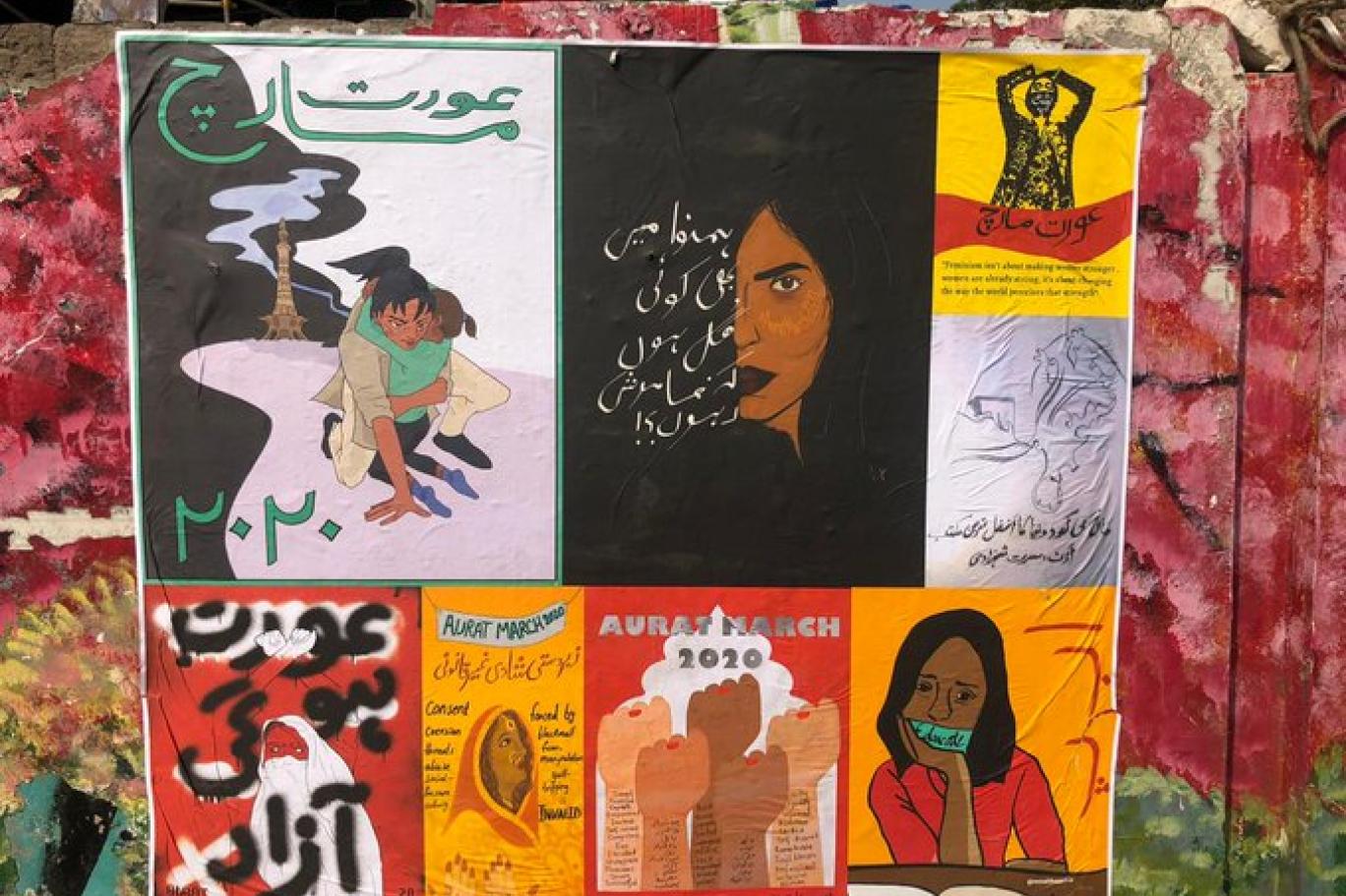
کچھ مرد حضرات نے یہ بھی کہا کہ یہ عورتیں اپنا جسم اور اپنی مرضی کا یہ مطلب لیتی ہیں کہ یہ طوائف بن جائیں۔ میرا جسم، میری مرضی کا ہرگز یہ مطلب نہیں لیکن آپ نے کبھی یہ سوچا ہے کہ عورت طوائف کیوں بنتی ہے؟
میرا جسم، میری مرضی کا نعرہ جو کہ پچھلے سال ہونے والے عورت مارچ کے بعد سے ہر طرف زیر بحث ہے۔ جتنے بحث مباحثے اس حوالے سے ہوئے اس کا لبِ لباب نکالنے سے معلوم ہوتا ہے جیسے اعتراض میرے جسم پر نہیں، میری مرضی پر ہے۔ یہی تو ہمیشہ ہوتا آیا ہے، مسئلہ سارا اس مرضی کا ہے اور ہمارا معاشرہ آج بھی یہ چاہتا ہے کہ چاہے عورت کا جسم ہو، تعلیم کا حق ہو، نوکری کا حق ہو، پسند کی شادی کرنے کا حق ہو، کسی بات سے انکار کا حق ہو، اس سب میں مرضی مرد کی چلنی ہے۔ جہاں عورت نے اپنی مرضی چاہی، اس عورت کو نافرمان، بدچلن اور بری عورت قرار دیا۔
آخر اتنا خوف کیوں ہماری مرضی سے؟ یا شاید اس خوف کی وجہ یہ تو نہیں کہ آپ کو مرضی کا مطلب سمجھ میں نہیں آتا؟ اس مرضی کا مطلب ہرگز وہ نہیں جو آپ سمجھتے ہیں، کہ اگر کسی لڑکی کو شادی کے لیے پوچھا اور اس نے انکار کر دیا تو آپ کی مرضی ہے کہ آپ اس پر تیزاب پھینکیں۔ اگر کو ئی لڑکی پڑھنا لکھنا چاہے یا نوکری کرنا چاہے تو آپ نے اسے مار دیا اور اسے اپنا گھریلو ذاتی معاملہ قرار دے کر صاف بچ گئے۔ کیونکہ مرضی تو صرف آپ کی چلتی ہے۔ بیوی نے کھانا صحیح نہیں بنایا اور آپ نے تشدد کیا۔ بیٹیاں پیدا کرنے پر عورت کا جینا حرام کر دیا کیونکہ قدر تو صرف اولاد نرینہ کی ہے۔
بھائی یا باپ تیش میں آیا اور کسی کو مار دیا۔ اب اسے بچانے کے لیے خاندان سر توڑ کوشسشیں کرے گی کہ اس کی زندگی بچ جائے لہذا یہاں پھر مرد حضرات کی مرضی کام آئے گی اور وہ یہ فیصلہ کریں گے کہ گھر میں موجود کسی بچی یا خاتون کو ’سورہ‘ میں دے دیا جائے اور دشمنی ختم کر دی جائے کیونکہ اس بچی یا خاتون کی کوئی مرضی تو ہے نہیں۔ اس کے بعد چاہے اس کی زندگی کا ہر دن قیامت کا دن ہو کیونکہ اس کی شادی نہیں کی جاتی اسے ایک نعم البدل کے طور پر پیش کیا جاتا ہے۔ پھر اسے کے شوہر اور اس کے گھر والوں کی مرضی کہ اس دشمنی کے پاداش میں روز اسے پھانسی سنائیں یا اس کا گلہ گھونٹے، مرضی اس کی نہیں چلے گی۔
دنیا جہان میں جہاں جہاں جنگ ہوئی، ہم سب کو اس امر کا بخوبی پتہ ہے کہ مرد صرف قتل ہوتے ہیں لیکن عورت قتل سے زیادہ ریپ ہوتی ہے۔ ریپ کو جنگوں میں ایک ہتھیار کے طور پر استعمال کیا جاتا رہا ہے، کیونکہ عورت کے جسم پر اس کی مرضی نہیں، لہذا مرد آپس میں دشمنیاں اور جنگوں میں ایک دوسرے کو نیچا دیکھانے اور بے عزت کرنے کے لیے ایک دوسرے کی عورتوں کے جسموں کو ظلم کا نشانے بناتے رہتے ہے اور دشمنی کی آگ بجھائی جاتی ہے
کچھ مرد حضرات نے یہ بھی کہا کہ یہ عورتیں اپنا جسم اور اپنی مرضی کا یہ مطلب لیتی ہیں کہ یہ طوائف بن جائیں سب۔ میرا جسم، میری مرضی کا ہرگز یہ مطلب نہیں لیکن آپ نے کبھی یہ سوچا ہے کہ عورت طوائف کیوں بنتی ہے؟
بھائی جس معا شرے میں عورت کی تعلیم پر پابندی ہے۔ عورت کی تعلیم کے لیے ادارے نہ ہونے کے برابر ہوں، مناسب ملازمتیں نہ ہوں، وہاں عورت طوائف نہیں بنے گی تو کیا کرے گی؟ لیکن سوال تو یہ بنتا ہے کہ طوائف کے پاس جاتا کون ہے؟ مرد۔ وہ مرد جس کی مرضی ہے، جہاں جائے، جو کرے، کوئی مائی کا لال مرد کی مرضی پر سوال نہیں اٹھا سکتا۔
اسی مرد کی مرضی میں آتا ہے تو کم سن اور معصوم بچے بچیوں کو اپنی ہوس کا نشانہ بنا کر بےدردی سے مار دے گا کیونکہ اس کی مرضی ہے۔
اپنے ارگرد نظر دوڑائیں اور مرد کی مرضی کی ایسی بہت سی مثالیں آپ کو نظر آئیں گی جو روز انسانیت کا جنازہ نکالتی ہوں گی لیکن چونکہ ہمارے معاشرے میں کبھی مرد کی مرضی پر سوال نہیں اٹھایا گیا اس لیے ہمیں یہ کبھی محسوس ہی نہیں ہوا کہ اس مرضی پر سوال اٹھائیں اور اس کو روکنے کی بات کریں۔ عورت جس مرضی کی بات کر رہی ہے وہ ہرگز وہ مرضی نہیں جو آج تک ایک مرد کرتا اور سمجھتا آ رہا ہے۔
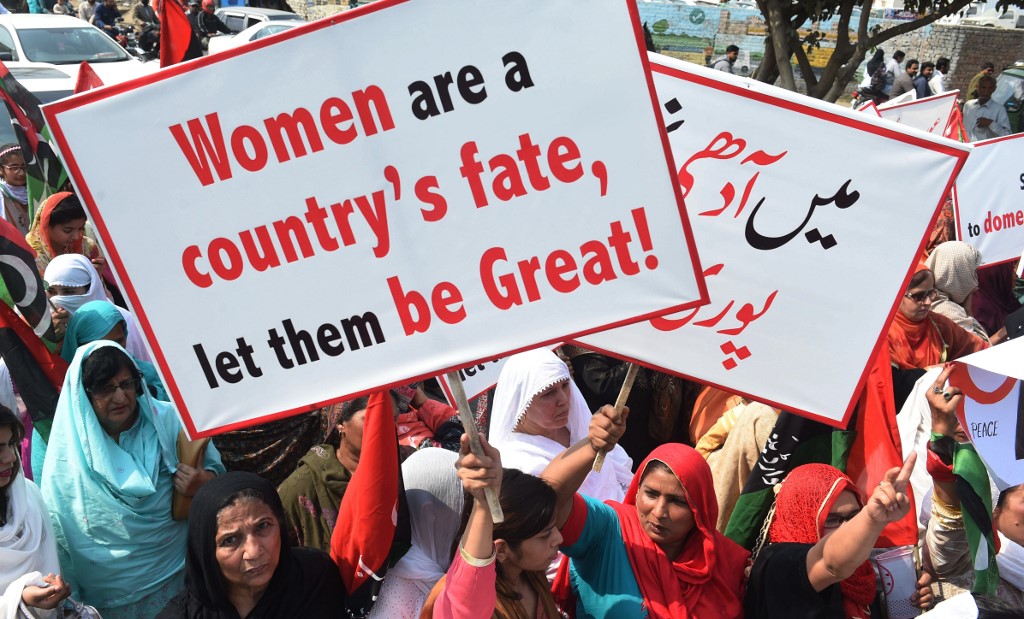
ایک متوازن معاشرے کی بنیاد ہی ایک ترقی یافتہ، پر امن اور خوشحال معاشرے کی ضامن ہے (اے ایف پی)
اب وقت آگیا ہے کہ ہم عورتوں کی مرضی چلے۔ ہم اپنے حق کے لیے آواز اٹھائیں۔ ہمارے جسم ہماری ملکیت ہیں۔ کسی مرد یا کسی انسان کو ہمارے جسم پر کوئی حق اور سروکار نہ ہو۔ ہم بھی ترقی کی منازل طے کریں۔ اپنی مرضی سے اپنی صلاحیتوں کو استعمال کریں۔
ہزار مشکلات اور جانفشانی کے بعد آج کی عورت جس طرح سے دنیا کے ہر کونے اور ہر شعبے میں کامیابی کی منازل طے کر رہی ہے، اس سے تو صاف ظاہر ہے کہ عورت کو اپنی مرضی کا مکمل حق حاصل ہونا چاہیے۔ اپنی مرضی اور خوشی سے جینا ہر انسان کا حق ہے لیکن پھر صرف ہم پر اعتراض کیوں؟
ہمارے معاشرے میں کنفرنٹیشن کی وبا ہر طرف پھیلی ہوئی ہے۔ کنفرنٹیشن سے مزید تنازعے اور مسائل پیدا ہوتے ہیں۔ لہذا ہم سب کو تھوڑے توقف سے سوچنے اور سمجھنے کے بعد اپنی بات کو مدلل طریقے سے آگے رکھنا چاہیے اور ترجیح اصلاح ہو۔ نہ کہ اپنی ذاتی انا اور جھوٹے وقار کی پرستش ہو۔
ایک متوازن معاشرے کی بنیاد ہی ایک ترقی یافتہ، پر امن اور خوشحال معاشرے کی ضامن ہے۔ میری یہ تحریر پڑھنے کے بعد گالی کا خیال دل میں آئے تو یہ سوچ لیجیے گا کہ آپ میری بات سمجھے نہیں لہذا توقف سے کام لیں اور سمجھنے کی کوشش کریں کہ میری مرضی سے آپ کو کوئی خطرہ نہیں لہذا مطمئن رہیں۔
خود بھی جییں اور دوسرں کو بھی جینے دیں۔
Subscribe to:
Posts (Atom)