Monday, January 27, 2020
#Pakistan: #Hindu woman abducted from wedding, forcibly converted, married off
Hamza Ameer

In Pakistan's Sindh province, where several cases of abduction, conversion and marriage of young Hindu girls have been reported in the recent past, another case surfaced on Sunday.A 24-year-old Hindu woman was allegedly kidnapped by assailants under the supervision of local police authorities from her wedding venue in Hala, a city located in Matiari district in Sindh province, about 215 km away from the provincial capital Karachi.According to reports, the woman Bharti Bai, was then forcefully converted to Islam and married to a Muslim man.Bharti was to be married to a Hindu man in Hala city, when unknown assailants allegedly stormed the venue and kidnapped her. Kishore Das, the father of Bharti Bai, said his daughter's marriage ceremony was underway when the kidnapper named Shah Rukh Gul came with several men along with policemen and took his daughter away in broad daylight.
Later, a picture of Bharti along with documents of her conversion to Islam and marriage to Shah Rukh Gul went viral on social media.
According to the documents of her conversion, it seems that Bharti had converted to Islam on December 1, 2019, which may be the reason why she was taken away from her wedding venue.As per the conversion certificate, Bharti's new name after converting to Islam is 'Bushra'. Jamiat-ul-Uloom Islamia, located at Allama Muhammad Yousuf Banuri town in Karachi, issued the certificate of Bharti's conversion while her conversion was witnessed and certified by Mufti AbuBakar Saeed ur Rehman.
As per her National Identity Card, details of which were shared in the documents, her permanent address is in Hala. However, her temporary address is of Gulshan Iqbal area in Karachi, which may be taken as her current area of residence.
It is still uncertain as to when she got married to Shah Rukh Gul. However, her marriage certificate aka nikkah document shows that the Muslim man is also a resident of Hala. Shah Rukh, the son of Nisar Ahmed, is also 24 years old.The family of Bharti aka Bushra has demanded for her return, who they claim was kidnapped by Shah Rukh under the supervision and presence of local police authorities.On the other hand, it is being said that Bharti had converted to Islam at least one month prior to the incident. Her parents allegedly found out about her conversion and were getting her married to a Muslim man forcibly.
It is being claimed that the news of her marriage prompted Shah Rukh Gul to go to the police and claim that Bharti aka Bushra was his wife and being married off by her parents to a Hindu man illegally.
Even though the news and details of the whole episode is based on details gathered from locals in Hala, the issue has raised serious concerns amongst the Hindu community in Pakistan, who are questioning the Imran Khan-led government of its promises to provide security to minorities in the country.
https://www.indiatoday.in/world/story/pakistan-hindu-woman-abducted-from-wedding-forcibly-converted-married-off-1640388-2020-01-27
Modi’s India And Khan’s Pakistan Are Rising—In Corruption
Panos Mourdoukoutas
India and Pakistan are two separate countries. But they have a common problem: corruption.
The problem is getting worse under two celebrated Prime Ministers, Narendra Modi in India, and Imran Khan in Pakistan. That's according to a recent ranking published by Transparency International.
India ranks 80th out of 180 countries listed. That's two notches below the 2018 ranking and four notches down from 2014 when Modi became Prime Minister.
Corruption under Prime Minister Modi includes a wave of high-profile scandals that shook his administration during his first term in office. Like a muddy 7.8 billion euro weapons contract to purchase 36 Rafale jet fighters from France. And a $2 billion bank fraud uncovered at India's state-owned Punjab National Bank.
Pakistan ranks 120th, three notches below the 2018 ranking when Khan became Prime Minister.
Corruption in Pakistan under Prime Minister Khan includes high profile cases like one of the Khan's cabinet members who kept Rs465 millions of properties in his servant's name.
Both leaders have made fighting corruption central to their re-election campaigns, promising to clean up this old vice from their respective countries. And they have taken measures to follow through with their promise.Modi, in particular, has gone as far as to launch unconventional means like getting rid of "black money," ie, the 500 and 1000 rupee notes. Khan has launched measures to fight tax evasion and corruption. However, the Modi and Khan governments have been fighting corruption in the wrong places — among their countries’ poor. And they have left corruption thriving in the high areas, among the rich and powerful. Persistent corruption is one of the old vices of frontier and emerging markets. It creates monopolies and oligopolies in critical economic sectors, limiting competition and raising the prices for necessary products consumed by the masses. Higher prices for necessities, in turn, fuel runaway inflation, another vice of frontier and emerging market economies, which is followed by social unrest, the third vice of these economies. All three vices prevent emerging economies from achieving sustainable economic growth, and from spreading the benefits of economic growth from a narrow elite to the masses. Sadly, the Modi and Khan administrations confirm the hypothesis that populist regimes of all kinds and sorts come to office with a promise to get rid of corruption. But all too often they embrace the existing situation they embrace once in office. This has been thoroughly argued by Daron Acemoglu and James A. Robinson in Why Nations Fail: The Origins Of Power, Prosperity And Poverty.
https://www.forbes.com/sites/panosmourdoukoutas/2020/01/26/modis-india-and-khans-pakistan-are-risingin-corruption/#639d0a579e42
#ReleaseManzoorPashteen - Manzoor Pashteen: Activist who dared to challenge Pakistan army held
The man leading protests accusing Pakistan's army of human rights abuses has been arrested for alleged criminal conspiracy and sedition.
Manzoor Pashteen was taken into custody in Peshawar along with nine others from his Pashtun Protection Movement.
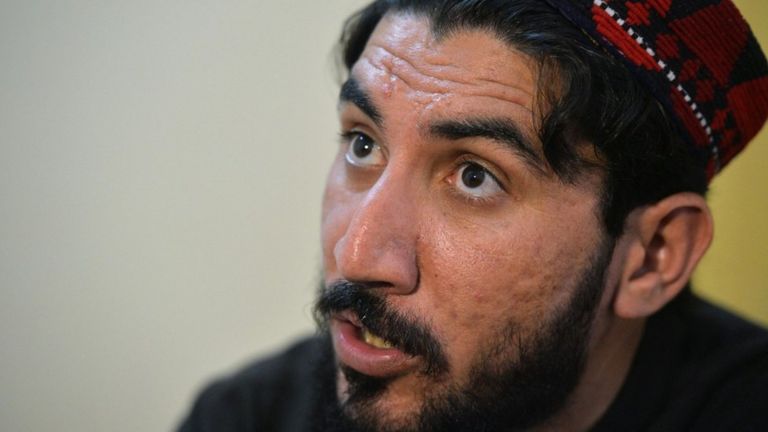
Mr Pashteen has drawn tens of thousands to rallies in cities around Pakistan.
A fellow protest leader said he was being punished for simply demanding human rights. The powerful military, unused to criticism, denies wrongdoing.
Mr Pashteen, a charismatic former veterinary student who shot to prominence two years ago, has become the face of the Pashtun Tahaffuz (Protection) Movement (PTM), in a country where few openly challenge the military.
A number of cases highlighted by the PTM and investigated independently by the BBC came to light in a report last year.
"It has taken us almost 15 years of suffering and humiliation to gather courage to speak up, and to spread awareness about how the military trampled our constitutional rights through both direct action and a policy of support for the militants," Manzoor Pashteen told the BBC.
The non-violent protests began over the alleged extra-judicial killing of a young man of ethnic Pashtun heritage by police in Karachi.
The movement then expanded, demanding accountability from Pakistan's army for alleged human rights abuses committed against Pashtuns during the war against Islamist extremists in the country's north-west.
Pashtuns make up the majority of the population along the border with Afghanistan. The protests, which have at times drawn tens of thousands of demonstrators, have rattled the military.
Since January 2018 Manzoor Pashteen and his movement have become the most significant challenge to the military.
Historically in Pakistan such movements have often fizzled out or been co-opted by the state - but the PTM has grown and grown in strength. All the while its 27-year-old leader with his trademark red cap has steadfastly maintained a modest lifestyle - he doesn't even have a security detail to speak of.
The state seems to have been unsure how to act against him, and the decision to detain him appeared sudden. Charges were laid on 21 January, but it took a week to make the arrest.
Almost laughably, the reason cited for the move is him speaking in an insulting manner about Pakistan and refusing to accept the constitution, when he has often stressed in his speeches the need to uphold the law.
Now the state has finally made its move, how will the PTM respond? Manzoor Pashteen ensured that while he led the movement, no violence took place. But will his supporters now show the same discipline?

Manzoor Pashteen has been accused of "hate speech" and sedition among other offences. The latter carries a possible life sentence.
He was remanded in police custody in Peshawar for 14 days but is expected to be taken to appear before a magistrate in Dera Ismail Khan, some 300km (186 miles) to the south, where charges against him have been filed.
His fellow protesters have demanded his immediate release. Another PTM leader, MP Mohsin Dawar, urged supporters to remain calm in response to the arrest.
Last night Manzoor Pashteen was arrested in Tehkaal, Peshawar. This is our punishment for demanding our rights in a peaceful & democratic manner. But Manzoor's arrest will only strengthen our resolve. We demand the immediate release of Manzoor Pashteen.#ReleaseManzoorPashteen

End of Twitter post by @mjdawar
Manzoor Pashteen has been arbitrarily detained for exercising his human rights to freedom of expression and peaceful assembly. He must be released immediately and unconditionally. #ReleaseManzoorPashteen

End of Twitter post by @amnestysasia
This is the first time Manzoor Pashteen has been held, and why the authorities chose to detain him now is unclear.
The authorities have repeatedly arrested other PTM leaders and activists since the movement came to prominence. Last year Mohsin Dawar and his fellow PTM member of the National Assembly, Ali Wazir, were detained for four months after a deadly clash in Waziristan.
A media blackout has ensured the PTM's peaceful rallies stay off front pages and TV bulletins - although the movement has been successful in getting its message out via social media.
According to authorities and independent research groups, militant violence since 2002 has forced more than five million people in Pakistan's north-west to leave their homes to seek refuge either in government-run refugee camps or rented houses in peaceful areas.
There are no official figures of the total death toll of this war but estimates from academics, local authorities and activists put the number of civilians, militants and security forces killed at well over 50,000.
Many see the PTM as breaking new ground in the political landscape of a country where proxy wars have disenfranchised large populations not only in tribal areas and the north-west, but also in Balochistan and other parts of the country.
https://www.bbc.com/news/world-asia-51262639
#ReleaseManzoorPashteen - Prominent #Pakistani rights activist Manzoor Pashteen arrested
By Asad Hashim
Pashteen, leader of Pashtun Tahaffuz Movement, was taken into custody in the northwestern city of Peshawar.

Pakistani police say they have arrested prominent rights activist Manzoor Pashteen, the leader of the Pashtun Tahaffuz Movement (PTM), which is known for its strident criticism of the country's powerful military for alleged enforced disappearances and extrajudicial killings.
Pashteen was arrested late on Sunday from the Shaheen Town area of the northwestern city of Peshawar, police official Nabibul Khan told Al Jazeera.
"He was required in a case by the police from Dera Ismail Khan city police station, so we [arrested him]," said Khan.
According to the police report, he was arrested on sedition charges.
As the PTM rose to prominence through nationwide rallies, police routinely filed cases alleging Pashteen and other PTM leaders committed sedition in their speeches.
However, it is the first time Pashteen has been arrested in such a case.
Mohsin Dawar, a PTM leader and member of parliament, confirmed the arrest to Al Jazeera.
"This is our punishment for demanding our rights in a peaceful [and] democratic manner," Dawar said in a Twitter post on Monday. "But Manzoor's arrest will only strengthen our resolve."
Pashteen, in his 20s, and a small group of other young activists who had been displaced by the Pakistani military's war against the Taliban in their native South Waziristan, founded the PTM in Dera Ismail Khan, located about 250km south of Peshawar.They shot to national prominence in 2017 when the group championed the cause of Naqeebullah Mehsud, the victim of an extrajudicial killing by a notorious Pakistani counterterrorism police officer.Since then, Pashteen has led rallies of thousands across the country, demanding justice for other victims of enforced disappearances, extrajudicial killings and alleged torture while in security forces' custody.His group has also demanded that the Pakistani military clear the country's northwestern tribal districts - the site of the war against the Pakistan Taliban since 2007 - of all land mines and other unexploded ordnance.
'Funded by foreign intelligence services'
The group has long been in the crosshairs of Pakistan's military, which has directly ruled the country for roughly half of its 73-year history and still holds control over security and foreign policy.
Coverage of PTM rallies and Pashteen's statements is regularly censored across Pakistani news media.
In April, the military warned the PTM that its "time is up", accusing the group of being funded by foreign intelligence services. PTM denies the charges and has invited the military to make its evidence of any such funding public.
A month later, a PTM rally clashed with security forces at a checkpoint in the northwestern district of North Waziristan. Soldiers fired into the crowd, killing at least three people, rights activists say.
Police registered a terrorism case against Dawar, the member of parliament, who was leading the rally and spent days in hiding following the violence.
He was eventually arrested, alongside fellow PTM leader and Member of Parliament Ali Wazir, and held for three months before being released on bail for lack of evidence against them.
https://www.aljazeera.com/news/2020/01/prominent-pakistani-rights-activist-manzoor-pashteen-arrested-200127073504222.html
Sunday, January 26, 2020
بلاول کا سینٹرل پنجاب میں سرگرمیاں شروع کرنیکا فیصلہ
چیئرمین پاکستان پیپلزپارٹی (پی پی پی ) بلاول بھٹو زرداری نے سینٹرل پنجاب میں

پی پی پی کی جانب سے جاری اعلامیے میں کہا گیا ہے کہ بلاول بھٹو فروری کے آخری ہفتے سے ساہیوال ڈویژن سے اپنے دورے کا آغاز کریں گے، وہ ساہیوال، اوکاڑہ اور پاکپتن میں ورکرز کنونشن سے بھی خطاب کریں گے۔
اعلامیے کے مطابق چیئرمین بلاول بھٹو اوکاڑہ میں کسان کنونشن سے بھی خطاب کریں گے جبکہ لاہور میں ویمن کنونشن، یوتھ کنونشن اور طلبہ کنونشن سے بھی خطاب کریں گے۔
بلاول بھٹو زرداری اوکاڑہ، پاکپتن اور ساہیوال کی ڈسٹرکٹ بارز سے بھی خطاب کریں گے، اس کے علاوہ وہ گوجرانوالہ، گجرات اور منڈی بہاؤ الدین کے اضلاع میں ورکرز کنونشن سے بھی خطاب کریں گے۔
اعلامیے میں جاری شیڈول کے مطابق پی پی چیئرمین جہلم میں بھی کسان کنونشن سے خطاب کریں گے اور گوجر خان میں وفود سے ملاقاتیں کریں گے۔
Ahmadis in Pakistan allege religious bias
VINEETA PANDEY
 Amid oft-erupting incidents of persecution of minorities in Pakistan, a fresh case of alleged harassment of the Ahmadiya community has surfaced triggering sharp responses from its civil society that wants Prime Minister Imran Khan to first improve things in his own country before talking about the rights of minorities in India.


The Sunni-dominated Islamabad Bar Association (IBA) had decided to prohibit Ahmadiyas from practicing the legal profession unless they file an affidavit swearing allegiance to Prophet Mohammad. The mandatory affidavit declaration also needs lawyers to say that they do not belong to Ahmadi community as they express their Aqidah (faith)” regarding Prophet Muhammad and say “Mirza Ghulam Ahmed Qadiani was an apostate, liar and hypocrite.”
“Majoritarian fascism is on the rise in Pakistan. You have no place to complain against India on minority rights,” wrote Neil Ahmad, who declares himself as an Ahmadi Muslim.
Unlike Sunnis of Pakistan, who consider Prophet Mohammad as the last messenger of God, Ahmadis claim to be Muslims in all ways, they consider Mirza Ghulam Ahmad, founder of the sect in 1889, as their messiah and believe he lived after Prophet Mohammad as the “subordinate prophet.” The Ahmadiyas have limited rights in Sunni dominated Pakistan, and even to register themselves as voters they need to either renounce their faith or accept their status as “non-Muslim.”
President of Islamabad Bar Association, Mr Zafar M. Khokar denied that such an affidavit is to harass Ahmadis and prohibit them from practice.
“We had got a resolution signed by about 400-500 bar members seeking such an affidavit. We were duty-bound to put it at the general body meeting where it was discussed and not a single member opposed it. In the end, all voted in favour of this affidavit and since GBM decision is binding on us we have decided to seek such an affidavit with one change that non-Muslims like the Sikhs, Hindus, Christians will not need to furnish such affidavit and only have to make a declaration that they are non-Muslims.
We respect non-Muslims and they can be members of our bar associations and even contest elections. As far as Ahmadis, Lahori group or Qadiani are concerned, our affidavit simply asks them to declare if you believe in Prophet Mohammad,” Mr Khokar told this newspaper. He claimed that no member of IBA has so far raised the issue of harassment or opposed this.
However, the move has generated a lot of anguish among a large section of the Pakistani society including the Ahmadis. “If they (lawyers) choose Islam, they will have to sign the declaration that they are not Ahmadis. The persecution of Ahmadiya community continues in Pakistan,” tweeted Pakistani journalist Bilal Farooqi.
Lawyer Yassif Latif Hamdani, in an article for Pakistan’s Nayadaur TV website, argued that IBA’s move violates the Constitution as it is a deliberate attempt to insult religious beliefs of the Ahmadi community. “Really what moral high ground can we take against India if we allow such blatant bigotry to prevail?” he wrote.
https://www.asianage.com/india/all-india/230120/ahmadis-in-pakistan-alleges-religious-bias.html
How The Pakistani State Has Discriminated Against Minorities For Decades
God help you if you are a non-Muslim in a country like Pakistan.
In the land, driven by religious obsession, higher values such as democracy, debate, compassion, and respect for diversity, seem pie in the sky — all thanks to a punishing, patriarchal theocracy.
Discrimination against minorities in the Islamic Republic of Pakistan is not new. Abduction of Hindu and Sikh girls and their forcible conversion in Pakistan makes headlines in India nearly every month.

However, what doesn’t make regular headlines in India is how the Islamic Republic's Constitution plays an important part in the discrimination against minorities.
The Constitution of Pakistan declares that Islam is the state religion and gives minorities the right to follow their religion.
But, as the Preamble of Pakistan’s Constitution says, the state will observe the “principles of democracy, freedom, equality, tolerance and social justice, as enunciated by Islam”.
Here’s how the minorities are discriminated against:
One, the Pew Research Center says that Pakistan is among the 30 countries of the world where the head of state and government should be from a specific religion — in this case, Islam.
According to Article 41 of the original Constitution of Pakistan, which was adopted in 1956, one has to be a Muslim to become the President of the country.
In the Constitution which the country adopted in 1973, the same requirement was made for the post of Prime Minister.
Two, in any liberal democracy, the right to vote is the basic tool to empower citizens. In a way, the right to vote helps citizens to raise their voices on issues they face in daily life and express their opinion. At the same time, those citizens who don’t have this right can easily be avoided by political parties or the state itself because they are not ‘vote-banks’.
Pakistan’s former dictator, General Zia-ul-Haq, had introduced this system in the 1980s.
It was opposed by Hindu groups and they started a resistance movement against such an electoral system. Sudham Chand, who led the campaign to spread awareness and fight against the separate electorate system, was eliminated by Islamists in broad daylight.
His murder was a message to those who were demanding basic rights.
In essence, Pakistan’s minorities had the right to vote, but their votes were largely inconsequential. That this continued for decades tells the nature of the Pakistani state and its lack of willingness to curb minority rights.
Three, the Council of Islamic Ideology.
This council is the constitutional body of Pakistan, which was set up by Ayub Khan. Its function is to give legal advice on Islamic issues to provincial and federal governments and the senate. The government generally appoints Maulanas and Islamic scholars as members of this council.
Whenever a Bill is passed by a provincial Assembly and/or Senate, this council comes into the picture. It often plays stonewall for Bills deemed ‘unIslamic’. This is the same council that advised Pakistani husbands to ‘lightly beat’ their wives.
This example is enough to show how regressive and barbaric the organization is.
Such an attempt was made and became successful in November of 2016. Anyone interested in Pakistani affairs knows that Sindh has the highest population of Hindus and they are being forcibly converted there. To stop that conversion, Sindh province Assembly passed a Bill.
The Bill was sent to the Governor so it could become law. But the Council of Islamic Ideology blocked the Bill by labeling it ‘unIslamic’ and ‘unconstitutional’.
This is how fundamentalism is institutionalized in Pakistan. The Pakistani Constitution and system rely on Sharia to a great extent. Another research done by Pew Research Center shows us that 81 percent of Pakistanis believe that Sharia law is the ‘word of God’ and can’t be changed in any condition.
The mentality of society can be reflected in the elected representatives and the laws passed by them.
This is nothing but the tip of the iceberg. What minorities in Pakistan regularly face owing to their religious beliefs cannot be fathomed by those sitting in lands where rights gain primacy over duties. And this is the fact, not fiction!
Zindagi Tamasha - Circus of censorship
Sarwat Ali
Khoosat’s latest film becomes the new target of ultra-religious mob wrath.
 Zindagi Tamasha has become controversial despite the fact that the film has not yet been released, and except the censor board, no one has seen it in full. However, its trailer has brewed a storm and calls have been made to ban the film.
Khoosat’s latest film becomes the new target of ultra-religious mob wrath.
Sarmad Khoosat, one of our most creative directors, has been running from pillar-to-post to make sense of his film’s treatment. He has even written to the prime minister, to explain the reality of the situation. Obviously, there was no satisfactory response which only added to his fears; that his effort and time will have been wasted, as the film would not be screened publically, according to schedule.
This is yet another example of shrinking space and the narrowing of avenues where and through which ideas can be expressed, aired and then become subjects of debate. There is a vast difference between a debate and a controversy; a debate is an invitation to join in stretching the canvas upon which ideas can be explored; while controversy is the first step towards inciting violence. It is a death knell to the freedoms that we cherish so much in contemporary times.
Really, this is the issue. Decisions are being made in areas where they are not supposed to be made. The forum which determines the acceptability of a film for public display, is the censor board. Due to the devolution of powers to provinces, there is one small and ineffective board at the centre, while each province has its own.
As the central board and two provincial boards had cleared the film for public viewing, far-right parties such as the Tehrik-i-Labbaik Pakistan, took the matter to the streets and alleged that the film contained blasphemous material. The threat of mob violence and country-wide protests was given. Voices are raised for the film to be banned and not screened; in fear of a violent backlash. The only threat that matters in Pakistan, is of mob violence and resultantly the prevalence of mob justice. Unfortunately, this is becoming the new-normal that no-one can deny; institutions are made ineffective, as they are not allowed to function, under threat of mob rule. Decisions taken by relevant forums too, are under the ominous shadow of street power at times.
Khoosat is a highly creative person, who deserves credit for standing up for his work and what he wants to achieve, let us all stand by his side. Such censorial steps will deter other filmmakers who may not be made from material as resilient as Khoosat.
It is making the current system ineffective, powerless and emasculating the civil structure, so that it either fails to make decisions, or does so under duress. For a number of decades, our society has been characterised by fear ruling us, rather than reason or logic.
After bright spots of hope, the same pall of darkness spreads, with greater intensity and desire to kill all freedoms, especially the freedom to hold and express one’s opinion fearlessly. Such hope is perceived as a dangerous sign, which is reason enough to snuff it out – by demonising it – either in the name of religion, patriotism or corruption.
It appears now that the matter is being referred to the Council of Islamic Ideology (CII). May I ask; what is the film about – religion or human beings? The proper study of mankind is man; all art is about human beings because it revolves round us. Has the CII taken over or is seen as a substitution for the Censor Board? Is the next step the knocking at the doors of the Organisation of Islamic operation, for the fear of it being detrimental to the common image of the Ummah? This may as well be invoked
Initially, technical objections were raised; that the censor board was not in full attendance when the film was approved, hence it was not certified by all members. However, this is how it is supposed to be, as it is the quorum that is supposed to rule and not all members. It was only that rules and regulations were being followed and no violation or bulldozing of the general opinion took place.
There is a negative and general tendency, where if the final outcome is not favourable, than rules and laws pertaining to the matter are changed, or there is an inclination to find faults with the current rules and laws. There is greater urge to have it approved or disapproved by a higher tier, even if it does not fall within its purview. This general tendency is apparent in bureaucracy, judiciary and government hierarchies – which has actually resulted in a heavy centralization of authority. Everything ends up being decided at the top, and lower tiers are made to abdicate their powers.
Films are hardly made in this country and there has been a great effort at reviving the film industry, the few films that are made, are seen as signs of that revival. But such hypersensitive measures which do not allow authorised bodies to function, can never be conducive in creating an environment where art can exist, let alone thrive. It will take a sinister turn and end up being an underground activity. What is needed most is an environment which nourishes various art forms, alongside an essential factor – a space where one can breathe freely.
Khoosat is a highly creative person, who deserves credit for standing up for his work and what he wants to achieve, let us all stand by his side. Such censorial steps will deter other filmmakers who may not be made from material as resilient as Khoosat, and move abroad to more favourable climes to express themselves – for we have seen so many do exactly that.
Why Pakistan Isn’t Taking Sides After Outbreak of US-Iran Conflict
By Michael Lipin, Niala Mohammad, Mubashir Ali
Pakistan’s bid to mediate a de-escalation of conflict between the U.S. and Iran is driven largely by its concerns about potential domestic fallout from hostilities between its two longtime partners, analysts say.
Islamabad’s peace effort, launched this month after the U.S. and Iran traded rare military blows in their decades-old tense relationship, also is rooted in its longstanding neutrality toward regional conflicts involving Iran or Iranian proxies, they say.
“We are not going to repeat our mistakes of getting involved in others’ wars. Pakistan will become a country which will make peace among states,” said Pakistani Prime Minister Imran Khan at a public event Jan. 9, a day after Iran carried out a missile strike on an Iraqi base housing U.S. troops.

The Iranian attack, which left dozens of U.S. forces with concussion-related injuries but killed no one, was Tehran’s retaliation for what the U.S. called a self-defense strike that killed top Iranian general Qassem Soleimani at Baghdad airport Jan. 3.
“I have told U.S. President Donald Trump that Pakistan is ready to mediate between Iran and the U.S. to resolve differences between them,” Khan said in his public remarks, adding that he also wanted to resolve longstanding tensions between Iran and Saudi Arabia, a military ally of Washington.
Since then, Khan has dispatched Foreign Minister Shah Mahmood Qureshi to Tehran, Riyadh and Washington to urge them to exercise restraint and warn them that further hostilities could destabilize the region.
US-Pakistan relations
Pakistan has generally enjoyed a close relationship with the United States for decades, according to the Office of the Historian at the U.S. State Department.
Islamabad has benefited from U.S. economic aid and has been a major purchaser of U.S. military equipment. But the Trump administration suspended security assistance to Pakistan in 2018 to press Pakistani authorities to take more action against what it called “externally-focused militant groups and U.N.-designated terrorist organizations operating from its territory.”
When it comes to Iran, Pakistan has long expressed a mutual feeling of brotherliness toward its neighboring Muslim majority state. But those relations have been strained in recent decades by Pakistan’s close ties with predominantly Sunni Muslim regional states such as Saudi Arabia, its cooperation with the U.S. and its support for Afghanistan’s Sunni militant Taliban group — all rivals of predominantly Shiite Iran.
Islamabad has sought to mediate between the U.S. and Iran rather than take sides as it fears an escalation of their conflict could draw in U.S. ally Saudi Arabia and worsen Sunni-Shiite sectarian divisions in Pakistani society, according to political scientist Rasul Bakhsh Rais of Lahore’s LUMS University.
A 2018 State Department report said about 80% to 85% of Pakistan’s Muslim population is Sunni, while Shiites make up about 15% to 20%.
“One segment of Pakistani society supports (Sunni-majority) Saudi Arabia, while another feels closer to (Shiite-majority) Iran,” Rais said in a VOA Urdu interview.
Radicalized supporters
Saudi Arabia and Iran have radicalized their Islamist supporters in Pakistan for years by quietly funding thousands of Sunni and Shiite seminaries in Pakistan, respectively. Some Sunni and Shiite graduates of those seminaries have carried out violent attacks on members of the other sect, fueling Pakistan’s long-running sectarian tensions.
Pakistan also opposes letting U.S. forces use its territory for military action against Iran because of concerns about a potential domestic backlash from militants who would be angered by such cooperation, former Pakistani Interior Minister Lt. Gen. (Ret.) Moinuddin Haider told VOA Urdu in another interview.
In recent weeks, Pakistani Foreign Minister Qureshi repeatedly has said his nation will not allow its territory to be used in hostilities between the U.S. and Iran.
Policy of neutrality
In the years after the 2001 terrorist attacks on the U.S., Islamabad allowed U.S. forces to use an airbase in Baluchistan province to conduct drone strikes against Taliban-allied militants along the Pakistani-Afghan border, Wilson Center analyst Michael Kugelman told VOA. He said the Pakistani government ordered an end to such cooperation in 2011 as U.S.-Pakistani tensions intensified, especially following a NATO airstrike that inadvertently killed about two dozen Pakistani soldiers in the region.
Taliban-allied militants retaliated for the Pakistani-assisted U.S. drone strikes by carrying out suicide bombings across Pakistan. Former Pakistani Interior Minister Haider said Islamabad worries that if it helps the U.S. to attack a neighboring country such as Iran, a similar violent backlash would result.
Former Pakistani Foreign Secretary Najmuddin Sheikh told VOA Urdu that Islamabad’s push for peace between Iran, the U.S. and U.S. ally Saudi Arabia also reflects a pattern of Pakistani neutrality toward conflicts involving Muslim-majority nations.
Pakistan’s then-president Muhammad Zia-ul-Haq publicly expressed a neutral position regarding the Iran-Iraq war of 1980-88. More recently, then-Pakistani Prime Minister Nawaz Sharif first declared neutrality in Yemen’s ongoing conflict between a Saudi-led coalition and Iranian-backed Houthi militants in 2015. Sharif’s successor, Prime Minister Khan, has continued that approach.
Subscribe to:
Posts (Atom)