

Wednesday, January 8, 2020
Pakistan assembly passes three bills to extend Army Chief Gen Qamar Javed Bajwa’s tenure

SAJJAD HUSSAIN
PM Imran Khan extended by three years the tenure of 59-year-old Army chief Gen Qamar Javed Bajwa, who was set to retire on 29 November 2019.
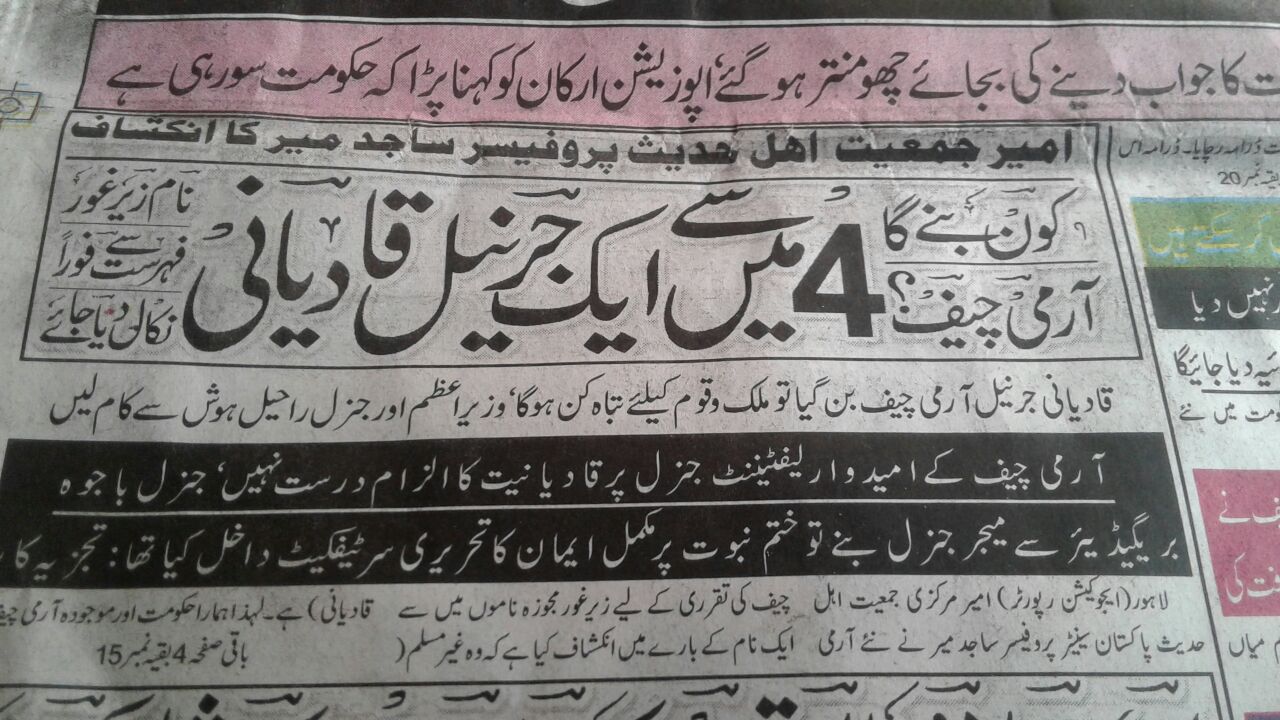
Pakistan’s National Assembly, the lower house of Parliament, on Tuesday passed three crucial bills to give an extension to Army chief Gen Qamar Javed Bajwa for another three years.
Bajwa, a close confidant of Khan, was to retire on November 29 last year at the end of his three-year original term but Prime Minister Imran Khan gave the 59-year-old Army chief another extension of the same length citing regional security situation through a notification on August 19.
However, the Supreme Court on November 28 suspended the government order, observing that there is no law to give extension to the Army chief’s tenure. But the apex court granted a six-month extension to Gen Bajwa after being assured by the government that Parliament will pass a legislation on the extension/reappointment of an army chief within six months.
The government after initial hesitation secured the support of the main Opposition parties and introduced three bills in the National Assembly to extend the retirement age from 60 to 64 years for the chiefs of army, navy and air force, and the chairman of the joint chief of staff committee.
The bills were approved by the Standing Committee on Defence on Monday, paving the way for approval by the Assembly.
Defence minister Pervaiz Khattak moved the three bills – The Pakistan Army (Amendment) Bill 2020, the Pakistan Air Force (Amendment) Bill 2020 and the Pakistan Navy (Amendment) Bill 2020 – for voting and were passed easily as Pakistan Muslim League-Nawaz and Pakistan People Party supported them.
However, Jamiat Ulema-e-Islam Fazal and Jamat-e-Islami boycotted the session as they were not happy with the new laws.
After the approval by the National Assembly, the bills will be presented in the Senate, the upper house, and are expected to be passed without any problem.
Once cleared by the two houses, the bills will be presented to the president for final approval to be promulgated.
It will help the government to re-appoint General Bajwa for another thee-year term. The powerful military, which has ruled Pakistan for more than half of its 70 plus years of existence, has wielded considerable power in deciding matters concerning security and foreign policies.
#Pakistan - Salman Taseer - A richly-deserved tribute
Komayal Hassan

It was the fourth of January 2011, and for the three days since its much-awaited advent, the new year had managed to usher in a long-awaited bout of merriment for my family. A dear relative’s wedding festivities were about to start, and all of us were busily engrossed in the usual round of cumbersome pre-wedding clothing arrangements and shopping escapades; activities which always come across as abhorrent to me, on any day of the week.
On this particular (and, in retrospect, ominous) day, I accompanied my mother to Lahore’s acclaimed (and notoriously inexpensive) Aunty Market; a site strategically suited to all manner of clothing vendors and jewelry merchants for luring in the bulk of excited urban-class girls and women towards their exquisitely crafted produce.
The evening was about to set in, and while my mother industriously bargained with an adamant Pashtun salesman regarding the price of an embroidered length of chiffon, I munched nonchalantly on a packet of straight-out-of-the-oil french fries draped in ketchup; oblivious to the hustle and bustle of the busy marketplace.
The heart-rending sounds of police sirens and ambulances started to pervade through the air, as a flurry of wild panic and stark fear started to seep into our previously untroubled chests.
Legions of Punjab police troopers started flooding into the arena, and the merchants vigorously (and with almost Bollywood-like proficiency) scrambled to close down their shops in a fluster; as if in compliance to an unspoken signal issued from these sentinels of the law.
The people abandoned their transactions and started running in opposite directions; desperate to escape from whatever stroke of misfortune had caused this rude shift in the pace of ordinary Lahori life.
We too followed suite, and after climbing into our crookedly parked green Santro, hurried home. My mother and I debated incessantly over the cause of this disturbing spectacle whilst we sped over the cavalry bridge and concluded with the possibility of another terrorist attack having occurred in the city proper. A sudden news bulletin on the radio was soon to resolve our confusion, however; and in the grimmest possible way.
The governor of Punjab, Salman Taseer, had been shot to death in the Capital, at the hands of a member of his own protection squad. I received this news with abject horror and pain, and not because I had been any devout supporter of the said dignitary.
Quite the contrary, I had never thought much about the Pakistan People’s Party government, its office-bearers, or their ill-conceived national policies. The nature of this clearly cold-blooded murder, however, was what grieved me; not only for its devastating implications for the innocent family of the ex-governor but also for its resounding consequences for the already beleaguered situation of law and order in the country.
Now even senior government officials were not safe from the exploits of the fundamentalist religious fringe in our society; to say nothing of the ordinary people. And as if this particular tragedy were not enough (and perhaps in order to drive the message further home), another grave incident was soon to cross-paths with the slain governor’s family.
On the 26th of August, only about seven months past the date of the murder, Mr. Taseer’s eldest son Shahbaz was unceremoniously abducted in the Gulberg area, whilst he was reportedly on his way to his office in the wee hours of the morning. Upon hearing of this latest chronicle from the ill-fated Taseer family saga, I felt my heart receding into the depths of depression. My mind was plagued by such demeaning questions as:
Who could have possibly done this?
And,
How could someone’s hate for another extend to the other’s offspring; whatever the reasons being for such enmity to have arisen?
I have always maintained a clear distinction between the true and pacific adherents of Islam (my cherished faith) and the terrorists who purport to pervert its beautiful doctrines through their radical political misinterpretations of its core humanitarian messaging.
The whole drama reeked nothing but raw tragedy, and reality for once seemed stranger, and certainly far more harrowing, than fiction.
Instantly, tributes started to flood in from all corners of the country, from those deemed religious and secular-minded alike; for the aggrieved family of the victims. Newspapers and social media sites teemed with eulogies and commemorations for the father-son duo, and TV talk-show programs and university campuses buzzed with debates which lamented over the increasing fundamentalization of Pakistani society and deliberated on the shocking series of unfortunate events which now seemed to transpire on a daily basis.
During all this time, I marvelled at the profound grace exuded by the Taseer family in the face of these trials, and their blatant disregard for any rhetoric which bespoke of a desire for seeking personal vengeance; a course of action which many people might be tempted to resort to, under similarly trying circumstances.
I was struck with great admiration for the brave governor’s equally-tough wife (and the kidnapped youth’s mother), and her remarkable resilience in bearing the brunt of the tragedy’s emotional impact on the entire family.
I applauded for the missing Taseer’s newly-wed bride, and her solemn commitment to her largely fate-stricken marriage; a heartening love-affair to which her public twitter account still bears vivid testimony. Equally mesmerizing was the determination exhibited by Mr. Taseer’s other children, towards the causes of liberty and minorities-protection once defiantly championed by their cruelly snatched father, and kidnapped brother.
The news of the rediscovery, and return, of Shahbaz Taseer, greatly adds to the sense of joy and celebration which has infectiously gripped Pakistan these last few days; with Ms.Chinoy having had won her second Oscar (a national achievement), and Ms. Mavalvala having played an instrumental role in detecting Einstein’s gravitational waves, amongst other things.
I earnestly hope that the Taseer family is now given some respite from the mind-numbing ordeal that they had to go through these past 5 years, and are given the opportunity to revel in each other’s company as a family once again.
I pray for all such victims of kidnapping and long for their speedy reunion with their families. The pain and desperation experienced by such families are truly unimaginable; a tale of sorrows one would not wish for one’s bitterest enemies.
https://dailytimes.com.pk/534671/a-richly-deserved-tributee/
#PAKISTANI PASSPORT STILL AMONG WORST TO HOLD IN 2020
The Henley Passport Index on Tuesday released its first report of the new year, retaining the Pakistani passport’s rank at 104 out of 107 for the third year running over the paltry 32 nations that holders can travel to without visas.
Powered by the International Air Transport Association, the Henley Passport Index measures global access on the basis of nationality. It’s ranking of 200 countries provides an in-depth picture of travel freedom, including the countries a given passport allows people access to and the types of visas required.
In its latest report, the Index found that only 32 nations allow visa-free access to Pakistan, tied with Somalia. The only countries with less travel freedom are Syria (with 29 visa-free options); Iraq (28); and Afghanistan (26). Neighboring India, meanwhile, ranks at 84 with 58 nations offering its nationals visa-free or visa-on-arrival access.
The strongest passport, meanwhile, was found to be that of Japan. According to the Index, the Japanese can avail visa-free, or visa-on-arrival, access to 191 destinations around the world. Singapore comes in second with 190; while South Korea and Germany are tied in third place with 189.
The report notes that the gap between the highest and lowest ranking states—Japan and Afghanistan—is the largest it has been since the Index launched in 2006. A Japanese passport holder can access 165 more destinations than a holder of Afghanistan’s, it noted.
The U.S. and the U.K., meanwhile, continued to slide down the rankings. They currently are tied in eighth place with 184 options for ease of travel—a dramatic drop from the number one spot they jointly held in 2015.
The report noted that the biggest success story of the past decade was the U.A.E., which has climbed 47 places in 10 years and is currently at 18th place, with a visa-free/visa-on-arrival score of 171.
Dr. Christian H. Kaelin, chairman of Henley & Partners and the inventor of the passport index concept, says the rise of Asian nations proves the benefits of “open-door policies and the introduction of mutually beneficial trade agreements.” The Index also cited political science researchers Uğur Altundal and Ömer Zarpli, of Syracuse University and the University of Pittsburgh respectively, to have found a strongly positive correlation between travel freedom and other kinds of liberties—from the economic to the political, and even individual freedoms.
“There’s a distinct correlation between visa freedom and investment freedom, for instance. Similar to trade freedom, countries that rank highly in investment freedom generally have stronger passports. European states such as Austria, Malta, and Switzerland clearly show that countries with a business-friendly environment tend to score highly when it comes to passport power. Likewise, by using the Human Freedom Index, we found a strong correlation between personal freedom and travel freedom,” Henley quoted them as saying.
The countries* that Pakistanis can visit without going through grueling visa approvals are: Cambodia, Maldives, Nepal, Timor-Leste, Cape Verde Islands, Comores Islands, Guinea-Bissau, Kenya, Madagascar, Mauritania, Mozambique, Rwanda, Senegal, Seychelles, Sierra Leone, Somalia, Tanzania, Togo, Uganda, Cook Islands, Micronesia, Niue, Palau Islands, Samoa, Tuvalu, Vanuatu, Dominica, Haiti, Montserrat, St. Vincent and the Grenadines, Trinidad and Tobago, and Qatar. Of these, all but eight require travelers to obtain visa-on-arrival.
Tuesday, January 7, 2020
U.S. - Why Is Mitch McConnell So Afraid of John Bolton?

By Neal K. Katyal and George T. Conway III
The importance of John Bolton’s offer to testify if subpoenaed in the impeachment proceedings against President Trump cannot be overstated. In a single stroke, Mr. Bolton, the former national security adviser, elevated truth and transparency over political gamesmanship.The Senate must hear his testimony in an impeachment trial.
The Senate must take him up on his offer, as well as demand the testimony of President Trump and the administration officials he has barred from testifying. The Senate majority leader, Mitch McConnell, reportedly has the votes to proceed with the trial despite no agreement with Democrats on new witnesses and to leave it a question to take up after opening arguments. The Senate still must declare that it will call witnesses during the trial.
Everyone — Republicans, Democrats and independents — must know that these crucial witnesses will be heard.
The core principle behind the rule of law is that justice is blind and partisan identity should not influence a trial’s outcome. But anyone watching Mr. McConnell twist himself into knots in trying to block witnesses and documents has to wonder whether this notion ever took root in his mind. He has gone so far as to say that “there will be no difference between the president’s position and our position as to how to handle this to the extent that we can.” He also said, “There’s no chance the president is going to be removed from office.”
How can Mr. McConnell make such a claim without having heard from Mr. Bolton? Remember that the diplomat Fiona Hill testified at the House impeachment hearings that Mr. Bolton called the pressuring of Ukraine by the administration a “drug deal” and said he wanted no part of it. Mr. Bolton himself has said that he possesses new information that has not been revealed. He even gave a speech saying that some of Mr. Trump’s foreign policy decisions were made in his self-interest, not in the interest of the American people. Particularly after the United States’ killing of Maj. Gen. Qassim Suleimani of Iran, such questions have arisen once again.
And how can Mr. McConnell make such a claim without having heard from the most important witness of all, Mr. Trump? The president has been too scared to testify, and too scared to let anyone else in his administration testify. This is not a particularly compelling demonstration of innocence. When the House was holding impeachment hearings, Mr. Trump said he wanted the acting chief of staff, Mick Mulvaney, and Energy Secretary Rick Perry to testify. Even that pretense is now gone.
There is only one possible explanation for this behavior: He is afraid of the truth. Otherwise, what argument can there be for refusing to hear from a central witness like Mr. Bolton, who other witnesses have indicated was exceptionally concerned about the suspension of military aid to Ukraine?
Making matters worse, Mr. McConnell is a lawyer (as are nearly 50 of his Senate colleagues). Yet clearly being a lawyer does not give one a monopoly on truth-seeking, as his Republican colleagues with law degrees are proving.
Lindsey Graham, for example, said if there were evidence of a quid pro quo, he’d want to investigate, only to turn around after such evidence emerged to try to stop that very inquiry.
Marco Rubio deserves particular opprobrium. He has said Mr. Bolton cannot testify, reasoning that the Senate “inquiry should be based on the testimony” heard by the House. “We are acting on articles of impeachment,” he declared. “We should be constrained by the information that those articles are based on.” His ostrichlike behavior would appall the founders, who believed, in the words of Federalist 65, that such “strict rules” could never govern impeachments.
Mr. Rubio would have an even harder time explaining the 41 witnesses who testified in Andrew Johnson’s Senate impeachment trial, or the three who testified in Bill Clinton’s. Neither of those impeachments involved a president who had ordered those very witnesses not to cooperate with the House. It’s quite rich to say the witnesses should have testified in the House when the defendant in the proceedings blocked them from doing so.
There’s one bright spot: another senator who happens to be a lawyer, too. Mitt Romney recently said that the Senate should hear from Mr. Bolton. A handful of other Republican senators could join him and ensure a real trial, with witnesses and documents alike. Lisa Murkowski, Cory Gardner and Rob Portman — all of whom happen to be lawyers — would be a good start.
The two of us are lawyers and became friends and writing partners out of our shared reverence for the rule of law. We have very different politics, but we believe our commitment to this principle far eclipses the rest. The Constitution imposes upon the Senate a duty to “try all impeachments,” and so a real trial — with all relevant testimony and evidence — is what is required.
This week, Mr. Bolton, himself a lawyer, and recognizing the nature of the Senate’s crucial constitutional obligation, has taken a critical step in the right direction. It’s our hope that Americans will recognize that our commitment to the rule of law is what holds us together.
The truth may not set the president free, but the Constitution is meant to keep the country free, and a fair and impartial trial is what must take place here.
Overview Of Rupee Circulation In Afghanistan – OpEd
By Hamayun Khan
Pakistan’s currency (Rupee) has been in circulation in the markets of Afghanistan since the Soviet troops withdrew from Afghanistan and Dr. Najeebullah’s Government has been overthrown and start of the then civil tumult in the country. After the civil war was underway in late 1992 in Afghanistan, the country’s incumbent government laid off contract with the Russian firms to stop printing the Afghani notes which resulted in the Afghani to lose its value and 1 dollar was exchanged for 24,000 Afghani.
Given the ignited skirmish in the country, Pakistan considered the situation a fruitful chance to start its political interference in terms of providing financial aids to the pro-Pakistan jihadists in Afghanistan who used to fight against each other that opened a roadway for Pakistan to take over control of the country’s outright system including its economy. Warlords started printing their currencies without any formal approval and standard procedure of the state’s central bank “i.e. Da Afghanistan Bank”, therefore people living across the Durand line were forced to start their daily transactions using Pakistan’s currency (Rupee) which caused Afghanistan to be financially, economically and politically reliant on Pakistan. Ever since the Rupee has dominated the Markets of Afghanistan, however, over the last one-and-a-half-decade circulation of the Rupee has been limited to the eastern markets.
After the US and North Atlantic Treaty Organization (NATO) allies defeated in the year 2001, by then almost all the institutions were reinstated, the new Afghani currency were printed approved by the “Da Afghanistan Bank” and the international monetary standards, the country’s economy was revived with the assistance of the United State of America (USA) and the NATO-allied countries, hence Afghanistan started diverting partially from Pakistan’s economic influence. sprint in economic slowdown of Pakistan has caused the value of Rupee toppled over in the international market both against the dollar and the Afghani which is AFN 1= RS 1.99 and $ 1= RS 154.43, this fluctuation has negatively affected the ordinary lives and various local businesses in the eastern regions of Afghanistan particularly in the city of Jalalabad.
Wholesalers, when enquired, expressed that a single piece of locket was sold to retailers on RS50, now because of the depreciation in the rate of Rupee it costs them at RS70, to increase profit margin the wholesalers need to sell the same product in the range of RS80 to RS90, due to which they lose their customers because customers are not willing to pay a higher price for a low-value product. Similarly, the credit card for mobile recharge is priced only AFN50 which is sold at Rs100, but after the value of Rupee has decreased customers are forced to pay AFN50 with Rs10 extra.
On the other hand, an ordinary jobless citizen or one having a job with a low salary is in dilemma whether to spend the earned rupees or not, if they receive the same amount of salary in rupee or save it for meeting the future needs there will be possible future economic complications in case the rate of rupee slumps.
However, a few weeks ago the governor of Nangarhar province has put forward strict rules for the shopkeepers with regards to the rupee ban and having announced that one-day ban will be imposed in case a shopkeeper disobeys the rules, therefore five shops have been shut down in Jalalabad, the capital city of Nangarhar province, as the shoppers defied using Pakistan’s rupees in their daily business.
Moreover, a campaign against using Pakistani rupee and promoting Afghani is going on in Jalalabad city and districts of the province. A special commission has been set to monitor the markets and act against violators. In the second time, shops of the rules violators would be closed for three days, and for the third time, the ban would extend to five days and for the fourth time, their license would be revoked.
Those who have suffered call upon the concerned authorities for taking serious and quick measures to curb the Rupee use, because as the rate of Rupee decreases against Afghani, people using Rupee as a daily transactional currency will face possible fallout that will be strenuous enough to thus control it. to avoid further loss, the Central Bank of Afghanistan (Da Afghanistan Bank) could preclude the circulation of Rupee in the markets of eastern Afghanistan by printing new Afghani notes, which will be thus exchanged with Rupee and the old Afghani notes by the local banks across Nangarhar and southeastern Afghanistan lapsing up to a specified time limit.
Blast in Pakistan's Quetta kills two, wounds many: Officials
By Asad Hashim
At least two people have been killed and several others wounded after a bomb targeted a security personnel vehicle in the southwestern Pakistani city of Quetta, officials say. The attack took place at an intersection near the city's busy Liaqat market on Tuesday evening, police said.
"Two people have been killed and the number of injured is 14," said Waseem Baig, spokesman for the city's main government hospital.
The explosives were packed on a motorcycle, although it was unclear if the attack involved a suicide attacker or if the bomb was planted to go off via remote control or a timer, said police official Mushtaq Hussain.Quetta is the capital of Balochistan province, the country's largest but most sparsely populated province, rich in mineral resources and the route of much of the $60bn China-Pakistan Economic Corridor (CPEC) project.CPEC projects focus on transport, infrastructure and electrical power generation, culminating in a trade route that will connect southwestern China with the Arabian Sea through the length of Pakistan.
The route ends in a major commercial seaport in the Balochistan town of Gwadar.
For more than a decade, Pakistani security forces have been battling rebel separatist groups that want independence for the ethnic Baloch areas of the province.
Such groups frequently target Pakistani security forces across the province, although no group immediately claimed responsibility for Tuesday's attack.
In November, at least two security personnel were killed and five others wounded in a similar attack targeting a vehicle, local media reported.
Images from the scene of Tuesday's attack showed a moderately damaged Pakistani paramilitary vehicle, alongside debris strewn across the intersection.
Some shop fronts adjacent to the attack site were moderately damaged.
https://www.aljazeera.com/news/2020/01/blast-pakistan-quetta-kills-wounds-officials-200107140025377.html
A bomb packed on a motorcycle target a security personnel vehicle near busy market in the southwestern city.
Pakistani Writer Says Parody About Ex-Dictator Zia Confiscated
A prominent Pakistani writer and New York Times columnist has said that purported Pakistani security agents raided the Karachi office of his publisher and confiscated all copies of a novel he wrote about the country's former military dictator, Muhammad Zia ul-Haq.
Novelist Mohammad Hanif said on Twitter that the January 6 raid was carried out by "some people claiming to be from" Pakistan's Inter-Services Intelligence (ISI) agency.
"They asked about my book and took all copies of it," Hanif said, adding that he was consulting his lawyer about filing a complaint with police.
But an ISI spokesman rejected Hanif's claim as a "cheap attempt to gain popularity by hurling false accusations on a national institution."
Hanif's acclaimed novel, A Case Of Exploding Mangoes, is a parody about Zia, a former dictator who seized power in a 1977 military coup and was killed in a plane crash in 1988.
Authorities never released the results of their investigation nor said what had caused the crash, which also killed U.S. Ambassador Arnold Raphel and then-ISI chief General Akhtar Abdur Rahman.
Hanif rose to fame when the novel was first published in English in 2008. His Karachi-based publisher released an Urdu translation of the novel in October 2019.
"A Case of Exploding Mangoes has been in publication for 11 years now," Hanif said on Twitter. "Nobody has ever bothered me. Why now? I am sitting here, wondering when will they come for us."
Hanif also said he had received "a defamation notice from General Zia's son" Ejaz ul-Haq last week demanding 1 billion Pakistani rupees (about $6.4 million) "for maligning General Zia's good name."
"Our lawyers are preparing a reply," Hanif said. "Is ISI acting on Ejazul Haq's behalf?"
Another war on border will be dangerous for Pakistan: Bilawal Bhutto

Peoples Party Chairman Bilawal Bhutto Zardari on Monday said that a very dangerous situation is taking shape in the region, and Pakistan cannot afford another war on the border.
Meanwhile talking to media representatives outside the Parliament House, he expressed that the rules and regulations of the Army Act should be strictly followed. He said that the importance of the House was lowered bypassing the Amendment Bill.
The scion of the Bhutto dynasty said that his party wants to give the Parliament its due respect. “We demand implementation on the orders of the Supreme Court, and want the new Army Act to be passed in a democratic manner”.
He went on to say that the questions will be raised on the government if a democratic way is not adopted by the House. He added that they also contacted the Pakistan Muslim League-Nawaz (PML-N) and they will respond on the matter soon.
Bilawal expressed that the proposals for all three amendments were presented to the committee and the National Assembly. He said that the government seems to be playing a game with the opposition. “The issues that came up at the time of the notification were the result of haste made by the government”, he said, adding that PPP will contact other parties in this regard to avoid the repetition of the mistake.
Monday, January 6, 2020
#Pakistan - Faces of discrimination - Why is sanitation work reserved for non-Muslim minorities?
Zeenia Shaukat
Why is sanitation work reserved for non-Muslim minorities?
Although discrimination against sanitary workers has already been highlighted, it is multi-faceted beyond the appropriation of sanitary work for non-Muslims in public service bodies. There is growing evidence around, and resentment against the deep-rooted institutional discrimination which manifests itself across a broad range of excess workload, exposure to occupational health hazards, safety risks and fatalities of sanitary workers.
According to a study titled Management of Municipal solid waste generation in Pakistan, 2015, there are 1 to 1.5 sanitary workers per 1,000 population in major towns. However, experts are of the opinion that the effective ratio of sanitary workers to population is far worse. Karachi city, with a population of 20 million is covered by 11,000 solid waste workers. Caste Consciousness in Pakistan – a research conducted by Sara Singha — shows that the Lahore Waste Management Company (LWMC) employed 7,894 sweepers in 2015 — a majority of them Christians. The same study cites the Capital Development Authority (CDA) employing 1,500 sweepers for Islamabad - all of them Christians. Based on the population of these areas, it is easy to conclude that a sanitary worker serves at least 2,000 citizens.
It is pertinent to note that the discrimination faced by non-Muslim sanitary workers in the sector, is not only through the regulation of their work or accompanying social stigmatisation. Rather, several bad practices including political appointments, poor urban planning, departmental corruption and non-implementation of labour laws; come together to reinforce the marginalisation of non-Muslim participation in the sanitary sector.
These workers are employed by municipal bodies, Water and Sewerage Boards and Public Health Engineering Department. These are all public service bodies, providing service delivery on cleanliness and maintenance of public infrastructure. Owing to a variety of reasons, these organisations have, over the years, sought to engage sanitary workers through contracts, renewed every 11 months to avoid any obligation to regularise their services. In other cases, private commercial contractors supply sanitary workers and deduct commission from their wages, which are already below the minimum wage-rate.
Over the last two years, there have been several protest demonstrations by non-Muslim workers in Sindh and the Punjab, alongside expressions of discontent at public forums about the culture of political appointments. A regular employee is entitled to BPS-1. A contractual employee receives Rs 12,000-Rs 14,000 a month. Political appointments make use of both these systems; inducting constituents of political parties in municipal bodies. Though worker interviews showed that political appointments may include Christian workers, it is mostly Muslims who receive such favours. Once appointed, most of the Muslim workers refuse to work arguing that, dust and dirt interferes with their prayers. This forces the concerned department to move them elsewhere. Eventually, they end up working as gardeners, drivers or errands persons at the houses of local officials, while continuing to draw a salary from the municipality.
The reason ghost workers elicit resentment from ‘working’ employees in the municipal sanitary sector is because working employees have to do, they were supposed to do cover greater areas for cleaning, put in more hours and most importantly – clear extra blocked manholes. “On average, I clean 20 sewerage drains a month, because of shortage of staff in Hyderabad. If the Muslim ghost workers show up for work, I would still be doing the same work, but it could come down to two manholes a month,” says Yusuf Gill employed with the Water and Sanitation Agency (WASA) for 35 years.
The national narrative of Pakistan as a Muslim majority country, categorises non-Muslims as 'minority’ Pakistanis'. “We noted this in our training sessions with sanitary workers,” says Shireen Aslam, a social mobiliser and member of District Human Rights Committee. “Muslim workers would categorically say: “hum Pakistani hain, yeh gutter saaf karna humara kaam nahi. Yeh log ghair mulki hain, inn ka kaam hai.” (We are Pakistanis, it is not our job to clean sewers. Non-Muslims are non-locals. It is their job).
“On average, I clean 20 sewerage drains a month, because of shortage of staff in Hyderabad. If the Muslim ghost workers show up for work, I would still be doing the same work, but it could come down to two manholes a month” – Yusuf Gill, WASA employee.
Another inevitable outcome which reinforces the inherent discrimination is corruption in urban planning.
Builders and developers encroach upon public space including pedestrian ways, while building regulators take no action. “In Hyderabad, encroachment is so pervasive that residents take street manholes inside the house. With lanes becoming narrower, it is difficult to bring large-sized machinery to clear blocked sewage. As a result, we are forced by our supervisors to manually clean the sewer, adding to our occupational-health and safety-risk burden,” says Yusuf Gill.
The same observation was made by Zulfiqar Shah from the Pakistan Institute of Labour Education and Research who led a fact finding mission to Umarkot in 2017, following the death of a sanitary worker, Irfan Masih. Masih had fainted while clearing a blocked sewer and was refused treatment by the doctors, who asked his relatives to clean his body before they could treat him. In the end he died leading to strong protests by the sanitary workers’ community in the district. Talking about their findings, Shah says: “We visited the site of the incident where the sanitary worker had collapsed in the manhole and found that a long queue of shops had been constructed over the drain. This manhole was almost inside a shop. Moreover, one of our crucial findings was that there were over 200 people appointed to sanitary workers’ positions for Umarkot city. A large number of them were known as ‘white collar’, deputed either by influential people, or those just collecting regular salaries. The Municipal committee chairman admitted on record that some of the people appointed against sanitary workers’ positions were not willing to do the job of cleaning and have been assigned other duties. The entire cleaning work is done by around 90 Christian sanitary workers, mainly from Gujrati and Marwari communities who are locally referred to as ‘bhungi’. The chairman said no person from other castes is willing to do the cleaning work so that only Christians and ‘bhungis’ are doing it. He blamed his predecessors for appointing the wrong people.”
The health risk associated with sanitary work is well documented. Several studies point to various illnesses resulting from continuous exposure to dust particles. These include short-term illnesses such as sneezing, coughing, eye irritation, lung tissue swelling, asthma and throat infections. A 2013 study also finds long and continuous inhalation of non-industrial dust in Pakistani street sweepers as one of the critical factors in the development of chronic obstructive pulmonary disease, resulting in obstructive ventilatory patterns.
There is also a feeling that ghost employment reinforces unemployment and inequality. This is well explained by Imran Masih Gill, from the Hyderabad Municipal Corporation: “Political appointees get paid out of municipality’s budget for serving local officials and influential persons who enjoy their labour for free. There are so many unemployed people in our community. They cannot get jobs in the sanitary sector because Muslims who do not serve the sector, are taking their jobs.”In terms of resistance against these issues, sanitary workers are represented by Sanitary Sector Workers’ Union covering municipal workers, in major metropolitans and municipal bodies. Opinions about the effectiveness of these unions. However, workers generally feel they have inadequate capacity and resources to launch a concentrated struggle against institutional discrimination. Zahid Sahotra, a local representative from the Christian community who mobilised Christian sanitary workers in Jahanian said they could not go beyond a single day of protest against ghost employment. “The workers are terrified of local political leaders from ruling parties, who can use their influence to have them expelled from service. I had to give-up on mobilisation, as workers refused to lead the protest owing to the pressure from the municipality.”Justice (retd) Majida Razvi, who has formed a special task force for sanitary workers in the Sindh Human Rights Commission, says complaints sent by the sanitary workers to the Commission to resolve their issues are grave in nature and clearly point to an in-built bias in the system. “The system is therefore excruciatingly slow to respond when these issues are taken up,” she observes. “One of the initial complaints from this sector came from a Christian sanitary worker from the Hyderabad Development Authority (HDA) where he had served for two decades. He had been working as a complaint clerk even though his official appointment and hence salary remained that of the junior position of jamadar (sweeper). He complained of a delayed response to his repeated applications for promotion. According to him, he was verbally informed that people from the minority community cannot be appointed as complaint clerk. We sent repeated notices and reminders to the HDA managing director for a good six months before he was officially promoted to his rightful position.”
“There are no two opinions about the marginalisation of the sanitary workers and the need for an urgent set of actions to address discrimination which is so deep rooted that it continues without ever being questioned,” continues Justice Razvi.
“However, in order to address this, the everyday lives and challenges of these workers need to be understood, as their work is riddled with far greater risks than that of any other sector. Forcing them to dive in the sewer or insulting them through use of separate utensils or denying them their due opportunity in employment promotion or adding to their work load with ghost employment is a reflection of the system’s denial of fundamental human rights to citizens, workers and especially to minorities. It needs a forceful and consistent response from the state as well as the civil society. We have been assured by the Sindh Government of their commitment to address this issue raised by the commission. We hope they will deliver on their promise. ”
#Sikh man killed in a targeted attack in #Peshawar
A Sikh man was killed late Saturday night in a targeted attack in the Pakistani city of Peshawar. 25-year-old Ravinder Singh of Chakesar had gone wedding shopping in Peshawar when he was targeted by unknown assailants.
According to Police, After shooting Singh, the killer made a phone call to his family, notifying them of the attack and his death.
Ravinder Singh was the brother of prominent journalist and news presenter Harmeet Singh, who in 2018 became Pakistan’s first news anchor from the Sikh community.
Anguished by the murder of his brother, Harmeet said that “without minorities, no country can flourish and progress. Pakistan is beautiful because of minorities but each year, we end up carrying the dead on our shoulders”.
Pakistan, he said, gets massive funds from several countries to protect minorities.
“But there is no protection. That’s why I am here to carry my dead brother’s body today. I won’t rest until the Pakistani government arrests the murderers of my brother,” he added.
Speaking to the media Ravinder’s friend Manmeet Kaur said:
He had just come back home from Malaysia and gone to Peshawar to shop for his upcoming wedding when he was targeted.
The attack comes just two days after a mob attacked one of Sikhism’s holiest Shrine, the Gurdwara Nankana Sahib in Pakistan’s Punjab province.
India’s Ministry of External Affairs quickly reacted to the news and said it “strongly” condemned the “targeted killing of minority Sikh community” and urged Pakistan to stop “prevaricating and take immediate action to apprehend and give exemplary punishment to the perpetrators of these heinous acts.”
A day after mob attacked our holy shrine #GurdwaraNankanaSahib, this brutal murder of Sikh youth in Peshawar shows the extent of persecution minorities face in Pak. I urge PM @narendramodi ji to imm take up the issue with @ImranKhanPTI & ensure the safety of Sikh brethren there.
290 people are talking about this
#Pakistan - Bilawal Bhutto Zardari pays tribute to Salman Taseer
In his message on the occasion, Bilawal Bhutto Zardari said Salman Taseer sacrificed his life for the cause of religious tolerance and his death was a great loss to the party and the nation.PPP Chairman Bilawal Bhutto paid glowing tributes to former Punjab Governor and PPP leader Salman Taseer on his ninth death anniversary, saying that Taseer stood against the dangers of extremism and for the rights of the weak sections all his life.
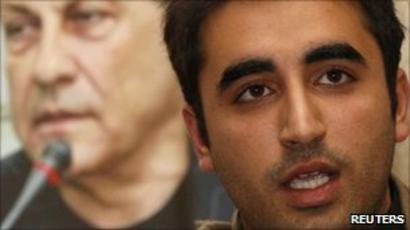
Bilawal said the PPP led the war against terrorism and extremism on the ideological front, and would never allow misuse of any law on the basis of religion, creed, colour and caste in the country.
He said the PPP would continue the struggle initiated by Shaheed ZA Bhutto which was the reflection of the historic address delivered by Quaid-e-Azam Mohammad Ali Jinnah on August 11, 1947.
The PPP chairman said the struggle was aimed at making Pakistan a cradle of democracy, equality and tolerance. The PPP offered sacrifices of Shaheed Benazir Bhutto, Salman Taseer and hundreds of other heroes. He said the PPP would never fall compromise on the rights which were gained after tough struggles.
https://www.thenews.com.pk/print/593702-bilawal-bhutto-zardari-pays-tribute-to-salman-taseer
Pakistan forgiveness laws: The price of getting away with murder
By Secunder KermaniThe murder was so brutal it shocked even the hardened detectives who arrived at the scene on the outskirts of Pakistan's capital, Islamabad. Bushra Iftikhar, a 28-year-old housewife, had been stabbed with such force that the knife her assailant used had bent out of shape, and he had continued the attack with a screwdriver. The killer? Her husband, Sami Ullah. The couple had four children already, and at the time of her death, Bushra Iftikhar was pregnant with their fifth. Why exactly her husband killed her remains unclear. He claimed in court to have been suffering a mental breakdown and to have no recollection of the incident. Her family says he accused her of wanting to convert to another religious sect. But what does seem clear is that Sami Ullah was a violent man. He had previously been accused of the attempted murder of a neighbour, and of being part of a violent argument at a restaurant. Police believe he should have been in prison, but instead he didn't even face a proper trial. According to Bushra Iftikhar's brother, Sami Ullah's family were influential in the local area and had paid money to the victims of those earlier cases. "In the old cases, he gave money and quickly got out of prison," Mohammad Zakaria bluntly told the BBC. Under Pakistani law, victims or their families have the right to forgive suspects in a number of serious crimes, including most instances of murder. All they have to do is state in court that they forgive a suspect "in the name of God". In reality, legal observers agree that the primary motive for that "forgiveness" is normally financial, and the informal payment of money to victims is not illegal. The provisions allowing crimes of bodily harm to be "settled" or "forgiven" were introduced in the 1990s as part of a set of Islamic-inspired legal reforms. Supporters of the system say it helps reduce pressure on Pakistan's already overburdened and delay-ridden court system, and reduces the likelihood of feuds developing. But according to one study, the murder conviction rate in the country dropped from 29% in 1990, before the laws were introduced, to just 12% in 2000. Critics argue the law can give repeat offenders a sense of impunity, and is a tool for the more powerful to evade justice. Bushra Iftikhar's brother believes the fact her killer was never punished in any of his previous cases only made him grow more violent. "He became arrogant. He thought: 'I did this, and nothing happened. Now I'm free and the law can't touch me.'" Sami Ullah's family admit the previous cases had ended in what are often termed "compromises", but insist they had agreed them to avoid a drawn-out legal process, not because Sami Ullah was guilty. Sami Ullah is currently appealing against a death sentence after being convicted of murder. Ashtar Ausaf Ali, who served as attorney general under the previous government, put forward plans to reform the laws in 2015 whilst still retaining the element of forgiveness. "A person has the right to forgive," he told the BBC from his office in the city of Lahore, but he added that crime wasn't just a matter for an individual, but for society. His idea was to introduce mandatory minimum sentences, so that "people would know that they cannot put a price tag on a crime". Despite being supported by some clerics, Mr Ali's proposals were blocked by a number of Islamist politicians. At the moment, there seems little prospect of them being resurrected. Undermining the system The current law is a source of frustration at times for both police officers and criminal prosecutors. Courts do have the right to reject settlements if they believe they are coerced, but most observers agree that due to the number of cases in the court system, they rarely investigate thoroughly. Meanwhile, one detective told me he had come across dozens of examples of offenders reaching a settlement with their alleged victims only to go on to reoffend. He said the police would spend time and resources investigating a crime only for the case to end abruptly. Then there are other times, when the police themselves can be the beneficiaries of such "settlements". In August, CCTV images of a thief sticking his tongue out at the camera as he stole a bank card from a cash machine in the central Pakistani city of Faisalabad went viral on social media. But the case took a grim turn as shortly after Salahuddin Ayubi was arrested by police, he died in custody. The compromise Suspicions mounted after another video emerged of Salahuddin Ayubi, who apparently initially pretended to police that he was deaf and mute, writhing in pain as a policeman twisted his arms behind his back while another interrogated him. Salahuddin's father, Muhammad Afzal, initially pressed for justice for his son, who is believed to have suffered from a mental illness. However, a month later, he announced he was forgiving the policemen accused of killing him "in the name of God". The "settlement" or "compromise" in that case is understood to have consisted of an agreement the authorities would build a new 8km (five-mile) road in the family's village, as well as a new gas pipeline, not to mention the payment of an undisclosed sum of money. Salahuddin's father seemed content with the deal, which was brokered by a radical cleric with links to the intelligence services. But others, who don't have powerful backers or the weight of public pressure behind them, often end up feeling as if they have no choice but to agree with what is being offered to them. In a village outside Lahore, I met the family of another man who died in police custody. He had been detained after wrongly being accused of murder. The BBC is not revealing the family's names in order to protect them from repercussions, but they say a mixture of coercion and money led them to drop the case against the police officers they hold responsible for his death. "We haven't forgiven them in our hearts," the victim's brother told me. "We never will, but we were helpless." He said a steady stream of local politicians and influential figures had arrived on his doorstep when they began to fight for justice. "They would say: 'Do a deal. If you don't, you won't be able to do anything anyway. Maybe they'll go to jail for six months or a year, after that they'll be freed and can make all sorts of trouble for you.'" The family are poor and were offered enough money to buy a house, something they would have struggled ever to do otherwise. They accepted, but the mother remained distraught at the bargain she felt forced to make. "I wish to God that we were still living in a rented house, and my son was still alive," she said. "They took my son and gave me money for a house, what kind of deal is that?" https://www.bbc.com/news/world-asia-50716694
Sunday, January 5, 2020
Subscribe to:
Posts (Atom)