Monday, December 16, 2019

#Bangladesh Publishes List of 'Razakars' Who Sided with Pakistan Army During 1971 Liberation War


Liberation War Affairs Minister AKM Mozammel Haque released the list at a press briefing in Dhaka and said the initiative has been taken to introduce the anti-liberation forces to the new generation.

Bangladesh on Sunday published a list of 10,789 Razakars (volunteers) who collaborated with the Pakistani forces during the country's Liberation War in 1971.
Liberation War Affairs Minister AKM Mozammel Haque released the list at a press briefing here and said the initiative has been taken to introduce the anti-liberation forces to the new generation, the Daily Star reported.
According to the historic documents, the Razakar force — an auxiliary group of then Pakistan army — targeted Hindus and Bengali nationalists during the 1971 liberation war.
AKM Yusuf, one of the top leaders of the fundamentalist Jamaat-e-Islami, was believed to be the founder of the Razakar force. He was arrested in May 2013 and charged with crimes against humanity. However, he died of cardiac arrest in 2014 while in detention.
Haque said the number of genuine freedom fighters is not more than 2.1 lakh and their complete list will be published on the Independence Day (March 26).

#Bangladesh - Remembering the war of 1971 in East Pakistan

By Anam Zakaria
Bangladesh, India, and Pakistan each have created a very distinct memory of what happened 48 years ago. Forty-eight years after the 1971 war, which led to the independence of Bangladesh, each country involved in the conflict has institutionalized a distinct memory of the events of that year. In Bangladesh, the war is remembered as the Bengali people's struggle against an oppressive Pakistan army.
In India and Pakistan, the war is often remembered as the third Indo-Pakistan war. This representation is resented by many Bangladeshis, who feel it erases their role in what they see as a liberation war.
However, disagreement on who played the central role in the war is not the only point of contention between the three countries. Today, Bangladesh, Pakistan and India have their own closely held war stories, with 1971 taking on unique meanings across the subcontinent.
Bangladesh: The liberation war
The struggle for Bengali rights started shortly after Pakistan gained independence as a country with two incontiguous territories known as West Pakistan (today's Pakistan) and East Pakistan (today's Bangladesh). The refusal to accept Bengali as a state language of Pakistan in the early years after Partition, economic disparity between the two parts, the hegemony of the West Pakistani ruling elite over Pakistan, martial laws, and a demeaning attitude towards Bengali culture and the Bengali population soured relations between the two parts.
Tensions rose in December 1970 when the Awami League party, led by Sheikh Mujibur Rahman (also known as Mujib) and based in East Pakistan, won the national elections but West Pakistan parties, namely the Pakistan Peoples Party (PPP), refused to hand over power. Tensions between Bengalis and Biharis - the Urdu-speaking communities that had moved to East Pakistan from different parts of India after Partition and who were seen as pro-West Pakistan - rose, which led to attacks on some Bihari communities.
In March 1971, using the violence as an excuse, the Pakistan Army intervened to stem the growth of nationalist sentiments in the east. It recruited local pro-Pakistan Bengalis and non-Bengalis, including members of the Islamic organisation Jamaat-e-Islami for its operations against Bengali factions. As the violence escalated throughout the summer, a large number of refugees streamed into Indian territory, which New Delhi used as an excuse to intervene militarily in early December 1971.
The nine-month conflict ended with the surrender of the Pakistani army on December 16; the death toll is estimated to have been between 300,000 and 3 million people, with hundreds of thousands of women raped.
Since the end of the war, various forces have tried to control the narrative in Bangladesh, most notably the Awami League - which came to be perceived as "pro-Indian" - and the Bangladesh military and Bangladesh National Party (BNP) - which has been deemed "pro-Pakistan" and "pro-Islamist". This has hurt the process of transitional justice and frustrated many victims and their families for decades.
Having played an important role during the war, Mujib took power after independence. He banned Jamaat-e-Islami and introduced special laws that allowed for the arrest and prosecution of those accused of "collaborating" with the Pakistan military. After Mujib's assassination in 1975, General Ziaur Rahman seized power and started to change the public narrative on the liberation war. He made efforts to showcase the role various military actors played in the conflict and pushed to the background the role of the civilians. He also released the suspected war criminals and lifted the ban on Jamaat-e-Islami. In the following years, his party, the BNP, put some of its members accused of war crimes in influential positions, leaving victims increasingly troubled.In the early 1990s, a group of civil society actors created the Committee for Eradicating the Killers and Collaborators of 1971, which held mock trials against suspected war criminals. Even though it had no legal legitimacy, the committee put pressure on the BNP government, which filed sedition charges against the organisers.Sheikh Hasina, Mujib's daughter who took over the leadership of the Awami League in the 1980s, used the momentum the committee created in her struggle for power against the BNP. She sought to recast what happened in 1971 as a struggle led solely by the Awami League.
During her 2008 election campaign, Sheikh Hasina also sought to appropriate the transitional justice process, promising to bring war criminals to justice by setting up a tribunal. The war crimes trials launched, however, have been marred by controversy. Some critics have alleged that Sheikh Hasina is using them to punish opponents and keep them out of power. There is concern that the politicised nature of the trials may render justice, which many survivors ache for, increasingly elusive.
Today, Sheikh Hasina has managed to solidify her narrative of the 1971 war to such an extent that, if one criticises her party, they are seen as criticising liberation itself, and therefore perceived as anti-state.
Meanwhile, the Bihari community who became stateless after the war until a 2008 Supreme Court judgement extended citizenship rights to them are concerned that those accused of attacking, killing and raping members of their community will never be brought to justice. This is because in official memory, as institutionalised by the Bangladeshi state, only crimes against Bengalis are remembered.
Today, thousands of Biharis continue to reside in camps. They live in marginalised conditions, labelled as "stranded Pakistanis" and pro-Pakistan collaborators for their alleged role in the war.
India: The finest victory
In India and Pakistan, 1971 may not be as actively remembered but it remains central to how both nations view themselves and each other. In India, the war is fondly recalled as the nation's finest win, a testament to its military prowess and superiority, and as revenge for Pakistan having "broken" India in 1947. Having lost the Indo-Sino war in 1962 and having only achieved a ceasefire in the first two wars with Pakistan, the victory in 1971 became symbolic for India, signalling that it was on its way to becoming a regional superpower. Today, politicians, as well as the armed forces, continue to make references to the war, to indicate India's strength vis-a-vis Pakistan.
As one Indian journalist told me during in an interview for my book, 1971: A People's History from Bangladesh, Pakistan and India, "1971 has become part of day-to-day life in India. Be it for motivating the soldiers or demeaning Pakistan. 1971 changed the way we look at ourselves as Indians. Till the war, we didn't see ourselves as being competent militarily. But post-1971, we have had quite a tough posturing in international diplomacy. 1971 has become almost folklore in India."
The Indian narrative of the war is a story of gallantry and bravado, championing India as a saviour of the oppressed Bengalis. It is often brought up during any escalation of tensions between the two countries. In 2016, during one such escalation, an Indian soldier posted a video in which he taunted the Pakistani army, reminding it of its "defeats of 1965, 1971 and 1999". However, 1971 also holds other meanings for contemporary India. The large number of refugees which poured into Indian territories - approximately 10 million by the estimate of the Indian government - later became a major internal issue.
Tensions between refugees and host populations ensued, with fears that the refugees from opar Bangla (the other side of Bengal) may permanently settle, putting a burden on already stretched resources and changing the demographics of the host states. This unwelcoming feeling towards the refugees did not dissipate with the war.
In the Indian state of Assam, where many Bengalis have settled over the years, their presence has remained contentious. Recently, the final list of the National Register for Citizens was issued, with March 24, 1971, set as the cut-off date for inclusion in the register. It is the day before Pakistan launched its military operation in East Pakistan, which pushed many Bengalis across the border.
Close to 2 million people, those who could not prove that they or family members resided in the state prior to March 1971, have been excluded from the register, which can render them stateless. Critics have argued that the register is being used to target Muslims in an increasingly Hindu majoritarian country. The war of 1971 thus remains central in India, tied both to the saviour narrative as well as the question of who truly belongs.
Pakistan: The forgotten conflict
In Pakistan, the state has resorted to selective forgetting of what happened in 1971. Perceived as a humiliating defeat, the war is brushed over in textbooks and there is little acknowledgement of the military oppression and the resulting atrocities in East Pakistan.
What is hailed as liberation in Bangladesh is awkwardly recalled by Pakistanis as the Fall of Dhaka or dismemberment of Pakistan every December 16. When 1971 is addressed it is often to stress upon the killings of non-Bengalis before the war, presented as a justification for military action.
However, just because 1971 does not factor into mainstream discourse significantly does not mean it has not left lasting imprints on Pakistan's psyche. In fact, 1971 remains one of the most defining events in the nation's history, shaping its self-identity and regional policies. The loss of East Pakistan created a "never again" mentality in the country. Resolving to never let a similar situation arise again, Pakistan increased its defence spending and launched a nuclear programme aimed at developing a nuclear weapon as early as January 1972.
The lesson learned from 1971 was the military has to be stronger to prevent another defeat. Moreover, in the post-war years, Pakistani textbooks were revised with an overt anti-India and anti-Hindu slant. The loss was blamed on its "arch-nemesis", with little reflection on Pakistan's own policies that resulted in a mass movement for independence among Bengalis. To this day, the Pakistani narrative makes some exaggerated claims, such as Indian-influenced Hindu teachers manipulating students and breeding secessionist sentiments in East Pakistan.
Furthermore, as new independence struggles erupted in the region, in the form of the Khalistan movement for a separate Sikh state and in the movement in Kashmir, scholars have argued that Pakistan resorted to using similar strategies to those India had in East Pakistan to support these movements.
Local grievances were closely studied and support was offered to groups fighting against the Indian state just as India had provided support to Bengalis fighting the Pakistani state.
Today, just as India accuses Pakistan of fuelling terrorism in Kashmir and dismisses genuine Kashmiri grievances as Pakistan-sponsored, in the Army Museum in Lahore, Pakistan has put up a plaque which labels the Bengali movement for independence as Indian-sponsored terrorism. In both cases, people's struggles are appropriated and hijacked, narratives carefully crafted to turn popular sentiment against movements for self-determination.
Close to 50 years after the war, 1971 remains poignant both at the people's level and the state level in Bangladesh, India and Pakistan. It continues to shape the lives of those who suffered and witnessed the war while also remaining central to each state's national project. 1971 reinforces distinct narratives, emphasising liberation in Bangladesh, victory in India, and loss in Pakistan. All three countries hold on tightly to their war story and frame their images of themselves and the other through the lens of that fateful year. 1971 has left a lasting legacy across all three children of Partition.

https://www.aljazeera.com/indepth/opinion/remembering-war-1971-east-pakistan-191216054546348.html
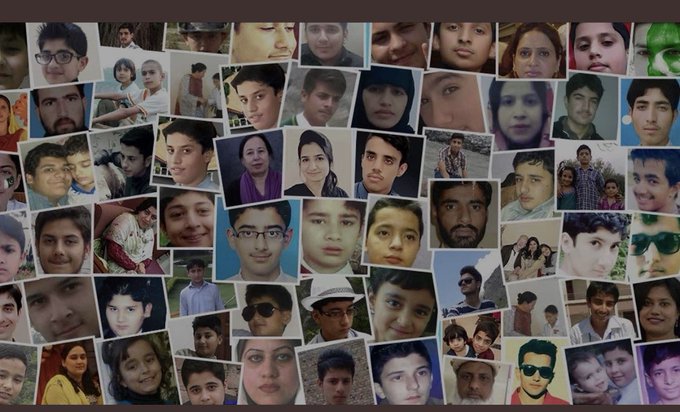
#APSPeshawar #APSMartyrs #APSAttack #APSPeshawarAttack - Netizens demand whereabouts of Ehsanullah Ehsan on APS attack day

As the country marked its remembrance of the brutal carnage claimed by the Tehreek-e-Taliban Pakistan (TTP), many took to Twitter to demand why the group's former spokesman was still at large in the country.
Ehsanullah Ehsan was once the Taliban's chief correspondent for the Pakistani media, sending videos of himself speaking on behalf of the militant group. It was Ehsan who announced to the world that the Jamaat-ul-Ahrar, a break-away faction of the TTP, was responsible for the Easter bombing in Lahore of 2016. According to Ehsan, the group meant to deliberately target Christian families on a day they were expected to be celebrating their holiday in public, killing at least 75 people, and injuring more than 300. The majority of the victims were women and children. Ehsan is also the prime accused in one of world history's most deadly attacks on schools, the attack on the Army Public School in Peshawar in 2014.
But Ehsan remains within Pakistan, free from any kind of confinement. In April 2017, the former ISPR in-charge, Asif Ghafoor shared that Ehsan had surrendered to the Pakistani military. In 2018, the Peshawar High Court (PHC) ordered the federal government to not give Ehsan clemency, for the court held directly responsible for many acts of terrorism, including the shooting of Malala Yousafzai in Mingora in 2012.
However, Ehsan was ultimately released nonetheless. Since then, Ehsan has kept a low-profile in the country.
On social media, politicians, academics, journalists, and lawyers expressed their resentment against the state for failing to take action against Ehsan.
Aseefa Bhutto-Zardari tweeted: "Today we remember the senseless violence that led to the martyrdom of 130 children in APS Peshawar. The fact the Ehsanullah Ehsan has not been prosecuted is a stain on our national character. My thoughts and prayers with the families still searching for answers and justice."
Dr. Nida Kirmani, a sociologist, said: "5 years since one of the most horrific days in Pakistan’s history, and we’re still asking, where is Ehsanullah Ehsan? Why have he and his enablers not been brought to justice?"
Many sarcastically called Ehsan a "state guest". The Awami National Party leader, Asfandyar Wali, seems to have coined the phrasing in last year's remembrance of the Peshawar attack.
ANP leader Bushra Gohar wrote: "Other than trivialising the APS massacre by releasing songs & building monuments, what has been done to ensure justice? Why is the judicial inquiry under wraps? Why is Ehsanullah Ehsan not charged & under trial?" Little official information is available to learn more of Ehsanullah Ehsan's case, but the fact remains that he is still a free man who has not been held culpable for the crimes he has confessed to.
https://nation.com.pk/17-Dec-2019/netizens-demand-whereabouts-of-ehsanullah-ehsan-on-aps-attack-day

#APSPeshawar #APSMartyrs #APSAttack #APSPeshawarAttack - Nation still in tears over APS tragedy


As the nation marked the fifth anniversary of the Army Public School (APS) attack, Qaumi Watan Party (QWP) Chairman and former federal interior minister Aftab Ahmad Sherpao on Sunday paid rich tributes to the martyrs.
In a statement issued from the party headquarters Watan Kor, he recalled that the attack had united the nation in the fight against terrorism. Remembering the martyrs of the APS attack, Sherpao said the nation will always remember the sacrifices of the innocent children and that the country still hurts from the loss.
The QWP leader said that the attack had prompted the government to declare an all-out war against militants and to restore viable peace in the country. The nation is still in a state of shock and grief over the brazen attack in which innocent school children were targeted, he added.
Earlier in Peshawar, members of the APS Shuhada (martyrs) Forum held a demonstration outside the Peshawar Press Club.

Remembering #APS: A trauma #Remembering APS: A trauma Peshawar simply cannot move past

Not too long ago, terrorism and violence was a common occurrence in Khyber-Pakhtunkhwa. The province became the hub of terrorist activities and then came its worst nightmare – the assault on the Army Public School (APS) on December 16, 2014. A gang of militants walked in and sprayed teachers and pupils with volley after volley of bullets, killing more than 140 that morning five years ago.

The methodical slaughter that unfolded not only paralysed Khyber-Pakhtunkhwa (K-P) but all of Pakistan. Across Peshawar, mosques filled with mourners carrying small coffins and wailing family members became a common sight. The city was living its worst nightmare, its worst tragedy. While the city and the country won its battle against terrorism shortly after the APS attack, many are still reeling – mostly emotionally.
The APS tragedy not only left an indelible mark on the family members but also on those who witnessed the event unfold on their television screens. And despite promises by the government to provide psychological assistance, many have been found to silently suffering from post-traumatic stress disorder, and many of them have yet to recover.
Shortly after the attack, the government promised to build a state-of-the-art trauma centre in Peshawar. But like all other promises, this too was meant to be broken. For the people who were suffering, help arrived from unexpected quarters. An army of volunteers came together to help those who continue to reel from the APS tragedy. While the government still hasn’t been able to provide psychological assistance to those suffering from mental trauma in the wake of the APS tragedy, volunteers are providing counselling services to survivors, family members of those killed, and everyone who suffers emotionally as a result of the attack.
“We have received people who are suffering directly and indirectly as a result of the attack,” said Dr. Khalid Mufti, a consultant psychiatrist.
In recent times, Peshawar has struggled with violent attacks, but APS crossed every limit of human endurance, so much so that, in the wake of the attack, the military launched a full-scale offensive to eliminate terrorism that was targeting the most vulnerable across Pakistan.
The military won, and the terrorists lost. But for the people of Peshawar, the post APS struggle has been long and unending. Dr Mufti believes, everyone who witnessed the brutal massacre requires counseling.
Not just APS survivors or their families, but everyone who was told about the attack or watched it unfold on their screens needs help,” said Dr. Mufti. Reintegrating those who continue to suffer was not easy. Dr.Mufti is joined by an army of volunteers, including journalists, spiritual leaders, teachers, and general practitioners.
So far, Dr. Mufti has dealt with more than 150 people. The list includes survivors, family members, and those who were indirectly influenced by the attack.“Initially, siblings and family members of those who had died were reluctant to talk,” said Dr. Mufti. “They were defensive and perhaps feared everyone who wanted to talk about the attack,” the medic added.December 16 will forever live infamously in the memory of those who survived. The day will forever remind Pakistan of death and destruction. The suffering and tragedy claimed many lives, directly and indirectly. Dr. Mufti claimed many suffered cardiac arrest because the tragedy was beyond their tolerance level.
Five years on, Dr. Mufti and his volunteers are fighting an uphill battle. Each year on December 16, many survivors, he said, relapse.
“We have no option but to start from where we were many years ago,” he claimed.
The assault on the Army Public School five years ago ended in bloodshed and never-ending sorrow for the families who lost loved ones. Around this time of the year, survivors are reminded of the harrowing event that gripped the attention of the world.
The images from the eight-hour-long rampage remain fresh even after all these years. Even as he treats patients, there are moments when Dr.Mufti feels vulnerable.

#PPP Music Video - Bhutto Benazir

Bilawal slams changing of CPEC route says people of Balochistan will be deprived of benefits

“These selected puppets [incumbent government] cannot provide you with those benefits,” The Express Tribune quoted the PPP Chair as saying. Pakistan People’s Party (PPP) Chairman Bilawal Bhutto-Zardari has said that the people of Balochistan province had been deprived from reaping the benefits of the China-Pakistan Economic Corridor (CPEC) by changing the route of the project.
“We (PPP) brought revolutionary projects like CPEC that was meant for you, the people of Balochistan, (particularly) the residents of Gwadar... It was supposed to create job opportunities for you and strengthen your economy,” Mr. Bilawal Bhutto-Zardari said on Sunday while addressing supporters in the provincial capital of Quetta.
“Unfortunately, unlike the vision of [former] President Zardari who wanted that the project should benefit the most impoverished areas... that the route should start from FATA to Balochistan, the route has been changed. Now it’s starting from Lahore and Sindh.
“These selected puppets [incumbent government] cannot provide you with those benefits,” The Express Tribune quoted the PPP Chair as saying.
He added that said his party was the only one that ensured that a project benefitted the residents of the area where it was launched.
https://www.thehindu.com/news/international/bilawal-slams-changing-of-cpec-route-says-people-of-balochistan-will-be-deprived-of-benefits/article30317277.ece

Bilawal Bhutto Zardari thinks people are conspiring against PPP’s leadership

PPP Chairperson Bilawal Bhutto Zardari thinks that some people are conspiring against the leadership of his party.

He claimed that people tried to blackmail former president Asif Ali Zardari by not providing him medical facilities. “But Zardari did not compromise on his principles.”
If they think they can silence us by threatening us, then they are wrong, he said while addressing a rally in Quetta on Sunday. “We won’t be silenced.”
He remarked that the PPP will ensure that the rule of the people is established. “We want the rule of the people, not an umpire,” he added.
Bilawal said that the third generation of the PPP is headed to Rawalpindi. The PPP will hold a rally at Liaquat Bagh to commemorate the death anniversary of Benazir Bhutto, who was assassinated at the site 12 years ago.

#APSMartyrs #APSPeshawar - Bilawal pays tribute to innocent martyrs of APS

Bilawal Zardari paid tribute to the innocent martyrs of APS, Peshawar on the 5th anniversary of this tragic attack in which around 132 students and teachers embraced martyrdom.
Chairman Pakistan Peoples Party (PPP) Bilawal Bhutto Zardari Sunday paid tribute to the innocent martyrs of Army Public School (APS), Peshawar on the 5th anniversary of this tragic attack in which around 132 students and teachers embraced martyrdom.
In a message here issued by the party secretariat, Bilawal Bhutto said that extremism and terrorism were the enemies of peace and human development.
He said those who facilitated and sponsored the scourge of terrorism had committed crimes against humanity and it was the responsibility of us as a nation to say ‘Never again'.
Bilawal Bhutto said that extremism and terrorism had been used as a tool to advance certain vested interests and impose specific agendas in an attempt to hold the nation hostage to constant fear.He said that the PPP has always maintained its stance against terrorism, besides giving bold and clear statements in favour of the people by condemning the terrorist activities.Bilawal Bhutto said that the PPP due to its loud and clear stance on had suffered greatly as its leadership and workers were martyred in fight against authoritarianism or all its forms. Bilawal Bhutto pointed out that the nation had paid heavily in this war against terrorism. Amongst the blood of the 60,000 innocent victims of terrorism was also the blood of Shaheed Mohtarma Benazir Bhutto, who was assassinated for standing up against terrorism and country's dictatorship.
He pledged that the PPP would continue to be on the forefront in the battle against extremism and terrorism and always stand for an egalitarian, peaceful, prosperous and progressive Pakistan.
https://www.brecorder.com/2019/12/16/553435/bilawal-pays-tribute-to-innocent-martyrs-of-aps/

سلیکٹر قبول نہ امپائر کی انگلی، سلیکٹڈ کو بٹھاکر اٹھارہویں ترمیم پر حملے کئے جارہے ہیں، بلاول

پاکستان پیپلز پارٹی کے چیئرمین بلاول بھٹو نے کہا ہے کہ ملک میں حکمرانی عوام نہیں سلیکٹڈ اور سلیکٹر کررہے ہیں، سلیکٹڈ کو بٹھا کر 18ویں ترمیم پرحملے کئے جا رہے ہیں، حکومت نہیں چاہتی کہ سی پیک سے بلوچستان کے عوام کو ترقی کے مواقع ملیں، ہمیں نہ تو کوئی سلیکٹر قبول ہے اور نا ہی امپائر کی انگلی، آپ کو مانا پڑیگا طاقت کا سرچشمہ عوام ہیں، عوام کے مسائل صرف عوامی حکومت ہی حل کرسکتی ہے۔
افسوس کے ساتھ کہنا پڑ رہا ہے کہ اٹھارویں ترمیم پراسکی روح کے مطابق عمل نہیں ہوا، وفاق اپنی نااہلی اور نالائقی کا بوجھ عوام پر ڈال دیا ہے، نوکریوں کا وعدہ کرکے نوجوانوں سے روزگار چھینا جا رہا ہے، جوظلم اس ملک کے عوام کے ساتھ ہورہاہے وہ ہم برداشت نہیں کرسکتے، حکمران سمجھتے ہیں ظلم کرکے زبان بندی کی جاسکتی ہے، عوامی حکومت عوامی مسائل حل کرسکتی ہے، ہم نے عوامی راج قائم کرناہے، ہمیں کوئی سلیکٹڈ قبول نہیں۔ان خیالات کا اظہار انہوں نے اتوار کو کوئٹہ میں ورکرز کنونشن سے خطاب کرتے ہوئے کیا۔ 
بلاول بھٹو نے کہا کہ پیپلزپارٹی نے اگر حکومت کی تووہ عوام کی مرضی سے عوام کی طاقت سے کی، محترمہ کو لیاقت باغ میں شہید کیا گیا، انہیں غیرجمہوری سوچ قبول نہیں تھی، قائد عوام اپنے اصولوں، نظریہ اورسیاسی سوچ سے پیچھے نہیں ہٹے، افسوس کے ساتھ کہنا پڑ رہا ہے کہ اٹھارویں ترمیم پر اس کی روح کے مطابق عمل نہیں ہوا۔

Sunday, December 15, 2019

Music Video - Michel'Le - No More Lies

Video Report - Lebanese protesters defiantly return to streets following crackdown

Video Report - Us-China breakthrough deal could bring end to Trade War

Video - Hillary Clinton on the Howard Stern Show Part. 1 - 5 - Dec 6, 2019

Video - Hillary Clinton gets candid in interview with Howard Stern - Dec 5, 2019

Video Report - Fareed Zakaria: Liberty and law are under attack

Video Report - Jake Tapper to Sen. Rand Paul: Do you really think Trump cares about corruption?

Video Report - The fundamental question facing Congress on #impeachment | Jake Tapper

Video Report - What lessons can the US draw from the British elections results? | Inside Story

Video Report - Avocado - a positive superfood trend? | DW Documentary

Music Video - Ahmad Zahir "Khuda Bowad Yaret"

Abdullah Agrees to Allow Afghan Presidential Election Ballot Recount


Neither Ghani nor Abdullah are keen to repeat the 2014 election experience.
Afghanistan presidential candidate and current Chef Executive Abdullah Abdullah announced Friday that he has agreed to allow a ballot recount in provinces where his supporters had stopped the process for almost a month.
Abdullah has served as Afghanistan’s chief executive in a fragile national unity government with President Ashraf Ghani since 2014. The precarious arrangement was put together by then-U.S. Secretary of State John Kerry in 2014 after the presidential election that year, which went into a second-round run-off between Ghani and Abdullah, resulted in deadlock. Abdullah, who had pulled more votes in the first round, lost to Ghani in the second and cried foul. The national unity government has been a cumbersome compromise between the two men.
On Friday, Abdullah addressed the media following a conference with his supporters. He said he won’t accept any election result until all fake ballots are removed.
In November, more than 40 days after the election, Abdullah withdrew his team’s election observers from an official recount of ballots following disputes over exactly which votes to count.
At the time, Abdullah objected to the recount because of what his team said were more than 300,000 “fraudulent votes.”
The 300,000 includes 137,630 votes quarantined by Dermalog’s servers due to “small mistakes.” Dermalog is the German company that provided the biometric technology used in the Afghan election. The rest consists of 102,012 votes reportedly cast outside of official polling hours, plus an unstated number of votes cast with duplicate photos or other irregularities.
Afghanistan’s election and election complaint commissions had repeatedly requested that Abdullah’s supporters allow the ballot recount process to move forward and promised to release results based on valid ballots. 

Abdullah urged his supporters, who have been blocking the offices of the Independent Election Commission (IEC) in seven provinces, to allow the recount to proceed. The AP reported that it wasn’t  immediately clear if Abdullah would send any of his own observers to take part in the recount process.
The results were initially scheduled to be announced by October 19. That date was pushed to November 14 and when that date whooshed past, no new date was set.
According to Tolo News, the chair of the Independent Electoral Complaints Commission (IECC), Zohra Bayan Shinwari, called on the IEC to announce the preliminary poll results “as soon as possible.”
No new date has been set to announce preliminary election results. If no candidate gains more than 50 percent of the vote, a second round will be held. Ghani and Abdullah are considered the top candidates and a repeat of 2014 is possible.
What’s different is that the United States under Donald Trump doesn’t have the kind of diplomatic cachet that the Obama administration wielded abroad. It’s difficult to imagine Secretary of State Mike Pompeo jetting to Kabul and hammering out a new national unity government. Neither, Ghani nor Abdullah look keen to repeat the national unity government experience.
Meanwhile, the United States has announced the resurrection of official negotiations with the Taliban three months after Trump killed a pending deal with a series of tweets.

Bilawal vows to fight for democracy till last breath

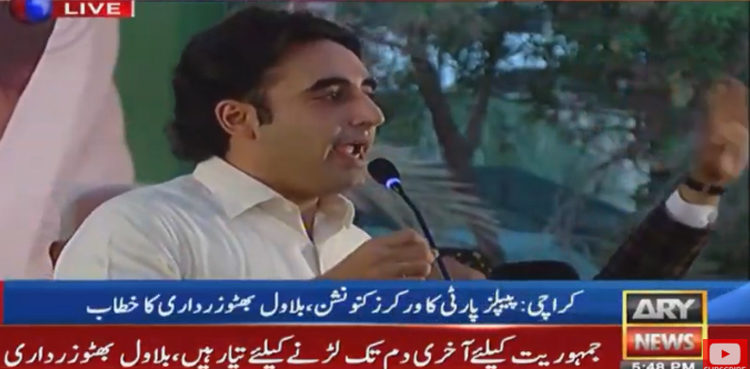
Pakistan Peoples Party (PPP) Chairman Bilawal Bhutto Zardari on Friday vowed to fight for democracy till his last breath, ARY News reported.
Addressing a workers convention in Karachi, Bilawal said that democracy is under threat and conspiracies are being hatched to deprive people of their rights in the country.
The PPP chairman said, “Democracy is our revenge.”
Speaking on the occasion, Bilawal Bhutto Zardari announced that they will observe Benazir Bhutto’s death anniversary this time in Rawalpindi’s Liaquat Bagh, where she was martyred on Dec 27, 2007.
He said that they will kick off a new movement and present their agenda for the masses on 27th of December. The PPP leader said that conspiracies were being hatched against PPP and the Sindh government.
Bilawal urged the masses to support him as they had supported his mother.
Earlier on July 25, Pakistan Peoples Party (PPP) Chairman Bilawal Bhutto Zardari had said that  Democracy was under threat.
Addressing a public gathering at Bagh-e-Jinnah Ground in Karachi today, he had said: “No political party alone can find a solution to the ills plaguing the country at present.”
The public meeting was organised in connection with black day observed by opposition parties on the first anniversary of the 2018 general elections.

Bilawal Bhutto kicks off three-day anti-polio campaign in Balochistan

PPP chairperson Bilawal Bhutto Zardari kicked off on Sunday a three-day anti-polio campaign in Balochistan by administering polio drops to children in Quetta.

The anti-polio campaign in the province will formally begin tomorrow and at least 400,000 children will be administered polio vaccines during the three-day drive.
Earlier, addressing a rally in Quetta, Bilawal said that the party will observe former prime minister Benazir Bhutto’s death anniversary in Rawalpindi’s Liaquat Bagh.

The PPP leader criticized the federal government for “attacking” the PPP government in Sindh and said that the 18th constitutional amendment was under attack in the country by the “selected” government.

The rulers are not elected but selected, he told his supporters and added that the government is putting the burden of its incompetence on the people.
Billionaires were given bailout while houses were snatched from the poor in Prime Minister Imran Khan’s government, Bilawal said.

#Pakistan #PPP - Masses are the real source of power: Bilawal Bhutto

Pakistan Peoples’ Party (PPP) chairman Bilawal Bhutto Zardari on Sunday said masses are the real source of power and his party cannot tolerate injustice to the people.
Addressing party’s workers convention in Quetta on Sunday, he said that the Bhutto’s third generation is facing trial, adding that former president and party co-chairman Asif Ali Zardari will never compromise on his principles.
The PPP chairman said that his father and former president couldn’t be pressurized even after he wasn’t provided medical facilities for six months, adding that even his aunt Faryal Talpur was kept in Adiala Jail.
Bilawal went on to say that trial of Sindh’s cases is being conducted in Rawalpindi, adding that the rulers think they can silent their voice through injustice.
“We will make people’s government with the support of general public,” he said and added his party would give a strong message to the world the people are the real source of power and we do not accept the selected government.

Saturday, December 14, 2019

Video Report - #YellowVest - Yellow Vests hold protest in wake of national strike in Paris

Video Report - The rise of Vladimir Putin | DW Documentary

Capitalism is losing appeal to Chinese

As China has stood on a higher level of development, it is having a different way of dealing with, and understanding Western countries. It's fair to say the Chinese people now have the most profound and objective understanding of capitalism.
The US is representative of capitalism. Many Chinese used to adore the US. But with China and the US increasingly having interdependent interests, the Chinese people have begun to understand the US from a new perspective.
We find that the US, though powerful, has many problems and made many mistakes. The US House of Representatives is moving to impeach the president.
If it were long ago, many Chinese would have regarded it a good example of checks and balances. But now, more people believe the US is messing with itself again.
The two camps that support and oppose the impeachment fall along Democrat and Republican lines. US government shutdowns caused by ceaseless partisan squabbling in recent years have exposed the inefficiency of the American system.
Documents disclosed by US media recently reveal that the US government has been deceiving the public about the war in Afghanistan. Although it realized the war had become unwinnable, it kept saying the US was making progress, extending the war to 18 years at a cost of $2 trillion and resulting in mass casualties, without bringing any benefits to the US. The US democratic system has failed to prevent the country from making such a blunder, but has made it quite difficult to fix.
The recklessness, impulse and irrationality of US policies are particularly shown in the country's dealings with China. The US has failed to base their policies on facts and has misjudged China. Many of its practices are not in line with US long-term interests.
Let's have a look at other capitalist countries around the world. India, whose situation was similar to that of China decades ago, has fallen behind China in development. A majority of the developing countries in the world have adopted a political system of capitalism, but only a few have achieved rapid development and good governance. Most have a lackluster performance, and some have even slipped into turmoil.All these at least tell the Chinese that capitalism is not a panacea. The economic and social achievements of Western countries cannot prove the institutional advantages of capitalism. And many problems appearing in developed countries have reflected the capitalist system's institutional flaws. The image of the capitalist system now is the most complex, and it's constantly declining.The Hong Kong unrest has taught the Chinese mainland society a "political lesson." In the originally prosperous Hong Kong society, huge systematic loopholes were lurking. As a result, the city is unable to withstand turmoil, and its rule of law has been ruined easily.We are living in a highly ideological world. A political system is a basic structure developed by each country. But the competition between nations has highlighted the negation of each other's political systems as a means of struggle. In the past few decades, China's high degree of opening-up has expanded into the ideological field. The country has been unswervingly following the path of socialism with Chinese characteristics while learning from the world.
Through opening-up, we have had a close look at capitalism in all its forms and have observed various problems. Meantime, the US and other Western countries have been out of touch with reality, blindly believing in the "end of history" and demonizing China politically.
What matters to a country most is perhaps its ability to reform. No country's governance system is perfect. With the changes of the times, continuous reform is the guarantee of a country's progress.
In terms of reform capacity, the Western capitalist countries, such as the US, are far from role models to the world.
https://www.globaltimes.cn/content/1173349.shtml

Commentary: Xinjiang's human rights progress an indisputable fact

The progress made in the field of human rights protection in northwest China's Xinjiang Uygur Autonomous Region is a hard fact that cannot be disputed. Human rights include first and foremost the rights to life, subsistence and development. For Xinjiang, a vast borderland of challenging terrain, much has been done to develop the local economy, thus granting the people a better life. Xinjiang's economy has expanded 80 fold since the autonomous region was established in 1955. With a better economy, people's living standards improved. Since 2014, nearly 3 million people have shaken off poverty in Xinjiang. Today, Xinjiang is peaceful and moving fast toward prosperity. But the current peace did not come easily. It was hard-earned. Until only a few years ago, Xinjiang often fell victim to violent terrorist attacks which killed many innocent people. It was precisely the regional government's decisive counter-terrorism measures including the establishment of vocational education and training centers that turned the situation around.
Without prevailing peace, basic human rights to life, health and development cannot be guaranteed.
It is a shame that the U.S. House of Representatives, ignoring this progress, passed the so-called "Uyghur Human Rights Policy Act of 2019" last week, smearing the human rights situation in Xinjiang.
Xinjiang's preventive counter-terrorism and de-radicalization measures so far have proven effective in protecting the human rights of the 25 million people in the region.
The measures put into practice the call of the UN Plan of Action to Prevent Violent Extremism, which points out that poverty, unemployment, a lack of job opportunities are all conditions conducive to violent extremism and the process of radicalization involves cynical distortion and misuse of religious beliefs, among other factors, by violent extremist groups. The document further recommends providing individuals with educational and economic opportunities to encourage them to leave violent extremist groups.
Since the end of 2018, over 1,000 representatives have visited Xinjiang in more than 70 groups, including officials from various countries, regions and international organizations, and members of the press, religious leaders and academic figures. They have hailed the valuable experience of Xinjiang in counter-terrorism and de-radicalization.
In October, at the Third Committee session of the 74th United Nations General Assembly, more than 60 countries commended in their statements the tremendous human rights progress achieved in Xinjiang.
It is time for the United States to recognize China's effective measures instead of discrediting them. After all, human rights are not a "card" for Washington to selectively play against other countries to serve its own interests.
http://en.people.cn/n3/2019/1211/c90000-9639549.html

Pity that reference to human rights sometimes serves as basis to interfere in other states’ domestic issues – Hungarian FM to RT

The EU’s policy regarding sanctions and restrictive measures is sometimes marked with double standards, Hungarian FM Peter Szijjarto told RT, stressing that even an issue of human rights can be seen differently inside the bloc. Budapest is committed to upholding human rights, the Hungarian foreign minister said, adding that unfortunately, sometimes a reference to this matter serves as a basis to persecute some political interest.
Sometimes the reference to human rights serves as a basis to interfere into domestic issues of other countries on an ideological basis, on a political basis, without any good reason.
Szijjarto noted that even an understanding of what human rights means, raises a debate. Migration is a huge challenge, he states. Szijjarto doesn’t agree with other European players that migration is a fundamental human right. He says that the fundamental human right is to have a “safe and secure” life at home, and if this right is violated, everybody is allowed to go to a safe country.
Migration cannot be the reason to violate borders between safe countries.
In this case, it’s important to speak about human rights “universally,” Szijjarto said, because for example, “liberal foreign ministers” have often been dismissive whenever he raises the issue of protecting Christian communities.
“Mutual respect” and “common sense” is very important when it comes to debates among such different EU members, he pointed out.
https://www.rt.com/news/475885-peter-szijjarto-hungary-sanctions-russia/

Comedy Video - Fluffy and Trevor Noah Once Toured Together | Gabriel Iglesias

Comedy Video - Greta Thunberg Becomes TIME’s Person of the Year | The Daily Show with Trevor Noah

Comedy Video - #Monologue #LSSC #Colbert Trump Pays $2 Million To Charity (By Court Order)

#NYT Editorial Board - Impeach Donald Trump

IN THE END, the story told by the two articles of impeachment approved on Friday morning by the House Judiciary Committee is short, simple and damning: President Donald Trump abused the power of his office by strong-arming Ukraine, a vulnerable ally, holding up hundreds of millions of dollars in military aid until it agreed to help him influence the 2020 election by digging up dirt on a political rival.

When caught in the act, he rejected the very idea that a president could be required by Congress to explain and justify his actions, showing “unprecedented, categorical and indiscriminate defiance” in the face of multiple subpoenas. He made it impossible for Congress to carry out fully its constitutionally mandated oversight role, and, in doing so, he violated the separation of powers, a safeguard of the American republic.
To quote from the articles, “President Trump, by such conduct, has demonstrated that he will remain a threat to national security and the Constitution if allowed to remain in office, and has acted in a manner grossly incompatible with self-governance and the rule of law.”
The case now moves to the full House of Representatives, which on Wednesday will decide, for just the third time in the nation’s history, whether to impeach a president.
To resist the pull of partisanship, Republicans and Democrats alike ought to ask themselves the same question: Would they put up with a Democratic president using the power of the White House this way? Then they should consider the facts, the architecture and aspirations of the Constitution and the call of history. In that light, there can be only one responsible judgment: to cast a vote to impeach, to send a message not only to this president but to future ones.
By stonewalling as no previous president has, Donald Trump has left Congress with no choice but to press ahead to a Senate trial. The president insists he is innocent of any wrongdoing, yet he refuses to release any administration documents or allow any administration officials to testify — though, if his assertions are in fact true, those officials would presumably exonerate him. He refused to present any defense before the House whatsoever, asserting a form of monarchical immunity that Congress cannot let stand.
It’s regrettable that the House moved as fast as it did, without working further through the courts and through other means to hear from numerous crucial witnesses. But Democratic leaders have a point when they say they can’t afford to wait, given the looming electoral deadline and Mr. Trump’s pattern of soliciting foreign assistance for his campaigns. Even after his effort to extract help from Ukraine was revealed, the president publicly called on China to investigate his rival. Asked as recently as October what he hoped the Ukrainians would do in response to his infamous July 25 call with their president, Mr. Trump declared: “Well, I would think that, if they were honest about it, they’d start a major investigation into the Bidens. It’s a very simple answer.”
BARRING THE PERSUASIVE DEFENSE that Mr. Trump has so far declined even to attempt, that simple answer sounds like a textbook example of an impeachable offense, as the nation’s framers envisioned it.
A president “might pervert his administration into a scheme of peculation or oppression,” James Madison said of the need for an impeachment clause. “He might betray his trust to foreign powers.”
Madison and his fellow framers understood that elections — which, under normal circumstances, are the essence of democratic self-government — could not serve their purpose if a president was determined to cheat to win.As the constitutional scholar Noah Feldman testified before the Judiciary Committee last week, “Without impeachment, the president would have been an elected monarch. With impeachment, the president was bound to the rule of law.”At the same time, the framers were well aware of the dangers inherent in impeachment. That’s why they made it a two-step process: First is the House’s vote on impeachment, which is akin to an indictment and requires only a majority to pass. Second is a trial in the Senate, which decides the president’s ultimate fate, and thus has a much higher bar to clear — two-thirds of senators must vote to convict and remove the president from office.
So far, Republicans legislators have shown little sign of treating this constitutional process with the seriousness it demands.
By stonewalling as no previous president has, Donald Trump has left Congress with no choice but to press ahead to a Senate trial. Instead, they have been working overtime to abet the president’s wrongdoing. They have spread toxic misinformation and conspiracy theories to try to justify his actions and raged about the unfairness of the inquiry, complaining that Democrats have been trying to impeach Mr. Trump since he took office.No doubt some Democrats were too eager to resort to impeachment before it became unavoidable. Mr. Trump has been committing arguably impeachable offenses since the moment he entered the Oval Office, including his acceptance of foreign money at his many businesses; his violations of campaign-finance law in paying hush money to a woman who claimed to have had a sexual affair with him; and, of course, his obstructions of justice in the Russia investigation, which were documented extensively by the special counsel, Robert Mueller.Democrats could have pursued impeachment in any or all of these cases, but for various reasons decided not to. That changed in September, when a whistle-blower’s complaint, initially suppressed by the Justice Department, revealed the outline of Mr. Trump’s Ukraine scheme. That made it impossible to ignore the president’s lawlessness because it sounded an alarm that he was seeking to subvert the next election, depriving the voters of their right to check his behavior.
The Republicans’ most common defenses of Mr. Trump’s behavior fall flat in the face of the evidence.
There is, above all, the summary of the July 25 phone call between Mr. Trump and Volodymyr Zelensky, the Ukrainian president. Mr. Trump still insists that summary exonerates him. It doesn’t — which is why White House officials promptly locked it in a special computer system.
Then there is the sworn testimony of multiple government officials, including several appointed by Mr. Trump himself, all of whom confirmed the essential story line: For all the recent claims about his piety regarding Ukrainian corruption, Mr. Trump did not “give a shit about Ukraine.” He only wanted the “deliverable” — the announcement of an investigation into the Bidens, and also into a debunked theory that Ukraine interfered in the 2016 election.
The argument that Mr. Trump cared about anything other than hurting Joe Biden and helping himself is undercut by several facts. Even though calling on the Ukrainians to fight corruption was part of his prepared talking points, he never mentioned the subject in his calls with Mr. Zelensky; he also didn’t hold up the military aid in 2017 or 2018, even though everyone knew about Hunter Biden’s Ukraine connection at the time. (What changed this year? Joe Biden emerged as his leading Democratic opponent.) By the time Mr. Trump intervened to block the money for Ukraine, the Defense Department had already certified that Ukraine had made enough progress fighting corruption to qualify for this year’s funds.
Republicans and Democrats ought to ask themselves the same question: Would they put up with a Democratic president using the power of the White House this way? Without any substantive defense of Mr. Trump’s behavior, several Republicans have taken to arguing that he committed no actual crime, and so can’t be impeached for “high crimes and misdemeanors.” Putting aside a strong case that Mr. Trump has, in fact, broken at least one law, this isn’t how impeachment works. “High crimes” refers to severe violations of the public trust by a high-ranking official, not literal crimes. A president can commit a technical crime that doesn’t violate the public trust (say, jaywalking), and he can commit an impeachable offense that is found nowhere in the federal criminal code (like abuse of power).
Republicans’ sole remaining argument is: “So what? It wasn’t that big a deal.” Or, as acting White House chief of staff, Mick Mulvaney said in October, “Get over it.” This stance at least has the virtue of acknowledging the president’s vice, but that doesn’t make it O.K.
ASSUMING MR. TRUMP IS IMPEACHED, the case will go to the Senate, where he will have the chance — on far more friendly territory — to mount the defense he refused to make to the House. Rather than withholding key witnesses, he should be demanding sworn appearances by people like Mike Pompeo, the secretary of state, and John Bolton, the former national security adviser.
As recently as a few weeks ago, some Republicans seemed to want to get to the bottom of things. Even Trump’s footman, Senator Lindsey Graham, said, “If you could show me that, you know, Trump actually was engaging in a quid pro quo, outside the phone call, that would be very disturbing.”The time for such expressions of public spirit has, apparently, passed. “I’ve written the whole process off,” Mr. Graham said during the impeachment hearings. “I think this is a bunch of B.S.”Mitch McConnell, the Senate majority leader, says there will be “no difference between the president’s position and our position in how to handle this,” as he told Sean Hannity of Fox last Thursday. Before the House had cast a single vote on impeachment, Mr. McConnell said there was “no chance” the Senate would vote to convict.
For now, that leaves the defense of the Constitution, and the Republic, to the House of Representatives.

#GretaThunberg - Why is the president of the United States cyberbullying a 16-year-old girl?


             Nancy Jo Sales 
What it says to girls is: no matter what you do, no matter how much you achieve, powerful men will try to cut you down.
 The morning after election day 2016, I got a call from a girls’ school in New York where I was scheduled to speak. “We have to reschedule,” said a representative from the school. “The girls are too upset.”
Girls across the country were upset when Trump was elected, but not simply on partisan grounds. They were upset because Donald Trump was a bully, a cyberbully, and he bullied girls and young women like them – women like the former Miss Universe Alicia Machado, who revealed that, when she was 19, he called her “Miss Piggy,” a dig at her weight.
In a New York Times poll in the run-up to the election, nearly half of girls aged 14 to 17 said that Trump’s comments about women affected the way they think about their bodies. Only 15% of girls said they would vote for him if they could.
And now Trump has a new target for his bullying: Greta Thunberg, the 16-year-old environmental activist. Thunberg seems to be really making Trump upset, without meaning to. She doesn’t fit into any of his ideas of how girls are supposed to act. She isn’t trying to be a contestant in one of his beauty pageants. She’s too busy trying to get world leaders like him to do something about the climate crisis. She’s too occupied by giving speeches at places like the UN – where Trump was laughed at, when he gave a speech in 2018, and Thunberg was met with respect, despite slamming the entire body for “misleading” the public with inadequate emission-reduction pledges.
In the last couple of weeks, while Trump was seemingly mocked by his peers at the Nato summit in London, and impeachment hearings against him began, Thunberg was named Time’s person of the year, an honor Trump reportedly wanted. And so he did what he always seems to do, on Twitter, when he’s upset: he lashed out by accusing the person upsetting him of the very things he’s feeling, or is guilty of.
“Greta must work on her Anger Management problem, then go to a good old fashioned movie with a friend!” Trump tweeted on Thursday. “Chill Greta, Chill!”
Poor Trump. This tweet didn’t sound very chill. And Thunberg knew it. Like the majority of girls growing up in the digital age, she has been cyberbullied before – by Trump himself, who, after her celebrated speech before the UN General Assembly, sarcastically tweeted, “She seems like a very happy young girl looking forward to a bright and wonderful future. So nice to see!”
Both times Trump has tweeted about her, Thunberg’s responses have been jocular, and sarcastic in kind. This week, she changed her Twitter bio to: “A teenager working on her anger management problem. Currently chilling and watching a good old fashioned movie with a friend.”
In her handling of being cyberbullied by the president of the United States, at age 16, Thunberg has become an inspiration for girls two times over – first as a climate activist, then as a social media ninja.
But that doesn’t mean that Trump’s cyberbullying of Thunberg is any less despicable, or dangerous. What it says to girls all over the world is: no matter what you do, no matter how much you achieve, powerful men can and will try to cut you down.
This message is depressing, scary and not without potentially dire consequences. It’s a message that has contributed to a precipitous rise in the suicide rate among girls. It’s a message that has contributed to rising anxiety and depression among girls and young women. It’s a message that Trump’s wife, Melania, is supposed to be combatting, with her campaign against cyberbullying.
But girls don’t need Melania Trump to be their role model in fighting against online harassment. They have each other, and they have Thunberg.
  • Nancy Jo Sales is a writer at Vanity Fair and the author of American Girls: Social Media and the Secret Lives of Teenagers

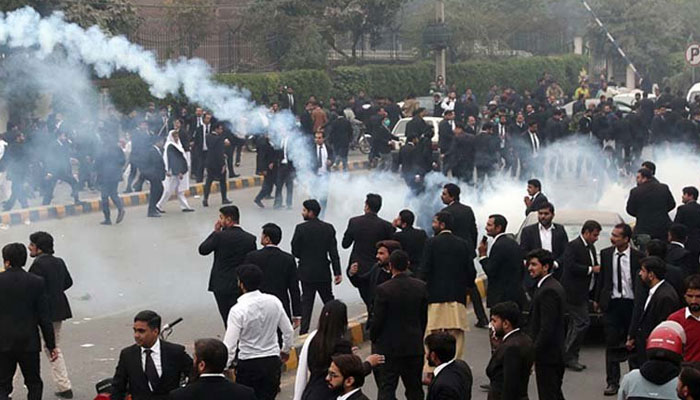
#LawyersofPakistan #LawyersAttackedPIC - Are we gangsters?

Babar Sattar
I must start this week with an unconditional apology to victims of the Punjab Institute of Cardiology, to patients and their families who must have felt terror in their hearts as a mob of lawyers pillaged a place people visit in desperate times to seek life; to students aspiring to become lawyers in the belief that we are purveyors of rule of law; and to fellow citizens who might have thought that the considered response of our fraternity after the shameful event would be one of remorse and introspection and not defence of the indefensible.
I owe this apology as a lawyer on behalf of many in the legal fraternity who are as pained and shocked by the attack on PIC as the rest of this country and have been disappointed by the response of our elected councils and associations that have failed to issue one. We seek inspiration from the fact that this country was founded by a lawyer who viewed constitutionalism and the law as a source of protection for ordinary people and those practising the law as facilitators of the rights of others and not apologists for mobocracy. But we have let ourselves down.
We take pride in the fact that all ideological movements in Pakistan have gained from the support of members of our community, which has been at the forefront of opposing dictatorships, fighting against autocratic tendencies of rulers and urging expansion of the fundamental rights of citizens. When we fought to restore judges, we were fighting for the independence of the judiciary, and not for a fiefdom for lawyers. And what a fall from grace and descent into tribalism it’s been since.
Hobbes had called reason the soul of law. It pains one to see that those trained in the practice of law (which is meant to be rooted in morality), and having honed the skills to distinguish right from wrong, are being perceived by our society as a mafia. Our job is to wade through legal texts to see what the law says and how it ought to be read to protect the rightful interests of our clients. Yet, when it comes to personal interests, we act in a manner devoid of what the law says or notions of right and wrong. This contradiction between the law and our actions is mind-boggling.
But is it? We are part of a society where might is right is the Grundnorm. Should we, the lawyers, be expected to rise above the fray and fight for a move from rule of might to rule of law? Yes, in an ideal world. But even in the real world, the tragic fact in the PIC incident is that where everyone in society is able to tell right from wrong, our self-interest as a fraternity is blinding us from doing so. What is unintelligent is that in being obtuse enough to not acknowledge the gravity of the anger this incident has generated, our tribalism is now hurting our self-interest.
Since the lawyers’ movement, our decline has been steady. That was a legitimate movement to protest the actions of the state. The right to protest is a legitimate right, but its exercise must be balanced such that it doesn’t encroach upon the fundamental rights of others. Calls for protest are calls to the morality and sense of fairness of fellow beings. The distinction between peaceful protest against misuse of state authority on the one hand and threat of coercion and violence to protect one’s turf on the other is thus clear.
The PIC attack was part of a gang war between young doctors and lawyers. (Doctors aren’t blameless here, but no matter what the provocation, the lawyers’ response was unjustifiable.) The mistreatment of a lawyer by doctors or their minions hurt the lawyers’ egos and the video with a young doctor seen pouring scorn on lawyers in characteristic Lahori style added fuel to fire. Some of our fellows in Lahore successfully provoked others into a state of frenzy on the basis that the honour of the lawyers’ tribe had been besmirched and revenge was called for.The attack on the PIC was premeditated. The lawyers degenerated into a mob. But in picking the target they forgot that even gang wars have unwritten rules, such as not making a hospital the venue of the fight. What the lawyers’ did was a long time coming, after previous attacks on almost everyone (clients, police, media, judges etc) produced no adverse consequences. The Sher Zaman case where a bar president undermined the authority of high judicial offices, with the then CJP Saqib Nisar coming to our tribe’s rescue, was a precursor to something uglier.So the PIC disaster has been in the making for a while. But what is horrifying is the take of our bar leadership in the aftermath. Most fraternities driven by a sense of loyalty and esprit de corps have a common sense rule: they will stand with each member till such time that they are caught with pants down, in which case the collective interest of the fraternity in its own goodwill and survival will trump the interest of individual members. By refusing to side either with principle or this common sense rule, our bar leadership has scored a self-goal.
Our bar councils could have issued an apology, offered to assist in ensuring that the law must take its course against all involved in the crime, and expressed resolve to use its authority under the Legal Practitioners and Bar Councils Act to also take disciplinary action against the ruffians amongst us. Whether driven by principle or self-interest, such response would have provided face-saving and left the bar with some leverage in how things unfold. But in its response the bar leadership seemed driven by the same tribal mindset that produced the PIC incident.
The Punjab Bar Council issued a strike call even as the horrors of the PIC attack were unfolding on TV screens. In trying to enforce strikes the next morning, office-holders of bar associations policed courts, forced fellow lawyers not to attend hearings and threatened them with dire consequences if they did. In doing so, they defied the other common sense rule fraternities abide by: when under attack from outside, come up with a common denominator to help close ranks as opposed to provoking infighting.
The Pakistan Bar Council and provincial bar councils are statutory bodies. They exercise authority vested in them under the law. It remains to be determined if they are vested with authority: (i) to call strikes against court proceedings that fetter citizens’ right of access to justice; (ii) to enforce strikes by physically forcing lawyers to not appeal before courts and pursue cases of clients that they hold briefs for; and (iii) to initiate legal proceedings against lawyers who refuse to abide by a strike call in breach of obligations under the legal practitioners’ code.
Rule of law and rule of force can’t go together. We can either be armed with legal arguments and principles or we can be backed by mob force and threats of use of force. It is time for the legal fraternity to make that choice. If we pick mob force as our instrument of choice, we must remember that, devoid of moral authority, whoever wields maximum brute force rules the roost. As lawyers, we have historically fought authoritarianism wherein monopoly over force has been used to usurp state authority and determine the manner of its exercise.
It is not too late for our bar councils and bar associations to engage in damage control. As officers of the law, our job is to engage in dispute resolution and not dispute creation. It is completely legitimate for the Pakistan Bar Council to demand that any lawyers accused in the PIC incident must be dealt with in accordance with the law, must be afforded due process and must not be mistreated or tortured in custody. But to state that we will shut down courts unless our colleagues are released and members of the rival gang are arrested smacks of tribalism.
We don’t stand for rule of law if we seek exceptionalism when it comes to us and our own. And if our current bar leadership is unwilling to comprehend the scope of this challenge and the need for introspection and self-accountability, there is a need for those in our fraternity who believe in rule of law but don’t engage with bar politics to step out of their cocoons. The PIC incident has been an ugly shock. It requires us to take a position on who we are and what we stand for as lawyers.
https://www.thenews.com.pk/print/583045-are-we-gangsters