
Tuesday, November 26, 2019
#Pakistan - #PPP - Asif Ali Zardari will neither bow nor run away: Bilawal Bhutto
 Chairman Pakistan People’s Party (PPP) Bilawal Bhutto Zardari Monday said despite his illness Zardari stood firm on his principled stance and he will not bow come hell or high water. “We are proud of our leader, who neither bows, nor compromises, nor runs away,” he said while talking to newsmen after visiting the Pakistan Institute of Medical Sciences (PIMS) to inquire after his father Asif Ali Zardari.
He said the cases against Asif Zardari were false and now the Supreme Court had taken up his petition against the trial of his case in Rawalpindi instead of Sindh. He said the apex court will have to decide whether the case be tried in Sindh or Rawalpindi adding that they expected justice from the court.
Bilawal said it was being heard that the PTI government was trying to save former military dictator General (R) Pervez Musharraf in the high-treason case but the nation was looking towards the judiciary.
“We are also looking that an absconder and a traitor is being tried in court and our chief justice has said that the case verdict is expected soon. Now it is being heard that the Imran Khan government is striving to protect this absconder, traitor and dictator,” he said. Bilawal said he was positive that the judiciary will pass through this test now.
“Pervaiz Musharraf's trial and the verdict will give the same message, which the chief justice has given that these courts have announced verdicts only against the former prime ministers. I hope a verdict is expected against a dictator and as a result the Pakistani democracy and its journey will be strengthened,” he said.
Asked whether the JUI-F chief Fazlur Rehman had taken them into confidence on his statement about a change in December and elections in three months, Bilawal said Fazl had not shared any details in this regard.
As for the issue of any deadline, deal or elections after three months, Fazl has not shared with us. We hope that it will also be shared with us tomorrow,” he said. To another question, he said Zardari was not ready to apply for bail but the party was requesting him to go for it on merit.
“After the judgment in Maryam Nawaz case, I believe everyone who is imprisoned without allegation should also get bail. We argue with Zardari sahib on these points but his stance is that all these cases are false, fabricated and he will face them himself and will not bow before anyone,” he said.Asked whether only political issues will be discussed in the APC or those being faced by the public will also come under discussion, he said in every APC the same points were discussed.
“As far as the PPP is concerned, from the first day till now, we have been talking about attacks on the people’s democratic rights, human rights and economic rights. These are the basic components of the PPP manifesto and we don’t think that this country can run like this,” he said.
He said the PPP always believed that if the common man received relief from taxes and benefitted from subsidies and had money in his pocket, then that money will circulate in our economy and the whole country's economy will prosper.
He said the PPP believe that when the government announced a tax amnesty scheme, which was for billionaires, then those billionaires keep that tax relief in their bank accounts, but for the farmers, laborers and students there was no tax amnesty scheme.
“This is injustice. This is not one but two Pakistans. The PPP always thinks about the people and will continue to work for them,” he said. Asked about Nawaz Sharif’s departure to London for treatment, he said Imran Khan himself wanted him to go abroad to save his government and politics. He said Nawaz Sharif got ill and Imran Khan got an opportunity and he sent him abroad. “We believe treatment is everyone's right but Imran Khan should clearly accept, as the chief justice has said, that he did all that.
https://www.thenews.com.pk/print/574417-zardari-will-neither-bow-nor-run-away-bilawal
Interview - Sher Mohammad Bugti - #Pakistan has been playing dubious role in war against terrorism
By Namrata Biji Ahuja
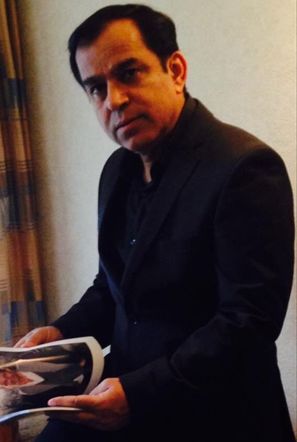 Sher Mohammad Bugti, the central spokesman of Baloch Republican Party and a close aide of BRP president Nawab Brahumdagh Bugti, has horrific memories of his family members being tortured and killed in secret operations launched by the Pakistan army in Balochistan. His brother, Shah Mohammad Bugti was the President of BRP in Dera Bugti district when he was abducted on December 5, 2010 by Pakistani secret agencies and paramilitary forces and after two days his bullet riddled and torture marked body was found. Sher Mohammad's eldest son Haq Nawaz Bugti was also killed by the Pakistan Army in Noshki in Balochistan. Struggling against complete media censorship by Pakistan's ISI, Sher Mohammad has recently taken the issue of human rights violations in Balochistan to various international forums including the United Nations' Human Rights Council(UNHRC). In an exclusive interview to THE WEEK, Sher Mohammad says there is a complete media censorship to even question, let alone criticise, the policies of the Pakistani military which controls all the matters of the country from behind the scenes. Sher Mohammad Bugti is currently in exile in Geneva, SwitzerlandExcerpts from an exclusive interview:
'The state of media freedom is at its worst in Pakistan today than ever'.
Sher Mohammad Bugti, the central spokesman of Baloch Republican Party and a close aide of BRP president Nawab Brahumdagh Bugti, has horrific memories of his family members being tortured and killed in secret operations launched by the Pakistan army in Balochistan. His brother, Shah Mohammad Bugti was the President of BRP in Dera Bugti district when he was abducted on December 5, 2010 by Pakistani secret agencies and paramilitary forces and after two days his bullet riddled and torture marked body was found. Sher Mohammad's eldest son Haq Nawaz Bugti was also killed by the Pakistan Army in Noshki in Balochistan. Struggling against complete media censorship by Pakistan's ISI, Sher Mohammad has recently taken the issue of human rights violations in Balochistan to various international forums including the United Nations' Human Rights Council(UNHRC). In an exclusive interview to THE WEEK, Sher Mohammad says there is a complete media censorship to even question, let alone criticise, the policies of the Pakistani military which controls all the matters of the country from behind the scenes. Sher Mohammad Bugti is currently in exile in Geneva, SwitzerlandExcerpts from an exclusive interview:
Why do you think the Baloch Movement has not got visibility in the International media as other movements?There are so many factors in play as far as coverage by international media and action by the world community for a movement like the Baloch struggle is considered. All countries raise their voices and become proactive in supporting or denying such struggles based on their own interests.
Unlike the other such movements where more than one country has stakes & interests and therefore internationalise the issue to benefit from the situation, the Baloch nation is fairly a case between the oppressor Pakistani state and the oppressed Baloch people.
Besides, Pakistan has been playing dubious role in war against terrorism where it has been supporting and exporting terrorism on one hand and pretending to be an ally of the western world on the other . This has helped Pakistan to keep the struggle in Balochistan away from world eyes. Despite all this, the struggle and sacrifices of the Baloch people have gained international attention recently and more people are talking about and supporting the Baloch nation than anytime in the past.
Unlike the other such movements where more than one country has stakes & interests and therefore internationalise the issue to benefit from the situation, the Baloch nation is fairly a case between the oppressor Pakistani state and the oppressed Baloch people.
Besides, Pakistan has been playing dubious role in war against terrorism where it has been supporting and exporting terrorism on one hand and pretending to be an ally of the western world on the other . This has helped Pakistan to keep the struggle in Balochistan away from world eyes. Despite all this, the struggle and sacrifices of the Baloch people have gained international attention recently and more people are talking about and supporting the Baloch nation than anytime in the past.
Can Balochistan afford to sustain itself as an independent nation?
The nations do not base their struggle for their self-determination and rights on likelihoods of getting the objective and sustaining their rights. Baloch as a nation has all the rights that any nation in the world has and it should be given those rights.
As far as achieving those objectives and sustaining them is considered, nations have faced more difficult situations than being in a 'conflict zone' neighbourhood regionally. Nations continue to fight for their national identity and its protection in spite of all the challenges.
What is the state of media freedom in Pakistan ?
The state of media freedom is at its worst in Pakistan today than ever. It was limited to Balochistan before where journalists were abducted, tortured and killed for reporting the cases of human rights abuse by the Pakistani military there but it has been expanded to entire Pakistan.
Any journalist, newspaper or news channel that does not toe the line of Pakistan Army's media wing, the ISPR, is silenced by all means possible. There is a complete media censorship to even question, let alone criticise, the policies of the Pakistani military which controls all the matters of the country from behind the scenes.
Have you taken up the human rights violations of Baloch people with the UNHCR?We have been highlighting the issue of human rights violations in Balochistan on all forums internationally, including the United Nations' Human Rights Council. We have presented in detail the cases of gross HR violations including military operations on civilians, enforced disappearances and extrajudicial killings by the Pakistan Army in Balochistan on these forums.
The nations do not base their struggle for their self-determination and rights on likelihoods of getting the objective and sustaining their rights. Baloch as a nation has all the rights that any nation in the world has and it should be given those rights.
As far as achieving those objectives and sustaining them is considered, nations have faced more difficult situations than being in a 'conflict zone' neighbourhood regionally. Nations continue to fight for their national identity and its protection in spite of all the challenges.
What is the state of media freedom in Pakistan ?
The state of media freedom is at its worst in Pakistan today than ever. It was limited to Balochistan before where journalists were abducted, tortured and killed for reporting the cases of human rights abuse by the Pakistani military there but it has been expanded to entire Pakistan.
Any journalist, newspaper or news channel that does not toe the line of Pakistan Army's media wing, the ISPR, is silenced by all means possible. There is a complete media censorship to even question, let alone criticise, the policies of the Pakistani military which controls all the matters of the country from behind the scenes.
Have you taken up the human rights violations of Baloch people with the UNHCR?We have been highlighting the issue of human rights violations in Balochistan on all forums internationally, including the United Nations' Human Rights Council. We have presented in detail the cases of gross HR violations including military operations on civilians, enforced disappearances and extrajudicial killings by the Pakistan Army in Balochistan on these forums.
How do you see the political and economic future of Pakistan in context of the present crisis ?
With the current state of affairs concerning Pakistan, I do not see the future of Pakistan getting any better. Religious and ethnic minorities in Pakistan are facing worst abuses, media is under complete control of the army as a result of censorship.
Political and democratic voices of the countries are being targeted and put behind bars or silenced based on false charges. Judiciary is blackmailed to the extent that has become a tool at the hands of the Army against the democratic voices. Internationally, the country is completely isolated with no friends. Financial crisis are so big that the country has virtually handed over the controls of state affairs to the IMF. The FATF is considering to move Pakistan from grey list to black list as a result of the country's policy of supporting and exporting terrorism to the entire world. I don't think any country can survive for long in such circumstances.
With the current state of affairs concerning Pakistan, I do not see the future of Pakistan getting any better. Religious and ethnic minorities in Pakistan are facing worst abuses, media is under complete control of the army as a result of censorship.
Political and democratic voices of the countries are being targeted and put behind bars or silenced based on false charges. Judiciary is blackmailed to the extent that has become a tool at the hands of the Army against the democratic voices. Internationally, the country is completely isolated with no friends. Financial crisis are so big that the country has virtually handed over the controls of state affairs to the IMF. The FATF is considering to move Pakistan from grey list to black list as a result of the country's policy of supporting and exporting terrorism to the entire world. I don't think any country can survive for long in such circumstances.
#Pakistan: Bajwa, CPEC, and ‘acceptable opinion’
By IMAD ZAFARThe famous American scholar Noam Chomsky once said, “The smart way to keep people passive and obedient is to strictly limit the spectrum of acceptable opinion, but allow very lively debate within that spectrum.” It seems Pakistan’s current hybrid regime controlled by the invisible forces is doing the same thing. Opinions are made acceptable and unacceptable on the basis of the needs of the regime, and narratives have been built on misleading and distorted facts.
This has muzzled the already weakened press and freedom of expression and as a result, media and intellectuals instead of debating the real challenges faced by the country are only discussing the imaginary corruption of the opposition parties’ leaders. Such is the poor state of affairs that when on Tuesday the Supreme Court of Pakistan suspended the notification of the extension of General Qamar Bajwa’s tenure as Chief of Army Staff, the television channels were showing different news and the government acted as if nothing had happened.
The Supreme Court raised objections on the procedure of Prime Minister Imran Khan granting an extension to the army chief without the approval of all the cabinet members, and it also said the extension notification came from Prime Minister’s Office instead of the President’s Office.
Another objection was that if an extension is granted to the army chief on the basis of the regional situation, then every army officer would receive a reappointment.
It seems that Chief Justice Asif Saeed Khosa is not happy with the way the government and the military establishment have tried to influence the courts to get former dictator Pervez Musharraf off the hook on treason charges. So in response, not only did Khosa strike back, but he has completely changed the dynamic of the power chessboard. The government and the establishment, which had been trying to save a retired general, are now trying to save a serving general who is the army chief. Even if the government reissues the notice of General Bajwa’s extension, the damage is already done, as this is the first time a powerful military chief’s extension of tenure has being suspended by the court.
After this, General Bajwa’s extension has become controversial, and to try and save the honor of the institution he represents, he should not accept the extension. But then this is Pakistan, where no one likes to give up power until it is snatched from him.
CPEC: Euphoria vs reality
A few days back, the trade war between China and the US affected Pakistan when acting US Assistant Secretary of State Alice Wells, speaking at the Woodrow Wilson International Center for Scholars, said Pakistan was faced with long-term economic damage from China’s Belt and Road Initiative. In reply, the Chinese ambassador to Pakistan, Yao Jing, said the China-Pakistan Economic Corridor (CPEC) is a win-win for both countries.
To hush up the matter, Pakistani Planning Minister Asad Umar jumped in and said the US analysis of CPEC was wrong. But no serious debate was initiated about how to stop other countries from intervening in Pakistan’s affairs, nor any statement offered about internal matters. All we have seen are statements from political leaders based on euphoria and advocation of the CPEC project, as for now Pakistan is getting benefits out of it. This has been the tragedy in the country for a long time, that sensitive issues are given a spin and then hushed up.
Likewise, retired Lieutenant-General Asim Saleem Bajwa recently was appointed by the federal cabinet as head of the CPEC authority, but not a single TV channel or publication has started a debate on why retired generals are preferred over young professionals to oversee such big projects. There are many other organizations like the Pakistan Olympic Association and National Disaster Management Authority where retired generals get lucrative positions while young professionals must go looking for jobs abroad.
Relentless propaganda
The establishment for sure does not want the masses to think beyond the boundaries it has drawn and the propaganda it has disseminated, but unfortunately, the press too is not ready to resist the invisible curbs and does not dare start meaningful debates and dialogues on these issues. The current government led by Pakistan Tehreek-e-Insaf (PTI) is only a face on the hybrid martial law as in almost every key position sits a man from the security establishment or one of its allies, and as a result, we are witnessing chaos in every field.
The Finance Ministry is unable to provide relief to the masses by bringing down inflation and controlling price hikes, while the Foreign Ministry is clueless about ending the global isolation of Pakistan on the Kashmir issue and the Financial Action Task Force “gray list” matter. Prime Minister Imran Khan is busy criticizing his opponents while his cabinet is terming every dissenting voice a traitor or accusing journalists of being on the payroll of the opposition.
The establishment is busy trying to keep the architect of the political game, General Bajwa, at the helm of affairs at any cost in order to rule the country from behind the scenes and enjoy the perks and privileges of being in the driver’s seat. The media owners are happy to remain silent and accept the state narratives, while the new breed of TV journalists is brainwashed to such an extent that they cannot see beyond the prism of treason vs patriotism.
That is the reason the PTI government’s appeal in Islamabad High Court to halt the reserved verdict of a special court against Musharraf is not given any coverage. It is perhaps one of the historic moments in the country, where for the first time a former military dictator is set to be convicted on a treason charge. Musharraf twice abrogated the constitution and imprisoned higher-court judges for not accepting the emergency imposed on November 3, 2007. However, the way the current government is trying to defend Musharraf clearly indicates that the backers of this regime do not want to see him convicted by a civilian court. In any case, a conviction will not impact Musharraf’s life, as he is living abroad and easily can stay there by saying that the conviction was made on a political basis, as this case was lodged against him in former prime minister Nawaz Sharif’s era.
However, even a symbolic conviction seems too difficult while elected leaders are a soft target, as prime ministers have been hanged, imprisoned or disqualified in very controversial judicial decisions. While the majority of the media chooses not to discuss these sensitive topics, the state patronage narrative is spread constantly to keep the masses in a delusion that everything is all right and Pakistan is heading toward progress and prosperity. In reality, Pakistan remains hostage to the powerful civil and military elite and unfortunately, the masses are happy to live in the hallucination that every elected leader is corrupt, and every dissenting journalist and intellectual is unpatriotic and on the payroll of the opposition or foreign countries. So after discrediting democracy, elected leaders and the press, the establishment and its face of democracy, Imran Khan, should have been riding a roller-coaster of public opinion, but that is not the case.
Whether it is Washington, Beijing or Riyadh, no one gives a free lunch in the modern world. All the players have their own stakes: A financially weak Pakistan suits both Washington and Riyadh. Through the international financial institutions and coalition support funds or other grants, the US can control a politically and economically unstable Pakistan, while Riyadh would like to see Pakistan remain its proxy battlefield from where it can curtail Iranian influence and also help in its geopolitical problems. Beijing clearly is not happy with the lackluster performance of Khan’s government and is directly talking to the establishment, but China too has its own geopolitical interests, and CPEC is just a very small project in the greater scheme of things as far as it is concerned.
This raises the question: What is the goal of discrediting elected leaders and democracy, muzzling the press, keeping the masses hostage to unreal narratives and declaring every opposing and dissenting voice a traitor and unpatriotic? Or saving an ex-dictator from the law and trying to impose puppet leaders on the masses through a rigged political discourse? For sure this will not lead the country anywhere, and like a lost ship, the country will only be moving here and there searching for an island of temporary relief.
Right now not only is Pakistan caught between a rock and a hard place as the global players have their own interests and agendas, but the deep state also is not ready to learn from its previous mistakes and is still insisting on taking the driver’s seat. It needs to realize that after Supreme Court’s objections to General Bajwa’s extension, not only has Bajwa lost the moral ground, but his famous Bajwa Doctrine has almost collapsed. Even if this doctrine is imposed forcefully and Bajwa somehow survives the storm, it will only lead to more political chaos in Pakistan, and the global players will exploit this to their advantage.
In a blow to PM Imran Khan, court takes first step towards blocking General Bajwa from serving another three-year term.
Pakistan's Supreme Court has temporarily suspended an extension of the term of office for the country's army chief, putting it on a possible collision course with the powerful military.
The ruling comes as a blow to Prime Minister Imran Khan, who had said earlier this year that he needed General Qamar Javed Bajwa to stay on, citing continuing tension with neighboring India over the disputed territory of Kashmir.
Bajwa was handed a three-year extension on August 19.
Pakistan suspended trade and downgraded diplomatic ties with India following New Delhi's decision to strip Indian-administered Kashmir of its special status on August 5. The two countries have fought two of their three wars over the Muslim-majority region, which both countries partially control but claim in its entirety.
Tuesday's interim order is only temporary, and the court will hear the case again the following day.
In a hearing to validate Bajwa's extension on Tuesday, Pakistan's Chief Justice Asif Saeed Khosa said the court was suspending the decision until the army produced detailed arguments on its reasoning.
"If the [regional security] situation is so then the army as a whole body can deal with the situation, not the individual," Khosa said. "If this criteria is allowed then every individual in the army can demand an extension on the same grounds."
Good ties
Under Pakistan's constitution, the army chief of staff usually serves a three-year term. Since the role was established in 1972, only one general has had his term extended by a civilian government.
Khosa issued a notice for a representative of the military to appear in court on Wednesday. If the extension is blocked by the court, Bajwa's term will end on Friday.
Khan's government has enjoyed good relations with the military, in contrast to the tensions between the civilian government and army under the party of his predecessor and rival Nawaz Sharif. During Bajwa's tenure, the military has been accused by opposition politicians of electoral manipulation that helped Khan come to power last year.
The military, which has ruled Pakistan for nearly half its 72-year history and takes the lead in setting security and foreign policy, has always denied interfering in politics.
https://www.aljazeera.com/news/2019/11/killed-rebel-attack-dr-congo-city-beni-191125105346272.html
Monday, November 25, 2019
Commentary: Lion Rock Spirit needed for Hong Kong to stop violence, secure revival

The sixth-term District Council Ordinary Election of the Hong Kong Special Administrative Region (HKSAR) on Sunday was the first poll held in the HKSAR after the now-withdrawn ordinance amendments concerning fugitives' transfers sparked unrest in Hong Kong.
During the past more than five months, rioters conspired with foreign forces and escalated violent acts, which resulted in political antagonism, social splits, and setbacks in the economy.
The election also fell victim. Campaigns of some patriotic candidates were seriously disrupted, and their offices were trashed and set ablaze. One candidate was injured in an attack. Harassment on patriotic candidates occurred on the voting day.
By creating the "black terror," rioters and the politicians behind them who are anti-China and want to mess up Hong Kong reaped substantial political benefits.
The most urgent task at present is still to bring the violence and chaos to an end and restore order.
To guarantee a violence-free election, the HKSAR government, the police, and patriotic people made tremendous efforts. The smooth election on Sunday has shown the common desire of Hong Kong residents for peace and order.
However, the foundation for current stability is still not firm enough. To prevent Hong Kong from slipping further and push it back on track, various sectors of the community should join hands to end violence and chaos, to restore the rule of law and rationality.
Chinese President Xi Jinping pointed out the direction and guidance for Hong Kong to stop violence and restore order at the 11th BRICS summit in Brasilia, capital of Brazil. All patriotic forces in Hong Kong should be encouraged and gather more strength.
Joint efforts should be taken to firmly support the HKSAR chief executive in leading the HKSAR government to govern in accordance with the law, support the Hong Kong police in strictly enforcing the law, and support the Hong Kong judicial bodies in severely punishing the violent criminals in accordance with the law.
Despite the impacts of violence, Hong Kong still boasts unique advantages. It remains as one of the freest economies and a global financial hub, and is striving for becoming an international scientific and research center.
There are also enormous opportunities from the Belt and Road Initiative and the development of the Guangdong-Hong Kong-Macao Greater Bay Area. Hong Kong will be able to give full play to its advantages and achieve joint development with the country.
It should be noted that Hong Kong people, especially youngsters, should have a broader vision, a longer-term goal, and a real sense of national identity to let those advantages be brought into full play.
The Hong Kong community should also correctly understand the relationship between Hong Kong and the Chinese mainland under the "one country, two systems" principle, and let the two sides become an eternal community of emotions and destiny on the basis of constitutional order.
Young people in Hong Kong must avoid being misled by forces with ulterior motives and becoming "the lost generation" who go on their rampage on the street.
To linger at the edge of the cliff or kick-start a revival? The decision lies in the hands of every Hong Kong resident and depends on whether or not the right course can be taken under the "one country, two systems" principle.
After the unprecedented chaos, Hong Kong people should regain their Lion Rock Spirit and face challenges with courage and wisdom.
The voice of the majority for stability and development should be heard, and various sectors of Hong Kong should work together for a better future. As long as Hong Kong residents straighten out their thoughts and find the right direction, the dust on the Pearl of the Orient will eventually be wiped away.
#Pakistan - #Lahore - My city is smog-ed, and no one seems to care
By Farah Zia
I have a guilty admission to make. I don’t get the environment. I do get it broadly but I have stayed aloof from the larger debate because I kind of feel helpless in the face of what’s happening to the planet. There is this sense that the powerful and mighty have shaped the world in a manner that inevitably hurts the very environment that sustains it, and we ordinary mortals can’t do much about it. But the way it has hurt my first love, Lahore, has left me feeling choked in more ways than one. I feel guiltier still for having ignored the issue till it hit me so blatantly.Lahore is the only city I want to live in. But it has become 'unliveable’
Perhaps, we can do something.
I couldn’t believe when I said to friends, more than once, in recent weeks, that this city has become unliveable. I may have been referring both to the smog and the endless traffic jams on The Mall where a couple of protesting groups have sat for weeks now with apparently no one to hear them out.
I couldn’t believe it because I used the word ‘unliveable’ for the only place I’ve wanted to live in. There must’ve been something crucial happening for me to have uttered it. One night, I stepped out on my street for my usual after-dinner stroll and felt I could not breathe. Yes, I should have worn the mask (I still had to decide between N95 and N99 and what was available at the pharmacies) but my eyes hurt too. The air that I have preferred over anywhere else had become toxic.
I can feel it indoors too. I am surrounded by people who are ordering or have already placed a new gadget called “air purifier” in their rooms. The smart businesses are making a lot of money selling these imported gadgets run on electric power. But once the heaters are turned on, I am told, they might need something called “humidifiers” in their rooms. Imagine a room with a heater, air purifier, and humidifier, all consuming power source of some kind. Imagine the number of people who can afford all these gadgets. And then imagine the environment.
Clumsy, isn’t it? Unfair, too. Grossly unfair.
I once saw a meme on social media about a lot of cars and other vehicles stuck in a bad traffic jam. It said something like: “You are not stuck in a traffic jam; you are the one who’s causing it.” It was short, effective I thought, and makes me ashamed every time I step out in a car which is every day. I feel caught in a vicious cycle where I can’t now walk on the roads, or walk or cycle to my workplace if I want to, because I know the air is bad.
And yet I see so many people doing just that. A majority of people around me, who can’t afford simple masks, let alone the ones with fancy names, walk or cycle or bike with great risks to their health.
And it’s not just Lahore. It’s most parts of Punjab, and given the population density, about one fifth of the country’s population! All affected by this menace, now spread over months.
The saddest thing is that no one seems bothered about an issue that has huge policy implications.
At a time when school administrations are repeatedly forced to shut down schools, a few students have filed a petition in the Lahore High Court against the hazardous smog across Punjab that has rendered the air unfit to breathe. It was actively covered by the media but I have yet to see a proper response by the Punjab government.
Some steps taken in the last two years, like forcing the brick kilns to close their operations for a certain period and informed of the decision well in advance, were discontinued this year. Newspaper reports suggest that blaming the one-day Diwali or Indian farmers burning crops may not help address the issue on our side. Clearly, something else will.
I have noticed that on the days the schools are closed the roads are less polluted, and the air relatively cleaner. So, curtailing the vehicular traffic might help. How will that happen? I don’t know. The moneyed classes may need to forgo their privilege because in the larger scheme of things, their air purifiers pollute the air for the rest. And our cars too. Perhaps we need to do something collectively as citizens because time is running out.
As for me, I now clearly get the environment. I do it for a selfish reason — I want this city to stay liveable, for me and all of us.
https://www.thenews.com.pk/tns/detail/573195-m-o-o-d-s-t-r-e-e-t-my-city-is-smog-ed-and-no-one-seems-to-care
The crisis of governance in Punjab
PTI’s ineptitude blowing up in its face.
Out of the four chief ministers in the country, only Mr Buzdar seems to be facing lack of cooperation from bureaucracy. The PTI leadership maintains that this is because many bureaucrats still remain allied to the PML-N government. The more things are not working in Punjab, the more innovative steps are being taken to get the bureaucracy moving. The treatment meted out to two senior bureaucrats was meant to serve as an example to others. This was followed by transfers of the Chief Secretary and several police IGs. Numerous district officers were shifted on the complaints of the PTI law makers and replaced by those supposed to have a soft corner for the ruling party. Despite the measures, there is still no end to complaints about lack of cooperation by the administrators
Out of the four chief ministers in the country, only Mr Buzdar seems to be facing lack of cooperation from bureaucracy. The PTI leadership maintains that this is because many bureaucrats still remain allied to the PML-N government. The more things are not working in Punjab, the more innovative steps are being taken to get the bureaucracy moving. The treatment meted out to two senior bureaucrats was meant to serve as an example to others. This was followed by transfers of the Chief Secretary and several police IGs. Numerous district officers were shifted on the complaints of the PTI law makers and replaced by those supposed to have a soft corner for the ruling party. Despite the measures, there is still no end to complaints about lack of cooperation by the administrators
The crack of the NAB’s whip along with the PM’s unending threats of sparing none involved in corruption have produced unintended results. A harassed bureaucracy is on a virtual pen down strike. No one is willing to take decisions that could bring them to the attention of the NAB. On Sunday the PTI core committee faulted the bureaucracy for its governance woes. There is again a talk about large scale transfers of government officers.
The federal government cannot exonerate itself of the responsibility for the deterioration of governance in Punjab. One had expected that the PTI would appoint an experienced party leader capable of understanding the complexity of the largest province of the country. It chose for reasons known only to itself a novice who was elected to the provincial assembly for the first time and was supposed to learn to run a province with a population of over 100 million through on job training. Among other things this was sheer injustice to the province and its people.
The PTI leadership is currently running Punjab through multiple centers of power. A week and clueless CM suits them all. This is sheer bad governance. As long as the PTI continues to maintain the persona of self-righteousness, blaming others for its own blunders- the show of no trust in Chief Election Commissioner being the latest example- there will be no end to the country’s problems and the miseries of its people.
https://www.pakistantoday.com.pk/2019/11/25/the-crisis-of-governance-in-punjab/
Himalayan pink salt was never a source of Pakistani pride. Then it became ‘made in India’
Sabena Siddiqi
Pink salt has become a matter of sovereignty in Pakistan after the public discovered that India had been re-exporting it. Pakistan must come up with a new strategy for processing, marketing and reclaiming the salt.Himalayan pink salt has caught the imagination of health nuts the world over, but where it comes from has now become a political issue. The salt is estimated to have formed hundreds of millions of years ago, when ancient bodies of water evaporated; it is mostly mined from the Khewra Salt Mine in the foothills of the Salt Range in Jhelum, in the Pakistani province of Punjab.Pakistan never considered pink salt a prized product, much less a matter of national prestige and sovereignty, until this year – after a story on social media that India has been re-exporting the salt worldwide and labelling it “made in India”. Pakistani Twitter was furious: the salt cannot have been “made” in India when it was bought from Pakistan. Pakistani politicians took notice. Senator Nauman Wazir Khattak suggested filing a patent on pink salt to make sure it is sold with Pakistan’s name, not India’s, on it. Shibli Faraz, leader of the Senate and a member of the Standing Committee on Commerce and Textile, called pink salt a “unique product”; he repeatedly raised the issue in parliament and pressed for legislation for Pakistan to trademark pink salt. However, trade between Pakistan and India has been suspended since New Delhi revoked the special status of the state of Jammu and Kashmir in August. As there seems to be no immediate resolution to the long-drawn Kashmir dispute, the salt trade with India cannot continue anyway.In the first place, exports to India account for hardly 2 per cent of Pakistan’s total exports. This may be an ideal opportunity to come up with a new export strategy: sell pink salt not in raw form but as a finished product, and find new buyers directly.
Even though the Khewra Salt Mine is the world’s second-largest, Pakistan is not among the world’s top 10 salt exporters; instead, neighbouring India and China are seventh and ninth, respectively.Nearly 30 per cent of global demand for salt is from China. Pakistani salt, which is 99 per cent halite and far purer than other varieties, should be feeding this demand. However, instead of refining this salt and maximising its exclusive value, Pakistan exports it cheaply in rock form. The salt is pink because it contains trace minerals including iron. It retains more natural properties than table salt, as it is naturally harvested, manually extracted, minimally processed and free of artificial additives. The product is from ancient oceans, and deserves a slick marketing campaign. Not only that, the Khewra Salt Mine is a worthy tourist attraction. Local mythology has it that the mines were discovered around 320BC, when Alexander the Great was riding across Pakistan and his horse started licking a salty rock on the ground. The mines are spread across an area of 110 sq km, with tunnels running half a mile into a mountain. In addition, the mines are offering therapy to people with asthma or respiratory problems. Pakistan’s salt exports grew from US$15.8 million in 2014 to US$51.6 million in 2018, according to official statistics. Nevertheless, some urgent steps need to be taken for Islamabad to get a foothold in international markets.
Pakistan has been exporting its pink salt as halite or rock salt; buyers then repackage it and resell it. So Pakistan must set up salt processing and packaging units, and come up with a better marketing strategy. Lately, a Pakistani masala brand started marketing pink salt to international buyers, but this has to be done on a larger scale.Next, salt extraction should be slowed down in order to raise prices to an optimum level and bring in more revenue. Salt smuggling and sales to domestic retailers must be regulated. One of the main reasons international buyers find it easier to buy salt from other countries is that domestic sellers offer a dated electronic payment method; this must be remedied. Finally, pink salt should be accorded the rights of “geographical indications” protected by the World Intellectual Property Organisation, so that illegal branding can be dealt with. According to market forecasts, global salt consumption will hit 335 million tonnes by 2020, and the global salt industry will be worth US$14.1 billion. With an output of 325,000 tonnes per year and another 350 years to go, the Khewra mines are a virtual treasure trove. Pakistan must capitalise on them and capture markets around the world to achieve greater gains. Sabena Siddiqi is a foreign affairs journalist with a special focus on the Belt and Road Initiative, the China-Pakistan Economic Corridor and South Asia https://www.scmp.com/comment/opinion/article/3038769/himalayan-pink-salt-was-never-source-pakistani-pride-then-it-became
Bilawal Bhutto To Participate In Maulana Fazal Ur Rehman APC
Pakistan People Party (PPP) Chairman Bilawal Bhutto has accepted the invitation of Maulana Fazal ur Rehman to attend the All Party Conference (APC).


Pakistan People Party (PPP) Chairman Bilawal Bhutto has accepted the invitation of Maulana Fazal ur Rehman to attend the All Party Conference (APC).According to Bilawal Bhutto spokesman Mustafa Nawaz Khokhar that Bilawal Bhutto Zardari decided to join the APC and also party delegation will participate in the APC.
He said that senior leaders of the party will be included in delegation and Bilawal will present the party policy regarding opposition movement in APC.
Saturday, November 23, 2019
Why students in Pakistan, like in JNU, are raising azadi slogans
TARAN DEOL
A video of Pakistani students raising ‘azadi’ slogans has gone viral. The same chant was used three years ago by former JNU student Kanhaiya Kumar.
As students of Jawaharlal Nehru University (JNU) in New Delhi are protesting against a steep hostel fee hike, their counterparts in Pakistani universities seem to be mirroring them.
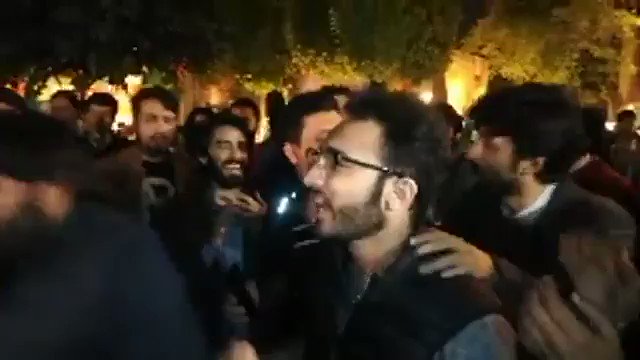
A video of some students of Pakistani universities chanting ‘azadi’ slogans went viral on social media a few days ago. They were protesting at the Faiz Literary Festival held on 19 November in Lahore.
Leadership looks like this. #Azadi but let me clarify the Faiz here means Faiz Ahmed Faiz the poet. #studentpower
291 people are talking about this
Azadi chants were raised in India, too — in 2016 by former JNU student and CPI leader Kanhaiya Kumar and others.
The students at the literary festival in Pakistan were protesting against alleged government interference in colleges, fee hike, budget cuts and lack of student housing. The students are demanding the restoration of student unions, “de-securitisation” of campuses, end to harassment, among others.
“There have been budget cuts in the public education sector, which means no scholarships, fee hikes, raised costs of transportation, etc,” Tooba Syed, a Pakistani student and activist, told ThePrint.
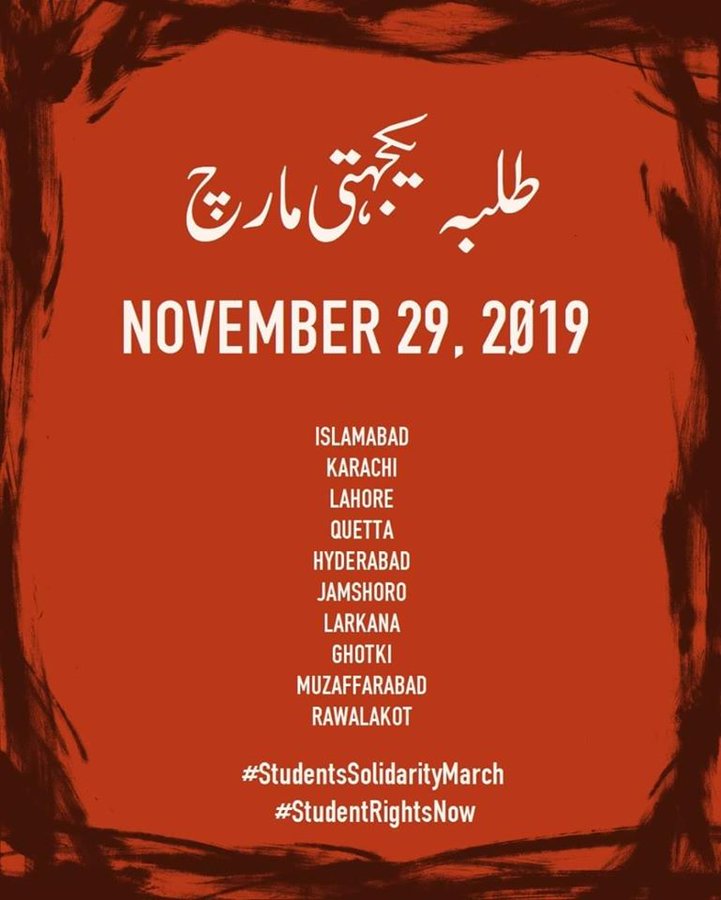
The students seen protesting on 19 November are members of the leftist Progressive Student Collective. A bigger protest — Student Solidarity March — has been planned on 29 November to be organised by Progressive Students’ Federation (PRSF).
Don't just say 'I wish these students well' and 'I hope they are successful in their struggle.' Come out and stand with them on November 29th and help amplify their voices! #StudentsSolidarityMarch

72 people are talking about this
“The marches that will be held across the country are for students’ right to unionisation, and free and quality education for all, among other demands,” said Syed.
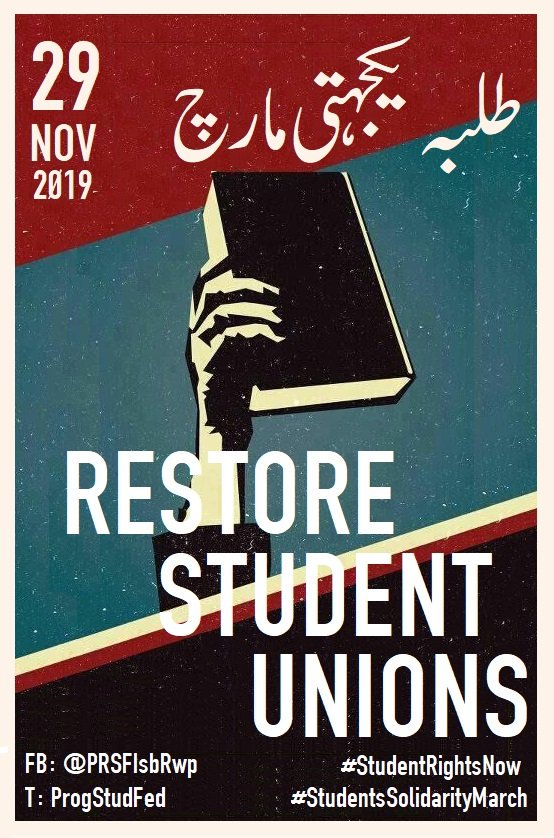
“We are marching against the system which labels us as ‘Terrorists’ for demanding clean water on campus. Puts us behind bars for opposing the dictatorship of administration on campus. We demand our right to exist with dignity,” PRSF tweeted.
We are marching against the system which labels us as "Terrorists" for demanding clean water on campus. Puts us behind bars for opposing dictatorship of administration on campus. We demand our right to exist with dignity.
Poster By: @jaquelintzin#StudentsSolidarityMarch

18 people are talking about this
The PRSF was referring to an incident this week in which at least 17 students of Sindh University, Jamshoro, were booked under sedition charges for allegedly raising anti-Pakistan slogans.
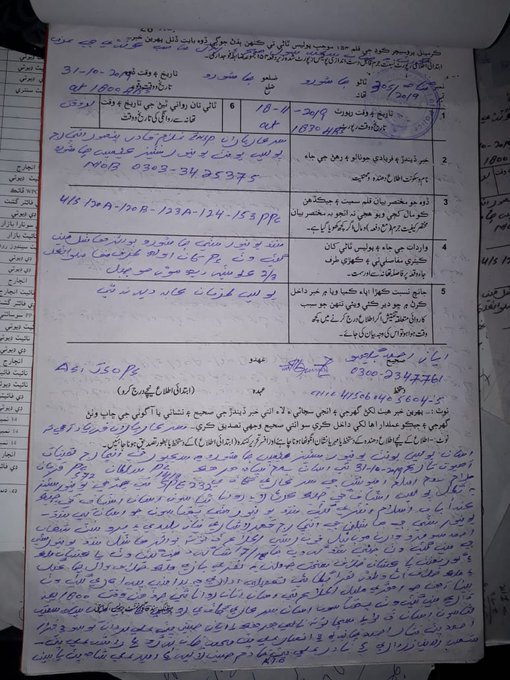
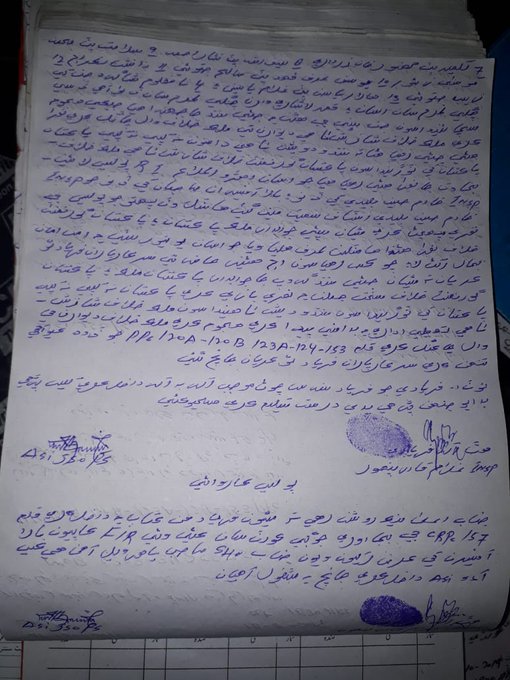
13 University of Sindh Jamshoro students including 4 @ProgStudentsFed members, have been charged with sedition for protesting for clean water. This criminalization of students, especially in Sindh & Balochistan, is unacceptable. #StudentsSolidarityMarch #StudentRightsNow

142 people are talking about this
Similar protest held last year
While the video of the 19 November protest has garnered a lot of attention on social media, this is not the first time such as protest was held — a similar protest was held last year in 16 different cities.
According to a report in the Asian Marxist Review, several progressive student organisations from all over Pakistan formed Student Action Committee to demand the restoration of student unions, representation of students in management and increase in the education budget.
According to the students, the Imran Khan-led PTI government had left “educational campuses and students abandoned, dejected and directionless”, the report stated.
Subscribe to:
Posts (Atom)