


Monday, October 7, 2019
Has the China-Pakistan Economic Corridor Stalled?
In a break from earlier feverish optimism, discussions about the CPEC have become more muted in Pakistan.
Since the announcement of the multibillion-dollar China-Pakistan Economic Corridor (CPEC) project, Pakistani officials have been over-excited about its potential success. Day and night, the mainstream Pakistani media has been packed with stories about the CPEC. Businessman, journalists, and tourists from across the country began visiting Gwadar, a port town in Pakistan’s southwestern Balochistan province, the epicenter of the CPEC.
The CPEC was announced in 2015, during Prime Minister Nawaz Sharif tenure. The Sharif government took great pride and credit for the overarching project up until Nawaz Sharif’s removal from office in mid-2017. During Sharif final stint as prime minister, the CPEC was king. If a journalist or a paper published something critical about the CPEC, they would be dubbed anti-development and possibly a traitor. Instead, newspapers and TV channels highlighted the positive aspects of the CPEC in Pakistan ad nauseam.
Over the years, Chinese involvement in Pakistani affairs has increased immensely. On the Pakistani side, some within the business community remained apprehensive about China’s investments while others were hesitant for Islamabad to drift too much into Beijing’s orbit. The Chinese side also had reservations about Pakistan, particularly regarding opportunities for corruption in CPEC projects. But while the Sharif government stood, Islamabad took a concessionary tone toward Beijing when it came to the CPEC.
Shezad Baloch, a journalist is pursuing a PhD in the United States, is of the opinion that Pakistan is going through a very serious economic and political crisis. “The country doesn’t have any other choice than protect Chinese interests in the region and accept whatever they offer in return.” He adds, “That is why we see there is no discussion and talk about CPEC.”
As in the past, Shezad regrets, there is still no independent reporting on CPEC projects and Gwadar. “
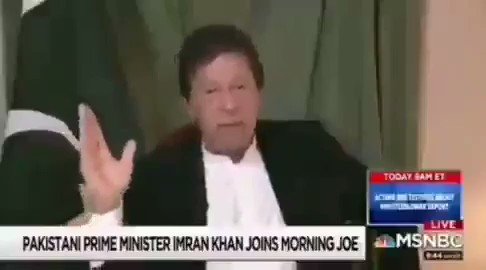
Unlike Sharif, current Pakistani Prime Minister Imran Khan and his government, as it seems, are either less bothered about the CPEC projects or the Chinese have categorically cautioned them about corrupt practices surrounding the projects. Since Khan assumed office, talk about the CPEC has subsided somewhat in the country, as has discussion of China. Pakistan’s policymakers, it appears, are focused on improving ties with the United States.
Independent analysts are of the view that Pakistan can no longer anger the United States at the expense of China. Given Pakistan’s increasing dependence on China, the United States and India have moved closer to each other. Both the United States and China are important to Pakistan, and Islamabad needs to find a way to balance the two. India perhaps sees an opportunity in Pakistan being torn between its two divergent partners.
China has invested heavily in Pakistan, but pays far less attention to security concerns than Western investors do. Furthermore, Pakistan’s overall economic health — or lack thereof as they case may be — appears to be a lower priority for China. That said, some analysts say that Pakistan has tried to broaden its investor base and avoid putting all its eggs in China’s basket.
However, some critics view the situation differently. According to them, allegations of corruption have frustrated Chinese officials, and it is the Chinese side that has slowed the pace of CPEC projects. The Chinese side also has closely watched restrictions imposed upon Pakistan by the IMF with regard to the CPEC. The IMF categorically warned that Pakistan could not pay off its CPEC loans with its IMF loans.
Michael Kugelman, deputy director of the Asia Program and South Asia senior associate at the Wilson Center, does not think CPEC has been shelved. But, he adds, it certainly has lost momentum. Speaking to The Diplomat, Kugelman says, “It’s not in the public eye as much as it had been, and we’re not hearing as many announcements about new and completed projects.”
One factor at play, Kugelman suggests, is Islamabad’s increasing hesitation to take on projects with such a heavy debt risk. Pakistan is suffering through a serious and sustained balance of payments crisis, and it can’t afford to take on more debt right now, he adds. According to Kugelman, Pakistan needs to focus on its new austerity plan as the latest IMF bailout package is implemented, and that doesn’t leave much room for CPEC projects.
Kugelman further stresses that this isn’t to understate Islamabad’s continued commitment to the CPEC. “Partnering with its critical ally on projects that, potentially at least, can deliver positive outcomes such as higher employment, better infrastructure, and more energy security — this remains a major opportunity that Pakistan won’t want to squander. What’s changed now is that Islamabad appears to want to capitalize on this opportunity in a more cautious and slower fashion than it had previously,” Kugelman argues.
In Pakistan, some CPEC projects have been put on hold. Prime Minister Khan will pay an official visit to China on October 7-8 and on the main agenda is a “revival” of stalled CPEC projects. While chairing a meeting on the economic corridor, the prime minister reiterated that the removal of bottlenecks in CPEC projects and their timely completion is a top priority of his government.
Various reasons have been put forth as explaining stalled CPEC projects, including the prevailing financial crunch confronting the Pakistani government and non-cooperation of the bureaucracy due to fear of the National Accountability Bureau (NAB).
Pakistan has not taken sufficient steps to tackle terror, says FATF ahead of Paris meet
NAYANIMA BASU
In a major setback for Pakistan days ahead of the plenary of Paris-based Financial Action Task Force (FATF), Islamabad has been told that it has failed to meet certain important criteria to crack down on terror financing and money laundering.
In its Mutual Evaluation Report released Sunday, the Asia Pacific Group (APG), a sub-panel of the FATF, has said that Islamabad hasn’t fully implemented its UNSCR 1267 obligations against 26/11 mastermind Hafiz Saeed and his terror groups like Lashkar-e-Taiba and Jamaat-ud-Dawa.
Despite being sanctioned under the UNSC 1267 Sanctions Committee, terror outfit Jamaat-ud-Dawa got a breather by the Lahore High Court that prevented Pakistani authorities from interfering in the affairs of these outfits that are seen as “charitable institutions”, the APG report said.
A top source told ThePrint that the latest FATF move “has definitely made Pakistan’s case weaker” before the plenary. “Now very less time is left for them to take appropriate actions.”
The FATF plenary is going to take place between 13 and 18 October. During the meet, a final call will be taken on whether to put Pakistan in the ‘black list’ or not. A downgrade would threaten the fiscal situation of Pakistan.
The plenary, which is the highest decision-making body of the FATF, will take the APG report into account as one of the bases for evaluation.
‘Not sufficient measures’
In its report, the APG said, “With the exception of some recent actions discussed in detail below, Pakistan has not taken sufficient measures to fully implement UNSCR 1267 obligations against all listed individuals and entities — especially those associated with Lashkar-e-Tayyiba (LeT)/Jamaat-ud-Dawa (JuD), and Falah-i-Insaniat Foundation (FIF) as well as the groups’ leader Hafiz Saeed.”
In August, the APG had put Pakistan in the terror ‘black list’ for its failure to curb channelising of funds to terrorist organisations.
At the time, the sub-group had put Pakistan in an ‘Enhanced Expedited Follow Up List’ as it was non-compliant on 32 of 40 parameters related to terror financing and money laundering.
Sunday, October 6, 2019
#Pakistan - #PPP - #ANP - Bilawal meets ANP chief Asfandyar Wali
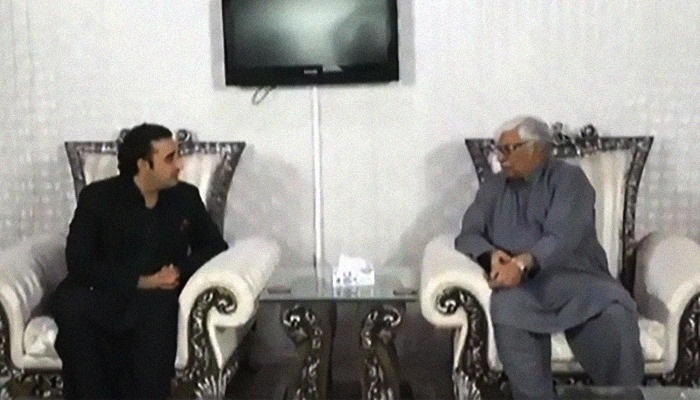
Addressing a joint press conference along with ANP leader Mian Iftekhar Hussain, following a meeting between the Chairman PPP Bilawal Bhutto Zardari and Head of the Awami National Party (ANP), Asfand Yar Wali, Farhat Ullah Babar said the PPP and ANP have decided to call an All Parties Conference (APC) to review the modalities of long march.

Leader of ANP Mian Iftekhar Hussain said that it has been decided that a meeting of All Parties Conference (APC) and Rahbar Committee would be called soon.
Fazal ur Rahman, he said, was making efforts to bring unity among all Opposition political parties. He requested the JUI-F chief to call APC before 27th October so that joint strategy could be finalized.
https://www.thenews.com.pk/latest/537430-bilawal-meets-anp-chief-asfandyar-wali
Growing vegetarianism in Pakistan — a choice or a necessity?
A recent report showed Pakistan to be the second-fastest growing vegetarian country in the world. Analysts say high inflation is impacting the food patterns of many Pakistanis, compelling them to give up eating meat.
Raja Ayub, a restaurateur in Islamabad, walks to a nearby shop every morning to buy vegetables for his restaurant. The 55-year old has been running the eatery for the past 10 years, but a new trend gaining popularity among Pakistanis is causing him concern – vegetarianism.
Many people in Pakistan are turning to a vegetarian diet for a range of reasons – the most obvious being rising prices of meat and growing poverty, as the economic activity in the South Asian country of 208 million people slows down.
The trend has Ayub both perturbed and anxious and has led him to change the meals offered at his restaurant.
"I don't know what happened to the Pakistanis. The transition in their dietary habits has forced a change in the menu of my restaurant," he told DW as he bought vegetables. "Their consumption of meat has significantly fallen and has already reached a new low."
But Ayub has some ideas as to what's behind the sudden change in the food demands of Pakistanis, who are usually known to be keen meat eaters.
He thinks that people might actually be concerned about their health and no longer prefer to have meat in their diet, or that they can no longer afford meat due to their shrinking wallets and earnings – a noticeable trend in the wake of a slump in financial activity and rising inflation.
Ayub's views match the findings of a recent research showing trends across the world, with more and more people going vegetarian, especially in last couple of years.
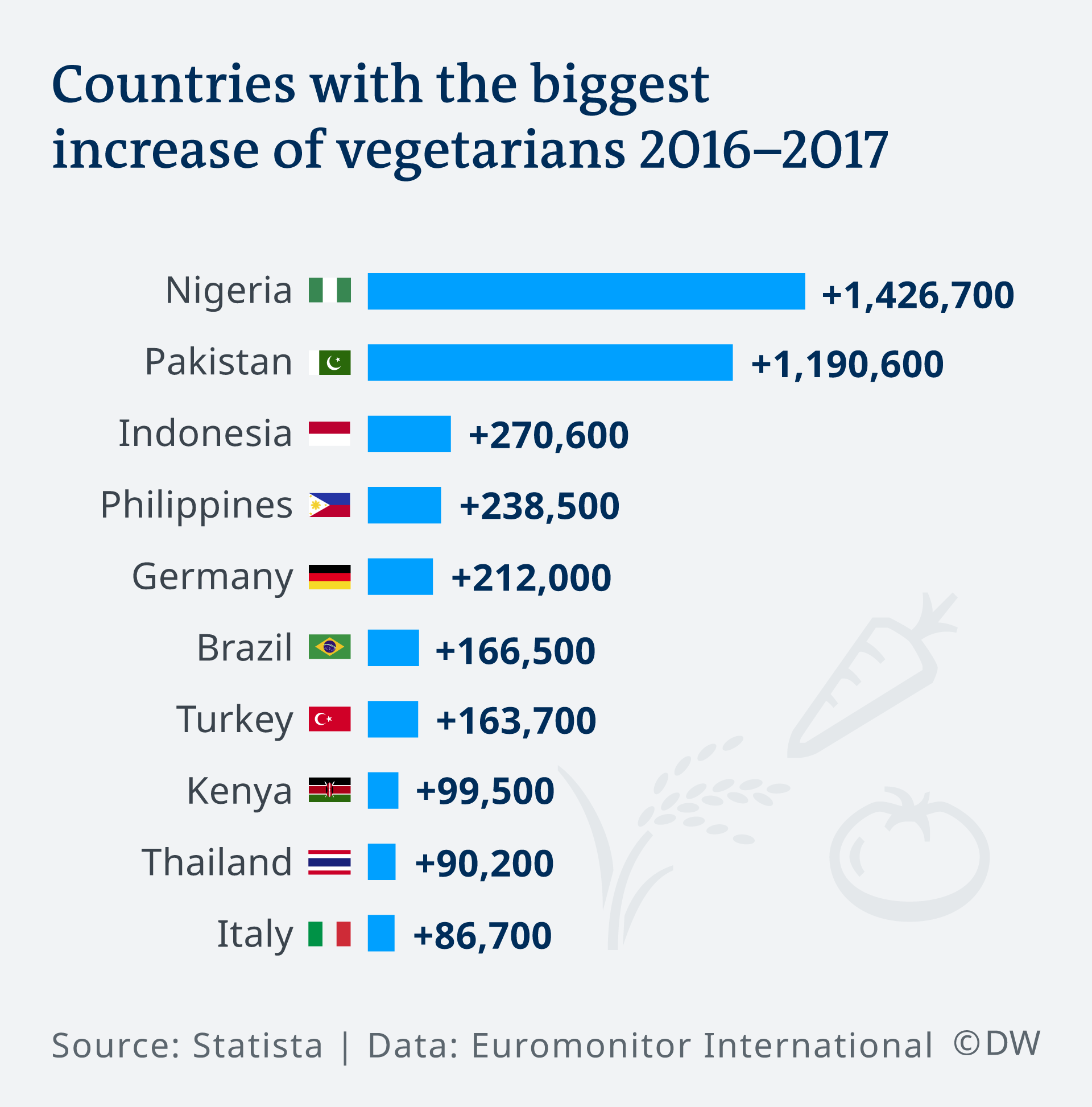
The market study conducted by Euromonitor showed Pakistan to be the second-fastest growing vegetarian country with more than 1,190,600 people turning to vegetables.
The shop where Ayub comes to buy vegetable stays crowded every day, from dawn to dusk. The owner Rehan Awan, confirmed that demand for vegetables has increased substantially and his store is overwhelmed and struggling to cope.
"We have been bringing vegetables in abundance every morning, and very often these fresh vegetables vanish from the shelves very quickly," Awan told DW. "Now, at least three salesmen have been hired to manage the increased inflow of customers."
Rising inflation
Pakistan has previously been known as a meat-loving nation with a wide range of meat dishes such as Karahis, and beef, mutton and chicken grilled over coals or served in a curry.
An affordability issue among a large section of the middle class and the lower class has meant these people have cut down or even stopped eating meat. DW spoke to people who confirmed they had not turned vegetarian by choice but because they cannot afford meat.
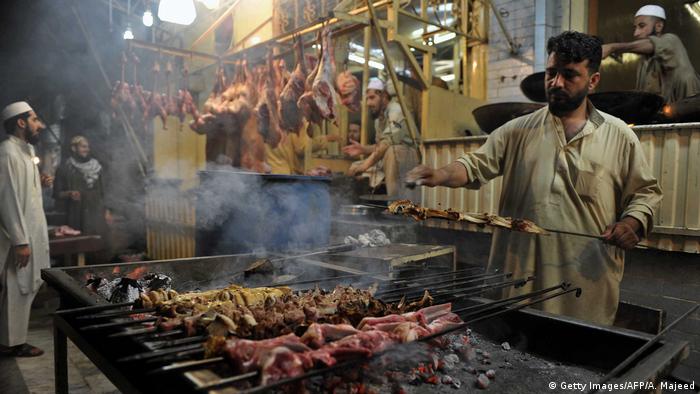
Pakistan has previously been known as a meat-loving nation with a wide range of popular meat dishes
Shahnaz Begum, 40, a female domestic worker in Islamabad, told DW she is not happy about the rising meat prices. Even though she is earning more than last year, high currency devaluation means Begum struggles to feed her eight-member family.
"We were eating meat five times a month last year, but after Prime Minister Imran Khan came into power we now think many times [over whether] to buy meat once a month," Begum told DW. "Even the vegetable prices in Islamabad have risen double since Khan's government," she added.
Shahbaz Rana, an economic analyst, says it is "cost-push inflation that is gradually compelling people – mainly lower- and middle-income groups – to change their spending habits."
"About one-third loss in value of rupee against the US dollar in the past one year has led to a significant increase in prices of goods, including pulses that are also imported to meet domestic demands," Rana told DW. "The increase in cost of transport, gas and electricity has compelled the fixed income groups to readjust their spending within different commodities."
Pakistan Poultry Association officials confirmed the decline in demand for chicken due to current economic constraints and price hikes.
"The poultry business remained in loss. From the last nine months there was overproduction and the demand was too low, which never happened in the past," Saleem Akhtar, vice chairman of the Pakistan Poultry Association, told DW.
However, Akhtar believes the situation might get better over the next few years.
Declining meat business
Islamabad-based butcher Uzair Khan is not concerned about anything other than his business nowadays. After sitting in his meat shop with no customers for hours, he told DW that the rising prices have affected purchasing power, with unnecessary taxes imposed on millions of disadvantaged people.
The International Monetary Fund (IMF) program has demanded structural reforms, which are hurting businessmen and low-income people.
Khan's government, which came into power in August 2018, is facing mounting economic pressures and hard austerity measures under a $6-billion bailout from the IMF, which is squeezing the lower- and middle-class people who brought Khan into power.
"The meat market is shrinking because of only one reason — the rising prices," Uzair Khan told DW.
Rana, who regularly writes on economy and financial markets, said the prices of red and white meat had significantly gone up in the last year due to inflationary expectations. The poultry feed, which is largely imported, and transport charges have also contributed to increasing prices of meat. This seemingly forced people to either reduce consumption or shift to a cheaper diet. The prices are unlikely to come down and there are no immediate signs of an increase in people purchasing power.
"Pakistanis may be turning to vegetables due to better health but it also because their meat-buying power has ended. The urban class is consciously increasing its intake of vegetables and fruits due to health reasons. Red meat and chicken prices have significantly gone up and there are no regulatory checks on these prices," said Rana.
Naeem Saleem has lost his chicken and pizza business due to higher taxes and a crackdown on businessmen. "We turned to vegetables and left eating meat after becoming jobless," Saleem told DW. "We are even using water to cook fish curry so that seven members of our family can eat. It should be fried or grilled."
Asghar Ali, an economics professor at the University of Karachi, estimates that more than 1 million people will lose their jobs and leave businesses, and more than 8 million could slip below the poverty line in the coming months.
"The economic situation remains in dire straits. The next two years, however, have been officially declared as years of economic stabilization, but there are very dim chances of economic recovery," Rana underlined.
Why Pakistan doesn’t have to choose between traditional ally US and newer friend China

SHUJA NAWAZ
Pakistan can play an important security and development role in the region and as a partner of the US, even as it maintains its separate relationships with its immediate neighbours, China, Afghanistan, India and Iran. Imran Khan’s apparent efforts to work with the military on national economic and strategic issues will stand him in good stead but they may also delay the establishment of civilian supremacy in a democratic Pakistan. The country and its surrounds have changed dramatically in the past two decades.
If current trends bear out, populations in the greater South Asia region will continue to become more politically and economically active. If its leaders can provide responsive governance and a clear and consistent economic direction, South Asia may be able to surmount over time its persistent security challenges, both within countries and from hostile neighbours. And they may be able to lay the basis for connectivity of their economies. The challenge for Pakistan will be to balance its internal battles with the need to create a more congenial regional atmosphere that fosters stability and economic growth.
Imprisoned by its geography, Pakistan must learn to live and thrive in its neighbourhood without becoming a vassal of surging India. Otherwise, it risks becoming a backwater and asterisk in future atlases. Especially if its centrifugal forces triumph over the centripetal forces holding it together. In fighting this hostile future, it needs to learn from its history and those of other countries that have struggled to establish a clear and sustainable national identity. And it will need to balance carefully its quest for security against its need to develop economically and to ask itself if its investment in defence has effectively purchased it adequate security.
Regarding its external relations, Pakistan does not have to choose between its traditional ally, the US, and its relatively newer friend, China. On its part, the US can take advantage of the presence in the same region of two relatively sophisticated military and political systems in India and Pakistan that together could provide stability and growth to the wider region.
The US cannot afford to create or encourage divisions in South Asia. Over the next ten to fifteen years, South Asia could be poised to play a pivotal role on the global economic and political scene. Given its size, India is in a position to take the regional lead, and Pakistan could end up playing either a major supporting role or the role of a critical spoiler, if its polity deteriorates instead of stabilizing and improving. Afghanistan also may well offer a springboard for a new regionalism, reverting to its historical role as the gateway to South and Central Asia. And Iran, if it can fully rejoin the global community, may successfully hook into South Asia’s economy, while playing a key role in the stabilization of Afghanistan and the neighbourhood. But only if the US reopens its discussions with Iran rather than taking the path of confrontation.
An economically and militarily stronger India may well work out a balanced relationship with arch-rival China, building on trade dependency to either dampen territorial disputes or to resolve them through quiet negotiations. Pakistan’s developing relationship with China under the China– Pakistan Economic Cooperation Corridor or CPEC, linked to China’s broader Belt and Road Initiative may give it a chance to connect with its neighbours too and become the ‘game changer’ that Pakistani leaders talk about. But that will demand much more preparedness and transparency in Pakistan. Much more than has been evident to date.
China will also need to give Pakistan breathing room to undertake and participate in the Belt and Road Initiative so that it brings investments into Pakistan rather than burdensome debt or commitments on the rates of return promised to Chinese investing firms that Pakistan may have difficulty in servicing. Deeds, not words, matter. Pakistan looks to reap some benefits from the emergence of the CPEC that will start bearing fruit in the next five years by creating jobs in the infrastructure sector and by alleviating the energy shortages that have held back the economy in the past decade or so. It remains to be seen if China reduces its reliance on its own labour to speedily complete the jobs or relies on Pakistani labour to build and maintain the projects. Another possible impediment might be the speed with which Pakistan can muster counterpart funding and institution building for these projects. Initial reports indicate that the development budget will be cannibalized to give priority to the CPEC effort, including funding the security forces to protect construction work. Much of the $46 billion investment promised by China over the next fifteen years is in the energy and infrastructure sectors, with energy taking the lion’s share at nearly $38 billion.
If the government can deftly manage the initial investment in the pathway from China to Gwadar on the Arabian Sea by not tilting the investment first towards the easternmost Punjab-centric highway, Pakistan could help knit the provinces together. It would behoove the government to begin work on the Baloch segment first, mandating the use of local labour and bringing the tribal populations into ownership, given the strategic location of Balochistan across three countries of the region. The US could lay the foundation for a long-term investment in Pakistan’s future by helping Pakistan undertake speedily the Western Corridor traversing Khyber Pakhtunkhwa and Balochistan, and including a tributary linked to Afghanistan. Such a signature project would be a lasting symbol of US relations with Pakistan, much like the Mangla and Tarbela dams were in the 1960s and ’70s. The undisbursed KLB funds amounting to an estimated $2 billion and withheld CSF and other funding by the Trump administration might provide the seed money for this project.
To date, Pakistan has chosen to avoid making decisions on the $46 billion in Chinese investments that would speedily integrate its marcher regions into the economy and body politic of the country. Of these, some $36 billion are energy related and the remaining $10 billion are for infrastructure. It has favoured the Punjab for the main route connecting China to the Arabian Sea, given the presence of the current motorways.
The Western Corridor is supposed to be built with local financing. China did not provide loans for three infrastructure projects of the western route. Pakistan had to scramble to find funding for one of the three projects related to that segment of the CPEC corridor. But, lack of preparation has dogged it and many other projects. China has provided a number of heavy loans to Pakistan and some balance of payment financing. But nothing of the quantum that would meet Pakistan’s immediate financing needs to service its obligations and imports. Both Pakistan and China need to better publicize China’s investment flows into Pakistan as a counter to the impression that most of its funding is in the form of loans. At the same time, both China and Pakistan need to make a special effort to share openly and widely their plans and processing of contracts. This would help counter the surging conspiracy theories of those who oppose this relationship, both inside Pakistan and in other countries, near and far.
But in all this it would be critical for Pakistan not to present China as an alternative to the US and the West. Rather, Pakistan needs to reshape its regional and global alliances in light of the blueprint that Gen. Ashfaq Kayani had presented to the US and NATO in September 2011. Ending the no-war-no-peace condition in South Asia and working with friends, near and far, to help stabilize its own economy and polity will be key to Pakistan’s economic growth.
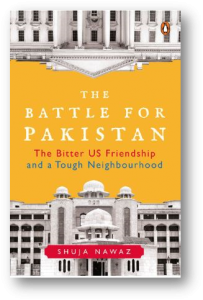
This excerpt from The Battle for Pakistan by Shuja Nawaz has been published with permission from Penguin Random House India.
Pakistan a safe breeding ground for terrorists: Mohammad Kaif slams Imran Khan
Terming Pakistan as "a safe breeding ground for terrorists", former India cricketer Mohammad Kaif lashed out at Pak Prime Minister Imran Khan.
Yes ,but your country Pakistan certainly has a lot lot to do with terrorism, a safe breeding ground for terrorists. What an unfortunate speech at the UN and what a fall from grace from being a great cricketer to a puppet of Pakistan army and terrorists. thestatesman.com/world/religion…
5,372 people are talking about this
 Viru .. I see this and I am shocked ..a speech which is unheard of .. a world which needs peace ,pakistan as a country needs it the most .. and the leader speaks such rubbish ..not the Imran khan the cricketer world knew ..speech in UN was poor ..
5,553 people are talking about this
You sound like a welder from the Bronx, says the anchor.
After the pathetic speech in the UN a few days ago , this man seems to be inventing new ways to humiliate himself.
19.8K people are talking about this
Subscribe to:
Posts (Atom)