Saturday, September 28, 2019

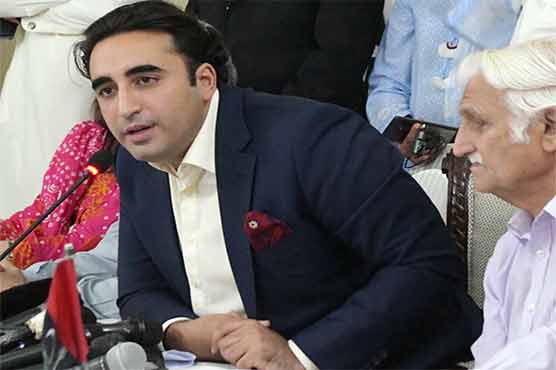
PM Imran failed to properly present Kashmir issue at UNGA: Bilawal Bhutto

The Pakistan Peoples Party (PPP) Chairman Bilawal Bhutto-Zardari said that the Prime Minister Imran Khan did not properly present the Kashmir issue at an international forum.
After PM Imran Khan’s speech, he asserted that it was believed before that the speech of PM Imran will result in a revolution. He added that PM Imran did not give any statement that could be considered. “The Prime Minister did not present the Kashmir issue properly in the General Assembly session”, he added.
Chairman PPP expressed that his party stands with his Kashmiri brothers. “I wish the Prime Minister would have visited the whole world 50 days ago and raised the issue of Kashmir”, he added.
Regarding the Kashmir issue, Bilawal Bhutto further said that the government has failed to take up the cause of Kashmir and it needs to be resolved together. “Bhutto visited ten countries in three days for the country”, he added.
He said that Imran Khan will have to go home to solve public problems. “The PPP has raised a voice against Islamophobia". “Those, who have exploited human rights in their own country, how can they fight for Kashmir?” he asked.
The scion of Bhutto dynasty said that the people of Ghotki has accomplished to defy the conspiracy elements. He added that they have always supported the oppressed and the poor and will continue to adhere to principles of Shaheed Bhutto and Quaid-e-Azam.

Friday, September 27, 2019

Pashto Music - Sardar Ali Takkar | که لېونی وم | اشرف مفتون | سردار علي ټکر

Music Video - Ustad Awalimir Afghan Da Zamong Zeba Watan

Fear, Fatigue Could Undermine Afghan Presidential Vote – Analysis

By Frud Bezhan

Afghanistan’s twice-delayed September 28 election could be only the second-ever democratic transition of power in the war-wracked country.
But many Afghans remain wary of the landmark presidential vote, fearing Taliban violence aimed at disrupting the vote and disillusioned at the widespread fraud and corruption that has tainted other elections since the U.S.-led invasion in 2001.
Analysts say voter fatigue and safety concerns could depress turnout to undermine the legitimacy of the vote and give any winner only a weak mandate to rule a country reeling from economic turmoil, an escalating war, and political infighting.
‘New Crisis’
A contentious, fraud-marred presidential election in 2014 pushed Afghanistan to the brink of civil war before the United States brokered a power-sharing deal that made Ashraf Ghani president and his rival, Abdullah Abdullah, the chief executive.
The October 2018 parliamentary elections, delayed for three years, were undermined by militant attacks, widespread irregularities, and technical and logistical problems.“People who risked their lives to vote were never respected,” says Habib Khan Totakhil, a restaurant owner and former journalist in Kabul who says he will not vote this time around. “I respect those who look up to the election as something that will bring prosperity and order, but I’m so worried that it will likely take our country to a whole new crisis.”Turnout was around 39 percent in the 2018 parliamentary elections, while about 58 percent of the 9 million eligible voters cast ballots in the first round of the 2014 presidential election, according to Afghanistan’s Independent Election Commission.
Ahmad Wali, who voted in the two previous elections, will also stay away. “My vote means nothing,” says Wali, another Kabul resident. “My vote would never help elect someone so I’ll never vote.” ‘Problem-Ridden’
Ali Adili, a researcher at the Afghanistan Analysts Network (AAN), an independent think tank in Kabul, predicts a low turnout because of “insecurity, uninspiring election campaigns by the candidates, and a lack of confidence in the election-management bodies whose credibility has been undermined by previous fraudulent elections.”
A survey of 5,200 people in August by the Transparent Election Foundation of Afghanistan (TEFA), a Kabul-based civic-action body that monitors elections, suggested that only 43 percent of eligible voters planned to go to the polls.
Respondents doubted whether electoral bodies have the freedom or capacity to conduct the election, they felt that voter’s preferences were sacrificed for a political deal in the presidential election five years ago, and they saw severe security threats and challenges.
“A low turnout may call into question the inclusiveness and legitimacy of the election,” Adili says.
The AAN think tank says in a report issued on September 16 that “necessary electoral reform has remained embryonic, making the coming election as problem-ridden as the previous ones, with electoral institutions widely considered non-credible and partial.”
‘Security Doesn’t Exist’
Afghanistan is the world’s deadliest conflict, and security fears persist even in the heavily guarded capital.
“Security doesn’t exist in this city,” says resident Abdul Saboor Azizi, who says he will not vote. “People are killed every day in broad daylight.” In the capital alone, 221 people have been killed and more than 1,000 others injured in 20 attacks so far this year.
The Taliban group that ruled much of the country until 2001 and opposes Afghanistan’s central government is estimated to control or contest nearly half of Afghanistan’s 400 districts, depriving many in rural regions of the right to vote.The government has announced that around 2,000 of 7,400 planned polling stations will be closed on election day — most of them in provinces where the Taliban is active.
In a sign of the insecurity, campaigning has been largely muted.
Ghani, the incumbent, has mostly campaigned remotely, addressing small gatherings outside the heavily militarized capital via Skype or telephone.
A suicide bombing that killed 26 people last week near an election rally in Parwan Province, north of Kabul, where Ghani was due to speak, came as a sharp reminder of the dangers.
In July, 20 people were killed in a bomb attack that was followed by a gunbattle at the office of Ghani’s running mate, Amrullah Saleh.
‘We Need To Support Democracy’
But there are many Afghans determined to vote to show their backing for the most democratic system that Afghanistan has ever had.
“There are many challenges and particularly security threats, but people will come out and vote because the alternative is scary and people want a legitimate government in Kabul,” says Haroun Mir, a Kabul-based analyst.
Some Afghans fear that their rights could be sacrificed in an eventual peace deal with the Taliban.
This month, U.S. and Taliban envoys were said to have been on the brink of a draft peace agreement before Washington abruptly cut off negotiations. The U.S.-Taliban deal could be a precursor to an Afghan-Taliban agreement over the political future of the country.
Observers expect the peace talks to resume after the election.
“We need to support democracy and have a say in who will head the government” that will negotiate peace with the Taliban, says Ali Reza, an unemployed 30-year-old.
“Despite all the challenges, Afghans must stand up to the Taliban’s barbaric acts and we should promote democratic values by voting,” says Muslim Shirzad, a former parliamentary candidate and university lecturer. “But transparency is key. If we have another fraudulent election, we will go toward a civil war.”

قبائلی طلبہ کلاسوں میں کھڑے ہو کر تعلیم حاصل کرنے پر مجبور


اول تو قبائلی طلبہ کو آسانی سے داخلہ نہیں ملتا، مل بھی جائے تو پھر کلاسوں میں بیٹھنے کو جگہ نہیں، بورڈ دکھائی نہیں دیتا اور اکثر اوقات کلاس کے دروازے پر کھڑے ہو کر سبق سننا پڑتا ہے۔


ارسطو نے کہا تھا جاہل عالم کو نہیں جانتا کیونکہ وہ کبھی عالم نہیں رہا جبکہ عالم جاہل کو جانتا ہے کیونکہ وہ خود جاہل رہ چکا ہے۔ درحقیقت علم سے دوری خدا شناسی سے ہی نہیں خود شناسائی سے بھی محرومی ہے۔
سابق قبائلی علاقوں میں جب تک امن تھا اس وقت تک یہاں مجموعی طور پر چھ ہزار تعلیمی اداروں میں چھ لاکھ کے قریب طلبہ تعلیم حاصل کر رہے تھے۔ تاہم ان علاقوں میں دہشت گردی نے تعلیمی سرگرمیوں کو شدید متاثر کیا۔
افسوس کی بات ہے1947 سے لے کر عسکری آپریشن کے بعد تک سابق فاٹا کو بنیادی ضروریات زندگی سے محروم رکھا گیا۔ سادہ سی بات ہے اگر جدید دورکے تقاضوں سے کسی بھی علاقے کو نابلد رکھا جائے گا تو وہاں اسی قسم کی پیچیدہ صورت حال پیدا ہوسکتی ہے۔ قبائلی علاقوں کے ساتھ بھی یہی کچھ ہوا اور ہو رہا ہے۔
گیارہ لاکھ سے زائد آبادی والے ضلع باجوڑ میں تین لڑکوں کے کالج، گورنمنٹ ڈگری کالج خار، گورنمنٹ ڈگری کالج برخلوزو اور گورنمنٹ ڈگری کالج ہیں۔ نجی شعبے میں صرف ایک کالج تدریسی عمل جاری رکھے ہوا ہے۔
چند سال قبل اس وقت کے خیبرپختونخوا کے گورنر مہتاب عباسی نے دورے کے موقع پر تحصیل برنگ اور تحصیل سلارزئی کے لیے کالج کے قیام کی منظوری دی تھی، لیکن تاحال ان کالجز کے قیام کا خواب شرمندہ تعبیر نہیں ہو سکا، جس کے باعث ہر سال تینوں کالجز کو کوٹے سے زیادہ بوجھ برداشت کرنا پڑتا ہے۔
اس حوالے سے گورنمنٹ ڈگری کالج برخلوزو کے انگلش لیکچرر لیاقت علی کہتے ہیں بنیادی مسئلہ یہ ہے کہ ہمارے کالج (گورنمنٹ ڈگری کالج برخلوزو) کے ساتھ تقریباً ملحق 10 سے 12 سکول ہیں جن سے فارغ ہونے والے طلبہ اس کالج کا رُخ کرتے ہیں۔
اگر اوسطاً ہر سکول سے 70، 70طلبہ بھی فارغ ہو کر کالج میں داخلے کے لیے آئیں پھر بھی ہمارے پاس نشستیں صرف سو، ڈیڑھ سو ہوتی ہیں جبکہ امیدواروں کی تعداد سات، آٹھ سو سے زیادہ۔
ان کالجز میں سنگل سبجیکٹ ٹیچر کا طریقہ کار رائج ہے، مثلاً انگلش کی کلاس میں آرٹس، سائنس، انجنیئرنگ تقریباً سب ہی شعبوں کے طلبہ شریک ہوتے ہیں پھر کلاس میں کچھ طلبہ کو بیٹھنے تک کی جگہ نہیں ملتی اور کچھ طلبہ کو استاد کی آواز بھی نہیں سنائی دیتی۔
لیاقت علی مزید کہتے ہیں اس کے لیے سیکنڈ شفٹ کلاسز کا اجرا، سٹاف کی کمی ختم کرنا اور اگر ممکن ہوسکے تو کالج کے لیے ہنگامی بنیادوں پر کوئی نجی عمارت کرایے پر لی جائے جیسا کہ چند سال قبل سابق پولیٹیکل ایجنٹ عامر خٹک نے کیا تھا۔
اس سے بدتر صورت حال خار اور زوربندر کالجز کی ہے۔ ان کالجز میں بھی طلبہ کو کلاسوں میں بیٹھنے کی جگہ نہیں ملتی۔ کثرت کے باعث پیچھے بیٹھنے والے طلبہ کو سبق تک سنائی نہیں دیتا۔
باجوڑ کے کالجز میں طلبہ کو درپیش مسائل کے بارے میں باجوڑ کے معروف ماہر تعلیم اور گورنمنٹ کامرس کالج خار کے پرنسپل نے اعتراف کیا کہ سیاسی دباؤ اور چند دیگر وجوہات کے بنا پر ہزاروں طلبہ کو داخلہ دینا پڑتا ہے۔
’مقررہ نشستوں سے زائد طلبہ کے داخلوں کے باعث جو حق دار ہوتے ہیں انہیں بھی کلاس میں بیٹھنے اور صحیح طریقے سے سبق سنائی نہیں دیتا۔‘
دسمبر 2018 کی ایجوکیشن مینجمنٹ انفارمیشن سسٹم رپورٹ کے مطابق سابق فاٹا کی سات ایجنسیوں اور چھ نیم قبائلی علاقوں میں 73 فیصد طلبا ہیں، جن میں 69 فیصد لڑکے اور 79 فیصد لڑکیاں کلاس پنجم تک سکول چھوڑ دیتے ہیں۔
مڈل اور سیکنڈری سکول لیول پر مزید 50 فیصد لڑکیاں تعلیم ادھوری چھوڑ 
کر گھر بیٹھ جانے کو ترجیح دیتی ہیں۔
قبائلی علاقوں میں اساتذہ کی صورت حال بھی تسلی بخش نہیں۔ سکولوں میں 20 ہزار ٹیچرز موجود تھے جن کی تعداد2017-18 تک کم ہو کر ساڑھے اٹھارہ ہزار رہ گئی ہے۔ ان درس گاہوں میں 5000 آسامیاں خالی ہیں جن میں ٹیچرز کے علاوہ دیگرعملہ بھی شامل ہے۔ ای ایم آئی ایس رپورٹ کے مطابق قبائلی علاقوں میں تعلیم نسواں کی شرح بھی محض تین فیصد ہے۔
مزید یہ کہ کے پی حکومت نے پرائمری سطح پر تمام کتب کو انگریزی زبان میں منتقل کر دیا ہے۔
ای ایم آئی ایس کی تحقیق میں یہ وضاحت سے بتایا گیا کہ قبائلی علاقوں کے ٹیچرز کسی طور پر ایسی قابلیت کے حامل نہیں کہ وہ انگریزی زبان میں تبدیل ہو جانے والا نصاب طلبہ کو باآسانی پڑھانے کی ذمہ داری ادا کرسکیں۔
قبائلی اضلاع میں اب بھی 1940 کے حالات کے مطابق 100 طلبہ کو دو ٹیچرز، دو کمروں میں تعلیم دے رہے ہیں جو کسی طور پر جدید تدریسی اصولوں کے مطابق نہیں۔
کے پی میں ضم شدہ قبائلی اضلاع میں دہشت گری کے لہر میں 1500 سے زائد تعلیمی اداروں کو مکمل یا جزوی طور پر نقصان پہنچا ہے جو تعلیمی سرگرمیوں کے لیے نقصان دہ ثابت ہوا۔
اب اگر ایسی صورت حال سے کچھ طلبہ سیکنڈری لیول سے آگے بڑھ کر کالجز میں داخلوں کے لیے آتے ہیں اور وہاں اول تو انہیں داخلہ آسانی سے نہیں ملتا، خدا خدا کر کے مل بھی جائے تو پھر انہیں کلاسوں میں بیٹھنے کو جگہ نہیں ملتی، بورڈ دکھائی نہیں دیتا اور اکثر اوقات جگہ نہ ملنے کے باعث کلاس کے دروازے پر کھڑے ہو کر سبق سننا پڑتا ہے۔
قبائلی اضلاع میں جب علم کی روشنی پھیلے گی تو مذہبی، سیاسی ولسانی شرپسندی ختم ہونے کے امکانات روشن ہوں گے۔ امید کی جانی چاہیے کہ مستقبل قریب میں حکومت قبائلی اضلاع میں جہاں مزید کالجز کا قیام عمل میں لائے گی وہیں پہلے سے موجود سرکاری سکولوں اور کالجز میں سٹاف کے علاوہ بنیادی ضروریات کی فراہمی کو یقینی بنانے کے لیے بھی ٹھوس اقدمات کرے گی۔

Christian girls are being kidnapped and forced to convert, Pakistan Archbishop warns

Research in Pakistan’s Punjab Province says that up to 700 girls were abducted in one year.
A surge in under-age Christian and Hindu girls in Pakistan being kidnapped, raped and forced to marry and convert to Islam has been condemned by one of the country’s leading bishops.
In an interview with Catholic charity Aid to the Church in Need, Archbishop Sebastian Shaw of Lahore confirmed reports of abductions involving girls as young as 14, acts he condemned as “a crime”.
His comments come amid research in Pakistan’s Punjab Province stating that up to 700 girls had been abducted in one year.
He said: “Yes, [abductions of under-age girls] are happening” and he added that “there have been many kidnappings recently”.
Archbishop Shaw added: “Kidnapping is a crime. It has to be treated as one. This is the only way to stop it. The girls are usually 14, 15. The men often already have one wife. They can be 25 or older. They can be younger, more like 20.”
He believed there was a religious aspect to the kidnappings, particularly as the girls are Hindu or Christian. Yet, the archbishop did not believe it was the only explanation.
“It is lust. They think ‘she is pretty and I want her’. It is a crime. But it has a possible religious component too.”
The archbishop said that in response to the increase in abductions, Christian leaders took the problem to the police “but they were not listening” so they went straight to the government.
“We raised it with the government and they took up the matter. Along with the Islamic council, they arranged a meeting with myself and leaders from the Muslim and Hindu communities.
“I participated in the meeting… One young Islamic scholar criticised the kidnappings and said forced conversions are not allowed.”
Despite this, Archbishop Shaw was optimistic about the future of Pakistan, seeing the current government, headed by Prime Minister Imran Khan, as moving in the right direction.
He said: “The present government are working on equality. All people should have a sense of belonging.”
He was optimistic about the Church in Pakistan, too. He said: “Nearly 60 percent are young people. We are helping people have a good education, a quality education, and become professional.
“This is new, particularly for Catholics. We have good catechism and teach them why they are Christian. We train them for dialogue with Muslims. We teach them the difference between dialogue and debate.”
Archbishop Shaw praised ACN’s work in Pakistan, saying: “I am thankful to ACN because ACN is supportive, particularly with pastoral activities.
“ACN is helping worldwide and whenever we turn to them they are helpful. Financial contributions, prayers and words of encouragement are always appreciated.”
ACN funded 61 projects in Pakistan in 2018, including the construction of churches, training of religious and the formation of the laity.

Thursday, September 26, 2019

Music Video - MC Hammer - U Can't Touch This

Video - Greta Thunberg - Inspiring Others to Take a Stand Against Climate Change | The Daily Show with Trevor Noah

Video - Trump-Ukraine Call Log Clearly Demonstrates Quid Pro Quo Demand - with Stephen Colbert

Video - Trump Pressures Ukraine to Investigate Biden & Impeachment Looms | The Daily Show with Trevor Noah

Video - Trump’s Ukraine Call Released | The Daily Show - Trevor Noah

Video - Kal Bhi Bhutto Zinda Tha,Ajj Bhi Bhutto Zinda Hai

Video - Zulfikar Ali Bhutto's Speech on #Kashmir Issue in United Nations 1965

Video - Remembering the FORCE known as Zulfiqar Ali Bhutto

Music Video - JO BACHA THA - NOOR JEHAN - UMRAO JAN ADA -

Music Video - Pyar Kiya To Darna Kya | Madhubala | Dilip Kumar | Mughal-E-Azam

#Pakistan - Working for the Wealthy, Islamabad’s Poor Struggle to Live


By Shah Meer Baloch and Mashal Baloch
In Islamabad’s irregular settlements, the city’s poor struggle just a stone’s throw from posh bungalows.
Four-year-old Surraiya has big dreams. “I want to become a doctor,” she says with a smile, as she attends school in one of Islamabad’s irregular settlements — a katchi abadi.  She and the other students work in the daytime and in the evening sit on mats and a handful of chairs under an open sky to learn.
In March, Pakistani Prime Minister Imran Khan said that his government would build some 5 million houses for the poor. It was to be one of his government’s top priority schemes. Khan vowed to start the effort in April. So far not much can be seen on the ground.
Pakistan’s capital is known for its posh bungalows and trendy cafes, a place for the country’s wealthy and politically connected to mingle. But there is another side of the city as well. 
This katchi abadi, the local term for an irregular settlement, is in the G-11 sector of the city, and one of around 50 in Islamabad. The parents of children like Surraiya are domestic workers, most of the mothers are maids. They live there with no basic services.
There is no plumbing for water, no electricity or paved roads. Makeshift houses are made from bamboos, tarpaulin and tin sheets surrounded by bushes and hidden by trees; separated, the katchi abadi stand just a stone’s throw from posh bungalows.
These settlements are found across the country, and have existed in Islamabad for three to four decades. In other places, they have transformed over the decades – from tent homes to proper cement houses. Most of the population moved to urban centers from rural towns due to poverty, war, unemployment, urban development needs, and natural disasters. They work for the wealthy in the city, and live on informal settlements on government land. Only ten are regularized in Islamabad.
Over the decades, some katchi abidis have transformed from tent cities to proper cement houses such as this one in H-9 sector. Despite the cement houses, it is still considered an irregular settlement. Photo by Mashal Baloch.
Hope, however, blooms even in the worst of conditions and for these children it came in the form of a woman who has been working tirelessly to change their lives for the better.
Tauheed Sohail has been teaching voluntarily at the katchi abadi in the G-11 sector for more than four years. Children are unavailable in the morning as some of them work along with their parents and many stay homes taking care of their younger siblings while their mothers are out working as maids in the neighboring posh areas.
“I just wanted to teach for a while but never thought I would get attached to children,” Sohail says. “It is silly to expect the government to do everything, specially the kind of governments we have had.”
She has 57 students enrolled in nursery and kindergarten. She wants her school to be registered as a welfare trust. At first, she used to purchase the books and other materials for students herself, later her friends and family helped.
Two weeks ago, as per schedule, Sohail arrived to teach slum kids and to her surprise officials from the Capital Development Authority (CDA), the developing authority responsible for planning and the development of Islamabad, were there to inquire about the irregular settlement. Someone had complained on the citizen’s portal about the residents of this particular katchi abadi. The Citizen portal is a mobile application set up by the Khan government designed for Pakistani citizens to file queries and complaints.
Sohail talked to the CDA officials and told them not to encroach on the area, as a case has already been filed in the Supreme Court of Pakistan against the demolishing of the settlements. She said, “even I showed them the stay order of the court but they did not consider it.” 
The tents were bulldozed after she left. One of the tents that was demolished belonged to Asia Bibi.
Bibi told The Diplomat, “they didn’t inform us about the evacuation.” Bibi works as a maid. She came to Islamabad as an economic migrant in search of a job. She does not possess any documents of ownership like other dwellers.
 “We will move to another place if they bulldoze us again,” she added.
Back in January 2014, a petition was filed by Amin Khan, resident of the G-11 katchi abadi in Islamabad against the Federation of Pakistan and the National Database and Registration Authority (NADRA) before the Islamabad High Court, requesting the issuance of a computerized national identity card (CNIC) to the petitioner Amin Khan. Instead of addressing the contentions raised by the petitioner, the judge presiding over the matter directed the Ministry of Interior to explain how katchi abadis were allowed to emerge in different parts of Islamabad and asked for their evacuation.
As the gap between rich and poor widens, the katchi abadis grow. People move to Pakistan’s urban centers in search of employment but many move to katchi abadis, located on government land, to avoid unaffordable city rents. 
Some 23,000 families lived in the I-11 sector of Islamabad that was said to be one of the biggest katchi abadis; it was demolished in 2015 by the CDA. Today the site offers a different view. Huge buildings are replacing the mud houses; the rich replacing the poor.
“It was midnight when shelling and tear gases were fired at us for evacuation” said Nasir Khan, “we faced worse treatment than Indian-administered Kashmiris.”
Khan’s family moved to Islamabad about 35 years ago from Mohmand Agency in Khyber Pakhtunkhwa for economic reasons. Since then he has sold fruits in a market that is near his previous residence in the former katchi abadi. Now he lives 12 kilometers (7.4 miles) from the market. 
After the eviction and demolition, Khan, activists and political workers of  the Awami Workers Party (AWP) submitted a petition to Pakistan’s apex court.
“Actually, the land had belonged to the government and CDA,” says Khan. “Everyone had to pay a respective amount of money as a bribe to lower officials at CDA to reside there.”
Along with his family, Khan lived there along with 40 other people in a house of six rooms.
His petition asks for fundamental rights of housing and dignity, which the constitution of Pakistan already ensures. The petition reads, in part:
… Article 14 makes it clear that each and every person’s dignity and privacy of home is inviolable. It is worth noting that not only does the Constitution protect a broadened right to life, it presupposes access to a home, and protects the privacy associated with the same. Therefore, it is one of the fundamental responsibilities of the State, and possibly the most important one, to provide adequate housing and shelter facilities to the citizens and residents of Pakistan. However, this is a responsibility which the State has not only abysmally failed to fulfill, but in the case of Petitioner Nos. 4—7 (along with tens of thousands of their fellow katchi abadi residents), it is a responsibility which the State is actively and maliciously flouting at this very moment.
Pakistan is a country of the elite, where the downtrodden struggle for equal rights on daily basis.
After being bulldozed by the Capital Development Authority (CDA), residents of a katchi abadi are rebuilding their makeshift houses. Photo by Mashal Baloch.
Aasim Sajjad Akhtar, an academic and president of the AWP, tells The Diplomat: “Why not form housing schemes for poor and put the bribe money, which a few officials are taking, into [the] government treasury and make their residence official? Definitely it needs a political will and revamp of all policies that benefit the elite of the countries.”
According to the director of housing in CDA, the recognition and regularization of katchi abadis depends on CDA approval, which in turn depends on central government approval. 
Some questions sent by The Diplomat to the CDA were not answered, such as inquiries about allegations of lower CDA officials being involved in taking bribes from katchi abadis or questions as to why residents of katchi abadis have not been provided alternate residences prior to the demolition, as in the case of the I-11 katchi abadi.
Kids sit on a charpoi in front of a makeshift house in the G-11 katchi abadi in Islamabad. Photo by Mashal Baloch.
Syed Safdar Ali, a spokesperson forwarded The Diplomat’s questions to the concerned authorities in the CDA, but nothing was heard back from the officials. 
Bilal Minto, an advocate who has been fighting for the rights of Katchi abadis in Islamabad says, “katchi abadi shouldn’t be demolished until the residents are provided alternates.”
About the registered katchi abadis in the country’s capital, Minto said that these are the settlements which host most of the domestic workers in the houses of government officials and judges.
“The biggest dilemma is that neither provincial governments nor federal government takes this matter seriously. Officials think that ones who talk of downtrodden classes and their fundamental rights are just creating issues.”
Minto personally has been told he is “just wasting his time while working for poor and their housing need.”
Minto submitted a draft law which included various schemes to provide housing for the poor. For example, housing projects could be subject to a mandatory provision that they must reserve 5 percent of the housing constructed for the poor. The law would look to authorities like the Defence Housing Authority (DHA) and private operations, like the Bahria Town development, for implementation.
The solution to Islamabad’s housing problem seems to be lost in a haze of loopholes. Average Pakistani citizens can only wonder whether apathy, on the part officials, is to blame — or is it a crime to expect more?
Akhtar believes what is needed is a thorough change of policies to focus on the poor, providing basic necessities and free housing. He adds, “because [the] government and its institutions, such as the Army make housing societies for the elite to earn money. So, definitely, it needs a political revolution.”
Four-year-old Surraiya has big dreams. Photo by Mashal Baloch.

Video Report - #Pakistan minorities hit out at Imran Khan ahead of his #UNGA address

#Pakistan - Twitter schools PTI’s Firdous Ashiq for insensitive comments

Prime Minister’s Special Adviser on Information and Broadcasting Dr. Firdous Ashiq Awan on Tuesday issued uncalled for and highly insensitive remarks about the earthquake in Pakistan. She left many confused with her insensitive quip about the earthquake that left, over 20 people dead and injured more than 300. However, twitter slammed Dr. Awan for her insensitive remarks and demanded her resignation.The minister made these comments at a ceremony. She was smiling and trying to entertain the audience while she made fun of the earthquake. Prime Minister’s Special Adviser on Information and Broadcasting Dr. Firdous Ashiq Awan on Tuesday issued uncalled for and highly insensitive remarks about the earthquake in Pakistan. She left many confused with her insensitive quip about the earthquake that left, over 20 people dead and injured more than 300. However, twitter slammed Dr. Awan for her insensitive remarks and demanded her resignation.The minister made these comments at a ceremony. She was smiling and trying to entertain the audience while she made fun of the earthquake.
As the country felt the tremors, the PM’s assistant compared them to the ‘Tabdeeli’ of the Pakistan Tehreek-e-Insaf government. “Land has expressed by moving and shaking that change has come,” she said.In a tweet, Human Rights Minister Shireen Mazari called it “shameful and unforgivable”.
She further apologized since the responsibility in a parliamentary form of government is collective. “Since Govt means collective responsibility I apologize for the shock and hurt felt by the SAPM’s insensitive and inappropriate remarks on the earthquake and her jocular tone on an issue of human suffering,” she wrote on Twitter.
The Information SAPM’s remarks on the earthquake were insensitive, absolutely inappropriate and most certainly had nothing to do with govt viewpoint. Human suffering can never be made light of.
— Shireen Mazari (@ShireenMazari1) September 24, 2019
The Backlash
However, after a backlash on Twitter, the special assistant said she made the comment to lighten the mood as a wave of panic had run across the hall due to the intensity of the tremors. میری گفتگوکوسیاق وسباق سے ہٹ کر پیش کرناافسوسناک ہے۔سوشل میڈیا کےمعاشرے پراثرات کےتناظر میں بات ہو رہی تھی۔اچانک زلزلہ آیا،شرکائے محفل پریشان ہوگئے۔حاضرین محفل کاحوصلہ بڑھانے کےلیے سوشل میڈیاکے تناظرمیں ہی جملےکہے جسے غلط رنگ دے کر عوام کوگمراہ کرنے کی افسوسناک کوشش کی جا رہی ہے pic.twitter.com/IJ8d0wwT0i
— Firdous Ashiq Awan (@Dr_FirdousPTI) September 24, 2019
Prominent columnist Benazir Shah also expressed her grief and said: 19 people dead, 300 injured. And this is what Firdous Ashiq Awan has to say. 19 people dead, 300 injured. And this is what Firdous Ashiq Awan has to say. https://t.co/FIxC8EjbO4
— Benazir Shah (@Benazir_Shah) September 24, 2019
Ali Salman Alvi, journalist, and blogger, also slammed Dr. Awan. “Firdous Ashiq Awan casually jokes about the #earthquake, without realizing that it could bring a devastating tragedy. This is beyond deplorable. The special adviser continues to act like a loose cannon. Shameful and insensitive,” he said.
Firdous Ashiq Awan casually jokes about the #earthquake, without realizing that it could bring a devastating tragedy. This is beyond deplorable. The special adviser continues to act as a loose cannon. Shameful and insensitive.
— Ali Salman Alvi (@alisalmanalvi) September 24, 2019
Chohan was dismissed
Notably, this is not for the first time that a minister issued insensitive comments. Chief Minister Usman Buzdar also sacked former minister for Information and Culture Fayyazul Hassab Chohan a day after he made derogatory remarks against the Hindu community in a gathering. Pakistani journalists, civil society and public intellectuals took to Twitter and demanded Prime Minister Imran Khan, chief of the ruling party Pakistan Tehreek-e-Insaf, to sack him for his behaviour unbecoming of a minister. Citizens on Twitter maintained that Pakistan is for all and nobody has the right to hurt the feelings of any community.
In a tweet by the ruling party on its official handle also announced the decision to remove Chohan. “PTI Punjab government has removed Fayyaz Chohan from the post of Punjab Information Minister following derogatory remarks about the Hindu community. Bashing someone’s faith should not b a part of any narrative. Tolerance is the first & foremost pillar on which #Pakistan was built,” it tweeted.