

Tuesday, September 24, 2019
#Pakistan - Ignoring the seeds of extremism - Ghotki district Hindu temples vandalised

THE way Hindu temples were vandalised and private properties destroyed recently in Sindh’s Ghotki district is yet another reminder that the challenge of religiously inspired violent extremism is bigger than we thought. Moving beyond a shallow condemnation, the government will certainly have to act to increase the cost of committing such violence, that too on spurious grounds.
Apart from the specific measure related to the Ghotki incident, two things must be done to protect all religious minorities in the country from violence. First, the groups and individuals using faith to gain political and religious influence should be strictly dealt with under the law. Secondly, the state should demonstrate zero tolerance towards hate narratives being disseminated online and in other ways by extremist religious groups, individuals and their supporters.
A clear, unequivocal message should be sent that the state alone is the custodian of the constitutional rights of all citizens, irrespective of their faith. The fear expressed by the majoritarian mindset that religious minorities could harm the sovereignty of Pakistan is simply baseless. For one, patriotism cannot be reduced to religion alone without declaring non-Muslims in Pakistan as non-citizens.
A general argument can be made that Pakistan’s power elites have been patronising religious, ethnic, cultural and racial disagreements to further their regime, instead of looking at the diversity of religious, cultural and societal opinion in Pakistan as a sign of inclusiveness and plurality. That has significantly damaged the country’s social fabric, mainly its humanistic values such as empathy and compassion, which safeguard individuals and societies from hate and aggression. Empathy is defined as one’s ability to feel other people’s emotions, mainly those stimulated by suffering, and to have a genuine desire to relieve that suffering.
Power elites are neither empathetic nor do they promote peace narratives to curb divisiveness.
Irrespective of its geographical location and its religious or secular tendencies, if a society possesses a sense of majoritarian supremacy or is hyper nationalistic or harbours a collective sense of hatred and aggression, then it lacks empathy and compassion. The absence of these two attributes could push society towards chaos and anarchy. Sympathy is not the alternative to these two values. Sympathy is a stream of emotions which provides relief from stress through ‘recognising’ the sufferings of others, but it does not incorporate ‘understanding’.
Unfortunately, often power elites are neither empathetic towards the people nor do they promote such a narrative. A dearth of narratives of empathy and compassion in the formal and informal systems of education can inflict even greater damage. In this regard, the work of an American scholar, Gregory H. Stanton, on the Srebrenica Genocide of 1995 is insightful. It describes 10 stages of genocide. He theorised that genocide is not committed by a small group of individuals, rather a large number of people and the state contribute to mass killings in one way or another. The first stage is classification, where society is divided on ethnic or religious lines. The next three stages nurture the conception of ‘otherness’, with symbolisation, discrimination and dehumanisation. At the fifth stage, plans for the extermination of the ‘other’, seen as the enemy, are drawn up.
The next stage is of polarisation through propaganda via the media and other forums to further dehumanise the ‘other’. The persecution of intellectuals and influential opponents follows. After that, extermination becomes easy and denial is used as a strategy to cover up criminal violence. Stanton includes triumphalism as the 11th stage where criminals involved in violence are respected as heroes. This may not appear in the same chronological order but the processes are similar.
There are symptoms of this in many places and South Asia is not immune. India might have reached an alarming stage but Pakistan too has the seeds as witnessed in the hate narratives being spouted, while the role of the state in denying criminal violence is often worrisome. The prime minister’s statement about the Ghotki incident, in which he smelled a conspiracy against his visit to the US and his forthcoming speech at the UN General Assembly reflects a state of denial. Vandalism against the Hindu community in Pakistan may not be as common as violent incidents in which other religious minorities are targeted, but such statements still provide refuge to the culprits.
The phenomenon of religious intolerance has its own dynamics but in recent years it has increased through its connectivity with larger extremist discourses fanned in cyberspaces. Social media platforms have increased the exposure and vulnerability of the youth to divisive and extremist ideologies. This exposure is making people sensitive about their identities. Such an identity crisis is beneficial to the radical groups. An individual needs emotional healing and anxiety caused by such exposure and tries to connect with the nearest group of like-minded people.
The small groups look towards bigger and better organised groups not only for ideological and political inspiration but also to learn organisational skills. Mian Mithu, a radical cleric from Ghotki, could be an example. He may act independently but is said to have been inspired by the Tehreek-i-Labbaik and encouraged by banned militant groups like Al Rehmat Trust, Jamaatud Dawa and charities associated with hard-line madressahs in Karachi.
These groups succeeded in building pressure on non-Muslim communities but the cleric has better cultural, religious and ethnic credentials to influence local communities. With his influence, he is regarded as capable of triggering vandalism. The problem is that our state institutions do not consider the tendencies of non-violent extremism as a potent threat.
There is a need to adopt a framework or narrative, that treats all citizens, irrespective of their ethnicity, creed and geography, with equality. Introducing courses on citizenship in education curricula, extracted from the Constitution, are greatly needed.
To be precise, non-Muslims in Pakistan should be owned as an integral part of the country. Bracketing non-Muslims with India or Western countries is to contradict history; they are indigenous to the soil and their valuable contribution to this region is a chapter of Pakistan’s history.
Violence against women on the rise in Pakistan
Pakistan ranks as the sixth most dangerous country in the world for women, with cases of sexual crimes and domestic violence recording a rapid rise. Activists blame society's patriarchal attitudes for the problem.
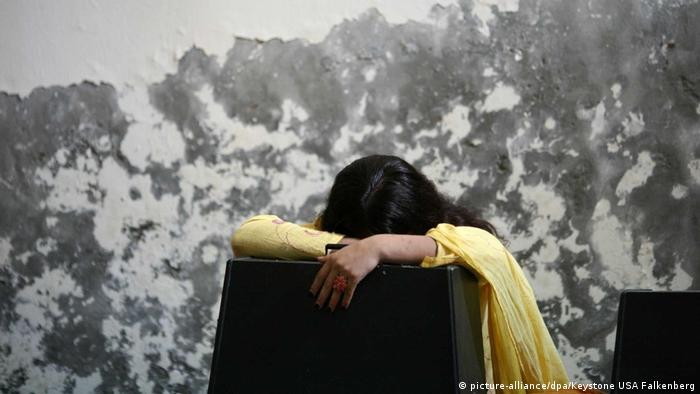
40-year-old Shazia S. was busy talking to her daughter at her parents-in-law's house in Lahore. The mother of six barely had any idea what awaited her. Her husband Sajjad R., a mason by profession, suddenly turned up and asked her to accompany him. She was surprised, but went with him nonetheless.
"He grabbed me firmly, shoving me against the wall and unleashing a barrage of kicks and slaps," Shazia told DW. "Then he picked up a metal pipe and started hitting me mercilessly," she added. Shazia's husband suspected that his wife was having an extramarital relationship. He kept asking about it while hitting me and wouldn't listen to me even though I stressed that I wasn't having any extramarital affair, she said.
Sajjad even threatened to kill her and used his knife to cut off her nose, Shazia said. "No one could hear my cries because he had tightly locked the door. He also inflicted wounds on other parts of my body, including my neck, and then fled. He left me bleeding and crying for help," she recollected.
After the ordeal, Shazia's neighbors took her to a hospital, where she was treated. The doctors said they couldn't fix her nose with plastic surgery, but that she could try and get some treatment abroad.
Amjad Ali, an investigating officer in the case, told DW that the police raided various locations to nab the accused, but could not find him. Shazia's husband has now received bail and the court hearings of the case are set to take place in the coming weeks.
"The police failed to arrest my husband, who managed to get bail even before his arrest," Shazia said. "He came back to our area just the other day and told one of the residents that he chopped off my nose to teach me a lesson and save his honor, because he suspected me of meeting another man."
Shazia, who is now living with her mother in Lahore, fears for her life. Her husband wants her to withdraw the case against him. But she says she cannot imagine living together with a person who has ruined her life. She is also afraid that her father-in-law, a retired police official, might influence the authorities and seek to compromise the legal case against his son. Shazia stressed that she would not let her husband go scot-free.
Rising numbers
Shazia is not the only victim of gender violence in Pakistan over the past several months. Recently, a woman was badly beaten up by her husband, a policeman, in Sheikhupura, a city located 55 kilometers away from Lahore.
Violence against women has been on the rise in Pakistan, a country of over 200 million people. It ranks sixth on the list of the world's most dangerous countries for women.
According to statistics collected by White Ribbon Pakistan, an NGO working for women's rights, 4,734 women faced sexual violence between 2004 and 2016. Over 15,000 cases of honor crimes were registered. There were more than 1,800 cases of domestic violence and over 5,500 kidnappings of women during this period.
According to media reports, more than 51,241 cases of violence against women were reported between January 2011 and June 2017. Conviction rates, meanwhile, remain low, with the accused in just 2.5% of all reported cases ending up being convicted by the courts.
The chief justice of Pakistan has recently announced that 1,000 courts would be set up to deal with the cases of violence against women.
A systemic problem
Pakistani women's rights activists like Mukhtaran Mai say it's a systemic problem.
"Women police stations and other facilities are set up in cities while the majority of the violence cases take place in villages," Mai said. "In rural areas, feudal landlords call the shots; the administration and police are subservient to these feudal chieftains who view women as commodities. So how can justice be delivered in such cases?"
Farzana Bari, another prominent women's rights activist, believes the patriarchal attitudes prevalent in Pakistani society are responsible for the problem. "No government has ever tried to put an end to this mindset," she said.
"It can be done by educating women in rural areas, empowering them economically and raising their representation in the legislature. If women constitute more than 45% of the population, why should they not have the same representation in the economy, employment and government?"
Critics say the current Pakistani government, under Prime Minister Imran Khan, hasn't been focusing on empowering girls and women.
In the northwestern Khyber Pakhtunkhwa province, governed by Khan's Pakistan Tehreek-e-Insaf (PTI) party, official recently issued guidelines ordering girls to wear the veil or abaya.
The order drew widespread outrage, forcing the government to reverse the decision. PTI leader and former federal minister Ishaq Khakwani admitted that the government did not pay enough attention to address the issue of violence against women.
"Only the government cannot be blamed for this situation. The entire society will have to come forward. The police and the judiciary will also have to play their roles. If cases linger in courts for years, then victims are forced to find other ways to settle such cases. So a comprehensive reform program is needed and all sections of society will have to play their role."
Pakistan trained al-Qaeda, says Imran Khan
By Ben Farmer
Pakistan's army and military spy agency trained al-Qaeda and then maintained links with the militants afterwards, Imran Khan has said.
Pakistan's prime minister said his country had then made a major mistake siding with America during the war on terror after the 9/11 attacks.
The decision had cost 60,000 Pakistani lives as the country battled Islamist militancy and Pakistan would have been better staying neutral.
Mr Khan's comments at a New York think tank came ahead of his speech at the United Nations general assembly this week where he is expected to press the case for international action against India over Kashmir. He has also held meetings with Donald Trump trying to get the American president to restart talks with the Taliban movement in Afghanistan.
Pakistan PM:
"The Pakistani #Army, ISI, trained al-Qaida and all these troops to fight in #Afghanistan. There were always links between—there had to be links, because they trained them."
38 people are talking about this
Asked at the Council for Foreign Relations about how Osama bin Laden had managed to stay in Pakistan undiscovered, Mr Khan said: “The Pakistani Army, ISI [military spy agency], trained al-Qaida and all these troops to fight in Afghanistan.
“ There were always links between—there had to be links, because they trained them."
He said the links were “probably at lower levels”, and he did not believe military chiefs had known of Bin Laden's presence.
Mr Khan's comments may anger the military. Pakistan's security apparatus has in the past angrily rejected politicians linking it to militancy. Nawaz Sharif, the former prime minister, faced treason charges last year after an interview where he suggested the Pakistani state played a role in the 2008 Mumbai attack that killed 166 people.
Mr Khan said that after the 9/11 attacks, Pakistan had done a 180 degree turn against former militants, to side with America.
“ I opposed this from day one,” Mr Khan said. “I said we had first trained these guys to fight jihad and it was a great idea, and now we are telling the same groups it’s terrorism. So we should at least have stayed neutral. Pakistan, by joining the US after 9/11, committed one of the biggest blunders.”
Mr Khan also said he believed the Taliban had changed since they were ousted in 2001 and were willing to make peace
He said: “This is—Taliban realise that they cannot control the whole of Afghanistan. The Afghan government knows that they cannot—you know, there needs to be some sort of a peace deal. There has to be a political settlement.”
Strong #Pakistan Earthquake Kills At Least 22, Injures Over 700
A magnitude 5.6 earthquake damaged homes and buildings and cracked roads Tuesday in Pakistan-administered Kashmir.
At least 22 people were killed and more than 700 injured, the Associated Press reported. Most of the dead were women and children, Mushtaf Minhas, information minister for the region, said.
 The quake struck at 4:01 p.m. local time about 2 miles southeast of the Mirpur district of Azad Jammu and Kashmir, according to the U.S. Geological Survey. It was felt across much of northern Pakistan.
"We are supplying tents, food and other essential items to earthquake-affected people. We are facing a tragedy but we will try our best to ensure the rehabilitation of affected people as soon as possible," Minhas told AP.
At a village hospital near Mirpur, Dr. Mahboob Ahmed said 700 people were treated. Some were sent to the district's main hospital, where better health facilities were available.
An AP reporter said he saw doctors treating quake victims at open areas outside the main government-run hospital because of a shortage of beds.
Raja Qaiser, a deputy commissioner in the region, told AP that a main road near Mirpur was badly damaged, causing accidents and damaging buses and other vehicles. Giant cracks opened in the roads.
The temblor shook walls in Pakistan's capital city of Islamabad, about 55 miles northwest of Mirpur. Residents in the capital were seen rushing out of multistory buildings.
Azad Jammu and Kashmir is the western portion of the Kashmir region, a disputed area claimed by Pakistan and India.
"I was sitting in my shop when suddenly the walls started swaying. I knew that it is a strong earthquake. The moment I came out of my shop, its roof caved in," one shop owner told Pakistan's Geo news channel as he stood in a street littered with debris of houses and nearby damaged shops. The shop owner was not identified.
Mohammad Arif, whose home was damaged in Mirpur, said when the quake hit, he started shouting to alert his family.
"God saved me. God saved all of my family members, but our home was partially damaged," he told Geo.
Pakistan Prime Minister Imran Khan and President Arif Alvi in separate statements expressed their grief over losses caused by the quake.
Bilawal Bhutto demands release of political prisoners
Pakistan Peoples Party (PPP) chairman Bilawal Bhutto Zardari on Monday demanded the release of all political prisoners.In a tweet, he applauded the release of parliamentarians Mohsin Dawar and Ali Wazir, Bilawal criticised Speaker National Assembly Asad Qaiser for failing to issue production orders for the imprisoned MNAs.

Time cant be up for youth of Pakistan who believe in democracy, human rights & peaceful resistance. Our time has just begun.Pleased 2 FATA MNAs are finally free. Despite repeated demands selected Speaker never issued production orders. I demand release of all politician prisoners twitter.com/mjdawar/status…

1,661 people are talking about this
Dawar and Wazir were arrested in May following the Kharqamar incident. They were granted bail by the Peshawar High Court on Saturday.
Bilawal also accused the Pakistan Tehreek-e-Insaf (PTI) government of arresting politicians to divert attention from its failure to handle the Kashmir issue. He asked how the premier intended to lead the Kashmir cause if he was unable to lead the country.Opposition parties have decried political victimisation at the hands of Imran Khan-led government. Most recently, the PPP and Pakistan Muslim League-Nawaz staged a protest outside the National Assembly over the arrest of veteran PPP leader Khursheed Shah.
The lawmakers arrested by the incumbent government in different cases are former president Asif Ali Zardari, former prime minister Shahid Khaqan Abbasi, former finance minister Miftah Ismail, former railways minister Saad Rafique, Ali Wazir, Mohsin Dawar, Rana Sanaullah, and Khursheed Shah.
Leader of the Opposition in the National Assembly Shehbaz Sharif was also arrested last year and is currently out on bail. Other senior leaders of opposition parties including ousted premier Nawaz Sharif, PML-N vice presidents Maryam Nawaz and Hamza Shehbaz, and PPP’s Faryal Talpur are also currently imprisoned.
https://nation.com.pk/23-Sep-2019/bilawal-demands-release-of-political-prisoners?show=preview
Monday, September 23, 2019
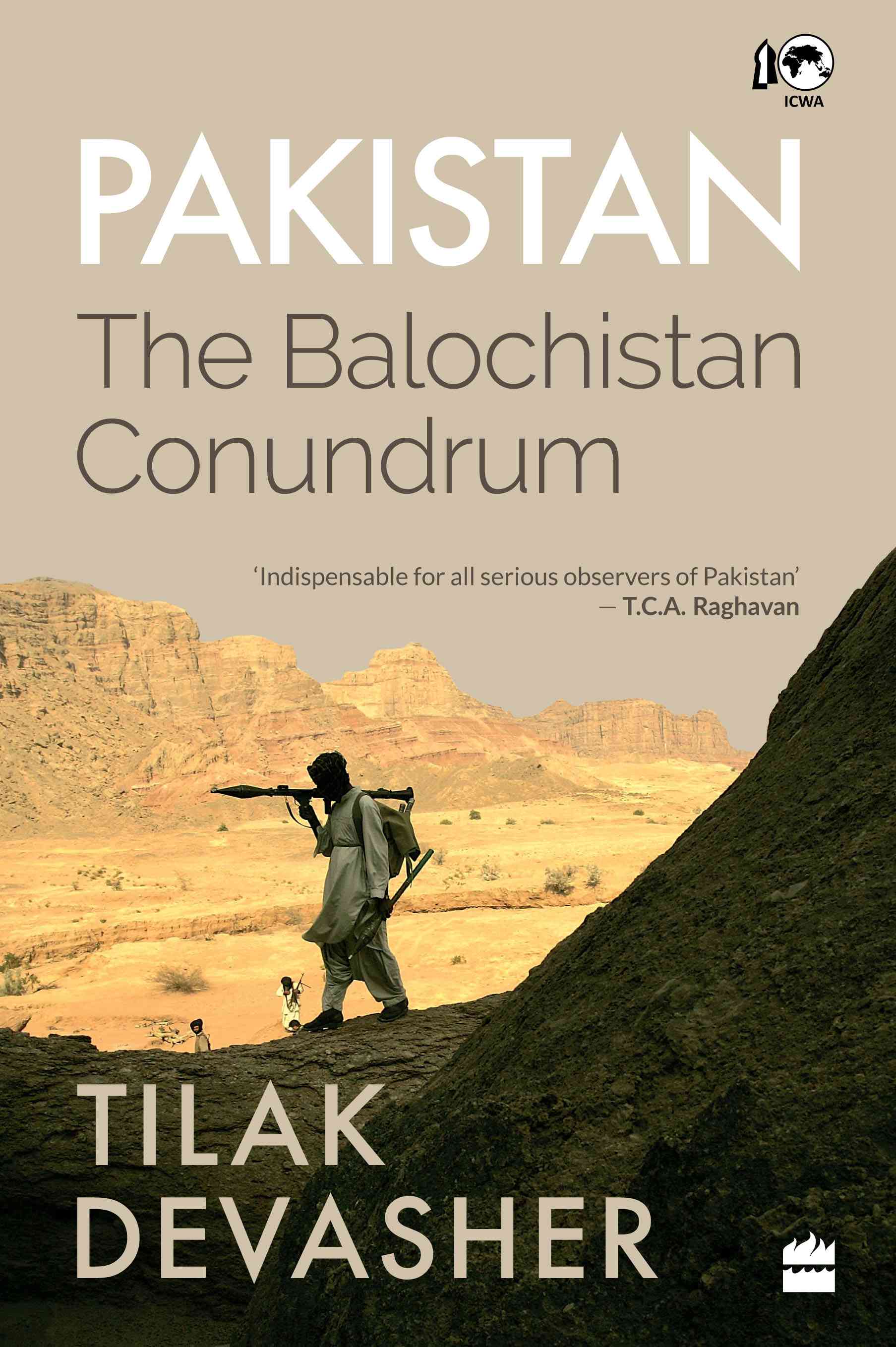
In Balochistan, more people have disappeared than anywhere else in Pakistan, says this book
Tilak Devasher
The most distressing aspect of the situation in Balochistan is the sharp increase in the number of human rights (HR) violations. While both sides have been guilty of it, it is the army that has been guilty of violating human rights systematically as an instrument of policy to crush the insurgency. This is borne out by reports of human rights organisations, think tanks as well as journalists who have had access to the region.
There are four impediments in discussing the HR violations. First, as the Human Rights Commission of Pakistan noted, “The human rights abuses in the province receive only limited attention as certain areas remain virtually inaccessible to the national media and civil society, while many parts of the rest of the province are poorly connected to major cities elsewhere in Pakistan. Human rights violations are, therefore, poorly documented and patchily reported.” The media has been denied access even to the internally displaced people in the Bugti area where hundreds are believed to have died due to inadequate medical facilities and poor sanitation.
Second is the lack of serious international attention. As noted by Declan Walsh, the Baloch insurgency that has gone on intermittently for decades is often called Pakistan’s Dirty War, because of the rising numbers of people who have disappeared or have been killed on both sides. But it has received little attention internationally, in part because most eyes are turned toward the fight against the Taliban and al-Qaeda in Pakistan’s north-western tribal areas. The government was able to take “... advantage of the more permissive attitude towards human rights violations by the international coalition fighting the ‘war on terror’ to subject its political opponents, including Sindhi and Baloch nationalists, to enforced disappearance.”
Third, as Walsh notes, the forces of law and order are curiously indifferent to the plight of the dead men. Not a single perpetrator has been arrested or prosecuted; in fact, police investigators openly admit they are not even looking for anyone. As he puts it: “The stunning lack of interest in Pakistan’s greatest murder mystery in decades becomes more understandable, however, when it emerges that the prime suspect is not some shady gang of sadistic serial killers, but the country’s powerful military and its unaccountable intelligence men.” Fourth, the statistics relating to human rights violations vary given the enormous difficulties in documenting them. Despite this, the common link in these violations is the crude attempt at suppressing the growing independence movement in Balochistan.
In spite of these constraints and Pakistan’s efforts to keep its brutality in Balochistan under wraps, it has failed to do so due to the determination of the human rights organisations and of the Baloch to bring to light what the army is doing to the people.
The most harrowing of all the human rights violations in Balochistan are enforced disappearances. It has become an explosive issue given that more people have gone missing in the province than in any other part of Pakistan. The HRCP has ample evidence to support the allegations of the families of victims that the perpetrators of enforced disappearances are intelligence agencies and security forces. Senior officials and politicians in authority have also conceded this. A HRCP mission learnt that in several incidents even public figures in power were unable to secure relief or assurances that such incidents will stop.
These public figures cited a number of incidents of disappearances in which, on the basis of credible evidence, they approached the intelligence agencies and the security forces only to be met with a bland denial. The mission also received information about arbitrary arrests and reports of endemic torture at unauthorised cells whose existence was confirmed by public figures.
The consequences of such atrocities were well articulated by the veteran Baloch leader, Attaullah Mengal, when he told Nawaz Sharif in December 2011: “Baloch youth don’t want such a Pakistan in which they receive mutilated bodies of their compatriots. It is for them to decide [about their future], because they are being systematically eliminated and forced to seek refuge in the mountains.”
An ominous note followed: “But if atrocities continue, the Baloch will never accept a united Pakistan.” Sharif termed Attaullah Mengal’s concerns legitimate, conceding that atrocities were being committed in Balochistan. He said his party would also talk to Baloch youth. About the assassination of Akbar Bugti, Nawaz Sharif said the “killers must be called to account”. The HRCP started noticing this issue in 2004 when the number of missing persons from Balochistan rose sharply. By 2006, Balochistan accounted for an overwhelming majority of persons reported missing in a year in Pakistan. In the cases of enforced disappearance brought before it, the mission found that there were credible allegations and material on record to substantiate the involvement of state security forces, particularly the Frontier Corps.
While first information reports (FIRs) had been registered with the local police in many cases of enforced disappearance, there had been no efforts by the police to investigate them. Quite likely since the involvement of the state security agencies, particularly the FC, was well known, the police did not take any action. According to the HRCP, “This indicated that there was either an unstated policy not to interfere with actions of the FC or the civil law enforcement authorities themselves feared the military and paramilitary forces.”
In one particular case a young man named Abid Saleem was picked up from Chitkar Bazaar in Panjgur on 23 January 2011, together with five other men who had no connection with him. Everyone present in that part of the bazaar saw uniformed FC personnel together with plain-clothes men take the boys into custody. An FIR was registered on 26 January 2011 with Panjgur Police Station and FC personnel were listed for the disappearance.Instead of making any efforts to recover the disappeared persons, the police did not even ask any questions of the FC personnel. At least one of the persons picked up along with Abid Saleem was found alive. He had been severely tortured, shot and thrown by the roadside along with the dead body of another person who had disappeared with him on 23 January.
His tormentors had apparently thought that he too had died after being shot in the throat. There had been no investigation in this case by the police. No medical records were collected even though the survivor did receive medical treatment.
The HRCP Report 2009 made the important point that while in the rest of the country most of the missing persons were picked up due to involvement in terrorism, in Balochistan many belonged to areas where no terrorist activity was reported. The inescapable conclusion, according to it, was that a large number of Balochistan’s missing persons were targeted for their legitimate political activities/opinions. The perception had also gained ground that only ethnic Baloch were being targeted in incidents of enforced disappearance and none of the disappeared was a “settler”.
The situation had become so bad and attracted such international opprobrium that Pakistan was compelled to allow a UN mission in September 2012. The mission spent ten days in Balochistan meeting with government officials and private citizens to investigate the fate of disappeared persons in Balochistan.Some of the witnesses who met with the delegation told its members that they had been “threatened or intimidated”. However, neither the Inter-Services Intelligence (ISI) nor the Frontier Corps that are blamed for most of the disappearances met the delegation. The UN mission did succeed in drawing international attention to the issue of enforced disappearances. The United States and the United Kingdom also expressed concerns over the human rights situation in Balochistan during the nineteenth session of the United Nations Human Rights Council.
Enforced disappearance is defined in Article 2 of the International Convention for the Protection of All Persons from Enforced Disappearance, which the UN General Assembly adopted in December 2006, as: “...the arrest, detention, abduction, or any other form of deprivation of liberty by agents of the state or by persons or groups of persons acting with the authorisation, support, or acquiescence of the state, followed by a refusal to acknowledge the deprivation of liberty or by concealment of the fate or whereabouts of the disappeared person, which place such a person outside the protection of the law.”
Part II of the Constitution of Pakistan dealing with Fundamental Rights and Principles of Policy states: “(1) No person shall be detained in custody without being informed, as soon as may be, of the grounds for such arrest, nor shall he be denied the right to consult and be defended by a legal practitioner of his choice. (2) Every person who is arrested and detained in custody shall be produced before a magistrate within a period of twenty-four hours of such arrest to the court of the nearest magistrate, and no such person shall be detained in custody beyond the said period without the authority of a magistrate.”
There are provisions for preventive detention but here too: “No such law shall authorise the detention of a person for a period exceeding three months,” unless approved by the appropriate Review Board. All these constitutional guarantees have been systematically and repeatedly abused by the state.
For example, Munir Mengal, director of a proposed Baloch television channel, was illegally detained in April 2006. He was released in September 2007 on orders of the Balochistan High Court after he was exonerated of all charges. However, according to his family, he was again detained by the intelligence agencies at an unknown location. Despite undeniable evidence of “disappearances”, successive governments have consistently denied subjecting anyone to enforced disappearance or knowing anything of their fate or whereabouts. In September and December 2006, after Amnesty International released reports documenting dozens of cases of enforced disappearances, President Musharraf responded by stating: “I don’t even want to reply to that; it is nonsense, I don’t believe it, I don’t trust it.” He added that 700 people had been detained but that all were accounted for.
In March 2007 President Musharraf asserted that the allegation that hundreds of persons had disappeared in the custody of intelligence agencies had “absolutely no basis” but that these individuals had been recruited or lured by “jihadi groups” to fight for their “misplaced causes”: “I am deadly sure that the missing persons are in the control of militant organisations,” he said. The security forces when confronted by the Supreme Court and the provincial high courts about enforced disappearances have resorted to a variety of falsehoods to avoid being exposed. Not surprisingly, the refusal of the state to meaningfully and truthfully respond to Supreme Court directions has stalled the tracing of persons subjected to enforced disappearance in Pakistan. More wide-ranging damage is being done by giving the intelligence agencies immunity to commit such grave human rights violations and collaborating in their cover-up. The state has also sent a dangerous signal that it condones the impunity of committing, condoning or concealing such human rights violations.
In July 2011 the Human Rights Watch published a report named “We Can Torture, Kill, or Keep You for Years – Enforced Disappearances by Pakistan Security Forces in Balochistan”. It starts with a summary that gives the account of the person who witnessed the disappearance of Abdul Nasir in June 2010: “Even if the president or chief justice tells us to release you, we won’t. We can torture you, or kill you, or keep you for years at our will. It is only the army chief and the [intelligence] chief that we obey.”
During consultations with the families of the disappeared people in Quetta, the HRCP found that families of missing persons living in remote areas, and in not so remote areas such as Kalat, did not have the means to register their complaints; most did not know how to access redressal channels and families were unaware of the cases in courts. As a result, Balochistan today has the dubious distinction of being the world capital of enforced disappearances where more than 2,000 journalists, singers, teachers and lawyers have been forcibly abducted, tortured, killed and dumped since 2009 – in just five years as many as in Chile during the reign of Augusto Pinochet. In 2014 alone, as many as 455 people, who were forcibly abducted, were tortured and killed by the Pakistani security forces and intelligence services, and their bodies dumped, according to Nasrullah Baloch, chairman of the VBMP.
After Ghotki, Pakistan Should Abandon its Glorification of Temple Vandalizers
The abandonment of the Islamist narrative has long been an existential question for Pakistan.
Last week, an Islamist mob vandalized three temples, and damaged a school and houses belonging to the Hindu community in Ghotki, after the principal of the local Sindh Public School had been accused of blasphemy by a student.
The principal was taken into custody and a First Information Report (FIR) was registered by the police under Section 295-C of the Pakistan Penal Code, which establishes the death penalty for offending Islam.
Despite the arrest of the principal, who has since been shifted to an undisclosed location for his own safety, communal tension gripped Ghotki, with the local Hindu community fearing more aggression from Islamist mobs in a country where outraged sentiments have resulted in entire localities belonging to religious minorities being razed.
Where Christian communities are largely targeted in Punjab owing to the demographic distribution, local Hindus are often attacked in Sindh, where they’re more densely populated.
In May, mob violence broke out in Mirpurkhas where a Hindu doctor had been accused of blasphemy. In February, the Sham Sundar Shewa Mandli Temple in Kumb was the target of an arson attack, where idols and religious scriptures – including Bhagwat Geeta and Guru Granth Sahib – were set ablaze.
When the temples aren’t being torched by Islamist mobs, they are often demolished under the auspices of the Evacuee Trust Property Board, with local municipal administrations razing temple sites to facilitate construction of commercial centers and private properties.
A 2014 survey revealed that 95 percent of the places of worship belonging to religious minorities in Pakistan no longer exist, with many of them having been converted to “toy stores and restaurants.”
Indeed, the mob killings and destruction of temples isn’t the only way the Hindu community is violently marginalized in Pakistan. Over 1,000 non-Muslim girls, a vast majority of them Hindus, are forcibly converted to Islam annually, according to the Human Rights Commission of Pakistan.
Member of the National Assembly, and the head of the Pakistan Hindu Council, Dr. Ramesh Kumar Vankwani revealed in 2014 that on average 5,000 Pakistani Hindus migrate to India every year.
Historically, the persecution of Hindus in the country has emanated from the circumstances of the state’s creation and its founding ideology called the Two Nation Theory, designed by the founders of Pakistan to underline the differences between Muslims and Hindus of the subcontinent.
Since the creation of Pakistan, that founding antagonism against Hindus was gradually etched in the national narrative as illustrated by the school curricula.
“Hindus have tried all their means to harm Muslims… The foundation of [the] Hindu set up was based on injustice and cruelty… Hindus… used all means to weaken and harm Pakistan…” are examples of how the community is often referred to in government textbooks.
Similarly, among those glorified as part of the “history of Pakistan” are the likes of Muhammad bin Qasim who “saved the people of Sindh” from the “atrocities of Hindu Raja,” as described in the Civics Class IX & X book from the Punjab Textbook Board, Lahore, 2001.
Among those lauded as heroes of Pakistan are Tipu Sultan who in a 1790 letter to then Bekal Governor Budruz Zuman Khan took pride in forcibly converting 400,000 Hindus. Prime Minister Imran Khan has often touted Tipu Sultan as his hero.
Even so, the demolition of Somnath temple remains etched in the Islamist folklore in Pakistan to such an extent that the country has named nuclear warheads carrying missiles after Ghaznavi – ostensibly emblematic of “Muslim Pakistan” intimidating “Hindu India.”
In Pakistan, Ghaznavi doesn’t just symbolize Muslim supremacy over Hindus, but also Sunni supremacism given his attempted cleansing of the Ismaili Shia population in Multan in the year 1005.
This misplaced glorification of genocidal invaders, the legal sanction to Islamic supremacy and the state’s capitulation to religionist groups, facilitate mob vandalism as witnessed in Ghotki last week.
While abandonment of the Islamist narrative has long been an existential question for Pakistan, there is hope that the country might take the requisite steps to finally turn the corner.
That hope emanates from the local Muslims guarding the temple in Ghotki against further destruction as an expression of solidarity with their Hindu neighbors, with civil society protests against the mob eventually culminating in cases being registered against the vandalizers.
Prime Minister Khan’s insensitive reaction to the Ghotki incident notwithstanding, the government set a progressive example by sacking a minister for anti-Hindu bigotry in March this year. Even the historic Holi address of Khan’s predecessor Nawaz Sharif in 2017, where he endorsed pluralism, suggested that an Islamist interpretation of history was being revamped, albeit with the requisite revisionism.
For Pakistan, overcoming the Islamist inertia and embracing religious pluralism isn’t merely about righting the societal wrongs, it is also critical for its global standing.
At a time when Khan is looking to fight Pakistan’s case at the United Nations General Assembly, he needs to realize that any support on Kashmir hinges on the abandonment of its wrongs from the past, many of which were founded on radical Islam and the masochistic penchant for jihad.
While leaders condemn the rise of Hindu nationalism in India, it is important to differentiate its opposition to Hindutva ideology from bigotry against Hindus.
More importantly, for any condemnation of actions across the border to carry substance, Pakistan would need to abandon its own adherence to religious supremacism and uphold the sanctity of human rights.
Subscribe to:
Posts (Atom)