Monday, September 16, 2019

#Pakistan #PPP - Federal govt ‘conspiring’ to divide Sindh: Bilawal


Pakistan People’s Party (PPP) Chairman Bilawal Bhutto Saturday said the federal government wants to ‘occupy’ Karachi as part of a larger conspiracy to divide the Sindh province.
The PPP chief said his party enjoys complete support of the masses as it won the last year’s general elections with a heavy majority. He said the federal government is not releasing the due share of funds for Sindh which is a sheer injustice with the province. “Those who want to eliminate PPP will be themselves eliminated,” he added.
Bilawal announced that he will initiate agitation against the ‘puppet’ government from a public gathering to be held at Garhi Khuda Bux. To a question regarding forward block in the PPP, he termed the reports mere speculation.
Sitting and former lawmakers including Mir Abid Bhayo, Eijaz Dhamrah, Anwar Ali Sial, Nisar Ahmed Khuhro, Khurshid Junejo, Azhar Kamario, Abdul Fatah Bhutto also accompanied the PPP chief.

Video Report - Mob attacks Hindu teacher, vandalises temple in Pakistan

Video Report - #SaudiOil #HouthiRebels Saudi oil attacks: Iran denies links to drone strikes

Video Report - Drone attack on Saudi oil: How safe are global supplies? | DW News

Video Report - Bolton's record that got him fired from Trump's Administration

Video - Footage Surfaces from Bernie Sanders’s 1980s Public Access Show | The Daily Show with Trevor Noah

#Pakistan #PPP - Bilawal Bhutto Address In Garhi Khuda Bakhsh Workers Convention| 15 Sep 2019

#Pakistan - The regime

Cyril Almeida

BY now, it’s apparent to all — or at least to anyone willing to look — what this is. Gone are the fig leaves and legal nuances and faux optimism. It is what it is, it isn’t very pretty and it’s probably going to get a whole lot uglier.
Welcome to the hybrid regime.
A lot has already gone wrong and the stuff that has gone wrong is obvious for two reasons. Economic hurt is impossible to hide, especially at the consumer end and when jobs start to disappear. Folk can easily intuit what’s going on every time they buy something or wander around in search of jobs.
Imran helped. His message was simple — I’ll fix everything at the same time in record time, just trust me — while the base he cultivated is simpler still: young-ish, previously apolitical and with not much understanding of much.
Outsized expectations were always going to collide with reality, but that reality has turned out to be so dismal and the collision come at such speed is down to something else.
Imran has landed himself in an awkward and potentially perilous situation.
The periodic shopping around for a useful idiot to nominally run the show was more straightforward in times past: pick a technocrat or select a traditional politician. Technocrats get a bit of work done because that’s what professional sorts do: they try and do stuff.
Never mind that they screw up matters and leave a mess behind; while they’re on the job, technocrats always look like they’re busy doing stuff. They have to.The traditional politician has much the same imperative to be seen to be doing things, but his focus is mostly on greasing the system because no grease means no support and no support means no utility to the ones hunting about for the next useful idiot.
But things aren’t so simple in a hybrid regime.
The headhunters don’t just have to find someone who can get things done, they need someone to bring a veneer of legitimacy to the whole enterprise. In these tricky times, a memorable Mohammed Hanif phrase must suffice by way of elaboration:
“Khan has politicised a whole generation, only to deliver it into servitude to Pakistan’s old establishment.”
If the headhunters needed someone Imran-esque, give the man his due: Imran made it impossible for the headhunters to look past him. A hybrid regime fronted by a technocrat or traditional politician was a non-starter in the presence of Imran.
With the idea being to put Nawaz and Zardari to the sword politically and then if you look past Imran too, there isn’t much left in the wagon wheel of public opinion from which to secure legitimacy for a hybrid regime.
One of the more curious elements of the experiment we’ve all been made to live through this past year is why this doesn’t seem to have occurred to Imran — that much as he needs them, they need him, or did anyway.
Perhaps Imran really has no interest in anything beyond becoming PM as a final chapter in a life well spent. Or perhaps in finding their latest useful collaborator the competence deficit is more than what had been hoped for.
Either way, in eviscerating great chunks of his political capital in little over a year, Imran has landed himself in an awkward and potentially perilous situation: on balance, it’s not quite clear if the veneer of legitimacy Imran brings to the hybrid regime is really worth the headaches he’s created for the regime.
But if what’s gone wrong is obvious and how we’ve got to this miserable point in double-quick time is fairly clear, there’s a more fundamental problem with the hybrid regime: it can’t work, no matter who is trotted out to front it.
Slice it anyway you like. Regimes almost by definition are a centralising force, but delivery is almost always decentralised.
Perhaps because the margins at the centre were razor-thin or perhaps because the impetus behind this project is itself a centralised force, too much time and attention was wasted on fashioning a workable arrangement at the centre.Imran is now effectively a lame duck at the centre, the IMF straitjacket and the snatching away of key ministries from his control ensuring that. But Imran still has real sway in Punjab and KP and, with the right assistance, a fair bit of potential to meddle in Sindh.That Imran has proved rubbish at managing the provinces, and thereby undercut the rationale of the hybrid regime, has obscured the point that the provinces can’t be managed from the centre. But then no regime can tolerate multiple power centres across the provinces. It’s a riddle with no solution.
Or flip it around.
Just because Imran is flailing around doesn’t automatically have to mean that a better frontman can never be unearthed. It could just be a question of more skilfully looking in the right place at the right time.
A regime frontman with the skills of a technocrat, the savvy of a traditional politician and the sleight of hand of a populist. See the problem there? In Pakistan? You may as well be looking for a unicorn snuggling up to leprechaun at the end of a rainbow. The internal contradictions of a hybrid regime are too many and too varied to be adequately and sustainably overcome.
By now, it’s apparent to all what this is: it isn’t very pretty and it’s probably going to get a whole lot uglier. And that we still have Imran is both the good news and the bad.
Pakistan, eh?
May God bless this land and good luck to all of us here.
https://www.dawn.com/news/1505305/the-regime

#Pakistan - Why Imran Khan's 'Kashmir Hour' Fell Flat

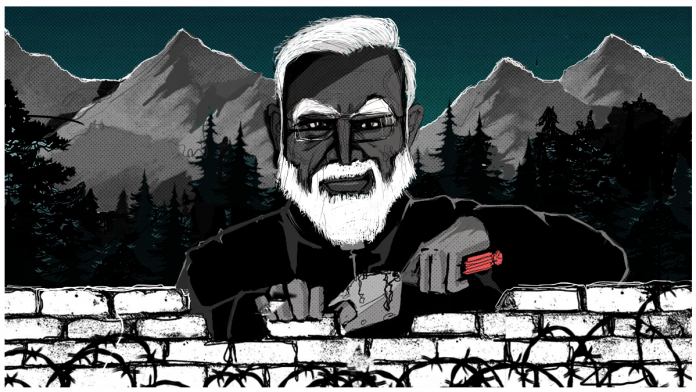
Modi has finished Pakistan’s ‘unfinished business’ of Partition


Article 370 is gone, now it’s time to fight the good fight — for rights of Kashmiris as fellow Indians and restoration of commerce & political activity in J&K.


Here is a somewhat different way of looking at Jammu and Kashmir today.
One side in the conflict had used one description for the Kashmir issue for 70 years, as if it was cast in a Pir Panjal rock: It is the unfinished business of Partition.
That side was Pakistan.
India never agreed. Not even by way of emphasising its claim on Pakistan-occupied Kashmir (PoK). India’s view was, Partition ended in 1947. We have moved on, so should you. It wasn’t stated, but unambiguously implied.
Pakistan disagreed. In the decade of the 1950s, it waited to strengthen its armed forces by joining US-led military pacts. That achieved, in the 1960s, it launched a full-fledged military campaign to take Kashmir by force to settle that “unfinished business”, but failed.
It spent the 1970s recuperating from defeat and the dismemberment of 1971. Zulfikar Ali Bhutto turned its attention westwards, towards Islamic countries, especially the Arabs, and sought solace in the Ummah. The “unfinished business” wasn’t forgotten. The Pakistani establishment was biding its time.
The time came in the late 1980s. By 1989-90, Pakistan believed it now had a proven strategy. It was the one used to defeat the Soviets in Afghanistan. It also had the nuclear umbrella. The asymmetric war launched in Kashmir at that time is now in its 30th year.
In the 1990s, it waned (after P.V. Narasimha Rao crushed the insurgency). It rose again with pan-Islamisation of the insurgency as foreign mujahideen surfaced. The intrusion in Kargil was the next gambit. That failed because of India’s resolute response and Pakistan’s non-existent international leverage.
After Musharraf’s coup in 1999, the insurgency was fully revived, now manned entirely by Pakistani jihadis. As it peaked, the Vajpayee government accepted a Pakistani overture for a summit. But the imperious manner in which Musharraf conducted himself at Agra shocked even an incorrigible peacenik like former prime minister I.K. Gujral. He said Musharraf was behaving as if he was visiting a “defeated country”.
The Agra summit failed. Pakistan’s global leverage also returned soon with 9/11. From being an expendable old ally-turned-nuisance, Pakistan emerged as a “stalwart ally” (Bush’s description) yet again. Bloodshed in Kashmir peaked. You want to know how strong Pakistan’s hold on the Americans was in this year? When Kashmir’s first suicide bomber blew up its state assembly, then Secretary of State Colin Powell infamously described it as an attack on an Indian government “facility”.
The attack on Parliament, a near-war following it, and then the long peace process with Musharraf during the tenures of Vajpayee and Manmohan Singh are relatively recent history. Regrettably, the Pakistani establishment was again only buying time.
Keeping pace with all the peacemaking efforts was pro-active asymmetric warfare. India was hit with something big the moment the ISI calculated India had had “too long” a period of respite. There were many train bombings, attacks here and there in mainland India (besides routinely in Kashmir) and then the Mumbai massacres of 2008.
The pattern continued in the following decade. Every thaw was followed by a kick in India’s shin. Gurdaspur, Pathankot, Pulwama, keep counting.
India responded in a variety of ways: From counter-insurgency in Kashmir, a localised fight back (Kargil), coercive diplomacy (after the Parliament attack) and strategic restraint (26/11).
The initiative was always with Pakistan. For 70 years, Pakistan had brainwashed itself into believing that if it kept bleeding India, India would one day give in.
Pakistan had given up hope of winning Kashmir after its 1965 misadventure. But there was always the hope for something, at least a face-saver, something to write home about.
From a four-district Valley land grab deal in the pre-1965 Bhutto-Swaran Singh negotiations under big-power (mostly British) pressure, to open borders and treaty-bound Kashmiri autonomy in the Musharraf-Vajpayee/Manmohan Singh era, Pakistan had moderated its expectations.
But it was confident of getting “something” in the end. Something to claim that it had concluded that unfinished business of Partition.
Instead, on 5 August this year, the Modi government finished that “business”. Every Indian prime minister had moved the clock in the same direction. Article 370 and Kashmiri special status and autonomy had been whittled down over these decades, as if serendipitously.
Narendra Modi has sealed that. Of course, it brings him great benefit in domestic politics. But he never claimed he wasn’t a politician.
This business finished, where do we go next?
For the first time since 1947, Pakistan has to strategise when it doesn’t have the initiative. India has shut the door on negotiations on the status of Kashmir, or at least the part of Jammu and Kashmir with India.
Pakistan can, of course, try to take it by force again. A full-fledged war will have its own consequences. Resumption of terrorism will be countered under the definition of a new normal.
Here’s the oldest reality on Kashmir: It was never an international or even bilateral issue. The only thing bilateral was our mutual hypocrisy.
For Pakistan, it was the fraudulent pretence of “Azad Kashmir”, as if “azadi” or any third option was available besides India or Pakistan.
For India, it was the insincere subterfuge of a moral, political and constitutional commitment to Kashmiri autonomy and special status. None of our 13 prime ministers believed this. Not even Jawaharlal Nehru.
All this is now buried.
The new reality is, therefore, essentially the old one: There will be no territorial exchange at all between the two countries, even if they fight a thousand-year war as Bhutto had threatened (only 72 have gone yet). Not even if they drop all their nukes on each other. Kashmir’s territorial status was never going to change. Now even cosmetic, optical face-savers to Pakistan are out.
There is a nuttier (but self-destructively powerful) section among the Pakistani establishment which still has scriptural belief of ‘Ghazva-e-Hind’, whereby Islamic forces led by them will “break up and subjugate India”. That is exactly the fantasy echoed by the idiotic few (and we don’t yet know who) who shouted “Bharat tere tukde honge…” the other day. India isn’t about to break up, and Kashmir will stay where it is.
Pakistan is out of the equation now. Where do we go next?
First, accept that whether or not you like Narendra Modi and Amit Shah, there is zero popular support for or prospect of what happened on 5 August being reversed. Zero. On the status of Kashmir, there is the widest political and popular unanimity in India.
This accepted, junk all guilt and self-flagellation. Since you swear by your Constitution, read it from Article 1 on, not 370. Article 1 lists the states and territories of India and has Jammu & Kashmir firmly at no. 15. You can’t swear by your Constitution, but only by a solitary temporary Article 370 and fight with its Article 1.
What follows is less cluttered. Speak, campaign, fight for the restoration of all civil and human rights, restoration of communication, commerce, movement, assembly, peaceful protests, political activity in Jammu and Kashmir. It’s a good fight.
Fight for the Kashmiris’ constitutional rights now as equal, fellow Indian citizens. There is no reason why they should not have the same rights as Indians in Tamil Nadu, Uttar Pradesh, West Bengal or Gujarat. It should have always been the case, except for those lingering uncertainties about the “dispute” with Pakistan, the unfinished business of Partition.
After the loss of more than 42,000 lives in 30 years, a new history has begun in Kashmir. We can make it much better than the past.

بھارت سے تجارتی پابندیوں کے بعد نصابی کتب کا بحران سر پہ موجود


مونا خان

چونکہ پاکستان میں پرنٹنگ کا کاروبار نہ ہونے کے برابر ہے اس لیے یہاں صرف لوکل شاعری یا ادب کی کتابیں پرنٹ ہو جاتی ہیں لیکن یونیورسٹی پریس گروپ یا ہارورڈ پبلشر کی کتابیں بھارت میں ہی پرنٹ ہوتی ہیں۔

پانچ اگست کو بھارت کی جانب سے جموں و کشمیر کی ریاستی حیثیت ختم کرنے کے ردعمل میں پاکستان نے نو اگست کو بھارت کے ساتھ تجارت  پر پابندیاں عائد کر دیں۔ پابندی لگنے کے تین ہفتے بعد ہی احکامات میں ترمیم کرتے ہوئے بھارت سے ادویات اور طبی آلات منگوانے کی اجازت دے دی گئی۔
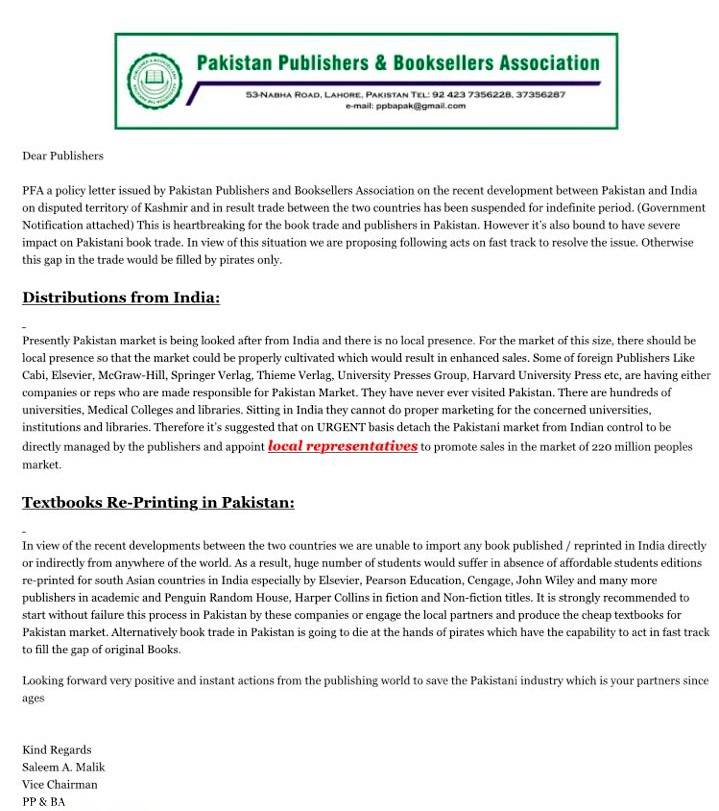
یہ پابندیاں بھارت سے منگوائی گئی نصابی کتب پر کس طرح اثر انداز ہوتی ہیں، یہ جاننے کے لیے انڈپینڈنٹ اردو نے پاکستان پبلشر اینڈ بُک سیلر ایسوسی ایشن کے نائب صدر سلیم ملک سے بات کی تو انہوں نے بتایا کہ ’ٹیکسٹ بُکس جو بھارت سے پاکستان منگوائی جاتی تھیں وہ  آئندہ تعلیمی سال اس پابندی کی وجہ سے میسر نہیں ہوں گی جس سے طلبا کا بہت نقصان ہو گا۔‘
انہوں نے مزید وضاحت کی ’بہت سی امریکی اور غیر ملکی پبلشر کمپنیوں نے جنوبی ایشا میں کتابوں کی مناسب قیمت رکھنے کے لیے بھارت میں اپنے پبلشر ہاؤسز بنائے۔  وہاں او لیول، اے لیول، میڈیسن، انجنئیرنگ اور کمپیوٹر سے متعلقہ کتابیں چھاپی جاتی ہیں اور جنوبی ایشا کے دیگر ممالک میں ان کی ترسیل کی جاتی ہے۔‘ انہوں نے کہا کہ نو اگست کے تجارتی بندش نوٹیفیکیشن کے بعد پاکستان اب بھارت سے وہ کتب بھی درآمد نہیں کر سکتا۔
جب اُن سے سوال کیا گیا کہ کیا پاکستان میں ان بین الاقوامی ٹیکسٹ بُکس کا سٹاک موجود نہیں تو سلیم ملک نے کہا کہ موجودہ تعلیمی سال کے لیے کتابیں تو طلبا نے خرید لی ہیں لیکن آنے والے دسمبر جنوری میں شروع ہونے والے سمسٹر اور تعلیمی سال کے لیے کتابوں کا ذخیرہ موجود نہیں اور اس کے لیے حکومت کو اقدام اٹھانے ہوں گے۔
کیا وہ کتابیں پاکستان میں پرنٹ نہیں ہو سکتیں؟ اس سوال کے جواب میں انہوں نے کہا کہ ’پاکستان کے پاس پرنٹ کرنے کے قانونی حقوق نہیں ہوں گے تو ہم پرنٹ نہیں کریں گے۔ اور بغیر اجازت اگر کتابیں پرنٹ کی جائیں گی تو وہ قانونی خلاف ورزی میں شمار ہو گا۔‘
سلیم ملک نے کہا کہ ’ہم نے بین الاقوامی پبلشر سے درخواست کی ہے کہ اگر 2000 سے زائد کتابوں کی سالانہ ضرورت ہے تو پاکستان کو وہ کتابیں پرنٹ کرنے کے قانونی حقوق دیے جائیں۔‘
انہوں نے کہا ’چونکہ پاکستان میں پرنٹنگ کا کاروبار نہ ہونے کے برابر ہے اس لیے یہاں صرف لوکل شاعری یا ادب کی کتابیں پرنٹ ہو جاتی ہیں لیکن یونیورسٹی پریس گروپ یا ہارورڈ پبلشر کی کتابیں بھارت میں ہی پرنٹ ہوتی ہیں۔ وہاں سے پاکستانی پبلشر وہ کتابیں منگوا کر بڑے کتاب گھروں میں تقسیم کر دیتے ہیں جہاں سے طلبا کتابیں خرید لیتے ہیں۔ لیکن جب مارکیٹ میں کتابیں میسر ہی نہیں ہوں گی تو طلبا کتابیں کہاں سے خریدیں گے؟ ‘
انہوں نے مزید کہا کہ ’اگر پاکستان کو پرنٹنگ کے حقوق مل جائیں تو اس سے پاکستان میں پبلشنگ بزنس بھی بڑھے گا اور روز روز کے پاکستان بھارت تناؤ سے درسی کتابوں کی تجارت میں بندش بھی نہیں آئے گی۔‘
اگر ادویات کی درآمد کی اجازت دے دی گئی ہے تو کتابوں کی درآمد کی بھی اجازت حکومت کو دینی چاہئیے۔ اس معاملے کی وضاحت کرتے ہوئے سلیم ملک نے کہا کہ 'ہم پبلشرز کے ساتھ رابطے میں ہیں اور ہماری پہلی کوشش یہی ہے کہ اس مسئلے کا مستقل حل نکال لیں اور پاکستان میں پرنٹنگ کے حقوق حاصل کر لیں۔ انہوں نے کہا کہ حکومت نے 70 برس سے اس بارے میں کچھ نہیں کیا۔ اتنی اہم کتابیں پاکستان میں پرنٹ ہونا شروع ہو جاتیں تو دہلی سے درآمد کرانی ہی نہ پڑتیں۔ لیکن افسوس کہ تعلیم کو کبھی اتنی توجہ دی ہی نہیں گئی۔
انہوں نے کہا کہ ’حکومت سے یہی اپیل ہے کہ اس مسئلے کا مستقل حل نکالے اور پاکستان میں بین الاقوامی کتابوں کے پرنٹنگ حقوق لینے میں پبلشرز کی مدد کرے تاکہ ہم اہم تعلیمی کتابوں میں خودکفیل ہو سکیں۔‘
وزیر تعلیم شفقت محمود سے انڈپینڈنٹ اردو نے رابطہ کیا تو انہوں نے کہا کہ 'معاملہ وزارت تجارت دیکھ رہی ہے لیکن وہ خود بھی اس معاملے کو دیکھیں گے کہ درسی کتابوں کے معاملے پہ حکومت کیا کر سکتی ہے۔‘
درسی کتابوں کا مسئلہ کیسے حل ہو؟ یہ جاننے کے لیے انڈپینڈنٹ اردو نے وزارت تجارت کے ترجمان محمد اشرف سے رابطہ کیا تو انہوں نے بتایا کہ ’ابھی تک حکومت کے علم میں یہ معاملہ تھا ہی نہیں اور نہ ہی کسی بھی پبلشر ایسوسی ایشن کے رکن نے وزارت تجارت سے رابطہ کیا ہے۔‘
وزارت تجارت کے ترجمان نے کہا کہ ’پبلشرز اگر حکومت کے پاس باضابطہ پروپوزل لے کر نہیں آئیں گے تو مسئلہ کیسے حل ہو گا؟ جب بھی دو ملکوں کے درمیان تجارتی پابندیاں لگتی ہیں تو دونوں ممالک میں بزنس کمیونٹی کو برداشت کرنا پڑتا ہے۔ لیکن یہاں اہم بات یہ ہے کہ وزارت تجارت کو تو خوشی ہو گی اگر پاکستان کو بین الاقوامی پبلشرز سے حقوق ملیں اور یہاں ری پرنٹنگ کی سہولت مل جائے۔ اس سے پرنٹنگ انڈسٹری بھی ترقی کرے گی لیکن اس کے لیے متعلقہ پاکستانی پبلشرز کو معاملہ وزارت تجارت کے سامنے رکھنا ہو گا۔ صرف بیان میں یہ کہہ دینا کہ حکومت کچھ نہیں کر رہی، اس سے مسائل کا حل نہیں ہوتا۔‘

Saturday, September 14, 2019

Jane Austen Knows That Manners Make the Man


By Paula Marantz Cohen
Her work is now popular because of its eloquent portrayal of how politeness is tied to deeper morality.
What accounts for the popularity of Jane Austen over the past three decades, whether on the page or adapted to the screen? One could argue that the appeal turns on a taste for simple romantic plots in which heroes and heroines find their perfect complements, or on a fondness for empire gowns and ribboned bonnets. These things, no doubt, contribute to Austen’s having become, as my editor once put it, “a best-selling brand.” But what I think is central to her popularity is a longing for civility in an age of coarseness and meanness.
Civility is a hallmark of Austen’s novels. Beginning in the 20th century, when academics began to take Austen seriously, there was a tendency to diminish this aspect of her work. Lionel Trilling, the great mid-20th century literary critic, was an important advocate for including Austen in the university curriculum. He nonetheless distinguished between those who liked Austen for the right reasons (i.e., her moral depth and astute satire) and those who liked her for the wrong ones.
He associated the latter group, whom he called “Janeites,” with a female readership who were fixated on the trappings of the society she depicted: the formal gatherings, picnics and balls in which people behaved in carefully prescribed ways. Trilling and others distinguished between depth and surface in Austen—between what her novels were “really” about and the seemingly superficial elements that embroidered her world.
But the dichotomy is a false one. It reflects a disregard for manners that began to emerge in the mid-20th century and has only accelerated since then. In fact, morals and manners, depth and surface, are inseparable in any healthy society. The profundity of Austen’s novels is based on this recognition.In Austen, bad or amoral people are generally vulgar and rude. Some of these characters can pretend to be mannerly when it serves their interest. The point is that they cease to be so when their guard is down or when they are no longer invested in getting what they want. This is true of Mr. Elton in “Emma,” of Wickham in “Pride and Prejudice,” and of Mary and Henry Crawford in “Mansfield Park.” In Austen, manners for bad people are only skin deep; for good people, they are the outward expression of inner values.
Lapses in civility happen in Jane Austen’s novels, but they then become an index to the perpetrator’s capacity for empathy. In “Emma,” the heroine’s rudeness to Miss Bates is represented as a form of cruelty that she comes to regret deeply. Mr. Elton, in the same novel, is rude to Harriet Smith, but without the ability to care that he has hurt her. The difference between these two reactions reflects the difference in these characters’ moral nature.
In Austen, good manners are also a conduit for learning about another person in a careful and deliberate way. Particularly for a single man and woman who are first becoming acquainted with one another, this keeps expectations in check until there is sufficient information to draw a conclusion. When Willoughby dances every dance with Marianne in “Sense and Sensibility,” he shows a disrespect for decorum that sets the stage for his later jilting of her. Because he has failed to abide by the manners that govern behavior at balls, he leads Marianne to assume that he is committed in his affections. She therefore suffers acutely when he transfers his attention to another (wealthier) woman.
Austen makes clear that good manners may have an innate component (certain people have “natural” social grace), but that they also need to be strengthened through practice. In the communities in which her novels are set, individuals abide by established rules in their regular, daily interactions. When someone new enters their circle, he or she can either elevate or degrade a character’s conduct. One sees this in “Emma” with the introduction of Frank Churchill. The heroine temporarily falls under his egoistic spell and is misled into being thoughtless and rude. She is righted by the supremely moral and mannerly Mr. Knightley.
A modern reader may balk at the heroine’s positioning between these two male influences. But if one steps back and considers the situation more broadly, one can see this as a dramatization of the Aristotelian principle that good role models shape good character and bad role models shape bad character.
The word “manners” sounds prissy and old-fashioned to contemporary ears. But Austen presents it as the need to treat others humanely rather than instrumentally. It is the outward, formal expression of respect for others—whether one knows them well, slightly, or not at all. So many in our country today feel disrespected, dismissed and unheard. They, in turn, have abandoned civil discourse for unmannerly outrage. We would go some way to rectifying the divide in America if we were able to empower the Mr. Knightleys over the thoughtless Frank Churchills and insidiously immoral Mr. Eltons, and reassert the link between manners and character, surface and depth, that Austen dramatizes so eloquently.

Opinion: The Only Way to End ‘Endless War’


By Stephen Wertheim
First, America has to give up its pursuit of global dominance.
“We have got to put an end to endless war,” declared Mayor Pete Buttigieg of South Bend, Ind., during the Democratic presidential primary debate on Thursday. It was a surefire applause line: Many people consider “endless war” to be the central problem for American foreign policy.
Even President Trump, the target of Mr. Buttigieg’s attack, seems to agree. “Great nations do not fight endless wars,” he announced in his latest State of the Union.
But vowing to end America’s interminable military adventures doesn’t make it so. Four years ago, President Barack Obama denounced “the idea of endless war” even as he announced that ground troops would remain in Afghanistan. In his last year in office, the United States dropped an estimated 26,172 bombs on seven countries.
President Trump, despite criticizing Middle East wars, has intensified existing interventions and threatened to start new ones. He has abetted the Saudi-led war in Yemen, in defiance of Congress. He has put America perpetually on the brink with Iran. And he has lavished billions extra on a Pentagon that already outspends the world’s seven next largest militaries combined.
Agree to disagree, or disagree better? We'll help you understand the sharpest arguments on the most pressing issues of the week, from new and familiar voices.
What would it mean to actually bring endless war to a close?
Like the demand to tame the 1 percent, or the insistence that black lives matter, ending endless war sounds commonsensical but its implications are transformational. It requires more than bringing ground troops home from Afghanistan, Iraq and Syria. American war-making will persist so long as the United States continues to seek military dominance across the globe. Dominance, assumed to ensure peace, in fact guarantees war. To get serious about stopping endless war, American leaders must do what they most resist: end America’s commitment to armed supremacy and embrace a world of pluralism and peace.
In theory, armed supremacy could foster peace. Facing overwhelming force, who would dare to defy American wishes?
In May, Vice President Mike Pence told graduating cadets at West Point: “It is a virtual certainty that you will fight on a battlefield for America at some point in your life. You will lead soldiers in combat. It will happen.” Mr. Pence enumerated the potential fronts: the greater Middle East, the Indo-Pacific, Europe, the Western Hemisphere. He had a point. So long as the United States seeks military domination everywhere, it will fight somewhere.In theory, armed supremacy could foster peace. Facing overwhelming force, who would dare to defy American wishes? That was the hope of Pentagon planners in 1992; they reacted to the collapse of America’s Cold War adversary not by pulling back but by pursuing even greater military pre-eminence. But the quarter-century that followed showed the opposite to prevail in practice. Freed from one big enemy, the United States found many smaller enemies: It has launched far more military interventions since the Cold War than during the “twilight struggle” itself. Of all its interventions since 1946, roughly 80 percent have taken place after 1991.
Why have interventions proliferated as challengers have shrunk? The basic cause is America’s infatuation with military force. Its political class imagines that force will advance any aim, limiting debate to what that aim should be. Continued gains by the Taliban, 18 years after the United States initially toppled it, suggest a different principle: The profligate deployment of force creates new and unnecessary objectives more than it realizes existing and worthy ones. In the Middle East, endless war began when the United States first stationed troops permanently in the region after winning the Persian Gulf war in 1991. A circular logic took hold. The United States created its own dependence on allies that hosted and assisted American forces. It provoked states, terrorists and militias that opposed its presence. Among the results: The United States has bombed Iraq almost every year since 1991 and spent an estimated $6 trillion on post-9/11 wars.
An even deadlier phase may be dawning. Because the United States pursues armed dominance as a self-evident good, the establishment feels threatened by a rising China and an assertive Russia. “Some of you will join the fight on the Korean Peninsula and in the Indo-Pacific,” Mr. Pence told the cadets, noting that “an increasingly militarized China challenges our presence in the region.” But China’s rise invalidates primacy’s rationale of deterrence, and shows that other powers have ambitions of their own. Addressing the rise of China responsibly will require abandoning nostalgia for the pre-eminence that America enjoyed during the 1990s.
Despite Mr. Trump’s rhetoric about ending endless wars, the president insists that “our military dominance must be unquestioned” — even though no one believes he has a strategy to use power or a theory to bring peace. Armed domination has become an end in itself. Which means Americans face a choice: Either they should openly espouse endless war, or they should chart a new course.
As an American and an internationalist, I choose the latter. Rather than chase an illusory dominance, the United States should pursue the safety and welfare of its people while respecting the rights and dignity of all. In the 21st century, finally rid of colonial empires and Cold War antagonism, America has the opportunity to practice responsible statecraft, directed toward the promotion of peace. Responsible statecraft will oppose the war-making of others, but it will make sure, first and foremost, that America is not fueling violence.
Shrinking the military’s footprint will deprive presidents of the temptation to answer every problem with a military solution.
On its own initiative, the United States can proudly bring home many of its soldiers currently serving in 800 bases ringing the globe, leaving small forces to protect commercial sea lanes. It can reorient its military, prioritizing deterrence and defense over power projection. It can stop the obscenity that America sends more weapons into the world than does any other country. It can reserve armed intervention, and warlike sanctions, for purposes that are essential, legal and rare.
Shrinking the military’s footprint will deprive presidents of the temptation to answer every problem with a violent solution. It will enable genuine engagement in the world, making diplomacy more effective, not less. As the United States stops being a party to every conflict, it can start being a party to resolving conflicts. President Obama’s nuclear agreement with Iran and, to a lesser extent, President Trump’s opening with North Korea suggest that historical enmities can be overcome. Still, these steps have not gone far enough to normalize relations and allow us to get on with living together in a world whose chief dangers — climate change, disease, deprivation — cross borders and require cooperation.
Hawks will retort that lowering America’s military profile will plunge the world into a hostile power’s arms. They are projecting, assuming that one rival will covet and attain the kind of armed domination that has served America poorly. Russia, with an economy the size of Italy’s, cannot rule Europe, whatever it desires. China bears watching but has so far focused its military on denying access to its coasts and mainland. It is a long way from undertaking a costly bid for primacy in East Asia, let alone the world.
In any case, local states are likely to step up if the American military pulls back. The world conjured by the Washington establishment is an empty space, a “power vacuum,” waiting passively to be led. The real world is full of people ready to safeguard their freedom. Today a world with less American militarism is likely to have less militarism in general.
Hawks also warn that restraint will produce chaos, dooming the “rules-based,” “liberal international order.” Ambassador James F. Jeffrey, President Trump’s envoy for Syria, recently told a version of this tale when he pounded the table in anger at Americans’ objections to “endless war.” “Literally scores and scores of American military operations,” he said, “undergird this global security regime and thus undergird the American and Western and U.N. values system.”
But there’s a reason no one can connect the dots from unceasing interventions to a system of law and order. After decades of unilateral actions, crowned by the aggressive invasion of Iraq, it is U.S. military power that threatens international law and order. Rules should strengthen through cooperation, not wither through imposition.
In truth, the largest obstacle to ending endless war is self-imposed. Long told that the United States is the world’s “indispensable nation,” the American people have been denied a choice and have almost stopped demanding one. A global superpower — waging endless war — is just “who we are.”
But it is for the people to decide who we are, guided by the best of what we have been. America “goes not abroad in search of monsters to destroy,” Secretary of State John Quincy Adams said in 1821. “She might become the dictatress of the world. She would be no longer the ruler of her own spirit.”
Two centuries later, in the age of Trump, endless war has come home. Cease this folly, and America can begin to take responsibility in the world and reclaim its civic peace.

Video - #Colbert Sparks Fly At Third Dem Debate - Stephen Colbert Late Show

Video - #2020DemocraticDebate in #Houston | The Daily Show

Video - #DemocraticDebate #Vote2020 - #Democratic Debate -

#Pakistan - Yesteryear's iconic newscaster Suraiya Shahab reaches a tragic end

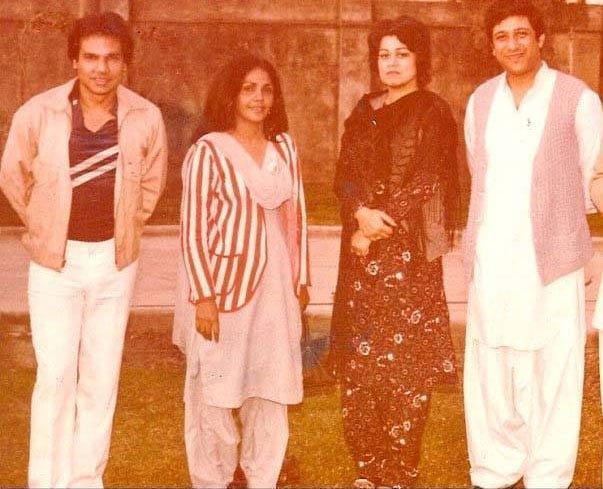
Paving the way for female newsreaders in an era bygone, yesteryear's iconic newscaster Suraiya Shahab passed away Friday morning in Islamabad. She was 78.
Shahab, who extended her services to the state-owned Pakistan Television (PTV) for as long as ten years, succumbed to cancer and Alzheimer's disease after a prolonged period of illness.
Starting her broadcasting career in the 60's with a magazine programme at Radio Iran Zahidan which mustered immense success, Shahab's story is a tragic one that shows how the country forgets its own legends.
"It is sad to see how the legends of the nation are banished from people's thoughts in their lifetime only," Shahab's son Khalid shared in an exclusive conversation with The News.
He added, "My mother used to helm a radio programme when she started reading the news professionally at the tender age of 16. She worked for PTV and Radio Pakistan, before joining the British Broadcasting Corporation (BBC)."
"She was diagnosed with breast cancer, for which she underwent surgery in Germany," Khalid added further.
"The doctors however did not completely remove all the cancerous cells that later spread to her brain. She then had to undergo a brain surgery after which most of her memory got affected and she suffered from Alzheimer's disease."
Along with extending her services to renowned organisations like PTV and BBC, Shahab was also engaged in philanthropic work.
"She was actively involved in social work such as construction of wells, building of schools. During her early years with PTV, she worked very hard to regularise daily-wage labourers," Khalid added.
Ishrat Fatima - another remarkable newsreader who was recently recognised for her excellence through a Pride of Performance Award - upon learning about the sad demise of Suraiya Shahab said it the news is extremely heartbreaking.
"Suraiya Shahab was a great name in the news reading realm. However, I say this with a very heavy heart that people had forgotten her even when she was alive," she said.
"I went to her place to meet her a couple of times when she was sick. She sometimes used to recognise me, sometimes not," added Fatima.

https://www.thenews.com.pk/latest/526019-yesteryears-iconic-newscaster-suraiya-shahab-reaches-a-tragic-end

Corporal punishment: How long will Pakistan's children remain at risk?

Will Hunain Bilal's gruesome death prompt our lawmakers to finally criminalise corporal punishment?

Earlier this month, news broke on social media of the shocking death of Hunain Bilal. The teenager was, according to a police report of the incident, punched repeatedly, grabbed by his hair and slammed against the wall of his own classroom by his own teacher.
The brutal beating was administered, witnesses said, because Bilal "had failed to memorise his lesson".
His death was followed by an arson attack on Lahore's American Lycetuff school, where the incident had taken place. It was Bilal's fellow students themselves who allegedly set the fire — grieved and angered at his violent death.
The disturbing events of that day serve as a jarring reminder of our state's continued failure to protect our children. This becomes starker considering Pakistan is a signatory to the United Nations Convention on the Rights of the Child, which clearly prohibits corporal punishment within as well as outside schools.

Need for a dedicated law

The state's failure to protect our children stems from its inability to address corporal punishment effectively, be it through official policy or through a structured national narrative aimed at stigmatising and eventually outlawing violence against children.
Look at Punjab, where the incident happened, for instance.
“There is no specific, formal law in Punjab that criminalises all kinds of physical and mental torture against children," notes Iftikhar Mubarak, advocacy member of the Initiator Human Development Foundation (IHDF), a non-governmental group working for children's rights.
In the absence of a formal law, the provincial government has been trying to address the crisis armed only with a standing administrative order issued under the slogan of Maar Nahi Pyar (affection, not beatings).
The order was issued by the Punjab Education Department in 2005, under then-military ruler Pervez Musharraf’s regime.
According to Mubarak, the order binds government and private schools to taking disciplinary action against teachers found involved in inflicting physical or mental torture upon students. But that’s where the scope of the order ends: there is nothing else that directly identifies and criminalises corporal punishment in the province.
And instead of moving ahead and developing legislation to address the issue in a more specific manner, "the (Punjab) government continues to stick with the standing administrative order as a stopgap arrangement".
Punjab's Provincial Minister of Human Rights Ejaz Alam Augustine told Dawn.com that the fact that there is no formal law in Punjab against corporal punishment is, in fact, "the fault of previous governments". 
He assured, however, that "the provincial government as well the opposition have now reached a consensus that they will legislate on the issue". 
"A bill will be moved in the Punjab Assembly to end corporal punishment in educational institutes in the province," Augustine promised.
Till that bill (if and when introduced) evolves into an act of law, educational institutions in the country’s biggest province have to continue dealing with cases of corporal punishment in an ad hoc manner.
The rest of the country isn't faring all that better either.

Legislative (in)action

Pakistan was among the first countries in the world to ratify the United Nations Convention on the Rights of the Child (UNCRC) on November 12, 1990. This essentially meant Islamabad had made a formal commitment to take all measures within its power to protect the rights of children as defined in the convention.
The reality has been far from ideal.
As stated earlier, there is, to date, no clear-cut, uniform state policy or law that outlaws the practice of corporal punishment across Pakistan both within schools and without.
Human Rights Commission of Pakistan co-chairperson Uzma Noorani underscores the need for the government to take remedial measures, including effective inspections of schools and to establish the bodies to take redressal measures. She notes that in case parents complain to the educational institutes’ management, the principals try to defend their staffers.
Pakistan did come close to passing such a law in a rare move in 2013, when the National Assembly ‘unanimously’ passed a bill to criminalise corporal punishment across the country.
Moved by MNA Attiya Inayatullah, the proposed law prescribed up to one-year imprisonment and up to Rs50,000 as a fine on the person found guilty of inflicting corporal punishment on children.
The bill was aimed at protecting the dignity of children as a human right. However, it could not become law due to a technicality.
Because the Lower House passed the bill on its second-last day of work, it could never make it to the Upper House. According to the National Assembly’s Rules of Business, a bill in the assembly must be passed at least a week before the session ends for it to make it to Senate.
"Inayatullah was sincere, but the timing wasn’t right," recalls Rana Asif Habib, president of IHDF.
Later on, a bill to outlaw corporal punishment was also submitted by lawmakers Marvi Memon and Leila Khan. However, nothing came of it.
More recently, in May 2018, the Parliament passed the Islamabad Capital Territory Child Protection Act to provide for protection and care of children from all forms of physical or mental violence, injury, neglect, maltreatment, exploitation and abuse.
However, it stopped short of directly or specifically prescribing a punishment for the perpetrator. Also, it is applicable only to children in care of the federal capital.

The role of provinces

Since the 18th Amendment, Islamabad has devolved certain subjects to the provinces and constitutionally empowered them to legislate on a wide range of matters.
Child protection and corporal punishment are among the areas that provinces can directly legislate on. They do not have to look to the federal government to extend protection to the children in their dominion.
However, Habib says, the provinces have either not addressed the issue or have not implemented formulated laws in letter and spirit.
“No specific law exists in Punjab, Khyber Pakhtunkhwa or Balochistan that outlaws the physical and/or mental torture of students at the hands of their teachers,” says Habib.
Sindh is the only province that has a dedicated law against corporal punishment (enacted in March 2017); but though the law exists, he says it is not being implemented in letter and spirit.

Why criminals go scot free

In the absence of dedicated laws and the respective governments’ failure to update existing laws, the issue is far from being effectively addressed.
Usually, an offence involving physical torture inflicted on a child by parents or guardians is dealt with under Section 89 (Act done in good faith for benefit of child or insane person, by or by consent of guardian) of the Pakistan Penal Code (PPC).
Mubarak explains that this section basically empowers parents, other guardians and teachers to use corporal punishment as a means to 'discipline and correct' the behaviour of a child under the age of 12. However, under this law, such punishment is required to be moderate and reasonable.
In case a 'punishment' inflicts serious injuries as defined in the PPC, the adult causing it can be booked under Sections 334 and 336 of the penal code and penalised in case of physical hurt. The penalty can also lead to imprisonment of the adult inflicting harm. However, cases of corporal punishment involving grievous harm are rarely dealt with under these two sections.
Mubarak says the only specific section that has recently been added to the PPC to address the issue to some extent is 328-A (Cruelty to a child), brought in through the Criminal Law (Second Amendment) Act, 2016.
This Section reads: “Whoever willfully assaults, ill treats, neglects, abandons or does an act of omission or commission, that results in or have potential to harm or injure the child by causing physical or psychological injury to him shall be punished with imprisonment of either description for a term which shall not be less than one year and may extend up to three years, or with fine which shall not be less than twenty-five thousand rupees and may extend up to fifty thousand, or with both.”
This section extends to all of Pakistan. Most recently, it was applied in the Tayyaba torture case, which had involved a child maid being physically and mentally abused by her employers.
The Islamabad High Court (IHC) had sentenced additional district and sessions judge Raja Khurram Ali Khan and his wife Maheen Zafar — the employers — to one-year imprisonment and Rs50,000 fine each for the crime of beating and burning the hand of the ten-year-old.

How legal loopholes have benefited accused

In most cases of corporal punishment in which the victim dies, complainants are usually persuaded to lodge an FIR under Section 322 of the PPC, which deals with qatl bis-sabab — manslaughter — as opposed to under the much more severe Section 302, which deals with qatl-i-amd — pre-meditated murder.
“The defence counsels always exploit legal loopholes by arguing that the act of the teacher was meant to the benefit the child and not intended to kill him/her. Subsequently, they manage an agreement between the accused and victim parties sooner or later, as punishment under Section 322 is much less severe and easily compoundable (compromisable),” says Habib. “In most of the cases, the parents end up pardoning the accused."
As the Hunain Bilal case goes to court, policymakers and activists should sit up and take note. This incident should mark the last time a child is harmed in a space where they should feel protected at all times. The way this case will be litigated, and precedents in similar cases before it, will provide valuable lessons to lawmakers looking to rectify this continuing inadequacy in our legal system.
It bears repeating that sound, comprehensive laws must be enacted without further delay to protect our children. Our lawmakers bear a heavy responsibility in this regard.

#Pakistan - The Prudent Bilawal


The first jolt to Moulana Fazlur Rehman, chief of Jamiat Ulema Islami Fazal (JUI-F), over his “decisive march” against the government comes from Bilawal Bhutto Zardari. Bilawal’s party is not joining Moulana’s march against the government. Moulana, dying to overthrow the present government, thinks that the right way to overthrow the government is to orchestrate a long and forceful march in collaboration with the rest of the opposition parties.
However, so far, he has failed in convincing at least one of the major opposition political parties, i.e., Pakistan People’s Party (PPP) in joining his march against the government. Does Moulana’s failure to convince other the leadership of PPP show his lack of political acumen? Nothing can be said with conviction in this regard. But the decision of Bilawal Bhutto Zardari shows his political maturity that many seasoned politicians do not have.Bilawal, while speaking to the reporters, shattered Moulana’s expectations. Moulana was relying on the support of all opposition parties. PPP’s refusal to participate in Moulana’s march has made it easier for other parties to turn down Moulana’s desire to march on Islamabad. At the same time, Bilawal, like a shrewd politician, tried not to make Moulana unhappy.
Moulana must indeed have felt hurt when Bilawal refused to participate in his march. However, Bilawal saying that he does not disagree with Moulana’s reservations against the government must have served the purpose of soothing Fazlur Rehman. Furthermore, Bilawal refusing his support to the chief of JUI-F by saying that his party in the past also did the same will make it difficult for Moulana to hold a grudge against him. Moreover, even if the opposition benches think that the incumbent government is failing the country and the people, the right way is the one that Bilawal suggests. Go to people and offer them an alternative against the present scheme of things. If people get convinced with the proposed alternative, no power on earth can force them not to vote against the current government in the next general elections.
Having said this much, it is also possible that Bilawal does not want to invite the anger of the incumbent government. The co-chairperson of the PPP, Asif Zardari, is already behind bars. Bilawal might have been thinking of striking a deal with the government by not becoming a party to any such agitation that can weaken the government. Whatever the reason be, on the surface of the things, Bilawal’s way of political opposition is far better than the one that Fazlur Rehman chooses.