Wednesday, September 11, 2019
#remember911 - Opinion- Growing With Grief in the Shadow of Sept. 11
By Jacob Campbell
 When I was growing up, the only time I noticed that I was different from other kids at school was when their parents were around. One of my earliest memories is my first day of kindergarten: Among a sea of young parents, my grandparents and I stood out. I was too nervous to let go of my grandmother’s hand.
https://www.nytimes.com/2019/09/11/opinion/september-11.html?action=click&module=Opinion&pgtype=Homepage

The rest of the time, though, I felt pretty normal. My thoughts revolved around driveway baseball games with the neighbors and making sure I had my homework done in time to play some video games.
But early September always felt different. I could sense a change in the mood in my home. Everything became more somber, my family touchier. And every year on Sept. 11, my family would journey from our home in Queens to Lower Manhattan to pay tribute to a mother I never had the chance to talk to.Before 2011, the site where my mother died was just a hole in the ground. Year after year, my grandparents and I would arrive with other relatives and we would join a procession of families headed down the ramp and into what looked like a construction site but to us and thousands of other families was a place of mourning. Red Cross volunteers handed out flowers for us to place in the two little temporary pools in the towers’ footsteps. I always looked for purple flowers because my grandma said that was my mom’s favorite color.
For much of my childhood, I didn’t truly understand where I was and what had been there before. Over the years, though, the site grew into a memorial and I grew with it. The 18 years since the attacks of Sept. 11 have been filled with tumult and violence. They have also encompassed nearly my entire life. I was 10 months old when my mom died in the World Trade Center. This year, I am leaving the University of Michigan, where I am a sophomore, for a few days to go home to commemorate Sept. 11. It feels like the first time I get to do so as an adult. It has been years of healing — for me, and for America. In some ways, my journey started on May 1, 2011. That day began like a normal Sunday. My grandmother took me to church, and I did my homework and went to bed by 10 p.m. About half an hour later, my grandmother came into my room and told me to come downstairs. Something important was happening. My grandparents and aunt had gathered in the living room to watch CNN. They announced the rumors that were going around, but I could tell they were going to relax only when it came from the president’s mouth.
I had figured out what was going on, but I hadn’t really processed it: Osama bin Laden was dead. I knew who he was and what he had done. I felt an excitement rise in me. A hope that my mom would be avenged. When President Barack Obama finally said, “I can report to the American people and to the world that the United States has conducted an operation that killed Osama bin Laden, the leader of Al Qaeda,” there was a collective guttural exclamation in my living room. It was a relief for me, but even more so for the rest of my family. It released some sort of pressure that had built in them for the decade he was on the run. It couldn’t bring back my mother, but we took some solace in knowing that Navy SEALs had found the man responsible for her death.
That night and the days that followed were the first time I grasped the enormity of what had happened on Sept. 11. As I watched Mets and Phillies fans chanting “U-S-A” together on social media and news reports as crowds gathered and celebrated outside the White House and at ground zero, it dawned on me that this wasn’t just about my mom.
After that, I started to get more interested in what had happened in 2001. Throughout my preteen and early teenage years I watched shows about the history of the wars in the Middle East on the History Channel, and documentaries and news clips on YouTube about Al Qaeda and Sept. 11. I remember flipping to the end of social studies textbooks to read about the subject, even though we never quite got to it in class.
On the big anniversaries I would read special editions of the newspapers. I got a sense of what had happened at the site I had been to so many times, and also got to feel the deep loss and pain of the day through the writings of people that had lived through it and remembered it. I’ll never forget reading through the online tribute pages where loved ones and strangers wrote their messages for my mother years before. I looked at old photos of her and learned more about her life; I got to see her as Jill Maurer-Campbell, the childhood dancer, world traveler and caring, loving person. My family and this tragedy were intertwined.
On Sept. 11, 2014, I received hard news. My grandfather, retired Fire Department Capt. Joseph Maurer, had been battling esophageal cancer, which was caused by his trips to Lower Manhattan after the attacks. While retired, he ventured down to the site multiple times with his old pals to search for his lost daughter and Fire Department brothers, and to help in any way he could.
Seven months into his fight he had begun losing a lot of weight. That morning, he’d gone to the doctor, who told him that his cancer was terminal. After my grandmother told me the news, I looked into the living room and saw that one couch was missing. A man was putting together a hospital bed. My grandfather sat on a box nearby, his head in his hands. I had a semi-normal life before with a supporting and loving family. Now Sept. 11 was back for someone else.
He died just five days later. That is the first time I struggled emotionally with what had happened. I developed insomnia and depression. I felt as if life was ugly and that I couldn’t really deal with it. Missing my grandpa made me finally realize how much I had missed with my mom.
In the past year or so, since I started college, I forced myself to come face to face with what happened. I watched “9/11,” the documentary made by Jules and Gédéon Naudet. I read more books, like “The Only Plane in the Sky,” Garrett M. Graff’s oral history of the attacks, which a friend gave me an early copy of. I didn’t hold back from seeing the event as it was. Watching footage from that day and knowing that my mom was inside the building was gut wrenching, but it helped me face reality, and my emotions. I also saw the heroism of so many people.
Remarkably, I even got to know one of these heroes. In 2018, during my first semester in college, I read “The Operator,” the memoir in which Rob O’Neill, a member of SEAL Team Six, writes that he fired the shots that killed bin Laden. I was so moved that I sent an email to the author, not necessarily expecting a response. He wrote back and invited me to spend time with him while he was in Detroit for a talk about his book. One day in December, after I took a final exam, I went to Detroit. I stood on line to get my paperback copy of “The Operator” signed. As I waited, I remembered that night in fifth grade and the looks on my family members’ faces.
For most people, he signed his name on a blank page. But after I told him who I was, he wrote underneath his signature: “To the victims of 9/11 …. in memory of you that I fought.”
After Rob was done signing books, we spent the rest of the day together sharing stories and chatting with other people who had come to see him. It was the first day I really enjoyed in a while. His kindness in inviting me and spending time telling stories and sharing jokes with me in the midst of a stressful and emotionally draining first semester far from home is something that will stick with me forever.
Eventually I found happiness again thanks to a relationship, new friends, reconnecting with my mom’s co-workers and friends, setting out on my own life. I can’t change what has happened to me. I can only respond to it, and I owe it to some people to make the best out of my situation. For people like Rob, who fought and sacrificed for people like me; for my family, who when faced with their darkest hour took on the challenge of raising a baby and ran with it; and for my mom, who went to work to help make a better life for her son and never came home.
Sept. 11 touched everyone in this country. We have all had to heal from that day, and as a nation we have tried to heal from that and all of the horrific tragedies we have seen since. But healing takes time; it has taken me the time it takes to grow from a 10-month-old into a college sophomore. In growing up I had to come to terms with the sadness that hangs over my life, and I had to find the gifts in sadness to become a stronger person. I hope for the same for America.
https://www.nytimes.com/2019/09/11/opinion/september-11.html?action=click&module=Opinion&pgtype=Homepage
#remember911 - 9/11: A Day that Changed the World
By Dr.César Chelala

One of the lessons to be drawn from that tragedy is that violence begets violence and intolerance breeds intolerance.
A new anniversary of a catastrophe brings back strong feelings and sad memories. Such is the case of the 9/11 attacks on New York’s World Trade Center, a tragedy that had long-lasting effects. New York, and the world, has not been the same since the events of September 11, 2001.
The attacks on the Twin Towers produced the most concentrated response to an emergency in the history of the United States. It is estimated that at least 100 emergency units and dozens of private ambulances headed to the scene to pick up the wounded and take them to nearby hospitals. At the same time, more than 2,000 police officers searched the towers and rescued survivors. But the weight of the response fell to the New York Fire Department, whose response to the events was truly heroic.
The attacks on the towers led to a surge in national pride and public expressions of patriotism and a strong commitment to help those that survived and the families of those who were killed. But there was also an increase of harassment incidents and hate crimes against South Asians, Middle Easterners and even those who looked like them. Several Indian Sikhs were attacked and killed because they were erroneously believed to be Muslims.
Health effects
The attacks were particularly disturbing to children, who saw the images of destruction replayed relentlessly on television. For years after the attack children suffered fom post-traumatic stress disorder. More than 2,500 contaminants, many of them dangerous carcinogens, were present in thousands of tons of toxic debris resulting from the collapse of the towers. It is estimated that over 18,000 people have become sick as a result of the toxic dust.
Economic consequences
There was a wide range of economic losses after the attacks. It is estimated that the city suffered economic losses estimated in more than $90 billion. They were the consequence of lost productivity, wide-ranging insurance claims against the city, loss of real state and art objects, and impaired tourism and trade, among many other effects.
Security and military actions
Security and protective services suffered significant changes due to the attacks. Congress passed Aviation and Transportation Security Act which affected air travel and security policies, as well as guidelines to be followed before getting on board. The Department of Homeland Security required pilots to carry firearms on board, and pilots were obliged to undergo training to prevent other terror attacks.
The USA Patriot Act was also passed, which broadened the powers of law enforcement agencies for the purpose of identifying terrorist activities. The government was given wide powers to search people’s records. Through the program called Total Information Awareness special technology was developed to allow the collection and analysis of information about every individual in the United States, and detect unusual behaviors that could lead to terrorist attacks.
International
The wars in Afghanistan and Iraq have ravaged those countries, and resulted in a permanent state of instability and destruction.
Using the attacks as an excuse, the U.S. conducted wars in Afghanistan and Iraq that would have serious consequences on the U.S. economy and the world rule of law. Many people throughout the world believe that the U.S. squandered a wave of world goodwill resulting from the attacks. The wars in Afghanistan and Iraq have ravaged those countries, and resulted in a permanent state of instability and destruction. “The war –never the choice of the Afghan people- has done great harm to our people for all sorts of different local, national, regional and international reasons. Widespread corruption, the massive arming of militias, the fuelling of war by neighboring countries, the civilian losses and night raids and deterioration of security have all undermined our children’s education, our women’s ability to work, our ability to provide basic social services to the neediest part of the population,” said Orzala Ashraf Nemat, an Afghan human rights activist.
Lesson
One of the lessons to be drawn from that tragedy is that violence begets violence and intolerance breeds intolerance. Unless there is a new approach to preventing terrorist acts we will continue to live under the threat of terror. Permanent confrontation is not the answer. While it is easy to create enemies, it is much harder to understand the “other", a necessary approach if we wish to eliminate conflict and honor the desire for peace and security of all people in the world.
#remember911 - The Continuing Legacy of 9/11

By Caroline Lester
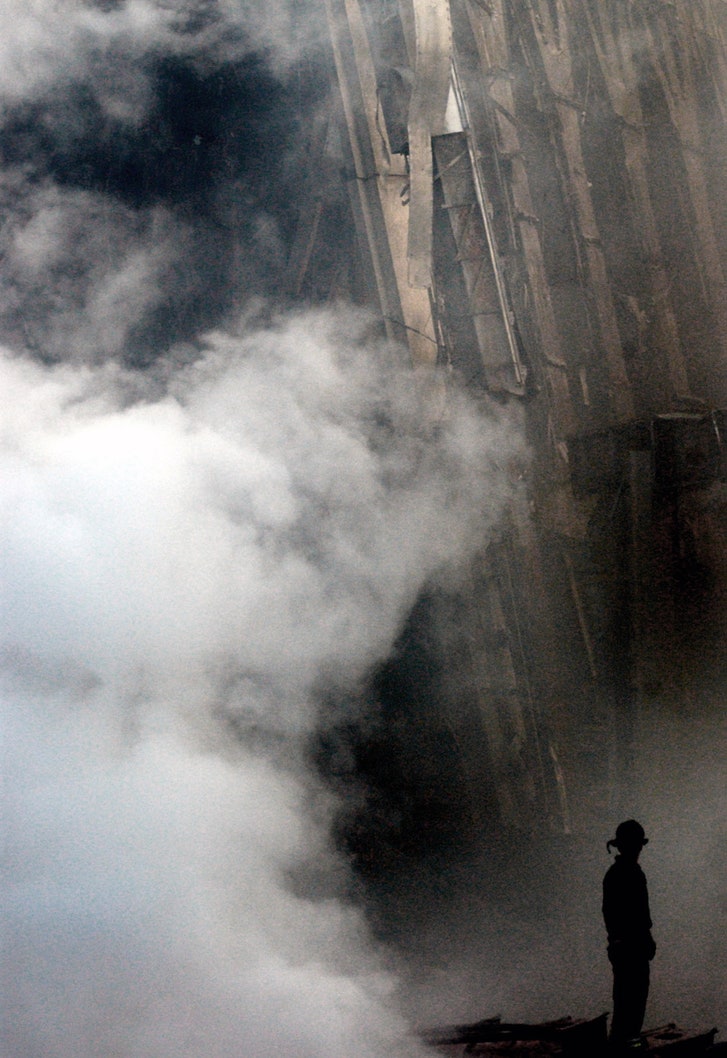
We tend to think of disasters, like 9/11, as fixed in time. But they often ripple through communities.
It sounded like an aluminum bat hitting a streetlight. Like a car crash. My uncle Ron Fletcher, a luthier, got up from a workbench at his home, in Lower Manhattan, and looked south out a window, down Lispenard Street. He saw smoke and called out to his wife, my aunt Marya Columbia, a violinist, who was in bed. It was just before nine on the morning of September 11, 2001. Together, they raced up to the roof. They watched the second plane hit, then the first tower fall. It looked as if the building sank into a pile of smoke, which fell low with it and then rose and spread across the sky. They went downstairs to turn on the T.V. and missed the second collapse. Later that morning, they were evacuated from their apartment, and, after they were allowed back in the evening (only after showing an I.D. that confirmed their address), they went for a walk. They’d seen people trudging past their apartment, covered with a fine, light-gray dust. That same dust coated the street, the ground. Ron remembers lifting up a handful of it and seeing scraps of paper—the size of quarters, burned at the edges—that looked like pieces of insurance policies and financial statements.
Marya, whom everyone calls Muffin (she didn’t know her real name until her first day of school, when a teacher called it out), was forty-five, with high cheekbones and eyes that shifted from green to blue to purple. She played a violin that Ron had found in a flea market, with a bow that he had made. When she was twenty-three, a cellist with the American Philharmonic overheard her practicing in her room through the window and invited her to audition. She landed a seat in the orchestra and played with the group for several years. An article in the Daily News called it “a New York fairy tale come true.” Later, she toured as principle second with the New York City Opera, and accompanied such musicians as Josh Groban and Diana Ross. In the days after 9/11, Marya watched a parade of rescue workers and volunteers pass through her neighborhood on their way to Ground Zero and had an urge to help. “I felt, like, What can I do?” she told me. “All I can do is play.”
Other musicians felt the same. A few days after 9/11, Marya got a call from a violinist named David Gold. He was organizing a string quartet to play in St. Paul’s Chapel, a block away from Ground Zero. The building, which is more than two hundred and fifty years old, is obscured by a half-dozen trees. One of the looming sycamores seems to have saved the chapel on 9/11 by absorbing debris from the towers. (The only damage was to the pipe organ, which inhaled so much dust that it had to be replaced eight years later.) During the months after the disaster, the chapel served as a kind of sanctuary. Firefighters, construction workers, police officers, and others would go there to rest, or for food, or to sleep on cots. Gold asked Marya if she would play for the first responders with him. “She’s got a huge heart—if you ask her to help someone, anyone, she’ll say yes,” he told me. “And, of course, the icing on the cake was that she lived in the neighborhood.” Marya agreed, and, for the next nine months, a large group of volunteers, known as the Music Givers, played three concerts a day at the chapel. (My aunt took the Monday-morning shift.) Mostly they played classical music, though, occasionally, they got requests for Billy Joel or the Irish ballad “Danny Boy.” “You know, we always felt, it’s so insignificant, what we do,” Marya told me. “But then we realized it is significant to these people to have a moment’s rest.”
It took days for the clouds of dust near Ground Zero to begin to clear. Ralph Farris, the volunteer coördinator for musicians performing at the chapel, could feel grit in his teeth on his way in and out. “I remember that really feeling so awful and strange,” he said. “I considered all the things I was ingesting. It was in my mouth. I was breathing it.” Gold told me that he remembers emerging from the subway and the smell hitting him—a mix of chemicals and burning metals that, in the early days, smelled almost sweet. “My reptilian brain was saying, ‘You should not be here at all.’ ” Gold said. “Every instinct in me told me, This is not a safe place to be.” None of the musicians I spoke to wore a mask.
Late last year, at age sixty-two, Marya got a cold that wouldn’t go away. When I called her to talk in February, her voice sounded hoarse. She went to the doctor, who took an X-ray of her lungs, found nothing unusual, and diagnosed her with high blood pressure. In May, she went back to the doctor, who took another blood pressure reading, and, finding it alarmingly high, sent her to the emergency room. A second X-ray revealed a tumor in her lungs. She was admitted to the hospital, where we later learned that the cancer had metastasized to her brain. An ache in her ribs that she thought was caused by a persistent cough was actually the splintering of bone, caused by tumors in her marrow. The cancer may have been related to toxins that she inhaled during her time at Ground Zero. The doctor gave us a timeline: “Anywhere from a few weeks to a few years.” Afterward, my aunt turned to the group of family members standing around her. “Looks like it’s curtains for the old girl,” she said.
We tend to think of disasters—and the impacts on the people involved—as fixed in time. In fact, disasters often ripple through communities, affecting people in surprising ways over decades. The victims of 9/11 have come in three waves. First, there were the immediate deaths and injuries caused by the towers’ collapse. In 2001, Congress created a fund to compensate those victims and their families, which closed in 2003. But, during the next several years, doctors noticed higher diagnosis rates of aerodigestive disorders related to the inhalation of particles released by the blast, including gastroesophageal reflux disorder and chronic rhinosinusitis, among survivors and first responders—the second wave. In 2010, Congress reinstituted the fund, this time with dispensation for volunteers and for New Yorkers who lived, worked, and went to school in Lower Manhattan. The World Trade Center Health Program (W.T.C.H.P.) covered health-care costs for eligible diseases, and the Victim Compensation Fund doled out payments for illness or death. The fund was due to run out in 2020, until activists (including, notably, Jon Stewart) pushed Congress to extend it by seventy years.
The last wave—which doctors believe could be about to swell—is expected to be comprised of people who contracted cancer from their time near Ground Zero. So far, the World Trade Center Health Program has documented an increased incidence of thyroid and prostate cancer among its patients. But lung cancers, which some doctors believe could pose a significant risk to people exposed to the carcinogens in the dust near Ground Zero, have a longer incubation period. Mesothelioma—a cancer caused by the inhalation of asbestos—can take thirty to forty years to manifest. Other lung cancers begin to appear around twenty years after an initial exposure. So far, six hundred and sixty-six patients at the W.T.C.H.P. have been diagnosed with lung cancer. But doctors at the program think that, in the coming decades, they may see an increase. “This is going to get worse,” Michael Crane, a doctor of occupational medicine who directs the W.T.C.H.P., told me recently. “A lot worse.”
It’s impossible to attribute cancer to a single event with certainty: most cancers have long latency periods, and it’s difficult to evaluate the effect of complicating factors like a patient’s environment, genetic background, or behavior. My aunt smoked, and Crane told me that this likely contributed to her diagnosis. It will take years—and much more information than what we have access to now—to parse the effects of the World Trade Center dust on rates of cancer development. Naftali Kaminski, the chief of Pulmonary, Critical Care, and Sleep Medicine at the Yale School of Medicine, cautioned that we don’t yet have the numbers to make firm conclusions. “There’s no real data yet,” he said. In the end, the concern about lung cancers may not manifest in anything at all. But he and others worry that the rate of diagnosis of respiratory diseases among first responders could be a sign of a coming increase in cancers. “It’s now more than fifteen years after 9/11,” Rachel Zeig-Owens, the lead epidemiologist at the Fire Department of the City of New York, said. “This means we’re now in the latency window to start seeing more cancer cases.”
Some of the scientific uncertainty comes from the fact that we still know so little about what happened during the disaster. When the towers collapsed, hundreds of tons of asbestos vaporized into the air. Other debris included ninety-one thousand litres of jet fuel, countless glass windowpanes, pulverized cement, gypsum, calcite, cellulose, hydrochloric acid, lead used on electric cables, polychlorinated biphenyls used in electrical transformers, steel columns that served as load-bearing walls, steel beams, insulation fibres, human hair, fibres from carpets, copper, titanium. Early environmental samples of 9/11 were taken from matter that was gathered in plastic cups from the ground. But without air samples from the first days after the attack, it’s impossible to know exactly what responders and survivors were exposed to. Even more complicated is the possible interaction between toxins. Do, say, fibres somehow interact with chemicals in the air before being inhaled? What happens when dozens of toxins combine? There have been previous instances in which buildings have been destroyed (the Oklahoma City Bombing, for example, or the Sampoong Department Store collapse, in South Korea, in 1995), but, in general, the scales of destruction were smaller, as were the sizes of the population exposed to carcinogens, and there have been few longitudinal studies of the medical effects. Even large incidents, like the Bhopal disaster—a gas leak in India, in 1984, which exposed more than half a million people to methyl isocyanate, and which was followed by multiple studies of those exposed—didn’t produce the complex (and unknown) mix of toxins that the World Trade Center did. “This is pretty unique,” Crane told me. “And therefore unpredictable. And unpredictable in my line of business usually means unhappy.”
Compounding the dust’s effects was that the government seemed to underestimate the harm that it could cause. On September 13, 2001, the Environmental Protection Agency issued a press release, noting, “Monitoring and sampling conducted on Tuesday and Wednesday have been very reassuring about potential exposure of rescue crews and the public to environmental contaminants.” On September 16th, Christine Todd Whitman, then the head of the E.P.A., said that the agency had conducted air-pollution tests that “cause us no concern.” On September 18th, she announced that tests of the air and drinking water near the World Trade Center “indicate that these vital resources are safe.” On September 24th, it rained, and most of what was lingering in the sky or on the ground was likely washed away. But the pile—the mound of rubble left by the towers—kept burning through December, and the debris-removal process continued to disturb settled dust and redistribute it into the air. The result was that people continued working, living, and going to school in the disaster zone, without realizing the danger that they were in and also with little protection from it. Many first responders did not use masks or other respiratory equipment. (In 2016, Whitman publicly apologized for the E.P.A.’s pronouncement of safety. “I’m very sorry that people are sick,” she told the Guardian. “Every time it comes around to the anniversary I cringe.”)
Doctors who treat 9/11 first responders are still diagnosing lung disease, but they’re also beginning to screen for cancer. “You give it another ten years; you’re going to see a big blip,” Raja Flores, the chairman for the Department of Thoracic Surgery at Mount Sinai Hospital, told me. Flores often treats patients affiliated with the W.T.C.H.P., and, by his estimate, operates on one or two victims of dust exposure every month. “Every doctor that deals with this patient population is concerned about it,” he said. (Flores’s father was working as a janitor on Wall Street on September 11th, and Flores now gives his dad yearly CT lung scans to check for tumors.)
On 9/11, Barbara Burnette, a thirty-eight-year-old detective with the N.Y.P.D. Intelligence Division, started her morning at the Brooklyn Army Terminal. When she and her colleagues heard about the towers, they took boats to the piers by the West Side Highway in Manhattan and spent twelve hours evacuating people. Each time her boat docked, she headed into the cloud of dust, searching for survivors. “Everybody was panicking, so you didn’t really want to put your hands on them,” she said. “[We] were trying to guide them.” She spent the next twenty-three days working at Ground Zero.
Soon after, Burnette started experiencing shortness of breath, but she didn’t think much of it until a couple of years later, when she started fainting at work. She was diagnosed with hypersensitivity pneumonitis with fibrosis in 2004 and enrolled in the World Trade Center Health Program. Because of her condition, she received yearly CT scans from the program. Two years ago, a scan revealed a tumor, and she was diagnosed with stage-three lung cancer. She plans to start a second round of chemotherapy in December.
Of the past fifteen years, Marya had health insurance for only one year—in 2014, when individual insurance first became available through the Affordable Care Act. After missing a tax-form deadline, she and Ron dropped it. A few years ago, she injured her knee but refused to go to the doctor. Why pay for health care when she was so close to getting Medicare? “I just have to make it to sixty-five,” she said, hobbling around her house. Last fall, Ron had a health scare, and they decided to enroll again. When she was diagnosed, she had health insurance for the first time in years and was able to get treatment. But the fact that she didn’t have regular screenings may have contributed to her prognosis. One of the things that makes lung cancer so deadly is that it’s often detected too late; by the time symptoms show, the tumors have already metastasized.
The World Trade Center Health Program has a little more than ninety thousand enrollees. (My aunt is near the end of enrolling now.) The vast majority of those are first responders—firemen, policemen, and other city, state, and federal employees. The W.T.C.H.P. estimates that there are more than three hundred thousand additional people who qualify for services: residents of the Lower East Side, kids who went to school in the area, and more informal volunteers. None of the musicians I spoke to had looked into what health coverage they might be eligible to receive. As of now, the program only covers checkups for eligible patients who are already showing signs of preapproved diseases by the C.D.C. (Burnette had a kind of perverse luck: because she already had lung disease, she was being monitored for additional illnesses, which allowed them to catch her lung cancer relatively early.) Some believe that, to prevent more lung cancer cases, screenings should be broadened. Kaminski thinks that all people exposed to W.T.C. dust should be monitored, and high-risk people—those who smoked, or have genetic predispositions to certain diseases—should have access to preventative screenings.
A few weeks ago, Marya was in the hospital with a fever and was slipping into what our family called “episodes,” when she couldn’t stop coughing. A group of doctors and nurses that we learned was called “the rapid response team” would swarm her bed while we watched from the doorway. They stabilized her each time, but, after the last one, in August, the doctor told us that if it happened again, she might not make it through. That night, my aunt turned to me and my sister, and said, “My biggest regret is not seeing my nieces and nephew have a baby or get married.” If she could, I think she would have winked. I asked her if she thought that volunteering with the musicians was worth it, if it might have contributed to her cancer. “You don’t know what causes that shit,” she said. But what if it was the towers, I asked. “I don’t think I could do it differently,” she said. Burnette said the same thing.
The Thursday before Labor Day, Marya decided that she was finished with chemotherapy and radiation. She’s spending her time at home, surrounded by a steady stream of visitors, dictating what we cook. A few weeks ago, she received a check from the Victim Compensation Fund. She told me that she was going to use it to pay off her credit-card debt. After that, she’d like to use some of the money to rent “a house on the shore.” It doesn’t matter where, she said. Just one by the beach, for a week, where everyone could stop by when they could.
Tuesday, September 10, 2019
New York to commemorate 18th anniversary of the September 11 attacks
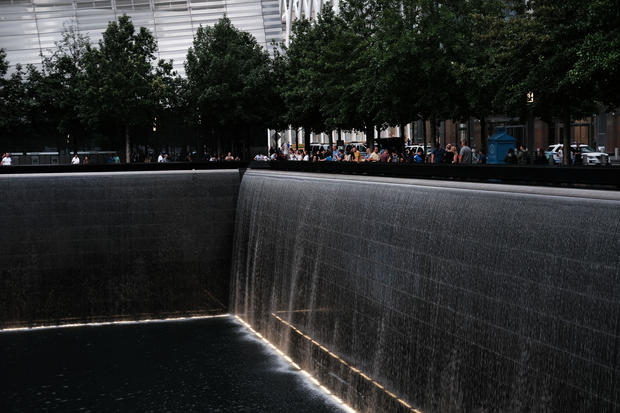
It's been 18 years since the September 11 attacks left nearly 3,000 people dead in the worst act of terrorism the nation has ever experienced. On Wednesday, the 9/11 Memorial and Museum will commemorate the lives lost with a ceremony honoring those killed at the World Trade Center, Pentagon and aboard Flight 93 — as well as the 1993 World Trade Center bombing.
As has happened in years past, the names of those killed will be read during Wednesday's ceremony. Last year, some families of victims infused their own, personal messages of remembrance, inspiration and concern.
CBSN New York will live stream the ceremony starting at around 8:25 a.m. ET from the 9/11 Memorial plaza in lower Manhattan. You will be able to watch the event at the top of this page or on the CBS News app.
During the ceremony at the 9/11 Museum and Memorial, the site will only be accessible to relatives of those killed in the September 11th attacks. That evening, a public ceremony featuring the public art piece Tribute in Light will open to the public as the sun sets. The Memorial plaza will also be open to the public from 3 p.m. to midnight.
The 9/11 Memorial and Museum is encouraging those commemorating the anniversary to use the hashtag #Honor911 on social media. The center is also providing resources for anyone interested in planning their own commemoration ceremony.
Blast heard near US Embassy in Kabul on 9/11 anniversary

A large explosion rocked Afghanistan’s capital near the U.S. Embassy in the early hours of Wednesday on the anniversary of the 9/11 attack on the United States.
A plume of smoke rose over Kabul just after midnight and sirens could be heard. An embassy employee reached by phone confirmed the explosion but had no details. There was no immediate official comment.
It would be the first major attack in the Afghan capital since President Donald Trump abruptly called off U.S.-Taliban talks over the weekend, on the brink of an apparent deal to end America’s longest war.
Two Taliban car bombs shook Kabul last week, killing several civilians and two members of the NATO mission. Trump has cited the death of a U.S. service member in one of those blasts as the reason why he now calls the U.S.-Taliban talks “dead.”
The 9/11 anniversary is a sensitive day in Afghanistan’s capital and one on which attacks have occurred. A U.S.-led invasion of Afghanistan shortly after the 2001 attack toppled the Taliban, who had harbored Osama bin Laden, the al-Qaida leader and attacks mastermind.
In the nearly 18 years of fighting since then, the number of U.S. troops in Afghanistan soared to 100,000 and dropped dramatically after bin Laden was killed in neighboring Pakistan in 2011.
Now about 14,000 U.S. troops remain and Trump has called it “ridiculous” that they are still in Afghanistan after so long and so many billions of dollars spent.
It is not clear whether the U.S.-Taliban talks will resume.
#Pakistan: School principal abducts 15-year-old #Christian girl, forces #Islamic conversion
A school principal in Pakistan is accused of abducting a Christian student and taking her to an Islamic madrasa to forcibly convert her to Islam.
The Press Trust of India reports that the girl's father, Mukhtar Masih, filed a complaint at a local police station in the Punjab province after his daughter, 15-year-old Faiza, did not come home from school last Wednesday.
Masih said the family contacted the school to ask where their daughter was. It was then that the class teacher told them that the school's Principal, Saleema Bibi, had taken Faiza to a nearby Islamic madrasa to be converted to Islam.
The father says he went to three Islamic seminaries before finding his daughter. However, the staff at the madrasa did not allow Faiza to return with her family.
After Masih filed a complaint, the police raided the madrasa and rescued Faiza. The girl was then taken to a shelter in Sheikhupura. The news agency reports that the family is now appealing for authorities to allow Faiza to return home.
“We took action and recovered the girl on Mukhtar Masih’s complaint but a [first information report] has not been registered against anyone yet,” police official Muhammad Nawaz told PTI.
“However, we are investigating the matter.”
Faiza was said to have informed her parents that she was told by a teacher that she’d “automatically become a Muslim” because she read Arabic in school.
“The principal had also offered us to convert to Islam and in return, she would compensate us by paying for our needs but we refused,” Masih was quoted as saying.
According to journalist Nail Inayat, Faiza is the third reported case of forced religious conversion in Pakistan in just one week.
“Renuka Kumari, Jagjit Kaur and Faiza Mukhtar. Hindu, Sikh and Christian girls are not 'pure' enough for the land of the pure?” Inayat asked in a Twitter thread.
“The teacher who taught Arabic to the girl in the gov't school told her you can't go back home now as you're a Muslim.”
Faiza’s alleged forced conversion follows reports that a young Hindu woman in the Sindh province was abducted from the Institute of Business Administration in Sukkur and forcibly converted to Islam.
In late August, a Shikh family alleged that their daughter had been abducted and forced to convert to Islam. However, the girl has claimed publicly that she converted to Islam and married her captor on her own free will.
Unlawful marriages are punishable by up to seven years in prison, according to the Pakistani penal code. Yet the frequent abductions of Christian and Hindu girls by Muslim men continues to be a problem.
A 2014 estimate from the nongovernmental organization Movement of Solidarity and Peace suggests that as many as 1,000 Hindu, Christian and other religious minority girls are abducted, raped or forced into Islamic marriages each year.
According to the United Kingdom-based Centre for Legal Aid, Assistance and Settlement, authorities in Pakistan often side with perpetrators of abductions while courts do not give clear judgments because of pressure from radical religious leaders.
CLAAS voiced an alarm this summer about the abduction of 14-year-old Christian Benish Imran, who was also forced into an Islamic marriage.
Pakistan ranks as the fifth-worst country in the world when it comes to the persecution of Christians, according to Open Doors USA’s 2019 World Watch List. The U.S. State Department has also listed Pakistan as a “country of particular concern” for its religious freedom violations.
Illegally Detained Christian Tortured to Death in Custody in Pakistan, Family Says
Police in Lahore, Pakistan tortured to death the Christian father of 14-day-old and 7-year-old sons, relatives said.
Officers on Aug. 28 illegally detained 28-year-old Amir Masih on a false charge of theft and tortured him for four days before he died in a hospital on Sept. 2, his brother Sunny Masih told Morning Star News.
Interrogating officers in the 96-percent Muslim country “urinated on Amir’s face and body and mocked his Christian faith” while trying to torture him into a false confession, Masih said.
After filing an application with police on Aug. 31 alleging forced disappearance of Amir Masih, relatives were informed that he had been taken into custody by a sub-inspector identified only as Zeeshan in connection with a theft case. Their repeated attempts to meet Sub-Inspector Zeeshan were blocked. They did know of Amir Masih’s whereabouts until an officer phoned Sunny Masih on Sept. 2 to tell him that his brother was not well and that they should come and take him to the hospital, Masih said.
“We rushed to the police station, where we were handed a semi-conscious Amir,” he said. “He was beaten up mercilessly, and his body was full of bruises. While we were taking him to the hospital, Amir told us that Inspector Nasir Baig, Sub-Inspector Zeeshan and four unidentified constables had tortured him continuously for four days.”
Sunny Masih said that while police released without a scratch all other employees who worked with Amir Masih, a gardener, after they were summoned about the alleged theft, his brother was subjected to severe torture because he was a poor Christian whom police believed could be coerced into a false confession.
“He told us that the police officials had urinated on him while cursing him for being a Christian and tried to force him to confess to the crime,” he said. “But my brother was innocent, and he refused to admit to something that he had not done, which further infuriated his interrogators. They increased the intensity of the violence, also subjecting him to electric shocks.”
Doctors at Services Hospital tried to save his life, but he succumbed to his injuries after a couple of hours, Masih said.
Working as a gardener in PAF Colony, Amir Masih was summoned to North Cantt Police Station in a phone call from Zeeshan regarding a theft case registered by his employer, Rana Mohammad Hanif, Masih said.
“Amir was present at Hanif’s house when he received the inspector’s call,” he said. “The watchman of the house told him that all employees had been summoned by the police to record their statements, and he should do the same. My brother went to the police station of his own will, but when he reached there the cops seized his phone, bundled him into a vehicle and spirited him to some unknown place.”
When he did not return home that evening, Sunny Masih and other relatives went out to search for him, he said.
“When I reached Hanif’s house to inquire about Amir, the watchman told me that he had been summoned by Sub-Inspector Zeeshan to record his statement,” he said. “For the next two days, we continued to search for both Amir and the police officer but failed to find any trace of their whereabouts.”
Autopsy
A post-mortem report on the death states that torture marks were visible on his hands, feet, back and arms. His ribs were also broken.
After news of the killing in custody spread on mainstream and social media and drew public ire, Punjab Inspector General of Police Captain Arif Nawaz Khan ordered registration of a case against Inspector Nasir Baig, Zeeshan and four other police officers and ordered a detailed report on the case.
Police have taken Baig and Zeeshan into custody, but the four other officers accused are still at large as no serious efforts have been made to arrest them, Masih said. Police at the same station where his brother was tortured registered his complaint for murder, illegal detention and torture.
Both Punjab Minister for Minorities and Human Rights Aijaz Alam Augustine and Shunila Ruth, a member of the National Assembly, said that they were making efforts to ensure justice for the grieving family of Amir Masih. Both officials are Christians.
Augustine said that he had visited the family and was in contact with police officials to ensure arrest of the absconding accused.
“This is a grave crime, and the accused police officers will be severely punished,” Augustine said, adding that the government would not show any leniency in cases of torture and custodial killings.
Ruth, who visited the victim’s family along with Punjab Gov. Muhammad Sarwar, said she would raise the matter in the National Assembly.
“The family’s claim that Amir was subjected to torture because of his Christian faith is not unfounded,” she said. “Unfortunately, there are segments in our society who continue to be prejudicial towards members of the marginalized communities.”
The two Christian officials said they believe they’ll be able to bring the perpetrators to justice, but attorney Saiful Malook, who gained fame for securing freedom for high-profile Christian blasphemy convict Aasiya Noreen (commonly known as Asia Bibi), said he feared the case would be swept under the carpet after the media hype dies because “police are known to protect their own.”
“Amir Masih’s murder in police custody is not only a serious crime but also a severe violation of the constitution,” he said. “Therefore, it should be taken up very seriously, and the police alone should not be trusted in this regard.”
Malook said that the First Information Report of the case also should have included the names of the deputy superintendent of police of the zone and the station house officer, as they were the supervisory officers and it was their responsibility to ensure that no citizen was subjected to illegal detention and torture.
“I’m sure the police misguided the complainant into naming only the six accused in order to save their seniors,” he said. “I am ready to provide pro-bono legal assistance to Amir Masih’s family, because I believe that they deserve justice on merit.”
Pakistan ranked fifth on Christian support organization Open Doors 2019 World Watch list of the 50 countries where it is most difficult to be a Christian, and on Nov. 28, 2018, the United States added Pakistan to its blacklist of countries that violate religious freedom.
Milk at Rs 140/litre, costlier than petrol in Pakistan
The price of milk has gone out of control across major cities of Pakistan on the day when Muharram is observed, according to Pakistani media reports.
Interestingly, petrol and diesel prices in Pakistan are lower than that of milk. Petrol was selling Rs 113 per litre, while diesel was Rs 91 per litre in Pakistan, just two days ago.
There have been even reports that milk is sold for as high as Rs 140 a litre in some parts of Sindh.
"Milk is being sold between Rs 120 and Rs 140 across the city of Karachi due to the sharp increase in demand," said a shopkeeper.
During Moharram, Sabeels (stalls) are set up in different parts of the city to offer milk, juices and cold water to the participants of the holy month's processions. For this, there is a huge demand for milk. Due to the increased demand, the milk hike of milk due to Muharram.
Karachi Commissioner Iftikhar Shallwani, who is responsible for controlling the price of milk, seems to have done nothing about the exorbitant rates, according to reports.
Ironically, the official price of milk set by the Commissioner Office is still Rs 94 a litre.
Ironically, the official price of milk set by the Commissioner Office is still Rs 94 a litre.
Pakistan’s former legislator seeks asylum in India
Baldev Kumar (43), along with his wife and two children came to India last month and is presently staying at Khanna in Punjab’s Ludhiana district.
A former legislator from Pakistan Prime Minister Imran Khan’s Pakistan Tehreek-e-Insaf (PTI) party has sought asylum in India, claiming that minorities were deprived of their rights in the neighbouring nation.
Baldev Kumar (43), along with his wife and two children came to India last month and is presently staying at Khanna in Punjab’s Ludhiana district.
“I have come here to seek asylum and will request [Prime Minister Narendra] Modi Sahib to help us,” Mr. Kumar told reporters in Khanna on Tuesday.
When asked why he left his country and came to India, Mr. Kumar said, “the whole world is watching what is the situation in Pakistan now. We were expecting from [Pakistan PM Imran] Khan Sahib that when he came [to power], the fate of Pakistan will change, he said, claiming Mr. Imran failed to do so.
“You are watching the situation [in Pakistan] and I am also watching the same. That day our Sikh girl was kidnapped. Such things should not take place,” said Mr. Kumar.
Notably, in Pakistan’s Punjab province, a teenage Sikh girl, the daughter of granthi (priest) of a Gurdwara there, was abducted and converted to Islam at gunpoint before she was married to a Muslim man, her family had alleged.
A video of the girl’s family had gone viral on social media in which one of her family members had alleged that a group of men attacked their house and she was abducted and forcibly converted to Islam.
He said, “had minorities been getting rights in Pakistan, such situation should not have arisen.”
He further said he has also requested his other family members to leave Pakistan.
Mr. Kumar said that there were several families in Sindh and Nankana Sahib which told him that if he got asylum there (India), then they would also try to leave Pakistan.
Mr. Kumar was a former Member Provincial Assembly (MPA) from Barikot seat in Khyber Pakhtunkhwa province in Pakistan.
India had expressed strong concern over the incidents of forced conversion and asked the neighbouring country to take remedial action to stop such cases.
Monday, September 9, 2019
Is Majoring in English Worth It?
By William McGurn
Employers used to be able to count on the skills a liberal-arts education cultivated.The summer holidays have finally ended, and across America college students are returning to campus. But not before someone—most likely mom or dad—has written a hefty tuition check. If you’re a parent going into hock to pay for your son or daughter’s degree in English lit, you may be feeling a mite anxious about what you are getting for all those dollars.
A just-released Bankrate study won’t make you feel any better. In a ranking of 162 college majors by median income and unemployment rate, English majors landed among the bottom dwellers, at 132. At $47,800 in median income, they did better than those in drama ($35,500) or fine arts ($37,000), but they earned less than half as much as someone who majored in, say, electrical engineering ($99,000).
Alas, even if your undergrad is happy with his English major now, other studies say he will come to regret it. In June, a Payscale survey of 250,000 college grads reported 1 in 5 with a humanities degree as saying that, next to their student loans, their choice of major was their biggest educational regret. A 2017 MarketWatch story was blunt: It called English “the most regretted college major in America.”
Manifestly, English majors aren’t getting much respect these days—including self-respect. But don’t blame the kids. Colleges sell themselves as a ticket to upward mobility, without providing the data students and parents need to weigh college costs against expected benefits. Humanities students have it even worse, because the watering down of the curriculum has diminished the value of degrees such as English or history.
In marketing college to prospective students, universities like to cite the significant difference in lifetime earnings between someone with a bachelor’s degree and someone with a high school diploma. Fair enough. But as the Bankrate survey illustrates, the earnings differential among college degrees can be significant too.
Economist Richard Vedder, author of “Restoring the Promise: Higher Education in America,” has long urged colleges to give students many more measures along the lines of the Bankrate survey. What students especially need, however, isn’t averages but the worth of particular degrees from particular universities.
“When you spend $100,000 or more for something, you are entitled to know the probable value of what you are getting,” says Mr. Vedder.
No one is surprised to learn that STEM majors (science, technology, engineering, mathematics) out-earn English majors. After all, the purpose of what used to be called a “liberal education” has never been about a high-paying career. Even so, Jonathan Pidluzny, director of academic affairs for the American Council of Trustees and Alumni (ACTA), notes that employers nevertheless prize the critical thinking, communication skills and judgment cultivated by a liberal-arts education.
“The English major was once a guarantor of effective, formal writing skills and the ability to comprehend and analyze the complex thoughts found within centuries of brilliant and challenging poetry and prose,” he told Campus Reform. “Its decline into the epiphenomena of popular culture and identity politics is a self-inflicted wound that has rocked its credibility.”
In other words, what’s on offer today isn’t your father’s English degree. An ACTA study of English programs reports that 48 of 52 top schools (as ranked by U.S. News & World Report) allow English majors to graduate without ever having taken a course on Shakespeare. In the past ACTA has also highlighted studies showing that the average grad, even those from prestigious flagship universities, shows little or no improvement in critical thinking for having gone to college.
Here the much-maligned English degree is simply a proxy for what is wrong with college today. It isn’t that STEM subjects are the only majors worth anything. It’s that the humanities have disproportionately been infected by political correctness and the malignant influence of Herbert Marcuse, father of the “repressive tolerance” so prevalent on campuses these days.
In a phone conversation, Mr. Pidluzny maintains that a humanities major rooted in a rigorous core curriculum still provides value. The operative word is rigor. The 2018 Strada-Gallup survey reports that college grads who “strongly agree” they were challenged academically are 2.4 times more likely to say their degree was worth the cost.
So why have the sciences kept their integrity while the humanities haven’t? Mr. Pidluzny suggests it’s because the costs of a dumbed-down STEM degree can be both more obvious and more consequential.
“The university can’t get away with not teaching engineering students differential equations because we’d then have collapsing bridges all over the place,” he says.
“But for an English major who studies Harry Potter instead of Chaucer, or spends his time on gender theory instead of reading great literature, the costs aren’t as obvious—except to the graduate who only later realizes he never developed the keen analytical mind and precise style of writing college was supposed to cultivate.”
Subscribe to:
Posts (Atom)