Saturday, August 24, 2019
Fake 'Pinky Marks' The Newest Problem In Pakistan’s Push To Eradicate Polio

Frud Bezhan
Militant violence, anti-vaccination conspiracies, and religious hard-liners have long thwarted a drive to once-and-for-all eradicate the crippling polio disease in Pakistan.
But now, vaccination teams in the South Asian nation of some 220 million people face a new obstacle: fake marker pens.Polio workers say parents who are suspicious of the government’s immunization campaigns have acquired special markers used by health workers to put a colored dot on the left pinky fingers of children after they have been vaccinated.
Health workers say parents opposed to the vaccinations are marking their children's pinkies to make it appear they have been vaccinated when, in fact, they weren't. The deception causes vaccination teams to skip over children who need to be vaccinated -- thereby preventing the disease from being eliminated in the country.
With the disappearance of wild polio cases in Nigeria in recent years, Pakistan and Afghanistan are currently the only countries in the world where new polio cases are found.
The issue with the fake markers in Pakistan highlights the varied obstacles that are keeping Pakistan from eliminating polio -- a childhood virus that leads to deformed limbs, paralysis, and even death.
Thorough vaccination campaigns in recent years have dramatically reduced the number of polio cases in Pakistan, with only a dozen cases recorded last year.
But now, vaccination teams in the South Asian nation of some 220 million people face a new obstacle: fake marker pens.Polio workers say parents who are suspicious of the government’s immunization campaigns have acquired special markers used by health workers to put a colored dot on the left pinky fingers of children after they have been vaccinated.
Health workers say parents opposed to the vaccinations are marking their children's pinkies to make it appear they have been vaccinated when, in fact, they weren't. The deception causes vaccination teams to skip over children who need to be vaccinated -- thereby preventing the disease from being eliminated in the country.
With the disappearance of wild polio cases in Nigeria in recent years, Pakistan and Afghanistan are currently the only countries in the world where new polio cases are found.
The issue with the fake markers in Pakistan highlights the varied obstacles that are keeping Pakistan from eliminating polio -- a childhood virus that leads to deformed limbs, paralysis, and even death.
Thorough vaccination campaigns in recent years have dramatically reduced the number of polio cases in Pakistan, with only a dozen cases recorded last year.
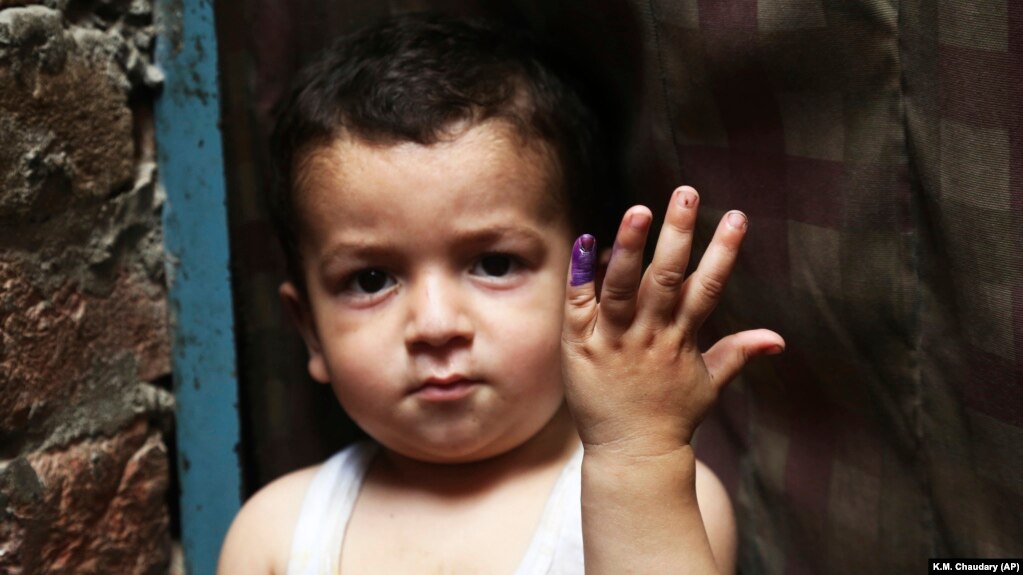
But that number has jumped to 45 cases this year. Of those, 35 were found in the northwestern province of Khyber Pakhtunkhwa, a poor and religiously conservative region that was once a stronghold of militant groups like Al-Qaeda and the Pakistani Taliban.
Many residents of the province, which lies along the porous border with Afghanistan, have been suspicious of the polio vaccine, with conservative Islamic clerics and militants claiming it is a Western conspiracy to harm or sterilize children.
Dr. Imtiaz Ali Shah, the head of the provincial government's Polio Monitoring Cell in Khyber Pakhtunkhwa, warns that fake polio markers are the newest threat to anti-polio efforts.
"Our immunization teams first ask the parents if their children are vaccinated,” says Shah. “To confirm this, we check if the children have marks on their fingers. If they do, then it means they were vaccinated. But then we realized that some parents had applied fake marks on their children before polio teams arrived to their areas.”
Many residents of the province, which lies along the porous border with Afghanistan, have been suspicious of the polio vaccine, with conservative Islamic clerics and militants claiming it is a Western conspiracy to harm or sterilize children.
Dr. Imtiaz Ali Shah, the head of the provincial government's Polio Monitoring Cell in Khyber Pakhtunkhwa, warns that fake polio markers are the newest threat to anti-polio efforts.
"Our immunization teams first ask the parents if their children are vaccinated,” says Shah. “To confirm this, we check if the children have marks on their fingers. If they do, then it means they were vaccinated. But then we realized that some parents had applied fake marks on their children before polio teams arrived to their areas.”
Shah says suspicions were raised when 17 of the 45 polio cases recorded this year came from the same town -- Bannu -- a city of 50,000 in the country’s northwest.
In the past, the town has been the scene of deadly attacks on polio workers and militants are known to be active in the area.
Shah brought a team of health officials to Bannu to recheck if the children who had marks on their fingers had actually been vaccinated.
“When we checked some children, we found out that they were not immunized,” he says.
Shah says the provincial government in Bannu is making plans to address the issue of the fake pinky marks. In the past, polio teams would report to police the parents who refused to immunize their children.
But polio workers have since stopped registering complaints with authorities. He also says the government has launched a media campaign targeting parents, clerics, and school teachers in a bid to dispel the myths about the vaccinations.
In April, a vaccination drive in the province was thwarted after a mass panic was created by rumors of children fainting or vomiting after they were immunized.
As the rumors spread, thousands of panicked parents rushed their children to hospitals in the provincial capital, Peshawar, forcing the health facilities to declare emergencies. The rumors turned out to be wildly exaggerated.
In the past, the town has been the scene of deadly attacks on polio workers and militants are known to be active in the area.
Shah brought a team of health officials to Bannu to recheck if the children who had marks on their fingers had actually been vaccinated.
“When we checked some children, we found out that they were not immunized,” he says.
Shah says the provincial government in Bannu is making plans to address the issue of the fake pinky marks. In the past, polio teams would report to police the parents who refused to immunize their children.
But polio workers have since stopped registering complaints with authorities. He also says the government has launched a media campaign targeting parents, clerics, and school teachers in a bid to dispel the myths about the vaccinations.
In April, a vaccination drive in the province was thwarted after a mass panic was created by rumors of children fainting or vomiting after they were immunized.
As the rumors spread, thousands of panicked parents rushed their children to hospitals in the provincial capital, Peshawar, forcing the health facilities to declare emergencies. The rumors turned out to be wildly exaggerated.
Public health studies in Pakistan have shown that maternal illiteracy and low parental knowledge about vaccines -- together with poverty and rural residency -- are the factors that most commonly influence whether parents vaccinate their children against the polio virus.
Anti-vaccination propaganda has also been fueled by a distrust of Western governments who fund vaccine programs -- including after the CIA reportedly staged a fake hepatitis-vaccination campaign in 2011 to confirm the location of Al-Qaeda leader Osama bin Laden, who lived in Abottabad, where he was killed by U.S. SEALs.
Since then, some clerics have even issued fatwas saying that children who become paralyzed or die from polio are "martyrs" because they refused to be tricked by a "Western conspiracy."
Since then, some clerics have even issued fatwas saying that children who become paralyzed or die from polio are "martyrs" because they refused to be tricked by a "Western conspiracy."
Pakistani militants have also propagandized that Western-made vaccines contain pig fat or alcohol, which are both forbidden in Islam.
Militants in Pakistan have kidnapped, beaten, and assassinated dozens of vaccinators or their armed police escorts in recent years in a bid to stop local anti-polio campaigns.
Militants in Pakistan have kidnapped, beaten, and assassinated dozens of vaccinators or their armed police escorts in recent years in a bid to stop local anti-polio campaigns.
Pakistan’s ruling party PTI tweets old Kashmir video, claims violence over Article 370
NAYANIMA BASU
The video has been made by clubbing two separate clips that were uploaded on YouTube in 2017 and 2018.
Pakistan’s ruling party Pakistan Tehreek-e-Insaf (PTI) Saturday shared an old, edited video on Twitter, showing violent protests in Kashmir and claimed that people in the Valley were being attacked by the Indian Army.
“Curfews and media blackout cannot contain revolutions that emerge as a result of grave human rights violations. Yet Indian Govt continues to alienate Kashmir. Unarmed men, women, children being attacked by Indian Army. Inhumane! #Kashmir,” PTI tweeted.
At the time of publishing this report, the tweet had over 3,000 shares and 4,000 likes.
The video was even shared by Khaleej Mag, a digital media company based in Dubai, Kuwait, Qatar and Dublin.
Fact check
Pakistan’s attempts to claim that abrogation of Article 370 has led to violence in the valley by using old videos comes at a time when its attempts to garner international support have proved to be futile. Most countries have asked India and Pakistan to settle the matter bilaterally.
The international community, however, has also asked India to ensure that no human rights violations take place in the Valley.
Meanwhile, on Friday a US State Department official said, “We do expect the issue of India-Pakistan relations to come up (during Modi-Trump meet in France). The President will likely want to hear from Prime Minister Modi on how he plans to reduce regional tensions and uphold respect for human rights for Kashmir as part of India’s role as the world’s largest democracy.”
“India’s decision to rescind Article 370 in Kashmir is an internal decision, but certainly with regional implications. And President Trump will likely want to hear how Prime Minister Modi intends to calm regional tensions in light of this significant move,” the official said, adding that India should lift the communication blackout from the Valley.
The official also said that President Trump has urged Pakistan to “to prevent the infiltration of militants across the Line of Control that divides Kashmir and to crack down on groups on its territory that have attacked India in the past”
The Hazaras – Afghanistan’s oppressed minority
By NOSHIN RAD
NOSHIN RAD calls attention to the plight of the Hazara people, a racially persecuted minority faced with Islamist genocide and government indifference.
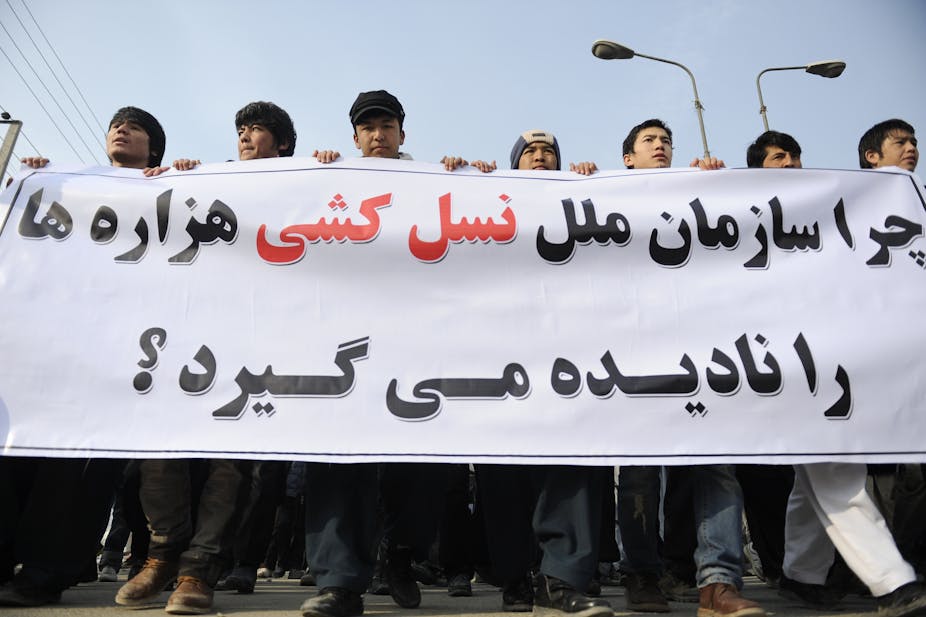
OFTEN when we hear about Afghanistan, words such as destruction, war, poverty, bloodshed and death are used to describe the country.
Before the country’s civil war which began in April 1992, Afghanistan was blossoming and people of different ethnic groups were accorded their human rights, including access to education and jobs that were not available to them before, allowing for families to better sustain themselves.
However, when the civil war broke out, different warlords comprising of the mojahedin, and later the Taliban, occupied Afghanistan, implementing their own brutal laws and extreme religious views.
The Taliban rule of the late 1990s came to an end in 2001, after September 11, when the US invaded the country along with its Nato allies, under the pretext of bringing peace, stability and freedom to all Afghans, especially women.
Today, sadly, the situation has not vastly improved, with instability still plaguing the country almost two decades after Nato troops arrived in Afghanistan.
And for one group of Afghans, the Hazaras, the conflict has become even more intolerable, with their deaths and suffering continuing to rise.
The Hazara people are one of 50 ethnic groups in Afghanistan, but can also be found in Iran and Pakistan, with the majority being adherents of Shia Islam. They speak Dari (a dialect of Farsi) and/or Hazaragi.
Many people ask where the Hazaras originate from, and that is a difficult question to answer, because no-one really knows their origins and there is a lot of speculation among scholars and historians.
Many academics and political scientists claim that the Hazaras are descendants of Moghol soldiers who came to Afghanistan with Genghis Khan’s army in the 13th century; this is also the most accepted theory about their descent.
Others argue that the Hazaras are mixed descendants of Turko-Mogholi war settlers, who built and lived in army bases in central Afghanistan.
However, what distinguishes the Hazaras from other groups are their distinct ethnic features.
In Afghanistan, the Hazara people are the third-largest ethnic group after Pashtuns and Tajiks, but as a result of discrimination and segregationist policies by many different Afghan rulers, the Hazara people have remained one of the most underdeveloped groups, politically, economically and socially in the country.
Until the 1890s, the Hazara people were autonomous and in full control of all areas within their region known as Hazarajat, which lies mostly to the west and north-west of Kabul.
However, after the 1890s, they were ruthlessly subjugated, at the behest of the Sunni king Abdur Rahman Khan, who issued a religious decree declaring Shias to be infidels and thus legitimate targets in war.
From 1888-93, a period known as the Hazara uprisings, the well-known scholar Sayed Askar Mousavi argues that Amir Abdur Rahman and his army massacred or forced out more than half of the Hazara population.
It was not until 1923 that Hazara slavery was abolished, but still the community were excluded from contributing to, and benefiting from, the development of Afghanistan, and were not viewed as equal citizens.
Up until this day the Hazaras are under continued attack by two terrorist groups, the Taliban and Isis (both are Sunni Islamic fundamentalist organisations) and are also neglected by the Afghan government.
Last year in October, the Taliban launched an offensive and attack in Hazarajat.
It first began in Uruzgan province, and then continued on to Jaghori and Malistan, two districts in Ghazni province. These were two provinces considered to be among the safest areas in Afghanistan for the Hazara people.
Jaghori’s 600,000 people are poor and live in an isolated area that does not have paved roads or electricity lines, but has an abundance of orchards of almond trees and apple trees.
The province had been known for being peaceful. Specifically, the implementation of educational schemes for both sexes has been a successful example for the rest of the country. School attendance is almost universal among girls and much higher than the Afghan average for boys.
When the Taliban attacked last year, the area’s successful schools were burned down, houses were looted and destroyed, as well as communications antennas being knocked down. Hundreds of civilians were killed and thousands internally displaced.
Those who managed to escape either went with cars over dusty mountain roads or fled by foot in freezing temperatures.
Most families fled to cities like Ghazni, Bamyan and Kabul, where there was little to no food, medicine or shelter. While the inhabitants of these cities extended their helping hands, the government turned a blind eye towards these helpless individuals for weeks, until eventually the army arrived and assisted the Hazara population.
Last Saturday, a wedding took place in the Dubai City wedding hall in western Kabul, in a predominately Hazara neighbourhood.
While children, women and men were dancing to their favourite Afghan wedding songs at the joyous occasion, a suicide bomber attacked the wedding, where over 80 guests were killed and over 180 injured.
Isis claimed responsibility for the attack, the deadliest to hit the capital in 2019.
Interestingly, these attacks are mentioned in the media as attacks on the Afghan people; media framing is important here, given that historically the term Afghan was synonymous with Pashtun, and is still used as an exclusionary term by some Pashtun nationalists.
This is problematic as an entire country composed of different ethnic groups is being referred to by a term which signals a monopoly of power and the enforcement of an Afghan identity on non-Afghans, as well as denying the multitude of identities of the diverse communities within the country.
Therefore, it is important to call these attacks what they are — a racially motivated attack on a minority, who are subject to institutional oppression, marginalisation, persecution and massacres.
The group of people who have benefitted from these oppressive structures are now given platforms in Europe and the US, and they refuse to acknowledge the prejudice fuelling the attacks, and in turn claiming that there is no racism in Afghan society.
As long as such Afghan journalists and so-called experts are given public platforms where they refuse to acknowledge the divisions in Afghan society such as race and ethnicity, while the government does nothing to acknowledge the targeting of Hazaras by the Taliban and Isis, these people are inadvertently undermining the true nature of the suffering being inflicted on the Hazara people.
Of course there are attacks in which non-Hazaras are victims of suicide bombings, but they are mostly in the form of “collateral damage” during attacks on the government and the US and Nato forces.
Other ethnic groups in Afghanistan suffer from poverty and conflict, but they are not solely targeted based on their ethnicity. They have not been pushed to the bottom of the social hierarchy because of their ethnicity, culture and religion.
In order to move forward, it is important to recognise and understand the history of the Hazara people.
The Hazaras are not merely attacked because of their religious beliefs, otherwise there would also be regular attacks against non-Hazara Shias.
The Hazara people are undeniably attacked because of their ethnicity. They are not seen as “real” Afghans.
The answer to why the Hazara people have been targeted by different Afghan governments may lie in the fact that they are the central ethnic group that could potentially challenge and threaten the country’s dominant powers.
This in part explains the decades of social isolation, displacement, oppression and persecution of the Hazara people by successive Afghan regimes: if we do not denounce this a collective, we are also to blame for its continuation.
Friday, August 23, 2019
#Pakistan - Tabdeeli much? #PTI is perhaps the only party that has as many factions as workers

Suhail Warraich
Even after a year in power, the Pakistan Tehreek-e-Insaf (PTI) continues to struggle with finding the right balance between the party and the government.
Major party office bearers have been changed twice in a year to give boost to the party, but in vain. Soon after coming to power, the prime minister appointed old guard Arshad Dad from Lala Musa, Gujrat as secretary general of the party. Recently, he has been unceremoniously replaced by former federal minister Amir Mahmood Kayani, who was allegedly dropped from the cabinet over corruption charges. Arshad Dad was on a trip to US to oversee arrangements for the Arena rally for Imran Khan when he was replaced without any notice or explanation. Some critics have said that if Kayani was going to be appointed to the important office then he should have been cleared of corruption charges prior.
It seems that Amir Kayani has re-emerged with the support of Aleem Khan whose position has been weakened after his arrest by the National Accountability Bureau (NAB). Aleem Khan once the Punjab president of the PTI, and right-hand man of Imran Khan, has been given a cold shoulder and consigned to political oblivion. After his release from jail, he has not been restored as a minister despite his many meetings with the prime minister.
Another powerful loyalist and a loud voice, Saif Niazi, has also re-appeared on the party horizon after a year although in political wilderness. For almost a year, he remained cornered within the party although in the past he used to belong to the most powerful lobby within the PTI. Now Niazi has been made party’s chief organiser by Imran Khan. He had earlier resigned from the post of additional secretary general over policies differences. It was then rumoured that the Jehangir Khan Tareen lobby had sidelined Saif Niazi. Soon after his appointment as chief organiser, Niazi organised a well attended party convention to prove that he remains a strongman.
Arshad Dad, the former secretary general, was a blend of professional middle-class values and military discipline. A Gujjar from central Punjab’s Gujrat district, he shared the constituency with the Pakistan Peoples Party (PPP) Punjab President Qamar Zaman Kaira. Dad’s family had long been diehard PPP loyalists. His father Brig Sahibdad Khan was a member of the Punjab cabinet in Zulfikar Ali Bhutto’s days. Dad has been a successful businessman running a construction company which built the Lahore Expo Centre, besides other landmark buildings. Dad was sent by the party to Turkey and China to study their political models, and organise the party using their best features. He had planned to make the party popular like Tayyip Erdogan’s Justice and Development Party (AKP) with an organization resembling the Communist Party of China.
Because of the loose party organisation, every worker is an opinionated leader. The only binding force is the leadership of the Kaptaan, Imran Khan.
Party old guards were of the view that in the event of challenge to democracy or the party from the powers that be, nearly 70 percent of party workers will stand by Imran Khan. The rest were thought to be “migratory birds”, likely to change their nests according to the weather.
Arshad Dad said that in China six percent of the population has the membership of the Communist Party. It is this six percent of the population that runs the government. Under Dad the PTI was planning to recruit three percent of Pakistani population in order to sustain a network similar to the Communist Party of China.
With the exit of Dad and entry of Kayani, the influence of parliamentarians will increase, and party workers will be pushed back. The party has grown inactive in the Punjab and workers seem dissatisfied and angry. The running joke among workers is that the only gain they can aspire for is a “selfie”. So a selfie is the sole medal for their party work.
The Punjab party is clearly divided. There was a time when Jehangir Khan Tareen used to rule supreme. No more. With Tareen’s absence from active politics after the Supreme Court decision against him, his clout has gone down. Perhaps he is no longer taking as much interest in party affairs as he used to in the past. But he still is a powerful player. Governor Sarwar and Tareen don’t appreciate each other’s contribution to the party. The governor is also perhaps the only open ally of Tareen’s Seraiki rival Shah Mahmood Qureshi. The Sarwar-Tareen rivalry has been at work since the former became governor. An objection to the daily iftar parties at the Governor’s House which entertained thousands of party workers was raised. It was alleged that lavish parties were being thrown at the expense of public exchequer. But the governor showed that not a penny had been spent by the government and that these were funded by his friends. Even Sarwar Foundation, the governor’s non-profit organisation came under severe fire, and he was left with no option but to step back.
At the grass roots level, the PTI is divided into parallel groups. It is perhaps the only party having as many factions as workers. Because of the loose party organisation, every worker is an opinionated leader who despises other workers. The only binding force is the leadership of the Kaptaan, Imran Khan.
As a local government minister, Aleem Khan, had a great plan to organise the party and identify a consensus leadership by holding local elections. But after his arrest and subsequent resignation from the ministry, the plan was shelved. The Pakistan Muslim League Nawaz (PML-N) had built party organisation through local bodies. It continues to accommodate its active workers in the local bodies set up. The strategy worked well for the PML-N. It might have worked well for the PTI as well.
CHILDREN BEARING CHILDREN - TEENAGE PREGNANCIES CONTINUE TO THREATEN THE LIVES OF YOUNG GIRLS ACROSS PAKISTAN
BY MAHWISH QAYYUM
TEENAGE PREGNANCIES CONTINUE TO THREATEN THE LIVES OF YOUNG GIRLS ACROSS PAKISTAN
Pakistan has one of the highest maternal mortality ratios in South Asia, with nearly one in five women likely to develop complications during pregnancy and childbirth. The dangers, already pronounced due to improper nutrition and lack of trained personnel, are magnified with teen pregnancies, a particularly problematic issue for Khyber-Pakhtunkhwa province, where almost 15% of girls give birth to their first child before the age of 18.
Despite being a signatory to several global pledges to rein in child marriage, the practice remains widespread across Pakistan, largely due to poverty, traditional mindsets and social and gender inequality. Early marriage, say medical practitioners, often results in frequent and unplanned pregnancies that pose a significant threat to both the minor girls and their infants. The statistics are harrowing: UNICEF estimates that 21% of Pakistani girls are married before their 18th birthday, while 3% are married before they turn 15.
Young and horrified
Samreen Irshad was married off at the age of 15 and gave birth to her first child while she was still a legal minor. Like 70% of all births in Pakistan, her daughter was born at home with the help of a midwife. “I kept screaming throughout labor because of the pain and was repeatedly told to stop crying by the midwife,” she tells Newsweek. “The birth lasted 12 hours and left me traumatized,” she continues, adding she told her husband she was not sure she could tolerate the pain of another childbirth. “But my husband wanted more babies and I had no choice except to become a child-bearing machine for him,” she notes ruefully, adding it was ironic that men, and not women, had the final say on family planning in Pakistan.
A year after her daughter was born, Irshad became pregnant once again, a normally joyous occasion leaving her filled with dread as she recalled the terror of her first birth. A difficult labor followed, this time ending in tragedy as her son died during childbirth. This sad fate is all too common for young mothers, according to UNICEF, which notes that infant and stillborn deaths tend to occur 50% more among mothers under 20 than in women who get pregnant later in life.
Children in labor
Another victim of child marriage is Sakina Bibi. Her parents married her off when she was barely 13 to reduce the “number of mouths they had to feed.” She says she was so naïve at the time of her marriage that she thought it was just an excuse to dress up and wear jewelry; she didn’t even know what sexual intercourse entailed. Her ignorance, however, did not stop her mother-in-law from demanding she “prove” her fertility.
“I became pregnant around a month after my marriage,” she tells Newsweek. “It was a difficult pregnancy; I had severe nausea and would vomit out whatever I consumed,” she says, adding that she fainted several times due to weakness and lack of rest.
Dr. Sultana Barlas, a gynecologist and Medical Superintendent at Peshawar’s Government Maternity Hospital, says pregnancies among minor girls can have a devastating impact on their health, leaving them vulnerable to premature births and other complications. Teenage girls’ bodies are biologically incapable of managing pregnancies, she adds. Either ignorant or ambivalent to these risks, Bibi’s mother-in-law told her to stop acting out, as “you’re not the first woman to bear a child.”
Finally, Bibi gave birth to a baby boy. At 14, the child had herself become a mother. “I had a complicated childbirth and my son remains malnourished,” she says. “I’m now pregnant again.”
Bibi’s experience is still relatively mild, according to Dr. Barlas. She says adolescent pregnancies often carry several life-threatening issues, including obstetric labor, infant and maternal mortality, preterm birth, low birth weight, iron, calcium and other deficiencies in mother and child. According to the U.N., complications during pregnancy and childbirth are the second leading cause of deaths for 15-19-year-old girls globally, with 95 percent of these deaths occurring in low- and middle-income countries like Pakistan.
Toothless legislation
Qamar Naseem, the program coordinator for non-profit Blue Veins, says poverty remains the greatest reason in Pakistan for most parents seeking to marry off children at a young age. Stopping the practice is all the more difficult because of outdated child marriage laws that do not go far enough to punish violators.
Following the passage of the 18th Amendment in 2010, healthcare has been devolved to provincial governments. In the years since, both Sindh and Punjab have passed laws prohibiting child marriage—though Punjab allows girls to be married at 16, while Sindh has a minimum age of 18. Both provinces have also significantly increased the punishment for anyone involved in child marriage. Khyber-Pakhtunkhwa, meanwhile, has yet to pass any legislation for itself and continues to utilize the Child Marriage Restraint Act 1929, which punishes violators with just a month of imprisonment and a Rs. 1000 fine.
Pakistan, as a member of the South Asian Initiative to End Violence Against Children, had committed to ending child marriage by 2018. However, says Naseem, practically no serious effort has been made to curb child marriage in Khyber-Pakhtunkhwa or Balochistan. He says that in March 2014, the Council of Islamic Ideology even went so far as to rule that laws related to minimum age of marriage were against Islamic teachings and that children of any age could marry if they had attained puberty.
Fortunately, this has not stopped lawmakers from working to enact legislation that can curb child marriage. The Khyber-Pakhtunkhwa Child Marriage Restraint Bill has been forwarded to the provincial law department and could soon be presented before the cabinet for final approval. Parliament has also passed amendments to the federal Child Marriage Restraint Act 1929, despite conservative opposition, which are currently facing final approval from relevant committees. This could be a game-changer and ensure girls’ fundamental rights are protected. John F. Kennedy once said that children are the world’s most valuable resource; it is high time Pakistan ensures that any child, regardless of gender or socioeconomic concerns, gets a chance to fulfill that promise.
The United States Can’t Solve the Kashmir Dispute
By Sumit Ganguly
Why Trump’s Offer to Mediate Is Dead in the Water.
n July 22, during a White House meeting with Pakistani Prime Minister Imran Khan, U.S. President Donald Trump made a surprise offer to mediate the long-running dispute between India and Pakistan over Kashmir. “It is impossible to believe,” Trump said, “that two incredible countries who are very, very smart with very smart leadership can’t solve a problem like that. If you would want me to mediate or arbitrate, I would be willing to do it.”
Even more surprising, Trump claimed that Indian Prime Minister Narendra Modi had sought his intervention in the matter. For informed observers, this claim was hard to believe. And indeed, within hours of Trump’s statement, India’s foreign minister strenuously denied that Modi had made any such suggestion. More to the point, he reiterated India’s long-standing position that the Kashmir dispute must be solved through strictly bilateral negotiations between India and Pakistan. Modi, probably wanting to avoid implying that Trump was a liar, maintained a studious silence.
Trump’s offer, however ill-advised, was hardly the first U.S. attempt to intercede in Kashmir. Over the past six decades, successive U.S. administrations have tried to make headway on the dispute. Those efforts all failed—and Trump’s is unlikely to turn out differently.
INDIA’S WAY OR THE HIGHWAY
India and Pakistan have both claimed Kashmir, a majority-Muslim region in the north of the Indian subcontinent, since the two countries’ partition in 1947. India has de facto control over about 55 percent of the region and the majority of its population; Pakistan controls around 30 percent and China the remaining 15 percent. The dispute over the region has led to three wars and countless skirmishes and stands as a permanent threat to stability in South Asia—one that is especially dangerous, given that both India and Pakistan are nuclear armed.
The United States first attempted to mediate the Kashmir dispute in 1962. China and India had just fought a disastrous border war, in which the Chinese People’s Liberation Army routed a poorly armed and ill-prepared Indian Army. New Delhi turned to Washington for military assistance. At the time, Pakistan was an important Cold War ally of the United States, and Pakistani President Ayub Khan, aware of India’s vulnerable position, convinced the administration of U.S. President John F. Kennedy to prod India into negotiations over Kashmir. In coordination with the British, Kennedy dispatched Averell Harriman, the noted diplomat and former ambassador to the Soviet Union, to New Delhi.
The Sino-Indian war had left Indian Prime Minister Jawaharlal Nehru emotionally broken and politically weak. Dependent on diplomatic goodwill and defense supplies from both the United States and the United Kingdom, he allowed himself to be cajoled into talks over Kashmir. Between 1962 and 1963, India and Pakistan held six rounds of negotiations. India was willing to make significant territorial concessions under Anglo-American pressure, but even these were not enough to meet Pakistan’s expansive demands.
Having seen these talks reach an impasse despite its willingness to compromise, India hardened its position on external interference in Kashmir, fearing that outside powers would force it to offer concessions to Pakistan, the weaker party. The last time New Delhi allowed a foreign power to restore normal Indian-Pakistani diplomatic relations came after the Indo-Pakistani war of 1965, in which Pakistani forces had invaded Indian-controlled Kashmir only to be fought to a standstill. With the United States distracted by the Vietnam War, the Soviet Union helped broker a cease-fire that ultimately led to the 1966 Tashkent Agreement, restoring the prewar status quo.After the third Indo-Pakistani war in 1971, India became fully committed to preventing external mediation. When the two sides met in 1972 to discuss the postwar settlement, negotiations were limited—at India’s insistence—to Indian Prime Minister Indira Gandhi and Pakistani President Zulfikar Ali Bhutto, along with a handful of trusted aides. The resulting settlement, the Simla Agreement, stated that the two countries would “settle their differences by peaceful means through bilateral negotiations.”
From New Delhi’s perspective, this agreement enshrined the principle that all future discussions about Kashmir must be conducted on a strictly bilateral basis. Since 1972, no Indian government has ever evinced the slightest willingness to allow any foreign power, especially the United States, to broker an understanding with Pakistan on Kashmir. India is convinced that it can extract better terms through bilateral negotiations, and it is suspicious that Washington is too close to Islamabad.
Pakistan has resisted this particular interpretation of the Simla Agreement. Instead, recognizing its weakness vis-à-vis India, it has constantly sought to bring in the United States as a mediator. In 1999, for instance, as the fourth Indo-Pakistani war was drawing to a close, Pakistani Prime Minister Nawaz Sharif flew to Washington to seek American intercession. U.S. President Bill Clinton met with Sharif, but—much to Sharif’s dismay—he unequivocally branded Pakistan the aggressor in the conflict. At Sharif’s insistence, Clinton nevertheless offered to look into the Kashmir dispute. Yet he never followed through, dropping the subject for the brief remainder of his presidency.
Subsequent U.S. administrations have tried to revisit the Kashmir issue, despite intransigent opposition from New Delhi. In 2009, for instance, India embarked on a vigorous diplomatic offensive just as the administration of President Barack Obama was preparing to appoint Richard Holbrooke, the veteran diplomat, as the White House’s special representative for Afghanistan and Pakistan. Some within the administration were convinced that settling the Kashmir issue—and thus soothing Pakistan’s fear of India—would help elicit Pakistani cooperation on Afghanistan. Yet New Delhi, having gotten word that Holbrooke was pushing to include Kashmir in his diplomatic portfolio, explained to the United States that such a move “smacked of interference and was unacceptable” to India. The Obama administration quietly abandoned the idea.
KNOW YOUR LIMITS
Trump (or some in his administration) may believe that the dramatic growth in U.S.-Indian engagement over the past two decades, combined with the president’s personal rapport with Modi, provides this White House with an opportunity to succeed where all of its predecessors have failed. Certainly, Pakistan is trying to convince Trump that this is the case. Yet there are compelling reasons to think otherwise.
India’s permanent foreign policy bureaucracy has a long institutional memory and is extremely resistant to drastic policy shifts. It is likely to advise Modi against caving to the United States, given that India’s current policy has prevented it from being forced into concessions to Pakistan for nearly five decades. India’s new foreign minister, Subrahmanyam Jaishankar, is a career diplomat who shares the bureaucracy’s suspicions regarding foreign, and particularly American, mediation.
No Indian government—and especially not one, like Modi’s, that has assumed a hawkish stance toward Pakistan—will yield any ground on this issue. Already the U.S. State Department seems to have acknowledged reality, stating on July 22 that it believes the Kashmir dispute is a “bilateral” issue between India and Pakistan.
Trump should heed his own State Department’s advice. Pushing New Delhi on Kashmir will get him nothing except a public failure and a damaged U.S.-Indian partnership.
https://www.foreignaffairs.com/articles/india/2019-07-30/united-states-cant-solve-kashmir-dispute
Pakistan Should Not Again Fail ‘Honor Killing’ Victim
Saroop Ijaz
End Impunity of Family Murders of Women.
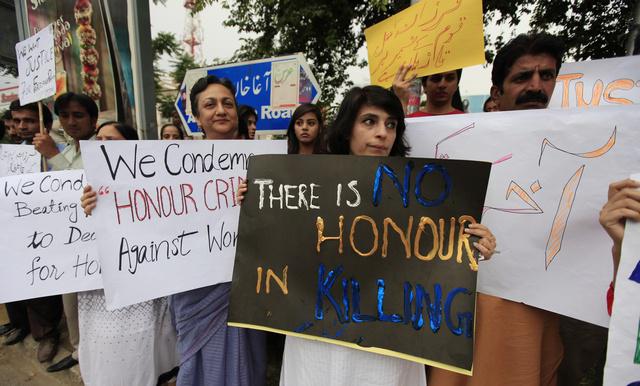
Convictions are rare for many reasons, yet critical is a loophole that allowed the legal heirs of the victim to pardon those responsible – who are usually also a relative.Qandeel’s killing prompted a widespread outcry in Pakistan, leading to legislative action and the promise of prompt prosecution. Parliament passed a law imposing harsher punishments for “honor killings” and partially eliminated the pardon loophole.
This raised hopes that the case would be a turning point for the Pakistani government, which has tolerated violence against – and even the murder of – women on “honor” grounds.
State prosecutors took the unusual step of charging Qandeel’s three brothers, including the one who confessed to killing her, with a crime against the state. But the trial has dragged on. On August 21, Qandeel’s parents asked the court to “forgive” her brothers, their lawyers arguing that since the anti-honor killing law was passed after Qandeel’s death, it does not apply in her case. The next day, the court rejected the parents’ pardon request.Still, “honor killings” and pressure to pardon perpetrators seem to have continued unabated since the adoption of the law. There are no credible official figures on “honor killings” because they often go unreported or are passed off as suicide or natural deaths by family members. But as an indication, in the Khyber-Pakhtunkhwa province, at least 94 women were murdered by close family members in 2017.Justice for Pakistani women requires a broader government effort, including more state prosecutions of “honor killings,” reformed criminal laws, and greater access for women and girls to safe emergency shelters and other services when they report risks from their family.
The government should end a system in which a woman’s life is considered worthless and family members can kill with impunity.
Pakistan should not fail Qandeel again.
https://www.hrw.org/news/2019/08/23/pakistan-should-not-again-fail-honor-killing-victim
As Pakistan cries foul over Kashmir, UAE to honour PM Narendra Modi
At a time when Pakistan is virtually begging for support from the Muslim world against India for Kashmir, it faces a huge rebuff from the United Arab Emirates (UAE), with the key Islamic nation set to host Prime Minister Narendra Modi and honour him with the countrys highest civilian award.
This comes days after UAE's ambassador to India, Ahmad Al Banna, said his country found nothing wrong in the Modi government's decision to reorganize Jammu and Kashmir and that it was purely an internal matter of India.
The UAE does not see the decision to end special status of Jammu and Kashmir and its bifurcation as some unique incident and views it as a measure aimed at reducing regional disparities.
Against this backdrop, Modi will be in UAE for two days from Friday and will meet Crown Prince of Abu Dhabi, Sheikh Mohammed bin Zayed Al Nahyan, to discuss bilateral, regional and international matters of mutual interest.
A major highlight of the visit will be the presentation of 'Order of Zayed', the highest civilian honour of the UAE, to Modi. The UAE had announced the honour for Modi in April this year for giving a boost to the bilateral relations.
The award is instituted in the name of the country's founding father Sheikh Zayed bin Sultan Al Nahyan and is being presented to Modi in the year of his birth centenary, which adds even greater significance to it.
This is the third visit by Modi to UAE in four years and has added importance considering the fact that it is taking place at a time when Pakistan is trying to garner support, particularly from the Muslim countries, against India over abolition of the special status of Jammu and Kashmir and bifurcation of the state.
In that context, it marks a major setback for Pakistan and highlights the extent of isolation it has been subjected to, even in the Islamic world.
The UAE, which is the largest business hub in the Gulf region, hosts a big Indian diaspora and is a destination for a huge number of Indian tourists.
India-UAE ties were elevated to a Comprehensive Strategic Partnership in 2015. In February 2018, Modi visited the UAE as Chief Guest at the World Government Summit. The Crown Prince of Abu Dhabi was the chief guest at the Republic Day celebrations in 2017.
India-UAE bilateral trade stands at $60 billion, and the UAE is India's third-largest trade partner. The UAE is also the fourth-largest exporter of crude oil for India and is home to a 3.3 million-strong Indian community.
The Prime Minister's visit will be marked by the launch of RuPay card, "an Indian indigenous equivalent of Mastercard or Visa", making the UAE the first country in the Middle East to have it, Indian Ambassador Navdeep Singh Suri said in an interview to Emirates News Agency.
"A Memorandum of Understanding, MoU, to establish a technology interface between the payment platforms in India and UAE, would be exchanged between the National Payments Corporation of India and UAE's Mercury Payments Services. This will enable the RuPay card to be used at point-of-sale terminals across the UAE," Suri said in the interview on Wednesday.
He said introduction of RuPay card is expected to benefit the Indian diaspora as also tourism and trade.
https://timesofindia.indiatimes.com/india/as-pak-cries-foul-over-kashmir-uae-to-honour-modi/articleshow/70800100.cms
Pakistan’s struggle for a free Kashmir kept its own people poor

SHAHMEER NAVEED ARSHAD
Instead of fighting a battle that Pakistan will most definitely never win, the Imran Khan government should start fixing the things it can.
Yes, India has finally annexed Kashmir. Yes, it is truly devastating for our diplomacy in the short term. It is a gross violation of international morals, treaties and human rights. But is it really our problem to begin with?
What must be explored from the outset is the influence of a movement that began gaining traction in the 1970s. The Middle Eastern countries exhibited an oil blockade against America for Palestine, Iran witnessed a popular revolution by the Islamists and Afghanistan was invaded by the Soviet Union. These movements were exacerbated further in the aftermath of 9/11; the fall of Iraq, Syria, Libya and Egypt inter alia, other revolutions. Yet, despite continued efforts by the Arab republics in Palestine, the Pakistani state in Kashmir and the Iranian efforts in the Middle East more broadly, pan-Islamism has been a complete and utter failure.
The only Muslim countries that turned away from this ethno-religious philosophy – namely Malaysia, Turkey, Indonesia, Bangladesh and Turkmenistan – have had any successes in developing their economies. While we may not like nationalism, we must accept it as the dominant philosophy of the modern state. Westphalian peace in Europe transformed small countries of the tiny continent into great colonial powers. The ability to avoid war with your neighbours was vital for the colonial project to bloom. Yet, after years of rallying around pan-Islamist concepts, Pakistan fails to appreciate the importance of regional peace.
We must understand that politics of a nation-state outside our borders, be it India, Israel or America, is of no material concern to the starving, struggling and impoverished populace of Pakistan. Despite our cry for a plebiscite in Kashmir for over seven decades, the only realistic solution to the problem was to keep the borders at their current levels. Neither India nor Pakistan was ever going to agree to a solution requiring them to cede territory that for seven decades was claimed as part of their nation-state. As far as the notion of an Independent Kashmir, pseudo-liberals must understand that a small nation such as Kashmir, being in charge of the entire Pakistani water supply, would never be acceptable to Pakistan either. Moreover, if gross violations against minority Muslim populations was really an issue, why are we silent on Turkey’s persecution of the Kurds, the Chinese atrocities against Uighur’s in Xinjiang, the annexation of Kalat, Syrian tyranny under Assad and the Hazara genocide in our own backyard? Do Muslims only get persecuted when the perpetrator is an unfriendly nation?
In Pakistan’s struggle for Kashmir, we have fought over three wars in 1947, 1965 and 1999 to no avail. In order to maintain that struggle, and our enmity against India, we spend over a fifth of our total budget on the military (the highest percentage in the world, as recorded by the World Bank). Over seventy years, this never-ending cycle has impoverished our population. On a per capita basis, we are now officially poorer than Bangladesh, Bhutan, Sri Lanka, Kenya, Nigeria, Uzbekistan, Mongolia, Vietnam, Laos, and Egypt. Due to the Pakistani state’s soft hand on Kashmir, we have gained a reputation for funding terrorism, wooing away any possibility of significant foreign investment and trade. Finally, instead of imparting education, the Pakistani state has relentlessly continued a campaign of supporting militant camps under the guise of seminaries, in order to assist in an impossible war.
Finally, let us see what Kashmir ever really gained out of these actions. The average Kashmiri, residing in AJK or GB, has no memory of a united Kashmir. History of this ideal is now as ancient as the fate of the mentally retarded in Manto’sToba Tek Singh. The Kashmiri, who has unofficially been a part of Pakistan since 1947, has no right under the current Pakistani constitution – unless he moves out of Kashmir – to determine federal policy because he has no representation in the National Assembly. Kashmiris have not had the ability to develop as a province of the country by virtue of hanging in limbo, holding on to the promise of a united Kashmir. To be very candid, Kashmir was not the only province/state split up by the partition. Over 10 million Punjabi and Bengali families were separated by an artificial divide. But no one really ever brings up visitation rights to Jalandhar or Calcutta.
That said, Pakistan has a strategic interest in maintaining control over the waterways which run through Kashmir. Any effects of annexation must be neutral in their impact on the Indus Water Treaty. Since this is a real national interest concern, the Pakistani government should obtain guarantees from the international community, the United States, India and China specifically to protect the water flows which cultivate our economy. Additionally, we should appeal to the UNHCR in order to make arrangements for much-anticipated mass migrations into AJK and other parts of Pakistan. If we are serious about our commitments to help Kashmir, we cannot accomplish them without opening our borders to those fleeing Indian persecution.
In our stubborn struggle to support the pan-Islamist fight for a larger Kashmiri freedom, we have denied democracy and development to over 6 million people that have inhabited our own country. Instead of continuing to fight a battle that we will most definitely never win, let us start fixing the things that we can. While Indian annexation might be a violation of human rights, there is a huge silver lining missed in all the fuss: the possibility of long-lasting peace in the subcontinent.
Subscribe to:
Posts (Atom)