
Wednesday, July 24, 2019
'Compulsive Liar, An Advocate of Terrorists': Pakistan Opposition Slams PM Imran Khan over US Visit

Reacting to Khan's address to US think tanks, the Pakistan People’s Party (PPP) secretary general Nafisa Shah said that Khan was regarded as 'Taliban Khan without beard' by the victims of terror activities.
Prime Minister Imran Khan is a "compulsive liar" and an advocate of terrorists, Pakistan's opposition parties said on Wednesday, asserting that he tried his best to mislead the international community during his visit to the United States.
Reacting to Khan's address to US think tanks, the Pakistan People’s Party (PPP) secretary general Nafisa Shah said in a statement that Khan was regarded as "Taliban Khan without beard" by the victims of terror activities.
Prime Minister Imran Khan is a "compulsive liar" and an advocate of terrorists, Pakistan's opposition parties said on Wednesday, asserting that he tried his best to mislead the international community during his visit to the United States.
Reacting to Khan's address to US think tanks, the Pakistan People’s Party (PPP) secretary general Nafisa Shah said in a statement that Khan was regarded as "Taliban Khan without beard" by the victims of terror activities.
سینیٹ چیئرمین کا الیکشن حاصل بزنجو ہی جیتیں گے، بلاول بھٹو
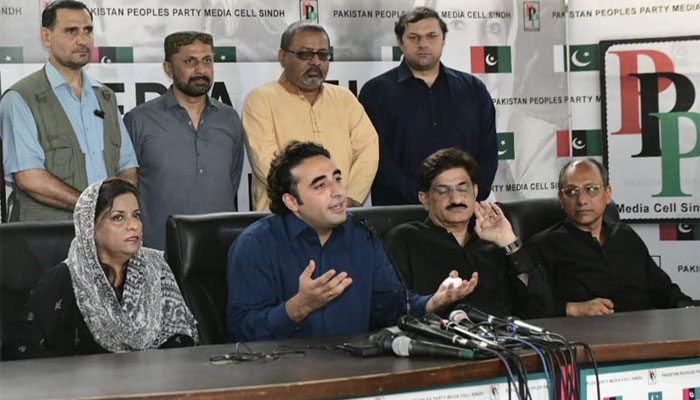
پیپلز پارٹی کے چیئرمین بلاول بھٹو زرداری نے کہا ہے کہ سینیٹ چیئرمین کے الیکشن میں حاصل بزنجو ہی کامیاب ہوں گے۔
بلاول بھٹو نے کراچی میں پارٹی کے میڈیا سیل میں وزیراعلیٰ سندھ سید مراد علی شاہ، نفیسہ شاہ اور سعید غنی کے ہمراہ پریس کانفرنس کی۔
انہوں نے کہا کہ 25جولائی کو پورے ملک میں یوم سیاہ منایا جائے گا، عوام اپوزیشن کے جلسوں میں بھرپور شرکت کریں اور سلیکٹڈ حکومت کے خلاف باہر نکلیں۔
پی پی چیئرمین نے مزید کہا کہ این اے 205 کا ضمنی الیکشن کٹھ پتلیوں کے لئے پیغام ہے، گھوٹکی الیکشن ایک ٹریلر تھا، دوسرا الیکشن سینیٹ کا ہے۔
ان کا کہنا تھا کہ ہمارے سینیٹرز کو بہت سی آفرز ہورہی ہیں، انہیں یقین ہے کہ حکومت کے نمبرز پورے نہیں ہوں گے۔
بلاول بھٹو نے یہ بھی کہا کہ وزیراعظم عمران خان نے دورہ امریکا میں جھوٹے دعوے کئے، پاکستان کو افغانستان کے معاملے میں زیادہ وعدوں سے گریز کرنا چاہیے۔
ان کا کہنا تھا کہ عمران خان وزیراعظم بنیں، فاشسٹ نہ بنیں، ریاست کی ذمہ داری ہے کہ وہ نواز شریف سمیت تمام قیدیوں کو صحت کی سہولتیں فراہم کرے۔
بلاول بھٹو نے استفسار کیا کہ کیا امریکی صدر کے کہنے پر وزیراعظم عمران خان کو سلیکٹڈ کہنا چھوڑدیں؟ سلیکٹڈ، سلیکٹڈ ہوتا ہے۔
انہوں نے کہا کہ کسی نے وزیر اعظم سے این آر او نہیں مانگا، وہ خود اپنی حکومت بچانے کے لئے این آر او کی باتیں کرتے ہیں۔
ایک سوال کے جواب میں بلاول بھٹو نے کہا کہ سی پیک پاکستان کے مفاد کا منصوبہ ہے، اس پر پیپلز پارٹی کوئی سمجھوتہ نہیں کرے گی۔
Even when representing country abroad selected PM can’t get off container: Bilawal
Pakistan Peoples Party (PPP) Chairman Bilawal Bhutto Zardari said on Monday that even when representing the country aboard the selected prime minister could not get off his container.

“Pitty even when representing the country abroad Selected PM can’t get off his container. Imran is a ruler, not a leader,” Bilawal tweeted.
Prime Minister Imran Khan is on a three-day visit to the United States and is scheduled to meet President Donald Trump at the White House.
According to Bilawal Pakistan was in need of a leader who spoke for all Pakistanis not just himself. “If the government does opposition and opposition does opposition then who is left to run the country?”
Addressing overseas Pakistanis on Sunday, Prime Minister Imran Khan said opposition leaders facing corruption cases wanted an NRO (National Reconciliation Ordinance), but he would not rest until his government recovered the looted national wealth.
He particularly referred to jailed former prime minister Nawaz Sharif and former president Asif Ali Zardari and said they had a way out, which was simply to return the looted public money.
He announced to withdraw the A-class jail facilities from Nawaz Sharif and Asif Zardari and jail them along with the ordinary prisoners.
Censorship is a sign of fascist government- Bilawal Bhutto Zardari
Chairman Pakistan Peoples Party Bilawal Bhutto Zardari has strongly condemned media censorship by the government of the rally of PML-N leader Maryam Nawaz and said that it is a proof that Imran Khan is a Selected Prime Minister and his government is a selected government.

In a statement Bilawal Bhutto Zardari said that the party which staged a sit-in in front of parliament for 126 days is not able to tolerate a single rally of opposition which proves that Imran Khan is unable to listen to any voice of dissent. PTI government censored the coverage Maryam Nawaz’s rally in Faisalabad. This is the worst form of fascism, he said.
PTI government is not tolerating opposition so it cannot be called a democratic government. Whenever opposition speaks in the parliament, the selected Prime Minister stops attending sessions of National Assembly. Production orders of opposition members are refused because this government and Prime Minister do not want to hear the truth about the callous government which has made the lives of people hell. Gagging orders are issued by the government for journalists who criticizes the government. When the government failed to crush the voice of opposition by arrests of opposition leader it started censor on media. This kind of censorship is only witnessed in dictatorships, Bilawal Bhutto Zardari concluded.
https://mediacellppp.wordpress.com/2019/07/22/censorship-is-a-sign-of-fascist-government-bilawal-bhutto-zardari/

In a statement Bilawal Bhutto Zardari said that the party which staged a sit-in in front of parliament for 126 days is not able to tolerate a single rally of opposition which proves that Imran Khan is unable to listen to any voice of dissent. PTI government censored the coverage Maryam Nawaz’s rally in Faisalabad. This is the worst form of fascism, he said.
PTI government is not tolerating opposition so it cannot be called a democratic government. Whenever opposition speaks in the parliament, the selected Prime Minister stops attending sessions of National Assembly. Production orders of opposition members are refused because this government and Prime Minister do not want to hear the truth about the callous government which has made the lives of people hell. Gagging orders are issued by the government for journalists who criticizes the government. When the government failed to crush the voice of opposition by arrests of opposition leader it started censor on media. This kind of censorship is only witnessed in dictatorships, Bilawal Bhutto Zardari concluded.
https://mediacellppp.wordpress.com/2019/07/22/censorship-is-a-sign-of-fascist-government-bilawal-bhutto-zardari/
Tuesday, July 23, 2019
Video Report - The New Silk Road, Part 1 & 2: From China to Pakistan | DW Documentary
The New Silk Road, part 2: From Kyrgyzstan to Duisburg | DW Documentary
#Pakistan - Fatema Sohail says women 'afraid' to speak of abuse due to financial dependence on husbands
Fatema Sohail, the wife of Pakistani actor Mohsin Abbas Haider, whom she accused of cheating and domestic abuse, said Monday she was "getting so many messages from women saying that they’re going through similar situations".
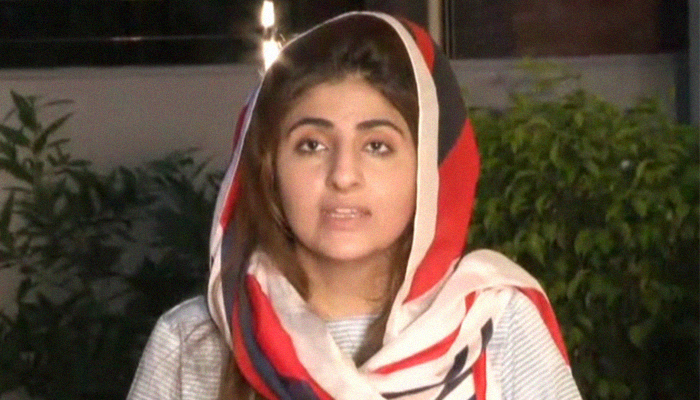 Sohail spoke to the media following a visit to the local police station. She talked about how the case had changed for her because it was not just herself that she was fighting for but other women as well.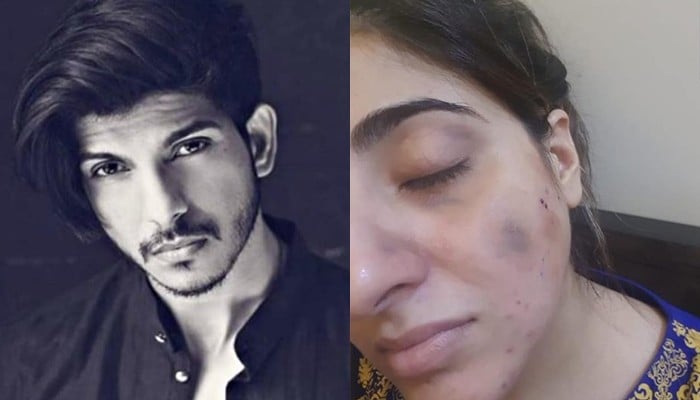
"The women told me ‘we did not — we still don't — have the kind of courage that you have but we're living with abusive husbands who beat us very often’," she said.
"I sort of went into shock because I [spoke up and] was going to fight for my child's rights but this is so prevalent … this is something else. I’m now fighting for my women as well. Take a stand, come out, and speak up!
"God is the one who takes care of us all. These women are often financially weak, they think ‘who will take care of me, who will take care of my children?’," she noted.
Fatema Sohail further underlined that "these women are afraid" of being utterly financially dependent on their husbands and "it’s worrisome".
She urged the women who were facing domestic abuse and violence to take a step forward. "Please come out and speak up. Women have said to me they want to soak up but I’m not sure if they would actually be able to or not. They just have the same fear — being financially weak.”
Later, outside the police station, she said she was going to stay determined about her application. "Whatever they asked, I'm telling them," she noted.
However, she said: "The FIR [first information report] is still not being registered. I don't know what the reason behind this is or if there is any kind of pressure from somewhere but the FIR was not registered."
In response to a reporter's question about how she should have a medical test done in order to file the FIR on the basis of a subsequent report, Sohail said: "I have told you over and over again that the pictures I shared on social media were from 2018 and in the four years of my marriage, I was abused often.
"I never had the intention to come out in the public" about this. "I couldn't open my mouth because he slapped me so hard," she said.
#Afghanistan asks for explanation after Trump claims US could wipe it 'off the face of the Earth'
By Veronica Stracqualursi
Afghanistan has demanded the United States clarify remarks made by President Donald Trump, who said the country "would be wiped off the face of the Earth" if he wanted to win the war in Afghanistan.
"The Afghan nation has not and will never allow any foreign power to determine its fate," Sediq Sediqqi, the spokesman for the President of Afghanistan, said in a statement. "Given the multifaceted relationship between Afghanistan and the United States, the Government of the Islamic Republic of Afghanistan calls for clarification on the US President's statements."
Trump on Monday had suggested that he could put an end to the Afghanistan war in a week, but that it would cost millions of lives and wipe the country "off the face of the Earth."
"If we wanted to fight a war in Afghanistan and win it, I could win that war in a week. I just don't want to kill 10 million people," Trump said, seated beside Pakistani Prime Minister Imran Khan at the White House on Monday. "I have plans on Afghanistan, that if I wanted to win that war, Afghanistan would be wiped off the face of the Earth. It would be gone. It would be over in -- literally, in 10 days, and I don't want to do -- I don't want to go that route."
The US has been pursuing a diplomatic strategy to end the 18-year war in Afghanistan, holding on-again, off-again talks with the Taliban in Qatar to reach a peace deal. Earlier this month, a group of prominent Afghans —including some Afghan government officials acting in a personal capacity — held two days of joint talks with the Taliban, unofficially agreeing on a roadmap on how they might reach a peace deal.
Despite the breakthrough, attacks have continued since then, including a suicide bombing at a wedding, a car bombing outside Afghanistan's Kandahar City police headquarters, and a deadly explosion outside the gates of Kabul University.
The US is hoping Pakistan can help push the Taliban to directly meet with the Afghan government.
US Secretary of State Mike Pompeo said last month that the US is prepared to remove American troops from Afghanistan, but has not agreed on a timeline. Pompeo said he "hopes" a deal will be reached by September 1, ahead of the Afghan presidential elections later that month.
The Afghan government was the second country since Monday to push back against Trump's remarks made during that Oval Office meeting with Khan.
Trump had claimed that India's Prime Minister Narendra Modi personally asked him if he would like to be a mediator in the decades-long conflict between India and Pakistan over the Kashmir region.
A spokesman for India's Ministry of External Affairs, Raveesh Kumar, denied Trump's claim, saying on Twitter that "no such request has been made" by Modi.
In #Pakistan, a Feminist Hero Is Under Fire and on the Run - Gulalai Ismail

By Jeffrey Gettleman
Gulalai Ismail is one of Pakistan’s best-known women’s rights crusaders, speaking out about forced marriages, gang rapes and crushed dreams.

Her groundbreaking work has carried her around the world, winning her awards and audiences with high-powered women such as Michelle Obama and Queen Elizabeth II.
But in her own country, Ms. Ismail has become an enemy of the state, accused of inciting rebellion. And now she is on the run.
For two months, practically no one has seen her. Pakistan’s security services, known as among this region’s most cunning and brutal, can’t find her. They have raided her house several times and deployed scores of officers, and, according to Ms. Ismail’s family, abducted and tortured family friends to extract information.
Her associates said Ms. Ismail, 33, is leading a phantom-like existence, shifting from house to house, timing her movements carefully, stepping out only with a scarf over her face and relying on an underground network of fellow feminists across Pakistan’s cities who are risking everything to hide her.Her family says they have had no contact with her since she vanished in May — “All our phones are bugged,” said her younger sister, Saba.
Rumors keep surfacing that she was spotted here or arrested there. But security officials said that she was not in custody and that they were relentlessly pursuing her.The hunt has continued even though Pakistan has recently presented itself as turning a corner, moving away from years of repression and a long record of sponsoring militant Islamic groups.Its prime minister, Imran Khan, held talks on Monday with President Trump at the White House (mostly about Afghanistan). To sweeten the mood ahead of Mr. Khan’s visit, Pakistan stepped up arrests of militant leaders and tried to ease tensions with its archrival, India.
But as Ms. Ismail’s case shows, many Pakistanis still live in deep fear of their own security services. The intensity of the pursuit reveals how domineering and perhaps unnerved the country’s security services — referred to as “The Establishment” — remain.
“We are in a gray area,” said Rasul Bakhsh Rais, a professor of political science at Lahore University of Management Sciences. “There’s a lot of actual and political chaos in this country right now.”
But, he said, he could not see any legitimate reason to go after Ms. Ismail.
“What she has been saying, however harsh, falls under freedom of expression,” Mr. Rais said. “But the institution she has talked about doesn’t want to be talked about.”
That institution, he said, was Pakistan’s military.
Pakistani security services have accused Ms. Ismail of a litany of serious offenses including sedition, financing terrorism and defaming state institutions, though the authorities have not filed formal charges against her.No Pakistani government official agreed to comment publicly on her case, but several spoke on the condition of anonymity. Her family provided more than a dozen pages of documents, including police reports and copies of the allegations against her.
The Pakistani officials said they had no issue with Ms. Ismail’s advocacy for women. But they maintained that she had crossed a line in recent months by spreading divisive messages at unlawful rallies held by a grass-roots Pashtun rights movement known as P.T.M.
As P.T.M. has grown, holding boisterous protests and inspiring more and more young people, the government has cracked down viciously, arresting some of its leaders and firing on unarmed demonstrators, according to witnesses.Ms. Ismail is an ethnic Pashtun, one of Pakistan’s largest groups, and she has become a prominent P.T.M. supporter. She has appeared onstage at P.T.M. events and spread one of P.T.M.’s core messages — that Pakistan’s military has victimized civilians in Pashtun areas.In January, she aired allegations, on Facebook and Twitter, that government soldiers had raped or sexually abused many Pashtun women. She has also joined chants in which P.T.M. supporters belted out: “The ones responsible for terrorism are the ones in uniform!”
“Her speech against the state and army is an attempt to divide people on ethnic lines and incite them to commit treason,” read a police complaint registered May 21.In the past week, Pakistani officials accused her and her parents of money laundering and financing terrorism, saying that they had received large transfers of money from India.
The Ismail family denies this.
“Everything is false,” said her father, Mohammed, who now spends his days inside the family’s modest home in Islamabad, Pakistan’s capital, staring out the windows at two nondescript sedans with tinted glass permanently stationed just up the road — police officers.
Mr. Ismail says that the police are frustrated they can’t find his daughter and are closing in on her inner circle. In July, he said, agents raided the family house, where Ms. Ismail lived with her parents, for the fourth time and carted off computers, phones, cameras and DVDs — and the family driver.The driver returned hours later, barely able to speak. He had been electrocuted and injected with an unknown substance, tortured in an attempt to make him reveal where Ms. Ismail had gone, Mohammed said.
“He was weeping and weeping and weeping,” said Mr. Ismail, a retired teacher of Urdu, who shared photographs of marks on the driver’s body.
Pakistani officials declined to comment on these allegations. “If she’s hiding somewhere, you find her, you don’t harass her parents,” Mr. Ismail said, his voice shaking.
Pakistan presents an extreme version of the misogyny that women face around the world — girls are still murdered here by their own fathers to protect the family’s sense of honor, countless women are denied education, and, in many areas, beating a woman is not considered a crime.
But this only fueled Ms. Ismail. She became well-known in the global human rights community for speaking out about these abuses, her moral conscience developing early.
When she was around 16, a female cousin who dreamed of becoming a pilot was married off to a man nearly twice her age, abruptly ending her education — and her dreams.That motivated Ms. Ismail to start an advocacy group, Aware Girls, that has trained thousands of young Pakistani women about their rights. One was later shot in the head: Malala Yousafzai, whose resilience has inspired millions.
As Ms. Ismail progressed through high school and college, eventually earning a master’s degree in biotechnology, she focused her attention outside the classroom on human rights, gender-based violence and countering extremism. She ran workshops, set up a domestic violence hotline and was invited to events in Iceland, Britain, the United States and South Africa.
“She is my pride, I am proud of her,” her father said.
On a glass table in the living room, he keeps all of her awards close to him, among them: the Chirac Prize, the Commonwealth Youth Award and the prestigious Anna Politkovskaya Award (named after the Russian journalist who was killed).
He worries, deeply, and says his wife often wakes him up as he cries during his sleep. He warned his daughter not to speak up about the rape allegations against the army; he knew it was extremely dangerous to provoke the military.
“But she got very harsh with me and said, ‘I am a human-rights activist, I have to stand with them,’” he remembered.
Ms. Ismail’s family believes that if she is apprehended she will be charged, subjected to an unfair trial and, potentially, imprisoned for years.
Her associates and Pakistani security officials said they have no evidence she has died. Both sides believe she is hiding.
Long before the hunt for her began, Ms. Ismail seemed to sense danger.
“When you work on changing the status quo,” she said in an interview in Paris in 2016, “it’s risky. And because we have a high impact, there are actors or groups who want to silence us.”
But, she added, “If you are afraid, then fears lead to hatred. And our world needs bravery and courage.”
After Trump’s Kashmir Claim, India, US Work Together on Damage Control
New Delhi and Washington have been scrambling to minimise the cost of the political firestorm, with supportive messages from other wings and branches of the US government.
After President Donald Trump made an incendiary claim that Indian Prime Minister Narendra Modi asked him to mediate on Kashmir, both New Delhi and Washington have been scrambling to minimise the cost of the political firestorm, with supportive messages from other wings and branches of the US government.
With visiting Pakistan Prime Minister Imran Khan on his side, Trump claimed that during their meeting at Osaka, Modi had asked him to be a “mediator or arbitrator” on Kashmir.
Within a couple of hours, India moved fast to issue a denial, just two minutes before midnight in Delhi. Later on Tuesday morning, external affairs minister S. Jaishankar “categorically” assured both houses of parliament that “no such request was made by the Prime Minister to the US President”.
From the US side, the official response came a few hours later with a tweet from acting assistant secretary of state, Alice G. Wells. Without referring to Trump’s remarks she reiterated the traditional US position that Kashmir is a bilateral dispute, and India and Pakistan should talk to each other.
While the Indian statement was categorical, the specificity of Trump’s so-called recollection of their conversation apparently led officials of both sides to check their written records of the meeting on June 28.
#WATCH US President Donald Trump meets Prime Minister Narendra Modi before the start of Session 3 at #G20Summit in Osaka, Japan
6,286 people are talking about this
Japan: Earlier pictures of G20 leaders attending dinner party hosted by Prime Minister of Japan Shinzo Abe at #G20Summit in Osaka.
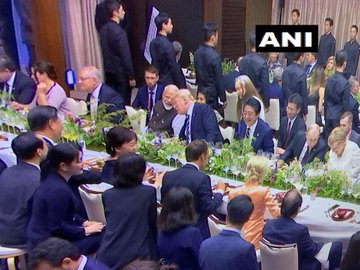
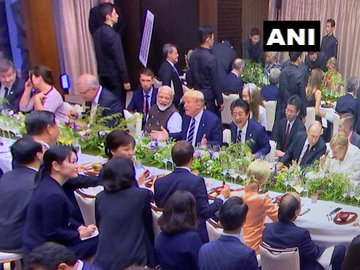
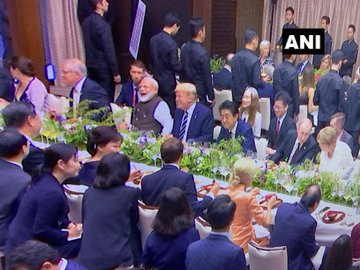
180 people are talking about this
There was not even a mention of Kashmir in the records, as per sources. The US also informed India that a scan of their own records also brought up a similar absence of Kashmir at G-20 summit.
On Tuesday morning in Washington, the state department spokesperson also mirrored acting assistant secretary Well’s words that Kashmir is a bilateral dispute. She added that US would welcome India and Pakistan “sitting down” and was ready “to assist”.
The spokesperson said that the “first and foremost” step to create an atmosphere conducive for dialogue would be tackle the “menace of terrorism”.
When asked about the claims made about Trump-Modi meeting at Osaka, she said that there are usually “no (public) comments or readouts of President’s meeting”. The spokesperson also said that the two leaders “may have” have talked about the need for Pakistan to take “irreversible” action against terror groups based on its soil.
This line echoed the phrase in the “fact sheet” issued ahead of the conclusion of the bilateral meeting between the US President and Pakistan prime minister.
Indian officials were pleased that the “fact sheet” stated that Pakistan had to take action to “shut down all groups once and for all”. The sentence before this phrase also acknowledged that Pakistan had taken “some steps against terrorist groups operating within Pakistan”.
The Indian government’s statement, while definite in denying Trump’s claims, had to also take into account that the US president cannot be publicly called out for his verbal innovations.
As sources indicated, the Indian government will have to deal with Trump for another year and a half. If he wins the re-election bid in 2020, it means yet another four years.
‘Will not impact India-US relationship’
No country has yet learned how to handle the unpredictability of President Trump, so his surprising statements are now taken in stride, they added. Officials asserted his ‘inventive’ words will not actually impact the India-US relationship, which is largely managed by more junior administration officials and career bureaucrats.
During the parliament proceedings, the opposition may keep asking for a statement from Modi, but the government plans to ignore it for now. The strategy is not to intentionally stretch out this controversy, with the bet being that mainstream media would also move on to the next topic within a day or two, if they were starved of any “developments”.
In Washington, US officials have to walk a more precarious line. Not only they can’t publicly repudiate their leader, but US officials had to factor in the ongoing visit by a foreign leader, whose cooperation was required for an issue close to Trump’s heart.
For Trump, the key sign of success for Khan’s visit would be to get an assurance on Afghanistan, so that a quick peace agreement with Taliban could lead to all US troops returning home. Pakistan has been quick to grasp this opportunity, with Imran Khan effusively complimenting him that they are both on the same page.
Therefore, not surprisingly, the tweet from the US state department senior official made no reference to Trump’s actual words, which could have been interpreted as a denouncement.
After the Oval Office press interaction, voices from the Democrat-controlled house of representatives of the US legislative branch, the Congress, reiterated that Kashmir was a “bilateral dispute”.
Democrat Brad Sherman was the most outspoken, describing Trump’s words about Kashmir mediation as “amateurish” and “embarrassing”. Sherman also said that he had apologised to the Indian ambassador to the US, Harsh Shringla.
The senior Indian diplomat also spoke to the chairman of the House Foreign Affairs committee, Democrat Eliot Engel, who stated that pace and scope of any dialogue will have to be determined by India and Pakistan. “He reaffirmed that in order for dialogue to be meaningful, Pakistan must first take concrete and irreversible steps to dismantle the terrorist infrastructure on Pakistan’s soil,” added the read-out issued by the House committee.
The co-chairs of the bipartisan Congressional Caucus on India and Indian Americans also issued a statement that they wanted a bilateral resolution to the Kashmir dispute “consistent with decades of US policy”.
Making no reference to Trump or his words, they said, “The Republic of India is one of America’s closest and most important allies, and we look forward to working with Prime Minister Modi and Indian officials to combat terrorism and extremism throughout the region.”
عمران حکومت کسی مخالف کو برداشت کرنے کیلئے تیار نہیں، بلاول
پاکستان پیپلز پارٹی کے چیئرمین بلاول بھٹو زرداری کا کہنا ہے کہ عمران خان
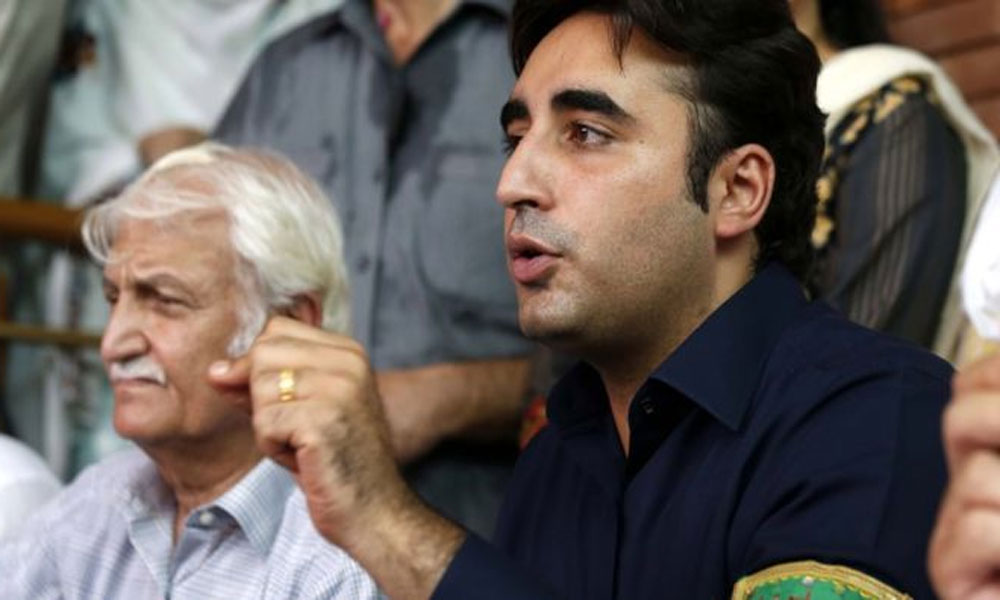
ایک بیان میں چیئرمین پی پی پی بلاول بھٹو زرداری نے کہا ہے کہ اپوزیشن پارلیمنٹ میں بات کرے تو خان صاحب ایوان میں آنا چھوڑ دیتے ہیں۔
انہوں نے کہا کہ ارکانِ اسمبلی کا حق غصب کر کے ان کے پروڈکشن آرڈر رکوائے جاتے ہیں، حکومت پر تنقید کرنے والے صحافیوں تک کو نشانہ بنایا جاتا ہے۔
بلاول بھٹو زرداری نے مزید کہا کہ اپوزیشن کی آواز دبانے کے لیے پہلے گرفتاریاں کی جاتی ہیں، گرفتاریوں سے آواز نہیں دبا سکے تو میڈیا پر سنسر شپ شروع کروا دی۔
انہوں نے یہ بھی کہا کہ جتنی میڈیا سنسر شپ آج ہے، ایسی تو صرف آمریتوں میں ہوا کرتی ہے، عمران خان کے پاس عوام کے سوالوں کا جواب نہیں تو زبان بندی کروانا شروع کر دی ہے۔
Monday, July 22, 2019
US demands Saudi Arabia release 'critic of Islam'
VP Mike Pence calls upon Saudi Arabia, Eriteria, Mauritania and Pakistan to release religious dissidentsUS Vice President Mike Pence on Thursday called out ally Saudi Arabia for the suppression of religious liberties and urged it to release Raif Badawi, a blogger imprisoned for reportedly insulting Islam.
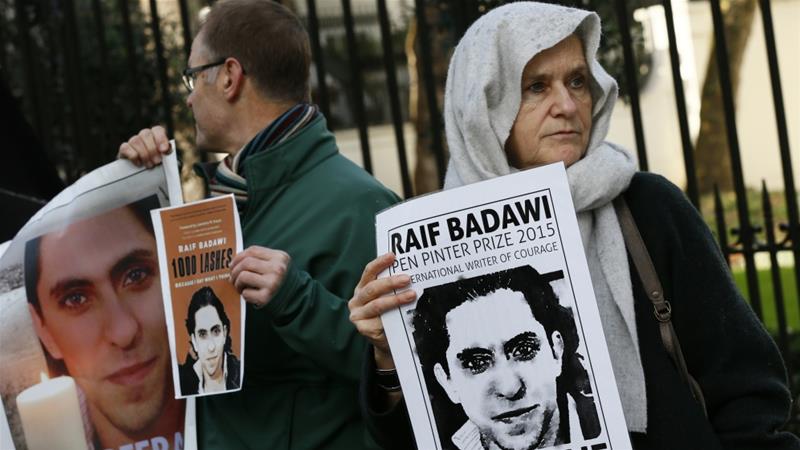
Pence's highlighting of Badawi's ill-treatment comes in light of US legislators accusing the Trump administration of failing to act against the kingdom's leaders for the killing of Saudi journalist Jamal Khashoggi.
In an address to the Ministerial to Advance Religious Freedom conference at the State Department, Pence noted the detention of religious dissidents in Eritrea, Mauritania, Pakistan, and Saudi Arabia.
"All four of these men have stood strong in defence of religious liberty despite unimaginable pressure, and the American people stand with them," Pence said.
"The United States calls upon the governments of Eritrea, Mauritania, Pakistan and Saudi Arabia to respect the freedom of conscience and let these men go."
Republican and Democratic legislators - citing evidence of Saudi Crown Prince Mohammed bin Salman's role in the Khashoggi case, and incensed over the civilian death toll from the Saudi-led air campaign in Yemen that has killed thousands - have ramped up efforts to block President Donald Trump's arms sales to Saudi Arabia.The CIA has determined with "medium to high confidence" the Saudi crown prince, considered the de facto ruler of the kingdom, ordered the grisly killing of Khashoggi at its Istanbul consulate last year.
1,000 lashes
Badawi, who set up the Free Saudi Liberals website, was arrested in June 2012 for offences that included cybercrime and disobeying his father - an act considered an offence in Saudi Arabia.
The prosecution had demanded he be tried for apostasy, which carries the death penalty in Saudi Arabia, but a judge dismissed that charge.
He was sentenced in 2014 to 10 years in jail, fined $267,000, and given 1,000 lashes after prosecutors challenged an earlier sentence of seven years and 600 lashes as too lenient.
His public flogging in 2015 generated a global outcry.
Pence also cited the detention of a 90-year-old Orthodox Church patriarch by Eritrea, the jailing for apostasy of Mohamed Ould Cheikh Ould Mkhaitir, a blogger in Mauritania, and the imprisonment by Pakistan of Junair Hafeez, a lecturer accused of blasphemy.
The case of the Pakistani lecturer is likely to be raised next week in meetings in Washington between Trump administration officials and Pakistani Prime Minister Imran Khan in his first-ever meeting with the US president.
https://www.aljazeera.com/news/2019/07/demands-saudi-arabia-release-critic-islam-190718165243909.html
#Pakistan - Saudi Arabia fails to share prisoners’ list despite high-level commitment
The Senate Panel on Human Rights on Thursday expressed displeasure at the fact that the despite commitment at the highest level and repeated reminders by the Pakistani government, Saudi Arabia did not share the list of prisoners it had announced to release during the crown prince’s visit to Pakistan upon the special request of Prime Minister Imran Khan.
Senate Functional Committee on Human Rights was told that at present 114 prisoners in Riyadh and 128 in Jeddah are imprisoned due to pending payment of fines because of their financial situation and the fines begin from Rs8,000 and go till Rs2.2 million. Other than this, 3,000 people are imprisoned in Saudi Arabia over criminal offences.
While discussing the matter of incarceration of a Pakistani national, Mureed Abbas, languishing in Saudi prison for the last three years due to non-payment of fines, Additional Secretary Middle East Nadeem Khan told the committee that he went to Saudi Arabia as a driver and had an accident for which he was imprisoned and fined. His sponsor has a claim of 27,000 Saudi Riyals.
He said that the ministry is trying to get information about the sponsor and then Pakistan will work for the fine to be waived off. He also said that the government is trying to give relief to prisoners but cannot pay all the fines. He also observed that the problems being faced by the Pakistani community abroad is due to the high number of people, a disorganised community and lack of funds.
The committee members remarked that Pakistanis going abroad should be trained to behave well when outside the country and a fund should be maintained for paying their fines. The committee observed that the human rights ministry maintains a fund to pay for the prisoners who are from weaker segments of society but it is permissible for only within the country. The committee considered working out a proposal of bringing an amendment in Pakistan Penal Code (PPC) or any other relevant law to bring the overseas prisoners also under its ambit.
The committee was told that there is a similar fund maintained by the Ministry of Overseas Pakistanis Foundation and a welfare fund maintained by missions abroad but they are for different purposes and cannot be applied to payment of fines. The committee also decided to hold a briefing of the fund of human rights and to write to provincial governments to feel their responsibility towards contributing in this fund. The ministry was also directed to call an inter-ministerial meeting to get an understanding about the available resources and formulate a mechanism.
Ministry of Interior told the committee that such an inter-ministerial committee is already working in the Foreign Office (FO) and their recommendations may be seen by the committee. Therefore, the committee decided to call the members of the committee in next meeting along with their recommendations.
https://www.pakistantoday.com.pk/2019/07/04/saudi-arabia-fails-to-share-prisoners-list-despite-high-level-commitment/
Trump Makes His Peace With Pakistan’s Deception
By Eli LakeDoes anyone really believe the Pakistanis’ promise that they will be better partners in the war on terror? When Pakistan Prime Minister Imran Khan visits Washington this week, he will have the benefit of meeting an American president with a short memory. Just a year and a half ago, Donald Trump tweeted that the U.S. “has foolishly given Pakistan 33 billion dollars in aid over the last 15 years, and they have given us nothing but lies & deceit.” He then announced a suspension of that aid until Pakistan ended its relationship with various terrorist groups. Now Trump is changing his tune. Last week he welcomed Pakistan’s arrest of the leader of the terrorist group that went on a four-day killing spree in Mumbai in 2008, despite the fact that he has been arrested and released several times before. Trump tweeted that the arrest was the result of pressure building over the last two years. Some of this change in tone is to recognize the baby steps Islamabad has taken to address longstanding U.S. concerns. Khan’s government recently announced that it was investigating the funding of some terrorist groups the U.S. has long accused Pakistan’s military intelligence service of sponsoring. Nonetheless, these steps are not nearly enough. Dr. Shakil Afridi, the heroic Pakistani physician who helped the CIA identify Osama bin Laden before the 2011 raid that killed him, remains in a high-security prison. According to recent reports, he is severely underweight. A more powerful reason that Trump is changing his tune is that he needs Pakistan’s cooperation for his plan to withdraw U.S. forces from Afghanistan. Since the fall, U.S. special representative Zalmay Khalilzad has been negotiating what he says will be a peace agreement with the Taliban, whereby the group shares power with the elected government in Kabul. Nonetheless, the Taliban have continued a terror rampage against civilians and the military, killing a U.S. service member this month. The Pakistanis have enough short-term leverage with the Taliban to get them to allow an orderly exit of U.S. forces fighting America’s longest war. In this respect, one might argue that a little amnesia can go a long way. Isn’t the pageantry of a White House visit a small price to pay for tamping down the Taliban? Maybe so — but this logic also exposes the foundational problem with the U.S.-Pakistani relationship. Pakistan’s military and intelligence agencies play a double game. Its leaders give lip service to the wider war on terrorism when in Washington. Meanwhile its operatives in Southeast Asia continue to supply and fund the terrorists the U.S. has been fighting. Husain Haqqani, a former Pakistani ambassador to Washington and now a fellow at the Hudson Institute, said Pakistan’s support for the Taliban is evident even in the peace negotiations. The planes that fly Taliban leaders to negotiations in Doha, he said, are provided by Pakistan’s military intelligence service. Thomas Joscelyn, a senior fellow at the Foundation for the Defense of Democracies and co-founder of the Long War Journal, said the olive branch from Trump counts as a reversal of his administration’s policy. “The strategy that Trump endorsed in August 2017 was intended to put pressure on Pakistan to try to change their behavior,” he said. Yet to this day, the Pakistani military continues to support senior Taliban leaders as well as the deadly Haqqani network in the border region near Afghanistan. All of which raises the question: Why should anyone believe the Pakistanis this time around? Trump’s advisers would say that the meeting offers an opportunity for Pakistan to get out of the president’s doghouse. A senior administration official told reporters Friday that Khan could agree to make permanent his government’s recent gestures toward counterterrorism. What’s the harm in trying a softer touch after taking a hard line? The Pakistanis have proved they can be spoilers when it comes to Afghanistan. A little pomp and flattery could persuade them to be more constructive. That’s the positive spin, anyway. The deeper problem is that the U.S. has no real leverage in Afghanistan. Khan knows this, and so does the Taliban. Trump has made it clear that he wants U.S. forces out of the country, the sooner the better. Even if the Pakistanis can coerce or persuade their Taliban allies to back off until the U.S. leaves, what will stop them from violating a peace agreement after the U.S. is gone?
https://www.bloomberg.com/opinion/articles/2019-07-21/trump-welcomes-khan-and-makes-his-peace-with-pakistan-s-deception
Subscribe to:
Posts (Atom)