Tuesday, July 9, 2019


Taliban-Pakistan Nexus An Obstacle To Afghan Peace – Analysis
By Neelapu Shanti
The increasing spate of attacks in Afghanistan by the Taliban once again highlights the grim security situation and extremist group’s true intentions, amid the seventh round of peace talks between the United States and the Taliban in Qatar.
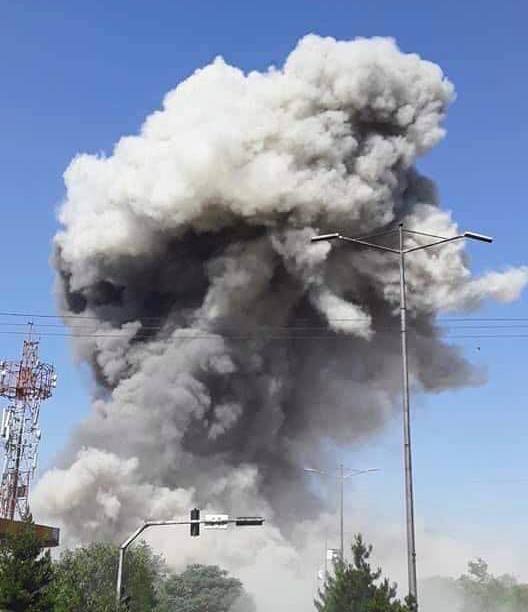
A powerful car bomb explosion by the Taliban on Monday (July 1) in the heart of Kabul city recalled the radical increase of bloodshed in both wars and everyday conflicts. The spiralling attacks in Afghanistan show that the density of everyday violence is proportional to the country’s quest for peace, fuelled by terrorism. Monday’s deadly explosion killing around 40 people and injuring more than 100, including women and children, spells the Taliban’s irrational thirst for a victorious war in Afghanistan.
The epidemic culture of violence in Afghanistan is reflected in the reports of the United Nations Assistance Mission in Afghanistan (UNAMA). From January 1 to March 31, 2019, UNAMA documented 1,773 civilian casualties (581 deaths and 1,192 injured), including 582 child casualties (150 deaths and 432 injured).
The ravaged history of Afghanistan’s foreign invasions and external influences fuelling terrorism makes it difficult for the country to discover its national identity. Viewing the recent developments, the Taliban has come to the table to negotiate peace in Afghanistan without involving the Afghan government.
Peace and increasingly violent terror attacks by the Taliban are going hand in hand. Vicious extremist attacks, withdrawal of US troops, postponement of elections and inconclusive peace negotiations by the Taliban are subtle signals for Afghanistan in shifting the country’s agenda to an ‘Afghan-led Afghan-owned’ government.
There are many signs of the Taliban’s unwillingness to restore peace in Afghanistan, with its aggressive attitude not fine-tuned with the interests of the people of the country, highlighting political contradictions.
The Taliban’s preconditions involve the withdrawal of U.S and NATO forces, an interim government and setting aside democratic law, clearly indicating that it is bargaining for peace for lethal motives and not actually for the sovereignty of Afghanistan.
The Taliban suicide bombers’ attack in Maroof district in southern Kandahar province on June 29 killed 19 government officials, including Independent Election Commission staff, who were deployed to register voters for the upcoming presidential elections on September 28. The security issue is raised at every stage, with catastrophic conditions created by Taliban factions while negotiating peace.
It is important to understand who are the major players in destabilising Afghanistan. The Taliban insurgents have been receiving external support from other countries and one among them is Pakistan, which involves the re-emergence of the Pakistan-Taliban.
Pakistan, which has been on the back foot after the Balakot attack, now wants to assert itself in the region. With the regressive Pakistani policy on Afghanistan, a variety of terrorism rears its head time and again, interfering in the political and economic integration of the South Asian region.
Pakistan’s destructive potential for state sponsorship of terrorism in Afghanistan is apparent from it giving refuge to Taliban leaders in Pakistan, the deportation of Afghan Taliban leaders and the supply of arms and ammunition to the Taliban in Afghanistan. The blurring of lines between war and peace is currently drifting in the wrong direction.
The United States’ role to end the 18 years of bloodshed in Afghanistan must bring a constructive outcome while negotiating with the Taliban. They cannot decide or completely rely on irrational ideologies of the Taliban for an absolute ceasefire. Afghan President Ashraf Ghani’s peace proposal at the Kabul Conference last year outlined a peace deal titled ‘Offering Peace: Framing the Kabul Conference,’ with a clear, altruistic motive catering for the welfare of the country and people of Afghanistan.
Ghani’s offer of a peace deal with the Taliban included (a) constitutional rights of all citizens (especially women) being ensured (b) Constitutional reforms being undertaken through constitutional provisions (c) defence and security forces and civil services functioning according to the law and (d) no armed groups with ties to transnational criminal organisations, or with state/non-state actors, seeking influence in Afghanistan, to be allowed.
A peace deal, and peace in Afghanistan, would be a distant dream if the Taliban do not give up violence. The Taliban’s intention is to re-establish their regime with the support of Pakistan and other external terrorist factions. The Taliban has to come to meaningful terms with the government through a democratic process in Afghanistan.
IMF says Pakistan’s economy at critical juncture days after approving $6 billion loan

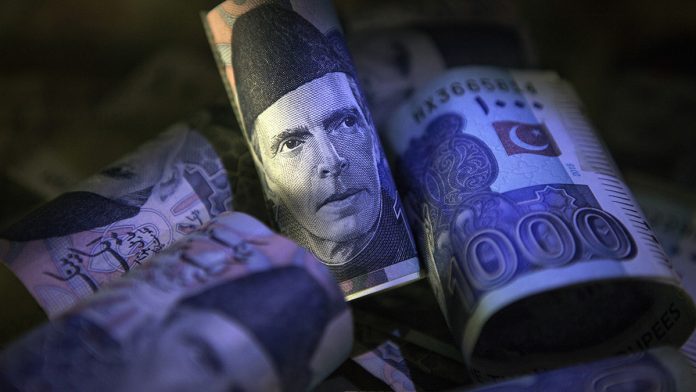
An IMF report said without bold reforms, Pakistan’s economy will remain critical given its largely unaddressed weak tax administration and tough business environment.
Pakistan is facing “significant economic challenges” due to a weak and unbalanced growth and that its economy is at a critical juncture where it needs an ambitious and bold set of reforms, the IMF has said.
Cash-strapped Pakistan, which currently has a currency reserve of less than USD 8 billion — enough to cover only 1.7 months of imports — approached the Washington-based International Monetary Fund (IMF) in August 2018 for a bailout package after the Imran Khan government took over.
The global lender last week formally approved the USD 6 billion loan to Pakistan, which is facing “significant” economic challenges on the back of “large” fiscal and financial needs and “weak and unbalanced” growth.
“Pakistan is facing significant economic challenges on the back of large fiscal and financial needs and weak and unbalanced growth,” David Lipton, First Deputy Managing Director and Acting Chair of the IMF Executive Board said.
Last week, the IMF approved the 13th bailout package for Pakistan since the late 1980s.
The latest bailout package is worth USD 6 billion, of which USD 1 billion is to be disbursed immediately and the rest in the next three years.
A decisive fiscal consolidation is key to reducing the large public debt and building resilience, and the adoption of the fiscal year 2020 budget is an important initial step, Lipton said.
Achieving the fiscal objectives will require a multi-year revenue mobilisation strategy to broaden the tax base and raise tax revenue in a well-balanced and equitable manner, he said.
It will also require a strong commitment by the provinces to support the consolidation effort and effective public financial management to improve the quality and efficiency of public spending, he said.
Observing that protecting the most vulnerable from the impact of adjustment policies will be an important priority, Lipton said that this will be achieved by a significant increase in resources allocated to key social assistance programmes, supporting measures for the economic empowerment of women and investment in areas where poverty is high.
A flexible market-determined exchange rate and an adequately tight monetary policy will be key to correcting imbalances, rebuilding reserves and keeping inflation low, he said, adding that an ambitious agenda to strengthen institutions and remove impediments to growth will allow Pakistan to reach its full economic potential.
In an accompanying report, the IMF said that Pakistan’s economy is at a critical juncture.
The legacy of misaligned economic policies, including large fiscal deficits, loose monetary policy and defence of an overvalued exchange rate, fuelled consumption and short-term growth in recent years, but steadily eroded macroeconomic buffers, increased external and public debt, and depleted international reserves.
Structural weaknesses remained largely unaddressed, including a chronically weak tax administration, a difficult business environment, inefficient and loss making state-owned enterprises, amid a large informal economy.
“Without urgent policy action, economic and financial stability could be at risk, and growth prospects will be insufficient to meet the needs of a rapidly growing population,” the IMF said.
The Fund-supported programme is expected to coalesce broader support from multilateral and bilateral creditors in excess of USD 38 billion, which is crucial for Pakistan to meet its large financing needs in the coming years, it added.
Pakistan has so far received billions in financial aid packages from friendly countries like China, Saudi Arabia and the UAE during the current fiscal year.
Pakistan's Selected Prime Minister - Pakistan not invited by Russia for Eastern Economic Forum
Amid reports in Pakistani media that Prime Minister Imran Khan has been invited for the Eastern Economic Forum (EEF) to be held in Vladivostok, Russia from September 4 to 6, Moscow has put out a statement to clarify that he is not on the guest list
A statement issued by the Information and Press Department of the Russian Ministry of Foreign Affairs said, We drew attention to the publications in a number of South Asian media that the Prime Minister of the Islamic Republic of Pakistan Imran Khan was invited to the events of the Eastern Economic Forum (WEF-5) in Vladivostok (September 4-6, this year) as the guest of honour. We would like to give some explanations in this regard...
The statement comes at a time when Indian Prime Minister Narendra Modi has been invited as the guest of honour’ to EEF 2019.
This year, a representative delegation of India will take part in the Forum’s events led by Prime Minister Narendra Modi, said Ambassador Extraordinary and Plenipotentiary of India to the Russian Federation Venkatesh Varma.
Listing out those world leaders who have been invited, the statement released on Monday said, We expect that the President of Mongolia H Battulga, the Prime Minister of India N.Modi, the Prime Minister of Malaysia M. Mohammad and the Prime Minister of Japan S Abe will arrive in the capital of Primorye.
Sources tell India Today TV the same has been conveyed by Moscow to New Delhi. Prime Minister Narendra Modi has been invited
Advisor to the President of the Russian Federation Anton Kobyakov and Indian ambassador to Russia Venkatesh Varma met in Moscow where the two sides discussed preparations for the participation of the Indian delegation.
The meeting noted that Russian-Indian strategic cooperation is a unique example of trust relations between the two powers, read a statement from Moscow.
I am confident that the participation of prime minister is to bring the level of trade and investment cooperation between our countries in the Far Eastern region to a whole new level. India’s extensive and representative participation in the work of the forum will contribute to closer cooperation between our countries, not only in the economic but also in the humanitarian area, said Anton Kobyakov after the meeting with the Indian envoy.
To prepare for the participation in the EEF 2019 and to enhance Russian-Indian cooperation, Narendra Modi commissioned several business missions to the Far East consisting of Indian business and regional representatives. Up to five Indian state governors are to participate in the missions, a statement from the organiser of the forum, said. Roscongress Foundation,
Further, the parties discussed the preparation of the 20th annual RussiaIndia summit.
Attacks on Parliament from inside Parliament: Bilawal
Pakistan People's Party (PPP) Chairperson Bilawal Bhutto Zardari said Tuesday the attacks on Parliament were being carried out from inside the Parliament itself.
The law does not permit suspending the standing committees' sessions, Bilawal noted.
A day prior, a notification from the National Assembly Secretariat had stated that Speaker Asad Qaiser suspended the standing committees' meetings and advised that they be called during the NA sessions.
The NA Secretariat notification had cited austerity as the reason behind its move. Sources, on the other hand, revealed that the suspension was announced due to the members of the National Assembly (MNAs) in custody as they attended standing committees' sessions on the basis of production orders.
The PPP chair strongly criticised the decision of Qaiser, the NA speaker, and said the government needed to understand that running the Parliament was not at all similar to playing a cricket match.
If the Parliament was run in a manner similar to how it is at the moment, the Opposition would soon be out of options, Bilawal warned. The speaker needs to immediately rescind his order.
https://www.geo.tv/latest/242611-attacks-in-parliament-from-inside-parliament-bilawal
Monday, July 8, 2019
PM Imran's government to end before November, claims Zardari
Former president Asif Ali Zardari claimed on Monday that the Pakistan Tehreek-e-Insaf government will end in coming four to five months.
Speaking in the parliament house, the Pakistan Peoples Party chief said that political forces will replace the PTI government. "Imran's government will not be dismissed by pushing a button. It will go after a political struggle and opposition is doing it. It will end before November."
Zardari said that the future belongs to Maryam Nawaz and Bilawal Bhutto Zardari."Maryam is like our daughter. We will keep giving her our suggestions," he said. The former president said that the PML-N holds the majority in the Senate hence it's quite possible that the new chairman will come from the party.
The PPP chairman admitted that his party also committed mistakes but added that the political forces will be cautious to not repeat them. "Imran Khan is a reward of our political mistakes," he sarcastically remarked.
Zardari said that he is saying from the first day that the former prime minister Nawaz Sharif is not well and he should be at least put in house arrest.
"Not issuing production orders is against the parliamentary traditions. It's possible that this my last production order but I am assured that 2020 will be a year of progress for Pakistan," he said.
The PPP chief said that a civilian Martial Law is imposed in the country, time will tell that an all parties government will be put into place or a fresh election will be called soon.
No compromise will be made on democracy, says Bilawal

Pakistan Peoples Party Chairman Bilawal Bhutto Zardari said on Monday that no compromise would be made on democracy in the state, come what may.
Addressing a rally in Dir, the PPP chairman alleged that the “selected” prime minister wanted to snatch away democratic rights from the people.
“Imran Khan’s politics has become politics of revenge. We are up against a selected prime minister hidden under the garb of democracy,” he said.
Bilawal said that Khan spoke of justice, and freedom of press and judiciary before coming into power, but today, he was attacking the judiciary and gagging the press.
“The incumbent government has made life difficult for the poor by increasing inflation,” he said. “Imran Khan has brought the circumstances to a point, where people are praying for government’s departure in the very first year of its term.”
The PPP chairman said people were taking to streets and everyone was worried. “The ones, who selected him, are also worried as to who they have selected.”
He said the government brought three budgets in one year, increasing the prices of petrol, electricity, edibles and medicines.
“The provinces are getting bankrupted because of the ineligibility of the federation,” Bilawal said. “Punjab and Sindh are being paid less than their fair share. Even, Khyber Pakhtunkhwa is being paid Rs40 billion less.”
He told the participants: “This is your money, it should be spent on your welfare. They want to deprive the provinces of their rights by plundering the NFC Award.”
The PPP chairman recalled that Khan used to say that after becoming the prime minister, people would pay him so much in taxes that the country would no longer require loans.
“But this time the tax collection is the lowest in history and now the people are being robbed to overcome this deficit,” he said.
Bilawal said the prime minister should clearly understand that no compromise would be made on the martyrs’ blood. “Send my party and family to jail, but no compromise can be made on principles, 18th Amendment and democracy.”
The PPP chairman also noted the services of his party’s founder and former premier Zulfiqar Ali Bhutto. He said whenever his party came into power, it brought agricultural reforms in the country.
“Zulfiqar Ali Bhutto ended the Nawabi system from Pakistan and gave lands to the ones, who could never become its owners,” Bilawal said. “He gave the constitution to this country, made it a nuclear-capable state.”
نیوز چینلز کی بندش سینسرشپ کی بدترین شکل ہے، بلاول
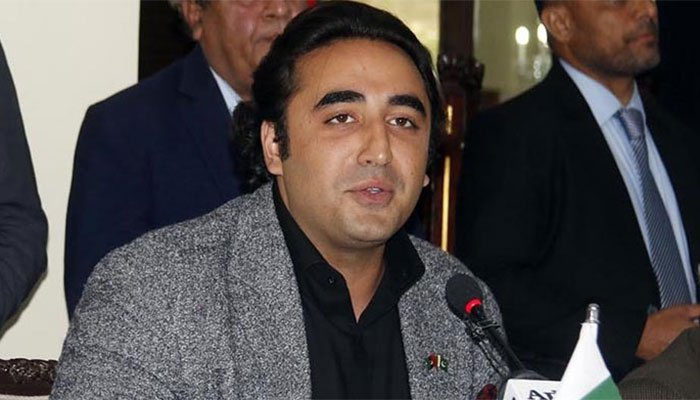
چیئرمین پیپلزپارٹی بلاول بھٹو زرداری نے مختلف نیوز چینلز کی نشریات کی بندش کی مذمت کی ہے۔
بلاول بھٹو زرداری نے کہا ہے کہ فسطائیت کی پیروکار حکومت اب آہستہ آہستہ بے نقاب ہو رہی ہے، نیازی حکومت کی جانب سے نیوز چینلز کی نشریات پر بندش سینسرشپ کی بدترین شکل ہے۔
انہوں نے کہا کہ سلیکٹڈ وزیراعظم چاہتا ہے کہ ٹی وی چینلز پر چوبیس گھنٹے اُس کی تصویر اور تعریف چلتی رہے۔
بلاول بھٹونے کہا کہ پیپلز پارٹی میڈیا کی آزادی پر قدغن برداشت نہیں کرے گی، صحافی برادری کے ساتھ ہیں۔
چیرمین پی پی نے کہا کہ حکمران ہوش کے ناخن لیں، نیوز چینلز پر بندش کا فیصلہ واپس لیا جائے۔
Sunday, July 7, 2019
Dozens of Christian Girls in Pakistan Targeted for Rape, Abduction, Forced Conversion
Steve Warren
A poor Christian family in Pakistan is calling for justice after their teenaged daughter was reportedly kidnapped at gunpoint and raped by five Muslims.UCANews.com reports the girl named Maria, 15, was taken from her house in Sheikhupura city of Punjab province on June 9. Her father, Jalal Masih, was at his job at the time, working as a laborer.
A poor Christian family in Pakistan is calling for justice after their teenaged daughter was reportedly kidnapped at gunpoint and raped by five Muslims.UCANews.com reports the girl named Maria, 15, was taken from her house in Sheikhupura city of Punjab province on June 9. Her father, Jalal Masih, was at his job at the time, working as a laborer.
Masih filed a police report accusing Muhammad Sajid, a local businessman, and four others in the attack in which there were several witnesses.
"The locals saw them abducting her at gunpoint in a vehicle. I reached his (Sajid's) office but he was absent," Masih said in the First Information Report (FIR) filed six days after the incident. "We made contact the next day and he threatened to return her dead body if we informed the police."
"Sajid escaped after leaving Maria on our doorstep on June 10 night. She was extremely scared," her father said.
As the news of the attack spreads on social media, Christian activists are calling for the arrest of the suspects.
According to Legal Evangelical Association Development (LEAD), a non-profit advocacy group providing legal aid to persecuted minorities, 28 Christian girls became victims of abduction, torture, sexual harassment, rape, forced conversion and forced marriages in Pakistan from November 2018 to June 2019.
"The number of unreported cases will be higher as the families of victims usually avoid getting help from biased police officials who support cruel and influential culprits. Only Christian and Hindu girls are victims in such cases," LEAD national director Sardar Mushtaq Gill told UCANews.com. "Crimes against religious minorities are increasing at a high scale in Pakistan."
"In Pakistan, abduction of girls from Christian and Hindu minorities' communities has been on the higher side since years," Gill wrote in his online blog. "These girls after abduction are sexually assaulted, forcibly married to the abductors and forced into conversions. Some human rights groups define persecution in old fashion(ed) way but the persecutors have changed their ways to persecute religious minorities in a new ways and they called it policy and it could be implemented at both by Government sector and at private sector."
"So it is the need of time to define religious persecution in a broader-way and to believe it or not Pakistani Christians and Hindu are most vulnerable who are being persecuted by Islamic extremists objectively because their poor status and poor defense in society," he continued.
The news website also reports the interfaith group Rwadari Tehreek launched an anti-rape campaign with a protest on June 15 in front of the Punjab Assembly in Lahore.
"It is a sad reality that dozens of male and female children are subjected to sexual abuse and violence almost every day," Chairman Samson Salamat told the website.
"Unfortunately, governments and concerned authorities have turned a blind eye toward these serious violations of human rights and the victims are being denied justice because of the lacunas in the justice system," he said.
Salamat also called local officials to organize sessions to educate police officers and other law enforcement officials on the issue.
"Most cases are dealt with in a wrong manner because of the bad treatment and attitude in police stations. The victims only become more victimized. Safe and fully equipped rehabilitation centers should be established for the victims of rape and child sexual abuse," he said.
#Pakistan - Maryam’s claims leave Bilawal concerned
PPP chief addresses DI Khan rally, says ‘selected government’ on shaky ground, would fall soon

Pakistan People’s Party (PPP) chief Bilawal Bhutto-Zardari has expressed grave concern over Pakistan Muslim League-Nawaz (PML-N) leader Maryam Nawaz’s claims regarding blackmailing of the presiding judge in the trial against her father.
Earlier in the day, Maryam had come out with claims regarding the trial that led to her father, former prime minister (PM) Nawaz Sharif, being convicted and sentenced to prison, saying the entire judicial process was “severely compromised” as the judge had been “forced to issue an unfavourable verdict against him”.
“Bilawal Bhutto-Zardari has expressed grave concern on the allegations levied by the PML-N regarding blackmailing of a judge through an incriminating video to force him to give the desired verdict in the case against former prime minister Nawaz Sharif,” read a statement released by his spokesperson after Maryam’s explosive presser.
The statement noted that it was not the first time that such accusations had surfaced and that in the past “similar allegations of exerting pressure on the judges have also been made”. “It is indeed a sad commentary on the health of Pakistani democracy that such accusations continue to be made so often and so repeatedly.”
According to the statement, the PPP chairman also called upon the judiciary to “take appropriate action in the matter”. “If for some reasons the judiciary is not inclined to address such issues then the opposition parties must deliberate on it and formulate a united course of action,” Bilawal said.
The statement, terming today’s development as “most unfortunate”, regretted that “political circles are abuzz with pressure reportedly exerted on judges to deliver preferred verdicts in corruption cases against opposition leaders, in by-elections against opposition candidates amid talk of even the superior judiciary brought under pressure.”
The spokesperson said that the presidential references against some honourable judges are also viewed by many as “attempts by the regime to undermine judicial independence”. The PPP has appealed to all judges under pressure to recuse themselves from cases rather than give verdicts under pressure.
The party has also demanded remedial measures be taken “to ensure the independence of the judiciary and to ensure that justice is not only done but also seen to be done”. It has called upon all institutions “to stay within their constitutional domain”.
‘NO FREEDOM OF SPEECH’:
Meanwhile, addressing a political rally in Dera Ismail (DI) Khan, Bilawal said that there was no freedom of speech in the country as former president Asif Ali Zardari’s interview was taken off the air.
“If an Indian spy or the head of a terrorist organisation’s interview can be broadcast, then why not his [Asif Zardari]?” he asked, adding that the “selected government” was on shaky ground and would soon fall.
The PPP had always tried its best to work for the uplift of the erstwhile tribal areas, he said. “I understand the plight of those who have lost their loved ones in the face of terrorism,” the PPP chief added.
Training guns at Interior Minister Brigadier (r) Ijaz Shah, he further said that, “Why do you think the international community doesn’t want to take us seriously because we have the facilitators of terrorism in the federal cabinet.”
#Pakistan - In the grey zone - Can Pakistan avoid black listing by #FATF?

Does the recent action of the CTD (Counter-Terrorism Department) to book JuD’s (Jamaat-ud-Dawa) top leadership, including its chief Hafiz Saeed and naib emir Abdul Rehman Makki, in nearly two dozen cases on terror financing and money laundering under the Anti-Terrorism Act, 1997, reflect a shift in state policy? Is Pakistan finally taking the FATF warnings seriously?
Pakistan may be put on the FATF’s (Financial Action Task Force) black list at a meeting to be held in October 2019. Should that happen, Pakistan will be the only third country on the black list, along with Iran and North Korea.
“Pakistan does not either appreciate or chooses not to acknowledge the transnational, trans-border terrorist financing risk they face,” said Marshall Billingslea, the outgoing FATF president in a press briefing after the FATF plenary last month in Orlando, US. According to him, Islamabad has failed to meet its commitments in almost every aspect.
FATF, the Paris-based anti-money laundering watchdog, placed Pakistan on its grey list in June 2018. It also asked Pakistan to implement an action plan to address the issues of money laundering and terror-financing.
A former head of the NACTA (National Counter Terrorism Authority) and a former inspector general Punjab Police, Khawaja Khalid Farooq, says, “the US is pushing Pakistan to the wall.” He adds, Pakistan’s security index today is far better than 2015 and the state has taken serious steps to reduce financing of terror and money laundering. “Opportunities for the miscreants have been squeezed tremendously.”
“General Javed Bajwa’s latest statement about improving peace and stability in the region to usher in economic prosperity carries hope for the country. It’s an act of valour, as it might result in a security threat for him,” says analyst Khaled Ahmed. Besides, he adds, there is unavoidable reality of the “increasing pressure from international community”.
He further adds, “In the past, the banned groups have been used against India as a part of the policy. Our political leaders have tried on several occasions to alter the policy. They have been unsuccessful in these attempts because of the Pakistan Army’s security and regional strategies.”
Pakistan has been on the FATF grey list between 2011 and 2015. It has also faced the threat of being placed on the black list. Some analysts warn that this time, it will be harder to avoid the black list — because some international powers are no longer willing to help us.
According to Khaled Ahmed, China has asked Pakistan several times in the past to take serious action against those who are involved in terror financing and money laundering. “China has enough evidence on such elements. They have established links with Muslims in Xinjiang province and have been causing security concerns for China.”
According to Farooq, India and the US are using their diplomats to influence other members of the APG and the FATF to put Pakistan on the black list. “It’s hard to believe that despite Afghanistan’s high financing of terror and money laundering rating, it’s still not on the grey list. This shows that both the US and India are loyal to their ally”.
Farooq was referring to the Basel AML Index 2018, published on October 9, and prepared by Basel Institute on Governance. It is an independent annual ranking that assesses the risk of financing of terror and money laundering around the world. The ranking is established by evaluating 14 indicators. According to its 7th edition, Pakistan stands at the 25th position out of 129 countries and it has been 46th in the position in the 6th edition.
The role of Asia Pacific Group (APG) is important. The Group is FATF’s regional body consisting of 42 members, Pakistan being one. India held the rotating co-chair appointment from 2010-2012. It is important to remember that apart from FATF’s 27 points Action Plan, APG has come up with a 40-point action plan based on the commitments given by Pakistan.
Pakistan Institute of Peace Studies (PIPS) director Muhammad Amir Rana, says: “Pakistan must implement the action plan it has proposed. Perhaps the plan was too ambitious in the first place.”
The FATF requires a country to set its own targets and commit to achieve them. Once they are submitted to the task force they must be honoured.

FATF plenary meeting in the US.
The appointment of Xiangmin Liu of China as the FATF president from July 1 has raised hopes in Pakistan. “Now is the time for Pakistan to launch an aggressive diplomatic campaign through its Foreign Office to secure support to avoid the grey list,” says Farooq.
Requesting anonymity, a former diplomat, disagrees with Farooq. He says, “The foreign office alone is unable to launch such a campaign because the FATF action plan revolves around the performance of other ministries. Financing of terror and money laundering are areas directly under the supervision of the State Bank of Pakistan, and various law enforcing agencies and the relevant ministries. The Foreign Office can only be useful if the relevant institutions successfully accomplish the tasks and provide the FO accurate information on their progress.”
He regrets that the National Action Plan had not been implemented fully and most of the NAP’s 20 points were yet to be executed. “It’s important to understand that FATF’s action plan is not just about the internal situation in a country but also concerns of the regional and international stakeholders.”
Therefore, he adds, “There is no other way left for Pakistan except to fulfill the commitment in true spirit and within the stipulated time”.
According to Khaled Ahmed, China has asked Pakistan several times in the past to take serious action against those who are involved in terror financing and money laundering. “China has enough evidence on such elements. They have established links with Muslims in Xinjiang province and have been causing security concerns for China.”
Rana is also convinced that despite close relations with China neither Iran nor Pakistan can be certain that Xiangmin Liu will be of any help to Pakistan.
Pakistan’s Tryst With Terror: Will A Leopard Change Its Spots? – Analysis

By J K Verma
A plenary meeting of the Financial Action Task Force (FATF), the global money laundering and terror financing watchdog, was held at Orlando, Florida, from June 16-21, 2019. The FATF, meeting reviewed the compliance of the anti-money laundering and counter financing of terrorism (collectively referred to as AML/CFT) regimes of some countries, including Pakistan.
Pakistan has been in the FATF’s ‘grey list’ since June 2018. It has been able to fulfil 18 out of 27 points on the watch list and is a fit case to be placed in the ‘blacklist,’ but China and traditional allies Turkey and Malaysia saved it from an immediate downgrade to the ‘blacklist.
Pakistan’s media cited this as a victory for the Imran Khan government, and criticised India for trying to push Islamabad into the ‘blacklist.’ Pakistan’s Foreign Office also issued a statement saying, “We regard the statement issued by India regarding the FATF report as preposterous and unwarranted”.
The danger of Pakistan finding itself in the blacklist persists as the FATF would take a final decision in October.
The Indian delegation led by its Financial Intelligence Unit (FIU) provided fresh evidence of the activities of Hafiz Saeed and Falah-e-Insaniyat Foundation (FiF) and said Pakistan sponsored terrorist outfits were still carrying out terrorist activities in many Indian cities, especially in Jammu & Kashmir. India, which is the co-chair of the joint FATF and Asia Pacific Group (APG), tried to impress upon other members that Pakistan has failed in curbing financial crimes and has been unable to execute the FATF’s action plan.
The first deadline for implementation of the action plan ended in January, then it was extended to May 2019 but, with Pakistan failing to comply with the stipulations, the FATF gave another extension up to October 2019. If Islamabad fails to comply by October, it will be blacklisted.
India and four other nominated members, including US, Germany, France and UK, have maintained that the risk of terrorist attacks to Pakistan’s neighbours has not reduced and terrorist organisations operated from Pakistan are continuing to function. Security agencies have arrested leaders and activists of terrorist outfits like Lashkar-e-Taiba (LeT), Jamaat-ud-Dawa (JuD), Jaish-e-Mohammed (JeM) and FiF under the Maintenance of Public Order Act (MPO) and not under anti-terrorism acts.
Under the MPO, security agencies cannot imprison terrorists for more than 60 days. Terrorist leaders like Saeed and Masood Azhar have never been arrested or tried under anti-terror laws.
According to a rough estimate, Pakistan is losing around $10 billion annually by being on the ‘grey list’. That loss will be considerably higher if it enters the ‘blacklist’. Islamabad’s continuation in ‘grey list’ means that international organisations like International Monetary Fund, World Bank, The European Union and Asian Development Bank monitor it more closely. Other international organisations like Moody’s Corporation, Standard & Poor’s (S&P), Fitch Ratings Inc. would also downgrade Pakistan’s ratings, thus multiplying its financial problems manifold.
Pakistan should try to implement FATF and APG conditions, but the powerful Pakistan army and its intelligence wing Inter-Services Intelligence (ISI) do not want to relinquish the policy of assisting and abetting diverse terrorist outfits. Pakistan has waged a low-intensity war against India and assists the Afghan Taliban against the elected government of that country.
The Army instructed the foreign ministry to contact FATF and APG member countries to convince them to vote in favour of Pakistan. Foreign ministry officials are meeting and explaining to members about various measures Pakistan has taken to control terror financing and money laundering.
Islamabad has projected that there will be no foreign currency transactions without tax details, no currency exchange of over $500 without photocopies of national ID cards, etc. The country claims it has banned numerous terrorist outfits including JuD, JeM, LeT and seized their assets. Pakistani sources claim they have seized 700 properties belonging to terrorist organisations.
However, the FATF said since Pakistan had conformed to only 18 points of 27 points, it needed to do more and its performance was ‘unsatisfactory’. The FATF also counselled Pakistan to comply with all the benchmarks or risk a downgrade. Pakistan was saved from the ‘blacklist’ for now, but chances of it coming out of the ‘grey list’ are remote, as Islamabad will need a minimum of 15 of 36 votes, which will be an arduous task. Secondly, Pakistan will not make genuine efforts to terrorist outfits as these organisations are an important part of the country’s foreign policy.
Bilawal Bhutto Zardari questions democracy in Pakistan, says 'selected' PM Imran Khan 'dances to the tunes of the umpire’
Firing a fresh salvo at Prime Minister Imran Khan, Pakistan People's Party (PPP) chairman Bilawal Bhutto Zardari on Saturday claimed that the cricketer-turned-politician "dances to the tunes of the umpire" and does not understand that people are the "ultimate umpires" in a democracy.
Referring to Khan as 'selected' prime minister, Bilawal asserted that a selected government is being imposed on the people of Pakistan. "People from every sector are now screaming but Imran doesn't care," Geo News quoted him as saying while addressing a rally here.
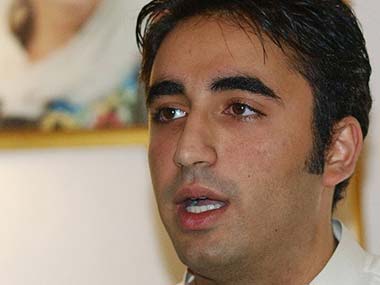
File image of Bilawal Bhutto. AFP
The PPP leader alleged that there was a huge question mark over the presence of a democratic system in Pakistan, especially when queries are being raised over the lack of political freedom in the country and transparency in the national elections.
"Imran questioned (about) four constituencies in the 2013 polls. In the last elections, Form 45 were missing in all constituencies in the 2018 elections," Bilawal said. "The people of erstwhile tribal areas fought against terrorists but now they should fight against the puppets and riggers. We all have to come out and fight against the selected government," he added.
Continuing his tirade against Khan, Bilawal alleged that the Pakistan Prime Minister sold his country before the IMF and termed the government's federal budget as anti-poor since it was targeted for the rich people. Several opposition leaders, including those from PPP and PML-N, have been addressing Khan as 'selected' prime minister, as they allege that the cricketer-turned-politician was the favoured candidate by the powerful military.
They also claim that the last year's general elections were rigged to make Khan win and become the prime minister of the country. Interestingly, the term was first used by Bilawal himself, while congratulating the cricketer-turned-politician for his thumping victory in the elections during the opening session of the National Assembly last year.
Last month, Khan had hit out at the opposition parties for calling him a 'selected' prime minister, asserting that those who were "themselves manufactured" during military rule are now using the term to criticise him. "Those talking about (me being) 'selected' were themselves manufactured in the nursery of military dictatorship," he was quoted by the Dawnas saying while addressing the National Assembly.
On 23 June, Deputy Speaker of National Assembly Qasim Suri had issued a ruling, banning lawmakers from referring to the Leader of the House as 'selected' since it would amount to insulting the House. The order came after Energy Minister Ayub Khan had raised objections that Khan being referred as 'selected' was a violation of House rules.
Subscribe to:
Posts (Atom)