
Thursday, June 6, 2019
Child labour at risk of rising in China and India as economic momentum fails to reach poorest in the community, study finds

There are about 150 million child labourers around the world, the majority working on farms in Africa and Asia. And the most populous nations are falling behind in combatting it, says a new index.Child labour is an “extreme risk” in one in 10 countries globally, found an index on Thursday, urging businesses to be more vigilant about abuses in their global supply chains.Little progress was recorded in key manufacturing hubs India and China, which ranked 47th and 98th out of 198 countries in the Child Labour Index, with North Korea in first place with the highest risk, said research consultancy Verisk Maplecroft.“The economic momentum of many countries is yet to trickle down to the poorest in society,” said Oscar Larsson, a human rights data analyst at the UK-based company.
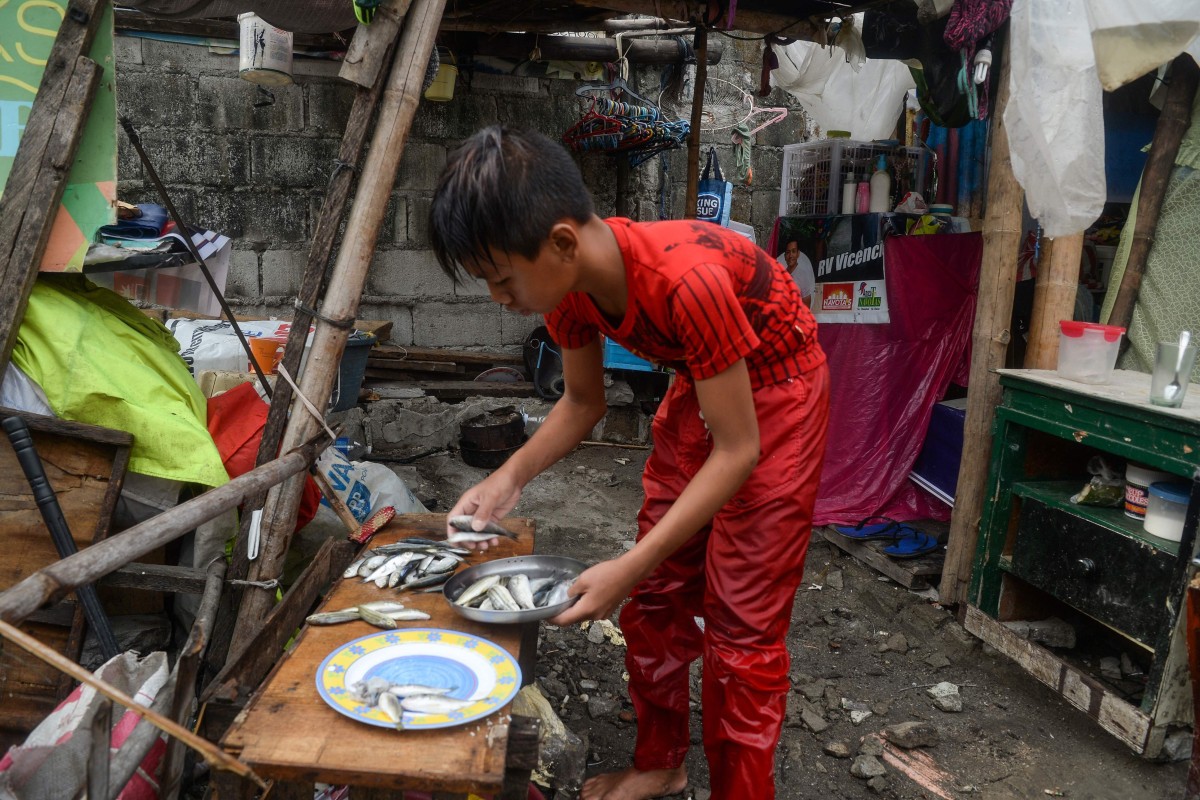
“Child labour is still prevalent across many sectors and if countries aren’t taking action it is up to companies to see they have the tools to ensure it’s not happening under their watch.”There are about 150 million child labourers around the world, according to the International Labour Organisation (ILO), the majority working on farms in Africa and Asia.The ILO has said the world is unlikely to meet a target of ending child labour by 2025, which is part of 17 global development goals agreed in 2015 at the United Nations.
The Child Labour Index aims to help businesses identify and root out child labour in their often complex international supply chains, where a lack of direct oversight and many layers of subcontracting can conceal workplace abuses.The scores were calculated by assessing laws against child labour, the extent to which regulations are enforced, and the frequency and severity of known child labour incidents. A total of 27 countries – which account for more than 10% of the world’s population – were found to have an “extreme risk” of child labour, with Somalia, South Sudan, Eritrea and the Central African Republic completing the top five on the index.The risks on child labour are still very high and too little progress is being made on tackling the issue.
India and China had a high level of reported incidents and had made “no tangible improvement” on reducing child labour risks since 2016, when Verisk Maplecroft started collecting directly comparable data.There was also little headway in other countries whose industries are enmeshed in global supply chains, including Ethiopia, Bangladesh, Turkey and Vietnam, the index showed.“The risks on child labour are still very high and too little progress is being made on tackling the issue,” Jos de Voogd from international children’s rights group Terre des Hommes told the Thomson Reuters Foundation.“Businesses are reluctant to screen their whole supply chain, with the excuse that it is too complicated, which means no one feels responsible for the lowest tiers … Companies need to be encouraged to take action.”
#Pakistan - The gathering storm - Reference against Justice Qazi Faez Isa

By Zahid Hussain
“History is a symptom of our disease” — Mao Zedong
NOT even a year after the PTI came to power, the summer of discontent is upon us. A beleaguered administration is confronting several fronts. The emerging political alignment that has brought bitter rivals the PML-N and the PPP together is ominous, although it may be sheer political expediency that has forced the two to join hands. Indeed, it signifies the shifting sands of Pakistani politics
These disparate opposition groups may not be able to bring down the government through street power. Yet jointly, they have already made things more difficult for Imran Khan, who is struggling to come to grips with a dire economic situation. The main opposition parties have announced they will launch nationwide anti-government protests after Eid.
Even more worrisome, however, is the looming confrontation between the government and the legal fraternity that is now up in arms on the issue of the presidential references against superior court judges. The Supreme Judicial Council is due to take up the reference against Justice Qazi Faez Isa on June 14.
It is perhaps the second time such a reference has been filed against a sitting Supreme Court judge, though there have been several instances in the past where the top judges have been removed forcibly. Accusing the government of having mala fide intentions, the bar associations have threatened to “lockdown the courts” if the reference is upheld.
The stand-off is turning serious with the government refusing to withdraw the reference. The cabinet has warned against agitation over the issue, insisting that the references have been filed according to the law. According to the government, there is no sacred cow and no one is above the law.
That seems to have further infuriated the lawyers. In a hard-hitting statement, the president of the Supreme Court Bar Association threatened to go beyond street agitation and protest inside the courts. The lawyer community has rallied behind the SCBA call. Such unity of lawyer bodies is rare — and extremely alarming given the rising political temperature.
The stand-off is turning serious with the government refusing to withdraw the reference.
Now the matter is with the Supreme Judicial Council and one has to wait for its ruling. But the controversy around the references has serious political implications. Either way, whether the references are upheld or not, it will not be a happy situation for the government. The issue has already galvanised the opposition parties, rights groups and civil society.
It is reminiscent of the 2007 situation, following the removal of the then chief justice Chaudhry Iftikhar by Gen Musharraf. With the opposition parties upping the ante, the situation could turn dangerous for the government. It is as if history is repeating itself. The issue has become a potent rallying cry for all anti-government forces.
Questions have also been raised about the timing of the move against the judges, notwithstanding its legality. Meanwhile, the government is under attack for allegedly putting curbs on media freedom. A generally depressing economic outlook — high inflation, rising utility bills, etc — has fuelled the public’s discontent. A government under distress has given the opposition a huge political boost.
Can the government end this siege that it is responsible for? There is a huge question mark over its capacity to deal with these multiple challenges. It is hard for any government to fight on so many fronts and, indeed, much more so for a coalition riven by serious internal differences. The government seems to be on auto pilot and completely oblivious to the gathering storm that could bring it down.
Sensing the gravity of the situation, some of the coalition partners have started reviewing their options, further adding to the government’s woes. Akhtar Mengal, whose party support is critical for the survival of the coalition administration, now regularly appears with the opposition. Some other allied parties, too, have publicly expressed their reservations over policy issues.
It has been the establishment’s backing that provided a semblance of stability to Imran Khan’s government so far. In fact, the establishment has gained far more space now as the government loses control. Its role is much more expansive than under any civilian administration in the past. But with the worsening crisis of governance, things could change dramatically. Too many fronts are hard to defend.
Meanwhile, some recent developments on the political front are quite ominous. Most significant is the resurfacing of Maryam Nawaz on the political stage after a period of hibernation. She had gone silent after being convicted by an anti-corruption court last year.
Despite her release on bail, her political activities remained restricted to comments on social media. One of the reasons for her taking a back seat was believed to be the decision by the PML-N to tamp down a confrontation with the military establishment and judiciary.
But the party’s strategy seems to have changed after the Supreme Court rejected a petition to extend Nawaz Sharif’s release on bail. With little possibility of Shahbaz Sharif returning to the country soon, the way has been cleared for Maryam Nawaz’s reactivation.
After the recent restructuring of the PML-N’s top hierarchy, Maryam Nawaz’s position has been strengthened. For the first time, she has formally been given a leadership role after her appointment as the party’s vice president. It seems the party has decided to up the ante in order to make its political presence felt, but remains careful to avoid any clash with the powerful military establishment.
Her meeting with Bilawal Bhutto-Zardari last month also seems to be a part of the PML-N’s new strategy to step up the pressure on the PTI government. The PPP leader has already made his mark in the National Assembly with scathing attacks on the prime minister and on the dismal performance of the PTI government.
The two joining hands at this stage is certainly not a good omen for a besieged government. Few governments have succeeded in fighting on multiple fronts. It’s a lesson of history that Imran Khan should heed.
Pashtun movement leader: 'Pakistani army is afraid of our popularity'


The Pakistani military is facing immense opposition in the restive northwestern region — not from the Taliban, but rather a popular anti-war Pashtun movement, whose leader Manzoor Pashteen spoke to DW about the conflict.
On May 26, an armed confrontation between Pakistani troops and supporters of a Pashtun nationalist movement left at least 13 people dead and 25 others wounded, including five soldiers. The incident took place at Khar Kamar checkpoint in the North Waziristan region, near the Afghan border.
The protest was led by two members of parliament — Ali Wazir and Mohsin Dawar — who are members of the Pashtun Tahafuz Movement (PTM). The military arrested both parliamentarians for allegedly attacking the Khar Kamar checkpoint.
The PTM has gained considerable strength in the past two years, drawing tens of thousands of people to its protest rallies. Its supporters are critical of the war on terror, which they say has ravaged Pashtun areas in both Afghanistan and Pakistan.
The PTM demands an end to extra-judicial killings and arbitrary detentions of Pashtuns in the name of the war on terror. The movement has struck a chord with thousands of Pashtuns, who blame both the Pakistani military and jihadists for destruction in their region.
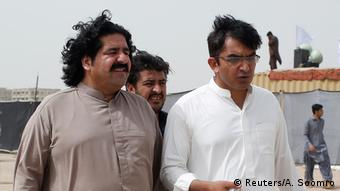
Lawmakers Ali Wazir and Mohsin Dawar were arrested for allegedly attacking the Khar Kamar checkpoint
The Pashtun issue has been a sensitive one for Pakistan since the South Asian country gained independence from British rule in 1947. With a large Pashtun population in both Afghanistan and Pakistan, the idea of an independent Pashtun-majority homeland baffled Pakistan right from the beginning. Some experts say Pakistani authorities favored Islamization of the region to rein in the "Pashtunistan" movement, led by liberal and secular politicians and activists.
The Afghan government, which usually refrains from commenting on Pakistan's domestic politics, has praised PTM leader Manzoor Pashteen's campaign in the past. Afghan President Ashraf Ghani shared several tweets about the "Pashtun march" in February 2018, hoping that it would succeed in "uprooting and eradicating terrorism from the region."
Last month, Major General Asif Ghafoor, a spokesman for the Pakistani military, accused the PTM leadership of working against the country. He alleged that the PTM is receiving money from Indian and Afghan intelligence agencies.
In an interview with DW, Pashteen talked about the clash in May with Pakistani troops and the "anti-state" allegations against his movement.
DW: Why didn't you immediately respond to the May 26 clash?
Manzoor Pashteen: We don't speak out without evidence. Until I received credible evidence of what exactly happened [on May 26], I refrained from commenting on it.
You accused Pakistan's security forces of targeting PTM supporters? Why would the military attack peaceful protesters?
The PTM has two elected representatives in parliament who speak out against the policies of our state institutions. The army doesn't like it. It is trying to remove such critics from our (elected) assemblies.
The people in our tribal areas have long demanded that the number of their [parliamentary] seats be increased so that they get better representation. A constitutional amendment, tabled by one of our lawmakers, Mohsin Dawar, was finally passed by the parliament. The army is wary of Dawar's popularity in his constituency. It fears that despite its attempts to rig the upcoming [local] election, PTM candidates are likely to win in the tribal areas. That is why they arrested Dawar.
The incident also shows that the government is not interested in allowing any political activity in the [tribal] region. By opening fire on demonstrators and then not allowing local media to report on it, the army is sending a clear message that it is against democratic activities in the region.
Your movement is accused of being anti-Pakistan. How would you respond to this allegation?
We are not anti-Pakistan; we are only anti-terrorism. We are against oppression in all its forms – be it perpetrated by "good or bad Taliban" or by the Pakistani military's intelligence agencies.
But critics say that your slogans are provocative and that they directly attack the military?
Our slogans are not anti-state, but anti-terror. By denouncing our demonstrations against terrorism as anti-state, the army is doing a disservice to our country. When people in our rallies raise slogans that "those responsible for terrorism are the ones in [military] uniform," they only refer to what a number of senior Pakistani generals have confessed publicly in the past. Even Prime Minister Imran Khan once said that our military generals were involved in promoting these (militant) activities.
We'll continue to demand our rights through peaceful protests and rallies.
Manzoor Pashteen is the leader of the Pashtun Tahafuz Movement (Movement for the protection of Pashtuns, PTM).
The interview was conducted by Mudassar Shah.
Anatomy of a RAW agent & why Pakistan seems to recognise them better than India
NAILA INAYAT
Those who differ with the state in Pakistan aren’t people with opposing viewpoints but foreign agents.
How many agents can one country house? The more the better.
It won’t be wrong to say that nowadays Pakistan is a safe haven for most foreign agents, even the ‘RAW’ ones.
The anatomy of a ‘RAW’ or foreign agent isn’t as complex as some would think. You are critical about the way Pakistan is run. You don’t buy the Pakistan version of history. You think deep down that raising your voice against the establishment will bring change, which you also know won’t happen in your lifetime. You demand constitutional supremacy over a powerful institution. You ask for equal rights for ethnic and religious minorities. You are vocal about the state’s proxy wars that threaten peaceful relations with neighbouring countries. You talk about women rights.
If you have checked all of the above, then you have arrived. Please consider yourself worthy of being labelled an agent.
A few years back on a visit to Karachi, I had one of the weirdest conversations with a local journalist about philanthropist Abdul Sattar Edhi. The journalist didn’t seem too fond of Edhi’s work and went on to tell me how Edhi wouldn’t say his prayers and believed that humanity was his religion. This ultimately made him a ‘RAW agent’ for he wouldn’t use religion or nationalism for his services.
Similarly, human rights activist Asma Jahangir was vilified all her life as a foreign agent. Her only crime? Being a relentless fighter for rights and a valiant critic of the state. Disagreement with her was only channelled through maligning campaigns.
If her photograph with Shiv Sena chief Bal Thackeray from 2008 in India, wearing a saffron shalwar kameez, wasn’t enough to trigger seizures in ‘patriots’, there was another photo during the same trip, with then chief minister of Gujarat Narendra Modi. And, in our times, a photo is evidence for any kind of treachery.
This tradition of calling those who dissent an agent, traitor, infidel or even a blasphemer has continued for decades. Politicians, lawyers, authors, poets, journalists, human rights activists and academics who don’t agree with the set narrative of the state have been labelled agents in Pakistan.
Even Jinnah’s family was not spared. Jinnah’s sister Fatima Jinnah was once called an agent of Kabul by military dictator Ayub Khan. The esteemed list of traitors and foreign agents includes: Bacha Khan, Wali Khan, Ataullah Mengal, Ghaus Bakhsh Bizenjo, Zulfikar Ali Bhutto, Mujibur Rehman, Nawab Akbar Bughti, Altaf Hussain and Nawaz Sharif.
What remains consistent in the past and the present is the award-giving body, those thirty-odd patriots.
When in 2016 the Nawaz Sharif-government warned the military to act against militants or face international isolation it became a huge scandal called “Dawn Leaks”. But when the current prime minister Imran Khan, in an interview with The New York Times, said that the Pakistan Army created militants, no one called Khan a traitor.
One hilarious charge against Sharif was that apparently there are 300 Indians working in his sugar mill and the majority of them are RAW agents. This allegation from opponent Tahirul Qadri was denied by the Sharif family, but then who cares about corrigendum. Even now the story is presented by ministers in news shows as proof against Nawaz.
When in an interview with Dawn, Nawaz said, “Militant organisations are active. Call them non-state actors, should we allow them to cross the border and kill 150 people in Mumbai? Explain it to me. Why can’t we complete the trial?” a treason case was initiated against him.
Following India’s Balakot strikes, Bilawal Bhutto Zardari questioned the government’s action against terrorist organisations, he had said that the militants hadn’t been arrested, rather they had been taken into protective custody so that Indian jets don’t bomb them.
All hell broke loose and the hyper-patriotic news anchors were convinced that young Bhutto had a foreign agenda. So much so, that those who only tweeted out a chunk of his statement were also referred to as: “yeh bhi unhi ke hain”. The polite way of saying that they were also Indian agents.
Baloch leader Sardar Akhtar Mengal on the floor of the house last week said: “Eighty per cent of Pakistanis are traitors. If all politicians are traitors, then the people who voted for them are also traitors.”
The latest enemy of the state is the indigenous struggle for equal rights, the Pashtun Tahafuz Movement, which has been labelled as an Afghan NDS and Indian RAW project. The founder of the movement, Manzoor Pashteen, asked: “How is demanding a peaceful life part of a foreign agenda?”
Accusing a marginalised ethnic group of foreign affiliation and threatening them with dire consequences with no proof to back the allegations has been the norm. The accused has to prove that they are innocent, the accuser doesn’t owe anyone any explanation.
Those who differ aren’t people with opposing viewpoints but foreign agents. The notion has been rampant in Pakistan and is not withering anytime soon. So, let’s just tell ourselves foreign agents and accept that the majority of the Pakistanis are on the payroll of CIA, RAW, NDS and live to fight another day.
Wednesday, June 5, 2019
پاکستان میں عمران خان کی حکومت: انٹرٹینمنٹ انٹرٹینمنٹ اور صرف انٹرٹینمنٹ
محمد حنیف
پرانے زمانے کے بادشاہوں کے دربار میں سپہ سالار ہوتے تھے۔ خزانے کا حساب کرنے والے، ہمسایہ
ریاستوں کی سرکوبی کے لیے سفارتکار۔ نئی بستیاں بسانے کے ماہر، بادشاہ کے حرم کی آبادی کا حساب کرنے والے، شکار کا بندوبست کرنے والے، ہر طرح کے ماہرین ہوتے تھے۔
لیکن ہر کامیاب بادشاہ کے دربار میں ایک درباری ایسا بھی ہوتا تھا جس کا کام بادشاہ کو ہنسانا ہوتا تھا۔ انگریزی میں اسے فول کہتے تھے، آپ اسے مسخرا کہہ لیں، مذاقیا کہہ لیں۔
دربار میں اس کی ضرورت اس لیے ہوتی تھی کہ جب سلطنت کے معاملات گمبھیر ہو جائیں تو کوئی شگفتہ بات کہہ کر ماحول کے تناؤ کو بھول جائیں۔ دشمن کی طرف سے ہونے والی یلغار کو کچھ عرصے کے لیے بھول جائیں، حرم میں جاری خانہ جنگی سے کچھ عرصے کے لیے توجہ ہٹ جائے۔
عمران خان نے حکومت کے اس دقیانوسی ماڈل کو اپ ڈیٹ کر دیا ہے۔ عمران خان نے جدید حکمرانی کا راز پا لیا ہے۔
عوام حکومت سے کیا چاہتے ہیں، انٹرٹینمنٹ انٹرٹینمنٹ اور صرف انٹرٹینمنٹ!
اس کی وجہ بھی ہے کہ آٹے، دال، پیٹرول کا بھاؤ فری مارکیٹ طے کرے گی۔ معیشت آئی ایم ایف سنبھالے گی۔ خارجہ پالیسی پہلے سے ہی باجوہ صاحب کے حوالے ہے۔ باغیوں کی سرکوبی سر غفور سارا دن ٹوئٹر پر کرتے ہیں اور کرواتے ہیں۔ تو باقی حکومت کے پاس بچا کیا کرنے کو؟ تو حکومت نے وہ کام ڈھونڈ لیا ہے اور عوام کو صبح شام انٹرٹینمنٹ فراہم کی جارہی ہے۔
اور جیسا کہ عمران خان خود کہا کرتے تھے کہ میرے سے بہتر ٹیم کوئی نہیں بنا سکتا۔ تو اپنی ٹیم میں انھوں نے ایسا ایسا ہیرا ڈالا ہے اور جو اپنی جماعت میں نہیں ملا تو دشمنوں کی صفوں سے اچک لیا اور یہ ٹیم صبح دوپہر شام ٹی وی پر، ٹوئٹر پر اور واٹس ایپ گروپوں میں ہمیں انٹرٹین کرنے میں مصروف ہے۔
ٹیم میں ٹیلنٹ کی فراوانی دیکھ کر لاہور کے تھیٹر کے وہ ڈرامے یاد آ جاتے ہیں جب ایک ہی سین میں اتنے اداکار ہوتے تھے کہ جگت لگانے کی باری نہیں آتی تھی اور کبھی کبھی ہاتھا پائی ہو جاتی تھی۔
ٹیم کے سردار فواد چوہدری ہیں جنھوں نے کچھ مہینے پہلے ہی عاطف میاں کی اپائنٹمنٹ پر بڑے دبنگ لہجے میں کہا تھا کہ 'کیا ہم پاکستان کی ساری اقلیتوں کو دریا میں پھینک دیں؟' اگلے ہی دن خیال آیا کہ دریا میں پھینکنے والا آئیڈیا کوئی اتنا برا بھی نہیں ہے۔
بعد میں انھیں ان کی وزارت سے نکال کر کسی لیبارٹری میں پھینک دیا گیا جہاں پر چاند ڈھونڈنے کی سائنس نے ہم گناہ گاروں کے روزے کٹوا دیے۔ پھر فرمانے لگے کہ کچھ کام فوج کے کرنے کے نہیں ہیں۔ اس جگت پر کوئی نہیں ہنسا بلکہ بڑے بڑے اینکر اپنے سیٹ پر لگی رنگین میزوں کے نیچے چھپ گئے۔
پھر فواد چوہدری صاحب نے کہا کہ حکومت میں غیر منتخب اور منتخب لوگوں میں کوئی تناؤ ہے۔ اس پر لندن سے آئے زلفی بخاری صاحب بولے کہ یہ لوگ تو کونسلر منتخب نہیں ہو سکتے۔ زلفی بخاری صاحب شاید لندن کے کسی کلب کے خزانچی منتخب ہوئے ہوں ورنہ مہنگے کپڑے پہننے کے علاوہ تو میں نے ان میں کوئی ہنر نہیں دیکھا۔
فردوس عاشق اعوان ہیں جو کسی صحافی کی آبرو بچانے کے لیے جذباتی ہو جاتی ہیں۔ ویسے وہ حکومت اور پارٹی میں اتنی نئی نئی آئی ہیں کہ مجھے دھڑکا لگا رہتا ہے کہ کہیں کسی دن جذبات میں آ کر وہ 'جئے بھٹو' کا نعرہ نہ لگا دیں۔
محمد علی صاحب ہیں جو اپنے پشتون بھائیوں کو غدار کہتے ہیں، پھر کسی سعودی شہزادے کو عرضی بھیجتے ہیں کہ محلے کی گلیوں کی مرمت کروانی ہے چندہ دے دیں۔ مراد سعید ہیں جو اتنے ارب کھرب گنواتے ہیں کہ کیلکولیٹر کے صفر ختم ہو جاتے ہیں۔
ہر ہٹ فلم میں ایک آئٹم نمبر ضروری ہوتا ہے۔ عمران خان کی حکومت وہ فلم ہے جس میں سب پرانی شرطیہ ہٹ فلموں کے آئٹم نمبر اکٹھے کر دیے گئے ہیں۔ سکرپٹ کی ضرورت ہی نہیں۔ پتا نہیں کیوں خواہ مخوا سکرپٹ لکھنے والوں کو بدنام کیا جارہا ہے۔
ہمیں دن رات انٹرٹین کرنے والے یہ سب فنکار رمضان کے آخری عشرے میں مکے مدینے میں اکٹھے ہو کر سیلفیاں بناتے ہیں اور اپنی فلم کی کامیابی کے لیے اللہ کا شکر بجا لاتے ہیں۔
ہم بھی ان کا شکر بجا لاتے ہیں۔
Washington to London: An inside account of how Pakistan’s deep state grooms ISI mouthpieces

C. CHRISTINE FAIR
When Pakistan does not have professional lobbyists to do its bidding, it deploys local goons to disrupt events across the world.
How does Pakistan’s deep state continue to influence debate around the world? By deploying people to disrupt public events, of course. Let me explain how this happens.
I appeared recently on a television programme filmed at the Newseum in Washington DC that promised to the tell the “whole truth” about US-Pakistan relations. Ordinarily, I would have asked about the composition of the panel but, in this case, I did not because I assumed the effort was credible because the show was tied to the World Affairs Council of Philadelphia.
I regretted this lapse as soon as I walked into the green room where I met my two co-panellists. One was a retired, senior American diplomat with long ties to South Asia who, in retirement, briefly became a lobbyist for Pakistan. The other was a wealthy Pakistani-American physician serving as a current lobbyist who uses his wealth to influence American policy towards countries of interest. He also is the sole US representation for former, disgraced Pakistani dictator, Pervez Musharraf, which he claims to do pro bono.
Both the past and current lobbyist reiterated tired canards that are empirically falsifiable. Doctor Sahab asserted Pakistan’s inalienable right to Kashmir and said that the Maharaja of Kashmir was obliged—as opposed to encouraged—to choose either Pakistan or India based upon geography and demography. Not only is this untrue, but Kashmir could have also have gone either way based upon these considerations. He repeated the absurd narrative about the “plebiscite” and rebuffed my efforts to explain what the relevant UN Security Council Resolutions actually say and the host similarly silenced me from clarifying basic facts.
With two soloists belting out songs from the ISI playlist, I was outnumbered. Any ingénue unaware of South Asian politics would assume I was the one dispensing deceits. Afterwards, I expressed my irritation with the producer for his choice of a registered lobbyist who promulgated rank fictions. He retorted that “everyone has their own facts”.
As I left the studio, I wondered how this programme came to be. After a perusal of the show’s previous episodes, I found that Doctor Sahab was a frequent guest on an array of topics about which he has no substantive expertise other than being a well-healed Pakistani-American. I suspect that this programme came about in part because he suggested it. After all, that is what lobbyists do: they create opportunities to lobby.
When Pakistan does not have professional lobbyists to do its bidding, it deploys local goons to disrupt events that provide platforms for discussion that undermine Pakistan’s well-groomed fictions. At a recent event in London at which I was presenting, a recurring uncouth bully disrupted the entire programme. After calling me a misogynist epithet, I insisted that he be removed initially to no avail. Since many attendees told me that I was the reason for their attendance, I refused to speak until security removed him from the venue.
I knew his ruses: last year, the same organisation hosted me, and this same buffoon deported himself similarly. Upon being ousted, and just as I was to about to speak, the banished wag pulled the fire alarm. Despite this, we all reassembled and I gave my presentation on Pakistani cross-border terrorism.
It turns out that the same reprobate did this to disrupt the presentation of a popular politician from the Pashtun Tahafuz Movement (PTM), which has the boys in Pindi in a swivet. To my horror, I learned that this past year “British Pakistani Patriots” attempted to throw acid on Baloch activists decrying the crimes of Pakistan’s deep state in the United Kingdom. Notably, it has been my vast personal experience, that Pakistan’s embassies regularly deploy miscreants to disrupt public events in global capitals. During an event hosted by Hussain Haqqani at the Hudson Institution in 2017, the Pakistan embassy actually dispatched a van of rabble-rousers to create a ruckus at the event. Many of these fellows—and they are almost always men—were escorted from the premises.
When Pakistan’s friends are unable to manufacture Pakistan-friendly forums or disrupt others, they resort to slandering participants in their sponsored media. ISI-hacks of no journalistic credentials whatsoever, who were not even present, frequently write bilious accounts of the programmes based on webcasts or recordings, with the intent of crowd-sourcing troll armies to threaten the target and, in some cases, to persuade employers to fire offending individuals who dare speak historical truth to Pakistan’s murderous mendacities.
It is not a coincidence that most of the major think tanks in Washington DC are populated with persons who rarely criticise the deep state. The Stimson Center’s Michael Krepon happily pens articles promoting the false equivalence between India and Pakistan, even after India has been victimised by Pakistan-backed terrorist attacks. Toby Dalton and George Perkovich of the Carnegie Endowment for International Peace wrote a similarly “both sides are the problem” article after Pakistani terrorists attacked Indian security forces in 2016, and precipitated Modi’s much-popularised and aggrandised “cross-border strike”. Michael Kugelman of the Wilson Center never misses the opportunity the defend or minimise the most outrageous crimes of the Pakistani state. And Marvin Weinbaum of the Middle East Institute not only happily bans Hussain Haqqani, Aparna Pande and me from his events, but also makes any number of claims that advance the interests of the deep state at these events and the events of others, which he attends. Notably, all of these scholars’ organisations enjoy public subsidies as they are all tax-exempt (501(c)(3) institutions.
Of course, the most heinous offender of defending Pakistani equities at the expense of America’s own ironically is the United States Institute of Peace (USIP), which is directly paid for by US taxpayers. USIP’s Moeed Yusuf endlessly does Pakistan’s bidding on our dime. He is joined by a long-time Pakistan-apologist from the George W. Bush administration, Steve Hadley. The USIP even had the temerity to decline a Freedom of Information Request from a DC-based Indian journalist who requested all communications from both of these persons with the Pakistan embassy arguing that such communications are part of the “inter-agency and intra-agency” processes.
Just how does Pakistan ensure the lockstep goose-stepping of such persons? Surprisingly, the deep state cultivates this stable of obedient interlocutors in Washington and elsewhere without putting anyone on its payroll. How does it do this? By bartering visas and access to the deep state in exchange for “good behaviour” and “good press.”
Not only do these visa-hungry so-called scholars host deep-state friendly events, many have willingly followed the diktat from the Pakistan embassy to explicitly exclude critics of the Pakistan army. Officials at the American National Defense University have conceded to me and to other journalists that I—along with Husain Haqqani—am banned at the insistence of the Pakistan Embassy. When someone at the National War College did not heed this guidance, an enormous hungama ensued. The Pakistan embassy demarched the War College when it learned that I would be discussing Pakistan’s pernicious role in undermining US interests in Afghanistan. This is the American War College. American military and civilian personnel have been slaughtered by the proxies of Pakistan and yet it allows the Pakistan Embassy to dictate who it invites to speak at their functions.
This was not always the case with me. Despite my various criticism of the deep state, I was welcomed in Pakistan and regularly enjoyed access to officials in the government as well as officers in the military. While I was never a cheerleader for Pakistan, Pakistan valued me as an independent thinker who carries water for no one and is willing to say unpleasant things to everyone. This changed in 2011. One of the ISI spymasters—who ironically facilitated many of my previous meetings—explained that the ISI would now only patronise those who would do its bidding. In other words, only those who would dance to the deep state’s kazoo would be welcome, which I refused to do.
I want to ask my colleagues at these “think-tanks” who happily trade their integrity for access to Pakistan, how many lives is your visa worth? How many lives are as valuable as your much-desired meeting with the army chief, ISI chief or a few corps commanders? We all know what you get in these meetings are notebooks full of lies. (I have an entire shelf of such lie-festooned notebooks.) What you get is the social cache of such meetings as they have little other utility. So, why do you happily sell your soul to these con artists? What is the crime your patron will commit that will persuade you to develop gonadal fortitude and resist that VIP lounge in Pindi? While you may not care that your handlers are also slaughtering Indians, Afghans and even Pakistanis, perhaps you should look long and hard at the thousands of Americans who have been felled by the murderers in Pindi. If you can’t do that, know that the red carpet they roll out for you is stained red with the blood of hundreds of thousands of persons shed by the very institutions you so willingly propitiate and defend, not for money but for a visa and a full schedule of sham meetings with which you regale friends, colleagues and US officials back home.
Pakistan military plans budget cuts, but India thinks they’ll just juggle numbers
SNEHESH ALEX PHILIP and NAYANIMA BASU
Experts say Pakistan's move may in effect entail no hike in the budget for the next fiscal but will not see any actual cut.
The Pakistani military, in an “unprecedented” decision, has announced that it will accept “stringent cuts” to its budget for the next financial year, in line with broader austerity measures being introduced by the Imran Khan government.
The move is being seen as the country coming under pressure due to the $6 billion loan it has taken from the International Monetary Fund (IMF).
Sources in Pakistan and the Indian defence establishment, however, say the austerity measure may in effect entail no hike in the budget for the next fiscal and is not any actual cut. The Pakistani defence budget for the current fiscal was pegged at $11.4 billion.
“One will have to wait and see the defence budget being presented for the fiscal 1 July 2019 to 30 June 2020 to actually know for sure what they mean by a cut. But as per initial information received, there would not be a hike,” a source in the Indian establishment monitoring the development in Pakistan told ThePrint.
“This is mere tokenism and a gesture to the IMF that it will follow its conditions,” said S.D. Muni of the New Delhi-based think tank, the Institute for Defence Studies and Analyses (IDSA). “The Pakistan military will never accept such a step and Imran Khan will not dare disturb the military’s budget. This is all a hogwash.”
Sources, however, added that if indeed there is a cut, the China angle will have to be monitored to see if Beijing will offset any such measure by offering long-term payment options to the Pakistan military, which is increasingly dependent on the neighbouring country for equipment and modernisation.
Khan lauds move, will not affect security, says military
Pakistan Prime Minister Imran Khan, who held a budget preparatory meeting Tuesday, tweeted late in the evening appreciating the military’s “unprecedented voluntary initiative”, adding that the money saved will be spent on development of tribal areas and Balochistan.
I appreciate Pak Mil's unprecedented voluntary initiative of stringent cuts in their defence expenditures for next FY bec of our critical financial situation, despite multiple security challenges. My govt will spend this money saved on dev of merged tribal areas & Balochistan.

9,889 people are talking about this
Following this, the military tweeted, emphasising that the cuts “will not be at the cost of defence and security”, and that it was important for the military to participate in the rebuilding of Balochistan and the erstwhile tribal areas.
Maj. Gen. Asif Ghafoor, the director general of ISPR, the military’s communications arm, added that the budget slashes would be managed “internally” by all three branches of the armed forces taking into account strategic compulsions.
Voluntary cut in def budget for a year will not be at the cost of def & security. We shall maint effective response potential to all threats.Three services will manage impact of the cut through appropriate internal measures. It was imp to participate in dev of tribal areas & Bln.

10K people are talking about this
A senior journalist based in Pakistan, who did not want to be identified, said the austerity measures were the result of the dire state of the country’s economy.
“One cannot even have biscuits in government offices,” the journalist said. “There is also criticism in the government and public that it is about time that the big boys (a reference to the Pakistani military) tightened their belts. The lifestyle of the generals will put Trump Towers to shame.”
Pakistan was the 20th biggest military spender in the world in 2018 at an expenditure of $11.4 billion, according to data released by the Stockholm International Peace Research Institute (Sipri) in April. The military spending in 2018 accounted for 4 per cent of Pakistan’s gross domestic product (GDP), which is the highest level since 2004, according to the report by the Sweden-based institute.
The IMF pressure
On 12 May, the IMF had announced that it has offered a loan of $6 billion to the Pakistani government. This is the 13th such loan being offered by the body to Islamabad to stabilise its dwindling economy. Pakistan already owes $5.8 billion to the IMF from past bailouts.
Pakistan has been forced to tighten its budget to tame its fiscal deficit following directions from the IMF.
The IMF has called on the country to trim its primary budget deficit by the equivalent of $5 billion, but previous civilian rulers have rarely dared to curtail defence spending for fear of stoking tensions with the military.
More than half of the state’s spending currently goes to the military and debt-servicing costs, limiting the government’s options for reducing expenditure.
According to the official sources in India, the Imran Khan government’s decision was expected as it was part of the conditionalities laid down by the IMF.
“This was expected and not unprecedented,” an official told ThePrint. “Anyway, the Pakistan government never had any budget. All of it was being managed by America by way of military aid. But now they have IMF loan to pay off, which they cannot overlook.”
Subscribe to:
Posts (Atom)