Thursday, May 9, 2019
Poor Pakistani women trafficked as 'brides' to China
Zofeen T. Ebrahim

When Natasha Khokar was married off to a Chinese man last year, she was promised a life of wealth in a posh home. Instead, she was locked up in a shanty with not even a quilt or a toilet.
“It was like a bad dream,” said Khokar, 27, describing her short marriage, which a local broker fixed in September after promising her Christian family a groom of the same faith and 200,000 rupees ($1,413). They got neither.“It’s all behind me now,” she told the Thomson Reuters Foundation from her home province of Punjab, where she returned in December after her uncle paid her airfare home.Khokar is one of hundreds of Christian women in Pakistan who have been trafficked to China to meet a growing demand for foreign brides - the legacy of Beijing’s one-child policy, which has seen families abort female fetuses for decades.Khokar was only able to escape because she called a journalist in Pakistan who threatened to broadcast her story. Khokar’s broker then agreed to let her go, although she said he threatened to kill her if she did not “keep my mouth shut”.
Since last year, a network of illicit marriage brokers has been targeting mainly members of Pakistan’s impoverished Christian minority, promising hundreds of thousands of rupees in exchange for their daughters, campaigners say.
But once in China, the reality is often starkly different, said Saleem Iqbal a Christian activist based in Punjab’s capital city, Lahore, who has counseled dozens like Khokar and sheltered runaway brides.Many end up isolated in remote parts of China, dependent on translation apps and abused and pressured into having babies, which Iqbal and Khokar said they suspected would be trafficked.“All that my husband wanted was to get me pregnant. He said then he would send me back,” Khokar said.
Some women narrate horrific accounts of being tortured, beaten and forced into prostitution, Iqbal said.
“The more you probe, the more terrible tales, lies and deceit you will hear,” he said, adding that he became aware of the trafficking operation in October and reported it to the Federal Investigation Agency (FIA).
On Monday, the FIA announced that it had arrested 12 suspected members of a prostitution ring trafficking young Pakistani women to China.
The government did not intervene until it had “foolproof evidence”, said Ejaz Alam Augustine, Pakistan’s minister of human rights and minorities affairs.
“Once we had spoken to the victims who pointed us to the gang involved in this, we asked the FIA to intervene,” he said.
SEXUAL SLAVERY
Since Monday, the FIA has cracked down on scores of similar operations, arresting numerous Chinese nationals, brokers and pastors in four cities across Punjab, said Jamil Ahmed Khan Mayo, head of the investigation.
“We are interrogating more people and soon there will be more arrests,” he said.
The arrests came a week after Human Rights Watch said Pakistan should be alarmed by recent reports of trafficking of women and girls into sexual slavery in China. It said the allegations were disturbingly similar to the pattern of trafficking of “brides” to China from Vietnam, Cambodia, Laos, Myanmar and North Korea.
Chinese men typically pay brokers between $10,000 and $20,000 for a foreign wife, a 2016 United Nations report said.Pakistan’s minister Augustine said that despite several letters to the Chinese embassy alerting them to bride trafficking, their authorities had done “absolutely nothing”.The Chinese embassy in Pakistan did not respond to the Thomson Reuters Foundation’s repeated requests for comment.
But not all Pakistani women who marry Chinese men under false pretences are unhappy.
One 27-year-old woman who declined to be named said she loves the Chinese man she married in September, even though he lied that he was a Christian.
“He really takes good care of me,” said the woman, who is expected to have a baby in August.
Khokar - now divorced and back to her old marketing job, earning 30,000 rupees a month - is simply glad to be home.
“Nothing like living and feeling safe in your own, clean home,” said Khokar, adding that she plans to bring her marriage broker and pastor to justice.
https://www.reuters.com/article/us-pakistan-women-trafficking/poor-pakistani-women-trafficked-as-brides-to-china-idUSKCN1SF2BN
Govt has compromised Pakistan’s economic sovereignty, claims Bilawal

“This government has no plan, no mission and no vision,” Bilawal said while addressing a session of the National Assembly, adding that the government had failed to meet its tax targets.Amid protesting noises by the treasury benches, the PPP chairman alleged that the public was “suffering due to the government’s incapability”. He repeated his warning that the opposition would not accept any deal with the International Monetary Fund (IMF) unless the government gets it approved by the House.Bilawal’s fiery speech comes a day after he made similar comments outside the NA, instead of during the session which was attended by Prime Minister Imran Khan. The opposition members on Wednesday seemed to have gone into hibernation for nearly an hour during the rare appearance of PM Khan in the assembly.
Bilawal once again questioned the sudden appointments of Hafeez Shaikh, Reza Baqir and Shabbar Zaidi as economic adviser, State Bank of Pakistan governor and Federal Board of Revenue chairman, respectively.
“The government is not telling us why it is doing what it is doing,” he lamented and repeated his suspicion that the country’s economic decisions were being “taken by the IMF”.
“This is not the PTI government any more. This is the PTIMF government,” Bilawal declared.
His comments drew the ire of the treasury benches, at which Bilawal said: “This government beats [the public] and doesn’t even let them cry”. He went on to tell the lawmakers that a protest against inflation was held in South Punjab but instead of heeding the grievances of the protesters, the “zaalim (cruel) government” had them arrested.
Speaker Asad Qaiser, however, had the word ‘zaalim’ expunged from the record. “Mr Speaker, you should not expunge the truth,” Bilawal responded. He claimed that the government had filed a first information report against a PPP member in South Waziristan and had withdrawn the security of Jamiat Ulema-e-Islam-Fazl (JUI-F) chief Maulana Fazlur Rehman.“What kind of ‘Naya Pakistan’ is this? What kind of munafiqat [hypocrisy] is this?” he asked. When Speaker Qaiser asked that the word “munafiqat” be also expunged, Bilawal pointed out that “munafiqat” was an Urdu word, and it was not non-parliamentary. He then clarified that he meant ‘hypocrisy’.Bilawal also responded to the protesting treasury members — despite Speaker Qaiser’s repeated instructions to address him only — and said: “Why don’t you understand that constructive criticism is in the government’s favour? Instead of censoring [criticism], lodging FIRs and sending to people to jail, [government should] watch, listen and learn.”
He said that the federal government had said that the country was bankrupt because of the 18th Amendment when in reality, the Centre was robbing money from all the provinces. He advised the government to “learn from Sindh” and said that the province had always met tax targets and generated revenue. Bilawal accused the government of committing “economic murder” of labourers, pensioners and youth. He said that the PPP government had sought an IMF package as well but passed on its economic benefit to the public by increasing salaries, pensions and creating more than six million jobs.
PTI’s firebrand MNA Murad Saeed gave an angry response to Bilawal’s speech, saying that the current government was “exposing [PPP’s] corruption”. He added that Bilawal knew nothing and is not credible enough to talk about Pakistan’s issues.
“He just waved a chit, claiming that he has become the chairperson of the PPP,” Saeed said. He raised questions over the Sindh government’s performance and asked Bilawal to pay attention to the recent death of nine-month-old Nashwa, who had allegedly died due to medical malpractice. Saeed also drew Bilawal’s attention to the alarming increase in the number of HIV cases in Larkana.
Meanwhile, opposition members gathered around the speaker’s dice in protest. Speaker Qaiser repeatedly asked opposition leaders to return to their benches and urged PML-N’s Khawaja Asif to address the Parliament but to no avail. The sitting was then adjourned for prayers.
Earlier in the day, Bilawal, accompanied by Syed Khursheed Shah and Naveed Qamar, met Pakistan Muslim League-Nawaz (PML-N) leaders Shahid Khaqan Abbasi, Ayaz Sadiq, Khawaja Asif, Saad Rafique and Marriyum Aurangzeb and discussed the current political situation with them.
https://www.pakistantoday.com.pk/2019/05/09/govt-has-compromised-pakistans-economic-sovereignty-claims-bilawal/
سلیکٹڈ وزیراعظم اسمبلی سے بھاگ گئے، ہم سوالات کرنا چاہتے تھے، بلاول بھٹو
پاکستان پیپلزپارٹی کے سربراہ بلاول بھٹو زرداری نے کہا ہے کہ سلیکٹڈ وزیراعظم عمران خان قومی اسمبلی سے بھاگ گئے، ہم ان سے عوامی معاملات پر اہم سوالات کرنا چاہتے تھے، آئی ایم ایف سے معاہدہ پارلیمنٹ سے منظور کرایا جائے، ورنہ تسلیم نہیں کرینگے اور پارلیمنٹ کے اندر اور باہر احتجاج کرینگے، جہانگیر ترین کو ڈپٹی وزیراعظم کے طورپر کام کرنے پر مبارکباد دیتا ہوں۔ بدھ کوقومی اسمبلی کے اجلاس کے بعد پارلیمنٹ ہائوس کے باہر میڈیا سے بات چیت میں بلاول بھٹو نے کہاکہ عمران خان قومی اسمبلی سے اجلاس ادھورا چھوڑ کر بھاگ گئے، خان نے کوئی بیان اسمبلی میں نہیں دیا کوئی بات نہیں کی خاموشی سے کیوں ایوان میں بیٹھے رہے۔ انہوں نے کہا کہ سندھ میں ٹیکس وصولی سب سے زیادہ ہے، حکومت کو اس سے سیکھنا چاہیے، صوبے وفاق کی ناکامی کی وجہ سے دیوالیہ ہو رہے ہیں۔بلاول نے کہاکہ حکومت اور
ادارے بے نامی اکائونٹس پر دوغلی پالیسی اختیار کئے ہوئے ہیں ۔ سندھ میں ملز کے مالک کو اندر کردیا جاتا ہے ۔ باپ دادا کے نام مقدمات میں درج کردئیے جاتے ہیں ، جے آئی ٹی بھی بن جاتی ہے ،حساس ادارے کیا تحقیقات کرتے ہیں۔ کسی اور صوبے میں امیر ترین ملز مالک کا بے نامی اکائونٹس مل جائے تو کوئی گرفتار نہیں ہوتا۔
Wednesday, May 8, 2019
#AsiaBibi - Asia Bibi, acquitted of blasphemy, arrives in Canada
By Kathy Gannon

A Pakistani Christian woman who spent eight years on death row over false blasphemy charges has left the country more than six months after she was acquitted by Pakistan's top court.
https://globalnews.ca/news/5253052/aasia-bibi-pakistan-blasphemy-canada/

A Pakistani Christian woman who spent eight years on death row over false blasphemy charges has left the country more than six months after she was acquitted by Pakistan's top court.
A Christian woman acquitted of blasphemy after spending eight years on death row in Pakistan has arrived in Canada, a lawyer representing her said.She’s expected to be reunited with her daughters, Pakistani officials and others involved in the case said Wednesday.Asia Bibi was convicted of blasphemy in 2009 after a quarrel with a fellow farmworker. The Supreme Court overturned her conviction last year, and she had been in protective custody since then.Islamic extremists have rioted over the case and threatened to kill her. The same radical Islamists, many of whom have been jailed for their threats, also urged the overthrow of the government following Bibi’s acquittal.Wilson Chawdhry of the British Pakistani Christian Association told The Associated Press that he received a text message from a British diplomat saying “[Asia] is out.” A close friend of Bibi also confirmed that she had left the country, speaking on condition of anonymity for fear of reprisal. Her lawyer, Saif-ul Malook, said she had already arrived in Canada.
Officials at Pakistan’s interior and foreign ministries also confirmed her departure, speaking on condition of anonymity because they were not authorized to brief media.
The case has brought international attention to Pakistan’s controversial blasphemy law, which carries an automatic death penalty. The mere suspicion of blasphemy against Islam is enough to ignite mob lynchings in the country. The accusation of blasphemy has also been used to intimidate religious minorities and to settle scores.
Radical Islamists have made the punishment of blasphemy a major rallying cry, bringing tens of thousands into the streets and paralyzing major cities.
Salman Taseer, the governor of Punjab province, was shot and killed by one of his guards in 2011 for defending Bibi and criticizing the misuse of the blasphemy law. The assassin, Mumtaz Qadri, has been celebrated as a martyr by hard-liners since he was hanged for the killing, with millions visiting a shrine set up for him near Islamabad. Pakistan’s minister for minorities, Shahbaz Bhatti, was assassinated later that year after demanding justice for Bibi.Prime Minister Imran Khan has vowed not to be intimidated by the rioters, saying the rule of law would decide Bibi’s fate. But she was denied permission to leave the country for several months until sentiments cooled.The friend, who last spoke to her on Tuesday, said Bibi and her husband Ashiq Masih had spent the last several weeks getting their documents in order. He said she was longing to see her daughters, with whom she talked to almost daily from her secure location, protected by Pakistani security forces.
Chawdhry said he had been in regular contact with Bibi’s husband throughout the ordeal as well as with several diplomats involved in international efforts to free her and get her to safety.
A three-judge Supreme Court panel in January cleared Bibi’s final legal hurdle when they ruled there was no compelling reason to overturn the court’s earlier acquittal. The judges accused those who charged Bibi with blasphemy of committing perjury, but said they would not be tried because of the sensitivity of the case. The judges upheld the blasphemy law.
https://globalnews.ca/news/5253052/aasia-bibi-pakistan-blasphemy-canada/
#DataDarbar - Why Pakistani Taliban keep targeting Lahore’s Data Darbar sufi shrine

SRIJAN SHUKLA
ThePrint looks at the significance of Lahore’s Data Darbar shrine and why Pakistani Taliban has targeted it twice, apart from issuing threats.
At least 10 people, including five policemen, were killed and several injured in a blast outside Lahore’s Sufi shrine Data Darbar Wednesday.
As media reports quoted a Pakistani official saying the blast was a suicide attack, Hizbul Ahrar, a faction of the terror group Pakistani Taliban, claimed responsibility for it.
This isn’t the first time, though, that the Pakistani Taliban or its faction has targeted the Data Darbar shrine. Back in July 2010, the Pakistani Taliban had conducted a similar suicide bombing at this shrine, which killed at least 50 people and left more than 200 injured.
In view of the latest attack, ThePrint looks at the significance of Lahore’s Data Darbar shrine and why the Pakistani Taliban has targeted it twice, apart from issuing threats.
Data Darbar and Pakistani Taliban
Lahore’s Data Darbar is the largest Sufi shrine in all of South Asia. It was built in 11th century to house the remains of Sufi Muslim saint Abul Hassan Ali Hujwiri, who is commonly known as Data Ganj Baksh. Hujwiri is believed to have lived here at some point during the 11th century.
The shrine had humble beginnings. It was a simple grave, next to a mosque until the 13th century, when the idea that Hujwiri had special spiritual powers became popular, leading to its expansion. It was further expanded in the 19th century as it went on to become South Asia’s largest shrine.
The Sufi nature of Data Darbar has often led to the Pakistani Taliban targeting the shrine. The Pakistani Taliban considers Sufis to be heretics.
Groups such as the Pakistani Taliban and the Lashkar-e-Jhangvi accuse Sufis of being polytheistic, a highly disputed claim. Polytheism — worshiping other Gods than just the singular Allah — is considered a sin among most schools of Islam.
In the case of Data Darbar, its Sufi devotees are accused of worshiping Hujwiri, which amounts to practicing polytheism. Extremists also tend to look at Sufi shrines and saints as idols. Thus, groups like the Pakistani Taliban accuse worshipers at Data Darbar to be indulging in idolatry.
As is prominent among Sufi practices, the Data Darbar shrine is popular for hosting colourful festivals, where devotees often dance. Extremist groups like Taliban also consider dance and music to be un-Islamic.
Moreover, one of the most frequent visitors to this shrine are supporters of the Barelvi movement. Although, Barelvis are distinct from Sufis, they adhere to a lot of practices of the Sufi school.
Data Darbar is not the only Sufi shrine to be targeted by the Pakistani Taliban. Back in 2009, terrorists from Pakistani Taliban targeted the shrines of Sufi poet Rahman Baba (in Peshawar) and Sufi cleric Sarfraz Ahmed Naeemi (in Lahore). Although given the highly venerated stature of Data Darbar, attacking it would be seen a big symbolic victory by violent extremist groups.
'How can IMF negotiate with IMF?' Bilawal criticises Reza Baqir's appointment as SBP governor

Speaking to reporters outside the National Assembly, Bilawal said that the government had offered no explanation for the sudden changes. The PPP chairperson said that Prime Minister Imran Khan had appointed Hafeez Shaikh — who was finance minister from 2010-13 when PPP was in government — as the economic adviser "without even meeting him" and claimed that no one, including the premier, knew the reasons behind the change.
He specifically raised questions over the appointment of Dr Reza Baqir — an IMF economist — as SBP governor and asked: "How can IMF negotiate with IMF?"
"All of a sudden [after Shaikh's appointment], SBP and FBR heads are shown the door. The person appointed as SBP governor was previously receiving his salary from the IMF [...] no matter how good or bad [Baqir] is, there will be suspicion as to whether IMF is taking these decisions."
Bilawal admitted that PPP too had sought a deal from the IMF but insisted that his party had "never compromised on Pakistan's financial rights". He said that the PPP had started a "revolutionary programme" — the Benazir Income Support Programme — that created jobs, and raised salaries and pensions of government employees.
He criticised the government for "usurping the rights of labour unions" and warned that if the government fails to improve the economic situation of the country, opposition will be forced to protest inside and outside the parliament. He added that political instability in the country had led to economic instability.
PML-N decision 'not final'
In response to a question regarding PML-N's decision to change the Public Accounts Committee (PAC) chairperson, Bilawal said that the PPP had not been taken into confidence."They [PML-N] might not have had a chance," he said. "But yesterday one of their members said in the assembly that the decision was not final."
In a shocking move, the PML-N had last week announced that Shahbaz Sharif, who is Leader of the Opposition in the National Assembly, had stepped down as PAC chairperson and the party had nominated Rana Tanvir in his stead. Though the PML-N insisted that PPP had been taken into confidence, the latter said that the decision was "one-sided". "We are surprised at the decision," PPP's Shazia Marri had said. "Bilawal Bhutto-Zardari was present in the parliament. He was not informed and neither were the PAC members."
The announcement had attracted criticism from the Pakistan Tehreek-i-Insaf as well, that recalled that Sharif had been appointed as PAC chairperson after a five-month deadlock as the ruling party was reluctant to give chairmanship of this vital parliamentary committee to the opposition leader contrary to the traditional practice. The PML-N had refused to nominate another member from the party to head the PAC, arguing that according to parliamentary tradition, the leader of the opposition should become chairman of this committee.
In his conversation with reporters today, Bilawal said that it had been decided in the Charter of Democracy that the opposition leader would be PAC chairperson so that the accountability process would be transparent and insisted that the practice should be upheld. https://www.dawn.com/news/1481038/how-can-imf-negotiate-with-imf-bilawal-criticises-reza-baqirs-appointment-as-sbp-governor
#Pakistan - Bilawal Bhutto vows to fight extremism till end

Pakistan People’s Party (PPP) Chairman Bilawal Bhutto-Zardari has said that the struggle against extremism will continue till the last victory.
He stated this in his statement on the occasion of the death anniversary of PPP leader from Khyber Pakhtunkhwa (KP) Zahir Shah who was martyred during PPP’s 2013 election campaign.
Bilawal Bhutto said that Benazir Bhutto always stood up to extremism and terror as they were and still remain the worst menace of the society. Shaheed Zahir Shah combated those who spread terror with guns and waved the flag of PPP, he added.
He said that terrorists first tried to create hurdles for PPP in the elections and later resorted to the mass killing of children in APS.
The Chairman PPP asked the youth, students, women and elders to join PPP so that we can defeat extremism and terrorism together and establish a progressive and democratic society.
#LahoreBlast #LahoreTerrorAttack - Blast near shrine in Pakistan, nine dead - یہ جو دہشتگردی ہے- اسکے پیچھے وردی ہے
A bomb targeting Pakistani police outside a Sufi shrine in the city of Lahore on Wednesday killed nine people, officials said.
The blast, a day after the beginning of the Muslim holy month of Ramadan, went off at a police checkpoint near the Data Darbar, one of the largest Muslim shrines in South Asia.
“Police was the prime target in this attack. We are collecting forensic evidences to ascertain the nature of the blast,” said Ashfaq Khan, deputy inspector general of police operations in Lahore, adding that nine people were killed and 24 wounded.
Muhammad Farooq, a spokesman for the city’s rescue services, said at least seven of the wounded were in critical condition.Police set up checkpoints on main roads leading to the shrine and hospitals were placed on alert, officials said.The attack was claimed by the Hizbul Ahrar, a splinter group of the Pakistani Taliban, who said they were targeting the police.“This attack was carried out at a time when there were no civilians near the police,” a spokesman for the militant group, Abdul Aziz Yousafzai, said in a statement.
The Pakistani Taliban have been fighting the government for years.
Sufis, who follow a mystical form of Islam that has been practiced in South Asia for centuries, have been regularly attacked by hardline Sunni Muslim militants in the past.
In 2010, two suicide bombers struck the Data Darbar shrine killing 42 people and wounding 175, in an attack officials said was carried out by the Pakistani Taliban.
Militant violence has since declined sharply in Pakistan following a sustained crackdown in recent years. Over the past two years Lahore, Pakistan’s second largest city, has been free of the kind of attacks that were once common.
However, officials warned that the attack showed the need for vigilance during Ramadan.
“People should remain aware of their surroundings when going to pray,” said a Punjab provincial minister, Mian Aslam.
Police said a general security alert was in force but there had been no specific warning about a threat to the Data Darbar, which attracts large numbers of visitors.
https://www.reuters.com/article/us-pakistan-blast/blast-near-shrine-in-pakistan-nine-dead-police-idUSKCN1SE0C2
Tuesday, May 7, 2019
#Pakistan - PERSPECTIVES - The political scope of Blasphemys


If you think the concept of ‘blasphemy’ is limited to showing contempt for religious practices, ideas, personalities or deities you are wrong – although most of the cases reported in newspapers concern that. Blasphemy covers a wide variety of topics and areas, beyond matters of faith, and includes politics and social values, historical events and powerful organisations.
Let me elaborate. In Pakistan, it is almost blasphemous to voice an opinion different from the point of view of Allama Muhammad Iqbal. Try to do that some day; tell a group that Iqbal’s ideas lacked originality. Let this be a test case. Or that Iqbal borrowed too much, to the point of plagiarism, from the German philosophers of the19th century; or that his ideas lagged way behind his contemporaries in the West where he was educated; or that since Pakistan faced a shortage of genuine leaders, the people of the new republic were compelled to canonise Iqbal as a saint, irrespective of whether or not he met the standards. Even before you have uttered half of it, your friends and family members would disown you either out of respect for the philosopher or for fear of other people’s response.

For me, bringing up Iqbal’s shortcomings in philosophy does not mean that he did not excel in Urdu poetry. Sure, he did. His command of the language is impressive and many of his poems inspire millions of Pakistanis.
Moving along, it is also blasphemous to criticise anything about Muhammad Ali Jinnah biography, be it a personal, social, professional or political aspect of his life. If you have read about him you would realise that he did not lead an exemplary life, and some of the choices he made could be called into question. For example, have you ever wondered about his relationship with his wife, Rattanbai Jinnah? Why did she leave him? Could you question his role as a father? His daughter, Dina Wadia, never visited Pakistan during his lifetime.
It is blasphemous to criticise any portion of Muhammad Ali Jinnah’s biography, be it the personal, social, professional or political aspect of his life
These questions do not make him less of a leader. They make him a normal human being who is not perfect. He created a country for the Muslim minority of the subcontinent through his dedication, hard work and pure brilliance. It also provides people like us an inspiration. We too can make a mark in history if we focus, work hard and dedicate our lives to a mission. Instead, we are forced to believe that normalcy, personal flaws and shortcomings take away from one’s accomplishments. Bringing up the political role of non-political organisations is also considered blasphemous. You have to rely upon euphemisms (like ‘establishment’ and ‘powerful forces’) to express yourself, afraid that your words will not be published. Or that if you say something more than what is allowed you will be listed among the most unwanted citizens of the country. Even worse, your words may be published but edited to an extent that they lose their meaning, even be twisted to mean just the opposite.
The list goes on and on. It is blasphemous to educate the masses that corruption may not have played the biggest role in bringing down our economy, and that instead it is meddling in the democratic process. It is also blasphemous to talk in favour of certain politicians. It is blasphemous to ask about supporters of non-state actors, to question why Hafiz Saeed and Masood Azhar are protected in Pakistan while being recognised as terrorists by the international community. Raising a voice for Chinese Muslims is also becoming blasphemous.
We have to let people think and speak freely, rather than try to brainwash them with a twisted version of history or to threaten them against expressing their views. Diversity of ideas makes a nation great. True, in the cacophony of multiple voices, it may look otherwise, but the plurality of voices can promote the virtues of tolerance and humility. Singularity of ideas, on the other hand, can make us intellectually poor, financially dependent on foreign forces to solve our problems and prone to being taken by those who steal people’s mandate to come into power.
The China-Pakistan ‘nexus’ to exploit tons of gold from the mines of Balochistan

COL. VINAYAK BHAT (RETD)
 Two mines in Balochistan are connected with small, unlisted airstrips, indicating that flights to the locations cannot be monitored.

China has emerged as a major player in mining in the restive Balochistan province of Pakistan and is suspected to be helping Islamabad surreptitiously export tons of gold from there.
Despite being rich in minerals, Balochistan, the largest Pakistani province by area and the site of an active movement for independence, remains poor.
As home to the Gwadar port, it is central to the China-Pakistan Economic Corridor (CPEC), one of the flagship projects of Beijing’s showpiece Belt & Road Initiative (BRI), but reportedly has little to gain from the multi-billion-dollar initiative.
All Pakistani governments are believed to have consistently exploited the natural resources of Balochistan to benefit Punjab province alone.
During the discussions for the sales of the M-9 and M-11 missiles to Pakistan, China asked for a 20-year lease to the mineral-rich areas of Chagai in Balochistan.
The deal was concluded, and around 84 missiles delivered to Pakistan in 1993.
Nuclear physicist Samar Mubarakmand played a key role in shepherding both deals. He was later appointed director of the National Development Complex, involved in Pakistan’s nuclear development, at Fatehjang, where he started the infamous Shaheen programme.
The Tethyan Copper Company, with engineers of the state-owned Metallurgical Corporation of China (MCC), had started surveying the mining areas much before the missile deal was concluded.
These engineers found traces of copper and gold at two places in Balochistan province, at Sandak and Reko Diq.
ThePrint analyses the progress of these areas through satellite imagery to understand China’s gold mining operations in Pakistan.
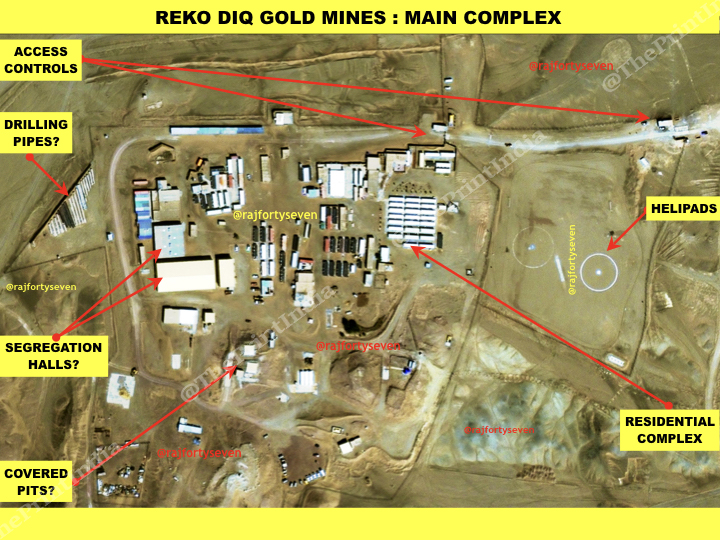
Reko Diq
In 1995, the first trial excavations for four months yielded almost 200 kg of gold and 1,700 tonnes of copper, with estimates pegging the area’s total ore reserves at more than 5.9 billion tonnes.
Pakistan, having realised that the deal was a great loss to the government, withheld a lease to Tethyan Copper Company, a joint venture of two firms based in Chile and Canada, which had to subsequently stop all mining activities.
The key Pakistani witness was again Samar Mubarakmand, who claimed that the government can now benefit more from extracting copper and gold without seeking assistance from foreign companies.
The Chinese, however, continued surveying and mining the area with the tacit approval of officials in the Pakistani government.
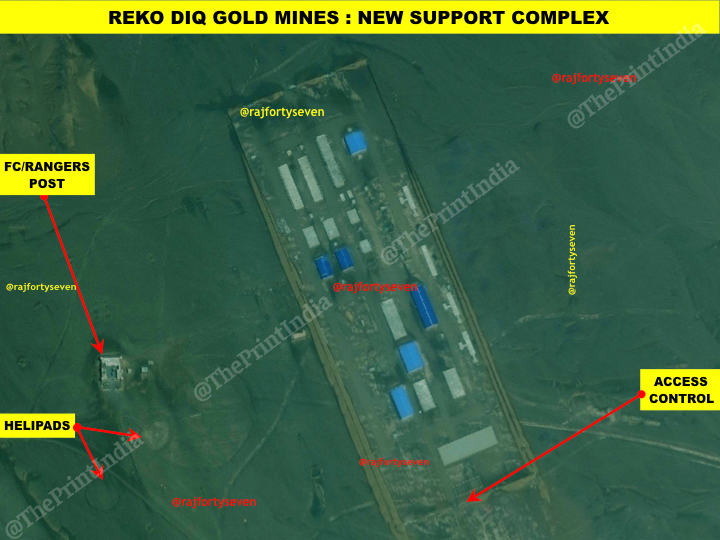
This is also evident from the satellite imagery, which shows the Tethyan Copper Company areas abandoned but the Chinese part of Reko Diq functional and growing after 2014.
It is learned that a fresh lease has been given to a Chinese company under the MCC for 10 years up to 2023. The details of the contract are very sketchy.
Sandak
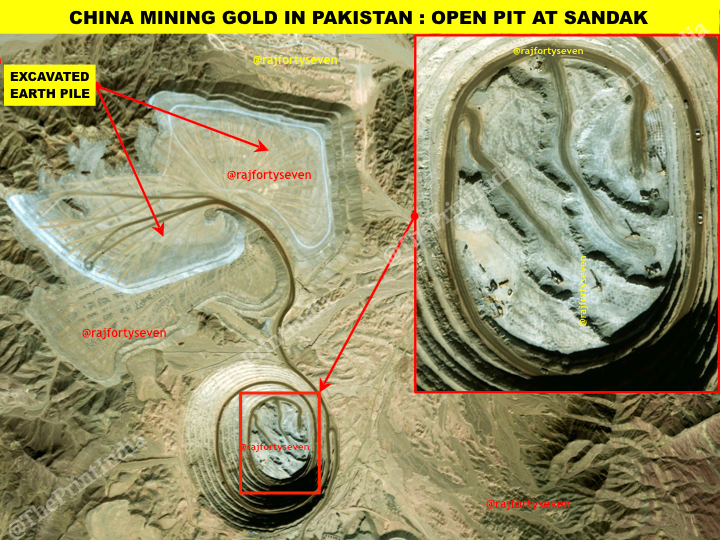
The Chinese company under MCC started digging for an open-pit gold mine in 1995 at a place called Sandak about 30 km North of Koh-i-Taftan on the Iran-Pakistan border.
The estimated gold reserves at Sandak are almost to the tune of 6 lakh kg, which is almost 20 times higher than at Reko Diq.
Gold mining requires specially trained, very skilled and trustworthy manpower. The Chinese company employs locals only for driving and external security duties, with the internal mining and processing handled by Chinese staff.
This becomes evident from the special residential complex built for trusted staff, and the dilapidated village accommodation set up for local staff.
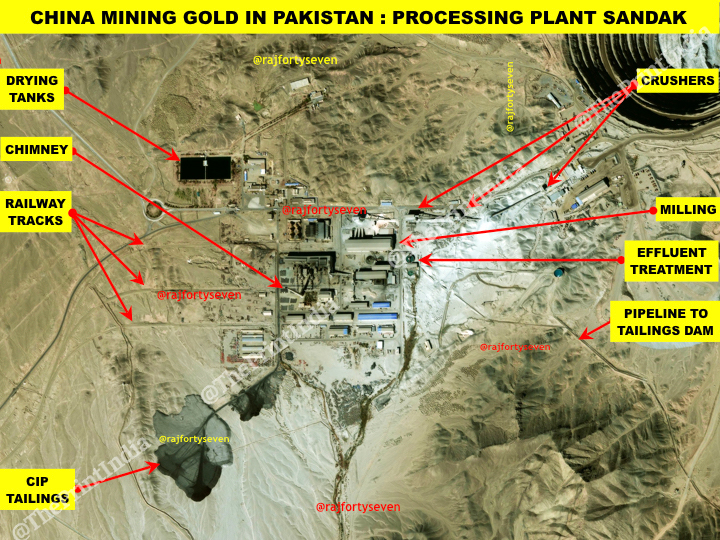
The main complex has an open pit where a number of large mechanical excavators are observed working. The excavated earth is piled to the north of the open pit, making it easy to calculate the amount of ore extracted from the mine.
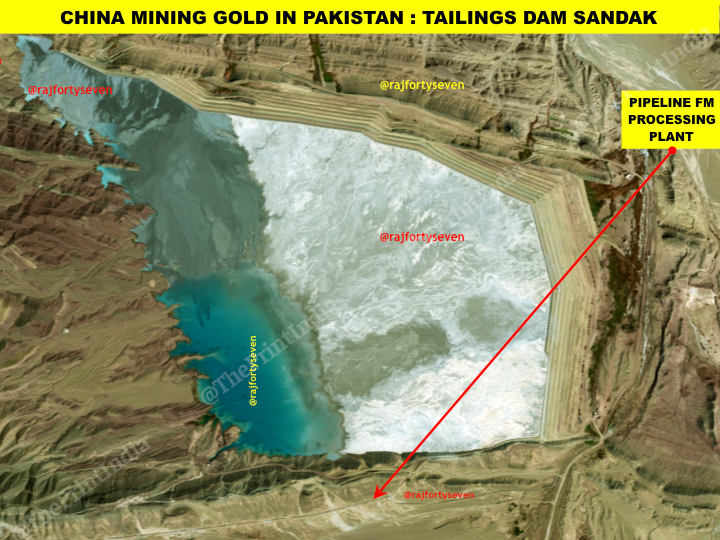
The processing plant has a number of crushers, a milling plant, leaching tanks, CIP (carbon in pulp) absorption etc, which are involved in the cynidation process. The signatures indicate a possible electrolytic desorption system as well.
There is a large tailings dam at the southwest corner of the complex. The study of reflectance and DN [digital number] values of the ore dump on latest satellite images indicates that it contains more gold than estimated earlier.
Recent images indicate that a new open-pit mine started excavations from March 2017 onwards, north of the old open pit.
Security
The security for the two sites is probably provided by the frontier corps of Pakistan Army and/or the Baloch Rangers.
A number of posts are seen around the two main complexes, covering areas marking the entry and exit. The small posts have wire fencings and larger posts have solid walls as fencing.
Transportation
Although connected with three railway tracks, the Sandak processing plant uses trucks for transportation to the Gwadar or Karachi port.
Both Sandak and Reko Diq are connected with small airstrips, possibly for the export of processed ore. These airstrips are unlisted, indicating that flights to the locations cannot be monitored.
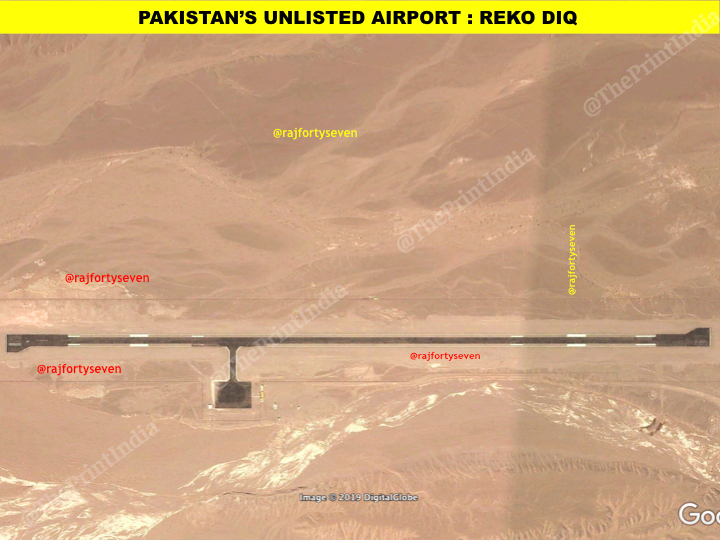
This strongly suggests that speculation about the export of gold without the knowledge of the State Bank of Pakistan may actually be true.
Pashteen: PTM Hurt Pakistan Military's Terror-Sponsoring Industry
In response to last week's accusation by the military that Pakistan's Pashtun Tahafuz Movement (PTM) has been receiving funds from Afghanistan's and India's intelligence agencies, its leader, Manzoor Pashteen, blamed the country's most powerful institution of turning the war on terror into a lucrative business in their region.
https://www.voanews.com/a/pashteen-ptm-hurt-military-s-terror-sponsoring-industry/4906721.html
Pashteen alleged to VOA in a telephone interview from Islamabad that Pakistan's military has been trying to sow confusion among people about PTM.
"These are baseless accusations that we receive funding from foreign intelligence agencies. They cannot produce a single evidence," Pashteen said. "There is an English saying that if you cannot convince them, confuse them. That's exactly what the military has been doing against us.
"They [military] train militants here and then the militants carry out attacks in my country and other countries of the world. With PTM's emergence as a movement, the military can no longer operate with impunity to do that and their so-called business has been faced with difficulties," he added.
Military's warning
Last Monday, Major General Asif Ghafoor, director general of Inter-Services Public Relations (ISPR) and the spokesperson for the military, accused the PTM of receiving funds from Afghanistan's National Directorate of Security (NDS) and India's Research and Analysis Wing (RAW), and advancing their agendas inside Pakistan.
"On the PTM website, they have got a number that states the amount of funds they have collected from Pashtuns around the world. But tell us how much money did you get from the NDS [Afghanistan's National Directorate of Security] to run your campaign? How much money did RAW [India's Research and Analysis Wing] give you for the first dharna [sit-in protest] in Islamabad?" Ghafoor asked."We want to do everything for the people [of tribal areas], but those who are playing in the hands of people, their time is up. Their time is up," Ghafoor added, implying that PTM members are serving as foreign agents.
But Pashteen charges that it's the military that gets funding from foreign countries, not his movement.
"They [military] want to end PTM so that they could continue nurturing militancy and then attack them here and there and receive funding for it from the international community," Pashteen said.
"It was not us. It was them who have received about $33 billion from foreigners," he added.
Pakistan has received more than $ 33 billion in U.S assistance since 2002 including more than $14 billion in Coalition Support Fund (CSF) which is a U.S. Defense Department program for reimbursing allies that incur costs while supporting the U.S-led counter-insurgency and counter-terror operations in the region.
'Anti-state forces'
Ghafoor urged Pakistan's Pasthun population not to be provoked by what he called "anti-state forces," which he used to describe Pashteen and his movement.
"Pakistan armed forces will not rest until your issues are resolved. We hope that you will not pay attention to their [PTM] rhetoric and instead stop these anti-state forces," Ghafoor said.But Pashteen maintains that he respects the country's constitution and that the military has a tendency to label anyone who fights for constitutional rights as "anti-state forces.""Whomever criticizes them [military] is anti-state. Those who demand respect to constitution are labeled as anti-state. Those who demand a republic are called traitors and anti-state," Pashteen said."You tell me, isn't it constitutional to demand due process for missing persons? We simply say that if someone committed a crime, punish him, and if someone is innocent, release him. How is that unconstitutional?" he asked.
Grievances
Pashtuns, who are the largest ethnic group in Afghanistan but a minority in Pakistan, have felt neglected and targeted in Pakistan for some time. That long-simmering anger boiled over in January 2018 with the death of Naqeebullah Mehsud, a 27-year-old shopkeeper-turned-model, at police hands in Karachi.
https://www.voanews.com/a/pashteen-ptm-hurt-military-s-terror-sponsoring-industry/4906721.html
Bride market trafficks #Pakistani #Christian women to #China
By KATHY GANNON and DAKE KANG
Hundreds young women from Pakistan's small Christian minority have been trafficked to China as brides in recent months as their impoverished community is targeted in an aggressive new marriage market, activists and officials say.
Brokers offer desperately poor parents thousands of dollars to give girls in marriage to Chinese men, even cruising outside churches for potential brides. They are helped by Christian pastors paid to preach to their congregations with promises of wealth in exchange for their daughters.
Once in China, the girls — most often married against their will — can find themselves isolated in rural regions, vulnerable to abuse, unable to communicate and reliant on a translation app even for a glass of water. Touted as wealthy Christian converts, the grooms often turn out to be neither, according to accounts from brides, their parents, an activist, pastors and government officials, speaking to The Associated Press.
"This is human smuggling," said Aslam Augustine, the human rights and minorities minister in Pakistan's Punjab province, in an interview with the AP. "Greed is really responsible for these marriages ... I have met with some of these girls and they are very poor."
The Associated Press interviewed more than a dozen Christian Pakistani brides and would-be brides who fled before exchanging vows. All had similar accounts of a process involving brokers and members of the clergy.
"It is all fraud and cheating. All the promises they make are fake," said Muqadas Ashraf, who was 16 when her parents married her off to a Chinese man last year. Less than five months later, she returned to Pakistan, pregnant and seeking a divorce.
In China, demand for foreign brides has mounted, a legacy of the one-child policy that skewed the country's gender balance toward males. Brides initially came largely from Vietnam, Laos and North Korea. Now men are looking further afield, said Mimi Vu, director of advocacy at Pacific Links, which helps trafficked Vietnamese women.
"It's purely supply and demand," she said. "It used to be, 'Is she light-skinned?' Now it's like, 'Is she female?'"
Pakistan seems to have come onto marriage brokers' radar late last year.
Saleem Iqbal, a Christian activist, said he first began to see significant numbers of marriages to Chinese men in October. Since then, an estimated 750 to 1,000 girls have been married off, he said.
Pakistan's small Christian community is particularly vulnerable. It is among the country's poorest and has little political or social supporting, numbering some 2.5 million in Pakistan's overwhelmingly Muslim population of 200 million.
Among all faiths in Pakistan, parents often decide a daughter's marriage partner. The deeply patriarchal society often sees girls as a burden because the bride's family must pay a dowry and the cost of the wedding.
By contrast, potential Chinese grooms offer parents money and pay all wedding expenses.
Some of the grooms are from among the tens of thousands of Chinese in Pakistan working on infrastructure projects under Beijing's Belt and Road Initiative. Other grooms search directly from China through networks. They present themselves as Christian converts, but pastors complicit in the deals don't ask for any documentation.
They pay on average $3,500 to $5,000, including payments to parents, pastors and a broker, said Iqbal.
Muqadas' mother Nasreen said she was promised about $5,000, including wedding costs. "But I have not seen anything yet," she said.
"I really believed I was giving her a chance at a better life and also a better life for us," Nasreen said. When her daughter became increasingly miserable in China, Nasreen contacted the husband and demanded her daughter be sent home.
Dozens of Pakistani priests are paid by brokers to find brides for Chinese men, said Augustine, the provincial minorities minister, who is Christian. Many are from the small evangelical churches that have proliferated in Pakistan.
In Gujranwala, a city north of Lahore, more than 100 local Christian women and girls have been married off to Chinese in recent months, according to Iqbal.
The city has several mainly Christian neighborhoods, largely dirt poor with open sewers running along narrow slum streets.
Pastor Munch Morris, who serves at a local evangelical church, opposes such marriages. But he said he knows a group of pastors in his neighborhood who work with a private Chinese marriage broker. Among them, he said, is a fellow pastor at his church who tells his flock, "God is happy because these Chinese boys convert to Christianity. They are helping the poor Christian girls."
Rizwan Rashid, a parishioner at the city's Roman Catholic St. John's Church, said that two weeks earlier, a car pulled up to him outside the church gates. Two Pakistani men and a Chinese woman inside asked him if he knew of any girls who want to marry a Chinese man.
"They told me her life would be great," he said. They were willing to pay him to help, but he said he refused because the church's priest often warns his flock against such marriages.
Human Rights Watch called on China and Pakistan to take action to end bride trafficking, warning in an April 26 statement of "increasing evidence that Pakistani women and girls are at risk of sexual slavery in China."
On Monday, Pakistan's Federal Investigation Agency arrested eight Chinese nationals and four Pakistanis in raids in Punjab in connection with trafficking, Geo TV reported. It said the raids followed an undercover operation that included attending an arranged marriage.
The Chinese embassy said last month that China is cooperating with Pakistan to crack down on unlawful matchmaking centers, saying "both Chinese and Pakistani youths are victims of these illegal agents."
Pakistani Christian girls targeted by Chinese as brides
Muqadas Ashraf was just 16 when her parents married her off to a Chinese man who had come to Pakistan looking for a bride. Less than five months later, Muqadas is back in her home country, pregnant and seeking a divorce from a husband she says was abusive.She is one of hundreds of poor Christian girls who have been trafficked to China in a market for brides that has swiftly grown in Pakistan since late last year, activists say. Brokers are aggressively seeking out girls for Chinese men, sometimes even cruising outside churches to ask for potential brides. They are being helped by Christian clerics paid to target impoverished parents in their congregation with promises of wealth in exchange for their daughters.
https://timesofindia.indiatimes.com/world/pakistan/pakistani-christian-girls-targeted-by-chinese-as-brides/articleshow/69212830.cms
Monday, May 6, 2019
#Pakistan - په سوات کې د ګرانۍ پرضد د پښتونخوا ملي عوامي پارټۍ لاریون
په سوات کي د ګرانۍ پرضد جلاجلا ځايونوکې احتجاجي مظاهرې شوې چې پکې لويه مظاهره د پښتونخوا ملي عوامي پارټي له لوري شوې. مظاهره چيانو په لاسونو کې د ګرانۍ پرضد بېنرې او لوحې (چاټونه) هم اخیستې ولې او د ګرانۍ خلاف یې نارې وهلې.
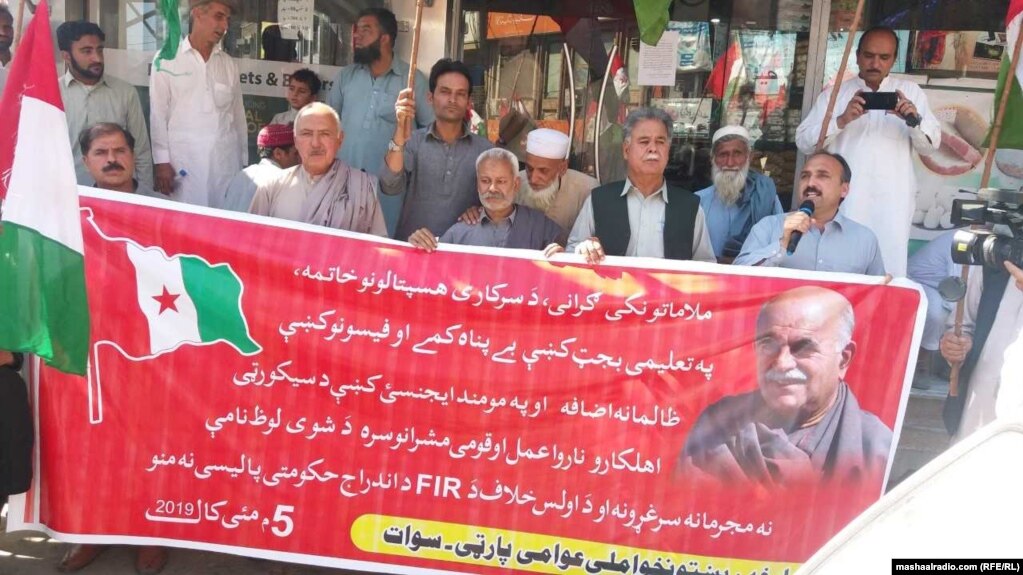
پر نشاط چوک دې مظاهرې ته د ياد ګوند مرستيال مرکزي سېکرېتر او د سيدو شريف ناظم ډاکټر خالد محمود وويل چې په سوات او ټول ملک کې د ګرانۍ له وجي غريب ولس سخت په مشکلاتو کې دی.
نوموړي زیاته کړه: (ضلعي انتظامه په مينګوره کې د سستا بازار په نوم مارکيټ پرانستی دی چې پکې غيرمعياري څیزونه پلورل کېږي. افسران دې په دغه بازارکې سودا واخلي کنه؟ زموږ غوښتنه ده چې د مينګورې په ټولو بازارنو کې دې خوراکي توګي په ارزان نرخ ورکول يقيني کړل شي.
د پښتونخوا ملي عوامي پارټۍ سوات ضلع مشر خورشید کاکاجي پر دغه مهال زياته کړه چي دا وخت په ملک کې د غلطو پاليسو له وجي د ګرانۍ یوه لويه لړۍ شورو شوې ده. دوی غوښتنه وکړه چې په لويه کچه دې په ملکي پاليسو کې بدلون راوړل شي.
کاکاجي زیاته کړه: ”ملک کې معاشي حالت ښه کولو لپاره دې د پاکستان دولت د پوځ په بجټ کې کمی راولي. د پوځي او سول انتظامي اخراجات دې کم کړل شي، له دې سره دې ولس ته د روزګار مواقع برابرې کړل شي.“
په سوات کې د ګرانۍ په اړه مرستيال کمېشنر ثاقب رضا اسلم مشال ريډيو ته وويل چې دوی په مقامي توګه د وړو او خوراکي تېلو قيمتونوکي د څلورو روپیو نه تر شپږو روپیو پورې د يو کیلو پر سر قيمتونه کم کړي دي او د دې ترڅنګ د خوراکي شيانو قيمتونو جاج اخیستو لپاره یې طريقه کار وضع کړي
”د دې لپاره مو داسې نظام جوړ کړی دی چې هر ګهیځ به د يوه مجسټريټ په موجودګۍ کې د سبزيانو او مېوو بولۍ کيږي چې کوم نرخ وټاکل شو هغه نرخ به په ارزان بازار کي يقيني کوو. مېوې او سبزيانې له بهر څخه راځي. دا وخت ضلعي انتظاميه هم دغه کولی شي.“
خو مظاهره کې شريک يوشمېر مظاهره چيانو وويل چې د روژې په راتګ په مېنګوره بازار کې د مېوو او سبزيانو په نرخونو کې سل فيصده او د دالونو، چای، بورې، غوړیو او خوراکي تيلو په نرخونو کې ۳۰ فيصده اضافه شوې ده.
#Pakistan - Ramazan and the dreaded price hike
The advent of Ramazan has over the years become so closely associated with price hike as to be considered synonymous. The fasting causes a huge gap in demand and supply of edible items leading to an abnormal price hike. Governments have been providing some relief by underwriting subsidies. The pressure on prices with the inception of Ramazan is unlikely to be any different this year. The inflation is already being reported at 7.9 per cent and a substantial raised in prices of petroleum products just four days ahead of the fasting month will likely compound the problems for the consumers.
The government’s response is not vastly different from its predecessors: the Utility Stores Corporation will provide 19 essential commodities at subsidized rates. The government of the Punjab has also decided to follow the USC subsidy model, without disclosing the amount to be provided for the subsidy. The Economic Coordination Committee has approved a Rs 200 million Ramazan Relief Package, 2019, compared to Rs 1.73 billion given in 2018. The substantial cut in the relief package speaks for itself.
A report in the media says subsidy will be limited to only 10 items. The remaining 9 items on the list will just be sold at wholesale rates.
Subsidized Ramazan Bazaars have been very popular with the citizens. In a certain sense they speak of a weakness in its price control regime. In broad terms, the subsidies lower consumer prices, help manufacturers maintain their profits and sustain a service. To some extent, such subsidies can be justified in terms of correcting for externalities and protecting struggling sectors.
For multiple reasons, Ramazan subsidies meant to benefit the poor, often fail in achieving the objective. First, USC outlets and Ramazan bazaars are set up mostly in urban centers. Second, the subsidized bazaars do not discriminate against the affluent.
It has been argued that the best way to support the targeted segment of the population is direct income support. The Benazir Income Support Programme is a model in this respect. A worthy goal may be to maintain an effective price control mechanism throughout the year. As Ramazan creates a temporary imbalance in demand and supply, the government might make special arrangements ahead of the month to ensure that supplies in the market remain adequate. Good planning in consultation with farmers, market players, and retailers can ensure that the month of fasting does not become a month of extra hardship.
https://dailytimes.com.pk/389111/ramazan-and-the-dreaded-price-hike/
Subscribe to:
Posts (Atom)