Monday, May 6, 2019

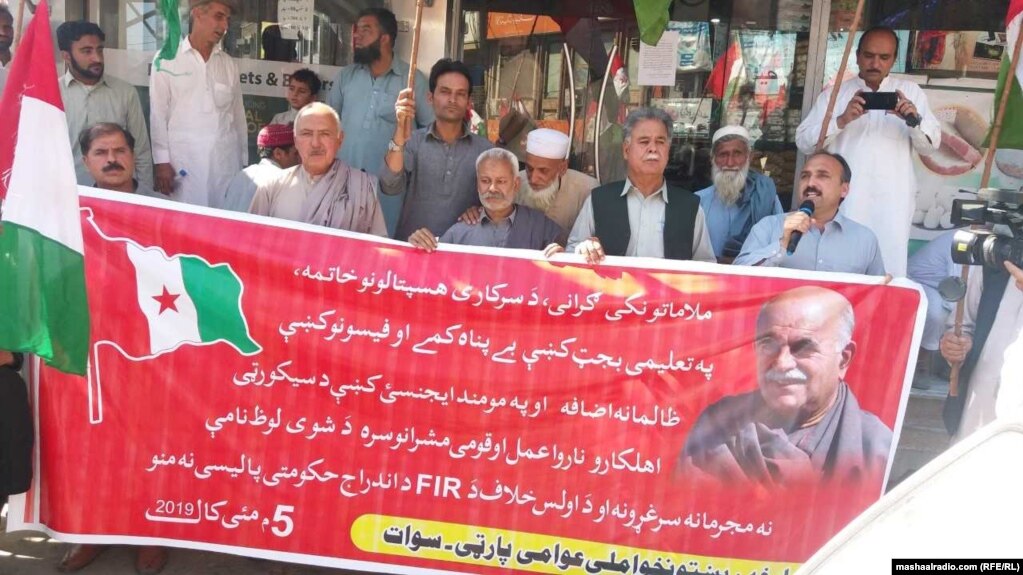
#Pakistan - په سوات کې د ګرانۍ پرضد د پښتونخوا ملي عوامي پارټۍ لاریون

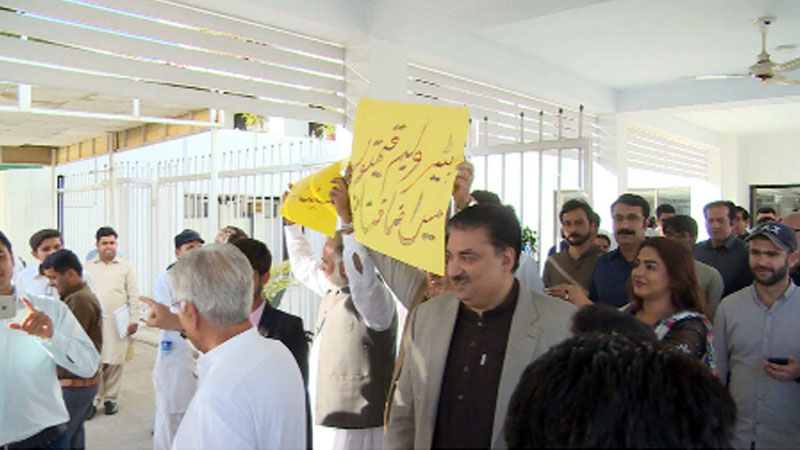
په سوات کي د ګرانۍ پرضد جلاجلا ځايونوکې احتجاجي مظاهرې شوې چې پکې لويه مظاهره د پښتونخوا ملي عوامي پارټي له لوري شوې. مظاهره چيانو په لاسونو کې د ګرانۍ پرضد بېنرې او لوحې (چاټونه) هم اخیستې ولې او د ګرانۍ خلاف یې نارې وهلې.

پر نشاط چوک دې مظاهرې ته د ياد ګوند مرستيال مرکزي سېکرېتر او د سيدو شريف ناظم ډاکټر خالد محمود وويل چې په سوات او ټول ملک کې د ګرانۍ له وجي غريب ولس سخت په مشکلاتو کې دی.
نوموړي زیاته کړه: (ضلعي انتظامه په مينګوره کې د سستا بازار په نوم مارکيټ پرانستی دی چې پکې غيرمعياري څیزونه پلورل کېږي. افسران دې په دغه بازارکې سودا واخلي کنه؟ زموږ غوښتنه ده چې د مينګورې په ټولو بازارنو کې دې خوراکي توګي په ارزان نرخ ورکول يقيني کړل شي.
د پښتونخوا ملي عوامي پارټۍ سوات ضلع مشر خورشید کاکاجي پر دغه مهال زياته کړه چي دا وخت په ملک کې د غلطو پاليسو له وجي د ګرانۍ یوه لويه لړۍ شورو شوې ده. دوی غوښتنه وکړه چې په لويه کچه دې په ملکي پاليسو کې بدلون راوړل شي.
کاکاجي زیاته کړه: ”ملک کې معاشي حالت ښه کولو لپاره دې د پاکستان دولت د پوځ په بجټ کې کمی راولي. د پوځي او سول انتظامي اخراجات دې کم کړل شي، له دې سره دې ولس ته د روزګار مواقع برابرې کړل شي.“
په سوات کې د ګرانۍ په اړه مرستيال کمېشنر ثاقب رضا اسلم مشال ريډيو ته وويل چې دوی په مقامي توګه د وړو او خوراکي تېلو قيمتونوکي د څلورو روپیو نه تر شپږو روپیو پورې د يو کیلو پر سر قيمتونه کم کړي دي او د دې ترڅنګ د خوراکي شيانو قيمتونو جاج اخیستو لپاره یې طريقه کار وضع کړي
”د دې لپاره مو داسې نظام جوړ کړی دی چې هر ګهیځ به د يوه مجسټريټ په موجودګۍ کې د سبزيانو او مېوو بولۍ کيږي چې کوم نرخ وټاکل شو هغه نرخ به په ارزان بازار کي يقيني کوو. مېوې او سبزيانې له بهر څخه راځي. دا وخت ضلعي انتظاميه هم دغه کولی شي.“
خو مظاهره کې شريک يوشمېر مظاهره چيانو وويل چې د روژې په راتګ په مېنګوره بازار کې د مېوو او سبزيانو په نرخونو کې سل فيصده او د دالونو، چای، بورې، غوړیو او خوراکي تيلو په نرخونو کې ۳۰ فيصده اضافه شوې ده.

#Pakistan - Ramazan and the dreaded price hike

The advent of Ramazan has over the years become so closely associated with price hike as to be considered synonymous. The fasting causes a huge gap in demand and supply of edible items leading to an abnormal price hike. Governments have been providing some relief by underwriting subsidies. The pressure on prices with the inception of Ramazan is unlikely to be any different this year. The inflation is already being reported at 7.9 per cent and a substantial raised in prices of petroleum products just four days ahead of the fasting month will likely compound the problems for the consumers.
The government’s response is not vastly different from its predecessors: the Utility Stores Corporation will provide 19 essential commodities at subsidized rates. The government of the Punjab has also decided to follow the USC subsidy model, without disclosing the amount to be provided for the subsidy. The Economic Coordination Committee has approved a Rs 200 million Ramazan Relief Package, 2019, compared to Rs 1.73 billion given in 2018. The substantial cut in the relief package speaks for itself.
A report in the media says subsidy will be limited to only 10 items. The remaining 9 items on the list will just be sold at wholesale rates.
Subsidized Ramazan Bazaars have been very popular with the citizens. In a certain sense they speak of a weakness in its price control regime. In broad terms, the subsidies lower consumer prices, help manufacturers maintain their profits and sustain a service. To some extent, such subsidies can be justified in terms of correcting for externalities and protecting struggling sectors.
For multiple reasons, Ramazan subsidies meant to benefit the poor, often fail in achieving the objective. First, USC outlets and Ramazan bazaars are set up mostly in urban centers. Second, the subsidized bazaars do not discriminate against the affluent.
It has been argued that the best way to support the targeted segment of the population is direct income support. The Benazir Income Support Programme is a model in this respect. A worthy goal may be to maintain an effective price control mechanism throughout the year. As Ramazan creates a temporary imbalance in demand and supply, the government might make special arrangements ahead of the month to ensure that supplies in the market remain adequate. Good planning in consultation with farmers, market players, and retailers can ensure that the month of fasting does not become a month of extra hardship.
https://dailytimes.com.pk/389111/ramazan-and-the-dreaded-price-hike/

#Pakistan - Opp in NA protests POL price hike, inflation, poor economic situation

Opposition parties in the National Assembly on Monday strongly protested over poor economic situation of the country and recent hike in the petroleum prices, compelling Speaker Asad Qaiser to adjourn the session till Wednesday.

As the session began, the Pakistan Muslim League-Nawaz (PML-N) started protest against the Pakistan Tehreek-e-Insaf (PTI) government over inflation, increase in the prices of petroleum products and what they said toeing the line of the International Monetary Fund (IMF). The opposition lawmakers raised slogans against the government. They were also carrying placards inscribed with different slogans such as: ‘Increase in petroleum products unacceptable’; Stop economic murder of people’; ‘IMF policy is unacceptable’.
The opposition members wanted the floor to speak but the speaker gave floor to Minister of State for Revenue Hammad Azhar for responding to a calling attention notice. After it, the opposition members gathered in front of the speaker’s dais and started sloganeering.
Amid pandemonium in the House, Minister of State for Revenue Hammad Azhar said the previous governments approached the IMF for 21 times. He said in their tenures, the price of one litre of petrol had also reached Rs 113 per liter.
The opposition continued protest during the speech of the minister. The speaker tried to calm down the situation but failed. Later, he adjourned the House till 11:00am Wednesday.
Moreover, the opposition has submitted a ‘notice inviting attention’ in National Assembly Secretariat raising the issue of recent hike in petroleum prices announced by the government. The motion signed by key PML-N and PPP parliamentarians demanded an urgent debate in the House over hike in petroleum prices. The notice was signed by PML-N parliamentary leader Khawaja Asif, former prime minister Shahid Khaqan Abbasi, Ahsan Iqbal, Marriyum Aurangzeb and PPP’s Shazia Marri. The notice has been submitted to secretary of the National Assembly under Rule-88 of the House.
Meanwhile, the House was informed that no lawsuit has been filed against National Accountability Bureau (NAB) in the International Court of Arbitration. Parliamentary Secretary for Law and Justice Malika Ali Bukhari told the House during question hour that an arbitration titled as Broadsheet LLC Vs Government of Pakistan (through NAB) is pending in Chartered Institute of Arbitration, London and High Court Justice in England. The subject arbitration is sub-judice before the tribunal and the High Court of Justice in England and prohibited from public discussions.
Minister for Power Omar Ayub Khan told the House that an abundant supply of transformers is available at all sub-offices of power distribution companies and that their use will also be monitored. He said the last government gave power connections on political basis, resulting in an increase of Rs 450 billion in circular debt.The minister said master trainers have been given training on safety aspects. Linemen and other technical staff have been provided helmets, gloves and other safety equipment. He said bucket vehicles are available at all offices. He said heirs of the deceased linemen have also been distributed compensation cheques.
https://dailytimes.com.pk/389690/opp-in-na-protests-pol-price-hike-inflation-poor-economic-situation/

Pakistan busts prostitution ring sending young women to China

Pakistani authorities have arrested 12 suspected members of a prostitution ring taking young Pakistani women to China, part of a growing human trafficking problem often based on fake marriages, officials said Monday.
Those arrested included eight Chinese nationals and four Pakistanis, said Jameel Ahmad, a top official at Pakistan’s Federal Investigation Agency (FIA), which deals with human trafficking.
“We busted the gang after the FIA received information about increasing smuggling of Pakistani woman to China, where they are thrown into prostitution,” Ahmad told Reuters.
He said several gangs were believed to be operating, mainly targeting members of Pakistan’s Christian minority.
The arrests came a week after Human Rights Watch said Pakistan should be alarmed by recent reports of trafficking of women and girls to China. It said the allegations were disturbingly similar to the pattern of trafficking of “brides” to China from at least five other Asian countries.
The Chinese embassy in Islamabad has also raised the alarm over illegal, cross-border matchmaking services that are often a front for human trafficking. Last month the embassy said China was cooperating with Pakistani law enforcement agencies to crack down on illegal matchmaking. It denied reports that the women were being trafficked for the sale of their organs as “misleading and groundless.”
Ahmad said a police raid he led on a wedding ceremony last week in the eastern city of Faisalabad was a major breakthrough in the investigation.
He said a man and a woman from China and a fake priest were arrested at the ceremony, where a Christian girl was to be married.
“The gang members confessed that they have sent at least 36 Pakistani girls to China, where they are being used for prostitution,” he said. The majority were Christians from different districts in eastern Punjab province, he said.

Pakistan's Ahmadi community faces growing discrimination, report says

By Saad Sayeed
Pakistan’s Ahmadi community faces growing institutionalized discrimination fanned by last year’s election campaign by Prime Minister Imran Khan, the minority movement said in a report issued on Monday.Ahmadis, a group that originated in British-controlled India in the 19th century who see themselves as an Islamic movement, are regarded as heretical by orthodox Muslims and forbidden from calling themselves Muslims or using Islamic symbols in their religious practices.They face discrimination and violence over accusations their faith insults Islam and community leaders say legislative moves in 2018 and anti-Ahmadi rhetoric during the elections have entrenched legalized hate.
“Ahmadis have no religious freedoms in Pakistan and recent actions taken by the authorities mean that the situation is going to deteriorate even further and make it impossible for Ahmadis to carry on with their everyday lives,” spokesman Saleem ud Din said in a statement.Religious discrimination has long been a problem in Pakistan, a mainly Sunni Muslim state of more than 200 million people, with attacks against Shi’ites, Christians, Hindus and Sikhs in recent years.Ahmadis have faced particular pressure since a 1974 constitutional amendment which declared them non-Muslim and a ruling a decade later by military ruler General Zia ul Haq explicitly forbidding them from calling themselves Muslim.
Two major events underlined in the report are a High Court verdict requiring citizens to declare their religion when applying for identity documents, which rights activists said specifically targeted the Ahmadi community.
The other was electioneering by Pakistan’s main parties, including the prime minister’s party, in which they have supported religious laws and anti-Ahmadi groups to curry favor with the religious right.The Ahmadi community, in a statement on the report, accused Khan of fanning “the flames of religious hatred against Ahmadis”.
Khan’s office did not respond to request for comment.
The Ahmadis consider themselves Muslims. But their recognition of Mirza Ghulam Ahmad, who founded the sect in 1889, as a “subordinate prophet” is viewed by many Sunnis as a breach of the Islamic tenet that the Prophet Mohammad was God’s last direct messenger.The report said 62 Ahmadis were booked under discriminatory religious laws in 2017 and that more than 2,500 anti-Ahmadi news items appeared in Pakistan’s Urdu-language newspapers.In May, a mob attacked a 100-year-old Ahmadi mosque in eastern Pakistan, spurred by the words of a cleric.
“It is not just extremists who carry out hate campaigns against Ahmadis, but the political class also fans these flames too,” Din added.

Sunday, May 5, 2019

Video Report - North Macedonia's pro-Western candidate set to win presidential vote, early results show

Video Report - #Russian FM Lavrov and #Venezuelan counterpart Jorge Arreaza give joint briefing following meeting

Video Report - New 5G network could jam weather forecast satellites

Video Report - 2020 candidate Tim Ryan lays out his plan for the Democratic party

Video - #CNN Fareed Zakaria GPS 5/5/2019

#Pakistan - Family pressuring Pushto singer Nazia Iqbal to pardon rapist brother

Popular Pashto singer Nazia Iqbal took to social media last week to shame her brother, Iftikhar Ali, after he was found guilty of raping her two daughters.

Her comments followed a Rawalpindi district court’s decision to sentence her brother to death and a Rs600,000 fine on two counts of sexual abuse against her daughters.
Nazia hailed the verdict as a step in the right direction. “Truth has prevailed and justice has been served. Verdicts like the one about my brother serve a bigger purpose of keeping the future of young girls in our society bright and safe,” she said. Motherhood calling
However, since the verdict came out, Nazia’s mother is said to be pressuring her into pardoning Iftikhar for his heinous crimes. “My mother is begging me to spare my brother’s life for her sake,” the singer said in a video message.
Upon refusing her mother’s request initially, Nazia opened discussion over her brother’s fate on social media. While some hailed Nazia’s decision to remain steadfast, others hurled abuses at her for bringing her family a ‘bad name’.
“I did what every mother should do. At least now mothers, daughters and sisters will be careful about not just the people they meet and greet but also their immediate family members,” she further said in the video.
“I fought a long and tedious battle in the court and Allah blessed me with justice,” Nazia said. “I request others to stand up for their children and protect them from the beasts wandering around in our society.”
Nazia’s followers, it appears, are still divided on whether she should condemn her brother to death or spare him. While many appreciate her commitment to justice, some have asked her outright to forgive Iftikhar. There were also those who felt the singer should seek help from religious scholars and sort this matter out in the light of Islamic teachings.
However, according to the most baffling of comments, Nazia should “not be trusted because she is an artiste and has overblown the issue.”
A user from Afghanistan asked Nazia to forgive her brother as “nothing is more important than fulfilling the wishes of a mother.”
“You honoured your motherhood by exposing your brother and now you should let your mother have her peace by forgiving her son,” the user wrote.
On April 25 last year, Nazia registered a complaint against her brother at the Rawat police station, for sexually abusing her daughters for months.
She further alleged in the FIR that her brother had threatened to kill both her daughters if anyone tried to expose him. The 21-year-old Iftikhar was arrested immediately by police and DNA tests confirmed that the girls were sexually abused by their uncle.
https://tribune.com.pk/story/1962829/4-family-pressuring-pushto-singer-nazia-iqbal-pardon-rapist-brother/

The Kalash people - Anxious Times In Pakistan’s Pagan Valley Rising Islamic Influence Pressures An Ancient People


By Daud Khattak
Nine-year-old Naveed Iqbal frequently accompanies his grandfather to mosque in this valley surrounded by the soaring peaks of the Hindu Kush mountains. But he doesn’t go inside — not yet, at least.

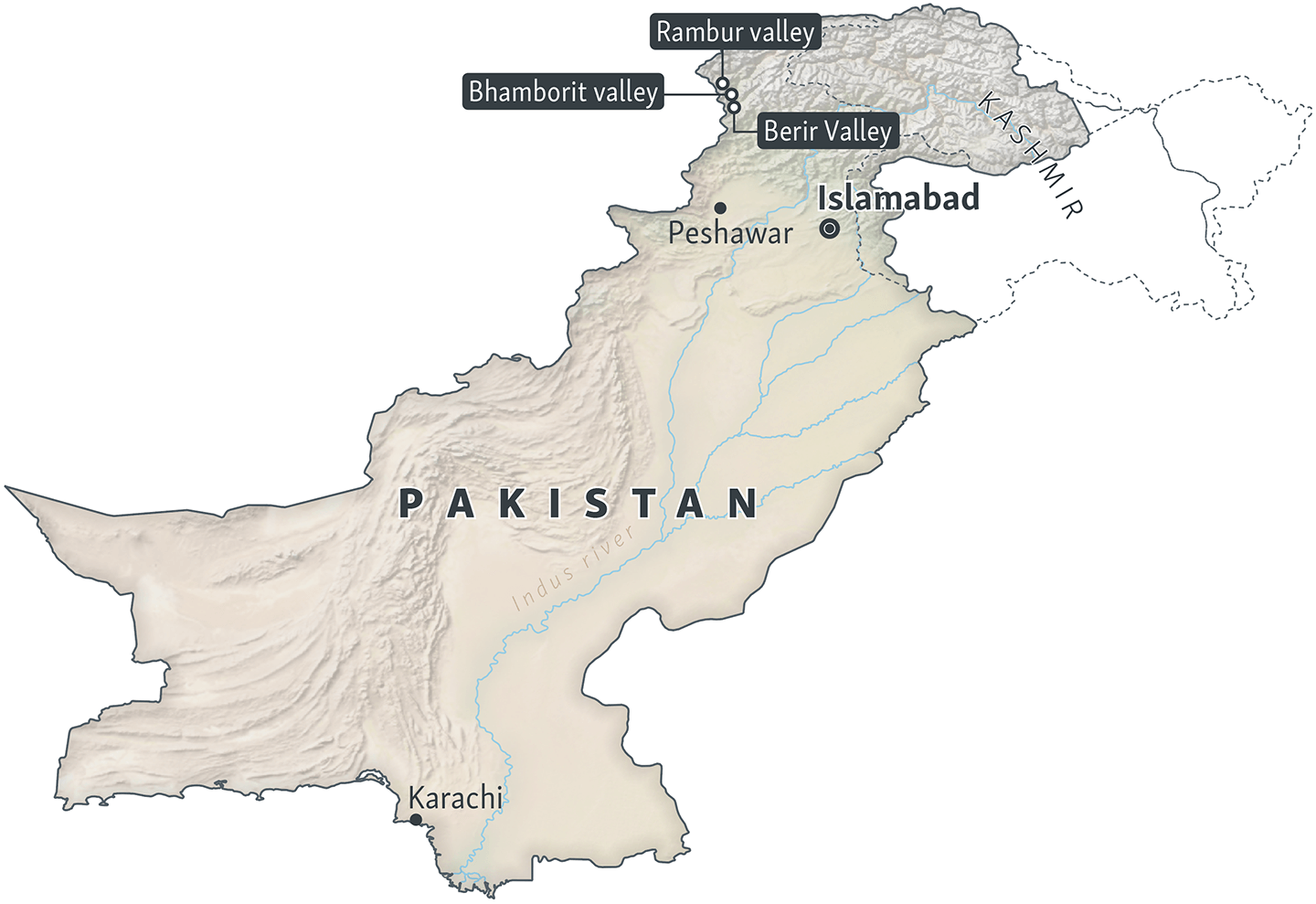
“When I go inside to offer my prayer, he waits outside on the mosque stairs until I come out,” his grandfather, Bilal Shah, told RFE/RL in an interview in this hillside village in Bhamborit, one of three idyllic valleys in the Chitral district of Pakistan’s northwestern Khyber Pakhtunkhwa Province.
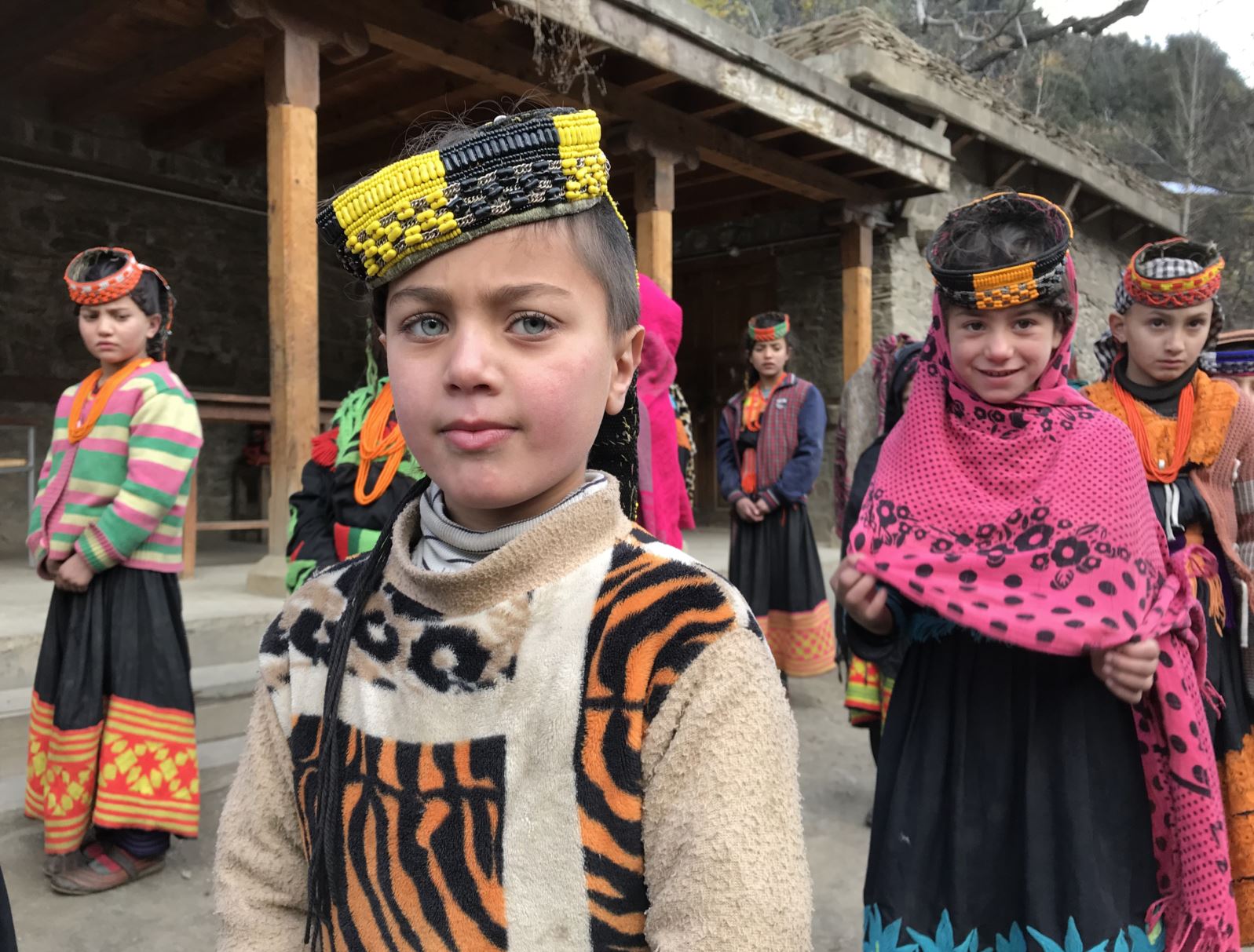
Naveed is a member of the Kalash, a pagan community known for their fair skin that has long inhabited this area near the border with Afghanistan. The Kalash people, many of whom believe they are the descendants of the armies of Alexander the Great, have held on to their religious beliefs and colorful rituals for centuries, even as a sea of Islam has encircled them.
But the unique traditions of the Kalash are coming under mounting cultural pressure as the pace of conversions to Islam accelerates within Pakistan’s smallest ethnoreligious community. The Kalash population currently numbers between 3,000-4,000, and locals estimate that some 300 of their members have converted to Islam over the past three years, The Washington Post reported in November. Some local reports, however, have said the figure is not that high.
Kalash children are not taught about their own culture, religion, or history in schools, where most of the teachers are Muslims. Calls to prayer now ring out five times a day from 18 mosques across the valley, the result of a recent boom in the construction of Muslim houses of worship. The swelling influence of Islam in the area has alarmed many in the Kalash community who worry that their traditional way of life is slipping away before their eyes.
And it is stoking tensions within families as well. Naveed, the nine-year-old who accompanies his grandfather Bilal Shah to mosque, is the son of Iqbal Shah, 33, who remains committed to carrying on the traditions of his Kalash ancestors. Bilal wants his grandson to grow up as a Muslim.
“He loves me. He stays most of the time with me rather than with his father,” said Bilal, a Kalash who converted to Islam 20 years ago.
Iqbal confronts Bilal whenever the grandfather raises the issue of the boy’s potential conversion.
“He is my son. I have the right to decide his future, or he himself has the right,” Iqbal said while sitting around a cast-iron wood oven in the guestroom of the family’s single-story house. Asked by this reporter whose side Naveed takes in the matter, Iqbal translated the question for his son. Dressed in his school uniform, Naveed gave a shy smile as he raised his index finger and pointed it toward his grandfather.
‘Foundation For Conversion’
Tense relations between the Kalash and their Muslim neighbors are not new. The Kalash previously inhabited what is now the Nuristan Province in Afghanistan, just on the other side of the border with Pakistan. The area where they lived was at times called Kafiristan, or “Land of the Infidels” — a reference to their paganism. But in the late 19th century, the ruler of Afghanistan, Abdur Rahman Khan, launched a violent campaign against the Kalash to convert its members to Islam by force. Known as the “Iron Amir,” he proceeded to name the area Nuristan, or the “Land of Celestial Light.”

Many Kalash took refuge in the remote valleys of Bhamborit, Berir, and Rambur, in what is now Pakistan, where they continue to safeguard their religion and ethnic identity to this day. The local Muslims previously referred to the “infidels” of Nuristan as “red Kafirs,” who feature in the Ruyard Kipling story The Man Who Would Be King. Those who found shelter in the three valleys, meanwhile, were called “black Kafirs.” The moniker, which the Kalash abhor, is likely rooted in the black dresses that were worn by the women of the community. The word “Kalash” means “people wearing black clothes.”
The origins of the Kalash remain shrouded in mystery. Many Kalash believe their ancestors came to the area from a distant place known as Tsiyam, which Kalash priests and bards invoke in songs about their ancestors during colorful and exuberant festivals. Tsiyam is thought to be an area in southeast Asia, though no one knows precisely where — or what — it was.

Others in the community trace their ancestry to Alexander the Great’s armies that invaded this region in the 4th century B.C. A study by a team of geneticists published in 2014 found that the Kalash had portions of DNA from an ancient European population, suggesting a possible link to Alexander’s armies, The New York Times reported.
While recounting epics about their ancestors during festivals, Kalash elders speak of a man they believe was a general of Alexander’s, called Shalakash, who settled in the region. Historians believe the name refers to Seleucus Nicator, who indeed served as a general under Alexander and ruled over this region after the Greek armies left.
A genetic link between the ancient Greeks and the modern-day Kalash remains disputed. Some Pakistani anthropologists say they have found evidence of a Kalash presence in the area well before the arrival of Greek armies in the region. And a 2015 study by Pakistani, Italian, and British scientists found that the Kalash share genetic likeness to Paleolithic Siberian hunter-gatherers “and might represent an extremely drifted ancient northern Eurasian population that also contributed to European and Near Eastern ancestry.”
“The genetically isolated Kalash might be seen as descendants of the earliest migrants that took a route into Afghanistan and Pakistan and are most likely present-day genetically drifted representatives of these ancient northern Eurasians,” the researchers said, adding that their study did not find support of a Kalash link to Alexander’s soldiers.
The names of the Kalash gods and goddesses, however, resemble those of the Greeks. And many words in their language resemble Greek as well. Their language, called Kalash or Kalasha, is a Dardic tongue that is in a subgroup of Indo-Aryan languages spoken in the area. It has no script and the traditional Kalash stories are passed down orally from generation to generation.

There is no separate curriculum for Kalash children in local schools that would teach them the language and traditions of their people. But they are taught Islamic theology and Koranic scripture alongside Muslim students.

Kalash schoolchildren sitting behind their Muslim peers during lessons on the Koran and Islamic studies. Locals say such instruction is laying the groundwork for future conversions to Islam among the Kalash community.
“This lays the foundation for the conversion of the Kalash at this stage,” a teacher, who spoke on condition of anonymity, told RFE/RL during a visit to a school in Karakal, which has a population of around 350.

Wazir Zada, who represents the Kalash community in the provincial legislature, said he intends to raise the issue in the assembly. "I hope we will be able to introduce the teaching of Kalash culture and religion in schools," Zada, 35, told RFE/RL.
‘Abandoning’ A Lifestyle
Bilal Shah, who hopes his grandson Naveed becomes a Muslim, says he converted 20 years ago after attending a gathering of Tablighi, the missionaries who travel around the country preaching a conservative, apolitical, and pacifist version of Islam. “I was impressed by the presence of religious scholars and, thanks be to God, entered into the fold of Islam,” he told RFE/RL.
As he spoke, Bilal guided this reporter through a cemetery just behind his house to the grave of his mother, who died as a Kalash. Those who convert to Islam here opt to be buried in Muslim cemeteries.
Pakistani authorities have now banned Tablighi from entering the valley following a clash between members of the Kalash and Muslim communities over the conversion of a Kalash girl to Islam in 2016. But the Muslim missionary work continues within the Kalash community and families like the Shahs: With their relatively liberal and tolerant approach toward religion, they do not expel or otherwise pressure a family member who converts to Islam or adopts another faith.
“Once someone converts in a family or neighborhood, he or she becomes a local source of inspiration and influences the others’ beliefs to attract them to Islam,” Iqbal Shah, the son of Bilal and father of Naveed, told RFE/RL.Iqbal’s parents, sister, and one brother have already adopted Islam, while his other brother continues to adhere to the traditions of the Kalash. This coexistence has a negligible impact on the routines of the family’s daily life, though occasionally the choice of food or drink can be a source of annoyance. Bilal, for example, does not approve when Iqbal partakes of the locally produced wine — another cultural tradition that the Kalash share with the ancient Greeks.
Many locals say that educated young women here more frequently convert to Islam and marry outside the Kalash community than their less-educated peers. Some elope with Muslim men from cities, and parents and relatives say the temptations of modern life and technology play a role in these marital decisions — and are gradually damaging their culture.The Kalash subsist largely on farming, growing crops such as maize, and raising livestock for milk, cheese, and meat. Women toil in the fields and collect wood, while others work as masons and artisans. Otherwise the employment opportunities in the area are sparse beyond working as teachers, security or border guards, or at local guest houses that operate mainly during the festivals.
“When young people get an education, they seek jobs in cities far away from the valley and don’t return here for months and even years,” Shahzada Khan, a 55-year-old hotelier from Krakal, told RFE/RL. “Their detachment keeps them away from their culture and religion, and they totally abandon this lifestyle in due time.”
Shaira, a 27-year-old Krakal resident, is one of the educated young women here who says she wants to remain within the Kalash community and uphold its centuries-old traditions. Shaira, who holds a master’s degree in international relations from the University of Peshawar, says her older sister eloped with a young Muslim man from the southeastern Sindh Province a year ago. The family has only spoken with the sister periodically. The young man’s family strictly follows Islam and does not want her interacting with “infidels,” Shaira said, adding that she herself wants to marry a Kalash man.

Shaira, a young Kalash woman, dancing with young men during celebrations of Chomas
“My culture gives me the freedom to choose my life partner, and if I am not happy with him, I have the right to choose another man. No other religion or culture gives me that choice.”

The Kalash are distinct from the rest of Pakistan not only in terms of their religion, colorful dresses, and comparatively fair skin, but also with their liberal approach to marriage. A woman is free to marry for love, and if she sours on her husband, she is allowed to divorce him and even elope with another. The only condition is that the new husband must pay a dowry to the previous one that is double the original.
In most of rural Pakistan, Muslim women largely remain behind the four walls of their homes, cover their faces in streets and markets, and are not allowed to speak to men other than their close family members. Kalash women freely interact with local and visiting men.
In rural areas, young Muslim couples who elope are sometimes targeted in so-called “honor killings” — a practice putatively aimed at preserving a family’s honor that Pakistani lawmakers have tried to stem by introducing harsher punishments for these crimes.
“My culture gives me the freedom to choose my life partner, and if I am not happy with him, I have the right to choose another man. No other religion or culture gives me that choice,” Shaira, who proudly wears traditional Kalash robes and dresses, told RFE/RL.
While the Kalash are highly tolerant of other religions, the community’s elders have strictly prohibited the reentry into their own by those who have converted to Islam. That move was driven in part to protect the converts from potential reprisals for leaving Islam. Unlike blasphemy, apostasy is not punishable by death under Pakistani law, but a 2013 Pew Research Center survey found that 62 percent of Muslims in Pakistan are in favor of capital punishment for those who leave Islam.
The crime rate is almost zero in the area, where the locals can enter one another’s homes without a knock. But in 2016, violent clashes — which prompted the ban on Tablighi in the area — erupted between Muslims and Kalash in the Bhamborit Valley after rumors that a 14-year-old girl had backtracked on her conversion to Islam and returned to the Kalash religion.
The girl, named Rina, later claimed at a news conference alongside Kalash and Muslim leaders that the violence was the result of confusion over her choice of garb — and that she had not given up Islam.
“I wore the robe after a Muslim relative told me I was still a minor and could dress up in our traditional attire. She told me I could revert to Muslim shalwar-kameez dress once I had grown up, so I wore the dress,” she was quoted by the BBC as saying. Attempts to locate Rina were unsuccessful, and locals declined to give details about her whereabouts.
A House Divided
Kalash men and women mingle at the flurry of festivals they stage throughout the year, where the feasts are lavish and the wine flows. Singing and dancing are at the heart of these festivals celebrating harvests, flowers, each of the four seasons, and the weather. At each event, the Kalash pay tribute to their gods and goddesses — including by sacrificing goats — as music from flutes and drums fills the air. The local Kalash museum features some other types of traditional instruments, but almost no one knows how to play them.
The mood is even celebratory when someone dies. The Kalash take the body to the temple, known as Jastkan, and invite community members from all three valleys to dance and sing around the recently deceased for two days. The burial is marked with a large feast for which dozens of goats are sacrificed to feed the guests, who use song to praise the dead.
The final annual festival each year, a week-long celebration, known as Chomas in the mountainous world of the Kalash, begins on December 16. Like other festivals throughout the year, it features song and dance and animal sacrifice. During Chomas, the Kalash ask their deities to protect them from a cold and snowy winter.
One unique feature of this winter festival is that the Kalash and Muslims are segregated for a three-day period during the festivities. The Kalash living in the predominantly Muslim part of the village leave their homes to join their fellow pagans for the festivities, while the Muslims in the Kalash section voluntarily leave their homes as well.
Iqbal Shah and his family live in the home of his father, Bilal, which stands in the Muslim section of Krakal some 50 meters from the mosque that Bilal takes his adoring grandson Naveed to. On the first day of the most recent winter festivities, Iqbal prepared to depart the home with his wife and family.
“This is now becoming pretty common in these valleys, because each family has [converted] Muslim members,” Iqbal said.
Just before Iqbal left the home with his wife and four children, Bilal kissed Naveed on both cheeks and bid farewell to half of his family.
“This was not happening a few decades ago,” Bilal said.
Bilal added that he prays that Allah will help other Kalash convert to Islam, and that such sendoffs “will not happen again.”
“I invite them to Islam,” Bilal said. “What else can I do? I can invite them and only Allah can guide them to the right path.”

https://www.rferl.org/a/pakistans-pagan-valley/29867489.html
Bilawal Bhutto Zardari condemns government for implicating PPP workers in fake cases for protesting against irrational and unprecedented increase in POL prices

Pakistan People’s Party (PPP) Chairman, Bilawal Bhutto Zardari has condemned the government for implicating PPP workers (Jiyala) in fake cases for protesting against irrational and unprecedented increase in POL prices. The increase would impact every section of life and dearness and poverty graph would further escalate to skies.

In a statement, the PPP Chairman said that the PTI government has through authoritarian and tyrant actions proved it is a shadow government of dictators. It looks the government has finalised preparations for inflicting state atrocities onto the protests ensuing against unbearable inflation in the country.


He said the absconder and unmanned puppet Prime Minister is now fully bent upon depriving the people of their just democratic right of protest.The PPP Chairman said that the government drowned in sheer vengeance and hate has also booked a late Jiyala in fake case.Bilawal Bhutto Zardari asked the ineligible PM that he should instead of implicating Jiyalas in fake cases, tender unconditional apology to the people on speaking lies.


The PPP Chairman demanded that all fake cases registered against Jiyalas in Multan, Lodhran, Dera Ghazi Khan and Bahawalpur should immediately be withdrawn.


https://mediacellppp.wordpress.com/2019/05/05/bilawal-bhutto-zardari-condemns-government-for-implicating-ppp-workers-in-fake-cases-for-protesting-against-irrational-and-unprecedented-increase-in-pol-prices/

PM has handed over Pakistan to ‘new East India Company’


Pakistan Muslim League-Nawaz (PML-N) Spokesperson Marriyum Aurangzeb, reacting to the appointment of IMF economist as the SBP Governor, has said that Prime Minister Imran Khan has handed over the country to a new East India Company.
In her reaction, Marriyum Aurangzeb on Sunday said that IMF will rule the SBP due to the appointment of Dr Reza Baqar as its governor.
She said that the Prime Minister handed over keys of national exchequer to IMF employee neglecting the high Pakistani officials which was matter of grave concern.
Being Governor SBP, Dr. Baqar will serve for IMF and will work for its interests instead of Pakistan, she added.
The spokesperson PML-N further stated that the PTI now don’t needs to go IMF as it has officially opened the office of IMF in Pakistan by appointing its economist as Governor SBP. The IMF was no free to do what it will desire, she added.
Marriyum Aurangzeb said that appointment of Reza Baqar was proof of the fact that IMF’s loans amendment and restructuring system was being introduced in Pakistan.

#Pakistan - ’آئی ایم ایف نئی ایسٹ انڈیا کمپنی ہے‘

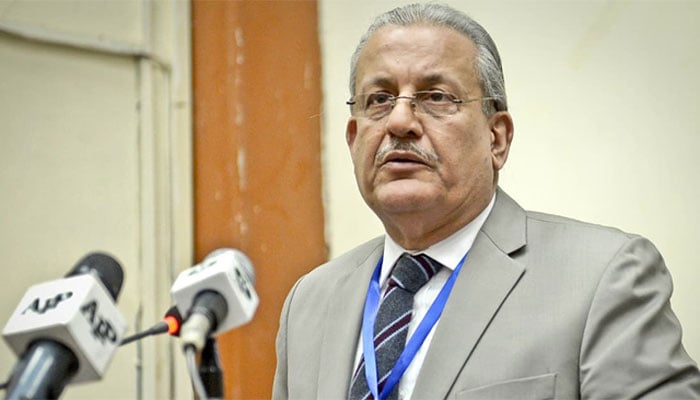
پیپلز پارٹی کے سینئر رہنما اور سابق چیئرمین سینیٹ سینیٹر رضا ربانی نے کہا ہے کہ آئی ایم ایف نئی ایسٹ انڈیا کمپنی ہے۔
رضا ربانی نے نئے گورنر اسٹیٹ بینک ڈاکٹر رضا باقر کی تعیناتی پر تبصرہ کرتے ہوئے کہا کہ آئی ایم ایف کے حاضر سروس ملازم کو گورنر اسٹیٹ بینک بنانا شرمناک اقدام ہے۔
انہوں نے کہا کہ حکومت کا یہ اقدام پاکستان کو عالمی مالیاتی سامراج کی نوآبادی بنانے کے مترادف ہے۔
رضا ربانی نے مزید کہا کہ بیل آوٹ پیکیج دینے والے ادارے کےملازم کو گورنر اسٹیٹ بینک بنانا مفادات کا ٹکراو ہے۔
ان کا کہنا تھا کہ واضح ہے کہ مالیاتی ادارے کے ملازم کی وفاداری پاکستان کے ساتھ نہیں ہو گی،مشیر خزانہ اور گورنر اسٹیٹ بینک آئی ایم ایف کے بندے ہیں۔
پی پی سینیٹر نے یہ بھی کہا کہ یہ بات شرمناک ہے کہ صوبائی وزراء خزانہ کو آئی ایم ایف کے درمیانی درجے کے ملازم کے سامنے پیش کیا گیا اور وزراء کو اچھا رویہ برتنے کا کہا گیا، ماضی میں اس حد تک کبھی قبضہ نہیں کیا گیا۔
انہوں نےکہا کہ کبھی کسی پاکستانی حکومت نے یہ دعوی بھی نہیں کیا تھا کہ آف شور تیل اور گیس کے ذخائر دریافت ہو سکتے ہیں اور لوٹنے والے پہلے ہی آ گئے آئی ایم ایف کے ہاتھوں فروخت کرکے پاکستان کی مالی خود مختاری اور قومی سلامتی پر سمجھوتہ کیا گیا ہے۔

Saturday, May 4, 2019

Journalists under threat from state and non-state actors: Bilawal

Pakistan People’s Party (PPP) Chairman Bilawal Bhutto Zardari on Friday said that an ‘undeclared censorship’ is stifling the freedom of expression in Pakistan, and journalists are coming increasingly under threat from state and non-state actors, a private TV channel reported.
“There is an undeclared censorship in Pakistan,” he said during his speech at the Karachi Press Club to mark the World Press Freedom Day. “The space for democratic rights has dangerously shrunk in Pakistan. The International Press Freedom Day this year has been observed in Pakistan when the media and the right to freedom of expression are under siege,” he said.
“Journalists are under attack both from state and non-state actors. Of the 26 journalists murdered between 2013 and 2018, only 16 cases proceeded to courts, trials were only completed in six cases and only one conviction was awarded by a lower court. But none were punished as the sole conviction was also overturned,” he observed.
There is an undeclared censorship in Pakistan: Bilawal
Bilawal stressed the importance of the freedom of expression, even terming it ‘the mother of all human rights’. “Journalists and media persons as human rights defenders suffer the most when the freedom of expression is stifled,” he said. “After the right to life, the most important right is the right of expression and the freedom of association because all other rights cannot even be articulated without it,” he remarked.
The PPP chairman spoke of shrinking space for dissent in the country, saying, “Lately, this right has come under increasing threat. Some people hold guns, others carry religious text in order to stifle and dissent and coerce free speech. Rights in the country are shrinking generally and journalists have been killed in the line of duty with impunity.”
“Until recently, the freedom of expression was stifled secretly like ban on some TV channels or newspapers in some areas of the country or by manipulating advertisements to force the media to tow a certain line. These tactics were also referred to in the recent Supreme Court verdict in the Faizabad Dharna case,” he said. “Now there is open talk of bringing all media under one uniform body. Not long ago the government announced a crackdown on social media as well. The impunity of crimes against journalists and human rights defenders is a manifestation of the state curbing free expression and dissent,” he said.
Bilawal urged the government to legislate with a view to providing safety and security to journalists, and condemned the use of ‘economic strangulation’ as a new tool to curb the freedom of expression. “The PPP rejects the move to set up a super regulatory body over all media in Pakistan as well as the manner in which the Prevention of Electronic Crime Act (PECA) 2016 has been misapplied to stifle dissent, constructive criticism and alternative narratives,” he concluded.

India & Pakistan have established ‘English rule without the Englishman’


By enforcing colonial-era laws & using technology for illiberal causes, India and Pakistan are no different from the British when it comes to quashing dissent.

Last month, India and Pakistan marked the centenary of an atrocity in which the British army opened fire on thousands of unarmed civilians in Jallianwala Bagh, a walled public garden in the Sikh holy city of Amritsar. The victims — a mixed crowd of Hindus, Muslims and Sikhs — had gathered to protest against the Rowlatt Act, a draconian legislation devised by a British judge that allowed British officials to detain Indians without trial and to arbitrarily restrict speech, writing and movement.
The unprovoked killing of hundreds of demonstrators effectively launched the anti-imperialist struggle in British-ruled India, provoking Muhammad Ali Jinnah, father of the Pakistani nation, as well as “Mahatma” Gandhi, father of the Indian nation, into unstinting opposition to the British.
Predictably, the 100th anniversary of the massacre elicited much righteous self-regard among Indian and Pakistani politicians. Indian Prime Minister Narendra Modi took time off from his hectic election campaign to tweet about the “martyrs” of Amritsar: “Their memory,” he wrote, “inspires us to work even harder to build an India they would be proud of.” Fawad Chaudhry, until recently Pakistan’s information minister, demanded an apology from Britain.
But anti-imperialist posturing cannot disguise the fact that India and Pakistan continue to expand the repertoire of legal repression they inherited from the British.
Quasi-Rowlatt acts are on the law books in both countries. In Pakistan, Cyril Almeida, an editor and columnist at Dawn, one of Pakistan’s most respected English-language dailies, is among several figures accused of treason and barred from leaving the country.
Many journalists in Pakistan were killed or “disappeared” by the country’s security establishment during decades of misrule by military despots and venal civilians. The election of Imran Khan, a former sportsperson, as Pakistan’s prime minister last year was seen by many as inaugurating a “Naya (New) Pakistan.” Instead, Khan has presided over a sweeping crackdown on the media.
His information minister has been busy devising a drastic regime of media regulation in Pakistan. Officials have blocked television networks and the distribution of newspapers, and forced media companies to fire journalists deemed too critical of authorities.
As Almeida, who was recently named the International Press Institute’s 71st World Press Freedom Hero, puts it, “Press freedom in Pakistan is under severe and sustained attack, without precedent during eras of civilian governments and the worst in the country since an oppressive military dictatorship in the 1980s.”
Conditions for journalists are not much better in neighboring India. In the latest global press freedom index compiled by Reporters Without Borders, the world’s largest democracy ranks 140th, just two spots above Pakistan and 32 places below Kuwait.
Newsgatherers and opinion-makers in India risk assassination, arbitrary detention and legal harassment, not to mention vicious and extremely well-organized internet trolls. The journalist Rana Ayyub, recently featured in Time magazine’s global list of 10 threatened journalists, is one of the many female public figures in India hounded by rape threats and fake pornographic videos.
Moreover, the colonial-era sedition law, which was once unleashed on freedom fighters, is used to torment a wide range of figures from the novelist Arundhati Roy to, recently, a former lawmaker who had praised Pakistan in a Facebook post for its tradition of hospitality.
In its election manifesto, India’s opposition Congress Party has promised to repeal the law. This sensible proposal has incited vituperative charges of treason from the ruling Bharatiya Janata Party.
Contrary to what Modi claims, those martyred in Amritsar would not be proud of India today — a country in which even innocent children are detained preventively for prolonged periods, as a United Nations report on the human-rights situation in Kashmir documented last year.
Indeed, the methods India and Pakistan use to govern their border states, from Balochistan in the west to Nagaland in the east, include rape and torture as well as preventive and indefinite detention. They arguably exceed, in their intensity and scope, as well as the culture of impunity they foster, what the martyrs of Jallianwala Bagh were protesting against.
Denouncing the Rowlatt Act in 1919, Jinnah said that “a Government that passes or sanctions such laws in a time of peace forfeits its claim to be called a civilized Government.” By this measure, neither the Indian nor the Pakistani government today can be called civilized.
Deploying British-inspired laws as a blunderbuss, while harnessing Silicon Valley’s innovations to illiberal causes, the ruling classes of India and Pakistan have established what Gandhi explicitly warned his compatriots against: “English rule without the Englishman.”
It is no doubt easy and gratifying to point to the atrocities of Western imperialism. But any principled anti-imperialist and democrat today can only feel anguish and shame over how, a century after the British army gunned down Rowlatt’s critics in Amritsar, his authoritarian mindset still rules South Asia.

European Union threatens to suspend subsidies to Pakistan over persecution of religious minorities

The European Union (EU) has threatened Pakistan that it will suspend all subsidies and trade preferences to Islamabad over ‘persecution of religious minorities’. 51-members of the European Parliament in a letter to the Pakistani Prime Minister Imran Khan drew concerns to religious prejudices against the minorities.
“Over the last few years, religious extremist groups, often with the support of the Pakistani State have grown in influence, further generating religious prejudices against minorities. Concomitantly, instances of attacks against minorities, their places of worship etc. have also increased year upon year,” the letter said. The European Parliament members reminded Islamic Republic of Pakistan that the oppression of religious minorities violated the United Nations treaty on the Universal Declaration of Human Rights (UDHR). The UDHR is the foundation for the International Convent on Civil and Political Rights (ICCPR), which is a binding UN human rights agreement. “We would be compelled to suspend all subsidies and trade preferences until the effective implementation of the Convention could be assured by the Government of Pakistan.”
Earlier Pakistani governments also share responsibility for contributing and encouraging ‘acts of violence against minorities by radical Islamic groups. The world was drawn to Asia Bibi’s case, a Christian woman who was wrongfully persecuted under the draconian blasphemy law in 2010. The Supreme Court quashed her sentence in October 2018. This led to violent protests by religious hardliners who support strong blasphemy laws and liberal sections of the society urged for her release.

Pakistan sacks key member of economic team amid IMF talks

Senior Pakistani officials say the government has removed the head of the country's central bank, a key member of a team currently in talks with the IMF over an $8 billion bailout package.
The officials said Saturday that Tariq Bajwa, governor of the State Bank of Pakistan, resigned the previous evening. The officials spoke on condition of anonymity because they were not authorized to speak to media on the record. Bajwa has confirmed his resignation to Pakistani media.
The officials also said the government plans to remove Jahanzeb Khan, chairman of the Federal Board of Revenue, a tax collection body.
Both officials were major figures in the government team holding the final round of talks with the IMF in Islamabad. A deal is expected to be signed later this month.

#PPP - #Pakistan - #EndChildMarriage Bilawal Bhutto demands ban on underage marriages across country

Pakistan Peoples Party (PPP) Chairman Bilawal Bhutto Zardari on Saturday has demanded to ban underage marriages across the country. 
In a Twitter post, the leader said, “UAE marriage age is 18, Indonesia is 18 and Turkey is also 18. Are they not Muslim countries?”

UAE marriage age is 18, Indonesia is 18 & Turkey is also 18. Are they not Muslim countries? In Sindh where marriage age is 18, we saw how law stopped an adult marrying a 10 year old! Every 20 minutes a girl dies in Pakistan as a result of underage pregnancy.
2,926 people are talking about this

In Sindh, where marriage age is 18, we saw how law stopped an adult marrying a 10-year-old, he added. 

Bilawal further told that after every 20 minutes, a girl dies in Pakistan as a result of underage pregnancy. 

Friday, May 3, 2019

Video - Trevor Noah - Why Are Black Women Voters Leaning Toward Joe Biden? | The Daily Show

Video Report - What can be done about the refugees trapped in Libya's fighting?

Video - Congressman brings chicken to mock Barr’s no-show

Video - Jake Tapper on Trump's Russia tweet: It's a lie

Video Report - Ex-intel chief: Trump and Putin are in a state of denial

European Parliament's Ultimatum To Pakistan On Alleged Rights Violations


European Parliament threatens Pakistan that if immediate steps are not taken to dismantle the bodies targeting minorities, it would be compelled to suspend all subsidies and trade preferences given to the country.
In a stern letter to Pakistan Prime Minister Imran Khan, 51 members of the European Parliament, have expressed concern and sought and assurance from him that alleged persecution of religious minorities must stop immediately.The letter, in fact, threatens Pakistan that if immediate steps are not taken to dismantle the bodies, which are targeting minorities, the European Commission would be compelled to suspend all subsidies and trade preferences given to Pakistan.
India is seeing this move in a positive light as the government is doing all it can to alienate Pakistan internationally. "It's a good move specially because the letter also talks about forcible conversion of Hindus. India also has been raising this issue for a long time now," a senior government official told NDTV.
The letter points out that women from minority groups are particularly vulnerable to abuse. "A report by the Movement for Solidarity and Peace in Pakistan found that at least 1000 girls belonging to Christian and Hindu communities, often minors, are kidnapped and forced to marry Muslim men every year," said the letter sent to Pakistan PM on April 30.
But what is important for India is the fact that the European Parliament now has acknowledged the growing influence of religious extremist groups, often with the support of the Pakistan government.
Recently India had sent a note verbale to Pakistan Foreign Office, after reports that two minor Hindu girls were abducted, forcibly converted to Islam and married off to Muslim men.The letter further highlighted that today's Pakistan is far removed from being the country that its founding father, Muhammad Ali Jinnah, had envisaged.
"Jinnah had always insisted that Pakistan would be a Muslim majority state, where people from all religions, whether Christians, Hindus, Sikhs, Buddhists, Ahmadis or Shias, would be treated equally. Over the last seven decades, successive governments in Pakistan have contributed to implementing discriminatory systems that have resulted in political, economic and social persecution of religious minorities, which have encouraged acts of violence against them by Radical Islamic Groups," the letter said.

Are the PTI-led govt's people, priorities and actions a throwback to the Musharraf era?


The Pakistan Tehreek-i-Insaf came into power in July 2018 with promises of bringing out a 'Naya' Pakistan.
Increasingly, however, the people it has chosen to elevate to its cabinet, as well as its priorities and actions, seem to hark back to the military dispensation of Gen Pervez Musharraf.
Eos casts an eye at the headlines then and now...

Centralisation of power

Gen Musharraf was all about centralisation of power even as he purported to be about devolving power to the grassroots.
This was inherent in his dispensation: a dictator who came to power on the back of a military coup is not about sharing power.
As Chief of Army Staff as well as the Chief Executive of the country and, subsequently, the president after a manipulated referendum, Gen Musharraf controlled all decision-making in the country.
Even after the political engineering of the 2002 elections which brought in a civilian parliamentary façade for the military government, he reinstituted the Zia-era Article 58-2b in the constitution, allowing the president to dissolve the national and provincial assemblies.
There have been increasing calls in recent times both for a rollback of the 18th Amendment – which devolved more powers to the provinces – and for a presidential form of government.
Ironically, these balloons are being floated during the tenure of an elected government that strenuously denies its critics claims that it has come to power on the back of political engineering by the military.
But rather than being inherent in the form of the dispensation, this attempt to concentrate more power at the federal level has to do with a perceived lack of power.
A major component of dissatisfaction is the lack of resources at the federal level, particularly for the military, stemming from a greater portion of the divisible pool of revenue going to the provinces.
The calls to roll back the 18th Amendment which codified the new National Finance Commission (NFC) Award have mainly to do with this.
An inability to undo the constitutional amendment — because of a lack of parliamentary numbers — has led to the proposal being floated for a presidential system, which could hypothetically bypass such constitutional blockages.
The aim, however, is the same: a desire to concentrate power in Islamabad.


Economy in ill-health

The best thing that could have happened for General Pervez Musharraf is war — not ours but someone else’s. And that’s because war tends to revive an ailing economy, increase production in factories, and provide some employment, too.
While the Americans were initially apprehensive of Gen Musharraf — former American president Bill Clinton even addressed the Pakistani people on state television to underline the benefits of democracy — General Musharraf was more than a willing partner in George W Bush’s war on terror.
Significant money came in, to the extent that Pakistan did not borrow any money from the IMF for a few years.
That said, the shape and size of the economy remained haphazard. The IMF did come in, bringing with it a demand to privatise state entities and widen the tax net. Installed at the helm on the Pakistani side were men who had worked for international financial institutions before: Shaukat Aziz, Ishrat Hussain and Abdul Hafeez Sheikh.
The latter two have returned to the picture as the economy presents an all too familiar picture once again.
The pinch of inflation felt by common citizens has been intense. More intense than the last five years, and perhaps, more severe than the time Pakistan was fighting an internal war on terror. Money has simply disappeared from the market.
As former finance minister Asad Umer led delegations to meet IMF officials, it became very clear that even the IMF had run out of options to help Pakistan.
Most of what could have been cut from the development budget had already been cut, much of what could easily be privatised has already been privatised. Most of what that could be saved from public spending was being saved. And whatever money that could be eked out of taxpayers has been eked out.
The incumbent government is not the first to rely on Ishrat Hussain and Abdul Hafeez Sheikh, and it seems it won’t be the last either.


Accountability and the opposition

When he first took over, much like all previous military dictators before him, Gen Musharraf promised a clean start and taking to task all those who had allegedly looted the country.
The first days of Gen Musharraf’s dispensation saw the establishment of the National Accountability Bureau (NAB) which was entrusted with arresting and prosecuting white collar criminals in government and with bargaining with them for the return of their loot.
As political exigencies came to the fore, and especially as Gen Musharraf sought legitimacy through creating a political party and parliamentary allies, NAB was accused of using the threat of accountability as a tool for political ends.
Those that played ball were spared NAB’s hand, while those that didn’t felt the full force of its draconian laws.
Much of the same criticism is being levied by the current opposition.
While major opposition figures such as the Sharif brothers and their families as well as former president Asif Ali Zardari and his family face the courts for their alleged crimes, many among the current dispensation also accused of shady financial dealings – including the PM’s own sister and some among his closest circle — seem to be escaping NAB’s attention.
The overwhelming feeling is that the accountability drive, while laudable in theory, is once again being selectively used for political ends.