Tuesday, September 18, 2018

Music Video - Camila Cabello - Never Be the Same

Video - Anna Kendrick - Dark Secrets and Thrilling Twists in “A Simple Favor” | The Daily Show

Video Report - #China announces huge retaliatory tariffs on products from US

#YemenWar - 5.2 million children at famine risk in Yemen: charity

More than five million children are at risk of famine in Yemen as the ongoing war causes food and fuel prices to soar across the country, charity Save the Children warned Wednesday.
Disruption to supplies coming through the embattled Red Sea port of Hodeida could "cause starvation on an unprecedented scale," the British based NGO said in a new report.
Save the Children said an extra one million children now risk falling into famine as prices of food and transportation rise, bringing the total to 5.2 million.
Any type of closure at the port "would put the lives of hundreds of thousands of children in immediate danger while pushing millions more into famine," it added.
Impoverished Yemen has been mired in deadly conflict between Shiite Huthi rebels and troops loyal to President Abedrabbo Mansour Hadi since 2014.
A Saudi-led alliance intervened in 2015 in a bid to bolster the president, accusing Iran of backing the Huthis, but nearly 10,000 people have since been killed.
Deadly clashes resumed around the Huthi-held port city of Hodeida following the collapse of talks in Geneva earlier this month.
"Millions of children don't know when or if their next meal will come," said Helle Thorning-Schmidt, CEO of Save the Children International.
"In one hospital I visited in north Yemen, the babies were too weak to cry, their bodies exhausted by hunger.
"This war risks killing an entire generation of Yemen's children who face multiple threats, from bombs to hunger to preventable diseases like cholera," she added.
The United Nations has warned that any major fighting in Hodeida could halt food distributions to eight million Yemenis dependent on them for survival.
Saudi Arabia and its allies accuse the Huthi rebels of smuggling arms from Iran through Hodeida and has imposed a partial blockade on the port.
The Huthis and Iran both deny the charges.
https://www.france24.com/en/20180919-52-million-children-famine-risk-yemen-charity

SAUDI FORCES ATTACK MOHARRAM AZADARI TENTS IN SHIA MAJORITY QATIF REGION

Reports coming out of Saudi Arabia say the regime’s troops have attacked tents set up in the Shia-populated Qatif region in preparation for the mourning rituals during the lunar month of Muharram in which Shia Muslims commemorate the great Martyrs of Karbala and Imam Hussain (AS).

Since the beginning of Muharram on Tuesday, Saudi forces have torn down at least 20 tents in Qatif, activists said on online social media networks.
They have also been removing Shia signs under the pretext of ridding the region of what they call “visual pollution.”
Social media users shared photos of the aftermath of the Saudi raids.
Shia Muslims observe Muharram, which marks the martyrdom anniversary of Imam Hussein (PBUH), the third Imam of Shia Muslims and the grandson of Prophet Muhammad (PBUH).
Imam Hussein and his 72 companions, were martyred in the Battle of Karbala by the army of the tyrant of the time, the Umayyad caliph, Yazid I, in 680 AD.
Qatif, situated in Saudi Arabia’s Eastern Province, has witnessed anti-regime protests since 2011, with demonstrators demanding free speech, release of political prisoners, and an end to economic and religious discrimination.
Riyadh has suppressed pro-democracy rallies, but they have intensified since January 2016 when Saudi Arabia executed respected Shia cleric Sheikh Nimr al-Nimr.

http://www.shiitenews.org/index.php/saudi-arab/item/35616-saudi-forces-attack-moharram-azadari-tents-in-shia-majority-qatif-region

Punjabi Music Video - kuriyan lahore diyan

Punjabi Music Video - LOKO WAY LOCO ISS MUNDAY NOON ROKO...Noor Jahan

Punjabi Music Video - Sanu Neher Wale

Punjabi Music Video - Noor Jahan - Jadon Holi Jai lenda mera naam

Punjabi Music Video - Sayyo Ni Mera Mahi Mere Bhaag Jagawan Aa Geya

#Pakistan - Provinces have objections on construction of Kala Bagh Dam: Bilawal Bhutto

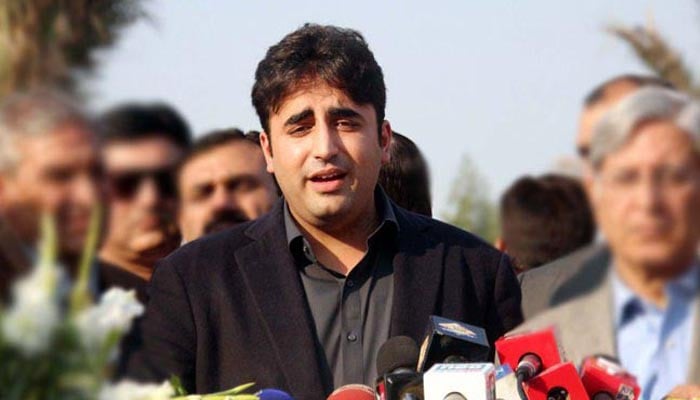
Chairman Pakistan Peoples Party Bilawal Bhutto said that provinces have objections over the construction of Kala Bagh Dam.


 After joint session of Parliament he informed that provinces have objections on the construction of Kala Bagh Dam.

http://www.thesindhtimes.com/pak/provinces-objections-construction-kala-bagh-dam-bilawal-bhutto/

#Pakistan - #PPP rejects gas price hike

Former Leader of Opposition in Senate, Senator Sherry Rehman, expressed her concern on the floor of the House over the government’s decision to increase natural gas prices by 143%, saying, “This is a dangerous decision coming from a party who themselves opposed gas price hikes in the past. Considering how this will affect not only key industries but more importantly, the masses, I find it difficult to understand how the government felt like it could blatantly bypass the Parliament on a decision of this scale while both Houses were in session.” 

The Senator said, “The issue regarding how unsustainable the gas prices were has been brought up in past committees but PTI refused to listen. PTI was consistent in lashing out against the exact same move they pulled only a day before the mini-budget. Gas is a basic requirement and changing its price will have effects far and beyond. This is not a decision that the government can spring on its people overnight.” “The PPP rejects this move. The government must work towards providing relief to the people, not the opposite. 

A price hike this high cannot be done on a trial and error basis. Has the government reviewed their decision thoroughly? Have they considered the consequences and do they have a follow-through policy? If so, we demand that it be presented in Parliament,” the Vice-President PPPP added. “This is a cumulative result of incompetency across the board. We cannot afford to attempt solving a serious problem with an equally problematic solution. I hope that the government starts to respect the Parliament and its mandate going forward. Only then will we be able to frame policies that will have maximum positive outcome for the people and for our severely crippled economy,” concluded Rehman.

http://www.thesindhtimes.com/pak/ppp-rejects-gas-price-hike/

Pakistan's Imran Khan skirts issue of Afghan refugees' citizenship, Imran has a reputation for retracting his words


Memphis Barker
After political backlash prime minister appears to row back on passports for child refugees.


Imran Khan, Pakistan’s prime minister, has appeared to drop his promise to grant citizenship to hundreds of thousands of Afghan refugees living on the margins of Pakistani society.
On Sunday Khan announced that he would start work immediately to provide passports to the children of refugees born in the country. However, after a backlash from politicians and supporters of the country’s powerful military, he said on Tuesday that no decision had been made.
About 2.7 million Afghan refugees have crossed the border into Pakistan since the Soviet invasion in 1979. Without official documentation they are shut out of schools and employment. As many as 1.5 million children born to refugees in Pakistan are denied citizenship.
After a strong push-back, Khan said he had raised refugee citizenship “just to initiate a debate”. The founder of the Pakistan Tehreek-e-Insaf (PTI) party, which swept to power in July, has a reputation for retracting his words.
However, Khan reiterated his own desire to grant citizenship to Bengali and Afghan refugees as he addressed parliament before leaving on a trip to Saudi Arabia and asked ministers for their suggestions on the issue.
“I will keep asking what will happen to these human beings … if we don’t decide on their rights now, when will we decide?” he said.
Parliament will offer stiff resistance, though. The PTI holds a slim majority and Khan’s announcement on Sunday was condemned by politicians in Pakistan’s Sindh and Balochistan provinces, who fear the impact of enfranchising new voters.
One of Khan’s key coalition partners, the army-supporting chief minister of Balochistan, Jam Kamal, said Pakistan should not alter its policy of seeking to send refugees home. The military has long called for repatriation of Afghan refugees, blaming them for terrorist attacks.
Local journalists, whose work is often censored to avoid displeasing the armed forces, said their stories on Khan’s original speech had not been published.
Hajji Abdullah Shah, head of the Afghan refugees in Sindh, told the Guardian he was anxious about the change in tone. “We hope he will not take the light, he has shown to us, back,” he said.
Mosharraf Zaidi, a columnist, while praising the sentiment behind Khan’s original offer as “really admirable” said the reversal was due to political inexperience and it was “quite upsetting”.
The prime minister was this month criticised for a U-turn on the appointment of Atif Mian, a world-leading economist, under pressure from Islamists who objected to his Ahmadi faith.
https://www.theguardian.com/world/2018/sep/18/pakistan-imran-khan-afghan-begali-refugees-citizenship-passports

In Imran Khan's Pakistan, minorities live on the edge each day


  • Imran Khan had made up its mind to succumb under pressure from the religious fanatics who anyway have backed PTI's campaigning across the country
  • Atif's crime was that he belonged to the minority Ahmadi or Ahmadiyya community who were declared non-Muslims in 1974 by Pakistan
It is about to be close to a month since PTI leader Imran Khan took over as the Prime Minister of the Islamic Republic of Pakistan. Beginning his tenure, Khan had indicated that his focus would be on governance, fighting the menace of corruption and improving the economic situation of the country which has come under increasing international pressure for terror groups flourishing on its soil.
Imran Khan repeatedly addressed the nation before and after his swearing-in ceremony portraying an image of austerity measures being adopted in the national interest and appealing to the patriotic Pakistanis to assist in the development of the nation.
While the rhetoric on development and governance continued, one expected a change of heart and narrative in Pakistan: from miseries of the people in Balochistan, Sindh, KPK and Pakistan Occupied Kashmir (POK) to a stronger focus on people-centric projects on the ground and a hope against hope for violence to decrease. Yet, behind the scenes, in slow motion, the real policy implementation of Pakistan Government was underway: from forced religious conversions to ethnic and religious minorities being subjugated by the puppet of the Pakistan Army.
In the first week of September came the first major announcement that shook the silent liberal elite inside Pakistan. Imran Khan had made up its mind to succumb under pressure from the religious fanatics who anyway have backed PTI's campaigning across the country. Atif Mian, an eminent economist was shown the door from the Economic Advisory Council of the Government.
Atif's crime was that he belonged to the minority Ahmadi or Ahmadiyya community who were declared non-Muslims in 1974 by Pakistan. The community has come under violent attacks often by the extremist Sunni groups. Several other members of the Council quit protesting the abrupt removal of Atif Mian.

In Sindh, however, there was a different game underway. Forced conversation of Hindus has been reported regularly from this part of Pakistan, yet this time there was an official sanction given to it. A 15-year-old Hindu girl, Virsha, was abducted from Tando Allahyar and sent to Pir Ayub Sehrandi by her abductors. The girl was shown as a 19-year-old and forcibly converted to Islam.
'The national media sweep aside such issues. Are these not daughters of the state. Where is civil society and activists?', asks an agitated Veengas, a journalist hailing from the Hindu community in Sindh who has been vocal about such conversations since last few years.
The incident in Sindh was followed by a similar forced conversation of a Hindu girl in Balochistan. A young Hindu girl, Kamini, daughter of Nanak Chandar, who is said to be 18 (not corroborated) was abducted and married off after the forced conversation in Kalat of Balochistan. Documents now show her name as Bibi Imaan married to Mohamad Anwar.
These cases of forced religious conversion are not isolated incidents. It has been a systematic campaign over years which is silently now getting sanction from the establishment and the military. On March 25 this year, over 500 Hindus were forcefully converted in a huge tent at Masha Allah Shadi Hal of Sindh in Hyderabad. The event was organised by a local political leader of Parvez Musharraf's party. Many of them fled to India seeking refuge.
Forced religious conversion is the biggest state failure. Anti-conversion law which was passed by the Sindh assembly in November 2016 was backtracked under religious pressure before it could be ratified. Pakistan's minorities are on their own', says journalist Naila Inayat questioning the state apparatus.
On the other hand, activists protesting against forced occupation in Gilgit-Baltistan have been tortured, abducted and even arrested against their fundamental rights. Yawar Abbas, an activist was arrested from Gilgit under the draconian Anti-terror law for raising voice against the establishment in Pakistan who treat them as second-class citizens. Such abductions are common not just in Gilgit but across Pakistan Occupied Kashmir (POK) and Balochistan as well where rights of common people are crushed and the rule of the military prevails even above the local administration.
With Imran Khan's take over, Rawalpindi is directly calling the shots while the world watches in disbelief. Imran Khan has conducted at least three meetings with Pakistan Army Chief General Bajwa already and was given a briefing at the ISI HQ for over eight hours recently.
The minorities in Pakistan live on the edge each day. While the Ahmadis continue to fight silently to regain their identity which was snatched by the Islamist fanatics, the Hindus, Christians and the ethnic minorities search for freedom from the clutches of Islamist fanatics and the military.

Pakistan's austerity car auction falls short, new PM Khan commutes by helicopter

Lower-than-expected sales in an auction of Pakistani government vehicles have dealt another early setback to new Prime Minister Imran Khan’s populist vow to raise quick revenues through cost-cutting, a campaign that has drawn both praise and ridicule.
The auction on Monday raised about 200 million rupees ($1.6 million), government official Mohammad Asif told local Geo TV. That is just one-tenth of the amount he had predicted, and only 61 of just over 100 vehicles were sold.
The event had been billed as part of Khan’s drive to give “the nation’s wealth to its rightful owners”. Critics say most of the measures so far are more symbolism than significant savings.
Former cricket star Khan, 65, took office last month after an election campaign in which he railed against what he denounced as corruption and waste by the two main political parties that ruled for than 50 years in between periods of military rule.
Khan promised to cut costs, including trimming motorcades of government officials and selling public land.
“It is a change of mindset,” he said in a speech on Friday. “I will be counting every single rupee I have to spend on me.”
Khan’s campaign, however, has been somewhat undercut by his near-daily helicopter commute from his home in the hills surrounding Islamabad.
Critics say the cost-cutting so far has been mostly cosmetic. “There is nothing new in the current austerity drive,” said political commentator Raza Rumi.
Auctions of aging government vehicles, for example, have taken place for years, with less publicity. Nearly three-quarters of the 101 vehicles on offer on Monday were more than 10 years old. Two were 32-year-old Toyota Corollas. And the total sales indicated little interest for the event’s showcase items - bullet-proof Mercedes estimated at about $1.5 million each.
IDEAS
The auction revenue is dwarfed by the government’s fiscal deficit, projected this year for 1.7 trillion rupees.
However, information minister, Fawad Chaudhry, said even symbolic steps were important for building national unity and small savings could add up.
“If you try to see its effect on the GDP, it is small, but in numbers, it is not small,” Chaudhry told Reuters.
Pakistan is likely to soon face painful conditions for foreign financing - possibly an International Monetary Fund bailout - to address dwindling foreign currency reserves and a ballooning current account deficit.
Still, reaction to the new government’s austerity drive has been mixed.
When Foreign Minister Shah Mehmood Qureshi announced he would not fly first class, only business class, while abroad, many pointed out this was already the case under the previous government for most trips.Other early ideas - to cut some 500 staff from Prime Minister House and establish a six-day work week for civil servants - were shelved as unworkable.
HELICOPTER OPTICS
In particular, Khan has been mocked for taking a helicopter into Islamabad most days, after declaring he would eschew luxury perks. Information Minister Chaudhry argued that the helicopter uses less fuel than a motorcade, saying at one point it cost only 50 rupees (40 cents) per kilometer.That calculation provoked ridicule. “Why don’t you stop metro bus service and instead let people enjoy the cheap helicopter rides?” quipped a TV host.
In fact, Khan’s helicopter costs about 200,000 rupees ($1,633) per hour factoring in fuel, crew, maintenance and inspections, Syed Naseem Ahmad, president of the Society of Air Safety Investigation Pakistan told Reuters.
Optics aside, analysts say Pakistan will have to take more painful policy cuts in government spending to truly reduce the deficit. The new government on Monday did raise gas prices by 10 to 20 percent.
A further indication of a wider austerity policy is likely to come on Tuesday, when Finance Minister Asad Umar announces revisions to the budget. There were about 500 attendees at Monday’s auction and some were happy to take the vehicles off the government’s hands.
Nawab Gul bought a 2005 Toyota Altas for 1.25 million rupees ($10,000).
“They are saying the national coffers are empty. So, here, have my two cents,” Gul said.

https://www.reuters.com/article/us-pakistan-politics-austerity/pakistans-austerity-car-auction-falls-short-new-pm-khan-commutes-by-helicopter-idUSKCN1LX1AJ

Monday, September 17, 2018

Music Video - Michael Jackson - Bad

Video Report - Obama shades #savages Trump sensational welcome in Ohio #Obama Speech #Midterms

Video Report - Ocasio-Cortez: Puerto Ricans treated like second-class citizens

Video Report - #OFF in NY: what is the state of global human rights activism?

Video Report - Fareed Zakaria Completely ENDS Trump's False Accomplishments With "Fear" Author Bob Woodward

Shia Genocide In Pakistan - SHIA MUSLIMS REMAINED TARGET IN 95% SECTARIAN TERRORIST ATTACKS IN 2017

Shia Muslim community was the prime target in ninety five per cent of sectarian terrorist attacks all over the world in 2017, according to a report released by Global Extremism Monitor that also noted that non-Sunni population remained under attack in Pakistan.
The report was published by Tony Blair Institute for Global Change on Thursday and called on the world to fully engage in a battle of ideas with the extremists on an emergency basis to halt the spread of violence.
According to the study, Pakistan was on a list of countries most affected by violent religious extremism despite lying outside the major conflict zones.
Over 1,489 people were killed by groups that claimed to fight in the name of religion all over the country in 2017, the report revealed. This figure included as many as 247 civilians who were killed in sectarian terrorist attacks in Pakistan in 2017.
Other key findings highlighted in the research underlined that religious extremist groups were fast transforming into transnational actors, which carried out sustained campaigns against the civilian population and weakened state governments.
Besides Pakistan, the other countries identified as a hotbed of extremist activity in the world included Syria, Iraq, Afghanistan, Somalia, Nigeria, Yemen, Egypt, Libya and Mali.
The Monitor used open source data on the use of terror tactics by extremist groups as a basis for the study. The tactics identified in the findings of the report included the use of public space by terrorists to launch attacks in order to spread maximum chaos, as well as the deliberate targeting of prominent personalities and public buildings.
Global Extremism Monitor observed that sectarianism was the founding ideology of the deadliest and the most active terror groups. In addition to these warnings, the authors of the report noted that extremist groups used executions and suicide bombings as a terror tactic and exploited religious doctrines on the nature of war in this regard.
Another important issue mentioned in the document referred to the increasing participation of women in terrorist attacks globally and the terrible continuation of violence in Syria. According to figures released by the international group, more than half of civilian casualties from global terrorism in 2017 were recorded in Syria.
The Monitor also gave a detailed picture of terrorist incidents in 10 of the most violent countries in the world, including Pakistan.
http://www.shiitenews.org/index.php/pakistan/item/35648-shia-muslims-remained-target-in-95-sectarian-terrorist-attacks-in-2017

#Pakistan - #PPP - Will hold protest if govt doesn't form commission to probe 'rigging' by tomorrow, warns Bilawal

PPP Chairman Bilawal Bhutto Zardari on Monday warned that his party will hold protests against the PTI government if it fails to form a commission to investigate the rigging allegations regarding the July 25 general elections.
Talking to reporters outside the Parliament House, Bilawal said, "If the government failed to form a probe commission by September 18, PPP would prepare a strategy for the protest."
"We will wait until tomorrow," he asserted.
He also hinted at consulting the PML-N and other opposition parties in case an investigation commission is not formed by the ruling Pakistan Tehreek-i-Insaf (PTI).
The PPP chairman also expressed "disappointment" over President Arif Alvi's address to a joint parliamentary session earlier today.
Moreover, PML-N leader Khawaja Asif also reiterated his party's demand of forming a parliamentary commission to probe rigging allegations regarding the general elections, Geo News reported.
He complained that opposition leaders were silenced during the presidential speech. Asif said that opposition leaders were told that they would be able to present their stance following President Alvi's speech but they were not allowed to speak after the address ended.
https://www.dawn.com/news/1433488/will-hold-protest-if-govt-doesnt-form-commission-to-probe-rigging-by-tomorrow-warns-bilawal

کالا باغ ڈیم پر صوبوں کو اعتراضات ہیں،بلاول بھٹو

پیپلز پارٹی کے چیئرمین بلاول بھٹو نے کہا ہے کہ کالا باغ ڈیم پر صوبوں کو اعتراضات ہیں ۔
میڈیا سے گفتگو میں بلاول بھٹو نے کہا کہ ڈیمز کی مخالفت پر آرٹیکل 6 لگانے کی بات کی جارہی ہے ۔
انہوں نے کہا کہ آرٹیکل 6 کی بات ہورہی ہے تو سب سے پہلے مشرف کیس کی بات ہونی چاہیے۔
انہوں نے یہ بھی کہا کہ کالا باغ ڈیم پر صوبوں اور بہت سے لوگوں کو بھی اعتراضات ہیں۔

https://jang.com.pk/news/551663

Ahead of FATF review, heat is on Pakistan as Asia-Pacific Policy Group says country's counter-terror efforts are not enough


Tara Kartha
It's bad news on the financial front again, not to mention on tolerance to terrorism.
Pakistan's free ride in terms of international indulgence on the subject of its support to extremist groups seems to be fast running out, with a body of the Financial Action Task Force (FATF) having declared its dissatisfaction with the country's efforts to curb money laundering and terror financing. The pressure on Pakistan has been steadily rising since early this year, when the FATF first approved Pakistan's nomination for monitoring, followed by grey-listing it in June, ignoring Islamabad's protests.
The Asia-Pacific Policy Group (APPG) on Money Laundering, which is the body considering Pakistan's case among several others, is an inter-governmental authority set up in 1997 with just 13 members. It has since grown to nearly thrice its original membership.
Notably, 11 members of the APPG are also part of the larger FATF, which includes China, and India. The FATF itself was set up by the G-7 countries and is predicated towards implementing various resolutions of the United Nations against funding of terrorism and financial transactions that assist nuclear/missile proliferation.
The APPG itself originated as a secretariat of the FATF, even though it is now a far wider body. It is supported by eight other similar groups called the 'FATF-style Regional Bodies' that are spread across the globe, as well as major financial institutions like the International Monetary Fund and World Bank and an array of other institutions like the UN Counter-Terrorism Executive Directorate and the UN Office on Drugs and Crime. That's a lot of people covering a lot of ground, which would make it a bad idea to get afoul of this group.
As is now common knowledge, the FATF has had its eye on Pakistan for sometime, giving the country due warning that its conduct could come under severe scrutiny and result in an eventual "black listing" if it did not mend its ways. During this time, the government of Pakistan changed, but nothing much else did. The bureaucracy that should have stirred itself to avert this catastrophe — for a black-listing by this financial top dog is nothing less for a country already in the grip of an economic crisis — continued on its lackadaisical way, also allowing, among other things, a dreaded terrorist group to compete in the general elections. That the Lashkar-e-Taiba (LeT) did not win a substantial number of seats is more due to the good sense of the Pakistani people, rather than that of their overlords.
The crux of the problem, as identified by the APPG and indeed, just about every one else who despairs of Pakistan, is just who Islamabad regards as a terrorist. This is not just simply a matter of opinion of the Security Forces or the state. It is a hard legal requirement. And that’s where the problem lies. In April, the Anti Terrorism Act 1997 was amended through a Presidential Ordinance that simply added the words “listed under the United Nations Security Council Act (1948)” into the relevant section of the Act which provides the legal basis for proscriptions. Simply put, the amended law now said that any group proscribed by the UNSC would be similarly banned in Pakistan.
The truth on the ground is entirely different. Till date, the National Counter-Terrorism Agency (NACTA) of Pakistan, which is supposedly the central body meant to act against terrorism, lists the Jamaat-ud-Dawa (JuD) and its charitable front, Falah-e-Insaniyat, as “under watch”, even though both groups are listed as terrorist organisations in the UN Security Council's list of proscribed organisations/individuals. Hafeez Saeed is on that list too, but that did not stop the LeT from contesting the elections, a very expensive game indeed, as any Indian political party will tell you.Is the Pakistani State incapable of preventing such activity by terrorist groups ? No, it is not. It does very well in eliminating and bombing groups like the Balochistan Liberation Front, scarcely allowing a whisper of its activities to get into the mainstream press. No, the Pakistani State is very capable when it wants to be.
The fact that the LeT and other such people — the Pakistani media ruefully noted that there were 139 Pakistanis on the UN terror list — are able to access and distribute money across the country is the crux of what the FATF is concerned with. Take examples from a publication by the FATF itself: Its yearly report for 2018, titled "Methods and Trends of Money Laundering and Terrorism Financing", lists several means, including human trafficking, as a way that terrorists use to raise funds. Pakistan has been on the tier -2 watch list of the US State Department for several years due, in part, to the fact that its investigative agencies simply do not have the manpower.
Besides the age-old system of hawala transactions, the FATF publication noted the new trend of using bitcoins. An instance of convoluted dealings is an individual who owns businesses as diverse as of auto parts, general order suppliers, commission agents, dry fruits, flour and oil, coal, chromites and steel works, among several others. Yet, another was a benami account to route high volume of funds. None of this is unusual to Pakistan.
India, too, has its share of hawala businesses and shady transactions. The difference is that these have nothing to do with terrorism or its propagation, except where funds come into and through Kashmir, originating — once again — from Pakistan.
As the FATF gears up to further review Pakistan's actions on the ground, the heat is on. By January 2019, Pakistan will have to publish a list of individuals and entities classified as "terrorist". This is really the first step. Once this list is published, all State agencies have the grounds to take further steps according to their respective mandates. The State Bank, for instance, can get cracking on all accounts that are related to the JuD and its proxies. The Federal Investigation Agency can then, technically, haul in Hafeez Saeed like a sack of coal since his name is the most prominent one on all listings. That's going to take some doing.
The FATF soap opera is about to begin. Watch out for some imaginative wriggling out by the Inter-Services Intelligence.

#Pakistan - #Sindh CM presents budget recommendations for current fiscal year

Sindh Chief Minister Murad Ali Shah on Monday presented recommendations for budget of current fiscal year following the provincial cabinet’s approval.
Presenting budget recommendations for the next nine months in the Sindh Assembly, Shah announced a cut in the development budget.
“The caretaker government had presented budget for three months,” the chief minister said.
“We have curtailed the provincial development budget,” he said. “An earlier allocation of Rs598.9 billion for new schemes has been cut down to Rs26 billion.”
The Sindh CM added, “The development budget has been reduced due to financial issues.”
“In the previous year, taxes of more than Rs598.9 billion were accumulated by the Sindh government as was sales tax of Rs100 billion,” he added.
Shah continued, “958 schemes initiated as part of annual development programme will be completed this year.” “Rs102.48 billion have been allocated for the Sindh Home Department and Rs2 billion for department’s development programmes.”
The Sindh chief minister further assured, “We are taking measures for the improvement in the quality of life of common people.”

http://www.thesindhtimes.com/sindh/sindh-cm-presents-budget-recommendations-current-fiscal-year/

Sunday, September 16, 2018

Afghan Music Video - Ramsha Shifa - Maste Mangai

Analysis - #Afghanistan - Uncertain Prospects Of US-Taliban Talks

By Simran Walia
United States President Donald Trump’s administration has called for direct talks between the American envoys and the Taliban to end the 17-year long conflict and work towards peace in Afghanistan. The US led invasion in 2001 had removed Taliban from power. However, until now, the Taliban controls 45 percent of the country’s districts. The Afghan strategy by Trump last summer, which aimed at boosting Afghan security forces and the presence of the US troops, did not prove to be effective enough to break the conflict.
The Taliban has refused for direct talks with the Afghan government as it finds the government illegitimate, but demanded to negotiate with Washington. It finds America the real power behind the post 2001 Afghan state.  Since long, the Taliban have demanded a complete withdrawal of the foreign troops from Afghanistan, while it is difficult for the Afghan government to force the NATO troops to leave the nation. The main aim of the Afghan administration is to persuade the Taliban that the foreign troops may redeploy with regard to peace and stability, and not in response to the Taliban violence.
President Ashraf Ghani had called for a unilateral three-day ceasefire during the month of Ramadan with a hope of bringing the militants to the bargaining table, but was of no avail, rather they persevered. However, the ceasefire gave a small glimpse of the peace among Afghans and provided an impetus for the need of  a  political settlement. Previously, the US officials believed that Afghans would lead the peace process in the region. Nevertheless, seeing the situation of the country, America has overturned its stance and decided on negotiating with the Taliban. It also put forward the view that talks over political future such as the issues of Afghan political process, Afghan constitution and the situation of women would take place between the Afghan government and the Taliban. The US is supposed to intervene in the issues pertaining to the level of the US troops and their mission.
US Secretary of State Mike Pompeo visited Kabul in July to further support the decision on direct talks for peace process.  He said that, ‘we, the United States are ready to talk to the Taliban and discuss the role of international forces’. America believes that it will certainly support and facilitate the peace discussions but at the end, the decision has to be taken and settled among the Afghans regarding the ‘Afghan solution’. American officials are quite hopeful that direct talks may move the peace process forward. Military strategies, which have been tested in Kabul, have intensified and will only prolong the war, and do not benefit anyone.
The Taliban too fears the dissolution of its country and shares some US goals on the issues of counter terrorism, counter narcotics and corruption. President Ghani believes that the diplomatic pressure from the United Nations and the NATO (North Atlantic Treaty Organisation) may bring the Taliban to the negotiating table.  Alice Wells, the American diplomat, said that, ‘We are also calling on Afghanistan’s neighbors, especially Pakistan, to take additional steps in support of peace’. Pakistan has clearly not taken the decisive steps that it should have like expelling the Taliban elements who do not agree for the negotiations. It is also believed that the main Taliban group in Afghanistan is close to Pakistan. Kabul and Washington claimed that Islamabad is using this group as a proxy to curtail India’s role in the war torn region.
Therefore, another factor remains that with the parliamentary elections scheduled for October 20 in Kabul, the democratic process should be strengthened. In lieu of the elections, the decision of holding direct talks may point to the view that the Afghan administration does not have effective political authority. The US government will not benefit the electoral process in Afghanistan, because it is the confidence of the people in the electoral system that holds value. Henceforth, by engaging in direct talks between the Taliban and the US instead of the Kabul government, the message that Afghan administration is ineffective, will come out clearly to the Afghan voters, which may further undermine the entire electoral process. In addition, it is inevitable that the Taliban will demand a larger role in the next government if it engages in direct talks with the US.
The question of who talks to whom has indeed become a major hindrance to the Afghan peace process since 2011. However, the idea of talks between the United States and the Taliban is great as long as it does not affect the political and electoral process of Kabul. Nevertheless, the Afghan government also needs to negotiate directly with the Taliban since at the end even America believes that the peace process shall be ‘Afghan led and Afghan owned’. The date has not been finalised yet and the decision could be delayed too, but the willingness of the United States to hold talks indicates the urgency to end the conflict in Afghanistan.
President Ghani again attempted to offer a ceasefire in Eid-ul Adha and urged the Taliban to accept three-month long ceasefire for long lasting peace in the region. Unfortunately, the violence in the region of Kunduz seems to indicate that the Taliban did not accept the decision. They confirmed the capture of three buses with around 200 people in Kunduz. Moscow invited the Taliban, the US and Kabul for talks for the peace process next month. However, the decision of talks has been postponed keeping in mind Afghanistan’s position in the issue as Kabul and the US declined the offer to attend talks. President Ghani spoke with the Russian Foreign Minister Sergei Lavrov to attempt to ensure that talks with the Taliban happen in presence of the Afghan government. The Afghan government believes that it is futile to attend peace talks in Russia and it would attempt to deal directly with the Taliban. How the US, the Taliban and the Afghan government push the peace process forward remains to be seen.

Civilians Are Losing the War in Afghanistan

Patricia Gossman


Unprecedented Violence and Failed Reforms Signal Dangerous Political Crisis.
Who’s winning in Afghanistan?
That’s not the right question. The important one is who’s losing.
The answer: Ordinary people trying to get to work, kids in school, worshippers in their neighborhood mosque.
Thousands of Afghan civilians are losing their lives, their loved ones, or suffering devastating injuries in bombings, gunbattles, and other violence. Since January, the United Nations documented the highest number of civilian deaths in Afghanistan since it started keeping track in 2009. At least 1,692 civilians died in the first six month of 2018 and over 3,400 were injured. A quarter of these were children. Given the difficulties of collecting information from remote areas of conflict, the number is likely higher.
Suicide bombings and other insurgent attacks caused most of these deaths and injuries. The Islamic State of Khorasan Province (ISKP), the Afghan branch of the Islamic State, has targeted voter registration centers, public gatherings, and schools, singling out Afghanistan’s Shia community for attack. At the same time, people living in areas where these groups hold sway have experienced airstrikes by US and Afghan government forces that killed and injured more than 350 civilians between January and June.
Donors who appropriately condemn insurgent attacks seldom raise any concerns about the 7 percent of civilian casualties caused by airstrikes by Afghan or US government forces. These donors are preparing for a ministerial meeting in Geneva in November that the UN has called “a crucial moment for the government and international community to demonstrate progress.”
What progress will they point to? Parliamentary elections should have taken place by then, and donors who footed the bill may say that while the elections were “flawed,” maybe the presidential ones next April will be better. Don’t count on it. With highly suspicious voter registration numbers, a flood of fake ID cards, and infighting among political elites over the spoils of power, contested elections are one symptom of Afghanistan’s governance crisis.
Here are some others: the government’s failure to prosecute violence against women and torture, and the fact that long-touted gains in terms of girls’ education and media freedom are slipping away.
Between parliamentary elections this year and the upcoming presidential vote, Afghanistan is facing not just an escalating war, but also an unprecedented political crisis, though one long foreseen. Donors need to stop checking boxes blindly and hold the government to account.

https://www.hrw.org/news/2018/09/14/civilians-are-losing-war-afghanistan

#PPP - #Pakistan's first-ever Christian Advocate General - Bravo, Salman Talibuddin!

The PPP continues to consolidate its reputation as the party truly committed to empowering Pakistan’s minorities. For the Sindh government has made history by appointing the first-everChristian Advocate General, Salman Talibuddin.
This is good news all round. Especially for a community that is all too disgracefully reduced to derogatory caricatures; depicting them as never progressing beyond the role of sweepers. This is something that the Lahore Management and Waste Company (LMWC) — falling under the jurisdiction of the City District Government Lahore (CDGL), no less — has been party to. As it continues to launch public advertising campaigns requesting the citizenry not to drop rubbish on the streets over Christmas. Or Easter. Or on the occasion of the Mariambad festival. Thus the significance of Mr Talibuddin’s new post cannot be overestimated.
The PPP has, so far, lived up to its manifesto pledges of supporting minorities while strengthening their visibility in the mainstream. Such as the swearing-in to the Sindh Assembly of Tanzeela Qambrani; belonging to the Sheedi ethnic group that originally hails from Africa. A shame, then, that the PTI did not have the backbone to ultimately support its own appointment of the brilliant economist Dr Atif Mian to the Economic Advisory Council (EAC). For this gross misstep has dangerously re-ignited resentment against the Ahmadi community for daring to reject the minority non-Muslim label. Sadly, this legitimate exercise in self-determination has rendered the latter the most persecuted group in the country for the last four decades.
Thus while all of Pakistan is (hopefully) celebrating alongside the country’s Christians, it is to be remembered that there is much hard work still to be done when it comes to levelling the playing field for all minorities. The fact that it has taken some 70 years for a Christian to secure the post of Advocate-General should tell everyone everywhere the enormity of this challenge. This is not to take anything away from Mr Talibuddin. But it is to simply remind progressive Pakistanis that this is not the time to be resting on your laurels. This, after all, is just the beginning. 
https://dailytimes.com.pk/298559/bravo-salman-talibuddin/

#Pakistan - The fallout of the Atif Mian episode - Wages of appeasement


By 

The fallout of the Atif Mian episode shows that the matter has acquired greater and more ominous dimensions than the controversy over his nomination.
By its mishandling of the Atif Mian affair the state has exposed its soft belly to the rejuvenated extremists who are going to target it again and again, and the consequences could be extremely grave.
That the Princeton professor was eminently qualified to be invited to advise the state on economic matters was as much beyond doubt as the latter’s need for sound counsel. But he was subjected to a barrage of calumny no truly Muslim community would tolerate because of its being bereft of reason. There is no difference of opinion among Islamic scholars on the need for Muslims to benefit from knowledge wherever it is available, and to weigh any advice for its soundness or otherwise regardless of its origin.
For a while the government tried not to lose its head. The Information Minister was right in arguing that a citizen’s faith could not be a ground to debar him from public service and that Pakistan belonged as much to the minorities as it did to the majority community. Apparently, he misjudged among other things, the pro-extremist inclination of the state apparatus. The government also perhaps did not consider it necessary to talk to the protesters, as it had done to bring the Faizabad agitation to an end, or to the people at large. This amounted to a concession to the traditionalist lobby amongst the ulema who likes to shun a rational debate on any issue.
The main ground of opposition to Professor Atif Mian was that he and his community did not respect the constitution and wanted it changed. The plea is untenable for three main reasons.
First, having reservations about any provision of the constitution is not a crime nor can efforts to change it be dismissed as such. Those who believe in the kind of a federation that Pakistan’s founding fathers had wished to establish and the have-nots — the country’s majority — would like to change many provisions of the basic law and they cannot be faulted for that. To hold otherwise would amount to making the principle underlying the amendment procedure not only redundant but also unlawful.
Secondly, those accusing Professor Atif Mian of disrespect for the constitution are as brazen-facedly violating the country’s basic law as was done by their mentor and benefactor, Gen Ziaul Haq, when he described it as a sheaf of papers that he could tear up any time (he did much worse by changing it beyond recognition). Where is the constitutional provision that requires an advisor to the government to be a Muslim by the state’s definition? And which provision of the constitution permits anyone to threaten the state with violence if it does not yield to an unlawful demand?
Thirdly, the logic of the extremist lobby would disqualify all practitioners of law who learnt anything from Mohamedan Law by Mulla, a Parsi non-believer, or from a translation of Hidaya by Hamilton, a Christian non-believer. The Raisman Award should be undone as its author was not a Muslim. The government should not talk to the IMF or the World Bank until they find good Muslims by Pakistan standards to make their decisions. No book should mention Professor Abdus Salam’s winning the Nobel Prize as a son of Pakistan, nor General Akhtar Husain Malik’s dash to Chamb in 1965, nor General (then Brigadier) Abdul Ali’s role in the “greatest tank battle” at Chavinda. The discourse of the absurd has no end.
The fallout of the Atif Mian episode shows that the matter has acquired greater and more ominous dimensions than the controversy over his nomination on the Economic Advisory Council or the widespread view about the government’s surrender.
The extremist lobby is not going to be content with forcing the government’s hands on the Atif Mian affair or purging the state services of Ahmadis. These are steps in an ongoing (since 1948) campaign to demolish the democratic premises of the state of Pakistan. The challengers do not believe in democracy or political parties — especially those in opposition — in the right of parliament to make laws, or dispensation of justice by the judiciary as at present constituted.
Those who do not believe this may read Al-Qaeda ideologue Zarqavi’s critique of the Pakistan state, Supaida-i-Sahar (Brightness at dawn). The traditional interpreters of Islamic injunctions treat a Muslim state’s relations with an un-Islamic country as an aberration. Are the people of Pakistan prepared to go that far by continuing to appease the extremists?
The fallout of the Atif Mian episode shows that the matter has acquired greater and more ominous dimensions than the controversy over his nomination on the Economic Advisory Council or the widespread view about the government’s surrender. Call attention notices were moved in both Houses of parliament and the Islamabad High Court was urged to admonish the government for taking an unconstitutional step though the honourable judge did not see any prima facie deviation from the constitution.
Women activists claiming to be members of the ruling party demonstrated against the government’s decision to seek advice from Dr Atif Mian. Somebody declared that the nikah of all those who had defended the government with their spouses had been nullified — the ultimate punishment for non-conformists. The government is said to have been warned by its intelligence services of a serious commotion if did not back away, although there is no knowing how much this advice was coloured by these agencies’ subjective view about the way the matter needed to be resolved.
Thus we find that the extremist elements in the religious lobby are getting support from other people that are presumed to belong to educated and conscious sections of society. This prevents acceptance of the official apology, that the country cannot afford a disruptive confrontation with a group of citizens at a time when it is facing many challenges, for the simple reason that the state has been paying a heavy cost for following this course for several decades.
Sixty years ago it was possible for a weak-looking prime minister, Khwaja Nazimuddin, to thwart the Punjab government’s plan to bring him down by instigating anti-Ahmadi rioting, for General Azam to ferret out the leader of the ‘movement’, Maulana Abdul Sattar Niazi, from his hideout in a mosque in no time, and for Justices Munir and Kayani to write what has come to be known as the Munir Inquiry Report. It is extremely doubtful if any of these precedents can be followed today. That is a measure of the state’s retreat in the face of extremists’ pressure, a direct consequence of the policy of appeasement, and decisions to postpone the state’s duty to a more opportune moment.
All leaders of elected governments in Pakistan, from prime minister Liaquat Ali Khan to prime minister Nawaz Sharif, negotiated peace with the extremist challengers by offering them concessions in the constitution and law, or by paying for their enterprises, or by withholding from the courts’ evidence against the militants. Each of these steps whetted the extremists’ appetite for more concessions. What the result of this drift is going to be is not difficult to visualise and Dr Fazlur Rahman’s assurance that the period of the extremists’ hegemony, though extremely bitter and costly, will be brief offers little consolation to the present generation.
While questioning the Imran Khan government for its loss of nerves during the Atif Mian controversy one is also moved by a feeling of sympathy for it as it has been hit by a most serious crisis so early in its life. It is being called upon to decide whether it will passively watch the Ahmadi citizens mowed down one by one across the country and forcibly deprived of their rights as guaranteed by the constitution and the laws, or whether it will do its duty to the people and their creator by defending the vulnerable and marginalised sections of society.
There is another issue that the PTI leader himself should ponder. Is it possible that he inadvertantly increased the space for extremists by an inordinately loud demonstration of religiosity during the final phase of the election campaign?

Music Video - Lokan do do yaar banaye - Afshan Zebi

Many Pakistanis with Ivy League PhDs support discrimination against Ahmadis


Pakistan’s deep-rooted religious-nationalist prejudices will not disappear unless they are methodically confronted and opposed.
Pakistan’s recent controversy over the appointment of an Ahmadi economist to an advisory panel is emblematic of the country’s deeper psychosis of identity. Confronting ideological demons is more important for Pakistan than promises by the country’s best and brightest to provide it good technocratic advice.
Princeton University economist, Atif R. Mian, was first appointed to Prime Minister Imran Khan’s Economic Advisory Council (EAC) and then forced to resign on grounds that he belonged to the Ahmadiyya community. Soon after Atif Mian resigned, two other internationally respected economists of Pakistani origin, Asim Khwaja of Harvard University and Imran Rasul of University College of London, also resigned in solidarity.
All of them promised to continue trying to ‘help Pakistan’, probably with their wise economic counsel.
But just as correct diagnosis is important before even the best surgeon can deal with cancerous growth, it is important for Pakistan’s great economic minds to understand why their expertise was valued less than their religious or sectarian affiliation.
Atif Mian attributed the campaign against his inclusion in the advisory committee to ‘opposition from Mullahs’. He ignored the fact that Imran Khan had himself made protection of Khatm-e-Nabuwat (Finality of Prophethood) – a code for anti-Ahmadi rhetoric and violence – a plank of his election campaign.
That religion became an issue in selecting economists best suited to guide Pakistan when it is facing an economic crisis was not surprising, given the political and ideological dynamics of the country.
While Atif Mian, Asim Khwaja and Imran Rasul might be among the best of the best that Pakistan has produced, Pakistan’s problems are not due to the absence of technocrats, economists, or other professionals.
Even those Pakistani governments that earned a reputation for poor governance often had at least some good technocrats available to them for advice or policymaking.
Pakistan’s problem essentially is an ideological and political one. As I point out in my book Reimagining Pakistan, much of Pakistan’s dysfunction is the result of its inability to answer questions bred by conflicting expectations, most of them relating to its national narrative.
How Islamic is Pakistan meant to be? What does it mean to be an Islamic state in modern times? What should be the balance of power between a central Pakistani government and the various provinces representing various nationalities and ethnic groups? Must Pakistan forever be at war with India to justify its existence as a separate state? If so, how can it avoid dominance by the military and militants?
Although ideological questions have preoccupied Pakistanis, theirs is not the only contemporary nation state that started out as an idea. It differs from others, however, in not evolving an identity beyond the grievances that fuelled the demand for a separate Muslim state in the subcontinent.
The combustible mix of religion and politics, the pursuit of nuclear weapons, the acceptance and encouragement of terrorism, and the angry tone in Pakistan’s relations with the rest of the world are all by-products of the indignation that helped create Pakistan and has since been nurtured by the Pakistani state.
The two-pronged approach of many Pakistani writers painting a sunny picture of their country is to insist that Pakistan’s accomplishments serve as both its justification and its potential while laying its problems at the door of historic injustices or current international malfeasance. Responsibility for collective failure or miscalculation can be avoided by lamenting the absence of good leaders.
There appears little willingness to consider that Pakistan might need to review some of the fundamental assumptions in its national belief system – militarism, radical Islamist ideology, perennial conflict with India, dependence on external support, and refusal to recognise ethnic identities and religious pluralism – to break out of a permanent crisis mode and move towards a more stable future.
Defining Pakistan’s nationalism through Islam exposed the country to the paradox of setting a national boundary upon a universalist faith. Consequently, Pakistan’s Islamists, and often the state apparatus, have sought to manipulate religious sentiment to bolster nationalist feeling without intending to establish the Islamic state they constantly talk about.
Islamic ideology not only sets Pakistan apart from India, notwithstanding many commonalities of history, culture and social mores; it also musters a diverse nation’s energies in pushing back policy pressures from major international powers. In some ways, it is a weapon amid weakness even if it is a gun held to one’s own head.
Constant indignation at real or perceived indignities against Islam is a useful device for Pakistan’s leaders. They distract from substantive economic and social issues. Quite often, religious rage is generated through falsehoods and rumours, which are systematically deployed as vehicles of policy.
I have run into many Pakistanis with PhDs, including some who work for the World Bank, who argue in favour of Pakistan’s constitutional discrimination against Ahmadis. “Why don’t they just acknowledge that they are not Muslims, then they can live in Pakistan, like Hindus, Christians, Sikhs and Parsis,” one of them once asked me.
Even their Ivy League university PhDs fail to help them understand that defining a religion in the modern era is a personal or possibly a social matter, not something that can be dealt with through the constitution or legislation.
Thus, Catholics can consider Protestants as non-Christians and Protestants can think likewise about Catholics. Both Catholics and Protestants can consider the Church of Jesus Christ of Latter-day Saints (Mormons) a religion outside Christianity. But there is not a single country in the world that has legislated on the matter of who is or is not a Christian, which is how it should be.
It is important to remember that such legislation also runs contrary to the United Nations Universal Declaration of Human Rights, to which Pakistan is a signatory. That declaration not only guarantees freedom of religion but also the freedom to change religion. Heresy is, therefore, now a religious concept, not a legal one.
By insisting on their religious sentiment being superior to the religious views or feelings of others, Pakistanis effectively end up separating themselves from the rest of the world. Pakistan’s international isolation will not end until Pakistanis can understand why the rest of the world finds their religious nationalism out of step with the 21st century.
Pakistani national identity is also deeply intertwined with negative sentiments about people of other religions, most notably Hindus but Jews and Christians as well.
When endemic prejudice becomes part of nationalism, economists, technocrats, and professionals can’t help overcome it.
Even if Atif Mian, Asim Khwaja and Imran Rasul help Pakistan’s economic growth through sensible policy recommendations, the deep-rooted religious-nationalist prejudices will not disappear unless they are methodically confronted and opposed.
Nazi Germany, imperialist Japan and fascist Italy did not have a dearth of good economic planners, scientists, engineers, and doctors. They just did not have enough political and social activists who could resist the rise of extremism.
It is sad that some of the best Pakistani minds sitting in international organisations and doing great research in academia abroad tend to avoid political controversy that is inevitable when you challenge dogma and wrong narratives.
Confronting misdirected religious nationalism might be more important for Pakistan right now than simply setting state finances right.