Tuesday, June 26, 2018

Video Report - The migration crisis: an unholy rift.

Video Report - ‘Crack Hill’: Drug epidemic took over north of Paris

New American Civil War? Some people think it’s already begun


From celebrities calling on citizens to take to the streets, to members of Congress calling for the public harassment of White House officials, to mob justice at restaurants — is the US heading toward a new kind of Civil War?
Well, some people think the seeds of a new Civil War have already been sown — and in a recent article, University of Tennessee Law Professor Glenn Harlan Reynolds argued in a USA Today column that this new war is indeed “well underway.”
Reynolds was echoing similar comments from political scientist Thomas Schaller who wrote in a recent Bloomberg column that America is “at the beginning of a soft civil war,” and author Tom Ricks who agreed that the country seems to be“lurching” in that direction.
Much of the recent disquiet has been spurred on by the Trump administration’s “zero tolerance” immigration policies and the decision to separate children from their parents at the US-Mexico border, but things have been bubbling up since Trump took office 18 months ago.

1. ‘God is on our side!’

Representative Maxine Waters (D-California) caused a huge stir last week when she encouraged critics of the White House’s immigration policies to go out and harass members of the Trump administration in public. Waters made an impassioned call for citizens to ensure there would be “no sleep, no peace” for White House officials.
"If you see anybody from that cabinet in a restaurant, in a department store, at a gasoline station, you get out and you create a crowd. You push back on them. Tell them they’re not welcome anymore, anywhere," she said.
But her comments were so extreme and incendiary that it prompted a former secret service agent to call them “dangerous”and warned they “go beyond breaking the norms” of civil discourse and criticized her for “endorsing mob-rule to satisfy a political goal.”
Not long after Waters’ comments, White House Press Secretary Sarah Sanders was asked to leave a restaurant in Virginia because she works for the Trump administration.

2. ‘Surround their homes and schools in protest!’

Celebrities are getting in on the action, too, encouraging Americans to take to the streets in the millions to protest the Trump administration.
Last week, comments by actor Peter Fonda put the secret service on alert when he suggested that Trump’s 12-year-old son Barron should be taken from his mother Melania and put “in a cage with pedophiles” and that citizens should “surround the schools” of administration officials’ children in response to the child-separation policy.
Somewhat less dramatically, other Hollywood figures have called for protests and change. Actor John Cusack accused the Trump administration of “fascism” and “torturing” children — while musician Serj Tankian wrote on Instagram that the US is in a state of “utter regression” and that it is time for a “peaceful revolution.”

3. Confederate monuments controversy

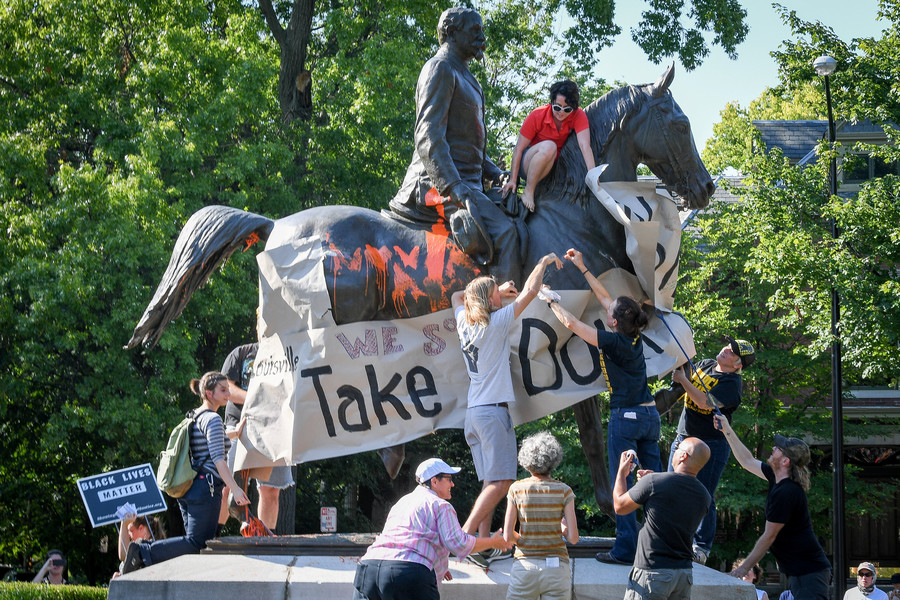
The fierce debate over the removal of confederate monuments and symbols across the US epitomizes the current political and social divide and the competing interpretations of American history, with one side believing the monuments revere figures who fought to maintain slavery while the other side believes they honor great patriots.
When white supremacist Dylann Roof killed nine black Americans attending a prayer service in Virginia in 2015, it prompted a movement to have Confederate monuments removed from public spaces across the country. More than 100 publicly-supported monuments and symbols have been removed since 2015 — but not without controversy and counter-protests. While monuments are being removed across the US, other groups are pushing for new ones to be erected.
Last year a ‘Unite the Right’ rally called in protest at the planned removal of a statue of Robert E. Lee in Charlottesville, Virginia turned violent when a protester drove a car through a crowd of counter-protesters, killing activist Heather Heyer.

4. Media wars, polarization of opinion

All of this social discord is playing out, magnified, on Americans’ TV screens in a way that appears to be exacerbating the problem. Eager to up their ratings, news networks invite the most polarizing of guests for daily screaming matches to be beamed into people’s homes. Far from the days of simply favoring one news channel over another, now if Americans don’t like how something is reported, it instantly becomes “fake news” or “propaganda.”
In his article, Reynolds wrote that news media which “promote shrieking outrage in pursuit of ratings and page views, are making the problem worse” and reminisced about a time when Americans could disagree with each other without hating each other.

5. Stratification of society

While all this is being played out on TV screens and social media, those at the fringes of society are feeling the effects of a sick system perhaps more than anyone. The socio-economic stratification of American society appears more obvious than it has at any time in recent years.
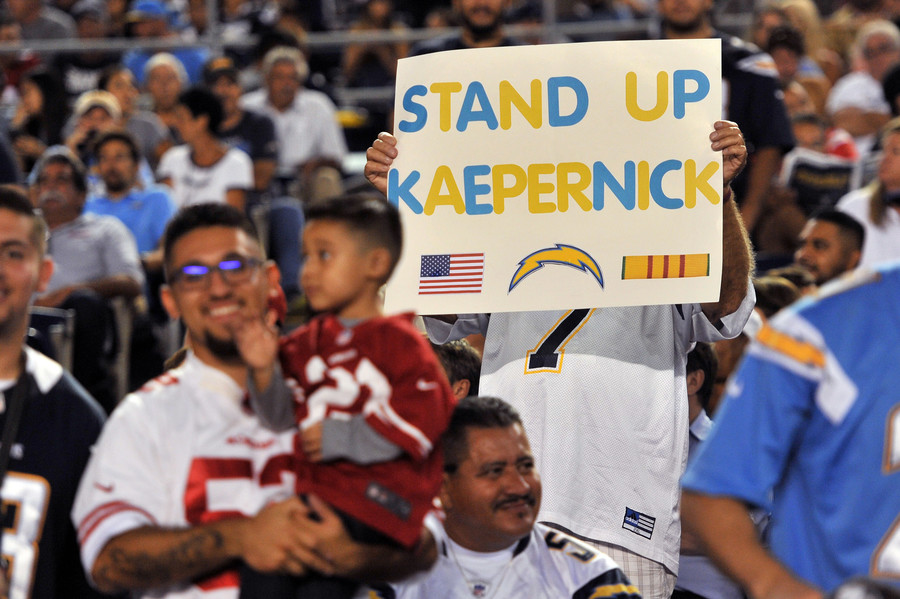
Inequality and rampant police violence against African-Americans prompted the NFL kneeling protests, which turned into a nationwide controversy between Americans who are proud of their flag and national anthem and all they stand for — and those who believe true freedom and justice have not yet come to America. A devastating opioid crisis, one of the highest child poverty rates in the world, and a strict adherence to policies which make the poor poorer and the rich richer, have all helped take anger in America from a simmer to a boil.
Reynolds wrote that part of the problem now is that Americans don’t feel social ties which transcend politics. It’s all us vs. them — and nothing in between. He argues that churches, fraternal organizations and neighborhoods used to cross political lines, but that this America has “shrunk and decayed” and people are increasingly finding their identity only in politics.
Marriage counselors, Reynolds explains, say that a relationship is doomed to fail when the couple begin to view each other with contempt — and in America today, there seems to be nothing but feelings of contempt felt on both sides of the political spectrum.

Video - How The Red Hen Could've Treated Sarah Huckabee Sanders

Video - White House Officials Get Left-Swiped | The Daily Show

شہبازشریف کا دورہ کراچی ،بلاول کا شعری تبصرہ


پیپلز پارٹی کے چیئرمین بلاول بھٹو نے شہبازشریف کے دورہ کراچی اور انتخابی مہم پر شعری انداز میں تبصرہ کیا ۔

سماجی رابطے کی ویب سائٹ ٹوئٹر پر ردعمل دیتے ہوئے بلاول بھٹو نے کہا کہ ’مزدور کا ہے ہاری کا ۔۔ سندھ نہیں درباری کا ، ووٹ مانگنے نکلے ہیں ۔۔ راستہ تک پتہ نہیں لیاری کا ‘۔
https://jang.com.pk/news/511911

مخالفین کے پاس جھوٹا پروپیگنڈا اور کھوکھلے نعرے ہیں،زرداری

مخالفین کے پاس جھوٹا پروپیگنڈا اور کھوکھلے نعرے ہیں،زرداری
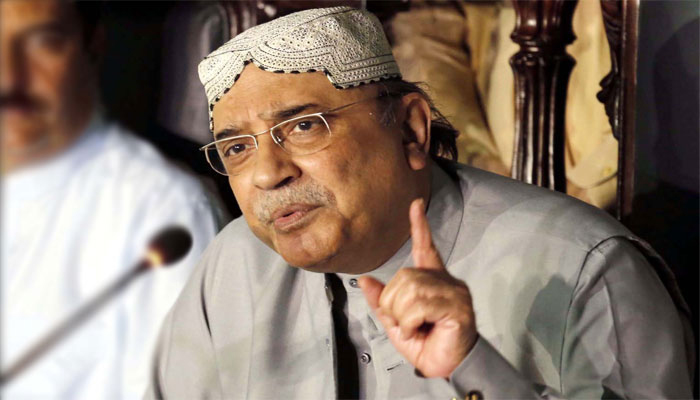
سابق صدر اور پیپلز پارٹی کے مرکزی رہنما آصف علی زرداری نے کہا ہے کہ مخالفین کے پاس الزام تراشی، جھوٹے پروپیگنڈا اور کھوکھلے نعروں کے سوا کچھ نہیں۔
بلاول ہاؤس لاہور میں کارکنوں سے خطاب میں آصف علی زرداری کا کہنا تھا کہکارکن باہمی اتحاد اور جذبے سے پارٹی امیدواروں کی کامیابی کے لیے کام کریں۔
انہوں نے کہا کہ پیپلز پارٹی نے ادارے بنائے اور عوام کی فلاح وبہبود کے لیے کام کیا ہے، مخالفین نے دھاندلی اور چور دروازے سے اقتدار میں آکر عوام کو انتقام کا نشانہ بنایا۔
آصف علی زرداری کا کہنا ہے کہ پیپلز پارٹی عوام کی طاقت سے اقتدار میں آکر ملک کی خدمت کرتی ہے،ہماری جدوجہد سماجی انصاف اور برابری کے لئے ہے۔
https://jang.com.pk/news/511902

#Pakistan - Justice for Benazir Bhutto


The new Tehreek-e-Taliban Pakistan (TTP) chief is no ordinary militant. Indeed, Abu Mansoor Mufti Noor Wali is of particular interest to this country. Not least because of an important confession contained in his Urdu-language book, Inqilab Mehsud South Waziristan: From British Raj to American Imperialism. Posted online back in November 2017 — a decade after former Prime Minister Benazir Bhutto was assassinated — it confirms for the first time that the TTP was behind the murder.
Fast-forward to the present and he is known to be making the most of militant safe-havens on the other side of the Durand Line. In the company of the so-called second suicide bomber, known as Ikramullah; that is, the man who served as back-up in case the first failed to detonate. He was identified as such in Mufti Noor Wali’s book.
According to a BBC report this week, Ikramullah now belongs to a TTP splinter group; though it does not disclose the name. Be that as it may, he has now released a video statement denying all involvement in the plot to murder the first woman to lead a Muslim nation. Though the Beeb suggests that this is a staged ‘retraction’; in response to purported threats to his family from the Pakistani security establishment. There is also the question of other Afghanistan-based militants attacking him last year.
Be that as it may, a video message is no substitute for due process. Not when there is a penned confession naming Ikramullah as the second suicide bomber. Not when other suspects have identified him by name before the Pakistani courts.  Not when the latter features on list of this country’s most wanted terrorist suspects. Towards this end, therefore, we fully support Senator Rehman Malik’s calls for Kabul to hand over both Ikramullah and Mufti Noor Wali to Pakistan. Just as we fully back the PPP stalwart’s moves to urge the interim set-up to approach Interpol with a view to issuing Red Notices for the ‘extradition’ of both terrorists. It is, after all, a matter of national interest and justice.
Similarly, we hope that the Ghani government next door will do the needful. After all, it is clear that both the US and Afghanistan must do more, more, more to contain the anti-Pakistan terror threat emanating from across the border. The targeted strike against Mullah Fazlullah Rehman earlier this month is, in and of itself, simply not good enough. For what we are talking about here are terrorists who have the blood of a twice-elected premier on their hands; and who have not been flushed out from their safe-havens by a military occupying power that happens to the most sophisticated in the world. This is to say nothing of the presence of the NATO war machine in Afghanistan.
In short, Pakistan needs both men alive. For there is a vast difference between pulling the trigger in remote-controlled warfare and bringing the guilty to book.  And we know which Benazir deserves.

Fears over disfiguring parasitic disease as cases double in northern Pakistan


By Ben Farmer


Cases of a disfiguring parasitic disease have more than doubled in northern Pakistan with doctors saying they are left badly in need of drugs to treat victims.
Numbers of people detected with Leishmaniasis in Khyber Pakhtunwa province have jumped from 1,000 in the whole of 2017 to 1,700 cases in the first half of this year alone.
Better monitoring is starting to reveal the scale of the disease which is endemic in the province's remote districts and causes gruesome lifelong ulcers and scars on exposed parts of the body, officials said.
The most dangerous form of Leishmaniasis, which occurs elsewhere in the world, kills without treatment. While gaining less attention than some other diseases, Leishmaniasis is the world's second most deadly parasitic infection.
Health officials in Peshawar said the preferred drug for treating victims was not available in Pakistan and the province was reliant on doses supplied by international organisations including Doctors Without Borders (MSF) and the World Health Organisation (WHO).
Dr Ayub Rose, director of health services in the province, told the Telegraph: “We are terribly in need of drugs to control the disease. The shortage of drugs is the main issue that we are facing. The increase in detection of cases is also due to improved monitoring and surveillance in all the endemic districts and tribal areas due to which we are reporting more cases.
“Injection of glucantime is the only drug of choice for its treatment which is not available in Pakistan.
“We have been urging the government to register the same drug in Pakistan so it could be provided to the patients. We also want the Drug Regulatory Authority of Pakistan (DRAP) to start its production locally because the disease is endemic in the country and we need its uninterrupted supply.”
The WHO has supplied 1,100 injections to hospitals in the worst affected districts in recent months and MSF has given 450.
The disease is closely linked to poverty and poor nutrition. Ulcers often develop on exposed limbs and the face and Dr Rose said girls and women were often most badly affected by any disfigurement.
He said: “The disease is a source of problems for females because it leaves lesions on the skin which cause them social problems.”
Dr Pervez Khan, of MSF in Peshawar, said: “One feature of this is that it leaves a sore on exposed parts of the body. It affects all ages, but mostly the working class.”


The local government last month set up a 10-bed provincial referral centre in Peshawar and Dr Rose said officials were trying to improve monitoring of the disease. He said there was also a need for an awareness campaign to persuade people to use bed nets and avoid sandfly bites.
Worldwide there are an estimated 700 000 to 1 million new cases of Leishmaniasis each year. Most people are struck by the cutaneous form found in Pakistan, but around 20 000 to 30 000 die elsewhere from the visceral form, also known as kala-azar, which attacks the liver and spleen.

#Pakistan Media Says It’s Targeted in Army’s ‘Systematic, Creeping, Coup’


By Saeed Shah
A major Pakistani newspaper recently discovered the new limits of press freedom here after it published an interview with ousted Prime Minister Nawaz Sharif in which he questioned the military’s counterterrorism efforts.
Soldiers confiscated copies of the Dawn newspaper in army-controlled regions, officials harassed its distributors, and cable TV networks dropped the group’s TV news station, the company says. The government, then still run Mr. Sharif’s own party, “condemned the fallacious assertions” made by him, after a meeting with top military brass.
Pakistan’s powerful military is stifling the media ahead of a July 25 election, part of a larger power grab that seeks to ensure a pliant government emerges from the polls, say human-rights groups, politicians and media personnel.
“I’ve not seen this before under any democratic rule, not even under martial law,” said Hameed Haroon, Dawn’s CEO and president of the All Pakistan Newspapers Society, which represents newspaper owners. “They seek to influence the election results, influence the national narrative and liquidate the press.”
The military declined to comment. But it has denied accusations of press censorship or political interference, and says it supports democracy.
Pakistan’s armed forces have staged several coups in the past. But since democracy was last restored in 2008, critics say the military has instead focused on gaining influence over civilian spheres from behind the scenes. The military has since gained leverage over government policy, the political opposition, moved against dissent in civil society, and allied with the courts, critics say.
That effort gained momentum over the past couple of years as Mr. Sharif’s government clashed with the armed forces over his desire to make peace with India and his call for action against jihadist groups operating from Pakistan.
Washington has long accused the Pakistan army of using militant groups as its proxies, including the Taliban in Afghanistan, a charge it denies. Pakistan’s military alleges that India uses Afghan territory to support Pakistani insurgents, an accusation that Delhi denies.
The media has long been an irritant to the military.
In periods of martial law, the military imposed official censorship, with Pakistan’s state broadcaster a prime target. In a now democratic Pakistan with an abundance of private media, more subtle forms of censorship and self-censorship pervade, reporters and lawmakers say. “There has been a systematic, creeping coup. The powers have been taken over by the security establishment,” said Farhatullah Babar, a recently retired opposition senator. “Without taking over a single television station, the media has been tamed.” In this election, the military seeks to boost the party of Mr. Sharif’s toughest challenger, Imran Khan, to ensure that Mr. Sharif’s party loses its majority in parliament and must forge a coalition, say Mr. Babar and analysts. Both the military and Mr. Khan’s party—which brought the lawsuit that led to Mr. Sharif’s court-ruled ouster and his current corruption trial—dismiss any links to one another. Mr. Sharif denies any corruption. The judiciary says it is independent.
Polls show Mr. Sharif’s party is ahead in the election race, which journalists say explains a recent ratcheting up of repression against the media. One result, these people say: What little reporting there is on sensitive national security issues is told from the military’s viewpoint. Criticizing the military “would be suicidal,” said one media executive who has clashed with the military.
For example, TV stations have virtually avoided covering a new protest movementlambasting the military for human-rights abuses of the Pashtun ethnic minority. Dozens of the protest movement’s followers have been charged, including with sedition.
Meanwhile, many newer private news channels are owned by industrial tycoons outside the media, from tobacco to cooking oil, trying to gain influence, the journalists say. Those owners won’t often take a stand on editorial freedom, and some openly support the military’s stance, these people say.
In practice, the military contacts many TV channel owners about content it finds troubling, who in turn convey editorial direction to their journalists, say reporters at several channels, adding that the military also exercises influence over some hirings and firings at the stations.
Broadcasters have also reduced live programming to allow time to edit out dissenting opinion, these reporters say.
Cable distribution is also manipulated through its owners. The owners of four cable TV local distribution companies told The Wall Street Journal that they have been told directly by security officials to take particular channels off the air in recent months. Geo News, the leading news channel, was taken off air by cable companies for several weeks this year until it negotiated directly with senior military officials to be allowed back, say two people familiar with the talks. Several columnists at the group’s newspapers recently tweeted their reports when the papers wouldn’t publish them. Geo declined to comment. Security officials privately say they found Geo’s coverage too sympathetic toward Mr. Sharif. The Pakistan Broadcasters Association, which represents many channels, didn’t respond to a request to comment. But one of its members disputed the notion that editorial policy is compromised.
“By and large I don’t see any coercive pressure,” said Taher Khan, owner of the News One channel and an association board member. “As a responsible media, we shouldn’t say anything that’s antistate,” he said. In Pakistan, the term antistate is often used to describe opinion critical of the military.
At a press conference this month, Maj. Gen. Asif Ghafoor, the military’s spokesman, challenged any media owner or journalist who was told what to report by the military to disclose it on air. Maj. Gen. Ghafoor also displayed a chart showing which journalists have retweeted “antistate and anti-army” posts on Twitter. He said “anti-Pakistan” Twitter accounts based abroad had grown fivefold between January and May this year.
“We have to stay united, we have to defeat them,” he told journalists.
The next day, Gul Bukhari, a journalist and military critic with dual British-Pakistani citizenship, was abducted by uniformed and plain clothes men in the Lahore military zone. She was released hours later after her channel publicized the news and an outcry ensued. But journalists said the message was clear: No one is safe. In an interview, Ms. Bukhari said she has since sought police protection. Police say they are investigating.
The military denies involvement in her abduction.
Last year, five bloggers critical of the military said they were kidnapped by security officials, held for more than three weeks and badly tortured, they said after they were freed and fled abroad. One of the bloggers, Ahmad Waqass Goraya, said his parents, still in Pakistan, were threatened by military officials this month. The military denies involvement.
Independent-minded reporters say they will persevere.
“People who know the craft, they somehow push out information, using metaphors, sarcasm, signs, tone,” said Murtaza Solongi, the host of a political talk show on TV. “I don’t see censorship and self-censorship working.”

https://www.wsj.com/articles/pakistan-media-says-its-targeted-in-armys-systematic-creeping-coup-1530019669

Monday, June 25, 2018

Arabic Music Video - Habibi Nour El Ein BktJalil Remix HD

Child Marriage: How the childhood of girls is robbed in Balochistan


The month of March in Balochistan’s winter zones comes with some interests for school going children when their schools open after winter vacation. The new classes, new reading writing materials, new school backpacks increase curiosity of students for going school. However, for Sankina, 13, in the village of Iskalkoo, district Kalat , the school going month came with surprise when she was asked for not going to school as her marriage was scheduled on 15th of March.
Rather than having school materials for new school year she was dressed bridal and remained unable to refuse. Shockingly, she was married to 50 years old Abdul Ghani, the man whose daughter had already married to Sakina’s elder brother and Sakina’s marriage was cause of exchange relationship.       
Though one of the brothers of Sakina resisted this wedding but he was asked to be silent for the sake of family honor. 
Sakina is not the first prey to early child marriage in Balochistan but there are hundreds of unreported stories which take place in far-flung areas of Balochistan.  Since Pakistan’s Child Marriage Restraint Act (CMRA) 1929 sets the legal age for marriage to 16 for women and 18 for men.
According to Pakistan Social and Living Standards Measurement (PSLM) survey 2014-15 by Pakistan Bureau of statistics, literacy rate of Balochistan is 43% out of that 55% males and 25% are females. The reasons behind this are obvious but early marriage is being considered one of the major causes of girl’s dropout from schools. In Balochistan more than 50% marriages are solemnized before the age of 18.
Early marriages, early and unintended pregnancies, lack of awareness dearth of basic facilities in area increase high Maternal mortality rate(MMR ratio) indicating MMR 785 per 100,000 live births in province; however, figure is very low 272 per 100,000 live births across Pakistan.
The Plan International’s report October 2017 indicates that 15 million girls are married before 18 years age annually across the world. It is on the record that major obstacle in girl’s education is the child marriage. The report further alarms that 130 million girls’ across the world are out of school.
Under the umbrella of Action Aid Pakistan, Blue Veins, Citizen Rights and Sustainable Development CRSD organizations in 2013 claimed that out of 60 million under 18 marriages of girls in world, Pakistan had share of 42% early marriages as 24% from rural and 18% from urban areas of the country. This is the main reason behind the low literacy among female population in Pakistan where the female literacy drops rather than growing up.
Human rights campaigners consider child marriage an alarming social issue in Balochistan. Unfortunately, no legislation related to the issue has increased early child marriage. Therefore, human rights activists, civil society members have launched a campaign to get tabled for enactment of Balochistan Child Marriage Prohibition laws.
Child Marriage Prohibition law in Balochistan has ever been required to control child marriage and its impacts in the province but the bill met challenges in past and existing times.   Dr. Shama Ishaq, a well-known women activist and member of Balochistan Assembly is enthusiastically working for enactment of the pending child marriage bill in Balochistan. She is leading the formed Steering Committee for the enactment of bill.
 Dr. Shama Ishaq says that some religious and tribal parliamentarians are rejecting the Child Marriage Prohibition law repeatedly from 2014 in Balochistan provincial assembly.
Talking to the Balochistan Point Dr. said: “Recently, in May 2018, we tabled bill for enactment in the assembly, however, that was again objected. The objection is stated that the bill is contrary to Islamic injunctions and it should be sent to Islamic Ideology for further review thus it went in pending.”
Health and Rural Development (HARD), a Balochistan based non-governmental organization in collaboration with Mundo Cooperante and some other local organizations have launched the advocacy and lobbying campaign in Balochistan for enactment of Child Marriage Prohibition laws in Balochistan. They have been conducting advocacy consultations with Policy Makers from Social Welfare Department, Ministry of Human rights, CSOs and other stake holders for approval of Child Marriage Prohibition Law. 
Talking to the Balochistan Point executive director HARD Faraz Mengal said that   In Balochistan, children mostly forced marriages of girls were on increased rates in rural and urban areas.
“Tribal leaders and community heads have power to disrupt peace and normalcy of indebted families, taking away young daughters and giving them to older men of rival families. This problem of child marriage is further exacerbated by the fact that 85% births in rural areas are also unregistered, making it hard to determine the age of a child at the time of marriage.” Faraz added. 
“Surprisingly, the people are blind followers of myths and adopt harmful practices justifying their tradition by practicing ‘before birth marriages’ of girl’s as excuse against any sin / illegal action occurred by any family member. The before birth engagement/marriage is extremely a harmful and an inhuman practice in Balochistan” Faraz told the Balochistan Point.
Mis Haleema Chairperson Health and Rural Development (HARD),  says that illiteracy and lack of awareness among people is a major cause of increased early marriages in Balochistan. “The less awareness has made them strong follower of religious, cultural, male-controlled norms and values where girls are married early at 12 to 16. The practice of early marriages is common everywhere in Balochistan due to strong tribal, religious and cultural influence.” Said Mis Haleema. 
Mis Haleema admired the role of civil society for advocating to protect girls and their rights in the province and would suggested that  such organizations should continue their advocacy to develop pressure for enactment of Child Marriage Prohibition Law so that children mainly girls get rid of this harmful practice.
Director ministry of Human Rights Balochistan, Jahanara Tabassum is also of the view for protection and promotion of human rights in collaboration with social organizations, particularly for children and women rights. Talking to the Balochistan Point she emphasized on rising awareness against child marriage in communities and termed Child Marriage Prohibition Law crucial for defending human rights.
Poverty is marked a chief factor contributing in child marriages and practice of bride price is still widespread in Balochistan. Furthermore, custom of before birth and compensation marriage is prevalent and girls continue to be offered in marriage in exchange of debts to resolve tribal or family disputes and rivalries.
Protection of girls and boys from child marriage is responsibility of the State.  So far the laws that have been passed on national or provincial level still look for remarkable implementation. Pakistan was the sixth country in the world to sign and ratify the United Nations Convention on the Rights of the Child (UNCRC) in 1990 following its adoption by the UN General Assembly on November 20, 1989. 
Pakistan is also a member of the South Asia Initiative to End Violence against Children (SAIEVAC), an inter-governmental body which has adopted a regional action plan to target child marriage.
In discussions of the Open Working Group on the Sustainable Development Goals, Pakistan was among the first countries to suggest a target to end child marriage by 2030. Now it is also feared that Pakistan may fail to contribute to  SDGs,  as the target 5.3 of the Sustainable Development Goals (SDGs) commits all UN Member States to “Eliminate all harmful practices, such as child, early and forced marriage” by 2030.  Prior to SDGs Pakistan failed to achieve Millennium Development Goals (MDG); essentially, the Goals related to children rights.
There is great need of some committees on national level for follow-up on the above mentioned commitments to ensure their effective implementation. So there is dire need to effectively build pressure on the federal and provincial governments for implementation of international obligations but for the successful results the civil society, media, stakeholders, religious leadership and children should be involved. (The names have been changed to protect the innocent.)

#Pakistan - DEATH TO RULE OF LAW AS BANNED TERRORIST OUTFIT LEADER CLEARED TO CONTEST ELECTIONS

Aurangzeb Farooqi, notorious ringleader of ASWJ (Sipah-e-Sahaba), the outfit that was banned for involvement in terrorism, sectarian extremism and hatemongering by the Pakistan state authorities, has faced no restriction from the custodians of law as he is allowed to contest Elections for National Assembly and Sindh Assembly seats from Karachi. Petition seeking to prevent him from electoral contest has been dismissed today on Monday.

The civil society activist filed a petition drawing attention to the fact that banned ASWJ ringleader Farooqi was not eligible to contest Elections to legislatures because he has hidden some facts in his documents attached with nomination papers. He had visited Kingdom of Saudi Arabia and cases including cases under antiterrorism laws were registered against him.
But, Farooqi did not mention these facts. Farooqi has been nominated as prime accused of Khurram Zaki’s targeted murder. Khurram Zaki was a renowned Karachi-based rights activist. He visited Kingdom of Saudi Arabia may times and he should have informed the election officials through relevant documents about sources of his travel expenses also.
The main reason that is enough to disallow Aurangzeb Farooqi from contesting elections is the fact that he heads a banned militant organization that was outlawed due to its involvement in terrorism and violent extremism.
On the one hand, Election Commission of Pakistan, judiciary, caretaker government and security agencies have failed to take action on their own against Farooqi’s nomination for electoral contest, and on the other they are not taking action when a citizen of Pakistan has challenged the Farooqi’s nomination for elections on legal ground that is tantamount to death of rule of law in Pakistan.


http://www.shiitenews.org/index.php/pakistan/item/34822-death-to-rule-of-law-as-banned-terrorist-outfit-leader-cleared-to-contest-elections

#Pakistan - Bilawal to unveil PPP’s 10th manifesto this week


Pakistan People’s Party (PPP) chairman Bilawal Bhutto Zardari will announce his party‘s manifesto for the general elections 2018 in Islamabad this week, his spokesman said.
This will be PPP’s 10th manifesto in the last five decades, Bilawal’s spokesman Senator Mustafa Nawaz Khokhar said, in a press statement on Monday.
The first manifesto for the General Elections – 1977 was unveiled by PPP founder Shaheed Zulfikar Ali Bhutto. Former Prime Minister and PPP Chairperson Shaheed Mohtarma Benazir Bhutto had presented six manifestos in her life.
"Bilawal is going to unveil his first and party’s 10th manifesto in which he has inked many revolutionary steps and programmes for the people of Pakistan," Khokhar said.
Senator Khokhar pointed out that PPP’s manifesto carries imminent programmes for the uplifting of the deprived and oppressed people of the country. As well, that manifesto would also address the problems of all the people across the board.
It merits mentioning that the PPP alone gives its manifesto for implementation on programmes after the elections.
The PPP vows that all the commitments made to the people through the manifesto would be honoured, the spokesman added.

Why Pakistan’s Pashtun minority won’t be easily crushed


In my most recent Wall Street Journal column (read it here), I write about the Pashtun Tahafuz (protection) Movement, a non-violent group that campaigns against human rights abuses by Pakistan’s army against the Pashtuns, Pakistan’s largest linguistic minority. Some 30 million Pashtuns account for 15% of Pakistan’s population. Over the past four months, PTM has attracted thousands of protestors to its rallies.

There’s a wider context to Pashtun discontent. For most of its seven decades of existence, Pakistan has struggled to accommodate grievances by ethnic minorities. In 1971, Bengali-speaking East Pakistan seceded to form the new nation of Bangladesh. The army—easily Pakistan’s most powerful institution—has fought (and largely crushed) a bloody insurgency in Balochistan. Last year, Pakistan effectively dismantled the Muttahida Qaumi Movement, a political party associated with Mohajirs, descendants of Muslim migrants from India.
In part, this discomfort with both minority protest movements and parties viewed as unsympathetic to the army has to do with Pakistan’s decision to define itself in ideological rather than territorial terms. As the Hudson Institute’s Husain Haqqani, a former Pakistani ambassador to the U.S., writes in his new book, Reimagining Pakistan: “Pakistan could have recognized its diversity and evolved as a multi-language federation with political and cultural autonomy for its constituting units. Instead, its leaders chose to base Pakistani identity on a national ideology.” That ideology, says Haqqani, has three cornerstones: Islam, hostility to India and the Urdu language.
In Bangladesh, Pakistan used force to quell Bengalis and failed. Its regular playbook, which relies on a combination of brute force and a well-oiled propaganda machine, may not work against the Pashtuns either.
For starters, Pakistan’s 30 million Pashtuns greatly outnumber other ethnic minority groups such as the Baloch (7 million) and the Mohajirs (16 million). Thanks to migration, Pakistan’s commercial capital, Karachi, also contains the largest concentration of Pashtuns in the world: about four million people.
Add to that 14 million Pashtuns in Afghanistan, where they form a 42% plurality of the population.(The PTM has no connection with Afghanistan, and works strictly within the boundaries of Pakistan’s constitution, but Afghan and Pakistani Pashtuns share close ties of kinship and culture.) In February, Afghanistan President Ashraf Ghani tweeted in support of the PTM.
The PTM’s embrace of non-violence also makes it harder to target harshly without international backlash. Though the group protests against excesses committed by the military during Pakistan’s crackdown on the terrorist group Tehreek-i-Taliban, or Pakistan Taliban, PTM leaders are focused on civilians inadvertently caught up in the conflict. They argue that any terrorists among the thousands of Pashtun disappeared must be tried in court. (Two weeks ago, a U.S. drone strike killed the brutal TTP leader Mullah Fazlullah in Afghanistan.)
In the face of a media blackout, the PTM has used Twitter, Facebook and YouTube to get its message across, including to the Pashtun diaspora in the West. This too makes it harder to curb than other Pakistani protest movements. According to Mohsin Dawar, a senior PTM leader, “had there been no social media there would be no PTM.”
And finally, in 26-year-old Manzoor Pashteen the PTM has a charismatic leader who has quickly attracted a devoted following among his people. Abubakar Siddique, an analyst with Radio Free Europe in Prague, believes Pashteen is akin to Nelson Mandela for the Pashtuns.
Perhaps keeping all of these factors in mind, the Pakistan army has approached the PTM with relative restraint. It has arrested PTM members, placed travel restrictions on the movement’s leaders, and used the domestic media to smear them. But it has not gone after them with the brutality it has used, for instance, on Baloch separatists.
Will the army’s relative restraint last? Mohammad Taqi, a regular U.S.-based commentator on Pashtun and Pakistani politics, worries that it may not. “If all you have is a hammer, every problem looks like a nail,” he says.

https://www.aei.org/publication/why-pakistans-pashtun-minority-wont-be-easily-crushed/

Sunday, June 24, 2018

Video Report - Turkey election: critics say Erdogan heading for 'absolute rule'

Turkey elections: "Erdogan will have the ability to wield powers with no checks and no balances"

Video Report - Turkey elections: "Two pieces of evidence of voting fraud have emerged so far"

#TheRedHenLex - Restaurant owner who asked Sarah Sanders to leave speaks out

#TheRedHenLex - Why Sarah Sanders was asked to leave a restaurant


By Dean Obeidallah


This week we saw two different ways people sent messages that they passionately oppose the Trump administration's policies. And both involved prominent Trump officials and restaurants.
On Tuesday night, Department of Homeland Security Secretary Kirstjen Nielsen, while dining at a Mexican restaurant in Washington D.C., was heckled by protesters over her defense of Donald Trump's immoral family separations at the border. And on Friday night, according to a tweet by White House press secretary Sarah Huckabee Sanders, she was politely asked to leave a Lexington, Virginia, restaurant by its owner because of her work defending Trump and his policies.
Those shocked by these types of protests simply don't grasp the level of emotion that many who oppose Trump feel. I hear it nightly on my SiriusXM radio show and see it firsthand on social media. Even Trump, in a rare moment of honesty, told his supporters a few weeks ago that those who oppose him are not just angry, but "really, really angry." Many view Trump as a true threat to America.
So it should come as no surprise that some would also look to hold members of Team Trump responsible as well. After all, Trump administration officials who defend Trump's bigoted policies, his demonization of minority groups and his lies, are complicit. They freely choose to do the work for him and they shouldn't be shocked if some -- not all --Trump opponents lash out at them.
    But let's make it clear, this is not about asking someone to leave or heckling them simply because they are Republicans or conservatives. That would be wrong. This is about targeting people who are very publicly involved in formulating and defending Trump's immoral policies.
    In fact, the people who heckled Secretary Nielsen didn't yell: "Get out of here because you're a Republican." No, their chants were very specific to Trump's family separation immigration policy she had been publicly defending just days before, telling Nielsen: "Do you hear the babies crying?" and "If kids don't eat in peace, you don't eat in peace." That is literally speaking truth to power.
    Stephanie Wilkinson, the owner of the Red Hen restaurant, who had asked press secretary Sanders to leave, told the media on Saturday that she is "not a huge fan of confrontation," adding, "I have a business, and I want the business to thrive." But as Wilkinson rightly noted, "This feels like the moment in our democracy when people have to make uncomfortable actions and decisions to uphold their morals."
    Wilkinson further explained her approach to handling the situation. She first spoke with her employees, who disagreed with Sanders' defense of Trump's discriminatory ban on transgender Americans who want to serve in the military and her recent defense of Trump's un-American family separation policy.
    In response, she then asked Sanders to step outside to the patio and "explained that the restaurant has certain standards that I feel it has to uphold, such as honesty, and compassion, and cooperation." Clearly, Sanders doesn't comply with that standard.
    As a progressive, I feel that denying service to a person is instinctively troubling. For many, it may conjure up laws that banned blacks from being served at restaurants before the Civil Rights Act and the current campaign by some on the right to turn away same-sex couples who want professional services for their weddings. Or even a gun range owner who declared that no Muslims were allowed on the premises.
    But the situations with Sanders and even Nielsen are not even in the same universe as these discriminatory examples. No one is targeting them for their race, religion or sexual orientation. The backlash is because they have freely chosen to be a part of the Trump administration and have personally defended Trump's policies. In fact, Nielsen has served up lies while championing Trump's family separation policies while Sanders even invoked the Bible, telling reporters, "it is very biblical to enforce the law."
    I understand why some people targeted high-profile Trump administration officials, but I am concerned about what will we see in response. Newton's third law of motion -- "For every action, there is an equal and opposite reaction" -- applies not just to physics, but perfectly to our hyperpartisan nation. Given our politics today, that law should actually be updated to: "For every action, there's an overreaction."
    How long until Trump's fans counter by hanging signs in their stores, restaurants and bars that read "No liberals allowed" or "Trump supporters only." I bet that would play well in certain red states. And would progressives in blue states respond in kind?
    From a legal point of view, a person can be asked to leave a privately owned establishment because of their political views. For example, In April, a judge in New York City dismissed a lawsuit by a Trump supporter who wore a "Make American Great Again" hat to a bar and was asked to leave.
    But applying this to the average American divides us even more as a nation and makes it less likely that we can ever return to being the United States of America.
    Going forward, it's likely that we will see more people speak out against Trump officials who publicly defend his cruel policies. The reality is that for many, the stakes are simply too high to remain silent as Trump attempts to radically transform our nation from the United States into Trumpistan.