Sunday, January 28, 2018

Music Video - Ed Sheeran - Perfect

Video Report - Of Course Putin Gets Nervous, He Is Human – Kremlin's Press Secretary Peskov

Video Report - 'Govt downplays Islamist threat in the Balkans' - German Left Party

Afro-Mexicans: Dancing Their Way Back To Their Roots

Israel and the Palestinians - A Diplomatic Wrecking Ball - The president views U.S. foreign policy in strictly personal terms.

By Alan Elsner 


 At Davos, President Trump is again making news and creating U.S. policy toward Israel and the Palestinians on the fly – and making life more difficult for those within his administration and in the region who want to advance peace and end the conflict between the two peoples.
Meeting Israeli Prime Minister Benjamin Netanyahu on the sidelines of the World Economic Forum at the Swiss ski resort, Trump described last month's U.S. recognition of Jerusalem as the capital of Israel and his decision to move the U.S. embassy there from Tel Aviv as an "honor" to Israel for always supporting the United States.
Trump also slammed the Palestinians for their reaction to the Jerusalem move and their decision to boycott Vice President Pence on his Mideast trip earlier this week: "Israel has always supported the U.S. So what I did with Jerusalem was my honor. And hopefully, we can do something with peace. ... They (the Palestinians) are going to have to want to make peace too, or we are going to have nothing to do with them any longer. The hardest subject they had to talk about was Jerusalem. We took Jerusalem off the table so we don't have to talk about it anymore. They never got past Jerusalem."
Trump also threatened further cuts to U.S. aid to the Palestinian Authority. "When they disrespected us a week ago by not allowing our great Vice President to see them; when we give them hundreds of millions of dollars in aid and support – tremendous numbers, numbers that nobody understands – that money is on the table. That money is not going to them unless they sit down and negotiate peace. ... Respect has to be shown to the U.S. or we're just not going any further."
What's remarkable about these comments is that Trump apparently sees U.S. policy in purely personal terms. Netanyahu supported him and must therefore be rewarded. The Palestinians disrespected Pence and must therefore be punished. There is no appreciation for the fact, understood by every single president who has come before Trump, that the purpose of U.S. policy is not to settle personal scores but to advance our national interests, protect our allies and to defend and promote our values as a nation. Trump apparently takes the position of France's King Louis XIV who famously said, "L'etat c'est moi" – in English, "the State is me."
Successive U.S. administrations have recognized a national interest in pursuing peace between Israel and the Palestinians which would inject a much-needed element of stability into the chronically unstable Middle East while allowing our ally Israel to finally live in peace and with security. Yet everything Trump has done in the past two months has made that goal much more difficult, if not impossible.
Yes, he won the applause of his evangelical base with his U.S. embassy decision – but he has certainly not taken the Jerusalem issue off the table in the negotiations. The Holy City will always be deeply, vitally important to Muslims around the world and it is home to over 300,000 currently stateless Palestinians. Its final status can only be settled through negotiations and never through diktat.
As for U.S. aid to the Palestinians, it is not a personal favor generously given as a reward for doing Trump's bidding. Much of it goes to funding Palestinian security forces whose daily cooperation with their Israeli counterparts saves lives in both communities and maintains stability, fights terrorism and upholds law and order on the ground. Those are U.S. national interests as well. Threats to cut aid as a response the perceived affront to Vice President Pence is childish and dangerous.
Those are two adjectives that could apply to this administration's Mideast policy as a whole.

Music - Childish Gambino - Redbone

Video Report - Trump Promised He'd Save Jobs At Carrier. These Workers Were Laid Off Anyway.


Trump Promised He'd Save Jobs At Carrier. These Workers Were Laid Off Anyway.

Video Report - "THESE ARE ENORMOUS PROBLEMS!!!" Bernie Sanders DESTROYS Trump & REACTS to the Bernie 2020 Rumors

Video Report - Van Jones: Jay-Z sets a better example than Trump

Video Report - Jay-Z Magnificent Take On The Rac!sm Of Donald Trump's Presidency In An Interview With Van Jones

Pashto Music - zarhgiya bas ka da yaadunu shame mu balawa

Pashto Music Video - Zar Zari Shaloona - Sarah Sahar - Lemar Aw Story / زر زری شالونه - ساره سحر - لمر او ستوری

Pashto Music Video - Zema De Mine Yara - Alia Ansari - زمادمینی یاره - عالیه انصاری - د نغمو شور

Pashto Music - Gul Panra - | Rasha Khumara |

Music Video - "Hawa Hawa" | Anil Kapoor, Arjun Kapoor, Ileana D’Cruz, Athiya Shetty

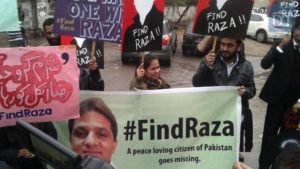
#Pakistan - RENOWNED SHIA NOTABLE ENGINEER MUMTAZ GOES MISSING SINCE JANUARY 23

Engineer Mumtaz Rizvi has gone missing since January 23, 2018, when he left house for business activity but had not returned home despite passage of a week, his family sources said.

His wife has lodged a complaint with the Sachal Police Station in which she complained that her spouse had not returned home since January 23, 2018. She said that his husband was affiliated with business relating to computers and their parts.
Mr. Rizvi remained a close-aide of Dr Mohammad Ali Naqvi, founder of ISO. He was very much active in a philanthropist organization. He was a doctoral student at Karachi University.
Shia Muslims lament that their notables were being taken into illegal and undeclared custody and being subjected to enforced disappearances. They condemn this malpractice and demand that all those taken into illegal custody should be released. Otherwise, they must be produced in the court of law and be allowed their legal right to defend them in the court through their defence counsels.

http://www.shiitenews.org/index.php/pakistan/item/32757-renowned-shia-notable-engineer-mumtaz-goes-missing-since-january-23

Pakistan - Lashkar Jhangvi Appeals for Funds to wipe out Shias from Pakistan


Hate and violent campaign is continuing against Shia community from Takfiri Deoandi network without any hurdle despite big claims of wiping out menace of terrorism made by Punjab government like federal and other provincial governments in Pakistan.
(So called) Tehreek-i-Namos-i-Sahabah wa Lashkar-i-Jhangvi( Movement for Protection of Companions of Prophet PBUH and Army of Jhangvi) has distributed a pamphlet in Attock district of Punjab. In this pamphlet funds appeal was made for the organization working for wiping out of shias of Pakistan. According to this pamphlet, founding father of organization Sipah Sahabah Pakistan-SSP/ Ahle-e-Sunnat-wa-Jamat-ASWJ( a Takfiri Deobandi terrorist organization is banned but only in papers) Haqnawaz Jhangvi’s view was that Shia are worst apostates of this universe and third head of this organizations Azam Tariq had asked to kill all Shias and their killing is obligatory for every Muslim. This pamphlet was distributed in the area of Shakardra Attock district of Punjab having address to send donations through Money Order and also having National Identity Card number along with mobile number require for sending donation through Easy Paisa.
Distribution of this hatred pamphlet against Shia community in the area of district of Punjab once again proves that Punjab government led by PML-N has no objection on distribution of such hatred pamphlets against Shia community and has no problem with proliferation of Takfiri ideas by Takfirist networks emerged from Deobandi Sect. Takfiri Deobandi can distribute pamphlets and make fund appeals for strengthening themselves to run slow genocide campaign of Shia community in Pakistan.
ASWJ despite being banned is functional fully all over the country and has been registered in the Election Commission of Pakistan under new name Pakistan Rah-i-Haq Party and is planning to take part in elections 2018.
If a banned organization is registered under new name in Election Commission of Pakistan then how government can stop terrorist activities against Shia community?
Pamphlet has been written in Urdu and its text says:
“Shias are worst apostates of this world- Haqnawaz Jhangvi (Founder of Takfiri terrorist banned organization ASWJ/SSP/LeJ”
“To kill Shias is religious duty of every Muslim- Tariq Azam( Third head of ASWJ/SSP)”
(Two quotes are mentioned on top of pamphlet after name of the organization which distributed it)
Dear,
Thereek Namos Sahabah wa Lashkar Jhangvi has been established to fulfill mission of Martyrs for companions of Prophet PBUH and of Haqnawaz Jhangvi. Main and basic objective of this organization is to wipe out Shias of Pakistan. For accomplishment of this great and holy mission we need your financial and moral cooperation. We request you to give us more and more donations and to provide our organization more financial help. You can send your donations through Money Order or Easy Paisa.
God Bless you,
Address for Money Order: Hafiz Khalid Mahmoud Social Walfare Office Sarloa Attock
Through Easy Paisa:
CNIC: 37101-1719549-7
Mobile: 03215726871
To: Ashique Hussain(Patron-in-Chief TTSLJ)
Shakardra Attock District Punjab
https://lubpak.com/archives/353884

#Pakistan - The Mysterious Death of Dr. Hassan Zafar Arif and the Military Establishment Fascist Policies


By M Faisal Younus
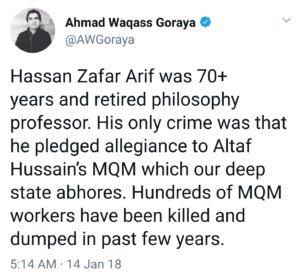
The conditions of law and order in Pakistan are progressively deteriorating because of state policymakers. Under their policies, terrorists and extremists like Hafiz Saeed, who is one of the prime suspects in the Mumbai attacks, are enjoying their freedom. The United States has declared a 10 million dollars bounty on his head yet he is roaming freely across the country and delivering lectures in universities and colleges. On the other hand, political leaders, activists, bloggers, and freethinkers don’t have the same freedom. Whoever speaks against the state policies pays the price by being abducted tortured and sometimes even killed. Recently a famous political activist, professor, and philosopher, Dr. Hassan Zafar Arif was found dead in the backseat of his car. His political party and other media recourses were showing deep concern that he had been abducted and tortured to death by certain law enforcement agencies (LEA).
The LEAs called his death natural and tried their best to cover it up. Despite releasing a controversial medico-legal report, showing no signs of injury, and a most likely forced statement from his daughter about a natural death by heart attack, the public is not convinced. There are photos and videos of his dead body spreading quickly on the social media that show extensive injury marks on his body and blood stains on his face.

Dr. Hassan Zafar Arif was a professor of Karachi University’s Philosophy Department.  He was also a member of the Muttahida Qaumi Movement (MQM) Rabita Committee. Very few people would be aware of the fact that Prof. Hassan Zafar Arif was one of the brains behind the successful first homecoming rally of Benazir Bhutto in 1986. He has done BBA (Hons), and later received his Master’s degree and completed his M.A. Afterwards, he received his Ph.D. from Howard University.  He was a teacher for 34 years.  He was an asset to the country.  On May 15, 2017, when Dr. Arif was joining Muttahida Qaumi Movement (MQM) he said, “I joined the MQM for two reasons, firstly, the party has been facing state repression, and secondly, for achieving the rights of the residents of Karachi. As a socialist, I feel it is the right time to join the party.”
On Saturday, January 13th, 2018, he left a meeting early to see his daughter who was visiting from London. Since then his whereabouts became unknown to his colleagues as well as his family members for a time period of several hours. Later his dead body was found in the backseat of his car in the coastal suburbs (Ibrahim Hyderi) of Karachi. Blood stains were clearly visible on his face and his shirt at the time of recovery of his dead body. Earlier he had also been unlawfully detained by the security forces for 24 hours on Dec 9th, 2017 and was tortured and threatened with dire consequences for executing his assigned obligations for his political party. His mysterious death has raised several questions. Despite the LEA trying their best to prove his death “natural,” all the evidence and circumstances point to the fact that it was a murder.
The vast majority believes that he lost his life because of his political ideology and affiliation. It’s not the first time that someone lost his life because of their political beliefs. Extrajudicial killings by LEA have been happening in Baluchistan, Khyber Pakhtunkhwa (KPK) and Karachi for decades. In 2016, Dr. Farooq Satar’s coordinator Aftab Ahmed had been killed in custody by rangers. Initially, rangers denied the allegations of torture and tried to prove his death as heart attack by hiding the dead body from family members but later accepted that he has been tortured to death while in custody. Despite an inquiry ordered by Ex-Chief of the army staff General Raheel Sharif, nothing has happened yet and family members are still waiting for justice.
Due to military establishment policies, the country’s image is being distorted and it appears as a fascist state where the citizen’s advocating for humanity and basic rights are being silenced. Even large number of Pakistanis living in the territory are not getting complete awareness of the situation because their access to the global media by the state is limited. On the other side, the national media is completely uncontrolled by the military establishment and they are constantly misguiding people like they did in 1971 when they kept the entire nation in the dark regarding the civilian’s genocide; yet several years later truth has been revealed. Unfortunately, the establishment didn’t learn any lesson from history and have continued to repeat the same mistakes over and over again. Their selfish policies make the whole country chaotic. A few months ago, the “Free Baluchistan” campaign launched and has continued to spread successfully despite enormous resistance by the establishment. If they don’t change their oppressive mindset and keep continuing the same attitude it will be disastrous for the country.

#Pakistan - #JusticeForZainab - Political exploitation of Zainab must stop


                                                     #JusticeForZainab


It’s not just social media that may or may not have lost sight of what’s important in the Zainab case. When the scandal first broke, the opposition political parties especially the PTI backed by sections of media exploited it for political point scoring. And now not to miss an opportunity to be left out of the game – the PMLN is unashamedly exploiting the deliverance of justice for political mileage.
The ruling party has tabled a resolution before the Punjab Assembly calling for a constitutional amendment to sanction the public stoning to death of child sex abusers. Thankfully there are those in the Senate who have been talking sense, such as calling for consultation with the country’s various legal bodies. A shame, then, that our so-called rational lawmakers didn’t go one step further and actually talk truth to mis-power. After all, this provision has no place in a modern and democratic society.
And even then, those seeking political advantage have got it so very wrong given that the resolution only makes mention of the Pakistani girl child. This is particularly astonishing given how back in 2015 – at the height of the Kasur political-sex scandal – the 280 or so children who were filmed while being sexually assaulted were mostly boys. Back in 2015, then, as now, the Punjab was ruled by the PMLN. Also, then, as now, there were rumours of an organised child pornography crime network. Yet even here the similarities don’t end. Because, then, as now, there was talk of a minster being involved. Just as there were murmurings of a political cover up.
And if, as is presently being alleged, a federal minister hada hand in what happened to seven-year-old Zainab and so many like her – this raises important questions as to the motive behind the provincial government’s rush to howl: off with all their heads. Looking at the broader context, however, the possible passing of this resolution brings with it the real risk that child sex abuse will become the new call to crying blasphemy. Meaning that once on the law books, it may be easily manipulated to level false charges to settle personal scores or to do away with certain minority groups; which, for many, is one and the same thing.
Regarding the JIT probe into the case, we had hoped that no details would be leaked to the media ahead of time. Given that further investigation, is needed- we have to question the irresponsible media persons and the government agencies to be airing conclusive announcements at this juncture.
Yet this is part of the tragedy here in today’s Pakistan. Most state institutions only ever consider playing to the cheap seats when the cameras are rolling. None more so than the politicians themselves; who are forever swooping in to try and actively influence the very democratic process that they will be battling it out for in the summer. This has to end. For the whole country is currently on trial.

#Pakistan - Terror In #Punjab University


Punjab University has starting becoming known for the violence that goes on inside the campus, and the name of one organisation has been consistently been associated with it more than any other - Islami Jamiat-e-Talaba (IJT). A student body able to terrorise a campus raises a huge question on the ability of the administration to control its student body. And the fact that the violence has been taking place for long shows their inability to solve the problem.
Student bodies are the epitome of democratic principles in an educational institute. It allows the student body to have a voice and go through the process of interest aggregation and articulation; just like that in a polity. It prepares leaders and diplomats for the country. However student bodies terrorising people to have control of the narrative kills the purpose entirely. This neither encourages debate nor the patience to cooperate. It shows indulgence in meagre politics and sets a bad precedence.
The incidents in PU have set such an example for other educational institutes that they do not even consider allowing student bodies to exist. This has only aggravated the problem. Instead of there being a constructive environment of debate and diversity, these bodies form on ethnic and provincial grounds; which eventually turn political and then wreak havoc on the campus. If you look the constitution of Pakistan, it allows student unions to function on campuses but the negative precedent set by lax control of these groups has set a precedent that stops universities from granting the students this right.
The authorities need to be held accountable for this matter. Not being able to control the situation is worrisome. If the university needs a change in the administration or a help from the governmental authorities, then they need to make the decision soon. PU is one of the more prominent universities in Pakistan. It has been able to secure that rank before of some brilliant work that goes on inside. Such an extremist environment cannot exist in that campus. This is what other universities aspire to be. It should set a brilliant example for others.
Banning student bodies is not the solution, the solution lies in demarcating their domain and ensuring a peaceful process. For that to be done, the use of violence by IJT members needs to be strictly controlled.

#PPP Song - Kal Bhi Bhutto Zinda Tha,Ajj

Sindh Govt to establish a food authority to check the quality of foods

Sindh Government to have a food authority under which eateries in the province would be checked for the quality of edibles they provide to the public. For the purpose the provincial government has issued Rs500 million for the food authority. As per reports more than 50 officials will raid hotels and stores in the first phase of their operation.
The team conducting raids would comprise officials of the health department and a professor from the food and science department of University of Karachi among others. In this  regard Sindh Food Department Secretary Sajjad Hussain told media that only eateries and shops in Karachi would be checked in the initial phase.
http://www.thesindhtimes.com/health-and-fitness/sindh-govt-establish-food-authority-check-quality-foods/

Pakistan - Bilawal Bhutto’s Davos trip a complete success


Pakistan People’s Party Chairman Bilawal Bhutto Zardari concluded a successful trip to Davos, Switzerland where he attended the World Economic Forum’s (WEF) 2018 Annual Meeting accompanied by PPP vice-president Senator Sherry Rehman.
The chairman had a packed schedule of engagements for his WEF debut. He kicked off his day at a packed hall on BBC World Debate Davos with renowned names such as Joseph Kahn, managing editor of New York Times; Anna Belkina, deputy editor in chief of RT; and Jimmy Wales, co-founder of Wikipedia. The panel moderated by BBC’s Zeinab Badawi deconstructed the very real fake news and disinformation pose to democracies. The chairman’s views on fake news and politics provoked a fresh debate on the politics and fake news by both local and international media.
For their second day at Davos, Senator Rehman and Bilawal Bhutto attended a breakfast hosted by the Pathfinder Group for the Pakistani delegates. The chairman also led a session on countering violent extremism.
Later in the day, the chairman participated in WEF’s Instagram Project and gave his perspective on how to tackle the global rise of discrimination. He also emphasised on the need to develop a comprehensive set of climate solutions on an international level, to fight the threat of climate change.
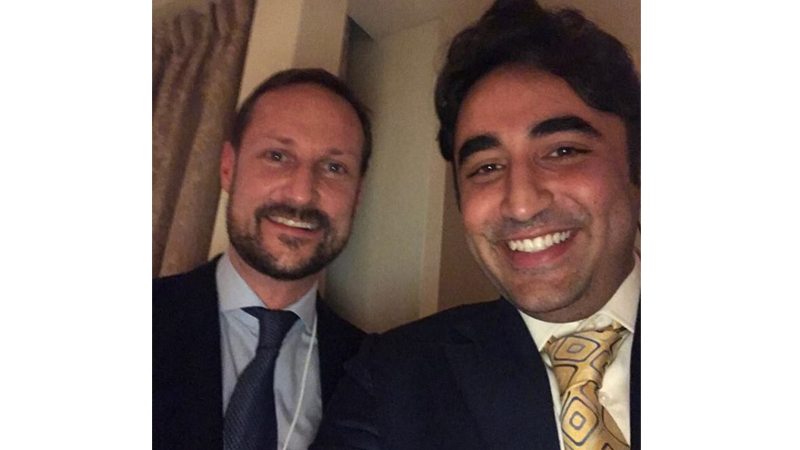
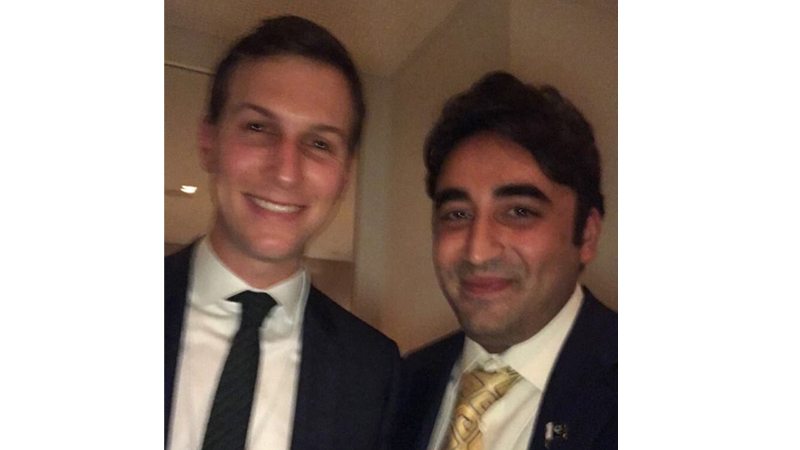
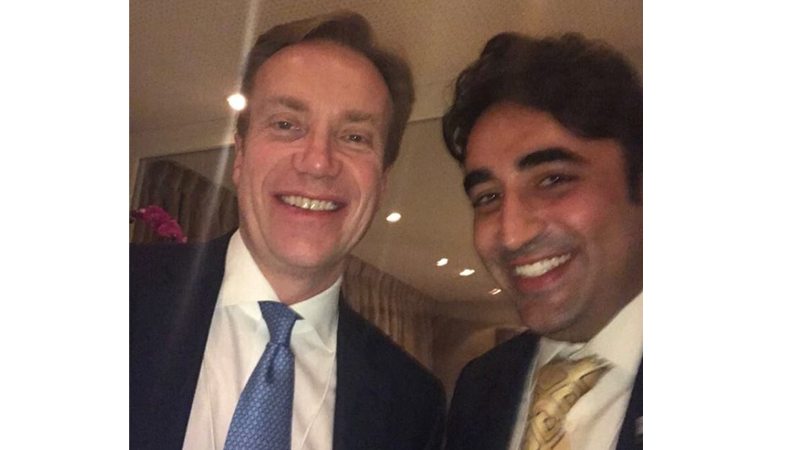
29-year-old Bilawal was the only Pakistani invited to the young global leaders’ dinner hosted by Børge Brende, president of WEF, and Jared Cohen, the CEO of Jigsaw. The chairman met with other high-profile guests, including Jared Kushner, Prince Hussein bin Abdullah of Jordan and Haakun Magnus, Crown Prince of Norway.
The chairman concluded his trip with his first interview with the Indian media, which has gone viral in its strong, measured defence of Pakistan.
Bilawal Bhutto Zardari said that the big business models posed a threat to real journalism in Pakistan.
Discussing the concept of fake news, Bilawal said that fake news recently gained popularity primarily through US elections. However, it has existed for decades, he said.

Responding to questions raised during the discussion, Bhutto said: “When fake news is disseminated in Pakistan, it can have major issues – the point is to have the media come through as transparent as it can. Coming from a fragile democracy, attacking and demonising the media can have adverse effects.”
Bilawal said that there was no concrete way to ask who ran fake news in Pakistan. “They are far more commercialised, they push out their monetary interest. A lot of actors are involved in this especially commercial owners,” he said.
The PPP chairperson further stated that it was big business models and industrial giants who owned and ran media houses, which posed a high possibility of the news being biased.
On Western media’s propagation, he said: “Let’s not forget weapons of mass destruction in Iraq was fake news – we have to be able to sort of see that we don’t recognise our own fault. They pitched US intelligence narratives which turned out to be fiction.”
When asked about how much danger fake news poses to democracy, Bilawal said that big business models were a fundamental threat to democracy. “We have some of the most amazing, dedicated journalists in Pakistan, but with the big houses doling out cash potentially plaster real news with sensationalism.”
Bilawal maintained that self censorship and freedom of speech had to have a balance. “It is crucial to have authenticity and credibility even if the news comes ‘from the people by the people’ like WikiTribune. The journalists could get together, create authentic content, get driven and perhaps counter fake news better this way.”
“I’m more comfortable with something like that – we have a long history of dealing with distortion of facts. I personally don’t trust my state dealing with fake news. If the grassroots components are addressed, there could be a positive change.”
Bilawal doubled down on the fact that imparting education was not only advised, but imperative to help counter this issue. “I don’t remember being taught about sourcing, bias, research when I was studying. The generation today must also be taught how to identify fake news when they come across it.”
He conclusively stated that raising tribal and partisanship concerns was important. “Accepting the fact that fake news will be around for some time, empowering people can always lead to fruitful results in the future,” he said.

Bilawal Bhutto congratulates national cricket team on reclaiming world top-ranking in T20 side

Chairman Pakistan Peoples Party Bilawal Bhutto Zardari has congratulated national cricket team on winning T20 series against New Zealand and reclaiming the top-ranking in the world.
In a message to Pakistan Cricket Captain Sarfaraz Ahmed, the PPP Chairman appreciated the hard-work and team-work of the national squad in the series to fetch a fabulous 2-1 victory against New Zealand.
https://mediacellppp.wordpress.com/2018/01/28/bilawal-bhutto-congratulates-national-cricket-team-on-reclaiming-world-top-ranking-in-t20-side/

Criticising Pak Army won’t serve purpose: Bilawal Bhutto


Pakistan People’s Party (PPP) Chairman Bilawal Bhutto Zardari Saturday said even though the relations between Pakistan and India were not at their best at the moment, peace was the only chance for both the countries.


In an interview to Indian news organisation India Today on the sidelines of World Economic Forum (WEF) meeting in Davos, the PPP scion said, “Despite hostilities on both sides and genuine complaints, ultimately the youth of both countries understand that the only solution is peace. We just have to figure out a way to get there.”

‘Criticising Pak Army won’t serve purpose’: Maintaining that Pakistan needs a strong army since it is engaged in the fight against terrorism, Bilawal – when questioned about Pakistan Army’s “alleged links with extremist forces” – asserted that: “It does not serve my purpose or my country’s purpose to criticise my armed forces when they’re fighting terrorists.”

“Pakistan’s army does not have a relationship with India, the state does,” the PPP chairman made clear as he set the tone for what was his first interview to an Indian news outlet.

When the Indian anchor said the Pakistan army keeps “messing” with India, Bilawal was quick to interrupt him and said, “You mess with us as a state.”

The PPP chairman stated that India and the world needed to stop dictating to Pakistan because such hostility was unhelpful in improving relations.

‘Modi’s negative image in Pakistan’: While answering another question, the PPP leader said Indian PM Narendra Modi’s image in Pakistan after the incidents in Gujrat was not positive. “His image in Pakistan after the incidents in Gujrat is not positive,” he said, referring to Modi’s stint as the Indian state’s chief minister when deadly riots between Muslims and Hindus led to bloodshed in 2002.

Asked about the “rising popularity” of the Indian premier exemplified by his recent election victories, Bilawal shot back, asking: “Is winning what’s important or is doing the right thing what’s important?

Kashmir cause: He also did not shy from giving his views on Kashmir. “In the age of social media, you cannot hide what’s happening in Kashmir on either side. But for social media to see bullet-riddled bodies in [India-held] Kashmir makes things a little difficult.”

Responding to a question asking him why Pakistan had not “reciprocated” Modi’s efforts to improve relations by going out of the way to visit Sharif’s in Raiwind, Bilawal said: “Modi’s trip to Pakistan, while perhaps intended to send a positive sign … [was not followed] up with any sort of state cooperation [which] sends the image that they’re just showing that they want to have peace but are not actually taking the concrete steps necessary.”

‘Coalition Support Fund is not aid’: While commenting on US President Donald Trump’s statement about Pakistan giving the US “nothing but lies and deceit”, he said that Trump did not want to give the impression that America doesn’t pay its debts, adding “the Coalition Support Fund is not aid; it is the money Pakistan is due for the work we have done in fighting terrorism”.

Bilawal lamented that stakeholders across the world are not even having a conversation on how to counter violent extremism.

‘Extremism is not Islam-specific’: Referring to the global rise extremis, the PPP chairman said: “Extremism is not Islam-specific. You have it in Myanmar, India, America and in Pakistan. Not only do we have to eliminate terrorism, but also talk about defeating extremism.”

He added that Pakistan “needs a genuine progressive voice, a progressive alternative to the populist, hate-driven politics of the two other mainstream political parties in Pakistan.”

“We cannot tolerate prejudice, we cannot tolerate misogyny, we cannot tolerate discrimination, we cannot tolerate hate. And if we do not tolerate all these things, there won’t be any space for extremism,” he added.

“PPP has always been a progressive party in Pakistan. That’s the way forward. That’s the kind of politician I want to be. Shehbaz [Sharif] and Imran [Khan] have their own reasons for doing politics. I am doing it for the people,” said Bilawal.

Bilawal also reiterated that he did not choose the life of a politician. “It’s absolutely something that has been thrust [upon] me.”

Likens Imran’s remarks to ‘schoolyard insults’: Asked who he considers his principle adversary, Bilawal said he does not look at this (politics) in terms of adversaries.” I am doing this for the people of Pakistan.” While responding to a question about Pakistan Tehreek-e-Insaf (PTI) Chairman Imran Khan referring to him as ‘Baby Bhutto’, he said, “When they can’t fault you on the issues and what you’ve done, they resort to schoolyard insults.”

In response to a question about comparisons being made between him and young Indian politician Rahul Gandhi, he said he could not take a partisan view with politicians in India but added that the trend of young politicians finding space in national politics was positive.

Saturday, January 27, 2018

Video - Haute Couture summer 2018: Dior adds sensuality with masked ball

Video Report - Paris fashion week: Azzaro | DW English

Video Report - Bulgaria: Greece’s "Poor Neighbor" | Made in Germany

China: US Navy’s reckless operations in South China Sea will only hit a brick wall

By Curtis Stone 


On January 17, the U.S. Navy’s guided-missile destroyer the USS Hopper sailed near China’s Huangyan Island without permission from the Chinese government. The Chinese Navy immediately indentified the trespassing U.S. warship and warned it leave Chinese waters. The reckless provocation ended in disgrace for the U.S. Navy.
The provocative move comes on the heels of the release of the U.S. National Defense Strategy for 2018, which laid out an aggressive strategy against “strategic competitors” and “revisionist powers.”
Some US officials had pointed an accusing finger at China for the “militarization” of the South China Sea.
China’s sovereignty over Huangyan Island and its adjacent waters is indisputable. Aggressive acts by U.S. warships in the South China Sea undermine China’s sovereignty and security interests, and threaten the safety of Chinese vessels and personnel engaged in normal activities, violating the basic norms of international relations and harming relations between the two countries and their militaries.
Shows of strength in the name of “freedom of navigation” operations go against the common interests of all parties in the South China Sea to enhance peaceful cooperation. In fact, the situation in the South China Sea is not as bad as some make it out to be. For example, China and ASEAN have adopted the framework of the “Code of Conduct for the South China Sea,” and China is working with ASEAN to make the South China Sea a sea of peace, friendship, and cooperation for the benefit of all.
USS Hopper (DDG 70) Photo from navy.mil
The U.S. decision to stir up trouble reveals who is behind the “militarization” of the South China Sea. For its part, China has established a consultation mechanism with the Philippines, and the two countries are discussing ways to foster maritime cooperation. In addition, China and ASEAN are expected to further expand maritime cooperation, and the two have already agreed to conduct a joint maritime exercise in 2018. It is against this backdrop of peace and cooperation that a U.S. warship ran rampant through Chinese waters.
Such reckless behavior will only hit a brick wall.
As a commentary in the People’s Daily newspaper on January 22 pointed out, if the U.S. keeps stirring up trouble and creating tension in the South China Sea, China will be forced to come to the conclusion that it is indeed necessary to strengthen and speed up the building of its capabilities in the South China Sea so as to safeguard regional peace and stability.
While the anti-China theme does grab attention, the reality of the situation is that China plays a positive role in regional cooperation, and the rapid growth of China has benefited all of ASEAN. If the United States hopes to have a long-term role in East Asia, then it should get with the program and participate in regional affairs in a constructive manner and work for the benefit of common interests rather than its own selfish interests.

Russian economy under Putin: Quality of life tripled, foreign debt fell 75%


Vladimir Putin was first elected as Russian President in 2000. Here’s how the Russian economy has transformed in the intervening years by numbers.

Quality of life

Before Putin’s election, Russia had a $9,889 GDP per capita by Purchasing Power Parity (PPP). The figure had almost tripled by 2017, and has now reached $27,900. Russia has the highest GDP per capita among its fellow BRICS countries, with the next-highest, China, having just $16,624. The PPP takes into account the relative cost of living and the inflation rates of countries in order to compare living standards in different nations.
The average nominal monthly wage has grown almost 11-fold from $61 to $652. Unemployment has contracted from 13 percent to 5.2 percent. Pensions have grown over 1,000 percent in the same period from $20 to $221.

Economy performance

Russia is the sixth-largest economy in the world by PPP, with a $4-trillion GDP. PwC has predicted that, by 2050, the country will become the largest economy in Europe by this measure, leaving behind Germany and the United Kingdom.
Back in 1999, the Russian economy by PPP was worth only $620 billion. So, in the last 18 years, Russian economic output in these terms has increased by 600 percent.
Inflation rates have decreased from 36.5 percent to 2.5 percent by the end of 2017. The total value of assets of the Russian banking system has risen 24-fold to $1.43 trillion. Capitalization of the Russian Stock Market has grown more than 15-fold to $621 billion.

Public debt & foreign reserves

When Putin was elected in 2000, Russia had just $12 billion in reserves, accompanied by a public debt, which was almost equal to the country’s economic output at 92.1 percent.
Things have changed markedly in 18 years, as Russia’s public debt has now shrunk to 17.4 percent of GDP and reserves have increased to $356 billion. Low debt and growing reserves helped the country to live through the economic crisis of 2008 and the recession of 2014-2016, caused by a fall in oil prices and Western sanctions.
Russian gold reserves have increased by more than 500 percent since 2000. The Central Bank of Russia (CBR) added 9.3 tons of gold to its reserves in December, bringing the total yearly holdings to a record 1,838.211 tons – worth over $76 billion in monetary terms.
The World Gold Council shows that Russia is the largest buyer of gold and is the world's third-biggest producer, with the Central Bank purchasing from domestic miners through commercial banks.

Agriculture

While the Russian economy remains dominated by oil and gas revenues, its agriculture sector has boomed in recent years. Russian farmers produced their largest ever crop in the 2017 agricultural year, breaking the 40-year-old Soviet record, and harvesting more than 130 million tons.
In 2016, Russia became the world’s leader in wheat exports. Since the early 2000s, the Russian share of the world wheat market has quadrupled, from four to 16 percent.
Although agriculture still remains far behind the energy sector, it surpassed arms sales and became the country's second-largest export.
Russia started exporting grain in 2002, selling a little over seven million tons. In 2017, Russia wanted to sell 45 million tons – an increase of more than 600 percent.

Video - Shakira Bellydance live in Morocco Mawazine festival 2011

Saudi accused of rights abuses in Yemen civilian deaths

A UN report on human rights abuses related to foreign intervention in Yemen details the extensive civilian casualties inflicted by the Saudi-led coalition's air attacks. 
The United Nations panel examined 10 air attacks in 2017 that killed 157 people, and found that the targets included a migrant boat, a night market, five residential buildings, a motel, a vehicle and government forces, according to a copy of the report shown to Al Jazeera.
"This is a report to the UN Security Council that has not been made public, but I've been allowed to read a copy. It's very hard hitting and very critical of all of the parties in the war in Yemen," Al Jazeera diplomatic editor James Bays said.
The panel said it requested information from the Saudi-led coalition for the rationale behind such attacks, but did not receive a response. The attacks were carried out by precision-guided munitions, so it is likely these were the intended targets, the report points out.
"Even if in some cases, the Saudi-led coalition had targeted legitimate military objectives, the panel finds it highly unlikely that the IHL [International Humanitarian Law] principles of proportionality, and precautions in attack were met," the report stated.
The report also cited a "widespread and systematic" pattern of "arbitrary arrests, deprivation of liberty and enforced disappearances". It was particularly scathing about UAE camps, where it says torture has been taking place.
"The report talks about beatings, electrocutions, constrained suspension, and it talks about something called the cage which is confinement in a cage in the sunlight and the denial of medical treatment," James Bays said.
"Working with the gov of Yemen gives the UAE plausible deniability," he added.

'Threat to peace'

Proxy forces funded and armed by the coalition "pose a threat to peace, security and stability of Yemen", the panel said, and "will do more to further the fragility of Yemen than they will do to hold the state together".
The report also said that southern secession in Yemen has become a genuine possibility, due in part to the length of the war, the lack of military progress and divisions that have emerged in the country.
According to Bays, the report wonders if Yemen can remain one country.
"People in the south are displaying the old flag of South Yemen and they are not loyal to President Hadi even though they are under his command," Bays said.
The report is also critical of Iran's role in the conflict, focussing specifically on supporting Houthi rebels, who stormed the Yemeni capital Sanaa in 2014 and captured large expanses of the country,with military equipment.
"The report says there have been military equipment and drones that were of Iranian origin and that were introduced into Yemen after the Security Council adopted an arms embargo," Al Jazeera correspondent Bays said.
Since the beginning of Yemen's war, more than 10,000 people have been killed, according to the UN.
In March 2015, a Saudi-led coalition launched a large aerial campaign against the Houthis, aimed at restoring the government of President Abd-Rabbu Mansour Hadi.
A majority of the more than 5,000 civilian deaths were caused by the Saudi-led coalition, of which the United Arab Emirates (UAE) is a member, the UN has previously said. 
The UN's top human rights official, Zeid Raad al-Hussein, had called for an independent inquiry into atrocities in Yemen for three years before the international community agreed in 2017.
In September, the Netherlands and Canada debuted a draft resolution that would establish an international commission of inquiry to make sure "perpetrators of violations and abuses, including those that may constitute war crimes and crimes against humanity, are held accountable".
The resolution was approved after China signalled its support later that month.

#Yemen: ‘Heart-breaking’ mass drowning a symptom of devastating conflict and humanitarian crisis


Responding to reports that at least 30 Somali and Ethiopian refugees and migrants drowned after leaving the coast of south-western Yemen to flee back to Africa, Lynn Maalouf, Director of Research for the Middle East at Amnesty International, said: 

“This heart-breaking tragedy underscores, yet again, just how devastating Yemen’s conflict continues to be for civilians. Amid ongoing hostilities and crushing restrictions imposed by the Saudi Arabia-led coalition, many people who came to Yemen to flee conflict and repression elsewhere are now being forced yet again to flee in search of safety. Some are dying in the process.
This heart-breaking tragedy underscores, yet again, just how devastating Yemen’s conflict continues to be for civilians.
Lynn Maalouf, Director of Research for the Middle East at Amnesty International
“During almost three years of Yemen’s conflict, all parties have flagrantly flouted international law. Civilian lives have been devastated by indiscriminate bombing and shelling, arbitrary detentions, enforced disappearances and a spiralling humanitarian crisis that has made more than 22 million people reliant on aid to survive. 

“The international community must halt arms transfers that could be used in the conflict, cooperate to ensure accountability for war crimes and other serious violations, and pressure the Saudi Arabia-led coalition to fully lift the restrictions on aid and commercial imports of essential goods which are exacerbating one of the world’s worst humanitarian crises.”

Reports of gunfire on overcrowded boat
According to the UN Refugee Agency (UNHCR) in Yemen, at least 152 Somali and Ethiopian refugees and migrants left the Yemeni port of Aden on an overcrowded boat with people smugglers on 23 January. The boat never made it to its destination in Djibouti after it capsized amid reports of guns being fired on board.  

UN agencies and the Yemeni coast guard are working to establish more information about the incident.

In a report published earlier this month, UNHCR stated that there are 2,014,026 internally displaced persons in Yemen, while an estimated 1,457 families have been forced to flee since December due to the latest escalation in western Yemen. There are currently more than 280,000 refugees and asylum seekers from other countries in Yemen.