Saturday, December 2, 2017
On International Day of Persons with Disabilities, Bilawal Bhutto pledges to raise disable job quota to 5% in Federal, three provinces

In his message on the eve of International Day of Persons with Disabilities being observed by the United Nations the world over on Sunday, the PPP Chairman endorsed the UN Theme for the day in 2017 “Transformation towards sustainable and resilient society for all”.
He said that persons with certain physical disabilities are never a burden on the society but they are truly source of inspiration for rest of the humans. “They just need what is their due from the society to contribute their part in the development and progress of the country,” the PPP Chairman said.
Bilawal Bhutto Zardari appreciated that Sindh government has increased job quota for the candidates with disabilities from two to five per cent and formed a Committee to implement this quota in letter and spirits.
The PPP Chairman also pledged that PPP would also increase employment and recruitment quota for the persons with disabilities in departments of Federal and other three provincial governments to five per cent with a mechanism for full implementation after coming into power at center and these provinces after 2018 general elections.
He emphasized that not only in jobs but the differently-able community should also be given special incentives for business, sports and other fields to show their performance.
https://mediacellppp.wordpress.com/2017/12/02/on-international-day-of-persons-with-disabilities-bilawal-bhutto-pledges-to-raise-disable-job-quota-to-5-in-federal-three-provinces/
Dec 2: Bilawal commemorates Benazir Bhutto’s oath as first female PM
This day marks an important political event in Pakistan’s history after Pakistan Peoples’ Party (PPP) leader Benazir Bhutto took an oath to become the country’s first female premier on December 2, 1988.
This was stated by PPP chairman Bilawal Bhutto Zardari on his official twitter account on Saturday.
“2 December 1988: #PPP elected the world’s youngest PM and the Muslim world’s first female PM,” the former premier’s son tweeted.

https://arynews.tv/en/bilawal-commemorates-benazir-bhutto-oath-female-pm/

https://arynews.tv/en/bilawal-commemorates-benazir-bhutto-oath-female-pm/
On International Day of Persons with Disabilities, Bilawal Bhutto pledges to raise disable job quota to 5% in Federal, three provinces
In his message on the eve of International Day of Persons with Disabilities being observed by the United Nations the world over on Sunday, the PPP Chairman endorsed the UN Theme for the day in 2017 “Transformation towards sustainable and resilient society for all”.
He said that persons with certain physical disabilities are never a burden on the society but they are truly source of inspiration for rest of the humans. “They just need what is their due from the society to contribute their part in the development and progress of the country,” the PPP Chairman said.
Bilawal Bhutto Zardari appreciated that Sindh government has increased job quota for the candidates with disabilities from two to five per cent and formed a Committee to implement this quota in letter and spirits.
The PPP Chairman also pledged that PPP would also increase employment and recruitment quota for the persons with disabilities in departments of Federal and other three provincial governments to five per cent with a mechanism for full implementation after coming into power at center and these provinces after 2018 general elections.
He emphasized that not only in jobs but the differently-able community should also be given special incentives for business, sports and other fields to show their performance.
https://mediacellppp.wordpress.com/2017/12/02/on-international-day-of-persons-with-disabilities-bilawal-bhutto-pledges-to-raise-disable-job-quota-to-5-in-federal-three-provinces/
Video - #GoldenJubileePPP #PPPAt50 -BENAZIR BHUTTO - On 2nd Dec 1988, was sworn in as the 1st female Prime Minister of #Pakistan and in the Islamic world.
Defeating dictatorship, the firm, committed & courageous daughter of East, SMBB took oath as the youngest & 1st woman Prime Minister of Muslim world on 2nd Dec 1988. Democracy shall continue! pic.twitter.com/CXlHX1fcLo
— Naz Baloch (@NazBaloch_) December 2, 2017
Friday, December 1, 2017
ذوالفقار علی بھٹو صرف ایک نہیں آپ سب میں ذوالفقار بھٹو ہے -
ذوالفقار علی بھٹو صرف ایک نہیں
— Mustafa Nawaz Khokar (@Mustafa_PPP) November 30, 2017
آپ سب میں ذوالفقار بھٹو ہے #50YearsOfPPP pic.twitter.com/1HLHHDU9RC
Malala Yousafzai condemns terror attack in Peshawar
Nobel laureate and social activist Malala Yousafzai condemned the terror attack in Peshawar .

The activist wrote on Twitter: “When you pick up a gun in the name of Islam and kill innocent people, you are not a Muslim anymore. Strongly condemn the brutal attack in Peshawar killing innocent people on #EidMiladunNabi (PBUH) - a holy day for Muslims.”

Nine people were martyred and more than 30 injured after terrorists attacked the student hostel inside the Directorate of Agriculture Extension on University Road, Peshawar early Friday morning.
The security forces later managed to kill all the terrorists after a gunfight which lasted over an hour.
SSP Operations Sajjad Khan told Geo News that five attackers wearing suicide jackets reached the compound in a rickshaw.
They were said to be wearing burqas in the rickshaw so as to avoid detection.
The police official said the attackers' first target was the security guard of the premises, following which they made their way inside towards the students' hostel of the Agriculture Training Institute.
"They could have wreaked havoc but the police and army successfully neutralised the threat," he said further.
Later, army spokesperson Major General Asif Ghafoor praised the police performance during the operation. Speaking to a private news channel, Maj Gen Ghafoor said the terrorists were in contact with their partners in Afghanistan throughout the attack.
https://www.geo.tv/latest/170257-malala-yousafzai-condemns-terror-attack-in-peshawar
#PPPFoundationDay #JeayBhutto!! 🇱🇾 - پیپلزپارٹی کے پچاس سال... بھٹو سے بلاول تک


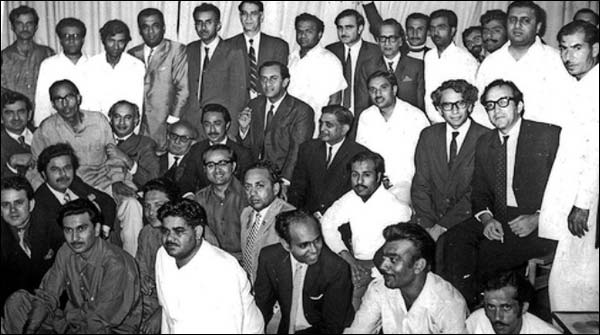
پاکستان پیپلزپارٹی واحد سیاسی جماعت ہے جس نے 30نومبر2017ء کو اپنے قیام کے پچاس سال مکمل کرلیے۔ذوالفقار علی بھٹو کی قیادت میں 30نومبر1967ءکو لاہور میں ڈاکٹرمبشر حسن کی رہائش پرتشکیل پانے والی اس جماعت نے اپنے قیام سے لے کر اب تک کئی ایک نشیب وفراز دیکھے ہیں۔چاربارحکومت کی ہے۔چار باراپوزیشن کا کرداراداکیا ہےاورچارہی مارشل لاء بھگتے ہیں۔
پاکستان میں کوئی اور جماعت ایسی نہیں جسےاپنے سیاسی سفر کے دوران اس قدرمقدمہ بازیوں، کال کوٹھڑیوں، کوڑوں، پھانسیوں، جلاوطنیوں، سمجھوتوں،سازشوںاوردھڑے بندیوں کا سامنا کرنا پڑا ہو۔ذوالفقارعلی بھٹواور ان کے ساتھیوں نے پارٹی کی بنیاد جن اصولوں پر رکھی تھی۔تیسری نسل تک آتے آتے اگرچہ ان کی غرض وغائت میں واضح تبدیلی آئی ہے لیکن اس کے باوجودجمہوریت کے لیے سب سے زیادہ قربانیاں دینے کا دعویٰ اگر کوئی جماعت کرسکتی ہے تو وہ صرف اور صرف پاکستان پیپلزپارٹی ہی ہے۔
پیپلزپارٹی کے بانی ارکان میں جے اے رحیم، ڈاکٹر مبشرحسن،شیخ رشید،حنیف رامے، خورشید حسن میر،غلام مصطفیٰ کھر،مخدوم طالب المولیٰ، حق نواز گنڈاپور،رفیع رضا، عبدالحفیظ پیرزادہ، حیات شیرپائو،معراج محمدخان،میر رسول بخش تالپور،باسط جہانگیر شیخ اور کمال اظفر شامل تھے۔ذوالفقارعلی بھٹو نے جے اے رحیم کے ساتھ مل کر پارٹی کابنیادی سوشلسٹ ڈیموکریٹک منشور ترتیب دیا تھا۔تاہم 1975ء میں جے اے رحیم کے بھٹو کے ساتھ اختلافات پیدا ہو گئے اور انہیں پارٹی سے نکال دیا گیا۔اسی دوران ایک اور بانی رکن معراج محمد خان بھی پارٹی سے کنارہ کش ہو گئے ۔
1979ء میں جنرل ضیاءالحق کے ہاتھوں ذوالفقارعلی بھٹو کے عدالتی قتل کے بعد پیپلزپارٹی کے لیے قدم جمانا انتہائی مشکل تھا لیکن بیگم نصرت بھٹو کی ثابت قدمی نے بہت سے سینئررہنمائوں کی کنارہ کشی اور بے وفائی کے باوجود پارٹی کا شیرازہ نہیں بکھرنے دیااور بعدازاں بے نظیر بھٹو نے جس جرأت مندی کے ساتھ ضیائی آمریت کا مقابلہ کیا اورپارٹی کے بنیادی نظریے اور فلفسے کوآگے بڑھایا،وہ بھی تاریخ کا حصہ ہے۔
پیپلزپارٹی کامنشور اگرچہ اب بھی وہی ہے جو 1967ء میںلکھا گیا تھا لیکن اس دوران ملکی و غیرملکی سطح پر رونماہونے والی تبدیلیوں نے اس کے فکر وفلفسے کوخاصی حدتک تبدیل کر کے رکھ دیا ہے۔اس دوران بھٹوکی پھانسی ہوگئی،اسلامی بلاک کا خواب چکنا چور ہوا، رُوس کے ٹوٹنے سے کمیونسٹ بلاک کے ٹکڑے ٹکڑےہوئے، چین کا کمیونزم اس کے اپنے حدودِ اربعہ سے باہر تانک جھانک نہیں کرتا،طالبان پیداہوئے، القاعدہ آئی، افغان جنگ کہاں سے شروع ہوئی اور کس سمت کی طرف چلی گئی اور رفتہ رفتہ انڈونیشیا، ایران،شام، لیبیااورالجیریاکے وہ دوست بھی جاتے رہےجومشکل وقتوں میں پیپلزپارٹی کا سہارابنتے تھے۔
یقینی طور پر پیپلزپارٹی کی قیادت ان حالات وواقعات سے خود کوعلیحٰدہ نہیں کرسکتی تھی۔چنانچہ اس کی طرزِ سیاست میں بنیادی تبدیلیاں پیدا ہونا ایک فطری امرتھا۔بےنظیربھٹو کافلسفہءمفاہمت بھی وقت کا تقاضا تھااوربے نظیر کی شہادت کے بعد آصف علی زرداری کا ’’پاکستان کھپے‘‘ کانعرہ بھی وقت کی ضرورت۔اس کے بعد بلاول نے جب ’’جمہوریت ،بہترین انتقام‘‘ کی بات کی تویہ واضح ہو گیا کہ پیپلزپارٹی کی جدوجہدکسی انقلاب کے لیے نہیں بلکہ جمہوریت کے لیے ہے۔
بے نظیر بھٹو نے جمہوریت کی مضبوطی کے لیے نوازشریف کے ساتھ مل کر ’’میثاقِ جمہوریت‘‘پر دستخط کیے اور پھر جمہوریت کی خاطر شہید بھی ہو گئیں۔ان کے بعد آصف علی زرداری نے تمام اختیارات پارلیمنٹ اور منتخب وزیراعظم کو منتقل کرکے ایک جمہوری صدر ہونے کا ثبوت دیا۔انہی کی قیادت میں پیپلزپارٹی نے صوبہ سرحد کو خیبر پختون خوا کانام دیا اور اٹھارہویں ترمیم کے ذریعے صوبوں کو اختیارات منتقل کیے۔
بھٹو حکومت اور اس کے بعد پیپلزپارٹی سے الگ ہونے والوں نے الگ پارٹیاں بھی بنائیں لیکن کارکن جو’’ اسلام ہمارا دین ہے، سوشلزم ہماری معیشت ہے، جمہوریت ہماری سیاست ہے اور طاقت کا سرچشمہ عوام ہیں‘‘ کے بنیادی اصولوں پر یقین رکھتے تھے ،بھٹو ہی کے نام کا پرچم تھامے رہے۔نہ معراج محمدخان کی قومی محاذآزادی چلی،نہ غلام مصطفیٰ جتوئی کی نیشنل پیپلزپارٹی کسی کے کام آئی اور نہ ہی مرتضیٰ بھٹو کے قتل کے بعد غنویٰ بھٹو کی قیادت میں قائم ہونے والی پیپلزپارٹی (شہیدبھٹو)جیالوں کا لہو گرما سکی۔
پیپلزپارٹی ذوالفقارعلی بھٹوسے ہوتی ہوئی اب ان کے نواسے بلاول بھٹو تک پہنچ چکی ہے ۔بلاول کی اپنی عمر 29سال ہے جبکہ ان کی پارٹی پچاس برس کی ہو گئی ہے ۔جس کے پیچھے جدوجہد اورلازوال قربانیوں کی ایک تاریخ ہے۔ذوالقارعلی بھٹوکے وقت پیپلزپارٹی ملک کی سب سے بڑی سیاسی جماعت تھی۔بے نظیربھٹو بھی چاروں صوبوں کی زنجیر کہلاتی تھیں۔ان کے بعد آصف علی زرداری بھی وفاقی حکومت بنانے میں کامیاب ہوئے لیکن حالات کا جبر کہیے یا کچھ اور،وفاق کی علامت سمجھی جانے والی یہ پارٹی اب عملی طور پر سندھ تک محدود ہو کر رہ گئی ہے۔دیکھنا یہ ہے کہ بلاول اس تاثر کو زائل کرنے میں کہاں تک کامیاب ہوتے ہیں۔
#50YearsOfPPP - #PPPat50 The fifty years of the Pakistan Peoples Party – A unique struggle

By Mazhar Abbas
 |
While it is true that most major political parties in Pakistan have seen their rise and endured falls, there is no political party in the country like the Pakistan Peoples Party which has, inarguable, sacrificed the most in terms of their leadership throughout the fifty years of their existence.
As the flag-bearer for democracy in Pakistan, the PPP celebrates its Golden Jubilee today, knowing full well that theirs has been the most unique struggle for democracy and supremacy of the Constitution and the Parliament in Pakistan.
The founder of the party, Zulfiqar Ali Bhutto set the unimaginable standards of sacrifice when he steadfastly refused to bow down to a dictator, faced a sham trial and was executed for a case which even his worst critics termed as 'judicial murder.
His daughter, Benazir Bhutto, faced trial, prison, exile and was finally assassinated by the militants against whom she was most vocal. Begum Nusrat Bhutto, who herself led the struggle after her husband's arrest, faced the trauma both as a wife and a mother. Both her sons, Shahnawaz Bhutto and Murtaza Bhutto were killed. Looking ahead, the biggest challenge for the PPP and its young leader and the scion of the Zardari-Bhutto clan, Bilawal Bhutto Zardari, is to figure out how to reinvent the party which has lost its way since the assassination of his mother, Benazir Bhutto in December 2007. They can at least begin with reinvention from its home turf, the province of Sindh where they have been in power since 2008. If the present leadership is able to learn from its mistakes and set a good record of governance in Sindh, the PPP may yet succeed at the national level in years to come.
The Party’s decline is the result of its deviation from its basics, the 'Fundamental Document'.
Today, the PPP looks confused about whether to carry progressive, liberal ideas or conservative or should it mould itself with right-wing tendencies? Whether to compromise in the name of reconciliation or stand for basic principles?
Benazir Bhutto’s widower and former President Asif Ali Zardari did not do justice to his son Bilawal by making him chairman in 2007 – after his mother’s death – when he was not mature enough. It is imperative upon the decision-makers within the party to seek help, guidance and, perhaps leadership, by turning towards the brilliant political minds the party has produced. Names such as Farhatullah Babar, Raza Rabbani, Aftab Shaban Mirani, Aitzaz Ahsan and Qamar Zaman Kaira are among many gifted politicians in the PPP with credentials to run the party on progressive and democratic lines.
Another challenge for Bilawal would be to figure out how to carry on the legacy of his grandfather, Zulfiqar Ali Bhutto, Pakistan's most popular leader by all standards and that of his mother, Benazir Bhutto, whose struggle against the country's worst military dictator, General Zia ul Haq was unmatched. The PPP's strength has always been it's committed and dedicated workers, often called the 'jiyalas'. Hundreds of them gave their lives for the party. Today, Bilawal may not be able to bring that kind of spirit in the party nor that kind of 'jiyala,' who can go to the gallows, saying, ' Jeay Bhutto,' or face lashes and endure the most inhumane kind of torture in the famous Lahore Fort.' For the old ‘jiyalas’, PPP was a 'romance' and so was Bhutto. It remains to be seen if the passion of the past can be evoked once again in support of the party.
PPP can proudly claim to be the architect of the Constitution in 1973 and also of Pakistan's nuclear program. One could criticize some of Bhutto's domestic policies but the fact remains that despite having two-thirds majority, he always took the opposition along on crucial issues.
It can be argued that had Bhutto not fallen in the trap of his obsession to crush the National Awami Party, and respected the governments of the-then North-West Frontier Province and Baluchistan, the state of politics and the country would have been different today.
The PPP also faced some of the most blatant conspiracies allegedly from the establishment. From the Islami Jamhoori Ittehad to Midnight Jackal to Mehran Bank, PPP was never allowed to get two-third majority after the 1977 election.
Even the conspirators admitted and boldly defended their position of not allowing PPP's landslide in 1988 and distributing money to the opposition to rig the 1990 elections. It was an utmost tragedy of our nation that not a single 'conspirator' was ever put on trial for violating the Constitution and their own 'oath.'
Formed in Lahore at the residence of Dr Mubashir Hasan on November 30, the party has decided to hold its main event of golden jubilee celebration in Rawalpindi as both Zulfiqar Ali Bhutto and Benazir Bhutto died in this city – one was hanged and other was assassinated. Then PPP was the combination of true revolutionaries as well as the feudal class. Bhutto was himself a feudal but his entire political posture was progressive with complete command on national and international politics. He knew both the art of public oratory as well as the skill to address a global audience at the world’s most august forums. In the last five decades, PPP's struggle can be divided into five phases. (1) 1967 to 1970, (2) 1972 to 1977, (3) 1978 to 1988, (4) 1988 to 2007 (5) 2008 to 2017.
The first phase of the party was completed when PPP emerged as the second largest party after Sheikh Mujeeb ur Rehman's Awami League in the 1970 election. The result divided the country as neither AL won a single seat from West Pakistan nor any party won seats from East Pakistan. It brought an end to the first phase of PPP's three years and signalled the beginning of its second phase when Gen. Yahya Khan handed over power to Bhutto. In a serious Constitutional vacuum and left with no other option, Bhutto chose to accept the unpopular tag of being the first Civilian Marshal Law Administrator in 1972. PPP’s second phase revolved around controversies, misrule, suppression of media and political opponents, both within and outside the party. This did not go well with the party or government and reflected a complete deviation from party's basic principles. But, at the same time, Bhutto emerged as a strong leader at the International level, the voice of the Third World, an Islamic World. He also emerged as a strong nationalist and someone capable of challenging arch-rival, India.
PPP's third and the most difficult phase revolved around the post Bhutto era. The period between July 1977 and April 4, 1979 was perhaps the worst for PPP leaders and workers as thousands faced prison, convictions, lashes, torture and some were even hanged. Bhutto's hanging was like a 'bomb shell' for PPP, Pakistan and for many world powers. Arab rulers in particular were shocked as they always considered him as their leader.
The phase between 1978 and 1988 revolved around Begum Nusrat Bhutto and Benazir Bhutto. While Begum Bhutto was very emotional but committed, it was Benazir Bhutto who emerged as the true successor to her father. Benazir was never allowed to settle down. Some elements within the establishment never accepted her as the Prime Minister or a leader. It was either because she was a woman or the daughter of Zulfiqar Ali Bhutto. Even her simple majority in the 1988 election was not acceptable. Therefore, in 1989, the agencies backed a vote of no confidence tabled against her but they were defeated. In 1990, in one of the worst kind of conspiracy was hatched against democracy in Pakistan, in which the role of the establishment was the darkest era of our democratic history. The infamous 'Mehran Bank' case is still pending before the Supreme Court after the passage of nearly three decades. The establishment never accepted Benazir Bhutto as was evident from multiple events between 1988 and 2007. Even when she finally committed a political blunder of accepting the NRO, and that too after she signed a historic, 'Charter of Democracy,' her return from exile was not welcomed by the then military dictator, retired General, Pervez Musharraf.
She survived the first attempt on her life on Oct 18, 2007 in Karachi in which over 250 PPP workers died in a suicide attack. She survived another attempt in Peshawar, days before her last public meeting at Liaquat Bagh, Rawalpindi.
PPP could not recover after December 27, 2007, when their popular leader was assassinated at the same venue where the country's first Prime Minister, Liaquat Ali Khan was killed. Both murders remain a mystery. The PPP, which we saw in the last phase, failed in making any major impact on Pakistani politics and one of the primary reasons was the change in the party, moving from Bhuttos to Zardaris. Despite former President Asif Ali Zardari’s ability to ensure that the party completed its first ever term in the government, he has failed in making the PPP a popular party.
As the new phase starts for the PPP, the struggle and challenges go on too. Only time will tell if the party can reclaim their halcyon days under the young leadership of Bilawal Bhutto.
#50YearsOfPPP - #PPP at 50


FIFTY years appear to be a very long period in the case of the Pakistan Peoples Party that was born on Nov 30, 1967. Think of an upheaval and the PPP has experienced it. Jail, execution, splits, forced exit, triumphant return, compromises, intrigue, conspiracy, assassination, feuds, relentless persecution, betrayal — the PPP has been through it all. No other political entity in Pakistan draws reactions as extreme as this party has done over the decades.
The 1970 election which saw the party as the biggest force in the then western wing of Pakistan had been a momentous occasion in the country’s history; the people had finally spoken out. This was the foundation of the country’s democratic edifice which has been under constant threat.
Back in the 1970s, Zulfikar Ali Bhutto and his PPP were a part of the emerging setup which couldn’t prevent the breakup of Pakistan. Later, the central authority in Bhutto’s truncated Pakistan faced a series of hostile situations before he was overthrown by an opportunistic general in 1977.
The PPP founder’s judicial murder two years later heralded a grave chapter in the party’s history. The shaheeds have been synonymous with the PPP since then. So have accidental leaders and the altogether new organisations they have had to create to suit their command — Benazir Bhutto’s PPP, Asif Ali Zardari’s PPP, Bilawal Bhutto Zardari’s would-be PPP.
The PPP as a popular party has been consistently in the thick of things, in Sindh, in Islamabad, and elsewhere in Pakistan. Its role in the opposition at the federal level easily eclipses its two stints in power in Islamabad under Benazir Bhutto.
The latest chapter in the PPP’s history has been defined as by far the most disappointing. It began with the killing of Benazir Bhutto 10 years ago, just when so many believed that Bhutto’s mature daughter was now best equipped to lead the party and country towards a solid democratic order.
The current leader’s unabashed courting of the establishment indicates just how far the PPP enterprise has moved away from its ideals in its search for relevance.
But this doesn’t mean that Mr Zardari is the first person to tamper with the PPP ideology, or whatever remains of it, to stay in the run. The ‘anticipatory’ steps taken by his predecessors were no less traumatic. However, the diehard jiyalas feel that they are not to be written off as yet — many continue to dwell on the days of glory and speak of the time when the new party had eliminated a degenerate system and its selfish protagonists in the 1970 election.
A national-level revival of the PPP to counter the burgeoning centre-right camp is still widely considered to be one of the most viable options, if not the only one. While it may not be the most flattering option to have been considered, it is still a compliment the PPP is badly in need of.
#PPPAt50 - 50 Years of Pakistan Peoples Party

By Senator Sehar Kamran

“You can imprison a man, but not an idea. You can exile a man, but not an idea. You can kill a man, but not an idea” – Mohtarma Benazir Bhutto
Today marks a full 50 years of the steadfast determination and indefeasible struggle by what is now Pakistan’s biggest political party – the Pakistan Peoples Party (PPP). Founded by the visionary Shaheed Zulfiqar Ali Bhutto on November 30th, 1967, the PPP was born as a vehicle for revolution during a period of immense darkness, to counter a dictatorship that was sucking the lifeblood of our beloved homeland. The Party’s nascence introduced a fusion of socialism and democracy into the system, rooted in guiding the national economy towards a just and equitable society, and thereby becoming a symbol of hope for the masses, where all citizens of the state could finally be afforded equal opportunities.
For half a century now, PPP has been the torch bearer for advancing civic and social reforms. It was the first democratic party to successfully oppose martial law and introduce democratic norms in Pakistan , setting a precedence for others parties to follow. Since its inception, the people of Pakistan have elected the PPP into government five times i.e., 1970, 1977, 1988, 1993 and 2008.
Backed by the progressives, intellectuals, students and labor organizations, PPP rose to power in a short span of time as the party of the ‘common man’ and a voice for the voiceless. It was the first party in the history of the country to be founded on an ideological premise. Under Zulfiqar Ali Bhutto, the PPP provoked for the first time within the people of Pakistan the realization that they are the true epicenter of power in the country, and introduced the unfortunately still relevant slogan of “Roti, Kapra aur Makaan”.
It is also perhaps the only party in Pakistan which, from the very beginning, has been vigorously supported by people at the grass-root level. The very fabric of the party is interwoven with men and women of all castes, creeds and every conceivable walk of life, and therein lies the true strength of the Party . Through thick and thin, the workers of the PPP have stood alongside its leadership to make the Party the beacon of hope and prosperity that it is today.
The struggles of the movement did not end with Shaheed Bhutto’s untimely judicial murder at the hands of another military dictator; instead, the heavy mantle of leadership was passed on to his daughter, Shaheed Benazir Bhutto. As Shaheed Bhutto aptly put in a birthday letter to his daughter, “What gift can I give you from this cell out of which my hand cannot pass? I give you the hand of the people. What celebration can I hold for you? I give you the celebration of a celebrated memory and a celebrated name”, thereby placing on her young shoulders the weight of his enormous legacy.
And Shaheed Benazir Bhutto rose to the occasion with grace, dignity and strength, undertaking landmark steps for the peace and progress of the country. It was during her governments that for the first time in the history of Pakistan , the press and media were uncensored, and political opponents received due coverage. She introduced multiple initiatives which became the foundation stone for women empowerment, and a template for future generations and governments to follow in the country. These ranged from the induction of women in higher judiciary, to the first ever increase in education, the establishment of the first ever women’s bank, establishment of a separate ministry for Women Affairs, and women police stations. She courageously and successfully fought two military dictators and emerged successful – a feat which is extraordinary, if not unbelievable. The courageous and hallmark steps taken by the first female prime minister of a Muslim country had a long-term positive structural impact on the psyche of a nation where stereotypical gender roles were prevalent. Shaheed Benazir was also the first Pakistani leader one to recognize the threat of violent extremism and terrorism posed to the country, and PPP is only party that openly highlighted its menace.
Unfortunately, Mohtarma’s fearless journey was cut short in the form of her untimely assassination, and the baton was passed on to the now former President Asif Ali Zardari and Bilawal Bhutto Zardari. Inarguably, the legacy of the Party lives on within the new leadership - a winning combination of the old and new generations. With President Zardari’s vision and Chairman Bilawal’s youthful leadership, the country can truly move forward on the path of peace, progress and prosperity.
In Pakistan , it is unprecedented for a political party to survive for 50 years with its founding ideology intact, in true letter and spirit, thereby becoming a true symbol of the federation. Today, the party’s message and philosophy resonates within from every corner of the country. PPP is also cognizant of the fact that the political leadership possess the necessary vigilance and vision to create consensus and carry along with them every segment of a society that is traditionally conservative and suspicious of change, in this pursuit of progress, or they would not be sustainable in the long-term.
Consequently, just as it is vital that the young leaders come forward with their zeal and energy, to help move the country towards a better future, it is also vital to have senior leadership who knows how to deal with the intricacies and complexities of political nuance and consensus building on complex issues, in order to gets things done. The workers and leaders of the Pakistan Peoples Party continue to carry forward the torch that was lit fifty years ago. As it is said, you can remove the soul out of a jiyala but you cannot remove a jiyala from the soul.
While we look back over a remarkable 50 years and renew our commitment to the PPP, we remember not only the visionary leaders of our past but all the generations of unsung, nameless heroes who have sacrificed much for the Party , as we also welcome the new generations into the folds of history. Much remains to be done, but there is no doubt that with the will, determination, and energy of a party that is crucible for the wisdom of age and tenacity of youth, we will overcome all hurdles, and achieve the path of peace, prosperity and progress envisioned for our country by every great leader of its past.
#50YearsOfPPP Video - Benazir Bhutto's Statment
A blast from the past. Unforgettable exclusive moments as a TV journalist with BB. pic.twitter.com/a5oShI7FOF
— Absar Alam (@AbsarAlamHaider) November 29, 2017
#50YearsOfPPP - 50 Years of #Pakistan Peoples Party

By Senator Sher Kamran

Today marks a full 50 years of the steadfast determination and indefeasible struggle by what is now Pakistan’s biggest political party – the Pakistan Peoples Party (PPP). Founded by the visionary Shaheed Zulfiqar Ali Bhutto on November 30th, 1967, the PPP was born as a vehicle for revolution during a period of immense darkness, to counter a dictatorship that was sucking the lifeblood of our beloved homeland. The Party’s nascence introduced a fusion of socialism and democracy into the system, rooted in guiding the national economy towards a just and equitable society, and thereby becoming a symbol of hope for the masses, where all citizens of the state could finally be afforded equal opportunities.
For half a century now, PPP has been the torch bearer for advancing civic and social reforms. It was the first democratic party to successfully oppose martial law and introduce democratic norms in Pakistan , setting a precedence for others parties to follow. Since its inception, the people of Pakistan have elected the PPP into government five times i.e., 1970, 1977, 1988, 1993 and 2008.
Backed by the progressives, intellectuals, students and labor organizations, PPP rose to power in a short span of time as the party of the ‘common man’ and a voice for the voiceless. It was the first party in the history of the country to be founded on an ideological premise. Under Zulfiqar Ali Bhutto, the PPP provoked for the first time within the people of Pakistan the realization that they are the true epicenter of power in the country, and introduced the unfortunately still relevant slogan of “Roti, Kapra aur Makaan”.
It is also perhaps the only party in Pakistan which, from the very beginning, has been vigorously supported by people at the grass-root level. The very fabric of the party is interwoven with men and women of all castes, creeds and every conceivable walk of life, and therein lies the true strength of the Party . Through thick and thin, the workers of the PPP have stood alongside its leadership to make the Party the beacon of hope and prosperity that it is today.
The struggles of the movement did not end with Shaheed Bhutto’s untimely judicial murder at the hands of another military dictator; instead, the heavy mantle of leadership was passed on to his daughter, Shaheed Benazir Bhutto. As Shaheed Bhutto aptly put in a birthday letter to his daughter, “What gift can I give you from this cell out of which my hand cannot pass? I give you the hand of the people. What celebration can I hold for you? I give you the celebration of a celebrated memory and a celebrated name”, thereby placing on her young shoulders the weight of his enormous legacy.
And Shaheed Benazir Bhutto rose to the occasion with grace, dignity and strength, undertaking landmark steps for the peace and progress of the country. It was during her governments that for the first time in the history of Pakistan , the press and media were uncensored, and political opponents received due coverage. She introduced multiple initiatives which became the foundation stone for women empowerment, and a template for future generations and governments to follow in the country. These ranged from the induction of women in higher judiciary, to the first ever increase in education, the establishment of the first ever women’s bank, establishment of a separate ministry for Women Affairs, and women police stations. She courageously and successfully fought two military dictators and emerged successful – a feat which is extraordinary, if not unbelievable. The courageous and hallmark steps taken by the first female prime minister of a Muslim country had a long-term positive structural impact on the psyche of a nation where stereotypical gender roles were prevalent. Shaheed Benazir was also the first Pakistani leader one to recognize the threat of violent extremism and terrorism posed to the country, and PPP is only party that openly highlighted its menace. Unfortunately, Mohtarma’s fearless journey was cut short in the form of her untimely assassination, and the baton was passed on to the now former President Asif Ali Zardari and Bilawal Bhutto Zardari. Inarguably, the legacy of the Party lives on within the new leadership - a winning combination of the old and new generations. With President Zardari’s vision and Chairman Bilawal’s youthful leadership, the country can truly move forward on the path of peace, progress and prosperity.
In Pakistan , it is unprecedented for a political party to survive for 50 years with its founding ideology intact, in true letter and spirit, thereby becoming a true symbol of the federation. Today, the party’s message and philosophy resonates within from every corner of the country. PPP is also cognizant of the fact that the political leadership possess the necessary vigilance and vision to create consensus and carry along with them every segment of a society that is traditionally conservative and suspicious of change, in this pursuit of progress, or they would not be sustainable in the long-term.
Consequently, just as it is vital that the young leaders come forward with their zeal and energy, to help move the country towards a better future, it is also vital to have senior leadership who knows how to deal with the intricacies and complexities of political nuance and consensus building on complex issues, in order to gets things done.
3The workers and leaders of the Pakistan Peoples Party continue to carry forward the torch that was lit fifty years ago. As it is said, you can remove the soul out of a jiyala but you cannot remove a jiyala from the soul.
While we look back over a remarkable 50 years and renew our commitment to the PPP, we remember not only the visionary leaders of our past but all the generations of unsung, nameless heroes who have sacrificed much for the Party , as we also welcome the new generations into the folds of history. Much remains to be done, but there is no doubt that with the will, determination, and energy of a party that is crucible for the wisdom of age and tenacity of youth, we will overcome all hurdles, and achieve the path of peace, prosperity and progress envisioned for our country by every great leader of its past.
#Peshawarattack: Zardari extends condolences to grieving families

Former president and Pakistan People’s People’s co-chairman Asif Ali Zadari has condemned the terror attack on Agriculture Directorate in Peshawar on Friday and extended condolences to the grieving families.
In a statement issued in this regard, Zardari expressed solidarity with bereaved families of nine victims and prayed for early recovery of those wounded in the attack.
PPP chairman Bilawal Bhutto Zardari said that terrorism is the biggest menace Pakistan is fighting and that it is the need of the time to save the country.
http://dunyanews.tv/en/Pakistan/417005-Peshawar-attack:-Zardari-extends-condolences-to-grieving-families
Eleven martyred, 37 injured as terrorist storm hostel of Directorate of Agriculture in Peshawar


At least eleven people including nine students were martyred and more than 37 others were injured after five terrorists attacked the student hostel inside the Directorate of Agriculture Extension on University Road, Peshawar early morning on Friday.
The terrorists came in a Rikshaw and they entered in the hostel and stormed the Directorate of Agriculture office, the police cordoned off the area and started operation against the four terrorists in the leadership of SSP Operation Sajjad Khan and killed all the terrorists after gunfight which was continues for over one hour.
While talking to local news channel Sajjad Khan said that the five terrorist wearing suicide jacket and in the initial reports they were said to be in burqas to avoid the detection.
He added that first they target the security guard of the office and later they walked towards the students hostels and they have a deadly plan and they could have wreaked havoc but the police force successfully conducted the operation and minimized the damage.
DG ISPR, Major General Asif Ghafoor appreciated the police performance during the operation and claimed that the terrorists were in contact with their partners in Afghanistan.
Aerial surveillance of the operation was carried out by the army aviation division whereas armoured vehicles of security forces were also on site.
Peshawar Capital City Police Officer Tahir Khan and SSP Operations Sajjad Khan were leading the operation.
Later, during the combing operation, authorities recovered suicide jackets, two Kalashnikov, pistols, and explosives from the possession of deceased terrorists.
#PeshawarAttack - Taliban gunmen wearing burqas launch deadly attack on #Peshawar college

11 people killed and dozens injured after militants open fire at agricultural college in north-western Pakistan.
Nine people have been killed and dozens injured after Taliban militants wearing burqas stormed a college in Peshawar as Pakistan marked the birthday of the prophet Muhammad, officials said.
Police said at least three militants opened fire at security guards near the gates of the Agriculture Training Institute, injuring one person before making their way inside and targeting student accommodation.

Authorities said the gunmen had been killed and security forces had cleared the area after searching for remaining militants. Salahuddin Khan Mehsud, the police chief of Khyber Pakhtunkhwa province, said three attackers clad in women’s burqas reached the gate in a rickshaw and opened fire to clear their way to the building.
“All of them were wearing suicide vests but they were killed before they could blow themselves up,” said Salahuddin Khan Mehsud, the police chief of Khyber Pakhtunkhwa province.
He said six students, a security guard and two civilians were killed in the attack.
“All three terrorists are dead while we are trying to identify a fourth body,” he added, following earlier reports there had been other gunmen.
A spokeswomen for two hospitals in the city said they had received nine bodies and were treating 38 injured people, including several in a critical condition.
During the onslaught on the training centre, a spokesman for the Tehreek-e-Taliban Pakistan, Muhammad Khurasani, claimed responsibility for the attack in a telephone call to AFP.
“Our mujahids have attacked the building because it was used as office for ISI. God willing our fighters will fight till the last drop of blood,” he said, referring to Pakistan’s Inter Services Intelligence agency. Noor Wali, a 19-year-old student at the institute, described a terrifying ordeal that began when he was woken by gunshots. “I rushed to the door and saw a fountain of blood pumping out of the shoulder of my roommate who was standing outside the room,” he said.
Wali and another student rushed to his aid, hiding from the gunmen for almost an hour before they were rescued by security forces. “The other student was pressing the wound with his hands to stop the blood and I had to put my hand on his mouth so that he cannot scream,” he said. “We took shelter inside the bedroom and were begging the injured student not to make any sound as the terrorists might hear it and kill us.”
The area where the attack took place is a hub for educational institutions in the city, including the University of Peshawar.
An interior ministry official told AFP that cellular networks had been suspended in various cities across the country for security reasons.
The attack bore striking similarities to a 2014 Taliban massacre at the army-run school in Peshawar that killed 151 people, mostly schoolchildren, and comes amid tight security across Pakistan as it celebrates the birthday of the prophet Mohammed.
The country is tense after weeks of anti-blasphemy protests in Islamabad in which seven people have killed and hundreds wounded in clashes with police.
Violence erupted over the weekend after police and paramilitary forces launched a bungled attempt to clear a sit-in, igniting fresh demonstrations in cities across the country, including in Lahore and Karachi.
The protests finally ended a few days ago under a military-brokered deal.
Demoralising to see failure of state in dealing with Faizabad protesters: Bilawal Bhutto

Addressing a press conference on the occasion of PPP’s golden jubilee celebrations, Bilawal said: “It was demoralizing for my entire generation to see writ of the state erode, to see the abject surrender of the state, to see the rule of law made a mockery of, to see the freedom of press strangled.”
Commenting on the country’s political situation, he further said that the conditions had deteriorated in recent times.
He also requested all the forces involved in the Faizabad sit-in to let democracy continue.
“Such conditions prove to be ‘very demoralizing’ for the youth. We [the youth] are dejected by the political class, opposition parties and the government.”
Bilawal added that there was democracy in Pakistan because of the PPP.
“The country became a nuclear power due to the efforts of PPP. The party will also give the country a young prime minister,” he said, adding that the PPP wanted the government to complete its tenure. “We want a democratic transfer of power.”
When asked about the general elections, Bilawal said that PPP was hoping that the elections were held on time. “However, the census process was quite controversial. “The people of FATA are quite upset [with the census]. About nine million people are also missing from census in Sindh,” he said.
On the completion of the PPP’s 50 years, Bilawal said that it was not just an opportunity for celebration, but also for introspection as well. “We have to see what our weaknesses have been and learn from our mistakes.”
“The party members must also focus on the ways they can make deceased party leaders such as Zulfiqar Ali Bhutto, Benazir Bhutto and Nusrat Bhutto proud,” he said. Bilawal said that the celebrations would continue over a year. “We will hold a rally in Islamabad’s Parade Ground on December 5,” he said, adding that PPP would hold conferences in various cities throughout the year.
Bilawal Bhutto Zardari felicitated the nation on the auspicious occasion of Eid Miladun Nabi (PBUH).
In a message, he said: “The Holy Prophet Muhammad (PBUH) preached and practiced tolerance, humility and understanding, not violence. He would have never approved violence even in his name.”
http://paktribune.com/news/Demoralising-to-see-failure-of-state-in-dealing-with-Faizabad-protesters-Bilawal-Bhutto-279947.html
Thursday, November 30, 2017
#50YearsOfPPP - Bhutto continues to rule the people’s hearts

Syed I Husain

On 1 April 1948, 20-year-old Zulfikar Ali Bhutto spoke at University of Southern California of the Islamic Heritage and said, “I see a failure of the Muslim world as a personal failure. In that respect something is binding about the Muslim world despite the fact that it is torn by dissension. I am not a devout Muslim. My interest is soaked in the political, economic and ethnic heritage of Islam. Imperialism has sapped our vitality and drained our blood in every portion of the globe. The young generation of Muslims, who will be the leaders of a new force, of an order founded on justice, wants the end of exploitation. Under the Islamic confederation, the future world may be secure. Destiny demands an Islamic association, political reality justifies it, posterity awaits it, and by God we will experience it. Courage is in our blood, we are the children of rich heritage. We shall surely succeed.”
He frequently spoke about creating a pan Islamic league with his friends. He was always a follower of Quaid-e-Azam Jinnah and would often discuss his ideology with his roommates.
Shortly after Muhammad Ali Jinnah’s death in September 1948, Bhutto wrote to the Pakistani envoy and said, “We have been orphaned at the all-important moment when we needed more than any other force, the torrential magnanimity of our beloved leader. Though the Quaid is no longer with us, yet his pure and virgin spirit will remain forever fertile in our psyche. His entire life was struggle for the improvement and emancipation of his people.” Bhutto spent some time volunteering during summer vacation at Pakistan Embassy. In one of the papers he wrote there, he termed Muhammad Ali Jinnah as his ideal and said that Jinnah was solely responsible for the origination of a state for those he led in the struggle for the emancipation of their lives. His dream of creating a Pakistan has been a outstanding dream, the realisation of his dream has been nothing short of a miracle. He had to lead a people who were thoroughly divided and depressed. He has been a God inspired human being, a man of purity of heart, of an unbelievable audacity and a unique courage and determination.
Less than a year after being enrolled at Lincoln’s Inn in 1953, he was called to the bar at the same location where Muhammad Ali Jinnah had once stayed. Barrister Zulfikar Ali Bhutto apprenticed in the chambers of Ash Lincoln. In 1957, Bhutto became the youngest member of Pakistan’s delegation to the United Nations. He addressed the UN Sixth Committee on Aggression that October and led Pakistan’s delegation to the first UN Conference on the Law of the Sea in 1958. That year, Bhutto also became Pakistan’s youngest federal minister. He entered government as one of President Iskander Mirza’s cabinet members, before being assigned several ministries during President Ayub Khan’s military rule. In 1963, he was appointed as the country’s foreign minister.
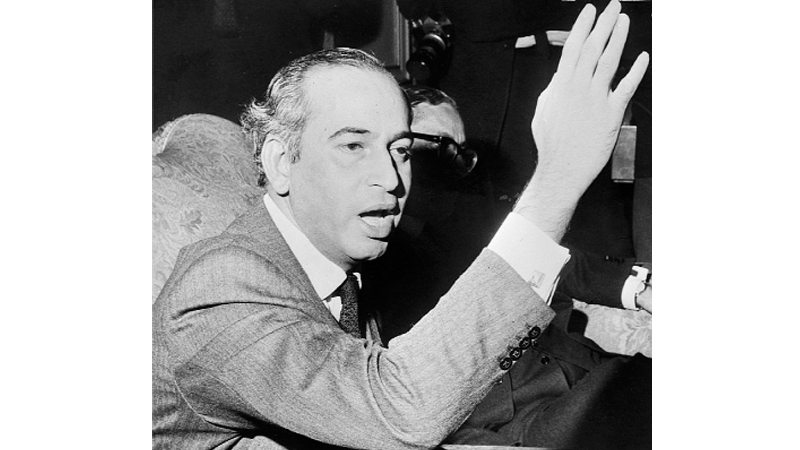
In 1965, Pakistan and India went to war. Later on January 10, 1966, President Ayub and Indian Prime Minister Lal Bahadur Shastri agreed to exchange prisoners of war and withdraw respective forces to pre-war boundaries. This agreement was strongly opposed in Pakistan. Zulfikar Ali Bhutto’s criticism of the final agreement resulted in a major rift between him and President Ayub Khan.
Zulfikar Ali Bhutto, while addressing the National Assembly in March 1966 after prolonged attacks against the regime for its mishandling of the war, said: “Let us look at the history: In 1939, Britain and France declared war against Germany, because in that respect it was a commitment to support the frontiers of Poland. A commitment that needs to be honoured. What really happened in Korea? It’s a war of liberation. Can Kashmir be exclusion, should we not be committed to the 5 million people of Jammu and Kashmir? The statement, that the future of 50 million people of East Pakistan was jeopardised for 5 million people of Jammu and Kashmir is a bankrupt and immoral argument. Then you will say, let Balochistan go, let Sindh go. Propaganda means vilification, propaganda means slander. No respectable and self-respecting country would like to indulge in propaganda. We do not indulge in propaganda. This is not our policy. Only as far as Jammu and Kashmir is concerned, as far as the liberation is concerned, as far as the question of justice is concerned we are not precluded from espousing and propagating these causes.
I tell you we are true. There can be no force, no strength greater than truth. Truth itself is on our side. India will have to abandon its colony in Jammu and Kashmir.” Three days after the speech, Bhutto was ordered to resign as General Secretary of Ayub’s Muslim League.
The fire Bhutto spouted at the UN, and the chants of victory in the National Assembly made young Pakistanis think that at last they had a leader who was committed to bringing a positive change in the country
Following his resignation as the foreign minister, large crowds gathered upon his arrival in Lahore in June, 1967. Nearly the whole of Lahore gave him an emotional welcome. He was garlanded and hooked onto the shoulders of supporters including students. Salman Taseer, who was at that time a student himself, was there to chant the slogans of ‘Long live Bhutto’. The fire Bhutto spouted at UN, and the chants of victory in the National Assembly made young Pakistanis think that at last they got a leader who was committing to bringing a positive change in the country. Dr Mubashir Hasan’s Gulberg House in Lahore became the locus of the PPP’s birth on November 30, 1967. “Islam is our faith, democracy is our policy, and socialism is our economy” was the party’s manifesto.
In a bid to create a sense of unity among the Muslim countries, Bhutto invited heads of almost every Muslim state to come to Pakistan for an Islamic summit. His efforts in this regard are acknowledged even by his harshest critics. But he could not serve the nation for long. Bhutto’s arrest and the most brutal period of Pakistan’s history after his hanging in 1979 is still fresh in my memory. I would advise the readers to read more about him to know what made him immortal and why he remains alive in the hearts of the people of Pakistan. From prison, he sent a letter to Zia.
“Politics is not the illegal seizure of the state machinery. Politics is not the conversion of a flowering society into a wasteland. Politics is the soul of life. It is my eternal romance with the masses. Only the people can stop this eternal bond. To me politics and the people are synonymous. You or your coterie has no right to take away my spiritual and perishable links with the beloved people of my country. It is an inseparable component of my heritage. My blood is in the blood of Pakistan. I am a constituent of its dust, a part of its aroma. The tears of the people are my tears. The smile on their beautiful face is a part of my smile. My destiny is in the hands of the people. Only the masses have the right to severe or seal their affinities with me.”
No person in the history of Pakistan achieved greater popular power as Zulfikar Ali Bhutto. He is venerated by his followers in Pakistan as Quaid-e-Awam. Bhutto’s political rise and fall were indeed so meteoric that they ended up making him a champion of democracy in the state over which he presided for little more than half a decade prior to his hanging. A full decade after his death, Bhutto remained popular enough to ensure the election of his daughter Benazir Bhutto to the position he once held. The slogan that always greeted her across the country was ‘Jiye Bhutto’. This is why Bhutto is still alive, this is why jiyalas are celebrating the 50 years of the PPP.
#50YearsOfPPP - Sit-in aftermath: Bilawal urges all stakeholders to let democracy function
In the aftermath of Faizabad sit-in, Pakistan Peoples Party (PPP) chairman Bilawal Bhutto Zardari urged on Thursday armed forces and other stake-holders to show restraint and let democracy function in the country.
https://tribune.com.pk/story/1572903/1-sit-aftermath-bilawal-urges-stakeholders-let-democracy-function/
Addressing workers at a ceremony in Islamabad, he said the issue of Faizabad protests must be deliberated upon by a judicial commission, Express News reported.
The statement came hours after Supreme Court expressed dissatisfaction over performance of intelligence agencies and law enforcement agencies during the nearly three-week-long sit-in by a religious group at the federal capital’s Faizabad Interchange. At least six protesters died, while more than 200 people – including protesters and law enforcers – were injured in the ‘botched’ clearance operation by the capital administration.
“We need to learn from our mistakes and weaknesses to determine the future path,” said the PPP chairman, adding that the last few days were not ideal for the country’s youth as they saw the state kneeling down before the agitators.
Terming the events that led the entire country to a halt as unfortunate, Bilawal said the government’s writ had eroded and rule of law was being mocked.
“… we want to see democratic system flourish in the days to come,” he said. “I want to see the government completing its tenure and that elections being held on time.”
https://tribune.com.pk/story/1572903/1-sit-aftermath-bilawal-urges-stakeholders-let-democracy-function/
#PPP golden jubilee: Gillani demands merger of Fata with KP


Former prime minister Syed Yousaf Raza Gillani has demanded merger of the Federally Administrated Tribal Areas (FATA) in Khyber Pakhtunkhwa and said that it was need of the hour to bring the tribal areas in mainstream.
He said that some forces had forced him witting letter against then president Asif Ali Zardari but he preferred his ouster instead writing letter like Shaheed Zulfiqar Ali Bhutto who preferred jail instead accepting offers of going abroad to safe his skin.
Addressing the golden jubilee ceremony of PPP here at the Gillani house on Thursday, he said that the PPP backed Fata merger with KP as a party policy because it was the voice of tribal people. He said the merger is the most logical and practical option.
The former premier said that the meeting with Qatri prince in Jati Umrah is not a good omen.
He said that when he was a prime minister he preferred meeting foreign diplomats in federal capital.
Preferably, the meeting should be held in federal capital. The government should arrange meeting of opposition parties with the Qatri prince.
“When I was prime minister I arranged meetings between opposition and foreign diplomats and guests,” he said.
Gillani greeted the PPP workers and Jiyialas on completion of 50 years of party.
He said that the PPP had bravely fought against dictatorships for the protection of civil rights of masses.
The PPP founder Shaheed Zulfiqar Ali Bhutto played a key role in safe and sound return of 90, 000 soldiers after Dhakka fall. Shaheed Bhutto equipped the country with nuclear program, drafted 1973 Constitution and right to vote to people of Pakistan.
It was Shaheed Zulfiqar Ali Bhutto who amended the Constitution with Khatam-e-Nabuwwat section and enacted laws on Khatam-e-Nabuwwat. He said that Bilawal House is near to completion in the city of saints Multan and it would be completed in the next two months. The PPP workers would remain in contact with party leadership directly.
Gillani said that he was offered lucrative offers during his imprisonment but he preferred jail instead enjoying from perks and offers.
He said he has done record development projects in southern Punjab during the last PPP government.
The former premier also hoisted party flag at the Gillani House and cut cake of PPP golden jubilee.
Subscribe to:
Posts (Atom)