Friday, August 18, 2017

Pakistan - Nawaz has been winning elections with the help of ‘agencies’: Kaira


Pakistan People’s Party (PPP) leader Qamar Zaman Kaira claimed on Friday that deposed PM Nawaz Sharif had been winning elections with the assistance of “agencies”.
“Nawaz Sharif has always robbed PPP of its mandate ,” he told reporters outside Bilawal House, Lahore. Kaira maintained that Sharif arbitrarily ran his government and also formed personal ties with institutions.
“Nawaz Sharif was insisting that everything was going fine and well until he was in power. Now that he has been disqualified, he’s saying that democracy and the system in the country is about to collapse,” the PPP leader remarked.
Kaira criticised Sharif for not appearing before the National Accountability Bureau (NAB) earlier in the day despite being summoned. “He [Sharif] claims that he did not receive a notice from NAB, next he will say that he’s sick and then he’ll come up with some other excuse,” he added.
Kaira also criticised the former PM for his “harsh criticism” of the judiciary following the latter’s disqualification by the top court. To a query about the PPP supporting Sharif in the wake of his ouster, Kaira said his party would not talk to an individual.
“We will talk on a party-to-party basis if we do,” he added. The PPP leader said democracy in Pakistan faced no threat and his party was busy preparing for the next elections.

#Peshawar - Families of Army Public School victims still await justice


Expressing dismay over the delay in fair and transparent investigation, siblings of the Army Public School (APS) victims have warned the government that if it fails to provide justice they will raise the issue at international forums.
“The government is hushing up parents instead of conducting proper investigation into the matter,” said sisters of the APS victims, Palwasha Amin, Mehwish Tariq and Hafsa Durrani while addressing a press conference at the local press club on Thursday.
On December 16, 2014, seven terrorists stormed into the APS in Peshawar and massacred 141 students, teachers and staff.
Palwasha Amin lamented that she had been striving for justice for more than two years, but her plea was falling on deaf ears. “Despite provision of evidences of the attack, the government institutions are not taking any action against those responsible for the attack.”
Denying it was a terror attack, she said it was the government’s incompetency that such a major attack took place in the city. “I want justice for two of my brothers who were sprayed with bullets and if the government fails, I will take up the issue at international forums.”
She made it clear that she did not want a single penny from organisations, but instead “justice for the martyred souls.”
She asked, “When the Supreme Court can disqualify a sitting prime minister [Nawaz Sharif], then why isn’t it taking suo motu action against the APS attack?” The Supreme Court should have constituted a judicial commission to probe the attack, she added.
Another sister of the APS victims, who wished not to be named, said, “Maryam [daughter of Nawaz Sharif] once said that there are some secrets in her father’s [Sharif] heart. What are those secrets? Nawaz Sharif should tell them to the nation if it’s about the APS incident.”
Lauding the court for disqualifying Sharif, she said that owing to weak policies of the government, many of us had become victims of terrorism in the country. “Those who made an alliance with ‘banned outfits’ for succeeding in elections, ruled the country for more than four years, but even then they have yet to properly investigate the APS attack.”
She urged the Chief Justice of Pakistan Mian Saqib Nisar to order a fair investigation into the attack and punish those responsible for it. “We want punishment for those who killed our brothers.”

Pakistan - Zardari advises Nawaz to accept court verdict


Ruling out any grand dialogue, former president and Pakistan People’s Party Co-chairman Asif Ali Zardari has advised ousted prime minister Nawaz Sharif to accept the court verdict.
Speaking to journalists informally here Friday, Asif Zardari advised Nawaz Sharif said “why Nawaz Sharif is not accepting the verdict announced by the court in Panama leaks case.” “We had also accepted the court decision and changed the prime minister,” he added.
Zardari went on to say, “Parliament is the only place for grand national dialogue.” “Why such grand dialogue to protect a single peron,” he questioned.
“I always stood by the political forces and made efforts to unite them,” Zardari said and added the democratic process should keep moving forward.
He claimed “Nawaz Sharif struck a deal with Gen. Musharraf and left for Saudi Arabia while I spent days in prison.”
Recalling past memories, Asif Zardari said he wanted to visit Nawaz Sharif for condolence on the demise of his brother, but he (Nawaz) refused to meet him in order to please the non-democratic forces.
Praising PPP stalwart Aitzaz Ahsan, the former president said, “Aitzaz Ahsan is my voice. Whatever he speaks, he speaks my words.”
About Raza Rabbani, Asif Zardari said he is an independent scholar and chairman senate.

https://www.thenews.com.pk/latest/224330-Zardari-advises-Nawaz-to-accept-court-verdict

Pakistan - Bilawal Bhutto condemns Barcelona terror attack


Chairman of Pakistan Peoples Party (PPP) Bilawal Bhutto Zardari Friday condemned the Barcelona terrorist attack in which innocent human lives were lost and urged the world for universal efforts to eliminate terror from the globe. 

The 29-year-old Pakistani leader and PPP Chairman who lost his mother former Prime Minister Shaheed Mohtarma Benazir Bhutto in a terrorist attack, said that any terrorist attack in the world including Pakistan arouses agonizing pain which he endured at the age of 19 years, said a statement issued here. 

He said that our hearts go out to the families of victims of Barcelona tragedy. 

Video Report - Ayesha Gulalai wears tribal turban to attend NA session


Former Pakistan Tehreek-e-Insaf (PTI) member Ayesha Gulalai Wazir on Thursday surprised all by attend National Assembly wearing a traditional turban, ARY News reported.
Already in the new for her allegations against PTI chief Imran Khan, Ayesha Gulalai only introduced herself when the security guard outside NA stopped her from entering the house.
“I am from the Wazir tribe and an author has described us as panthers, who hunt alone, so I am here, alone, not accompanied by anyone and I and my family members are fighting against a mafia alone,” Ayesha Gulalai.
She added that when Razia Sultana (only female ever to rule the Delhi Sultanate) had to fight against men, she had to dress like a men and her message to all the women is that they should courageously fight men.
The MNA who announced to leave PTI earlier this month, claimed in a presser and then in an ARY News interview that Imran Khan used to send “indecent messages” to her.
In the press conference, Ayesha Gulalai had said that one of her reasons to leave the party was that the party chief Imran Khan and his cronies send indecent text messages to female members while in her interview on ARY News, she said that such messages shocked her but she decided to ignore them to concern on her duties as a lawmaker.
About the proof, Gualai maintained that she will only present the messages before a legal body.

Thursday, August 17, 2017

Music Video - A - Ha - Take On Me (Kygo Remix)

War Crimes: Saudi Arabia Should Pay the Penalty for Catastrophe in Yemen

By Vijay Prashad 

One year ago, on August 9, 2016, Saudi Arabia’s air force bombed the Sana’a International Airport in Yemen. This salvo came as part of a broad assault on Yemen’s capital, Sana’a, which the Saudis have been bombing since 2015. The Ansarullah movement, the umbrella group that is dominated by the Houthis, holds Sana’a. The day after the bombings, Saleh al-Samad, who heads the Political Council of the Ansarullah movement, said that the Saudi strikes would create a catastrophe. Sana’a International Airport provided an essential lifeline for the civilian population of northern Yemen. Food and medical supplies came through the airport. These would now be halted as a result of the strikes.
A year later, 15 relief agencies joined together to condemn the destruction of the airport. ‘The official closure of Sana’a airport,’ they note, ‘effectively traps millions of Yemeni people and serves to prevent the free movement of commercial and humanitarian goods.’ Yemen’s Ministry of Health estimates that at least 10,000 Yemenis died from lack of access to the international medical treatment that they had sought. Each year, before the conflict, about 7,000 Yemenis traveled abroad annually for medical treatment. Many of them used Sana’a International Airport as their point of departure. They have now been trapped to die.
The 15 relief agencies note that more people have died because they have been denied access to international medical care than those killed by the fighting. These numbers, they point out, represent the 'hidden victims of the conflict in Yemen.’
One of these hidden victims is the father of Mutasim Hamdan, the Norwegian Refugee Council’s country director in Yemen. This relief organization was one of the 15 that signed the letter. Hamdan’s father, Mohammed, needed urgent medical care, which was not available in his wartorn country. ‘The only way to save my father’s life was to take him abroad,’ Mutasim Hamdan says. They traveled by road for 24 hours to Seiyun Airport to Sana’a’s east. ‘The doctors said that it was dangerous for him to travel all the way there, that he might die on the way, but it was our only option.’ Less than a day before he was to board his flight and after the terrible journey, Mohammed Hamdan died. ‘The journey was too much for my father,’ his son said.
Wael Ibrahim of Care International, another one of the signatories, said that the blockade is ‘collective punishment for people in Yemen.’ Ibrahim pointed out that the road to the other airports are dangerous, with armed men at checkpoints and with Saudi aircraft liable to bomb civilians in their cars. ‘It’s a rough journey,’ he said. Why has the airport remained closed for the past year? ‘There is no justification for the airport to close,’ said Care’s Ibrahim.
Matters are grave. Yemen is at the brink of cholera and famine driven mass death. There is little Western media coverage of this atrocity. Dr. Homer Venters of Physicians for Human Rights said that Yemen is the frontline for the ‘weaponization of disease.’ War crimes abound.
Medieval Siege
Meanwhile, the U.N. Security Council has been mute on the medieval siege that has throttled the lives of the Yemeni people. The U.N. has passed several Security Council resolutions, but none of these have condemned Saudi Arabia for its war and embargo, for essentially sending Yemen into genocide. Only in June 2017 did the president of the Security Council—Bolivia’s Ambassador Sacha Sergio Llorentty Solíz—encourage the installation of the cranes at Hudayadah port (bombed by the Saudis) and the reopening of Sana’a International Airport. There was no mention that the embargo against Yemen’s people is a violation of the free movement of people (article 13 of the Universal Declaration of Human Rights).
In January 2016, U.N. Secretary General Ban Ki-moon said of the condition in Syria, ‘The use of starvation as a weapon of war is a war crime.’ No such statement has been made against Saudi Arabia’s siege.
The U.N.’s Yemen humanitarian coordinator, Jamie McGoldrick, said recently that he is in touch with the Saudi government and its Yemeni allies. He has personally asked the Saudis to allow the airport to open to full capacity (currently only a few flights are allowed into the airport). The U.N. has asked the Saudis to allow one or two humanitarian flights to leave Sana’a each week. The airlift would go through Saudi Arabia, allowing the kingdom’s intelligence agents surveillance of the passengers. Even this was too much for Saudi Arabia. It was not allowed. ‘It’s like being caught up in a fortress mentality,’ McGoldrick said. ‘This has become a tactic of war in itself and I think it is really unfair.’ But it is more than unfair: It is a war crime.
In March, Ambassador Michele Sison, the U.S. Deputy Representative to the United Nations, who is a career State Department officer, pointed directly to the war and the siege as the reasons for the civilian deaths and the impending cholera as well as famine. ‘Constraints on access’ through the Hudayadah port and the Sana’a International Airport, she said, ‘contribute to the risk of famine. The closure of Sana’a airport, along with checkpoints on the ground, complicate relief efforts even more. Obstructions to aid in Yemen must be lifted.’
It is all very well to say so. But what comes next? Will the U.S. openly pressure the Saudis to allow humanitarian flights into and out of Sana’a International Airport? Will the U.S. decline to rearm Saudi Arabia as it continues to pummel Yemen, including Sana’a International Aiport and Hudayadah port? What does it mean to recognize that the siege is a war crime or at least ‘unfair’?
It is unlikely that the U.S. will stop its active support for the Saudi war. Paranoia about Iran’s role in Yemen stills the hand of the Trump administration. It has been suffocated by its one-dimensional view of Iran. A dramatic operation by Saudi and UAE-backed Yemeni forces against al-Qaeda strongholds in Yemen’s Hadhramaut region this week gives the war a new lease on life. It is as if the Saudi-backed forces are fighting not only al-Qaeda in Yemen, but also Iran. Trump—who strangely believes that Iran and al-Qaeda are on the same side—must view this with pleasure. Reality is far from his assessment. Saudi Arabia will get off scot-free. The monstrous anger of the guns will not cease.

Commentary From China - : US is not a human rights paradise, nor the world’s moral leader


By Shi Feiran

The U.S. Department of State issued its report on International Religious Freedom for 2016, once again using human rights as a political tool to interfere in the internal affairs of China, tarnish its international image, and promote U.S. strategic interests.
In response to the report, Chinese Foreign Ministry spokeswoman Hua Chunying said China fully respects and protects freedom of religion and belief in accordance with the law. China slammed the report for maliciously criticizing China’s religious freedom situation in disregard of the facts, and urged the U.S. side to mind its own business and stop interfering in other countries’ internal affairs in the name of religion.
As in any country, there is always room for improvement, but freedom of religious belief is a basic right enjoyed by all Chinese citizens. China protects normal religious activities, but no country allows illegal or harmful activities to be carried out in the name of religion. As a sovereign country, China has every right to guard against what it sees as foreign infiltration through religion and to take appropriate measures to stop extremists from spreading their poisonous ideologies in the country.
As a major country with great influence, the U.S. has an important role to play in advancing the protection of human rights and religious freedom around the world. But the U.S. should also realize that America is not a human rights paradise, nor the world’s moral leader. It thus has no right to use human rights or religious freedom as an excuse to undermine the authority of other countries for its own strategic purposes.
In fact, the U.S. itself is awash in terrible human rights abuses—not only against its own citizens, but the citizens of other countries. For example, hate toward Muslims is growing. According to a report by the Council on American-Islamic Relations (CAIR), reported hate crimes against Muslims in the U.S. rose dramatically in 2016. “Islamophobic bias continues its trend toward increasing violence,” the report found. In 2016, CAIR recorded a 57 percent increase in anti-Muslim bias incidents over 2015, accompanied by a 44 percent increase in anti-Muslim hate crimes in the same period. From 2014 to 2016, anti-Muslim bias incidents jumped 65 percent and hate crimes targeting Muslims surged 584 percent.
The U.S. government continues to treat Muslims as terrorists-in-waiting, spying on Muslim Americans because of their religious belief and practices, and stealthily trying to ban Muslims from entering the country. The U.S. government has also killed a large number of innocent civilians in Muslim countries in its controversial targeted killing program, and the CIA’s brutal interrogation program is the very definition of torture. In a report last year, the International Criminal Court said the U.S. may have committed war crimes in Afghanistan. Taken together, it is wildly hypocritical for the U.S. to point the finger at China and in the same breath claim the world’s moral high ground, when there is plenty of evidence to the contrary.
But it is not just hate toward Muslims that is on the rise. As the recent deadly racist violence in Charlottesville, Virginia, have shown, hate and terror are on the rise in America, and such problems are expected to increase. In its eagerness to claim the moral high ground, the U.S. government has ignored the facts of its own situation, showing its bias against China. Rather than place America on top of all other nations as the world’s moral authority and undermine other countries’ efforts and hard-won achievements, the U.S. government should focus more on making America “great again,” and less on making other countries more like America.

Video Report - Barcelona Attack: Eyewitness describes "chaotic scenes" after van ploughs into crowd

Video Report - Barcelona Attack : At least 13 dead, more than 50 injured

Video - PPP Chairman Bilawal Bhutto Zardari and Co-Chairman Asif Ali Zardari talks to media in Lahore

SHAME NAWAZ SHARIF - Cost of a Child's life


By Murtaza Haider Khan Khakwani
Sleep escaped me last night after reading about a young boy, a few years short of adolescence, hit and trampled to death by the cavalcade of Pakistan's ousted Prime Minister. According to witnesses and news reports, this child's body was driven over by a multitude of vehicles escorting the PM. There was a 'mobile health unit' in this motorcade too, which sped away without a care. The boy's father overcome with grief and horror, fainted as he witnessed this scene. Some say he suffered a heart attack.
Following the incident, the PM's stooges rebranded the murder of this child as 'a sacrifice for Pakistan'. They had the audacity to call him their 'little worker' in an attempt to dupe the masses into believing that this innocent bystander died for their cause. Their cause? Trying to reinstate a man who was disqualified by the country's Supreme Court for having amassed wealth (>$1 billion) beyond his means and following his rise to political power. They used the death of this child as a slogan to perpetuate their nefarious reign. If you think ousting this PM was an attack on democracy, allow me to burst your bubble of ignorance. No democracy would stand for this. Pakistan however, conducts a countrywide election to bring in self-proclaimed monarchs. Supported by a swarm of greed-ridden locusts that have sold their souls for a step up in society, wave after wave of such plagued individuals have been at the seat of power. The rot has set in, and nothing highlights institutional and moral failure more than the death of this child, and what followed.
The man whose parade trampled this child drove on to address a crowd of loyalists. During his speech, amongst other things, he uttered the following words, "Let's write a new history for our country.." Let's not. Let's hold you accountable for this death. Anyone with the slightest idea of how things work in Pakistan understands that every civil institution is subservient to the ruling party. The negligent drivers following this civilian acted this way because they did not have a choice to do so otherwise. Their oaths were to serve their masters over their country (evidenced by the saluting policewoman not too long). This dwindling loyalty is forced out of them as different governments serve their terms, and a failure to do so is a failure to provide for their families. A common trend nowadays, the collective West is immediately blamed for not covering the suffering of humans in the third world. Just the thought of it provokes fear and fury in complexed minds, forever thirsting for validation while pointing fingers, yet eternally blind to the value placed on human life and human suffering by these third-rate 'leaders'. It's easy to find glorified scapegoats when you are unable and unwilling to find the root cause of the problem.

True Western democracies will hold you accountable for taking the life of an innocent animal, let alone a human being. Try campaigning for political office after a hit and run that caused the death of a 9-year old in Canada, if the people don't rip you a new one the legal system certainly will.
If you don't find this to be one of the most damning and shameless acts in Pakistan's history, I implore you to revisit your moral values. Redirect your support, take it away from these inhumane clowns, and preserve the future of your country by educating yourselves and educating the masses. Only literate and critical minds can sIft through the mockery that has been made of your institutions, and it falls upon us to design a system of education that is enlightening, far-reaching and perpetual.

Pakistan - A tribute to Dr Ruth Pfau


While Pakistani media was busy with the rally in the twin cities and a frustrated Nawaz Sharif was sounding war drums, Pakistan’s female Edhi was quietly breathing her last on a bed in Agha Khan Hospital, Karachi.
Her peaceful departure during the loud hullabaloo of the rally reminded me that Pakistan’s strength resides in the work done by heroes like Edhi and Dr Ruth, who spent their life for humanity and the poor and disenfranchised people of Pakistan, and not in the selfish politicos screaming on top of their voices to prove that they hold our destiny in their hands.
Dr Ruth Katherina Martha Pfau NQA, HPk, HI (born 9 September 1929) was a German-Pakistani nun and a member of the Society of Daughters of the Heart of Mary who devoted the last 50 years of life to fighting leprosy in Pakistan. In 1996, Pakistan was declared by the World Health Organisation to have controlled leprosy, one of the first countries in Asia to achieve this goal. Dr Pfau was born in Leipzig, Germany on 9 September 1929.She had four sisters and one brother. After World War II when the Russians occupied East Germany, she escaped to West Germany along with her family and chose medicine as her future career. In 1949 she studied medicine at Mainz. She was not satisfied with her life. She wanted to do something more: She joined a Catholic order and eventually landed in Pakistan.
In the early days of Pakistan, leprosy was considered a taboo rather than a disease and it was almost impossible to open any treatment centres as lepers were generally ostracised. Four determined people with their own initiative pioneered the work in the slum quarters on McLeod Road Karachi; these included Dr Anne Rochs, Mrs Beatrix Menezes, Sr Bernice Vargas and Sr Mary Doyale. The squalid condition of the Lepers Colony, lack of proper drugs, absence of electricity and water were daunting challenges, but thanks to this small group working for humanity, a small dispensary built by using wooden crates came up.
As per her parent mission’s plan, Dr Ruth was supposed to go to India; however, she landed in Karachi by default in 1960 due to a technical visa problem. She was told to get to Karachi first and then India. In Karachi, she met the Mexican origin sister Bernice Vergas, who was a pharmacist. Sister Vergas invited Ruth to visit the leprosy patient’s colony.
When Dr Roth visited the leprosy patients’ colony, she felt dejected with the situation and took the decision of her life, which would make her the champion of the poor and rejected lepers of Karachi and Pakistan. Having little knowledge about leprosy, she studied leprosy before leaving for India for short courses. Her return from India saw the conversion of the hapless dispensary into a small functioning hospital.
As discussed earlier, leprosy was taboo in Pakistani society, Dr Ruth saw the appalling condition of lepers, people believed leprosy as an evil predicament ordained by God, would leave the patients to Dr Ruth and never visit them. Dr Ruth displayed exemplary care and affection by personal touch and love. She would even make arrangements for the last rites, janaza and burial of abandoned lepers after their death.
Her humanitarian work gradually attracted people of God and some volunteers started becoming part of her team. These included the famous dermatologist, Dr Zarina Fazelbhoy, who till 1997, remained associated with Dr Ruth’s programme and centre. Due to her serious illness, she was unable to continue and expired in February 1999. The small plant planted by Dr Ruth in form of a clinic became a shady tree, an eight story hospital. The programme was expanded to other parts of Pakistan as well. Dr Pfau would tirelessly travel to far-flung areas of Pakistan for the cause of humanity; managing donations from Germany and Pakistan and expanding the programme at a national level. In 1968, Dr Pfau persuaded the Government of Pakistan to undertake a National Leprosy Control Programme in partnership with MALC (Marie Adelaide Leprosy Centre) and began setting up leprosy-control centres across the country.
Gen Zia appointed her as the President’s advisor on leprosy control, an appointment which she held till 2000. In 1988, in recognition of her services, she was awarded Pakistani citizenship. According to Pfau, her suggestions were taken seriously and the government of Pakistan cooperated with her. In recognition of her work for humanity she was awarded with a number of national and international awards including; the Order of Merit (1969, Germany, Sitara i Quaid i Azam (1969), Hilal-e-Imtiaz, Hilal-i-Pakistan, Ramon Magsaysay Award (2002), the Jinnah Award (2002) and the Doctor of Science (DSc), honoris causa, Aga Khan University, Karachi (2004).
By 1989, Dr Ruth expanded her work to Afghanistan, targeting leprosy patients. Her efforts made it possible for Pakistan to be declared leprosy free in 1996.She immensely contributed to the alleviation of hardships of earthquake and flood affected people of Pakistan and Sindh during 2005 and 2010.
Always identifying herself as a Pakistani, she would proudly wear shalwar kameez and live a very simple life. She always maintained that if she were to be born again, she would want to be born in Pakistan.
A glance at the website of Marie Adelaide Leprosy Centre shows the message of the founder Dr Ruth Pfau, I will conclude the piece with an extract from her angelic message:
“Dear friends,
Another year has passed, a year with much worry and suffering and defiant and determent continuation of our service, a year in which Pakistan and with it Marie Adelaide Leprosy Centre has struggled amidst all law and order problems, refusing to lose hope.
As much as we welcome these developments, one question arises: How should we utilise our remaining facilities, the infrastructure, the knowledge of our professional staff? Seeing all the unmet needs in Pakistan, the services not yet rendered, the shortage of trained and motivated manpower leaves us with the conviction that leprosy control is not the last calling. Especially as leprosy patients are suffering from disabilities which are not cured with simple anti-leprosy medication, and in the same area where they are living, hundreds of other patients are suffering from general disability as well; children, old people, and victims of street accidents. It was only logical to extend our disability service to general disabled people and try to improve their quality of life as well, enabling them to move, to communicate, and to find a meaning in their lives. Thus, “CBR” Community-based Rehabilitation has developed as the second calling of MALC, bringing relief and happiness to hundreds of disabled patients. My message, my prayer and my request of last year has taken concrete shape. May MALC do for the disabled patients what it did for the leprosy patients, change their life from misery to meaning and happiness.”

Continued instability keeps Pakistan a grave concern to U.S.

Pakistan’s Supreme Court, on July 27, forced the removal of Prime Minister Nawaz Sharif from office, based on allegations of corruption that involved him, two of his sons, and a daughter.
That removal is a good step, but Pakistan continues to slip into instability, and as the Taliban extends its influence, the whole region remains a matter of grave concern to the United States.
Mr. Sharif’s removal, the third time he has been ousted as prime minister, comes in the context, first, of the complex Afghanistan-India-Pakistan issue that the government of President Trump is wrestling with. Secondly, it raises again the internal Pakistani political drama carried out since independence between Pakistan’s civil and military authorities. Even though the military did not cut short Mr. Sharif’s term as prime minister this time, it is nonetheless considered that the Supreme Court moved against him for corruption with a green light from the country’s strong military, which has never trusted him.
The Pakistan military’s beef with Mr. Sharif this time and in the past is his continuing efforts to improve relations with India. The Pakistan military opposes this approach because it uses the conflict with India, over Kashmir and the religious differences between predominantly Muslim Pakistan and mainly Hindu India, to maintain its grip on the lion’s share of Pakistan’s aid and revenues.
America’s principal problem with Pakistan, under Mr. Sharif and, in general, under civil and military political direction, has been its insufficient zeal on preventing Pakistan-based Taliban and Haqqani network involvement in Afghanistan, where, since 2001, the United States has been trying to put into place a stable enough government to sustain itself in the face of Taliban and other Islamic extremist forces’ efforts against the Kabul government.
As for Pakistan, with a population of nearly 200 million, armed with nuclear weapons, it will now go through a period of some political uncertainty until elections are held in mid-2018. Mr. Sharif’s party, which holds a majority in the lower house of Pakistan’s parliament, has named a temporary prime minister, petroleum minister Shahid Khaqan Abbasi, while it prepares Mr. Sharif’s brother, Shehbaz Sharif, currently chief minister of Pakistan’s most important state, Punjab, to take his brother’s place as prime minister. In the meantime, the ousted prime minister will continue to call the shots through his political party, the Pakistan Muslim League-Nawaz, unless the Pakistan military carries out another coup d’etat.
The Pakistan political opposition, led by ex-cricket star Imran Khan, notably and openly anti-American, now in an improved position with the formal fall of Mr. Sharif, will be busily preparing for next year’s elections.
For the United States and its interests, none of the signs are good. The U.S.will be obliged to continue to try to develop a winning policy in Afghanistan in the face of widening Taliban gains, and the only possible stability in Pakistan, a hostile one. Pakistan is a mess, and there are no good options for the United States.

http://www.toledoblade.com/Editorials/2017/08/17/Continued-instability-keeps-Pakistan-a-grave-concern-to-U-S.html

#Malala excited to go to Oxford


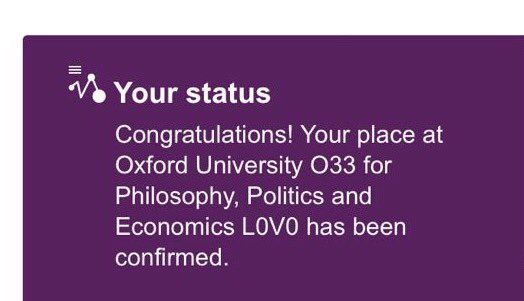
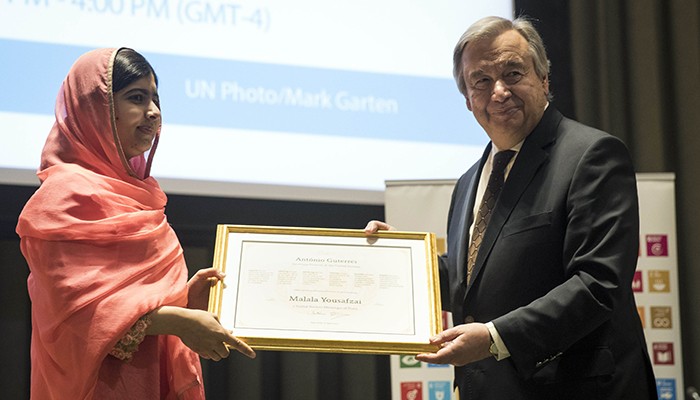
Nobel Peace laureate Malala Yousafzai will be heading to Oxford University for her undergraduate, she confirmed on Thursday. 
Malala, who is an advocate for female empowerment along with UN messenger of peace, tweeted on social media about her university acceptance notification.

The university confirmed her status of admission, “Congratulations! Your place at Oxford University 033 for Philosophy, Politics and Economics L0V0 has been confirmed.”

She wrote, “So excited to go to Oxford!! Well done to all A-level students - the hardest year. Best wishes for life ahead!”
The young talented Malala will be studying subjects such as philosophy, politics and economics.

Wednesday, August 16, 2017

Pashto Music Video - Afshan Zebi

Afshan zebi - Lokan do do yaar banaye

Pakistan court seeks to amend blasphemy law


By Saba Aziz

Legal experts discuss court ruling recommending a review of the controversial decree to prevent false accusations.
Blasphemy and accusations of the crime have led to the deaths of dozens of people in Pakistan since 1990.
Rights groups have repeatedly criticised and called for the reform or repeal of the country's controversial blasphemy laws, which date back to the British empire.
The Islamabad High Court asked parliament on Friday to make changes to the current decree to prevent people from being falsely accused of the crime, which is punishable by death if the Prophet Muhammad is insulted.
Other punishments include a fine or prison term, depending on the specific offence.
In a lengthy 116-page order, Justice Shaukat Aziz Siddiqui suggested that parliament amend the law to require the same punishment of the death penalty for those who falsely allege blasphemy as for those who commit the crime.
"Currently, there is a very minor punishment for falsely accusing someone of blasphemy," the judgement said.
Under the existing law, the false accuser faces punishments ranging from two years in prison to life imprisonment. Mehdi Hasan, chairman of the Human Rights Commission of Pakistan, welcomed the Islamabad court's move seeking amendment for the law.
"This law is being misused by people to take revenge against their opponents, and it is very easy to charge anyone for blasphemy," he told Al Jazeera from Lahore.
Exploitation of law
Friday's ruling noted that some critics are demanding the law be abolished but Siddiqui argued that it's better to stop the law's exploitation rather than get rid of it.
A majority vote in the provincial assemblies is required for the law to be amended. Backing of that vote by the federal government would likely be needed for the Senate to move.
Decrees in Pakistan are derived from the British common law, but the constitution holds that no laws shall be passed that are against the teachings of Islam.
WATCH UpFront: Tahir ul Qadri: 'No rule of law' in Pakistan After previous unsuccessful attempts to amend the blasphemy laws, legal experts offered little optimism over the new recommendation.
"Blasphemy is a very difficult topic, and any small change will be opposed by the right when they feel like it's being watered down and by the left when they feel it's being made stronger," Angbeen Mirza, a lawyer based in Lahore, told Al Jazeera.
In late January, Pakistan's Senate officially took up the issue of the law's potential misuse for the first time in 24 years.

Analysts say previous attempts at reviewing the law have been thwarted by the pressure of religious parties who, along with most in society, see it as "equivalent to religion" in the country.
"The religious right is on the offensive in Pakistan and because of the apologetic attitude of all governments they do not take a stand," Hasan said.
Legal experts say instead of repealing the law, legislation to curb false accusations and hate speech is required to deter the decree's exploitation for personal gains.
"An accusation of blasphemy hardly ever results in legal process," Mirza said.
"When someone makes an accusation, the neighbours do the rest."
She added: "The justice system is slow and provides no protection, leaving the accused at the mercy of the people".
Aarafat Mazhar, an independent researcher of Pakistan's blasphemy laws, said there is a tendency in the country to resort to public accusations rather than formally registering a case.  
"Labelling a specific person or a community as being a blasphemer or just being anti-Islamic in general can be a death sentence and is a cause for disruption in public order," he said.
"Constitutionally speaking, such speech is not protected, and there is a definite need for legislation."

Culture of intolerance

Tahir Mahmood Ashrafi, a religious cleric and chairman of the Pakistan Ulema Council, said while there can be no room for change in the existing law, a review to prevent its misuse should take place.
However, beyond legal parameters,it is thought that a culture of intolerance towards free speech and religion is at the root of problem. 

"Other countries have survived without blasphemy provisions," Mirza said. "All they regulate is hate speech. By creating offences where there should probably be none, Pakistan is creating hatred."
In a December 2016 report, rights group Amnesty International condemned Pakistan's blasphemy laws for "violating human rights" and called for their abolition. 
While not a single convict has ever been executed for blasphemy in Pakistan, currently about 40 people are on death row or serving life sentences for the crime, according to the United States Commission on International Religious Freedom.
ncreasingly, however, right-wing vigilantes and mobs have taken the law into their own hands, killing at least 69 people over alleged blasphemy since 1990, according to an Al Jazeera tally.
In April, a university student, Mashal Khan, was killed and two others wounded during a violent mob attack after being accused of committing blasphemy in the northern city of Mardan.
In two prominent cases in 2011, Salman Taseer, governor of Punjab, and Shahbaz Bhatti, minorities minister, were both assassinated within two months of each other for asking for the law to be reformed.
Taseer's killer and bodyguard, Mumtaz Qadri, was hanged in February 2016.
Ashrafi blamed the judiciary's failure to hand down timely judgements for the rise in public tensions.
"When the punishments are not given, or the judgements are not passed on time, then people get an opportunity to take the law in their own hands," he said.
Academic circles in Pakistan advocate more research and urge authorities to learn from the example of other Muslim countries.
"The point is to make sure that our laws are aligned with the fundamental rights promised in the constitution," Mazhar said.
"Death or nothing is a rhetoric that creates a false binary and leads the conversation nowhere."
http://www.aljazeera.com/indepth/features/2017/08/pakistan-court-seeks-amend-blasphemy-law-170814120428595.html

China Contributes To Doubts About Pakistani Crackdown On Militants – Analysis

China, at the behest of Pakistan, has for the second time this year prevented the United Nations from listing a prominent Pakistani militant as a globally designated terrorist. China’s protection of Masood Azhar, who is believed to have close ties to Pakistani intelligence and the military, comes days after another militant group, whose leader is under house arrest in Pakistan, announced the formation of a political party.
The two developments cast doubt on the sincerity of Pakistan’s crackdown on militants a day after a suicide bomber killed 15 people when he rammed a motorcycle into a military truck in Quetta, the capital of Balochistan. Balochistan, a troubled province in which the military has supported religious militants an anti-dote to nationalist insurgents, has suffered a series of devastating attacks in the last year.
Taken together, the developments are unlikely to help Pakistan as the Trump administration weighs a tougher approach towards the South Asian country as part of deliberations about how to proceed in Afghanistan where US troops are fighting the Pakistani-backed Taliban.
US National Security Adviser Gen H.R. McMaster warned a week before the Chinese veto and the announcement of the new party, Milli Muslim League (MML), by Jamaat ud-Dawa (JuD), a charity that is widely viewed as a front for Lashkar-e-Taibe (LeT), a group designated as terrorist by the UN, that President Donald Trump wanted Pakistan to change its ‘paradoxical’ policy of supporting the militants.
“The president has also made clear that we need to see a change in behaviour of those in the region, which includes those who are providing safe haven and support bases for the Taliban, Haqqani Network and others,” Mr McMaster said.
Mr. McMaster said that the US wanted “to really see a change in and a reduction of their support for these groups…. They have fought very hard against these groups, but they’ve done so really only selectively,” he added.
Pakistan’s military and intelligence have used militant groups to maintain influence in Afghanistan and to support protests as well as an insurgency in Indian-administered Kashmir. China’s repeated veto of a UN designation of Mr. Azhar, whose group, Jaish-e-Mohammed, has been proscribed by the international body as well as Pakistan, is not only bowing to Pakistani wishes but also a way of keeping India on its toes at a time of heightened Chinese-Indian tension.
Mr. Azhar, a fighter in the anti-Soviet jihad in Afghanistan and an Islamic scholar who graduated from a Deobandi madrassah, Darul Uloom Islamia Binori Town in Karachi, the alma mater of numerous Pakistani militants, is believed to have been responsible for an attack last year on India’s Pathankot Air Force Station. The militants, dressed in Indian military uniforms fought a 14-hour battle against Indian security forces that only ended when the last attacker was killed.
Mr. Azhar, a portly bespectacled son of a Bahawalpur religious studies teacher and author of a four-volume treatise on jihad as well as books with titles like Forty Diseases of the Jews, was briefly detained after the attack and has since gone underground.
Freed from Indian prison in 1999 in exchange for the release of passengers of a hijacked Indian Airlines flight, Mr. Azhar is also believed to be responsible for an attack in 2001 on the Indian parliament in New Delhi that brought Pakistan and India to the brink of war. JeM despite being banned continues to publicly raise funds and recruit fighters in mosques.
JuD sources said the charity’s transition to a political party was in part designed to stop cadres from joining the Islamic State (IS). They said some 500 JuD activists had left the group to join more militant organizations, including IS. They said the defections often occurred after the Pakistani military launched operations against militants in areas like South Waziristan.
Pakistan listed LeT as a terrorist organization in 2002, but has only put JuD “under observation.” Pakistan’s media regulator in 2015 banned all coverage of the group’s humanitarian activities by the country’s news media.
JuD’s head, Muhammad Hafez Saeed, a UN and US-designated terrorist and one of the world’s most wanted men, has been under house arrest in Pakistan since early this year. Mr. Saeed is believed to be among others responsible for the 2008 attacks on 12 targets in Mumbai, including the Taj Mahal Hotel, a train station, a café and a Jewish centre. Some 164 people were killed and more than 300 wounded. The US government has a bounty of $10 million on Mr. Saeed who was once a LeT leader. He has since disassociated himself from the group and denied any link between JuD and LeT.
“What role (Saeed) will play in the Milli Muslim League or in Pakistan’s ongoing politics will be seen after Allah ensures his release. (Once he is released) we will meet him and ask him what role he would like to play. He is the leader of Pakistan,” MML leader Saifullah Khalid told a news conference. Mr. Khalid added that Mr. Saeed’s release was high on the MML’s agenda.
Mr. Saeed was not present at the conference, which was attended by Yahya Mujahid, a close aide of his, who is also subject to UN terrorism sanctions.
Treating men like Mr. Azhar and Mr. Saeed with kid gloves is unlikely to earn Pakistan any goodwill in Mr. Trump’s Washington. China’s protection of Mr. Azhar, moreover, undermines its sincerity in claiming that it is cracking down on militancy despite its harsh policy in the restive province of Xinjiang. If anything, it could put Beijing in Mr. Trump’s crosshairs too.