Tuesday, January 3, 2017
U.S. - House Fires at Ethics and Shoots Self
Even before the new Congress was sworn in on Tuesday, House Republicans made it clear that they had no real intention of draining the Washington swamp. They voted in secret on Monday to gut the one quasi-independent office that investigates House ethics. President-elect Donald Trump, who ran on a promise to drain the swamp, didn’t demand that they stop — he merely asked them to wait awhile. And that they did.
Representative Bob Goodlatte of Virginia emerged as an architect of the G.O.P. miasmic agenda with his attack on the Office of Congressional Ethics. A rules change would have prevented the office, known as the O.C.E., from investigating potentially criminal allegations, allowed lawmakers on the House Ethics Committee to shut down any O.C.E. investigation and, for good measure, gagged the office’s staff members in their dealings with the news media. When the public learned about this plan, outraged constituents deluged House members with phone calls.
Mr. Trump’s response was something altogether different. He didn’t condemn these Republicans for defying and undermining his drain-the-swamp pledge. He asked them to address more urgent business first, like destroying health care reform and passing tax cuts for the rich. Indeed, while he was tweeting on Tuesday morning, Kellyanne Conway, the incoming counselor to the president, had already been on television supporting Mr. Goodlatte and his gang, saying House Republicans had a “mandate” to curb “overzealousness” over ethics.
For Paul Ryan, the attack on the ethics office was certainly a milestone: He hadn’t even been re-elected House speaker when he was rolled by his caucus. Afterward, his statement suggested he was more worried about how bad this fracas looks for him than about his members’ effort to undermine congressional accountability. The claim by Mr. Ryan and Mr. Goodlatte (who, hilariously, leads the House Judiciary Committee) that gutting the office would improve “due process” for accused lawmakers is a marvel of Orwellian newspeak. So is Mr. Goodlatte’s insistence that dismantling the O.C.E. “builds upon and strengthens” it.
The Office of Congressional Ethics was created in 2008, after a series of bribery and corruption scandals tarred both parties and sent three House members to jail. So guess who joined Mr. Goodlatte in calling to gut it? Representative Blake Farenthold of Texas, who had been investigated by the O.C.E. for sexual harassment. Representative Peter Roskam of Illinois, who came under O.C.E. scrutiny after he and his wife took a $24,000 trip to Taiwan, which appeared to have been paid for, improperly, by the Taiwanese government. Representative Sam Graves of Missouri, who was the ranking member of the House Committee on Small Business in 2009 when he invited expert testimony on the renewable fuels industry from a representative of a renewable fuels business in which his wife had a financial stake, a potential conflict of interest. And Representative Steve Pearce of New Mexico, who last year tried to eliminate the O.C.E.’s entire budget after it investigated one of his staff members.
None of these lawmakers or staff members were sanctioned, by the way — they just didn’t like the scrutiny. The O.C.E. is the only House body that investigates allegations from the public, including anonymous tips. Its staff of independent, nonpartisan professionals must be private citizens, not elected officials; most are lawyers and ethics experts. The O.C.E. refers cases it finds substantial to the House Ethics Committee with recommendations. The committee is notoriously weak, but at least the O.C.E., by making its work public, helps hold legislators accountable. No wonder swamp dwellers of both parties have tried to put the O.C.E. more completely under the thumb of Congress.
The public protests over the House move to weaken the office were heartening. Even the conservative group Judicial Watch paused in its pursuit of Hillary Clinton to decry the Goodlatte proposal as a “poor way to begin draining the swamp.” The O.C.E. proposal has now gone back to the House, which will likely take the rest of the session to “study” it. Americans will be watching to see whether Mr. Trump, Mr. Ryan and other lawmakers return to this rotten idea.
http://www.nytimes.com/2017/01/03/opinion/house-fires-at-ethics-and-shoots-self.html?action=click&pgtype=Homepage&clickSource=story-heading&module=opinion-c-col-left-region®ion=opinion-c-col-left-region&WT.nav=opinion-c-col-left-region&_r=0
President Obama to host a goodbye party at the White House on Friday
By Helena Andrews-Dyer
January 2017 will definitely see an onslaught of A-list tourists at the White House. But they’re not coming for the inauguration.

President Obama and first lady Michelle Obama will host a goodbye party for close friends and major donors Friday, according to a person with knowledge of the marquee affair. The Obamas themselves confirmed during an interview with People Magazine last month that they’d have one final bash at the White House. The president told a young fan that they’d have a “grown up” party before packing their bags.
Of course, there’s no official word from the White House yet. Typically the Obama administration keeps a tight lid on celebration details until the 11th hour. But the big names thought to be on the guest list have been slowly trickling out this week.
Old standbys such as singer Usher and actor Samuel L. Jackson will most likely be there, according to another person with knowledge of the invitees. Also currently practicing their sweet moves are media titan Oprah Winfrey, who snagged an exit interview with the first lady last month on her fellow invitee and bestie Gayle King’s network CBS; actor Bradley Cooper, who showed up to the French state dinner sans underpants; Beyoncé, who sang at both of Obama’s inaugurations, and her husband, rapper Jay Z. We’re also hearing that Stevie Wonder, who has performed at the White House, director J.J. Abrams and director George Lucas make the list.
If this star-studded shindig follows the traditional Obama script, cellphones will be confiscated at the White House security gate and social media crumbs will be few. But afterward, tales of the president’s dance moves and sore feet will make the late-night talk show rounds.
The White House party will act as the kickoff of a goodbye tour of sorts for President Obama, who will head to Chicago to deliver a farewell address Jan. 10.
https://www.washingtonpost.com/news/reliable-source/wp/2017/01/03/president-obama-to-host-a-good-bye-party-at-the-white-house-on-friday/?utm_term=.4877e1ee1c08
Afghan woman: sold like a goat, treated like a dog

Musa Khan Jalalzai

In 2016, the amount of sexual abuse and violence culminated while the culture of entering marriage with two or three sisters at one time has become a national shame.
The ooze remains. Notwithstanding the presence of 49 civilised nations in Afghanistan — those advocating women rights in their own states, the painful story of Afghan women subjected to sexual harassment, torture and authoritarian treatment has not yet changed. In fact, women in Afghanistan are being burnt, tortured, harassed and traded with commodities, sold like goats and treated like dogs. Their torture and sexual abuse in workplaces, prisons, private jails, police stations, homes, streets, in armed forces barracks, and government offices in all the major provinces of Afghanistan continue with impunity. On 17 December 2016, a gunman killed five women officers in Kandahar airport; no one regretted but said they needed to serve their husbands at home.
In 2016, the amount of sexual abuse and violence culminated while the culture of entering marriage with two or three sisters at one time has become a national shame. Unfortunately, in Northern Afghanistan, women and girls are facing countless challenges including forced abortion, forced prostitution, the demand for illegitimate sexual acts, husband’s extramarital relations, and forced watching of pornographic films. Last week, a female Afghan pilot, Miss Nelofer Rahmani claimed asylum in the United States and refused to return to her country due to her fear of persecution. She hammered the leadership of Afghan national army for harassment and sexual abuse. The unity government is a conglomeration of different war criminals, private militias, and ethnosectarian mafia groups who have been involved in war crimes, sexual abuse and male prostitution during the last 30 years’ civil war.
Captain Nilofer Rahmani, who was a first female pilot to serve her war-torn country’s air force, refused to return to Afghanistan because she is “scared” of her life as she and her family received death threats from war criminals, Taliban, and the ISIS. “I would love to fly for my country — that is what I always wanted to do. But I am scared for my life”, she told Wall Street Journal. On her return to Kabul, experts say, Miss Nelofer may possibly face torture and humiliation or may be killed like Farkhanda Malikzada who was tortured to death last year in Kabul. Miss Farkhanda was severely tortured by a number of extremist elements, and her face bloodied; she tried to stand, holding her hands to her hair, looked horrified to find why she was being tortured. The mob closed in, kicking and jumping on her chest again and again, and finally, she was brutally killed in broad daylight. Deputy Director of Asia wing at Human Rights Watch, Phelim Kine warned that due to the inattention of the Afghan government to protect women from moral crimes persecution underlined the glaring gap between its intention and rhetoric.
On 25 October 2015, Afghanistan Analyst Network in its paper reported 19 years old girl Miss Rukhshanda was stoned to death in Feroz Koh district of Ghor province. She was married to a disabled man at the age of 13, but she ran away to seek refuge in the police station, but unfortunately, police arrested her and handed over to her father. After two months, her father married her off to another man, but she again ran away to Marghab district. This time she was kidnapped by a local commander Mullah Yusuf for ransom, and demanded 5 million rupees. When her father failed to purvey the fixed amount, the Mullah ordered his militia to stone her to death. On 20 November 2015, a 26 years old girl, Shirin Gul was tortured to death. On 28 December 2016, a woman was reportedly beheaded by extremists after being found in a market without her husband. This incident occurred in a Taliban-controlled Sar-e-Pul district.
On 29 November 2016, in Jalalabad province, a woman told the head of the department of women affairs that her husband tortured her in the first night of their marriage and accused her of losing virginity, and then went to her father house and forcefully married her younger sister as well. These incidents proved that Afghanistan is a dangerous place for women where they are unable to breathe in the open air or go shopping without their husbands. However, on 13 December 2016, Afghan Minister of Women Affairs, Delbar Nazari told journalists that more than 87 percent of women in Afghanistan were not safe. “Deprivation has caused a lot of threats for women across the country, we have witnessed bitter events including poisoning, throwing acid on girls, sexual abuse, the immolation of a woman and young girls, stoning and rape allegations and accusations of them running away from home,” said Nazari. During the last six months, more than 5,000 cases of sexual assaults were registered by the police. However, Afghan Ministry of Women Affairs during the last nine months recorded more than 4,000 cases of violence against women. The journey of Afghan women is full of miseries, wretchedness and inflicted pain.
Adult and young children are also facing shameless business of sexual abuse and practice of Bachabazi (male prostitution). Warlords and war criminals in all parts of Afghanistan hire male prostitutes to become their dancing boys and gay friends. There are numerous accounts of Bachabazi in world media that diverted the attention of authorities to the vulnerability of homeless and orphan children whose parents were killed in civil wars. In the tail-end of this debate, I want to highlight a single incident of Bachabazi occurred on 14 December 2016 in Jowzjan province, where known war criminal and Vice President of Afghanistan, General Rashed Dostum sexually abused a former governor Mr Ahmad Eshchi. He (Mr Eshchi) told journalists that Vice President and his ten cronies sexually assaulted him, raped him and kept in a private jail for five days. This shameless incident painted a transmogrified picture of the Afghan nation in the international community. Both European Union and the Unites States called for a thorough investigation and the war criminal and Vice President of Afghanistan.
Pakistan - Forcing prohibition
LAL KHAN

Alcohol related deaths have become a routine affair in this culturally starved and socially suffocating country. According to police in Toba Tek Singh at least 42 people died and over 70 were taken to a hospital in Faisalabad, including 10 in critical condition, after consuming toxic liquor on Christmas eve. Some of those undergoing treatment at the hospital could be impaired for life; loss of vision is a usual complication of methyl alcoholic poisoning. Punjab Law Minister Rana Sanaullah’s belated response was ironic if not callous, saying that those who had died should have checked if the liquor was safe before consuming it. The near and dear ones of the deceased had not only to overcome the grief from this tragic loss but were perhaps more worried about the future of their own livelihoods, safety and future.
The prohibition of liquor consumption was imposed during the dying days of the Z.A. Bhutto’s government. This was because of the mounting pressure of the religious right, which was specifically aimed at undermining one of the first progressive leaders of the PPP. Hence, Bhutto had little choice but to give in to them.
The reaction in form of the PNA movement led by the Islamist parties was launched and sponsored by the CIA along with Pakistan’s crooked bourgeoisie that had been bruised by nationalisations in the first two years of PPP’s rule. Instead of going on the offensive against the reaction, Bhutto tried ‘reconciliation’ with the ruling classes and Islamic clergy. When Bhutto capitulated on alcohol prohibition and issues of personal beliefs, it accelerated his demise as the mullahs became more virulent. In this vulnerable moment US secretary of state Henry Kissinger, who had warned Bhutto of making a horrible example of him, stabbed in his back. Bhutto was deposed and later hanged through the gallows by Pakistan’s first Islamic despot general Ziaul Haq.
This bigoted tyrant unleashed a havoc of brutality under the guise of Islam to perpetuate his vicious rule. Infringement in personal lives and ethics along with sectarian hatreds were instigated to divide and atomise the working classes. On the economic, social, and cultural fronts the military regime savagely attacked the toiling masses and the youth. The vested interests of the capitalists and imperialist monopolies were propped up in the name of Islam. Alcohol prohibition was reinforced with barbaric punishments of floggings, imprisonment and social disgrace. The state and the Islamist vigilante gangs unleashed terror upon those who dared to take a sip of the forbidden brew. The democratic regimes that followed Zia’s dictatorship cravenly continued the practise even when the political and state’s elites were hardly having any dry evenings.
The coerced morality upon society pronounce drinking as sinful and profane and edict it to be violently crushed. This dictatorial mentality leans on religious, nationalist, ethnic and sectarian biases haunting in periods of social inertia. But the ultimate motive of these acts of absolutism are to preserve the perks and profits of the ruling classes by individualising social and economic issues to undermine the wider structural causes of the socioeconomic decay.
Any prohibition in a situation where the plague of drunkenness in society becomes a curse for social life and obstacle to socioeconomic development has a viable justification. But here sections of the ruling class indulge in concealed orgies of drunkenness and sexual perversion, while other rich imposters in the garb of religious piety commit inhuman, heinous acts. Imposing prohibition and other acts of social and cultural restriction in the name of religion only worsens the malaise and decay of society in the clutches of a system of dire want, plunder and extortion.
Banning the consumption of alcohol for the purposes of whipping reaction and thrusting manufactured ethics determined by religious reactionaries against the will of the individual is bound to boomerang. It’s only the smugglers and the criminal gangs that benefit most from such prohibitions. Paradoxically instead of lowering alcohol consumption, prohibition raises it sharply. The examples of such prohibitions in Scandinavia, Latin America, some of the US states and certain states of India are but a few examples of this phenomenon. In Pakistan the per capita consumption of alcohol is six times more than that in India.
The ladies and gentlemen of the propertied and moneyed classes enjoy the best brands of Scotch whiskies, quality French wines and cognacs, Russian vodkas, English gins and Mexican tequilas in culturally obnoxious architectural palatial residences and clubs. But the oppressed and exploited, alienated and deprived, have to risk their lives for a sip of this heavenly brew. The poor often resort to home brews that can contain methanol, commonly used in anti-freeze and fuel. These liquors brewed clandestinely under a regime of prohibition are prone be adulterated and methylated. The profits of these ‘brewers’ are relatively minuscule with the police and state personnel grabbing their shares. Paradoxically these very law implementation personnel guard the bungalows of the obscenely rich indulging in alcoholic carousals.
These poor souls from oppressed classes are driven to risk their lives for this perilous booze for various reasons, ranging from psychological and socioeconomic deprivation to a flight into oblivion from the pains of their daily lives. Prohibition and dearth further boosts alcohol intake. Defiance of this prohibition lays bare the ideological and argumentative defeat of the devout masters of morality that reeks of hypocrisy. The hypocrisy of elite stands exposed by the contradiction of their flamboyant life styles and preaching piousness that they don’t really believe in themselves. The question is how long these double standards and extortionist probation is going to last? Ultimately even this discrimination is class based. However pious it might portray itself by adapting religiously premeditated physical and apparel features, the masses are beginning to see through the elite’s lies. Such ruling classes that use fake ethical methodologies to perpetuate their rulership are doomed to annihilation by history.
Pakistan lags behind Nepal, Bangladesh in social development

Pakistan is lagging behind India, Sri Lanka, Bangladesh and Nepal in terms of social development.
A list of 133 countries pertaining to basic human needs and opportunities has been issued by the Social Progress Index for the year 2016.
In contrast to major countries, improvement was seen in Nepal in reference to social development due to the existence of a democratic rule.
Pakistan ranked 113th on the list with Sri Lanka on 83rd, Nepal on 95th, India on 98th and Bangladesh on 101st.
With regard to basic human needs, Pakistan is seen on a better position.
Pakistan is on 101 slot regarding nutrition, health facilities, water provision, irrigation and personal security.
It takes the 119th number in Foundation of Well Being which includes basic information, access to communication and environmental situation whereas the lowest progress was seen in personal freedom, basic rights, endurance, tolerance, and higher education as Pakistan was ranked on 123rd number.
However; it still remains behind India, Sri Lanka, Bangladesh and Nepal in all the departments.
Pakistan - Son of slain governor faces death threats after Christmas message

A Christmas message calling for prayers for those charged under blasphemy laws has led to death threats against the son of a provincial governor killed five years ago for criticising the same laws.
The case highlights the continuing influence in Pakistan of Muslim hardliners who praise violence in the name of defending Islam, despite a government vow to crack down on religious extremism.
The hardliners have called for mass protests if police do not charge activist Shaan Taseer with blasphemy against Islam - a crime punishable by death.
Taseer's father, Punjab governor Salman Taseer, was gunned down by his bodyguard for championing the case of a Christian woman, Asia Bibi, who was sentenced to death under the blasphemy laws, which he said needed to be reformed.
In a video message posted on his Facebook page, Taseer, a Muslim, wishes a happy holiday to Christians, in solidarity, and also asked for prayers for the woman and others victimised by what he called "inhumane" blasphemy laws.
Taseer said on Monday that he had received "very credible death threats" from supporters of the hardline Muslim philosophy that inspired his father's killer, bodyguard Mumtaz Qadri.
"They are sending me Mumtaz Qadri's photos with messages that there are several Mumtaz Qadris waiting for me," he told Reuters late on Monday.
Tens of thousands people attended Qadri's funeral last March after he was put to death for killing the governor because they considered him a hero - showing the potential for this case to become another flashpoint.
More than 200 people in Pakistan were charged under blasphemy laws in 2015 - many of them minorities such as Christians, who make up one per cent of the population.
Critics say the laws are often used to settle personal scores, and pressure for convictions is often applied on police and courts from religious groups and lawyers dedicated to pushing the harshest blasphemy punishments.
At least 65 people, including lawyers, defendants and judges, have been murdered over blasphemy allegations since 1990, according to figures from a Centre for Research and Security Studies report and local media.
A spokesman for the hardline Islamist movement Sunni Tehreek said it was demanding police in Lahore charge Shaan Taseer with blasphemy against Islam. Police declined to comment, and a copy of the police report on the complaint did not mention Shaan Taseer by name.
The police report did reference the Christmas message and opened an investigation the blasphemy laws' Section 295-A, which bans hate speech against any religion. However, Sunni Tehreek has threatened mass street protests unless the younger Taseer is charged under Section 295-C - blasphemy against Islam or the Prophet Mohammad (peace be upon him). Sunni Tehreek figure Mujahid Abdur Rasool told Reuters the group was in negotiations with the government over the case.
"When we gave them a warning for protests, a delegation of Punjab government met us today," Rasool said, adding they had set a deadline of Tuesday for police to meet their demands.
He said Sunni Tehreek was not calling for Taseer's murder, only his prosecution and eventual execution.
Punjab government officials could not be reached for comment.
Monday, January 2, 2017
Barack Obama and Me

By J. D. VANCE
I first became interested in politics as a middle school student in the late 1990s, when sexual scandal and presidential impeachment dominated national headlines. The opinion leaders of the day seemed to fall into two camps: those who argued that the president’s private life was none of the public’s business, and those who felt the president lied under oath and deserved to face the consequences.
I wasn’t sophisticated enough to have an opinion on that topic, though I watched the impeachment proceedings like an interested spectator at a sporting event. My politics had started to drift to the right of my family, many of them classic blue dog Democrats. Still, I admired President Clinton in a way that happens when someone like you really makes it. He was a poor boy with a vaguely Southern accent, raised by a single mother with a heavy dose of loving grandparents. As my grandmother told me, presidents were almost always rich people, but Bill Clinton was one of us.
Yet it was that very relatability that made Mr. Clinton’s personal failings frightening. The data shows that working-class families like mine face much higher rates of marital strife and domestic instability. Demons like Mr. Clinton’s had haunted my home and family for generations, and at an age when I first began to develop strong feelings about my future, I knew that I wanted to outrun them. I cared little for Mr. Clinton’s elite education, his economic success or even his ascendancy to the most powerful office in the world. I cared that he had managed to build the domestic tranquillity that he lacked as a child. But here, in one sex scandal, he had blown it all up. If a man of his abilities had done this, then what hope was there for me?
I often wonder how many kids look at our current president the way I once looked at President Clinton. Barack Obama was elected during my second year of college, and save for his skin color, he had much in common with Bill Clinton: Despite an unstable life with a single mother, aided by two loving grandparents, he had made in his adulthood a family life that seemed to embody my sense of the American ideal.
I suspected that there were skeletons lurking in his closet, too. Surely this was a man with a secret sex addiction, or at least an alcohol problem. I secretly guessed that before the end of his term, some major personal scandal would reveal his family life to be a sham. I disagreed with many of his positions, so perhaps a dark part of me wanted such a scandal to come out. But it never came. He and his wife treated each other with clear love and respect, and he adored and cared for his children. Whatever scars his childhood left, he refused to let those scars control him.
The president’s example offered something no other public figure could: hope. I wanted so desperately to have what he had — a happy marriage and beautiful, thriving children. But I thought that those things belonged to people unlike me, to those who came from money and intact nuclear families. For the rest of us, past was destiny. Yet here was the president of the United States, a man whose history looked something like mine but whose future contained something I wanted. His life stood in stark contrast to my greatest fear.
Eventually, I achieved something roughly similar to the president’s early, personal accomplishments: a prestigious law degree, a strong professional career and a modicum of fame as a writer. There were many personal heroes in my life: aunts and uncles, a protective sister, a father who re-entered my life at the right time. But I benefited, too, from the example of a man whose public life showed that we need not be defeated by the domestic hardships of youth.
It is one of the great failures of recent political history that the Republican Party was too often unable to disconnect legitimate political disagreements from the fact that the president himself is an admirable man. Part of this opposition comes from this uniquely polarized moment in our politics, part of it comes from Mr. Obama’s leadership style — more disconnected and cerebral than personal and emotive — and part of it (though a smaller amount than many on the left suppose) comes from the color of his skin.
On Jan. 20, the political side of my brain will breathe a sigh of relief at Mr. Obama’s departure. I will hope for better policy from the new administration, a health reform package closer to my ideological preferences, and a new approach to foreign policy.
But the child who so desperately wanted an American dream, with a happy family at its core will feel something different. For at a pivotal time in my life, Barack Obama gave me hope that a boy who grew up like me could still achieve the most important of my dreams. For that, I’ll miss him, and the example he set.
WHITE HOUSE RELEASES DETAILS ON PRESIDENT OBAMA'S FAREWELL SPEECH IN CHICAGO
 By Jessica D'Onofrio and Sarah Schulte
President Barack Obama will give his final farewell speech on Jan. 10 at Chicago's McCormick Place, the White House confirmed Monday.
The event will be free and open to the public, but tickets are required.
Tickets will be distributed at McCormick Place on Saturday. The exact time of the ticket release has not yet been set. Only one ticket per person.
For more information, visit www.whitehouse.gov/farewell/info.
For those who cannot get tickets, the event will be live streamed on the White House Facebook page and on the White House website.
Obama will say goodbye to the American people where his political career started and then gave his 2008 victory speech, which electrified Grant Park.
In an email from President Obama, he said he just started writing his speech, but he plans to make it a thank you to those who have been with him on what he's calling an amazing journey. He also wants to ensure the smooth transition of power.
Donald Trump is set to be inaugurated as the 45th president of the United States 10 days after this farewell speech.
"He's gonna talk about what's next in a trump administration not overtly but he's going to talk about some things that Trump is trying to dismantle and he's going to try to calm the waters," said ABC7 political analyst Laura Washington. "I think he is trying to keep his cool and make sure that there is no question about who is president and there's no question about that Trump is our new leader and we have to respond to that."
The speech gives President Obama one last chance to define his presidency and how his two terms have reshaped American life.
In an email, Obama said, "Since 2009, we've faced our fair share of challenges, and come through them stronger."
The president also said he'll offer some thoughts on where he thinks the country is going in the future.
"I think it's appropriate. He's from here. I think a lot of people here care about his presidency. It impacted a lot of people," said Emily Flaherty.
"It's history. It's definitely history to see an African American president do the things he's done. I would definitely want to be there I will be there if I'm not at work," said Malik Covington.
PRESIDENT OBAMA'S FULL EMAIL ON HIS FAREWELL ADDRESS:
In 1796, as George Washington set the precedent for a peaceful, democratic transfer of power, he also set a precedent by penning a farewell address to the American people. And over the 220 years since, many American presidents have followed his lead.
On Tuesday, January 10, I'll go home to Chicago to say my grateful farewell to you, even if you can't be there in person.
I'm just beginning to write my remarks. But I'm thinking about them as a chance to say thank you for this amazing journey, to celebrate the ways you've changed this country for the better these past eight years, and to offer some thoughts on where we all go from here.
Since 2009, we've faced our fair share of challenges, and come through them stronger. That's because we have never let go of a belief that has guided us ever since our founding -- our conviction that, together, we can change this country for the better.
So I hope you'll join me one last time.
Because, for me, it's always been about you.
President Barack Obama
More Than 1,000 Schools Closed Across Afghanistan

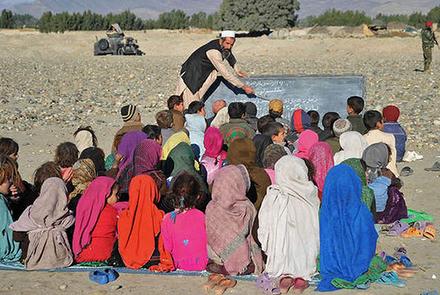
Speaking in the Upper House of Parliament on Sunday Mohaqiq said that the Education Ministry is trying to re-open schools in insecure parts of Afghanistan.
Acting minister of education Asadullah Mohaqiq has said that more than 1,000 schools are closed across the country due to insecurity. Speaking in the Meshrano Jirga (Upper House of Parliament) on Sunday Mohaqiq said that the Education Ministry is trying to re-open schools in insecure parts of Afghanistan.
Meanwhile Mohaqiq said the lack of text books and qualified teachers was also a problem.
Mohaqiq said nearly 40,000 teachers were needed for the new school year across the country. The Ministry of Education said recently a study has found that only six million Afghan children are at school – contrary to the 11 million as previously stated by the former government. Afghan government officials from former president Hamid Karzai’s administration said on a number of occasions that over 11 million Afghan children were attending school.
Pakistan - Sindhi Sangat rallies against amendment in Forced Conversion Bill in cities of Sindh


Activists of Sindhi Sangat Sindh and Sindhi Nari Sangat Sindh protested in Mirpur Bathoro, Bulri Shah Karim, Jhok Sharif and Sujawal against the decision of Sindh government to amend forced conversion bill, growing religious extremism, forced religious conversion of Sindhi Hindu girls, discrimination with religious minorities Sindhi Hindus and Christians in Sindh, Pakistan.
Responding to the central call given by the central chairman of the Sindhi Sangat Sindh Mansoor Khaskheli, activists of Sindhi Sangat Sindh and Sindhi Nari Sangat Sindh staged protest rallies and demonstrated in Mirpur Bathoro, Bulri Shah Karim, Jhok Sharif and Sujawal against the decision of Sindh government to amend forced conversion bill, growing religious extremism, forced religious conversion of Sindhi Hindu girls, discrimination with religious minorities in Sindh, Pakistan.
Addressing the crowed activists of Sindhi Sangat Sindh and Sindhi Nari Sangat Sindh Nawaz Kunbhar, Ahmed Baloch, Farooq Mallah, Khalique Ahmed, Rizwana Shah, Shehnila Qambrani, Nusrat Sindhi Fehmeeda Bano and others said that Sindh government's decision to take back recently passed Bill that criminalizes forced religious conversions is highly condemnable, religious minorities in Pakistan are continuously being victimized especially Sindhi Hindus and Christians. Recently Sindh assembly passed a bill The Sindh Criminal Law (Protection of Minorities) according to the bill, change of religion will not be recognized until the person reaches 18 years of age, moreover at least seven years for perpetrators and five-year jail was recommended for facilitators of forced conversions.
Moreover adults considering changing their religion be provided with a safe house to live for 21 days, to ensure that they are making the said decision without any coercion. After opposing recently passed bill of forced religious conversions by religious extremists PPP’s Sindh govt has bowed down before banned religious outfits to appease them.
Sindhi Sangat Sindh strongly condemns PPP Sindh govt’s decision to amend the bill instead of taking action against internationally banned outfits, government trying to appease them. Activists of Sindhi Sangat Sindh and Sindhi Nari Sangat Sindh further said Sindhi Hindu girls are the victims of forced religious conversion.
Every year several cases of forced religious conversions reported in Sindh, Pakistan. But in the most cases culprits often go unpunished therefore such incidents are continuously increasing. How many more daughters of Sindh will be kidnapped and become the victims of forced religious conversion therefore Sindhi Sangat Sindh demands immediate implementation of recently passed bill of forced conversion to protect daughters of Sindh from religious extremists. Activists of Sindhi Sangat Sindh and Sindhi Nari Sangat Sindh demands perpetrators involved in forced religious conversion must be brought to the justice and government takes immediate actions against them.
Activists further demanded protection of religious minorities, atrocities against religious minorities Sindhi Hindus and Christians in Sindh, Pakistan must be stopped. - See more at: http://www.pakistanchristianpost.com/detail.php?hnewsid=6245#sthash.X5aIba17.dpuf
Pakistan - Students disillusionment

Inamullah Marwat
Poor research culture may be attributed to incompetence of those who are at the helm, teachers, but is also because of the paucity of resources required for conducting proper research.
Pakistan has been churning out thousands and thousands of graduates across the country in Social Sciences every year. Majority of the graduates, as per authors’ view who are also fresh graduates, instead of pursuing their careers in their chosen field of studies and directing their academic pursuits in figuring out problems faced by the society at large in their chosen field of studies, try to become a part of the job market without considering whether they have required skills for the job for which they are applying. This mad pursuit of jobs among graduates, as per authors’ views after they asked a majority of the graduates, is fuelled by haunting fear of unemployment. This growing trend among graduates has popularised essence of education lying only in becoming a part of the job market. The trend has now seeped into the minds of about-to-become graduates who, while studying, instead of focusing on their studies for long-term academic pursuits, approach their studies in a non-serious way, thinking that their role is only to attain a degree and nothing else. This crazy pursuit of jobs on the part of graduates in other fields instead of academic pursuits in their chosen fields of studies is the failure of those who are at the helm in academia, and this trend has not let academia in Pakistan to thrive. The cost of which is that Pakistan, with a huge demographic dividend in the form of 60% youth bulge and thousands of graduates, thanks to its shambolic education system, can hardly capitalise on a small chunk of its youth bulge devoted enough to work on its problems in academia through research. Overall, there is a great disillusionment pervasive among Pakistani students with respect to pursuing a career in academia which is very much reflective of the way they desperately want to escape from the world of academia.
In the face of the problems that Pakistan has been facing, Pakistan needs vibrant academia to figure out solutions for its problems. But why is it so that academia in Pakistan is not resonating with its graduates’ lot as an option for a career? In this op-ed, an effort has been made to shed light on why is there a disillusionment among students to pursue a career in academia.
One of the major reasons students do not stand by their fields of studies resulting their escape from academia is because they have not chosen those fields of studies through consent after proper counselling. Students, most of the time, because of having no access to career counselling, ride on bandwagons in their academic pursuits without ascertaining whether she has a knack for a particular field of studies, and, later on, try to find an escape from those field of studies. This bandwagonism can be illustrated by the way students rush for pre-medical and pre-engineering after Matric or O-Levels. In the case of social sciences, this bandwagonism exists in the form of competitive exams. Everybody, who studies social sciences, is having an obsession with taking competitive exams like CSS and PMS. Because of not having a clear idea about the scope of their subjects, social sciences students most of the time go for these exams to say adios to the world of academia.
Moreover, academia in Pakistan does not inspire students’ lot as there is poor research culture prevalent in academia because of which students hardly find ideas of their subject resonating with their world view. Poor research culture may be attributed to the incompetence of those who are at the helm, teachers, but is also because of the paucity of resources required for conducting proper research. Moreover, because of the intellectual righty due to the conservative milieu, the academia generally does not provide a conducive environment for research over issues like women empowerment, religion, etc. Because of the poor research culture, students have poor analytical skills and have a superficial understanding of their subjects because of which they do not find academia interesting. Also, apathy on the part of teachers towards invoking students’ interest in the subject because of being paid a meagre amount as salary is also one of the reasons why students do not find academia as an appealing professional option.
Passion, yes, it is required by this profession. Selflessness, that too is called for. Devotion, yeah, definitely! These three attributes do seem quite difficult to inculcate and bring together in one single personality but believe us when we say that all three require an irresistible, or irrational as stated by many, motive for your belief. The only driving force that can convince an individual to deliver to the profession s/he wanted to learn the most from is the obstinacy and determination to change the course of the system. If you could not get what you wanted to from the prevailing norms of the system and if you are least bothered to mould and mend its ways, then how is it possible to expect transformation in future generations?
We realise the salaries are low. We acknowledge that working conditions are harsh. We concede that teaching is a thankless job. But someone has to become the torchbearer. Someone has to make all those quotations a reality from which inspiration is attempted to be taken. Someone has to teach the world what teaching actually is. And take this as gospel — the system can only be changed if the real brains are put to work.
Yes, we need doctors who could treat patients in hospitals. Yes, we need engineers so that we could run electrical appliances and travel on metalled roads. Yes, we need economists to define our social dynamics and dimensions. Yes, we need lawyers to provide justice to innocent and convict the criminals. Surely, we need bureaucrats to run our establishments and countries. However, we also need teachers who could tame, train and build these professionals for all societies and civilisations. We should not forget, after all, that people from almost all disciplines around the globe collectively venerate Aristotle, Plato and Socrates, while Charles Babbage and Albert Einstein are usually commemorated by scientists belonging to those specific fields.
To quote Aristotle: “The one exclusive sign of thorough knowledge is the power of teaching.”
Why is China 'protecting' the Pakistan-based Jaish-e-Mohammad militant group?

China blocked a recent Indian move to blacklist Jaish-e-Mohammad's chief Masood Azhar at the UN. In a DW interview, Siegfried O Wolf explains why China is protecting the Pakistan-based militant group's head.
On Friday, December 30, China vetoed India's request at the United Nations to designate the Pakistan-based Jaish-e-Mohammad's (JeM) head Masood Azhar as terrorist. The UN Security Council has already blacklisted JeM, but not Azhar.
New Delhi accuses JeM and Azhar of masterminding several terrorist attacks on Indian soil, including a deadly assault on an Indian airbase in Pathankot in January 2016. Pakistani investigators say Azhar and his associates had no links with the attack.
Vikas Swarup, the spokesman for India's Foreign Ministry, said that his country had requested nine months ago that Azhar be blacklisted, and claimed that most members of the Security Council had backed the move.
"We had expected China would have been more understanding of the danger posed to all by terrorism," Swarup said in a statement, adding that the inability of the international community to ban Azhar showed the "prevalence of double standards in the fight against terrorism."
"We had expected China would have been more understanding of the danger posed to all by terrorism," Swarup said in a statement, adding that the inability of the international community to ban Azhar showed the "prevalence of double standards in the fight against terrorism."
New Delhi accuses Pakistan of using jihadist proxies to mount attacks inside India, including the India-administered Kashmir. Islamabad denies these allegations.
In a DW interview, Siegfried O. Wolf, a South Asia expert at the University of Heidelberg, explains why Beijing continues to block the Indian move to blacklist Masood Azhar.
DW: China blocked a recent Indian move to blacklist Jaish-e-Mohammad chief Masood Azhar at the UN. In April, Beijing put a similar move on hold. Why is China protecting Azhar?
Siegfried O. Wolf: China's diplomatic support for Pakistan-based militants is multi-faceted. Therefore, one must look at Beijing's latest action at the UN in a larger context.
China's protection of Masood Azhar is only one component of the Chinese campaign to provide Pakistan its diplomatic support, which includes informal "lobbying work" to prevent Pakistan from being listed as a state that sponsors terrorism. The possible sanctions would not only have immense political and economic implications for Islamabad, they will also reflect poorly on Beijing as Pakistan is widely seen as a close China ally. Therefore, Chinese authorities try to undermine all Indian attempts to officially name Pakistan as a state-sponsor of terrorism on international platforms like BRICS or the Heart of Asia conference.
Beijing is now also drawing on Islamabad's improved relations with Moscow. China is increasingly involving Pakistan in multilateral dialogues on regional cooperation and security in relation to the Afghanistan-Pakistan region and Central Asia in an attempt to minimize Pakistan's international isolation.
Another dimension of China's move to block the Indian effort to designate Azhar as a terrorist is the threat that anti-Indian militant groups like the JeM could turn against the Pakistani state. This would have dangerous implications for China, especially for its massive investments and development initiatives in the South Asian country, including the multi-billion dollar China-Pakistan Economic Corridor (CPEC) project. We must not forget that international terror groups like al Qaeda, "Islamic State" (IS) and the East Turkestan Islamic Movement (ETIM) oppose Beijing for its alleged anti-Muslim policies against the Uighurs in its western Xinjiang province. China doesn't want an additional confrontation with Islamist groups.
Finally, there is no doubt that the India-China rivalry might also be a factor in Beijing's support for Islamabad and Pakistan-based terrorists. In this context, China's major development projects like "One Belt, One Road" to link China with Europe and the Middle East, and several other infrastructure projects show that Beijing considers Afghanistan an important country for its economic, security and geopolitical interests.
Why does India want the UN to designate Azhar as a terrorist? What does it want to achieve through this move?
The Indian policy is that the internationally community recognizes Pakistan as a terror sponsor. New Delhi wants the global powers to impose sanctions on Pakistan. If the international community declares Pakistan a state-sponsor of terrorism, it would help India to justify its military action against militants on Pakistani soil and legitimize cross-border operations.
China is also facing a protracted Islamist insurgency in Xinjiang. Why are Beijing and New Delhi not on the same page over Islamist terrorism?
China's counter-terrorism measures exclude the US and India. Chinese authorities have historically treated New Delhi as a geopolitical rival. India's close ties with the US are also perceived as a threat in Beijing, therefore China prefers not to cooperate with India. Last year, China bolstered its ties with Moscow, and at the moment it appears that Beijing is trying to construct a new security bloc in Asia. This, however, does not involve the Sino-Indian security cooperation.
Will Chinese support embolden Pakistan in what some experts say is its backing for jihadist proxies in India and Afghanistan?
China is indirectly encouraging Pakistan to continue its state patronage of cross-border terrorism. At the same time, Beijing is supporting Pakistan's policy of fighting anti-state militants, especially those groups that could pose a threat to CPEC.
Beijing will most likely not intervene in Pakistan's policy of backing militants that are operating in Afghanistan and India. Any measures against such groups, or the withdrawal of support, will be perceived as a hostile act by these jihadists. In this context, it is interesting to note that a recent tripartite meeting between Russia, China, and Pakistan on how to bring stability and peace to Afghanistan identified IS as the major threat and not the pro-Pakistan Taliban groups or the Pakistan-based Haqqani Network.
Siegfried O. Wolf is a researcher at the University of Heidelberg's South Asia Institute. He is also the director of research at the Brussels-based South Asia Democratic Forum (SADF).
The interview was conducted by Shamil Shams.
Pakistan - #RIP National Action Plan
Gul Bukhari
Just in the past couple of weeks I have come across a slew of Punjabi clerics of various sects committing hate speech and incitement to violence in full public view. I was staggered by the sheer number of such incidences, but did not see any reports of these gents being apprehended to face the law. Most of these incidents happened in Punjab. What is even more shocking than their freedom to openly carry on thus when government and military establishment do not tire of telling us how effectively they are fighting the war on terror in this country through the implementation of the National Action Plan (NAP), is that they are either receiving peace awards from obscure and mysterious but government run bodies, or actually threatening and persecuting peaceful citizens with help of government machinery.
These occurrences have come thick and fast on the heels of the damning Quetta Commission Report of last month investigating the attack in August 2016 on Quetta’s Civil Hospital wiping out almost the entire senior cadre of lawyers belonging to the Quetta bar and injuring scores of others. The Punjab incidents of hate speech and incitement to violence more than validate those areas of the Quetta Commission Report that hold the government criminally derelict in its duty to implement the NAP plan to target the nurturing and propagation of violent ideologies.
In one recent clip, one Khadim Hussain Rizvi, a Punjabi Barelvi cleric who travels all over Punjab addressing gatherings, is opening glorifying Mumtaz Qadri, killer of governor Salman Taseer and inciting violence against all those who still speak against the killing, or salute the slain governor, and or call for the release of the alleged blasphemer (Christian woman, Asia Bibi) the governor tried to rescue from the predatory and unfair blasphemy laws of the country. The governor’s fifth death anniversary is merely two days away. Obviously, at such a time not only is he remembered, but calls to free Asia Bibi are renewed together with calls on putting fetters on these hate mongers.
In another clip Rizvi is seen openly violating the government ban on the use of loud speakers to arouse religiously motivated hate. The icing is that he is using the loudspeaker to curse government in the most violent terms for the very restriction on loudspeakers, portraying the ban as against loud praise of the Prophet Mohammed (PBUH). He adds ‘Pakistan belongs to the Prophet’ (PBUH) to bolster his defiant use of the loudspeaker. However, there is no word on him being apprehended.
Another video to have surfaced is that of one Maulvi Sabir addressing a crowd in a mosque, abusing both slain Governor Salman Taseer and his son Shaan who had issued a video statement on Facebook wishing everyone a Merry Christmas and bidding everyone to keep in their thoughts at this time ‘especially those unfortunate people who had become victim of religious extremism and Pakistan’s inhuman blasphemy laws’. The vitriol of Sabir flays Shaan in the most violent and abusive terms.
Shortly thereafter, video evidence emerged of a large crowd of clerics from the Sunni Tehreek (ST) led by Maulana Mujahid Abdul Rasool Khan, President ST Lahore Division, having surrounded the Station House Officer (SHO) of a local police station in Mughalpura, Lahore to have a case registered against Shaan Taseer for his Christmas video message. The video of this occurrence is eye opening. Punjab Police known for its arrogance and rudeness towards ordinary citizens, has its SHO standing respectfully and listening meekly to this large crowd of clerics, murmuring his agreement with all they say and promising to revert soon to meet their demands.
The application the Sunni Tehreek submitted for registering a case against Shaan Taseer is instructive: it ‘accuses’ Taseer of calling Section 295(c) (of the blasphemy law) inhuman; of praying for Asia Bibi and other ‘gustakhan-e-rasool’ (blasphemers, but literally means those who disrespect the Prophet); of Shaan being a ‘gustakh’ (blasphemer) for having prayed for a blasphemer and having sympathy for a blasphemer; of having hurt Muslims’ religious sentiments by calling 295 (c) inhuman.
Before I move forward, it is important to understand the cunning of the Sunni Tehreek. The Blasphemy Law consists of four sections. Section 295, deals with defiling places of worship with a two year sentence, Section 295 (a) deals with malicious acts intended to outrage religious feelings with 10 year imprisonment, Section 295 (b) deals with defiling etc. of the Quran with life imprisonment, and Section 295 (c) deals with disrespect of the Prophet Mohammed and a mandatory death sentence. Shaan had only referred to ‘the inhuman law’, not to any specific section of the law. But Sunni Tehreek’s complaint deliberately and falsely focused on 295 (c) so as to have a case registered against Shaan Taseer under Section 295 (c) that mandates death, not just by the state but also by the lynch crowds.
Barely twenty four hours had passed during which this video of Sunni Tehreek clerics pressuring the police was making the rounds of social media, invoking outrage at the audacity of the terror tactics of the Sunni Tehreek, that the bombshell came of a case actually having been registered against Shaan for hate speech under Section 295 (a). The fact that the police managed section (a) instead of section (c) is a small mercy in these dark times. But in the mind of the ordinary man on the street who does not know the technicalities, this would hardly matter. For the multitudes, Shaan is now a blasphemer, a ‘gustakh-e-Rasool’.
Human rights activists are reeling in disbelief. Far from arresting and prosecuting the violent extremists, the state has registered a case against a peace monger. This is the not the only reason the civil society says the National Action Plan (NAP) is napping. However, the best is yet to come.
Only a few days ago a photo emerged on Social Media of the Federal Minister for Religious Affairs presenting a ‘peace award’ to Masroor Nawaz Jhangvi at a gathering of the National Peace Council. Masroor Nawaz Jhangvi is son of Haq Nawaz Jhangvi, the anti-Shia cleric who founded the Sipah-e-Sahaba, and Masroor is himself a virulent anti-Shia hate spewing cleric who happens to be on the fourth schedule of the Anti Terrorism Act. The dysfunctionality of the NAP is further demonstrated by the fact that he was cleared by the Election Commission of Pakistan to contest elections for the Punjab Assembly from Jhang. He went on to contest and won the seat on 1st December 2016, backed by the banned Ahle Sunnat Wal Jamat (ASWJ), another sectarian terror organization. In just one of the ASWJ rallies at Rahim Yaar Khan, Masroor Nawaz Jhangvi is on record as having said that Sunnis were allowed to declare Shias as non Muslim, before glorifying Malik Ishaq and Ghulam Rasool Shah of Lashkar-e-Jhangvi (LeJ) and vowing to continue their mission of killing Shia Muslims and threatening the DPO of Rahim Yaar Khan and the entire Police Department to never oppose ASWJ and never support the local Shia population.
When I checked to see what the National Peace Council was (the organisation that awarded Jhangvi the peace award), what were its mission and activities and for what exactly it had given the award to Masroor Jhangvi, I found its full name to include in smaller script ‘for interfaith harmony of Pakistan’. Its website is npc.gov.pk i.e., having a government domain name, with absolutely no information on its activities or how it promotes interfaith harmony. The ‘news’, ‘events’ and ‘gallery’ tabs contain nothing. One of the two tabs that contain anything is the ‘our team’ tab which provides pictures and names of large central and provincial teams. The other ‘Broshar’ (brochure) tab also contains several names and pictures. But the first page of the brochure has only two pictures, with Quaid-e-Azam Mohammad Ali Jinnah on top, and ex-COAS General Ashfaq Pervaiz Kyani beneath. I have yet to discover the services Mr. Jhangvi was awarded for.
Rest in pieces National Action Plan.
Sunday, January 1, 2017
Video Report - #UK - My homeless Christmas
James Brown discovers what life is like for a homeless person in one of the world’s wealthiest cities. He spends Christmas sleeping rough on the streets of London, begging for change. While most people are merrily preparing for the holidays, this festive time of year is just another reminder of loneliness for anyone who’s homeless.
Related: Moscow's Outcasts: Docu-reality Series about life of the bums in the streets of Moscow.
Traditionally, the holiday is about home and family, both long lost for anyone who can’t remember the last time they saw a real bed. James Brown meets some of the people who have lived that way for years. Each one has a heart-breaking story about how they came to be alone and with nowhere to go. Many share a common problem: the vicious cycle of addiction that binds them to the streets.
James explores the mental and physical effects of homelessness and the means available to help break out of it. He interviews homeless people and charity workers who provide food, as well as those who have succeeded in leaving the street behind and putting their lives back on track. As always, James experiences the situation first-hand, going through the challenges homeless people face every day. He also discovers why it’s so difficult to go back to a normal life after crossing that line and becoming homeless.
This show offers an inside view on what some would almost see as a parallel world, inhabited only by the homeless, unseen by others. Here, the back streets and dark alleys are transformed into whole communities, suffering from various kinds of addiction. Anywhere that appears abandoned could easily be a make-shift home, a damp cellar or doorstep someone else’s bed for the night. Only a few dedicated volunteers cross into this hidden, unseen world, offering help for any who are willing to be rescued.
Syria-Gate: NATO Weaponry and Personnel in East Aleppo

Manuel Ochsenreiter
Huge stockpiles of weaponry and ammunition, many with NATO markings, were discovered in East Aleppo when the Al-Nusra militants, a local branch of Al Qaida, were pushed out of the city by Syrian forces.
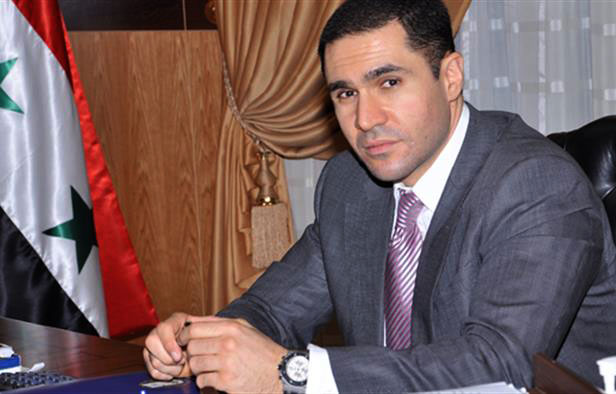
The previous reports that NATO personnel were captured are now retracted, as they were allowed to leave with the militants on the buses provided according to the agreement, to spare NATO the embarrassment. FWM interviews the Syrian MP Fares Shehabi, an Aleppo resident himself. He calls the discoveries “SyriaGate”.
Mr. Shehabi, European mainstream media and leading politicians are upset about the liberation of Aleppo by the Syrian Arab Army. They write reports about massacres committed by the army and horrified civilians in Aleppo…
It is the total opposite. The news in Europe is a real problem because they report exactly the opposite of the real facts in Syria. We were able to liberate around 100.000 civilians who were held hostage by terrorists in Aleppo. A lot of them were taken hostage for more than four years. These liberated civilians are happy now. The 1.5 million civilians who left Aleppo since 2012 are now able to come home again. This is a very positive and happy moment for Aleppo and Syria in general. We were able to celebrate Christmas in Aleppo for the first time since 4.5 years – we celebrate Christmas every day now in our city!
So the terrorists left the city completely?
– Yes, but before they left they executed more than hundred Syrian soldiers and hundreds of civilians. We found their bodies. This is all documented. Any international independent investigation can see and check the evidence of these terrorist crimes. But we are happy that our city is now liberated. Some rural areas around Aleppo are still under terrorist occupation. The next step will be to liberate the countryside so the city is well maintained and well protected.
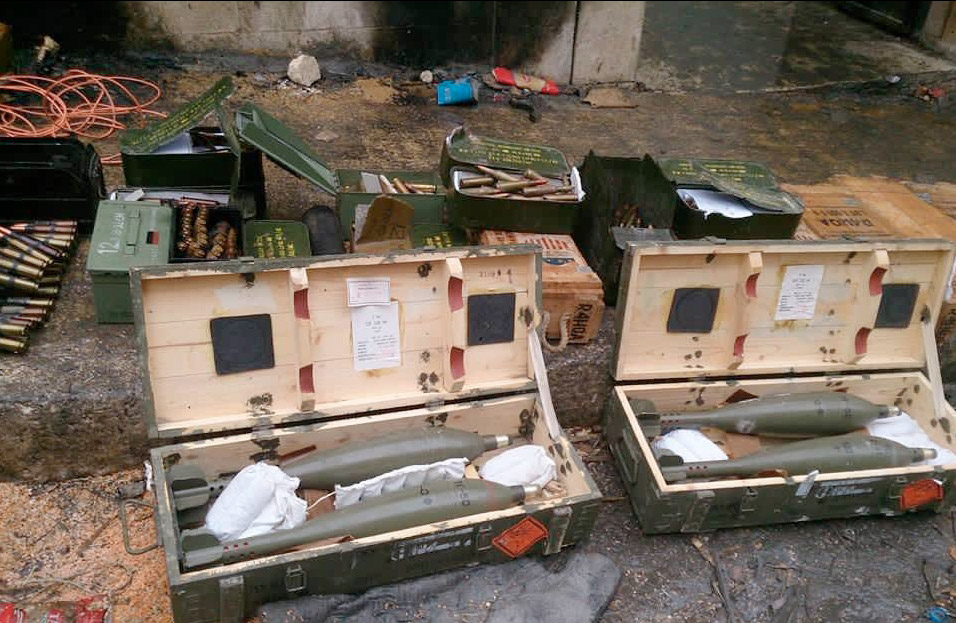
American made weapons found when Al Nusra left. Photo: Syrian Arab Army
Damascus reported about a huge amount of Western military material such as arms and ammunition in Aleppo…
– What we found there whole weaponry warehouses which were put in former school buildings by the terrorist forces. Our schools were turned into Al Qaida military bases. We found at those Al-Nusra bases – Al-Nusra is a branch of Al Qaida – full with NATO weaponry. We found tons of these weapons. I call that “SyriaGate” – the US and NATO arm and support terrorist gangs which are even on the official UN terror list in order to topple the legitimate government of a sovereign country. This is totally ridiculous of the West…
Why ridiculous?
– Because nobody can guarantee that these weapons will not be used one day against the West itself by these terrorists. American and European tax payer’s money is abused to arm terrorist gangs which are ready to direct their guns any time against America and European civilians. This is a huge scandal.
What do you know about the presence of Western military and intel experts and advisors in the terrorist controlled areas of Aleppo? Earlier reports spoke about captured NATO personnel.
– We didn’t capture any European or American military advisor in Aleppo. However we have reliable information that many of them were there and left the city with the buses we provided for the evacuation of the terrorist forces after their capitulation. Also some of these so-called activists as Bilal Abdul Kareem who is an Afro-American from New York and a loud supporter of the Al Qaida gangs in Syria.
Kareem’s presence in Aleppo was supported by the Obama administration and he was often in Western news introduced as “independent journalist”. And there were many other Western agents and terrorist supporters as well in Aleppo who left the city with the buses. This is by the way the reason why the West pushed so hard for this evacuation. Otherwise all these agents, advisors and supporters would have been captured by us and would have been exposed. That would have been a big embarrassment for the West.
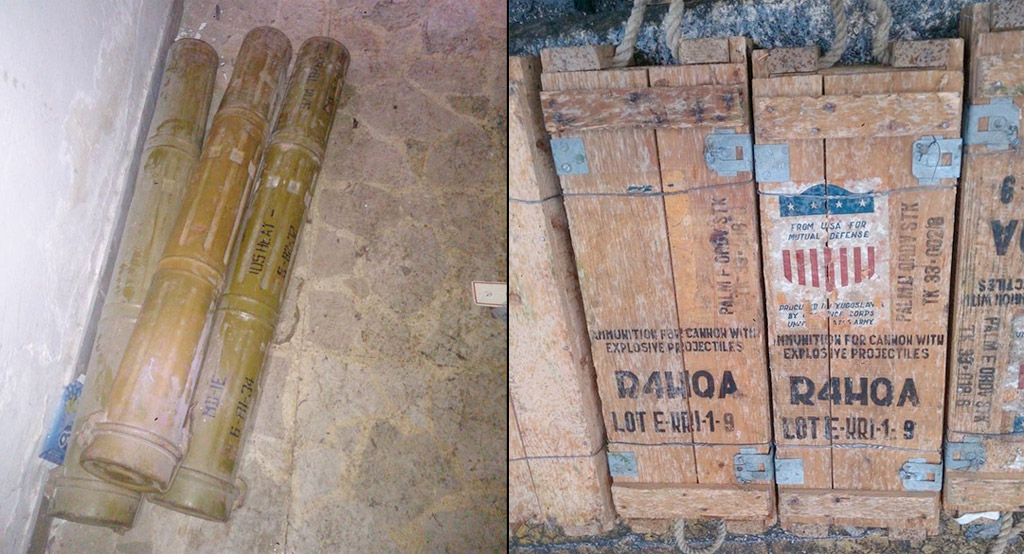
Shehabi calls the discovery “SyriaGate” because it proves the US armed a group that is on its own terror list. Photo: Syrian Arab Army
The fate of Aleppo didn’t play such a big role in Western media for the last 4.5 years. Since the start of the liberation operations of the Syrian Arab Army the situation changed completely: All of the sudden Western media, politicians and NGOs were campaigning – against the Syrian Army. They accused the Syrian Army of committing “genocide” in Aleppo, of bombarding hospitals, of massacring children and babies…
– We Syrians paid in blood and destruction. Our own blood is the currency for these Western lies and this “misunderstanding”. Someone in the West can always say “Oh sorry, I got it somehow wrong!”, but we paid with our blood and our lives for this horrible ignorance. Aleppo was conquered by Al Qaida gangs in summer 2012. There were no Aleppo residence involved, our city was very peaceful, no one took the arms against the government. We were conquered by the terrorists with heavy weapons and they took 70 percent of our city. In 2012 around two million civilians lived in East Aleppo, 1.5 million left the occupied territory to safe zones. Nobody in the West spoke about the displacement of these 1.5 million people who were fleeing into government controlled areas. America and Europe were silent. Nobody in the West was interested in the 11.000 civilians killed by the terrorist gangs in four years of random shellings and bombardments. 30 per cent of these killed civilians are children. 4.5 years we were losing innocent civilians by terrorist grenades, explosives and snipers.
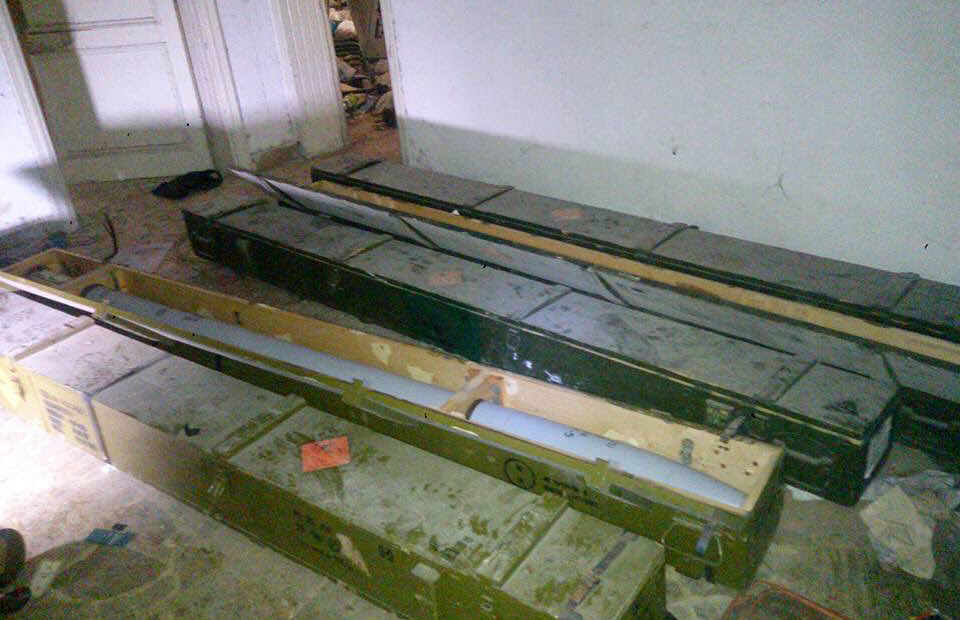
In total several tons of NATO weapons were found in East Aleppo. Photo: Syrian Arab Army
European politicians, media and NGOs seem to care more about the fate of the terrorists than about the civilians of Aleppo?
– There is no other explanation for that behaviour. Again: 4.5 years the terrorists brought the hell to the civilians of Aleppo, but the West didn’t care. When we liberate the terrorist controlled areas the West reacts with a huge campaign against us. At the same time the whole Western media campaigns for liberating the Iraqi city of Mosul from the terrorist gangs of the so-called “Islamic State”. Why is it allowed to liberate Mosul, but forbidden to liberate Aleppo?
This is a big hypocrisy. I recommend to the Western audience to put themselves in our shoes. Imagine that tens of thousands Al Qaida terrorists occupy half of Berlin, Paris or London? What would the people do? They would hope for liberation by their army. We Aleppo people waited 4.5 years for our liberation! But we had to bring that sacrifice in order to minimize the civilian causalities. We had to wait for a superpower – the Russian Federation – to help us. If our Army would have immediately started the counter attack in 2012 we might have had thousands of civilian losses and much more destruction. But we waited and we liberated our city. Thank god.
http://www.globalresearch.ca/syria-gate-nato-weaponry-and-personnel-in-east-aleppo/5565358
Subscribe to:
Posts (Atom)