Monday, November 28, 2016
Fidel Castro -The voice of the Third World

Fidel Castro was the mirror of Africa, Asia and Latin America’s aspirations/blockquote>

The room went silent at the UN’s 2001 World Conference Against Racism whenFidel Castro entered. He took the podium and firmly denunciated not only racism, but also the deep scars inflicted by capitalism. “The inhuman exploitation on the peoples of three continents,” he said in reference to Africa, Asia and Latin America, “marked forever the destiny and lives of over 4.5 billion people living in the Third World today.” It was this history, he said, that left “the current victims of that atrocity” in poverty, unemployment, illiteracy and sickness. Castro’s words mirrored reality. He would not end there. It was hope, not despondency, that captured his personality. “I believe in the mobilisation and the struggle of the peoples!” he said. “I believe in the idea of justice! I believe in truth! I believe in man!” It was hard to contain the applause. Castro, in his customary green fatigues, took in the adulation. There was nothing insincere about it: the leaders in the room admired the guerrilla. He said things that many of them believed, but had come to set aside. These were the ideas of their youth and of their anti-colonial traditions. But they had set them to mute. Never would we hear such honesty from these leaders of the Third World. But their applause suggested something important. Castro spoke for their suppressed values. His words rang true, even as their articulation would be sneered at by the Global North and their representatives in the Global South. The most severe mockery would be reserved for Castro’s hopefulness, his talk of mass mobilisation and struggle. Words like ‘justice’ and ‘truth’ had been emptied of their content. They would now mean the opposite. Commitments to mass mobilisation and struggle evoked excitement in some, condescension in others. It was the part of Castro’s resilient message that set him apart. Confronting imperialism
Castro, who represented a beleaguered revolution in a small island, stood for otherwise suppressed historical forces. Against all odds, the guerrillas of the Sierra Maestra defeated the mafia leadership in Havana and defended itself from the Yankees of Washington, D.C. At the inauguration of the Non-Aligned Movement (NAM) in 1961, Cuba’s president Osvaldo Dorticós Torrado spoke in a language that irked the more staid leadership of Gamal Abdel Nasser, Jawaharlal Nehru and Josip Broz Tito. Underdevelopment, he said, can be “overcome only through a struggle against and by total victory against imperialism”. Determined that imperialism needed to be confronted, Cuba hosted the Tricontinental meeting fifty years ago. It was here that Castro said that his government would “coordinate support for revolutionary wars of liberation throughout the colonised world”. Che Guevara was already in the Congo, working with African revolutionaries. Cuban material support — in terms of military and medical training — came to Guinea-Bissau, Mozambique and Angola. It was the Cuban assistance to the militants in these struggles that helped defeat Portugal and summon Portugal’s own Carnation Revolution against its fascist state in 1974. It was the Cuban intervention in Angola that helped defeat the South African military at the 1988 Battle of Cuito Cunavale, which broke the back of the South African apartheid regime and contributed to its demise in 1994. Cuba did its work and then withdrew. It did not seek to occupy — to get business deals or to create military bases. It came to help and then, having helped, it left.
In 1983, Castro arrived in New Delhi to hand over the presidency of NAM to India. He was received like a folk hero, the triumphant leader of a Third World then in great distress. The debt crisis had ended whatever hope had been kindled from the anti-colonial movements. Finance ministers lined up at the International Monetary Fund and at the various commercial lenders to raise funds for depleted treasuries. The will to fight for another world had been squashed. Fidel Castro had other ideas. He was not ready to bend his knee. What about a debt strike, he asked? What if every one of the NAM states refused to service their debts and what if they demanded that their debts be renegotiated? Castro received a standing ovation. But no one decided to follow him. There was no debt strike. Instead, country upon country faced a policy slate (neo-liberalism) that cannibalised their resources.
Castro continued to beat the drum, warning against the direction taken by the planet. He spoke about the failure of the world’s leaders to craft a global response to the perils that faced us all: a financial system that had become a casino, a social project that created perilous levels of inequality, a consumption pattern that would devour the earth’s resources, wars that are the child of greed and hunger. New ideas had crept in to corrupt thought. “The market has become today an object of idolatry,” he said in 1999, “a sacred word pronounced at all hours.” The richest 10 per cent of the world’s population today controls 89 per cent of the world’s wealth. This kind of thinking, Castro said, has “impaired the human mind”. Nothing held Castro back. When journalist Ignacio Ramonet accused him of being a dreamer, Castro responded, “There’s no such thing as dreamers, and you can take that from a dreamer who’s had the privilege of seeing realities that he was never capable of dreaming.” Solutions to such grotesque inequalities were needed. They cannot be found in apps and in microcredit. Much grander thoughts are required. Castro persisted with that ambition. It was his boldness that allowed so many people to breathe.
In 1953, a lieutenant and his squad captured Castro and some of his comrades. Castro hid his identity for fear of execution at the spot. The soldiers wanted to kill the guerrillas. The lieutenant walked about calming them down. “You cannot kill ideas.” He repeated, “you cannot kill ideas.” Later Castro wondered what made the lieutenant save his life and repeat that statement. “Our ideas did not die,” Castro said. “No one could kill them.” Without the long period of struggle and experimentation, without the years “we had to educate, sow ideas, build awareness, instil feelings of solidarity and a generous internationalist spirit, our people would not have had the strength to resist.” You cannot kill ideas. Castro, for the Third World, was not merely another leader. He was the mirror of its aspirations. That mirror is now shattered. Vijay Prashad is Professor of International Studies at Trinity College and Chief Editor of LeftWord Books.
Pakistan's Census -Another Excuse

The army’s inclusion into the exercise has been made a precondition, which is fine, but not being able to agree on the numbers being supplied for the exercise is no reason for this inordinate delay. First, it was Zarb-e-Azb, and now its cross-border violations from the Indian side.At this rate, there is never likely to be a perfect time for supplying troops for the census. Pakistan is embroiled in conflict on all fronts, and this situation is not likely to change in the near future. And is the government really telling us that all of our troops our currently not available? Pakistan’s army was never short of manpower, sparing some troops for this should not be as difficult a task as it is made out to be.
And while we are quick to dismiss our other law enforcement agencies such as the provincial police forces, using them in areas which are not as much of a security risk as others should also be perfectly acceptable. Areas in Balochistan and Karachi which already have a strong military presence should make use of the troops already present.Pakistan’s developmental priorities will continue to be skewed until the state actually has a real estimate of how many people it is to cater to. Nineteen years is a long time with a country that already had an overpopulation problem, long before this uncalculated exponential increase. Carrying out the census should be made one of the highest priorities.
http://nation.com.pk/editorials/28-Nov-2016/another-excuse
‘Zardari’s return not linked to army chief’s retirement’
Former president Asif Ali Zardari’s return from self-imposed exile – expected next month – has nothing to do with Army Chief Gen Raheel Sharif’s retirement, party leaders have said.
General Sharif will hand over command of the army to Lt-General Qamar Javed Bajwa on November 29 after completing three years at the top.
Prime Minister Nawaz Sharif appointed Lt-Gen Bajwa over the weekend.
He also elevated Gen Zubair Hayat as the chairman Joint Chiefs of Staff Committee.
Zardari had flown abroad in June 2015, after his controversial speech in which he had criticised the country’s military leadership without clearly mentioning any names.
Pakistan People’s Party (PPP) however, claimed that Zardari was abroad for treatment purposes.
Senior PPP leader Nadeem Chan, who was appointed party’s general secretary for central Punjab, said Zardari’s return was not linked to Gen Raheel Sharif’s retirement.
“We take General Raheel Sharif as a good soldier. We have nothing against him. We respect him. Zardari’s return has nothing to do with his retirement. He is coming on his own sweet will,” he said.
Chan said Zardari would most likely attend the December 27 gathering on the death anniversary of late former prime minister Benazir Bhutto.
“You will see both the father and the son together hopefully. There is no leadership struggle in the party,” he added.
Chan said Bilawal would continue the lead role in the party even after Zardari’s return.
“Now Bilawal is the party chief and he will continue in that role. Zardari will be more like a guide and we will consult him over national affairs. Bilawal will be the chief executive from now on for the PPP,” he maintained.
According to reports, Zardari would be returning to Pakistan between December 10 and 15.
He is likely to declare next game-plan of the PPP regarding the PML-N government. The city of return is also yet to be decided as the party leaders believe it could be Lahore, Karachi or Larkana.
Reportedly, the PPP co-chairman will himself announce the final date of return. Party leaders say a truck was being prepared on which the party’s co-chairman would travel. The former president had earlier said he was not living in exile and he would come back to Pakistan in few weeks.
As Zardari prepares to return, Prime Minister Nawaz Sharif feels the PPP might be in a mood to take on the government.
The prime minister had recently said the PPP was returning to the politics of the 1990s when his Pakistan Muslim League and the PPP took turned to rule the country and remained engaged in a fierce battle.
Nawaz had said the Charter of Democracy signed between the PML-N and the PPP in June 2006 was “not working”. The premier had said the revival of the politics of the 1990s would not benefit any pro-democracy party.
On the other hand, Asif Ali Zardari has been categorical in his support for democracy.
In a recent interview, he said that democracy would develop in the parliament, and not in courts.
The former president said that what if a commission set up by the Supreme Court could not produce any fruitful result over the Panama Leaks case, then “what [would be] the advantage of establishing such a commission.”
Zardari reiterated he was not exiled, and was abroad on his own free will, and would soon return to Pakistan.
PPP lawmaker Senator Farhatullah Babar said that there was no infighting over party leadership upon Zardari’s return.
“Bilawal is the PPP chairman and Zardari is the co-chairman. Both have their jobs to do and have been doing this for a while now. There is no confusion in the PPP about their roles,” he added.
Senator Babar said Bilawal had been taking important decisions in the recent weeks indicating his control over the party.
“Bilawal is the chairman for a reason and Zardari is not interested to clip his powers. Everybody in the PPP respects Zardari and accepts Bilawal as the chief,” he remarked.
Fuelling the heat, PPP Central Punjab President Qamar Zaman Kaira has warned Prime Minister Nawaz Sharif to accept the four points laid by Bilawal, “if he wants to save his government.”
Kaira claimed that in case the prime minister did not surrender to their demands, then his party would lead such a campaign that the government would not be able to stand it.
Bilawal had asked the federal government to meet his four demands - passage of the draft Panama bill, immediate appointment of a permanent foreign minister, reconstitution of the parliamentary committee on national security, and implementation of the resolution on the China-Pakistan Economic Corridor passed in a multi-party conference - till December 27.
http://nation.com.pk/newspaper-picks/28-Nov-2016/zardari-s-return-not-linked-to-army-chief-s-retirement
Sunday, November 27, 2016
Pakistan - PTI backs PPP’s four demands, says Qureshi
Pakistan Tehreek-i-Insaf Vice-Chairman Shah Mehmood Qureshi has said that his party supports the Pakistan Peoples Party’s four-point demands its chairman Bilawal Bhutto Zardari put to the federal government during the ‘Salam-i-Shuhada’ rally in October.
 Bilawal had called upon the federal government to revive the national security committee of parliament; accept the bill presented by the PPP on the Panama Papers controversy in the National Assembly; implement the resolutions passed at the recent multiparty conference on the China-Pakistan Economic Corridor and appoint a full-time foreign minister immediately.

The PPP chairman had said that if these demands were not met he would announce a long march on Islamabad on December 27, the ninth death anniversary of Benazir Bhutto, from Garhi Khuda Bakhsh, Larkana. “We are waiting for Dec 27. If they [the PPP] launched a protest movement I will request Imran Khan to reconsider things,” said Qureshi while talking to the media in Nawabshah and Matiari districts on Sunday
However, he took the PPP’s assertion of taking to the streets from Dec 27 with a pinch of salt. The PTI leader also found similarity between the PPP and his party over the Panama leaks issue. But despite the confluence in views of the two parties’ stance on the leaks, Qureshi viewed the PPP as an adversary in Sindh, emphasising that the people are looking towards a new party to lead them.
http://tribune.com.pk/story/1246524/pti-backs-ppps-four-demands-says-qureshi/
#Pakistan -‘Generals, judges, journalists must also be held accountable’

Senator Farhatullah Babar on Saturday highlighted the flaws in the accountability system and said that the fight against corruption could not be won unless and until it was across the board, with no sacred cows.
"Why the judges, generals and journalists cannot be held accountable through the same accountability mechanisms that investigate politicians and bureaucrats?" he asked while speaking at a dialogue organised by the Human Rights Commission of Pakistan (HRCP) in Lahore on accountability laws and policies in Pakistan. "Who will guard the guards and pass judgement on those judging others for corruption?"
He said that fundamental issues - like exempting sacred cows from accountability, turning a blind eye to institutional corruption and misusing accountability for political re-engineering - had never been addressed, due to which anti-corruption laws and institutions were no more than a sham and a scam. He said that the argument that some institutions had their own accountability mechanisms was a sham. "It has no credibility and is widely perceived as an escape from accountability."
The senator said that the single most effective remedy against corruption was transparency and the tearing apart of the shroud of secrecy.
http://dailytimes.com.pk/punjab/27-Nov-16/generals-judges-journalists-must-also-be-held-accountable
Pakistan - Forced Conversion

The Sindh Assembly has been exceeding expectations by passing controversial bills that work towards ensuring the rights of minorities. After the passing of the Hindu Marriage bill in February this year, it has now adopted a bill against forceful religious conversions. The bill endorses a five-year punishment for perpetrators, whereas facilitators of forceful religious conversions will be handed a three-year sentence.
It is commendable that the assembly is setting examples for the rest of the county to follow. It is only hoped that these bills will be implemented in practicality, beyond just the scope of legislation, and will end the discrimination and oppression that minorities face on a daily basis.
Under the newly passed bill, forcibly converting a minor is also a punishable offence.
Adults will be given 21 days to consider their decision to convert, an important clause to consider as many are forced into conversion due to external pressure, duress or threats that could come in the form of physical emotional or psychological coercion. The South Asia Partnership-Pakistan, released a report in collaboration with the Aurat Foundation in July 2015 stating that at least 1,000 girls are forcibly converted to Islam in Pakistan every year, many of which happen in Sindh, that has an overwhelming majority of Hindus concentrated in the province.
The Senate Standing Committee on Religious Affairs earlier in June set the foundation for this bill and termed forced conversions “illegal” and against the principles of Islam. Senator Gian Chand earlier admitted that police do not take action in cases of forced conversion “fearing the reaction of the Muslim community.
” This is the mentality that law enforcement agencies have to work against. The issue of conversion itself is a highly controversial one, where the general belief is that converting a non-Muslim into a believer is the highest honour possible. To implement this bill means to change the very fabric of society and a lot more can be done before Sindh can boast of protecting its minorities.
http://nation.com.pk/editorials/26-Nov-2016/forced-conversion
PAKISTAN EXPRESSES GRIEF OVER DEMISE OF FIDEL CASTRO
Pakistan has expressed deep grief and sorrow over the sad demise of former Cuban President Fidel Castro.
In a statement on Saturday, Adviser to the Prime Minister on Foreign Affairs Sartaj Aziz said the government and the people of Pakistan condole to the government and the people of Cuba on this irreparable loss.
The Advisor said that late President steered his nation through numerous daunting challenges with statesmanship, honour and dignity.
He said Pak-Cuba relations touched new heights under his dynamic leadership.
Fidel Castro, the Cuban revolutionary leader who built a communist state on the doorstep of the US, died at the age of 90.
Raul Castro, Fidel's brother and current president of Cuba, announced his death on state television in Havana early on Saturday.
The leader of the 1959 revolution, which overthrew the US-backed dictator Fulgencio Batista, defied the US efforts to topple him for five decades, before ill health led him to make way for his brother Raul, 84, in 2006.
In his final years, Fidel lived in relative seclusion, but occasionally wrote opinion pieces or appeared to meet visiting dignitaries.
FORMER PRESIDENT ASIF ALI ZARDARI CONDOLES THE DEATH OF CUBAN LEADER
 Former President of Pakistan and President Pakistan Peoples Party Parliamentarians Asif Ali Zardari has expressed his profound grief and sorrow over the death of Cuban revolutionary leader Fidel Castro who died on Saturday after a prolonged illness.
Former President in his condolence message said that with the death of Fidel Castro not only people of Cuba but progressives and revolutionaries around the world lost a leader who was a source of inspiration for them. Pakistan and Cuba established very strong and friendly relations during the government of Shaheed Zulfikar Ali Bhutto. PPP is with the people of Cuba in this mourning time, Asif Ali Zardari said.
https://ppppunjab.wordpress.com/2016/11/27/former-president-asif-ali-zardari-condoles-the-death-of-cuban-leader/
‘Viva Fidel!’, Cubans Begin Mourning For Castro

Nelson Acosta and Simon Gardner
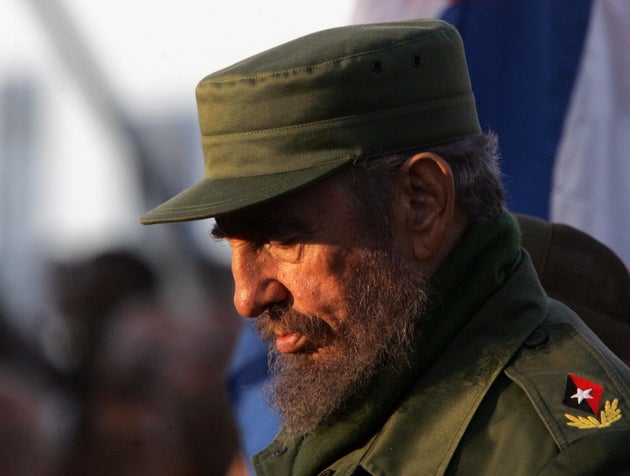 Flag-waving Cuban students broke into a mass chant of “I amFidel” to salute Fidel Castro as nine days of mourning began for the combative Cold War icon, who dominated the Communist island’s political life for generations.
Alcohol sales were suspended, flags flew at half-staff and shows and concerts were canceled after his younger brother and successor, President Raul Castro, told the country on Friday that Fidel had died at 10:29 p.m., without giving a cause of death.
Giant rallies are planned in Havana’s Revolution Square and in the eastern city of Santiago to honor Castro, who died aged 90, six decades after the brothers set out from Mexico to overthrow U.S.-backed Cuban dictator Fulgencio Batista.
Newspapers on the island of 11 million people were printed in black ink to mournFidel, instead of the usual red of the official Communist Party daily Granma, and the blue of Juventud Rebelde (Rebel Youth), the paper of the Communist youth.
“For me, it’s my mother first, my children, my father, then Fidel,” father-of-five Rafael Urbay, 60, said as he manned a government photo and printing store in downtown Havana, remembering his early years spent on a remote island off the mainland with no drinking water.
“We weren’t just poor. We were wretched,” he said. “Then came Fidel and the revolution. He gave me my humanity. I owe him everything.”
There was no heightened military or police presence to mark the passing of the epochal revolutionary leader, and at Havana University, Castro’s alma mater, hundreds of students gathered to wave huge Cuban flags and shout “Viva Fideland Viva Raul.”
“Fidel isn’t dead because the people are Fidel,” shouted a local student leader dressed in jeans and a white T-shirt. “I am Fidel,” he continued, a refrain quickly adopted by the crowd.
“Fidel put Cuba on the map, and made Cuba a paradigm for the people of the world, especially the poor and the marginalized,” said another university student, Raul Alejandro Palmeros.
Castro studied law at the university in the late 1940s and early 1950s, when it was a hotbed of leftist politics, setting him on the path that led to his toppling of Batista in 1959.
Under Castro, bitter diplomatic conflict with the United States followed, and Cuba quickly became a firm ally of the Soviet Union, sparking the Cuban Missile Crisis in 1962.
Yet despite years of ideological strife and increasing hardship under a U.S. economic embargo,Castro’s Cuba became renowned for high education standards and world-class doctors.
“What Fidel did with education and free health stands out on the world stage. It was unique,” said Rene Perez, 78, a retired accountant and Communist Party member. “It’s his main legacy.”
Apart from the chanting students, Havana life went on largely as normal, only quieter and more subdued following the news of Castro’s death. Street vendors sold food and handcrafts from stalls to passers-by, while 1950s Chevrolets full of dents and held together by makeshift repairs cruised by, crammed with passengers.
Nevertheless, it was a day for reflection.
“Usually we’re full, but today only tourists have come and maybe a few Cubans. Usually it’s the other way around. It seems Cubans feel funny about enjoying themselves so soon after Fidel died,” said Raul Tamayo, a doorman at La Roca, a popular restaurant in Havana’s central Vedado district.
Castro’s remains were cremated, and his ashes will be taken around Cuba until a state funeral on Dec. 4. Western diplomatic officials said foreign dignitaries will arrive by Tuesday for a memorial service to be held in Revolution Square that evening.
There will be no top level games of baseball - Castro’s passion after politics - for the nine-day period of mourning, the sport’s national federation declared.
Cuban state television, student associations and the women’s federation had organized smaller rallies to mourn Fidel Castro and pledge their support to the revolution.
Standing well over 6 feet (1.8m) tall, the bearded Castro was for years a cigar-chomping bulwark of ideological resistance to the United States, decked out in green military fatigues and cap.
But the man long known as Cuba’s “Maximo Lider” (Maximum Leader) largely disappeared from the public eye after a 2006 intestinal illness that almost killed him.
Formally handing over power to Raul in 2008, he remained a major presence on the island, and regularly warned the Cuban population about the perils of giving in to the United States.
“Everyone here is sad. Everyone is a Fidelista,” said Anaida Gonzales, a retired nursing professor in central Camaguey province. “People are just going about their business, but sad. Me, I’m very sad for my Comandante, it really took me by surprise.”
Putin says Fidel Castro's name is a symbol of epoch in newest global history
 Russia’s President Vladimir Putin has offered condolences following the death of the Leader of the Cuban Revolution Fidel Castro, saying his name would become a symbol of the epoch in the newest global history, the Kremlin’s press service said on Saturday."Free and independent Cuba, which he and his allies built, became an influential member of the international community and became an inspiring example for many countries and nations," the telegram reads. "Fidel Castro was a sincere and reliable friend of Russia. He made a huge input in establishment and development of the Russian-Cuban relations, close strategic partnership in all spheres."
"He was a strong and wise person, who always faced future with confidence," the telegram reads. "He demonstrated high ideals of a politician, citizen and patriot, who is adamant in the right course, to which he sacrificed all his life."
"At this mournful time, please say for me the words of sympathy and support to all members of your family," Putin said "I wish you courage, strength in facing this tragic loss."
The historic leader of the Cuban revolution, the founder and leader of the first socialist country in the Western hemisphere - Cuba - Fidel Castro died on Friday late afternoon at the age of 90.
More:
http://tass.com/politics/914838
Castro’s death stirs ideology clash in China
Revolutionary Cuban leader Fidel Castro passed away Friday at the age of 90. Since he had already handed over leadership of the island in 2011, his death did not have any political ramifications globally; nevertheless, the news was a big event in the public opinion sphere.
Castro was the last statesman to have gone through the revolutionary era of the 20th century. Many state leaders sent condolences to Cuba while politicians worldwide issued statements, media outlets published comment and individuals gave their opinion on social media platforms.
Evaluations of Castro's legacy are complex and poles apart. The US had considered Cuba as a foe for a long time and applied sanctions and embargos on the country for over half a century. President Obama said in a statement that "History will record and judge the enormous impact of this singular figure on the people and world around him." But President-elect Donald Trumpcalled the late Cuban leader a "brutal dictator." In the developing world, most state leaders heralded Castro as a "great man" or "hero."
Divergent viewpoints can be found on China's social media websites, with some attacking and disparaging posts against Castro among the most radical in global public opinion. They cited a Chinese newspaper article lashing out at Castro at a time when Cuba was cozying up to the former Soviet Union to support their views. There is even a fake article on the number of women the former Cuban leader had allegedly slept with.
A few people holding such views have a poor sense of history and low levels of knowledge. Of course, some are driven by ideology: Castro cannot be a good man since he held an anti-American stance for long.
The Castro-led revolution was part of the tide of revolution of the 20th century. Castro persisted for a long time right under the nose of the US. Washington's suppression against Havana is highly controversial and to this day has not achieved its original aims.
Castro was an idealist, and his political ethos is widely supported in Latin America. Cuba faces huge exterior pressure to realize its ideals, yet Castro is admired by many who understand his thinking. Despite facing a huge threat from the US, Castro had not led his country to radical militarization, and devoted the country's limited resources to education, health care and other sectors to improve people's livelihoods.
In today's China, those who blindly idolize the West are the most ideological. In their eyes, history and reality are black and white. They are against every Chinese policy and mainstream idea.
These negative voices should be put under control, although it may be more realistic and reliable if society becomes more adaptable to these noises.
Most Chinese respect Castro and regard Cuba as a good friend. The sentiment embodies the diplomatic rationality of the society. The radical voices do not mean anything, other than representing the diversity of this era.
http://www.globaltimes.cn/content/1020582.shtml
Castro was the last statesman to have gone through the revolutionary era of the 20th century. Many state leaders sent condolences to Cuba while politicians worldwide issued statements, media outlets published comment and individuals gave their opinion on social media platforms.
Evaluations of Castro's legacy are complex and poles apart. The US had considered Cuba as a foe for a long time and applied sanctions and embargos on the country for over half a century. President Obama said in a statement that "History will record and judge the enormous impact of this singular figure on the people and world around him." But President-elect Donald Trumpcalled the late Cuban leader a "brutal dictator." In the developing world, most state leaders heralded Castro as a "great man" or "hero."
Divergent viewpoints can be found on China's social media websites, with some attacking and disparaging posts against Castro among the most radical in global public opinion. They cited a Chinese newspaper article lashing out at Castro at a time when Cuba was cozying up to the former Soviet Union to support their views. There is even a fake article on the number of women the former Cuban leader had allegedly slept with.
A few people holding such views have a poor sense of history and low levels of knowledge. Of course, some are driven by ideology: Castro cannot be a good man since he held an anti-American stance for long.
The Castro-led revolution was part of the tide of revolution of the 20th century. Castro persisted for a long time right under the nose of the US. Washington's suppression against Havana is highly controversial and to this day has not achieved its original aims.
Castro was an idealist, and his political ethos is widely supported in Latin America. Cuba faces huge exterior pressure to realize its ideals, yet Castro is admired by many who understand his thinking. Despite facing a huge threat from the US, Castro had not led his country to radical militarization, and devoted the country's limited resources to education, health care and other sectors to improve people's livelihoods.
In today's China, those who blindly idolize the West are the most ideological. In their eyes, history and reality are black and white. They are against every Chinese policy and mainstream idea.
These negative voices should be put under control, although it may be more realistic and reliable if society becomes more adaptable to these noises.
Most Chinese respect Castro and regard Cuba as a good friend. The sentiment embodies the diplomatic rationality of the society. The radical voices do not mean anything, other than representing the diversity of this era.
http://www.globaltimes.cn/content/1020582.shtml
‘Those dancing on Fidel’s grave may soon be disappointed’
While the death of Cuban revolutionary leader Fidel Castro caused grief and sorrow worldwide, many could not hide their joy. Political analysts told RT who has been “dancing on the lion’s grave” and why.
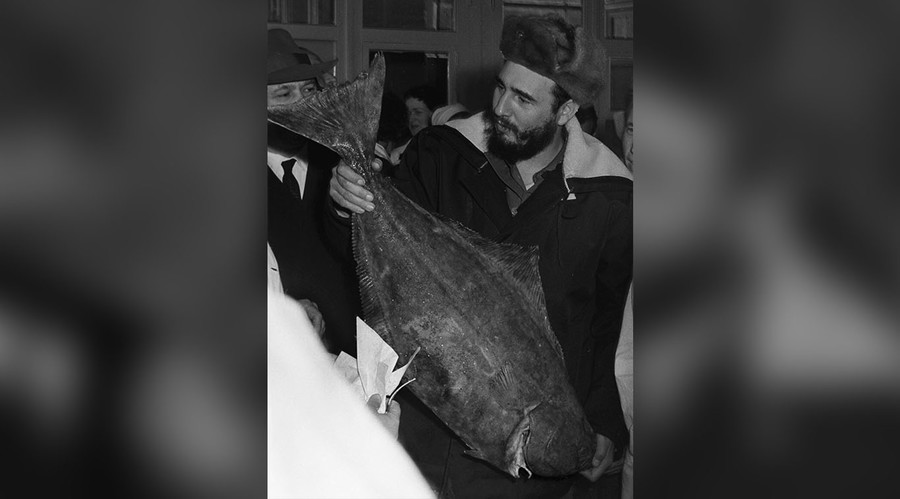
“Cuba was nothing more than a casino, a bordello before the Cuban Revolution led by the man who died yesterday,”former British MP and host of RT's 'Sputnik', George Galloway, said. “And the people who fled Cuba for Miami, the Scarface generation, were the people disinherited by the Cuban revolution, when casinos were turned into schools and colleges, when bordellos were no more. And they are celebrating for the same reason [that] hundreds of millions of people around the world are mourning. The passing of someone, who … was the star, who made Cuba the coolest place on the planet.”
“There’s no country on the Earth, where more people have been to, or would like to go to than Cuba. And the iconography of Fidel Castro, Che Guevara, Camilo Cienfuegos and the Cuban revolution is really something that’s pretty hard to beat.”
“So I’m afraid that the dancers in Miami, who might imagine that they are going back to casinos and bordellos are going to be disappointed,” Galloway added.
Cuba is like a “bad sheep that got away from the herd,” but become the “hope of the world,” Galloway said.
Cuba is like a “bad sheep that got away from the herd,” but become the “hope of the world,” Galloway said.
“It ploughed its own path, it decided [that] though the United States was a mighty super power, and only 70 miles away, that it would be a free country, it would not accept the dictate of the United States. That it would make its own friends in the world, and it would forge its own path in the world.”
“And the reality is Cuba is an amazing success story, not just, as I said earlier, the coolest place on the planet, where everybody, particularly young people, want to go, but the leader in the biomedical field, the children that are born in Cuba have more chance of living beyond their first year than they do in Washington DC. Life expectancy in Cuba is longer than in Washington DC. They have a health service and education service entirely free, and from the cradle to the grave ... on a par with Scandinavian countries. In fact ... [Cuba's] biggest export is not tobacco or rum, but doctors. And every time there’s an emergency, or a disaster, or a tragedy it’s the Cubans who are first bringing aid and sustenance to the people.”
The director of Cuba Solidarity Campaign, Rob Miller, told RT it is “sad” but “understandable” why people were celebrating in the streets of Miami, and that the sentiment will soon change.
“In Miami we have one million Cubans who exiled themselves from eleven million Cubans who remained on the island. And primarily their motivation is one of reclaiming their wealth, their privilege, their plantations, their factories, their very large houses, they all enjoyed before the Revolution [in] 1959.
“I think you’ll see a period of this … celebration, but I think there will be a realization that life has to move in [the] direction of a normal, sensible relationship with the 11 million Cubans who inhabit the island just 70 miles away across the Florida straits,” he added.
“This has been a vicious, nasty period of aggression of the world’s biggest superpower against this small Caribbean nation. And they have thrown everything at the Cubans, everything to try [to] enforce regime change. That includes the world’s media. And even today you’re seeing the world’s media still follow the same anachronistic Cold War line towards Cuba.”
“But yet on the streets of Havana, streets of San Paulo, Quito, across Africa, across Latin America, and even here in London you see people mourning the death of Fidel Castro, mourning that passing of that man, who represented so much, a beacon, if you like, of difference, of different world, of a different way of doing things. And I think at this time of austerity here, in Europe and across the globe people are looking for different ways forward … to participate in politics, to make changes for the benefits of everybody, not just the elite, not just that growing minority who’re eating up the world’s resources for their own self-gain.”
It is understandable that refugees from Cuba have no love for the government, but Cuba is “no longer a threat to the US,” British historian Martin McCauley told RT.
“I think that many of them are refugees from Cuba. They would say they suffered discrimination and perhaps even imprisonment in Cuba before they escaped. So, there is no love lost between them and the Cuban communist regime ... so, there are those in Florida among the Cubans there who strongly opposed the closer relationship with Cuba. They don’t want the Communist party legitimized,” he told RT.
“But Cuba is no longer a threat to the US. Communism is no longer a threat to the US. So, therefore, perhaps Trump will take a more relaxed and pragmatic attitude to Cuba and send his condolences to the people of Cuba on the death of Fidel Castro, because he changed fundamentally the relations between Cuba and the US from 1959 onward,” he added.
https://www.rt.com/op-edge/368331-those-dancing-on-fidels-grave/
Saturday, November 26, 2016
Chinese react to Castro's death on social media

Castro is hailed by generations of Chinese people as an epitome of idealism and a warrior who fought against social injustice.
His well-known speeches such as "History will absolve me" have been circulating on line and people are talking about how he pitted himself against 11 US presidents in his life.
Castro had maintained close ties with China and the Chinese people who admire him.
"Castro is seen as a hero in China and his passing will be considered a great loss by many Chinese who knows the history and destiny that China and Cuba shared," said Hua Liming, a research fellow at the China Institute of International Studies and a former Chinese Ambassador to Iran and the UAE.
China and Cuba bonded on similar ideologies and difficult times when the two countries faced enormous challenges from the West in the 1950s, Hua told the Global Times Saturday.
"Both countries faced a lot of hostility and containment from the West, and Castro's reputation of leading such a small country against its gigantic neighbor is an inspiration for many not only in China but smaller countries as well," Hua said.
The reaction of Chinese citizens to the passing of Castro also reflects the challenges China and Cuba still face today from the West, according to Hua.
"Though China has achieved great progress in economic development in recent decades, the West led by the US still views us with rose-colored eyes," Hua said, adding Cuba also faces a similar treatment, despite the fact that the US and Cuba recently normalized their diplomatic relations.
And as China and Cuba continue to face these challenges, "it is understandable that some people will miss someone like Castro, who can stand up to the West," Hua said.
Castro made his last state visit to China in 2003 as President of the Council of State and the Council of Ministers of Cuba. He held talks with then Chinese president Jiang Zemin and other leaders on bilateral ties, international and regional issues, following a grand welcome ceremony at the Great Hall of the People.
President Xi Jinping met with Castro twice from 2011 to 2014.
During Xi's state visit to Cuba in 2014, the two had warm discussions.
"You are deeply admired by the Cuban people and have also won the respect of the Chinese people. We will never forget the significant contributions you have made to bilateral relationships," Xi said during the talk.
Premier Li Keqiang met with Castro in September this year during his visit to the island nation. Li is the first Chinese premier to visit Cuba in more than five decades.
The meeting between Li and Castro was described by Cuban media as "brother-like" and the two leaders had an "earnest conversation" that covered the long-lasting relationship between China and Cuba and current international affairs.
President Obama Offers Cubans ‘Hand Of Friendship’ After Fidel Castro’s Death
President Barack Obama focused on healing U.S.-Cuban relations in a statement on the death of longtime Cuban leader Fidel Castro.
“At this time of Fidel Castro’s passing, we extend a hand of friendship to the Cuban people,” Obama said. “We know that this moment fills Cubans ― in Cuba and in the United States - with powerful emotions, recalling the countless ways in which Fidel Castro altered the course of individual lives, families, and of the Cuban nation. History will record and judge the enormous impact of this singular figure on the people and world around him.”
“Today, we offer condolences to Fidel Castro’s family, and our thoughts and prayers are with the Cuban people. In the days ahead, they will recall the past and also look to the future,” he added. “As they do, the Cuban people must know that they have a friend and partner in the United States of America.”
Obama restored the United States’ full diplomatic relations with Cuba in July 2015 after years of negotiation with the government of Raul Castro, Fidel Castro’s brother and successor. Their efforts ended a decades-long period of estrangement that began shortly after the elder Castro seized power in 1959.
In March, Obama became the first American president to visit Cuba in 88 years.
Obama alluded to the diplomatic breakthrough over which he presided in his remarks on Castro’s death.
“For nearly six decades, the relationship between the United States and Cuba was marked by discord and profound political disagreements,” Obama said.
“During my presidency, we have worked hard to put the past behind us, pursuing a future in which the relationship between our two countries is defined not by our differences but by the many things that we share as neighbors and friends - bonds of family, culture, commerce, and common humanity,” he added. “This engagement includes the contributions of Cuban Americans, who have done so much for our country and who care deeply about their loved ones in Cuba.”
http://www.huffingtonpost.com/entry/barack-obama-fidel-castro-death_us_5839a510e4b000af95ee4eb8
History, people to remember Castro: Chinese president
Chinese President Xi Jinping said Saturday that history and people will remember Fidel Castro, calling the Cuban revolutionary leader "a great figure of our times."
Xi, also general secretary of the Communist Party of China (CPC) Central Committee, made the remarks in a message of condolences to Raul Castro, first secretary of the Central Committee of the Communist Party of Cuba, president of the Council of State and the Council of Ministers of Cuba, after Fidel Castro died late Friday at the age of 90.
"In the name of the CPC, the Chinese government and people, and in my own name, I express my deepest condolences on the death of Comrade Fidel Castro and sincerest sympathy to his family," Xi said.
Fidel Castro, founder of the Communist Party of Cuba and Cuba's socialist cause, was a great leader of the Cuban people, Xi said, adding that he has made immortal historic contributions and devoted all his life to the Cuban people's great cause of struggling for national liberation, safeguarding state sovereignty and building socialism.
The late Cuban leader has also made immortal historic contributions to the world socialist development, Xi added.
Fidel Castro also dedicated his life to the friendship between China and Cuba, Xi said.
Xi added that the China-Cuba relationship has enjoyed great development since the two countries forged diplomatic ties 56 years ago thanks to Fidel Castro's solicitude and painstaking efforts.
"The death of Fidel Castro has made the Chinese people lose a close comrade and sincere friend. His glorious image and great achievements will go down in history," Xi said.
"The great Comrade Fidel Castro will be forever remembered," said the Chinese president.
http://news.xinhuanet.com/english/2016-11/26/c_135860659.htm
Fidel's Legacy: 'Cubans Give Us Example of How to Develop and Live'
Fidel Castro's death will not bring an end to the Cuban Revolution, Russian academic Evgeny Astakhov told RIA Novosti, highlighting that by the term 'revolution' he means further development of the Cuban sovereign and independent state.
After Fidel Castro's passing away Havana will continue to pursue the policy course set by the iconic Cuban leader, Russian International Affairs Council (RIAC) expert Evgeny Astakhov of Moscow State Institute of International Relations (MGIMO) told RIA Novosti. "If the 'revolution' implies an armed struggle, it ended long ago. If it implies the desire to make the peoples' life better, I believe this task still remain high on [Cuba's] agenda. Despite the normalization of relations between the United States [and Cuba], the goals of the revolution survived intact," Astakhov remarked. © SPUTNIK/ VASILY Fidel Castro Was 'Sincere Friend' of Russia, Remarkable Politician The expert called attention to the fact that living conditions of the Cubans remain rather low. However, he emphasized that the people of Cuba preserve their self-respect and dignity.
"There are no beggars there," Astakhov underscored, "The people have a sense of pride and they face their poor living conditions with dignity." The expert highlighted that at the same time the Cubans can boast their healthcare, cancer treatment and biotechnology. "In many respects, they give us an example of how to develop and live," he noted. © AP PHOTO/ RAMON ESPINOSA Monroe Doctrine Ghosts: Why Washington's Soft Power Does Not Work in Cuba Commenting on Barack Obama's first visit to Havana in March 2016, Haitian-born journalist Dr. Dady Chery highlighted that despite the trade embargo the US had exerted on the Caribbean state, Cuba "is no longer a country without its own toilet paper or medications, but one that has painfully built its own economy." "Currently, Cuba holds more than 30 patents in the area of biotechnology, which is its main export. It manufactures more than 800 products for the health needs of Cubans, for whom it provides universal medical coverage," Chery underscored in her op-ed for News Junkie Post.
The journalist added that against all odds the Cubans have developed their own software products, including computer games, cell-phone platforms, and specialized software for the health sector. © AFP 2016/ TOMMY WEBER Cuban Prime Secretary of the Cuban Communist party and President of the State Council Fidel Castro addresses delegates of the General Assembly of the United Nations, 26 September 1960 in New York "The revolution will continue," Astakhov said, "in 'spiritual' sense of the word, I do not mean armed struggle, barricades, 'maidans' and etc." "Not all people have such a sense of pride and sovereignty as the Cubans. There will be changes and reforms in the country and there will be new people which will follow the reform path. But these reforms will be aimed at improving the living conditions of the people, and not making them dependent on the dollar system," the Russian academic emphasized.
Russian Leaders Pay Tribute to Castro: 'Fidel Loved Russia and the Russian People' Fidel Alejandro Castro Ruz, the legendary Cuban revolutionary and one of the world's longest-serving leaders, passed away on Friday at the age of 90. His death was announced by his brother and the incumbent Cuban president, Raul Castro. Russian President Vladimir Putin expressed his condolences to the people and government of Cuba. "The name of this outstanding statesman is considered to be a symbol of an entire era in the modern history of the world. A free and independent Cuba built by him and his colleagues became an influential member of the international community and has served as an inspiring example for many countries and peoples," Putin said in his statement. "This strong and wise man always looked to the future with confidence. He personified the high ideals of a politician, citizen and patriot, sincerely believing in the righteousness of what he did and to which he devoted his entire life. His memory will forever remain within the hearts of Russian citizens," the Russian President emphasized.
Read more: https://sputniknews.com/politics/201611261047876927-castro-cuba-russia/ https://sputniknews.com/politics/201611261047876927-castro-cuba-russia/
Subscribe to:
Posts (Atom)