Friday, November 11, 2016

Opinion: Taliban no longer differentiate between diplomats and soldiers

Florian Weigand
For the first time in Afghanistan, Taliban militants have directly targeted German diplomats, attacking a consulate in Mazar-i-Sharif. This marks a turning point in the Afghan conflict, writes DW's Florian Weigand.

Why did the Taliban attack Germans in Mazar-i-Sharif? And why did they choose to target the country's diplomats rather than its military personnel? The militants themselves answered these questions Friday morning, saying it was a "revenge attack" for a US airstrike on a village near the volatile city of Kunduz. The insurgents claimed the US carried out the raid based on the information provided by German troops.
This could well be Taliban propaganda, of course, just like a purported drone image pointing a red mark at the German consulate in Mazar-i-Sharif, which Taliban spokesman Zabihullah Mujahid shared on Twitter. Upon a closer inspection, the picture turns out to be a Google map projection. But if the Taliban claim regarding Kunduz proves to be true, this would definitely trigger a serious discussion in Germany about the Afghan situation.
Intelligence sharing with the United States has put German soldiers in harm's way in the past. In September 2009, Bundeswehr Col. Georg Klein summoned US forces to bomb a truck the Taliban had captured. Over 100 civilians, including women and children, died in the airstrike. However, the more recent US attack near Kunduz was different. Apparently, the Taliban had entrenched themselves in the houses, possibly using the villagers as human shields. But again, 30 civilians, including women and children - also an infant - were killed in the raid.
Whether these important but subtle details will play any role in the German public discourse about the Afghan conflict is yet to be seen. But the evidence available shows that for the first time in the protracted war, German civilians, and not German armed forces, have been affected. The Taliban had specifically targeted a German diplomatic mission to exact revenge for the Kunduz attack. In January 2009, a suicide bomber exploded near the German Embassy in Kabul, however, it is still not clear whether the attack was aimed at a US facility or the German diplomatic mission.
After Thursday's attack in Mazar-i-Sharif, it is clear that the Taliban no longer differentiate between international troops and foreign diplomats. The militants now consider envoys as NATO agents who are being used in military operations.
Thanks to the efforts of the security forces - and some good luck - no German diplomats were harmed on Thursday, but the attack raises some serious questions. Berlin must be clear now how the German mission in Afghanistan will be executed. After the attack on diplomats, can we rule out the fact that German development and aid organizations in Afghanistan will not be targeted by militants in the future?
Mazar has long been considered one of the safest areas in Afghanistan, a place where repatriated Afghan refugees from Germany are being sent back to. Germany has contributed a lot to the development of the city - hospitals and schools were built, German's cooperation with local authorities has also been excellent.
The victims of yesterday's attack were mostly Afghans. Up to a hundred locals suffered injuries in the attack, as it was carried out near a busy street in the city center. If the Afghans are not safe in the shadow of a heavily protected German consulate, where are they be safe?
Most child deaths concentrated in 10 Asian, African nations: study

Sixty percent of the world's 5.9 million children who died before their fifth birthday last year were in 10 countries in Asia and Africa, said a study published on Friday, prompting calls for action to reduce the mortality.
The study published in The Lancet medical journal said the latest data highlights the inequality in children's death among the 194 countries it studied, even though the number of under-five deaths has fallen by 4 million compared to 2010.
Of the 5.9 million deaths last year, 3.6 million happened in 10 Asian and African countries - India, Nigeria, Pakistan, the Democratic Republic of Congo, Ethiopia, China, Angola, Indonesia, Bangladesh and Tanzania.
The two leading causes were complications due to premature birth and pneumonia, according to researchers from the Johns Hopkins Bloomberg School of Public Health, the London School of Hygiene and Tropical Medicine and the World Health Organization.
The researchers said child survival has improved substantially, although countries failed to meet the U.N. Millennium Development Goal to cut the rate of under-five deaths by two-thirds between 1990 and 2015.
The rate fell by 53 percent over the period.
The slow progress to reduce newborn deaths - in the first 28 days of life - hampered the MDG target, the researchers said. Of the 5.9 million under-five deaths in 2015, 2.7 million were newborns.
"The problem is that this progress is uneven across all countries, meaning a high child death rate persists in many countries," said the study's lead author Li Liu, from the Johns Hopkins Bloomberg School of Public Health in the U.S.
"Substantial progress is needed for countries in sub-Saharan Africa and Southern Asia to achieve the child survival target of the Sustainable Development Goals," she added.
Under the Sustainable Development Goals, which replaced the MDGs last year, all countries aim to reduce under-five mortality to no more than 25 deaths per 1,000 births by 2030.
The researchers recommended breastfeeding, vaccines for pneumonia, malaria and diarrhea, as well as improving water and sanitation to help with children's survival.
Pakistan - Has load-shedding been decreased?

Irrespective of winter or summer, there seems no end in sight to the energy crisis. Despite instructions by Prime Minister (PM) Nawaz Sharif to cut load-shedding by half across the country, irregular breakdowns continue, intermittently, to hit various urban areas. Although the duration of power breakdowns is lesser this year compared to the previous year, yet the genie of load-shedding is still haunting the masses. Reportedly, Secretary Water and Power Younas Dhaga has claimed that work had been started to implement the PM’s directions to further reduce the duration of laod-shedding. It has been claimed that load-shedding in urban areas would be reduced from six hours to three hours, and in rural areas from eight hours to four hours. The PML-N government deserves appreciation for making efforts to decrease the duration of load-shedding; however, a lot more needs to be done to resolve the crisis once and for all. Ironically, in this century when the utility of electricity is easily available in most countries, Pakistanis still wait for the news about the curtailment or end of load-shedding.
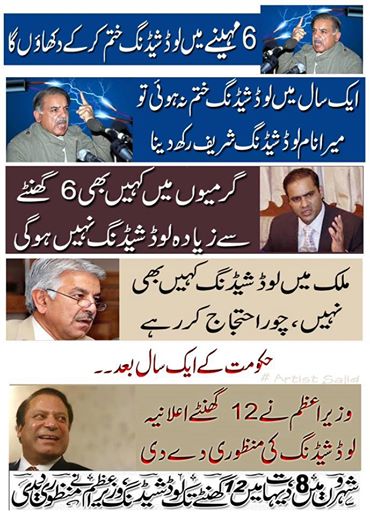
Despite the fact that the use of electricity is less in winter, citizens are still facing power outages. Repeated power failures have already affected industrial and manufacturing units across the country. There are various reasons behind the less production of electricity in Pakistan, which include financial constraints, lack of new power projects, raising burden of circular debt, poor electricity production, power theft, unfair distribution of electricity, and non-payment of electricity bills. Non-recovery of bills by the power distribution companies is stated to be the root cause of the crisis. There is a need to rectify all problems one by one. Until the root causes of the crisis are removed, the situation is unlikely to improve.
Presently, the government is only focusing on increasing power generation while it is making no investment to improve the decades-old, rusty national grid and related power infrastructure, which is vulnerable to collapse at any time. The government needs to take concrete steps for the rectification of the root causes to rid the country of this energy crisis already crippling its economy. The first and foremost step that needs to be taken is efficacious and fair collection of bills from the private and public sectors without any discrimination. Government functionaries and public departments are required to act responsibly and clear all their outstanding dues related to utility bills.
It should be the government’s priority to upgrade the national grid and transmission lines. Induction of technical manpower and investment in power-related infrastructure should be ensured especially in the hydropower generation sector. At present, Pakistan’s power generation mostly relies on thermal power plants that produce almost 65 percent electricity, but the cost of that is very high because thermal power plants are run on furnace and diesel oil. Government is working on a number of projects, including coal-based, hydropower and solar, across the country with Chinese assistance, but it will take time to complete these projects. It is hoped that the incumbent government would fulfil its commitment of ridding the country of energy crisis before the end of its term.
Chairman Bilawal Bhutto : Nawaz wants to preserve his 'monarchy'

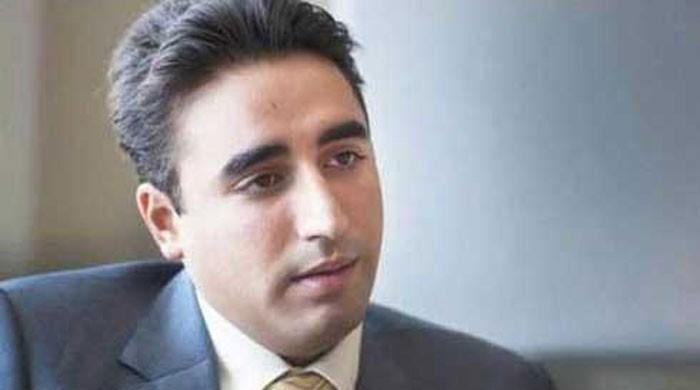
Pakistan People’s Party Chairman Bilawal Bhutto on Friday said that Prime Minister Nawaz Sharif had appointed a new governor in Sindh without even paying a courtesy call to chief minister Sindh or former governor Dr Ishratul Ebad Khan, adding that PM’s move is an attempt aimed at preserving ‘monarchy’.
The PPP chairman made the comments on Twitter in a tweet.
Appointing new governor without even a courtesy call to @drishratulebad or #CmSindh - Trying to preserve his #Badshaahat. #Sharifistan twitter.com/shahnafisa/sta…

Oath taking ceremony of the new Sindh governor Justice (R) Saeed-uz-Zaman took place on Friday at the Governor House.
Chief Justice Sindh High Court (SHC) Sajjad Ali Shah administered the oath to the newly-appointed Sindh governor, after which he would formally take charge of his responsibilities.
The decision to replace the governor for Sindh was made at a recent meeting between President Mamnoon Hussain and Prime Minister Nawaz Sharif. After which, the Presidency issued a notification of Zaman's instatement as Governor on Wednesday.
Dr Ishratul Ebad vacated the Sindh Governor's official residence and flew to Dubai from Karachi airport early Friday, after being replaced by Justice (R) Saeed uz Zaman after holding the office for 14 years.
Famous Pakistani Christian film singer A. Nayyar passed away
Film, Radio and Gospel Singer Arthur Nayyar popular as A. Nayyar passed away here today after brief illness. He was born in Christian family on September 17, 1950, and splendid his childhood in Arifwala where his father was serving as government employee.

A Nayyar,s death news was heard with grief among Muslim and Christian communities and messages of condolences were issued by Prime Minister Mian Nawaz Sharif, President of Pakistan Mamoon Hussain, prominent Poet and Singer Fr. Francis Tanveer and Christian researcher and scholar Professor Anjum James Paul.
Arthur Nayyar began his career as singer in 1974 from film named “Bahisht” with Rubina Badar in a duet song. He recorded more than 4000 songs which made him popular singer of film industry in 1980,s. He was awarded with Nigar Award for four times along with other regional awards for best singer.
According to Fr. Francis Tanveer, is serving Pakistani Christian Community in USA, by himself is poet and singer told Pakistan Christian Post that “I personally Nayyar Bhai since 1988, when I was doing recording with A Nayyar and other legendary singer Mehnaz Begum for my album Barbat aur Khushboo in which he sang four Hymns”
“I have lost a good friend, a great and legendary singer. He had ever heavenly, magical and powerful voice. He always said to me that he likes my compositions and wishes that I compose Hymns after hymns and he keeps on singing. Nayyar Bhai with God's grace you with your melodious voice have made known to the world. I love you, love your unique voice and will miss you always. I wish you heavenly peace. Keep on singing with your impressive and amazing voice the glories of God with the heavenly and angelic Choir” said Fr. Tanveer
Scholar and intellectual Professor Anjum James Paul commenting on death of A Nayyar told Pakistan Christian Post that “I have honour to be the part of him while the member of Wave Studio Choir in 1985, were recording an audio cassette volume " Nai Nasal ke geet" Songs of New Generation prepared for the occasion National Youth Conference in 1985 in Lahore. One of the songs sung by him I still remember “Naghme Aman ke Gaeen" Sing songs of peace. I still sing this song being a peace activist. I few months back I had a detailed conversation with him”
Dr. Nazir S Bhatti, President of Pakistan Christian Congress PCC have expressed grief and extended condolence to family of A Nayyar and urged Government of Pakistan to grant support fund for Music Academy established by legendary singer in Lahore and reward money for his family.
Dr. Bhatti said that A Nayyar being awarded Presidential Medal needs immediate attention of government to announce financial award that his family may not face any difficulty in life.
A Nayyar have left mourning wife and three daughters living in Gulberg Lahore. His funeral services will be performed tomorrow according to family sources.
- See more at: http://www.pakistanchristianpost.com/detail.php?hnewsid=6181#sthash.yxl6WWg8.dpuf

A Nayyar,s death news was heard with grief among Muslim and Christian communities and messages of condolences were issued by Prime Minister Mian Nawaz Sharif, President of Pakistan Mamoon Hussain, prominent Poet and Singer Fr. Francis Tanveer and Christian researcher and scholar Professor Anjum James Paul.
Arthur Nayyar began his career as singer in 1974 from film named “Bahisht” with Rubina Badar in a duet song. He recorded more than 4000 songs which made him popular singer of film industry in 1980,s. He was awarded with Nigar Award for four times along with other regional awards for best singer.
According to Fr. Francis Tanveer, is serving Pakistani Christian Community in USA, by himself is poet and singer told Pakistan Christian Post that “I personally Nayyar Bhai since 1988, when I was doing recording with A Nayyar and other legendary singer Mehnaz Begum for my album Barbat aur Khushboo in which he sang four Hymns”
“I have lost a good friend, a great and legendary singer. He had ever heavenly, magical and powerful voice. He always said to me that he likes my compositions and wishes that I compose Hymns after hymns and he keeps on singing. Nayyar Bhai with God's grace you with your melodious voice have made known to the world. I love you, love your unique voice and will miss you always. I wish you heavenly peace. Keep on singing with your impressive and amazing voice the glories of God with the heavenly and angelic Choir” said Fr. Tanveer
Scholar and intellectual Professor Anjum James Paul commenting on death of A Nayyar told Pakistan Christian Post that “I have honour to be the part of him while the member of Wave Studio Choir in 1985, were recording an audio cassette volume " Nai Nasal ke geet" Songs of New Generation prepared for the occasion National Youth Conference in 1985 in Lahore. One of the songs sung by him I still remember “Naghme Aman ke Gaeen" Sing songs of peace. I still sing this song being a peace activist. I few months back I had a detailed conversation with him”
Dr. Nazir S Bhatti, President of Pakistan Christian Congress PCC have expressed grief and extended condolence to family of A Nayyar and urged Government of Pakistan to grant support fund for Music Academy established by legendary singer in Lahore and reward money for his family.
Dr. Bhatti said that A Nayyar being awarded Presidential Medal needs immediate attention of government to announce financial award that his family may not face any difficulty in life.
A Nayyar have left mourning wife and three daughters living in Gulberg Lahore. His funeral services will be performed tomorrow according to family sources.
- See more at: http://www.pakistanchristianpost.com/detail.php?hnewsid=6181#sthash.yxl6WWg8.dpuf
Thursday, November 10, 2016
What would happen if Donald Trump was impeached?
Google searches for how to remove a president from office increased by nearly 5,000 per cent after Donald Trump won the top job on Wednesday.
Some people have been asking if Mr Trump could be impeached after taking office since before he was even chosen as the Republican nominee, and one law professor has said there is already enough evidence to remove him, before he officially takes office.
Mr Trump also faces a civial case over allegations of fraud related to Trump University that goes to court later this month.
But in reality the process of impeachment is still more complicated — and less mechanical — than some angry Democrats hope.
What is impeachment?
In the US, impeachment is the first step in a constitutionally sanctioned two stage process to remove a president from office for committing “treason, bribery, or other high crimes and misdemeanours”.
According to constitutional lawyers, high crimes and misdemeanours are: "real criminality", so breaking the law; "abuses of power"; or "violation of public trust”.
Beyond, these definitions, it is up to the House of Representatives to decide if an offence warrants impeachment.
In 1970, then-Representative Gerald Ford defined impeachable offences as: ”Whatever a majority of the House of Representatives considers it to be at a given moment in history.“
The House of Representatives decides if there are grounds to consider impeaching a president through an inquiry, a debate, and then a vote, which should include all members of the house. If a majority vote the president guilty on any charges, it will result in impeachment.
However, not a lot actually happens as the result of an initial impeachment. The offending Head of State retains office and can pretty much go about their business as usual until the second stage of the process, in which they will be either convicted or cleared in trial by the Senate.
In this trial, the president will be represented by his lawyers, a select group of House members will serve as ”prosecutors“, the Chief Justice of the Supreme Court will preside, and all 100 Senators will acting as the jury.
If in the Senate a two-thirds majority find the president guilty, he will be convicted and removed from office.
Could President Trump be impeached?
Yes, but it is pretty unlikely.
No president has ever actually been removed from office as a result of impeachment, although two — Andrew Johnson and Bill Clinton — were found guilty of wrongdoing by the House of Representatives, before being cleared by the Senate, and in 1974 President Richard Nixon resigned rather than facing an impeachment process for several charges related to the Watergate scandal.
A major obstacle to impeaching Mr Trump is that both the House of Representatives and the Senate are controlled by the Republicans. Lots of people have speculated that Mr Trump's own party are unlikely to impeach him, unless of course they are put under a huge amount of public pressure.
But, then again, it is not impossible: many Republicans actually do not like the president-elect at all.
Notably, the Republican Speaker Paul Ryan is an outspoken enemy of Mr Trump. The two men have been openly hostile to each other throughout the campaign period, with both initially refusing to endorse the other.
So the house could theoretically turn against him. But are there real grounds for impeachment?
Arguably, yes — a University of Utah law professor called Christopher Lewis Peterson has written a 23-page article analysing why it would be correct for Congress to impeach Mr Trump.
Mr Peterson believes Mr Trump has engaged in fraud and racketeering which meet the criteria of “high crimes and misdemeanours.”
According to Mr Peterson, the Constitution does not prohibit Congress from impeaching a president for alleged acts that happened prior to taking office.
The case against Mr Trump will become more compelling if he is actually convicted of offences, which could happen before he enters the White House. Mr Trump was set to face criminal proceedings for raping a 13-year-old girl, but the case was dropped. However the president-elect is still set to go to court later this month to defend himself against allegations of fraud brought by former students of the now closed Trump University. A number of students claim they were misled into paying up to $35,000 to learn worthless real estate investing “secrets”.
Once a president has taken office they are immune from lawsuits arising during their time as head of state, but the Supreme Court has said this does not extend to acts alleged to have taken place prior to taking office.
So the House of Representatives could turn against Mr Trump, and there could be sufficient legal grounds to impeach him. But to actually kickstart start the mechanism for removing him from office there would probably have to be a shift in public opinion.
While many Americans have taken to the streets in protest against Mr Trump being elected president, many others voted him in.
Bruce Fein, who worked in the Justice Department during Ronald Reagan's presidency, and was also involved in the Republican-led effort to impeach Bill Clinton, told Politico: “Ninety-nine percent of the game is how popular is the president.”
At the moment Mr Trump probably has too many supporters for an impeachment to take place. However, he has promised to do lots of things which could change this. If the economy flagged for example, or if he did institute the use of torture, or begin building a wall to keep Mexicans out, he could make enough enemies to start the process.
Hillary Clinton spotted hiking on day after conceding US election
Scott Bixby
Ex-Democratic presidential nominee went for a hike with her husband near their New York home, hugging a supporter and ‘exchanging some sweet pleasantries’.
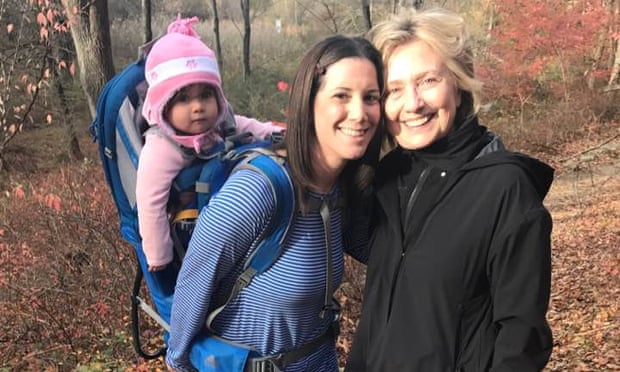 An upstate New York woman, hoping to take her mind off of the US election results with a hike through the woods of Westchester County, bumped into another woman on Thursday with a presumably similar notion: Hillary Clinton.
Margot Gerster of White Plains wrote on Facebook that after “feeling so heartbroken since yesterday’s election”, she hoped to relax by taking her young daughter and her dog hiking on Thursday.
“I decided to take them to one of favorite places in Chappaqua,” Gerster wrote, the Westchester hamlet that the Clintons call home. “We were the only ones there and it was so beautiful and relaxing.”
As Gerster was ending her hike, however, she ran into an unexpected couple on the trail: the former secretary of state and her husband, former president Bill Clinton.
“I heard a bit of rustling coming towards me and as I stepped into the clearing there she was, Hillary Clinton and Bill with their dogs doing exactly the same thing as I was,” Gerster wrote. “I got to hug her and talk to her and tell her that one of my most proudest moments as a mother was taking [my daughter] with me to vote for her.”
Clinton was grateful for Gerster’s words, offering pleasantries, a hug and even a photo taken by the former president.
“She hugged me and thanked me and we exchanged some sweet pleasantries and then I let them continue their walk,” Gerster wrote. “Now, I’m not one for signs but I think I’ll definitely take this one. So proud.”
The photo represents Clinton’s first appearance since her concession speech on Wednesday, during which she declared: “To all the little girls who are watching this: never doubt that you are valuable and powerful and deserving of every chance and opportunity in the world to pursue and achieve your own dreams.”
Gerster ended her post, which has been shared nearly 3,000 times, with a series of hashtags expressing support for the former presidential candidate: “#iamstillwithher #lovetrumpshate #keepfighting #lightfollowsdarkness.”
The photo has received thousands of comments, most expressing good wishes for the former candidate.
“I wish I could give her a hug and thank her personally,” wrote one supporter. “And apologize for the rest of our country.”hi.
https://www.theguardian.com/us-news/2016/nov/10/hillary-clinton-hike-new-york-after-election-donald-trump
An upstate New York woman, hoping to take her mind off of the US election results with a hike through the woods of Westchester County, bumped into another woman on Thursday with a presumably similar notion: Hillary Clinton.
Margot Gerster of White Plains wrote on Facebook that after “feeling so heartbroken since yesterday’s election”, she hoped to relax by taking her young daughter and her dog hiking on Thursday.
“I decided to take them to one of favorite places in Chappaqua,” Gerster wrote, the Westchester hamlet that the Clintons call home. “We were the only ones there and it was so beautiful and relaxing.”
As Gerster was ending her hike, however, she ran into an unexpected couple on the trail: the former secretary of state and her husband, former president Bill Clinton.
“I heard a bit of rustling coming towards me and as I stepped into the clearing there she was, Hillary Clinton and Bill with their dogs doing exactly the same thing as I was,” Gerster wrote. “I got to hug her and talk to her and tell her that one of my most proudest moments as a mother was taking [my daughter] with me to vote for her.”
Clinton was grateful for Gerster’s words, offering pleasantries, a hug and even a photo taken by the former president.
“She hugged me and thanked me and we exchanged some sweet pleasantries and then I let them continue their walk,” Gerster wrote. “Now, I’m not one for signs but I think I’ll definitely take this one. So proud.”
The photo represents Clinton’s first appearance since her concession speech on Wednesday, during which she declared: “To all the little girls who are watching this: never doubt that you are valuable and powerful and deserving of every chance and opportunity in the world to pursue and achieve your own dreams.”
Gerster ended her post, which has been shared nearly 3,000 times, with a series of hashtags expressing support for the former presidential candidate: “#iamstillwithher #lovetrumpshate #keepfighting #lightfollowsdarkness.”
The photo has received thousands of comments, most expressing good wishes for the former candidate.
“I wish I could give her a hug and thank her personally,” wrote one supporter. “And apologize for the rest of our country.”hi.
https://www.theguardian.com/us-news/2016/nov/10/hillary-clinton-hike-new-york-after-election-donald-trump
An upstate New York woman, hoping to take her mind off of the US election results with a hike through the woods of Westchester County, bumped into another woman on Thursday with a presumably similar notion: Hillary Clinton.
Margot Gerster of White Plains wrote on Facebook that after “feeling so heartbroken since yesterday’s election”, she hoped to relax by taking her young daughter and her dog hiking on Thursday.
“I decided to take them to one of favorite places in Chappaqua,” Gerster wrote, the Westchester hamlet that the Clintons call home. “We were the only ones there and it was so beautiful and relaxing.”
As Gerster was ending her hike, however, she ran into an unexpected couple on the trail: the former secretary of state and her husband, former president Bill Clinton.
“I heard a bit of rustling coming towards me and as I stepped into the clearing there she was, Hillary Clinton and Bill with their dogs doing exactly the same thing as I was,” Gerster wrote. “I got to hug her and talk to her and tell her that one of my most proudest moments as a mother was taking [my daughter] with me to vote for her.”
Clinton was grateful for Gerster’s words, offering pleasantries, a hug and even a photo taken by the former president.
“She hugged me and thanked me and we exchanged some sweet pleasantries and then I let them continue their walk,” Gerster wrote. “Now, I’m not one for signs but I think I’ll definitely take this one. So proud.”
The photo represents Clinton’s first appearance since her concession speech on Wednesday, during which she declared: “To all the little girls who are watching this: never doubt that you are valuable and powerful and deserving of every chance and opportunity in the world to pursue and achieve your own dreams.”
Gerster ended her post, which has been shared nearly 3,000 times, with a series of hashtags expressing support for the former presidential candidate: “#iamstillwithher #lovetrumpshate #keepfighting #lightfollowsdarkness.”
The photo has received thousands of comments, most expressing good wishes for the former candidate.
“I wish I could give her a hug and thank her personally,” wrote one supporter. “And apologize for the rest of our country.”hi.
https://www.theguardian.com/us-news/2016/nov/10/hillary-clinton-hike-new-york-after-election-donald-trump
#USELECTIONS - The Electoral College Is Hated by Many. So Why Does It Endure?


In November 2000, as the Florida recount gripped the nation, a newly elected Democratic senator from New York took a break from an upstate victory tour to address the possibility that Al Gore could wind up winning the popular vote but losing the presidential election.
She was unequivocal. “I believe strongly that in a democracy, we should respect the will of the people,” Hillary Clinton said, “and to me that means it’s time to do away with the Electoral College and move to the popular election of our president.”
Sixteen years later, the Electoral College is still standing, and Mrs. Clinton has followed Mr. Gore as the second Democratic presidential candidate in modern history to be defeated by a Republican who earned fewer votes, in his case by George W. Bush.
In her concession speech on Wednesday, Mrs. Clinton did not mention the popular vote, an omission that seemed to signal her desire to encourage a smooth and civil transition of power after such a divisive election. But her running mate, Senator Tim Kaine of Virginia, wasted little time highlighting her higher vote total than Donald J. Trump’s in introducing her.
And the disparity left a bitter taste in the mouths of many Democrats, whose party won the country’s national popular vote for the third consecutive election but no longer controls any branch of government.
“If we really subscribe to the notion that ‘majority rules,’ then why do we deny the majority their chosen candidate?” said Jennifer M. Granholm, a former governor of Michigan.

Mr. Trump himself has been critical of the Electoral College in the past. On the eve of the 2012 election, he called it “a disaster for a democracy” in a Twitter post. Now, after months of railing against what he called a “rigged” election, he has become the unlikely beneficiary of an electoral system that allows a candidate to win the race without winning over the most voters.
None of Mrs. Clinton’s supporters have gone so far as to suggest that the popular vote tally should delegitimize Mr. Trump’s victory, and the popular vote margin in Tuesday’s election was in fact narrower than the one that separated Mr. Bush and Mr. Gore in 2000.
But the results are already renewing calls for electoral reform. “I personally would like to see the Electoral College eliminated entirely,” said David Boies, who represented Mr. Gore in the Florida recount in 2000. “I think it’s a historical anomaly.”
Defenders of the system argue that it reduces the chances of daunting nationwide recounts in close races, a scenario that Gary L. Gregg II, an Electoral College expert at the University of Louisville, said would be a “national nightmare.”
A variety of factors informed the creation of the Electoral College, which apportions a fixed number of votes to different states based on the size of their populations. The founding fathers sought to ensure that residents in states with smaller populations were not ignored. And in an era that predated mass media and even political parties, they were concerned that average Americans would lack enough information about the candidates to make intelligent choices. So informed “electors” would stand in for them.
Above all, some historians point to the critical role that slavery played in the formation of the system. Southern delegates to the 1787 Constitutional Convention, most prominently James Madison of Virginia, were concerned that their constituents would be outnumbered by Northerners. The Three-Fifths Compromise, however, allowed states to count each slave as three-fifths of a person — enough, at the time, to ensure a Southern majority in presidential races.
On social media Wednesday, some drew connections between that history and what they perceived as an imbalance in the Electoral College that favors Republicans.
“Electoral college will forever tip balance to rural/conservative/“white”/older voters — a concession to slave-holders originally,” the author Joyce Carol Oates wrote on Twitter.
To its critics, the Electoral College is a relic that violates the democratic principle of one person, one vote, and distorts the presidential campaign by encouraging candidates to campaign only in the relatively small number of contested states.
“I think it is intolerable for democracy,” said George C. Edwards III, a political-science professor at Texas A&M University and the author of a book on the Electoral College. “I can’t think of any justification for it, and any justification that is offered doesn’t bear scrutiny.”
But calls to change the system, which would require a constitutional amendment, are likely to fall on deaf ears with Republicans in control of both houses of Congress.
And though there was some momentum for reform after Mr. Gore’s defeat, it dissipated after Mr. Bush and Barack Obama won both the popular and electoral votes in 2004, 2008 and 2012.
Some states have discussed a possibility that would not necessarily require amending the Constitution: jettisoning the winner-takes-all system, in which a single candidate is awarded all of a state’s electoral votes — regardless of the popular vote — and instead apportioning them to reflect the breakdown of each state’s popular vote. Two states, Maine and Nebraska, already do this. But even that approach could face challenges, said Laurence H. Tribe, a professor at Harvard Law School.
For reformers, the best hope may lie in the so-called National Popular Vote Interstate Compact, an agreement among states to award all of their respective electoral votes to the candidate who wins the popular vote in a given election. So far, 10 states and the District of Columbia have joined the agreement. But it will only go into effect when enough states have signed on to guarantee that the winner of the popular vote will win the election.
For now, it seems, any change still remains a far-off notion.
“I am very mad at James Madison,” said former Representative Barney Frank, a Massachusetts Democrat. “But I don’t think there’s anything I can do about it.”
Subscribe to:
Posts (Atom)