د چارسدې باچاخان پوهنتون یو زده کوونکی فضل الحق له مشال راډيو سره په خبرو کې وویل چې لومړی چې وسله والو یې پر هاسټل برید وکړ او د هر زده کوونکي د کوټې دروازه به یې ټکوله او ځای پر ځای به یې ډزې پرې کولې او وژل به یې. دی وايي په خپلو سترګو یې ملګري ولیدل چې وسله والو وژلي ول.
Thursday, January 21, 2016
Video - #charsaddaattack - "پوځ او پولیس ډېر ناوخته راورسېدل"
Opinion: Pakistan's elite are the real target

The level of terrorism currently afflicting Pakistan will not be eliminated without clear and courageous resistance from within Pakistani society, writes DW's Florian Weigand.
The Taliban attack on a Pakistani university evokes grim memories. It is just over a year since the Taliban massacred scores of children at a school in the city of Peshawar - only around 50 kilometers from the site of the latest assault. At the time, over 150 pupils and teachers were killed. The death toll today, however, appears to be considerably smaller.
However, this doesn't offer much comfort. And any attempt to compare or balance out the current death toll with the previous one would not only be cynical, and ignore the realities in Pakistan.
The most important element in these attacks remains the message: Once again, the elites in Pakistani society - the sons and daughters of military personnel, politicians, businessmen and academics - have been targeted.
The extremists are aware that only when the elites are affected, can they expect a response. The almost routine attacks on bazaars, checkpoints or police patrols, targeting ordinary policemen, soldiers or rickshaw pullers, are met with regret. But their impact on decision-makers remains low.
There is still much room for speculation as to what the attackers really wanted to achieve, but it has most likely to do with the new attempts by the Nawaz Sharif-led government of establishing itself as a self-proclaimed peacemaker in the region.
Limited success
Pakistan, Afghanistan, the US and China are currently exploring options to persuade the Taliban to commit to a long-lasting peace. The multi-party talks have coincided with PM Nawaz Sharif's recent trip to Saudi Arabia and Iran where he offered to host talks to ease the growing tensions between Shiites and Sunnis.
However, such a move may have annoyed some in the region. The latest attacks may thus be interpreted as a warning against such reconciliation efforts. In this context, it fits the mould that Indo-Pakistani rapprochement has been partly derailed by a terror attack on an Indian military base.
The extremists' attack on a Peshawar school in December 2014, however, had the opposite effect. Pakistani society was outraged, and the military launched a major operation aimed at driving out the militants from the tribal areas.
But the government also lifted the moratorium on the death penalty. As a result, many convicts with no connection to terrorism were also executed. In hindsight, the level of success of such measures was limited, as the latest attack on the university campus shows.
The fight against terror went straight past the extremists' strongholds. The ill-reputed madrassas or religious schools still operate almost unimpeded in Pakistan, recruiting the next generation of holy war fighters.
A broad-based resistance needed
Moreover, foreign capital flows designed to support terror activities have never truly been curbed. And nobody dares to put the country's notorious intelligence agency, ISI, back on track. The ISI is suspected of using Islamic extremists in the region as tools to serve its own interests and torpedo Pakistan's civilian government.
What's needed is a broad-based, vociferous resistance from all walks of life, including the country's elite, who have now been targeted a second time. While they privately practice a liberal interpretation of Islam - a centuries-long tradition on the subcontinent - they seldom do this out in the open.
They are simply too afraid of walking into the trap set by blasphemy laws or having to face more subtle reprisals. But stamping out terrorism in the country won't be possible without an open public discussion on the root causes of homegrown extremism.
#charsaddaattack - University attack shows Pakistan's failure to curb terror

After the 2014 Peshawar massacre, most Pakistanis believed their state had effectively cracked down on militants. But the latest attacks show the government's anti-terror policy has been a failure, say analysts.
A group of gunmen stormed the Bacha Khan University in northwestern Pakistan on Wednesday, January 20, killing over 20 people, including students and faculty members. The university, located in the Khyber Pukhtonkhwa province, is named after a local political leader known for his preachings on non-violence.
At the time of the attack, the students and faculty gathered for a poetry recital to commemorate Bacha Khan's death anniversary. A leader of the Pakistani Taliban, Khalifa Umar Mansoor, claimed responsibility for the attack, saying that it was revenge for the militants killed by Pakistani security forces in recent months.
Experts say the latest assault shows the Taliban are still capable of inflicting terror in Pakistan, despite the government's efforts to eliminate terrorism.
Mehmood Jan, a Peshawar-based journalist working for Geo News, says the military consolidated power and went after the militants following the Peshawar school massacre in December 2014, in which over 150 people - mostly children - were killed. Shortly after, the military launched a full-blown assault on militant strongholds in the tribal areas."But the latest attack shows that although the military's operation succeeded in splintering the Taliban, the terrorists still retain the strength, capacity and resources to attack," Jan told DW.
A group of gunmen stormed the Bacha Khan University in northwestern Pakistan on Wednesday, January 20, killing over 20 people, including students and faculty members. The university, located in the Khyber Pukhtonkhwa province, is named after a local political leader known for his preachings on non-violence.
At the time of the attack, the students and faculty gathered for a poetry recital to commemorate Bacha Khan's death anniversary. A leader of the Pakistani Taliban, Khalifa Umar Mansoor, claimed responsibility for the attack, saying that it was revenge for the militants killed by Pakistani security forces in recent months.
Experts say the latest assault shows the Taliban are still capable of inflicting terror in Pakistan, despite the government's efforts to eliminate terrorism.
Mehmood Jan, a Peshawar-based journalist working for Geo News, says the military consolidated power and went after the militants following the Peshawar school massacre in December 2014, in which over 150 people - mostly children - were killed. Shortly after, the military launched a full-blown assault on militant strongholds in the tribal areas."But the latest attack shows that although the military's operation succeeded in splintering the Taliban, the terrorists still retain the strength, capacity and resources to attack," Jan told DW.
An ineffective campaign
The incident comes as Pakistan is attempting to establish itself as a key player in securing a peace deal between Kabul and the Afghan Taliban. At the same time, Islamabad says it is working to reduce the tensions between the Middle Eastern powers Saudi Arabia and Iran.
But as a result of the latest incident, the Pakistani leadership has come under fire for failing to take effective measures to curb terrorist activities on its soil.
"It is very easy for the military to say that we have killed the terrorists who attacked the university, but the fact remains that they were able to wreak havoc on the university campus, signaling the state's failure in providing security," said Talat Hussain, a leading journalist who has extensively covered military operations.
While the military boasts the effectiveness of its anti-terror campaign, named Zarb-e-Azb, critics argue that the security forces have overlooked the need for gathering proper intelligence, which is critical in preventing terrorist attacks.
Husain is of the view that both the civilian and military leadership in Pakistan has created "an impression that Operation Zarb-e-Azb is enough for us to get rid of terrorists." But the expert points out that the anti-terror operation has been carried out only in one particular region of the tribal areas, thus granting a free hand to the extremists operating in other parts of the country.
Support for the Taliban
Some say the Taliban still enjoy relatively strong support among sections of Pakistani society. Imtiaz Gul, director of the Islamabad-based independent Centre for Research and Security Studies, told DW: "The socio-political dynamics in Pakistan help provide support to terrorists."
Despite the government's anti-terror efforts, Gul says, the Taliban still retain the ability to conduct such attacks because of the socio-political organizations such as mosques and religious schools where they take shelter.
The expert also underlined that the terror group engages in criminal activities such as abductions, extortions and drug trafficking to fund their operations. Moreover, they have easy access to advanced weapons such as improvised explosive devices.
Some analysts also believe that various terror outfits operating under the umbrella of the Pakistani Taliban have become part of regional politics, and that these groups are being used as proxies.
However, Hussain says: "Even if they are part of regional politics, it is ultimately the responsibility of the state to stop them from inflicting terror in Pakistan."
#charsaddaattack - Pakistan - The Charsadda attack
Sultan M Hali

Violence at the non-violent icon’s anniversary.
The brazen attack on Charsadda’s Bacha Khan University on January 02, 2016, is a stark reminder that despite military operation Zarb-e-Azb, on since June 2014, and the National Action Plan (NAP) against terrorism adopted in the wake of the heinous Army Public School (APS) attack of December 16, 2014, the terrorists may be down but they are not out.
It is being argued that the back of the miscreants is broken and being on the run, they select soft targets like educational institutions out of sheer desperation. The latest attack is anything but random or desperate. It was carefully selected and meticulously executed and its symbolism must not be lost in the din of condemnations and chest thumping by law enforcing agencies (LEAs) that the university was cleared within four hours and all four assailants lay dead while the death toll was limited to only twenty.
Charsadda University has been named after Khan Abdul Ghaffar Khan, popularly known as “Bacha Khan” (king of chiefs), a pacifist who led nonviolent campaigns against British colonial rule. The perpetrators of the crime had chosen his death anniversary, which was being observed by the university and a poetry recital was underway when the heinous assault took place. Intelligence warnings had been issued on 3 January that a group of armed terrorists had crossed into Khyber Pakhtunkhwa (KP) province and is likely to target educational institutions. By attacking centres for learning, the miscreants target the future leaders who are the hope for creating a secure, stable, and prosperous Pakistan.
Since the 2012 attack on Nobel laureate Malala Yousafzai, who had raised her voice for girls’ education, world attention has been focused on terror attacks on schools in Pakistan. According to the University of Maryland’s Global Terrorism Database, since the 1970s, more people have died in attacks on schools in Pakistan than in any other country. The interest should not be merely for academic reasons but serious cognizance of the gaps in the security situation should be taken and plugged.
Some lessons were learnt from the APS attack and educational institutions were tasked to raise their boundary walls, install barbed wire or concertina fences on top, hire armed guards and erect electronic metal detecting gates to enhance vigilance. Teachers in KP province were allowed to keep arms on their person. Apparently watchfulness slackened. The assailants of Bacha Khan University, home to more than three thousand students, took advantage of the dense morning fog that had blanketed the campus—impairing visibility—scaled a wall at the rear entrance to the campus around 9am after cutting a coil of barbed wire, and rushed toward a nearby dormitory for male students, lobbing hand grenades into the rooms.
It is pathetic that Umar Mansoor Narray, a local Pakistani Taliban commander, contacted the media that four attackers had been sent to the university in retaliation for a Pakistani military offensive that has targeted the group since mid-2014. Ironically the same spokesperson had claimed to have masterminded the APS attack. Mullah Fazlullah, the Tehreek-e-Taliban Pakistan (TTP) leader holed up in Afghanistan, on the other hand has denied that his organisation was behind the incident. TTP is a motley group of miscreants, terror mongers and even hardened criminals absconding from justice with their own personal agendas of loot, arson, death and mayhem.
There were isolated acts of valour, which saved a number of precious lives. A chemistry teacher of the Bacha Khan University, Syed Hamid Husain, tried to protect his students by pulling out his personal revolver, opening fire on the rampaging Taliban militants, providing cover and opportunity to his students to escape. The valiant teacher was ultimately gunned down by the attackers while he chose to make the supreme sacrifice of his own life to defend his protégés. A guard at the University stated that he continued firing at the assailants to check their onslaught but ran out of ammunition.
In the aftermath of this tragedy, it is imperative that concrete lessons are drawn. The NAP has not been executed in letter and spirit and even lifting the death moratorium has not had the desired effect. Sources of terror financing remain unplugged, madrassa reforms continue to be ephemeral, border management of the Durand Line is sketchy and rehabilitation of the IDPs and rebuilding of FATA linger as broken promises. Under the circumstances, observing three days of mourning, raising the rhetoric inside and outside the parliament and merely condemning the gory deed till a new one takes place is not enough. Fifteen years of being exposed to death and destruction should awaken the rulers and the people out of their oblivion. If the demon of terrorism is to be defeated, Pakistan and Afghanistan need to work together sincerely. The Afghans believe that a number of Taliban leaders continue to find safe haven in Pakistan while TTP leaders and other enemies of Pakistan operate from Afghanistan. To defeat the common enemy, it is essential to pool resources and work together rather than persist in trust deficit.
A lesson perhaps needs to be learnt from the tolerant, compassionate and inclusive politics of Abdul Ghaffar Khan. He suffered incarceration at the hands of the British when he raised his voice for freedom. House arrests and detentions were his fate even with the advent of Pakistan. He had opposed the division of India but at the request of Jinnah, provided wholehearted allegiance. The foundation of his philosophy was “non-violence”, which the militant extremists are seeking to destroy.
We have let ourselves be embroiled in Afghan politics far too long. Bacha Khan, on the contrary, tried to unite the Pashtuns. When he ultimately met his maker on July 20, 1988, while under house arrest at Peshawar, in pursuant to his will, as expression of solidarity with Afghanistan, he was buried at his house in Jalalabad in Afghanistan. Despite the prevailing war between the occupying Soviet Army and the Mujahedeen in Afghanistan, temporary ceasefire was declared to permit tens of thousands of mourners to attend his funeral, marching through the Khyber Pass from Peshawar to Jalalabad. What better example of amity from the founder of “Khudai Khidmatgar” (Servants of God) than his personal example?
Pakistan - #charsaddaattack - Nation in mourning: Blood on the campus

More than a year after a bloody Taliban rampage at a military-run school in Peshawar, terrorists killed 21 people in a near-identical attack on a state-run university in nearby Charsadda district Wednesday morning. The heroics of campus guards, however, prevented bloodshed as they engaged the terrorists before security forces moved in under thick fog to eliminate the attackers.
A splinter group of the outlawed Tehreek-e-Taliban Pakistan (TTP) claimed credit for the sickening violence at the Bacha Khan University in the Palosa area, 15 kilometres southeast of the main Charsadda Bazaar, though the fugitive leadership of the umbrella group denied involvement.
Four terrorists, armed with sub-machine guns, pistols and hand grenades, launched the attack around 8:45 when the campus was enveloped in thick morning fog. According to eyewitnesses and officials, the terrorists scaled the back wall of the campus and entered the guest house of the vice chancellor where they shot dead assistant caretaker Fakhre Alam.
“They [terrorists] cut the barbed wire with a cutter and then entered the campus where they were engaged by a security guard. The guard was injured in the gunfight with the terrorists but somehow managed to crawl to safety leaving behind his shoes and gun,” DIG Charsadda Saeed Wazir told journalists. Other campus guards engaged the terrorists until police commandos and army troops reached the spot, he added. “Since there is no military base in Charsadda, troops had to be called in from Mardan district.”
DIG Wazir put the death toll at 21, saying that most of the victims were shot dead at a hostel for male students. Four attackers killed by security forces were not included in the toll, he added. “More than 30 others including students, staff and security guards were wounded.”
Rescue 1122 spokesperson Bilal Faizi said they evacuated 35 injured and 19 bodies to hospital. Military spokesperson Lt Gen Asim Saleem Bajwa told a news conference that the dead included 18 students and two staff members.
Security Officer of the campus Ashfaq Ahmed told The Express Tribunethat four security guards were deployed at as many posts who engaged the terrorists. The attackers had taken advantage of the fog as visibility was less than 10 metres at the time.
“After facing stiff resistance from the guards at the administration block, the attackers moved towards the hostel named after popular cleric Maulana Fazal Mahmood Makhfi. Around 200 students were present in the hostel at the time as most of them were on holidays after their examinations,” Ahmed said.
Azeemullah, a geology student at the hostel, said the terrorists opened fire at the students as they tried to exit the building. “We waited in our rooms but when the attackers fired at us we rushed to the gate and I’m not sure how many managed to escape,” added another student Iftikhar Ali.
The Express Tribune reporter saw pools of blood and overturned furniture at the hostel, where the terrorists were pinned down by security forces cornered the four gunmen.
Dr Muhammad Shakeel, the university’s director administration, was stranded on the floor of the administration block along with some students when gunshots rang out. “We stayed there helpless as we had no weapons to fight the terrorists,” he added.
Dr Shakeel was finalising arrangements for an ‘Aman Mushaira’ scheduled at 10am to mark the death anniversary of maverick Pashtoon nationalist leader Abdul Gaffar Khan, popularly known as Bacha Khan. The university is named after him. “Our security guards with their limited resources fought bravely for an hour and deserve to be praised,” he added.
Dr Shakeel further said they called the police and activated the SOS system but it took the security forces almost an hour to reach the campus and control the situation.
Shahzad Ali, one of the guards who had engaged the attackers, said the terrorists appeared to be in their 20s. “They were firing indiscriminately. I evacuated female students from a common room to safety and went back to engage the attackers,” he added. “I had only one magazine in my rifle with 30 rounds which I fired at them.”
Lt Gen Bajwa also said that security guards put up resistance that saved many lives. Later military troops were moved in from Peshawar who contained the attackers to a building where some of them were killed. Others were eliminated on the rooftop of the building, he added.
The casualties were evacuated to the nearby District Headquarters Hospital and to the Lady Ready Hospital in Peshawar. AIG Bomb Disposal Squad Shafqat Malik confirmed the attackers were not wearing suicide vests but were heavily armed. “It is premature to make a conclusive statement as we are still investigating and collecting evidence,” he said.
After the hours-long operation, army chief Gen Raheel Sharif, PTI Chairman Imran Khan and K-P Governor Sardar Mehtab visited the university, while Chief Minister Pervaiz Khattak canceled his scheduled visit to Scotland and returned from Dubai. The government announced a three-day national mourning. National flag on all government buildings will fly half-mast, while Quran Khawani will be held for the martyrs.
Khalifa Omar Mansoor, the chief of the Darra Adam Khel and Khyber Agency chapter of the TTP, claimed responsibility for the attack, but the outlawed group’s central spokesperson Muhammad Khurasani said they were not involved. Speaking by cellphone from somewhere in Afghanistan, Khalifa Mansoor told The Express Tribune that his group had sent suicide bombers to carry out the attack. He named the attackers as Omar, Osman, Ali Muhammad and Abid.
However, TTP central spokesman Muhammad Khurasani said their fugitive leader Maulana Fazlullah had nothing to do with the attack. “We will try those who used the name of the Taliban for this attack in a Sharia court,” he said in an email sent to journalists.
#charsaddaattack - Pakistan - Inadequate security helped militants mount assault: Bacha Khan University VC
The absence of proper security arrangements made it easy for militants to attack Bacha Khan University in Charsadda, the varsity’s top official admitted on Thursday.
Gunmen armed with grenades and Kalashnikovs stormed the university on Wednesday, killing as many as 21 people, including students and a professor, besides injuring over 30 others.
A day later, Vice Chancellor Dr Fazal-i-Rahim Marwat said the teaching staff, administrative personnel, parents and students demonstrated exceptional resolve even in the face of a tragedy of such magnitude. “Students and all the staff members showed high spirits yesterday and even today,” he said.
Although the campus is officially closed due to security concerns, the vice chancellor along with a few staff members and students paid a visit to the university on Thursday. “Many students also took part in the counter action led by security forces and fought against the attackers. Most of the male students rescued their female counterparts during and after the attack,” Dr Marwat told The Express Tribune.
The vice chancellor was on his way to his office on Wednesday when he had to take shelter at a nearby police station after being informed by the university administration of the terrorist attack under way at the campus.
The militants did not use the front entrance, and instead chose to cut through the fence wire at the back to avoid a few levies personnel deployed at the front of the university building. Although the adjacent sugarcane fields, dense fog and short boundary walls have been blamed for the brazen attack, the event exposed the lack of proper security arrangements employed at the campus to tackle any possible terror threat.
The VC did not directly complain about the absence of a reasonable number of security personnel, but shared that “there are only 50 levies personnel available for a 200-canal campus with 3,000 students.”
He also clarified he held nothing against the security personnel. “They are low-paid, untrained daily wagers without any modern weapons. Who will be ready to offer his head for just Rs350?”
#charsaddaattack - A Grim Reminder

The terrorist attack on Bacha Khan University on Wednesday serves as a reminder for the entire country that the war against extremism and terrorism is still being fought, and often with the deadliest of consequences. It is really distressing that once again, it has spilled over to the confines of educational institutions. 21 people have been reported killed with over 50 wounded in this horrific incident, where just yesterday an attack in Khyber Agency killed at least 11 and injured another 36.
TTP Geedar Group has claimed responsibility for the Charsadda attack, the same group who was behind the Karachi Airport gun battle and the Peshawar APS attack. Four suicide bombers were sent to carry out this task. Two of the terrorists were found wearing unused suicide vests; if they had been able to carry out their ultimate aim, the country would be mourning many more on this day.
At times like this, it is important that the entire country unites and expresses its solidarity with the victims and their family; and this includes the media as well. It is important that TV channels in particular respect the sensitivity of the issue and not ask questions that can cause even more grief to those affected only to generate more ratings. In addition to this, it is also important to remember that sensitive information such as the exact details regarding the operation being carried out by security agencies are kept secret until appropriate, in the interests of national security.
The government’s answer after December 16, 2014, has not been sufficient. Executions are clearly not an effective deterrent. The fact is that Bacha Khan University could have a standing army at its door and this could still happen. The same questions still remain. How are terrorists still moving freely enough to orchestrate attacks of this nature? With an ongoing operation in the agencies, how are attackers still finding safe havens and enough breathing space to carry out attacks in the country? What is the regime doing to counter the extremist narrative and ensure that the populace does not succumb to its ideology? The state was already seemingly aware of a threat to educational institutions in KPK, considering its order of closure of schools only a few days ago, and yet this happened.
#charsaddaattack - Pakistan - Charsada attack is a message taliban can hit any target: Analysts
As grieving Pakistani parents lament the government’s failure to keep their children safe, analysts say the Taliban have sent a message with their latest campus massacre — a national crackdown on extremism has failed and they can hit targets at will.
The rampage at Bacha Khan university left 21 people dead Wednesday and shattered the sense of security growing in the troubled northwest, a year after Pakistan’s deadliest ever extremist attack, a 2014 assault on a school in nearby Peshawar.
The chilling similarities between the two atrocities starkly underscored the failings of a government- and military-led initiative launched in the wake of the strike on the army-run school.
“It happened again,” said Zaheeruddin, father of Kashan Zaheer, a ninth grade student who was wounded in the assault which saw Taliban gunmen storm the Peshawar school and kill more than 150 people, most of them children, a year ago.
“Staff and students were martyred again. The government has failed. It has not been able to provide us security.”
The Peshawar attack, carried out by the same Taliban faction that claimed the latest strike in nearby Charsadda, prompted the military to intensify an offensive in tribal areas where militants had operated with impunity.
The military says it has killed thousands in the campaign and swept others over the porous border into Afghanistan.
The government launched a much-vaunted National Action Plan to combat extremism, including the creation of military courts and the resumption of executions after a six-year moratorium.
Together the initiatives are credited with making 2015 the least deadly in terms of militant attacks since the formation of the Tehreek-e-Taliban Pakistani (TTP) in 2007.
But the Bacha Khan attack was a message, said Peshawar-based senior analyst and retired brigadier Saad Khan — that despite the pressure “they can hit any target”.
The killing of young people “brings a lot of pain, despondency and hopelessness, and that arouses emotions against the government, the same government which claimed it had broken the back of the terrorists,” he said.
Defence and security analyst Talat Masood said the government and military had failed to follow through.
“This is the same pattern. They are looking for soft targets and it is simply impossible to provide security to the soft targets, especially those near the border (with Afghanistan),” he told AFP.
“Pakistan needs to do a lot more.”
Among the criticism is that little has been done about key issues including oversight of Pakistan’s thousands of Islamic seminaries, widely seen as breeding grounds for intolerance.
The resumption of hangings has been particularly controversial, with rights activists saying that the majority of the more than 300 people executed in the past year were not linked to extremism.
And observers such as the Pakistan Institute for Peace Studies argue that execution is no deterrent for militants who are already prepared to die for their cause.
Pakistan’s reaction to a recent attack on an Indian air base also highlighted what is viewed as a practice of only cracking down on certain types of radicals, tolerating militants it deems useful to its aims, such as those targeting arch-rival India.
Islamabad moved swiftly against Jaish-e-Mohammad, the group believed by Delhi to be behind the attack on the base in Pathankot that left seven dead, detaining some of its leadership and sealing its offices.
But media commentators expressed wry surprise that the group had any offices still open for the government to seal, seeing as it had been banned in 2002.
For those who survived the 2014 attack, described as Pakistan’s 9/11 for the way it united the country in shock and outrage, “sequels” such as Wednesday’s university assault are making their courage waver.
Ajun Khan lost his only son, Asfand, a tenth grader, in the Peshawar school massacre.
“We understand their pain, we understand how one feels when one sends his son to school or university and later receives his dead body,” Khan said of the families of the latest strike.
Khan said parents of the Peshawar victims are meeting on Thursday to express their sympathy and to chalk out a strategy — such as compulsory military training for all civilians.
“We are not safe, even parents do not feel safe, we are worried about the future,” he said. ”It is now the people’s war.”
http://nation.com.pk/national/21-Jan-2016/charsada-attack-is-a-message-taliban-can-hit-any-target-analysts
#charsaddaattack - Now, it is Peshawar: Time Pakistan and the world woke up to reality
http://www.ibnlive.com/
Lt Gen Syed Ata Hasnain
I admit I was wrong in assessing that Pakistan was changing its stripes after the Paris attacks and that the Americans probably did some plain speak to General Raheel Sharif. My perception arose out of the serious international concerns about radicalism that were evident after the Paris attacks. It was rational to believe that states that supported some form of radical belief, even for their politico-strategic ends, would be under pressure. However, after the attempts by India to try and bring sanity to Pakistan's thinking by seeking to break the ice through some form of dialogue and the response from the Deep State, it is increasingly becoming evident that things are unchanged. The Pakistan security establishment demonstrated a false resolve by going after the radicals in Karachi and the anti-Shia sectarian groups. It lulled the world but the desire to destabilise India runs too deep in the Pakistani DNA. It is virtually the clichéd raison de etre for the existence of the Pakistan Army and its cronies and that is about the only reason why it continues to befriend and nurture anti-India terror groups such as Jaish-e-Mohammad and Lashkar-e-Toiba against whom it will not act. This forms the essence of its twin track policy of fighting the internal war against the Tehreek-e-Taliban Pakistan (TTP) while continuing to nurture the India focused terror groups, as strategic assets to be used whenever it wishes to calibrate its 'war by a thousand cuts'.
The two track policy is an unnatural one. The Peshawar attack on the Bacha Khan University complex confirms that belief. A nation cannot hope to incubate hatred and continue to nurture elements to translate that into violence against neighbours while hoping to protect itself from home grown terrorists who target internal stability and wish to deeply radicalise society and polity to their skewed belief. There can be no water tight geographical limits which can be ensured; the attack at Wagah was a case in point where Punjab, and that too a highly militarised zone, was penetrated by non-India focused elements. Radical belief which drives both the sets of terror groups, the India focused ones and the internal focused ones, is only spreading.
It is indeed surprising that as professional an organisation as the Pakistan Army refuses to realise how the India focused groups are taking it for a royal ride. Ashley Tellis in a seminal article in 2012 wrote, “….. since its establishment in 1987, LeT's objectives relating to Kashmir and, more generally, India were fundamentally embedded in wider ambitions, with its focus on the subcontinent deriving mainly from its practical circumstances”. The LeT is an Ahl-e-Hadith adherent to the principles of Sunni Wahhabism. Its foremost aim is to establish a universal Islamic Caliphate and recover all lands that were once under Muslim rule. This objective likens it as much to the Al Qaida as to the Islamic State (Daesh). LeT does not have the network for a worldwide footprint. It is under control of the ISI which allows it to do fund raising through every dubious means. I also perceive that the ISI has effective control on its activities which do not allow it to proliferate beyond the Indian subcontinent even though Hafiz Saeed, Abdulla Azam and Zafar Iqbal, its original founders, all had much more ambitious vision. It arose out of Zia ul Haq's strategy of Islamisation of Pakistan and its armed forces; the trio, along with others, were the facilitators to whom this was outsourced. Zia probably never imagined that the genie let out of the bottle would actually contribute to international terror and Islamisation in the way it all panned out. What was intended against India found its way to Afghanistan and proliferated beyond with historical way points which could not have been perceived. It then came back to target Pakistan itself. To imagine those organisations like LeT and their ideologues will stay contained and remained tethered to the Deep State's concept of proxy war against India is to be naïve beyond any understanding. Pakistan's inability to contain the Taliban should have taught it many lessons. Ideology can be a great unifier even as political objectives remain different; that difference can only be temporary. The reluctance of the Deep State to draw in organisations such as LeT and JeM, despite realisation that they are now adversely affecting Pakistan's interests, is simply because it fears a backlash in the form of the TTP and these India focused groups now unifying in a common cause. If the malaise spreads in a more decisive way into Punjab it is the end of all control. The main constituents of the Deep State fully realize this but are currently unable to exercise control because that will trigger something far beyond what it had ever intended. The reluctance to act against the JeM and the LeT can be best explained with the above analogy. The political and military establishment of Pakistan is truly between the rock and a hard place. Lip service will be extended to demands from India and the US to curb the LeT and JeM with such cosmetic measures as detaining Azhar Masood and two or three JeM operatives, hoping that the situation will blow away. It is clear that actions to clean up Karachi, other sectarian groups and target the TTP in its bastions have achieved only a temporary reprieve. Any decisive pressure on the India focused groups will drive them closer to the TTP. It is Pakistan which is responsible for the malaise it finds itself in. No easy solutions exist. An organization such as LeT is straining at the leash for greater role in worldwide terror; its containment will create a backlash within Pakistan. The reluctance to act against it will only embolden it and any controls that exist will cease to be effective. India must therefore brace for more. LeT may not wish to be a surrogate of Daesh because that will bring it into greater focus of worldwide efforts at containment. It will wish to retain its flexibility but could well succumb to pressure of competition. Remember how Daesh upstaged Al Qaida. The result of that is not difficult to comprehend.
The US holds the key. Its reluctance to sufficiently pressurize Pakistan flows from the perception that it needs Pakistan for the stabilisation of Afghanistan. This is unlikely to change anytime in the near future unless the situation in Afghanistan improves or stabilises which is highly unlikely. Pakistan will continue playing the victim and with more acts by TTP will effectively postpone any action against the India focused groups.
The subcontinent is therefore unlikely to witness any change. The Indian Government's strategy of remaining 'engaged' with Pakistan may not give any dividends but is effectively the only option in the muddied waters of the very complex strategic environment. It has to keep the Pakistan civilian government's head above water to prevent greater turbulence in the neighbouring state. Just remember, Pakistan going under will make the situation in Syria look like kids play. Syria's population is 23 million; its civil war has had consequences as far as France and most of Western Europe. Pakistan has over 190 million and Pakistan is India's neighbour.
#charsaddaattack - Why Pakistan must never forget Bacha Khan, its great unsung hero

By Kamila Shamsie
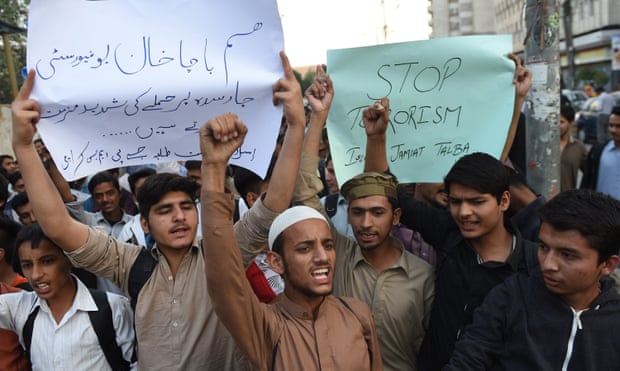
Attacks on educational institutions have become a hideous way of marking the start of a new year in Pakistan. On 5 January 2014, the heroic studentAitzaz Hasan died while struggling with a suicide bomber to prevent him from entering his school. On 15 January 2015, armed men on a motorcycle opened fire near the front gate of a girls’ school (the gate was closed, and the actions of an armed security guard – all schools now have them – meant the gunmen fled); and 20 January 2016 has given us the attack on Bacha Khan University, with the death toll at 30. The attack has been claimed by a Pakistan Taliban (TTP) commander, Umar Mansoor, the man behind the massacre at Peshawar’s Army Public School in December 2014 – although the leader of the TTP has denied any involvement.
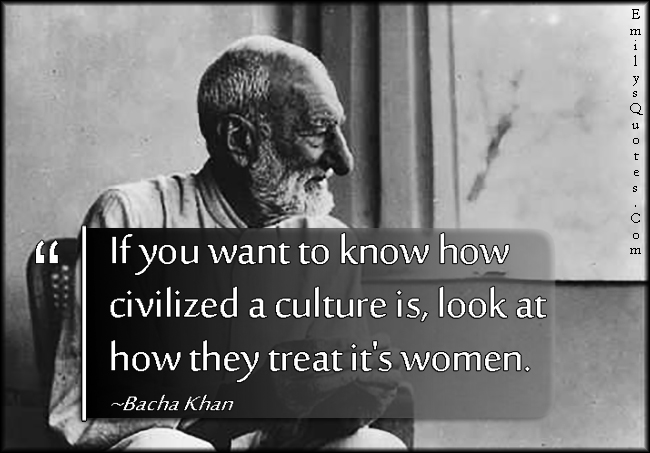
Bacha Khan – the honorific title given to the Pashtun anti-colonial leader Abdul Ghaffar Khan – was part of the triumvirate of heroes who Malala mentioned in her speech to the United Nations, alongside Mother Teresa and Nelson Mandela. If Bacha Khan is less well-known a name than the other two, it is partly because his Pashtun nationalism frequently placed him at loggerheads with the Pakistan state following the departure of the British. As such, he’s never received the recognition he deserves within his home nation.
Although he’s sometimes called “the Frontier Gandhi” by non-Pashtuns, in recognition of his alliance with Gandhi and his non-violent ethos, the name fails to recognise how singular a figure he was, and how rooted in his own context. His philosophy of non-violence drew strongly on Pashtunwali – the Pashtun code of ethics – and on Islam; his success in spreading that philosophy in the 1930s flew in the face of received wisdom about the love of guns at the heart of Pashtun culture and the violence of Muslims.
The British just about knew how to contend with vegetarian Hindus who raised slogans rather than guns, but Bacha Khan’s “unarmed army” of Pashtuns, which turned the martial race stereotype on its head, left them completely bewildered. For everyone who thinks Islam and the Pashtuns are best represented by the Taliban, there is no clearer rebuke than the name Bacha Khan. Still revered among many Pashtuns, his political legacy deeply damaged but alive – it’s no wonder that a commemoration of his death anniversary, at a university bearing his name, should have drawn the attention of a man best known for sending his followers to slaughter children.
How might Bacha Khan have responded to the threat of the Taliban? This was a man who said non-violence could be most effectively used in a political fight against those who could be shamed.
Where is the shame of child-killers? It is a matter of some sad reflection that on the anniversary of his death, the real hero to arise from the campus bearing his name is the chemistry professor, Syed Hamid Hussein, who drew a gun and fired on the assailants to protect his students. He was killed. Pakistan now has another name on its long roll-call of heroes, when what it really needs is an end to shamelessness.
#charsaddaattack - Massacre Came as Pakistan University Honored a Hero of Nonviolence

By
The university attacked by the Pakistani Taliban on Wednesday was named for a towering figure in Pakistani history — a nonviolent Pashtun activist who became known as the “Frontier Gandhi” for his advocacy of nonviolent resistance to British colonial rule.

The massacre was carried out on the 28th anniversary of the death of Abdul Ghaffar Khan, who became known as Bacha Khan, as the university prepared to hold a poetry recital in his memory.
Born in 1889, Mr. Ghaffar Khan rose to prominence in the 1920s when he founded a movement that the British called the Red Shirts, whose members walked through India to encourage civil disobedience. He was a Muslim who measured well over six feet tall and wore homespun white clothing. He first drew support from the traditional Pashtun areas along the Afghanistan-Pakistan border, but became closely allied with Mahatma Gandhi’s Congress Party in the 1930s.
“He led one of the biggest, widely accepted and followed social movements in a society that is known for violence,” said Abubakar Siddique, a journalist and the author of “The Pashtun Question: The Unresolved Key to the Future of Pakistan and Afghanistan.”He earned his nickname at a huge gathering in his early days, when people thought he might declare himself a bacha, or king. “His supporters would say he was not the ruler of any country, but he was the ruler of many Pashtun hearts,” Mr. Siddique said.
Mr. Ghaffar Khan opposed the partition of India and Pakistan after independence in 1947, and when it was carried out, he toured India with Mr. Gandhi in an effort to quell inter-communal violence. Afterward, he pushed for autonomy for Pashtun areas in Pakistan, evoking the ire of national authorities. He spent nearly 30 years in British and Pakistani jails or under house arrest, but never abandoned his philosophy of nonviolent resistance.
“In Pakistan he was always controversial, because they said he was so popular with the Congress Party and a personal favorite of Gandhi, so he could not be a good Pakistani,” said Akbar Ahmed, the chair of Islamic Studies at American University in Washington and a former Pakistani ambassador to the United Kingdom. “This legendary figure was honored more abroad than in his home country.”
Mr. Ghaffar Khan spent much of his later life in exile in Afghanistan. Dr. Ahmed recalled an electrifying public appearance that he made in Peshawar in the mid-1970s, when Dr. Ahmed was a young officer stationed there.
“He was a very old man with a white beard and very simple clothes. He could barely stand and he’s in the midst of half a million people, as if this is a rock concert with The Beatles or the Rolling Stones,” Dr. Ahmed said. “I was privileged, I realized. This was a moment of history.”
Pashtuns are known for a long warrior tradition, and were feared by British colonialists who regarded the Khyber Pass as a notoriously dangerous area. Both the Afghan and Pakistani Taliban draw most of their members and support from Pashtun communities. Even so, Mr. Ghaffar Khan’s message of nonviolence resonated deeply with Pashtuns and others all over South Asia, Mr. Siddique said.
Bacha Khan university was founded in 2012, during a period when Khyber-Pakhtunkhwa Province was governed by the Awami National Party, which is now led by Mr. Ghaffar Khan’s grandson. The local branch of the party, which espouses left-of-center secularism, won elections in 2008.
It also became a target of the Pakistani Taliban. Afrasiab Khattak, a former senator for the A.N.P. and the president of the Roshaan Democratic Institute, said 1,000 members of his party had been killed in the Taliban’s attacks on party gatherings and assassinations.
“They are against peace, and this is what our party also stands for,” Mr. Khattak said. Around the same time of the party’s electoral success, though, a branch of the A.N.P. in Karachi became embroiled in violent turf wars. Karachi is home to the world’s largest Pashtun population, and many senior A.N.P. leaders fled the city in 2013 as the Taliban gained power in ethnic Pashtun areas.
Instead of being buried in his ancestral graveyard, Mr. Ghaffar Khan was buried in Jalalabad, Afghanistan, in the heart of traditionally Pashtun lands. The Associated Press reported that 200,000 people attended the funeral, which was marred by two bombings.
Mr. Siddique said his choice of a final resting place was symbolic of his lifelong message: He chose to be buried there to show that the borders cannot separate people.
#charsaddaattack - In deadly attack on Pakistani college, extremists take new aim at students
By Tim Craig

Once again, horrific images of dead and injured students flashed across television screens in Pakistan. Once again, sobbing parents rushed into hospitals searching for their children. And once again, Pakistani youths are reminded that they are targets for Islamists seeking to topple a nuclear-armed government.
On Wednesday, a little more than a year after Pakistani Taliban insurgentskilled about 150 students and teachers at a school in northwestern Pakistan, militants took new aim at students on track to make up the country’s future professional class.
The attack at Bacha Khan University, which was claimed by a splinter group of the Pakistani Taliban, began shortly after 9 a.m. when four gunmen used the cover of Pakistan’s notorious winter fog to slip onto campus.
The gunmen shot and killed 20 students and two teachers, some execution-style, and wounded nearly two dozen others. Several students said the toll could have been much higher were it not for a teacher armed with a pistol who briefly held off the attackers before being killed.
The massacre in Charsadda, about 30 miles from where the December 2014 school attack occurred in Peshawar, is intensifying fears that Pakistan’s long-term strategy for combating Islamist militant groups is inadequate.

Pakistan’s military says that in the past year it has largely driven groups such as the Taliban and al-Qaeda from the country’s northwestern tribal belt, which became a hub of domestic and international terrorist groups after the 9/11 attacks. But security officials and analysts have warned for months that Pakistan remains vulnerable to major attacks because government leaders have not mounted a widespread offensive against the roots of militancy, including conservative religious seminaries.
“The government says the military operation [against Islamist extremists] is successful,” said Wisal Khan, who said his son, Junaid, was killed in Wednesday’s attack. “But I ask, how can it be that successful if the terrorists are still killing the people and the children?”
The attack is also refocusing attention on the vulnerabilities of schools, both in Pakistan and the West. Schools are generally less well-guarded than government buildings and are tempting targets because “when you hit students and kids, the pain is more,” said Saad Muhammad, a retired Pakistani army general and Islamabad-based security analyst.
“Terrorists hate” schools, Muhammad added, “because they say this is Western education and it’s un-Islamic.”
But it appears that the carnage at Bacha Khan University, named after a late Pashtun nationalist and inspirational force behind the founding of the progressive Awami National Party, could have been worse.
After the Pakistan Taliban attacked the army-run school in Peshawar in 2014, officials began allowing some teachers to carry weapons in the classroom and gave them weapons training.
Syed Hamid Husain, an assistant chemistry professor at Bacha Khan University, was apparently carrying his pistol Wednesday when the gunmen sneaked onto campus.
In separate interviews with Agence France-Presse and The Washington Post, several students described Husain as a hero because he pulled out his pistol and confronted the attackers, who were armed with assault rifles. The 27-year-old teacher was killed in the ensuing exchange of fire.
Students said Husain’s actions gave them time to hide or escape.
“We saw the professor standing there with a gun in his hand,” said Shaid Malik, 22, a geology student. “He told us to rush back to our rooms and do not open the door for anyone.
“When the firing stopped, after a while, we came down and saw the professor dead, lying on the ground with the same gun in his hand.”
Another student, Mohammad Shabeer, said Husain held off the attackers for 15 minutes before he was killed.
Shabeer said another student, who also was armed because of threats that had been made against him and his family, helped Husain battle the attackers.
That student also was killed, he said.
A spokesman for the Pakistani military was not able to confirm the students’ version of events. But one school official said the presence of armed security guards on campus had been instrumental in averting a far greater death toll.
The guards battled the attackers before police and paramilitary forces arrived, which kept the gunmen from entering the women’s dormitory, the official said.
Maj. Gen. Asim Bajwa, a spokesman for the Pakistani military, said investigators are trying to determine the nationalities of the gunmen and who supplied them with weapons.
A Pakistani Taliban regional group — led by Omar Mansour from the Darra Adamkhel region — sent a statement to reporters Wednesday claiming responsibility. Mansour is also believed to have been a mastermind behind the Peshawar school attack.
But highlighting an emerging split within the group, the main Pakistani Taliban faction issued a separate statement denouncing the killings as “un-Islamic.”
The Pakistani Taliban, an offshoot of the Taliban group waging an insurgency in Afghanistan, is pushing for the imposition of sharia law in Pakistan. Since its founding in the mid-2000s, more than 50,000 Pakistanis have been killed in terrorist attacks or battles between the military and Islamist militants.
The military operation against the group began in June 2014 after an attack on Karachi’s international airport killed more than two dozen people. Since then, especially over the past year, there has been a major decline in terrorist attacks in Pakistan.
But analysts said militant groups still have a plentiful pool of potential recruits, both in conservative rural areas and relatively modern major cities. Pakistani leaders have also been slow to arrest radical clerics who coddle Islamist extremists, analysts say.
“This attack clearly shows that terrorists have not disappeared from Pakistan. Although they are weakened, they are there,” said Hassan Askari Rizvi, a local security analyst. “And their motive is clear: They want to tell everyone they are kicking and alive.”
Subscribe to:
Posts (Atom)